Cooking Tips · Ingredients

Demystifying Corn Products

Cornmeal, Grits, Polenta – are all of these just different words for the same thing? In this Cooking Tip, I will attempt to clarify what is often a confusing subject. My research found some conflicting statements and if you are a corn farmer (or know one) you may find things with which you disagree. (If so, let me know.) However, I have tried to find somewhat of a consensus.

In my supermarket, I saw several products labeled “Cornmeal” – some were white and some were yellow and there were different brands. There was something labeled as “Corn Grits – also known as Polenta”. I guess that company is covering all bases. There was a separate product just called “Grits”. There was also a box of “Instant Polenta” as well as tubes of something called “Polenta”. What’s a cook to do?

The first thing to understand is that Polenta is not really an ingredient – it is a dish. The term Grits is used to not only describe an ingredient, but also to indicate the dish made from that ingredient. (Are you confused, yet?) Since many recipes and food producers refer to grits and polenta as both an ingredient and a dish, that is how I will discuss it.
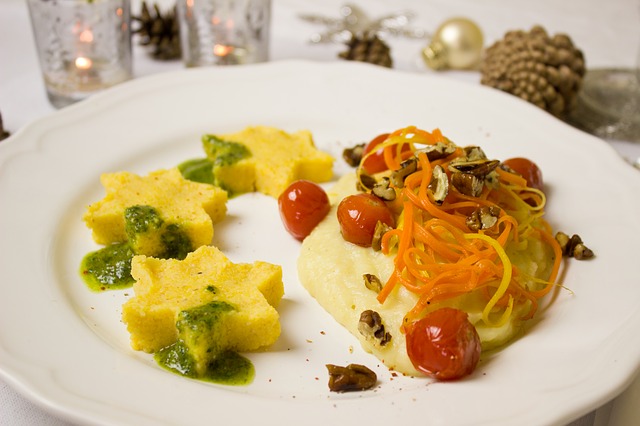
Let’s start with cornmeal. This is an ingredient that is basically corn that has been dried and ground in a mill. The grind may vary from fine to coarse. It can also vary in color: white, yellow or blue. Another difference you may notice is some will be a whole grain product while others will be degerminated. Cooks Illustrated tested a number of different varieties. They preferred the full-corn flavor of whole-grain but felt it was slightly gritty no matter how long it was cooked. The degerminated product (the hard hull and germ are removed) gave a creamier result.

Both polenta and grits are made from stone-ground cornmeal, typically from either a medium or coarse grind. Grits is traditionally a dish made in the southern US whereas polenta is an Italian dish. However, they are also made from different types of corn. Most grits are made from what is called “Dent” corn (field corn). The name comes from a small indentation in the kernel. It has a high soft starch content and is easy to mill.

In Italy, polenta is traditionally made from “Flint” corn, also known as Indian/Calico corn. Its name comes from its hard outer layer that has been likened to being as hard as flint. Because of this, it tends to hold its texture better.

Because of the differences in corn types, grits tend to be mushy while polenta is usually coarser and chewier. However, in today’s kitchens and restaurants, you may not know for sure which product is being used to make these different dishes. The only brand that I found that specifically states it is made from flint corn is Anson Mills. Another good brand, Bob’s Red Mill, uses dent corn.

If you see something called “instant” or “quick-cooking” polenta, it means that it has been par-cooked. Many people consider this variety bland in taste but I have used this type from DeLallo and found it very nice. I also have a great recipe from Bobby Flay for sweet potato and smoked chili grits that specifically calls for quick cooking grits.

What about that tube of something called polenta? It is basically pre-cooked polenta that has been cooled and formed into a tube. It is often sliced and then baked, grilled or seared. If you make your own polenta and let it cool, it will firm up just as in the tube.

So, what product do you use for what purpose? If you are making cornbread, you can probably use any kind of cornmeal but many cooks really prefer a coarser grind for the texture. If you are making a grits dish, try to find something called corn grits or at least a medium or coarse grind cornmeal. For polenta, if you can’t find something that says it is specifically for that dish, you should be fine with a medium or coarse grind cornmeal. Whether you want the whole-grain version or the degerminated will be a matter of personal choice depending on what texture you prefer.

Corn is a wonderful product and comes in so many forms (many that we have not even touched upon) that I am sure there is at least one kind that you will love.

Cooking Tips · Ingredients · Techniques

Custards and the miracle of eggs

When we lived in England, my husband loved some little custard tarts that we would buy from a Portuguese bakery in the town in which we lived. Since then, I have been attempting to re-create them to his satisfaction. Recently, I was testing a recipe from Emeril Lagasse and it turned out to be a winner. Hurray! This testing caused me to think about custard and what a wonderful creation it is. It is something all cooks should know how to do and this is why I am writing this Cooking Tip.

A custard is nothing more than a mixture of milk, eggs and often sugar that is cooked into a thickened product. It forms the filling for these little Portuguese tartlets but a custard is also the basis of crème brûlée, flan, ice cream, quiche and more. It is not difficult to make a custard but there are some hints that I hope you find helpful.

Many custards start by having you beat/whisk the eggs (whole or just yolks) together with the sugar until it has thickened and turned light yellow. Some will recommend you continue to the “ribbon” stage, which means the mixture will form a ribbon as you lift up your spoon and allow the mixture to fall back into the bowl. These instructions are meant to help you ensure that the sugar has mostly dissolved. You do not necessarily need to go all the way to ribbon stage but a good mixing until the color and consistency changes is a good idea.

Some recipes will have you heat the dairy (milk, cream) before adding it to the egg/sugar mixture. This is not necessary unless you want to infuse flavor into the dairy. For example, my tartlet recipe had me infuse vanilla seeds and orange zest into the milk. This was achieved by bringing the cream to a boil, adding those two ingredients, covering it, taking it off the heat and allowing to steep for 30 minutes. I then whisked that steeped dairy into my egg mixture. If I did not want to infuse any flavors, I could have added everything together and then heated it on the stovetop.

If you are told to add hot milk/cream to the egg mixture, the danger is that the eggs will start to cook and you will end up with a scrambled egg mixture. To avoid this, you should “temper” the hot liquid into the eggs. This simply means adding some of the hot liquid very slowly into the eggs while whisking. Once the eggs have been diluted with the dairy, you can put it all back into the pot and continue with the recipe.

If your egg/dairy mixture is started cold, the recipe will instruct you to heat it so as to cook the eggs and thicken the mixture. This heating should be done very gently. Resist the temptation to turn up the heat to speed the process. I love how Harold McGee puts it in his book, On Food and Cooking.

“Turning up the heat is like accelerating on a wet road while you’re looking for an unfamiliar driveway. You get to your destination faster, but you may not be able to brake in time to avoid skidding past it.”

As he goes on to explain, the chemical reactions that cause the thickening of the custard don’t stop just because you take it off the heat. So, if you try to hurry this step, you may easily get to the point of curdling or overcooking.

Some custards are meant to be very soft and creamy while others (such as those that need to be turned out of the container before serving) are firmer. This can be adjusted by changing the proportion of the egg content. If you use more whole eggs or egg whites, the custard will turn out firmer and glossier. More egg yolks (or even yolks alone) produces a softer, creamier custard.

Some recipes will have you add a starch such as flour or cornstarch. These ingredients help with thickening while also protecting against curdling. The recommended amount is one tablespoon of flour or two teaspoons cornstarch (or arrowroot) for every cup of liquid. Whereas this does help guard against curdling, it can also turn a smooth, creamy dish into a thicker and coarser one. Whether your custard is made totally on the stovetop or ends up in the oven, if there is no starch in it, it requires gentle heating. On a stovetop, this generally means using the double boiler method with constant stirring. If in the oven, a water bath should be used. On the other hand, if you do add a starch to the mixture, the custard can be cooked over direct heat on the stovetop or without a water bath in the oven.

A water bath just means putting the custard dishes in a larger pan (such as a roasting pan) that has enough hot water in it to go up about half-way the height of the custard dishes. Even though your oven temperature may be set at 350°F, the water in the pan won’t exceed 212°F (or even less if you live at altitude). This means the custards are exposed to a gentler & more even heat. Some recommend putting a rack in the bottom upon which you place the custard dishes so that they are not directly exposed to the hot bottom of the pan. Without a water bath, the outside of your custard could overcook before the center is done. With a water bath, you are more likely to catch them at the perfect degree of doneness.

All this talk of custards has me salivating over those little Portuguese custard tartlets that I made. I have a few left and those will definitely be dessert tonight! How about you? Is a custard in your near future? Let me know!

Cooking Tips · Ingredients

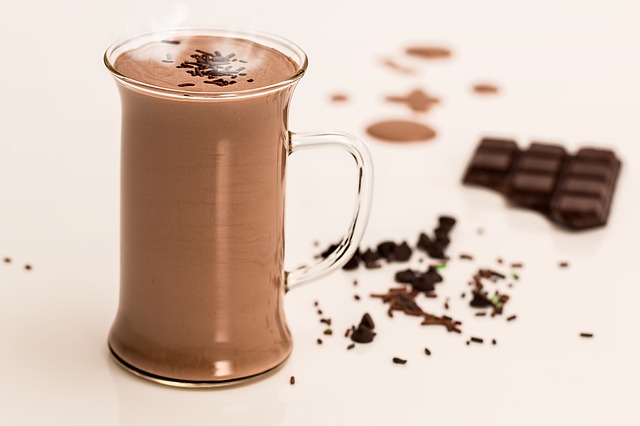
The most delicious cup of hot chocolate!

I am not sure what the weather is like where you live but we have been doing a lot of shivering, lately. When it is cold outside, doesn’t a cup of delicious hot cocoa sound good? Or, do you prefer a cup of hot chocolate? Aren’t they the same thing? Also, is there a better option than the boxed mixes from your supermarket shelves? That is what the Cooking Tip is all about this week.

I don’t know about you but I tend to use the terms hot cocoa and hot chocolate interchangeably but those in the know will tell you hot cocoa is a sweet, light-bodied beverage made primarily from cocoa powder, sugar and milk. It also often contains flavoring like vanilla or even spices like cinnamon.

Hot chocolate is just that – hot, melted chocolate. Made of good quality chocolate that is very finely chopped, it is then melted when combined with hot water, milk, or even cream. It may contain a flavoring like vanilla, but usually doesn’t have added sugar beyond what is in the chocolate. This beverage will be rich and thick and less sweet than hot cocoa. Which is better is, of course, a matter of personal preference.

Have you ever made your own hot chocolate or hot cocoa from scratch? Since a carton of hot cocoa is so inexpensive, you may ask why make your own? Besides taste, here is another reason. Here is a list of ingredients on the label of a popular hot cocoa mix. Sugar, corn syrup, modified whey, cocoa processed with alkali, hydrogenated coconut oil, nonfat milk, calcium carbonate, less than 2% of salt, dipotassium phosphate, mono- and diglycerides, carrageenan, acesulfame potassium, sucralose, & artificial flavor. To be fair this same company also offers a line called Simply Cocoa and has a much shorter & cleaner ingredient list: sugar, cocoa (processed with alkali), nonfat milk, salt & natural flavor.

If you like a shorter ingredient list, try making your own hot chocolate/cocoa mix. As I have often mentioned in prior Cooking Tips, the fewer ingredients you have in a dish, the more important it is to have good quality ingredients. Therefore, seek out good chocolate.

At its simplest, hot chocolate is just chocolate that has been shaved or cut up very small and melted with hot milk or cream. You may choose to add flavorings such as cinnamon, vanilla or cayenne. If you want a recipe, there are plenty available. As you look at these, you will see some of the best have a mixture of cocoa powder and good quality bittersweet chocolate.

Here is one from Epicurious that I have tried and can attest that is very good. Here is another one from The Kitchn. I have not tried this one but it looks very yummy.

If you want to try something a bit more involved but which sounds interesting, check out this recipe from Serious Eats. It takes its sugar to another level by toasting it first. It also contains more ingredients, including both white and dark chocolate, cocoa, expresso powder and malted milk powder. I haven’t had the time to try this one, yet. If any of you do, please let me know what you think.

I’m hoping that the type of weather that makes you want to drink hot chocolate (or hot cocoa) will soon be behind us, but until then, enjoy a delicious cup!

Cooking Tips · Ingredients

An Onion Primer

Onions are one of those foods that every cook needs in their pantry. They are the basis of so many savory dishes. All the different types of onions can mean that such a simple vegetable can become confusing. In this Cooking Tip, I would like to try to clarify a bit about onions although it won’t be an exhaustive list of onion types. (For a much more in-depth discussion of onion types, refer to the National Onion Association website – yes there really is such an organization.)

Even though you can find onions in your supermarket year-round, they actually are seasonal. Spring/Summer onions are available March through August. Because they have just recently been harvested, they tend to be milder in flavor and, therefore, can be used in a raw form as well as cooked. Fall/Winter onions (aka storage onions) are left to grow longer resulting in larger onions with thicker skins and less moisture content. This means they last longer in storage but are also more pungent in flavor. To reduce this pungency, they are best in cooked applications.

Scallions are also known as green onions. (Some food experts would disagree with this generalization.) They are long and thin with a white bottom and dark green tops. They have a mild taste and can be used raw or cooked. They are wonderful thrown on a mixed green salad. I also love them as one of the toppings on a bowl of chili.

Spring onions are very young storage onions. They are harvested very early, which results in thin skins and a mild flavor. They look similar to scallions but have a larger bulb at the bottom. Although they are slightly spicier than scallions, they can still be used in a raw manner. They will sweeten up when cooked and are often grilled.

Shallots are small in size and range in color from white to rose. They are fairly mild and are often used in making sauces, vinaigrettes as well as Asian dishes.

Yellow onions are the most all-purpose. According to the National Onion Association, these onions account for about 87% of the onion crop in the US. If a recipe does not specify what type of onion, reach for one of these. They definitely have an onion flavor but are not overpowering. Although not great in a raw form, they turn wonderfully sweet when cooked.

Spanish onions look similar to yellow onions and may be displayed next to each other in the store. Because they are grown in a low sulfur soil, they are less pungent and tend towards sweetness. Beware, however, some stores do not differentiate between Spanish and yellow onions.

White onions are a staple in Mexican cooking. Some think they are milder and sweeter than yellow onions but they do tend to be tangier.

Red onions are often eaten raw but they can be fairly pungent. They are great for pickling and for topping tacos, chili or burgers. They also make a great addition to a roasted vegetable dish.

Leeks are also in the onion family. They have the shape of scallions but are much larger in size. Whereas the green portion of scallions can be eaten, the green part of leeks is very woody and is only good for flavoring stock. The white portion, however, is very mild and sweet. Despite that, they are usually not eaten raw as they tend to be fibrous in texture. They are a great base for certain soups and I make a great chicken pie that uses leeks and garlic as flavoring elements.

Sweet onions such as Vidalia and Walla Walla are very low in pyruvic acid. This is the component that makes your eyes tear when cutting them. Because of this, they are extremely mild in flavor. Another onion I have recently discovered is Sunions. Grown only in Nevada and Washington, they are a result of cross-breeding to produce a tearless, sweet and mild onion. The company claims to certify these characteristics before shipping to grocery stores. I recently received some samples and have just started trying them. Although I need to test them more, they do indeed seem to live up to their claims. I just saw that my local King Soopers (a Kroger store) has started carrying these.

Pearl onions are very small onions that are also mild. Although most often found in a white variety, pearl onions can also be yellow or red. They are generally not found loose and often hard to find fresh. Bags of frozen, pre-peeled pearl onions are usually fairly easy to find. Uses include pickling dishes & casseroles and even as a separate side dish.

Chives are relatives of onions but we also consider them an herb. They have a very mild onion flavor and, therefore, are often eaten raw in salads. They are also great sprinkled on an omelet and other dishes where you want a mild onion flavor. They make a nice garnish because of their vibrant green color. Cooking them is not recommended due to flavor loss.

With all these options, what should you keep around at all times? The answer may vary according to how you cook but I always have all-purpose yellow onions on hand. I also have a red onion available, a bunch or two of green onions as well as a few shallots. With these, I can make almost any onion-containing dish.


Cooking Tips · Ingredients

Chocolate Tidbits

As February – and thus Valentine’s Day – approaches, chocolate may be entering your mind. Or, if you are like me, chocolate is never far from your mind! In this Cooking Tip, I would like to talk a bit about this delightful ingredient.

Chocolate comes from the cacao tree, which produces cacao pods. These pods contain cocoa beans and when the husks are removed from the beans and the beans are roasted and dried, you are left with cocoa nibs. These nibs are then ground to produce what is termed cocoa mass or cocoa liquor. This cocoa liquor is the main ingredient in chocolate. It is composed of cocoa particles suspended in 50-60% cocoa butter. When this chocolate liquor is further processed and mixed with sugar, cocoa butter and sometimes milk solids, you end up with what we think of as chocolate.

When you look at chocolate in the supermarket that is meant for culinary purposes, you will be faced with terms such as white, milk, semisweet, bittersweet or unsweetened. You may also see the term “dark” chocolate, which is often accompanied by a chocolate percentage. Let’s delve a little deeper into these terms by looking at requirements that the FDA has set for some of these terms.

Unsweetened chocolate is solid chocolate liquor. It will sometimes be labeled as 100% chocolate. It has its place in baking but is extremely bitter, unsuitable for munching.

For milk chocolate, the FDA specifies it must contain not less than 10 percent chocolate liquor. You may not know the exact percentage as often the manufacturer does not list a chocolate percentage on these bars. Other ingredients that are allowed are cocoa fat, sweeteners, spices, nuts, flavorings, dairy products and emulsifying ingredients.

White chocolate contains no cocoa solids but only cocoa butter – not less than 20% according to the FDA. Other allowable ingredients include sweeteners, dairy products, spices, nuts, flavorings and emulsifying ingredients.

The FDA does not distinguish between bittersweet and semisweet chocolate. To be labeled such, it needs to contain at least 35% chocolate liquor. This low amount may be surprising to you as I suspect most of us think that to be called bittersweet or semisweet, it should contain at least 50% chocolate liquor. As with the other types, the FDA allows cocoa fat, sweeteners, spices, nuts, flavorings, emulsifying agents and even dairy. This, again, may be surprising to you as I think many of us assume dark chocolate will not contain any dairy. Many do not. However, the FDA tested nearly 100 dark chocolate bars looking for the presence of milk. They found that 61% of the bars contained milk, including those that did not list milk as an ingredient. They postulate this may be due to the fact that companies use the same equipment to process both milk and dark chocolate and so there may be traces of milk on the equipment that makes its way into the dark chocolate. If you want more info on this study, email me.

Another label that we often see on chocolate bars in the store is “dark” chocolate. This is not a term defined by the FDA. However, it is generally thought of as a product with a higher percentage of chocolate liquor and no milk products. Many do, though, contain milk. These are what we think of when we see bars labeled such as 60%, 70%, etc.

Coating chocolate (or melting wafers) are not real chocolate at all. Although some of them may contain some cocoa, a look at the ingredient list will show you how far they are from real chocolate. The advantage of this product is that it does not require tempering to give you a hard & shiny coating that does not melt in your hand. If you have ever made candy or truffles and coated them with melted chocolate, you will quickly see why tempering is important. Without tempering the coating will be dull, soft and melt in your hands. Tempering is a method of melting and cooling the chocolate so that specific fat crystals form. This results in chocolate that is shiny, has a snap when broken and does not melt in your hand.

What is the best type of chocolate to use for your culinary needs? I always recommend starting with whatever is specified in your recipe. If it calls for dark chocolate, something around 60% would be a good place to start.

As far as brand of chocolate, everyone has their favorites. I did a little research to see what the food community thought. As can be expected, there were a wide variety of opinions – too many to even report. An excellent brand to start with is Ghiradelli, especially if you want dark chocolate. It is also readily available in most supermarkets. For unsweetened chocolate, Baker’s unsweetened baking bar is preferred by many and, again, should be in your local supermarket.

Another question that is often asked is if you can substitute chocolate chips for chocolate bars. As with so many questions, the answer is “It depends”. First, it depends on the brand. Some chocolate chips (including Ghiradelli) have the same ingredients as the bars and thus, you most likely can substitute without problems. However, some chocolate chip brands contain added stabilizers that help them hold their shape when baked. You would not want to use these for making candy, truffles, puddings, etc. However, they will work just fine in brownies or bars.

Enjoy your chocolate in whatever form you prefer. Bake something special, munch on a box of truffles or indulge in a decadent hot chocolate!

Cooking Tips · Ingredients

Vanilla — real versus imitation

Of all the flavorings you might have in your pantry, I would bet that vanilla is the most common. It is also one of the most expensive and its price has just continued to increase. By weight, vanilla is worth more than silver. In my local supermarket as well as my spice shop, one bean can cost up to $10! The extract is upwards of $2.50 per ounce. So, what is vanilla and do you really need to splurge for that pricey bottle of vanilla extract or container of vanilla beans?

Real vanilla comes from the seed pods of the vanilla orchid. These plants are hand-pollinated and hand-picked one-by-one as they become ripe. After harvesting, the beans undergo a “curing” process, which involves a few different steps. Finally, the beans are ready for selling to consumers or used to make vanilla extract or paste. This entire process is time-consuming and labor-intensive.

There are a number of reasons that vanilla is so expensive that range from the difficulty in growing it as well as a drop in the market when artificial vanilla made an appearance. Many vanilla farmers got out of the business at that time. The demand for real vanilla has been increasing but the supply has been much slower in recovering. Due to the recent high demand, farmers face a new threat – their beans are being stolen. To counter this, some of the farmers are picking their beans while still green but this leads to an inferior product. To read a more in-depth article on this, look at this Business Insider article from September 2018. For another discussion on the problems, especially the harvesting of green beans, see this article from The Vanilla Company .

Imitation vanilla is a synthetic flavoring composed primarily of vanillin. Vanillin is found naturally in vanilla beans but may also be synthesized from clove oil, wood pulp, or other sources. This vanillin is diluted with a liquid and some producers also add other flavors to increase the complexity of the flavor profile as well as caramel coloring.

With these prices and problems within the vanilla industry, you may be wondering if you really need it or whether imitation vanilla will be just as good.

Cooks Illustrated has done taste tests using both real and imitation vanilla. Their most recent testing was just published in the Jan/Feb 2019 issue of their magazine. They tested seven real vanillas and three imitation and used them in recipes for vanilla pudding and vanilla frosting. They then tested the top-rated real & top-rated imitation in vanilla cookies and yellow layer cake. Believe it or not, Baker’s imitation vanilla flavoring came out on top among all the contenders. For a real vanilla, they preferred Simply Organic pure vanilla extract.

Similar results were found in testing published by Epicurious as well as one at Serious Eats.

All of this can be quite an eye-opener as we are told over and over that we should only be using the “real thing.” As you can see from actual side-by-side testing, the more inexpensive imitation vanilla will probably do the job of flavoring most of your dishes just fine. However, it might be hard for some of us to not reach for the authentic vanilla. I must admit, though, that when I am looking at the price in the store, reaching for the imitation is becoming easier. What about you? Are you convinced? Let me know!

Here’s to a wonderful 2019 full of baking and cooking!

Cooking Tips · Ingredients

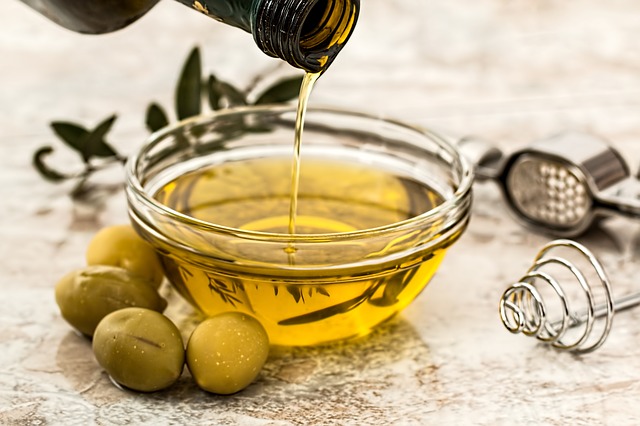
Extra Virgin Olive Oil — is yours real?

In a prior Cooking Tip, I discussed culinary oils in general. In this one, I want to focus on one type in particular – Extra Virgin Olive Oil.

This is one of the most expensive type of culinary oils you will buy and we all like to make sure we get the best for our money. I have done some research on how to pick out a great olive oil and following are what the experts tell us.

Here are certain things to look for.

  1. The harvest date – The “Best By” date may be up to 2 years after pressing of the olives. The “Harvest” date is a much better indicator of freshness. Try to pick one with the most recent date, remembering that olives are usually harvested in the fall and winter, meaning the harvest date for what is on the shelf will be the year before.

  2. The container – Look for oil that is in a dark container. Light can degrade the oil. Pick an oil where the container protects the oil from the light.

  3. Country/Region of origin – Look for where the oil was sourced. Higher quality olive oils will be sourced from one country. Note that wording like “Product of Italy” might only mean that it was shipped from Italy, not necessarily that the olives were grown and harvested in Italy.

    Less pricey & mass market olive oils are often a result of buying cheap bulk oils from all over the world and blending them. This means less quality control over the handling of the oil but it also means these oils lack the distinct flavor that you expect from a good olive oil.

  4. The Cultivars – Look for the specific olives that have been harvested. Absence of the area of origin and the cultivars may (though not always) indicate lower quality oil.

If at all possible, taste the oil before purchasing it. This generally means going to a gourmet food store or a shop that specializes in oil. The typical supermarket is not going to offer tastings outside of the rare special event.

The reason that we must be savvy olive oil shoppers is that some deficits in the industry have been documented. In a 2016 article from the Denver Post, the writer noted that about 75% of the extra virgin olive oil sold in the US is often diluted with lower quality olive oil. The article goes on to note that a 2010 University of California study found that 69% of imported oils sold in California stores at that time failed to meet international standards for olive oil.

Not only will the authentic, high-quality extra virgin olive oil give you tremendous flavor and more variety of that flavor but the fresher, more pungent-tasting oil is higher in antioxidant-rich polyphenols.

To be fair, since these exposes, the industry has attempted to improve quality standards. In 2010, the USDA issued the “United States Standards for Grades of Olive Oil and Olive-Pomace Oil.” However, these standards are voluntary. Producers may choose to seek certification by the USDA as “US Extra Virgin Olive Oil” if they wish, but it is not mandatory.

Some states have gone further, including California. They have adopted standards recommended by the Olive Oil Commission of California. According to this website, “California olive oil handlers who produce 5,000 gallons or more are required by law to participate in the OOCC’s mandatory government sampling and testing program. Producers with less than 5,000 gallons may voluntarily participate in the OOCC’s government sampling program.”

The California Olive Oil Council (a different entity) has a mission to uphold “the highest standards within the olive oil industry through its Seal Certification Program”. The members of COOC must submit their oils for testing and evaluation to ensure they meet the qualifications to be labeled Extra Virgin Olive Oil. Therefore, if you buy an oil with the COOC seal, you can be assured that you are getting the real thing.

What do you do on a daily basis, though, in your kitchen? Authentic, high-quality extra virgin olive oil can be very expensive. If for no other reason, you probably don’t want to use that for all of your oil needs. That is why most of us have other more moderately-priced oils that we use for general cooking use. We save that special oil for vinaigrettes, for dipping and other uses where the flavor shines through.

What is in your kitchen? Take a look at your olive oil bottles and let me know what you see. I looked in my pantry and I have two different olive oils, only one of which is extra virgin. When I looked for the above items on the extra virgin label, this is what I found. Even though I purchased it from a reputable olive oil retailer, it had no harvest date. (I wonder if this was due to the fact that the oil was brought into the store in a bulk fashion and then bottled and labeled by this particular retailer.) It did list both the country from which the olives were harvested as well as the particular varietals. It was packaged in an appropriate bottle. Since it was a Spanish oil, it did not have COOC certification. All in all, not bad.

The next time I am in my local supermarket, I am going to look for these recommendations. My guess, though, is most of those on the shelf will be sorely lacking. Let me know what you find, not only in the kitchen but also where you shop!


Cooking Tips · Ingredients

Paprika Galore

My husband wanted to smoke a chicken the other day and I was happy for him to do so! The poultry rub he was using called for paprika. When he went to my spice drawer, there were three different varieties from which to choose. How many do you have in your spice cabinet? My favorite spice store, Savory Spice, (This is an affiliate link and I may earn a commission if you decide to purchase.) sells six different paprikas. Another popular spice shop sells four. What is with all these different varieties and when do you use which one?

Paprika is a spice made from ground red peppers. It is not made from any one pepper and is often a variety of peppers. Its flavor can range from mild to pungent. Its color ranges from bright orange-red to deep blood-red. Most commercial paprika comes from Spain, South America, Hungary & California.

In the spice shop, you will see some paprikas labeled sweet, some hot, some smoked & others may have a combination of those terms. The difference comes from the specific variety of pepper and how the pepper is processed.

The most common is sweet paprika. It may also be called “Hungarian paprika” or just “paprika”. It is very deep red in color and has a subtle flavor. In actuality, the Hungarians list eight different varieties of Hungarian paprika ranging from mild to very hot. In the US, if you see a bottle labeled “Hungarian”, it will most likely be of the sweet, less hot variety.

Smoked paprika is a Spanish innovation and is produced by slowly smoking & drying the peppers over an oak fire. This gives the product a rich, smoky quality. You may see the term “Pimenton” when referring to this Spanish smoked variety. There are three versions:

  1. Dulce – sweet & mild

  2. Agrodulce – bittersweet, medium hot

  3. Picante – hot

Two varieties of pimenton (Pimentòn de Murcia & Pimentòn de la Vera) have actually been given “Protected Designation of Origin” by the European Union. This means they cannot be given these names unless they are produced using traditional techniques and come from these specific regions of Spain.

Another protected product is Piment d’Espelette. Although not truly a paprika, it is similar in that it is also made from ground peppers. These peppers are grown in the Basque region of southwest France. Its flavor is said to be bold & warm. The peppers are hung to dry in the sun for at least 15 days and up to 3 months. There is also a version from California, called Piment d’Ville.

When should you use which variety? If your recipe just calls for “paprika” and does not specify which kind, it is best to use the Hungarian, sweet variety. Smoked paprika is recommended for seasoning grilled meats or if you want to add a smoky flavor to your dish. The hotter varieties are great for soups, stews or chilis.

Have fun and experiment with the different paprikas. Whether you just want to add a dash of color, a mild spiciness or something more bold, there is a paprika for you!

Cooking Tips · Ingredients · Techniques

Thanksgiving Left-overs — make sure they don’t make you sick!

Are you a lover or hater of leftovers? I’m definitely a lover – not only is the flavor of some dishes enhanced by a rest overnight in the refrigerator but it is great to have an easy & quick meal sitting there after a day of work. It makes life so much easier. One time that you will surely have left-overs is after a Thanksgiving meal. You can do so much with those left-overs but you need to store them in the best and safest way. That is what I will be talking about in this tip.

Hot foods (including leftover turkey) should be packaged and refrigerated within 2 hours after serving. (For turkey, after you cut the meat off the bones, save the bones to make a great turkey broth.) The concern for bacterial growth is when food is left in the “danger zone” between the temperatures of 40° and 140° for more than 2 hours (reduce this to 1 hour if the ambient temperature is above 90°). That is why it is important to keep your food hot (at least 140°) or refrigerate it so the temperature drops to less than 40° within 2 hours. For cold foods, keep it under 40° at all times.

For large pieces of meat, it is best to cut it into smaller pieces to quicken cooling. For a dish such as soup, you will want to portion it into shallow containers to allow faster cooling. You can place these items directly into the refrigerator or if you want more rapid cooling, use an ice water bath.

All leftovers should be wrapped well in air-tight packaging. This helps keep bacteria out while retaining moisture and preventing your left-overs from picking up other odors from your refrigerator.

Most left-overs can be stored safely in the refrigerator for 3-4 days. Here is a chart from the USDA about recommended refrigerator times. For longer storage, freeze the packaged left-overs. Generally, these items can be frozen for 2-4 months. Although you can safely freeze them for a longer time, the food does tend to lose moisture and flavor. Here is another USDA link that talks more about freezing with more specific recommendations for time.

When thawing them, you still need to be aware of the danger zone. That is why it is not recommended to thaw items by sitting at room temperature. Rather, thaw them overnight in the refrigerator. For faster but still safe thawing, use either a cold-water bath (make sure the leftovers are in a leak-proof package) or the microwave. Not all foods need to be thawed before re-heating. You can go directly from frozen to hot either on the stovetop or in the microwave.

One important caveat – when re-heating leftovers, you want to take them up to 165° as measured with a food thermometer. Not only will this temperature assure safety as far as bacteria is concerned but it will also be safe to re-freeze the item, if necessary.

How do you like to use your Thanksgiving left-overs?
Email me with your favorite ideas and I will share them with others!

Cooking Tips · Ingredients

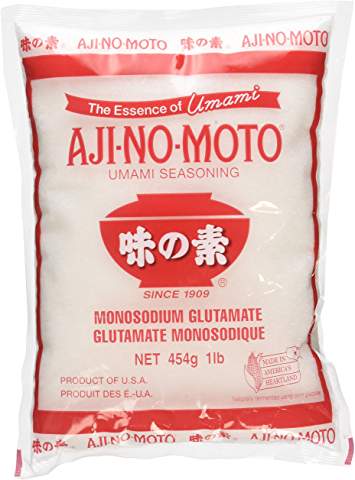
MSG — What is the truth?

Most of you have probably heard about MSG, an abbreviation for monosodium glutamate. What you have heard has undoubtedly been negative. I decided to look at some of the research about this substance so you can make an intelligent decision about whether you want to use it in your kitchen.

This substance has long been used to create a taste called umami, which is a savory taste. Think eating a steak or the taste of soy sauce in your dish – that’s umami. The Japanese & Chinese have long used it as a flavor enhancer. In today’s world, though, we are cautioned against ingesting it. It has been supposedly linked to headaches, breathing issues and other problems. As early as the 1960s, people began talking about Chinese restaurant syndrome. This was the presence of certain physical symptoms after ingesting food containing MSG. In full disclosure, when I was in school, I participated in a clinical trial to determine if these health issues were related to ingesting MSG. I don’t recall the results of that particular study; all I remember is that I did not personally react to it in any way.

An interesting article published in U.S. News & World Report sheds some light on this. As they point out, monosodium glutamate is composed of sodium and glutamate. The latter is an amino acid that can be found naturally in foods such as tomatoes, Parmesan cheese and mushrooms. They comment that in the 1990s, scientists began questioning this supposed syndrome partly because Chinese people did not suffer from it despite ingesting it much more heavily than Americans. More studies such as the one I had participated in were done and they demonstrated that most people did not have any symptoms from MSG. These researchers concluded that there is no scientific evidence for the Chinese restaurant syndrome.

One possible benefit from MSG is that it contains two-thirds less sodium than table salt and, therefore, might decrease the need for salt while still enhancing the flavor of your dish.

I am not advocating that you use MSG. There are still some sources that do not believe that it is safe. I am just pointing out that the scientific evidence does not support the relationship between MSG and health issues. Our own FDA considers it GRAS (Generally Recognized as Safe).

If you do want to try it, just don’t overdo it. For a pound of meat, only use ½ teaspoon of MSG. For 4-6 servings of soup and vegetables, ½ teaspoon MSG is best. Adding more than the suggested amount of MSG will not make the food taste better.

If you have no interest in adding this to your food, consider the umami-boosting ingredients such as tomatoes, mushrooms, Parmesan cheese, soy sauce, etc. For example, adding just a small amount of soy sauce to your Thanksgiving gravy can enhance the meaty flavor.

Have fun, do some experimenting and keep cooking!