
Cooking Tips · Ingredients

Cooking with Alcohol

You have probably noted that many recipes call for some type of alcohol, whether it be wine, a liqueur or other type of spirit. You may have wondered if the alcohol is necessary or whether you could either leave it out or substitute another liquid. There is also some misinformation out there on how much of the alcohol cooks off with heat. In this tip, I will help you with some of these conundrums.

Alcohol does a number of things in your dish. Here are a few:

• It adds flavors, not only the flavor of the alcohol but it also causes chemical reactions, which produce new flavors.

• It adds acidity.

• The sugar in the alcohol can caramelize, adding a different flavor.

• It can soften harsh flavors & highlight others.

• The fermentation intensifies & concentrates the fruit essence of liqueurs, cordials, brandies & wine.

So, yes, the recommended alcohol generally makes a difference in your cooking. Let me give you an example. I have a recipe for a delicious cake that is filled with a raspberry mixture. It calls for 6 tablespoons of a pear liqueur – not much for the entire cake. One time I made it without the liqueur because I couldn’t find any to purchase. The cake was nothing special and I wondered if I had done anything wrong. The next time I made it I used the liqueur and all the flavor & brightness that I was expecting returned. So, could I make the cake without the alcohol? Yes. Would it taste the same? No.

Can you substitute another liquid such as chicken broth, fruit juice or even water? Yes, but do not expect the end dish to be the same. That doesn’t mean it will necessarily be bad but it won’t be the same. That is why I encourage you to try the recipe as written with the alcohol before you attempt any substitutions.

You do not have to buy the most expensive wine or other alcohol. You may have heard the adage: “Don’t cook with a wine you wouldn’t drink.” That is not true. A 2007 New York Times expert did an experiment cooking different dishes with different wines – all at different price points. What the author found was that “wines that I would have poured down the drain rather than drink were improved by the cooking process, revealing qualities that were neutral at worst and delightful at best.” “Wines of complexity and finesse were flattened by cooking or, worse, concentrated by it, taking on big, cartoonish qualities that made them less than appetizing.” One caution the author made was to avoid wines with abundant tannins as they can concentrate during cooking and become very astringent and even bitter. There are some general recommendations and if you want those, email me. If you shop at a place where the staff knows the alcohol, ask them for recommendations.

One last item I want to cover is that contrary to popular belief, alcohol does not easily cook off. A study done by the US Department of Agriculture showed that even after cooking an item for 30 minutes, 35% of the alcohol remained. After 2½ hours, 5% remained. If you want to read the actual study, email me.

I understand that some people just don’t want to buy alcohol. Neither I or my husband drink any alcohol. However, because of its amazing qualities in the kitchen, I always have some available.

Cooking Tips · Ingredients

Parmesan Cheese — what is it and how do you use it?

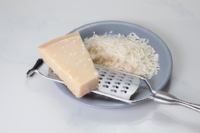
Some people love all kinds of cheese; some have a more limited palate and then some of us (including me) have definite likes and dislikes but tend towards the former. One cheese, though, that most of us probably enjoy is Parmesan – and I am not talking about powdered stuff that comes in a green can!

Parmesan is a hard, dry cheese made from skimmed or partially skimmed cow’s milk. It is made in multiple countries but the most famous and sought-after is Parmigiano-Reggiano from Italy. To be called that, there are very strict controls as to how it is made and from where it is made. Not only that, but in 2008, European courts ruled that this Parmigiano-Reggiano is the only cheese that can be called Parmesan. Most of the world followed this ruling but not the US. Here, you fill find a parmesan-style cheese called Parmesan but to be called Parmigiano-Reggiano, it must come from that specific area of Italy.

There are so many wonderful cheeses out there to eat and with which to cook. Many are European but we also have excellent cheese makers here in the US. More and more of our supermarkets are expanding their specialty cheese selection. Get out there and try some. There are bound to be cheeses that will please everyone!

Cheese lovers will tell you that you should only use the “real” thing – Parmigiano-Reggiano. If you choose a cheese labeled as such, you won’t disappointed but it will cost you more than other cheeses just labeled “Parmesan”. I encourage you to do taste tests and decide for yourself. Also, it may be worth the higher price for a cheese board but it might not if all you are doing is grating it on pasta. The choice is yours – and isn’t it wonderful to have such choices?

Another bit of advice for you is not to throw away the rind when you are finished with your Parmesan cheese. When you are finished, toss the rinds in an airtight plastic bag and put in the freezer. Then, when you are making a pot of minestrone or other soup, toss in a rind. Another ingenious use is to make a stock out of the leftover rinds. Here is a link to a recipe to do just that. Once you have the cheese broth, use it in your risottos, pasta dishes or meat dishes.

Cooking Tips · Ingredients

Onions — techniques & applications

Onions – do you love or hate them? Onions are such a ubiquitous ingredient in so much of our savory cooking. When a recipe calls for chopping or slicing them, do you stop to think how you should do this or do you just grab your onion and knife and go to it? In this Cooking Tip, I want to explain why how you do this simple task can make a difference in the final dish.

The first question is whether you want your onions to just melt into your dish such as you would want in a soup or sauce. Or, do you want some texture remaining as you would for French Onion soup or caramelized onions?

If you want the onions to soften, you should cut them crosswise into small pieces. Here is a link to a video on how to do this. (One caveat: I think making the horizontal slices first followed by the vertical is easier.) If you want texture, you should slice pole to pole. This video also demonstrates that.

How you cut up your onion will also change the resulting taste. When you cut crosswise, you cut through more onion cells and this leads to a stronger onion aroma/flavor. When cutting pole to pole, fewer cells are ruptured, leading to a softer/sweeter flavor.

If you say how can an onion taste sweet, you have obviously never tried caramelizing your onions. If you had, you would admit that they can taste almost as sweet as candy – no kidding! To do that, slice your onions thinly pole to pole. Start heating a skillet with some butter and/or oil. Toss in your onions, add a sprinkle of salt (some prefer to add the salt when the cooking is finished) and stir. Cook until the onions start to turn brown; then turn down the heat to low and cook the onions until soft, brown and sweet. This will take anywhere between 30 and 60 minutes.

If they start to brown too quickly, add a splash of water and scrape up the brown bits. Turn down the heat and continue to cook. I like to cook them with a lid on the pan but just be sure to watch so they don’t burn. Some methods will have you start with more water and let it evaporate. Others will add a small amount of sugar to kickstart the caramelizing process. Some even add a bit of baking soda. I prefer the old-fashioned, longer process described in the prior paragraph but, do some experimenting to find your favorite method.

Toss these yummy caramelized onions on a pizza or your favorite grilled cheese sandwich.
You won’t regret it!