Cooking Tips · Ingredients

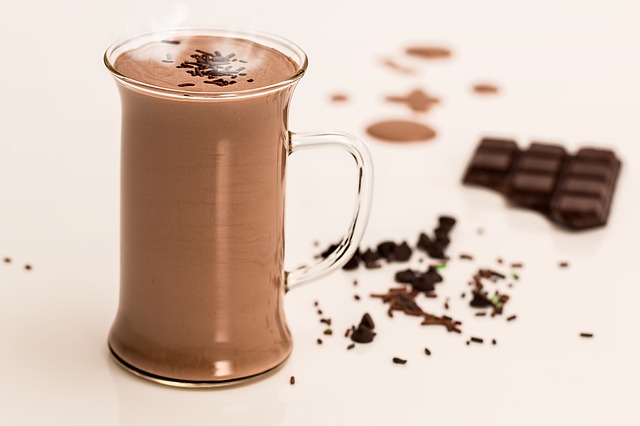
The most delicious cup of hot chocolate!

I am not sure what the weather is like where you live but we have been doing a lot of shivering, lately. When it is cold outside, doesn’t a cup of delicious hot cocoa sound good? Or, do you prefer a cup of hot chocolate? Aren’t they the same thing? Also, is there a better option than the boxed mixes from your supermarket shelves? That is what the Cooking Tip is all about this week.

I don’t know about you but I tend to use the terms hot cocoa and hot chocolate interchangeably but those in the know will tell you hot cocoa is a sweet, light-bodied beverage made primarily from cocoa powder, sugar and milk. It also often contains flavoring like vanilla or even spices like cinnamon.

Hot chocolate is just that – hot, melted chocolate. Made of good quality chocolate that is very finely chopped, it is then melted when combined with hot water, milk, or even cream. It may contain a flavoring like vanilla, but usually doesn’t have added sugar beyond what is in the chocolate. This beverage will be rich and thick and less sweet than hot cocoa. Which is better is, of course, a matter of personal preference.

Have you ever made your own hot chocolate or hot cocoa from scratch? Since a carton of hot cocoa is so inexpensive, you may ask why make your own? Besides taste, here is another reason. Here is a list of ingredients on the label of a popular hot cocoa mix. Sugar, corn syrup, modified whey, cocoa processed with alkali, hydrogenated coconut oil, nonfat milk, calcium carbonate, less than 2% of salt, dipotassium phosphate, mono- and diglycerides, carrageenan, acesulfame potassium, sucralose, & artificial flavor. To be fair this same company also offers a line called Simply Cocoa and has a much shorter & cleaner ingredient list: sugar, cocoa (processed with alkali), nonfat milk, salt & natural flavor.

If you like a shorter ingredient list, try making your own hot chocolate/cocoa mix. As I have often mentioned in prior Cooking Tips, the fewer ingredients you have in a dish, the more important it is to have good quality ingredients. Therefore, seek out good chocolate.

At its simplest, hot chocolate is just chocolate that has been shaved or cut up very small and melted with hot milk or cream. You may choose to add flavorings such as cinnamon, vanilla or cayenne. If you want a recipe, there are plenty available. As you look at these, you will see some of the best have a mixture of cocoa powder and good quality bittersweet chocolate.

Here is one from Epicurious that I have tried and can attest that is very good. Here is another one from The Kitchn. I have not tried this one but it looks very yummy.

If you want to try something a bit more involved but which sounds interesting, check out this recipe from Serious Eats. It takes its sugar to another level by toasting it first. It also contains more ingredients, including both white and dark chocolate, cocoa, expresso powder and malted milk powder. I haven’t had the time to try this one, yet. If any of you do, please let me know what you think.

I’m hoping that the type of weather that makes you want to drink hot chocolate (or hot cocoa) will soon be behind us, but until then, enjoy a delicious cup!
Cooking Tips · Techniques

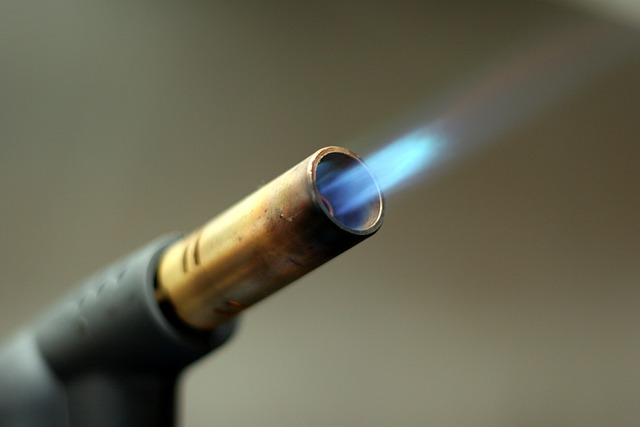
Do you need a kitchen torch?

There are certain kitchen tools that might be considered “essential” to a well-stocked kitchen and then there are others that are “nice to have”. A kitchen torch would, for most of us, be in the latter category. In this Cooking Tip, I want to discuss the uses for this tool as well as some shopping suggestions.

One of the main purposes for a kitchen torch is to apply a brûléed top to certain dishes. Another way of saying this is to caramelize the top. The most classic example is as in a crème brûlée. To make this dish, you make a type of custard, sprinkle sugar over the top and, with a flame, melt the sugar and turn it into a crunchy, caramelized top. Although some recipes will recommend using a broiler for this, a kitchen torch is an easier method with more control over the amount and depth of caramelization.

Custards are not the only dishes which benefit from a small amount of torching. Other dishes that you can brûlée are oatmeal, grapefruit, fresh figs, apples, bananas, goat cheese, cheesecake and so much more.

There are more uses to a kitchen torch than just making a brûléed topping. They are an easy way of getting that wonderful melted and brown cheesy topping on a bowl of French onion soup. Those browned tips on your meringue pie are a cinch with a kitchen torch. Another great idea is to torch your mac & cheese topping in lieu of putting it in the oven if you are impatient for that wonderful cheesy dish.

Have you got the makings for s’mores but no campfire? With a kitchen torch, you can enjoy these in a just a few minutes. I have never tried this but some cooks use their kitchen torches for charring the skin of tomatoes and peppers. This will give you a nice smoky taste and make it easier to peel the item. Some even use it to apply a quick final browning to a piece of meat.

Are you convinced that you need to get a kitchen torch? If so, the next question is which one to buy. I have one made by Kitchen Craft but certainly would not recommend that one. It is much too wimpy to be of much good. On the other side of the spectrum is just using a large propane torch that you would buy at a hardware store. That will certainly do the job, but if you are faint of heart (as I am), it might be a bit intimidating.

There are a few things you should look for when shopping for a kitchen torch. First, you don’t want it too heavy to use easily and it should feel comfortable in your hand. The flame should be adjustable so you can use it for many different tasks. For safety purposes, it is nice to have a lock to prevent it from activating when you don’t want it to do so. Although not necessary, a fuel gauge so you can see how much fuel you have is very useful. Take a look at the warranty, too, in case you have problem after purchasing it.

Different sources recommend different torches but there are some that come up repeatedly in reviews. First is the Iwatani Cooking Torch. Rösle is another brand that comes highly rated. A third quality company is Messermeister. Another brand to take a look at is BonJour. They have a few different models.

Do you have a kitchen torch that you love? Let me know which one it is. Do you have any special ways in which you use it? Please share your favorites!

Happy Bruleeing and Happy Torching!

Cooking Tips · Ingredients

An Onion Primer

Onions are one of those foods that every cook needs in their pantry. They are the basis of so many savory dishes. All the different types of onions can mean that such a simple vegetable can become confusing. In this Cooking Tip, I would like to try to clarify a bit about onions although it won’t be an exhaustive list of onion types. (For a much more in-depth discussion of onion types, refer to the National Onion Association website – yes there really is such an organization.)

Even though you can find onions in your supermarket year-round, they actually are seasonal. Spring/Summer onions are available March through August. Because they have just recently been harvested, they tend to be milder in flavor and, therefore, can be used in a raw form as well as cooked. Fall/Winter onions (aka storage onions) are left to grow longer resulting in larger onions with thicker skins and less moisture content. This means they last longer in storage but are also more pungent in flavor. To reduce this pungency, they are best in cooked applications.

Scallions are also known as green onions. (Some food experts would disagree with this generalization.) They are long and thin with a white bottom and dark green tops. They have a mild taste and can be used raw or cooked. They are wonderful thrown on a mixed green salad. I also love them as one of the toppings on a bowl of chili.

Spring onions are very young storage onions. They are harvested very early, which results in thin skins and a mild flavor. They look similar to scallions but have a larger bulb at the bottom. Although they are slightly spicier than scallions, they can still be used in a raw manner. They will sweeten up when cooked and are often grilled.

Shallots are small in size and range in color from white to rose. They are fairly mild and are often used in making sauces, vinaigrettes as well as Asian dishes.

Yellow onions are the most all-purpose. According to the National Onion Association, these onions account for about 87% of the onion crop in the US. If a recipe does not specify what type of onion, reach for one of these. They definitely have an onion flavor but are not overpowering. Although not great in a raw form, they turn wonderfully sweet when cooked.

Spanish onions look similar to yellow onions and may be displayed next to each other in the store. Because they are grown in a low sulfur soil, they are less pungent and tend towards sweetness. Beware, however, some stores do not differentiate between Spanish and yellow onions.

White onions are a staple in Mexican cooking. Some think they are milder and sweeter than yellow onions but they do tend to be tangier.

Red onions are often eaten raw but they can be fairly pungent. They are great for pickling and for topping tacos, chili or burgers. They also make a great addition to a roasted vegetable dish.

Leeks are also in the onion family. They have the shape of scallions but are much larger in size. Whereas the green portion of scallions can be eaten, the green part of leeks is very woody and is only good for flavoring stock. The white portion, however, is very mild and sweet. Despite that, they are usually not eaten raw as they tend to be fibrous in texture. They are a great base for certain soups and I make a great chicken pie that uses leeks and garlic as flavoring elements.

Sweet onions such as Vidalia and Walla Walla are very low in pyruvic acid. This is the component that makes your eyes tear when cutting them. Because of this, they are extremely mild in flavor. Another onion I have recently discovered is Sunions. Grown only in Nevada and Washington, they are a result of cross-breeding to produce a tearless, sweet and mild onion. The company claims to certify these characteristics before shipping to grocery stores. I recently received some samples and have just started trying them. Although I need to test them more, they do indeed seem to live up to their claims. I just saw that my local King Soopers (a Kroger store) has started carrying these.

Pearl onions are very small onions that are also mild. Although most often found in a white variety, pearl onions can also be yellow or red. They are generally not found loose and often hard to find fresh. Bags of frozen, pre-peeled pearl onions are usually fairly easy to find. Uses include pickling dishes & casseroles and even as a separate side dish.

Chives are relatives of onions but we also consider them an herb. They have a very mild onion flavor and, therefore, are often eaten raw in salads. They are also great sprinkled on an omelet and other dishes where you want a mild onion flavor. They make a nice garnish because of their vibrant green color. Cooking them is not recommended due to flavor loss.

With all these options, what should you keep around at all times? The answer may vary according to how you cook but I always have all-purpose yellow onions on hand. I also have a red onion available, a bunch or two of green onions as well as a few shallots. With these, I can make almost any onion-containing dish.


Cooking Tips · Techniques

Instant Read Thermometers

All of us have many different tools in our kitchen. One tool all of us should seriously consider adding to our tool chests is a good instant-read thermometer. It has so many uses to improve your cooking from ensuring meats are safe to eat but not overcooked to monitoring critical temperatures in candy making to helping to achieve a wonderful custard. I was recently asked how to know which thermometer to buy and which ones are accurate. That is the subject of this Cooking Tip. This post contains affiliate links and I may earn a commission if you decide to purchase.

I have my favorite instant-read thermometer – the Thermapen from Thermoworks. As these are more expensive than many other thermometers, I also want to tell you how to ensure whatever thermometer you use is giving you accurate readings.

Whatever thermometer you use should be checked for accuracy, preferably by the use of an ice water bath. To be useful, though, this has to be a properly made ice bath. To achieve this, fill a container with ice all the way to the top. If possible, use crushed ice as there will be fewer gaps between the ice. Add water to this container so that it reaches to about ½ inch below the top of the ice. If the ice is floating off the bottom, pour off some water and add more ice. If you have water below the level of ice, it will not be accurate. Insert your thermometer probe and stir in the center. Allow enough time for the reading to stabilize. If you keep stirring, the probe will not rest against an ice cube, which may give an inaccurate reading. Similarly, do not allow the probe to rest against the sides or bottom of the container. Now, your thermometer should read 32°F. If it does not, you should first check the documentation that came with the thermometer to determine whether the reading is within the manufacturer’s accuracy specifications. If it is within that range, do not try to adjust it. If the reading is outside that range, refer to your instruction manual to adjust the thermometer. If you would like a printable chart that details these steps, email me.

Some ask if they can instead use a pot of boiling water to check the accuracy of the thermometer. One of the problems with this is that the temperature at which water boils varies by your elevation. At sea level it is 212°F but this drops approximately 2°F for every 1000 feet you rise in elevation. You need to know what the boiling point is at your location to use this method. For an easy-to-use online calculator, see this link.

Once you know your boiling point, you can use the following method. Fill a saucepan at least four inches deep with water. Place the pot on the stovetop and allow the water to come to a rolling boil. When it comes to a boil, insert your thermometer probe a few inches into the water and wait until the reading stabilizes. Do not let the probe touch the sides or bottom of the pot. Keep it suspended in the water in the middle of the pot. Take this reading and compare it to your locale’s boiling point.

Another theoretical problem with using this method is that impurities or salt in the water can affect the boiling temperature of water. Therefore, ensure your water is as clean as possible.

Once you have an accurately-reading thermometer, your next step is to use it properly. To do this, the tip of the probe should be used and it should be placed in the center of the thickest portion of the food. If the food item is large, be sure to take readings in several places. Insert the probe into the food and push past the center, watching how the temperature reading changes. Then, withdraw the probe, again watching the readings. Typically, the center will have the lowest reading and, therefore, is the best place to gauge doneness.

We are so blessed in our world today to have such great technological advancements that can enhance the results of our cooking endeavors. The food thermometer is just one of those advancements that I encourage all of you to consider.

Cooking Tips · Ingredients

Chocolate Tidbits

As February – and thus Valentine’s Day – approaches, chocolate may be entering your mind. Or, if you are like me, chocolate is never far from your mind! In this Cooking Tip, I would like to talk a bit about this delightful ingredient.

Chocolate comes from the cacao tree, which produces cacao pods. These pods contain cocoa beans and when the husks are removed from the beans and the beans are roasted and dried, you are left with cocoa nibs. These nibs are then ground to produce what is termed cocoa mass or cocoa liquor. This cocoa liquor is the main ingredient in chocolate. It is composed of cocoa particles suspended in 50-60% cocoa butter. When this chocolate liquor is further processed and mixed with sugar, cocoa butter and sometimes milk solids, you end up with what we think of as chocolate.

When you look at chocolate in the supermarket that is meant for culinary purposes, you will be faced with terms such as white, milk, semisweet, bittersweet or unsweetened. You may also see the term “dark” chocolate, which is often accompanied by a chocolate percentage. Let’s delve a little deeper into these terms by looking at requirements that the FDA has set for some of these terms.

Unsweetened chocolate is solid chocolate liquor. It will sometimes be labeled as 100% chocolate. It has its place in baking but is extremely bitter, unsuitable for munching.

For milk chocolate, the FDA specifies it must contain not less than 10 percent chocolate liquor. You may not know the exact percentage as often the manufacturer does not list a chocolate percentage on these bars. Other ingredients that are allowed are cocoa fat, sweeteners, spices, nuts, flavorings, dairy products and emulsifying ingredients.

White chocolate contains no cocoa solids but only cocoa butter – not less than 20% according to the FDA. Other allowable ingredients include sweeteners, dairy products, spices, nuts, flavorings and emulsifying ingredients.

The FDA does not distinguish between bittersweet and semisweet chocolate. To be labeled such, it needs to contain at least 35% chocolate liquor. This low amount may be surprising to you as I suspect most of us think that to be called bittersweet or semisweet, it should contain at least 50% chocolate liquor. As with the other types, the FDA allows cocoa fat, sweeteners, spices, nuts, flavorings, emulsifying agents and even dairy. This, again, may be surprising to you as I think many of us assume dark chocolate will not contain any dairy. Many do not. However, the FDA tested nearly 100 dark chocolate bars looking for the presence of milk. They found that 61% of the bars contained milk, including those that did not list milk as an ingredient. They postulate this may be due to the fact that companies use the same equipment to process both milk and dark chocolate and so there may be traces of milk on the equipment that makes its way into the dark chocolate. If you want more info on this study, email me.

Another label that we often see on chocolate bars in the store is “dark” chocolate. This is not a term defined by the FDA. However, it is generally thought of as a product with a higher percentage of chocolate liquor and no milk products. Many do, though, contain milk. These are what we think of when we see bars labeled such as 60%, 70%, etc.

Coating chocolate (or melting wafers) are not real chocolate at all. Although some of them may contain some cocoa, a look at the ingredient list will show you how far they are from real chocolate. The advantage of this product is that it does not require tempering to give you a hard & shiny coating that does not melt in your hand. If you have ever made candy or truffles and coated them with melted chocolate, you will quickly see why tempering is important. Without tempering the coating will be dull, soft and melt in your hands. Tempering is a method of melting and cooling the chocolate so that specific fat crystals form. This results in chocolate that is shiny, has a snap when broken and does not melt in your hand.

What is the best type of chocolate to use for your culinary needs? I always recommend starting with whatever is specified in your recipe. If it calls for dark chocolate, something around 60% would be a good place to start.

As far as brand of chocolate, everyone has their favorites. I did a little research to see what the food community thought. As can be expected, there were a wide variety of opinions – too many to even report. An excellent brand to start with is Ghiradelli, especially if you want dark chocolate. It is also readily available in most supermarkets. For unsweetened chocolate, Baker’s unsweetened baking bar is preferred by many and, again, should be in your local supermarket.

Another question that is often asked is if you can substitute chocolate chips for chocolate bars. As with so many questions, the answer is “It depends”. First, it depends on the brand. Some chocolate chips (including Ghiradelli) have the same ingredients as the bars and thus, you most likely can substitute without problems. However, some chocolate chip brands contain added stabilizers that help them hold their shape when baked. You would not want to use these for making candy, truffles, puddings, etc. However, they will work just fine in brownies or bars.

Enjoy your chocolate in whatever form you prefer. Bake something special, munch on a box of truffles or indulge in a decadent hot chocolate!

Cooking Tips · Techniques

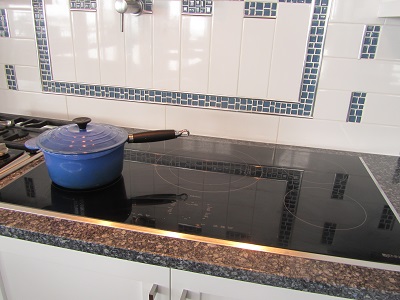
Induction versus gas cooktops

For all of my married life (32 years this May), we have moved from house to house every 2-3 years. Almost all were rental houses and, thus, I had no say about the kitchen or the kitchen appliances. When my husband reached mandatory retirement from that job, we moved here to Colorado and began building our retirement home. Finally, I could have the kitchen I wanted! As I planned that kitchen, I just assumed I would have a gas cooktop. Afterall, doesn’t every avid cook use gas?

About that same time, I began to hear and read about induction cooking. After much research, I finally decided to put in an induction cooktop. Because of a bit of concern, though, I also installed a small two-burner gas cooktop next to my main induction cooktop. Now, three years later, I can tell you that I LOVE my induction. The only time I use my little gas cooktop is if I need more space than I have on my induction or if I want a real flame for something like quickly roasting a pepper. In this Cooking Tip, I would like to explain why you need to consider induction the next time you have a choice about your cooktop.

I love the way Consumer Reports describes induction cooking. “The power and precision of the technology comes from an electromagnetic field below the glass cooktop surface that transfers current directly to magnetic cookware, causing it to heat up. Essentially, induction cuts out the intermediate step of heating up a burner and then transferring the heat to the pot.”

What is so great about induction? It heats much faster than gas/electric but you also have infinitely more control. If you want to turn down the heat, it responds immediately. Compare that to an electric cooktop where you may need to take the pot off the heat until the burner responds. Even with gas, the grate remains hot for quite a while. I can take a large pot of water to a rolling boil in a short time and when I turn off the heat, the boiling ceases within a second or two.

Depending on the cooktop model, you can achieve & maintain very low heat for as long as you want. Most experts will tell you that you should not melt chocolate over direct heat due to the risk of overheating and/or burning. On the induction, this low heat level allows you to safely melt your chocolate and hold it in that melted state. I also often use the lowest settings to keep food warm without overcooking.

These cooktops are very easy to clean. In fact, since the cooktops themselves don’t heat up (although they will be warm from being in contact with the hot pan), you can quickly wipe up spills or splatters as soon as they happen.

So, why not go with induction? Firstly, you do need the proper pots/pans. If a magnet will not stick to the bottom of your pan, it will not work on induction. I have seen an accessory you can supposedly put between a regular pot and the induction cooktop to allow your regular pot to work. I have not tried this but, if it does work, it would not be nearly as efficient or effective.

A minor disadvantage is that most induction cooktops do emit a buzzing and/or a clicking noise. This doesn’t bother me but I did know someone for whom this was a major problem.

Another problem is one that I was not aware of until very recently but, as I think back, I can testify that this is true. I am a big proponent of using digital thermometers for everything from cooking meat to custards and more. The magnetic field of an induction cooktop can interfere with those digital thermometers. Removing the pan from the cooktop is necessary to get an accurate reading. Alternatively, you can use an analog thermometer.

When I decided on this cooktop, I was pretty nervous. Afterall, it is a big purchase and not one you are going to easily change after it is installed. Now, three years later, I can tell you that I am so happy I purchased my induction cooktop. It is wonderful! And, I have never heard the opposite from anyone else who also installed this type of appliance. That says a lot.

Cooking Tips · Techniques

Cast Iron Cookery

I love my cast iron cookware. I have both enameled and unenameled items. Many people shy away from regular, unenameled cookware because they think the care of it is a hassle. In this Cooking Tip, let’s look at what is true and what is not about unenameled cast iron.

Why consider unenameled cast iron? It is extremely durable and will last for years as well as it is affordable. You will never get a better sear on a piece of meat than you will in a hot cast iron pan. It is also great for making a great crust on a dish such as hash or cornbread. It is oven-safe and so, you can go from the cooktop to oven and back again with ease – just beware the handle will get very hot and you must use an oven mitt or pot holder. It can also tolerate very high heat levels, even more than stainless steel.

Many people say a well-seasoned cast iron skillet is as nonstick as a regular nonstick skillet. Whereas it will get very nonstick the more you use it and the more seasoning it acquires, it will never be as nonstick as a modern coated nonstick skillet.

Most new cast iron pans are sold pre-seasoned. Ones you buy at a flea market or an estate sale may or may not be seasoned. Even with a new pre-seasoned pan, you may want to put it through a round or two of seasoning. The nonstick properties will only improve with more seasoning. Of course, just using your cast iron pan on a regular basis improves the seasoning.

Many posts claim one of the advantages is that a cast iron pan will heat evenly, meaning there will be no hot spots. Therefore, your food will cook evenly. In reality, a cast iron pan will develop definite hot spots. Also, cast iron is a relatively poor heat conductor. This means that it is hard to get an even heat distribution across the surface of the pan. The best way to evenly heat a cast iron pan is in the oven.

Those new to cast iron cookery need to realize that a cast iron pan will take longer to heat up than non-cast iron pans. It will also hold on to that heat much longer. Therefore, just because you take it off the heat does not mean the cooking will stop. You must remove the food item from the pan to really stop the cooking process quickly.

Your cast iron pan may be the most durable pan in your kitchen. It is actually sort of difficult to hurt a cast iron pan. And, the more you use it and the more the seasoning builds up, the more durable it becomes. You may have read to never use soap on your cast iron pan. Most experts disagree with this and say that today’s gentle soaps will not harm your pan. Once the seasoning has built up, you may also use gentle scrubbing along with the soap. It is not recommended, though, that you allow your cast iron pan to soak in water. Make it the last thing you clean. Thoroughly dry it and heat on the stovetop until hot. Follow this by rubbing the pan very lightly all over with an unsaturated cooking fat, like canola, vegetable, or corn oil. Buff it well to remove any visible oil. Repeat this process after every use and cleaning. One caveat, do not put it in the dishwasher.

Another care tip you may have read is that you should never use metal implements. According to Dave Arnold, a cast iron expert, it is good to use metal implements as “gentle scraping of metal along the bottom of the pan while cooking helps to even out the surface of the seasoning and make it more durable, not less.”

There are many brands of cast iron cookware on the market. One of the most highly recommended is the Lodge cast iron skillet. I have one and use it on my small gas cooktop. My major cooktop is an induction and I do not like to use it on that due to imprinting of the logo from the bottom of the skillet. Because of that problem, I bought a second skillet without that type of logo, an Analon Vesta. It was more expensive than the Lodge but it was worth it as I can use it on my induction cooktop without worry and – it came in a pretty cobalt blue to match my kitchen!

If you have cast iron pans, I hope this article encourages you to use them more than you currently do. If you don’t have one, I hope you consider adding one to your pots/pans inventory. I do not think you will regret it!

Cooking Tips · Ingredients

Vanilla — real versus imitation

Of all the flavorings you might have in your pantry, I would bet that vanilla is the most common. It is also one of the most expensive and its price has just continued to increase. By weight, vanilla is worth more than silver. In my local supermarket as well as my spice shop, one bean can cost up to $10! The extract is upwards of $2.50 per ounce. So, what is vanilla and do you really need to splurge for that pricey bottle of vanilla extract or container of vanilla beans?

Real vanilla comes from the seed pods of the vanilla orchid. These plants are hand-pollinated and hand-picked one-by-one as they become ripe. After harvesting, the beans undergo a “curing” process, which involves a few different steps. Finally, the beans are ready for selling to consumers or used to make vanilla extract or paste. This entire process is time-consuming and labor-intensive.

There are a number of reasons that vanilla is so expensive that range from the difficulty in growing it as well as a drop in the market when artificial vanilla made an appearance. Many vanilla farmers got out of the business at that time. The demand for real vanilla has been increasing but the supply has been much slower in recovering. Due to the recent high demand, farmers face a new threat – their beans are being stolen. To counter this, some of the farmers are picking their beans while still green but this leads to an inferior product. To read a more in-depth article on this, look at this Business Insider article from September 2018. For another discussion on the problems, especially the harvesting of green beans, see this article from The Vanilla Company .

Imitation vanilla is a synthetic flavoring composed primarily of vanillin. Vanillin is found naturally in vanilla beans but may also be synthesized from clove oil, wood pulp, or other sources. This vanillin is diluted with a liquid and some producers also add other flavors to increase the complexity of the flavor profile as well as caramel coloring.

With these prices and problems within the vanilla industry, you may be wondering if you really need it or whether imitation vanilla will be just as good.

Cooks Illustrated has done taste tests using both real and imitation vanilla. Their most recent testing was just published in the Jan/Feb 2019 issue of their magazine. They tested seven real vanillas and three imitation and used them in recipes for vanilla pudding and vanilla frosting. They then tested the top-rated real & top-rated imitation in vanilla cookies and yellow layer cake. Believe it or not, Baker’s imitation vanilla flavoring came out on top among all the contenders. For a real vanilla, they preferred Simply Organic pure vanilla extract.

Similar results were found in testing published by Epicurious as well as one at Serious Eats.

All of this can be quite an eye-opener as we are told over and over that we should only be using the “real thing.” As you can see from actual side-by-side testing, the more inexpensive imitation vanilla will probably do the job of flavoring most of your dishes just fine. However, it might be hard for some of us to not reach for the authentic vanilla. I must admit, though, that when I am looking at the price in the store, reaching for the imitation is becoming easier. What about you? Are you convinced? Let me know!

Here’s to a wonderful 2019 full of baking and cooking!

Cooking Tips · Ingredients

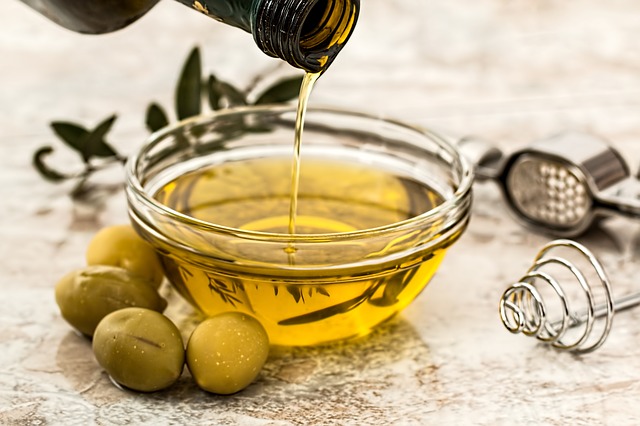
Extra Virgin Olive Oil — is yours real?

In a prior Cooking Tip, I discussed culinary oils in general. In this one, I want to focus on one type in particular – Extra Virgin Olive Oil.

This is one of the most expensive type of culinary oils you will buy and we all like to make sure we get the best for our money. I have done some research on how to pick out a great olive oil and following are what the experts tell us.

Here are certain things to look for.

  1. The harvest date – The “Best By” date may be up to 2 years after pressing of the olives. The “Harvest” date is a much better indicator of freshness. Try to pick one with the most recent date, remembering that olives are usually harvested in the fall and winter, meaning the harvest date for what is on the shelf will be the year before.

  2. The container – Look for oil that is in a dark container. Light can degrade the oil. Pick an oil where the container protects the oil from the light.

  3. Country/Region of origin – Look for where the oil was sourced. Higher quality olive oils will be sourced from one country. Note that wording like “Product of Italy” might only mean that it was shipped from Italy, not necessarily that the olives were grown and harvested in Italy.

    Less pricey & mass market olive oils are often a result of buying cheap bulk oils from all over the world and blending them. This means less quality control over the handling of the oil but it also means these oils lack the distinct flavor that you expect from a good olive oil.

  4. The Cultivars – Look for the specific olives that have been harvested. Absence of the area of origin and the cultivars may (though not always) indicate lower quality oil.

If at all possible, taste the oil before purchasing it. This generally means going to a gourmet food store or a shop that specializes in oil. The typical supermarket is not going to offer tastings outside of the rare special event.

The reason that we must be savvy olive oil shoppers is that some deficits in the industry have been documented. In a 2016 article from the Denver Post, the writer noted that about 75% of the extra virgin olive oil sold in the US is often diluted with lower quality olive oil. The article goes on to note that a 2010 University of California study found that 69% of imported oils sold in California stores at that time failed to meet international standards for olive oil.

Not only will the authentic, high-quality extra virgin olive oil give you tremendous flavor and more variety of that flavor but the fresher, more pungent-tasting oil is higher in antioxidant-rich polyphenols.

To be fair, since these exposes, the industry has attempted to improve quality standards. In 2010, the USDA issued the “United States Standards for Grades of Olive Oil and Olive-Pomace Oil.” However, these standards are voluntary. Producers may choose to seek certification by the USDA as “US Extra Virgin Olive Oil” if they wish, but it is not mandatory.

Some states have gone further, including California. They have adopted standards recommended by the Olive Oil Commission of California. According to this website, “California olive oil handlers who produce 5,000 gallons or more are required by law to participate in the OOCC’s mandatory government sampling and testing program. Producers with less than 5,000 gallons may voluntarily participate in the OOCC’s government sampling program.”

The California Olive Oil Council (a different entity) has a mission to uphold “the highest standards within the olive oil industry through its Seal Certification Program”. The members of COOC must submit their oils for testing and evaluation to ensure they meet the qualifications to be labeled Extra Virgin Olive Oil. Therefore, if you buy an oil with the COOC seal, you can be assured that you are getting the real thing.

What do you do on a daily basis, though, in your kitchen? Authentic, high-quality extra virgin olive oil can be very expensive. If for no other reason, you probably don’t want to use that for all of your oil needs. That is why most of us have other more moderately-priced oils that we use for general cooking use. We save that special oil for vinaigrettes, for dipping and other uses where the flavor shines through.

What is in your kitchen? Take a look at your olive oil bottles and let me know what you see. I looked in my pantry and I have two different olive oils, only one of which is extra virgin. When I looked for the above items on the extra virgin label, this is what I found. Even though I purchased it from a reputable olive oil retailer, it had no harvest date. (I wonder if this was due to the fact that the oil was brought into the store in a bulk fashion and then bottled and labeled by this particular retailer.) It did list both the country from which the olives were harvested as well as the particular varietals. It was packaged in an appropriate bottle. Since it was a Spanish oil, it did not have COOC certification. All in all, not bad.

The next time I am in my local supermarket, I am going to look for these recommendations. My guess, though, is most of those on the shelf will be sorely lacking. Let me know what you find, not only in the kitchen but also where you shop!


Cooking Tips · Techniques

Meringues — French, Swiss & Italian

Last week’s Cooking Tip talked about different styles of mousse and how some styles used a meringue as part of the dish. In this week’s Tip, I would to spend more time discussing the different types of meringue – French, Swiss and Italian.

In the simplest terms, a meringue is a mixture of beaten egg whites and sugar. It can be used to fold into cake or cookie batters, as a filling, topping or a stand-alone cookie that melts in your mouth when you eat it. Since the basis of a meringue is beaten egg whites, you may want to review the prior Cooking Tip on egg white foams before attempting these different types of meringues.

French meringue is the most basic of the meringues. It is made by beating egg whites to the foamy stage (45-60 seconds) and then slowly adding sugar and continuing to beat into a soft, airy and light mixture. Adding the sugar too early or too late can lead to disappointing results. Adding it after about a minute of beating when the whites have reached the foamy stage but before they begin to form peaks is ideal. This type of meringue is the easiest to make but is also the least stable. Therefore, it is usually used when it is going to be baked – either in a cake batter, meringue cookies or a meringue shell that is then topped with fruit, whipped cream or a type of mousse.

Swiss meringue is prepared differently. Egg whites and sugar are put into a bowl that sits above boiling water – a type of bain marie. When the mixture reaches the temperature of about 120° to 140°F, the mixture is removed from the heat and then beaten to stiff peaks. This method results in a meringue that is less fluffy than French and less stable then Italian. The recipe testers at Serious Eats, though, claim to have found a technique that will make your Swiss meringue as light as a French meringue but as stable as Italian. They do this by cooking it to a higher temperature – up to 175°F. They also whip it vigorously at high speed for about 5 minutes, until it is very glossy, thick & stiff. This type of meringue is often used as the base for buttercream frosting.

Italian meringue starts by putting the egg whites into your mixer bowl and beating to soft peaks. Then, a sugar syrup that has been heated to 240°F is slowly drizzled in while you continue to whip until the meringue is very voluminous and reaches the desired peak. Because this sugar syrup is very hot, one must be very careful when using this method to prevent burns. It is the most stable of the meringues but is also heavy and thick. It is what is used to make nougat and is also the best one for topping meringue pies.

Watching egg whites transform into a beautiful fluffy meringue is almost miraculous. Using this meringue to then top your pie, to lighten your cake batter or to bake into a pavlova or meringue cookie is further evidence of the wonderfulness of eggs!