Cooking Tips · Ingredients

Are you into Buddha Bowls?

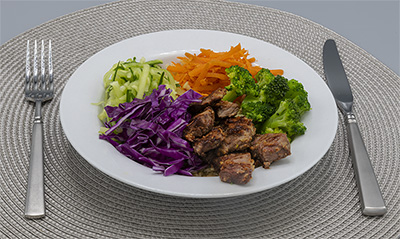
 A tasty Bulgogi Beef Bowl I recently made . A tasty Bulgogi Beef Bowl I recently made .

Have you noticed the popularity of so-called “Buddha Bowls” lately? Just what are they and why are they all the rage? This Cooking Tip will attempt to answer these questions.

Although “Buddha Bowl” is the most common term I see, they have also been called Grain Bowls, Hippie Bowls, Macro Bowls and other terms. They are basically very artfully arranged single-serving bowls of food. They are usually, but not exclusively, vegetarian.

There is no definite explanation for the term but according the authors of Buddha’s Diet: The Ancient Art of Losing Weight Without Losing Your Mind, it may have come from the way that Buddha ate. “Buddha woke up before dawn every morning and carried his bowl through the roads or paths wherever he was staying. Local people would place food in the bowl as a donation, and at the end he would eat whatever he had been given.”

The Urban Dictionary has a different idea. They define it as “a bowl which is packed so full that it has a rounded “belly” appearance on the top much like the belly of a buddha.”

No matter the origin of the name, they are generally considered healthy and they are composed of fresh and whole ingredients. There are certain elements that usually go into each bowl although the variations are only limited by your taste and imagination. Most bowls contain the following components: Whole Grains, Veggies, Protein, Dressing and Toppings.

Grains – Keep it interesting by choosing different grains, preferably whole grains. Try brown, black or red rice, farro, quinoa, bulgur, barely or millet. These can be made ahead and kept if the refrigerator for a few days.

Veggies – There are a plethora of veggies out there that you can add either raw or lightly cooked. Not only do the veggies add nutrients, they also lend beautiful color to the bowl. Choose from greens, carrots, cabbage, cucumber, bell peppers, tomatoes, broccoli, cauliflower or zucchini. Roasting the veggies adds another dimension that can be very nice. How you prepare them is up to you – they can be chopped, shredded or sliced.

Protein – Since many Buddha bowls are vegan or at least vegetarian, the protein is often tofu, tempeh, chickpeas, beans, lentils and so forth. However, feel free to add a lean animal protein such as chicken or fish. Some bowls even feature pork or beef.

Dressing – A wonderful mixture of liquid flavor is typically drizzled over the bowl to make it complete. These may be homemade or store-bought and can include a vinaigrette, hummus, guacamole or even salsa.

Toppings – Sprinkle seeds or nuts on top. Scatter tender, fresh herbs such as parsley or cilantro.

Your bowl should be not only visually attractive but full of flavor. Use different colors such as yellow, green, red, white and pink. Include a variety of textures so you have both soft and crunchy elements. Don’t cut everything in the same shape but have variety – cubes, sticks, grated, julienned, etc. Finally, balance the different flavor components of sweet, salty, acid, bitter & umami.

Although Buddha bowls have seen a definite uptick in popularity recently, the components are really nothing new. Just good, clean, healthy and flavorful food. What’s not to like about that?
Cooking Tips · Ingredients

Summer equals Salads!

Warmer weather is often an incentive to eat more salads. The word “salad” can mean a lot of things but it usually includes some sort of greens. Americans tend to equate lettuce with iceberg lettuce but, there are so many more varieties of lettuce and greens to liven up your salads. In this Cooking Tip, I would like to open your eyes to all there is out there. The following list is not all-encompassing as the Yuma, Arizona, County Cooperative Extension office claims there are more than 100 varieties of lettuce and salad greens. I will only discuss some of the most common greens.

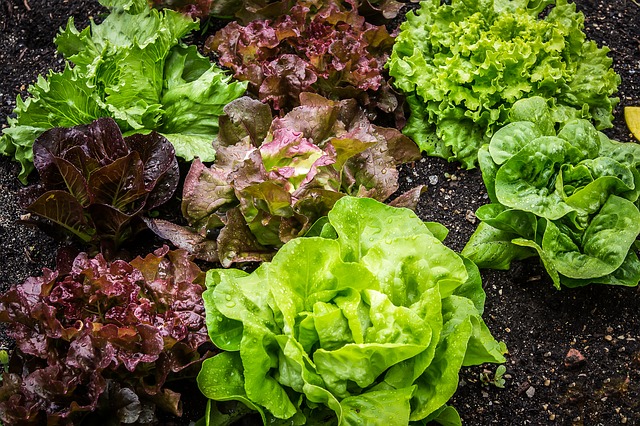
Leaf lettuce – This type of lettuce comes in red & green. Rather than coming as a “head” of lettuce, the leaves all branch off of a single stalk. Both red and green leaf are mild in flavor and have tender leaves. It is often found in varieties termed spring lettuce, mesclun, etc. It is great for the base of many salads.

Romaine lettuce – This lettuce has elongated leaves with a thick white rib. Its leaves are sturdy but a bit more bitter. It provides more texture to your salads.

Iceberg lettuce – Although iceberg is looked down upon because it does not have as many nutrients as other types, it does provide a nice crunch. It also is less perishable and will last longer in your refrigerator than other lettuce.

Butterhead lettuce – Two types are Boston and Bibb. Boston is an extremely tender and soft lettuce and due to it flexible leaves that can be separated from the head, it is great for making lettuce cups. Bibb comes in smaller heads and has a sweeter taste.

Kale – Although not a “lettuce”, it is thought of as a nutrient-dense green. It does have a bitterness that is not to everyone’s taste.

Arugula – Known as “rocket” in Europe, it has dark green leaves usually with a long, spiky shape. It has a peppery bite to it. It can be used on its own but is often a great addition to other lettuce mixes. It is also used in sandwiches and as a pizza topping. Because of its peppery flavor, it goes well with tangy dressings.

Spinach – Another green that is full of nutrients that can be the sole green in a salad or mixed with other varieties.

Radicchio – Easily recognized by its reddish-purple color, it also goes by the name of “chicory”. It also tends towards bitterness but that can be tempered by grilling or roasting.

Endive – Also known as Belgian endive, these small leaves are a relative of radicchio and are crisp and slightly bitter. Due to their spoon-like shape, they are great for acting as a vessel for dips or fillings. Another popular preparation is to braise them.

Frisée – Other names include curly endive & curly chicory. These are also in the same family as radicchio and endive and are known by the very curly leaves that are tinged with yellow and green. It has a fairly potent flavor and so, often just a small amount will be added to lettuce blends.

Escarole – This is a type of endive that is mildly bitter. It holds up well to cooking, making it a great addition to soups and pastas.

Mâche – Also known as lamb’s lettuce or corn salad, it is a delicious and sweet green with soft green leaves. Its dark green leaves grow in a rosette pattern. This is one of my favorite greens to add to a salad.

Watercress – The name derives from its semi-aquatic growing nature and is classified as both a green and an herb. It is another green with a peppery flavor.

Mizuna – Also known as Japanese mustard greens, it has a mild, peppery taste. Some say it is like a less intense version of arugula.

For the best salad, try to buy whole heads of lettuce when you can. (Even better, grow your own.) The texture and flavor will be much better than pre-bagged items. They do need to be thoroughly washed before consuming. If you do buy bags of pre-washed greens, the question that always arises is if you need to wash them once you get them home. According to the FDA, prewashed greens can be consumed directly from the bag. They say that prewashed items probably have less bacteria (if any) than what is found on your kitchen counter or sink. Therefore, washing the prewashed greens is more likely to introduce bacteria into an already clean product. Another point made by a microbiologist is that any pathogens remaining on prewashed greens is not likely to be removed by your own washing of them. Here is a link to the FDA Guidelines. If you choose to wash the prewashed greens, make sure your counters/sinks are very clean and store the washed greens in the refrigerator.

For proper storage of crisp heads of lettuce such as iceberg and romaine, core the heads, wrap it in moist paper towels and refrigerate in a plastic bag that has been left slightly open. For leafy greens, including arugula & spinach, either store them in the original container or, if you have room, leave them in the salad spinner after washing and drying them & put the spinner in the refrigerator. More tender heads such as Boston lettuce with the root attached can be stored in the original plastic container or in a plastic bag left slightly open. If there is no root, wrap in moist paper towels and place in a plastic bag left slightly open.

TheKitchn.com tested three different methods of storing greens. The favorite in this test was to line a plastic storage container with paper towels, put the greens on top and cover with more paper towels followed by the lid before placing in the refrigerator.

If your lettuce has wilted, it means it has lost water. To refresh it, just soak it in plain ice water for about 30 minutes.

According to WebMD, eating a salad almost every day may be one of the healthiest eating habits we can adopt. It is also one of the simplest and, if you branch out with some of these less-frequently used greens, it can also be a very tasty one!

Cooking Tips · Ingredients

Mirepoix, Sofrito & What?

Good cooking techniques transcend the type of cooking you want to do. However, when you get to ingredients, they vary between types of cuisines. Mirepoix, Sofrito and Cajun Trinity are examples of similar items that differ from cuisine to cuisine. In this Cooking Tip, I would like to explain these mixtures, their similarities and differences.

All three of these terms refer to the basis of so many savory dishes. The ingredients are mixtures of aromatic vegetables. These vegetables are diced and sautéed in some type of oil. This base is used in the completion of whatever dish you are cooking. They are meant to provide a subtle but pleasant background flavor as well as supporting and improving the flavor of the finished dish. In French cooking, it is called Mirepoix. Sofrito refers to a similar mixture in Italian, Spanish & Latin American cuisine. For Cajun cooking, it is called the Cajun Trinity, also known as the Holy Trinity.

France is the home of classical cooking techniques. Their classic Mirepoix is a mixture of onions, carrots & celery. The ratio is typically 2 parts onion, 1 part carrot and 1 part celery – by weight. A common variation is White Mirepoix where leeks and parsnips replace some of the onions and carrots. It is used to flavor dishes when you want a white color in the final dish. Other ingredients that are sometimes used are shallots, garlic, diced ham, tomatoes, mushrooms, peppers and ginger.

The classic Italian Sofrito actually starts as something called a Battuto and, once cooked, it is termed a Sofrito. Usually it is a combination of onions, celery, carrots, garlic and parsley although there are quite a few variations on this mixture. It also can include bell peppers or fennel as well as finely diced cured meats such as pancetta or prosciutto. There is no set ratio for the ingredients.

There are many regional variations on the Italian Sofrito including Puerto Rican, Cuban and Dominican. These variations often include ingredients that are specific to those areas.

The Cajun Trinity requires bell pepper, onion and celery. Although there is a difference of opinion on this, a good starting ratio is 2 parts onion, 1 part celery and 1 part green bell pepper. This particular mixture does not usually have as many variations as the other mixtures. Along with a dark roux, it becomes the base for Cajun and Creole dishes such as gumbo, jambalaya and étouffée.

Suppengrün is of German origin and is made of carrots, celery root and leeks. Variations include onions, parsnips and potatoes. There is no set ratio.

From Poland we get Włoszczyzna, similar to its German counterpart but often with cabbage as the primary ingredient.

No matter which version of this base you are using, be sure to cut the vegetables relatively uniform in size. The shorter the cooking time of the ultimate dish, the smaller size the pieces should be. For longer times, they can be cut into larger pieces.

To turn these vegetables into the respective base, heat the cooking fat (typically oil or butter) in a sturdy pan. Generally, the onions (or leeks) will be cooked in the fat first. What comes next depends on the particular mixture. If garlic is called for, add it next but cook carefully so it doesn’t brown or burn. Follow by adding the rest of the vegetables. Lastly, add the herbs.

Usually, only “sweating” the mixture is what you want. This would be done on a lower heat just until the vegetables are giving off some of their juices, softening in texture but not browning. If you are using this base in a dish such as a soup, stew or pasta sauce, feel free to slowly cook the vegetables until they are almost melted. If you wish to add them to something like a frittata or omelet, you may want to stop cooking before they lose all their texture. There are times when the mixture is cooked until it browns but I will leave that for another discussion.

The main take-away from this discussion is that slowly cooking these aromatic vegetables even if you do not follow the listed combinations can add a tremendous amount of flavor. This simple step can take your dish from good to great!


Cooking Tips · Ingredients

Demystifying Corn Products

Cornmeal, Grits, Polenta – are all of these just different words for the same thing? In this Cooking Tip, I will attempt to clarify what is often a confusing subject. My research found some conflicting statements and if you are a corn farmer (or know one) you may find things with which you disagree. (If so, let me know.) However, I have tried to find somewhat of a consensus.

In my supermarket, I saw several products labeled “Cornmeal” – some were white and some were yellow and there were different brands. There was something labeled as “Corn Grits – also known as Polenta”. I guess that company is covering all bases. There was a separate product just called “Grits”. There was also a box of “Instant Polenta” as well as tubes of something called “Polenta”. What’s a cook to do?

The first thing to understand is that Polenta is not really an ingredient – it is a dish. The term Grits is used to not only describe an ingredient, but also to indicate the dish made from that ingredient. (Are you confused, yet?) Since many recipes and food producers refer to grits and polenta as both an ingredient and a dish, that is how I will discuss it.

Let’s start with cornmeal. This is an ingredient that is basically corn that has been dried and ground in a mill. The grind may vary from fine to coarse. It can also vary in color: white, yellow or blue. Another difference you may notice is some will be a whole grain product while others will be degerminated. Cooks Illustrated tested a number of different varieties. They preferred the full-corn flavor of whole-grain but felt it was slightly gritty no matter how long it was cooked. The degerminated product (the hard hull and germ are removed) gave a creamier result.

Both polenta and grits are made from stone-ground cornmeal, typically from either a medium or coarse grind. Grits is traditionally a dish made in the southern US whereas polenta is an Italian dish. However, they are also made from different types of corn. Most grits are made from what is called “Dent” corn (field corn). The name comes from a small indentation in the kernel. It has a high soft starch content and is easy to mill.

In Italy, polenta is traditionally made from “Flint” corn, also known as Indian/Calico corn. Its name comes from its hard outer layer that has been likened to being as hard as flint. Because of this, it tends to hold its texture better.

Because of the differences in corn types, grits tend to be mushy while polenta is usually coarser and chewier. However, in today’s kitchens and restaurants, you may not know for sure which product is being used to make these different dishes. The only brand that I found that specifically states it is made from flint corn is Anson Mills. Another good brand, Bob’s Red Mill, uses dent corn.

If you see something called “instant” or “quick-cooking” polenta, it means that it has been par-cooked. Many people consider this variety bland in taste but I have used this type from DeLallo and found it very nice. I also have a great recipe from Bobby Flay for sweet potato and smoked chili grits that specifically calls for quick cooking grits.

What about that tube of something called polenta? It is basically pre-cooked polenta that has been cooled and formed into a tube. It is often sliced and then baked, grilled or seared. If you make your own polenta and let it cool, it will firm up just as in the tube.

So, what product do you use for what purpose? If you are making cornbread, you can probably use any kind of cornmeal but many cooks really prefer a coarser grind for the texture. If you are making a grits dish, try to find something called corn grits or at least a medium or coarse grind cornmeal. For polenta, if you can’t find something that says it is specifically for that dish, you should be fine with a medium or coarse grind cornmeal. Whether you want the whole-grain version or the degerminated will be a matter of personal choice depending on what texture you prefer.

Corn is a wonderful product and comes in so many forms (many that we have not even touched upon) that I am sure there is at least one kind that you will love.

Cooking Tips · Ingredients · Techniques

Custards and the miracle of eggs

When we lived in England, my husband loved some little custard tarts that we would buy from a Portuguese bakery in the town in which we lived. Since then, I have been attempting to re-create them to his satisfaction. Recently, I was testing a recipe from Emeril Lagasse and it turned out to be a winner. Hurray! This testing caused me to think about custard and what a wonderful creation it is. It is something all cooks should know how to do and this is why I am writing this Cooking Tip.

A custard is nothing more than a mixture of milk, eggs and often sugar that is cooked into a thickened product. It forms the filling for these little Portuguese tartlets but a custard is also the basis of crème brûlée, flan, ice cream, quiche and more. It is not difficult to make a custard but there are some hints that I hope you find helpful.

Many custards start by having you beat/whisk the eggs (whole or just yolks) together with the sugar until it has thickened and turned light yellow. Some will recommend you continue to the “ribbon” stage, which means the mixture will form a ribbon as you lift up your spoon and allow the mixture to fall back into the bowl. These instructions are meant to help you ensure that the sugar has mostly dissolved. You do not necessarily need to go all the way to ribbon stage but a good mixing until the color and consistency changes is a good idea.

Some recipes will have you heat the dairy (milk, cream) before adding it to the egg/sugar mixture. This is not necessary unless you want to infuse flavor into the dairy. For example, my tartlet recipe had me infuse vanilla seeds and orange zest into the milk. This was achieved by bringing the cream to a boil, adding those two ingredients, covering it, taking it off the heat and allowing to steep for 30 minutes. I then whisked that steeped dairy into my egg mixture. If I did not want to infuse any flavors, I could have added everything together and then heated it on the stovetop.

If you are told to add hot milk/cream to the egg mixture, the danger is that the eggs will start to cook and you will end up with a scrambled egg mixture. To avoid this, you should “temper” the hot liquid into the eggs. This simply means adding some of the hot liquid very slowly into the eggs while whisking. Once the eggs have been diluted with the dairy, you can put it all back into the pot and continue with the recipe.

If your egg/dairy mixture is started cold, the recipe will instruct you to heat it so as to cook the eggs and thicken the mixture. This heating should be done very gently. Resist the temptation to turn up the heat to speed the process. I love how Harold McGee puts it in his book, On Food and Cooking.

“Turning up the heat is like accelerating on a wet road while you’re looking for an unfamiliar driveway. You get to your destination faster, but you may not be able to brake in time to avoid skidding past it.”

As he goes on to explain, the chemical reactions that cause the thickening of the custard don’t stop just because you take it off the heat. So, if you try to hurry this step, you may easily get to the point of curdling or overcooking.

Some custards are meant to be very soft and creamy while others (such as those that need to be turned out of the container before serving) are firmer. This can be adjusted by changing the proportion of the egg content. If you use more whole eggs or egg whites, the custard will turn out firmer and glossier. More egg yolks (or even yolks alone) produces a softer, creamier custard.

Some recipes will have you add a starch such as flour or cornstarch. These ingredients help with thickening while also protecting against curdling. The recommended amount is one tablespoon of flour or two teaspoons cornstarch (or arrowroot) for every cup of liquid. Whereas this does help guard against curdling, it can also turn a smooth, creamy dish into a thicker and coarser one. Whether your custard is made totally on the stovetop or ends up in the oven, if there is no starch in it, it requires gentle heating. On a stovetop, this generally means using the double boiler method with constant stirring. If in the oven, a water bath should be used. On the other hand, if you do add a starch to the mixture, the custard can be cooked over direct heat on the stovetop or without a water bath in the oven.

A water bath just means putting the custard dishes in a larger pan (such as a roasting pan) that has enough hot water in it to go up about half-way the height of the custard dishes. Even though your oven temperature may be set at 350°F, the water in the pan won’t exceed 212°F (or even less if you live at altitude). This means the custards are exposed to a gentler & more even heat. Some recommend putting a rack in the bottom upon which you place the custard dishes so that they are not directly exposed to the hot bottom of the pan. Without a water bath, the outside of your custard could overcook before the center is done. With a water bath, you are more likely to catch them at the perfect degree of doneness.

All this talk of custards has me salivating over those little Portuguese custard tartlets that I made. I have a few left and those will definitely be dessert tonight! How about you? Is a custard in your near future? Let me know!

Cooking Tips · Ingredients

An Onion Primer

Onions are one of those foods that every cook needs in their pantry. They are the basis of so many savory dishes. All the different types of onions can mean that such a simple vegetable can become confusing. In this Cooking Tip, I would like to try to clarify a bit about onions although it won’t be an exhaustive list of onion types. (For a much more in-depth discussion of onion types, refer to the National Onion Association website – yes there really is such an organization.)

Even though you can find onions in your supermarket year-round, they actually are seasonal. Spring/Summer onions are available March through August. Because they have just recently been harvested, they tend to be milder in flavor and, therefore, can be used in a raw form as well as cooked. Fall/Winter onions (aka storage onions) are left to grow longer resulting in larger onions with thicker skins and less moisture content. This means they last longer in storage but are also more pungent in flavor. To reduce this pungency, they are best in cooked applications.

Scallions are also known as green onions. (Some food experts would disagree with this generalization.) They are long and thin with a white bottom and dark green tops. They have a mild taste and can be used raw or cooked. They are wonderful thrown on a mixed green salad. I also love them as one of the toppings on a bowl of chili.

Spring onions are very young storage onions. They are harvested very early, which results in thin skins and a mild flavor. They look similar to scallions but have a larger bulb at the bottom. Although they are slightly spicier than scallions, they can still be used in a raw manner. They will sweeten up when cooked and are often grilled.

Shallots are small in size and range in color from white to rose. They are fairly mild and are often used in making sauces, vinaigrettes as well as Asian dishes.

Yellow onions are the most all-purpose. According to the National Onion Association, these onions account for about 87% of the onion crop in the US. If a recipe does not specify what type of onion, reach for one of these. They definitely have an onion flavor but are not overpowering. Although not great in a raw form, they turn wonderfully sweet when cooked.

Spanish onions look similar to yellow onions and may be displayed next to each other in the store. Because they are grown in a low sulfur soil, they are less pungent and tend towards sweetness. Beware, however, some stores do not differentiate between Spanish and yellow onions.

White onions are a staple in Mexican cooking. Some think they are milder and sweeter than yellow onions but they do tend to be tangier.

Red onions are often eaten raw but they can be fairly pungent. They are great for pickling and for topping tacos, chili or burgers. They also make a great addition to a roasted vegetable dish.

Leeks are also in the onion family. They have the shape of scallions but are much larger in size. Whereas the green portion of scallions can be eaten, the green part of leeks is very woody and is only good for flavoring stock. The white portion, however, is very mild and sweet. Despite that, they are usually not eaten raw as they tend to be fibrous in texture. They are a great base for certain soups and I make a great chicken pie that uses leeks and garlic as flavoring elements.

Sweet onions such as Vidalia and Walla Walla are very low in pyruvic acid. This is the component that makes your eyes tear when cutting them. Because of this, they are extremely mild in flavor. Another onion I have recently discovered is Sunions. Grown only in Nevada and Washington, they are a result of cross-breeding to produce a tearless, sweet and mild onion. The company claims to certify these characteristics before shipping to grocery stores. I recently received some samples and have just started trying them. Although I need to test them more, they do indeed seem to live up to their claims. I just saw that my local King Soopers (a Kroger store) has started carrying these.

Pearl onions are very small onions that are also mild. Although most often found in a white variety, pearl onions can also be yellow or red. They are generally not found loose and often hard to find fresh. Bags of frozen, pre-peeled pearl onions are usually fairly easy to find. Uses include pickling dishes & casseroles and even as a separate side dish.

Chives are relatives of onions but we also consider them an herb. They have a very mild onion flavor and, therefore, are often eaten raw in salads. They are also great sprinkled on an omelet and other dishes where you want a mild onion flavor. They make a nice garnish because of their vibrant green color. Cooking them is not recommended due to flavor loss.

With all these options, what should you keep around at all times? The answer may vary according to how you cook but I always have all-purpose yellow onions on hand. I also have a red onion available, a bunch or two of green onions as well as a few shallots. With these, I can make almost any onion-containing dish.


Cooking Tips · Ingredients

Onions — techniques & applications

Onions – do you love or hate them? Onions are such a ubiquitous ingredient in so much of our savory cooking. When a recipe calls for chopping or slicing them, do you stop to think how you should do this or do you just grab your onion and knife and go to it? In this Cooking Tip, I want to explain why how you do this simple task can make a difference in the final dish.

The first question is whether you want your onions to just melt into your dish such as you would want in a soup or sauce. Or, do you want some texture remaining as you would for French Onion soup or caramelized onions?

If you want the onions to soften, you should cut them crosswise into small pieces. Here is a link to a video on how to do this. (One caveat: I think making the horizontal slices first followed by the vertical is easier.) If you want texture, you should slice pole to pole. This video also demonstrates that.

How you cut up your onion will also change the resulting taste. When you cut crosswise, you cut through more onion cells and this leads to a stronger onion aroma/flavor. When cutting pole to pole, fewer cells are ruptured, leading to a softer/sweeter flavor.

If you say how can an onion taste sweet, you have obviously never tried caramelizing your onions. If you had, you would admit that they can taste almost as sweet as candy – no kidding! To do that, slice your onions thinly pole to pole. Start heating a skillet with some butter and/or oil. Toss in your onions, add a sprinkle of salt (some prefer to add the salt when the cooking is finished) and stir. Cook until the onions start to turn brown; then turn down the heat to low and cook the onions until soft, brown and sweet. This will take anywhere between 30 and 60 minutes.

If they start to brown too quickly, add a splash of water and scrape up the brown bits. Turn down the heat and continue to cook. I like to cook them with a lid on the pan but just be sure to watch so they don’t burn. Some methods will have you start with more water and let it evaporate. Others will add a small amount of sugar to kickstart the caramelizing process. Some even add a bit of baking soda. I prefer the old-fashioned, longer process described in the prior paragraph but, do some experimenting to find your favorite method.

Toss these yummy caramelized onions on a pizza or your favorite grilled cheese sandwich.
You won’t regret it!