Cooking Tips · Ingredients

Herbs in a Tube – Are they any good?

Have you seen those tubes of herbs in your market? Have you ever tried them? Should you try them? Read on as this Cooking Tip breaks down this subject. For more information on fresh herbs, see this prior Cooking Tip.

The leading brand of these herb pastes you will see in the stores is Gourmet Garden. They have several varieties, including basil, garlic, ginger, cilantro, Italian herbs, jalapeno, lemongrass, parsley, Thai seasoning and lemon. The company says they are “the perfect substitute for fresh herbs or spices.” The only information about how these pastes are made is

“The herbs and spices are harvested at a time that maximizes their flavors. This crop is then washed, chopped and cold blended for you to discover the fresh chopped taste when you open the tube in your home.”

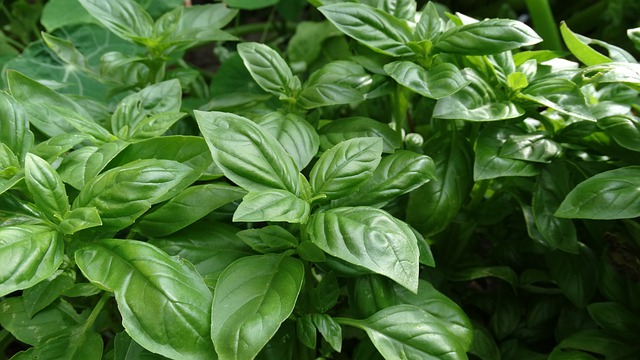
When you buy (or grow your own) fresh basil, the only ingredient is basil. In contrast, the ingredient list on a tube of Gourmet Garden Basil is:

“The herbs and spices are harvested at a time that maximizes their flavors. This crop is then washed, chopped and cold blended for you to discover the fresh chopped taste when you open the tube in your home.”

When asked about these other ingredients, the company says the following.

“Gourmet Garden products do not contain artificial colors, flavors or preservatives. There are a few simple food ingredients included in the product, though their role is about creating an environment where harmful bacteria cannot grow. These ingredients are kept to a minimum and it’s about having a product which is fresh and safe for people to consume and still deliver the fresh taste of herbs and spices to you in a convenient pack.”

If this is a concern for you, the herbs are grown and processed in Australia and then shipped to both Australia and North America.
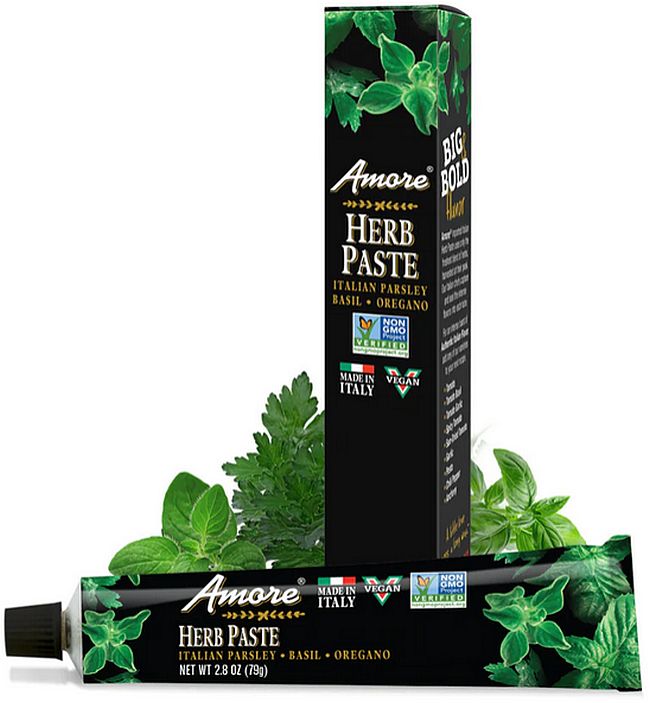
Another company that sells herb/spice pastes is Amore. This company is based in Italy and is most known in the US for its tomato paste, but they also sell Pesto, Anchovy, Garlic, Herb, Chili pepper and Sundried Tomato. Unlike Gourmet Garden products, which are displayed in a chilled display in the produce section, Amore products are displayed on the shelf, often in a specialty food section. They do require refrigeration after opening.

There may be other companies producing herb pastes, but Gourmet Gardens and Amore are the two you are most likely to find.

What do these products taste like, and should you consider using them? I was surprised that there were not that many reviews of these products. Those that I did find were mostly positive in terms of taste. There were some cautions, though.

Fresh vs. cooked
  • They are better in cooked dishes such as soups, sauces, pasta and meat dishes.
  • Where you want the fresh basil flavor to shine through, as in pesto and other uncooked dishes, stick with fresh basil.

Shelf life

  • Although the shelf life of these tubes is longer than fresh herbs, it is still only about three weeks (for Gourmet Garden) in the refrigerator after opening.
  • They also caution you against leaving the tubes out of the refrigerator for more than a half hour.

Other ingredients

  • All of these products contain other ingredients to aid in packaging and shelf life. They generally include some type of sugar, oil and salt. Be sure to look at the nutritional labels, as they vary from brand to brand. Let’s first remind ourselves of dietary advice.
  • Sugar – The American Heart Association recommends limiting added sugar to 25 grams for women and 35 grams for men.
  • Salt – The current dietary recommendation is to limit our salt consumption to 2300 mg or less daily.
  • Oil – Dietary guidelines instruct us that our saturated fat intake should be limited to less than 10 percent of daily calories. We should, instead, use unsaturated fats, particularly polyunsaturated fats. For more on fats/oils, see this Cooking Tip.

Let us compare these added ingredients for these two brands.

Gourmet Garden’s Italian Herbs

  • Ingredients – basil, dextrose, oregano, canola oil, sodium lactate, whey (milk), parsley, glycerin, sea salt, ascorbic acid (to protect color and flavor), rosemary, xanthan gum, acetic acid, citric acid.
  • Sugar – You will see that the second ingredient is dextrose, a type of sugar. A serving size of 1 teaspoon contains 1 gram of sugar, about ¼ teaspoon.
  • Salt – One teaspoon contains 125 mg of sodium.
  • Fat – Total fat in one teaspoon is 0.5 grams. From the ingredient list, it is all in the form of canola oil.

Amore’s Herb Paste

  • Ingredients – basil, sunflower oil, Italian parsley, oregano, extra virgin olive oil, salt, citrus fiber, citric acid.
  • Sugar – 0 grams
  • Sodium – 55 mg
  • Fat – 1.5 grams and is a mixture of sunflower and extra virgin olive oil.

I have used several Gourmet Garden’s products although only in cooked applications. I find them quite suitable for that purpose. The only Amore product I have tried is their Tomato Paste, which is very nice. In a test of tomato pastes done by America’s Test Kitchen, they recommended this product alongside others in a tube, such as Cento and Mutti.

As I was researching this Cooking Tip, I found the difference in ingredient lists illuminating, and it may also help you to choose as you are in the store.

If you have fresh herbs that you won’t use up, you can make your own herb pastes. Just combine your herb(s) of choice in a food processor with a bit of olive oil until you get a paste consistency. Freeze in an ice cube tray, remove to a bag and stow in your freezer.

Have you tried Herb Pastes, and what do you think?

Cooking Tips · Ingredients

Mirin, Rice Vinegar, Sake – Is there a culinary difference?

If you like to cook Asian-inspired dishes, especially Japanese, you have undoubtedly seen some ingredients you may not have in your pantry. These might include mirin, rice vinegar and sake. What these ingredients are, how they differ, and how best to use them is the subject of this Cooking Tip.

Mirin

  • This is also known as sweet rice wine. It is made with steamed glutinous rice, koji, and a distilled rice liquor with a low alcohol content.
  • Koji is steamed rice inoculated with koji mold, a fungus used for various culinary purposes, which is then allowed to ferment. It starts the fermentation process when added to ingredients like soybeans, rice, or wheat grains. This fermentation process can last anywhere from two months to many years
  • The liquor is known as ‘shochu’. It is most commonly made with sweet potato, barley, rice, buckwheat and sugar cane.
  • The sweet flavor comes from the starch in the rice being converted into glucose.
  • Mirin has an alcohol content of around 14% and contains 10 to 45% sugar.
  • Mirin is somewhat comparable to the flavor of dry sherry.
  • It is similar to sake but has a lower alcohol content and more sweetness.

Types of mirin

  • Hon-mirin
    • This type is termed “true mirin” or “genuine mirin.” It is the most traditional kind of mirin and has about a 15% alcohol content with no added sugar. Other types of mirin tend to use sake rather than shochu. Testing has shown it is worth seeking this out if mirin is a main ingredient due to its superior and more complex flavor.
    • All sources agree that hon mirin is the authentic type. How the other types are categorized varies by source.
    • True hon mirin will be challenging to find in stores, but you can seek it out in specialty stores or online.
  • Mirin-fu chomiyro (shin mirin)
    • This means “mirin-style seasoning”. It has no or very little alcohol and abundant added sweeteners. Another name you will commonly see is “Aji-mirin.” This translates to “flavor of mirin” and is less expensive due to the processing. It has added sugar and only about 8% alcohol. This type has a lower alcohol content and a sweeter flavor. It is made with water, rice, salt, alcohol, and corn syrup.
  • Shio-mirin (salt mirin)
    • This one is the saltiest due to salt added during fermentation, but it still has the typical sweetness.

Uses

  • When you want to add a bit of sweetness to the dish. Use restraint, though, so you do not overpower your dish with sweetness.
  • To add umami and more depth of flavor.
  • To add shine to your dish. The sugar in mirin can give your food a mild shininess, such as when used with a teriyaki or other sauces.
  • To eliminate certain smells. As the mirin is heated and the alcohol starts to evaporate, it can take the odor of fish or meat with it.
  • Helps to tenderize meat.

Recommended brands

  • Kikkoman manjo premium hon mirin sweet rice wine seasoning
  • Fukuraiyun traditionally brewed hon mirin sweet rice wine
  • Takar hon mirin sweet rice wine (Note that some from this brand use sake rather than shochu.)

Substitutes

  • Rice vinegar – this can be used in a pinch, but it may be too acidic and bitter because it is vinegar.
  • Sherry in equal amounts.
  • Marsala wine.
  • Add one teaspoon of sugar to one tablespoon of white wine or sake for every tablespoon of mirin.

Rice Vinegar (or rice wine vinegar)

  • This is a type of vinegar that is made by fermenting rice. It is usually milder than the typical vinegar we have in our pantries.
  • Japanese and Chinese rice vinegars are different. Japanese is white in color and mild in flavor. Chinese can be red, black, or white depending on the rice variety used, and it has a more robust, sharper flavor.

Types of rice vinegar

  • White rice vinegar
    • This is the most common type.
    • It is clear to yellow in color.
  • Brown rice vinegar
    • It is light to dark brown in color.
    • It is made from unpolished brown rice.
    • It can be used interchangeably with white.
  • Black rice vinegar – often used as an umami dipping sauce
    • It is deeper in color and flavor.
    • It is made from black glutinous rice and other grains.
    • The flavor is somewhat smoky.
    • It is often used in Chinese stir-fries, dipping sauces, and as a condiment.
  • Red rice vinegar
    • It is made from red yeast rice (a fermented rice) and sometimes barley and sorghum,
    • The flavor is sweet, tart, and salty.
    • It is often used in Chinese seafood dishes and dipping sauces.
  • Seasoned rice vinegar
    • This is white rice vinegar with added sugar and salt.
    • It is used to season rice for sushi and is also good in salad dressings.

Differences between mirin and rice vinegar

  • Alcohol content
    • Mirin is a cooking wine with an alcohol content between 8% and 15%.
    • Rice vinegar contains no alcohol.
  • Aging
    • Rice vinegar is aged more than mirin, giving it more umami.
  • Uses
    • Use mirin when you want a bit of sweetness.
    • Use wine vinegar for more umami.

Substitutes

  • Other vinegars, such as apple cider or white wine vinegar. Use equal amounts, but add ¼ teaspoon of sugar.

Uses

  • Seasoned rice vinegar is classic with sushi rice.
  • Noodle dishes
  • Fried rice
  • Dressings
  • Pickled dishes
  • Marinades and chili sauce.

Sake

Image by Erwin from Pixabay
  • This is a Japanese alcoholic beverage made from four ingredients – rice, water, yeast and koji (a mold.)
  • It uses a particular type of rice called Sakamai.
  • It is made through a brewing process similar to beer. The rice starch is converted to sugars, which ferment into alcohol by yeast.
  • Use in your cooking as you would wine.

Substitutes

  • Dry Sherry
  • Chinese rice wine
  • White wine
  • Dry vermouth

Sushi vinegar

Image by Harry axalant from Pixabay
  • Also known as awase-zu, which means combined vinegar.
  • Sushi vinegar is not a different vinegar but is rice vinegar to which sugar and salt has been added.
  • It can be bought ready-made, or you can make your own.

Those are some of the most common Japanese condiments that you will use not only in Japanese cooking but in many Asian dishes. Now that you know the differences and how to use them, I hope you experiment with making some wonderful dishes!

Cooking Tips · Ingredients

Celebrate the Flavors of Anise and Star Anise

Anise and Star Anise are two of those spices that are not used very often but do have a place in our kitchens. What they are, how they differ and how to use them is the subject of this Cooking Tip.

Although the names are similar, they are spices that look different and come from unrelated plants.

Biological

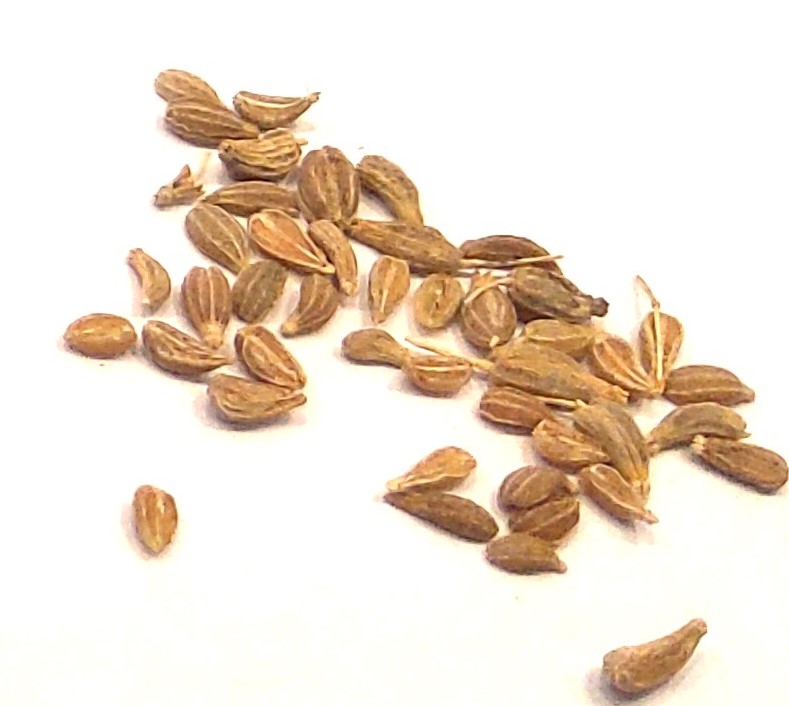
  • Anise (Pimpinella anisum) is native to the Eastern Mediterranean, Egypt and the Middle East. It is also cultivated in Western Asia, Europe and North America. It is a member of the parsley and carrot family and, as such, it is related to cumin, dill and caraway. The anise seeds are small, oval-shaped, and gray-brown. Other names are anise seed and aniseed.

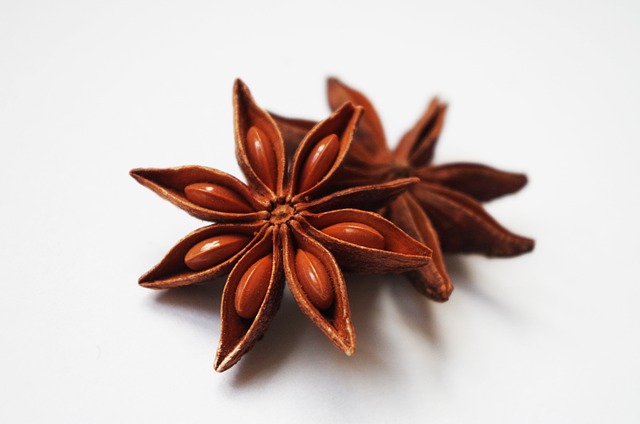
  • Star Anise (Illicium verum) is native to China and Vietnam but is also grown in East and Southeast Asia. It grows on an evergreen tree of the Schisandraceae (Schisandra) family. It has fragrant flowers that are either yellow-green or pink-red. The flowers give way to a pretty eight-pointed star shape. Each section of the star is a seed pod.

Flavor

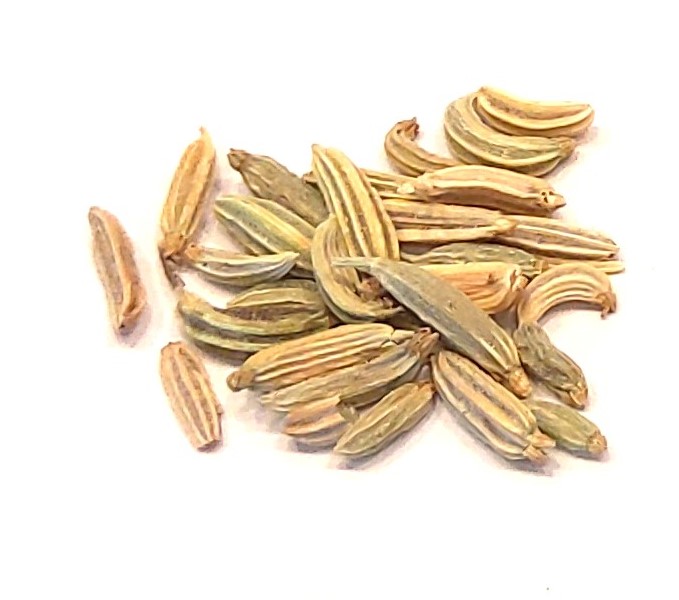
These spices are known for their licorice flavor that comes from a compound called trans-anethole. A third spice that shares this flavor profile is fennel seed. See this prior Cooking Tip for a discussion on fennel. All three contain trans-anethole but have differing amounts of other flavor compounds, which give additional flavor notes. Therefore, they do not taste identical.

  • Anise seed has an earthy flavor with notes of fennel, caraway, licorice and camphor.

  • Star Anise also has a licorice flavor but with floral and sweet notes. Some describe it as herbal, lemony and woody.

Culinary Uses

Anise

Anise is used in both sweet and savory dishes, including soups, sauces, breads, cakes, and liqueurs. It is essential for many spice cakes, cookies and sweet breads.

Star Anise

Star anise is very common in Asian cuisine but may also be part of holiday baking recipes, as well as mulled wine or cider. One of the most common uses is as a component of Chinese Five-Spice powder and Garam Masala.

It can be used in whole form, but should be removed at the end of cooking as you would a bay leaf. Alternatively, you can grind it before adding it to your dish.

A non-culinary use is as a common addition to potpourri baskets, especially for the holidays.

America’s Test Kitchen investigated whether people could tell the difference between the flavor of anise, star anise and fennel seed. Their recipe testers tested these three spices in biscotti, pho broth and Italian meatballs.

  • With a biscotti recipe that called for anise, but one of the others was substituted, the tasters could quickly identify the difference.
  • With a Pho recipe that called for star anise, it was easy to tell when fennel seed or anise was used instead.
  • The flavor distinctions were harder to tell in Italian sausage meatballs that usually specify fennel seeds. They partially attributed this to the fact that the dish contained many other spices.

The takeaway is to be aware of the differing flavor profiles if you want to substitute.

One final note is to beware of Japanese star anise. It’s not edible as it contains high levels of toxins.

Do not be wary of these spices, as they can add a unique flavor to your dishes. Just know the differences and how they might affect your dishes.

Cooking Tips · Ingredients · Techniques

Condiments – to refrigerate or not?

Image by wixin lubhon from Pixabay

Hello, Food Lovers! If you are like me, you probably have multiple bottles of different condiments. Many, or even most, of these tend to take up residence on our refrigerator door. Have you ever considered which ones need to be there and which might do just as well in your pantry? That is the subject of this Cooking Tip.

Why do we refrigerate these items at all? On the shelf, they have been produced and put in an airtight container. After that seal is broken, the air can allow pathogens to proliferate.

An overall principle is that it is rarely wrong to refrigerate an opened condiment. Most manufacturers advise that refrigeration prolongs freshness and flavor, even if not needed for safety reasons. That is why you often see the wording “refrigerate after opening” or “for best flavor/quality, refrigerate after opening.” Refrigeration will also often prolong the shelf life of the product.

A look at the ingredient list can be helpful. Since salt and vinegar are known to be preservatives, if these are listed at the top of the ingredient list, the more likely that they will do fine without refrigeration.

Ketchup

Image by Alexa from Pixabay

This is one condiment about which people argue. Heinz responded to the “refrigerate or not” controversy by stating their ketchup should be put in the refrigerator. They say it is to “maintain the delicious tangy taste.” They do admit that the acidic nature of the product means it is probably shelf-stable but still recommend cold storage to maintain quality.

Mustard

Experts say this does not have to be refrigerated due to its acidic nature.

Soy Sauce

There is no need to refrigerate this condiment for safety reasons, but it is a good idea to preserve its quality.

Mayonnaise

This is a condiment that I would never consider storing in the pantry after opening. However, some experts say it can be kept at room temperature for up to a month. The acidic ingredients (vinegar, lemon juice) do inhibit bacterial growth. Note that this does not apply to homemade mayo; that should always be refrigerated. (And, if you make your own mayonnaise, I am indeed impressed!)

Hot sauce

As hot sauces are highly acidic, there is no need to refrigerate. As with other condiments, flavor changes can occur at room temperature.

Jams/Jellies

Image by Paolo Trabattoni from Pixabay

These should definitely be refrigerated due to the likelihood of spoilage at room temperature.

Worcestershire sauce

Similar to another umami-containing condiment, soy sauce, refrigeration is not a requirement.

Fish sauce

This is one we can feel comfortable leaving in the pantry due to its high salt content. The above statements about prolonging quality and shelf life, though, still apply.

Oils

Cooking oils, including coconut oil, do not need refrigeration. Most nut oils, however, are much more perishable and should find a place in the refrigerator.

Vinegar

Because of the high acid content, vinegars are shelf-stable after opening for an indefinite time.

Peanut butter

The average peanut butter made with hydrogenated oils is fine at room temperature. If you buy natural peanut butter, it is best to refrigerate to avoid the oils going rancid.

Honey

Honey not only does not need refrigeration but doing so can accelerate crystallization.

Salsa

Although salsas do contain acids, it is not enough to prevent spoilage. So, into the refrigerator it should go.

Maple syrup

True maple syrup should be refrigerated after opening. Artificial ones that are made with corn syrup do fine in the pantry.

Another question about condiments is how long they last, whether or not refrigeration is a concern. The US Department of Health and Human Services has an app called FoodKeeper that will help you understand how long any food, not just condiments, will keep in the pantry and refrigerator. Just find the food you want to look up and the government’s recommendations will be there.

I must admit that apart from honey, peanut butter and fish sauce, I keep all the above in the refrigerator after I have opened the container. As long as you have space, that is a good habit for prolonging the quality of these items. If you run short of real estate in your refrigerator, the above should help you know what you can safely take out.

Cooking Tips · Ingredients

Get your fall spices ready!

As I write this, Summer is sadly getting ready to exit the stage. Behind it, though, are the wonderful Fall and Holiday baking seasons. Although we use spices year-round, certain spices and spice blends are essential for this type of baking. To get you ready, I am writing this Cooking Tip. For a more general discussion on Spices, see this Spice Tip and for Spice Blends, take a look at this Tip.

As you get ready for holiday baking, you want to get the most flavor possible from your spices. To ensure that, make sure your spices are fresh. If they are ground spices and you have had them for more than six months, smell them. Do they have a strong aroma? If not, time to get fresh.

Image by westerper from Pixabay

For some of the spices, especially those you do not use regularly, it is best to buy whole rather than ground spices. They will last much longer and you only need to grind the amount you are going to use. For more information on this, see this prior Tip.

Another piece of advice is to make your spice blends rather than purchasing them pre-blended. Why buy a bottle of apple pie spice when you are only going to use it a couple of times and then it will sit in your pantry for another year? By that time, you will need to toss it and buy fresh. This is costly and wasteful. Instead, just make the amount you need from individual spices you most likely already have on hand. Another plus for this approach is that it helps you use up those individual spices before they go stale. There are some exceptions to this advice, which I outline in this Spice Blend Tip. Homemade spice blends are not only a wonderful addition to your pantry but they also make great DIY Holiday gifts.

Which spices do you associate with holiday baking? Different bakers will have their specific lists but these lists will share some commonalities. I will discuss those below. I have written entire Cooking Tips for some of these spices. For those, I have given you the links to read more.

Allspice

  • Can be purchased as whole berries or ground.
  • The flavor has notes of cloves, nutmeg, star anise, black pepper and cinnamon.

Cardamom (sometimes spelled as cardamon)

  • Can be bought in pods, shelled or ground.
  • It has a warm flavor that is herby, sweet citrusy.

Cinnamon

  • This spice is the one that most of us would probably list first as an essential holiday spice.
  • Can be purchased in sticks, chips or ground.
  • The flavor is a balance of sweet and spicy.
  • There are different varieties.
    • The most common cinnamon in our pantries is Cassia (Korintje or Indonesian). It is pungent and woodsy.
    • Ceylon has a gentle, floral flavor.
    • Saigon (Vietnamese) cinnamon is bolder and is a great balance of sweetness and heat. This is my favorite.

Cloves

  • Can be purchased whole or ground.
  • Cloves have a sharp flavor that can be overpowering if used in excess. It is often paired with cinnamon, nutmeg and allspice.
  • Its flavor is described as sweet, bitter and astringent.

Ginger

  • Can be purchased fresh, ground and in crystallized form.
  • This is one of the warm holiday spices and is what gives gingerbread its unique flavor.

Nutmeg

  • Can be purchased whole or ground.
  • It is another spice that is both warm and spicy.
  • Use with restraint so as not to be too overpowering.

Star Anise

  • These are sold as star-shaped pods that are also sometimes used as decoration.
  • This spice has a mild and fragrant licorice flavor

Here are some of the popular fall and holiday spice blends. These blends can vary from company to company as to which spices and in what ratios they are included. That is another advantage of making your own. You can make it to your tastes. I will give you the usual spices that are included in each blend.

Apple pie spice blend
Some recipes only use cloves, cinnamon and nutmeg. Others add allspice, cardamom and/or ginger.

Gingerbread spice
Ginger, cinnamon, nutmeg, cloves. Some recipes add allspice.

Chai baking spice
The most common spices in this blend are cinnamon, cardamom, ginger, cloves, nutmeg and black pepper. Occasionally, anise might be included.

Mulling spice blend
Cinnamon, nutmeg, allspice and cloves. Many recipes also include dried citrus peel. Others might use cardamom, star anise and even peppercorns.

Pumpkin pie spice
Cinnamon, ginger, cloves, nutmeg and allspice. An occasional recipe will include cardamom.

Speculaas spice mix
Speculaas cookies are a Dutch delicacy similar to gingerbread cookies although the spice mix is a bit different. This spice mix uses cinnamon, cloves, nutmeg, ginger, anise, cardamom, white pepper and sometimes mace and/or coriander.

What does your spice pantry look like? More importantly, what does it smell like? It is a good time to investigate all your spices but pay careful attention to these spices that are going to be the mainstay of your fall and holiday baking. Make sure they are fresh, consider whole rather than ground and have fun making your own blends. Happy Fall!!

Cooking Tips · Ingredients

Borage – flower or herb?

I am blessed with a wonderful husband who loves to garden. Me – not so much. However, I love what he grows and harvests from his garden. He built me a dedicated herb garden with some typical herbs such as basil, tarragon, thyme, parsley and mint. Although not in the herb garden, he also grows a beautiful herb – Borage. What is borage and how can we use it in the kitchen? That is the subject of this Cooking Tip.

Image by T. S. Tubai from Pixabay

Borage is a nice green plant with beautiful blue-purple flowers making it wonderful just for decorative purposes. Honeybees also love it, to which we can attest as when it is in bloom, there are honeybees all over it.

It is an edible plant said to have a cucumber taste. It also pairs well with dill, mint and garlic. Both the leaves and the flowers are edible. Just make sure it is grown without the use of pesticides. Here are some ideas for incorporating borage into your foods.

Raw

  • Mix new, young leaves into green salads.
  • Beware, though, that the leaves can be a bit tough and “fuzzy.” Because of these characteristics, some chefs prefer to use them as a seasoning and remove them from the dish before serving.
  • Can also be chopped finely and mixed into yogurt or cream cheese.

Pasta

  • Ravioli – cook the leaves in a pan with oil and garlic just as you would spinach. When cool, add to a mixture of ricotta, parmesan and eggs. Use this as a ravioli filling with your freshly made pasta dough or wonton wrappers.
  • Pasta sauce – blanch borage leaves in boiling water and puree with olive oil and lemon juice. Heat a small amount of broth, add borage puree and season. Serve with your favorite pasta.

Soup

  • Cook the leaves in butter or oil and add to a summer soup, especially green soups such as pea or spinach.

Cookies

  • Use them to add a decorative touch to simple sugar cookies.
  • Bake your cookies about half-way, apply the flowers with egg white and then finish baking.

Beverages

  • Steep borage leaves and flowers in a simple syrup for an hour and use in a cocktail or lemonade.
  • Add flowers and/or leaves to your ice cube tray filled with water and freeze. Add to chilled beverages.
  • Can be steeped in hot water for 10-15 minutes for a hot “tea.”

Candied flowers

  • The flowers are beautiful candied and can be used as a decorative touch on cupcakes or other desserts.

Garnish

  • Both the leaves and flowers can be used as a garnish in salads or even in desserts.

I admit that although we have borage growing in our garden, I have not brought it into my kitchen. Rather, I just enjoy looking at the beautiful blooms. What about you? Have you ever tried it?

Image by Annette Meyer from Pixabay
Cooking Tips · Ingredients

Baking Soda & its non-baking uses

I am sure we all have a box of baking soda in our pantries. Mine sits in a cupboard that contains most of my baking supplies – flour, sugar, baking powder, extracts, etc. However, baking soda has culinary uses beyond baking and that is the subject of this Cooking Tip.

Baking soda is sodium bicarbonate, a naturally alkaline substance. Therefore, it raises the pH of foods to which we add it. Below are some ways that chefs like to use baking soda in the kitchen.

Leavening (chemical)

When combined with an acidic ingredient (buttermilk, yogurt), it produces CO2 gas bubbles, causing the batter or dough to rise. Because this chemical reaction occurs immediately upon moistening the baking soda, it should be mixed with the other dry ingredients before adding any liquid. Also, the batter should be placed in the oven immediately after combining or you will lose the lift it provides.

Color changes

Browning

Baking soda is well known for aiding in browning. Acidic items will be paler whereas alkaline ones will be darker. I was told in culinary school that if you see a recipe that just has a small amount of baking soda in it, it is probably there not for its leavening effect but for increased browning. It turns out there is a scientific reason for that.

To explain it, let me discuss two different but related reactions we often see in the kitchen – caramelization and the Maillard reaction. The Maillard reaction is also known as the “browning reaction”. It is a chemical action that takes place in food between sugar and amino acids as heat is applied. That is what is happening when you get that brown color on your steaks or other food items.

To caramelize something is to heat it until the sugar liquefies into a clear syrup and then continuing to cook it to stages of browning. It is similar to the Maillard reaction but note that it only involves sugar while Maillard is both sugar and amino acids.

As the pH of the environment rises, both of these reactions proceed at an accelerated rate leading to enhanced browning. Boiling bagels in water with baking soda added to it is just one example. A tiny pinch of baking soda added to veggies while roasting or sauteing accelerates the rate of these reactions, resulting in better browning.

Purple

The pigment anthocyanin is what gives the purple color to purple cabbage, purple asparagus, etc. It will turn blue or green in the presence of baking soda. (Conversely, the color becomes more red or pink in an acidic environment.) For a more detailed explanation of this along with photos and a fun experiment to do with your kids, see this article from Decoding Delicious.

Green

Baking soda and its alkaline effect can actually help set the green color found in foods with chlorophyll.

White

Potatoes, onions, cauliflower, and the white parts of celery, cucumbers, and zucchini get their white color from flavones. They may turn a brownish-yellow when cooked with alkaline ingredients.

Softening effect

Pectin is a carbohydrate that occurs naturally in the cell walls of fruits and vegetables and is what gives them structure but will be broken down when cooking, resulting in softening.

Adding a pinch of baking soda creates an alkaline environment that breaks down the pectin and weakens the cell walls. This allows them to cook and soften more quickly.

Examples include veggies and dried beans. Adding baking soda to the latter can dramatically cut down the cooking time. One caution from experts is not to add more than ⅛ teaspoon per pound of soaked beans. This helps prevent developing an unpleasant taste that can occur with excessive baking soda. Soaking the beans overnight in a mixture of water and baking soda will help speed up the cooking time and lead to better texture. This is especially true if you are going to use them to make a great batch of hummus

The process of sauteing or caramelizing alliums (onions, shallots) can be sped up with the addition of just a bit of baking soda but too much can be detrimental to the final texture. Just ¼ teaspoon for every pound of sliced onions is recommended.

Polenta is a dish that should be creamy but starts with gritty cornmeal. Water must enter the cells causing the starch granules to swell and burst. Baking soda breaks down the pectin in those cell walls allowing the water to enter in a much shorter time.

Potatoes are wonderful when roasted. To do this, check out this recipe from Serious Eats, where the potatoes are par-boiled in water along with salt and baking soda. As J. Kenji López-Alt explains, “the alkaline water helps the exteriors of the potatoes break down more, creating much more of the starchy slurry that leads to an extra-crisp exterior. About a half teaspoon of baking soda for two quarts of water was the right amount.”

Although this recipe is highly recommended, not all find it lives up to the hype. When TheKitchn.com put it to the test, they were not able to duplicate the promised result of dark and very crispy potatoes.

Tempering Acidity

Baking soda has long been used to tone down the acidity of a dish such as tomato soup or even coffee. Different brands of canned tomatoes vary when it comes to acidity, but just ¼ teaspoon of baking soda can help to neutralize this excess acidity without impacting their texture or overall flavor.

Turning Spaghetti Into Ramen Noodles

Here is one last unusual use of baking soda, given to us by Serious Eats. That is turning angel hair pasta into ramen noodles. Ramen dough is said to include an alkaline mineral component called kansui, which gives the noodles their yellow hue and springy texture. According to Serious Eats, you can get somewhat similar results by adding baking soda to a boiling pot of angel hair. If you care to know more, see this post.

Did you know that baking soda could do all these things in your kitchen? And, that doesn’t even address non-culinary uses such as cleaning. Just make sure the baking soda you wish to use in your food, especially for leavening purposes, is fresh. Leave the older box for other purposes.

Cooking Tips · Ingredients

Coriander & Cilantro – are they the same thing?

Last week’s Cooking Tip was about the wonderful spice, Cumin. Coriander is another spice that is often used in combination with cumin. That is why I decided to make it the subject of this Cooking Tip.

Just as with cumin, coriander is an ancient spice. Seeds have been found in the tombs of Pharaohs and history says that the Roman legions carried it as they progressed through Europe, using it to flavor their breads. Coriander also has its own mention in the Bible, comparing the taste of manna to that of coriander. (Exodus 16:31 & Numbers 11:7)

Coriander is part of the parsley and carrot family and is native to the Mediterranean and the Middle East. It is now grown in Brazil, Canada, Eastern Europe, Holland, India, North Africa, Russia, South America, South Asia and the US.

There are two varieties – Indian and Moroccan. Indian coriander seeds are larger and more golden as compared to the smaller, darker brown Moroccan variety. India tends to consume what it grows and so, what we have in the stores is usually Moroccan or European.

Coriander is one of the few spices that is completely edible from its roots to its leaves to its seeds. The seeds are small, about the size of peppercorns with a pale, creamy brown color. The herby leaves are green and have an appearance similar to Italian parsley.

In the UK and other European countries, coriander refers to both the herb and the spice whereas in the US, we use the word coriander for the spice and cilantro for the herb.

Besides being found in whole and ground form, coriander is also found in many spice mixtures such as curry powders and garam masala. As I mentioned above, coriander is often combined with cumin.

Many say the flavor differences between Moroccan and Indian coriander are minimal at most. Others feel that the Moroccan variety has a sweet, woodsy, spicy fragrance with a warm flavor whereas the Indian coriander has a sweeter and stronger aroma with more nuttiness and citrus notes.

On their own, the seeds are highly aromatic, warm and nutty with a hint of citrus. When left whole, the flavor is floral, citrusy and sweet. When ground, the roasted nuttiness comes out.

The flavor of the leaves is fresh, clean and bright unless you are one of those people who think it tastes like soap.

Coriander and/or cilantro is used in many cuisines such as Egyptian, Latin American, Mexican, Indian, Middle Eastern and Asian. The leaves/roots are especially used in Thai curries, Vietnamese pho, and Chinese stir fries as well as in dips, sauces, dressings, salsas and chutneys.

So, there you are. Coriander is another one of those spices that certainly deserves a place in your pantry, alongside cumin. Is it in yours?

Cooking Tips · Ingredients

Cumin – a perfect cold weather spice!

In prior Cooking Tips, I have discussed a few different spices such as Cardamom, Cinnamon, Oregano, Paprika, Pepper, Saffron, Salt and Sumac. Some of those spices you probably use every day and others only occasionally or not at all. In this Cooking Tip, I would like to tell you about a spice that I use very frequently and I am wondering if that is the same for you. That spice is Cumin.

Image by Amatus Sami Tahera from Pixabay

Cumin is the seed from an herb in the parsley family. It is an ancient spice having been used by the Romans and even mentioned in the Bible (Isaiah 28: 25, 27 & Matthew 23:23). It is also said to have been used as a preservative in the mummification process.

It was originally cultivated in Iran and the Mediterranean region and was introduced to the Americas by Portuguese and Spanish colonists.

Today, it is grown in many countries including Afghanistan, Chile, China, Egypt, India, Iran, Mexico, Morocco, Pakistan, Syria, Turkey and Uzbekistan. India is the main producer and consumer of cumin, accounting for about 70% of the world’s production and 63% of total consumption.

Cumin seeds are small, light brown and grooved along the surface. There is also a black cumin, which grows in Iran. The seeds are smaller in size with a sweeter aroma. It is not a good substitute for regular cumin. Cumin can be found in whole form as well as ground. See this Cooking Tip for the pros/cons of whole vs ground spices. In Morocco, ground cumin is kept on the table and used to season meats much as we would salt and pepper.

In our stores, you should be able to find both whole and ground cumin. You will also find that cumin is present in a number of different spice blends such as taco seasoning, achiote, garam masala, Baharat, chili powder and curry powders.

It is a very aromatic spice due to its high content of essential oils. The flavor is warm and earthy and slightly pungent and this flavor profile lend itself well to Mexican, Tex-Mex and Indian dishes. As with many spices, dry-frying or toasting the seeds before grinding will bring out the flavor.

Store in an airtight container in a dry, cool area away from light. The ground form is best used within six months whereas the whole seeds can last up to a year.

Add it to dishes where you want a warm, earthy flavor such as in soups, stews, meats and veggies. Vegetarians like to use it as it gives some of that savory/meaty flavor to their dishes. It is a necessary ingredient of my favorite chili recipe along with other dishes that have a southwest, Indian or Moroccan flair.

According to McCormick, it is currently one of the top 10 spices sold in the US. Is it one of the top 10 spices in your pantry?

Cooking Tips · Ingredients · Techniques

Flavor in your food – Natural or Artificial?

Do you read labels on the food and beverages you buy? I have to admit that I do read the labels although probably not as much as I should. If you have read labels, I am sure you have come across the word “flavoring” or “flavors”. Sometimes these words will be preceded by other words – “natural” or “artificial”. What do these words mean? Does it even matter? That is the subject of this Cooking Tip.

As with so many things, it is our government that defines these terms and the use of them. Their definitions may or may not be of much use to you as they are very wordy and not exactly easy to read and understand. If you wish to read the FDA’s definition of natural and artificial, see this link to the relevant section of the Code of Federal Regulations.

After wading through the government’s definitions, there are some points that can be pulled out.

  • Both natural and artificial flavors come from the laboratory. It is just that natural flavors come from plant or animal sources. Artificial flavors can be made from inedible substances. According to a professor at Harvard, natural and artificial flavors may be the same exact molecule. An example given by a spokesperson from the Museum of Food and Drink involves lemon flavor.

    “You can have a “natural” lemon flavor made from citral, which is a chemical found in lemon peel. You can also have an “artificial” lemon flavor made from citral, which is processed from petrochemicals. The only difference between these two chemicals is how they were synthesized. Your sensory experience of each will be exactly the same, because they are the same chemical. The most important thing to note is that “natural” citral does not need to come from lemons; it can come from plants like lemongrass and lemon myrtle, which also contain citral. In short, the word “natural” does not necessarily mean a product is better for you, or more sustainable.”

  • Both natural and artificial flavorings are added to the food item to obtain the desired flavor. For example, if a lemon-flavored beverage says it contains “water & lemon flavoring”, something was added to it to give the lemon flavor. Contrast that with an ingredient list that says “water and fresh lemon juice”. There, the lemon flavor is derived totally from the juice that is blended into the water.

  • Natural and artificial flavors can also be used together to achieve the flavor that consumers want.

  • The term “flavoring” does not necessarily mean just one flavor. The FDA does not require food/beverage companies to list each flavor separately although some companies will go to that extra step. For example, the ingredient list for a tea that I have reads “Green tea, Pomegranate Flavor and Acai Flavor”.

  • Although there is a difference in origin, there is no nutritional difference between natural and artificial flavors. The nutrition (or lack thereof) in a food comes from the food itself, not added flavor.

To understand this a bit more, let’s delve into what flavor is. What flavor you perceive when eating or drinking a food item is mostly determined by the volatile chemicals in the food. These not only contribute to flavor but also to aroma as smell makes up 80 to 90 percent of the sense of taste. An interesting fact is that a single flavor can consist of 50 to 100 different chemical compounds that might be derived from natural and/or artificial sources. Besides the actual flavor chemicals, flavorings also contain solvents, emulsifiers, flavor modifiers and preservatives. In fact, according to flavor experts, these often make up 80 to 90 percent of the mixture and are called “incidental additives.” The FDA defines these as “present in a food at insignificant levels and do not have any technical or functional effect in that food.” These do not require disclosure on food labels. The manufacturer might use a natural solvent such as ethanol but may also use synthetic solvents such as propylene glycol. An exception to this is that the flavor in “organic foods” must be produced without synthetic solvents, carriers and artificial preservatives.

The people that create flavors are incredibly talented and skilled professionals known as flavorists or flavor chemists. For natural flavors, the specific chemicals are identified and isolated from natural sources, such as essential oils from fruits. A flavorist will use this data to develop a specific flavor profile. Often, flavors are a combination of many different natural ingredients.

For artificial flavors, the flavorist looks at the chemical composition of the natural ingredients and then goes on to create flavor profiles using synthetic ingredients. This artificial flavor can then be added to foods and beverages.

Why create artificial flavors? It is a matter of cost, availability and flexibility. A flavorist at The International Flavors & Fragrances, Inc, uses the example of the flavor of passionfruit. According to her, if a vodka company wanted to use actual passionfruit for a passionfruit flavored beverage, it would require a quarter of the world’s passionfruit supply. That is, obviously, not feasible. So, the flavorists look for more inexpensive sources to create a flavor that mimics the actual fruit. The lab works to identify the molecular fingerprint of the fruit and then they look for similar compounds that are available in the flavor lab. In the case of passionfruit, it might start with grapefruit essential oils and then other tropical fruit oils might be added. The result is “passionfruit flavor”. It is created totally in the lab and may not contain even a gram of real passionfruit. However, it can still be called natural on the label.

Similarly, there are not enough vanilla beans in the world to meet demand for this extremely popular flavor. Also, as you may have noticed if you have recently purchased vanilla beans, their cost is extremely high. However, the compound that gives vanilla its favor profile (vanillin) can be synthetically derived from other sources at a much lower cost with more abundant supply.

So, we see that there is no difference in the flavor we perceive from artificial or natural flavorings and there is no nutritional difference. Is there a difference in safety? According to experts, unless you have an allergy to a specific ingredient, natural and artificial flavors are safe for consumption at intended levels. If you have very specific allergies, this may be a bit difficult as the manufacturer will not list all the chemicals involved in making the flavoring. Just because the intended flavor is banana, that does not mean that there is any banana in the product at all. Rather, it will be composed of many chemicals that when put together create the banana flavor. If you are this type of person, you may need to contact the company or, if possible, avoid any food or beverages with added flavoring.

How do you feel about natural versus artificial flavor? Does it matter to you? Everyone must make their own choice but I hope this article helps you to see it is not as simple a matter as it might seem. Stay tuned as next week, I will discuss all the colors that are added to food!