Cooking Tips · Ingredients

Stocks and Broths — Is there really a difference?

A staple in our pantries is some sort of stock, usually chicken, but there is also beef, seafood and vegetarian. If you are a bit more ambitious, that stock may be in your freezer rather than your pantry as you made it yourself (Hurray for you!) Or, is what you have broth rather than stock? Or, are they the same thing? That is the subject of this Cooking Tip. Let’s demystify these terms although I will warn you that manufacturers often use these different terms willy nilly.

After perusing definitions found in culinary reference sources, I would summarize the difference as follows.

  • Stock – This is a flavorful liquid made from simmering bones and aromatics with little or no seasoning. As discussed below, stocks are usually simmered anywhere between 30 minutes and 24 hours. It is meant to be used for making sauces, soups, gravies, etc. It is at that stage that seasoning is used, as needed in the final dish.
  • Broth – This is also a flavorful liquid but is made from simmering meat (may also have a few bones) and aromatics. Broths are usually seasoned and have a more pronounced flavor as they are based on meat rather than bones. Because of the lack of bones, there is an absence of gelatin resulting in much less body than stocks. Broths are usually simmered a much shorter time than stocks, under 2 hours. They are intended to be served as is and are, therefore, seasoned to taste.

These definitions obviously work for a meat-based stock/broth. With a vegetarian version, there is less of a distinction other than the seasoning and the end purpose – consuming on its own or as an ingredient in another dish.

Stocks may also be classified as white or brown – depending on whether or not the bones/aromatics are roasted before making the stock.

  • White stock is made from raw or blanched bones and aromatics.
  • Brown stock calls for roasting the ingredients, which results in darker flavor and color of the stock.

Another discussion is around whether you make/freeze homemade stock or use store-bought. As I write this, I am making a chicken stock from all the bones I have accumulated from holiday cooking and even before that. However, I try to always have store-bought in my pantry because when I run out of homemade, it is not something I can quickly make. Having a good quality store-bought stock in your pantry is a good idea.

If you want to try to make homemade stock, it is not difficult. It just takes some time, some babysitting the mixture and remembering a few key items. First, put your bones in a stock pot and cover with cool water by no more than 2 inches. Slowly bring it up to a very mild simmer. The faster it comes to a boil and the more vigorous it boils, the more impurities are brought out, which can be deleterious both to flavor and clarity. The water should be at a bare simmer. The French call it “frémir”, which means “to tremble”. There should just be an occasional bubble bursting to the surface – no more. Adjust your heat to keep it at this level.

A second key is that you should periodically skim any fat or impurities off the top of the mixture. This will help in achieving a clear liquid.

Most stock recipes have you add a mirepoix (if you do not recall what that is, see this Tip I wrote earlier.) This should be added only in the last hour of cooking.

Continue to simmer for the appropriate amount of time, tasting as you go. Stock can be made from any type of bone: chicken, beef, fish. It can even be shrimp shells. The method mainly differs in how long it is simmered. I was taught the following in culinary school although you may find slight variations from other sources.

  • Vegetable & Seafood stock – 30 minutes-1 hour
  • Chicken stock – 4-6 hours
  • Duck stock – 6-8 hours
  • Lamb/Pork stock – 8-12 hours
  • Beef/Veal stock – 18-24 hours

When finished, be sure to strain thoroughly either through a chinois or a cheesecloth-lined colander. For food safety reasons, cool quickly to under 40°F. Apportion into small containers and freeze for future use.

For those good store-bought stocks, I perused numerous tasting tests. Some, unfortunately, were from quite a few years ago. As companies do change their recipes, some of the older taste tests may not still be valid. As with anything, different testers rated differently. So, I will try to summarize for you as best I can.

Before I do that, though, I want to make you aware of one concern with many store-bought stocks. They tend to very high in sodium. As I mentioned above, home-made stocks are generally not seasoned to allow you to get the seasoning just right in the finished dish. If you are using a store-bought stock, you need to be very careful about adding any salt as it starts out with a significant amount just in the stock.

There are reduced sodium stocks readily available. I encourage you to taste them to see if that might suit your purposes just fine. Overall, I have seen the sodium content for 8 ounces vary from a low of 20 mg to a high of 860 mg. That is a difference that will certainly affect your final dish.

One other caveat on the ratings. They only test well-known national brands. They do not test store brands, including Costco or Sam’s Club. Those are ones you may want to taste test on your own.

Among the highest rated store-bought stocks are:

  • Swanson’s Stocks – both regular and less sodium varieties
  • Progresso Reduced Sodium Chicken Broth
  • Trader Joe’s Organic Low-Sodium Chicken Broth
  • Kitchen Basics Natural Chicken Stock

Among those rated as “OK in a pinch” are:

  • Imagine Free-Range Low Sodium Chicken Broth

Some were rated as very mediocre at best:

  • Simply Balanced Low-Sodium Chicken Broth
  • Whole Foods 365 Organic Chicken Broth

A couple were consistently rated poor:

  • Pacific Organic Free Range Low Sodium Chicken Broth
  • College Inn Chicken Broth

I suspect all of us have some stock in our kitchen but I wonder how many of you have homemade stock. Let me know if you do. Whether it is home-made or store-bought, it is an essential item. Use it not only to make soups but also to add more flavor to your sauces. You may also want to cook your rice/grains in stock rather than water – or a mixture of both. Have fun with your stocks – or broths!

Cooking Tips · Ingredients

Almonds – a great ingredient for cooking or baking

Welcome to a new year of cooking and baking and eating! This month I will be teaching a class on Spanish Tapas (if that sounds fun, contact me for more info.) The people who have engaged me wanted at least one sweet bite. I will be making a Spanish Flourless Almond Cookie. This particular recipe called for using blanched, slivered almonds and grinding them (with other ingredients) in your food processor.  I wondered why they did not just call for almond flour or almond meal. As I thought about this, I decided a discussion of almonds would make a great Cooking Tip to start out this new year.

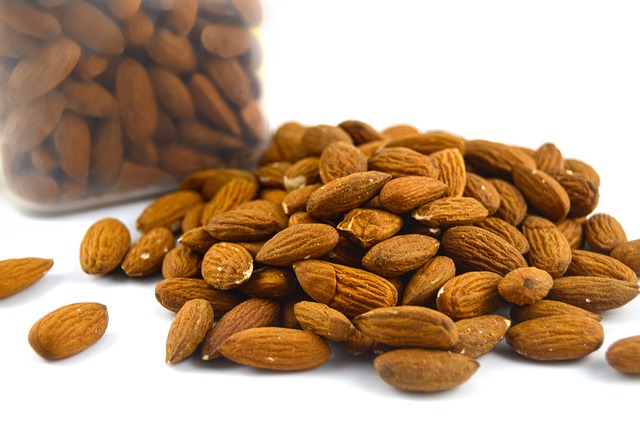
California is the home to about 80% of the almonds produced globally. Those orchards grow about 50 different varieties although according to the Almond Board of California, 95% of the production is limited to only 12 varieties. When you buy almonds, the package will most likely not list the variety of almond. What the consumer will be looking for is the following:

  • Whole almonds – almonds in their whole state
  • Sliced almonds – almonds that have been thinly sliced before packaging
  • Slivered almonds – almonds that have been cut into “slivers”
  • Natural almonds – almonds that still have their skins intact
  • Blanched almonds – almonds that have had their skins removed
  • Almond flour
  • Almond meal

It may be different in your supermarket but where I normally shop, the whole almonds are always “natural” or “raw”, not blanched. This is also true for sliced almonds whereas slivered are more likely to be blanched. Of course, if you shop online, you will be able to find each of the kinds of almonds in raw or blanched.

Which kind you use will depend on what your recipe calls for. Do you want the almonds whole or in pieces? You can easily chop whole almonds into pieces but it would be much for difficult to get the thin slices or slivered shapes in your home kitchen.

Do you want the color and texture of the almond skin? If so, go with raw almonds. If not, you need blanched almonds. In my area, if I want blanched almonds, I have two choices. One, I can buy slivered almonds, which are normally blanched. Or, I can buy raw almonds and remove their skins myself. To do this, place the almonds in a bowl. Pour in boiling water to cover the almonds. Let the almonds sit for no longer than 1 minute to preserve their crispness. Drain the almonds and rinse under cold water. Pat the almonds dry. Pinch one end of the almonds and they will slip out of their skin. One note, be sure your almonds have not been roasted or this process will not easily work.

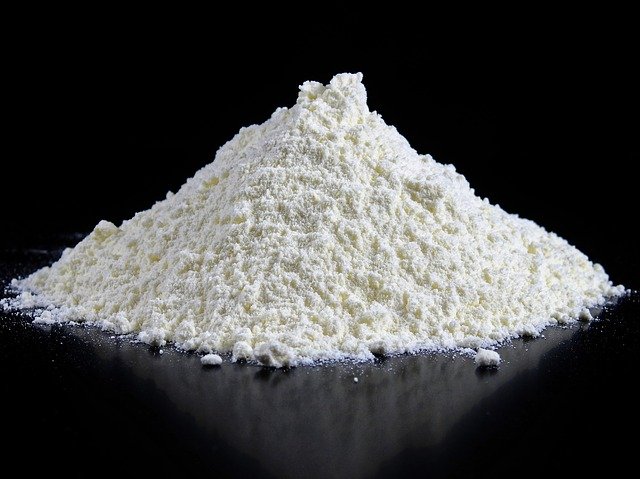
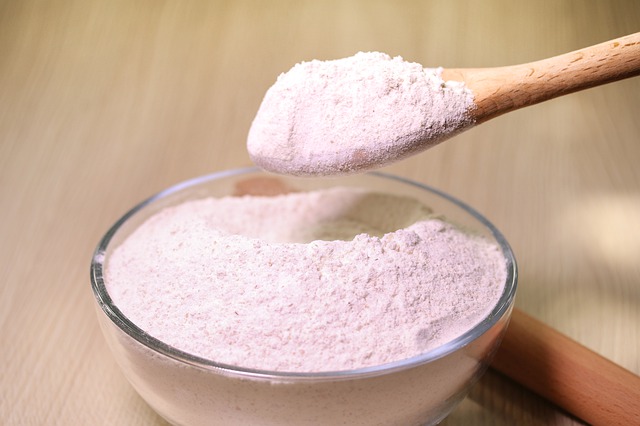
Let’s turn now to ground almond products. In the stores, you will most likely find either or both almond flour or almond meal. Labeling of these products is not regulated but almond four is typically made from blanched nuts, while almond meal is most often ground from skin-on nuts. Also, flour is typically ground finer than meal. It is not always straightforward, though, as the store brand at my supermarket labels this product as “Almond Meal Flour”. So, which is it? The description says it is made from blanched almonds and is ground finely. I would think this would be more similar to almond flour rather than meal.

These products are somewhat pricey. At my store they range from $7 to $10 per pound. As with many items, you can make your own. If you want the light color of blanched almonds, you will either have to buy these or go through the process described above to remove the skins. After this process, though, you will want them very dry before grinding. To do this, preheat the oven to 350°. Spread them out on a baking sheet and carefully roast in the oven until they are quite dry, probably about 10 to 15 minutes. You may even turn off the oven and let them sit there all night to dry out even more. When the almonds are toasted and quite dry, it is time to grind them.

Most frequently, instructions will recommend a food processor. If you do this, do not fill the bowl more than half-full. Pulse them rather than turn the processor on fully. You do not want to end up with almond butter. This method works fine but the resulting product will not be as fine as almond flour you buy. It will be more on the side of almond meal. Feel free to use a sieve to remove the large pieces, which may be pulsed again.

Others say that the food processor does not work as well as other methods to get a fine, airy product.  Some recommend a nut grater, which looks similar to a hand-cranked cheese grater. After feeding the nuts into the hopper and cranking the handle, a fine-textured nut flour is produced. Since I would suspect most of us do not own one of these, a cheese grater may be used. Use the smallest blade with cold, but not frozen, almonds. Still others recommend either a spice grinder or a blender over the food processor.

Besides the limitation of home equipment, there may be another reason why your home-ground almond flour is not as fine and silky as that you purchase. According to some sources, the commercial almond meal undergoes removal of oils, also called de-fatted. This is not a step we can do in our home kitchens. This is not universal, though. I contacted Bob’s Red Mill, and they responded that they do not defat their almonds.

Almonds have a long shelf life if stored correctly. They should be place in an airtight container and stored in a cool, dry place. Other storage tips include avoiding exposure to strong aromas or direct sunlight. For longer term storage, the freezer may be used. Be especially careful with your blanched almonds or ground products.

Enjoy a new year of cooking and baking. I’m sure almonds, in whatever form, will be a part of those endeavors!

Cooking Tips · Techniques

Cooking Resolutions

I am not much of a fan of New Year’s resolutions. I personally do not make them. Rather, I just continually strive to improve myself in all sorts of areas. However, I know many people find resolutions motivating. I thought to myself, if I wanted my readers to make any cooking-related resolutions, what would they be? That is the subject of this Cooking Tip – what you could do this next year that would improve your cooking.

  • Read the recipes – Be sure to take the time to read your recipe thoroughly.
    • Carefully look at the list of ingredients so you know what you have and what you need to buy. Also, look out for commas. For example, there is significant difference between “1 cup flour, sifted” and “1 cup sifted flour.” If you do not know the difference, email me and I will help you.
    • Read all the steps in the recipe all the way through. If possible, read it twice before starting your cooking. This will allow you to know how you should progress, what equipment you will need and if there are any surprises waiting for you – such as the step calling for you to “chill mixture for 2 hours”. If you do not know that, it can throw a serious wrench in your plans.
  • Look at the number of servings the recipe makes. If you need to decrease or increase, do the math for each ingredient and write the new amount right on the recipe. This will prevent you from starting out good by adjusting the first couple of ingredients and then forgetting to do the same for the rest – a real recipe ruiner.
  • Take mise en place seriously. Taking the time to gather your ingredients & equipment as well as measuring out those ingredients as well as prepping those that require some prep (such as chopping or slicing) may seem like a waste of time. However, in reality, it makes your cooking go smoother and helps to prevent errors.
  • Be careful about substituting ingredients. Some will work fine but others not so much. For example, if it calls for fresh herbs and you only have dried, you should not make a 1-1 substitution. Use only 1/3 to ½ the amount of dried herbs as fresh. Not every vinegar tastes the same and if you substitute whatever you have in your pantry for what it calls for in the recipe, do not expect it to necessarily work.
  • If you are a baker, seriously consider weighing your ingredients rather than measuring by volume. You will get much better and more consistent results.
  • Invest in a good instant-read thermometer. Not only will this help you to cook your meat to a more edible and safe result but it can also help with baking bread, making custard and it is essential to successful candy making.
  • Use the correct type of measuring cups. Use liquid cups for liquids and dry cups for dry ingredients. You may think that is silly but there is real research demonstrating the inaccuracy of measuring when using the wrong cup.
  • Date your spices. Get rid of outdated ones and replace them with fresh. If they do not smell like the spice they are, they won’t impart much flavor in your dish. Instead of buying large quantities of spices you do not use very regularly, buy smaller ones. This ensures the freshness of your spices and saves you money in the long run as you do not have to throw items away because they have gone stale.
  • Taste as you go. For the best results, taste your dish as you go, adjusting seasonings as needed. At the very least, taste before you serve it. Do you really want to serve a dish to family/friends that you have no idea what it tastes like? I didn’t think so!
  • Try something new whether it is just a new food, a new recipe, a new cuisine or something else. If you do not know where to start, book a class for what you want to learn and let’s have fun with it.
  • Finally, just cook more. It is so much healthier and less costly to cook at home. Learn to plan ahead, make freezer meals, challenge yourself to use whatever is in your refrigerator rather than throw it out. Learn how to Cook without a Recipe to help with this. I can teach you many tips and techniques to assist you.

Do you have any specific cooking resolutions?
Let me know. I would love to hear what you want to work on this next year.

Cooking Tips · Ingredients

Cosmic Crisp — A New Apple in Town

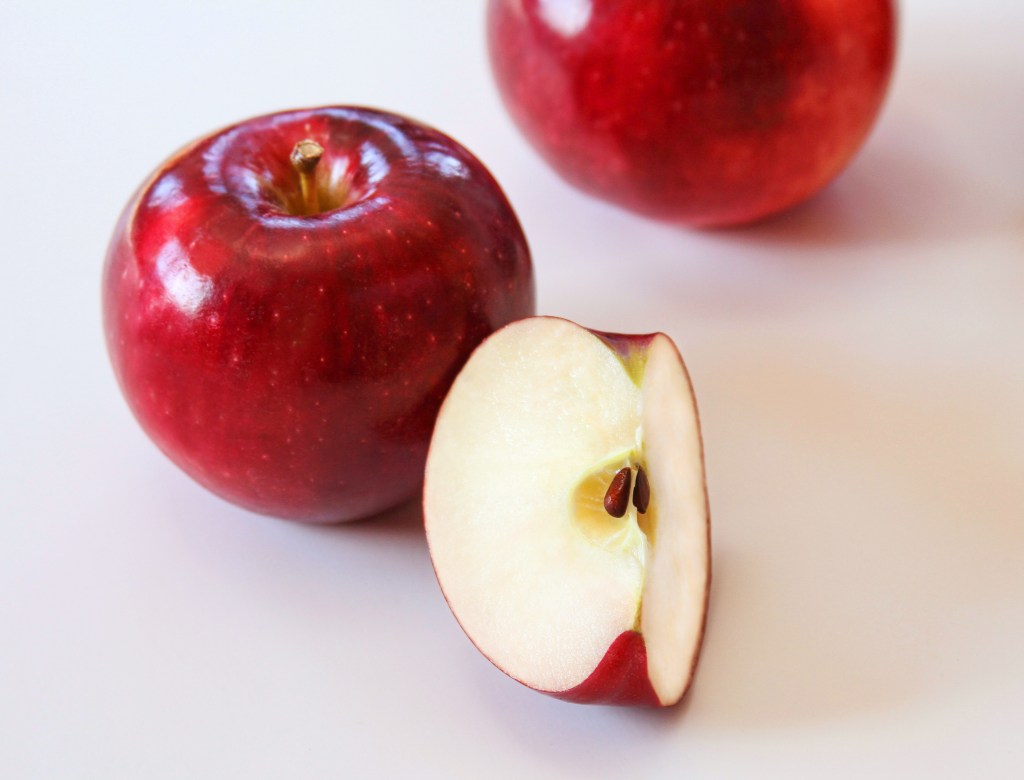
There is a new apple in town — the Cosmic Crisp — and I wanted to let everyone know about this apple that has just arrived in our supermarkets.

Cosmic Crisp Apple – photo courtesy of Proprietary Variety Management

After 20 years of study and research by Washington State University, the Cosmic Crisp apple is being launched. it is a cross between an Enterprise and Honeycrisp. The “Cosmic” part of the name comes from the white “lenticels” all over the outside and the “Crisp” hearkens back to one of its parents — the Honeycrisp.

The developers describe its texture as very firm and crisp. They claim it has naturally high levels of acidity and sugar, making it an exceptional eating apple. They say this characteristic allows cooks to reduce the sugar in recipes using this apple. The high acidity also means it is slow to brown.

I just purchased some and I must say both my husband and I really enjoyed them. They are, indeed, a crisp apple and had a delightful flavor. So many apples today seem to lack much flavor. This is not true for the Cosmic Crisp.

They are not to everyone’s liking, though. One of my wonderful readers shared that they were not going to be a favorite of hers. (Thank you, Jana, for sharing with us!) What about you? I urge you to give them a try and tell me what you think. I would absolutely love to hear from you with your opinion on this new breed of apple. Email me with your thoughts.

Cooking Tips

Great cookbooks for gifts or for yourself!

Last week I mentioned some ideas for great stocking stuffers. This week I want to mention some cookbooks to consider either as gifts or for yourself. Perhaps print this Cooking Tip with the ones you would like circled in red and leave it in a conspicuous place.

The first two books are for those cooks who love to understand the science behind successful dishes. They do have recipes in them but the real worth of these books is the discussions of ingredients and techniques behind those recipes.

The first one is The Food Lab by J. Kenji López-Alt. This book was published in 2015 and soon won the James Beard Award for General Cooking and the IACP (International Association of Culinary Professionals) Cookbook of the Year award. The author takes all those culinary “rules” and puts them to the test to see if they hold up to reality. When is the best time to salt your steak before cooking? What is the best method for obtaining easy-to-peel hard boiled eggs? The writing is entertaining and it is a wonderful resource to have on your bookshelf.

A similar book is Cookwise by Shirley Corriher. Being a biochemist by trade, the author delves into all aspects of cooking and helps the reader to understand why things happen. She then pairs those scientific discussions with recipes that demonstrate what she is teaching. This is one of the first cookbooks I bought when I started getting interested in cooking. The original volume was published in 1997 but is still a great resource. In 2008, she published Bakewise: The Hows & Whys of Successful Baking. Although I do not have this book, I can only imagine it would also be a worthwhile volume.

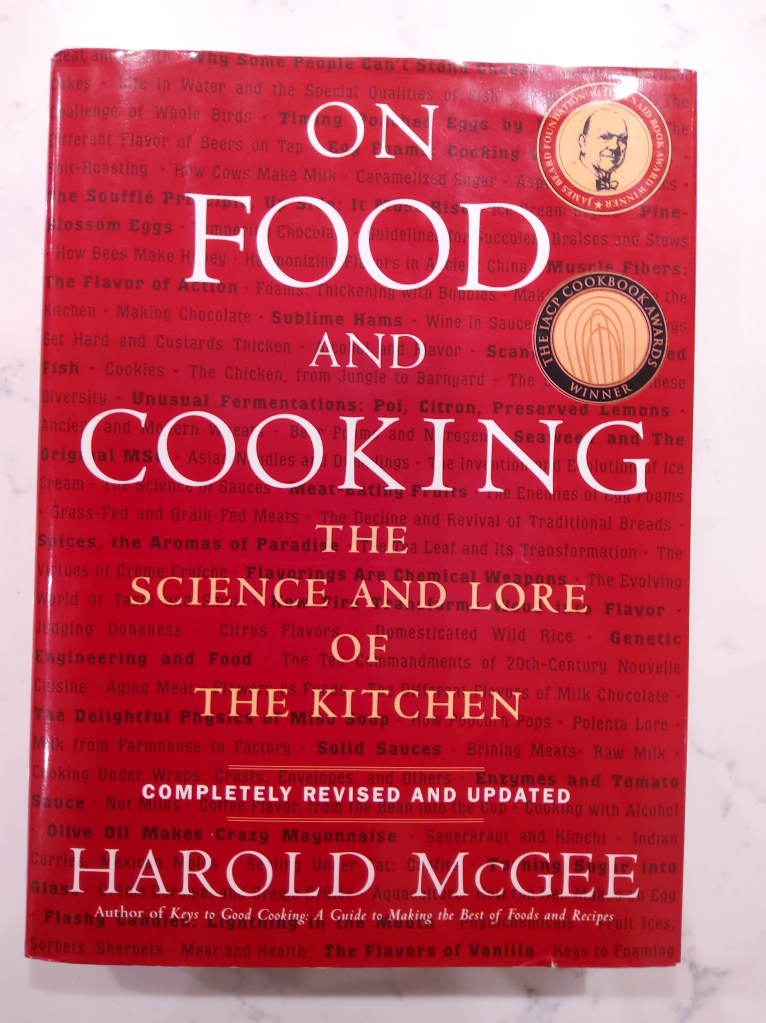
The next two books are pure culinary reference books – no recipes – and are for those cooks who are very serious about not just cooking but truly understanding the world of food. First is On Food & Cooking: The Science & Lore of the Kitchen by Harold McGee. It was first published in 1984 and updated in 2004. It was one of the books that I was required to have in culinary school. According to its description, it is a “compendium of basic information about ingredients, cooking methods, and the pleasures of eating.”

A dictionary of sorts is The New Food Lover’s Companion by Rob and Sharon Tyler Herbst. The latest edition is 2013 and is a great book to grab when you run across a term or an ingredient with which you are not familiar. The authors also published The Deluxe Food Lover’s Companion in 2015. It is a larger book both in size and content including information on more ethnic ingredients, food labels, ingredient substitutions and safe cooking temperatures.

Do you ever want to just throw ingredients together to make a dish without a recipe? This can be done but not all flavors complement each other. That is where The Flavor Bible Karen Page and Andrew Dornenburg comes to the rescue. Published in 2008, the jacket describes this book as “your guide to hundreds of ingredients along with the herbs, spices and other seasonings that will allow you to coax the greatest possible flavor and pleasure from them.”

A little gem of a book is Food FAQs: Substitutions, Yields & Equivalents by Linda Resnik and Dee Brock. I consult this book every single week. The authors have painstakingly compiled lists and charts that answer questions such as “how much juice in an average-sized lemon”, “how many onions are required to make one cup of chopped onions” and “what can I substitute for a quince?” I cannot more highly recommend this book.

Enough of reference books, what about actual cookbooks? Here are just a few that I use and love. If you are a fan of southwestern cooking, Bobby Flay’s Mesa Grill Cookbook. After having eaten at The Mesa Grill in Las Vegas and absolutely loving our lunch, my husband bought this for me last Christmas. It is a very pretty cookbook but is also filled with delightful dishes page after page. Everything I have made from this has been wonderful. Last night, I made “New Mexican Rubbed Pork Tenderloin with Bourbon-Ancho Sauce”. It is not a cookbook for those of you who want quick and easy. Although his recipes are not difficult, they do require quite a few ingredients and often consist of multiple components. The effort is worth it but you should be aware of this before purchasing this book.

If you love to bake, Bake from Scratch (a culinary website as well as a magazine) has published three volumes entitled Bake from Scratch: Artisan Recipes for the Home Baker by Brian Hart Hoffman. All kinds of baking are included from bread to cakes to pies to pastries and more.

An interesting little volume that answers the question of whether it is better to buy an item at the store or to make it yourself is Make the Bread, Buy the Butter by Jennifer Reese. This book was a gift from my husband’s brother and his wife. After extensive testing, the author tells the reader when it is worth the effort to make something homemade and when it is better to just buy it. She bases her recommendation on the cost, the effort and the end result.

There are so many great cookbooks out there that it is impossible to compile a list. These are just some that I use on a regular basis and can personally recommend to you.

Happy Reading – and Cooking!

Cooking Tips

Stocking Stuffers for the Cook

If you like to cook, you probably have friends or family members who also like to cook. Something for the kitchen might make the perfect gift but what do you get them? Or, what would you like others to give you? In this Cooking Tip, I would like to share with you some of my favorite little gadgets – most of them would make great stocking stuffers. Some of the links below are affiliate links and I may earn a commission if you decide to purchase.

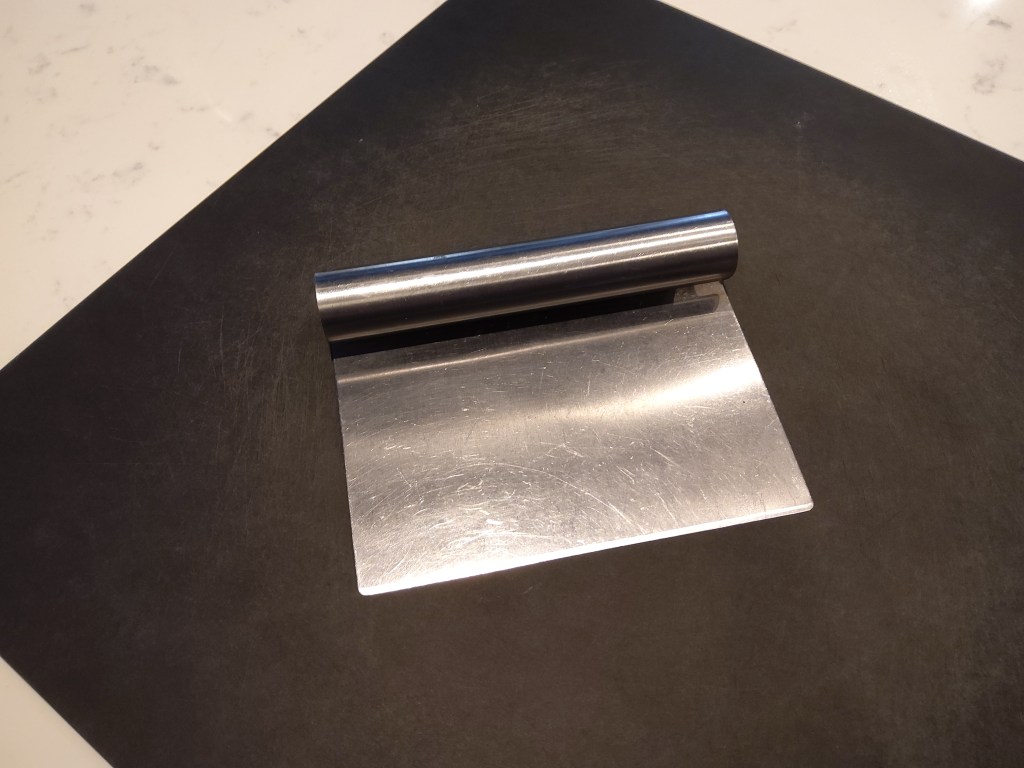
One item I use in my kitchen almost every day is a bench scraper. This is a photo of mine although there are various other designs. Mine used to have a ruler along the bottom – a very useful bonus. I made the mistake of putting mine in the dishwasher and, voilà, no more ruler. I caution you, therefore, to make sure it is dishwasher safe. It is great to pick up items (such as chopped veggies) from your cutting board, to portion bread dough, to slice soft items (such as cookie dough) or to scrape debris off of your counter. The average price is only $5-$10. Every cook needs one!

Along the same lines are bowl scrapers. Rather than being metal and rigid as the bench scraper, bowl scrapers are plastic and flexible. They are most useful for cleanly scraping all the dough and batter out of your mixing bowl. They can also be used as a counter scraper similar to the bench scraper. They can be found for only about $5.

Rasp graters are the tool of choice for zesting your citrus. You are able to get all of the wonderful essential oils without large pieces of citrus rind. There are many brands but Microplane is the gold standard. These graters are also useful for grating ginger, garlic and nutmeg. They do sell ones labeled specifically for these tasks but a general all-purpose one will work. This photo shows one of those along with one made for grating whole spices. Expect to pay about $15.

Many of us cooks try not to have too may “one use” gadgets taking up space in our drawers. However, if you love cherries, one such uni-tasker is a good cherry pitter. They make a tedious job into something quick and efficient. $10-$15 would be a typical price.

Are you a pro at grating? If so, you may want to pass on this next item. If, like me, you have been known to grate your knuckles on a regular basis, I have a great find that my husband bought for me.  It is a glove that you can wear that protects your fingers from the sharp grater. Mine is well used and only costs about $15.

I am a huge believer in the concept of “mise en place”. In other words, taking the time to get out all of your ingredients and having them ready to go before you start cooking. It might be measuring your spices or dry ingredients or even chopping everything before you start your recipe. To do that, though, you need plenty of little bowls in which to place your ingredients. You can’t have too many of these little guys in your kitchen.

Another uni-tasker is for those of you who do not like separating eggs through your hands. Put this little gadget over a bowl, crack your egg into it and, presto, the whites and yolk are separate. It may sound silly but actually works quite well.

How do you defrost your meat for dinner? Do you remember to take it out the night before and let it sit properly in the refrigerator so it is perfect when you need to start cooking? Or, are you needing to defrost something so you can have dinner on the table in an hour? I suspect many of us find ourselves in that latter category. That is where the microwave often comes into play. However, the microwave can result in uneven defrosting and even some unintended cooking of the meat. This next item was a gift to me from my wonderful mother-in-law and I must say it is amazing and I love it. It is called a defrosting tray and, although, not as quick as the microwave, it will defrost that chicken breast or steak in a very short time and the result is a totally defrosted item without any accidental cooking. There are many brands out there with most of them ranging from $10-$30.

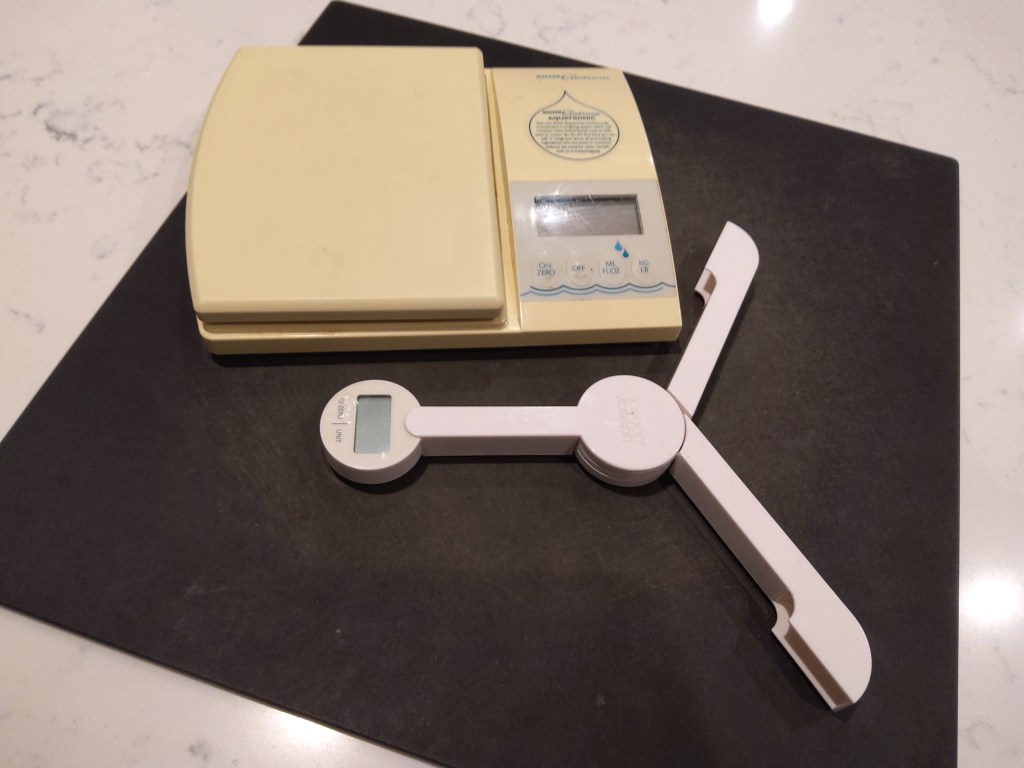
My last two suggestions are a little higher on the price range but well worth it. If you are a baker and have not tried baking with weight rather than volume, you really should. An easy-to-use and accurate kitchen scale is a must for serious bakers. I have two – one I use at home and one is portable so I can use it when I am teaching cooking classes at a location that does not have a scale. There are too many different scales out there to mention but one of the most highly rated is Oxo’s Good Grip scale for about $50.

Finally, every serious cook needs an accurate digital food thermometer. It is essential for ensuring your meat is cooked thoroughly but not over-done. It is also great for testing when your homemade bread is ready to come out of the oven. Making caramels, brittle or toffee is very difficult without one. Although on the pricer side ($80-$100), Thermapen is one of the absolute best. It is fast and extremely accurate. The company is a small business located in Utah and they have outstanding customer service.

I have more favorite gadgets such as my potato ricer, my adjustable measuring cups and poultry shears, but these will give you a great start in shopping for someone else or putting on your own list for the Santa in your life. If you have a favorite gadget, let me know and I will share your ideas with others.

Cooking Tips · Techniques

Enjoy your left-overs safely

Are you a lover or hater of leftovers? I’m definitely a lover – not only is the flavor of some dishes enhanced by a rest overnight in the refrigerator but it is great to have an easy & quick meal sitting there after a day of work. It makes life so much easier. One time that you will surely have left-overs is after a Holiday meal. You can do so much with those left-overs but you need to store them in the best and safest way. That is what I will be talking about in this tip.

Hot foods (including leftover turkey) should be packaged and refrigerated within 2 hours after serving. (For turkey, after you cut the meat off the bones, save the bones to make a great turkey broth.) The concern for bacterial growth is when food is left in the “danger zone” between the temperatures of 40° and 140° for more than 2 hours (reduce this to 1 hour if the ambient temperature is above 90°). That is why it is important to keep your food hot (at least 140°) or refrigerate it so the temperature drops to less than 40° within 2 hours. For cold foods, keep it under 40° at all times.

For large pieces of meat, it is best to cut it into smaller pieces to quicken cooling. For a dish such as soup, you will want to portion it into shallow containers to allow faster cooling. You can place these items directly into the refrigerator or if you want more rapid cooling, use an ice water bath.

All leftovers should be wrapped well in air-tight packaging. This helps keep bacteria out while retaining moisture and preventing your left-overs from picking up other odors from your refrigerator.

Most left-overs can be stored safely in the refrigerator for 3-4 days. Here is a chart from the USDA about recommended refrigerator times. For longer storage, freeze the packaged left-overs. Generally, these items can be frozen for 2-4 months. Although you can safely freeze them for a longer time, the food does tend to lose moisture and flavor. Here is another USDA link that talks more about freezing with more specific recommendations for time.

When thawing them, you still need to be aware of the danger zone. That is why it is not recommended to thaw items by sitting at room temperature. Rather, thaw them overnight in the refrigerator. For faster but still safe thawing, use either a cold-water bath (make sure the leftovers are in a leak-proof package) or the microwave. Not all foods need to be thawed before re-heating. You can go directly from frozen to hot either on the stovetop or in the microwave.

One important caveat – when re-heating leftovers, you want to take them up to 165° as measured with a food thermometer. Not only will this temperature assure safety as far as bacteria is concerned but it will also be safe to re-freeze the item, if necessary.

How do you like to use your left-overs? Email me with your favorite ideas and I will share them with others!

Cooking Tips · Ingredients

A Myriad of Potatoes

What is your favorite Thanksgiving side dish? For many of us, it has to be mashed potatoes. There are more and more potato varieties in our store that I thought it would be a good time to write a Cooking Tip about potatoes. Afterall, potatoes are the most consumed vegetable in the US and, worldwide it is the fourth largest food crop.

According to Potatoes USA, potatoes were first cultivated around 8,000 BC to 5,000 BC by the Inca Indians in Peru. In the 1500s, Spanish Conquistadors conquered Peru, discovered the flavors of the potato, and took them to Europe. According to the same source, “potatoes arrived in the Colonies in 1621 when the Governor of Bermuda, Nathaniel Butler, sent two large cedar chests containing potatoes and other vegetables to Governor Francis Wyatt of Virginia at Jamestown.”

There are at least 200 varieties of potatoes although all of these can be put into the following categories: russet, yellow, red, white, blue/purple, fingerling and petite.

Another way to categorize is by texture – waxy or floury. Floury potatoes have more starch concentrated in the cells. These cells swell and separate when cooked resulting in a dry, fluffy texture. Waxy potatoes have cells that tend to stick together when cooked giving them a more dense and moist texture. Because of this difference, certain types are better suited to some uses than others. Others are in-between waxy and floury and tend to be more all-purpose. Let’s discuss these different types.

Russet – these potatoes are medium- to large-sized, oblong in shape and brown in color with whitish flesh. They are said to have a mild earthy flavor with a medium sugar content. They are a floury potato making them ideal for baking and frying resulting in a crispy exterior and a lighter, fluffy interior. They make wonderful mashed potatoes since light and fluffy is what we want in that dish. Particular varieties include Burbank, Norkotah, Ranger, Goldrush and Centennial.

Yellow – these can be very small to fairly large in size. They can be either oblong or round in shape. The skin is lighter in color in varying shades of yellow. Sugar content is medium and they are slightly waxy. When cooked, they produce a very creamy texture with a slightly sweet and buttery flavor. Great uses include baking, roasting or mashing. Names you may see include Yukon Gold, Yellow Finn, Agata, Santina and Bintje.

Red – these potatoes are usually small to medium with a rounded to slightly oblong shape. They have smooth, red skin and white flesh. This is a waxy potato with a slightly sweet flavor and a medium sugar content. The waxy texture allows the potato to stay firm throughout the cooking process. This, along with the attractive red color, means that they are great in salads, soups and stews. As a side dish, they are better boiled or roasted but can be mashed. Varieties include Chieftain, Norland, Red La Soda, Pontiac and Ruby.

White – these are small to medium in size with a round to long shape, very delicate white or tan skin and a white flesh. They have a medium starch content with a low sugar content. They can be used in a variety of ways including mashing, grilling or in salads. Names include White Rose, Cascade, Superior, Kennebec and Cobbler.

Purple/Blue – these potatoes are on the smaller to medium size with an oblong shape. The smaller oblong ones are called fingerlings. Their skins are a very pretty purple or blue with flesh that can range from white to pink to purple with shades in-between. The flavor is called earthy or nutty with a low sugar content. The flesh is moist but firm resulting in a potato that holds it shape, making it great in salads while adding a delightful color. To preserve this pretty color, they are best prepared in the microwave although you can also steam or bake them. Varieties are Purple Peruvian, Purple Majesty and Adirondack Blue.

Fingerlings – as the name suggests, these potatoes are finger-shaped. The skin color varies: red, orange, purple or white. The flesh also ranges from red to purple to yellow or white. They will often have colored veins throughout the flesh. Texture is firm and waxy. Flavor is buttery and nutty. Sugar content is medium. Pan-frying and roasting are great preparation techniques for these potatoes but they can also make an interesting potato salad. They are various varieties but they will usually just be called “Fingerlings” at the store.

Petite – these potatoes are named due to their size. The color of the skin and flesh will reflect the larger-sized varieties as will the shape, texture and sugar content. Flavor is said to be concentrated in the small size. They are great in salads and make nice roast potatoes.

Proper storage is important for the longevity of the potatoes as they continue to metabolize after harvest. Store them in a place where the temperature is about 45°-50° F and the humidity is high. Do not refrigerate. Minimize exposure to light and try to keep them in a well-ventilated place.

I started this Cooking Tip by mentioning mashed potatoes. Let me end by helping you make the perfect dish of mashed potatoes. First, start by choosing the right potato. Classically, this is the Russet but Golden Yukons go a great job, too. Scrub the potatoes. You can peel either before or after cooking them. There are those who feel that cooking them with the skin on leads to better flavor. Some even advocate not peeling at all because they like the flavor/texture of the skins in the final dish. I’m sure we have all been told that most of the nutrients are in the skin. According to the Idaho Potato Commission, the skin does contain about half of the fiber in a potato but more than half of the nutrients are in the flesh. If you score the skin around the middle of the potato, you can just pinch off the skin after cooking. Here’s a video on how to do that.

Put your potatoes (peeled or not, cubed or not) in a pot and cover with cold water. This way they cook more evenly. If you drop them in boiling water, the outside can cook before the interior. Make sure you add salt to the water so that it will penetrate the potato and add flavor that you really cannot get by just salting afterwards. Simmer for 20-30 minutes, until tender. Drain and return to the pot. Put the pot back over low heat to dry the potatoes. Now, mash the potatoes. I prefer using a ricer but if you wish a more rustic dish, use a hand masher. Mixers and food processors can be used but are not recommended as they often lead to gummy results.

I always add a bit of butter to my mashed potatoes. I soften or melt it first so it mixes in easily and I do not over-mix them. Many people add warm dairy (so it doesn’t cool the potatoes) such as milk or cream but for every-day mashed potatoes, I save some of the cooking water and use that to thin out my potatoes. It not only makes them creamy but also adds salt. So, be sure to taste before adding any additional salt. Other additions are up to you – parmesan cheese, herbs, garlic – whatever your heart desires.

Happy Thanksgiving. I am very thankful for all of you and that you take the time to read about my favorite topic – Food! Please let me know if there is anything specific you wish I would discuss.

Cooking Tips · Techniques

Cookie Success

Do you love to make cookies for the holidays? Many of us do and we especially delight in the satisfied look on faces as they devour those cookies. Because we are embarking upon this cookie making time, I thought I would re-run a Cooking Tip on Cookie Success that I wrote earlier. I have added a few additional tips for you. Here it is!

Do you prefer your cookies chewier or crispier? Did you know that there are modifications you can make to your cookie recipes to get the result you prefer? This tip will outline some of those changes.

For those of you (including me) who prefer chewy cookies, try the following.

  1. Keep things cold. Chilling the dough will slow down spreading of the cookies. Chilling the baking sheet helps even more.
  2. After removing one baking sheet of cookies from the oven, do not immediately put more cookies on the hot sheet. Wait for it to cool thoroughly. You may want to run cold water over the baking sheet. If the baking sheet is still warm, the butter will melt faster resulting in spreading of the cookies and a thinner, crispier result.
  3. Use solid shortening. Since butter melts faster than solid shortening, cookies made with butter will spread more. If you really want the taste of the butter, try half butter and half shortening.
  4. Adjust your sugar. Use a larger proportion of brown sugar to white. Using dark brown sugar attracts more moisture from the air, thus resulting in a chewier cookie. Also, cookies made with honey will become soft as they stand after baking.
  5. Use yolks only or add one extra yolk. Egg whites are drying. If a recipe calls for two eggs, only use one egg plus one egg yolk.
  6. Use baking powder rather than baking soda. This gives a more acidic environment, which spreads less. Use 1 teaspoon per cup of flour.
  7. Watch your baking time carefully. Don’t over-bake and consider taking them out of the oven one or two minutes before the recommended time.

For crispy cookie fanatics, here are your tips.

  1. Use butter rather than shortening.
  2. Use a bit more liquid in the batter as this helps the cookies spread more.
  3. Substitute 1 tablespoon corn syrup for 1 tablespoon of the sugar.
  4. Replace the egg in the recipe with milk.
  5. Using baking soda rather than baking powder. Use ½ teaspoon baking soda per cup of flour.

Here are some more tips for all cookies.

  1. If possible, use light-colored baking sheets. This ensures more even cooking. Dark cookies sheets can also lead to over-baked bottoms.
  2. Baking sheets should be heavy and preferably, not non-stick.
  3. If your recipe calls for room temperature ingredients, make sure your ingredients are really at room temperature. There are scientific reasons for this but let’s just say it will give you superior results.
  4. If you have the time, let your dough rest before baking. It will improve the flavor and color of the cookies. Refrigerate the dough in an airtight container at least overnight and up to 3 days.
  5. If your cookies are browning too quickly, put a second baking sheet under the first while they are cooking.
  6. Cool your cookies on a wire rack, not directly on the counter or on a plate. There needs to be room for air to circulate around the cookies to prevent condensation and soggy bottoms.

There are more tips/techniques out there but, for now, try these tips for your favorite cookie recipe. If you are making chewy ones, save one for me!

Cooking Tips · Ingredients · Techniques

Flavoring Choices

Spices and flavors have been used for thousands of years all over the world. So much of our food would be pretty bland without these ingredients. In this Cooking Tip, I would like to explore this world of Flavors and Flavoring.

Did you know if you combine lemon, banana, raspberry and pineapple essences that you end up with strawberry? I sure didn’t know that but people who are educated and trained as Flavorists know this and so much more. These scientists have looked at items that bring us flavor such as fruits, vegetables, spices and leaves. Through their investigations, they have identified “flavoring substances” and how they work together to please our palates.

As the Flavor & Extract Manufacturers Association (FEMA) points out, there are hundreds of natural substances in a strawberry that lead to what we taste as strawberry flavor. Flavorists isolate these compounds to develop a strawberry flavor that we can add to our foods. They also design new flavor combinations that we love to try.

Do you look forward to those new Lay’s potato chip flavors each year? (The most recent offering – Grilled Cheese & Tomato Soup – was supposed to be on shelves October 21.) How do they do it? According to FEMA, “when a food company decides it wants to introduce a new product to consumers … they often contact flavorists at companies that specialize in creating flavors, and they ask them to create a flavor that meets their requirements and will be appealing to the consumer.”

If you look at an ingredient list on a product, you may see “natural flavor” or “artificial flavor”. We probably all prefer the term “natural” but they may not be that very different. FEMA’s definition is “Natural flavors are ingredients that come from natural sources such as a spice, fruit, or vegetable.  They can even come from herbs, barks, roots, or similar plant materials.  Natural flavors also come from meat, seafood, poultry, eggs, and dairy products.”

And, “artificial flavors are flavorings that don’t meet the definition of natural flavor. There isn’t much difference in the chemical compositions of natural and artificial flavorings.  What is different is the source.  For example, an artificial strawberry flavor may contain the same individual substances as a natural one, but the ingredients come from a source other than a strawberry.” Of course, companies must abide by the FDA’s rules, which are found here, if you are interested. Other countries have their own rules.

Many times, we home cooks use flavoring extracts in our cooking and baking. I am sure we all have extracts in our pantry but what are they? FEMA defines them as “a solution that contains essential components of a complex material.  A flavor extract is such a solution, but composed specifically of compounds that create flavors.”

The most commonly used in the USA is Vanilla. I have written another Cooking Tip on Vanilla and it can be found here. What other ones do you have in your pantry? Besides vanilla, I have almond, anise, banana, lemon, orange, peppermint, raspberry and spearmint. There are many more, of course. Just check out your favorite supermarket or online supplier.

One little tidbit I want to tell you is that you will often see “Mint” extract on the shelves. You may also see “Peppermint” and less commonly “Spearmint”. If it just says “Mint”, it is most likely a mixture of peppermint and spearmint. If you are using it to make those holiday baked treats, you probably want pure peppermint. Plain mint can be used but will give you a slightly different taste.

There is also something relatively new to our supermarket shelves and that is flavoring pastes. Once again, vanilla paste is the most common but there are others. They all usually have natural flavors but also often have sugar or corn syrup as well as some sort of thickener (Gum Tragacanth , Xantham Gum, Carrageenan). The company with the most varieties is Taylor & Colledge.

If you look at a bottle of any kind of extract, you will always see alcohol. That is because it is used in the distillation process. There are those that say because alcohol evaporates during baking, extracts are not the best forms of flavor for baked goods. Rather, they recommend saving your extracts for cold applications such as beverages or sorbet.

Nature’s Flavors recommends using “flavor concentrates” or “flavor emulsions” in baking. According to the company, these items are “extremely concentrated water soluble liquids containing no alcohol or sugar and are set in a Natural Gum Acacia Base.” They are made to withstand high temperatures, making them the preferred use in baking. I have not tried their products (they do look fun, though) and they are not the only producer in the market.

I suspect that most of us home cooks use these kinds of flavorings in the extract form. We have done that for years and I would think that practice will continue to be the main one we use. With this Cooking Tip, I hope you will see that there is more to flavoring than just extracts. Just have fun in adding flavor to your foods and let me know how it goes!