Cooking Tips · Techniques

Hot Cross Buns – A Classic Easter Delight

Designed by Freepik

Most of us are beginning to see glimmers of Spring. Part of Spring is Easter, which is a time filled with favorite Easter foods. One of those foods that many people enjoy only during this time is Hot Cross Buns. This Cooking Tip is dedicated to explaining the history of this beloved bread item along with advice on how to make the best batch possible.

Any history source that discusses hot cross buns will mention this childhood nursery rhyme that street sellers sang out in the 19th century.

Once a year, the sellers would start hawking these sweet and spiced soft buns with a cross-scored into the dough. Later, the cross was added using a flour paste or icing.

Photo by StockCake

Although there is much debate about the origins and their historical context, it is generally believed that the cross has always held a religious significance and eventually became associated with Good Friday. English Heritage notes that in a 1733 edition of Poor Robin’s Almanac, a writer said:

Even today, some will associate the hot cross bun with the communion wafer. The spices represent those used in Christ’s burial, and the cross is a reference to the crucifixion.

Enough of history! How do you make a delicious hot cross bun?

Ingredients
The ingredients are very simple. Although you might see some variation among recipes, you will generally have the following ingredients:

  • Flour
  • Butter
  • Milk
  • Eggs
  • Yeast
  • Sugar
  • Spices

Making the dough

  • Hot cross buns are meant to be light and fluffy. Achieving this requires taking care not to either under- or over-knead the dough, as well as not using too much flour.
  • When combining the ingredients, do not add all the flour at once. Hold back a bit of the flour and add it only if needed. Too much flour can make the buns dense and hard.
  • Most people will use a stand mixer to make the dough, but it can also be done by hand.
  • Knead into a soft, smooth, and sticky dough. You can use the dough hook on a stand mixer or knead by hand, although the latter will take much longer. Additionally, it is easy to over-knead when using a stand mixer. If your hot cross buns turn out hard, it may be because you over-kneaded them.
  • You do want a sticky dough as this will result in softer and moister buns. If the dough is difficult to work with due to its stickiness, try putting a bit of oil on your hands rather than using flour.

Adding fruit

  • Some recipes will instruct you to simply add the dried fruit as it is.
  • Others recommend soaking the fruit in warm water, apple juice or your preferred spirit. This softens and plumps up the dried fruit. If you do this, allow the mixture to cool before adding the fruit to the dough.
  • Another point of contention is when to add the fruit. There are three methods.
    • Add fruit along with the rest of the ingredients.
    • Add the fruit only after achieving a soft dough. Since the dough should be sticky, oil your hands and knead the fruit into the dough right in the bowl.
    • Add the fruit after the first rise. If you find it hard to incorporate the fruit at this time, try stretching the risen dough into a rectangle. Sprinkle the fruit pieces over the dough, roll into a log and fold in half. Continue with a few more folds until the fruit looks evenly distributed. Those who recommend this think that the fruit can inhibit gluten development during the kneading process.
  • The classic fruit used is currants or sultanas. Others use raisins, dried cranberries or diced, dried apricots.

Spices

  • Warm spices are typically used. For example, allspice, nutmeg, cloves, mixed spice and/or cinnamon.
    Some chefs feel that cinnamon can inhibit the rising of the dough. So, use the cinnamon lightly.

Rising

  • For the best and fluffiest result, the dough should rise twice. The first rise happens after you have kneaded the dough.
  • The second rise is after you have formed the dough balls and before placing them in the oven.

Portioning & shaping dough balls

  • You will achieve a more aesthetically pleasing result if your dough balls are as uniform in size as possible.
  • Some people prefer to portion them out using a muffin scoop, ensuring a consistent amount of dough in each scoop.
  • For the best result, weigh the dough balls.
  • Take each portion and form it into a ball. Take some time to make nice spheres and tuck the seams underneath.

Forming the cross

  • The simplest method is to just cut a cross into the risen balls before baking. Where you cut the cross, it will appear paler after baking.
  • Flour paste – an older method involves making a flour paste from water and flour. This is then piped onto the buns before they are baked. Some will cut the cross into the dough first as it gives a guide for applying the flour paste. You may need a bit of trial and error to get the right consistency for the flour paste. If it is too thin, it will spread as it bakes and lose its cross-shape. If it is too thick, you cannot pipe it easily.
  • Bo Friberg, author of The Professional Pastry Chef likes to use pastry cream instead of a flour paste. Now, I think that sounds incredibly yummy!
  • Others like to make an icing from powdered sugar, milk and vanilla. This is piped onto the baked and cooled buns. Once again, some will cut the cross into the unbaked buns to provide a guide for the icing.

Baking

  • Be sure not to over-bake the buns, as they will dry out and lose their light and fluffy texture
  • Many like to apply a glaze as soon as the buns come out of the oven to give them a shiny appearance.
  • A common glaze is made by heating apricot jam and a small amount of water and then brushing it on baked buns.

Storage
These are one of those baked items that you want to eat sooner rather than later. You can freeze them for longer storage. To do this, bake the buns and allow them to cool. Place them in an airtight container and store them in the freezer. To serve, allow to come to room temperature and then warm in a low oven.

Are Hot Cross Buns a tradition for you? Do you have any secrets to share? I must say they are not something that I make each Easter, but after writing this Tip, I am eager to grab my yeast and get started!

Cooking Tips · Equipment

A Guide to Kitchen Mandolines

Photo courtesy of Amazon

A mandoline is one of those kitchen tools that is not absolutely necessary in your kitchen. However, it is the best tool for specific tasks and, therefore, may be something worth considering. What they are, how to select one, and how to use them safely are topics covered in this Cooking Tip.

What is a mandoline?

  • A mandoline is a manual machine for slicing fruits and vegetables.
  • The user holds the food with one hand and slides it down the length of the mandoline and across the blade.
  • Some models only produce thin slices, while others have blades that enable you to make julienne or waffle cuts.
  • It can generally slice items more precisely, evenly, consistently and quickly than with a chef’s knife.
  • It can not only speed up the preparation of produce but can also produce paper-thin slices that are even in thickness.
  • It can also produce very thinly shredded cabbage for your coleslaw.

What to look for in a mandoline.
Sharp Blades
According to everyone, the most crucial aspect of a good mandoline is that it should have very sharp blades. Duller blades make it more difficult to push the food through. Users then compensate by putting more pressure as they push the food, making it more likely that they might slip and cut themselves. Some brands have blades that can be removed for sharpening. For more inexpensive models, the entire unit will need to be replaced.

Type of Blade
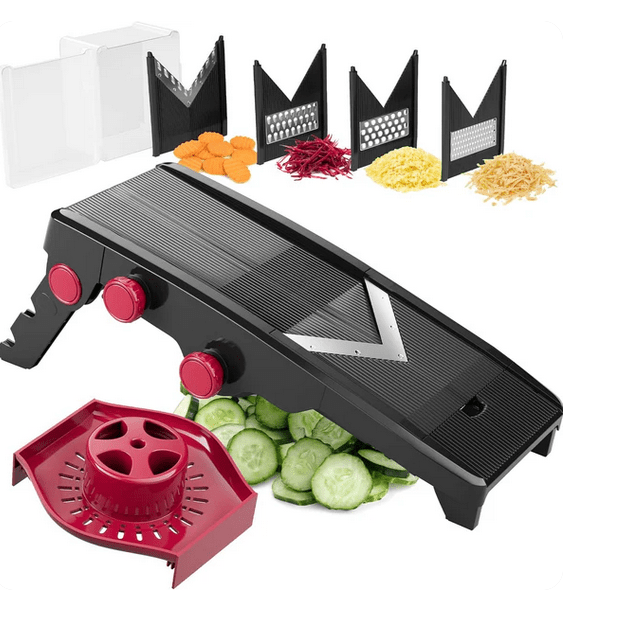
There are three basic models: French, Japanese, and V-shape. The French style has a straight blade that is perpendicular to the sides of the mandoline. Japanese models typically feature a blade placed at an angle. The final style has a V-shaped blade.

One is not always better than the other, as each has its advantages and disadvantages. Some users prefer the straight blades as they feel it is easier to push food through. With the V-blade, it can be harder to push the food through, necessitating more force. It can also be more challenging to cut even slices with the V-shaped blades. However, V-blades are better suited for larger items, while the angled blades are more suitable for smaller foods.

Some mandolines also come with additional blades that allow you to julienne items or make waffle cuts.

Varying Thicknesses
Better mandolines possess the ability to cut in a wide range of thicknesses, so you can slice from very thin to thicker and do so evenly. Most mandolines will have preset thickness levels, although some will have an infinite control. When using those, however, there is no setting that tells you the exact measurement you are cutting. It is more of a trial-and-error experience to achieve the desired thickness.

A wide, rigid platform
The platform of the mandoline should be large enough to accommodate larger foods, such as potatoes unless you plan to use it only on smaller produce. You also want a platform that is stable and will not sag as you slice.

Rubber feet or stand
These keep the mandoline from moving around as you slice. A more stable mandoline is a safer one.

Handheld vs Kickstand
Some mandolines are called Handheld. They are made to rest atop a bowl, or you can hold them at an angle on a countertop. They are thinner and lighter, taking up less storage space. However, cutting horizontally over a bowl is more difficult.

Kickstand models feature a built-in stand that holds them upright on the counter, typically with an adjustable angle, making it easier to perform the repetitive motion required for using a mandoline.

Handguards
Mandolines have a reputation for being dangerous, and they can be unless you are informed and careful. As you are moving the food back and forth across very sharp blades, it is easy to slip and cut yourself. That is why the use of a Handguard is highly recommended. This guard is positioned between your hand and the food, providing protection from the blades. Most mandolines will come with a guard, although not all are the most effective. With some, it is challenging to keep the food solidly on the guard. Additionally, some are considered wasteful because they do not allow you to cut all the food down to the very last piece. However, as many will tell you, a bit of waste is preferable to a severe cut and a trip to the emergency room.

Cut-Resistant Gloves
These are not a part of the mandoline but are something you should seriously consider getting. Although it is not recommended to slice food without the handguard, using these gloves should be mandatory if you do. Even if you are using the guard, the glove can give you extra protection. Realize that they are not totally puncture resistant, and they do wear out after about a year.

Dos & Don’ts

  • Pay attention and do not get distracted. It is the same when you are using a knife. I recall the only times I have cut myself with my chef’s knife was when I looked away as I was chopping.
  • Only use mandolines with sharp blades. Just as with knives, dull mandolines are more dangerous.
  • Work on a flat, dry surface to prevent the mandoline from slipping.
  • Cut foods in half, especially round items such as potatoes or apples. This gives you a flat surface that moves against the blade.
  • Don’t cut too quickly. You will have more control when you cut slower.
  • Position the food towards the side of the mandoline as the platform is less likely to flex. Not only will it be safer, but you will also get more evenly sliced pieces.
  • Clear food from underneath the mandoline as you work. That way, it won’t obstruct the food that you are slicing.
  • At times, some food may become stuck on the blade. Do not force it through the blade, as you might slip and cause injury. Instead, use the handle of a wooden spoon (or similar tool) to knock the food back off the blade.
  • Just as with your knives, do not place them in the dishwasher. Handwashing helps to maintain their edge.

If you have decided to buy a mandoline, which one should you choose? Are some superior to others? Yes, but it depends on who you ask. Many excellent sites have reviewed mandolines and listed their recommendations. The problem with these lists is one person’s favorite is a no-go on another person’s list. I will attempt to provide some generalizations by consolidating these reviews.

There are certain brands that rise to the top of the reviews. However, there are often different models within those brands. These different models might have different blades, different ability to adjust, different handguards, etc. If you are reading a review, pay attention to which model was tested. I will list the different models for each company as I discuss the pros and cons of those devices. Prices listed are as of March 2025.

Photo courtesy of Amazon

Benriner – This is one of the companies that consistently appears at the top of reviews by many culinary professionals, and it can be found in many professional kitchens. The model generally preferred is the Super Benriner Mandoline Slicer.

  • Cost – $60-$80
  • Pros
    • Extremely sharp – this is the main characteristic that users like, although one review noted that it was not as sharp as they expected right out of the box.
    • Wide range of thicknesses. The updated model features a dial that is significantly easier to use than the one on the older model. Although the range of thicknesses is very good, there is no measurement to tell you the exact thickness.
    • Easy to set up, use, clean and store.
  • Cons
    • One con that is mentioned is the lack of a handguard. This is not accurate as it does come with a handguard. An older model’s guard was deemed ineffective, but an updated version comes with a significantly improved guard. Not only is it easier to use, but there is very little food waste.
  • Models – these mostly vary in size.
    • Benriner Super Slicer
    • Benriner Vegetable Slicer
    • Benriner Japanese Slicer
Photo courtesy of Oxo

OXO – This company is well-known for its kitchen tools and gadgets. Its mandolines receive mixed reviews but are generally well-liked. Most of the reviews were based on the V-Blade model.

  • Cost – see below with list of models.
  • Pros
    • Easy to use (Chef’s 2.0)
    • Many different thicknesses that are easy to set using a dial. (Chef’s 2.0)
    • Comfortable handle (Handheld)
    • Good handguard (All models)
    • A see-through slicing plane that allows you to view what you have sliced. (Handheld)
  • Cons
    • Some say it is not as sharp as other brands.
    • Bulkier to store. (Chef’s 2.0 & V-Blade)
    • The julienne blades only come in 2 preset widths and thicknesses. (Chef’s 2.0)
    • Jumps between settings were too large.
    • Thinnest settings didn’t work well. (Chef’s 2.0)
    • Only has a straight blade. (Handheld)
    • Doesn’t work well with soft items. (Handheld)
    • Food can get stuck on the blade. (Chef’s 2.0)
  • Models
    • V-Blade Mandoline Slicer – $45
    • Chef’s Mandoline Slicer 2.0 – $100
    • Steel Chef’s Mandoline 2.0 – $115
    • Handheld Mandoline Slicer – $20
    • Large Adjustable Mandoline Slicer – $30
    • Simple Mandoline Slicer – $50

Kyocera

Photo courtesy of Kyocera
  • Cost – see below with list of models.
  • Pros
    • Very sharp. (Soft Grip Ceramic)
    • Soft, ergonomic handle. (Soft Grip Ceramic)
    • Compact, lightweight. (Soft Grip Ceramic)
    • Easy to store. (Soft Grip Ceramic)
    • Easy to use. (Soft Grip Ceramic)
    • Inexpensive (Soft Grip Ceramic)
  • Cons
    • Too small to accommodate large produce. (Soft Grip Ceramic)
    • Only makes slices. (Soft Grip Ceramic)
    • Only four preset thicknesses. (Soft Grip Ceramic)
    • Poor handguard. (Ceramic Adjustable)
    • Can flex with pressure. (Ceramic Adjustable)
  • Models
    • Double-Edge Ceramic Mandoline Slicer – $20
    • Ceramic Julienne Mandoline Slicer – $35
    • Ceramic Mandoline Adjustable Slicer – $25
    • Soft Grip Adjustable Mandoline Ceramic Slicer – $30
    • Wide Adjustable Mandoline Slicer – $40

Mueller

Photo courtesy of Mueller
  • Pros
    • Five interchangeable blades give versatility.
    • Sturdy.
    • Good handguard.
  • Cons
    • Not as sharp as others.
    • Doesn’t cut very thin.
    • Takes some force on medium and wide settings.
    • Bulky.
  • Models
    • MuellerLiving Mandoline – $30
    • MuellerLiving Stainless Steel Mandoline – $40

Microplane – This company is well-known for its excellent zesters. Their only mandoline is the Adjustable V-Blade Mandoline Vegetable Slicer.

Photo courtesy of Mircroplane
  • Cost – $40
  • Pro
    • Cuts thin slices well.
    • Compact.
    • Easy to store.
    • Has a nonslip foot.
  • Cons
    • Julienne blade easily dislodges from the back of the mandoline when slicing using the V-blade
    • Blade tore food and food can get stuck on the blade.
    • Duller than others.
    • Doesn’t slice well at thicker settings.
    • Too small for larger produce.
Photo courtesy of Dash

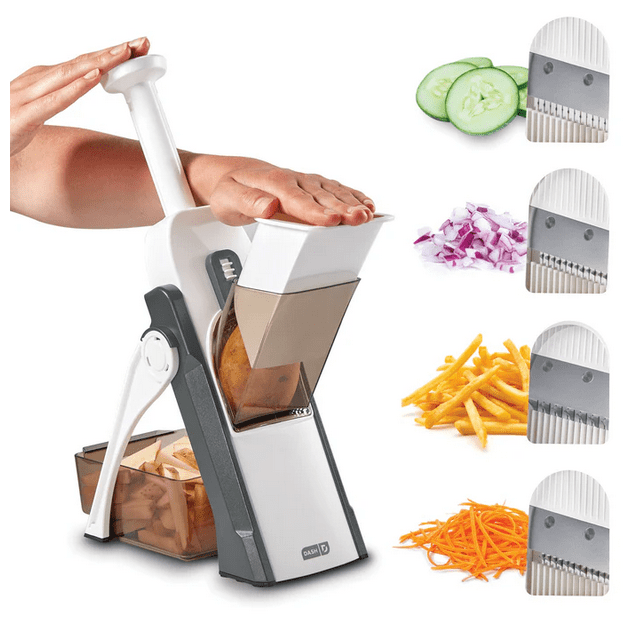
Dash Safe Slice Mandoline
I mention this mandoline because it is unique. Although there are different models of all the above mandolines, they all share the same basic shape. This one is a vertical unit that sits on your countertop. It has a chute into which you feed the food while pumping the unit up and down.

  • Cost – $30-$40
  • Pros
    • Definitely the safest, as your hand does not get near the blade.
  • Cons
    • Limited utility as the items you want to cut must fit into a chute.
    • Must trim larger items.
    • Bulky.

Several other brands were evaluated, but none received a high rating. Do you have a mandoline, and do you use it? Is it one of the above units, or is it something not mentioned? A mandoline is a nice addition to your kitchen, provided you have the space, although it is not a necessary piece of kitchen equipment.

Cooking Tips · Techniques

Want an impressive dessert? Try an entremet!
Are you ready for a dessert challenge? Do you have some good baking and pastry skills? If so, you may want to delve into the world of entremets. This Cooking Tip is not meant to be an in-depth tutorial on how to make an entremet. Instead, it will give you an overview of what they are, the individual components, and how they are assembled and decorated. This should give you an idea about whether you wish to attempt one of these impressive desserts.

Courtesy of Freepik

Imagine slicing into a stunning cake with a glossy finish only to see multiple layers of different textures, colors and flavors. That is an entremet.

In old French, the word entremet meant “between courses,” and it referred to little bites served between dishes. Later, it came to mean sweet treats served at the end of the meal. Today, it refers to multi-layer desserts containing a myriad of other elements of various flavors and textures. I like the words of one expert who advises that we should think of this dessert as a collection of separate recipes that you make individually rather than as one overall recipe.

At the bottom of this cake is a light but sturdy short layer of sponge cake. Another standard component is a mousse filling. The mousse surrounds all the other internal layers and serves as the body of the cake. Those internal layers are what are called inserts. They might be a gelatin layer, a cream layer, a fruity layer (a coulis or a compote), a praline or something else. These layers add creaminess, nuttiness, fruitiness or richness.

The cake is then enrobed in a glaze or coating that is usually very smooth, glossy and reflective, sometimes called a mirror glaze. It might be the color of chocolate or other colors. The finishing touch and what draws one’s eyes to the entremets are decorations on the top and sides of the cake, such as chocolate shapes, tuiles, flowers, caramelized nuts, meringue shards and more.

Apart from the sponge cake layer, no baking is involved. Rather, all the individual parts are made, and then the entremets are assembled. Each cake element is created in individual rings or molds before being assembled into layers. These individual elements are then placed in another mold to build the cake. The mousse layer is used to surround these “inserts”, thus forming the body of the dessert. Finally, the mirror glaze or coating is applied to the exterior. All of this assembling requires plenty of time in the freezer. Your home freezer is fine, but professionals often use a blast freezer.

To prepare an entremet properly, you will need certain equipment.

  • Silicone molds and cake rings – These are used to define the body and shape of the cake. Whereas cake rings will give you a classic cylindrical shape, silicone molds come in many more shapes.
  • Stand mixer – This is used to make the different individual elements. Although you may use a hand mixer, a stand mixer will make your life easier.
  • Hand/immersion blender – This is used to emulsify mixtures such as ganache, cremeux (crème anglaise emulsified with chocolate) and mirror glazes.
  • Other hand tools – You will want items such as whisks and spatulas (regular and offset), a thermometer, piping bags/tips, and a food scale.
  • Baking sheets – These are used to bake the elements as well as holding them as they are placed in the refrigerator or freezer.
  • Mixing bowls
  • Saucepans
Courtesy of Freepik

You should expect that it will take two to three days to make these desserts. Much of that time is the chilling time. You can make more than one entremet during this time if you have enough refrigerator and freezer space. Because these items take quite a bit of time, many prefer making these in larger batches rather than a one-off.

Storage
If you do decide to scale up your recipe, realize that not only the completed cake but the individual components can be frozen for up to a month as long as they are tightly wrapped.

Does an entremet sound like something you want to try? If so, do your research and plan carefully. If you have never made one before, use a tested recipe. After you get a feel for the ingredients and techniques, then you can consider branching out from the recipe.

Cooking Tips · Ingredients · Techniques

The World of Quick Breads

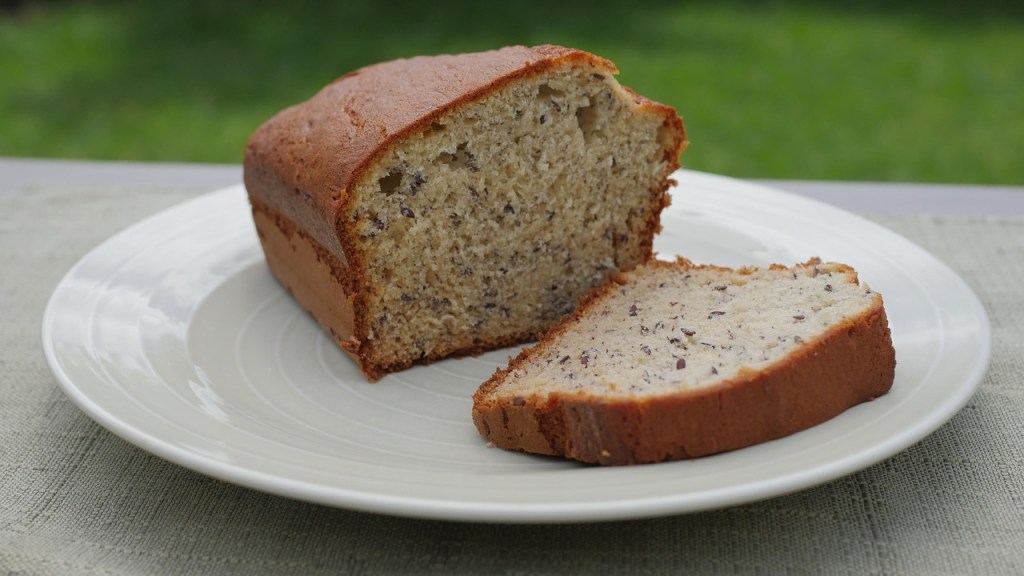
Image by Aline Ponce from Pixabay

Have you ever craved a loaf of homemade bread but had no time to make one? Or, do you not feel comfortable with the art of homemade bread-making? Enter the world of Quick Breads. In this Cooking Tip, we will explore quick breads- what they are and how to make them.

Quick breads are those breads made without yeast. Thus, they can be made more quickly as there is no rising time or prolonged baking time. In place of yeast, these breads use a type of chemical leavening. See this Cooking Tip for a discussion of this topic.

One of the most well-known quick breads is banana bread, but there are a myriad of varieties. This category would also include other non-yeasted items such as muffins, biscuits, scones, soda bread, cornbread and even pancakes.

Typical Ingredients
Although most of you will probably follow a recipe, quick breads are one of those items that you can create without a recipe following a proven ratio of ingredients. Use your preferred mixing method (see below), add desired flavoring ingredients, bake and enjoy.

  • 1 part butter
  • 1 part egg
  • 2 parts liquid
  • 2 parts flour
Image by Bruno from Pixabay

Flour

  • Flour is the foundation of quick breads.
  • It contains proteins that form into gluten. Gluten is what gives bread a sturdy structure that is able to expand when baked. As it does this, the gluten matrix traps the gases that develop due to the leavening agents. This is what allows the bread to rise.
  • Cook’s Illustrated likes to add buckwheat to quick breads to impart a nutty flavor. Since buckwheat is not a grain, it doesn’t contain the proteins that form gluten. It does soak up quite a bit of moisture, though. So, do not substitute more than 25% (by volume) for the flour in the recipe. Otherwise, your bread may be dry.

Leavening agents

  • These are what allow bread to rise. The usual chemical leavening agents are baking powder and baking soda. Review the differences between these two in this Cooking Tip.
  • Whipped eggs can also achieve some rise in the baked good.
Image by Marek from Pixabay

Salt

  • Salt adds flavor to the baked item.
  • Salt also strengthens the gluten structure.

Liquids

  • Typical liquids used in quick breads are milk, buttermilk, sour cream, juice, and even fruit purees.
  • Liquids are what activate the gluten and allow it to create the necessary structure.
  • Liquids moisten the batter.
  • Liquids also help to dissolve the sugars.
Image by congerdesign from Pixabay

Fats

  • Fats may be liquid, such as oil or melted butter.
  • Fats may also be solid, such as with cold butter or shortening.
  • Fats add richness and moisture.
  • When creamed with butter, fats trap air and create a lighter batter.

Eggs

  • Eggs help to bind the structure together.
  • Eggs can add a bit of leavening.
  • Eggs add moisture.
  • Eggs add flavor.

Sugar

Image by Bruno from Pixabay
  • Sugar adds flavor.
  • Sugar increases the browning of the baked item.
  • Sugar is hygroscopic in that it absorbs and holds moisture, and thus helps achieve a more tender item.

Types of batter
Some will divide quick bread into different categories based on the batter.

Image by jamstraightuk from Pixabay

Dough

  • This type of “batter” is more dough-like in that it must be rolled out and then formed into your desired shape/size.
  • It is the closest in consistency and texture to yeasted bread.
  • Examples are biscuits, scones, and soda bread.


Drop

Image by greleht from Pixabay
  • As the name implies, this batter must be dropped into the pan. Because of its consistency, it requires the help of a spatula to push the batter out of the bowl into the pan.
  • Examples are banana and zucchini bread.


Image by Foundry Co from Pixabay

Pour

  • This batter is thin and is meant to be poured out of the bowl.
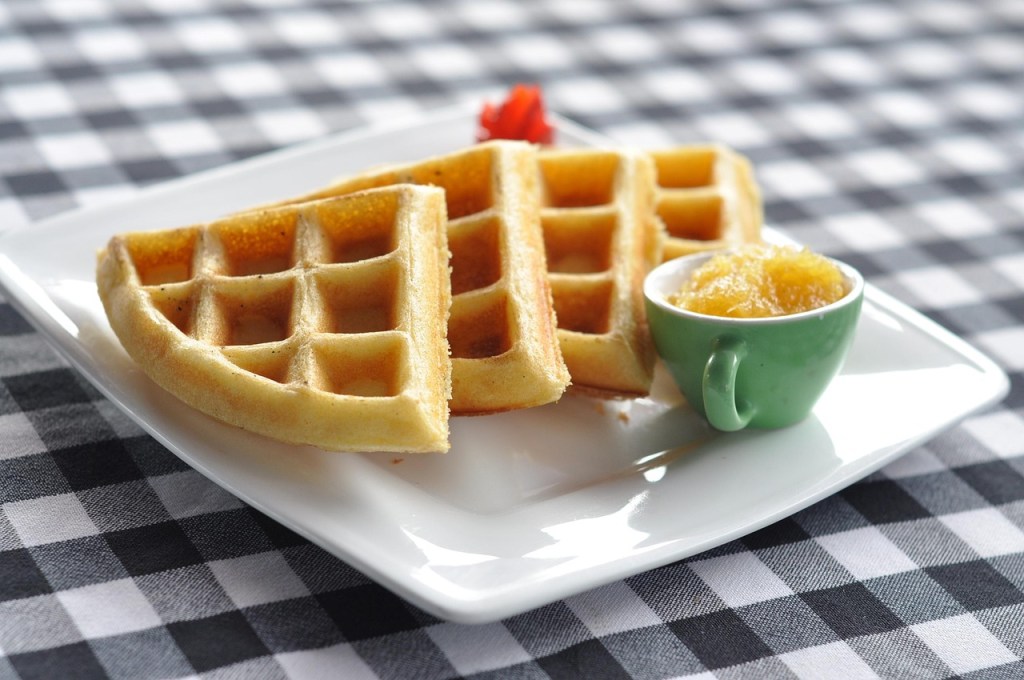
  • Examples include pancakes, waffles, and funnel cakes.

Mixing Methods
There are different mixing methods that can be used for quick breads. See this Cooking Tip for a more in-depth discussion, but here is an overview.

Muffin mixing method/Blending method

Image by kantonia from Pixabay
  • In this method, the dry ingredients are combined in a bowl, and the wet ingredients are combined in a separate bowl. Then, the wet ingredients are poured into the dry ingredients and gently combined.
  • Most experts will warn against over-mixing, which might produce excess gluten and make the item tough.
  • Quick bread items using this method are muffins, pancakes, and loaf breads.

Creaming method

  • In this method, softened fats (like room-temperature butter) and sugar are creamed together to create a light and fluffy texture. This is often done with an electric mixer, but it can be done by hand, although it will take longer. Next, the eggs are gradually added, followed by the rest of the ingredients.
  • This method produces a moist and tender product with a texture that is more cake-like and less crumbly.
  • This is the method used for some muffins & breads.
Image by Vickie McCarty from Pixabay

Biscuit method/Shortening method

  • Here, solid fats (such as cold butter) are worked into the flour and other dry ingredients, followed by folding in the liquid.
  • It creates a dense, flaky and crumbly dough.
  • Examples include scones and biscuits.

Baking
Pans

  • There are many different types of pans that one might use to bake quick breads.
  • Examples include loaf pans, muffin pans, cake pans and baking sheets.
  • Sometimes, people would like to take a recipe written for muffins and convert it to a loaf pan. Cooks Illustrated gives the following advice.
    • Set the oven rack in the middle of the oven.
    • Set the oven temperature 50° lower than in the muffin recipe.
    • Bake until a toothpick inserted into the center comes out clean or with just a few moist crumbs.
      The bake time will probably be about 60-70 minutes.
    • If using a sugary topping, like a streusel, tent the item with foil for the last 20-25 minutes to prevent burning the topping.

Judging doneness

  • If your item is fully baked, it should bounce back when the center is pressed. If your finger leaves an impression, it needs to bake longer.
  • Also, a skewer or toothpick inserted into the center should come out fairly clean. If not, bake it longer.

Cooling

  • Quick breads should be cooled in the pan for a few minutes and then removed from the pan to a cooling rack.
  • If your item sticks to the pan, run a thin-bladed knife or a small metal spatula around the sides before removing it.

Storage

  • Most quick breads can be wrapped or put in an airtight container and stored at room temperature for up to three days.
  • For longer storage, consider freezing.
  • Make sure the bread is completely cooled before storage.
  • To freeze, wrap in foil, freezer paper or place in a freezer bag for up to three months.

Do you make quick breads? How about a hearty loaf of Irish soda bread to serve with soup or stew? Maybe you wish to have a scone with your afternoon cup of tea. There are also classics such as banana bread or blueberry muffins. No matter your choice, have fun and enjoy a yummy result without an enormous amount of time!

Cooking Tips · Ingredients

Experience Exotic Flavors with These Eight Spice Blends!

If you have read my previous posts on Spices and Spice Blends, you will know I do not like buying many spice blends. Instead, I prefer to make what I need from the individual spices that I already have in my pantry. One exception is if the blend contains spices I do not normally have on hand, as with many exotic spice blends. In this Cooking Tip, I want to explore eight of the most common exotic spice blends.

I hesitate to list which spices are included in each blend. That is because the list of spices can vary from region to region, from chef to chef and from family to family. Some families guard their blend as a family secret, and it is passed down through the generations. Therefore, even though I will give you a list of common spices used in these blends, just realize that there will be variations.

Image by nathaliebab from Pixabay

Chaat Masala

  • Other names – chat masala
  • In India, the word chaat refers to savory, fried snacks seasoned with this spice blend. These are commonly served by street vendors.
  • Typical included spices: black salt, asafoetida and amchoor, but they often also include cumin, coriander, ginger, and chili powder.
  • Flavor – sour, spicy, acidic
  • Uses – street snacks, sandwiches, salads and fruit
  • Types of cuisines – Indian, Bangladeshi, Pakistani

Garam Masala

  • This name translates to “warm spice blend” or “hot spices.” It refers to the warming properties of the spices used in the mixture and is not a reference to spiciness.
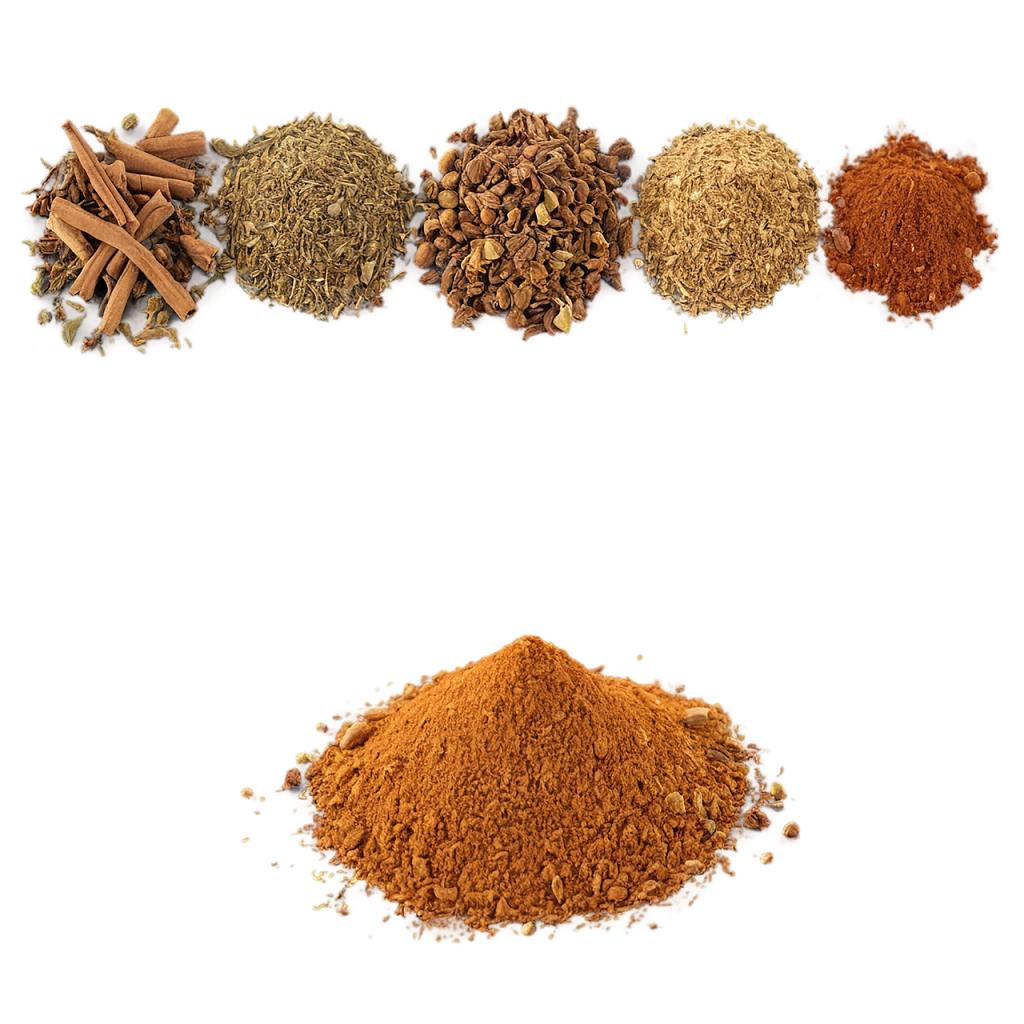
  • Typical included spices – coriander, cumin, cardamom, cloves, black pepper, cinnamon and nutmeg. The spices are toasted before grinding to enhance flavor.
  • Flavor – sweet, warming, spicy, floral
  • Uses – a finishing spice that adds warmth and depth of flavor to dishes.
  • Types of cuisine – Indian, Pakistani

Baharat

  • Other names – Lebanese 7-spice
  • Typical included spices – black pepper, cardamom, cumin, coriander, paprika, nutmeg, cinnamon and cloves. Some say the essential spices are allspice, cinnamon, black pepper, and cloves. Others list the foundational spices as cumin, cinnamon, nutmeg and coriander. The Turkish version typically includes mint.
  • Flavor – earthy, smoky, aromatic
  • Uses – seasoning for meats, seafood, marinades, and soups
  • Types of cuisine – Middle Eastern, Turkish, Greek

Berbere

  • Other names – Ethiopian spice blend
  • Typical included spices – red chile peppers, fenugreek, garlic, coriander, ginger, cinnamon, nutmeg, and cloves.
  • Flavor – sweet, smoky, spicy, fragrant
  • Uses – dry rubs, marinades, stews. It is also used as a condiment in paste form.
  • Types of cuisine – Ethiopian

Dukkah

  • Other names – Duqqa, du’ah, dukkha
  • The name means “to pound,” meaning that this blend of roasted nuts and seeds was traditionally pounded to a coarse mixture in a mortar/pestle.
  • Typical included spices – roasted nuts, seeds salt, pepper, sesame seeds, cumin and coriander.
    This blend is considered more of a condiment than a spice blend.
  • Flavor – smoky, savory, crunchy, mild heat
  • Uses – dip for pita bread, coating for meat and fish
  • Types of cuisine – Egyptian
Image by Pixi0815 from Pixabay

Harissa

  • This North African chili paste is made from roasted peppers, olive oil and spices.
  • It is a condiment commonly found in Tunisia, Algeria and Morocco. It is usually found in paste form, but some outlets offer harissa powder.
  • Flavor – spicy, aromatic
  • Uses – added to couscous, soups, stews and meats
  • Types of cuisine – Tunisian, Moroccan

Ras el Hanout

  • Other names – Mrouzia spice
  • The name translates to “head of the shop,” “top shelf,” or “best of the best.” This refers to the fact that it was made only with the highest quality spices in the shop.
  • Typical included spices – cardamom, clove, cinnamon, coriander and cumin.
  • Flavor – sweet, warm, pungent, floral
  • Uses – added to tagines, spice rubs, marinades and soups
  • Types of cuisine – Tunisian, Moroccan

Za’atar

  • Typical included spices – oregano, thyme, sumac, toasted sesame seeds and salt.
  • Flavor – herbal, savory, lemony, tangy, nutty
  • Uses – added to hummus, pita bread, dry rubs, vegetables
  • Types of cuisine – Middle Eastern, Mediterranean

There are eight of the most common exotic spice blends. If you look at the typical spices in these blends, you can probably make some from spices you already have. If not, consider buying them from a source where you are getting the freshest blend you can. My favorite is Savory Spice Shop. (This is an affiliate link and I may earn a commission if you decide to purchase.) Where do you get yours?

Cooking Tips · Ingredients

Travel the World with 10 Exotic Spices

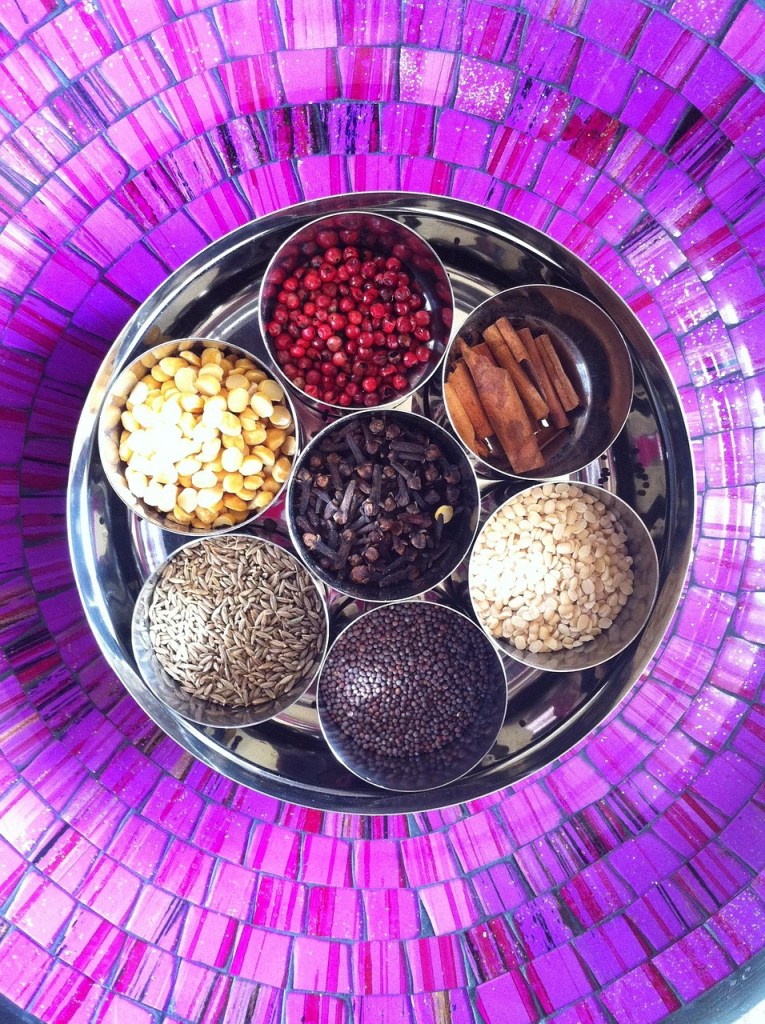
Spices are essential pantry ingredients to creating flavorful food. Spices could be as simple as salt and pepper or as exotic as something like sumac. Some of our pantries are dominated by single spices such cinnamon, cloves and nutmeg while others are full of numerous spice blends. In this Cooking Tip, I will be discussing some of the more exotic single spices and the next Tip will delve into unusual spice blends.

I have written before about spices in general terms as well as more in-depth discussions of certain spices. In this Tip, let’s take a trip around the world to discover the exotic. Since there are more spices than I could possibly mention, I will attempt to focus on ten that many of you will have heard of whether or not you have used them. I will note that some of these may actually be considered herbs, but we will still cover them in this Tip.

You may ask why you would want to know about these exotic spices. If you wish to venture into making ethnic dishes that call for one of these spices, you will not get the authentic flavor you are aiming for if you do not use that spice. Yes, you can try to substitute, but it will not be the same. Another reason is if you just want to experiment with different and exciting flavors. This discussion will help you decide how to use them in your kitchen.

Aji Amarillo

  • Origin – Peru
  • What it is
    • A species of yellow chili pepper that turns to orange as it ripens.
    • Aji means chili pepper and amarillo means yellow in Spanish.
  • Forms
    • Fresh
    • Frozen
    • Dried
    • Paste
  • Flavor
    • Hot with a Scoville heat rating of 30,000 to 50,000 units.
    • Heat is balanced with a fruitiness with hints of citrus and tropical fruit.
  • Uses
    • Considered part of the Peruvian “holy trinity” along with garlic and red onion.
    • Spicy chilis, spice rubs, sauces.

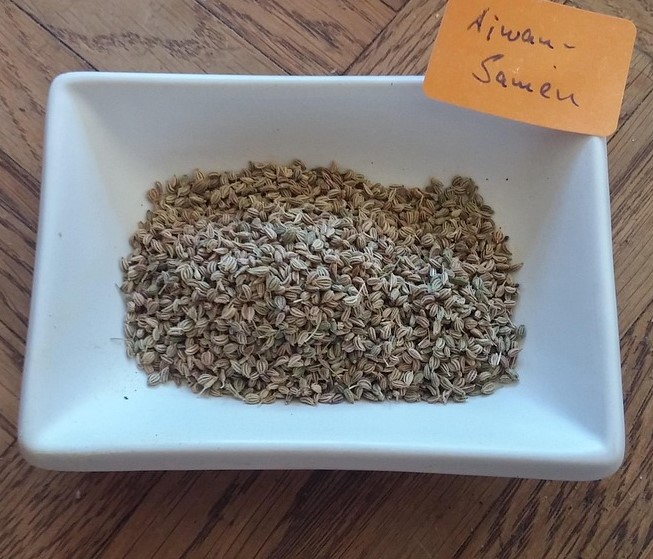
Ajowan

  • Other names – Ajwain, carom seeds
  • Origin
    • Native to South India.
    • Cultivated in India, Iran, Egypt, Pakistan and Afghanistan.
  • What it is – The seeds of an annual plant in the parsley family.
  • Form – Grayish-green, oval seeds similar in size to cumin seeds.
  • Flavor – similar to thyme but more pungent and slightly bitter, adds warmth with a smoky, spicy, bitter aftertaste.
  • Uses
    • Used in Indian bread, snacks and vegetarian dishes.
    • Part of chaat masala and berbere spice blends.

Aleppo Pepper

  • Other names – Halaby pepper
  • Origin
    • Originates from the city of Aleppo in Syria. Due to war, the trade of this spice was disrupted but Syrian refugees took it to Turkey, where most of today’s production happens.
    • Cultivated in Syria and Turkey.
  • What it is – A red pepper in the nightshade family.
  • Form
    • Whole chilis
    • Coarsely ground pepper flakes
  • Flavor – Mild heat, tangy, raisin-like flavor. Citrus notes.
  • Uses
    • Essential ingredient in Mediterranean and Middle Eastern cuisine.
    • Typically used as a table condiment.
    • A complex substitute for crushed red pepper.

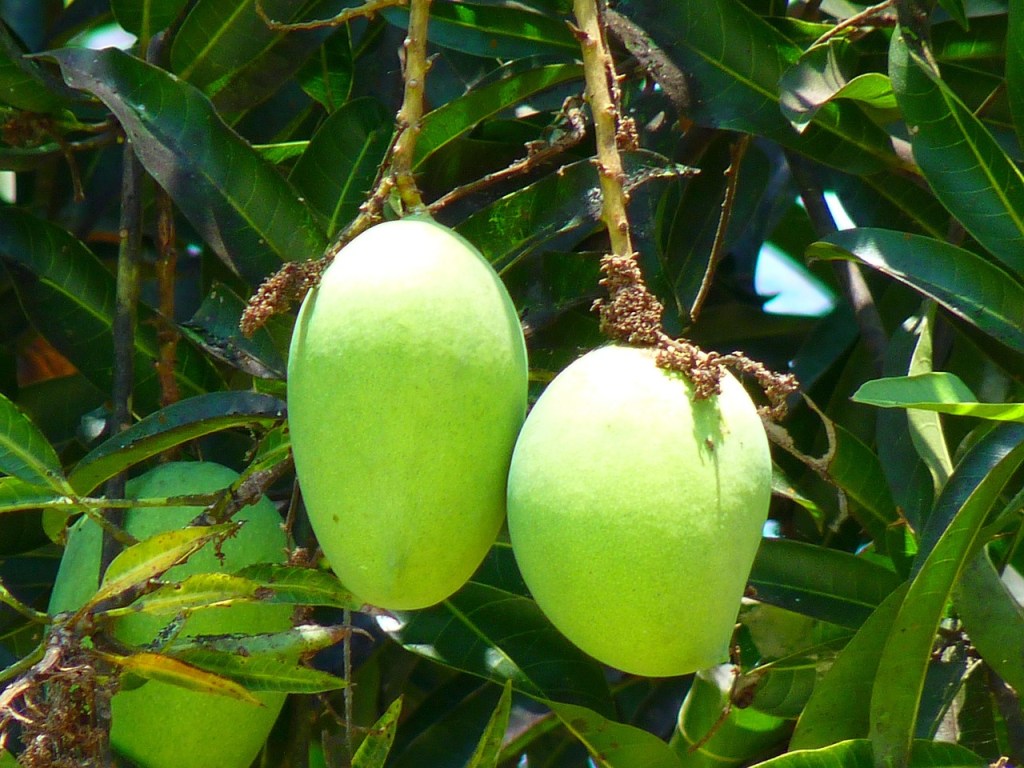
Amchur

  • Other names – amchoor, mango powder
  • Origin – Native to and cultivated in India.
  • What it is – A powdered spice made from dried, green mangoes.
  • Form – Powdered
  • Flavor
    • Sour, slightly sweet with herbaceous notes.
    • Is used to add acidity without moisture.
    • Use cautiously as can overpower other flavors.
  • Uses
    • Mango chutney
    • Part of chaat masala spice blend
    • Samosas
    • Indian soups

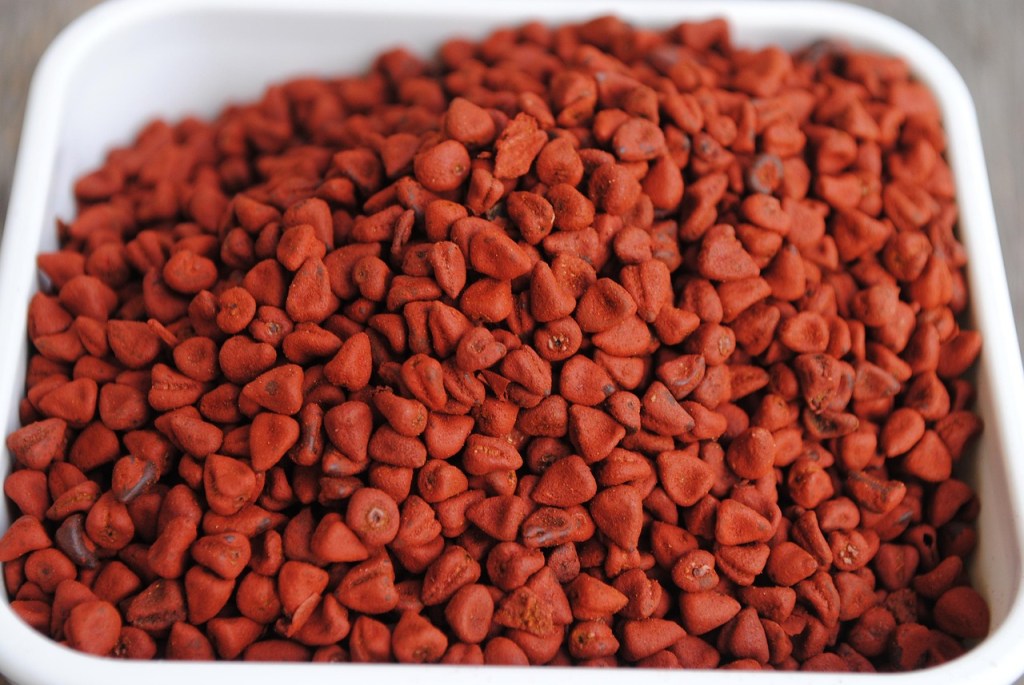
Annatto

  • Other names – Achiote
  • Origin
    • Native to the tropical regions of Mexico, South & Central America and the Caribbean.
    • Cultivated mainly in Africa, Asia, Central America and the Caribbean.
  • What it is – Spice derived from the seeds of the Bixa Orellana tree.
  • Form – Because the whole seeds are so difficult to grind, most people buy the ground product.
  • Flavor
    • Warm, earthy, sweet, peppery flavor
    • Mild acidity
  • Uses
    • Adds a vibrant orange color to dishes.
    • Achiote paste.
    • Popular in Latin American and Caribbean cuisine.

Asafoetida

  • Other names – Hing
  • Origin – Native to Iran and Afghanistan.
  • What it is – The dried resinous substance from the taproot of the Ferula plant.
  • Form – Powdered and is often mixed with rice flour when offered for sale as it is very expensive.
  • Flavor – Mimics the flavor of onions and garlic.
  • Uses
    • Strong, pungent smell and so used in small quantities.
    • Adds a unique flavor to Indian vegetarian dishes.
    • Part of chaat masala spice blend.
    • Often used in some cuisines to replace onion and garlic.
    • Just as salt brings out other flavors, asafoetida highlights the other spices in a dish.
    • Keep tightly sealed so the aroma doesn’t fill your kitchen.

Epazote

  • Other names – wormseed, Jesuit’s tea, Mexican tea and paico.
  • Origin
    • Native to Central and South America and southern Mexico.
    • Cultivated in these areas along with parts of Europe and the US.
  • What it is – The leaves of a pungent herb.
  • Form
    • Hard to find in fresh form as it is rarely imported from the growing regions of Mexico and Central America.
    • Can buy in dried form.
  • Flavor
    • Notes of oregano, pine, lemon and mint.
    • Strong, minty and slightly bitter taste.
  • Uses – Mexican cuisine

Fenugreek

  • Other names – Greek hay, Greek clover, bird’s foot.
  • Origin
    • Native to southeastern Europe and western Asia.
    • Cultivated in India, North Africa and the Mediterranean.
  • What it is – a legume that is part of the pea family.
  • Form – At times, the leaves can be used but more likely to use the seeds.
  • Flavor
    • Warm, musty, bittersweet
    • Some say it has a flavor of pungent maple syrup or burnt sugar.
  • Uses
    • Often found in curry powders and Indian spice blends.
    • Is able to thicken soups and stews due to its starch qualities.

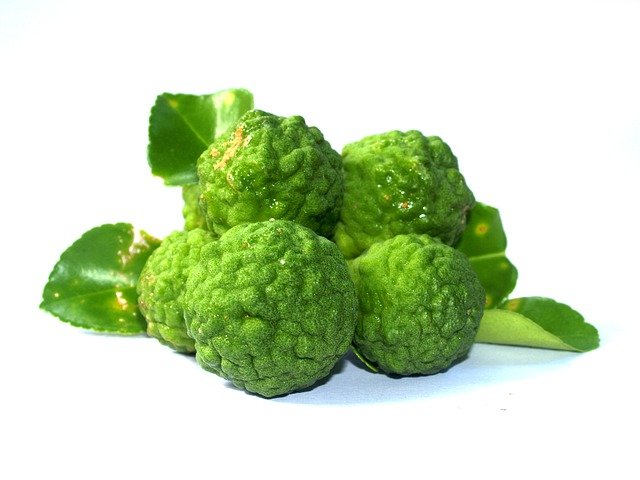
Makrut Lime

  • Other names – Kaffir lime, Thai lime, Mauritius papeda
  • Origin – Southeast Asia
  • What it is – The leaves of a bushy citrus plant.
  • Form
    • Makrut limes are prized for their leaves and zest rather than juice, which is minimal in amount.
    • Can also find in a powdered form made from the dried leaves.
  • Flavor
    • Have an intense citrus and floral fragrance.
    • The flavor is more potent and bitter than a regular lime.
  • Uses
    • The leaves are often used in Thai dishes. If using as a garnish, remove the inedible central vein. If using just to impart aroma and flavor to soups or stews, leave intact but remove before serving.
    • To impart flavor to cocktails.

Sumac

  • Origin – Native to the Mediterranean and the Middle East
  • What it is – Sour, red berries of the Thus coriaria plant.
  • Form
    • Dried berries
    • Powdered sumac
  • Flavor
    • Tart, citrusy with floral notes and an astringent finish.
  • Uses
    • Prominent in Middle Easter cuisine such as kebabs, grilled meats, rice dishes.
    • Adds brightness and acidity to dishes.
    • Will add red color to the dish.
    • A component of the spice blend, Za’atar.

There are many other exotic spices, but these are some of the ones you will most commonly come across. Have you used any of them? Are there others you have used? Stay tuned for a look at exotic spice blends.

Cooking Tips · Ingredients · Techniques

Expert Tips for Successful Gluten-Free Baking

Image by harshahars from Pixabay

Many people want to learn how to cook and bake gluten-free. To do this requires an understanding of gluten, what it does in our dishes and how to eliminate it without negative consequences. It is not as easy as just substituting gluten-free flour for regular flour. In this Cooking Tip, I have compiled a list of tips and advice to help you do this.

Baking gluten-free is more challenging than making savory dishes gluten-free. Baking is much more of a science, and the amount and type of ingredients are generally crucial to a successful dish.

Here are a number of tips that gluten-free pros recommend.

Be realistic
Although gluten-free baked goods can be delicious, the taste and texture will not be exactly like those made with gluten. That is to be expected. Also, do not expect each and every item you make to turn out. We all have underwhelming dishes and even some failures. This is even more so when you are just starting out learning to make gluten-free. Have patience, do your research and keep practicing.

Pick your recipes carefully
There are many delicious flour-free recipes that one can make. Just be sure to check that the other ingredients are gluten-free.

If you want to make something that would normally contain wheat flour, start by using recipes developed by a gluten-free expert rather than trying to convert a recipe from regular to gluten-free. This is especially true if the regular recipe has flour as a primary ingredient. After gaining some experience and confidence, you can try your hand at converting recipes.

You will need structure-building ingredients
With wheat flour, the gluten is what builds structure allowing baked goods to rise and stretch. Without gluten, you will need to add what is called a binder to improve the structure of the gluten-free item. The most common binder is xanthan gum. Others include guar gum and psyllium husk.

Realize that not all gluten-free flours are the same
Most experts will tell you that there is not any one gluten-free flour that will work in all your recipes. For the best results, a mixture of flours is typically used, and it will be a different mixture for different baked goods.

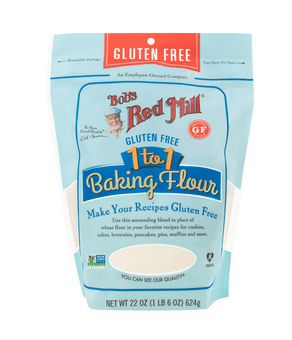
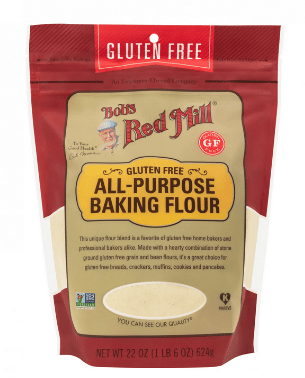
Some products out there purport to be the “all-purpose” flour in the gluten-free world. Every person will have their favorite brand, but even among those, they are not all the same. For example, Bob’s Red Mill 1-to-1 Baking Flour (in the blue bag) comes with xanthan gum already in it. However, it should not be used for yeasted goods. Unfortunately, this is not stated on the bag. You will only find that information if you look at the product on their website. Their Gluten-Free All Purpose Baking Flour (in the red bag) states it can be used for yeasted baked goods. However, you will need to add a binder and the flours included in this mix include bean flours, which will add a distinctive flavor that some may not like. So, do your research and understand you will probably need different products for your gluten-free life.

There are many different types of gluten-free flours and starches. Here are a few.

  • Potato starch
  • Tapioca starch
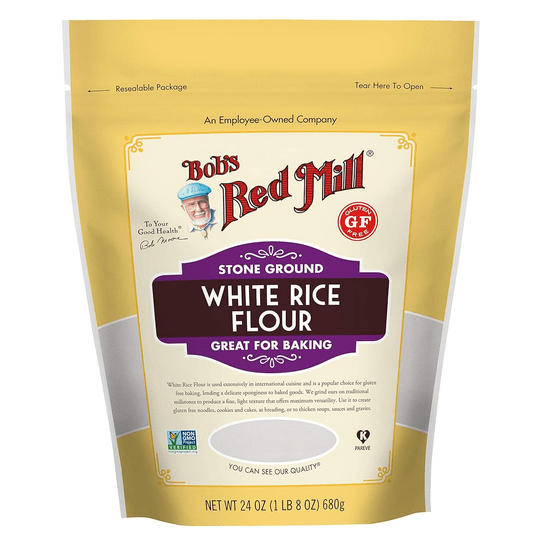
  • White rice flour
  • Sweet rice flour
  • Brown rice flour
  • Millet flour
  • Buckwheat flour
  • Teff flou
  • Oat flour (make sure it is certified gluten-free)
  • Sorghum flour
  • Corn flour
  • Chickpea flour
  • Almond flour
  • Coconut flour

Gluten-Free flours must be measured carefully
Because these flours are so fine and the grind varies by type of flour, measuring by the cup method can lead to problems. Your gluten-free baking will improve (same as your regular baking) when you switch from measuring cups to weighing ingredients. This is a recommendation that you will read over and over when consulting gluten-free experts.

If you do not have a scale, place the appropriately sized dry measuring cup on a paper towel or piece of wax paper. Spoon the flour into the cup until it is mounded over the rim. You can gently shake it to settle the flour but do not pack it. Scrape away excess flour using a straight edge. Use the paper towel or wax paper to return the excess flour to the container.

Measure liquids carefully
Most gluten-free recipes require more liquid than regular recipes. Follow the recipe and measure correctly. Some gluten-free pros even like to measure the eggs in a cup for more accuracy. Of course, your recipe must include this measurement.

Your structure will improve when you mix the batters longer
The caution against over-mixing that you see with regular batters is due to the concern of building up too much gluten. Without gluten, you will get better results if you purposely mix longer. Your baked goods will rise better and maintain that rise longer.

Rest batters and doughs
Allowing your gluten-free batters and doughs to rest, covered, for about 30 minutes before baking will improve them. Gluten-free flours generally need more liquid than regular flour, leading to thinner batters. Resting the batter allows more time for the flours to absorb the liquid, which not only thickens the batter but also decreases the gritty texture that is sometimes found in gluten-free baked goods.

Be careful with determining doneness & expect longer baking times
It can be tricky to determine when gluten-free baked goods are done. Even though they may be cooked through, they might feel soft or even be a bit wet inside. They need time to rest so the starches firm up and set. So, depending on a timer is probably better than the visual cues we might use when baking non-gluten-free items. One caution, though, is that the recipe timing depends on your oven being accurate. Using an oven thermometer will help with this. Using an instant-read thermometer to determine doneness is also a good recommendation.

A corollary to this is that gluten-free baked goods might benefit from longer baking times. According to Beyond Celiac, “While a regular cake or loaf of bread might take 30 minutes to bake, a gluten-free version will often take 45 minutes to an hour.” Your baking time can also be affected by the pan. It is important to use the type and size of pan specified in the recipe.

Increase leavening
Your leavening agent might be yeast, baking powder and/or baking soda. Increasing the amount you use can help with rising and maintaining structure. Beyond Celiac recommends 2 teaspoons of baking powder per cup of gluten-free flour. If you recall the chemistry of leavening, you will be reminded that baking soda needs an acid to work. The same source states that baking soda and buttermilk, along with 1⅛ teaspoons of cream of tartar for each ½ teaspoon of baking soda, can be used in place of baking powder.

Include extra protein
By eliminating gluten, you are not only eliminating a potential allergen but also the protein it adds to the recipe. Adding other protein, such as eggs, yogurt, or buttermilk, can help. If the eggs are beaten, they will add bubbles to the batter. Both yogurt and buttermilk are acidic, which helps improve the action of baking soda. Dairy products such as milk or sour cream also contain protein and can help with the browning of the dish.

Gluten-free flours do not absorb oil well
If your recipe calls for oil, you might achieve a better result by substituting melted butter. Some will also swap out the oil for milk, sour cream, yogurt or eggs.

Add moisture-containing ingredients
Gluten-free baked goods can often be dry. Moisture-containing ingredients such as dairy, veggies, fruit, or eggs can help, but be sure to follow the recipe for this recommendation. Using brown sugar in place of white sugar can also add moisture.

Add flavoring
Gluten-free flours often have a unique flavor. Therefore, many experts recommend adding a flavoring agent such as vanilla.

There you are – a compilation of the best tips for success in gluten-free baking. Whether you just want to make a particular item for a friend or family member or you want to make a lifestyle change, I trust these tips will help you be successful.

This post contains affiliate links and I may earn a commission if you decide to purchase.

Cooking Tips · Ingredients

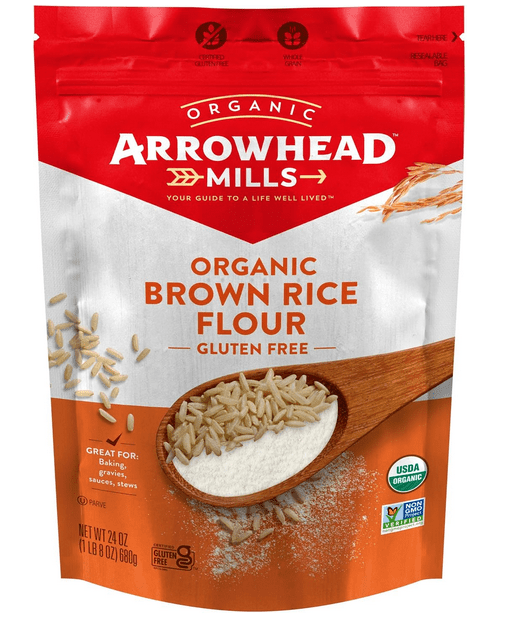
Rice Flour – Not just for Gluten-Free Baking

Rice flour is very well known to those who cook/bake gluten-free. As it does not have to be limited to that use, we all should know about it. That is the subject of this Cooking Tip.

Rice flour is nothing more than finely ground rice. Just as there are many different types of wheat flour, there are a few different rice flours depending on which variety of rice is used. See this Cooking Tip for a discussion of just some of the varieties of rice.

In very broad terms, there are two categories of rice flour – regular rice flour and glutinous rice flour. The category of regular rice flour can be further broken down into white rice flour and brown rice flour. White and brown rice flour can often be used interchangeably, but white rice flour is more common.

Regular rice flour is made from medium- or long-grain rice.
White rice flour

  • It is inexpensive.
  • It has a neutral flavor.
  • It has a smooth texture.
  • It has a long shelf life.
  • In baking, it is best used in a combination of 30-60% with other flours.
  • It can give baked goods an unattractive white color if used alone.
  • It is often used in Asian cooking to make rice cakes, noodles, pancakes, rice crepes, pastries, etc.

Brown rice flour

  • It has a mild flavor with a bit of nuttiness, just as with brown rice.
  • Its tan color gives baked goods a slightly browner look.
  • As opposed to white rice flour, it yields crispier cookies.
  • It has a shorter shelf life due to the higher fat content. Therefore, it is best stored in the freezer.
  • Just as with white rice flour, the best results are obtained when in a flour combination of 30-60%.

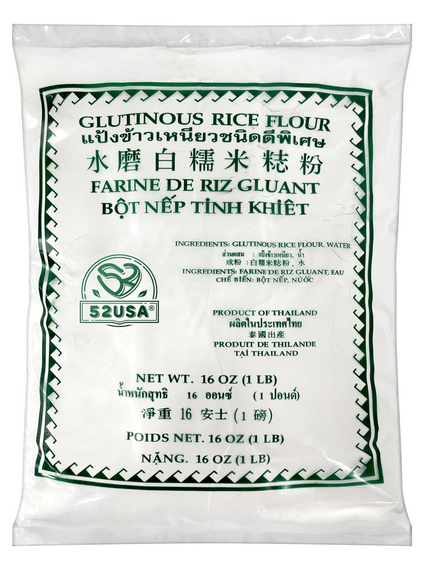
Glutinous rice flour (aka sticky or sweet rice)

  • The name “Glutinous” is often misleading as it is naturally gluten-free. The name means “glue-like” and refers to the consistency.
  • It is made from short-grain rice that is used to make sticky rice.
  • It is cooked, dried, and then milled into flour.
  • It retains moisture better than regular white rice flour and, therefore, helps with freshness.
  • It combines more readily with fat than other rice flour.
  • Because of the type of starch prevalent in glutinous rice, it has a natural elasticity. This makes it ideal for rice noodles, but it is also used in Asian desserts and is an excellent thickener for sauces, soups and stews. It is also used to make boba pearls and mochi.
  • It can be used in flour combinations up to 40% for other uses.

Another distinction is between American supermarket rice flour and Asian rice flour. The latter undergoes a different type of processing and will react differently in recipes. If your recipe calls for Asian-style rice flour, it is worth it to seek out the particular one specified, even if it means having to visit a specialty market.

No matter which rice flour you use, be aware that they can easily separate when mixed in water. When using rice flour in batters (such as a crepe batter), stir well to recombine before using.

Storage

  • It is best to store rice flour in air-tight containers to prevent spoiling.
  • To prolong the life of the rice flour, store in the refrigerator or freezer. As with other whole grains, this is especially true for brown rice flour. It may not be necessary for white rice flour, but is still a good practice if you have the room to do so.

Although rice flour has gained popularity due to its gluten-free status, it is an ingredient that we can all use even if we do not cook/bake gluten free.

Cooking Tips · Ingredients

The Beautiful Colors of Chocolate

What color do you think of when someone says chocolate? For most of us, we think of brown. Some might say white. What about pink or gold? Those are not colors we usually associate with chocolate, but they are real. What they are and how to use them is the subject of this Cooking Tip.

Many terms are used in conjunction with chocolate, such as milk, dark, semi-sweet, bittersweet, and white. For a discussion on those common types of chocolate, see this Cooking Tip.

Barry Callebaut, a well-known and high-quality chocolate company, introduced Ruby Chocolate to the world in 2017 after over a decade of research. Its beautiful pink color is what one notices first. It is a natural color and not achieved with any color additives.

Ruby chocolate is made from the ruby cocoa bean, found in Ecuador, Brazil and the Ivory Coast. Some say that this ruby cocoa bean is unique as it is able to develop a pink hue and fruity flavor. Others say the color results more from the processing method, a closely guarded trade secret. One thing that Callebaut reveals on their website is that the processing involves the addition of citric acid. Citric acid is naturally found in many fruits and vegetables, especially citrus fruits. They state that citric acid helps maintain the color and enhances the fruity flavor.

Its flavor profile is very interesting. I like one taster’s quote that it is “similar in taste to white chocolate and raspberries combined.” It has a fruitiness in that it is citrusy and berry-forward. It has a nice creamy texture with a balance of tart and sweet.

Besides being able to buy pure ruby chocolate to use in your own kitchen, you can also purchase products that incorporate ruby chocolate. Examples are chocolate bars made of ruby chocolate or coated in the same, drinking chocolate, and coatings for ice cream bars.

Because ruby chocolate is acidic, working with it in your own kitchen can be challenging. Callebaut experts caution that high temperatures can turn the pretty ruby color to a grayish pink. Therefore, they advise against baking with it. Also, it can be difficult to use in combination with water-based ingredients. If you are just starting out using ruby chocolate, see Callebaut’s website for more guidance and recipes.

Let’s move the color pallet to Gold. Gold chocolate is another one of Callebaut’s creations.


Gold chocolate is not a different type of chocolate. Rather, it uses caramelized sugar and caramelized milk to create a type of chocolate with notes of caramel, toffee and cream, as well as a gold color. Not only will your creations with this chocolate have that unique flavor of caramelization but the beautiful and elegant gold color.

Have you tried either of these chocolates? Although you may not see them in your local supermarket, they might be worth seeking out if creating over-the-top confections is on your to-do list!

Cooking Tips · Equipment · Techniques

Cookware Cleaning Tips

Photo by Fatma Çekmez

What sort of pots and pans do you have in your kitchen? Are they new or old? What are they made of? Are they well-used or barely touched? No matter what they are, do you know how to take care of them? That is the subject of this Cooking Tip.

Although the advice I will give you applies to most types of cookware, I will discuss some specialty pans later. I have already written a Tip on Cast Iron Care, so I will not discuss that type of cookware in this Tip.

Just as important as how you should take care of your cookware is what you shouldn’t do. Let’s investigate that first. One caveat is that you should always read your cookware’s warranty to ensure you are not doing anything that might void it.

What not to do

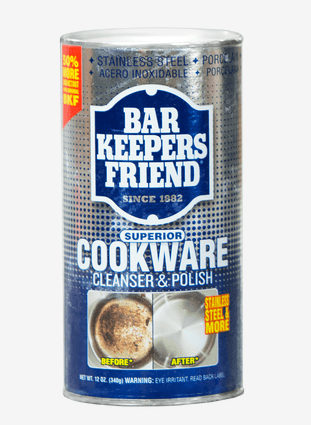
  • Do not use abrasive cleansers. For most general cookware cleaning, dish soap is all that is needed. Beyond that, you can use a nonabrasive cookware cleaning powder. Many cookware brands make their own product. I use and like the one made by All-Clad. Others prefer Bar Keeper’s Friend. They have two different products, their all-purpose cleaner and one advertised specifically for use on cookware. I have tried both, and I think the latter is more effective. Baking soda is another alternative. It is less expensive and readily available in our kitchens. Although it will be effective in many situations, it probably won’t do as great a job as the commercial cleansers.
  • Do not use steel wool or other abrasive sponges. Only use sponges or cleaning implements that are advertised as nonabrasive.
  • Allow your pans to cool before washing them. Never submerge a hot pan into cold water, as the thermal shock is likely to damage it.
  • Even though some manufacturers claim their pans are dishwasher-safe, hand washing is the preferred way to keep them in the best condition.

How to care for your pots/pans

Now that we know what NOT to do, let’s delve into some care tips to keep your cookware in the best condition.

  • Most cookware manufacturers recommend using low to moderate heat to preheat their pans. High heat is only recommended when you want to bring something to a boil.
  • Manufacturers also generally warn against heating an empty pan, especially with nonstick pans. You may have heard that it is better to preheat your pan dry and then add any fat you are using. See this in-depth Tip on the truth about this advice.
  • Once you are done cooking, allow the pan to cool before cleaning. Rinse off any food particles and wash in warm, sudsy water with a sponge or soft cloth. You may even allow it to soak in this sudsy water to help release stuck-on food. Finally, rinse with warm water and dry the pan to prevent spotting.
  • Although you want to allow the pan to cool before washing it, the sooner you clean it, the easier it will be to remove debris. The longer it sits, the harder it will be to clean.
  • As noted above, you may use a nonabrasive cleanser for tough spots. Follow the instructions on the container, but in general, you will sprinkle the cleanser over the wet surface and gently rub it with a soft cloth or sponge. Rinse it thoroughly and dry. If necessary, allow the paste to soak on the pan a bit before scrubbing. However, some commercial cleansers say not to allow the cleanser to remain on the pan for more than a few minutes. Read the directions for the one you are using.

For especially dirty pans, the following methods may help.

  • Boiling water method – This is similar to deglazing your pan, which is often the only thing you need to do to bring up stuck-on food particles. Add water to the pan, bring it to a boil, and scrape up the food with a wooden implement. After the food loosens, pour out the hot water and wipe with a nonabrasive sponge. You may also turn off the heat and allow the pan to soak for 15-20 minutes or even overnight. Some like to add a bit of baking soda or white vinegar to the boiling water.
  • If you find your pots developing white hard water spots, use a 1:1 white vinegar-to-water solution that you bring to a boil. Then, follow with a normal wash, rinse and dry.
  • Blue or rainbow discoloration can be removed by wiping the pan with white vinegar on a sponge or soft cloth.
  • In general, you do not want to use bleach on your cookware. However, some recommend that if you have enameled cookware with stains on the surface, you could try this trick. To remove the stain, make a gentle bleach solution of 1 teaspoon bleach in one pint of water. Pour this into the pan and allow it to stand for a few hours or overnight. Pour out the bleach solution and scrub with a soft sponge. Clean and dry as normal.

I must admit that cleaning is a chore I do not enjoy. Although I am very good at cleaning the inside of my pots, I am not nearly as fastidious on the outside and bottom. It was with interest that I tried another method for those stains. You will need a pot large enough to hold the pan you are trying to clean. Fill with water and bring to a boil. Add ¼ to ½ cup of baking soda and stir until dissolved. Being very careful, place your stained pot into the boiling water. Allow your pan to remain in the gently boiling water for 15-20 minutes. After the residue begins to flake off, carefully remove with oven mitts. You may need to then make a baking soda slurry and use that to scrub more spots off. I personally tried this method and, although not magic, it did work. The biggest problem was finding a pan large enough to place my skillet inside. It requires a bit of scrubbing, but in the end, it was much cleaner than it was before.

Carbon steel

Photo courtesy of Made In Cookware
  • These types of pans are particularly loved in professional kitchens because they are lightweight, have superior heat conduction and are naturally nonstick. However, they do need to be seasoned, so your cleaning method should not destroy that seasoning.
  • When cleaning, if all that is in the pan is a bit of oil or maybe a small amount of food particles, wipe it out with a paper towel, and it will be ready for the next time. If there is more in the pan than cannot be wiped away, sprinkle some coarse salt, scrub with a paper towel and wipe clean. Some will add neutral oil to the salt in a 1:1 ratio. Scrub, wipe out and finish with a quick rinse. Place the pan over low heat to ensure it is completely dry. Finish by adding just a tiny amount of oil to the pan and wiping thoroughly.
  • For a more serious clean, cover the bottom of the pan with a small amount of water and bring to a boil. Using a wooden spoon or spatula, scrape up the food, dump it out and then wipe it off. Follow the above instructions for drying the pan and finishing with a coat of oil, especially if there are dry spots on the pan’s surface.
  • If all of the above fails, you can gently scrub the pan with steel wool. However, your pan will need to be re-seasoned after this.
  • Some will say never, ever use dish soap on carbon steel. However, just a small amount used sparingly will be acceptable.

Copper

Image by Stefano Ferrario from Pixabay
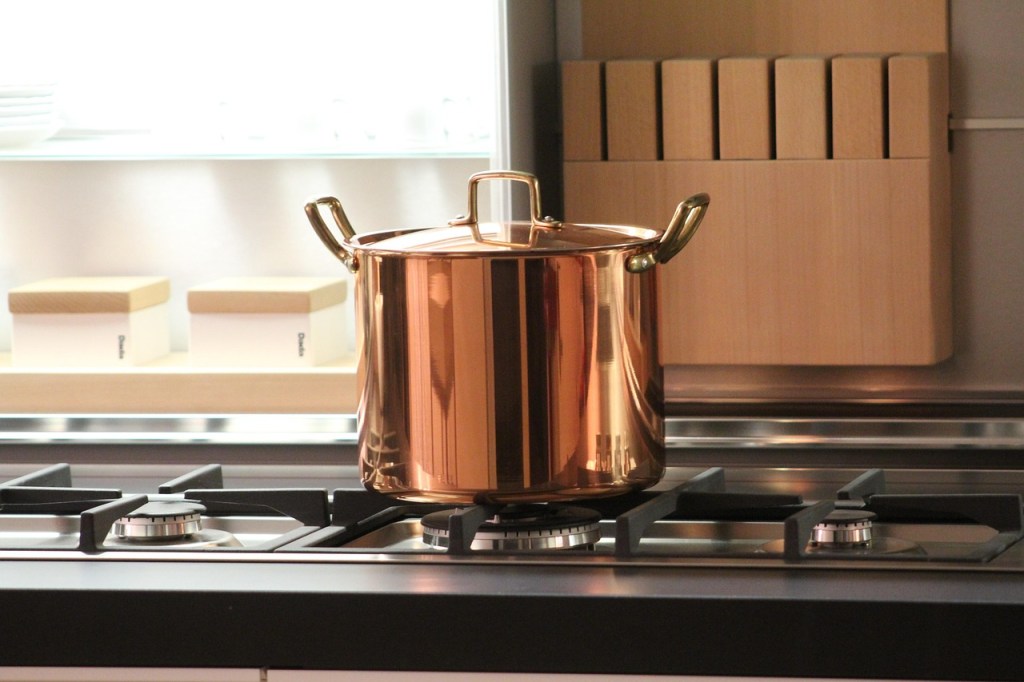
  • This type of cookware is beautiful but expensive. You, therefore, want to treat it carefully to maintain its beauty. Cleaning like other cookware with soap, hot water, and a non-abrasive tool will do the job.
  • Because copper is a reactive metal, it is natural for copper pans to darken and even appear greenish. This does not affect its usability, but you will want to polish it regularly if you prefer that “new” appearance. Just as with regular cookware, you can purchase cleansers made specifically for copper. You may use white vinegar (or lemon juice) and salt if you do not have that. Make a paste of equal parts, and using a gentle sponge, rub the pan and buff it until it is shiny. Rinse to remove any remaining paste and dry thoroughly. Some experts recommend using tomato paste or ketchup in place of the vinegar.

Storage

A final piece of advice is to store your pans properly to prevent damage. If you stack your pans, put paper or cloth towels or pan protectors between them. This will prevent chipping or scratching. A hanging rack is great if you have the space to install one. Pegboards are another option.

Pots and pans are a necessity in the kitchen and good ones are not cheap. By taking the time to properly clean your pots and pans, you can extend their lifespan and keep them looking nice.