Cooking Tips · Ingredients · Techniques

Beurre Monté – just another butter sauce?

Sauces are one of my favorite things to make. They are easy, and they elevate food from ordinary to delicious. I have written three prior Cooking Tips – Sauces Demystified, Mother Sauces I and Mother Sauces II on different types of sauces. One sauce I have not discussed is Beurre Monté. That is the subject of this Cooking Tip.

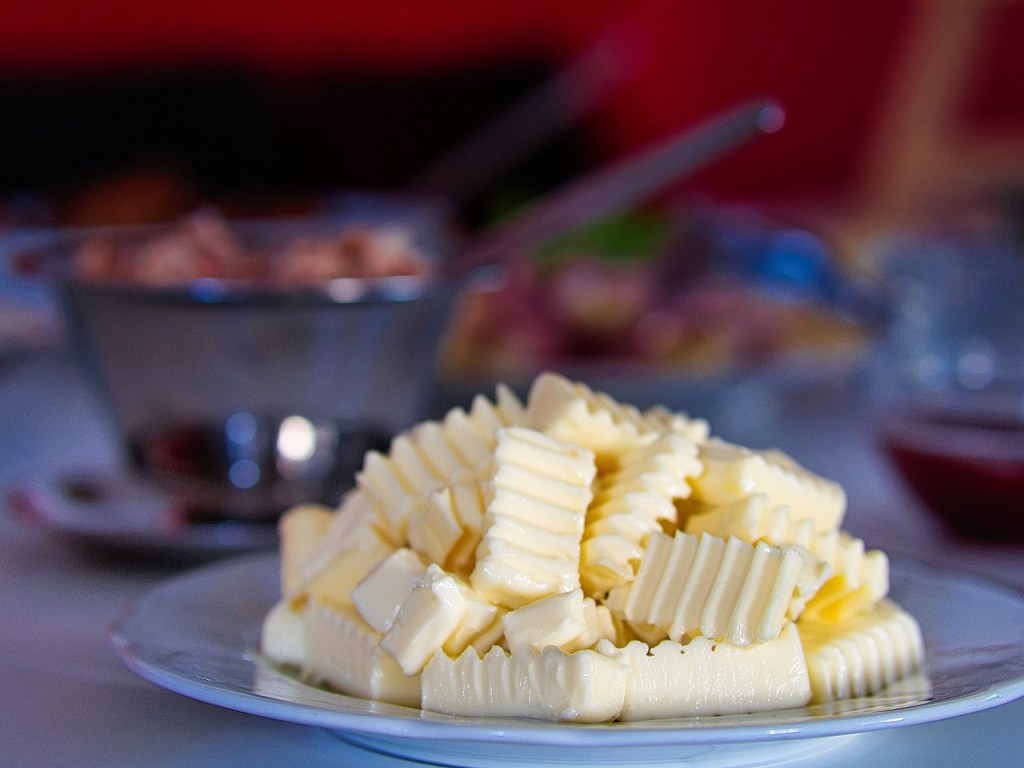
Image by Peter Toporowski from Pixabay

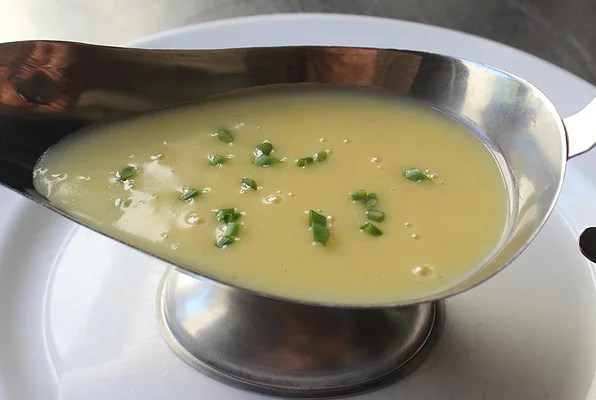
As you might suspect, beurre monté is a French invention. It is translated in various ways: “worked up butter,” “prepared butter,” “mounted butter,” or “whipped butter.” It is also a very simple and delicious sauce, as long as you don’t mind that it is made almost entirely of butter.

We all know that fat and water do not mix. We must force them to do so by the process called emulsification. This is done by slowly adding one ingredient to the other while vigorously mixing. This suspends tiny droplets of the one into the other. Vinaigrettes are one type of emulsion. The water element is typically vinegar, citrus juice, fruit juice or a combination. The fat usually is olive oil. If you pour them together, they will naturally separate. It is only by whisking the water-like ingredient while you slowly pour in the oil that you will get them to combine into an emulsion. They will often separate when setting, but you can again re-emulsify the mixture by shaking or mixing.

If you have read my Sauce Cooking Tips, you will have read that most pan sauces are finished by whisking a small amount of cold butter into the sauce. This thickens the sauce and gives it a glossiness and richness. That process is called “monter au beurre.”

Although it sounds similar, beurre monté is different. It is an emulsion, one that is made by whisking cold butter into simmering water. As one source puts it, it is the “lifeblood of many professional French kitchens.” That sounds like it would also be a good sauce for us home cooks to know.

There are only two ingredients – butter and water. Cooks Illustrated will tell you that the ratio of butter to water is crucial. You want only enough water for the fat droplets to disperse themselves without the result being too thin and watery. However, not everyone is such a stickler for that ratio.

Cooks Illustrated recommends three tablespoons of water to eight tablespoons of butter. Thomas Keller of The French Laundry uses four tablespoons of water to one pound (32 tablespoons) of butter. Masterclass agrees with Keller.

Despite your water-to-butter ratio, all agree on the method. Bring your water to a boil and reduce to a very low simmer. Start whisking the cold butter in piece by piece. You want the butter to melt and break into droplets that you emulsify in the water bit by bit. Continue this process until you have emulsified all the butter. Season to taste and you are done.

Feel free to try some variations on this basic recipe.

  • Stock – substitute stock for water, but be cautious of the sodium content.
  • Herbs – whisk in minced fresh herbs. Hardy ones (rosemary) can be added at the start, but more delicate ones (tarragon) should be added at the last minute.
  • Preserves, liqueurs, juice – After adding the butter to the water, whisk in 1½ Tablespoons jam or jelly and 1½ teaspoons of liqueurs or juice. Cooks Illustrated recommends raspberry jam plus Chambord, apple jelly plus brandy, or plum preserves plus amaretto.

Some might ask how this is different than just melting butter by itself. The result is quite different. Melted butter will be thin and just run off the food. By contrast, beurre monté coats and clings to the food and provides a more luxurious experience.

How would you use beurre monté?

  • As a sauce on its own for meat, fish, pasta or veggies.
  • As a base for another sauce. Make the beurre monté and add other flavorings such as herbs, spices, lemon juice, shallots, jams, liqueurs and more.
  • As a poaching liquid for veggies, delicate meat or seafood. Because of fat’s low heat conductivity as compared to water, it will allow you to cook meat and fish more gradually, giving you a tender and not overcooked result. It also infuses the meat and fish with the flavor of butter.

You may make smaller amounts to meet your immediate needs. You can also make it ahead and hold it for up to 4 hours. To do that, put a lid on the pot and keep it warm but only at a sub-simmer, 135-160°F.

The leftover sauce may be refrigerated but will not have the same texture upon reheating. Instead, upon reheating, use it as you would regular melted butter. You could also heat it to turn it into clarified butter by removing the milk solids.

I do not know about you, but I have some salmon in my freezer that is just calling out to me for it to be dressed in a beurre monté. What about you?

Cooking Tips · Ingredients · Techniques

Sour Cream – for more than baked potatoes!

Take a look in your refrigerator right now. Is there a container of sour cream there? Did you buy it for one recipe, and then it just sits there until it goes moldy, and you throw it away? What is sour cream anyway? All those questions and more are the subject of this Cooking Tip.

Sour cream is a dairy ingredient that adds a creamy and tangy flavor to your dishes. It can be used in both sweet and savory applications. It is made by adding lactic acid and bacteria to a combination of cream and/or milk and letting it thicken and sour.

Regular sour cream contains about 20% milk fat. Light sour cream is made from a mixture of milk and cream, resulting in a lower fat content.  Non-fat sour cream has no fat, but it needs to be thickened. This is achieved by adding stabilizers and thickeners such as corn starch, gelatin, carrageenan, and guar gum.

Brand Differences

There are differences in the ingredient lists between brands. Just check the labels.

  • The Daisy Brand list of ingredients is only “cultured cream.” This is the top choice of America’s Test Kitchen.
  • Knudsen’s brand shows “cultured pasteurized Grade A cream (from milk), enzymes.”
  • My store brand has this much longer list – “cultured cream and skim milk, whey, modified corn starch, cultured dextrose, gelatin, sodium phosphate, guar gum, carrageenan, sodium citrate, calcium sulfate and locust bean gum.” I know which one I would rather buy for the minimal difference in price!
  • The “Natural” store brand is better, showing “cultured cream and skim milk, enzymes.”

Uses for Sour Cream

  • In cold dishes, it:
    • Adds creaminess, mild acidity and a bit of tang.
    • Acts as a binding agent to hold ingredients together, as in a chicken salad.
    • Can be a replacement for mayonnaise with a lower fat content but it won’t be as acidic.
    • Examples
      • Use in deviled eggs in place of mayonnaise.
      • In pasta/potato salads, swap sour cream for all or part of the mayonnaise.
      • Try as a sandwich spread.
      • It makes for creamy dressings and dips.
      • Add to whipped cream to add another flavor dimension. Add ¼ cup to 1 cup of heavy cream along with your sweetener of choice. Whip together with an electric mixer.
  • In hot dishes, it:
    • Balances heat with its tanginess.
    • Adds richness to baked goods.
    • Can be a wonderful finishing touch with a hint of acidity.
    • It can act as a thickening agent for sauces and soups.
      • For sauces, gradually whisk it into the warm sauce to prevent curdling and separation.
      • For soups, add towards the end of the cooking process.
    • Examples
      • Add to soup or chilis as a topping/garnish.
      • Top your tacos, burritos, and baked potatoes.
      • Add to a pasta sauce to increase creaminess.
      • In cakes/muffins, it can give you a moist and tender crumb. The acidity also helps balance the sweetness. Substitute a portion of the liquid in your recipe with sour cream.

Make your own

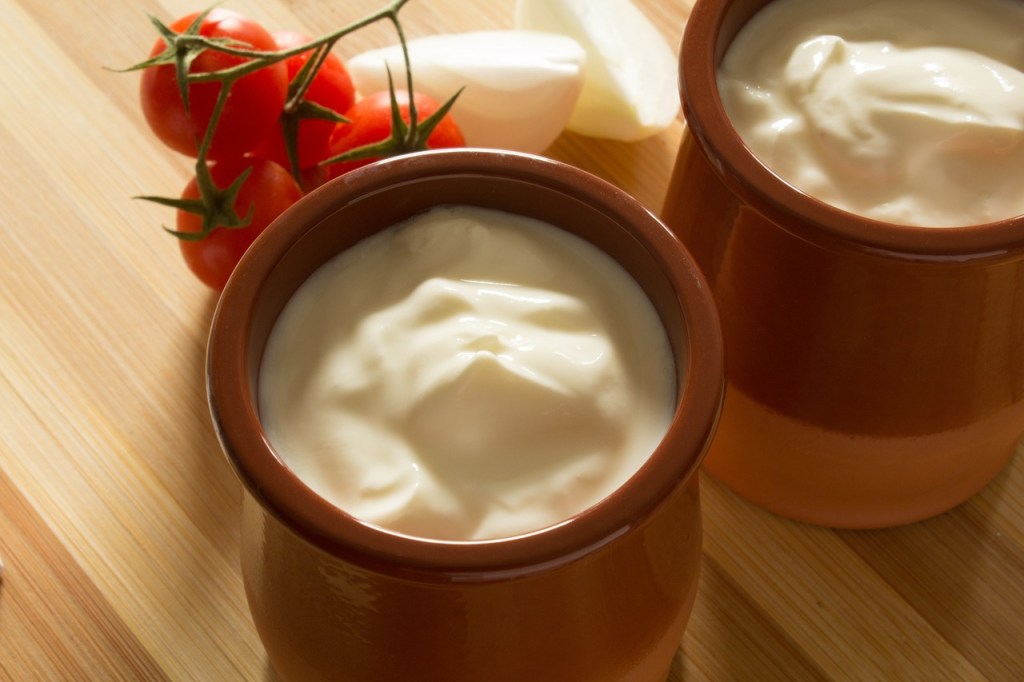
Image by Олег from Pixabay

Some people like to make their own as they control the ingredients that go into it, and they only have to make the amount they want. Here are some ways to do that.

Buttermilk technique

  • Combine 1 cup heavy cream and ¼ cup buttermilk in a sterilized jar and seal. Shake vigorously to combine.
  • The bacteria in the buttermilk will ferment the cream, which leads to souring and thickening.
  • Allow to sit at room temperature for 24 hours.
  • Store in refrigerator for up to 2 weeks.
  • Replace some of the cream with whole milk, half-and-half, or light cream if you’d prefer a lower-fat version. Just keep in mind that your sour cream will not turn out quite as thick if you decrease the fat. To thicken, you can pour through cheesecloth.

Vinegar/lemon juice technique

  • This is similar to the buttermilk technique but uses a different acid – either lemon juice or white vinegar.
  • Combine ¼ cup room temperature milk and either 1 tablespoon of lemon juice or 2 tablespoons of white vinegar. Thoroughly combine.
  • Add 1 cup room temperature of heavy cream. Combine.
  • Let sit in a warm place for at least 12 hours to a maximum of 24 hours.

Powdered sour cream

Many of us use powdered buttermilk. There is also powdered sour cream that you can reconstitute just like powdered milk. The former is easy to find in our markets, whereas the latter will probably have to be purchased online.

Substitutions

If you do not have any on hand for a particular recipe, you can try the following substitutions.

Yogurt

  • America’s Test Kitchen tried substituting Greek yogurt for sour cream in three recipes.
    • In biscuits and a sour cream sauce, the yogurt did fine.
    • In beef stroganoff, the yogurt with its lower fat content broke due to the heat.
  • Use plain yogurt, preferably Greek, in equal parts.
  • If you are not using Greek yogurt, consider draining it through a cheese-cloth-lined sieve over a bowl for at least 30 minutes.
  • Since yogurt is only 10-12% fat, it will not give you the same richness but can certainly be used.
  • For baking, for one cup of sour cream, use one cup of yogurt plus one teaspoon of baking soda.
  • For a dip, combine 1 cup sour cream with ¼ cup yogurt and 1 cup cottage cheese.
  • For a sauce, mix 1 cup of sour cream, 1 cup of yogurt, 1 tablespoon of flour, and 2 teaspoons of water.

Buttermilk

  • Try plain buttermilk. Since this is thinner than sour cream, many like to add softened butter to improve the texture.
  • Also, use less than the amount of sour cream called for, or it might be too liquid.
  • For baking, try ¾ cup buttermilk + ⅓ cup softened, unsalted butter.

Cottage cheese or Cream cheese

  • The texture of both of these items is different than sour cream. So, you should blend them with some liquid to get a consistency similar to sour cream.
  • For dips, combine 1 cup cottage cheese and ¼ cup yogurt/buttermilk in a blender.
  • For cream cheese, blend together 6 ounces of cream cheese and three tablespoons of milk.

Storage

  • To help it last as long as possible, store it in the refrigerator sealed tightly. It should keep for about three weeks.
  • Signs of it going bad are visible mold, the aroma of mold, or other off-smell (even if you do not see mold), or if it is taking on an off-white color.
  • If you see mold, just as with soft cheeses, you should not just scrape off the moldy part as the mold can extend into the product even if it doesn’t appear so.
  • Not a problem if it has separated. This is normal, and you can either drain it off or mix it back in.
  • When spooning it out of the container, always use a clean spoon to prevent introducing pathogens into the sour cream.
  • If you can’t use it up, try freezing it. Because the texture will suffer, reserve your frozen sour cream for use in cooked dishes, not fresh. Allow it to thaw in the refrigerator. If you add it to soup or similar, toss it in frozen.

Sour cream is such a simple ingredient, but it can add so much to your dishes. I am sure you already use it, but if not, pick some up when you are in the store or try making your own!

Cooking Tips · Techniques

Plastic Food Containers – Harmful or Helpful?

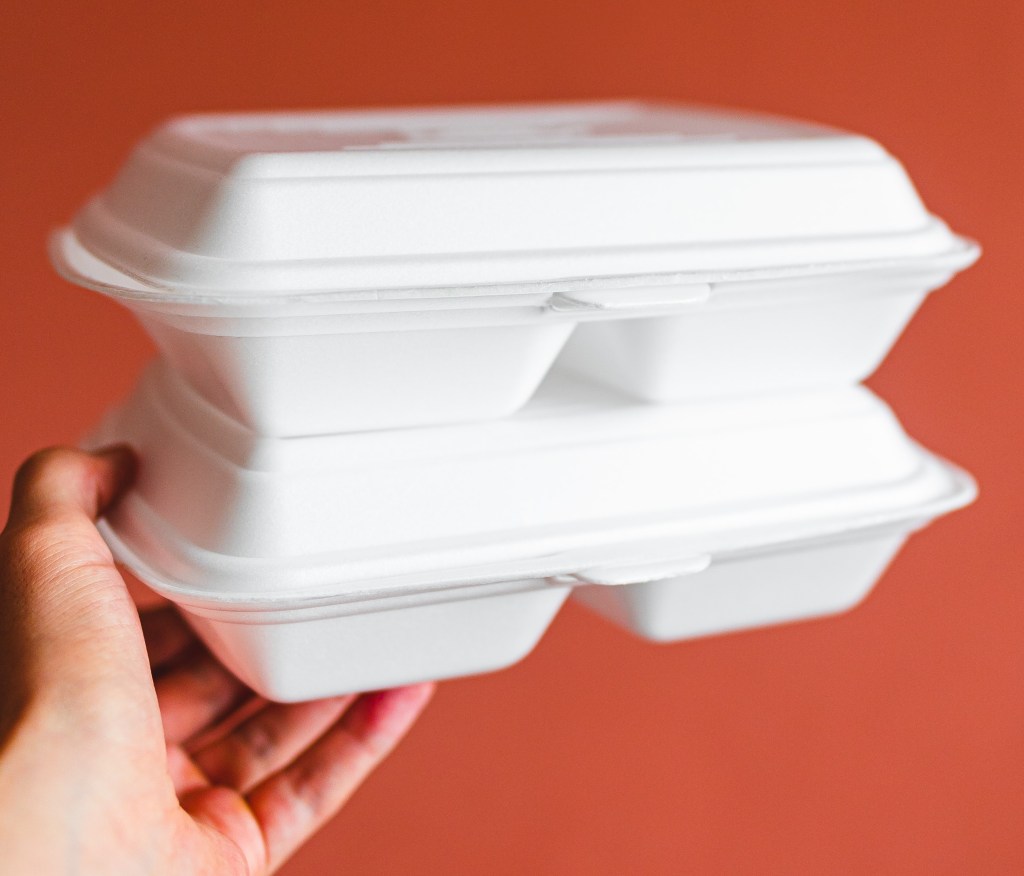
Image by Romjan Aly from Pixabay

I would suspect that almost all of us have plastic containers in our kitchens. The primary use is probably food storage. When reheating that food, do you just throw that plastic container in the microwave? Many of us do just that. That is a practice, though, that we all should re-think. That is the subject of this Cooking Tip.

Let us first look at plastics in general and which ones have been considered safe to use in the microwave.

One important point is that “microwave-safe” only means that the container will not melt or distort in the microwave. It says nothing about the release of chemicals into food. Microplastics and chemicals can leach into your leftovers over time just by storing food in these plastic containers in the refrigerator. Microwaving, though, speeds this up.

Here is a chart outlining the types of plastics and where you might find them.

NumberNameMicrowave safe?Other
#1Polyethylene terephthalate (PET or PETE)Some say Yes if it states this on the label. However, it will melt at only 120°F.It only has a temperature tolerance between 0 & 120°F before the material will start to warp or melt.   Used in soda bottles, peanut butter & mayonnaise jars and cooking oil containers.
#2High Density Polyethylene (HDPE)YesIt has a heat limit of 40 to 266°F before it melts.   Found in milk jugs, protein powder tubs, and butter containers.
#3Polyvinyl Chloride (PVC)NoRarely used for food.  
#4Low-Density Polyethylene (LDPE)NoUsed to make shopping bags, cling wrap, and juice bottles.
#5Polypropylene (PP)YesIt can withstand temperatures up to ≈ 230°F.   Most commonly used for food storage containers, plates, bowls, cutlery and catering trays.
#6Polystyrene (Styrofoam)NoIt can quickly melt.   Find it in some disposable food containers, packing peanuts, and meat packaging.
#7Other – includes PolycarbonateNoMany formulations may contain BPA.   Find it in five-gallon water cooler jugs, citrus juice & ketchup bottles and produce clamshells.

The primary chemicals of concern are bisphenol A (BPA) and a class of chemicals called phthalates. These are used to increase the flexibility and durability of plastic. BPA is found mainly in polycarbonate plastics (# 7) and has been used since the 1960s to make food storage containers, drinking glasses, and baby bottles.

I am sure all of us have heard a lot about BPA and its potentially harmful health effects. Many products today tout that they are “BPA-Free.” Proponents of the use of plastic food packaging materials point out that these items must meet stringent U.S. Food and Drug Administration (FDA) safety standards.

Although the last update was in 2014, at that time, the FDA stated, “based on its most recent safety assessment … BPA is safe at the current levels occurring in foods. Based on the FDA’s ongoing safety review of scientific evidence, the available information continues to support the safety of BPA for the currently approved uses in food containers and packaging.”

In 2018, another study was done called the CLARITY Core Study. It was an animal-based study, and they concluded that there was no definite evidence of BPA-related health effects related to the typical amount of BPA exposure.

Opponents of these plastics do have concerns about using BPA and phthalates. Although there is no definite proof, here are a few health concerns they raise.

  • Interference with children’s normal growth and brain development, even while in the womb.
  • May increase allergies, eczema and asthma.
  • May change how reproductive organs develop.
  • May cause behavior problems in children.
  • May be linked to obesity and diabetes.

A recent (June 2023) study by The University of Nebraska was published in the journal Environmental Sciences & Technology, and it has increased consumers’ concerns. The researchers “investigated the release of microplastics and nanoplastics from plastic containers and reusable food pouches under different usage scenarios.” They mainly focused on baby food containers made from polypropylene and a reusable pouch made of polyethylene. Both of these products are FDA-approved.

They found that “microwave heating caused the highest release of microplastics and nanoplastics into food compared to other usage scenarios, such as refrigeration or room-temperature storage.” They also found that “the polyethylene-based food pouch released more particles than polypropylene-based plastic containers.”

So, what can you do if you share the concerns voiced by opponents of these food containers? The safest, although not the most practical, is using only glass food storage containers.

Also, pay attention to the numbers on the bottom of your plastic containers. Bon Appetit magazine recently spoke to James Rogers, Ph.D. He is the director of food safety research and testing at Consumer Reports, and before that, he worked in food safety at the United States Department of Agriculture for more than a decade. He advises people to avoid plastics marked with a one or a six. He explains that these plastics have a low melting point and will release chemicals even faster if microwaved. He also points out that types three and seven are the most likely categories to contain phthalates and bisphenols.

If he had to choose plastic, he would opt for types two and five. These are higher-density plastics and have a higher melting point. That doesn’t mean they are without risk as the University of Nebraska study showed that they did shed microplastics when heated.

A final word is that you can limit the use of the containers to storage only and even then, limit the time you store food in them. Use your leftovers quickly by reheating them in a glass container or repurposing them into a new dish.

What do you choose to do? Do you use plastic, glass, or a combination? Will any of this information cause you to change your habits? Let me know!

Cooking Tips · Ingredients · Techniques

Grilled Cheese – The Ultimate Comfort Food

There are certain culinary delights that are very comforting. Melted cheese has to fall into that category. One of the primary ways we enjoy melted cheese is in the form of a Grilled Cheese Sandwich. Everyone has their own way of making these. Is one way better than another? Let’s dive into this topic in this Cooking Tip.

There are three basic components of a grilled cheese sandwich – bread, cheese and a spread. Many will include a fourth and that is add-ins. Your choice of each of these will affect the resulting sandwich.

Bread

Image of a cut loaf of bread setting on a board with wheat plant behind it.
Image by Ilo from Pixabay

The classic bread choice is just white sandwich bread. Others feel you need something with a bit more flavor. Two principles that most agree with are:

  • Use something with a tight crumb so the cheese doesn’t leak out. You do not want bread with lots of air bubbles.
  • You want a good bread-to-cheese ratio so do not use very thick slices of bread. Aim for about a half inch.

Cheese

The most important characteristic of the cheese is that it should melt good. Within the category of melting cheeses, there are several choices.

  • Young cheddar (under one year)
  • Monterey Jack
  • Young Gouda (under one year)
  • Young Swiss-style cheeses (under one year)
  • American
  • Brie

Harder, aged cheeses may have tremendous flavor but they do not melt well. America’s Test Kitchen offers an approach whereby you can use these cheeses. They combine the hard cheese with a smaller amount of a great melting cheese such as Brie in a food processor to make a paste. They also recommend adding a tablespoon or two of wine or vermouth to aid in emulsifying and to add flavor.

Experts disagree on the form of the cheese for the best sandwich.

  • Some recommend shredding the cheese as you can get good coverage with easy melting, The downside is that this method can be messy.
  • Sliced cheese will work as long as you get slices of uniform thickness so it melts evenly.
  • Some like to use a Y-shaped veggie peeler, which gives you thin and even slices.

Spread

There seems to be two camps on the issue of which spread to use. There is the butter camp and the mayo camp.

Image of small glass bowl with 3 pieces of softened butter in it

Butter

  • Pros – excellent flavor.
  • Cons
    • Needs to be softened.
    • Has a low smoke point.

Mayo

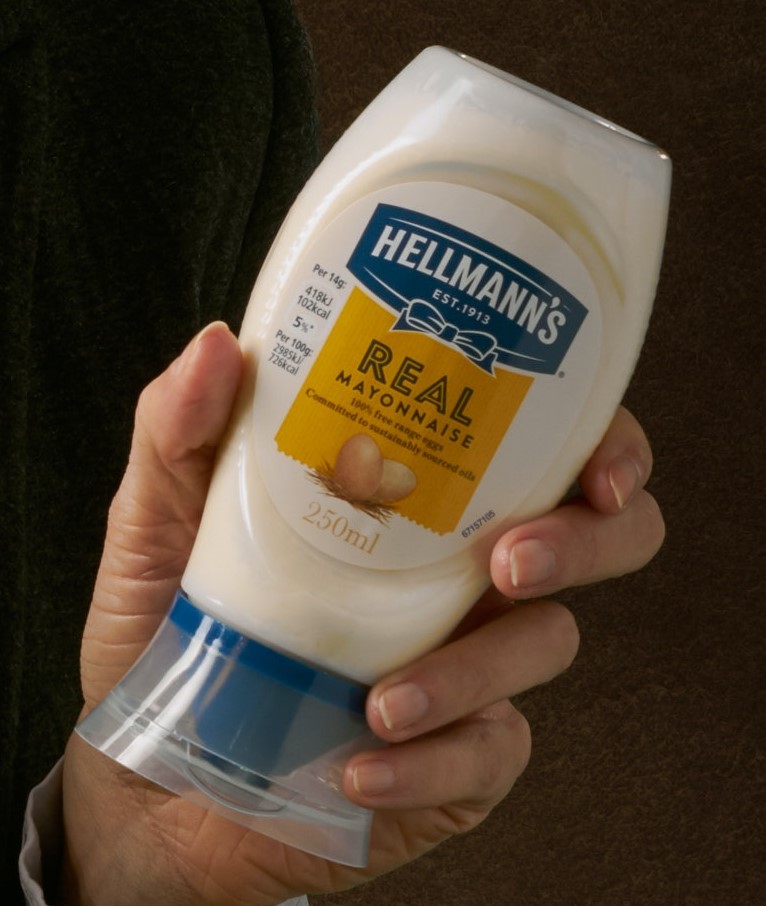
Image of a hand holding a bottle of Hellman's Real Mayonnaise
  • Pros
    • Do not have to soften.
    • It has a higher smoke point than butter.
    • Adds a tangy flavor element.
  • Cons
    • Many do not like the flavor.
    • Does not crisp as well as butter.

Combination

  • Some experts like to use a combination of softened butter and mayonnaise. They feel this results in great browning without this happening so quickly that the cheese doesn’t have time to melt. The flavor is described as multi-dimensional.
  • Everyone recommends staying away from low-fat mayonnaise as it results in uneven browning.

Add Ins & Variations

A great grilled cheese sandwich needs nothing more than the above elements. However, you may also want to experiment a bit.

  • Bread – vary the type of bread keeping the above cautions in mind.
  • Cheese – vary the type of cheese.
  • Add Ins – just do an online search and you will come up with very interesting recipes. There are even entire cookbooks devoted to this dish. Here is just a very short list to get you started.
    • Herbs
    • Caramelized Onions
    • Bacon or Ham
    • Apples
    • Jam

Method of cooking

There are some areas of agreement but other areas of disagreement. Here are the different methods.

Stove-top

  • Preheating the pan over med-high heat for a couple of minutes and then lowering the heat to medium-low is the preferred cooking method. Cook until browned, flip and continue to cook until the other side is brown and the cheese is melted.
  • Some like to put the butter in the pan while others say to butter the bread, not the pan. Proponents of both methods claim that it leads to better and more browning.

Oven

  • If you need to cook for a crowd, place your prepared sandwiches on a rimmed baking sheet in a 450°F oven, flipping half-way through.

Panini press

  • If you have access to a panini press, this method will give you the best crispy sear.

Air Fryer

  • Some have tested using an air fryer. It will work but it takes longer and the bread is more toasted than grilled

Serious Eats Stove Top Method

  • This method involves griddling both sides of the bread.
  • To do this, melt the butter in a skillet over medium heat. Add the bread and cook until that side is evenly browned. Remove the bread and place on a work surface, toasted side up. Add the cheese and close the sandwich with both toasted sides facing inward. Add more butter to skillet, lower the heat to med-low and cook the sandwich until golden on the bottom. Remove the sandwich from the skillet. Add more butter and return the sandwich to the pan, toasted side up. Cook until the second side is golden brown and the cheese is melted.

If you are a really serious grilled cheese eater, you may agree with America’s Test Kitchen. They bemoan the fact that the wonderfully crisp sandwich can get soggy as soon as you place it on a plate. So, they place two chopsticks on the plate and the sandwich on top.

In my book, two slices of bread encasing meted cheese is a winner. However, with the expert tips above, you might be able to take this humble sandwich and elevate it even more.

Image of a grilled cheese sandwich setting on a wooden board, which is setting on a red/white checked cloth.
Designed by Freepik
Cooking Tips · Techniques

Cooking Skills – Which ones will make you a better cook?

As the year draws to a close, many people like to take stock of what they have done over the past year and what they would like to do next year. For a cook, this might mean assessing your kitchen skills. What have you accomplished this year, and what skills should you work on? The subject of this Cooking Tip is helping you decide which skills are most important.

If someone asked me to list what basic skills are essential for cooks, I could quickly come up with a list. I do not like just giving you my opinion on a particular subject. Instead, I want to bring you the collective advice from experts in the field. With that in mind, I examined numerous sources and which skills they thought were essential. As you can imagine, there was significant variation. There was also agreement, though, and it is those skills I want to share with you. Because I have written Tips on many of these skills in the past, I will provide links to those Tips.

Knife skills

This was the most frequently mentioned cooking skill that home cooks should strive to master. I wholeheartedly agree with this, but I must tell you that most of my home-cooking students are not that interested in learning better knife skills. It is almost like they think as long as they can cut something, that is all that is needed. There are solid reasons to work on your knife skills. (If you are interested in my recommendations on which knives you should own, see this Tip.)

Safety – knives are very dangerous implements. Learning how to use and care for them properly decreases the chances of injury.

Better cooking results – it really will make a difference in the outcome of a recipe if it calls for sliced onion and, instead, you chop them. How large or small and how uniform you prepare the ingredients can truly give varying results. See this Tip on how this applies to onions.

Cooking pasta

Pasta is a staple on our kitchen tables and a great choice for a quick weeknight meal. Knowing how to cook it properly means having a perfect bowl of al dente pasta rather than a gluey mess or crunchy pasta. For a take on an alternate method of cooking pasta, see this Tip.

Cooking grains

Rice may be the main grain we cook, but many others are delicious and even healthier than rice. Cooking rice properly depends on the variety of rice you are cooking. (See this Tip on a discussion on rice varieties.) If it is plain white rice, I think a rice cooker is the best way to go, although learning how to cook it on a stovetop is a valuable skill.

I think stovetop gives better results when cooking brown (or red, black or wild) rice or other grains. This is especially true if you live at a higher altitude due to the lower boiling temperature. See this Tip on Cooking at Altitude and this Tip on Whole Grains.

Cooking eggs

I recall that one of my culinary school instructors told us that a test a chef gave her to see if she was qualified was to cook an omelet. He considered the skills involved in this humble dish to be an indicator of the cook’s knowledge and ability. Omelets are, however, just one way to cook eggs. Learning how to scramble them, poach them and properly use them in recipes is also important.

Making a vinaigrette

This skill is incredibly easy to learn, and the principles involved translate to making other sauces. A breakdown of how to do this can be found in this Tip.

Making a sauce

Sauces can elevate a simple chicken (or other protein) dish from average to spectacular. Information on how to make an easy pan sauce can be found in this Tip. Mastering different sauces is also important; here are discussions on those sauces. Sauces 1 and Sauces 2.

Making homemade stock

Many experts highlighted this, but I can’t entirely agree. Yes, it is a wonderful skill, but I don’t think it is one of the essential skills. There are many high-quality store-bought alternatives. Here is a Tip with a further discussion on this subject.

How to read a recipe

This skill was only mentioned occasionally, but I want to highlight it because I think it is very important. I emphasize this in every class I teach. Knowing how to interpret recipes can be a make-or-break moment for your dish. I think it is so foundational that I wrote an article on this, and it is available as a free download on my website. It will also teach you how to look at a recipe cautiously, as not all recipes are equal, especially in our online world. See this Tip for more on this subject.

How to sear meat

Getting a nice brown crust on your meat is a skill that involves knowing how to heat your pan, which oils to use and how to get that crust without burning your meat or over-cooking it. Searing meat is one of the types of dry-heat cooking methods, which I discuss in this Tip.

How to taste and season dishes

It may be easy to taste a dish and determine if it tastes good, but what do you do if it isn’t the taste you want? It is not that difficult if you follow the outline from this Tip.

Which of these skills have you accomplished, and which do you need to work on? Are there other skills that you think I should have included in this short list? Do you need help developing these skills? Let me know. I am always happy to help you be the best cook you can be!

Cooking Tips · Techniques

Gifts for the Cook that they will actually use!

As the gift-giving season approaches, I wanted to give you some ideas for some great gifts for those who love to cook. Or, you can put them on your wish list for Santa. If you do an online search for gifts for cooks, you will come up with some very strange lists. I wanted to give you a list that was much more practical and useful. That is the subject of this Cooking Tip. Some of the links below are affiliate links and I may earn a commission if you decide to purchase.

If you are considering a gift for a fellow cook, consider their storage space. Even though the gift might be a great one, if they do not have space in which to store it, they may not be very thankful.

Thermometer

A good instant read digital thermometer is essential for most serious cooks. It is something that they will use in both savory cooking and baking. The most important aspect of a food thermometer is its accuracy. It is also extremely nice if it reads quickly.

Any review of the best food thermometers will almost surely lead with the company, Thermoworks. Their products consistently stand out as the best in class. An added nicety is that they come in multiple colors. Their top-of-the-line model, the “Thermapen One” is excellent but costs a bit over $100. They do have frequent sales, which can bring this price down. They also have very good and less expensive alternatives. Their Thermopops cost about $35 and the Dot thermometer is about $45.

Another brand that ranks high is Lavatools. Their products range from $15 to $60.

Kitchen Scale

If you or your gift recipient is an avid baker, a kitchen scale is extremely helpful. Once again, accuracy is the most important characteristic. I would also highly recommend a scale that has both imperial and metric units. Learning to use and understand metric weights will make you a much more accurate baker. It is also useful if you like to use European recipes, which tend to be written with metric measurements.

There are three scales that dominate the “best of” reviews.

  • Escali Primo Digital Scale – This scale comes in multiple colors and retails for about $27. A couple of criticisms of this one is that the display is not the easiest to read and the platform is not removeable, making it a bit more work to clean.
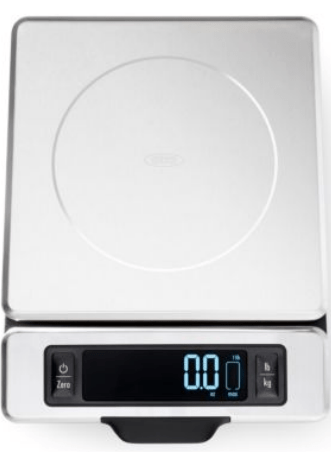
  • OXO 11-lb. Stainless Steel Food Scale – With a removable platform, extreme accuracy and an easy-to-read display, this scale garners high marks and sells for around $50.
  • Ozeri Pronto Digital Kitchen and Food Scale – Another easy to read scale, this one lacks a removable platform, but is priced under $15.

Graters/Zesters

Cooks are often reaching for a grater or a zester whether it be to grate cheese, nutmeg or citrus zest. The company that dominates the market for these items is Microplane. They make various sizes of graters but they are perhaps most well-known for their excellent zesters, which sell for under $15. The Deiss PRO Stainless Steel Grater is recommended by some and is slightly less expensive than the Microplane.

If you or your gift recipient are like me and tend to grate their knuckles, a wonderful add-on is a cut-resistant kitchen safety glove. I use mine all the time.

Bench scrapers

This is one of those easily overlooked but extremely useful kitchen tools. Not only is it great for picking up chopped veggies from your cutting board, but it is also useful for cutting dough and softer items such as butter, for scraping dough from your counter and leveling off ingredients in your dry measuring cups.

Personally, I am not sure there is a great difference between brands but America’s Test Kitchen highly recommends the Dexter-Russell Sani-Safe 6″ x 3″ Dough Cutter/Scraper or the Anmarko Stainless Steel Metal Griddle Scraper Chopper. Others liked the Oxo Bench Scraper or the Norpro Grip EZ Chopper Scraper. Any of these can be purchased for under $15.

Prep Bowls

I like to teach that success in the kitchen comes much easier if you are organized. The French have a term for it – mise en place. Part of this involves prepping ingredients and putting them into small prep bowls that are easy to grab when you start the cooking process. I find them invaluable and use them on almost a daily basis. They are available in glass, stainless steel and silicone and come in different sizes. You want a set that is large enough to hold your ingredients while still being easy to handle and store.

Culinary Books

Cookbooks are always a good choice if you know what the recipient likes. There are new cookbooks coming out every year. A website that catalogues cookbooks is EatYourBooks.com. They have both a free and paid subscription that will allow you to browse cookbooks by subject, title and author.

One book I use all the time is Food FAQs: Substitutions, Yields & Equivalents. This extremely useful book has been put together by Linda Resnik and Dee Brock. They have painstakingly compiled lists and charts that answer questions such as:

  • How much juice is in an average-sized lemon?
  • How many onions are required to make one cup of chopped onion?
  • What can I substitute for a quince?

For the scientific-minded cook, consider The Food Lab: Better Home Cooking Through Science by J. Kenji López-Alt. This book will not only teach you to be a better cook but a smarter one as it dispels many culinary myths.

Apron

Sure, there are plenty of aprons out there in pretty colors with snazzy sayings but those are not really work aprons. A dedicated cook needs an apron that can stand up to the heat of the kitchen. That means one that is made of a sturdy fabric, is of an appropriate length, has long enough straps to tie around your waist in front and has pockets. I have this one from Food52 and love it.

Knives

If you want spend a bit more, you could consider knives. Every cook should have a good chef’s knife, paring knife and bread knife. There are others that are great to have although not necessary. I discuss them in this Cooking Tip.

As for brands, you will never go wrong with Wüsthof but they do come at a price. Other less expensive but still good brands include Mercer and Victorinox.

Small Appliances

There are a myriad of small appliances out there but, once again, consider the space they will require to store. Before buying the newest appliance fad, read my Cooking Tip on appliances.

Cooking Schools

Consider a gift certificate to cooking classes in your area. If there are none, look at some of the online options. Here are just three.

Are you searching for something to give that avid cook in your life? Is there something that you really want in your kitchen arsenal? I hope these ideas will get you started down the right path.

Happy Shopping!

Cooking Tips · Techniques

Meringue – A Fluffy Delight!

When you hear the word Meringue, what do you think of? Do you think of that soft and fluffy topping on your lemon pie? Or, do you think of the swirly, crisp cookies that melt in your mouth? What meringue is and how to make it is the subject of this Cooking Tip.

Image by Charlotte Markham from Pixabay

By definition, meringue is a mixture of beaten egg whites and sugar. It can be as soft as what you find on that pie or a Baked Alaska. It can also be baked into what is termed a hard meringue. Examples of these are little meringue cookies or a Pavlova. The latter is a dessert with a hard meringue base topped with fruit and whipped cream.

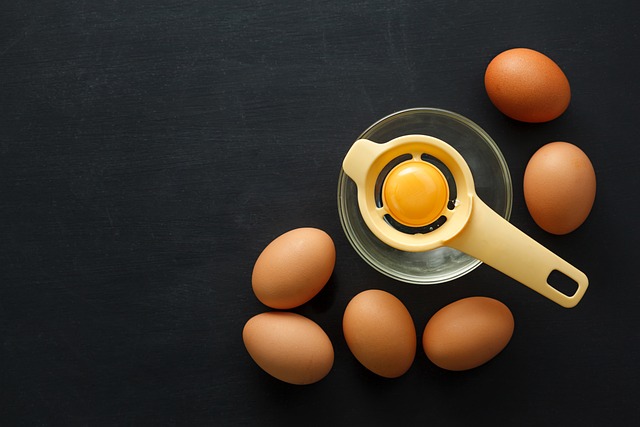
Since egg whites are the main ingredient, one must know how to separate the egg whites from the yolks. Eggs are easiest to separate when they are cold. However, they whip up faster and with more volume when at room temperature. Therefore, one of your first steps is to take your eggs out of the refrigerator and separate them. Put them in a bowl and allow to set at room temperature while you finish your prep for the particular recipe.

Image by Julia Filirovska from Pixabay

Have you ever had a time when you just couldn’t get the egg whites to whip up properly? If that happens, the main culprit is fat. The presence of fat in the egg whites prevents them from whipping up in volume and texture.

Here are tips to help you have success in whipping egg whites.

  1. Fat may be present if you allow some of the egg yolks to get into the whites. To prevent this, consider using the three-bowl technique for separating your eggs.
  • Separate one egg putting the white into Bowl #1 and the yolk into Bowl #2.
  • Separate the remaining eggs one at a time, allowing the white to drip into Bowl #3.
  • After each one, put the yolk with the other ones in Bowl #2.
  • If the egg white you have put into Bowl #3 looks clean of yolk, add it to Bowl #1. This way, if you accidentally get yolk into a white, you can set it aside so it doesn’t contaminate all the whites in Bowl #1.
  • Always use a clean glass or metal bowl. Try not to use a plastic bowl as they will often have a coating of fat on them, inhibiting whipping.
  • Ensure your beating implements (mixer blades, whisks) are clean of any fat.
  • Cream of tartar – adding a small amount of this ingredient helps to stabilize the egg whites. Use ⅛ teaspoon for every egg white.

There are three basic methods of making meringue.

  • French meringue is made by beating egg whites to the foamy stage (45-60 seconds), slowly adding sugar, and continuing to beat into a soft, airy, light mixture. This method can be a bit fussy as adding the sugar too early or too late can lead to disappointing results.
  • Cooks Illustrated tested the timing of adding sugar to the egg whites.
    • They made three batches each of meringue cookies, angel food cake and chiffon cake. They varied when they added the sugar – before whipping, after a minute of whipping and at the end.
    • The best result for all the tests was adding the sugar after a minute of whipping. Adding at the beginning gave dry cakes. Adding at the end resulted in dense and crumbly cakes.
  • For meringues, adding at the start gave dull cookies with a very fine crumb. Adding late resulted in an overly airy and grainy texture. They compared the taste to Styrofoam.
  • It is also helpful to add the sugar a couple of tablespoons at a time until it has all been incorporated. Adding the sugar slowly ensures all the sugar is dissolved. This type of meringue is the least stable. Therefore, it is usually used when it is going to be baked – either in a cake batter, meringue cookies or a meringue shell.
  • Cooks Illustrated also tested the speed of whipping the egg whites.
    • They tested this with meringue cookies, meringue frosting, chocolate mousse and chiffon cakes. They tried two methods of whipping – slowly until foamy and then finishing on high and beating on high the entire time.
    • The slow start produced a meringue about 10% more in volume. This gave cookies and frosting that were lighter and airier.
    • With the cakes, they were indistinguishable.
  • Swiss meringue is prepared by putting the egg whites and sugar into a bowl that sits above boiling water – a type of bain marie. When the mixture reaches a temperature of about 120° to 140°F, the mixture is removed from the heat and then beaten to stiff peaks. This method results in a less fluffy meringue than French and less stable than Italian. The recipe testers at Serious Eats claim to have found a technique that will make your Swiss meringue as light as a French meringue but as stable as Italian. They do this by cooking it to a higher temperature – up to 175°F. They also whip it vigorously at high speed for about 5 minutes until it is glossy, thick & stiff. This type of meringue is often used as the base for buttercream frosting. Cooks Illustrated agrees with a higher temperature. They recommend heating the whites to 160°F and increasing the amount of sugar to make pavlovas, saying it produces the result of a crisp shell with a marshmallow-like interior
  • Italian meringue starts by putting the egg whites into your mixer bowl and beating to soft peaks. Then, a sugar syrup that has been heated to 240°F is slowly drizzled in while you continue to whip until the meringue is very voluminous and reaches the desired peak. Because this sugar syrup is very hot, one must be very careful when using this method to prevent burns. It is the most stable of the meringues but is also heavy and thick. It is used to make nougat and is also the best for topping meringue pies.

What are the culinary uses for meringues?

Image by Didier from Pixabay
  • Meringue-topped pies or Baked Alaska
    • A French meringue is recommended for these recipes.
    • Because the meringue is made with raw egg whites, be sure to bake it so that the internal temperature reaches 160°F.
    • Because of this concern, some recommend using meringue powder as the egg whites have been pasteurized. It is made with dried, powdered egg whites and also contains sugar, silicon dioxide, corn starch, citric acid and cream of tartar. Cooks Illustrated tested this product to see if it would work in making pavlova, uncooked royal icing, and seven-minute frosting. In all the tests, they found the meringues were dense and grainy, and the frostings were extremely sweet and thin. For these reasons, they do not recommend this product.
  • Meringue cookies are small, light cookies with a crunch throughout.
    • A French meringue is typical.
  • Pavlova is like a large meringue cookie, but whereas it has a crispy shell, the interior is more marshmallow-like with a chewy texture.
    • It is generally made with a French meringue to which cornstarch and an acid (usually white vinegar) are added along with flavorings. It is then spread out on a parchment-lined baking sheet and baked in a low oven until the outside is crisp. The oven is then turned off, and the meringue is left inside the oven to finish drying out.
    • Cooks illustrated tried making a pavlova with an Italian meringue. Although the usual temperature the meringue is cooked to is 140°F, the resulting meringues were coarse and had a pitted exterior. They increased the temperature that they cooked the egg whites to 160°F. This gave a smoother texture, but the exterior was too soft. They found that increasing the amount of sugar gave them the crispy shell they wanted. They recommend 1 ½ cups of sugar to ¾ cup of egg whites. Because the ratio is important, they recommend measuring or weighing these ingredients. For large eggs, this will probably be six egg whites.
    • Typical pavlova recipes call for adding cornstarch and vinegar to the egg whites after whipping. They also tested this and found it solid advice. They recommend adding 1½ teaspoons of each.

A final interesting point is for those of you who would like a plant-based alternative, and that is aquafaba. Aquafaba is the liquid from a can of chickpeas. Cooks Illustrated tested this using four ounces of aquafaba and four egg whites. They heated the aquafaba and dissolved the sugar in it. After allowing the mixture to cool, they added cornstarch and whipped it with salt, vanilla and cream of tartar. They were pleasantly surprised that the result was a whipped-up mixture that was sticky and “taffy-like.” So, if you want an egg-free alternative, give it a try!

As baking season progresses, I hope you consider making meringues. A browned meringue-topped pie is beautiful on your table. A pavlova with its crisp white base and the topping of fresh fruit and cream is a showstopper. Little meringue cookies are not only wonderful to eat, but they also make very nice gifts, especially when flavored and colored.

Happy Baking!

Cooking Tips · Techniques

Top Tips for an Appetizer Party

Image by Denise Husted from Pixabay

How do you entertain for the holidays? Is it just small gatherings for family? Do you host a neighborhood gathering? Do you do larger-scale parties? Have you ever considered an Appetizer party. How to do that is the subject of this Cooking Tip.

Planning is one of the most important, if not the most important, part of a successful party. If planning does not come naturally to you, the following guidelines should help. You may want to also consider enlisting the help of a friend or family member who is great at planning.

I will start with some general guidelines and then finish with a timeline for you.

One of the most stressful items is figuring out how much food you will need. Ideally, you want enough food to satisfy everyone without a large amount of leftovers. This dilemma has two different aspects – how many different appetizers to serve and how much of each appetizer.

There is not just one answer to this question. It depends on how many people you are serving, how long the party will be and what time it will be held. The more guests that will be attending and the longer the party, the more food you will need. People tend to eat more during the first hour. Therefore, you may want to offer more food during that time and less thereafter.

Food requirements

You will need more food if your party is meant to replace dinner. Plan on the following.

  • For 40+ guests, about 8-10 different appetizers with 2-3 pieces per person of each appetizer.
  • For 20+ guests, 6-8 different appetizers with 3-4 pieces per person of each appetizer.
  • For smaller gatherings, 5-6 different appetizers with 4-5 pieces per person of each appetizer.
  • May want to make fewer bites per person of the more complicated items and more of the easier ones.

If the party will be served outside of mealtime, you will not need as much food.

  • Serve 4-6 different dishes.
  • Total of 6-8 bites per person.

Now, to the timeline.

One month before the party

  • Finalize the type of party and if there will be a theme.
  • Create your guest list.
  • Send invitations with a RSVP date of no later than a week before.

Three weeks before the party

  • Select menu
    • Test any new recipes. Put all recipes in a folder.
    • Assess any dietary restrictions of your guests. Consider offering options that are vegetarian, gluten-free, dairy-free, etc.
    • Adopt the “make some, buy some” strategy. So many of us feel we need to make every dish ourselves. However, this is one time it is fine to purchase quality pre-made dishes or items that you can use to make your prep easier.
    • Pick several dishes that can be made ahead and frozen. Pick other dishes you can make a day or two in advance and refrigerate. Other dishes may need to be made or finished just before the party.
    • Serve a diverse spread from the following categories.
      • Garden – veggies, raw/cooked/stuffed
      • Starch – finger sandwiches, pizza, dumplings, bruschetta, breadsticks, rolls, crackers
      • Protein – meatballs, skewers, savory tarts, chicken wings, egg dishes, cheese, tofu
      • Snacks – nuts, chips, pretzels, popcorn
      • Dips/Spreads
      • Desserts – serve mini-desserts such as cheesecake, tartlets, candy, cookies
    • Some experts recommend that half of the recipes should be served chilled or at room temperature, and the other half of the recipes should be served hot or warm.
    • Choose 2-3 recipes that do not require cooking, such as an antipasto platter, a cheese board or a veggie plate.

  • Decide on beverages
    • Soft drinks: One to two 8-ounce servings per person per hour.
    • Punch: One to two 4-ounce servings per person per hour.
    • Tea: One to two 8-ounce servings per person per hour.
    • Coffee: One to two 4-ounce servings per person per hour.
    • Water: Always provide it. Two standard-serving pitchers are usually enough.

  • Make sure you have enough tables, chairs, serving dishes, place settings, etc. If not, plan on buying, borrowing or renting items.

  • How are you going to keep food warm? Do you need warming trays, crock pots, etc.? If you do not have them, can you borrow or rent them?

  • Create a shopping list, sorting it by when you can buy the items.

One week before

  • Get your final RSVP count.
  • Clean out your refrigerator to make sure you have room for the party food.
  • Shop for non-perishable items.
  • Create a task list & timeline for preparing food. (Can do this earlier if desired.)
    • Put this in your recipe folder or post it on the refrigerator.
    • Write down all the tasks and organize them in the order you need to do them.
    • This plan will get more detailed as the day approaches.
    • On party day, it often helps to start backwards. For example, what time do you want people to eat? With that time in mind, what time must the food be done? So, when do you need to start cooking/reheating, etc.?
    • Include how long it will take to cook items & at what temp. If you need more than one item in the oven, plan for this.

The week of

  • Clean your house a few days before and keep it that way.
  • Shop for perishable items.
  • Prep any dishes or parts of dishes that can be made ahead of time.
  • Set the table or party area the day before. Set out serving dishes labeled with a sticky note about what goes in each one. Place serving utensils along dishes.

Other considerations

  • Plan a place for guests to put coats, if necessary.
  • Do you want music?
  • Do you need a seating plan? If so, do you want place cards?
  • Decide on any decorations, flowers, etc.
  • If you will allow guests to bring something, be very specific. It would be best if those items do not require stove or oven space. Do not feel shy about requesting a specific item.

Freezing Tips

  • Be sure your freezer is 0°F or colder.
  • Do not overload the freezer. Freeze no more than 2-3 pounds of food per cubic foot of freezer space in any 24-hour period.
  • Cool baked appetizers quickly in the refrigerator before freezing to prevent ice crystals from forming during the freezing process.
  • Freeze items that can break, crumble or be crushed in single layers on a baking sheet until firm. Then, place them in freezer containers or bags.
  • Use freezer-grade wrapping or tight-lidded plastic containers.
  • Clearly label each item, including the date and reheating or cooking instructions.
  • Separate each layer of food with plastic wrap or wax paper if you need to stack them. Remove the wrap before defrosting.
  • Always thaw food in the refrigerator if it needs to be thawed before cooking or reheating.
  • Use frozen appetizers within 1-3 months.

The next time you are hosting a get-together, consider an appetizer party. So much can be done beforehand, allowing you to enjoy the party more. Just put your planning hat on and have fun!

Cooking Tips · Techniques

Kitchen Appliances – What do you really need?

I love kitchen appliances, both large and small. I am very blessed to have a kitchen with great large appliances and space for plenty of small appliances. I use some much more than others, and some I could do without. In this Cooking Tip, I want to discuss some of these appliances to help you decide how to plan your kitchen purchases.

Large kitchen appliances

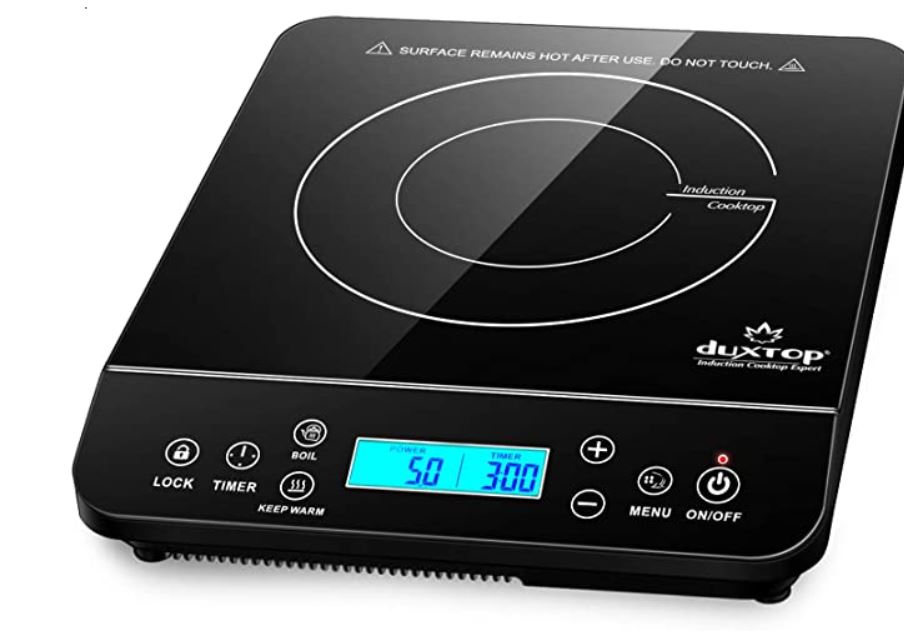
Cooktop – we all need some sort of cooktop and/or range. In a prior Cooking Tip, I discussed my decision to install an induction cooktop rather than gas. One negative I discussed in that Tip was that my favorite instant-read thermometer would not work correctly with the induction cooktop on. Since then, Thermoworks has come out with a new thermometer that does not face the same interference from the induction, called Thermopen One.

My opinion of induction cooking has not changed since that prior Cooking Tip. If you are thinking of getting a new cooktop, look at induction. If you are not looking for an all-new cooktop but feel you sometimes need an extra burner and want to try induction, you can purchase a portable one. I have been using ones from Duxtop in some of my cooking classes, which are excellent.

Ovens – I have double ovens in my kitchen, which is a luxury. I rarely use more than one at a time. When one of my ovens stopped working, and the necessary part was on backorder for months, it was nice to have a second oven. I purchased two separate wall ovens and mounted them side-by-side. As I get older, it is nice to have both ovens at a comfortable level rather than one higher than I want and one lower than I want.

When I was picking out my ovens, Bosch offered ovens where the doors opened left to right and vice versa rather than from top down. This was a nice feature as you do not have to lean over a hot oven door to remove your dish. I did not go with the Bosch brand, but I still think it is a brilliant idea.

In summary, do you need double ovens? In most cases, the answer is no. Yes, they are nice but not necessary. If you only have a single oven but sometimes wish you had a second oven, you may want to consider a countertop oven, often called a toaster oven. Nowadays, they come in many sizes and price points and can do many things other than toasting. They can not only act as a second oven but also keep you from heating up your kitchen with your regular oven during the warm months.

Warming drawer – this is one of those luxury items I use frequently. It is great if I want to keep my food warm while waiting for dinner to commence. If I am making something in which I am cooking multiple items, such as pancakes or tortillas, it is wonderful to put the cooked ones in the warming drawer while I am cooking more. That way, the first ones you cook do not get cold while cooking the rest. Again, it is a luxury but one I enjoy having.

Small Kitchen Appliances

Electric mixers – I have both a hand-held mixer and a stand mixer. Since the latter takes up more space, do you really need it? That depends on how you cook and bake. Since I am constantly trying new recipes for my business, I use mine frequently. It is excellent for helping to knead bread and pastry dough. It also makes quick work of creaming butter and sugar for your cookies and whipping up egg whites and cream. All those tasks except kneading dough can be done with a good hand mixer.

Food processor – If your budget or counter space is limited, I think a nice food processor would be a better investment than a stand mixer. Making some of those doughs in a food processor rather than a stand mixer is possible. I make my pizza dough in mine, and it all comes together in under five minutes. You can chop veggies and nuts, puree dips/sauces, and mince meat. If you get one with slicing and grating disks, you can process that cheese quickly and safely without grating your knuckles on that hand-held grater.

If you want a food processor, consider what tasks you want it for. Perhaps you need just a small capacity one. It may not work for large dough recipes, but it will be great for the chopping and pureeing tasks.

Blender – I have both a blender and a food processor, but you do not necessarily need both. Blenders are great for crushing ice and pureeing liquids. Even though you can puree liquids in a food processor, a good blender does a better job of getting a velvety result. However, a blender cannot do those other slicing, dicing and grating jobs that a food processor is made for. Once again, ask yourself what you do in your kitchen. If you are more likely to make drinks and smoothies, a blender may be a better fit for you. If not, consider a food processor.

There are hand-held blenders called immersion blenders. If you want a food processor but like some of the blender advantages, this might be just what you need. It has a much smaller footprint, too. I store mine in a drawer.

Rice cooker – You can absolutely cook rice on the stovetop. If you eat rice regularly, you may want to consider a rice cooker. If you measure your rice and water correctly, this is a hands-off way of cooking perfect rice. And, depending on the model, it can even keep it warm. I would give up other small appliances before I give up my rice cooker.

Slow Cooker or Crock Pot – Although this appliance is mostly hands-off, it takes up considerable space. Ask yourself how often you would use it. If you cook for potlucks a lot, it is very helpful as it will not only cook your dish, but you can take it to the potluck in the appliance and plug it in to keep it warm for serving.

Another reason people love these appliances is that they are made to allow you to put your ingredients in it, turn it on and leave the house while you go to work or run errands. I have never felt comfortable doing this, but that fear may be unfounded. Here is one opinion on the safety of a slow cooker.

Instant Pot – These seem to be the darling of many people. Take a look at this Tip for my take on this appliance. It is meant to be multi-functional and can do some of the things that a slow cooker and a rice cooker can do, although maybe not with the same result. Because of the way I cook, I do not feel a need for an Instant Pot. However, many cooks feel they couldn’t live without one.

Sous Vide – This is an appliance that most of us will do just fine without. A prior Cooking Tip talks in more detail about sous vide machines.

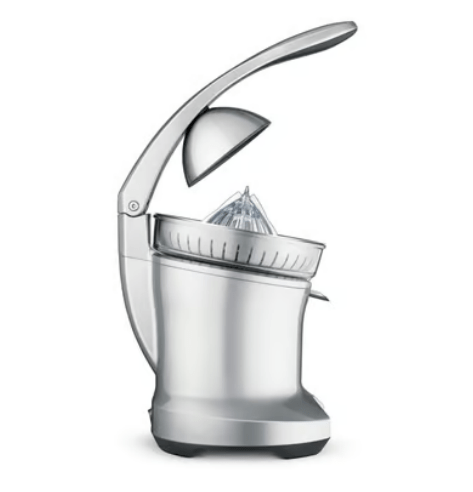
Electric juicer – This is an appliance that most do not need. I would never have bought one, but I won one in a contest. I love it and use it frequently. It does an incredible job of juicing all sorts and sizes of citrus in a way you could never do with a hand-held citrus squeezer. It does take up space, though. If you do not do a lot of citrus juicing, you can skip this one. Do not ask me to give up mine, though!

Electric Grill – You can do nothing on this appliance that you cannot do on your stovetop. I have a Cuisinart Griddler and love it for making paninis or pressed sandwiches. Other tasks can be accomplished on an electric grill, and they generally do a great job. Because of the expense and space requirements, I would ensure you will use it frequently before you buy one.

Vacuum Sealer – If you buy in bulk and have sufficient freezer space, this is an appliance you might want to consider. They are easy to use, although you need to purchase specific bags for your particular sealer model. They do keep frozen food in a fresher state for longer without the dreaded freezer burn. You can seal bags of other food items without using the vacuum function. It keeps those items in an air-tight bag or container, thus prolonging their shelf life.

There are plenty of other kitchen appliances, but I hope this list will help you decide what is right for you and your kitchen. You might also use it for a wish list for the upcoming Holiday season!

Cooking Tips · Techniques

How to make Cake Rolls – Tips for Success!

One of my favorite types of cake to make is a Cake Roll. What it is and how to successfully make it is the subject of this Cooking Tip.

If you wish to delve into more detail about making cakes in general, I suggest looking at these other Cooking Tips.

For this Cooking Tip, let’s narrow our focus to Cake Rolls, also known as Roll Cakes. You might have heard other names, such as Swiss Roll or Roulade. No matter its name, in its simplest form, a Cake Roll is a light cake that has been rolled and filled with jam or other filling and often dusted with powdered sugar.

The type of cake is a sponge cake. They have a light and airy texture that is achieved by folding whipped egg whites into a batter made of beaten yolks and sugar. This lightness helps you to be able to roll it without it breaking.

You do not have to be limited to the rolled shape. That same cake batter and baking method will leave you with a blank canvas to turn into other shapes and delightful creations. More on that below.

Let’s start with some general Cake Making Tips that will help you no matter what kind of cake you are making.

  • Baking cakes, especially if you live at a high altitude, is not a time to fly by the seat of your pants. It is, rather, a time to follow the recipe exactly. The only variations would be those you make at high altitudes.
  • Buy a food scale and weigh the ingredients. It is more accurate than cup measures and will yield better results.
  • Pay attention to temperatures called for in the recipe. If it specifies room-temperature ingredients, you will only get the desired result if you heed that advice.
  • Butter should be unsalted unless otherwise specified. If all you have is salted butter, reduce the salt in the recipe by ¼ tsp for each 4 ounces of butter. If you do much baking, try to always have unsalted butter on hand. It keeps wonderfully in the freezer, and you will not have to make adjustments.
  • Use the appropriate pan sizes. Some adjustments can be made, but using the size called for is best.
  • Try not to use dark-colored pans as they will not give you the desired result of a golden, moist, tender cake.
  • Most recipes will call for greasing the cake pans. Even better is to grease the pan, line it with parchment, and grease again. For bundt-style cakes, grease the pan thoroughly and sprinkle lightly with flour or use a flour-based pan spray. See this Cooking Tip for more information about these sprays.
  • Allow enough time to preheat your oven thoroughly. Using an oven thermometer to check its accuracy is also a good idea.
Image by sayadul al araf from Pixabay

Now, let’s focus on Cake Rolls in particular.

Ingredients

  • Most cake rolls only contain eggs, sugar and flour.
  • Most cake roll recipes will have you beat the yolks and whites separately.
  • Eggs separate more easily when cold but whip up better at room temperature. So, take eggs out of the refrigerator, separate but then allow them to come to room temperature before proceeding with the recipe.

Baking the Cake

  • Follow the recipe carefully in terms of the order of adding ingredients.
  • The type of pan you will be using is a baking sheet. Some companies will label them as a Jelly Roll pan.
  • Prepare your pan carefully by lining it with parchment paper, then spraying it with a non-stick spray. Careful attention to this will help keep your beautiful cake from sticking to the pan.
  • Spread cake batter evenly in the pan. Using an off-set spatula will help you get it level.
  • Do not overbake. Press lightly on the top of the cake. If it springs back, it is done.
  • Do not bake until the cake is brown, as this will cause it to dry out and become brittle.

Rolling the cake – three methods

One important tip that applies to all these methods is to roll the cake while still warm to minimize cracking.

  • Rolling Method 1
    • Place a non-lint tea towel on a cooling rack and sprinkle generously with powdered sugar to prevent sticking.
    • Remove cake from oven. Gently run a knife around the cake to loosen the edges.
    • Turn the cake onto the prepared towel and rack.
    • Remove pan and parchment.
    • Sprinkle the surface with powdered sugar.
    • Place another tea towel on top of powdered sugar.
    • Place another rack on top of the towel.
    • Grab the entire stack (from rack to rack) and turn it over.
    • Roll the cake while still warm, rolling the towel inside the cake.
    • Cool on rack for at least 30 minutes.
    • Unroll and fill as desired.
    • Reroll cake around filling.
  • Rolling Method 2
    • Remove cake from oven and loosen edges.
    • Sprinkle the surface with sugar.
    • Place parchment on top of the cake, followed by a towel that has been slightly dampened with a spray bottle of water.
    • Cover the stack with another baking sheet. Flip over.
    • Allow to rest for 3-5 minutes.
    • Remove baking sheet.
    • Slightly moisten parchment with a spray bottle of water and wait about 1 minute before removing it from the cake.
    • Your cake should be warm but not hot for the rolling step.
    • Roll with the damp towel and parchment inside.
    • Allow to cool.
    • Unroll and fill as desired.
    • Reroll cake around filling.
  • Rolling Method 3
    • Lay a tea towel on the counter and sprinkle generously with powdered sugar.
    • Remove cake from oven and invert onto towel.
    • Remove parchment.
    • Roll the cake up with towel inside.
    • Allow to cool.
    • Unroll and fill as desired.
    • Reroll cake around filling.

Filling the cake

  • Choose a filling that is spreadable and not runny.
    • Leave a quarter inch around the edge without filling.
    • Do not add too much filling, as it will make rolling difficult and squeeze out the edges.

Non-Rolled cakes

You may branch out and assemble in a non-rolled form using this same wonderful type of cake. Let’s look at two ideas.

Stacked cake

  • After removing the cake from the oven onto a cooling rack, run the tip of a small knife around the edges to loosen it.
  • Allow to cool for about 15 minutes.
  • Sift powdered sugar over the surface and cover with a tea towel, followed by a second rack.
  • Flip the racks, remove the pan and parchment.
  • Allow to cool completely.
  • Cut your cooled cake into four rectangles. You may wish to carefully trim away about ¼ inch of the edges for a clean look.
  • Stack the rectangles on top of each other with your preferred filling between the layers.
  • You may top the cake with powdered sugar or even apply a chocolate glaze.

Wrapped cake

  • After removing the cake from the oven onto a cooling rack, run the tip of a small knife around the edges to loosen it.
  • Sift powdered sugar over the cake.
  • Cut the cake into five equal rectangles.
  • Cover one rectangle with a tea towel or paper towel separately.
  • Cover the other four rectangles with a different towel.
  • Place another cooling rack on top and flip.
  • Remove pan and parchment.
  • Take the one rectangle that is covered separately and roll it up.
  • Place on a rack and allow to cool.
  • Allow other rectangles to cool in their flat state.
  • Unroll the cooled rectangle and remove the towel.
  • Cut the non-curled edge at an angle to create a beveled edge.
  • Do the same on both ends of the flat rectangles.
  • Spread filling on rectangles.
  • Re-roll the one curled rectangle and set it on your plate upright with the cut side up.
  • Take a second strip and wrap around this first layer, using the beveled edges to nestle within each other. Place this second strip so that one edge aligns with the edge of the first strip. Continue with other rectangles, gently pressing the layers together as you proceed.
  • Spread more filling on the outside of the cake to give the appearance of a frosted cake.
  • This type of cake needs a few hours to set up before cutting so the layers stay together.

I hope you give Cake Rolls a try. They may look difficult but are not if you follow the above tips.

Happy Baking!