Cooking Tips · Ingredients

Cooking with Cheese

There are an unbelievable number of cheeses today and they are becoming more and more available in our supermarkets. Cheeses are not just for eating out of hand or putting on sandwiches. In this Cooking Tip, I want to discuss how to use cheeses to their best advantage in your culinary creations. This will not be an exhausting list, but will hopefully cover some of the most commonly called for cheeses in recipes. In this first of three Cooking Tips, I want to discuss general storage and cooking tips.

When purchasing cheese, makes sure the packaging is tightly wrapped & sealed and that the cheese does not look dry or discolored. For fresh cheeses, check the date on the wrapper and you want it to be as fresh as possible. Once opened, follow certain guidelines.

First, all cheeses should be refrigerated if you are not consuming it immediately. Store in the veggie drawer at about 35°- 45°F.

Most cheese makers will tell you to remove the cheese from the original plastic wrapping. Similarly, they recommend against wrapping the cheese in plastic wrap. Harold McGee writes in his culinary reference book, On Food and Cooking, that there are three reasons to avoid tight plastic wrap.

  1. Tight wrapping traps moisture and restricts oxygen flow and will promote the growth of bacteria and mold that are not naturally found in the cheese.
  2. Tight wrapping prevents the dissipation of ammonia. Some cheeses have bacteria that naturally emit ammonia and it needs to be released to prevent the development of unpleasant flavors.
  3. Trace volatile compounds and plastic chemicals migrate from the plastic into the cheese.

According to Castello Cheese, it also alters the protective rind that preserves the cheese, eventually removing flavor/texture.

Therefore, the cheese should be loosely wrapped in a more porous material such as wax or parchment paper. After wrapping, you may then either place it in an open plastic bag or wrap in plastic to discourage moisture loss. For extremely pungent cheeses, you may want to place them in an airtight container to prevent their aroma/flavor from permeating other foods. Firm cheeses also do well wrapped in foil.

There is a cheese paper made especially for cheese. The main brand is Formaticum and it comes in both bags and rolls. It is becoming easier to obtain although a bit expensive. Even my local supermarket carries it in their specialty cheese department. I recently received a gift of food storage wrappers made from cotton and beeswax and there are a number of brands available. There are even instructions for making your own. I have not seen a cheese maker mention these but I have been using them and so far, they have done a nice job of maintaining my cheese freshness.

Another recommendation is to replace the wrapping after every use so you don’t introduce bacteria from your hands or other foods.

Some cheeses should be stored in their original packaging. For instance, fresh cheeses such as mozzarella and soft ripened cheeses such as Brie and Camembert. They don’t breathe the same way as harder cheeses do and won’t absorb unpleasant flavors. If they come packaged in a liquid, store them in that same liquid.

What if mold develops? According to the Mayo Clinic and the USDA, if it is a soft or fresh cheese such as cream cheese, cottage cheese, ricotta, fresh goat cheese or if it has been shredded, crumbled or sliced, it should be thrown away. With a hard or semi-hard cheese such as Cheddar, Parmesan and Swiss, they say the mold does not penetrate the entire piece of cheese. So, you can just cut off the moldy part with about an inch border and continue to use it.

What about freezing cheese? It can be done at times but, it is not recommended. Hard cheeses freeze the best. Cut into small pieces (less than ½# and less than 1-inch thick) & wrap tightly in plastic wrap. To thaw, leave in refrigerator for several hours and use shortly afterwards.

Some cheeses freeze better than others, in particular Cheddar, Havarti and Gouda. Soft cheeses should not be frozen. Examples include Brie, blue cheeses and cream cheese. Those high in moisture such as mozzarella can be frozen but they do suffer texturally and are best served in a cooked manner after thawing.

Let’s switch to some advice to help you with using that cheese in your cooking.

  • For grating and shredding, keep your cheese cold as it will be much easier without turning to mush.
  • Removing rinds that are edible is optional; it depends on your taste. Be forewarned, some can be quite intense.
  • In general, you want to use a low cooking temperature for a short amount of time.
  • If you are melting shredded or crumbled cheese into a hot dish, toss it in just before serving.
  • For casserole-type dishes, consider adding a bit of milk or cream so the cheese doesn’t dry out during the longer cooking times. Bake no higher than 375°F so it doesn’t break the cheese sauce.
  • If adding cheese to a béchamel sauce to make a mornay sauce, keep your roux on the lighter side so it doesn’t compete with the cheese. Remove the sauce from heat before adding so it doesn’t break.
  • If just want to use the cheese as a topping, putting it briefly under the broiler is all you need.
  • You can also add cheese chunks to cold dishes such as pasta or a veggie dish, especially fresh cheeses such as Chèvre or Queso Fresco.
  • If you wish to add a little lemon juice to your cheese sauce, do not add so much that it will curdle. Alternatively, you might want to consider adding just the zest, which will give you that nice, bright flavor without fear of curdling.

Some final words on melting and non-melting cheeses. At about 90°F, the milk fat in the cheese melts, which makes the cheese more supple and often brings little beads of melted fat to the surface. At higher temperatures, enough of the protein bonds are broken such that the protein matrix collapses allowing the cheese to flow as a thick liquid.

  • For soft cheeses, this occurs around 130°F.
  • For harder cheeses such as Cheddar and Swiss, it is about 150 F.
  • For very hard and low moisture cheeses such as Parmesan and Pecorino, it doesn’t happen until about 180°F.

Some cheeses are not meant to melt and if you try, they will just get drier and stiffer. These include:

  • Indian paneer
  • Latin queso blanco
  • Italian ricotta
  • Most fresh goat cheeses

You may have noticed that some cheeses get stringy when melted. There is a chemical explanation for this that causes stringiness in cheeses that are moderate in acid, moisture, salt & age. The worst offenders are Mozzarella, Emmental and Cheddar. To counteract this if you wish to use one of these cheeses, try the following.

  • Grate the cheese very finely so it can disperse evenly.
  • Heat the dish as little as possible after the cheese has been added.
  • Don’t let the dish cool too much before serving.
  • Minimize stirring.
  • Include starch ingredients such as flour, cornstarch, arrowroot.
  • If the flavor of your dish permits, add an acid such as lemon juice or wine.

I hope this gets you started in understanding the basics of cooking with cheese. In the next two Tips, we will look at some of the cheeses more in-depth.

Until then, Happy Cooking!
Cooking Tips · Ingredients

The Wonderful Season of Fresh Corn

We are in the middle of a wonderful season – fresh sweet corn season! It is definitely one of the greatest treats of the summer. Whether you grow your own or buy it in the store or the farmer’s market, you may want to consider not only cooking some for your dinner but also storing some for future use. In this Cooking Tip, we will discuss the best ways to do just that.

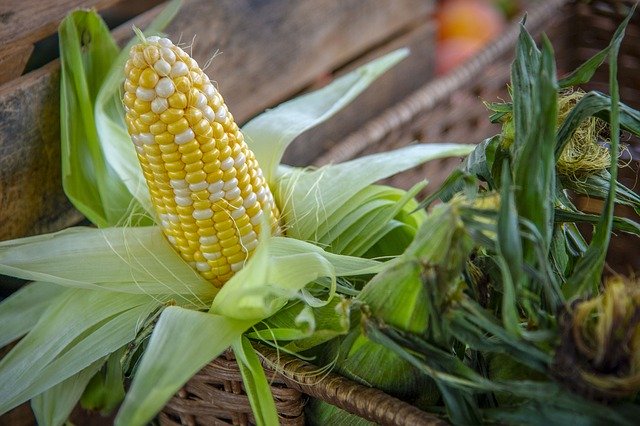
Let’s first discuss how to pick out the best corn if you are purchasing it. Contrary to what so many people do in the store, you should not remove the husks before purchasing it. The husks/silks protect the corn and keep it fresher for you until you can prepare it. You may ask how you know it is a good ear if you do not look. First, feel the corn to make sure the kernels feel firm and not soft.

The corn husk should be bright green, wrapped tightly against the corn and slightly damp. Do not choose ones that are starting to yellow or feel dry. Also, avoid any with small brown holes, which could mean insects. The bottom of the corn where the ear was broken off the stalk in the field should not be brown as that indicates it may not be the freshest.

The tassel should be light brown or gold, and slightly sticky to the touch. If you smell it, it should smell slightly sweet. Avoid corn that has a tassel that is dry, black or mushy.

Once you get home, it’s fine to store your corn at room temperature if you’re going to cook it within the next few hours. If you don’t plan on eating it right away, it’s best to refrigerate the corn in the crisper with the husks on, tightly wrapped in a plastic bag.

You may have heard the adage that you shouldn’t pick the corn until the water is boiling. This is based on the concern that corn’s sugars turn quickly into starch after picking. This may have been true at one time but about 25 years ago, corn began to be modified to be much sweeter with a longer shelf life, giving more time for you before its sweetness deteriorates.

When you are ready to eat it, it is time to remove the husks and silk. Bring a large pot of water to a boil. Carefully lower the cobs into the pot, cover and return it to a boil. No need to add salt as it won’t penetrate the corn. There are also those that feel salt makes the kernels tougher. Boil for 3-5 minutes or until tender. Some varieties will cook faster than others as will fresher corn.

What do you put on the corn once it is on your plate? Butter, of course! To liven it up a bit, you may want to try an herb butter, a chipotle butter or some other type of compound butter.

If you want to keep the corn for later use, think of freezing it. The main debate is whether or not you need to blanch the corn before removing the kernels for freezing. Cooks Illustrated looked at this and decided there was no need to do so. They compared freezing kernels raw and after blanching for a minute. Their tasters preferred corn kernels that had been frozen raw rather than those that had been blanched.

The University of Minnesota extension office disagrees as they feel the natural enzymes in corn need to be inactivated before freezing to prevent loss of color, nutrients and flavor as well as textural changes. Blanching is how you inactivate the enzymes. The National Center for Food Preservation also recommends blanching. I encourage to try both ways and see what you think. If you do, let me know your results.

If you choose to blanch, be sure to put them into an ice bath to chill after removing from the hot water. This prevents over-cooking.

Whether you blanch or not, cut the kernels from the cobs, spread evenly on a rimmed baking sheet and place in the freezer. Once they are frozen, transfer the kernels to a zipper-lock bag and freeze them for up to two months.

Although you can freeze whole cobs, the result is generally disappointing. So, take the bit of time to remove the kernels before freezing.

I love corn on its own but it is also great in a salsa, in a side dish like Esquites (a Mexican corn dish) or Maque Choux (a very rich Creole dish) or just sautéed in a hot skillet. You may prefer to grill it. Do you have a favorite way to enjoy summer corn? Let me know. Enjoy the season while it is here and put some away for a dreary winter day!

Cooking Tips · Ingredients

Oranges are not just for eating!

The last two Cooking Tips discussed lemons and limes. In this Cooking Tip, I want to expand on what is probably the citrus that is most commonly eaten out of hand – Oranges. Oranges are not just for eating, though. They can be used to delicious effects in your culinary creations.

Oranges can be divided into two major categories – Sweet and Bitter. There are over 400 varieties of oranges. Let’s discuss just a few. Within the sweet category, you find the common orange, blood orange, navel orange and acid-less orange. For the bitter category, it is further subdivided into the Seville orange and Bergamot orange.

  • Valencia oranges are one of the most common in the US. It is sweet with low acidity and a bright orange color. It can be eaten but is more commonly juiced.
  • Navel oranges are the most popular eating orange. It is a bit more bitter than Valencia with a thicker peel but no seeds. Besides eating out of hand, they can be thrown in salads or compotes or used in your cooking/baking.
  • Clementines are a hybrid of a sweet orange and a mandarin. They are very small, very sweet, very juicy and seedless with a very loose skin.
  • Cara Cara oranges are a type of naval orange that are pink in color. The flavor is very sweet but also complex with berry undertones.
  • Blood oranges are thought to be a natural mutation of a regular orange. Its flesh is red due to a high level of anthocyanins, an antioxidant that is not present in most oranges. They are very pretty but less sweet than the Cara Cara. Recommended uses are in salads, compotes, vinaigrettes or just eating out of hand.
  • Tangerines are an orange-colored citrus although not technically an orange. The zest is delightful in baking. Other uses include salads or in cooking.
  • Bitter oranges (Seville or sour orange) are not generally eaten or juiced for drinking due to the absence of sweetness. The peel is extremely fragrant and is often used as a flavoring. These are often used in marmalade as well as in vinaigrettes and other culinary uses.
  • Bergamot orange is a hybrid of the lemon and bitter orange. It is lime-green or yellowish in color. The peel can be either smooth or bumpy and it is full of seeds. The juice is extremely sour. The essential oil from this orange is what is used to flavor Earl Grey tea.
  • Lima oranges are an acid-less orange. Although not zero, the acid level is very low. This results in a sweeter flavor. The flesh is lighter than other oranges.

When choosing an orange in the store, it should have a fragrant, citrusy scent. Similar to lemons and limes, select an orange that feels heavy. When squeezing it, the flesh should be firm, not soft or squishy.

What culinary uses (other than eating and drinking the juice) are there for oranges? Again, the zest is where the essential oils lie and can give you a great flavor burst. Add it to vinaigrettes, marinades, sauces and even in baked goods.

Tossing oranges in salads is a great idea. To do this, you might want to learn how to make supremes, which produces orange segments with no pith or membranes. Here is a video on how to do this.

Drinking fresh-squeezed orange juice can be a delight but that juice can also be used in other beverages as well as ice creams and sorbets. Juice can also be part of the liquid you use to cook couscous, adding a delightful flavor.

I love the flavor of oranges and love using it in my cooking and baking. How about you? If you only eat or drink your oranges, branch out and experiment with using them in your cooking and baking. They can give you delicious results!

Cooking Tips · Ingredients

Is a lime just a green lemon?

Last week’s Cooking Tip was all about Lemons. They are not the only citrus fruit that has wonderful culinary uses. In this Cooking Tip, let’s look at Limes. Many of the points made about lemons are also true of limes as far as buying them, storing them and the importance of the zest along with the juice. I won’t repeat those in this Tip but, rather, discuss some of the differences.

Limes are the most acidic of all citrus fruits. As much as 8% of their weight comes from citric acid. They are much less sweet with more bitter notes than lemons. Just as with lemons, there are different varieties. The most common in supermarkets are the Persian or Tahitian lime although you will also see others.

I advised staying away from greenish lemons as they are probably underripe. This is not a good indicator for limes as their natural color is green. Also, limes are generally harvested while they are not completely ripe. Limes tend to turn yellowish-green when they are at their best. If buying a Persian lime, try to buy one that is lighter green with hints of yellowing. Feel the skin and opt for those with smooth skin. Just as with lemons, choose ones that seem heavy for their size and ones that give a bit upon pressing.

Persian limes (Bearss limes & Tahitian limes) are larger than other limes, oval in shape and less acidic. The Tahitian variety is even more oblong in shape. For culinary purposes, the Tahitian and Bearss can be used interchangeably. Some sources say they are less tart than Key limes and others claim they are tarter. You will have to do a taste test to decide for yourself. They are certainly the juiciest.

Key limes (sometimes called Mexican limes) are very small (1-2 inches in diameter) and round. They are sought out for dishes/cocktails due to the intense flavor. Due to their small size, you would have to squeeze about 40 of them to get one cup of juice. That compares to 6-8 Persian limes to obtain the same yield. The average medium lime (2½-3oz) will yield about 1½-2 tablespoons of juice.

For an interesting perspective on Key limes, see this article from Serious Eats. In summary, the author feels that Key limes are more of a “Key Lie” since we import them from Mexico and she feels they are not like the authentic version. She brings up the subject of “terroir”, a concept that is usually applied to grapes/wine. The terroir is everything that could affect the taste & quality of the item from soil to climate to harvesting techniques and so much more. Just as we are not allowed to call a sparkling white wine “Champagne” unless it is grown in that region of France, Mexican Key Limes are a misnomer.

She states the Key limes that were grown in the Florida Keys were “fat and juicy, with well-rounded acidity and a rather yellow rind; a point of pride for Florida growers.” Our Mexican key limes are tiny, dry and bitter. For more detail, see the article. Just as with lemons, the bottled key lime juice is nothing like the fresh. I have tried the one that our store carries, Nellie & Joe’s Key West Lime Juice, and, in my opinion, it was nothing short of terrible. Although I could not find documentation of this, the author of this article implies that it is made with imported Mexican limes although the company has “Key Lime” in its name. Have you tried it? If so, let me know what you thought.

There are also some more uncommon fruits in the lime category. The Kaffir lime looks distinctive with a very bumpy skin. They are small, very tart, very acidic with very little juice. Because of these characteristics, they are not really used for cooking. Rather the peel and leaves are what is used and are very common to Thai cooking.

Finger limes, native to Australia do not really look like a lime. They have bumpy skin and a cylindrical shape. They are sometimes called “caviar lime” due to the flesh that looks like small caviar pearls rather than the typical juice sacs. They have a very tangy and sour juice.

The Philippine lime is also known as calamansi, calamondin or musk lime. It is a very tart lime used in Philippine cooking. It is very small and orange in color. They do not travel well and so, will not be something you will normally find in the US.

Using limes is similar to using lemons. At times, you want that distinctive lime flavor. Limes also adds a characteristic tartness and flavor to salsas, southwestern and Asian dishes. Lime is commonly added to cocktails and other beverages. Also, just like with lemons, a dash as you finish your dish adds a wonderful brightness.

Cooking Tips · Ingredients

Add the Zing of Lemons to Your Dishes!

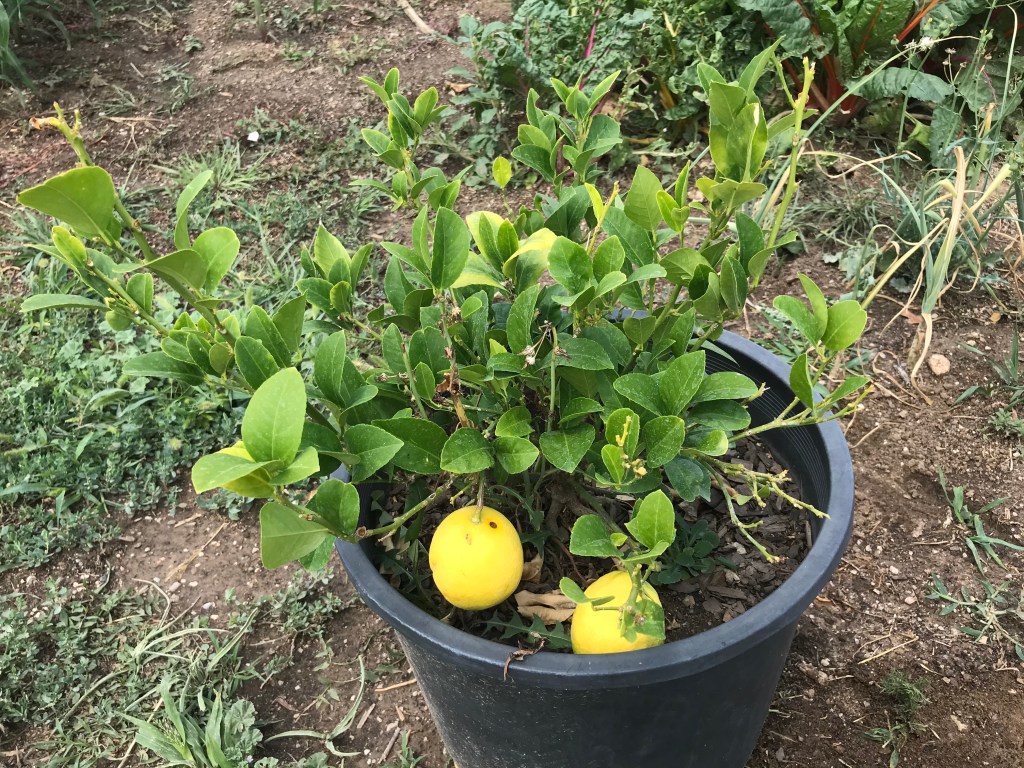
My husband’s Meyer lemon tree

So many of our dishes – both sweet and savory – call for the addition of lemon in some form. Since most of us who live in more northern areas do not have a lemon tree growing in our backyard, that means we need to buy them in the store. (My husband has been attempting to grow a Meyer lemon tree. Here is a photo of that small tree.) In this Cooking Tip, we will look at types of lemons, how to buy them and how to use them.

Although there are a number of different types of lemons, it is said the two most commonly found in our supermarkets are the Lisbon and the Eureka lemon, which are grown in California and Arizona. Grown in Florida, a third common variety is the Bearss. Another variety that you might see in your stores is the Meyer lemon. Other than identifying the Meyer lemon by that name, the store will probably not list the particular variety of lemon. I just bought two lemons from my local supermarket and the tag indicated they were from Argentina from a company called Citrusvil. Even looking at the direct source, it does not tell me what variety I have. However, since all of the varieties which you find in your supermarket (except for the Meyer lemon) have very similar flavor profiles, don’t worry about the actual name.

The typical lemon found in our stores has that classic tart and acidic lemony flavor. Meyer lemons are thought to be a cross between a lemon and either a mandarin or orange. Their skins are thinner and smoother, they are rounder in shape, and have a deeper yellow-orange hue. They are less acidic than regular lemons, and due to the presence of thymol, they carry thyme-like undertones. Although they can be substituted for regular lemons in many applications, they are not great when you really want the bold flavor and acidity such as in a vinaigrette.

When buying a lemon, look for one that is fully yellow. Greenish hues indicate under-ripeness. Try to pick ones that are heavy for the size and yield to gentle pressure, indicating more juice. The best way to store them is in a sealed plastic bag in the refrigerator.

I really do not like recipes that call for the juice of one lemon or ½ lemon because the amount of juice you can get from a lemon does depend on its size. A typical small lemon (weighing about 4 ozs) should give you about 3 tablespoons of juice, a medium (5 oz) lemon will give you 4 tablespoons and a large lemon (6 oz) should yield 5 tablespoons. How much juice you get also depends on your method of juicing. Before juicing it, roll it on the counter to help it release as much juice as possible. Some recommend putting it in the microwave for 10 seconds, especially if it is cold. Cut off any points at the ends of the lemon. Many chefs prefer a wooden reamer with a sharp tip to do the juicing. I have an electric citrus squeezer, which does an amazing job of extracting every last drop of juice. It is not something that I would normally buy but I won it and now absolutely love it. Another tip you might see is to place your lemons in the freezer. This causes the juice to expand and break the cell walls, resulting in a softer lemon that is easier to squeeze. This may not be best for flavor, though, as I will discuss below. If you wish to squeeze the fruit by hand, cutting it lengthwise makes it easier to hold and get more juice. If using a hand-held citrus juicer, it is better to cut it crosswise and then put the cut-end down before squeezing.

If you are wanting the juice for a beverage, it is recommended to juice the lemon a few hours (no more than six hours) before using. This allows some oxidation to occur which improves the flavor. This is also true of limes but not oranges. The latter have a different compound that can make the juice turn bitter when exposed to air.

The juice of a lemon is wonderful but even more flavorful is the zest. That is where the essential oils lie and that is what gives you the most flavor punch. You do not want to get any of the white pith, though, as it is bitter. There are many zesters on the market today that will do the job easily for you. One of the most popular is made by a company called Microplane. If you have ever taken one of my classes, you will know that I am a big believer in using as much of your food as you can, minimizing waste. That is why I always zest my citrus fruit before juicing it whether or not my recipe calls for zest. I then store that zest in the freezer to pull out when I don’t have a lemon available. Although the color of the zest will darken, the flavor remains vivid for about 3 weeks. Zest stored in the pantry or refrigerator does not fare nearly as well. If you only want the zest from a lemon, be sure to wrap the zested lemon in plastic before storing in the refrigerator to prevent drying out.

The juice from frozen and thawed whole lemons can have a muted flavor, a definite negative to freezing whole lemons. Many people do, though, recommend freezing excess lemon juice in ice cube trays for when you need some in a pinch. It may not be the absolute best if you want the full-blown lemon flavor but it is certainly better than leaving the lemon out of a dish.

What if you have no citrus in your house? Are there any of those lemon juice substitutes that do not disappoint? Not really but Cooks Illustrated found that ReaLemon juice from concentrate and True Lemon crystallized lemon juice could be acceptable in some applications. Something else to note though are the additives in these products. ReaLemon contains “lemon juice from concentrate, sodium benzoate, sodium metabisulfite, sodium sulfite and lemon oil.” The True Lemon product is much cleaner with “citric acid, lemon oil and lemon juice.” If you are just looking for a bit of acidity and not the lemon flavor, citric acid can also be used. Cooks Illustrated found it worked in a pan sauce and risotto.

Why is lemon such an important ingredient in cooking/baking? First, the flavor of lemon is essential to such things as lemon curd, lemon meringue pie or lemon chicken. The other thing is that lemon adds acidity to dishes. Acidity is integral to balancing the oil in a vinaigrette and lemon juice, along with other acids, is often used. If you have ever tasted a dish and said, “It needs something”, the first thing to try is to add a bit of salt. After that, a dash of acidity often works wonders. Adding a splash of lemon juice as a finishing touch to many dishes is a chef’s secret.

Even though they are perishable, try to think of fresh lemons as an essential pantry item. You will grab for them over and over for so many different reasons.

Cooking Tips · Ingredients

Focus on Shrimp

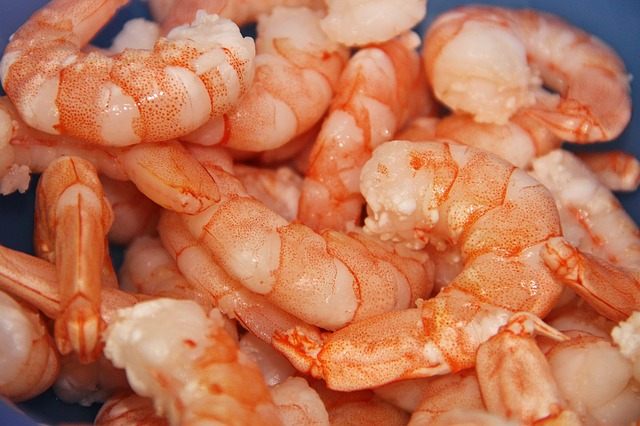
Shrimp are wonderful any time of the year but they are especially great in the summer because they cook so quickly with minimal effort. There are a few things to know about shrimp, though, and that is the subject of this Cooking Tip.

When you go to your supermarket, or if you are lucky to have a fish market, you may be faced with different varieties of shrimp. Here is a discussion of some of those.

A common question is if there is a difference between Shrimp and Prawns. Although both terms are used interchangeably in the US, there are anatomical differences. Prawns are larger, have a branching gill structure, longer front legs and a second set of pinchers that are larger than the front set. They also carry their eggs inside their body, which tend to be larger than those of shrimp.

Shrimp are of a different sub-family and tend to be smaller, have a lamellar gill structure, shorter front legs, larger front pinchers, they carry their eggs outside their body and have smaller eggs.

From a culinary perspective, there is not much of a flavor difference and they can be used similarly. What makes more of a difference in flavor and texture is the diet and habitat. Even within the same category of shrimp, these factors can make them taste differently.

Brown Shrimp

The shells of this category of shrimp are reddish-brown. They are also known as “summer”, “redtail” or “golden” shrimp. They are firmer in texture than other shrimp and have a mild but mineral-like flavor. When cooked, the flesh turns somewhat redder than white shrimp.

Pink Shrimp

This category encompasses different species of shrimp. They tend to be pink when raw but can look anywhere between white and gray. They are usually small and sometimes termed “Salad Shrimp”. They are mild and sweet.

Rock Shrimp

Named for their rock-hard shells, they are normally sold cleaned and de-shelled as doing this process yourself can be difficult. Their taste and texture is similar to lobster and so, could be a substitute for lobster.

Tiger Prawns

Also known as Tiger Shrimp, they have a striped pattern on their body. They can be up to a foot in length and have a very strong shrimp flavor.

White Shrimp

Once again, this category includes different species of shrimp. When uncooked, they look translucent and blueish-green but turn pink when cooked. They have a sweet flavor, a tender texture and are easy to peel.

Another concern when you are shopping is the size of the shrimp or the “count per pound.” For example, if you see 41/50 on a label, it means there are between 41 and 50 shrimps per pound. Here is a breakdown of the terminology from Cooks Illustrated. Other sources may vary slightly in the shrimp count.

TYPICAL NAMECOUNT PER POUND (U = UNDER)
ColossalU/12 (under 12 per pound)
Extra-JumboU/15
Jumbo16/20 (16 to 20 per pound)
Extra-Large21/25
Large26/30
Medium-Large31/40
Medium41/50
Small51/60
Extra-Small61/70

If your recipe calls for 1½ pounds of shrimp and you buy shell-on, you must account for the weight of the shells. Generally, 12 ounces of shrimp with shells intact will give you 8 ounces of shelled shrimp.

If you buy shrimp with the shells on, you must peel and possibly devein them. Peeling is rather easy. Just open the shell on the belly side and peel it back and remove making sure to also get all the legs. If not done already, the intestinal track should be removed – called deveining. Make a shallow slit along the back from the head to tail end. This will expose the “vein”. Insert the tip of a knife under the vein and lift it out. Finish by rinsing.

If you are so inclined, throw the shells in a plastic bag and put in the freezer. When you have a sufficient number of shells, you can make shrimp stock for your chowders, stews and gumbo.

When cooking shrimp, the important thing to remember is that they cook very quickly and you want to prevent over-cooking. Although you can use almost any method of cooking, they are particularly well-suited to grilling or sautéing. If you have read my Cooking Tips for any length of time, you know I am a big fan of taking internal temperatures to gauge doneness. However, that is not feasible with shrimp. Instead, you want to see the shrimp turn from translucent to opaque and from gray to pink. They will also start to curl into a C-shape. If you are unsure, take one shrimp out of the pan and cut in half to ensure it is cooked through.

The shrimp can be cooked and served on their own or can be used in shrimp & grits, risotto or any number of dishes. What is your favorite way to cook and serve shrimp? Let me know.

Cooking Tips · Ingredients

Vegetarian Alternatives to Gelatin

My last Cooking Tip was all about gelatin, the different forms and how to use it. Because gelatin is derived from animals, it is not suitable for vegetarians & vegans. This Cooking Tip will discuss vegetarian alternatives to gelatin.

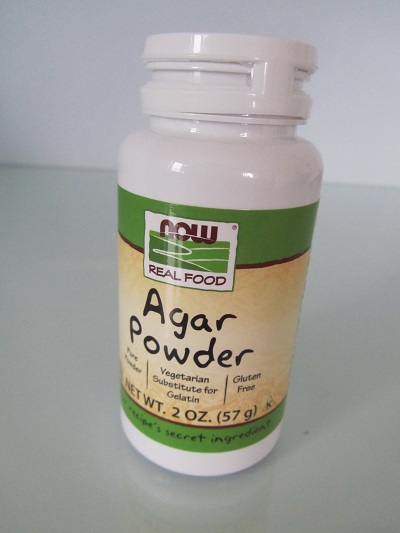
Agar – Unlike gelatin, which is protein, agar is a carbohydrate made from raw seaweed. This makes it popular with vegetarians. It is commonly used in Asian cuisines. Although agar can be used in place of gelatin, there are different characteristics.

  • Acidity – Gelatin does not set will in mixtures with a pH below 4. Agar will set up in much more acidic environments with a range of 2.5 to 10. This allows for gelling dishes such as those that are citrus-based. Normally, those would be too acidic for gelatin to work.
  • Temperature – There is a much larger differential between proper setting temperature and melting temperature as compared to gelatin. It sets at about 95°F but doesn’t melt until 175°F. This allows one to serve a warm gel, something impossible with gelatin. This also makes a difference in mouthfeel. Gelatin tends to melt in your mouth as you eat it as it has a lower melting temperature. Agar’s higher melting temperature means it will have a firmer texture as you eat it.
  • Setting time – Agar sets very rapidly once it reaches that 95°F, within minutes rather than hours for gelatin.
  • Texture – Agar gels set very firm and can become brittle. This can be counteracted by the addition of sorbitol or glycerol in an amount of about 1% by weight.
  • Appearance – A gel set with agar can look clear or opaque.
  • Use Percentage – to use agar, you would use a percentage between 0.2% for a standard gel to 0.5% for a firm gel. If you recall the math lesson from the Gelatin Tip, this means using either 2 grams or 5 grams to set 1000 grams of liquid. Gelatin has a use percentage of between 0.6% & 1.7%. Therefore, you can see that agar will have a stronger set at the same amount, but more is not better with agar as the texture can become unpleasant.

    One of the challenges with agar is that its strength can vary from brand to brand. Cooks Illustrated looked at this and found that ¾ teaspoon of the Eden brand thickened one cup of water just as 1 teaspoon of gelatin. They also found that it took more liquid and more time to dissolve. They caution that it will not, however, thicken cream or milk-based liquids.
  • Hydration – Just as gelatin, agar needs to be hydrated before using. The recommended procedure is to whisk it into the liquid to dissolve it and then simmering for about 4 minutes. This is followed by blending it for 15-30 seconds with an immersion blender, straining it and then allowing it to set. The blender step ensures even dispersion and hydration. A regular blender is not recommended as it incorporates too much air into the mixture.
  • Weeping – Agar gels can leak liquid and dehydrate making it less effective in gelling. One work-around for this is said to be adding 0.1% by weight of locust bean gum. Agar will also dehydrate if left uncovered.
  • Tannic acid – An inhibitor of agar gels is tannic acid, a substance commonly found in red wine and tea.
  • High alcohol content (about 40%) – Agar can work in this environment whereas gelatin does not.
  • Fruit – Proteolytic enzymes inhibit gelatin but not so for agar. So, you can use it to make gels with fresh fruits that contain such enzymes.

Carrageenan – Another seaweed-derived product, this is more commonly used as a firming agent in vegan cheese. There are different types suited better to different uses.

Vegetable Gums – These are commonly found in ice creams, chewing gum and gluten-free baked goods. Examples include guar gum and xanthan gum. One brand name is Natural Desserts Unflavored Jel Dessert. This product was tested by Cooks Illustrated in panna cotta and a strawberry gelatin. They found it did work but it was much softer and they recommended using 1½ times of the amount of gelatin specified in the recipe. They also found it to be ineffective in acidic environments. I am not totally sure that this product is still available but there are other brands that would probably be comparable.

If you are wanting to make a switch from gelatin to a vegetarian/vegan substitute, I would start with agar. It has been used and evaluated more extensively than the other options.

Cooking Tips · Ingredients

Gelatin — Powdered or Leaf?

I recently held a class featuring Italian Desserts. One of the dishes we made was Panna Cotta. This is a wonderful light and silky egg-less custard that relies on gelatin to set up. I like to use something called Leaf Gelatin rather than powdered gelatin. Since many of us have never seen or used leaf gelatin, I thought I would discuss it in this Cooking Tip.

Let’s start with what is gelatin. It is a thickening agent that causes food items to form a jelly-like substance. It is odorless, tasteless and colorless. It is pure protein derived from the connective tissues of animals. I will discuss vegetarian alternatives in a subsequent Cooking Tip.

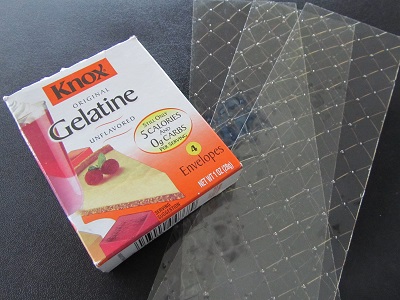
There are two forms – powdered (aka granulated) and leaf (aka sheet). Although all powdered gelatin is the same, there are different strengths of leaf gelatin. There are four grades. From weakest to strongest, they are bronze, silver, gold and platinum. The sheet size is adjusted with the different strengths. The stronger gelatin has a smaller sheet size. This means that sheet-for-sheet, they will have similar setting properties. One sheet of gelatin will generally set around 100 ml (3.4 ounces) of liquid to a soft set. The most common in professional kitchens is the silver grade. It is also what I use and would be a good choice if you wish to try it.

Professional chefs like leaf gelatin because they think it results in a clearer and cleaner result. I find it gives the final product a smoother and silkier texture.

All gelatin needs to be rehydrated before using it. This is called “blooming” the gelatin. In the case of powdered gelatin, it is normally sprinkled over a bit of cold water or other liquid. If your recipe doesn’t specify how much liquid, use about ¼ cup liquid for every 2 teaspoons of powdered gelatin. After it sits for 5-10 minutes, the granules absorb the liquid and swell up. After that step, the gelatin is melted by stirring it into the hot liquid of your dish.

Another method that some recommend is to whisk the gelatin together with the sugar (or other dry ingredient) in your recipe before mixing it into the liquid. The supposed advantage of this is that mixing it with a dry ingredient separates the granules so they can rehydrate more evenly.

Leaf gelatin is hydrated by putting in a bowl and covering with cold water. Once the sheets are soft, they are squeezed to remove excess water and then added to your hot liquid.

Many ask how to substitute powered gelatin for leaf. There is much debate on this issue with recommendations varying between 3½ sheets to one envelope of powdered gelatin to as much as 5 leaves for one envelope. Since one envelope of Knox gelatin (the one we most commonly have in our pantries) contains about 2½ teaspoons of gelatin, you will often read to use 1 tablespoon of powdered gelatin for every four sheets of leaf gelatin as it is sort of an average. If you use a different brand of gelatin, you will need to measure to make sure you are using the proper amount.

Gelatin is a great ingredient but it does not work in all situations. It does not hold up well in an acidic environment. For setting gelatin, the ideal pH is between 4 and 10. Because of this, gelatin is not the best choice for a citrus dish as the pH will be less than 4 and it will not set.

Temperature is also another concern. If the temperature of your liquid is too high when you add the hydrated gelatin, it can interfere with the gelling ability. You do need to heat the liquid to about 120°F to ensure the gelatin is fully dissolved but you do not want to go over 140°F. So, let your hot liquid cool a bit before adding the gelatin.

For gelatin to set, it needs to cool to about 59°F and needs to be kept there for 6-10 hours. That is why many of these dishes recommend that you make them the day before or at least the morning of the day you are going to serve it.

Another temperature-related concern is that gelatin starts to melt at about 77°F and it will soften at temperatures below that. Keep this in mind when serving a gelatin-based dish so the texture is not compromised by too high of an ambient temperature.

Other inhibitors to proper gelation include salt, high alcohol content (above 40%) and proteolytic enzymes such as are found in fresh kiwi, papaya, pineapple, mango, peach, guava and fig. These enzymes, though, are inactivated by simmering. This means you can set a fruit-based dessert with gelatin but only if you first bring it to a simmer, not if you are trying to use fresh fruit juice.

If you are not someone who is on friendly terms with math, you may want to ignore the remainder of this Cooking Tip. For those of you who might want to create your own gelled dish without a recipe, there is some math that you need to know. You will also need a food scale as this is all based on weight, not volume.

You need to be aware of something called “Use Percentage”. This tells you how much gelatin you need to add to a certain amount of liquid to get a proper gel. For gelatin, the use percentage is 0.6% to 1.7% of the liquid’s weight. For example, if your liquid weighs 1000 grams, the amount of gelatin required would be between 6 (0.6%) and 17 (1.7%) grams. For ease of use, just take a number in the middle – 1% – and that will give you 10 grams of gelatin is required to gel 1000 grams of liquid.

Have you ever tried leaf gelatin? Let me know what you think of it. If you haven’t tried it and want to, you will most likely need to get it online. I use the product from ModernistPantry.com but there are others out there. Stay tuned for a discussion of vegetarian alternatives.

Cooking Tips · Ingredients

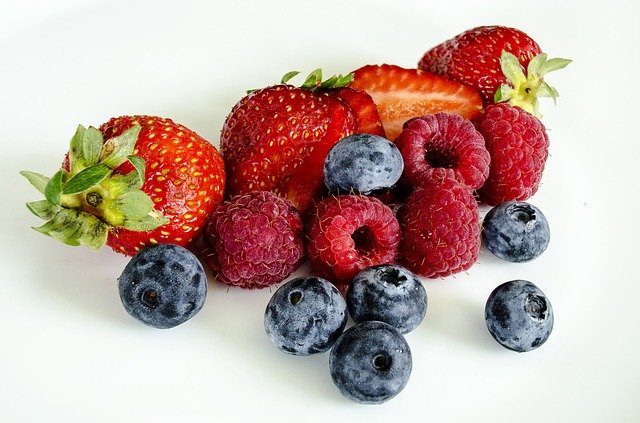
Berries – a Delight of Summer!

In today’s world, we can get fresh berries year-round in our supermarkets but isn’t there something special about enjoying them when they are in season – or even picked from your very own bushes? They just taste so much better. In this Cooking Tip, I would like to discuss some of these wonderful berries, including some less common ones, although the list will be far from complete.

Genus Rubus
These are berries that are composite fruits. Each single flower has from 50-150 ovaries and each ovary makes a separate small “fruitlet”. The most common of these are raspberries (black, golden, red) and blackberries although there are others, including hybrids. Some of these are dewberry, boysenberry, loganberry, marionberry, olallieberry, youngberry, cloudberry, salmonberry, tayberry and artic bramble. Because these berries have very thin skins and have one of the highest respiration rates of any fruit, they are very fragile and perishable.

Genus Vaccinium
Within this category are blueberries and cranberries. Others are huckleberry, bilberry and lingonberry.

Genus Ribes
Here we find currants (white, red, black) and gooseberries.

Genus Morus
Mulberries (black, red, white), another composite fruit, are in this category. I still remember picking and eating mulberries from a tree that grew near our home as a child. Messy but delicious.

Genus Fragaria
The ever-favorite strawberry is from this genus.

Genus Sambucus
This is where Elderberry and Barberries are found. The Elder plant is what produces elderberry. Before the berries, though, there are elderflowers. These are often preferred to the tart berry. They can be picked and made into elderflower cordial, a delightful summer beverage. The barberry is normally used as a landscaping shrub. The berries are very sour and require cooking with a sweetener to make them palatable.

Genus Melicoccus
Related to the honeysuckle, this fruit is known as honeyberry or mamoncillo.

Berries do not really ripen after picking. If you are growing your own, you can pick them at the height of ripeness. If you have a good farmer’s market, they may let you taste them before buying. If you are buying them in the store, it can be difficult to tell if they are ripe. Try to pick ones that are bright and deeply colored without soft spots. Once you get them home, look them over for any berries that are soft, mushy or going bad. Remove and discard them and keep the others covered in the refrigerator. To discourage spoilage, do not wash them until just before eating.

Apart from just eating out of hand, there are many other ways to use berries.

  • Baked items such as pies, tarts, cobblers, muffins or scones.
  • Jams & preserves – if you do not want to do all that is involved with preserving jam, try freezer jam. It tastes much fresher and more berry-like. It must, though, be kept in the freezer and not in your pantry.
  • Coulis – a wonderful fruit puree that is often made by cooking berries with sugar, water and a touch of lemon juice. Once cooked down and the taste is to your satisfaction, it can be stored as is. Or, it can be pureed and strained for a more sophisticated sauce. It can also be made without cooking by just pureeing the berries with sugar and lemon juice. This will give you a fresher taste.
  • Salads – sprinkle them fresh on your green salad with a bit of nuts and a cheese such as feta or goat and your salad is taken to a new level.
  • Salsas – fresh fruit salsas make a great accompaniment to seafood.
  • Ice cream/sherbets/sorbet – just sprinkle them on top of your bowl of ice cream or see this Cooking Tip for recommendations for adding berries to homemade ice cream.
  • Sauces – berries can be made into wonderful sauces for meat, especially pork or chicken.
  • Beverages – we all know about beverages such as raspberry lemonade but berries can be used in many other beverages, both alcoholic and non-alcoholic.
  • Soups – think of how impressed your guests would be if you served them a delightful, chilled berry soup.
  • Smoothies – a classic use for fresh berries.
  • Tiramisu – in the summer, why not ditch the coffee and chocolate and make a summer berry tiramisu instead.
  • Ice cubes – adding berries to ice cubes makes for a very attractive addition to your summer drinks.
  • Freeze for a future use – prepare the fruit by removing any leaves/stems. Rinse in a colander and lay on a kitchen towel to dry. Then, lay flat on a baking sheet covered in parchment or wax paper. Freeze the berries and pour the frozen berries into a freezer container to store.

    There is a school of thought that says not to rinse blueberries before freezing. Because rinsing will remove the natural waxy coating on their skins, they can spoil faster. They recommend rinsing only when you are going to use them.

Fresh berries are just one of the great delights of summer. Don’t miss them. Most of the places around here only sell blackberries, blueberries, strawberries and raspberries. That is why I am so thrilled my husband is also growing honeyberries, gooseberries, sea berries, aronia berries, elderberries and buffaloberries. If you live near me and want to try any of them, let me know!

Think out of the box when it comes to using berries. If you want recipes for anything particular that I mentioned, please let me know.

Cooking Tips · Ingredients

Tapioca — not just for pudding!

I was making some Cherry Almond sweet rolls and one of the ingredients listed was “tapioca flour”. I’m sure most of you have heard of “tapioca” and may even have some in your pantry. However, this recipe made me think that some of you possibly have not heard of the different forms and their uses. That is the subject of this Cooking Tip.

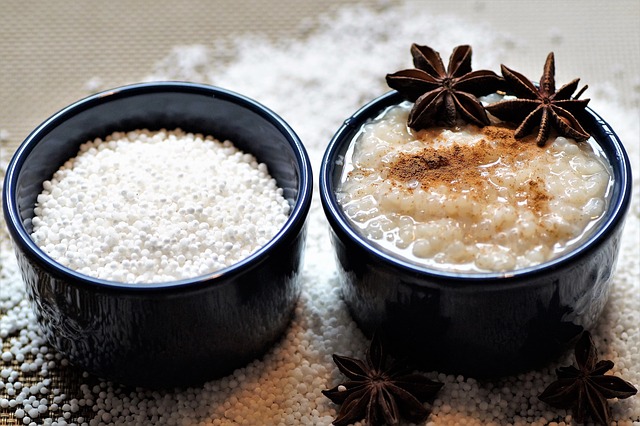
Tapioca is a pure starch extracted from the root of the cassava (yuca, manioc) plant. (Note that yucca is a different plant.) It comes in several forms – granules, flakes, pearls and flour (or starch). Because these products undergo dehydration in the production process, they must be soaked or boiled before consumption.

Let’s start with the tapioca flour form. Although probably not in most of our pantries, this can be found in many of our supermarkets. It is just the pure starch that has been extracted from the root of the cassava tuber. Tapioca flour is a very fine, white powder. It is different from “cassava flour” as that is made from the entire tuber that has been dried and ground. So, although it is in a flour form, it has different nutritional and cooking properties from tapioca flour.

This pure starch, tapioca flour, is a powerful thickener but it can become stringy if overcooked. To counter this, manufacturers process it into small balls or pearls.

Pearl tapioca is a product prepared by soaking tapioca flour and cooking and then shaping and drying into pearls. Pearl tapioca is used mainly to thicken puddings and pie fillings but is also what is used to make bubble or boba tea. Pearl tapioca comes in different sizes from small to very large. Pearls must be soaked before cooking. Pearls are probably going to be much harder to find in your stores although there are many online sources.

Minute tapioca is processed further. Other names include instant tapioca, quick tapioca, instant pearl tapioca, tapioca granules or granulated tapioca. The pearls are cracked or flaked and cooked again followed by drying. This results in a starch that is almost completely cooked. I liked the explanation that says comparing regular pearl tapioca to instant tapioca is like comparing regular rice to instant rice. Although not everyone agrees, you can process quick cooking tapioca in a blender until powdery to substitute for tapioca flour. If you want to use tapioca flour in place of instant tapioca, you should use 1½ tablespoons tapioca flour for each 1 tablespoon quick cooking pearls. Instant tapioca granules do not completely dissolve; they may linger in pie fillings as soft, clear beads. If you do not want this, be sure to grind them first or use the flour form.

What are the uses for tapioca?

It is often used in making desserts, especially the classic tapioca pudding. I have seen recipes that use regular, small tapioca pearls and others that use the instant variety.

The flour is used as a thickening agent for pies, gravies and sauces. It thickens at a lower temperature than most starches so it is ideal for delicate ingredients that don’t stand up to boiling. Also, it is useful as a last-minute fix for a sauce that is not thickening properly. It is said to stand up better to freezing and thawing than other thickeners. To thicken 1 cup of liquid, use 1 tablespoon plus 1 teaspoon tapioca flour.

If you want to use tapioca instead of other starchy thickeners such as flour or cornstarch, realize that there are differences. Some of the advantages are that, as opposed to wheat flour, tapioca is neutral in taste and creates a clear sauce (not opaque). On the flip side, it quickly loses its thickening power under prolonged cooking. So, it is most often used in applications where it will be chilled, such as desserts. It reaches its full thickening power at 150°F rather than flour’s 185°F. That makes it great for fresh fruit fillings and sauces that will have minimal cooking.

If you wish to try it, use these substitution guidelines.

  • For cornstarch – Use 2 tablespoons tapioca flour for each 1 tablespoon cornstarch.
  • For AP flour in thickening – replace in a 1:1 ratio.

Many people who wish to stay away from gluten find tapioca flour a nice gluten-free alternative although it is often used in combination with other gluten-free flours. It helps in creating a crisp crust and chewy texture in gluten free baked goods.

One final word of caution – Raw cassava root and peel contain naturally occurring cyanogenic glucosides, which can be harmful when ingested. It must be processed to make it edible.

Do you have tapioca in your pantry? If so, which variety do you have? How do you use it? Let me know! Whereas it is not one of those ingredients I find essential in your kitchen, there are certainly some nice uses for it.