Cooking Tips · Ingredients

Tender, Flavorful Baby Greens

My husband has been growing greens all winter long in his greenhouse. Now that it is warming up, he has begun moving things to his outdoor garden. Although he grows many wonderful items, I just love the baby greens. I have written a prior Cooking Tip on lettuces as well as on microgreens. In between these two categories is the subject of this Cooking Tip – Baby Greens.

In the growing stages of greens, it all starts with the seed. When this germinates, it is called a sprout. As the sprout puts out its first leaves, it becomes a cress. These first leaves are called “cotyledons” and are not true leaves. One source compares cotyledons to baby teeth and true leaves to adult teeth. After this cress stage, the microgreens develop and are anywhere between 2-4 weeks old. As the plant continues to develop and put out true leaves, the result is baby greens. Although there is not a true distinction between microgreens and baby greens, for our purposes we will think of baby greens as older and more developed than microgreens. And, they are smaller versions of the fully developed plant. Any type of green can be harvested at a “baby” stage. For a list of types of greens, see my prior Tip on lettuces.

Baby greens are very tender and flavorful. For some greens such as lettuce and spinach, there may not be too much difference in texture and flavor between the baby version and the mature plant. In other heartier greens such as kale, the baby version may be much easier for some people to eat since it is going to be lighter in flavor and more tender.

Arugula is interesting in that its baby form is different in shape than its adult form. Younger arugula is more oval in shape rather than the typical branched shape of older arugula. Baby arugula has a less intense flavor than the adult counterpart.

According to farmers, “microgreens” and “baby greens” are not true botanical terms but are applied to these products for marketing purposes. There are other labels you will see at the store that are also solely to get you to grab their particular box of greens. Here are some examples from my supermarket. Your neighborhood store may have different varieties. To know what to buy, just look at the list of greens to see whether it contains anything you do not like.

Power greens – these are generally mixtures of baby leaves of, among others, chard, kale and spinach.

Mixed salad greens – these give you a variety of color and texture and include greens such as romaine, arugula, frisée, radicchio, mizuna and chard.

Baby spring mix – also termed “mesclun”, this is similar to the mixed salad greens and contains a mixture of lettuces, chard, spinach, arugula, frisée, tatsoi, lolla rosa, mustard greens, radicchio and beet tops. Some spring mixes may also contain herbs such as cilantro, parsley and dill.

50/50 salad blend – this is a mixture of half spinach and half baby spring mix.

Protein greens – distinguished by the addition of sweet pea leaves, it also contains other baby greens such as spinach, bok choy, kale and mizuna.

What do you do with baby greens?

  • Make a simple salad with your favorite vinaigrette. I normally use a mixture of what my husband has harvested. It might be mature lettuce and spinach along with baby greens and microgreens or it might be just baby greens. Rarely are you going to make a dish with just microgreens.
  • Some of the sturdier baby greens such as chard and kale might be gently sautéed and served with a warm, light sauce.
  • Layer them with similar flavors such as tossing pea greens in a pea salad made of different types of peas.
  • Use them as a garnish for soups or entrees.

There is a debate on which is healthier – microgreens, baby greens or mature greens. I am not sure I really care as I know that they are all healthy and we should all be eating more greens. Eat the ones you like. Eat a variety. Try them in new preparations. We have so much choice nowadays. Enjoy them and be creative!

Cooking Tips · Ingredients

Lard – does it deserve a place in your kitchen?

If anyone mentions the word “lard”, the reaction is probably going to be “oh, no”, “absolutely not”, or something similar. It is almost surely going to be a negative comment. Is that negativity justified? That is the subject of this Cooking Tip. Please note that I am not going to discuss the nutritional and dietary concerns about lard, saturated fat or hydrogenated fat. Those are important topics that you should investigate before consuming any solid fats.

Lard is pork fat that has been rendered from the meat by cooking slowly until the fat is melted and then separated from the meat. It is then filtered and chilled. The quality is dependent on the area of the animal that the fat comes from and the method of rendering.

The best kind of lard is leaf lard. This comes from the fat around the animal’s kidneys. It is softer, creamier and smoother than other types of lard. It is the best choice for baking. It is also naturally free of pork flavor.

Unrendered lard – pig fat that has been trimmed from the meat, not melted. It will have a stronger pork taste and probably not suitable for baking or anything where you do not want that flavor element.

Rendered lard – has less strong pork flavor. It has been melted, filtered, clarified and refrigerated for storage. It will be an off-white color and will be softer than processed lard at room temperature.

Processed lard – this is the most commonly available lard and is made by melting, filtering and clarifying pork fat by bleaching and hydrogenating. The former gives the product a pure white color and the latter keeps the lard solid at room temperature. It also most likely will have preservatives. It has no lingering pork flavor but does have a mild, nut-like flavor.

Why might you want to consider using lard?

  • Baking – lard has a higher melting point than butter, meaning it stays solid longer in the oven. There is more time for the steam to produce air pockets resulting in flaky pastry. Also, because lard is 100% fat, it contains no water. Water is one of the ingredients that facilitates gluten development. Less gluten means more tender baked goods.
  • Sauteing, grilling, frying – lard has a fairly high smoke point (although not as high as some oils) and thus, is particularly suited to frying. Items fried in lard end up very crisp and have less of a tendency to stick.
  • Roasting – lard gives a crispy outer crust to such items as roast chicken or roasted potatoes.
  • Seasoning cast iron – there are those that say there is nothing better than lard for this task.

Cooks Illustrated tested different brands of lard for taste and how they did in baked goods. They found that some lards created pie doughs that were “light and flaky” while other brands resulted in “sandy and crumbly” doughs. What they found is that the lowest ranking lards had the lowest melting points of those tested. This meant that the lard melted more quickly and thus, less air pockets.

Their testing rated U.S. Dreams as the best artisanal lard. Another recommendation in the non-hydrogenated category was Tenderflake, a Canadian product. A third one was Fatworks Pasture Raised Pork Lard. Although not tested by Cooks Illustrated, Fatworks also carries a leaf lard. One unbleached and non-hydrogenated product that is a bit easier to find in my area is made by Epic.

Because artisanal lard is very difficult to find in most grocery stores, they also looked at supermarket brands and rated Morrell as their favorite. Morrell, though, is not the same product as the pricier, more pure lards. If you really want to cook with lard, I suggest going for the best.

That may mean ordering online or doing a bit of searching in your local stores. There is always the option of rendering your own. Our local butcher shop no longer carries lard due to lack of demand. They recommended that I could just buy the bulk pork fat and render my own. I have not done this so far, but am seriously considering it.

Finally, if you are wondering about substituting lard and other fats, here are the recommendations.

  • 1:1 lard for shortening
  • For every ½ cup of lard, use ½ cup + 2 Tbsp butter
  • 1:1 lard for olive oil
  • For 1 cup lard, 7/8 cup vegetable oil
  • 1:1 lard for coconut oil

I recently made some Chicken Cornish Pasties and the pastry called for part shortening and part butter. I used Epic’s brand of pork fat in place of the shortening and it did produce a very flaky pastry. Do you use lard? If so, which kind? Have you ever rendered your own? Let me know your experience; I would love to hear about it.

Cooking Tips · Ingredients

Vinegars — so many to choose from

Vinegars are certainly a pantry staple that are used in many different applications. Just as with so many things today, we are often faced with a myriad of choices. Looking at the vinegar shelf at your local supermarket, it can be overwhelming. In this Cooking Tip, let’s delve into this world of vinegars and which ones deserve a space in your pantry. I want to start with some general information about vinegar followed by an explanation of the types of vinegar and ending with recommendations for what to keep in your pantry.

Vinegar is made by turning fermented liquid into acetic acid by adding certain bacteria to the liquid. Acetic acid is important for a couple reasons. As it is a very potent antimicrobial agent, it is a very effective preservative. Acetic acid also contributes two flavor elements to food – an acidic/sour taste and a pungent aroma.

How acidic or tart it tastes depends on the strength, which is defined by the percent of acetic acid. The FDA says it must be at least 4% to be called vinegar. In the US, most industrially produced vinegars are adjusted to 5% acetic acid. Some wine vinegars may by 7% or higher. Mild rice vinegars may be only 4%. Balsamic vinegar is usually about 6% but could be up to 8%. In my supermarket, most of the bottles had the strength listed somewhere on the label.

The Vinegar Institute conducted studies about vinegar’s shelf life and confirmed that it is almost indefinite. According to them, “vinegar is self-preserving and does not need refrigeration. White distilled vinegar will remain virtually unchanged over an extended period of time. And, while some changes can be observed in other types of vinegars, such as color changes or the development of a haze or sediment, this is only an aesthetic change. The product can still be used and enjoyed with confidence.” If you do not like the sediment, you may strain it out.

Red wine vinegar

  • Made from red wine
  • Flavor
    • Very tart with significant grape flavor
    • Hot and robust
  • Uses
    • Marinades for red meat
    • Stirred into hearty stews
    • Tangy vinaigrettes

White wine vinegar

  • Made from white wine
  • Flavor
    • Lighter and more delicate in flavor than red wine vinegar
  • Uses
    • Light pan sauces
    • Marinating poultry
    • A lighter vinaigrette

Champagne vinegar

  • Made from the fermented juice of champagne grapes
  • Flavor
    • More delicate than white wine vinegar but most tasters cannot tell the difference
    • Lighter and less acidic than other wine vinegars
    • Light body, crisp
  • Uses
    • Good base for fruit and herb vinegars
    • Light vinaigrettes

Cider vinegar

  • Made from a base of yeast-fermented apple cider
    • Comes filtered or unfiltered. Filtered has had the cloudy sediment of the “mother” (bacteria from an established vinegar) removed. Cooks Illustrated tasters thought the unfiltered was more complex when tasted from the bottle. This preference continued in light pan sauces but the differences were minimal in stronger preparations such as BBQ sauce.
  • Flavor
    • Medium sharp vinegar with a very fruity quality
    • Tastes like hard apple cider
    • Mellow and slightly sweet
  • Uses
    • Use as wine vinegars but especially in salads with apples, pork marinades and braised pork dishes
    • Glazes, slaws, sauces

Fruit vinegar

  • These are made in one of two ways.
    • Many are just ordinary vinegars that are infused with macerated fruit or fruit purees.
    • True fruit vinegars are made by fermenting fruit juice into wine and then letting it mingle with acid.
  • Flavor – dependent on the fruit
  • Uses
    • Fruity vinaigrettes
    • Drizzle over grilled fruit

Malt vinegar

  • A dark colored vinegar made from ale (cereal grains, sprouted barley)
  • Flavor
    • Mellower than many vinegars
    • Nutty and toasty
  • Uses
    • Fish/chips
    • Potato dishes

Rice vinegar

  • Made from fermented rice, aka rice wine
    • Same as rice wine vinegar, but NOT rice wine
    • Comes seasoned (added salt/sugar) and unseasoned
  • Flavor
    • Prominent in Asian cuisines and is slightly different depending on where it is made
    • Mild, barely sweet flavor
  • Uses
    • Since this is the least sharp vinegar, it is very versatile
    • The seasoned variety is used for seasoning sushi rice, but the unseasoned variety is used for most other purposes.
    • Marinades, seasoning cooked veggies, dressing salads

Distilled white vinegar

  • In the US, this is made from grain alcohol (ethyl alcohol) and is among the purest form of acetic acid.
  • Flavor
    • This is the cleanest, sharpest and cheapest vinegar.
    • It is flavorless except for the acidity.
  • Uses
    • Great for cleaning
    • Pickling veggies
    • Not recommended for other culinary uses

Balsamic vinegar

Balsamic vinegar could be an entire Cooking Tip on its own. I am going to greatly simplify it for the purposes of this Vinegar Tip. There are different types of balsamic vinegar ranging from the very expensive, traditionally-made balsamic to what we call “imitation balsamics”.

The traditional is made only from grape musts, which are freshly crushed grapes. It is cooked down to a syrup and aged in wooden barrels for a minimum of 12 years. It is very dark, thick, sweet and meant to be more of a condiment than a cooking ingredient.

Supermarket balsamics are made from grape must and wine vinegar. These are meant for everyday use. Although it may have a nice taste, it will not be as complex as the traditional product. If the first ingredient listed is the vinegar, it will be more on the tart side. If grape must is the first ingredient, it will be mellower and sweeter. If “grape must” is not listed as an ingredient, it will be a much lower-end product.

Cooks Illustrated recommends a “hack” to improve the flavor of a cheaper balsamic. Combine 1/3 cup balsamic, 1 Tbsp sugar and 1 Tbsp port in saucepan and simmer until reduced by half. In a taste test, most could not tell the difference between this and the high-end balsamic vinegar.

White Balsamic

  • This is a milder version of red balsamic. It is created by cooking white Trebbiano grapes, at a higher pressure and lower temperature. This prevents caramelization and allows the vinegar to retain a pale, golden color.
  • While similar to red balsamic, white balsamic is milder and less-sweet. It also does not impart color to the dish.

Sherry vinegar

  • Made from sherry wine although the grapes may differ, giving a different flavor profile. All sherry vinegar is fermented in oak barrels for at least 6 months, Reserva is aged for 2 years and Gran Reserva for a minimum of 10.
  • Flavor
    • Acetic acid concentration can reach 10%.
    • The flavor is warm, toasty, nutty and less sweet than balsamic.
  • Uses – It is great for pan sauces and Spanish dishes.

Herb vinegar

These are actually infusions. Highly aromatic herbs like tarragon, sage, rosemary or basil are added to light-flavored vinegars and set aside to steep for 3-4 weeks before discarding the herbs. They add fresh flavor to salad dressings and marinades.

What you keep in your pantry somewhat depends on your taste and cooking style. However, you will want, at a minimum, the following multi-purpose vinegars.

  • Wine vinegar – red and/or white
  • Cider vinegar
  • Rice wine vinegar

You may want to consider a good balsamic and possibly a sherry vinegar, as there are really no substitutes for these.

The remainder of the vinegars are fine to have in your pantry but are not necessary and either can be replaced by one of the multi-purpose vinegars or have a very limited use.

What vinegars do you have in your pantry? Which ones do you use the most? Some of the specialty vinegars are fun to play with but you certainly do not need them.

Cooking Tips · Ingredients

Enliven your dishes with spices!

How can you take a piece of chicken (or other protein) and one night you make something with Thai flavors, another night you use a similar piece of chicken to make an Indian dish and another night, the chicken can be infused with Italian flavors? What allows you to do this are spices. In this Cooking Tip, I want to help you pick out spices, keep them fresh and how to use them to get the most flavor into your dish. I have written other Cooking Tips on herbs as well as individual spices and flavoring/seasoning agents such as paprika, chili peppers, garlic, salt, and pepper. In this one, let’s take a more general look at spices. If you live within driving distance of Parker, Colorado, I will come to your house and design a Spice class just for you. Contact me for info.

Before we get into what spices to buy, allow me to mention how to buy spices. Many spices come in two forms – the whole spice and a ground version. For example, you can buy cumin seeds as well as ground cumin. The whole version is always the preferred choice because it retains its flavor much better. Once a spice is ground, it starts to lose the essential oils that contain the flavor. Whole spices can last up to a year or even two whereas a ground one will start to lose its potency within a few months.

Although I say this, I know that most of you will have mostly (if not only) ground spices in your pantry. I, too, have many ground versions. Because of how quickly these can lose their flavor, you want to have the freshest you can. This means buying from a reputable spice merchant and buying the smallest quantities that you can so that you will be able to use them up within a few months. Although I do the majority of my grocery shopping at a regular grocery store, I almost never buy my spices there. First, they typically come in larger quantities than I want. Second, you have no idea how long ago that spice was ground. If you have a shop that specializes in spices, you are going to get much better quality and they will be much fresher. That means superior flavor for your dishes and they will last longer for you. The spice merchant that I like is Savory Spice. (This is an affiliate link and I may earn a commission if you decide to purchase.) I am fortunate to have a shop fairly close to me but, if not, you can order online.

I challenge you to go through all of your spices and take a whiff of them. If they do not smell of much, neither will they impart much flavor in your dish. Many chefs will date their spices as soon as they open them so they know when it is time to get a fresh supply. Store them in a cool, dark cupboard/drawer to keep them away from heat, light and moisture.

If you choose to buy whole spices, it is relatively easy to grind them. If you just want a small amount, a mortar/pestle will quickly take care of the job. If you want a larger quantity, a spice grinder is great.

There are a handful of spices that are difficult to grind at home and are usually bought ground. Those are mace, dried ginger & turmeric, cinnamon and cassia.

Many spices benefit from a quick dry roast in a skillet. For whole spices, do this prior to grinding to get maximal flavor and aroma. You can dry roast ground spices but be very careful so as to not burn them. You could also do what is called “blooming”. Heat some oil in small pan, add your spices and cook for about 30 seconds. You may want to add some aromatics (onion, garlic) first followed by the spices and then finish your dish as desired.

You might ask what spices you should always have on hand. You can do an online search and different sources will give you their recommendation of the top ten, fifteen or twenty spices that you should have. I have close to 50 different individual spices in my spice drawers since I am in the culinary business. You do not need anywhere near that many. I would recommend that how you stock your spice pantry depends on what you like to cook and eat.

A friend recently referred me to a chef’s website. I loved how he put spices into what he called “Spice Teams”. These are groupings of spices that work together to give you a flavor profile of a country’s cuisine. I have included his “Teams” here.

CuisineSeasonings
ItalianGarlic, Oregano, Basil
LatinCumin, Coriander, Cilantro
FrenchMarjoram, Thyme, Rosemary
ChineseAnise, Cinnamon, Cloves, Szechuan Pepper, Fennel Seed
JamaicanAllspice, Cloves, Cinnamon, Nutmeg, Thyme, Garlic, Cayenne
IndianTurmeric, Cumin, Coriander, Red Pepper
SpanishPaprika, Garlic, Cayenne, Saffron
GreekGarlic, Mint, Black Pepper, Oregano
JapaneseGinger, Sesame, Orange Peel, Wasabi Powder
ThaiCoriander, Nutmeg, Cloves, Cinnamon, Anise, Peanuts

Another grouping you might find helpful is the following chart that lists spices that complement different proteins.

Food TypeSeasonings
BeefBasil, Bay Leaf, Black Pepper, Cayenne, Cumin, Curry Powder, Dry Mustard Powder, Garlic, Green Pepper, Onion, Oregano, Rosemary, Sage, Thyme
FishBay Leaf, Cayenne, Curry Powder, Celery Seed, Chives, Dill, Fennel, Lemon Zest, Marjoram, Mint, Mustard, Onion, Paprika, Parsley, Red Pepper, Saffron, Sage, Sesame Seed, Tarragon, Thyme, Turmeric
LambBay Leaf, Cayenne, Curry Powder, Celery Seed, Chives, Dill, Fennel, Lemon Zest, Marjoram, Mint, Mustard, Onion, Paprika, Parsley, Red Pepper, Saffron, Sage, Sesame Seed, Tarragon, Thyme, Turmeric
PoultryBasil, Bay Leaf, Cilantro, Cinnamon, Curry Powder, Garlic, Mace, Marjoram, Mint, Onion, Paprika, Parsley, Rosemary, Sage, Saffron, Savory, Tarragon, Thyme
PorkAllspice, Caraway, Celery Seed, Cloves, Coriander, Fennel, Ginger, Juniper Berries, Mustard, Paprika, Sage, Savory
VealBay Leaf, Black Pepper, Curry Powder, Dill, Ginger, Lemon Peel, Marjoram, Mint, Oregano, Paprika, Parsley, Saffron, Sage, Tarragon
EggsBasil, Chives, Curry Powder, Mustard, Green or Red Pepper, Onion, Paprika, Parsley, Tarragon
CheeseBasil, Chives, Curry Powder, Mustard, Green or Red Pepper, Onion, Paprika, Parsley, Tarragon

A final topic I want to mention is that of Spice Blends. These are mixtures of spices used to create a certain flavor in your dish. Examples are Garam Masala, Curry Powder, Italian Seasoning and Jerk Seasoning. Most of these you can buy in the stores pre-blended. I generally recommend that you not purchase these but make your own blends although there are exceptions.

The reasons to make your own are:

  • You get a fresher mix.
  • You only need to make what you need. Why buy a entire bottle of a particular blend when you only use it twice a year? By the second time, it won’t be fresh and flavorful.
  • You control which spices go into it.

On the other hand, there are reasons you might want to purchase a blend.

  • It is a blend that you use frequently and will use it up before it loses its flavor. For example, I keep an Italian blend on hand as I use it almost every week.
  • It is a blend that you absolutely love and do not think you could reproduce it.
  • The blend has a large number of individual spices that you think you would never use again.

Spices are a wonderful way to enliven your cooking and please the palates of your friends and family. I hope the above will help you stock your spice pantry in a way that works for you and will assist you in putting wonderful, flavorful dishes on the table!

Cooking Tips · Ingredients

Apple Cider vs Apple Juice — Is There a Difference?

As you can imagine, my email inbox is full of food/cooking related emails. My husband, on the other hand, gets his share of gardening emails. Once in a while there is an email that interests both of us. That happened with a recent email concerning apples and apple cider. Thus, this Cooking Tip was born.

What is the difference between apple cider and apple juice? The truth is – not too much. There is no federal legal standard although some states do try to make a distinction.  

I bought a bottle of apple cider from a Colorado producer – “Talbott’s Premium High Country Apple Cider”. It says it is 100% juice, freshly pressed, not from concentrate. That sounds good but when you look at the ingredient label, it says “apple juice” along with some preservatives. If you look on Talbott’s website, you will see two varieties of this product. Both are under the heading “Apple Juice & Cider” but the only two products are labeled on the front as “cider” and on the back as “juice”.

Another popular brand, Martinelli’s writes this on their website “Martinelli’s apple juice and cider are the same; the only difference is the label. Both are 100% juice from U.S. grown fresh apples. We continue to offer the cider label since some consumers simply prefer the traditional name for apple juice.”

For those people who try to distinguish between the two terms, it basically comes down to filtration. They define cider as being unfiltered and thus has more pulp or sediment. Juice is filtered to remove the sediment to enhance shelf life. In appearance, the cider will have a more cloudy look whereas juice will be clear. In flavor, the juice product is generally sweeter while cider is tarter with a more complex flavor. Cider may or may not be pasteurized, but if not, the FDA requires a warning label.

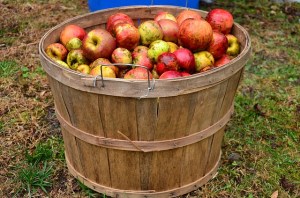
Although you can make apple cider/juice from any apple, there are certain varieties that are preferred for making this product. Some sources will divide apples into three categories:

  • Cider apples – these are very acidic and not great as an eating apple. There is a resurgence in interest in cider apples and specialist nurseries are now offering many varieties.
  • Eating apples – this is most of what you find in the stores and are more balanced between sweet and tart.
  • Cooking apples – these are very tart if eaten raw. That does not mean they are the only apple you can use for cooking. For another Tip I wrote on this, see this link.

There is one distinction of which you should be aware. Outside of the US, Cider is usually fermented, making it alcoholic. In the US, such a product will be labeled as “Hard Cider”.  Hard cider used to be very popular in the early years of the US but its popularity waned due to various reasons, including Prohibition. Today, there is a resurgence in interest and is said to be one of the fastest growing segments of the liquor industry.

Cooks Illustrated put these two products to the test. They took recipes for pork chops and glazed ham that called for apple cider and substituted unsweetened apple juice. Their tasters did not find this successful and said that the dishes made with the juice were too sweet. They felt that the “filtration process used in making juice removes some of the complex, tart, and bitter flavors that are still present in cider.” If you can’t find cider, they recommend substituting a mixture of ¾ cup apple juice and ¼ cup unsweetened applesauce for each cup of cider.

You may not know that both apple cider and apple juice can be made either from fresh apples or from concentrate. The label should specify this. Because the apples are inherently sweet, most will not contain added sugar but, again, look at the label. This does not mean they are low in sugar. In fact, most bottles will have over 25 grams of sugar per serving. Apple cider does not contain less sugar per serving than apple juice. However, it is more acidic and has a taste that is less sweet.

It is becoming more and more common to see companies trying to distinguish themselves by listing the variety of apple on the label. A look at my market advertised “Honeycrisp Cider”, “Cosmic Crisp Cider”, “Gala Apple Cider” as well as more generic apple ciders.

Do you have a favorite recipe that uses apple cider or juice? A classic use is for a pan sauce to serve with pork. It can also be used to make a wonderful vinaigrette. Apple cider caramels is one of my favorite recipes!  What about you? Let me know.

Cooking Tips · Ingredients

Salts Galore

The number one seasoning we use in the kitchen, whether in savory or sweet dishes, has to be salt. Although salt has received a bad rap in recent years for its role in high blood pressure, for most of us, it is not a major health concern. It is, though, an essential ingredient in almost all of our cooking and baking. There has also been an increased interest in specialty salts over the last few years. I wrote a short piece on salt a few years ago but thought it was time to update that and so, that is the subject of this Cooking Tip.

Salt is either harvested from sea water or mined from salt mines but it is all basically just sodium chloride. Different salts, though, do differ in texture, shape and mineral content.

Granulated table salt
This is the densest form of salt and is in the form of small, cubic crystals. It is mined from underground salt deposits by pumping water through these deposits followed by evaporation of the water. It usually has additives that act as anti-caking agents, but these chemicals may also give an off-taste to the salt. It may be found either with the addition of iodine or without. Iodine began to be added in the 1920s to prevent iodine deficiency, but it can give a slight chemical flavor.

Because of its fine texture, table salt dissolves easily, especially in baked goods. It may also be used for dishes such as soups or stews where it is going to dissolve and distribute evenly. Just be sure to start with a lower amount and add as you need so you do not over-salt.

Kosher salt
The name of this salt comes from the fact that it is used in the koshering process for meats. It comes from salt mines. It is coarse but not as large and flaky as flake salt (discussed below) although the actual texture does vary by brand. It is generally recommended for everyday use as it is easy to pick up between your fingers and distribute evenly.

It is great for sprinkling on meat prior to cooking not only because it can be sprinkled evenly, but also because it melts on contact, sticking to the food item. It may also be used as a seasoning prior to serving. The finer version is suitable for baking.

In the US, there are two major brands.

  • Morton – this brand contains an anticaking agent and the crystals are flat due to a rolling process.
  • Diamond Crystal – there are no additives in this brand and it is made by a process known as “craft evaporation”. This results in hollow, multifaceted crystals that weigh less than those of the Morton brand.

Flake salt
This salt comes from evaporated sea water. The term is generally used for salt with crystals that have a large surface area and usually in the form of flat, irregularly-shaped particles that crumble and dissolve easily.

Since the crystals don’t pack together as with granulated salt, any given volume (such as a teaspoon) will weigh less than the equivalent volume of the granulated version. They are a great crunchy finishing salt.

Maldon sea salt from England is put into this category although its crystals are not flat but have a pyramidal shape. Because of its very flaky texture, it is a favorite among chefs.

Sea salt
This is a general term referring to salt that is made from evaporating sea water. It is usually coarse and irregularly shaped. It is minimally processed, which means it will contain trace minerals that result in a more complex flavor.

It can be either unrefined or refined. The unrefined will contain more minerals, contributing to its taste and appearance. It can range in color from white to grey, the latter containing more minerals that lead to the color and unique flavors. It can also be found in a fine texture or a larger, more flaky texture.

Finishing salts
These are salts that are generally added to food just before serving to add flavor and texture. Most sea salts are in this category. There are a few popular ones I will mention.

  • Himalayan pink salt – this is mined from the Khera salt mine in Pakistan and gains its pink color from trace elements and minerals. It has a mild but complex flavor. It can be in a fine texture or a very coarse texture.
  • Himalayan black salt – also known as kala namak. It is created by cooking the salt with charcoal, herbs, seeds and bark in a furnace. Because it contains sulfide compounds, it is said to have the flavor of a soft-boiled egg.
  • Hawaiian salt – It is harvested near the shores of Kauai. The red variety gets its brick red color from the volcanic clay. The black variety is made by adding activated charcoal, which also gives it an earthy flavor.

Fleur de sel
This is French for flower of the salt. The original is a special product of the sea-salt beds of Brittany, France although other places are now producing a similar product. The crystals that form at the surface of the beds are gently raked off before they can fall below the surface. This results in very delicate flakes without any traces of sediment. It is expensive as this is a very labor-intensive process. You might see different fleur de sels depending on where it comes from.

If you are concerned about sodium intake, you should always consult your physician. One thing to note, though, is that most of our salt intake comes not from the salt we use in cooking but from processed food. If you just make that one switch from eating so much store-bought processed foods or fast food and instead cook at home, you will significantly decrease your sodium intake.

Sel Gris (grey sea salt, Celtic sea salt)
As opposed to fleur de sel, this salt comes from below the surface of the salt beds. Its gray color comes from the clay from which it is harvested. It is said to have a slight mineral or briny taste.

Flavored and colored salts
These are salts which are used as a carrier for other flavors and colors. Examples are herb salts, garlic salt, celery salt, smoked salts and blended salts. They each have their own characteristic flavor.

So, which salts should you have in your pantry? If you wish to have only one, kosher salt is probably the most useful. It is inexpensive and can be used in various applications. You might also want to consider a finishing salt for that extra crunch/flavor for your dishes.

One thing to be aware of is that although these different types of salt have similar sodium contents by weight, the do vary by volume due to their differing sizes and shapes. This great chart from Serious Eats demonstrates this.

Type of saltWeight per cupWeight per tablespoon
Table salt10 ozs/280 g⅔ oz/18 g
Morton’s kosher salt8 ozs/225 g½ oz/14 g
Diamond Crystal kosher salt5 ozs/140 g⅓ oz/9 g
Maldon sea salt4 ozs/115 g¼ oz/7 g
Fleur de sel8 ozs/225 g½ oz/14 g

In practical terms, one tsp table salt is equivalent to 1½ tsp Morton kosher salt and 2 tsp Diamond Crystal kosher salt. Be aware of this if you want to substitute one kind for another.

Salt not only has its own taste but it also enhances the flavor of other ingredients. It can minimize bitterness, enhance sweetness and complement umami. Be sure to season as you go. Consistently taste your dish as you go along so the seasoning is to your taste. You do not want your dish to taste salty; you want it to taste balanced and delicious. And, for that, you will need salt!

Cooking Tips · Ingredients

The World of Hot Sauces

I am not a fan of very hot foods. I much prefer flavor over heat. I made the big mistake of ordering my dish “hot” at an Indian restaurant once despite my husband’s warning. Needless to say, I will never make that mistake again. Heat in foods, though, is certainly popular if you look around the supermarket. It seems like some sort of spiciness is added to every other food item and the hotter the better. According to Fortune Business Insights, the global hot sauce market in 2018 was valued at $2.29 billion and was projected to reach $3.77 billion by the end of 2026.

Due to its popularity, I am devoting this Cooking Tip to the world of hot sauces.

The spicy component of hot sauce is derived from the chili peppers, specifically capsaicin. The heat level of the peppers is often rated by the Scoville Heat Unit (SHU). This can range from zero for a bell pepper to over 2-3 million. I have written a prior tip on chili peppers with a link to the Scoville chart that can be found here.

There are different styles of hot sauce but all start with the peppers. Good hot sauces balance four elements – chiles, acid, aromatics and salt. Of course, there is a lot to those four variables such as the relative proportions, which type of chiles and acid and so forth. The particular brand’s blend of these ingredients along with other additions (garlic, sugar, molasses, fruit) is just one of the things that lead to different flavors and heat level.

Whereas the heat comes from the capsaicin, the flavor comes from the fruit of the actual pepper. It is easy to see that you will get different flavors in the hot sauce by varying which chili peppers are used and in what proportions. Also, some hot sauces are cooked whereas others are raw and even fermented. The type of sauce also varies from region to region of the world. Here is a map from Webstaurant Store. Let’s discuss some of the most popular hot sauces.

Tabasco

Tabasco is a registered trademark and is made by McIlhenny Company. It was founded by Edmund McIlhenny in 1868 on Avery Island, Louisiana. It always contains tabasco chili peppers (2500-5000 SHUs). The original is just a blend of the chili peppers, vinegar and salt. However, besides the original, you can find eight other varieties varying from Chipotle to Habanero. They will all have different ingredients and will rate different in SHUs. Although the SHU ratings are not on the bottles, Tabasco’s website allows you to see the heat level.

Frank’s RedHot Sauce

This popular brand is made from aged cayenne red peppers, distilled vinegar, water, salt and garlic powder. Although made from cayenne peppers, it rates relatively low (450 – 700 SHU) on the Scoville scale. They do sell a number of other varieties including the popular Buffalo sauce. Besides the ingredients found in the original sauce, the Buffalo sauce also contains canola oil, paprika, natural butter-type flavor and garlic powder.

Texas Pete

This hot sauce was developed in 1929 in North Carolina, despite the name. The full story of the name can be found here. Ingredients include vinegar, aged peppers and salt. It has a medium spiciness although hotter varieties as well as some with additional flavoring are offered.

Picante

This type of hot sauce is also known as “Mexican-style”. They are usually made from a combination of chiles. They contain little to no vinegar. One of the most common brands you will see is Cholula. The original is made from arbol and piquin peppers along with salt, vinegar and spices. Just as with Tabasco, they now have various other flavors with varying heat levels, which you can find on their website.

Sriracha

This sauce is named after the Thai seaside town of Si Racha. It is usually made from red jalapeno peppers, sugar, garlic, vinegar and salt. The most popular and highly rated is known as “rooster sauce” due to the logo on the bottle. It is made by Huy Fong and is easily available in most supermarkets. Because the pepper used is the fully ripened form of the jalapeno, it has a higher SHU than your typical green jalapeno. Another sriracha liked by tasters is made by Kikkoman.

Chili Garlic

This hot sauce is similar to Sriracha but is spicier with more garlic and less sugar. It is also thicker and chunkier. Once again, one of the favorite brands is Huy Fong.

Harissa

This is a spicy and aromatic chile paste with its origin in North Africa. Typical ingredient are hot chile peppers (often smoked), garlic, olive oil and spices (cumin, coriander, caraway and mint). Some versions also include tomatoes and rose petals.

Green/Red Chili sauce

We lived in New Mexico for a couple of years and whenever you ordered traditional food dishes, you were asked if you wanted “red” or “green” chili sauce with your meal, especially if you had ordered enchiladas. The green version is usually a mixture of green tomatillos, green chilies and other ingredients such as onions, garlic, vinegar and spices. The red sauce is made from a variety of red chilies, vinegar, onions, garlic and spices.

Gochujang

This is known as Korean red pepper paste. It is a thick fermented paste with a flavor that is sweet, spicy and savory. Typical ingredients are Korean red pepper flakes, fermented soybeans, glutinous rice, sweetener, and other spices. It is often made into a sauce with the addition of vinegar, a type of sweetener and oil rather than using the paste on its own.

How do you pick out a hot sauce? There are so many choices out there. My supermarket has no less than 15 brands with multiple styles within the brands. If you go to a farmers’ market, a bazaar or a specialty food store, you will also see many artisan and small producer brands.

Look at the label for the type of chili pepper as it will give you an idea of the heat level. If you are unsure, you may consult the particular brand’s website. Think about what you are serving it with. Is it southern food, an Asian dish or a traditional Mexican meal? Choose the hot sauce that will complement the dish. Use the above referenced map if you are unsure. If there is a way for you to sample it first, it will give you an idea of the flavor profile as well as heat level. Finally, you can make your own since the ingredients are easy to obtain.

Do you have a favorite hot sauce?
Let me know.

Cooking Tips · Ingredients

Maple Syrup — a great sweetener

I do not know too many people who don’t just love the flavor of real maple syrup. Yes, we often pour it over our pancakes, waffles or French toast but it can be used in many more ways in the kitchen. In this Cooking Tip, let’s explore what maple syrup is and how to use it.

Maple syrup is made from the sap from certain species of maple trees. The three major species of maples are the sugar maple, red maple and the silver maple with the sugar variety being the main tree. Vermont is the leading producer in the nation although it is also produced in other states.

It takes about 30 to 40 years for a sugar maple to reach the required size for tapping. According to NYS Maple, the trees produce and store starch from May through August. As the thaws begin and the snow melts, starch turns into sugar (sucrose). The sap starts to run at the time of thawing but before the leaf buds open. Although sources vary, an average tap can produce from 5 to 20 gallons of sap.

Maple sap, however, is not the same as maple syrup. The sap is a clear and slightly sweet liquid with a consistency close to water. Maple syrup is produced by boiling the maple sap and thus concentrating it into maple syrup. According to experts, it takes about 40 parts of sap to make 1 part syrup. Another way to think about it is that it takes about 10 gallons of sap to produce one quart of syrup. This should give you an idea about why maple syrup is relatively expensive.

When I first started buying and using maple syrup in the kitchen, I always grabbed Grade B rather than Grade A. It wasn’t an inferior syrup (all the grades had similar quality) but was darker in color and had a deeper flavor, which was great for cooking and baking. At that time, there were three grades: A (light), B (dark), and C (very dark, and only sold commercially).

Then, in 2014 Vermont introduced a new grading system which was adopted by the USDA in 2015. Many people like it better but I personally think it became a bit more confusing for the consumer.

The USDA regulations use both color and flavor in the grading of maple syrup. There are now four grades although some states and Canada may use slightly different terminology. According to the USDA, this is how the grades break down.

Grade A Light Amber – this used to be called “Fancy”. It is a light golden color with a mild and delicate maple flavor. It is usually made earlier in the season when the weather is colder. Some say this is the best grade for making maple candy and maple cream.

Grade A Medium Amber – formerly called “Grade A Medium Amber” or “Grade A Dark Amber”, this is a bit darker with more maple flavor. It is the most popular grade of table syrup and is usually made after the sugaring season begins to warm, about mid-season.

Grade A Dark Amber – older names include “Grade A Dark Amber” or “Grade B”; it is darker yet, with a stronger maple flavor. It is usually made later in the season as the days get longer and warmer.

Grade B – this might also be called “Grade C” and used to be called “Grade A Very Dark”. It is sometimes called “Cooking Syrup” or “Processing Grade” and is made late in the season. It is very dark, with a very strong maple flavor, as well as some caramel flavor. Many people use this for table syrup, but because of its strong flavor, it is often used for cooking, baking and flavoring in special foods.

Besides pouring it on the aforementioned pancakes, how else can maple syrup be used in the kitchen? Here are just a few ideas.

  • Candy – caramels (my personal favorite), hard candy, fudge
  • Baking – breads, cookies, fruit crisps, custards, pies, blondies
  • Savory cooking – glaze for salmon or chicken, candied bacon, veggies such as brussels sprouts, carrots and sweet potatoes, BBQ sauce, sauces for pork
  • Vinaigrettes

If you have a recipe that uses a different sweetener and you want to try to swap in maple syrup, here are some items to consider.

Most sources tell you to substitute ¾ cup maple syrup for 1 cup of white sugar in baked goods while reducing other liquids in the recipe by about 3 tablespoons. However, King Arthur Baking advises to replace it 1 to 1 but do recommend decreasing other liquids by 3 to 4 tablespoons per 1 cup substitution. If there is no liquid called for in the recipe, they suggest adding about 1 tablespoon of additional flour for every ¼ cup of maple syrup used. They also caution to make sure the maple syrup is at room temperature as cold syrup may cause the other ingredients to clump, especially if baking with butter.

Just as with honey, excess browning may occur. With honey, the recommendation is to reduce the oven temperature by 75°F. With maple syrup, the risk of browning is not as great and you can probably get by with a reduction of 25°F.

Substituting maple for other liquid sweeteners is also possible. However, as honey, molasses and corn syrup are thicker than maple syrup, the recommendation is to start by trying ¾ cup maple syrup plus ¼ cup of white sugar for every 1 cup of the other liquid sweetener.

Another great product to try is granulated maple sugar which is made from continuing the concentration step until a dry, granulated product is achieved. It can be substituted for white sugar one-to-one.

I am not even going to mention “pancake syrup”. Why? Look at this list of ingredients: “High fructose corn syrup, corn syrup, water, salt, cellulosegum, caramel color, natural and artificial flavors, sodium hexametaphosphate,sorbic acid and sodium benzoate (preservatives).” Now, look at the ingredient list for pure maple syrup: “Pure Maple Syrup”. Which do you want to eat? Which do you want to feed your family?

Maple syrup – the last thing I have to say is YUM! Do you agree or not?

Cooking Tips · Ingredients

Bacon, pancetta & other cured pork products

Even though we do not eat it on a regular basis, I always have bacon in my freezer. Not only do we love the taste and how versatile it can be in cooking, my husband makes his own bacon. So, our freezer always has a nice supply.

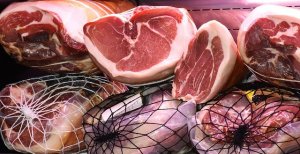
Bacon is something that is called a “cured pork product”. Curing is a method of preserving meat by removing moisture. The process makes it less hospitable for pathogens. It starts with salt, which is often mixed with nitrites and/or nitrates. These are used to ensure that the bacteria that produces the toxin responsible for botulism cannot grow. They also speed up the curing process, are what give the meat the pinkish color and add to flavor and texture. Curing also often involves smoking. Cured meat products may be cooked as in luncheon meats or uncooked as in bacon.

Bacon

In the US, bacon is a cured, lightly smoked pork belly. (In other countries, what they call “bacon” is made from other cuts of meat.) US bacon has a decent fat content but less salt than other cured pork products. Bacon can be cured in either a wet or a dry brine. The brine contains salt, sugar (honey, molasses, brown sugar, maple syrup, etc.) and a spice mixture. Nitrite is usually added either as a synthesized product (here is one example) or naturally occurring nitrates/nitrites derived from celery powder. Bacon is also smoked after the curing process.

Pancetta

We often refer to pancetta as “Italian bacon” but it is different. Similarly to bacon, it is made from the pork belly but is more heavily cured and has a higher salt content. It is usually not smoked but is seasoned with a mixture of garlic, black pepper, juniper berries and thyme. There is one form of pancetta that is smoked – pancetta affumicata. However, it still differs from bacon in its higher salt content and more curing.

There are two forms of pancetta – arrotolata and tesa. The former comes rolled into a log while tesa comes in a slab form, similar to bacon. Some experts recommend against buying the pre-sliced pancetta, which is often what we find in our supermarkets. They say they are usually of a lower quality and are less flavorful than pancetta that has not been pre-portioned. Of course, if that is all your stores carry, it is probably better than trying to substitute.

Prosciutto

This product comes from the hind leg of the pig with a curing process that lasts from a few months to a few years. This is one of the products that is typically eaten without cooking.

Prosciutto (made from the back leg of the pig) or dry cured ham comes in two different styles:  prosciutto cotto (cooked) or prosciutto crudo (uncooked). The former is bright pink and has a lighter flavor than the uncooked product. Although uncooked, crudo is cured and safe to eat as is. It is redder in color and more intensely flavored.

Salt Pork

This cut comes from the lower portion of the pork belly and is usually almost all fat with only a small layer of lean protein. This product is more heavily salted than bacon.

Guanciale

This word comes from the Italian guancia, meaning cheek. As the name implies, it comes from the pig jowl. This product will probably only be found in specialty butcher shops. It is often flavored with black pepper and herbs. However, the meat itself tastes different than the cuts from the belly. It is an extremely fatty product and is what gives the product its unique flavor. These unique characteristics mean it is very difficult to find an adequate substitute.

Lardo

This is made from the fat on the back of the pig (fatback). It is salt-cured and seasoned with herbs. This product is pure cured pork fat.

Substituting

When you are thinking about substituting these products for each other, there are some differences that should be considered.

  • Fat content
    Whereas bacon and pancetta are similar in fat content, guanciale has considerably more fat. Salt pork is almost all fat while lardo is 100% fat.
  • Smoking
    Bacon is a smoked product where as pancetta and guanciale are not.
  • Salt content
    If you do not take this into consideration, you could ruin your dish with too much salt. Pancetta, due to the curing process, will have a higher salt content than bacon. Prosciutto has an even higher salt content.

Nitrites/Nitrates

Although the discussion of the safety of nitrites/nitrates is outside the scope of this Cooking Tip, I will just mention a few items for consideration.

The cancer warning from many years ago has not stood up to the test of time and scientific sources do note that there are health benefits to these chemicals. Most of the nitrites/nitrates we eat are from natural sources – mostly vegetables such as lettuce, celery, and carrots. There is a debate, though, whether the synthetically derived compounds are worse for us than the natural ones. I will leave that debate to you to investigate.

If you are a cured meat lover, you may want to try to make your own as my husband does with bacon. I, for one, am not interested in that skill as there are plenty of great products in the market. Do you have a favorite? Let me know.

Cooking Tips · Ingredients

Eggnog — Love it or Hate it?

Where do you fall on the scale concerning eggnog? Do you love it or hate it or are you in the middle? I am not a huge fan but I was making some White Chocolate Eggnog Truffles and I must say that flavor did well in that preparation. In this Cooking Tip, let’s delve into eggnog and what it really is.

According to The New Food Lover’s Companion, authentic eggnog is “a homogenous blend of milk or cream, beaten eggs, sugar, nutmeg and usually a liquor.”

Proponents of fresh eggnog over store-bought claim the flavor and thick texture are superior in fresh and that those characteristics come from real eggs. The FDA defines eggnog as “a milk product consisting of a mixture of milk or milk products of at least 6.0 percent butterfat, at least 1.0 percent egg yolk solids, sweetener, and flavoring. Emulsifier and not over 0.5 percent stabilizer may be added.” That is not a lot of egg in the store-bought version. Since eggs can be expensive, companies will use the least they can to get the product they want. There are also thickeners added such as carrageenan, guar gum, and locust bean gum.

Also, a great homemade eggnog is foamy from the beaten eggs, something you won’t get with a commercial product. By law, the store-bought products must be pasteurized, which changes the flavor and texture. Finally, commercial versions are generally sweeter than homemade.

If you want to try homemade eggnog but are wary of the raw eggs, you can buy pasteurized eggs or cook the eggnog.

Some sources looked a little closer into this issue. As we all know, the FDA warns against consuming products with uncooked, unpasteurized eggs. According to a story on Chowhound, the writers say that the alcohol that is classic in eggnog will kill harmful bacteria. The recipe sited in this article contained more than 20% alcohol.

Serious Eats also looked at this issue. They quote a laboratory study showed that eggnog containing at least 20% alcohol will be sterile after 24 hours.

Recipes will differ in types of dairy used – milk, cream or a mixture. Some recipes call for using just egg yolks whereas others will start with the yolks, beat the egg whites separately and fold them in at the end. Others will add whipped cream to finish. Some have alcohol and some do not although without the alcohol, there is more of a concern for consuming raw eggs.

Nutmeg is classic but some recipes may add other flavorings such as cinnamon and vanilla. I even saw an interesting recipe from Jamie Oliver for chocolate eggnog with cardamon and cloves.

There is something called “aged eggnog”. According to the above referenced story on Chowhound, as eggnog ages, chemical reactions occur causing a blending of flavors. Other effects are that the color becomes more golden and the texture thickens. They say that the longer it ages, the mellower it becomes.

In the Serious Eats discussion, they did a taste test with three samples (one aged, two not aged), the un-aged eggnog was unanimously preferred. They felt that the aged product was stronger, even medicinal, in flavor. If you read this article through, you will see that there is a great difference of opinion on which is best. As with many things, taste is very personal.

So, are you a fan of eggnog or not? Do you buy it or make your own?

Let me know your thoughts!