Cooking Tips · Techniques

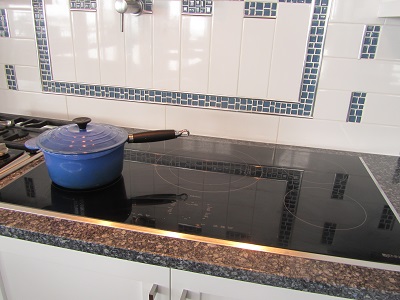
Induction versus gas cooktops

For all of my married life (32 years this May), we have moved from house to house every 2-3 years. Almost all were rental houses and, thus, I had no say about the kitchen or the kitchen appliances. When my husband reached mandatory retirement from that job, we moved here to Colorado and began building our retirement home. Finally, I could have the kitchen I wanted! As I planned that kitchen, I just assumed I would have a gas cooktop. Afterall, doesn’t every avid cook use gas?

About that same time, I began to hear and read about induction cooking. After much research, I finally decided to put in an induction cooktop. Because of a bit of concern, though, I also installed a small two-burner gas cooktop next to my main induction cooktop. Now, three years later, I can tell you that I LOVE my induction. The only time I use my little gas cooktop is if I need more space than I have on my induction or if I want a real flame for something like quickly roasting a pepper. In this Cooking Tip, I would like to explain why you need to consider induction the next time you have a choice about your cooktop.

I love the way Consumer Reports describes induction cooking. “The power and precision of the technology comes from an electromagnetic field below the glass cooktop surface that transfers current directly to magnetic cookware, causing it to heat up. Essentially, induction cuts out the intermediate step of heating up a burner and then transferring the heat to the pot.”

What is so great about induction? It heats much faster than gas/electric but you also have infinitely more control. If you want to turn down the heat, it responds immediately. Compare that to an electric cooktop where you may need to take the pot off the heat until the burner responds. Even with gas, the grate remains hot for quite a while. I can take a large pot of water to a rolling boil in a short time and when I turn off the heat, the boiling ceases within a second or two.

Depending on the cooktop model, you can achieve & maintain very low heat for as long as you want. Most experts will tell you that you should not melt chocolate over direct heat due to the risk of overheating and/or burning. On the induction, this low heat level allows you to safely melt your chocolate and hold it in that melted state. I also often use the lowest settings to keep food warm without overcooking.

These cooktops are very easy to clean. In fact, since the cooktops themselves don’t heat up (although they will be warm from being in contact with the hot pan), you can quickly wipe up spills or splatters as soon as they happen.

So, why not go with induction? Firstly, you do need the proper pots/pans. If a magnet will not stick to the bottom of your pan, it will not work on induction. I have seen an accessory you can supposedly put between a regular pot and the induction cooktop to allow your regular pot to work. I have not tried this but, if it does work, it would not be nearly as efficient or effective.

A minor disadvantage is that most induction cooktops do emit a buzzing and/or a clicking noise. This doesn’t bother me but I did know someone for whom this was a major problem.

Another problem is one that I was not aware of until very recently but, as I think back, I can testify that this is true. I am a big proponent of using digital thermometers for everything from cooking meat to custards and more. The magnetic field of an induction cooktop can interfere with those digital thermometers. Removing the pan from the cooktop is necessary to get an accurate reading. Alternatively, you can use an analog thermometer.

When I decided on this cooktop, I was pretty nervous. Afterall, it is a big purchase and not one you are going to easily change after it is installed. Now, three years later, I can tell you that I am so happy I purchased my induction cooktop. It is wonderful! And, I have never heard the opposite from anyone else who also installed this type of appliance. That says a lot.

Cooking Tips · Techniques

Cast Iron Cookery

I love my cast iron cookware. I have both enameled and unenameled items. Many people shy away from regular, unenameled cookware because they think the care of it is a hassle. In this Cooking Tip, let’s look at what is true and what is not about unenameled cast iron.

Why consider unenameled cast iron? It is extremely durable and will last for years as well as it is affordable. You will never get a better sear on a piece of meat than you will in a hot cast iron pan. It is also great for making a great crust on a dish such as hash or cornbread. It is oven-safe and so, you can go from the cooktop to oven and back again with ease – just beware the handle will get very hot and you must use an oven mitt or pot holder. It can also tolerate very high heat levels, even more than stainless steel.

Many people say a well-seasoned cast iron skillet is as nonstick as a regular nonstick skillet. Whereas it will get very nonstick the more you use it and the more seasoning it acquires, it will never be as nonstick as a modern coated nonstick skillet.

Most new cast iron pans are sold pre-seasoned. Ones you buy at a flea market or an estate sale may or may not be seasoned. Even with a new pre-seasoned pan, you may want to put it through a round or two of seasoning. The nonstick properties will only improve with more seasoning. Of course, just using your cast iron pan on a regular basis improves the seasoning.

Many posts claim one of the advantages is that a cast iron pan will heat evenly, meaning there will be no hot spots. Therefore, your food will cook evenly. In reality, a cast iron pan will develop definite hot spots. Also, cast iron is a relatively poor heat conductor. This means that it is hard to get an even heat distribution across the surface of the pan. The best way to evenly heat a cast iron pan is in the oven.

Those new to cast iron cookery need to realize that a cast iron pan will take longer to heat up than non-cast iron pans. It will also hold on to that heat much longer. Therefore, just because you take it off the heat does not mean the cooking will stop. You must remove the food item from the pan to really stop the cooking process quickly.

Your cast iron pan may be the most durable pan in your kitchen. It is actually sort of difficult to hurt a cast iron pan. And, the more you use it and the more the seasoning builds up, the more durable it becomes. You may have read to never use soap on your cast iron pan. Most experts disagree with this and say that today’s gentle soaps will not harm your pan. Once the seasoning has built up, you may also use gentle scrubbing along with the soap. It is not recommended, though, that you allow your cast iron pan to soak in water. Make it the last thing you clean. Thoroughly dry it and heat on the stovetop until hot. Follow this by rubbing the pan very lightly all over with an unsaturated cooking fat, like canola, vegetable, or corn oil. Buff it well to remove any visible oil. Repeat this process after every use and cleaning. One caveat, do not put it in the dishwasher.

Another care tip you may have read is that you should never use metal implements. According to Dave Arnold, a cast iron expert, it is good to use metal implements as “gentle scraping of metal along the bottom of the pan while cooking helps to even out the surface of the seasoning and make it more durable, not less.”

There are many brands of cast iron cookware on the market. One of the most highly recommended is the Lodge cast iron skillet. I have one and use it on my small gas cooktop. My major cooktop is an induction and I do not like to use it on that due to imprinting of the logo from the bottom of the skillet. Because of that problem, I bought a second skillet without that type of logo, an Analon Vesta. It was more expensive than the Lodge but it was worth it as I can use it on my induction cooktop without worry and – it came in a pretty cobalt blue to match my kitchen!

If you have cast iron pans, I hope this article encourages you to use them more than you currently do. If you don’t have one, I hope you consider adding one to your pots/pans inventory. I do not think you will regret it!

Cooking Tips · Ingredients

Vanilla — real versus imitation

Of all the flavorings you might have in your pantry, I would bet that vanilla is the most common. It is also one of the most expensive and its price has just continued to increase. By weight, vanilla is worth more than silver. In my local supermarket as well as my spice shop, one bean can cost up to $10! The extract is upwards of $2.50 per ounce. So, what is vanilla and do you really need to splurge for that pricey bottle of vanilla extract or container of vanilla beans?

Real vanilla comes from the seed pods of the vanilla orchid. These plants are hand-pollinated and hand-picked one-by-one as they become ripe. After harvesting, the beans undergo a “curing” process, which involves a few different steps. Finally, the beans are ready for selling to consumers or used to make vanilla extract or paste. This entire process is time-consuming and labor-intensive.

There are a number of reasons that vanilla is so expensive that range from the difficulty in growing it as well as a drop in the market when artificial vanilla made an appearance. Many vanilla farmers got out of the business at that time. The demand for real vanilla has been increasing but the supply has been much slower in recovering. Due to the recent high demand, farmers face a new threat – their beans are being stolen. To counter this, some of the farmers are picking their beans while still green but this leads to an inferior product. To read a more in-depth article on this, look at this Business Insider article from September 2018. For another discussion on the problems, especially the harvesting of green beans, see this article from The Vanilla Company .

Imitation vanilla is a synthetic flavoring composed primarily of vanillin. Vanillin is found naturally in vanilla beans but may also be synthesized from clove oil, wood pulp, or other sources. This vanillin is diluted with a liquid and some producers also add other flavors to increase the complexity of the flavor profile as well as caramel coloring.

With these prices and problems within the vanilla industry, you may be wondering if you really need it or whether imitation vanilla will be just as good.

Cooks Illustrated has done taste tests using both real and imitation vanilla. Their most recent testing was just published in the Jan/Feb 2019 issue of their magazine. They tested seven real vanillas and three imitation and used them in recipes for vanilla pudding and vanilla frosting. They then tested the top-rated real & top-rated imitation in vanilla cookies and yellow layer cake. Believe it or not, Baker’s imitation vanilla flavoring came out on top among all the contenders. For a real vanilla, they preferred Simply Organic pure vanilla extract.

Similar results were found in testing published by Epicurious as well as one at Serious Eats.

All of this can be quite an eye-opener as we are told over and over that we should only be using the “real thing.” As you can see from actual side-by-side testing, the more inexpensive imitation vanilla will probably do the job of flavoring most of your dishes just fine. However, it might be hard for some of us to not reach for the authentic vanilla. I must admit, though, that when I am looking at the price in the store, reaching for the imitation is becoming easier. What about you? Are you convinced? Let me know!

Here’s to a wonderful 2019 full of baking and cooking!

Cooking Tips · Ingredients

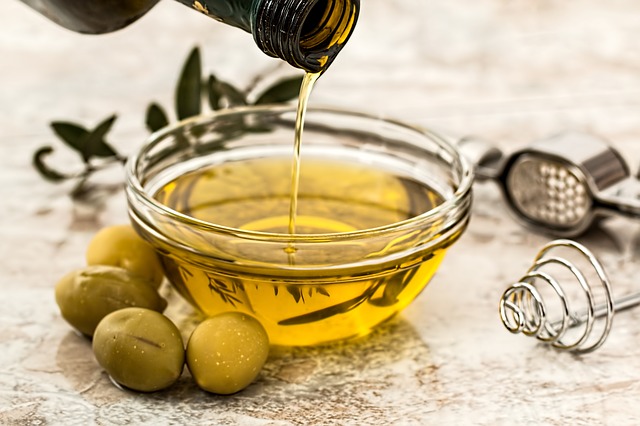
Extra Virgin Olive Oil — is yours real?

In a prior Cooking Tip, I discussed culinary oils in general. In this one, I want to focus on one type in particular – Extra Virgin Olive Oil.

This is one of the most expensive type of culinary oils you will buy and we all like to make sure we get the best for our money. I have done some research on how to pick out a great olive oil and following are what the experts tell us.

Here are certain things to look for.

  1. The harvest date – The “Best By” date may be up to 2 years after pressing of the olives. The “Harvest” date is a much better indicator of freshness. Try to pick one with the most recent date, remembering that olives are usually harvested in the fall and winter, meaning the harvest date for what is on the shelf will be the year before.

  2. The container – Look for oil that is in a dark container. Light can degrade the oil. Pick an oil where the container protects the oil from the light.

  3. Country/Region of origin – Look for where the oil was sourced. Higher quality olive oils will be sourced from one country. Note that wording like “Product of Italy” might only mean that it was shipped from Italy, not necessarily that the olives were grown and harvested in Italy.

    Less pricey & mass market olive oils are often a result of buying cheap bulk oils from all over the world and blending them. This means less quality control over the handling of the oil but it also means these oils lack the distinct flavor that you expect from a good olive oil.

  4. The Cultivars – Look for the specific olives that have been harvested. Absence of the area of origin and the cultivars may (though not always) indicate lower quality oil.

If at all possible, taste the oil before purchasing it. This generally means going to a gourmet food store or a shop that specializes in oil. The typical supermarket is not going to offer tastings outside of the rare special event.

The reason that we must be savvy olive oil shoppers is that some deficits in the industry have been documented. In a 2016 article from the Denver Post, the writer noted that about 75% of the extra virgin olive oil sold in the US is often diluted with lower quality olive oil. The article goes on to note that a 2010 University of California study found that 69% of imported oils sold in California stores at that time failed to meet international standards for olive oil.

Not only will the authentic, high-quality extra virgin olive oil give you tremendous flavor and more variety of that flavor but the fresher, more pungent-tasting oil is higher in antioxidant-rich polyphenols.

To be fair, since these exposes, the industry has attempted to improve quality standards. In 2010, the USDA issued the “United States Standards for Grades of Olive Oil and Olive-Pomace Oil.” However, these standards are voluntary. Producers may choose to seek certification by the USDA as “US Extra Virgin Olive Oil” if they wish, but it is not mandatory.

Some states have gone further, including California. They have adopted standards recommended by the Olive Oil Commission of California. According to this website, “California olive oil handlers who produce 5,000 gallons or more are required by law to participate in the OOCC’s mandatory government sampling and testing program. Producers with less than 5,000 gallons may voluntarily participate in the OOCC’s government sampling program.”

The California Olive Oil Council (a different entity) has a mission to uphold “the highest standards within the olive oil industry through its Seal Certification Program”. The members of COOC must submit their oils for testing and evaluation to ensure they meet the qualifications to be labeled Extra Virgin Olive Oil. Therefore, if you buy an oil with the COOC seal, you can be assured that you are getting the real thing.

What do you do on a daily basis, though, in your kitchen? Authentic, high-quality extra virgin olive oil can be very expensive. If for no other reason, you probably don’t want to use that for all of your oil needs. That is why most of us have other more moderately-priced oils that we use for general cooking use. We save that special oil for vinaigrettes, for dipping and other uses where the flavor shines through.

What is in your kitchen? Take a look at your olive oil bottles and let me know what you see. I looked in my pantry and I have two different olive oils, only one of which is extra virgin. When I looked for the above items on the extra virgin label, this is what I found. Even though I purchased it from a reputable olive oil retailer, it had no harvest date. (I wonder if this was due to the fact that the oil was brought into the store in a bulk fashion and then bottled and labeled by this particular retailer.) It did list both the country from which the olives were harvested as well as the particular varietals. It was packaged in an appropriate bottle. Since it was a Spanish oil, it did not have COOC certification. All in all, not bad.

The next time I am in my local supermarket, I am going to look for these recommendations. My guess, though, is most of those on the shelf will be sorely lacking. Let me know what you find, not only in the kitchen but also where you shop!


Cooking Tips · Techniques

Meringues — French, Swiss & Italian

Last week’s Cooking Tip talked about different styles of mousse and how some styles used a meringue as part of the dish. In this week’s Tip, I would to spend more time discussing the different types of meringue – French, Swiss and Italian.

In the simplest terms, a meringue is a mixture of beaten egg whites and sugar. It can be used to fold into cake or cookie batters, as a filling, topping or a stand-alone cookie that melts in your mouth when you eat it. Since the basis of a meringue is beaten egg whites, you may want to review the prior Cooking Tip on egg white foams before attempting these different types of meringues.

French meringue is the most basic of the meringues. It is made by beating egg whites to the foamy stage (45-60 seconds) and then slowly adding sugar and continuing to beat into a soft, airy and light mixture. Adding the sugar too early or too late can lead to disappointing results. Adding it after about a minute of beating when the whites have reached the foamy stage but before they begin to form peaks is ideal. This type of meringue is the easiest to make but is also the least stable. Therefore, it is usually used when it is going to be baked – either in a cake batter, meringue cookies or a meringue shell that is then topped with fruit, whipped cream or a type of mousse.

Swiss meringue is prepared differently. Egg whites and sugar are put into a bowl that sits above boiling water – a type of bain marie. When the mixture reaches the temperature of about 120° to 140°F, the mixture is removed from the heat and then beaten to stiff peaks. This method results in a meringue that is less fluffy than French and less stable then Italian. The recipe testers at Serious Eats, though, claim to have found a technique that will make your Swiss meringue as light as a French meringue but as stable as Italian. They do this by cooking it to a higher temperature – up to 175°F. They also whip it vigorously at high speed for about 5 minutes, until it is very glossy, thick & stiff. This type of meringue is often used as the base for buttercream frosting.

Italian meringue starts by putting the egg whites into your mixer bowl and beating to soft peaks. Then, a sugar syrup that has been heated to 240°F is slowly drizzled in while you continue to whip until the meringue is very voluminous and reaches the desired peak. Because this sugar syrup is very hot, one must be very careful when using this method to prevent burns. It is the most stable of the meringues but is also heavy and thick. It is what is used to make nougat and is also the best one for topping meringue pies.

Watching egg whites transform into a beautiful fluffy meringue is almost miraculous. Using this meringue to then top your pie, to lighten your cake batter or to bake into a pavlova or meringue cookie is further evidence of the wonderfulness of eggs!

Cooking Tips · Techniques

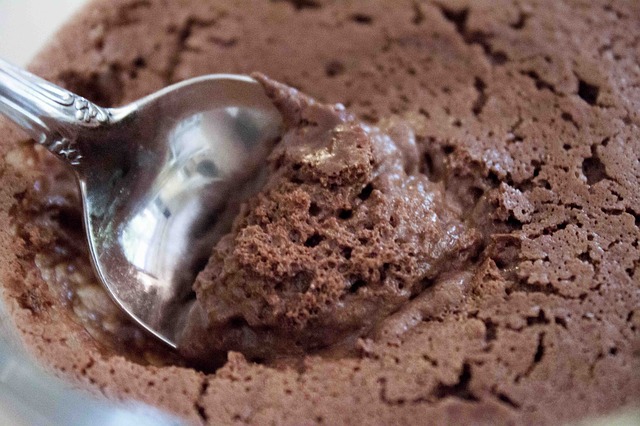
Making chocolate mousse

I am preparing to teach a class on French cooking. One of the desserts I will be doing is a classic chocolate mousse. It really is a wonderful dish to have in your repertoire for entertaining friends and family. There are a myriad of recipes out there but, in this Cooking Tip, I would like to explain the different styles of mousse so you can decide what would be best for you. These are general categories and you will find many variations on them. However, this will give you a solid start on understanding mousse.

A mousse always has two components. There is the base, which is the flavor, such as chocolate. Then, there is the lightener, which is something added to the base to make it airier, such as whipped cream or whipped egg whites.

The first style is called a Quick Mousse and that is just what it is. Start with melted chocolate and fold whipped cream into it. Mousse done!

A second style is Anglaise style. An additional step of making a crème anglaise is required. Crème anglaise is a custard sauce made from egg yolks, sugar, vanilla and dairy such as cream and/or milk. It is often the starting point for making ice cream. This warm anglaise sauce may be used to melt the chocolate. Alternatively, the chocolate may be melted on its own and then combined with the anglaise. After thoroughly incorporating the two, whipped cream is then folded into the mixture.

If you want to make a mousse without dairy, there is the Meringue-style mousse. In this case, you need to make a meringue with egg whites & sugar and then use that to lighten your chocolate base. The meringue can be either an Italian or Swiss meringue. I will discuss the different types of meringues in an upcoming Cooking Tip.

Pâte à bombe is similar to a meringue but is made from cooked sugar syrup and egg yolks (rather than whites), which are then whipped up into a light, creamy consistency. Add to melted chocolate and then fold in whipped cream.

A Pastry Cream mousse starts by making a pastry cream, which is a thick custard made with milk, eggs, sugar, cornstarch (or a mixture of flour and cornstarch) and flavoring. The resulting pastry cream can be used to melt the chocolate and then lightened with either whipped cream or whipped egg whites. This type of mousse works wonderfully as a filling for cakes, tarts or pastries.

A Bavarian mousse is great when you want to make decorative shapes. Because it is set with gelatin, you can unmold it and it will retain its shape.

Although you can make chocolate mousse from any of the above methods, the resulting taste and texture will be different. Which would be your favorite? You may just have to try them all before you can decide! If you do, be sure to let me know your thoughts.


Cooking Tips · Techniques

Is sous vide cooking for you?

A friend of mine decided to give her husband a sous vide machine for Christmas. She knew I had one and asked me how I liked mine. That sparked me to write this Cooking Tip for those of you who might be getting one yourself for Christmas or just want to know more about it.

Let’s start with basics – what is sous vide cooking? “Sous vide” is French for “under vacuum”. It refers to the method of cooking food in a sealed plastic bag (traditionally vacuum-sealed) in a water bath with very precise temperature control. Many high-end restaurants have long used this technique for producing perfectly-cooked and delicious food, especially steaks. With the advent of affordable home kitchen sous vide machines, this is now something that we can all use.

Why would you want to consider investing in one of these machines?

  1. No over-cooking – since the food is normally cooked at the temperature at which you will be serving that food, there is almost no risk of overcooking your food and ruining your dinner.
  2. Even cooking – since the food is surrounded by water at a precise temperature, the food cooks evenly without over-done or under-done spots.
  3. Hands-off – just like your slow cooker, most of the cooking time is “hands-off”. Great results with little effort!
  4. Less moisture loss – when cooking meat in a skillet, the outer layers get much hotter in a quicker time and this leads to moisture loss. It is why we rest meat after cooking to allow the meat to reabsorb this moisture. When cooking sous vide, there are no such “hot spots” and due to cooking at a lower and steady temperature, there is much less moisture loss and no need for a rest after cooking.

Tenderizing tough cuts – with sous vide cooking, you can hold tough cuts of meat at lower temperatures for longer periods of time, which leads to more tenderizing.

Are there any downsides to sous vide cooking?

  1. You need to purchase a sous vide machine. If you have a small kitchen with little storage, you need to consider if you would use it enough to justify the cost and the storage space.
  2. It is not quick cooking. Since the food is cooked in a gentle manner, it takes longer for the item to be cooked thoroughly. It is usually a matter of hours, not minutes. However, it is mostly hands-off time. Yes, you need to plan ahead but that is no different than if you were using a slow cooker.
  3. Sous vide cooking does not result in a nicely browned and crispy exterior. You will need to add a step – that of a quick, high-heat sear to obtain this result.
  4. Cooking sous vide precludes making a good pan sauce since very little fond develops when doing a quick sear. For a prior Cooking Tip on the importance of fond to sauce making, email me and I will send it to you.

If you are looking to get into sous vide cooking, some of the most highly rated machines for home cooking are the Joule, the Anova, and the Sansaire. Mine is made by Kitchen Gizmo and I have been very happy with it.

Here are some pictures of my set-up and then making a succulent,
perfectly cooked chicken breast for dinner.

Sous Vide Set-Up

Sous Vide with chicken breast cooking

Perfectly cooked (but pale) chicken breast

Perfectly cooked & then seared chicken breast

Do you have a sous vide machine?
If you do, let me know how you like it and what wonderful delights you have made with it!

Cooking Tips · Techniques

When should you buy organic?

Do you buy organic foods? If so, why do you buy them? Is it because you perceive they are healthier? Do you think they are safer? Do they taste better? Are they better for you? Organic foods are a huge industry in today’s world. They are usually more expensive than the non-organic version. Is it worth it? There are very strong feelings on both sides of the “organic vs conventional” debate. However, the only one who can answer “is it worth it” for you and your family is you. One caveat is that more research probably needs to be done and the results of any future research could alter the current thought on organic foods.

When speaking of produce, there are two lists with which you might want to be familiar. These lists – The Dirty Dozen and The Clean 15 – are put together by the Environmental Working Group (an organization of scientists, researchers and policymakers) to help consumers know when they should buy organic and when it is unnecessary. These lists were compiled using data from the United States Department of Agriculture on the amount of pesticide residue found on non-organic fruits and vegetables after they had been washed using high-power pressure water systems. (Note, these lists just address the presence/absence of pesticides/chemicals. They do not address taste, nutritional value or other concerns.)

The fruits and vegetables on “The Dirty Dozen” list, when conventionally grown, tested positive for at least 47 different chemicals, with some testing positive for as many as 67. All the produce on “The Clean 15” bore little to no traces of pesticides, and are considered safe to consume in non-organic form.

The top four items that this Working Group recommends buying organic are strawberries, spinach, nectarines & apples. On the cleanest list are avocados, sweet corn, pineapples & asparagus. To see the complete lists, here is a link to 2018 Shopper’s Guide to Pesticides in Produce.

It is interesting to note that organic farming does not mean that there are no pesticides used, only that the pesticides themselves are certified organic. This usually means that they are “natural” rather than “synthetic” but there are some synthetic chemicals that are allowed in organic farming. And, many scientists have concluded that organic pesticides pose the same health risks as non-organic ones.

As of now, no one can say for sure whether organic food is more nutritious than conventional food. Although some studies have shown higher levels of Vitamin C, some minerals & antioxidants, experts say the differences are too small to have an impact on overall nutrition.

When you are considering poultry, meat and dairy products, the main advantage to organic is that the animals are raised without antibiotics. There is some concern that antibiotic use might be leading to an increase in antibiotic-resistant bacteria. Reports also say organic milk contains about 60% more omega-3 fatty acids than non-organic.

What is the cost? A 2015 Consumer Reports study showed, that on average, organic foods are 47% more costly than non-organic. As this is an average, you will see a significant range of cost differences depending on the food and the store. Interestingly, a study in the Proceedings of the National Academy of Sciences found it only costs farmers 5-7% more to use organic methods.

Some industry professionals recommend concentrating more on “Buying Local” with the hopes that those fruit & vegetables are fresher and seasonal. Locally-grown produce does not mean it is necessarily organic although it may be depending on the farm. If you have the space & ability, there is no more local than growing your own produce. In that case, you will have no questions as to how or where it was grown.

As I said in the beginning, only you can decide if you want to go organic and to what extent. Just know there are arguments on both sides but the science, to this point, does not seem to support a strong preference for organic.

Most importantly, eat a diet high in fresh fruits and vegetables. The nutrients that are found in those items are so necessary in your diet and resulting health.

Cooking Tips · Ingredients

Paprika Galore

My husband wanted to smoke a chicken the other day and I was happy for him to do so! The poultry rub he was using called for paprika. When he went to my spice drawer, there were three different varieties from which to choose. How many do you have in your spice cabinet? My favorite spice store, Savory Spice, (This is an affiliate link and I may earn a commission if you decide to purchase.) sells six different paprikas. Another popular spice shop sells four. What is with all these different varieties and when do you use which one?

Paprika is a spice made from ground red peppers. It is not made from any one pepper and is often a variety of peppers. Its flavor can range from mild to pungent. Its color ranges from bright orange-red to deep blood-red. Most commercial paprika comes from Spain, South America, Hungary & California.

In the spice shop, you will see some paprikas labeled sweet, some hot, some smoked & others may have a combination of those terms. The difference comes from the specific variety of pepper and how the pepper is processed.

The most common is sweet paprika. It may also be called “Hungarian paprika” or just “paprika”. It is very deep red in color and has a subtle flavor. In actuality, the Hungarians list eight different varieties of Hungarian paprika ranging from mild to very hot. In the US, if you see a bottle labeled “Hungarian”, it will most likely be of the sweet, less hot variety.

Smoked paprika is a Spanish innovation and is produced by slowly smoking & drying the peppers over an oak fire. This gives the product a rich, smoky quality. You may see the term “Pimenton” when referring to this Spanish smoked variety. There are three versions:

  1. Dulce – sweet & mild

  2. Agrodulce – bittersweet, medium hot

  3. Picante – hot

Two varieties of pimenton (Pimentòn de Murcia & Pimentòn de la Vera) have actually been given “Protected Designation of Origin” by the European Union. This means they cannot be given these names unless they are produced using traditional techniques and come from these specific regions of Spain.

Another protected product is Piment d’Espelette. Although not truly a paprika, it is similar in that it is also made from ground peppers. These peppers are grown in the Basque region of southwest France. Its flavor is said to be bold & warm. The peppers are hung to dry in the sun for at least 15 days and up to 3 months. There is also a version from California, called Piment d’Ville.

When should you use which variety? If your recipe just calls for “paprika” and does not specify which kind, it is best to use the Hungarian, sweet variety. Smoked paprika is recommended for seasoning grilled meats or if you want to add a smoky flavor to your dish. The hotter varieties are great for soups, stews or chilis.

Have fun and experiment with the different paprikas. Whether you just want to add a dash of color, a mild spiciness or something more bold, there is a paprika for you!

Cooking Tips · Techniques

Egg White Foam

Have you heard of the term “Egg White Foam”? It is a culinary term that describes what happens when you beat egg whites – they increase in volume and turn into a foam. It is what you do when you want to make an angel food cake, a meringue or a soufflé. This tip will go over how to achieve the best foam, what could go wrong and the adjustments that those of us who live at altitude need to make.

If you read about how to whip egg whites, you will probably run across many Dos & Don’ts. As with so much cooking advice, these rules keep getting passed on without anyone stopping to test whether they are really true. In this Cooking Tip, I have sought out real research to help you have success.

  • The temperature of the egg whites can make a difference.
    Warmer egg whites may whip up faster but you can still easily whip cold egg whites. It may take slightly longer but it is not a game-changer.

  • The age of the egg whites can make a difference.
    There seems to be a debate among experts but the general consensus is that older egg whites whip up faster but the resulting foam will be less stable than if you had used fresher egg whites. So, decide based on which is more important to you –volume or stability. Or, just use what is in your refrigerator knowing that the age can make a difference.

  • Your bowl can make a difference.
    The basis for this rule is that plastic bowls may harbor grease on their surfaces which is hard to eliminate with washing. This grease may inhibit the forming of a great foam. If given the choice, it is best to use a glass or stainless-steel bowl. However, if plastic is all you have, just make sure it is clean. You will probably be OK.

  • Don’t add salt to your foam.
    Adding salt used to be recommended to help stabilize the foam. It has been shown that salt, in fact, can act as a destabilizer. If your recipe calls for salt, add it to the dry ingredients, not your egg whites.

  • Cream of tartar is a good idea.
    Cream of tartar helps to prevent overbeating of your egg whites, which can lead to a recipe failure.

  • Be careful of when you add sugar to your foam.
    If you add all the sugar at the beginning, it inhibits the foam’s capacity for holding air. If you add it slowly only after you have soft peaks & a significant increase in volume, you allow the foam to incorporate the necessary air. Also, adding it slowly helps to prevent the sugar crystals from popping your wonderful air bubbles.

  • Don’t overbeat your egg whites.
    This is one rule that is actually very important. Overbeating your whites is another thing that will lead to that dreaded recipe failure. Most recipes will specify what you should do – beat your whites to soft peaks or stiff peaks.

Soft peaks do not stand up on their own and will start to become glossy. Stiff peaks will be sharp and not droopy. Overbeaten whites will look dry or even lumpy. You may also see a watery mess at the bottom of the bowl. If this happens, there is no solution. You must dump them out and start over.

Once you reach soft peaks, it does not take much time to get to stiff peaks. It is so easy to overbeat. So, it is better to under-beat. This is especially true at altitude. Let me give you an example. Some recipes for soufflés call for you to beat to stiff peaks. However, if you do this, your soufflé will probably not rise. When you put it in the oven, all those beautiful air bubbles will pop and deflate before the surrounding cake has time to set.

If you beat only to soft peaks, you will get much better results. When you tilt the bowl containing the egg whites, they should still move just a tiny bit. These air bubbles can retain their volume while the surrounding cake sets – giving you a beautiful risen soufflé.

  • Beware of getting fat/yolk into your egg whites.
    As with so many things, this is partially true. Fat does inhibit creating a nice foam. It will take longer to beat up to peaks, the volume will be less and the resulting foam will be less stable.

The other side of this is that it depends on how much fat gets into your whites. Will a speck of yolk destroy your foam? No. Will a larger amount of yolk cause you problems? Yes, depending on how much yolk and how many whites you are beating. Here is a link to a great site with photos that actually tested this theory.

  • Don’t beat too quickly.
    For the best and most stable foam, start out beating slowly. Use a low or med-low speed. The whites will lighten in color, develop large air bubbles & look foamy. As you continue to beat at this speed, the foam will start to increase in volume, become whiter and the size of the air bubbles will decrease. As the bubbles become even smaller, you can increase to medium high to achieve your desired peak.

The holidays are a great excuse to make that wonderful, special dessert such as a meringue or a souffle. With these tips, I trust you will have success. Let me know and send me a picture of your results!