Cooking Tips · Techniques

Frittatas — No Recipe Needed

A question I get frequently is how to cook without always using a recipe. Although I am testing recipes quite frequently, I do like to be able to throw something on the dinner table without needing to look for and consult a recipe. This spring, I will be teaching a two-part series on doing just this – Cooking without a Recipe. If you would like to book a similar class for yourself, just email me. One of the dishes that you can do this with is a Frittata. How to do this is the subject of this Cooking Tip.

Ingredients

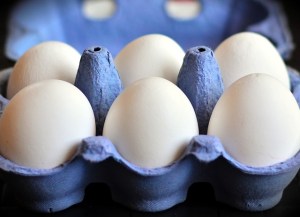
There is only one absolute in making a frittata – eggs. However, most recipes will also add dairy. For the best flavor, the dairy should be full fat.

The most quoted ratio is 6 large eggs to ¼ cup diary and 1-2 cups of add-ins. If you are using cheese, aim for ½ to 1 cup for the same 6-egg frittata. Some sources alter this ratio by recommending only 1½ Tablespoons of dairy for 6 eggs.

Making it your own involves picking the other ingredients you might want to include. It often means whatever you have in your refrigerator or pantry as a frittata is a great way to use up these items. Here are some suggestions but it is not all-inclusive.

  • Meat – bacon, ham, sausage, smoked salmon, chorizo
  • Produce – onions (sautéed or caramelized), shallots, zucchini, yellow squash, spinach, potatoes, sweet potatoes, mushrooms, tomatoes, broccoli, bell pepper, garlic, corn
  • Herbs – parsley, tarragon, chives
  • Seasoning – salt, pepper, basil, parsley, thyme, paprika, ground mustard, hot sauce, pesto
  • Dairy – milk, half/half, cream, sour cream, unflavored yogurt
  • Cheese – cheddar, gruyère, fontina, mozzarella, gouda, goat’s cheese, feta

Cooking

  • Frittatas can be done totally on the stovetop or started on the stovetop and finished in the oven. If using the oven, make sure your skillet is oven-safe. A well-seasoned cast iron is great for frittatas. If you have an oven-safe non-stick pan, that is another good choice. You do not want your frittata sticking to the pan. For a 12-egg frittata, grab a 10-inch pan. For 6 eggs, try an 8-inch pan.
  • You should pre-cook your add-ins before adding your eggs. An exception is if you are using fresh herbs or tender greens. Be sure to season them unless they are already salty as with bacon. Whereas most veggies can be cooked in the pan, potatoes are helped by par-boiling before adding them to the pan.
  • Combine your dairy, eggs and seasonings. Stir in cheese, if using. Pour over the veggies and gently stir a few times.
  • Cook stovetop for a few minutes, just until the sides are barely set, before placing in a preheated (350°F) oven. Another method is to cook on the stovetop until the bottom is almost done and then finish for a few minutes under the broiler.
  • A no-oven method recommends cooking stove-top until the edges are beginning to set. Then, working over a sink, place a flat plate or lid on top of the skillet. Placing one hand on the plate, invert the skillet onto the plate. Slide frittata back into the skillet and continue cooking until the second side firms up.
  • If cooking in the oven, remove when just set. This could be anywhere between 10 and 30 minutes, depending on the size. You do not want to overcook it. Instead, you want the texture to be custardy and just set. The crust should not be browned as that means your interior is most likely over-cooked. If you really want a brown top, sprinkle some cheese on during the last few minutes of cooking.

Frittatas are great for any meal and can be served either warm or at room temperature. Leftovers can be stored in the refrigerator for 3-4 days and reheated for a quick lunch.

Do you have a favorite frittata? Have you ever tried to make one without resorting to a recipe? If you follow the above guidelines, I am sure you will put smiles on the people around the table.

Cooking Tips · Techniques

Homemade Marshmallows — A Real Delight!

I have never been a fan of marshmallows. I do not even like them in my hot chocolate. That all changed, though, when I first made homemade marshmallows. They are such a different creature than store-bought and that is the subject of this Cooking Tip.

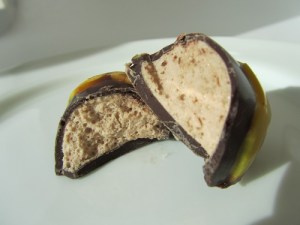
I was attempting to make a chocolate covered Easter egg filled with a light and fluffy center. I was using a recipe from Callebaut that had you mix some of their Gold chocolate (one of their specialty white chocolates containing caramelized sugar & milk) into the marshmallow mixture. I did not have that particular ingredient and so, used their milk chocolate. I tempered some chocolate to use in my Easter egg molds and filled them with this mixture. When I bit into them, I remembered how much I love homemade marshmallows. They reminded me of those marshmallow Easter eggs that you can buy but so much better.

According to Harold McGee in On Food and Cooking, these confections were first made in France from the gummy root juice of the marsh mallow, a relative of the hollyhock. Made by mixing this juice with eggs and sugar and then beaten to a foam, it was called pâte de Guimauve.

Making them is not difficult but does require working with gelatin and hot sugar syrup. Because of the latter, you do need to take some care to not burn yourself. Similarly, it is not a good project for children.

All recipes will call for you to soften gelatin in water (for a discussion on powdered vs leaf gelatin, see this Cooking Tip). You also make a sugar syrup with sugar, water and an invert sugar to prevent crystallization. Professional pastry chefs may use something called “trimoline”. Most home cooks use corn syrup or glucose syrup although honey may also be used. One caution with the latter, though, is that some honeys have such a strong flavor that it will dominate your marshmallow. If you want to try honey, use a lighter one. I used a clover honey and that worked wonderfully. The sugar syrup must be brought to a certain temperature (recall temperature adjustments when at high altitude). This mixture is then beaten in a mixer, the gelatin is added and mixing continues until you get a white and thick mixture that has doubled or tripled in volume.

Some recipes you will see call for whipped egg whites but most do not. The addition of whipped egg whites makes the marshmallows extra light, soft and fluffy as well as easier to pipe by slowing how quickly the marshmallows set up. The egg whites also change the mouth feel as well as shortening the life span of the finished product. Plus, there is the concern of ingesting uncooked egg whites.

The final mixture is very sticky and will start to set up fairly quickly. You can just spread it out on a baking sheet that has been sprayed with nonstick spray and coated with powdered sugar. The marshmallows should then be allowed to set up for a few hours or even overnight before cutting into your preferred shape. After cutting, toss them in either powdered sugar or a mixture of powdered sugar and corn starch. You can also pipe the mixture into shapes. Or, as I did, you can pipe it into chocolate shells.

Flavorings can be added. The most classic is just vanilla but as I mentioned, I added melted chocolate. A perusal of recipes showed peanut butter & jelly, mint, eggnog, berry-flavored, rose, birthday cake, lemonade, mocha, caramel, gingerbread and liquor flavored. Colors may also be added for variety.

Have you ever tasted homemade marshmallows? What did you think? Have you ever made them yourself? I’d love to know.

Cooking Tips · Techniques

Water Temperatures for Cooking

Water is a substance we use in our cooking and baking on an almost daily basis. It might be water that we add to our dish or water in which we cook the food. I have written a prior Cooking Tip on different kinds of water. In this Tip, I want to address cooking in water.

In recipes, you will often see different terms when discussing heating water. One recipe might tell you to bring water to a boil, others might tell you to simmer, even others might direct you to do a low simmer. What do these terms mean and do they really make a difference?

According to Wordnik, the boiling point is “The temperature at which the vapor pressure of a liquid is equal to the ambient atmospheric pressure.” At sea level, that temperature is 212°F. Since many of you live at a higher altitude, as I do, you probably already know that that the temperature at which water boils decreases by 1°F for every 500 feet you rise in altitude. That means that where I live (6000 feet), my water boils at about 200°F. I have written before about what effect that has on your cooking, baking and candy making.

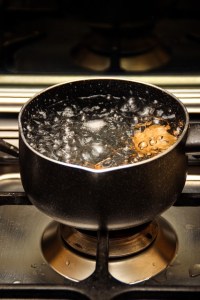
As your pot of water reaches that boiling point, the liquid water is converted to water vapor (steam) and this is what you see when looking at a pot of boiling water. Your water does not go from still to a boil in one step. As it heats up, the water goes through different stages.

Many sources use the following terms to describe the stages that water goes through at it comes up to a boil. Note that the temperatures that are listed are for sea level.

Quiver phase

  • 140 to 170°F
  • At this stage, tiny bubbles appear along the bottom and sides of the pan. The surface of the water starts to vibrate or quiver.
  • This temperature is good for gently poaching meats, fish & eggs with 160°F being the most recommended temperature.

Sub-simmer

  • 170-195°F
  • Bubbles are now starting to rise to the surface although you will only see occasional tiny streams of bubbles.
  • Here is where you want to cook your stocks or very slow-cooking dishes such as a braise or a stew.

Full simmer

  • 195-212°F
  • Now bubbles are breaking the surface of the water all over the pot.
  • This is the temperature for using below a steamer basket, for use in a double boiler for making delicate dishes or when your recipe tells you to simmer something.
  • Some experts just talk about “simmering”, which encompasses both sub-simmer and full simmer. This is a much gentler method of cooking that prevents your delicate food from breaking apart and keeps meats much more tender and moister. For stocks, simmering allows the fats/proteins to float to the top so it can be skimmed off resulting in a much clearer stock.

Full rolling boil

  • 212°F
  • We all recognize this stage.
  • This is where we want our water for blanching veggies, cooking pasta, etc. With vegetables, blanching them in boiling water helps them to cook quickly so they retain their color and flavor. The churning motion of the water keeps the pasta moving so it doesn’t stick and cooks more quickly. If you want to reduce a pot of liquid, this level causes rapid evaporation.
  • Using a full boil when it is not indicated can cause the exterior of the food to overcook while the interior dries out.

The Chinese have a different method of categorizing water that uses visual clues and includes the following stages.

  • Shrimp eyes – about 160°F
  • Crab eyes – 175°F
  • Fish eyes – 180°F
  • Rope of pearls –200-205°F
  • Raging torrent – a rapid boil

When you use water, you want to use cold water. This is not due to the temperature but because hot water contains more dissolved minerals that might result in unpleasant flavors.

What about adding salt to your water? Does it affect the boiling point of the water? Adding salt to water does cause an increase in the boiling point of that water. However, for cooking purposes, this difference is minimal. Harold McGee in On Food and Cooking, points out that it would take an entire ounce of salt to raise the temperature of a quart of water by 1°F. To put this into perspective, he says that this ratio of salt/water is about the same as that of the ocean. Here where I live, I would have to add more than ½ pound of salt to a quart of water to get that same 1 degree increase.

We have all seen recipes that tell you to “bring to a boil and reduce to a simmer”. In fact, one celebrity chef coins this “BTB, RTS”. You might ask why they tell you to take it to a boil if you are only going to reduce it back down. Probably the biggest reason is speed. To get a liquid to boil, we do that over high heat to do so efficiently. From there, it is very easy to reduce to a simmer. To put that same pot over a low-medium heat (a simmer heat) and get to a simmer would take longer.

In conclusion, if you, like my husband, argues that bubbles in your pot means boiling and that there are no differences between these stages, you now have the ammunition to make your point – in a gentle fashion!

Cooking Tips · Ingredients

The World of Hot Sauces

I am not a fan of very hot foods. I much prefer flavor over heat. I made the big mistake of ordering my dish “hot” at an Indian restaurant once despite my husband’s warning. Needless to say, I will never make that mistake again. Heat in foods, though, is certainly popular if you look around the supermarket. It seems like some sort of spiciness is added to every other food item and the hotter the better. According to Fortune Business Insights, the global hot sauce market in 2018 was valued at $2.29 billion and was projected to reach $3.77 billion by the end of 2026.

Due to its popularity, I am devoting this Cooking Tip to the world of hot sauces.

The spicy component of hot sauce is derived from the chili peppers, specifically capsaicin. The heat level of the peppers is often rated by the Scoville Heat Unit (SHU). This can range from zero for a bell pepper to over 2-3 million. I have written a prior tip on chili peppers with a link to the Scoville chart that can be found here.

There are different styles of hot sauce but all start with the peppers. Good hot sauces balance four elements – chiles, acid, aromatics and salt. Of course, there is a lot to those four variables such as the relative proportions, which type of chiles and acid and so forth. The particular brand’s blend of these ingredients along with other additions (garlic, sugar, molasses, fruit) is just one of the things that lead to different flavors and heat level.

Whereas the heat comes from the capsaicin, the flavor comes from the fruit of the actual pepper. It is easy to see that you will get different flavors in the hot sauce by varying which chili peppers are used and in what proportions. Also, some hot sauces are cooked whereas others are raw and even fermented. The type of sauce also varies from region to region of the world. Here is a map from Webstaurant Store. Let’s discuss some of the most popular hot sauces.

Tabasco

Tabasco is a registered trademark and is made by McIlhenny Company. It was founded by Edmund McIlhenny in 1868 on Avery Island, Louisiana. It always contains tabasco chili peppers (2500-5000 SHUs). The original is just a blend of the chili peppers, vinegar and salt. However, besides the original, you can find eight other varieties varying from Chipotle to Habanero. They will all have different ingredients and will rate different in SHUs. Although the SHU ratings are not on the bottles, Tabasco’s website allows you to see the heat level.

Frank’s RedHot Sauce

This popular brand is made from aged cayenne red peppers, distilled vinegar, water, salt and garlic powder. Although made from cayenne peppers, it rates relatively low (450 – 700 SHU) on the Scoville scale. They do sell a number of other varieties including the popular Buffalo sauce. Besides the ingredients found in the original sauce, the Buffalo sauce also contains canola oil, paprika, natural butter-type flavor and garlic powder.

Texas Pete

This hot sauce was developed in 1929 in North Carolina, despite the name. The full story of the name can be found here. Ingredients include vinegar, aged peppers and salt. It has a medium spiciness although hotter varieties as well as some with additional flavoring are offered.

Picante

This type of hot sauce is also known as “Mexican-style”. They are usually made from a combination of chiles. They contain little to no vinegar. One of the most common brands you will see is Cholula. The original is made from arbol and piquin peppers along with salt, vinegar and spices. Just as with Tabasco, they now have various other flavors with varying heat levels, which you can find on their website.

Sriracha

This sauce is named after the Thai seaside town of Si Racha. It is usually made from red jalapeno peppers, sugar, garlic, vinegar and salt. The most popular and highly rated is known as “rooster sauce” due to the logo on the bottle. It is made by Huy Fong and is easily available in most supermarkets. Because the pepper used is the fully ripened form of the jalapeno, it has a higher SHU than your typical green jalapeno. Another sriracha liked by tasters is made by Kikkoman.

Chili Garlic

This hot sauce is similar to Sriracha but is spicier with more garlic and less sugar. It is also thicker and chunkier. Once again, one of the favorite brands is Huy Fong.

Harissa

This is a spicy and aromatic chile paste with its origin in North Africa. Typical ingredient are hot chile peppers (often smoked), garlic, olive oil and spices (cumin, coriander, caraway and mint). Some versions also include tomatoes and rose petals.

Green/Red Chili sauce

We lived in New Mexico for a couple of years and whenever you ordered traditional food dishes, you were asked if you wanted “red” or “green” chili sauce with your meal, especially if you had ordered enchiladas. The green version is usually a mixture of green tomatillos, green chilies and other ingredients such as onions, garlic, vinegar and spices. The red sauce is made from a variety of red chilies, vinegar, onions, garlic and spices.

Gochujang

This is known as Korean red pepper paste. It is a thick fermented paste with a flavor that is sweet, spicy and savory. Typical ingredients are Korean red pepper flakes, fermented soybeans, glutinous rice, sweetener, and other spices. It is often made into a sauce with the addition of vinegar, a type of sweetener and oil rather than using the paste on its own.

How do you pick out a hot sauce? There are so many choices out there. My supermarket has no less than 15 brands with multiple styles within the brands. If you go to a farmers’ market, a bazaar or a specialty food store, you will also see many artisan and small producer brands.

Look at the label for the type of chili pepper as it will give you an idea of the heat level. If you are unsure, you may consult the particular brand’s website. Think about what you are serving it with. Is it southern food, an Asian dish or a traditional Mexican meal? Choose the hot sauce that will complement the dish. Use the above referenced map if you are unsure. If there is a way for you to sample it first, it will give you an idea of the flavor profile as well as heat level. Finally, you can make your own since the ingredients are easy to obtain.

Do you have a favorite hot sauce?
Let me know.

Cooking Tips · Techniques

Culinary Myths Part 2

In last week’s Cooking Tip, we talked about Culinary Myths concerning meat. In this Tip, let’s investigate a few non-meat myths.

Alcohol cooks off during the cooking process
This is one of those myths that is partially true and partially false. You will often read that as you cook a dish to which alcohol has been added that it will be cooked off leaving little to no alcohol in the final dish. However, a study done by the US Department of Agriculture showed that even after baking or simmering an item for 30 minutes, 35% of the alcohol remained. After 2½ hours, 5% still remained. Adding alcohol to a boiling liquid and removing it from the heat resulted in 85% of the alcohol still in the dish. Even flaming the alcohol only caused 25% to dissipate; 75% of it was retained. Here is link to a chart that summarizes this study.

If cooking with melted butter, add olive oil to prevent burning
It is true that butter has a much lower smoke point than olive oil. The former is 350°F whereas the smoke point of olive oil can vary from as low as 325°F to a high of 460°F depending on what kind it is.

The myth is that if you combine butter and olive oil, you will be able to get the flavor from the butter but raise its smoke point so it doesn’t burn as easily. J. Kenji López-Alt put this to the test as explained in an article on Serious Eats. Heating butter by itself, he observed whiffs of smoke at 375°F. When he did the same with grapeseed oil, it didn’t start to smoke until 490°F. Finally, he heated up a mixture of the two and noted that smoke started at 375°F, the same as butter alone. He explained that it is the milk proteins that are the culprit and those are the same whether on their own in a pan or mixed with another oil. You might say they are the “lowest common denominator”. You may still want to cook with butter for its flavor but realize what is going on and what to watch out for.

Never rinse mushrooms or they will absorb too much water
I’m sure you have read this or been told this by someone. In 2009, on the blog Cooking Issues by the International Culinary Center, they claimed to debunk this myth. They cooked two batches of mushrooms side-by-side. One was washed in water and the other was just brushed off. They noted that although the mushrooms did take on water, it all cooked off in the hot pan. More importantly, in a taste test of these mushrooms, the tasters could not tell the difference. Harold McGee in On Food and Cooking agrees saying that since mushrooms are already mostly water, a rinse-off will not make them soggy. They both did agree that you should not clean them until just before cooking. For more on mushrooms, see this Cooking Tip.

Always cook pasta in a large amount of water
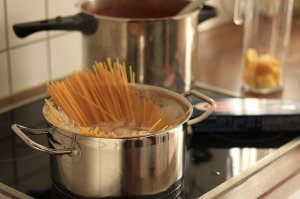
Almost every pasta recipe starts with “heat a large pot of salted water to boiling.” There are various reasons for this ranging from “pasta needs room to move around and cook properly” to “the pasta won’t stick as much”. But, is this true? López-Alt tested cooking pasta found that the pasta cooked just fine in just enough water to keep it covered as it expanded. He even found he didn’t need to keep the water at a good boil to get it to al dente. A nice simmer was enough. He does recommend stirring it a few times during the first couple of minutes to rinse off excessive starch and prevent sticking.

Harold McGee (On Food and Cooking) wrote an article in The New York Times about his pasta cooking experiments and he found he could cook pasta just fine in far less water than usually recommended. He even found that he could start the pasta in cold water rather than waiting until it reached a boil. He did note, though, that this method takes a bit more stirring. Lidia Bastianich agreed with the less water but not with starting it in cold water.

Add oil to your pasta water to prevent sticking
Have you ever added oil to a pot of water? What does it do? It floats on top; that is what it does. Remember, oil and water do not mix. That is why vinaigrettes without emulsifiers must be shaken up before using. The oil and water separate. If that is true, it is easy to see how adding oil to the pasta water is not going to do anything. To prevent your pasta from sticking, just stir it at the beginning and maybe now and then as it is cooking.

One thing oil does do is to prevent the water from boiling over. Of course, if you just simmer your pasta as discussed above, you do not have this worry.

On the same topic, do not add oil to your pasta after draining. The only thing that does is to coat the pasta in such a way that the sauce doesn’t stick.

Never put your cast iron in soapy water
All the “dos and don’ts” of cast iron care keep many people from using these great pans. The truth, though, is that the care is much easier than “experts” say. One of the most commonly repeated pieces of advice is to not put your pan in soapy water. Most experts disagree with this and say that today’s gentle soaps will not harm your pan. Once the seasoning has built up, you may also use gentle scrubbing along with the soap. It is not recommended, though, that you allow your cast iron pan to soak in water. Make it the last thing you clean. Thoroughly dry it and heat on the stovetop until hot. Follow this by rubbing the pan very lightly all over with an unsaturated cooking fat, like canola, vegetable, or corn oil. Buff it well to remove any visible oil. Repeat this process after every use and cleaning. One caveat, do not put it in the dishwasher.

There is only one way (or only one good way) to do something
I encourage you to have a bit of healthy skepticism when a chef or cookbook tells you their way is the only or the best way to do something. Rarely is that true. Let me give you a small example that concerns peeling ginger. If you do a search on peeling ginger, time after time you will get “experts” telling you to use a spoon. When I did a search, this was the first hit from Better Homes & Garden – “This Is the Only Way You Should Peel Ginger”. The entire first page of results all recommended this ONLY way and that is to use the side of a spoon. Sure, it works but is it really the ONLY way or is it even the BEST way? I much prefer to use a serrated peeler. It is easy and efficient. So, am I wrong? According to all the search results, I am. However, I like my way and will stick to it.

Do you have a favorite way of doing something that doesn’t agree with the experts? As long as it is doing the job, is not dangerous and gets great results, I say “Go for it!” There is rarely one way to do something in the kitchen and those that tell you there is are just perpetuating one more culinary myth. Now, just don’t tell my husband I said that. I will watch him doing something in the kitchen in a way that is different from the way I would do it and just shake my head. However, in those situations, I must say that my way is usually better!

Do you have a favorite Culinary Myth to share with others?
Just let me know.

Cooking Tips · Techniques

Culinary Myths Part 1

I was chatting with a friend of mine the other day talking about a cookbook. I told her that one of my pet peeves about some cookbooks is that they perpetuate culinary myths. She encouraged me to write a Cooking Tip on this and so, Elisa, this series is dedicated to you.

Culinary myths are directions and guidance that have been passed down from chef to cook to all of us without anyone questioning them and no one really testing them to see if they are true or not. Many will not harm your cooking but they are often unnecessary and time-wasting steps. Some of the myths that have related to a particular topic, I have addressed before in those particular Tips. In this series of Tips, I put them in one place. This Tip will relate to myths that concern meat.

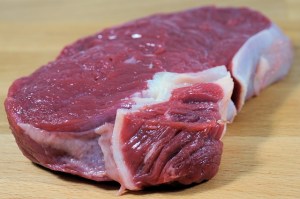
Bring your meat to room temperature before cooking

Even very well-respected chefs will tell you this. In fact, I was recently reviewing a very interesting technique-oriented cookbook that had been published only three years ago that emphasized this. These sources will tell you if you do not let your meat set out of the refrigerator and come to room temperature, it will cook unevenly. I was taught this and always believed it until recently.

In one of my favorite books, The Food Lab by J. Kenji López-Alt, he actually puts this directive to a test. As he notes, it is true that your meat will cook more evenly if it is at room temperature before going in the pan. However, allowing it to sit on your counter for a half-hour won’t get it to room temperature.

To test this, López-Alt cut a refrigerated 15-ounce New York strip steak in half. He put one half on the counter and the other went back into refrigerator. When it came out of the refrigerator, the steak’s internal temperature was 38°F with his kitchen’s room temperature registering at 70°F. He then proceeded to take temperature readings every ten minutes.

Most chefs will recommend a “setting” time of 20 minutes. At that time, the steak’s reading was 39.8°F. After 1 hour and 50 minutes, the steak was only up to 49.6°F. He called it quits after two hours. Proceeding to cook the two steaks side by side, he found they came up to their final cooking temperature at nearly the same time. They also showed the same relative evenness of cooking as well as searing the same.

The author of AmazingRibs.com did a similar test with similar results. The upshot is that this is an unnecessary and time-wasting step. There are better ways to get the result you want such as making sure your meat is dry before searing it and salting it and allowing it to rest uncovered in the refrigerator for at least a few hours or overnight. See next myth for that discussion.

Don’t salt your steak until after it is cooked

Many will tell you that you should not salt your steak until after it is cooked to prevent drying it out and ending up with a tough piece of meat. It turns out that this one is very wrong.

Once again, The Food Lab shows how salting your meat far ahead will lead to a much tastier and moister result. It is true that when you salt a piece of meat, it will begin to draw out moisture. To get a good sear, you will then have to blot the meat dry, taking most of the salt with you. If, however, you leave it setting for at least 45 minutes (or for better results, overnight), the “brine” that has accumulated on the outside will be reabsorbed, leaving the meat’s surface dry and carrying the seasoning inside the meat.

According to Samin Nosrat in Salt, Fat, Acid, Heat, salting ahead of time gives the salt plenty of time to diffuse evenly throughout the meat. Also, she states the salt will dissolve the protein strands into a gel, allowing them to absorb and retain water better as they cook. She recommends seasoning the meat the day before cooking or at least in the morning or afternoon.

This recommendation, according to López-Alt, does not extend to burgers. He cautions that those should be salted just before cooking. Although not without significant criticism, here is his testing and reasoning. If you read through the comments, you will find disagreement. On the other hand, Cooks Illustrated agrees with López-Alt. One last proponent of only salting just before cooking is found in this experiment by GenuineIdeas.com.

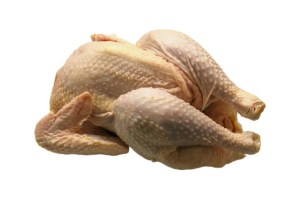
You should wash your chicken before cooking

This has been one bit of advice passed down through the generations as it was thought to decrease the chance of food-borne illnesses. Even Julia Child recommended this. However, it is not true and may even increase the chances of spreading bacteria.

According to a 2019 study by the USDA, washing poultry can easily spread bacteria to other surfaces and foods. The study showed that of the study participants who washed their raw poultry, 60% had bacteria in their sink afterwards and 14% still had bacteria in their sinks after they attempted to clean the sink. A full 26% of participants transferred bacteria from that raw poultry to their salad lettuce. However, of those that did not wash their raw poultry, 31% still managed to get bacteria from the raw poultry onto their salad lettuce. That speaks to the need for thorough handwashing and sanitizing of surfaces that come into contact with raw poultry.

Their recommendations were threefold:

  • Prepare uncooked foods before dealing with the poultry.
  • Thoroughly clean and sanitize any surface that has potentially touched or been contaminated with poultry juices.
  • Cook the meat to the proper temperature as this will kill any concerning organisms.

Searing meat will seal in juices

This myth comes from the theory that the crust that is formed from searing will help the meat to retain moisture. However, this crusty barrier is not waterproof or even water-resistant. The best advice is to cook your steak gently and finish with a high heat sear. It will cook more evenly and produce a juicy and flavorful result. That final sear, though, is not for searing in juices but for producing a flavorful crust. If anything helps to “seal” in juices, it is allowing your meat to rest after cooking before cutting into it.

Bone-in steak is more flavorful

I hear this one commonly. It is one of the reasons we are told to buy bone-in meat. The Food Lab put this one to the test by cooking identical pieces of meat – one was bone-in, one had the bone removed but tied back on and the third had the bone removed but when tied back on, he put a layer of foil between the bone and the meat, presumably to prevent any supposed flavor transfer. They all tasted identical. That being said, there are other reasons you may want to buy bone-in meat but those are for another Tip.

Do not flip your meat very much, preferably only once

People who have tested this have found that multiple flipping actually causes the meat to cook much faster and more evenly. This includes López-Alt but is also echoed by Harold McGee in On Food and Cooking. In the latter, he states that if you really want grill marks, only flip once or twice. But, if texture and moistness are more important, flip every minute. As he explains, neither side has the time to absorb or release large amounts of heat, meaning the meat will cook faster and the outer layers will be less overdone. When a food editor from the Los Angeles Times tried this method, he found that indeed the meat cooked more quickly, more evenly, and also developed a nice brown crust. In addition, he found the “one-flip” rib-eyes seemed to curl during cooking whereas the one flipped more frequently came off the grill flat.

Well, that is enough of the meat-related culinary myths. Stay tuned for more myths in Part 2.

Cooking Tips · Techniques

What Not to Do in the Kitchen

Over the last three years of writing these Cooking Tips, I have strived to provide you with valuable information that will help improve your cooking and baking. I have written about ingredients and techniques that I thought you would find interesting and helpful. In this Cooking Tip, instead of telling you what to do, I want to write about what NOT to do if you want to be successful in the kitchen. The following are sure-fire ways to have problems. It is far from an all-inclusive list but it is a good start.

Not reading your recipes
Not reading your recipe means you don’t realize that you do not have essential ingredients on hand. It also means you do not realize that there is a 2-hour resting period involved when you need to have dinner on the table in 30 minutes. You may even put all of one ingredient in at a particular point when the recipe told you to divide it and use that ingredient at two different points. Not carefully reading your recipe can easily lead to failure.

Not marking up your recipe if you are halving or doubling it.
If you decide to make only half of a recipe, it is so easy to start out by halving the first couple of ingredients and then forgetting to do the same for the rest. Not marking up your recipe with those altered amounts can throw off the balance of the ingredients and lead to an inedible dish.

Not tasting as you cook
If you do not taste the dish until it is on the table, you have no way to improve it. If you don’t taste it as you go along, you won’t realize what is missing and how to improve the flavor and texture. A good cook tastes the food as the cooking process proceeds so they know the final taste will please those who will be eating it.

Not using fresh herbs
Although there are times that dried herbs can be substituted for fresh herbs, there are also those times when fresh herbs are preferable. Even if you can safely substitute, it is never a 1:1 substitution. Use only ⅓ to ½ of dried herbs as you would fresh.

Not making sure your spices are fresh
Spices do not last forever, especially if they are not stored correctly. Spices that are old have no or minimal taste. If they don’t smell of much, they won’t taste of much. And, they won’t do your dish any favors. Not ensuring your spices are fresh will lead to lack-luster dishes.

Not using salt appropriately
Salt has a greater impact on flavor than any other ingredient. It not only has its own taste but it enhances the flavor of other ingredients. It can minimize bitterness and balance sweetness. Although over-salting can ruin a dish, the bigger problem most of us make is under-salting. Absent a doctor’s advice for limiting salt, not using salt appropriately leads to blandness.

Not using the right pan and not using it correctly
If you are making roasted vegetables and you don’t put them in a preheated pan that is large enough, they will steam and never develop that crisp, caramelized goodness. If you try to sear your piece of meat in a nonstick pan, you won’t get the tasty browning nor develop the fond necessary for a wonderful pan sauce. If you do not preheat the pan properly, the meat will never sear properly. If you heat that nonstick pan to try to achieve this, you risk ruining the pan and releasing toxic chemicals. If you don’t pay attention to the size/type of pan called for, the results may be very suboptimal.

You don’t splurge for great ingredients at least part of the time
Your dishes will only be as tasty as the ingredients are, especially if those ingredients are a major part of the dish. The fewer ingredients there are in a dish, the better they should be. If you use just “OK” ingredients, your final dish will be just “OK”.

These are just a few of “What Not to Do” to ensure success in the kitchen. Do you have a favorite lesson that you have learned? Let me know.

I hope these tips help to make your upcoming year of cooking very successful!

Cooking Tips · Techniques

Classic Italian Lasagna Bolognese

Do you have a favorite lasagna recipe? I know I do. However, I suspect my recipe is similar to many of yours in that it is an Americanized version of lasagna. Traditional Italian Lasagna Bolognese is a bit different than what most of us make. I decided to make that for our New Year Eve’s dinner and as part of that, share with you in this Cooking Tip.

Take a look at your favorite lasagna recipe. Does it call for ricotta, mozzarella, parmesan and maybe eggs? Mine uses all of that except the eggs. Classic Italian Lasagna Bolognese is made only of layers of pasta, a slow cooked meat/tomato sauce, a béchamel sauce and a sprinkling of parmesan. Let’s talk, in turn, about each of these components.

As with most Italian food, it is very regional. The following discussion is about lasagna from the Emilia-Romagna region. Other regions will have different styles of lasagna.

Pasta – the pasta is in the form of lasagna sheets. Although not required, fresh pasta is a great addition to the lasagna and classically, it is a spinach pasta. Making fresh pasta is very satisfying and not very difficult. If you have never done it, consider booking a class with me to learn how to do it. If that is not something you want to do, you can buy a good quality dried pasta.

Bolognese sauce – this is a hearty, slow-cooked meat and tomato sauce. There are many recipes that claim to be the “authentic” recipe. In reality, although there are many similarities among all these recipes, there are also differences. In my research, I looked at 12 recipes. I then made a chart of the ingredients so I could easily see how they compared. None of them were exactly the same. Let me break them down into 4 categories.

  • Meat – many recipes used a combination of ground beef and pork while others used solely beef. Occasionally, ground veal was added. About half also called for pancetta.
  • Vegetables – a base of finely chopped onions, celery and carrots was pretty standard. All but one recipe called for these veggies. Some listed garlic as an ingredient but most did not.
  • Tomato product – different chefs had very particular ideas about which type of tomato product should be used but it varied from whole tomatoes to crushed tomatoes to tomato passata to puree. About one-third of the recipes also added tomato paste.
  • Liquid – the liquids ranged from wine to broth to milk. Some added all three while others only called for wine and milk. Still others only used the liquid that was in the tomato product.

Béchamel sauce — this is one of the “mother sauces” that all cooks should master. Béchamel is a simple white sauce made from milk thickened with a white roux (a mixture of butter & flour). This is what gives the lasagna its creamy element instead of all the cheese.

Cheese – ricotta is not to be found in any of the traditional recipes. The cheese of choice is parmesan and is usually just on the top layer. A few recipes will also add mozzarella but these recipes are a minority.

Once you have all the above components, you can assemble your lasagna. Most sources recommend getting as many layers as you can, even up to eight layers. Start by coating your lasagna pan with butter. On the bottom spread a small amount of béchamel and a spoonful of Bolognese. Follow with a layer of noodles, Bolognese sauce and more béchamel. Repeat these layers until your pan is full alternating the direction of the noodles each layer. The top layer should be béchamel. Some chefs will sprinkle parmesan on each layer while others will just do it on the top of the lasagna.

Although you can go from start to finish in one long day, you can also make things ahead of time. The Bolognese sauce actually benefits from being made 2-3 days ahead and letting it sit in the refrigerator to meld all the flavors. After it is cooked and cooled, it may also be frozen up to 3 months. Since this is the component that takes the longest, this also helps with time management. I made mine 2 days prior to the day I wanted to serve the lasagna.

Both the pasta and the béchamel sauce can be made a day ahead but since they do not take an enormous amount of time, I made mine the same day of serving. If you choose to make the sauces ahead of time, reheat them before using taking care not to boil the béchamel.

You may also assemble the entire dish ahead of time and refrigerate for up to 2 days. If you do this, some recommend letting it sit at room temperature for a couple of hours before baking while others will say it is fine to go right from the refrigerator to the oven. Another option is to freeze it unbaked for up to a month. Let sit in the refrigerator overnight before baking.

Baking is usually done with the pan covered but taking the foil off for the last 20 minutes so that it will brown nicely.

It was definitely a labor of love as the time involved in making this classic Lasagna Bolognese was more than my regular lasagna. I must say, though, that it was worth it.

Cooking Tips · Techniques

Cooking Basics — Mother Sauces II

In last week’s Cooking Tip, we started our discussion of Mother Sauces by explaining a roux as well as the two white sauces known as béchamel and velouté. In this Cooking Tip, I will be finishing with the other three mother sauces.

Espagnole – this is a basic brown sauce made by enhancing a brown stock (usually made from roasted beef/veal bones) with browned mirepoix and tomato puree and thickening it with a brown roux. Espagnole is rarely used by itself because of its strength in taste.

It is often further refined to produce a very rich and flavorful sauce called demi-glace. This is a mixture of half espagnole and half brown stock, which is then reduced by half.

Other types of brown sauces include jus liés, pan sauces and reduction sauces. Jus liés are made by reducing brown stocks and thickening with a starch slurry. Pan sauces and reduction sauces are produced as part of the roasting or sauteing cooking process. The sauces can be thickened with roux, starch slurries or just simple reduction.

This brown sauce is often paired with meat dishes like roast lamb or as the base of a beef bourguignon. Variations include:

  • Sauce Robert (Dijon mustard & onion)
  • Sauce Madiera (mushrooms, shallots)
  • Grand Veneur (red currant jam or other dark berry & cream).

Hollandaise – this classic sauce is an emulsion of eggs, butter & acid.

The recommended ratio of egg to butter varies from 1 yolk for every 2-3 ounces of butter to 3 yolks to ½ cup butter. If you have concerns about the eggs, you can use pasteurized eggs. Alternatively, if you use a method where you gently cook the egg yolks in a bain marie, you can get them to a safe temperature. The acid is traditionally either a vinegar reduction or lemon juice and is included for flavor and the effect it has on the yolk. It also provides the water necessary for an emulsion.

Since the largest part is butter, the success of failure of the sauce depends not just on technique but on the quality of the butter.

A typical hollandaise recipe might be the following.

  1. If wanting to use a vinegar reduction, cook white wine, white wine vinegar and minced shallots over moderate heat until nearly dry. Cool and then add a small amount of water. This is your reduction.
  2. Add egg yolks to the reduction and place bowl over simmering water, whisking until thickened and warm (145°F).
  3. When the yolks have increased in size by 2-3 times and fall in ribbons, remove from the simmering water.
  4. Gradually whisk in warm butter, adding in a thin stream and whisking constantly. As you do this, the sauce will thicken.
  5. Season to taste with salt, pepper, cayenne and/or lemon juice.

If the sauce becomes too thick, add a small amount of water or lemon juice. If the sauce starts to break, add a small amount of cold water and whisk until it is smooth again. Another alternative is to cook another yolk as before and then gradually whisk it into the broken sauce.

A blender may also be used to make hollandaise. If you do this method and you are not heating your egg yolks, you may want to use pasteurized eggs.

There are many Hollandaise derivatives but they usually start with a Béarnaise sauce.

  • Béarnaise – hollandaise plus tarragon
  • Foyot – béarnaise + glace de viande (meat stock reduced to a syrup)
  • Choron – hollandaise plus tomato
  • Sauce Escoffier is made by combining choron, foyot and béarnaise
  • Sauce Maltese – this uses a blood orange reduction and hollandaise

Common uses are for eggs benedict or as an asparagus dipping sauce.

Tomato sauce – this is a generic term for any sauced based mainly on tomatoes. The tomatoes might be raw or cooked anywhere from a few minutes to a few hours. The cooking fat might be oil or rendered bacon fat. Some sauces will be puréed until smooth and others will be chunkier.

It might be made with canned or fresh tomatoes. (For a discussion of the different types of canned tomato products, see this Cooking Tip. As with the white sauces, it is often started with a mirepoix for flavoring. Others might just use onions and garlic. A meaty flavor is often imparted by using ham or pork bones.

Tomato sauce was actually a new world import but the French adapted it by adding a roux and herbs to produce a more refined sauce. The Italians produced a rustic, tomato-forward sauce with many regional differences. As with the Italians, most of us do not use a roux to thicken it but rather just reduce it with simmering to get the texture we want.

That brings us to the end of the classic Mother Sauces. Having a working knowledge of these sauces will help you immensely improve your cooking. For a discussion of a few other sauces, see this Cooking Tip.

Cooking Tips · Techniques

Cooking Basics — Mother Sauces I

A couple of weeks ago I wrote about a subject for those of you who really want to improve your baking – weighing your ingredients. In this Cooking Tip, I want to discuss something that will elevate your cooking skills. All good cooks should have a working knowledge of sauces and how to make them. That starts by understanding what is called “Mother Sauces”. Of course, there is much more to sauces than just these mother sauces, but it is a good place to start.

Sauces can be categorized in different ways but one of the most classic is the French system. It was first laid out by Antonin Carême (1783-1833) in The Art of French Cooking in the 19th Century, although he only listed four sauces. Later, Auguste Escoffier in Guide Culinaire (1902) added a fifth. Modern culinary education has refined this list to what you will read about below.

Before we get into the different sauces, let me discuss “roux” as it is essential for most of these sauces. A roux is a mixture of flour and fat that, after being cooked over heat, is used to thicken liquids. There are three types that differ by cooking time and resulting color.

  • White roux – it is barely colored, chalky or very light beige
  • Blond roux – this is golden in color with a slight nutty aroma
  • Brown/Dark roux – this roux is deep brown with a pronounced nutty aroma

The Professional Chef by The Culinary Institute of America defines a basic roux as 6 parts flour to 4 parts fat, by weight. However, most sources recommend a 1:1 ratio of flour to fat.

The procedure is to melt the fat (usually butter) in a saucepan without browning it. The flour is whisked into the melted fat to form a paste. This is then cooked to eliminate the raw flour taste and aroma. The Professional Chef also notes that it inactivates an enzyme that can interfere with flour’s thickening ability. How long you cook it will depend on which of the above rouxs you want and what your recipe requires. The length of cooking does affect the thickening ability of the roux. The longer you cook it, some of the starch in the flour breaks down resulting in less thickening power.

Liquid is then added in a thin, steady stream (or a couple of tablespoons at a time), whisking all the time to achieve a homogenous consistency. Adding it slowly or in small increments will produce a much smoother sauce. If you do get clumps, whisk vigorously or use an immersion blender to smooth it out. As the sauce is then brought to a simmer, it will start to thicken. The heat should be reduced as you continue to stir until the sauce coats the back of a spoon (nappé stage). At this point, season with salt and pepper and any other desired seasoning.

One ounce of roux will thicken one cup of liquid to the nappé stage. You may adjust the amount of roux based on how thick you want the finished product.

Now on to the five Mother Sauces. Two of these are white sauces, one is brown, one is tomato-based and the final is egg-based. In this Cooking Tip, we will learn about the white sauces – béchamel and velouté. We will look at the others in a subsequent Cooking Tip.

  • Béchamel – this is a white sauce made by using a white or blond roux and milk. If using a blonde roux, the resulting sauce will be more golden in color.

    You start by making the roux, as explained above. After adding the milk and combining it, The Professional Chef recommends to carefully simmer it for about 30 to 60 minutes to ensure the raw flavor is cooked off. Most sources (including myself) do not cook it nearly that long. Be sure to stir periodically getting into the corners to make sure the milk does not scorch. For a refined product, strain after cooking. It can be used immediately or stored in the refrigerator for a couple of days. Gently reheat before serving.

    Sometimes aromatics such as a mirepoix, mushroom trimmings, bouquet garni or a sachet d’épices will be used for flavor.

    A béchamel sauce is important for making macaroni and cheese, souffles and a traditional Lasagna Bolognese. It can also be a base for other sauces and you can add your choice of seasonings to complement your dish. Add cheese for a Mornay sauce. A Soubise sauce has the addition of pureed onions. Spread it on bread when making a Croque Monsieur. An Aurora sauce adds tomato puree to the basic béchamel sauce.

  • Velouté – another white sauce that uses a white or blond roux but rather than the liquid being milk, it is a light stock such as chicken, fish or vegetable.

    The technique is the same as with a béchamel sauce although there is less concern of scorching since you are not using a dairy product. Aromatics may also be used as with a béchamel sauce.

    This is the sauce we use to make gravy or a pot pie. If finished with cream, butter, and lemon juice, it is known as Sauce Suprême. Allemande sauce is velouté thickened with egg yolks, heavy cream, and seasoned with lemon juice whereas Normande sauce is a chicken or fish velouté thickened with heavy cream, butter, and egg yolk. The latter is primarily served with seafood.

I suspect that most of you have made these two white sauces whether you knew the names or not. They are something you can whip up easily without a recipe and enhance the flavor of what you are serving. Look for next week’s Cooking Tip as we delve into the other three mother sauces.