Cooking Tips · Ingredients

Organic Meat & Dairy

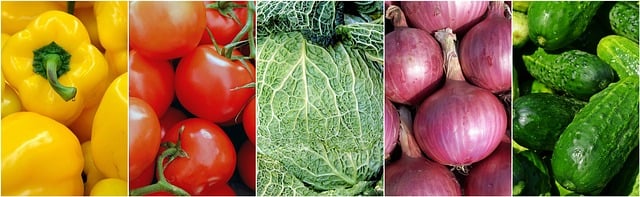
Last week, we looked at the subject of organic and conventional produce and I gave you some information to help you determine which you think is best for you and your family. In this week’s Cooking Tip, I want to talk about organic meat and dairy.

First, we need to understand what the word “organic” means in relation to meat and dairy. According to the USDA’s website:

  • The USDA organic label on dairy or meat products means that the animals … were raised in living conditions that accommodated their natural behaviors, without being administered hormones or antibiotics, and while grazing on pasture grown on healthy soil. Thereafter, the meat or dairy product is processed without any artificial colors, preservatives, or flavors before being packaged to avoid contact with any prohibited, nonorganic substances.” As part of this, the use of GMOs is prohibited.
  • The basic rule is to allow natural substances and prohibit synthetic. For livestock, however, vaccines play an important part in animal health, especially since antibiotic therapy is prohibited.
  • Yearly organic inspections are required including, but not limited to, seed sources, soil conditions, crop health, weed and pest management, water systems, inputs, contamination and commingling risks and prevention, and record-keeping.
  • Producers must use 100% organic feed, but they may provide allowed vitamin and mineral supplements.

Image by Penny from Pixabay

Are there any benefits of eating organic meat/dairy? Medical professionals at the Cleveland Clinic believe there are health benefits linked to choosing organic. However, they temper this by stating that “it’s not certain that eating organic foods will make a difference in one’s health.”

Possible benefits:

  • Reduced exposure to pesticides and insecticides.
  • Increased exposure to omega-3 fatty acids as livestock fed through grazing usually have higher levels of omega-3 fatty acids.
  • Lower levels of cadmium in organic grains.
  • Increased levels of vitamins, minerals, antioxidants and other beneficial micronutrients.
  • Less exposure to bacteria in meat.
  • Less exposure to antibiotics and growth hormones.

According to Healthline, there are pros and cons to organic milk.
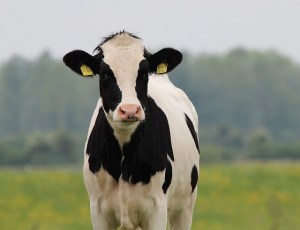
Image by Penny from Pixabay

Pros

  • Organic cow’s milk is higher in polyunsaturated fatty acids than conventional milk. However, once again, these differences may only be marginal and not offer more nutritional benefits than conventional milk. Also, some experts say this improved fatty acid content is due to farming practices that allow cows to graze and forage and not the organic farming itself.
  • Organic milk has lower levels of drug residues (including antibiotics & growth hormones) than regular milk, although the amounts in regular milk are still considered safe. As for antibiotics, researchers at the University of California, Davis explain that there are never any antibiotics in any type of milk. This is due to policies in place by the Food and Drug Administration (FDA) and American Veterinary Medicine Association that control drug use. For more detail, see this article.
  • Organic milk has a longer shelf life due to the pasteurization processes it undergoes.

Cons

  • Organic milk is lower in iodine and selenium, two nutrients that are important for thyroid health.
  • Organic milk is slightly higher in calories.
  • Organic milk has a higher saturated fat content.
  • Organic milk is more expensive.

Neutral

  • Both have comparable levels of calcium, potassium, and sodium.

Although the discussion of the environmental impacts of organic versus conventional farming is outside the scope of this Tip, if you are interested, here is a very well-researched article on this subject by researchers at the University of California at Davis. Let me just say it is not as clear cut as organic proponents say it is. As with so many topics, the truth is more nuanced.

I hope this article and the one about produce will help you determine if and when you wish to pay the increased cost associated with organic foods. It is a very personal decision but one that should be made with the data required to make an informed decision.
Cooking Tips · Ingredients

Organic Produce – is it worth the cost?

I first wrote about Organic Foods a few years ago. I decided to update this Cooking Tip with some interesting data, but I am going to limit the discussion to produce. Organic meat and dairy will have to wait for a future Cooking Tip. I would suspect that most people buy organic as they think it is safer to eat. They might also think it is healthier. Since organic foods are more expensive than conventional, it would be good to know if either of these beliefs are true. That is the subject of this Cooking Tip.

Let me start with something we all probably know. That is that there are very strong feelings on both sides of the “organic vs conventional” debate. The only one who can answer “is it worth it” for you and your family is you. One caveat is that more research probably needs to be done and the results of any future research could alter the current thought on organic foods.

There is a US-based environmental advocacy organization called the Environmental Working Group (EWG). Since 1995, they have produced an annual list of what they call The Dirty Dozen and The Clean 15. According to this group, the “Dirty Dozen” of produce has the greatest potential for containing pesticide residue. Therefore, the EWG recommends that consumers only purchase organic forms of these food items. Each year this list is produced and is highly publicized by our media. For the 2022 list, see this link. The “Clean 15” is a list of produce that they say had little to no traces of pesticides, and the EWG considers safe to consume in non-organic form.

On the other side of this discussion is a peer-reviewed study published in the Journal of Toxicology. This study concluded the following:

  • Exposures to the most commonly detected pesticides on the twelve commodities (celery, blueberries, kale, nectarines, peaches, potatoes, spinach, strawberries, cherries, apples, grapes (imported), bell peppers) pose negligible risks to consumers.
  • Substitution of organic forms of the twelve commodities for conventional forms does not result in any appreciable reduction of consumer risks.
  • The methodology used by the environmental advocacy group (EWG) to rank commodities with respect to pesticide risks lacks scientific credibility.

In a 2019 report (attach report) by the Pesticide Data Program (part of the USDA), they state “nearly 99 percent of the samples tested had residues below the tolerances established by the EPA with 42.5 percent having no detectable residue.” Of course, for this to have meaning to you, you must put trust in these levels established by the government.

Another interesting point is that organic farming does not mean that there are no pesticides used, only that the pesticides themselves are certified organic. This usually means that they are “natural” rather than “synthetic” but there are some synthetic chemicals that are allowed in organic farming. And, many scientists have concluded that organic pesticides pose the same health risks as non-organic ones.

As of now, there is no evidence that organic produce is more nutritious than conventional produce. In fact, most of the studies done on the health benefits of produce have been done on the conventional varieties. A study published in the Annals of Internal Medicine in 2011 concluded “The published literature lacks strong evidence that organic foods are significantly more nutritious than conventional foods.” There are some studies that have shown higher levels of Vitamin C, some minerals & antioxidants in organic produce although the experts say the differences are too small to have an impact on overall nutrition.

What is the cost? A 2015 Consumer Reports study showed, that on average, organic foods are 47% more costly than non-organic. As this is an average, you will see a significant range of cost differences depending on the food and the store. Interestingly, a study in the Proceedings of the National Academy of Sciences found it only costs farmers 5-7% more to use organic methods. In recent years, the price differences have become less as more traditional grocery stores start to offer their own organic versions.

This price difference is a concern for low-income shoppers. They have heard the same media reports about organic vs conventional produce but the expense does not allow them to purchase the organic versions. What is disappointing is that a 2016 study published in Nutrition Today found that rather than purchasing the conventional produce, they often chose to not purchase any produce at all, something that is not a positive for their diet and health.

Some industry professionals recommend concentrating more on “Buying Local” with the hopes that those fruit & vegetables are fresher and seasonal. Locally-grown produce does not mean it is necessarily organic although it may be depending on the farm. If you have the space & ability, there is no more local than growing your produce yourself. In that case, you will have no questions as to how or where it was grown.

As I said in the beginning, only you can decide if you want to go organic and to what extent. Just know there are arguments on both sides but the science, to this point, does not seem to support a strong preference for organic. Most importantly, eat a diet high in fresh fruits and vegetables. The nutrients that are found in those items are so necessary in your diet and resulting health.

Cooking Tips · Techniques

Clean Eating – Good or Bad?

A phrase we have all probably heard over the past few years is Clean Eating. Is it just a catch phrase, a trendy talking point or is there more to it than that? That is the subject of this Cooking Tip.

Since the term “clean eating” is not a regulated term, there is no one definition for it. Food manufacturers can put that label on their food products but, without an agreed-upon definition, it is pretty meaningless. Also, it can mean different things to different people.

At its most basic, clean eating is healthy eating. If you had to compare it to something that the consumer is more likely to understand, it is very similar to the Mediterranean way of eating.

It generally means a type of eating that includes fruits, vegetables, whole grains, healthy proteins and healthy fats. It also means limiting refined grains, preservatives, unhealthy fats and excessive added sugar and salt. Earlier this year, I wrote a series of Cooking Tips on just this subject of cooking and eating healthy. Rather than repeat all of that in this Tip, see these prior Tips for more information.

Some Clean Eating advocates will emphasize other requirements such as:

  • Only eating organic produce. For some of the pros/cons of buying organic, see next week’s Cooking Tip.
  • Gluten Free
  • Dairy Free
  • Some will also include the environment in the list of items to consider.

Although trying to eat healthier and trying to incorporate Mediterranean eating principles is a good thing, there are cautions to be made if this “Clean Eating” is taken to an extreme. Some clean eating recommendations can be so restrictive that the intake of essential nutrients suffers.

There is even an eating disorder termed Orthorexia Nervosa (ON) that has been defined as “an obsession with proper or healthful eating”. It has not been added to the Diagnostic and Statistical Manual (DSM) as an actual disorder but is being recognized more and more.

Currently, there is no universally shared definition of ON. According to the National Eating Disorders Association, some warning signs and symptoms are:

  • Compulsive checking of ingredient lists and nutritional labels
  • An increase in concern about the health of ingredients
  • Cutting out an increasing number of food groups (all sugar, all carbs, all dairy, all meat, all animal products)
  • An inability to eat anything but a narrow group of foods that are deemed “healthy” or “pure”
  • Unusual interest in the health of what others are eating
  • Spending hours per day thinking about what food might be served at upcoming events
  • Showing high levels of distress when “safe” or “healthy” foods aren’t available
  • Obsessive following of food and healthy lifestyle blogs on social media
  • Body image concerns may or may not be present

This can lead to distress, anxiety, or obsessive-compulsiveness. According to Rachel Hartley Nutrition,

“Clean eating creates guilt and shame around food by creating hierarchies – clean, good foods vs. dirty, unhealthy bad foods. This binary approach is nutritionally inaccurate. While certainly there are foods that contain more nutrients than others, what makes a food a “healthier” choice is much more nuanced than vitamins, minerals, and fiber. Convenience, social and cultural connection, as well as other situational and individual factors all play roles that are just as important. Even if nutrition was as simple as good vs. bad foods, labeling food in such a way doesn’t actually help you eat those foods in a healthy way. Labelling food as good and bad fuels disordered eating behaviors, especially the restrict-binge cycle. In other words, thinking of a food as bad doesn’t necessarily mean you would be eating less of it, just that you would be eating it more chaotically.”

Clean eating is also very isolating as it makes it very difficult to socialize with friends/family if any sort of meal is involved. This, in itself, can be damaging to a person’s overall health.

As with so many things in life, Clean Eating is not all good nor all bad. If it helps you to get on the path to healthy eating, that is a good thing. If taken to the extreme, it can be dangerous. Let’s all make this year one of enjoying food in a healthy manner, which can greatly enhance our lives.

Image by S K from Pixabay
Cooking Tips · Ingredients

Tea – A British Tradition

Even if you do not like to drink tea, I would bet that many of you enjoy sitting down to a beautiful and tasty Afternoon Tea or even just a simple Cream Tea. Just what these events are and some of the arguments around them is the subject of this Cooking Tip.

Image by Ji-yeon Yun from Pixabay

The first piece of disagreement about Afternoon Tea is the name. Here in the US, most people use the term High Tea rather than Afternoon Tea but this is a misnomer. The concept of Afternoon Tea started in England in the 1840s when The Duchess of Bedford wanted a small bite between lunch and dinner. It started out as just tea and a small snack, but the popularity grew once she started inviting her friends over and it became a social gathering for the wealthy social class. It developed into a light meal composed of three courses – tea sandwiches and savories, scones with clotted cream and jam, and sweet pastries. Everything was bite-sized and eaten with fingers. Afternoon tea time was around 4:00 pm. It was not meant to replace dinner but instead to tide someone over until dinner, which was usually served at 8:00 pm for the upper class. Afternoon tea is also called Low Tea since it was enjoyed on low tables with comfortable chairs and sofas in the drawing room.

High Tea, on the other hand, was a working class family evening meal or supper. High Tea time was between 5:00 pm & 7:00 pm after the working class came home from work. The menu consisted of much heartier dishes meant to nourish after a long day at work. High Tea was served at a high dining table where supper was eaten and thus, the name.

Image by Stefan Schweihofer from Pixabay

Cream Tea is a simple delight consisting only of scones (with clotted cream and jam) and tea.

Another interesting argument has to do with the scone course and it is one that continues to divide people in Britain. The debate is about how you put the jam and clotted cream onto the scones. Do you put the jam on first or do you put the clotted cream on first? The two counties from which clotted cream originated are Devon and Cornwall and they vehemently disagree on this topic. In Devon, the cream is spread on the scone first followed by the jam. In Cornwall, they say the jam must go on first. Here is a summary of their respective arguments.

Cornwall – jam first

  • It is easier to spread the jam on first and then add cream.
  • The jam does not slide off the cream.
  • You can taste the cream better.
  • You usually put cream on the top of other desserts, e.g., pie, fruit, cake.

Devon – cream first

  • The cream is like butter for the scone.
  • The jam will lie flatter on the cream, making it a bit easier to eat.
  • You are at less of a risk of getting cream on your face.
  • It originates from when jam was expensive so you would just put a small amount on top.

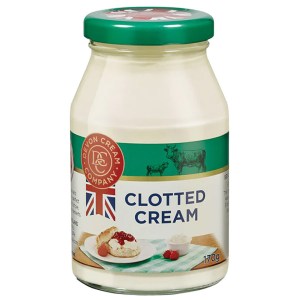
A final topic is just what clotted cream is. Authentic clotted cream is made in either Devon or Cornwall, England. It is made by heating unpasteurized cow’s milk for many hours, which causes the cream to rise to the surface and “clot.” The historians say that clotted cream was originally made by farmers to reduce spoilage. As they did not have refrigeration, heating the milk was a way of separating the cream from the watery whey, which is where the bacteria were found. This also produced a thick and rich cream that became very popular.

Just as champagne cannot be called that unless it is from the Champagne region of France, products can only be labeled as “Cornish clotted cream” if they are made with milk from Cornwall cows and are a minimum of 55% butterfat. The farmers tell us that it is the grass eaten by Cornish cows that gives the clotted cream its yellow color.

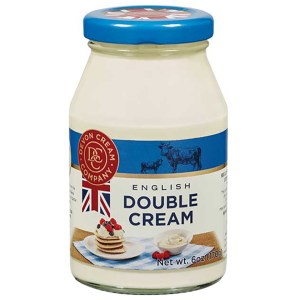
Clotted cream should be distinguished from other dairy products. If the cream is allowed to separate naturally – without the application of heat – you get different products. If you allow the milk to separate just once, it produces “single cream”. If there is a second separation, it produces “double cream.” These products contain less fat and, therefore, are thinner and have a lighter taste.

You may wonder how these dairy items compare to American products. In the US, our heavy cream is 36-40% fat, whipping cream is 30-36%, and light (table) cream is 18-30%. Half-and-half is a mixture of cream and whole milk. It contains 10-12% fat. The British double cream is 48% fat, whipping cream is 35% fat, and single cream is 18%. As we noted above, clotted cream is at least 55% fat but some is up to 65%.

What is your preference? Do you prefer a traditional Afternoon Tea or a simple Cream Tea. I know when my husband and I lived in England and were visiting different villages, we loved to find a tea house and sit down for a relaxing Cream Tea. It was a wonderful delight!

Cooking Tips · Ingredients

Baking Soda & its non-baking uses

I am sure we all have a box of baking soda in our pantries. Mine sits in a cupboard that contains most of my baking supplies – flour, sugar, baking powder, extracts, etc. However, baking soda has culinary uses beyond baking and that is the subject of this Cooking Tip.

Baking soda is sodium bicarbonate, a naturally alkaline substance. Therefore, it raises the pH of foods to which we add it. Below are some ways that chefs like to use baking soda in the kitchen.

Leavening (chemical)

When combined with an acidic ingredient (buttermilk, yogurt), it produces CO2 gas bubbles, causing the batter or dough to rise. Because this chemical reaction occurs immediately upon moistening the baking soda, it should be mixed with the other dry ingredients before adding any liquid. Also, the batter should be placed in the oven immediately after combining or you will lose the lift it provides.

Color changes

Browning

Baking soda is well known for aiding in browning. Acidic items will be paler whereas alkaline ones will be darker. I was told in culinary school that if you see a recipe that just has a small amount of baking soda in it, it is probably there not for its leavening effect but for increased browning. It turns out there is a scientific reason for that.

To explain it, let me discuss two different but related reactions we often see in the kitchen – caramelization and the Maillard reaction. The Maillard reaction is also known as the “browning reaction”. It is a chemical action that takes place in food between sugar and amino acids as heat is applied. That is what is happening when you get that brown color on your steaks or other food items.

To caramelize something is to heat it until the sugar liquefies into a clear syrup and then continuing to cook it to stages of browning. It is similar to the Maillard reaction but note that it only involves sugar while Maillard is both sugar and amino acids.

As the pH of the environment rises, both of these reactions proceed at an accelerated rate leading to enhanced browning. Boiling bagels in water with baking soda added to it is just one example. A tiny pinch of baking soda added to veggies while roasting or sauteing accelerates the rate of these reactions, resulting in better browning.

Purple

The pigment anthocyanin is what gives the purple color to purple cabbage, purple asparagus, etc. It will turn blue or green in the presence of baking soda. (Conversely, the color becomes more red or pink in an acidic environment.) For a more detailed explanation of this along with photos and a fun experiment to do with your kids, see this article from Decoding Delicious.

Green

Baking soda and its alkaline effect can actually help set the green color found in foods with chlorophyll.

White

Potatoes, onions, cauliflower, and the white parts of celery, cucumbers, and zucchini get their white color from flavones. They may turn a brownish-yellow when cooked with alkaline ingredients.

Softening effect

Pectin is a carbohydrate that occurs naturally in the cell walls of fruits and vegetables and is what gives them structure but will be broken down when cooking, resulting in softening.

Adding a pinch of baking soda creates an alkaline environment that breaks down the pectin and weakens the cell walls. This allows them to cook and soften more quickly.

Examples include veggies and dried beans. Adding baking soda to the latter can dramatically cut down the cooking time. One caution from experts is not to add more than ⅛ teaspoon per pound of soaked beans. This helps prevent developing an unpleasant taste that can occur with excessive baking soda. Soaking the beans overnight in a mixture of water and baking soda will help speed up the cooking time and lead to better texture. This is especially true if you are going to use them to make a great batch of hummus

The process of sauteing or caramelizing alliums (onions, shallots) can be sped up with the addition of just a bit of baking soda but too much can be detrimental to the final texture. Just ¼ teaspoon for every pound of sliced onions is recommended.

Polenta is a dish that should be creamy but starts with gritty cornmeal. Water must enter the cells causing the starch granules to swell and burst. Baking soda breaks down the pectin in those cell walls allowing the water to enter in a much shorter time.

Potatoes are wonderful when roasted. To do this, check out this recipe from Serious Eats, where the potatoes are par-boiled in water along with salt and baking soda. As J. Kenji López-Alt explains, “the alkaline water helps the exteriors of the potatoes break down more, creating much more of the starchy slurry that leads to an extra-crisp exterior. About a half teaspoon of baking soda for two quarts of water was the right amount.”

Although this recipe is highly recommended, not all find it lives up to the hype. When TheKitchn.com put it to the test, they were not able to duplicate the promised result of dark and very crispy potatoes.

Tempering Acidity

Baking soda has long been used to tone down the acidity of a dish such as tomato soup or even coffee. Different brands of canned tomatoes vary when it comes to acidity, but just ¼ teaspoon of baking soda can help to neutralize this excess acidity without impacting their texture or overall flavor.

Turning Spaghetti Into Ramen Noodles

Here is one last unusual use of baking soda, given to us by Serious Eats. That is turning angel hair pasta into ramen noodles. Ramen dough is said to include an alkaline mineral component called kansui, which gives the noodles their yellow hue and springy texture. According to Serious Eats, you can get somewhat similar results by adding baking soda to a boiling pot of angel hair. If you care to know more, see this post.

Did you know that baking soda could do all these things in your kitchen? And, that doesn’t even address non-culinary uses such as cleaning. Just make sure the baking soda you wish to use in your food, especially for leavening purposes, is fresh. Leave the older box for other purposes.

Cooking Tips · Ingredients

Coriander & Cilantro – are they the same thing?

Last week’s Cooking Tip was about the wonderful spice, Cumin. Coriander is another spice that is often used in combination with cumin. That is why I decided to make it the subject of this Cooking Tip.

Just as with cumin, coriander is an ancient spice. Seeds have been found in the tombs of Pharaohs and history says that the Roman legions carried it as they progressed through Europe, using it to flavor their breads. Coriander also has its own mention in the Bible, comparing the taste of manna to that of coriander. (Exodus 16:31 & Numbers 11:7)

Coriander is part of the parsley and carrot family and is native to the Mediterranean and the Middle East. It is now grown in Brazil, Canada, Eastern Europe, Holland, India, North Africa, Russia, South America, South Asia and the US.

There are two varieties – Indian and Moroccan. Indian coriander seeds are larger and more golden as compared to the smaller, darker brown Moroccan variety. India tends to consume what it grows and so, what we have in the stores is usually Moroccan or European.

Coriander is one of the few spices that is completely edible from its roots to its leaves to its seeds. The seeds are small, about the size of peppercorns with a pale, creamy brown color. The herby leaves are green and have an appearance similar to Italian parsley.

In the UK and other European countries, coriander refers to both the herb and the spice whereas in the US, we use the word coriander for the spice and cilantro for the herb.

Besides being found in whole and ground form, coriander is also found in many spice mixtures such as curry powders and garam masala. As I mentioned above, coriander is often combined with cumin.

Many say the flavor differences between Moroccan and Indian coriander are minimal at most. Others feel that the Moroccan variety has a sweet, woodsy, spicy fragrance with a warm flavor whereas the Indian coriander has a sweeter and stronger aroma with more nuttiness and citrus notes.

On their own, the seeds are highly aromatic, warm and nutty with a hint of citrus. When left whole, the flavor is floral, citrusy and sweet. When ground, the roasted nuttiness comes out.

The flavor of the leaves is fresh, clean and bright unless you are one of those people who think it tastes like soap.

Coriander and/or cilantro is used in many cuisines such as Egyptian, Latin American, Mexican, Indian, Middle Eastern and Asian. The leaves/roots are especially used in Thai curries, Vietnamese pho, and Chinese stir fries as well as in dips, sauces, dressings, salsas and chutneys.

So, there you are. Coriander is another one of those spices that certainly deserves a place in your pantry, alongside cumin. Is it in yours?

Cooking Tips · Ingredients

Cumin – a perfect cold weather spice!

In prior Cooking Tips, I have discussed a few different spices such as Cardamom, Cinnamon, Oregano, Paprika, Pepper, Saffron, Salt and Sumac. Some of those spices you probably use every day and others only occasionally or not at all. In this Cooking Tip, I would like to tell you about a spice that I use very frequently and I am wondering if that is the same for you. That spice is Cumin.

Image by Amatus Sami Tahera from Pixabay

Cumin is the seed from an herb in the parsley family. It is an ancient spice having been used by the Romans and even mentioned in the Bible (Isaiah 28: 25, 27 & Matthew 23:23). It is also said to have been used as a preservative in the mummification process.

It was originally cultivated in Iran and the Mediterranean region and was introduced to the Americas by Portuguese and Spanish colonists.

Today, it is grown in many countries including Afghanistan, Chile, China, Egypt, India, Iran, Mexico, Morocco, Pakistan, Syria, Turkey and Uzbekistan. India is the main producer and consumer of cumin, accounting for about 70% of the world’s production and 63% of total consumption.

Cumin seeds are small, light brown and grooved along the surface. There is also a black cumin, which grows in Iran. The seeds are smaller in size with a sweeter aroma. It is not a good substitute for regular cumin. Cumin can be found in whole form as well as ground. See this Cooking Tip for the pros/cons of whole vs ground spices. In Morocco, ground cumin is kept on the table and used to season meats much as we would salt and pepper.

In our stores, you should be able to find both whole and ground cumin. You will also find that cumin is present in a number of different spice blends such as taco seasoning, achiote, garam masala, Baharat, chili powder and curry powders.

It is a very aromatic spice due to its high content of essential oils. The flavor is warm and earthy and slightly pungent and this flavor profile lend itself well to Mexican, Tex-Mex and Indian dishes. As with many spices, dry-frying or toasting the seeds before grinding will bring out the flavor.

Store in an airtight container in a dry, cool area away from light. The ground form is best used within six months whereas the whole seeds can last up to a year.

Add it to dishes where you want a warm, earthy flavor such as in soups, stews, meats and veggies. Vegetarians like to use it as it gives some of that savory/meaty flavor to their dishes. It is a necessary ingredient of my favorite chili recipe along with other dishes that have a southwest, Indian or Moroccan flair.

According to McCormick, it is currently one of the top 10 spices sold in the US. Is it one of the top 10 spices in your pantry?

Cooking Tips · Ingredients

Coming everywhere – cage-free egg laws

If you are one of my readers that live in Colorado, you have probably heard that all eggs produced and sold in in this state as of January 2023 must now be Cage Free. What does that mean – not only for the chickens but also for you, the consumer? That is the subject of this Cooking Tip.

Colorado is not the only state to pass such laws. Other states with similar laws are:

  • Arizona
  • California
  • Massachusetts
  • Michigan
  • Nevada
  • Oregon
  • Rhode Island
  • Utah
  • Washington

Although some will hail this trend and those states that have passed these laws, only two of those states are on the list of top 10 egg producing states. Here is that breakdown.

  1. Iowa
  2. Indiana
  3. Ohio
  4. Pennsylvania
  5. Texas
  6. Georgia
  7. Michigan
  8. North Carolina
  9. California
  10. Arkansas

If your state isn’t one of those listed with cage-free laws now, it may soon be as there is a nation-wide effort to get these laws in place. Each state’s law may be different. I will lay out Colorado’s law but if you are in another state, you will need to research that law to understand the definition.

According to Colorado law:

  • The chickens must have enclosure measurements of no less than 1 square foot per hen.
  • By 1 January 2025, there needs to be a “cage-free housing system”, which has requirements for more space.
  • Farm owners must obtain a certificate that affirms that the eggs produced are compliant with regulations, which must be renewed annually. The farmers are responsible for hiring an inspection provider.
  • After certification, egg cartons must contain the statement “CO-COM”. (Note there is no requirement to have “cage free” on the label although producers will most likely do this.)
  • The requirements do not apply to farming operations with less than 3,000 hens.

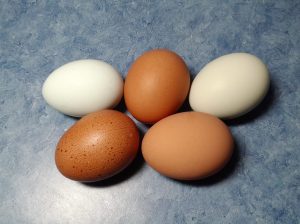
So, just what is the definition of cage free? The USDA states that “eggs labeled ‘cage-free’ or ‘from free-roaming hens’ are laid by hens that are allowed to roam in a room or open area, which is typically a barn or poultry house.” Note that nothing is said about being outdoors and, indeed, the hens may spend their entire lives indoors. They do, however, have more space to spread their wings, dig around in the dirt, etc.

Going cage free does mean egg prices are going to go up. One expense is the conversion of the facilities to the required cage-free environment. It also requires much more work from the farmers. One Maine farmer stated that he went from a flock of more than 33,000 hens down to 3,000. But, he had to increase his employees from five to eight just to help with the extra work taking care of the chickens. That all means higher egg prices.

Cage-free eggs aren’t just more expensive because farmers must convert their facilities. They also require more work from the farmers. The chickens tend to lay their eggs wherever they want to, not just in their designated nest boxes. That means the farmers must collect the eggs more frequently and the eggs shells get dirtier, resulting in more work to clean them.

Another interesting consequence of going cage free is discussed in an article by Watt Poultry and that is the possible demise of local family farms. The article argues that many of the consumers who desire cage-free eggs are the same people who prefer to frequent local, family-owned businesses. However, the push towards the practice of cage free egg production is expensive and may cause many small farms to close.

If cage-free is not enough for you, the next step would be to buy “free range” eggs. According to the USDA, “free range eggs must be produced by cage-free hens housed in a building, room or area that allows for unlimited access to food, water and continuous access to the outdoors during their laying cycle”. So, if you want to make sure your eggs come from hens that can actually get outdoors, you should choose “free range” rather than just “cage free”.

Pasture-Raised – pasture-raised is not a USDA regulated term. That means it is third-party certifiers that set the standards. Although there will be variation between brands, the general meaning of the term is that the hens are given the opportunity to roam on green, grassy pastures every day. In general, every hen has from 35 to 108 square feet of pasture to herself.

For eggs to be labeled organic, the hens must be raised according to USDA National Organic Program guidelines. The hens must be allowed to range freely and given access to the outdoors. They must be fed an organic diet and, if they do not have access to a pasture area, they must be provided with sprouted grains or fresh plants on a daily basis.

Antibiotic and/or Hormone Free – most eggs in the United States are antibiotic free, since antibiotics decrease egg production, and all eggs are hormone free since it is illegal to give hormones to chickens.

Vitamin Enhanced – these are eggs laid by hens whose diets may include things like alfalfa, rice bran and sea kelp to produce eggs with more Vitamin B, A, D & E in the eggs.

Omega-3 Enriched – eggs laid by hens whose diets include things like flaxseed, algae & fish oils to boost the omega-3 content.

There are other terms that egg producers will put on their cartons but there is no regulatory or policy guidance from the USDA or the FDA. These include:

  • Farm Fresh
  • Natural or Naturally-raised – this term simply means that nothing was added to the egg like flavorings, brines or coloring. All eggs meet this criterion.
  • Animal Friendly
  • Happy Hens

There are non-governmental organizations that have certification programs that go above and beyond what the USDA requires. One is “Certified Humane”. Some companies that prescribe to those standards are Eggland’s Best, Kirkland Signature Cage-Free, Safeway Lucerne Cage-Free, Pete & Gerry’s, Nellie’s, Organic Valley and Trader Joe’s Pasture Raised.

Are any of these eggs healthier than others? Some of the egg producers say yes. The USDA says there are no significant nutritional differences between cage-free/free-range/etc. and conventional eggs. Rather, it is a choice you make based on the welfare of the chickens and your budget. The cage-free eggs I used to buy for $2.50 per dozen are now between $7 and $8 per dozen. In my state, I no longer have the choice to buy conventional eggs. If you still have the choice, what do you choose?

Cooking Tips · Ingredients

Food Colors – Blue Jellybean, anyone?

Last week, we delved into the world of flavoring in foods and the difference between what is termed natural or artificial. Flavors are not the only additive in foods. Colors are another and probably cause even more concern than flavoring. That is why I am devoting this Cooking Tip to the subject of food coloring.

As the adage goes, “we eat first with our eyes”. When food looks attractive, we are more likely to want to eat it. Part of what makes food look appetizing is color. Just think of a plate of food that consists of different colors such as bright veggies, yellow pasta and a colorful sauce. That looks much more enticing than a plate that is all one color, especially if it is a pale color.

Image by Foodie Factor from Pixabay

Some may ask why we need to have colors added to our food at all. Companies do this to give foods more vibrant color, which they hope will lead to more consumer appeal. Colors might only enhance a food’s natural color. Or the other hand, colors can be used to create bright colors in items such as popsicles. Manufacturers also say that adding color helps to offset color loss of the food item due to exposure to light, air, moisture or temperature extremes.

Just as with flavoring, the FDA gets involved with what they term “color additives”. Their definition is:

A color additive is any substance that imparts color to a food, drug, cosmetic, or to the human body. Color additives include both synthetic substances and substances derived from natural sources. Color additives may be used in food to enhance natural colors, add color to colorless and ‘fun’ foods such as cake decorations, and help identify flavors (such as purple for grape flavor or yellow for lemon).

Just as with flavors, colors can be termed natural or artificial. The term “artificial” in food coloring can be misleading as I will explain below. Therefore, a better term is synthetic. To be called natural, the color must come from vegetables, fruits, minerals or animal sources. They are extracted from these sources using chemical solvents. Synthetic colors are created in labs, primarily from petroleum and coal sources.

Just a few examples of natural color sources are:

  • Annatto extract – yellow
  • Dehydrated beets – bluish-red to brown
  • Caramel – yellow to tan
  • Beta-carotene – yellow to orange
  • Grape skin extract – red & green

Natural and synthetic colors have other differences apart from how they are made. Synthetic colors are much more stable and have stronger and more vibrant hues. Synthetic colors can be mixed and matched to produce millions of colors that you cannot get from natural products. Natural colors are more subdued and consumers do not always like that. Natural colors are more expensive and could possibly introduce an unwanted flavor to the product. Synthetic colors are flavorless and less expensive.

You may wonder if these added colors, especially those from synthetic sources, are safe to ingest. You will find many opinions on this matter and it is a decision each of us must make individually. For an article with the most recent statement from the FDA on the safety of color additives, see this link. The colors approved by the FDA are considered by them to be safe as long as they are used according to their regulations, which specify:

  • The types of foods in which it can be used.
  • Any maximum amounts allowed to be used.
  • How the color additive should be identified on the food label.

In addition to FDA approval, any synthetic color additives need to go through a certification process each and every time a new batch of that color is manufactured. If the source of the color is considered natural, it is exempt from this certification process. However, it is not exempt from the requirement of FDA approval. There also may be state-specific restrictions on these color additives.

The FDA has certified 9 colors for use in foods.

  • FD&C Blue No. 1
  • FD&C Blue No. 2
  • FD&C Green No. 3
  • Orange B
  • Citrus Red No. 2 (only approved for use to color orange peels)
  • FD&C Red No. 3
  • FD&C Red No. 40
  • FD&C Yellow No. 5
  • FD&C Yellow No. 6

There are also labeling requirements so consumers know when FDA-certified colors have been added to foods. With certified colors, the name of the actual color (or an abbreviation) must be listed. If the colors are exempt from certification, the ingredient list might just say “artificial colors,” “artificial color added” or “color added”. One exception to this is if carmine or cochineal extract is used. It is a natural red, orange or pink color derived from the cochineal insect. Because there are known allergic reactions in some people, this color must be identified on the ingredient label.

Note that anytime a color is added to a product, whether it is a natural or synthetic colorant, it can be termed “artificial” by the FDA. This is because the manufacturer is intentionally (and artificially) coloring a food beyond what it would be in its natural state.

An example is Coca Cola. It is colored with caramel coloring, which is derived from natural sources. However, it is deemed to be artificially colored as without the caramel color, it would not look like Coca Cola.

In summary, if you thought the world of artificial versus natural flavors was confusing, you may find colors even more so. Just as with flavors, I hope this article simplifies things just a bit for you so you can be the educated and informed consumer we all want to be.

Cooking Tips · Ingredients · Techniques

Flavor in your food – Natural or Artificial?

Do you read labels on the food and beverages you buy? I have to admit that I do read the labels although probably not as much as I should. If you have read labels, I am sure you have come across the word “flavoring” or “flavors”. Sometimes these words will be preceded by other words – “natural” or “artificial”. What do these words mean? Does it even matter? That is the subject of this Cooking Tip.

As with so many things, it is our government that defines these terms and the use of them. Their definitions may or may not be of much use to you as they are very wordy and not exactly easy to read and understand. If you wish to read the FDA’s definition of natural and artificial, see this link to the relevant section of the Code of Federal Regulations.

After wading through the government’s definitions, there are some points that can be pulled out.

  • Both natural and artificial flavors come from the laboratory. It is just that natural flavors come from plant or animal sources. Artificial flavors can be made from inedible substances. According to a professor at Harvard, natural and artificial flavors may be the same exact molecule. An example given by a spokesperson from the Museum of Food and Drink involves lemon flavor.

    “You can have a “natural” lemon flavor made from citral, which is a chemical found in lemon peel. You can also have an “artificial” lemon flavor made from citral, which is processed from petrochemicals. The only difference between these two chemicals is how they were synthesized. Your sensory experience of each will be exactly the same, because they are the same chemical. The most important thing to note is that “natural” citral does not need to come from lemons; it can come from plants like lemongrass and lemon myrtle, which also contain citral. In short, the word “natural” does not necessarily mean a product is better for you, or more sustainable.”

  • Both natural and artificial flavorings are added to the food item to obtain the desired flavor. For example, if a lemon-flavored beverage says it contains “water & lemon flavoring”, something was added to it to give the lemon flavor. Contrast that with an ingredient list that says “water and fresh lemon juice”. There, the lemon flavor is derived totally from the juice that is blended into the water.

  • Natural and artificial flavors can also be used together to achieve the flavor that consumers want.

  • The term “flavoring” does not necessarily mean just one flavor. The FDA does not require food/beverage companies to list each flavor separately although some companies will go to that extra step. For example, the ingredient list for a tea that I have reads “Green tea, Pomegranate Flavor and Acai Flavor”.

  • Although there is a difference in origin, there is no nutritional difference between natural and artificial flavors. The nutrition (or lack thereof) in a food comes from the food itself, not added flavor.

To understand this a bit more, let’s delve into what flavor is. What flavor you perceive when eating or drinking a food item is mostly determined by the volatile chemicals in the food. These not only contribute to flavor but also to aroma as smell makes up 80 to 90 percent of the sense of taste. An interesting fact is that a single flavor can consist of 50 to 100 different chemical compounds that might be derived from natural and/or artificial sources. Besides the actual flavor chemicals, flavorings also contain solvents, emulsifiers, flavor modifiers and preservatives. In fact, according to flavor experts, these often make up 80 to 90 percent of the mixture and are called “incidental additives.” The FDA defines these as “present in a food at insignificant levels and do not have any technical or functional effect in that food.” These do not require disclosure on food labels. The manufacturer might use a natural solvent such as ethanol but may also use synthetic solvents such as propylene glycol. An exception to this is that the flavor in “organic foods” must be produced without synthetic solvents, carriers and artificial preservatives.

The people that create flavors are incredibly talented and skilled professionals known as flavorists or flavor chemists. For natural flavors, the specific chemicals are identified and isolated from natural sources, such as essential oils from fruits. A flavorist will use this data to develop a specific flavor profile. Often, flavors are a combination of many different natural ingredients.

For artificial flavors, the flavorist looks at the chemical composition of the natural ingredients and then goes on to create flavor profiles using synthetic ingredients. This artificial flavor can then be added to foods and beverages.

Why create artificial flavors? It is a matter of cost, availability and flexibility. A flavorist at The International Flavors & Fragrances, Inc, uses the example of the flavor of passionfruit. According to her, if a vodka company wanted to use actual passionfruit for a passionfruit flavored beverage, it would require a quarter of the world’s passionfruit supply. That is, obviously, not feasible. So, the flavorists look for more inexpensive sources to create a flavor that mimics the actual fruit. The lab works to identify the molecular fingerprint of the fruit and then they look for similar compounds that are available in the flavor lab. In the case of passionfruit, it might start with grapefruit essential oils and then other tropical fruit oils might be added. The result is “passionfruit flavor”. It is created totally in the lab and may not contain even a gram of real passionfruit. However, it can still be called natural on the label.

Similarly, there are not enough vanilla beans in the world to meet demand for this extremely popular flavor. Also, as you may have noticed if you have recently purchased vanilla beans, their cost is extremely high. However, the compound that gives vanilla its favor profile (vanillin) can be synthetically derived from other sources at a much lower cost with more abundant supply.

So, we see that there is no difference in the flavor we perceive from artificial or natural flavorings and there is no nutritional difference. Is there a difference in safety? According to experts, unless you have an allergy to a specific ingredient, natural and artificial flavors are safe for consumption at intended levels. If you have very specific allergies, this may be a bit difficult as the manufacturer will not list all the chemicals involved in making the flavoring. Just because the intended flavor is banana, that does not mean that there is any banana in the product at all. Rather, it will be composed of many chemicals that when put together create the banana flavor. If you are this type of person, you may need to contact the company or, if possible, avoid any food or beverages with added flavoring.

How do you feel about natural versus artificial flavor? Does it matter to you? Everyone must make their own choice but I hope this article helps you to see it is not as simple a matter as it might seem. Stay tuned as next week, I will discuss all the colors that are added to food!