Cooking Tips · Ingredients

Air-Chilled Chicken- Worth It or Just Hype?

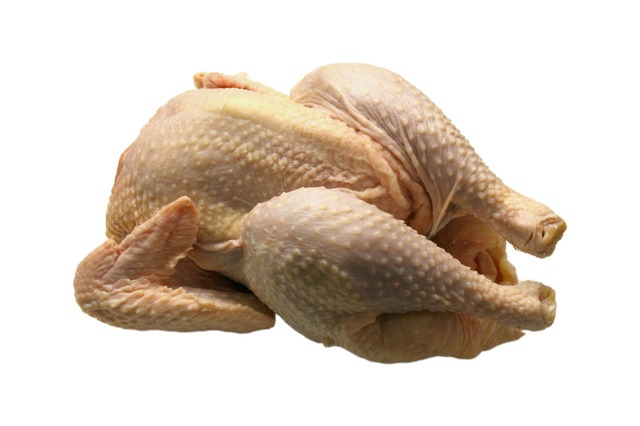
I was recently teaching a class on how to make a delicious Valentine’s dinner. During that class, a question was asked about the pros and cons of air-chilled chicken. Since this was a topic of interest, I thought I would dedicate this Cooking Tip to that topic.

When poultry is processed commercially, part of the process involves chilling the meat. For food safety reasons, the USDA requires that the chicken be cooled to 40°F or lower within four hours of slaughter.

There are two ways to accomplish this – cold water chilling and air chilling. The former is how most chickens are handled in the US, although air chilling has been widely used in Europe since the 1960s. According to D’Artagnan, air chilling has only been used in the US since 1998.

Here are some differences between these two methods and some of the claims made about them.

Water chilling

  • With this method, the chickens are submerged in chlorinated ice-cold water.
  • The temperature is quickly reduced to the proper temperature.
  • Because of being submerged in the water, the chicken absorbs excess water. Studies have shown that the chickens can absorb anywhere between 2 and 12% of the weight in water, which you pay for at the checkout.
  • Many chickens are cooled in the same vat of water. Some feel this increases the risk of cross-contamination of pathogens from one chicken to the others. Consumer Reports periodically analyzes chicken for pathogens. A 2010 report found that 62% of the chickens were contaminated with campylobacter, and 14% contained salmonella. Testing done a few years later (2018) found 9% of the samples testing positive for salmonella. It is important to note that both of these pathogens are killed by proper cooking.

Air Chilling

  • The process involves putting the chicken into temperature-controlled chambers, where they are chilled for about three hours.
  • Because the chicken is not put into water, no excess water is absorbed. Proponents claim the following benefits.
    • More tender chicken
    • Better texture
    • Better tasting chicken
    • The chicken cooks faster as it does not contain excess moisture.
    • As the skin does not get water-logged, you are able to get very crispy skin when the chicken is roasted.
    • This process saves water but incurs higher electrical costs.
    • Reduced chance of cross-contamination of pathogens. Testing has shown that air-chilled chickens are cleaner. However, one study showed that about 40% were still contaminated with salmonella and/or campylobacter.
  • Because this process takes much longer, is more labor intensive and takes special chambers, it is more expensive. Some of this cost is offset by the fact that you are only paying for the weight of the chicken, not excess water.

According to Bell and Evans, a poultry business that started in 1894, most US producers may claim air chilling, but, in reality, they use a hybrid method that combines chlorinated water chill and air chill. They built the first 100% air-chilled facility in 2005, although they are not the only such facility today.

If you wish to try air-chilled chicken, ensure it states so on the package. It is most likely water-chilled if it doesn’t say it is air-chilled.

Unless you order online from some farms that have invested in air-chilling facilities or have a local farm that uses this technique, air-chilled chickens may be hard to find. Sources say that Whole Foods and Costco sell air-chilled chickens. My local supermarket does not carry them, but some Safeway stores do.

I must admit that I have not tried air-chilled chicken. Have you? What do you think of it? Let me know.

Cooking Tips · Techniques

Plastic Food Containers – Harmful or Helpful?

Image by Romjan Aly from Pixabay

I would suspect that almost all of us have plastic containers in our kitchens. The primary use is probably food storage. When reheating that food, do you just throw that plastic container in the microwave? Many of us do just that. That is a practice, though, that we all should re-think. That is the subject of this Cooking Tip.

Let us first look at plastics in general and which ones have been considered safe to use in the microwave.

One important point is that “microwave-safe” only means that the container will not melt or distort in the microwave. It says nothing about the release of chemicals into food. Microplastics and chemicals can leach into your leftovers over time just by storing food in these plastic containers in the refrigerator. Microwaving, though, speeds this up.

Here is a chart outlining the types of plastics and where you might find them.

NumberNameMicrowave safe?Other
#1Polyethylene terephthalate (PET or PETE)Some say Yes if it states this on the label. However, it will melt at only 120°F.It only has a temperature tolerance between 0 & 120°F before the material will start to warp or melt.   Used in soda bottles, peanut butter & mayonnaise jars and cooking oil containers.
#2High Density Polyethylene (HDPE)YesIt has a heat limit of 40 to 266°F before it melts.   Found in milk jugs, protein powder tubs, and butter containers.
#3Polyvinyl Chloride (PVC)NoRarely used for food.  
#4Low-Density Polyethylene (LDPE)NoUsed to make shopping bags, cling wrap, and juice bottles.
#5Polypropylene (PP)YesIt can withstand temperatures up to ≈ 230°F.   Most commonly used for food storage containers, plates, bowls, cutlery and catering trays.
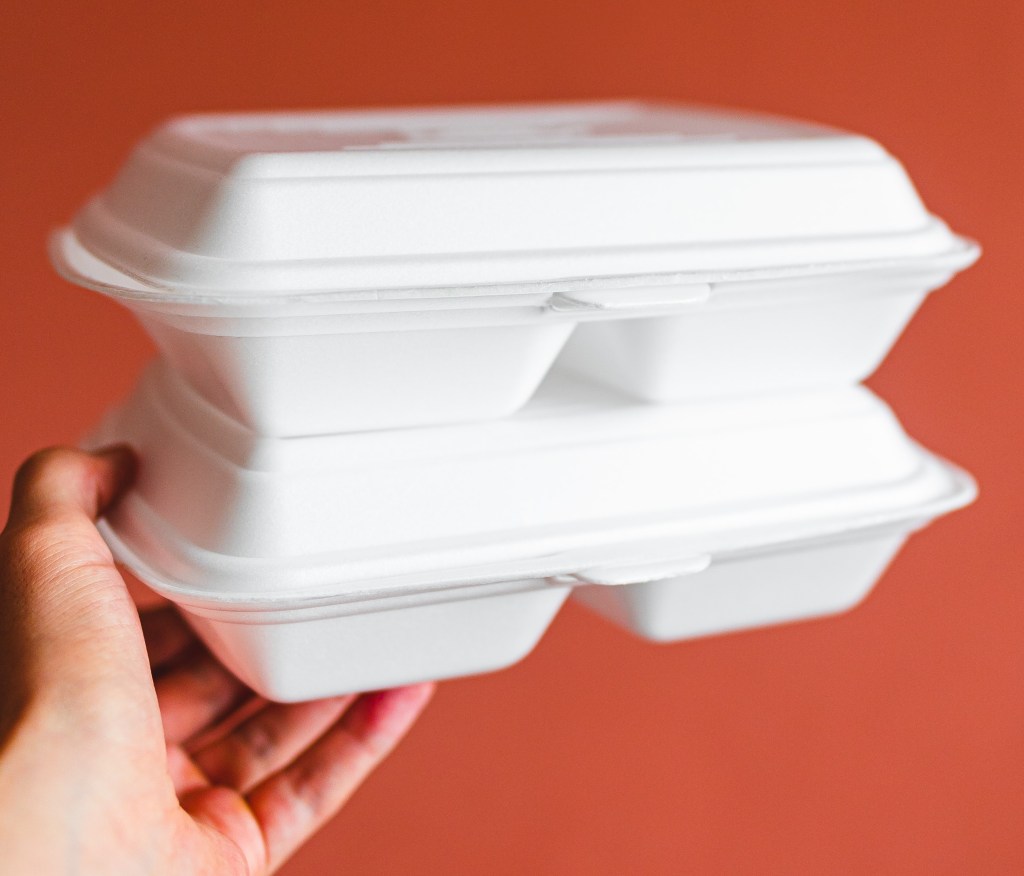
#6Polystyrene (Styrofoam)NoIt can quickly melt.   Find it in some disposable food containers, packing peanuts, and meat packaging.
#7Other – includes PolycarbonateNoMany formulations may contain BPA.   Find it in five-gallon water cooler jugs, citrus juice & ketchup bottles and produce clamshells.

The primary chemicals of concern are bisphenol A (BPA) and a class of chemicals called phthalates. These are used to increase the flexibility and durability of plastic. BPA is found mainly in polycarbonate plastics (# 7) and has been used since the 1960s to make food storage containers, drinking glasses, and baby bottles.

I am sure all of us have heard a lot about BPA and its potentially harmful health effects. Many products today tout that they are “BPA-Free.” Proponents of the use of plastic food packaging materials point out that these items must meet stringent U.S. Food and Drug Administration (FDA) safety standards.

Although the last update was in 2014, at that time, the FDA stated, “based on its most recent safety assessment … BPA is safe at the current levels occurring in foods. Based on the FDA’s ongoing safety review of scientific evidence, the available information continues to support the safety of BPA for the currently approved uses in food containers and packaging.”

In 2018, another study was done called the CLARITY Core Study. It was an animal-based study, and they concluded that there was no definite evidence of BPA-related health effects related to the typical amount of BPA exposure.

Opponents of these plastics do have concerns about using BPA and phthalates. Although there is no definite proof, here are a few health concerns they raise.

  • Interference with children’s normal growth and brain development, even while in the womb.
  • May increase allergies, eczema and asthma.
  • May change how reproductive organs develop.
  • May cause behavior problems in children.
  • May be linked to obesity and diabetes.

A recent (June 2023) study by The University of Nebraska was published in the journal Environmental Sciences & Technology, and it has increased consumers’ concerns. The researchers “investigated the release of microplastics and nanoplastics from plastic containers and reusable food pouches under different usage scenarios.” They mainly focused on baby food containers made from polypropylene and a reusable pouch made of polyethylene. Both of these products are FDA-approved.

They found that “microwave heating caused the highest release of microplastics and nanoplastics into food compared to other usage scenarios, such as refrigeration or room-temperature storage.” They also found that “the polyethylene-based food pouch released more particles than polypropylene-based plastic containers.”

So, what can you do if you share the concerns voiced by opponents of these food containers? The safest, although not the most practical, is using only glass food storage containers.

Also, pay attention to the numbers on the bottom of your plastic containers. Bon Appetit magazine recently spoke to James Rogers, Ph.D. He is the director of food safety research and testing at Consumer Reports, and before that, he worked in food safety at the United States Department of Agriculture for more than a decade. He advises people to avoid plastics marked with a one or a six. He explains that these plastics have a low melting point and will release chemicals even faster if microwaved. He also points out that types three and seven are the most likely categories to contain phthalates and bisphenols.

If he had to choose plastic, he would opt for types two and five. These are higher-density plastics and have a higher melting point. That doesn’t mean they are without risk as the University of Nebraska study showed that they did shed microplastics when heated.

A final word is that you can limit the use of the containers to storage only and even then, limit the time you store food in them. Use your leftovers quickly by reheating them in a glass container or repurposing them into a new dish.

What do you choose to do? Do you use plastic, glass, or a combination? Will any of this information cause you to change your habits? Let me know!

Cooking Tips · Ingredients

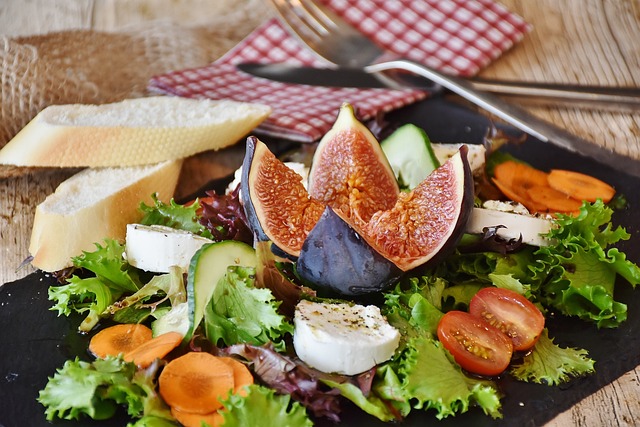
Goat Cheese – Should you take another look at it?

If you have been to a cheese-monger or a good cheese department in a supermarket, you can see just how complicated the world of cheese can be. I have written prior Cooking Tips on cheese in general – Part 1, Part 2 and Part 3. In this Cooking Tip, I want to concentrate on one type of cheese that can be somewhat polarizing – Goat Cheese. The world of goat cheese is not monolithic. Different varieties vary not only in flavor but also in texture.

People who do not like goat cheese say it tastes funky and even like a barnyard. However, this is not always true, depending on the type of goat cheese and its producer. I recall tasting goat cheese in a dish when visiting southern France. It was mild, creamy and delightful. I decided right then and there that I did like goat cheese – and it wasn’t like a barnyard at all!

France used to be the primary producer of goat cheese, and that is where one of its names – chèvre – comes from. It means goat in French. Its introduction into the US is relatively recent.

Laura Chenel of Sonoma, California, started the Laura Chenel Creamery. After working and studying around the world, she returned to California and bought her first goats. As the herd grew, so did the milk production, which she began to turn into cheese. She traveled to France in 1979 to learn more about the process of cheese making. The business grew and accumulated awards for their cheese production. America’s Test Kitchen places it at the top of their favorite goat cheeses.

One of Laura’s first customers was Alice Waters, an iconic name among American chefs. She introduced goat cheese into the dining scene when she topped a green salad with a round of breaded and baked goat cheese at her Berkeley restaurant, Chez Panisse. Since then, domestic production of goat cheese has surged.

Most goat cheese is described as tangy and grassy and, at times, gamy. One of the significant factors in the flavor is the goats’ diet. They have very strong stomachs and tend to eat many plants that have a pungent character. Cheesemakers that want to temper this will feed their goats a restricted diet to achieve their desired flavor profile.

The freshness of the goat milk is also an important determinant of the cheese flavor. The older the milk, the “goatier” the cheese will taste. According to the cheese makers, keeping male and female goats separate during the breeding season is also important. The male goats produce strong-smelling hormones that can affect the cheese’s flavor.

How much salt the cheese maker uses can make a difference in flavor and texture. The salt content of the cheese can vary greatly depending on the cheese maker. Those who keep it to a minimum do so as they feel salt interferes with the clean, fresh taste. Others think that salt can enhance the cheese’s flavor. Salt also has an effect on texture when the goat cheese is baked. Lower-salt goat cheeses became mealy or crumbly when baked, whereas those with a higher salt concentration tend to be smoother and creamier.

Cheese from both goats and sheep have a slightly lower lactose content than cows’ milk but are not lactose-free. The goat milk also has a different protein composition from cow milk, which makes it more digestible.

Goat milk can be made into many styles of cheese, such as brie, blue cheese, camembert, cheddar, feta, and gouda. One major categorization of goat cheese is fresh versus aged.

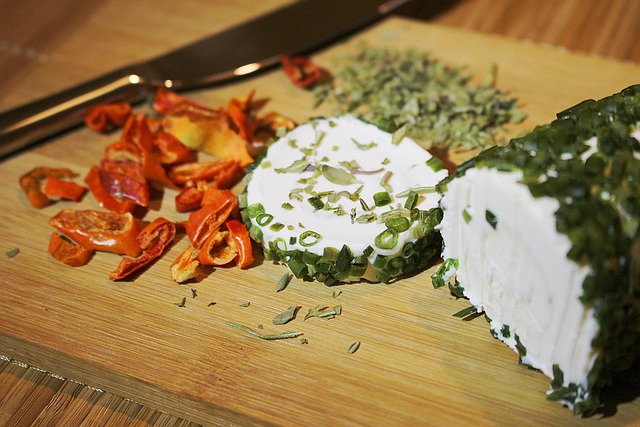
  • Fresh goat cheese is often called chèvre. As noted above, this term means goat in French. However, in common usage, it tends to indicate the traditional French, fresh goat cheese, which is typically un-aged and is soft and fluffy in texture. This is usually what you get when you buy a log of goat cheese, but the sealing process can lead to compression of the cheese. It may or may not be flavored with peppercorns, garlic, fruits or honey. It may also be coated in herbs and spices
  • Aged goat cheese – The texture of aged goat cheese can range from soft to firm and crumbly. As with many other types of aged cheeses, the flavor may be more pronounced. There are two aging periods.
    • Semi-soft – This is aged 8 to 15 days. It is still soft but does have a pronounced goaty flavor.
    • Hard and firm – This type is aged 3-4 weeks. It has a more full-bodied flavor with a drier texture.

How do you use goat cheese? Here are some ideas.

Image by Csaba Nagy from Pixabay

How about you? Are you a lover or hater of goat cheese? Do you have any favorite ways of enjoying it? If you think you do not like goat cheese, try to seek one that is milder in flavor, such as this one from Vermont Creamery or this one from Murray’s Cheese. Both can be found in my local supermarket and perhaps in yours, too.

Cooking Tips · Ingredients

The Flavor Enhancing Power of Acids!

If you have read my series on “Cooking without a Recipe,” you will have learned how to evaluate a dish when tasting it and how to improve the taste. It involves balancing the components of salt, acid and sweet. This Cooking Tip will concentrate on one of those components – Acid.

We are trained to add a bit of salt when we are seasoning a dish. In addition to salt, great chefs know that adding an acidic element can elevate the flavor in a way that salt cannot. Examples of acidic ingredients are citrus juice, vinegar, white wine, buttermilk, yogurt and sour cream.

You can probably recall from high school chemistry that acids are substances with a pH lower than 7, the neutral point. They also react with alkalis to neutralize them. They do have an essential part in cooking and baking.

Purposes of acids

  • Preservation – in baked goods, acids help extend shelf life.
  • Chemical leavening – acids react with sodium bicarbonate (or other alkalis) to produce carbon dioxide gas, which results in building volume in your baked goods.
  • Flavor enhancement and balancing – acids add desirable sharp or sour notes and balance sweetness.

Before discussing individual acids, realize there are natural sources of all of them, but they are also commercially produced. Some chefs like to have powdered versions of these acids available. This allows them to add the zing of the acid without adding any additional liquid or other flavors such as when you add citrus juice or vinegar. If you have never investigated powdered acids, look at this sample pack from Modernist Pantry. They also have a video talking about the uses of these products. You may also want to watch this episode of What’s Eating Dan by Dan Souza of America’s Test Kitchen.

Citric acid

  • This is found in various fruits and vegetables, especially citrus fruits.
  • It has an intense and bright taste, but it is short-lived.
  • It is also known as sour salt because of its taste and texture, but it has no salt in it.
  • Uses
    • Reach for citric acid when you want a dish to taste fresh, such as with salads, white fish, and cooked veggies.
    • It loses some of its tang when heated. This can be good if you want a more subdued acidity, but if you want it to stand out, add it towards the end of the cooking process.
    • It acts as an emulsifying agent in some ice creams to prevent separation.
    • It can keep fruits and veggies fresher by interfering with oxidation and the resulting browning. Serious Eats tested this by using citric acid on apples to prevent browning. They found that the concentration required to prevent browning made the apples too sour to eat. In lesser concentrations, they were more palatable but did not work as well in preventing browning.
    • By combining a small amount with milk, you can easily make ricotta cheese.

Tartaric acid

  • This is derived from wine by-products as well as cherries, lemons, bananas and avocados.
  • It has a sharper flavor than citric acid.
  • It is often combined with baking soda and used as a leavening agent. You might think of this as a DIY baking powder if you just happen to have tartaric acid in your pantry. Few of us do. Manufacturers started producing baking powder by replacing tartaric acid with monocalcium phosphate. If you look at your can of baking powder, you will most likely see monocalcium phosphate.
  • Tartaric acic is the predominant flavor in tamarind.
  • Be aware that tartaric acid and cream of tartar are not identical. In scientific terms, “cream of tartar is the potassium salt of tartaric acid.” Cream of tartar is made by combining tartaric acid with potassium hydroxide. This partially neutralizes the tartaric acid, so cream of tartar is less acidic than tartaric acid. The two of them are not interchangeable.

Lactic acid

  • Since it is found in sour milk products such as yogurt, it is sometimes called milk acid. It is the acid that adds the “sour” to sourdough bread and is involved in the process of fermentation, such as with pickles or kimchi.
  • It is a flavor enhancer and provides a natural sour taste.
  • The flavor is softer than citric acid, but it can add a bit of the taste of fermented products.
  • It can be used when you want a quieter zing of acid, such as in sauces or veggie dishes.

Malic acid

  • This acid is found in unripe fruit, particularly apples.
  • The flavor is very tart and lingers on the palate. Think of a green apple.
  • It is often used in meat dishes.

Ascorbic acid

  • AKA Vitamin C
  • It is found in citrus, tomatoes, melons and berries.
  • It is an antioxidant and is used to prevent the adverse effects of oxidation, such as browning in packaged goods.
  • Is also used to prevent browning of cut fruits and vegetables.
  • Helps to stabilize the gluten network in bread doughs.

Acetic acid

  • Think of the acidity of vinegar or kombucha.
  • Is produced when alcohol is fermented in the presence of oxygen.
  • It has a pungent smell and will assert itself in a dish.
  • Although it can be found in other food items, we mainly see it in vinegars.

Learning to taste and balance flavors should be a goal for all of us cooks. It comes easier to some than others due to the differences in our palates. However, by experimenting with the elements of salt, sweet, and acid, we can see for ourselves how these affect the flavor of our dishes. I still recall a friend making a Mexican-style soup and saying it was bland. However, after I instructed her to add some acid (in this case, lime juice), that soup was elevated from just edible to delicious. Acids are essential, and I trust this tip will encourage you not to forget about them when tasting your food!

Cooking Tips · Ingredients

Food Preservatives – Necessary or Harmful?

Unless you make all your food from scratch, you will surely have some food preservatives in your dishes. And, even if you cook/bake mostly from scratch, some of the basic ingredients will often have preservatives in them. Should you worry? Is there anything you can do about it? That is the subject of this Cooking Tip.

Food preservation has been occurring for centuries. Our ancestors used salt, sugar or vinegar to preserve food for storage. Other methods included refrigerating, freezing, drying and smoking.

Beginning in the late 19th century, alternative preservation methods began to be introduced. Today, we use chemicals (either natural or synthetic) to prolong our food’s freshness and shelf life. The goal is to prevent spoilage that occurs due to air, moisture, or harmful organisms.

The main goal of food preservatives is to reduce spoilage. They are added to food to prevent or slow down the growth of micro-organisms such as molds, yeasts and bacteria. Therefore, they can keep food fresher for longer periods of time. They are also used to slow or prevent changes in color, flavor, and texture, such as preventing browning, caking, clumping, or separating.

Food preservatives are either extracted from natural sources (non-synthetic) that can be found in nature or synthetically produced. Examples of natural preservatives include:

  • Salt
  • Sugar
  • Vinegar
  • Ascorbic acid (vitamin C)
  • Citric acid
  • Tocopherols (vitamin E)

Examples of man-made (synthetic) preservatives are the following.

  • Potassium sorbate/sorbic acid
  • BHA/BHT (Butylated Hydroxyanisole and Butylated Hydroxytoluene)
  • Calcium phosphate
  • Nitrates/nitrites – These can be naturally occurring but are also used in meat to add color and prolong shelf life.
  • Sulfites – These chemicals prevent browning. On the label, you may see sulfur dioxide, potassium metabisulfite, sodium metabisulfite, sodium sulfite or sodium bisulfite. Next time you are in the market, look at packages of dried apricots. The ones with the word “unsulphured” will appear brownish, while the ones that appear brighter orange will have a sulfur additive.
  • EDTA – Ethylenediaminetetraacetic acid
  • Benzoic acid

Natural versus synthetic is one way of categorizing food preservatives. Another is by their function.

  • Acids – These are used as most microbes cannot survive an acidic environment. Examples are citric acid, acetic acid, sorbic acid, lactic acid and fumaric acid.
  • Antimicrobials – Used to prevent the growth of harmful organisms; examples are spice extracts, sodium benzoate, and sodium nitrite. The latter is sometimes listed as “celery powder” on food labels.
  • Antioxidants – Oxidation is an enemy of food as it causes fat to go rancid, flavors to change and degrade, and colors to turn brown and dingy. Think of the browning that occurs when you leave a cut apple on your counter. That is due to oxidation. With the addition of an antioxidant, the oxygen reacts with the antioxidant(s) rather than the food. Examples are ascorbic acid (Vitamin C), sulfur dioxide, tocopherol (vitamin E), and BHT (chemically synthesized, but it does occur naturally in lychees).

All food additives, including preservatives, must be labeled on food packages. You will often see the word “preservative” followed by the actual name of the preservative. Sometimes, you will see the name of the chemical with the word “preservative” in parenthesis. If you wish to look up a particular food additive, see this list from the FDA.

If a preservative has been added to food, the FDA has determined that there is sufficient evidence that they are safe for their intended use. In addition, these preservatives are subject to ongoing review by the FDA as scientific understanding and testing methods improve.

Despite this, should you look for one type of preservative over another? There are three main concerns that you will hear frequently.

  • Sulfur dioxide may invoke responses in people with asthma.
  • Some additives may invoke an allergic response in sensitive individuals.
  • Sodium nitrite is concerning as some feel it can form potentially carcinogenic nitrosamine compounds. That is why we are told to limit our consumption.

The advantages of synthetic preservatives are:

  • Many feel they are more effective than natural ones.
  • They are generally less expensive and more available than natural preservatives, helping to keep food costs down.
  • Some caution that obtaining natural preservatives may have negative environmental impacts.
  • Natural ingredients can be highly variable, making their consistency and potency different from batch to batch. Therefore, they may not be as effective, or a higher concentration may be needed to reach an effective level.
Image by Pete Linforth from Pixabay

Food waste in our country (and worldwide) is a real problem. The EPA estimates that over one-third of the food produced in the United States is wasted. They state that “food waste is the single most common material landfilled and incinerated in the U.S., comprising 24 and 22 percent of landfilled and combusted municipal solid waste, respectively.”

Apart from the negative environmental concerns, this is a financial concern for all of us, especially with today’s food costs. A 2022 article in Fortune magazine estimates the economic cost of food waste is equivalent to “$1,500 worth of groceries for a four-person household each year, an estimate that doesn’t include recent food price inflation.”

We can do many things to reduce food waste in our kitchens. One thing that food manufacturers do is to add preservatives to our foods. Just take a look at the food labels of the items you purchase. Whether you want to source those items with natural preservatives is a personal decision. I hope the above information will help you as you make that decision.

Very few decisions are black and white, and the same is true for food preservatives. For more examples, see my prior posts on Flavorings and Colors.

We can all reduce the preservatives we eat by cooking more and relying less on processed foods and restaurant foods. You may not be able to avoid all preservatives, but you can positively impact your and your family’s diet.

Cooking Tips · Ingredients

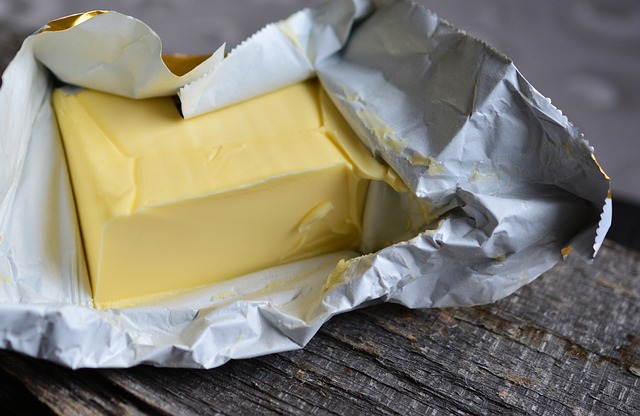
Butter – Has it Changed?

I ran across a blog post a day or so ago titled What’s Going on with Butter? It was very interesting and I thought I would share with you in this Cooking Tip the controversy about modern-day butter. This is not a Tip about using butter in your kitchen. For that discussion, see this prior Tip.

There are really two parts to this discussion. The first is from a couple of years ago and was about Canadian butter. The second was much more recent and involved baking disasters during the 2023 holiday season with US butter.

Let’s start with Canada. What Canadian bakers were noticing was that the butter was staying hard despite being left at room temperature to soften. People were so upset about it that it became known as “Buttergate.”

Image by Elsemargriet from Pixabay

The culprit was thought to be palm oil products that were being added to cattle feed. This was being used as an energy supplement and was not limited to Canada. It was also being used elsewhere in the world. Palmitic acid is a saturated fatty acid that occurs naturally in some animals and plants. The Canadian dairy industry said increased demand during the pandemic caused them to add palmitic acid (from palm oil) in greater quantities to boost milk output and increase the fat content.

The theory was that the palm fats in a dairy cow’s diet altered the saturated fatty acid profile of the resulting milk fat, which could possibly cause the butter to be firmer at room temperature. Recall that saturated fats are those that stay solid at room temperature, whereas unsaturated fats are liquid at room temperature.

Not all agreed, though. A food science professor at the University of Guelph in Ontario, Canada, disputed that the addition of palm products could lead to the hardening of butter. He did admit, though, that these products could affect the melting point of the butter.

Laboratory testing of 17 different Ontario butter brands was done. The testing showed only a relatively weak correlation between the amount of palmitic acid and the relative hardness of the butter. They did find that, on average, softer butters had less palmitic acid. However, it was not across the board, as some soft samples had more palmitic acid than hard samples. The conclusion was that there was more involved in the butter’s texture than just the level of palmitic acid.

Other possibilities that were put forward were:

  • Diet – There are many reasons that the cow’s diet might change, and these changes are reflected in the milk and related products.
  • Milking machines – Martin Scanlon, dean of agriculture and food sciences at the University of Manitoba, said that milking machines may play a role. According to him, “One factor is the recent rapid adoption of robotic milking machines on dairy farms. Cows no longer wait to be milked but enter an automated stall when they are ready to be milked. As a result, the milk fat globules do not stay in the udder for as long, resulting in hard fat crystals forming, which may impact the firmness of the final product.
  • Increased demand – During the pandemic, demand for butter was up 12%. Due to this, Scanlon postulated, “Butter makers may have reduced the aging time for the milk fat and sped up cooling after churning to meet the demand. That quick cooling could leave small, hard fat crystals in the butter. Once you start cooling these fat crystals very fast, there’s actually a consequence on the hardness.”

An article in the Journal of Dairy Science was published in September 2021, and it discussed a butter analysis done by scientists from the Department of Food Science at the University of Guelph. They not only looked at the palmitic acid content but also the oleic acid content. The latter is a mono-unsaturated fat and is a principal component of olive oil. Their “preliminary results suggested that butter firmness … was positively correlated with palmitic acid content, negatively correlated with oleic acid content, and positively correlated with the palmitic acid: oleic acid ratio.”

They also postulated other factors that could affect butter’s texture. They said “In a high-throughput manufacturing plant, if fats do not spend enough time being softened by mechanical working and are not tempered at the appropriate temperature for some time, they become harder and more brittle. Thus, we assume that the combination of increased palmitic acid content and higher plant throughput due to large increases in butter demand interacted to create the harder-than-usual butter.”

So, was this phenomenon related to cattle feed or another negative outcome from the pandemic? No absolute conclusions were ever made.

Now, what about the US? I didn’t find reports of anything similar to Buttergate, although, as far as I can tell, palmitic acid is also used in cattle feed in the US.

Image by congerdesign from Pixabay

What I did find was a meltdown during the 2023 holiday season over ruined baked goods that was attributed to a change in Costco butter. Bakers noted failures with recipes that had always been successful in the past. When they switched to a different butter, supposedly the problem resolved. People postulated that the Costco butter had a higher water content than it had in the past and, therefore, a lower butter fat content.

Devon O’Brien of AllRecipes.com decided to test the Costco butter against other brands to see for himself. He put the butters to the test in pie crusts and cookies. He did find pie crusts made from the Costco butter were drier and more crumbly than the pie crusts made with other butters. However, after resting overnight in the refrigerator, the pie crusts were indistinguishable. He noticed no difference in cookies made with the different butters. His conclusion was that he thought there was a possibility that the Costco butter had more water but found no reason to stop using it.

I cannot confirm or dispute either of these stories. First, I do not use Canadian butter and so, cannot comment on the hardness issue. Second, I do not shop at Costco (I know – that might be unbelievable!) and have never used their butter. My go-to butter for baking has always been Land O’Lakes unsalted butter and I noticed no problems using it in my baking.

Although their testing is a few years old, America’s Test Kitchen’s favorite butter for baking is Challenge unsalted butter, although Land O’Lakes was on their recommended list along with some other brands. Bon Appetit likes Cabot butter, while Food 52 says Trader Joe’s butter is unbeatable. Consumer Reports gave another vote for Land O’Lakes.

What about you? What is your favorite butter for baking? If you are a Costco fan, did you notice any problems over this holiday season? Let me know!

Cooking Tips · Ingredients · Techniques

Grilled Cheese – The Ultimate Comfort Food

There are certain culinary delights that are very comforting. Melted cheese has to fall into that category. One of the primary ways we enjoy melted cheese is in the form of a Grilled Cheese Sandwich. Everyone has their own way of making these. Is one way better than another? Let’s dive into this topic in this Cooking Tip.

There are three basic components of a grilled cheese sandwich – bread, cheese and a spread. Many will include a fourth and that is add-ins. Your choice of each of these will affect the resulting sandwich.

Bread

Image of a cut loaf of bread setting on a board with wheat plant behind it.
Image by Ilo from Pixabay

The classic bread choice is just white sandwich bread. Others feel you need something with a bit more flavor. Two principles that most agree with are:

  • Use something with a tight crumb so the cheese doesn’t leak out. You do not want bread with lots of air bubbles.
  • You want a good bread-to-cheese ratio so do not use very thick slices of bread. Aim for about a half inch.

Cheese

The most important characteristic of the cheese is that it should melt good. Within the category of melting cheeses, there are several choices.

  • Young cheddar (under one year)
  • Monterey Jack
  • Young Gouda (under one year)
  • Young Swiss-style cheeses (under one year)
  • American
  • Brie

Harder, aged cheeses may have tremendous flavor but they do not melt well. America’s Test Kitchen offers an approach whereby you can use these cheeses. They combine the hard cheese with a smaller amount of a great melting cheese such as Brie in a food processor to make a paste. They also recommend adding a tablespoon or two of wine or vermouth to aid in emulsifying and to add flavor.

Experts disagree on the form of the cheese for the best sandwich.

  • Some recommend shredding the cheese as you can get good coverage with easy melting, The downside is that this method can be messy.
  • Sliced cheese will work as long as you get slices of uniform thickness so it melts evenly.
  • Some like to use a Y-shaped veggie peeler, which gives you thin and even slices.

Spread

There seems to be two camps on the issue of which spread to use. There is the butter camp and the mayo camp.

Image of small glass bowl with 3 pieces of softened butter in it

Butter

  • Pros – excellent flavor.
  • Cons
    • Needs to be softened.
    • Has a low smoke point.

Mayo

Image of a hand holding a bottle of Hellman's Real Mayonnaise
  • Pros
    • Do not have to soften.
    • It has a higher smoke point than butter.
    • Adds a tangy flavor element.
  • Cons
    • Many do not like the flavor.
    • Does not crisp as well as butter.

Combination

  • Some experts like to use a combination of softened butter and mayonnaise. They feel this results in great browning without this happening so quickly that the cheese doesn’t have time to melt. The flavor is described as multi-dimensional.
  • Everyone recommends staying away from low-fat mayonnaise as it results in uneven browning.

Add Ins & Variations

A great grilled cheese sandwich needs nothing more than the above elements. However, you may also want to experiment a bit.

  • Bread – vary the type of bread keeping the above cautions in mind.
  • Cheese – vary the type of cheese.
  • Add Ins – just do an online search and you will come up with very interesting recipes. There are even entire cookbooks devoted to this dish. Here is just a very short list to get you started.
    • Herbs
    • Caramelized Onions
    • Bacon or Ham
    • Apples
    • Jam

Method of cooking

There are some areas of agreement but other areas of disagreement. Here are the different methods.

Stove-top

  • Preheating the pan over med-high heat for a couple of minutes and then lowering the heat to medium-low is the preferred cooking method. Cook until browned, flip and continue to cook until the other side is brown and the cheese is melted.
  • Some like to put the butter in the pan while others say to butter the bread, not the pan. Proponents of both methods claim that it leads to better and more browning.

Oven

  • If you need to cook for a crowd, place your prepared sandwiches on a rimmed baking sheet in a 450°F oven, flipping half-way through.

Panini press

  • If you have access to a panini press, this method will give you the best crispy sear.

Air Fryer

  • Some have tested using an air fryer. It will work but it takes longer and the bread is more toasted than grilled

Serious Eats Stove Top Method

  • This method involves griddling both sides of the bread.
  • To do this, melt the butter in a skillet over medium heat. Add the bread and cook until that side is evenly browned. Remove the bread and place on a work surface, toasted side up. Add the cheese and close the sandwich with both toasted sides facing inward. Add more butter to skillet, lower the heat to med-low and cook the sandwich until golden on the bottom. Remove the sandwich from the skillet. Add more butter and return the sandwich to the pan, toasted side up. Cook until the second side is golden brown and the cheese is melted.

If you are a really serious grilled cheese eater, you may agree with America’s Test Kitchen. They bemoan the fact that the wonderfully crisp sandwich can get soggy as soon as you place it on a plate. So, they place two chopsticks on the plate and the sandwich on top.

In my book, two slices of bread encasing meted cheese is a winner. However, with the expert tips above, you might be able to take this humble sandwich and elevate it even more.

Image of a grilled cheese sandwich setting on a wooden board, which is setting on a red/white checked cloth.
Designed by Freepik
Cooking Tips · Techniques

Cooking Skills – Which ones will make you a better cook?

As the year draws to a close, many people like to take stock of what they have done over the past year and what they would like to do next year. For a cook, this might mean assessing your kitchen skills. What have you accomplished this year, and what skills should you work on? The subject of this Cooking Tip is helping you decide which skills are most important.

If someone asked me to list what basic skills are essential for cooks, I could quickly come up with a list. I do not like just giving you my opinion on a particular subject. Instead, I want to bring you the collective advice from experts in the field. With that in mind, I examined numerous sources and which skills they thought were essential. As you can imagine, there was significant variation. There was also agreement, though, and it is those skills I want to share with you. Because I have written Tips on many of these skills in the past, I will provide links to those Tips.

Knife skills

This was the most frequently mentioned cooking skill that home cooks should strive to master. I wholeheartedly agree with this, but I must tell you that most of my home-cooking students are not that interested in learning better knife skills. It is almost like they think as long as they can cut something, that is all that is needed. There are solid reasons to work on your knife skills. (If you are interested in my recommendations on which knives you should own, see this Tip.)

Safety – knives are very dangerous implements. Learning how to use and care for them properly decreases the chances of injury.

Better cooking results – it really will make a difference in the outcome of a recipe if it calls for sliced onion and, instead, you chop them. How large or small and how uniform you prepare the ingredients can truly give varying results. See this Tip on how this applies to onions.

Cooking pasta

Pasta is a staple on our kitchen tables and a great choice for a quick weeknight meal. Knowing how to cook it properly means having a perfect bowl of al dente pasta rather than a gluey mess or crunchy pasta. For a take on an alternate method of cooking pasta, see this Tip.

Cooking grains

Rice may be the main grain we cook, but many others are delicious and even healthier than rice. Cooking rice properly depends on the variety of rice you are cooking. (See this Tip on a discussion on rice varieties.) If it is plain white rice, I think a rice cooker is the best way to go, although learning how to cook it on a stovetop is a valuable skill.

I think stovetop gives better results when cooking brown (or red, black or wild) rice or other grains. This is especially true if you live at a higher altitude due to the lower boiling temperature. See this Tip on Cooking at Altitude and this Tip on Whole Grains.

Cooking eggs

I recall that one of my culinary school instructors told us that a test a chef gave her to see if she was qualified was to cook an omelet. He considered the skills involved in this humble dish to be an indicator of the cook’s knowledge and ability. Omelets are, however, just one way to cook eggs. Learning how to scramble them, poach them and properly use them in recipes is also important.

Making a vinaigrette

This skill is incredibly easy to learn, and the principles involved translate to making other sauces. A breakdown of how to do this can be found in this Tip.

Making a sauce

Sauces can elevate a simple chicken (or other protein) dish from average to spectacular. Information on how to make an easy pan sauce can be found in this Tip. Mastering different sauces is also important; here are discussions on those sauces. Sauces 1 and Sauces 2.

Making homemade stock

Many experts highlighted this, but I can’t entirely agree. Yes, it is a wonderful skill, but I don’t think it is one of the essential skills. There are many high-quality store-bought alternatives. Here is a Tip with a further discussion on this subject.

How to read a recipe

This skill was only mentioned occasionally, but I want to highlight it because I think it is very important. I emphasize this in every class I teach. Knowing how to interpret recipes can be a make-or-break moment for your dish. I think it is so foundational that I wrote an article on this, and it is available as a free download on my website. It will also teach you how to look at a recipe cautiously, as not all recipes are equal, especially in our online world. See this Tip for more on this subject.

How to sear meat

Getting a nice brown crust on your meat is a skill that involves knowing how to heat your pan, which oils to use and how to get that crust without burning your meat or over-cooking it. Searing meat is one of the types of dry-heat cooking methods, which I discuss in this Tip.

How to taste and season dishes

It may be easy to taste a dish and determine if it tastes good, but what do you do if it isn’t the taste you want? It is not that difficult if you follow the outline from this Tip.

Which of these skills have you accomplished, and which do you need to work on? Are there other skills that you think I should have included in this short list? Do you need help developing these skills? Let me know. I am always happy to help you be the best cook you can be!

Cooking Tips · Ingredients

Coconut Flour – Like any other alternative flour?

Do you do much baking with alternative flours? I do not as I have no one I cook or bake for that needs to stay away from regular flour. When I do make something with an alternative flour, it is usually with a nut flour such as almond or hazelnut. Many times, these ingredients are called for because of the flavor they impart, not because they are gluten free. A different alternative flour that I decided to investigate is Coconut Flour and that is the subject of this Cooking Tip.

Image by Ilo from Pixabay

Coconut flour is a by-product of extracting coconut milk from the coconut. The coconut milk is removed and the remaining meat is fully dried and subsequently ground into a powder.

It is a product that you might be interested in trying but realize that it is not a 1:1 substitution for wheat flour as they act very differently. The nature of coconut flour is such that it absorbs much more moisture than regular flour. Therefore, you need to limit how much you use along with adding more liquid.

Here are some Dos and Don’ts from coconut flour experts.

  • Do use coconut flour in dishes that can benefit from its flavor. The flavor and aroma are distinctly of coconut but not overpowering.
  • Don’t replace more than 25% of the flour in a wheat flour recipe with coconut flour.
  • Do add extra moisture when you are baking with coconut flour. Start by adding 2 tablespoons of extra liquid for every 2 tablespoons of coconut flour that you use. If your recipe calls for eggs, many recommend adding one additional egg.
  • Do beat the eggs before adding to the flour as it will help to give a lighter texture.
  • Do sift the flour before using as it tends to clump.
  • Do mix thoroughly to prevent any clumps of coconut flour.
  • Do let the coconut flour sit after adding liquid ingredients to a batter recipe. This will allow for more moisture absorption and help you decide if you need more liquid.
  • Do consider decreasing the sweet ingredients as the coconut flour has a natural sweetness to it.
  • If you are using it in a preparation where you want a crispy texture, add some almond flour.
  • When buying, look for a bag where coconut is the only ingredient. You do not want any added sugars, flavorings or other fillers.
  • Can be used for non-baking uses such as to thicken sauces and coat foods.
  • Don’t assume that coconut flour and other alternative flours are interchangeable as they are not. For example, almond flour is much denser and much higher in fat.

Do you utilize alternative flours? Have you ever tried coconut flour. If not, give it a try but be aware of the above cautions and have fun!

Cooking Tips · Techniques

Gifts for the Cook that they will actually use!

As the gift-giving season approaches, I wanted to give you some ideas for some great gifts for those who love to cook. Or, you can put them on your wish list for Santa. If you do an online search for gifts for cooks, you will come up with some very strange lists. I wanted to give you a list that was much more practical and useful. That is the subject of this Cooking Tip. Some of the links below are affiliate links and I may earn a commission if you decide to purchase.

If you are considering a gift for a fellow cook, consider their storage space. Even though the gift might be a great one, if they do not have space in which to store it, they may not be very thankful.

Thermometer

A good instant read digital thermometer is essential for most serious cooks. It is something that they will use in both savory cooking and baking. The most important aspect of a food thermometer is its accuracy. It is also extremely nice if it reads quickly.

Any review of the best food thermometers will almost surely lead with the company, Thermoworks. Their products consistently stand out as the best in class. An added nicety is that they come in multiple colors. Their top-of-the-line model, the “Thermapen One” is excellent but costs a bit over $100. They do have frequent sales, which can bring this price down. They also have very good and less expensive alternatives. Their Thermopops cost about $35 and the Dot thermometer is about $45.

Another brand that ranks high is Lavatools. Their products range from $15 to $60.

Kitchen Scale

If you or your gift recipient is an avid baker, a kitchen scale is extremely helpful. Once again, accuracy is the most important characteristic. I would also highly recommend a scale that has both imperial and metric units. Learning to use and understand metric weights will make you a much more accurate baker. It is also useful if you like to use European recipes, which tend to be written with metric measurements.

There are three scales that dominate the “best of” reviews.

  • Escali Primo Digital Scale – This scale comes in multiple colors and retails for about $27. A couple of criticisms of this one is that the display is not the easiest to read and the platform is not removeable, making it a bit more work to clean.
  • OXO 11-lb. Stainless Steel Food Scale – With a removable platform, extreme accuracy and an easy-to-read display, this scale garners high marks and sells for around $50.
  • Ozeri Pronto Digital Kitchen and Food Scale – Another easy to read scale, this one lacks a removable platform, but is priced under $15.

Graters/Zesters

Cooks are often reaching for a grater or a zester whether it be to grate cheese, nutmeg or citrus zest. The company that dominates the market for these items is Microplane. They make various sizes of graters but they are perhaps most well-known for their excellent zesters, which sell for under $15. The Deiss PRO Stainless Steel Grater is recommended by some and is slightly less expensive than the Microplane.

If you or your gift recipient are like me and tend to grate their knuckles, a wonderful add-on is a cut-resistant kitchen safety glove. I use mine all the time.

Bench scrapers

This is one of those easily overlooked but extremely useful kitchen tools. Not only is it great for picking up chopped veggies from your cutting board, but it is also useful for cutting dough and softer items such as butter, for scraping dough from your counter and leveling off ingredients in your dry measuring cups.

Personally, I am not sure there is a great difference between brands but America’s Test Kitchen highly recommends the Dexter-Russell Sani-Safe 6″ x 3″ Dough Cutter/Scraper or the Anmarko Stainless Steel Metal Griddle Scraper Chopper. Others liked the Oxo Bench Scraper or the Norpro Grip EZ Chopper Scraper. Any of these can be purchased for under $15.

Prep Bowls

I like to teach that success in the kitchen comes much easier if you are organized. The French have a term for it – mise en place. Part of this involves prepping ingredients and putting them into small prep bowls that are easy to grab when you start the cooking process. I find them invaluable and use them on almost a daily basis. They are available in glass, stainless steel and silicone and come in different sizes. You want a set that is large enough to hold your ingredients while still being easy to handle and store.

Culinary Books

Cookbooks are always a good choice if you know what the recipient likes. There are new cookbooks coming out every year. A website that catalogues cookbooks is EatYourBooks.com. They have both a free and paid subscription that will allow you to browse cookbooks by subject, title and author.

One book I use all the time is Food FAQs: Substitutions, Yields & Equivalents. This extremely useful book has been put together by Linda Resnik and Dee Brock. They have painstakingly compiled lists and charts that answer questions such as:

  • How much juice is in an average-sized lemon?
  • How many onions are required to make one cup of chopped onion?
  • What can I substitute for a quince?

For the scientific-minded cook, consider The Food Lab: Better Home Cooking Through Science by J. Kenji López-Alt. This book will not only teach you to be a better cook but a smarter one as it dispels many culinary myths.

Apron

Sure, there are plenty of aprons out there in pretty colors with snazzy sayings but those are not really work aprons. A dedicated cook needs an apron that can stand up to the heat of the kitchen. That means one that is made of a sturdy fabric, is of an appropriate length, has long enough straps to tie around your waist in front and has pockets. I have this one from Food52 and love it.

Knives

If you want spend a bit more, you could consider knives. Every cook should have a good chef’s knife, paring knife and bread knife. There are others that are great to have although not necessary. I discuss them in this Cooking Tip.

As for brands, you will never go wrong with Wüsthof but they do come at a price. Other less expensive but still good brands include Mercer and Victorinox.

Small Appliances

There are a myriad of small appliances out there but, once again, consider the space they will require to store. Before buying the newest appliance fad, read my Cooking Tip on appliances.

Cooking Schools

Consider a gift certificate to cooking classes in your area. If there are none, look at some of the online options. Here are just three.

Are you searching for something to give that avid cook in your life? Is there something that you really want in your kitchen arsenal? I hope these ideas will get you started down the right path.

Happy Shopping!