Cooking Tips · Techniques

The final step to a great pie — blind baking

In the last few Cooking Tips, we have been discussing how to put that perfect pie on your holiday table. We looked at ingredients and techniques for making a great pie crust. You are now ready to put it in the oven but there is another subject to discuss – blind baking your pie crust. That is the subject of this Cooking Tip.

Blind baking a pie crust is simply pre-baking your crust (either partially or totally) before adding your filling. So, when do you blind bake your crust? The simple answer you might say is – when the recipe tells you to do so. Yes, that is true, but there are general guidelines to let you know whether you should do this.

Pies that have fillings that are not baked require a fully baked pie crust. An example is a yummy French Silk Pie. Since the pie is not going into the oven after adding the filling, the pie crust needs to be fully baked.

Other times you want to blind bake is with custard pies or pies with delicate fillings. With custard pies (such as pumpkin), the moisture in the filling might make the crust soggy before the crust is fully baked. Partially baking the crust before adding the filling helps to prevent this. There are also some delicate fillings that are only briefly cooked on the stovetop. If you do not blind bake the crust but rather put the filling in an unbaked crust, the filling would be over-cooked before the crust is fully baked. An example is Chocolate Cream pie.

One time you do not want to blind bake is if you are making a double-crust pie. If you blind bake the bottom crust, your top crust won’t adhere to the bottom crust. If your filling is such that you would prefer a blind-baked crust to prevent sogginess, you can place decorative pieces of crust over the top to give you a type of open double crust such as in this Gooseberry Pie recipe.

Blind baking is not as simple as putting your unfilled pie crust in the oven. If you do that without adding some weight, your pie crust will puff up – not ideal if you want to put a delicious filing into it. It also makes it much more likely that the sides of your crust will droop before it sets.

Now we know why we need to blind bake a crust, how do we do it? There are three recommended ways depending on what you are looking for in your finished pie.

If you want a pie with a pretty crimped edge or you have a tall crust, line the unbaked crust with foil or parchment making sure it fully covers the crust and the edges of the pie crust. Foil is often preferred over parchment as you can get it into the corners better as well as folding over the crust to prevent overbrowning. Fill the crust at least 2/3 full with something to weight the crust down as it bakes. I love ceramic pie weights. They conduct heat well and fill up the entire crust. Just make sure you have enough to fully cover the crust. I tend to use two boxes of these for one pie crust.

You have probably heard that you can use dry beans or rice. Those are poor heat conductors resulting in a longer baking time to get to the proper stage.  Another option is granulated sugar, an excellent heat conductor.

Stacey Ballis with MyRecipes.com did an experiment testing different types of weights. Her favorite method was granulated sugar, which conducts heat as well as the ceramic weights but gets into the corners of the pie crust better. She uses the sugar a couple of times and then uses it in her baking. Since it has slightly caramelized by being in the oven, she recommends using it for meringues. SeriousEats.com agrees with this choice. If you don’t want to use sugar, the ceramic weights are a close second.

As I discussed in last week’s Tip, you should have chilled your pie crust. If you haven’t done that by this step, you may chill it with the weights in place. After chilling, place it in a 375° oven for 20 minutes. Remove from oven and carefully remove the very hot pie weights. Prick the bottom with a fork and return crust to the oven. If you will be baking the pie filling, bake the crust for another 5-8 minutes. If you are not baking the filling, bake the crust for another 12-20 minutes until fully baked. This method should work for most pie crusts but some recipes may have slightly different baking temperatures and times.

A second method is called the “Low & Slow” method. With this method, the pie crust is baked at 350° with pie weights in place for an hour. Baking at a more moderate heat is said to reduce shrinkage & puffing.

A third method is to sandwich the crust between two pans and bake upside down. This method is good for pies with a flat edge that do not need the extra height or when you are not looking for a decorative edge. To use this method, place the crust in the pan and flatten its edge. Spray the outside of another pie pan and nestle into the crust. You may also line the crust with parchment before putting pans together. At this point, chill for 30 minutes to solidify fats and prevent shrinkage.

Now, place the pans upside down on a baking sheet so that the empty pan is on the bottom. Bake for 20 minutes in 375° oven. As the proponents of this method say, “Gravity ensures that as your crust slips “down” the side of the pan, it’s actually moving up!” When baked, remove from the oven and use a spatula to carefully turn over and prick with fork. Return the crust to the oven right side up without second pan and bake for 15-20 minutes until golden brown. You may now fill the crust. When would you want to do this method? It is ideal for pies where the edge of the pie is not as important as its top, such as Lemon Meringue.

What about your pie plate? SeriousEats.com looked at the types of pie plates and recommends either tempered glass or aluminum. They found that ceramic pie plates conduct heat too slowly resulting in more melting of the butter giving you a more mealy and less flaky crust.

Now you have all the information you need to make that beautiful and delicious pie. Get into your kitchen, give the many recommendations a try and let me know what works best for you. And, send me a photo of that wonderful pie!
Cooking Tips · Ingredients · Techniques

A Great Foundation for your Pie

In last week’s Cooking Tip about apples, I mentioned the foundation for any good pie is a great pie crust. Do you make your own or do you use Pillsbury? Making a pie crust is so incredibly easy. In fact, I made four different pie crusts today in only about an hour. They are now chilling in the refrigerator waiting to be topped and turned into beautiful pies. Although pre-bought crusts may be fine in a pinch, I encourage you to start making your own. They freeze beautifully and you will always be ready for pie. There are really two parts to making a great pie crust – your ingredients and your technique. In this week’s Cooking Tip, we will discuss the ingredients. The technique will come next week.

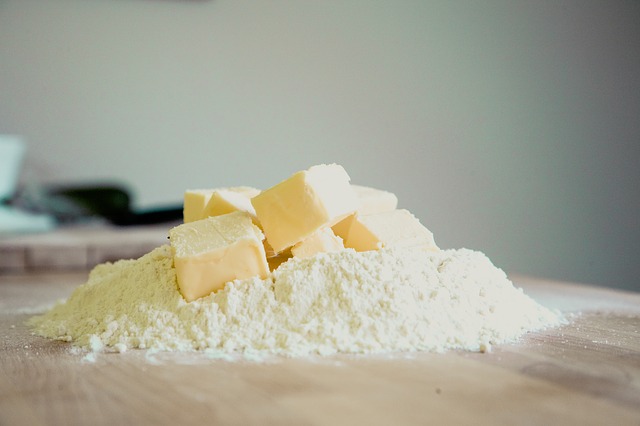
The ingredients that go into most pie crusts are minimal – flour, fat and water. Some will also have a bit of sugar, eggs, dairy (such as sour cream or cream cheese) or even nut flours. Let’s address these one by one.

Flour – most of us are going to use all-purpose flour for our pie crusts. I recommend mastering the technique with this flour before branching out as other flours will act differently.

Fat – the main fats used in pie crusts are butter and/or shortening. Lard used to be a stand-by but, today it is hard to get good quality lard. This is a subject for another Cooking Tip. For now, let’s stick with butter and shortening.

The main advantage of butter is flavor. It will give you a flaky crust since as the water in butter converts to steam, it puffs up the crust. The downside is that because butter has a low melting point, it is hard to maintain a nice crimp to your pie crust.

Shortening has a higher melting point allowing it to stay in solid form longer. Therefore, the crimp has a chance to set before it melts. There are those that think that this higher melting point also leads to a flakier crust than butter. It does lack, though, the wonderful flavor of butter.

This contrast is what leads to the recommendation of using both butter and shortening. They claim that using a ratio of 3:2 butter to shortening gives you the best of both worlds.

Personally, I think there is nothing better than an all-butter crust. Yes, the crimp does slump but you can try to somewhat prevent this by proper chilling of the dough, discussed in next week’s Tip. What about you? What is your favorite?

Water – all pie doughs need some sort of liquid to pull everything together. It is usually, although not always, in the form of water. Occasionally the liquid will be provided by another ingredient such as eggs, sour cream or other dairy. One point that is very important is that in order to keep our fat in the dough solid as long as possible, the water should be very cold.

There is a debate about how much water to add to the dry ingredients. Because water leads to the development of gluten, some say to add your water gradually just until you have a cohesive dough. They caution that too much water will result in a tougher crust due to the increased gluten. Others say that gluten is not necessarily a bad thing as it helps your dough to be stronger and less prone to tearing as you roll it out. I will discuss this more in next week’s Tip on the proper techniques of making pie dough.

This balance of too much/not enough water is what leads some experts to recommend adding vodka or any 80-proof spirit for part of the water. There is no discernable alcohol taste but they claim it is easier to roll out. The reasoning is that although gluten forms with the water, it does not with alcohol. They recommend mixing ¼ cup of water with the same amount of vodka and using this mixture in your pie dough. A tender but very easy to roll out dough is the result. I must say that I have not noticed this is much of an advantage when I have tried it.  Have you tried it?

What about the old recommendation of adding vinegar or lemon juice to your pie dough? The sources that recommend this say it reduces gluten development. However, when put to scientific tests, it has been found that slightly acidic doughs actually have more gluten. To get the desired tenderizing effect, you would have to use about ¼ cup, which would give your dough a very sour taste.  So, this is one “old wives’ tale” that we can put to rest.

For basic pie dough, called Pâte Brisée (translated broken paste or dough), the only ingredients are flour, fat and water. An easy to remember ratio is 3:2:1 – 3 parts flour, 2 parts fat and 1 part water where 1 part is 4 ounces. Another recommendation is 2 parts flour to 2 parts fat with 1 part water. As I mentioned above, I use all butter as my fat but you could also do a mixture of butter and shortening. This type of pie crust can be used for any application.

There may be times when you want a sweeter dough, called Pâte Sucré (sugar paste/dough). Although recipes vary, the one I like to use contains flour, fat, sugar and eggs. The latter is what provides the liquid. Any sweet pie or tart filling works great with this dough. A delicious example is a Lemon Tart.

A third version is Pâte Sablé (sand paste). In this type of dough, you use a nut flour in addition to your AP flour. Other ingredients are sugar, butter and eggs. This is the only pie dough of these three where the ingredients are better at room temperature as they will be creamed together in a mixer. This dough can be made into cookies or used in other sweet pastry applications.

Now that you have the necessary ingredients, stay tuned for next week’s Tip on technique. Although ingredients are important, it is really the technique that will make or break your pie crust. It sure is getting delicious around here, isn’t it?  See you next week!

Cooking Tips · Ingredients

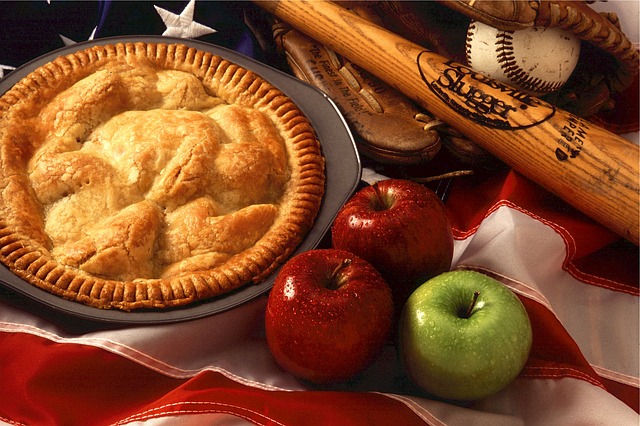
It’s Apple Pie Time!

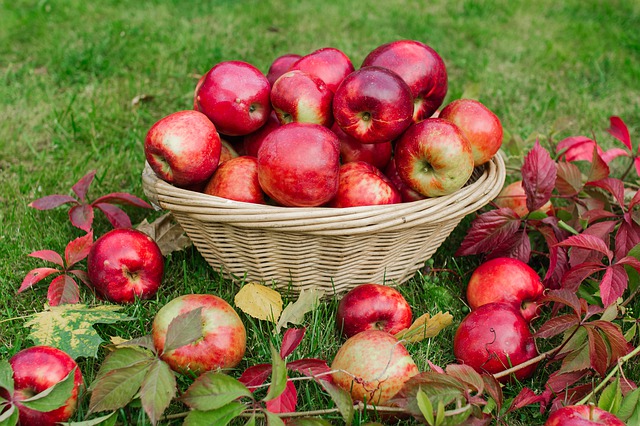
We are right in the middle of apple harvest time according to the Colorado Produce Calendar. I must say that a good apple pie is hard to beat this time of the year. With so many different varieties of apples out there, though, which one do you pick? One of my local supermarkets lists eight different varieties for sale while another one has over twenty! How’s a cook to choose? That is the subject of this week’s Cooking Tip.

Before I get to apples, I want to mention that the foundation of a great pie is a delicious, flaky and tender crust. I am teaching a class on how to make different pie crusts in a few days. If you aren’t able to make it to that class, I can come to your house and teach a “Pie Making” class at your convenience. See my website for more information.

Apples3

When picking an apple to put in your cart, it should be firm with tight, unbroken skins. As many varieties have naturally dull surfaces, do not be afraid of those that do not have the very shiny finish that you often see in the supermarkets. Choose apples without bruises that feel firm and heavy. The fragrance of an apple is a good indicator of freshness and quality.

That is the easy part – more difficult is what variety of apple you should use. I wish I could tell you that there were only certain apples that were suited for certain purposes. That is not true although different “experts” will give you their recommendations. What I have done for you is to consult nine different sources and made a chart of which apples each of these separate sources recommend. If you want the entire chart, email me. What I will do here is to give you a list of the apples that seemed to be favorites with at least four of these sites.

Before I do that, I want to mention one recommendation that you read over and over. That is to use a combination of different apples in your pie. Some apples are considered “Sweet & Firm” while others are considered “Tart & Soft”. Therefore, they will react differently in the pie dish. Many chefs feel you can get the best of both worlds by combining apples from these two different categories. Choose one to provide more texture and another to amp up the flavor. Not all agree, though. Serious Eats states when you do this, you “end up with a pie that’s got nice firm chunks of apple interspersed with brown apple mush.” The choice is up to you. Think of all the great experimenting you can do!

The firm/sweet apples are those that tend to hold their shape better. The soft/tart varieties will cook down to a mushier filling. Here is list of some of those.

FIRM/SWEET

SOFT/TART

Ambrosia Belle de Boskoop
Cortland Bramley
Elstar Cox’s Orange Pippin
Gala Granny Smith
Golden Delicious Gravenstein
Golden Russet Jonathan
Jonagold Macintosh
Liberty Newton Pippin
Pink Lady Northern Spy
Prima
Spartan

Now, here are the apples that seem to please a majority of the sites I consulted if you are making apple pie. Fortunately, most of these are easily found in your supermarket or farmer’s market.

  • Braeburn
  • Golden Delicious
  • Granny Smith
  • Honeycrisp
  • Jonagold

Now that you have picked your apples and brought them home, how can you prolong their freshness? Apple experts recommend:

  • Refrigerate them – apples ripen 6-10 times faster on the counter than in the fridge. Some recommend putting them in a plastic bag before refrigerating. The best temperature is between 30-32°F. The rate at which apples lose flavor and juiciness is proportional to the temperature at which they are stored.
  • Separate apples – wrap each apple in sheets of paper, which prevents one apple going bad and then ripening the rest of them.
  • Picking apples – some are better for longer storage than others. Best keepers are McIntosh, Fuji, Rome and Granny Smith. Apples harvested later in the season are better keepers.
  • Avoid apples with bruises, cuts or soft spots.

We also all know that apples turn brown when cut. This is due to a chemical reaction that occurs when an enzyme is released when the apple is cut and then reacts with oxygen. We probably all have our favorite solution for this. They work either by blocking the oxygen, reversing this chemical reaction, changing the pH of the environment or stopping the reaction by altering the temperature. Here are a few of the suggested actions:

  • Acidulated water – Toss the apples in a bit of water to which an acid has been added, typically lemon juice or cider vinegar.
  • Honey water – Add 2 tablespoons honey to 1 cup water and pour over apple slices. This can keep your apples white for more than 24 hours. Even a 30-second submersion can prevent browning for up to 8 hours.
  • Saltwater solution – Add ½ teaspoon kosher salt to 1 cup water. Add apples and soak for 10 minutes. Drain and store until ready for use. Rinse salt off with tap water just before serving.
  • Plain water – Submerge apples in plain water using a paper towel on top to keep them under the water and away from the oxygen in the air. Or, put the apples and water in a zipper-lock bag with the air pressed out. Do not soak for more than about 15 minutes to avoid altering the texture.
  • Plastic wrap – Wrap cut apples in plastic wrap to keep the oxygen away.
  • Carbonated drinks – Submerge apples in a carbonated beverage such as lemon-lime soda, ginger ale or seltzer for 3-5 minutes. Drain and rinse before use.

There is one final thought I want to leave you with. Have any of you thought, like I do, that fruit just doesn’t taste as good as it used to? I think this all the time. How many times have you bitten into an apple just to find its flavor is bland?  According to Eat The Seasons, “The apples sold in supermarkets are varieties developed for good disease resistance or storage properties, often at the expense of flavor. As author Elspeth Huxley wrote: ‘You cannot sell a blemished apple in the supermarket, but you can sell a tasteless one provided it is shiny, smooth, even, uniform and bright.’ For more interesting and flavorsome varieties, look out for growers’ stalls in farmers’ markets or visit a pick your own orchard.”

When visiting a fruit stand in California, we were told the same thing about strawberries. He told us that what people want to buy are the large, red strawberries. Although they may look pretty, they are often so tasteless whereas the small, less-desired berries are more likely chock-full of flavor. If we would all be more discerning consumers, maybe this would eventually change. In the meantime, I feel fortunate that my husband loves to grow his own fruit and vegetables!

Cooking Tips · Ingredients

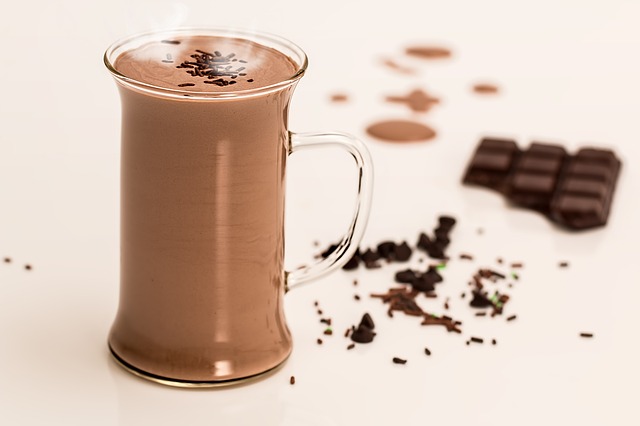
The most delicious cup of hot chocolate!

I am not sure what the weather is like where you live but we have been doing a lot of shivering, lately. When it is cold outside, doesn’t a cup of delicious hot cocoa sound good? Or, do you prefer a cup of hot chocolate? Aren’t they the same thing? Also, is there a better option than the boxed mixes from your supermarket shelves? That is what the Cooking Tip is all about this week.

I don’t know about you but I tend to use the terms hot cocoa and hot chocolate interchangeably but those in the know will tell you hot cocoa is a sweet, light-bodied beverage made primarily from cocoa powder, sugar and milk. It also often contains flavoring like vanilla or even spices like cinnamon.

Hot chocolate is just that – hot, melted chocolate. Made of good quality chocolate that is very finely chopped, it is then melted when combined with hot water, milk, or even cream. It may contain a flavoring like vanilla, but usually doesn’t have added sugar beyond what is in the chocolate. This beverage will be rich and thick and less sweet than hot cocoa. Which is better is, of course, a matter of personal preference.

Have you ever made your own hot chocolate or hot cocoa from scratch? Since a carton of hot cocoa is so inexpensive, you may ask why make your own? Besides taste, here is another reason. Here is a list of ingredients on the label of a popular hot cocoa mix. Sugar, corn syrup, modified whey, cocoa processed with alkali, hydrogenated coconut oil, nonfat milk, calcium carbonate, less than 2% of salt, dipotassium phosphate, mono- and diglycerides, carrageenan, acesulfame potassium, sucralose, & artificial flavor. To be fair this same company also offers a line called Simply Cocoa and has a much shorter & cleaner ingredient list: sugar, cocoa (processed with alkali), nonfat milk, salt & natural flavor.

If you like a shorter ingredient list, try making your own hot chocolate/cocoa mix. As I have often mentioned in prior Cooking Tips, the fewer ingredients you have in a dish, the more important it is to have good quality ingredients. Therefore, seek out good chocolate.

At its simplest, hot chocolate is just chocolate that has been shaved or cut up very small and melted with hot milk or cream. You may choose to add flavorings such as cinnamon, vanilla or cayenne. If you want a recipe, there are plenty available. As you look at these, you will see some of the best have a mixture of cocoa powder and good quality bittersweet chocolate.

Here is one from Epicurious that I have tried and can attest that is very good. Here is another one from The Kitchn. I have not tried this one but it looks very yummy.

If you want to try something a bit more involved but which sounds interesting, check out this recipe from Serious Eats. It takes its sugar to another level by toasting it first. It also contains more ingredients, including both white and dark chocolate, cocoa, expresso powder and malted milk powder. I haven’t had the time to try this one, yet. If any of you do, please let me know what you think.

I’m hoping that the type of weather that makes you want to drink hot chocolate (or hot cocoa) will soon be behind us, but until then, enjoy a delicious cup!

Cooking Tips · Ingredients

Chocolate Tidbits

As February – and thus Valentine’s Day – approaches, chocolate may be entering your mind. Or, if you are like me, chocolate is never far from your mind! In this Cooking Tip, I would like to talk a bit about this delightful ingredient.

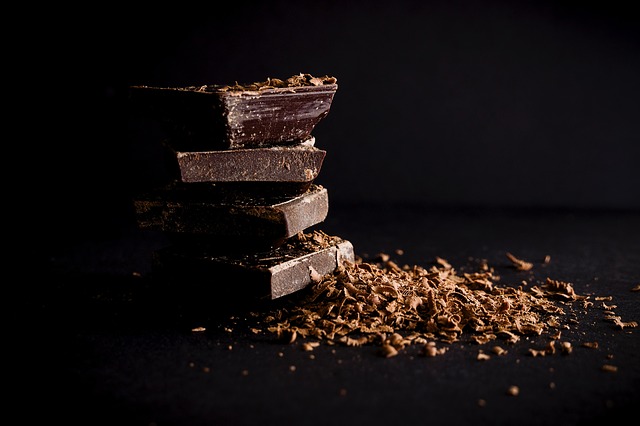
Chocolate comes from the cacao tree, which produces cacao pods. These pods contain cocoa beans and when the husks are removed from the beans and the beans are roasted and dried, you are left with cocoa nibs. These nibs are then ground to produce what is termed cocoa mass or cocoa liquor. This cocoa liquor is the main ingredient in chocolate. It is composed of cocoa particles suspended in 50-60% cocoa butter. When this chocolate liquor is further processed and mixed with sugar, cocoa butter and sometimes milk solids, you end up with what we think of as chocolate.

When you look at chocolate in the supermarket that is meant for culinary purposes, you will be faced with terms such as white, milk, semisweet, bittersweet or unsweetened. You may also see the term “dark” chocolate, which is often accompanied by a chocolate percentage. Let’s delve a little deeper into these terms by looking at requirements that the FDA has set for some of these terms.

Unsweetened chocolate is solid chocolate liquor. It will sometimes be labeled as 100% chocolate. It has its place in baking but is extremely bitter, unsuitable for munching.

For milk chocolate, the FDA specifies it must contain not less than 10 percent chocolate liquor. You may not know the exact percentage as often the manufacturer does not list a chocolate percentage on these bars. Other ingredients that are allowed are cocoa fat, sweeteners, spices, nuts, flavorings, dairy products and emulsifying ingredients.

White chocolate contains no cocoa solids but only cocoa butter – not less than 20% according to the FDA. Other allowable ingredients include sweeteners, dairy products, spices, nuts, flavorings and emulsifying ingredients.

The FDA does not distinguish between bittersweet and semisweet chocolate. To be labeled such, it needs to contain at least 35% chocolate liquor. This low amount may be surprising to you as I suspect most of us think that to be called bittersweet or semisweet, it should contain at least 50% chocolate liquor. As with the other types, the FDA allows cocoa fat, sweeteners, spices, nuts, flavorings, emulsifying agents and even dairy. This, again, may be surprising to you as I think many of us assume dark chocolate will not contain any dairy. Many do not. However, the FDA tested nearly 100 dark chocolate bars looking for the presence of milk. They found that 61% of the bars contained milk, including those that did not list milk as an ingredient. They postulate this may be due to the fact that companies use the same equipment to process both milk and dark chocolate and so there may be traces of milk on the equipment that makes its way into the dark chocolate. If you want more info on this study, email me.

Another label that we often see on chocolate bars in the store is “dark” chocolate. This is not a term defined by the FDA. However, it is generally thought of as a product with a higher percentage of chocolate liquor and no milk products. Many do, though, contain milk. These are what we think of when we see bars labeled such as 60%, 70%, etc.

Coating chocolate (or melting wafers) are not real chocolate at all. Although some of them may contain some cocoa, a look at the ingredient list will show you how far they are from real chocolate. The advantage of this product is that it does not require tempering to give you a hard & shiny coating that does not melt in your hand. If you have ever made candy or truffles and coated them with melted chocolate, you will quickly see why tempering is important. Without tempering the coating will be dull, soft and melt in your hands. Tempering is a method of melting and cooling the chocolate so that specific fat crystals form. This results in chocolate that is shiny, has a snap when broken and does not melt in your hand.

What is the best type of chocolate to use for your culinary needs? I always recommend starting with whatever is specified in your recipe. If it calls for dark chocolate, something around 60% would be a good place to start.

As far as brand of chocolate, everyone has their favorites. I did a little research to see what the food community thought. As can be expected, there were a wide variety of opinions – too many to even report. An excellent brand to start with is Ghiradelli, especially if you want dark chocolate. It is also readily available in most supermarkets. For unsweetened chocolate, Baker’s unsweetened baking bar is preferred by many and, again, should be in your local supermarket.

Another question that is often asked is if you can substitute chocolate chips for chocolate bars. As with so many questions, the answer is “It depends”. First, it depends on the brand. Some chocolate chips (including Ghiradelli) have the same ingredients as the bars and thus, you most likely can substitute without problems. However, some chocolate chip brands contain added stabilizers that help them hold their shape when baked. You would not want to use these for making candy, truffles, puddings, etc. However, they will work just fine in brownies or bars.

Enjoy your chocolate in whatever form you prefer. Bake something special, munch on a box of truffles or indulge in a decadent hot chocolate!

Cooking Tips · Techniques

Meringues — French, Swiss & Italian

Last week’s Cooking Tip talked about different styles of mousse and how some styles used a meringue as part of the dish. In this week’s Tip, I would to spend more time discussing the different types of meringue – French, Swiss and Italian.

In the simplest terms, a meringue is a mixture of beaten egg whites and sugar. It can be used to fold into cake or cookie batters, as a filling, topping or a stand-alone cookie that melts in your mouth when you eat it. Since the basis of a meringue is beaten egg whites, you may want to review the prior Cooking Tip on egg white foams before attempting these different types of meringues.

French meringue is the most basic of the meringues. It is made by beating egg whites to the foamy stage (45-60 seconds) and then slowly adding sugar and continuing to beat into a soft, airy and light mixture. Adding the sugar too early or too late can lead to disappointing results. Adding it after about a minute of beating when the whites have reached the foamy stage but before they begin to form peaks is ideal. This type of meringue is the easiest to make but is also the least stable. Therefore, it is usually used when it is going to be baked – either in a cake batter, meringue cookies or a meringue shell that is then topped with fruit, whipped cream or a type of mousse.

Swiss meringue is prepared differently. Egg whites and sugar are put into a bowl that sits above boiling water – a type of bain marie. When the mixture reaches the temperature of about 120° to 140°F, the mixture is removed from the heat and then beaten to stiff peaks. This method results in a meringue that is less fluffy than French and less stable then Italian. The recipe testers at Serious Eats, though, claim to have found a technique that will make your Swiss meringue as light as a French meringue but as stable as Italian. They do this by cooking it to a higher temperature – up to 175°F. They also whip it vigorously at high speed for about 5 minutes, until it is very glossy, thick & stiff. This type of meringue is often used as the base for buttercream frosting.

Italian meringue starts by putting the egg whites into your mixer bowl and beating to soft peaks. Then, a sugar syrup that has been heated to 240°F is slowly drizzled in while you continue to whip until the meringue is very voluminous and reaches the desired peak. Because this sugar syrup is very hot, one must be very careful when using this method to prevent burns. It is the most stable of the meringues but is also heavy and thick. It is what is used to make nougat and is also the best one for topping meringue pies.

Watching egg whites transform into a beautiful fluffy meringue is almost miraculous. Using this meringue to then top your pie, to lighten your cake batter or to bake into a pavlova or meringue cookie is further evidence of the wonderfulness of eggs!

Cooking Tips · Techniques

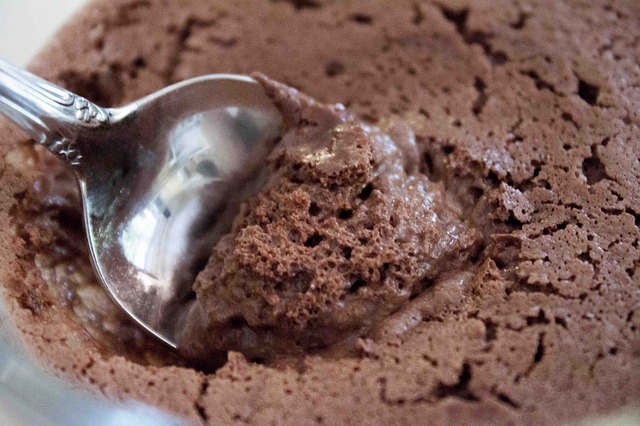
Making chocolate mousse

I am preparing to teach a class on French cooking. One of the desserts I will be doing is a classic chocolate mousse. It really is a wonderful dish to have in your repertoire for entertaining friends and family. There are a myriad of recipes out there but, in this Cooking Tip, I would like to explain the different styles of mousse so you can decide what would be best for you. These are general categories and you will find many variations on them. However, this will give you a solid start on understanding mousse.

A mousse always has two components. There is the base, which is the flavor, such as chocolate. Then, there is the lightener, which is something added to the base to make it airier, such as whipped cream or whipped egg whites.

The first style is called a Quick Mousse and that is just what it is. Start with melted chocolate and fold whipped cream into it. Mousse done!

A second style is Anglaise style. An additional step of making a crème anglaise is required. Crème anglaise is a custard sauce made from egg yolks, sugar, vanilla and dairy such as cream and/or milk. It is often the starting point for making ice cream. This warm anglaise sauce may be used to melt the chocolate. Alternatively, the chocolate may be melted on its own and then combined with the anglaise. After thoroughly incorporating the two, whipped cream is then folded into the mixture.

If you want to make a mousse without dairy, there is the Meringue-style mousse. In this case, you need to make a meringue with egg whites & sugar and then use that to lighten your chocolate base. The meringue can be either an Italian or Swiss meringue. I will discuss the different types of meringues in an upcoming Cooking Tip.

Pâte à bombe is similar to a meringue but is made from cooked sugar syrup and egg yolks (rather than whites), which are then whipped up into a light, creamy consistency. Add to melted chocolate and then fold in whipped cream.

A Pastry Cream mousse starts by making a pastry cream, which is a thick custard made with milk, eggs, sugar, cornstarch (or a mixture of flour and cornstarch) and flavoring. The resulting pastry cream can be used to melt the chocolate and then lightened with either whipped cream or whipped egg whites. This type of mousse works wonderfully as a filling for cakes, tarts or pastries.

A Bavarian mousse is great when you want to make decorative shapes. Because it is set with gelatin, you can unmold it and it will retain its shape.

Although you can make chocolate mousse from any of the above methods, the resulting taste and texture will be different. Which would be your favorite? You may just have to try them all before you can decide! If you do, be sure to let me know your thoughts.