Cooking Tips · Ingredients · Techniques

Beurre Monté – just another butter sauce?

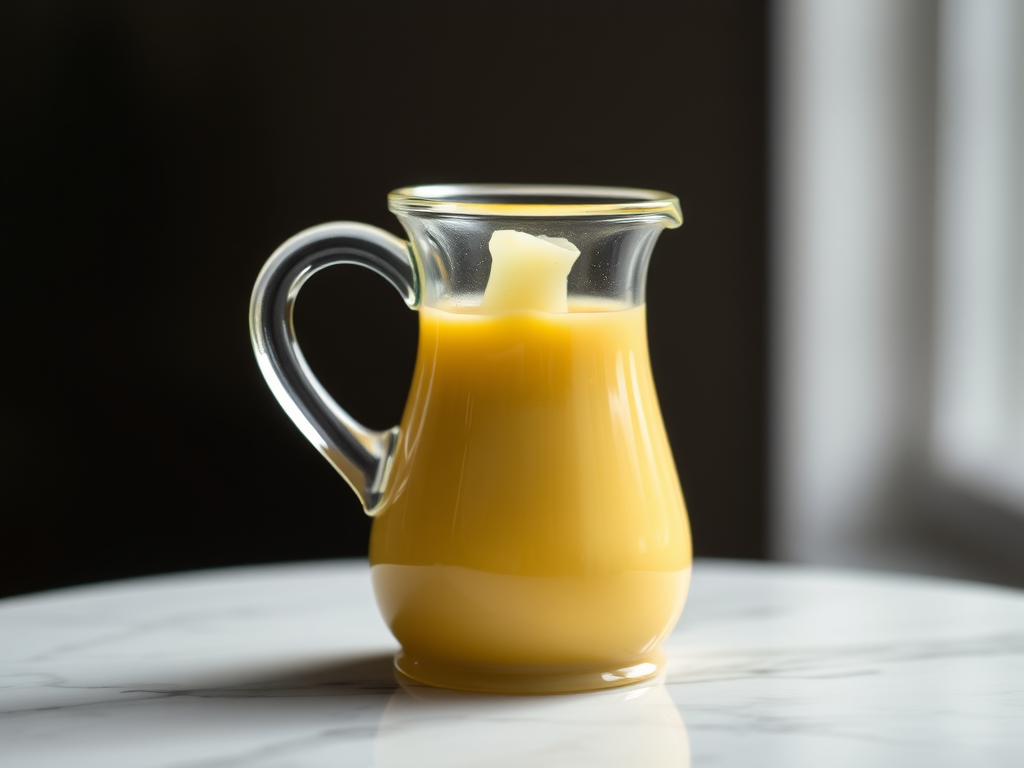
Sauces are one of my favorite things to make. They are easy, and they elevate food from ordinary to delicious. I have written three prior Cooking Tips – Sauces Demystified, Mother Sauces I and Mother Sauces II on different types of sauces. One sauce I have not discussed is Beurre Monté. That is the subject of this Cooking Tip.

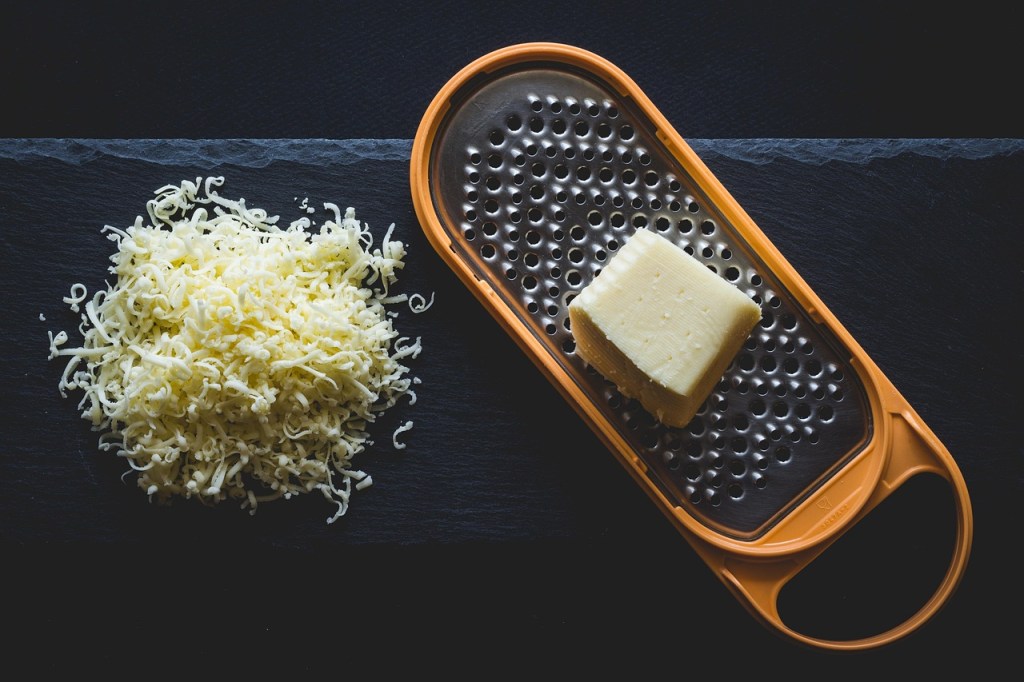
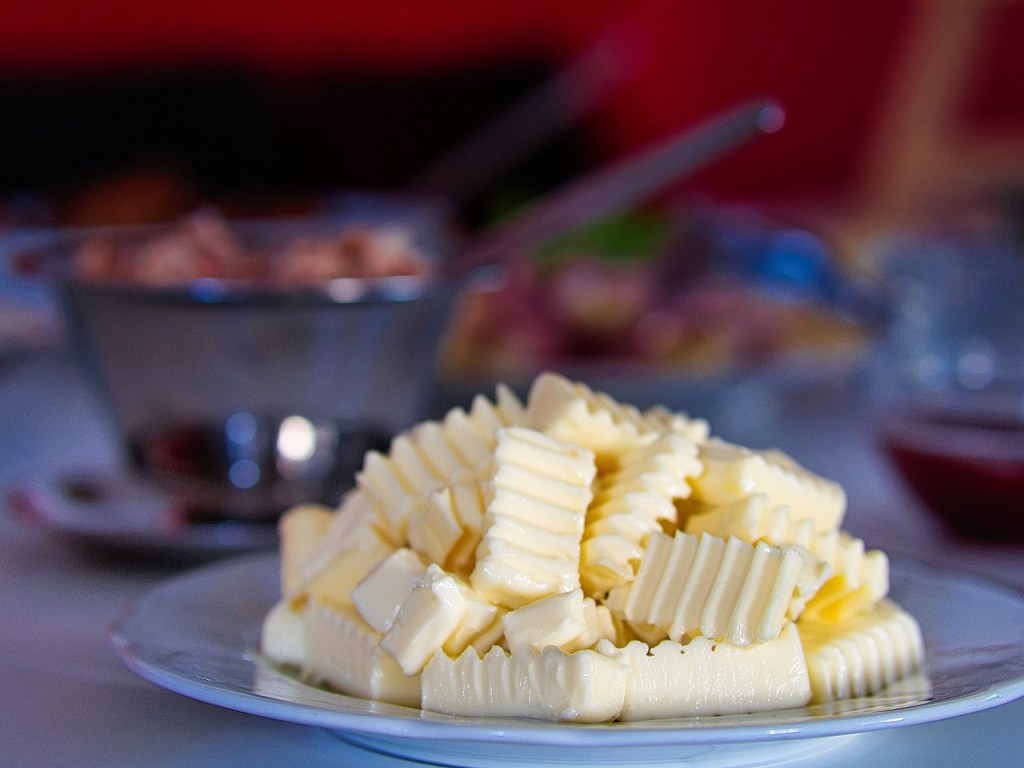
Image by Peter Toporowski from Pixabay

As you might suspect, beurre monté is a French invention. It is translated in various ways: “worked up butter,” “prepared butter,” “mounted butter,” or “whipped butter.” It is also a very simple and delicious sauce, as long as you don’t mind that it is made almost entirely of butter.

We all know that fat and water do not mix. We must force them to do so by the process called emulsification. This is done by slowly adding one ingredient to the other while vigorously mixing. This suspends tiny droplets of the one into the other. Vinaigrettes are one type of emulsion. The water element is typically vinegar, citrus juice, fruit juice or a combination. The fat usually is olive oil. If you pour them together, they will naturally separate. It is only by whisking the water-like ingredient while you slowly pour in the oil that you will get them to combine into an emulsion. They will often separate when setting, but you can again re-emulsify the mixture by shaking or mixing.

If you have read my Sauce Cooking Tips, you will have read that most pan sauces are finished by whisking a small amount of cold butter into the sauce. This thickens the sauce and gives it a glossiness and richness. That process is called “monter au beurre.”

Although it sounds similar, beurre monté is different. It is an emulsion, one that is made by whisking cold butter into simmering water. As one source puts it, it is the “lifeblood of many professional French kitchens.” That sounds like it would also be a good sauce for us home cooks to know.

There are only two ingredients – butter and water. Cooks Illustrated will tell you that the ratio of butter to water is crucial. You want only enough water for the fat droplets to disperse themselves without the result being too thin and watery. However, not everyone is such a stickler for that ratio.

Cooks Illustrated recommends three tablespoons of water to eight tablespoons of butter. Thomas Keller of The French Laundry uses four tablespoons of water to one pound (32 tablespoons) of butter. Masterclass agrees with Keller.

Despite your water-to-butter ratio, all agree on the method. Bring your water to a boil and reduce to a very low simmer. Start whisking the cold butter in piece by piece. You want the butter to melt and break into droplets that you emulsify in the water bit by bit. Continue this process until you have emulsified all the butter. Season to taste and you are done.

Feel free to try some variations on this basic recipe.

  • Stock – substitute stock for water, but be cautious of the sodium content.
  • Herbs – whisk in minced fresh herbs. Hardy ones (rosemary) can be added at the start, but more delicate ones (tarragon) should be added at the last minute.
  • Preserves, liqueurs, juice – After adding the butter to the water, whisk in 1½ Tablespoons jam or jelly and 1½ teaspoons of liqueurs or juice. Cooks Illustrated recommends raspberry jam plus Chambord, apple jelly plus brandy, or plum preserves plus amaretto.

Some might ask how this is different than just melting butter by itself. The result is quite different. Melted butter will be thin and just run off the food. By contrast, beurre monté coats and clings to the food and provides a more luxurious experience.

How would you use beurre monté?

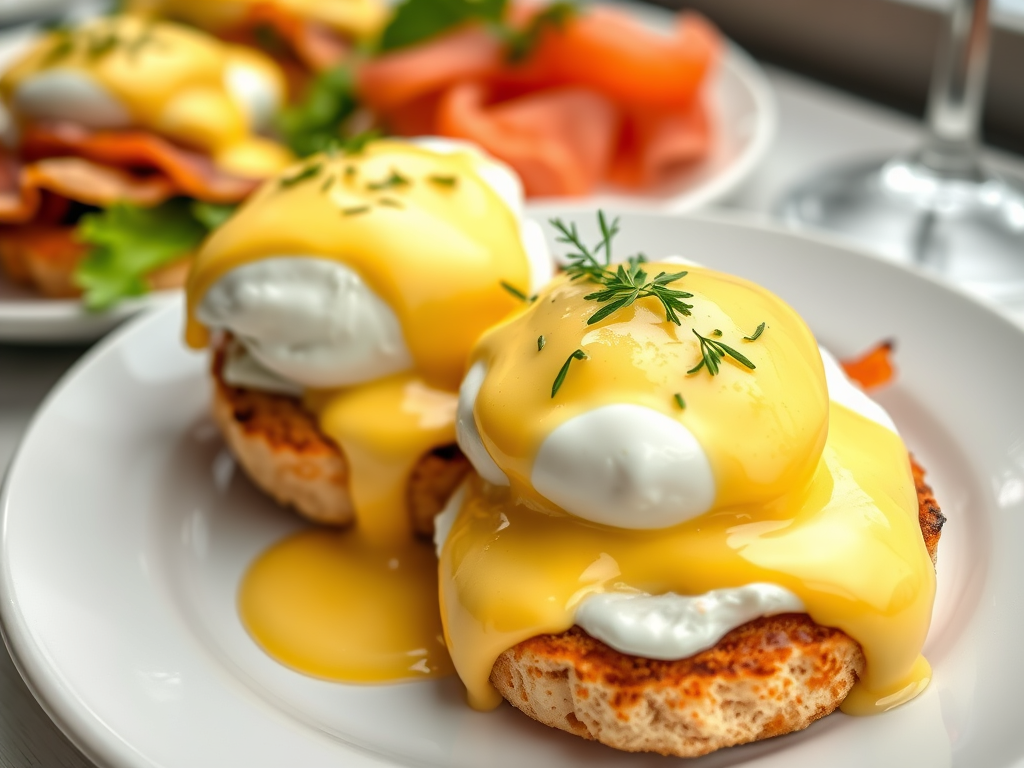
  • As a sauce on its own for meat, fish, pasta or veggies.
  • As a base for another sauce. Make the beurre monté and add other flavorings such as herbs, spices, lemon juice, shallots, jams, liqueurs and more.
  • As a poaching liquid for veggies, delicate meat or seafood. Because of fat’s low heat conductivity as compared to water, it will allow you to cook meat and fish more gradually, giving you a tender and not overcooked result. It also infuses the meat and fish with the flavor of butter.

You may make smaller amounts to meet your immediate needs. You can also make it ahead and hold it for up to 4 hours. To do that, put a lid on the pot and keep it warm but only at a sub-simmer, 135-160°F.

The leftover sauce may be refrigerated but will not have the same texture upon reheating. Instead, upon reheating, use it as you would regular melted butter. You could also heat it to turn it into clarified butter by removing the milk solids.

I do not know about you, but I have some salmon in my freezer that is just calling out to me for it to be dressed in a beurre monté. What about you?

Cooking Tips · Ingredients · Techniques

Sour Cream – for more than baked potatoes!

Take a look in your refrigerator right now. Is there a container of sour cream there? Did you buy it for one recipe, and then it just sits there until it goes moldy, and you throw it away? What is sour cream anyway? All those questions and more are the subject of this Cooking Tip.

Sour cream is a dairy ingredient that adds a creamy and tangy flavor to your dishes. It can be used in both sweet and savory applications. It is made by adding lactic acid and bacteria to a combination of cream and/or milk and letting it thicken and sour.

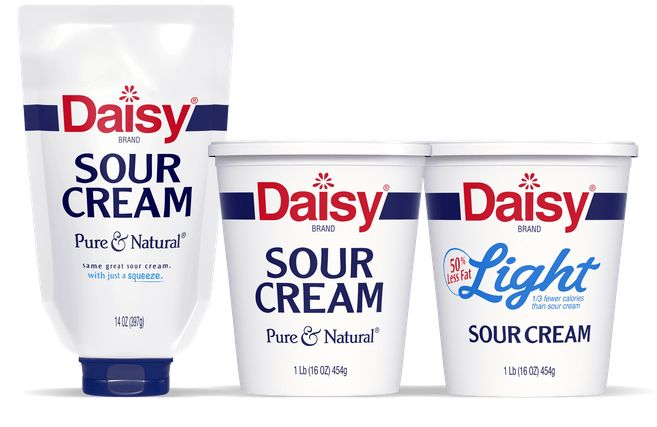
Regular sour cream contains about 20% milk fat. Light sour cream is made from a mixture of milk and cream, resulting in a lower fat content.  Non-fat sour cream has no fat, but it needs to be thickened. This is achieved by adding stabilizers and thickeners such as corn starch, gelatin, carrageenan, and guar gum.

Brand Differences

There are differences in the ingredient lists between brands. Just check the labels.

  • The Daisy Brand list of ingredients is only “cultured cream.” This is the top choice of America’s Test Kitchen.
  • Knudsen’s brand shows “cultured pasteurized Grade A cream (from milk), enzymes.”
  • My store brand has this much longer list – “cultured cream and skim milk, whey, modified corn starch, cultured dextrose, gelatin, sodium phosphate, guar gum, carrageenan, sodium citrate, calcium sulfate and locust bean gum.” I know which one I would rather buy for the minimal difference in price!
  • The “Natural” store brand is better, showing “cultured cream and skim milk, enzymes.”

Uses for Sour Cream

  • In cold dishes, it:
    • Adds creaminess, mild acidity and a bit of tang.
    • Acts as a binding agent to hold ingredients together, as in a chicken salad.
    • Can be a replacement for mayonnaise with a lower fat content but it won’t be as acidic.
    • Examples
      • Use in deviled eggs in place of mayonnaise.
      • In pasta/potato salads, swap sour cream for all or part of the mayonnaise.
      • Try as a sandwich spread.
      • It makes for creamy dressings and dips.
      • Add to whipped cream to add another flavor dimension. Add ¼ cup to 1 cup of heavy cream along with your sweetener of choice. Whip together with an electric mixer.
  • In hot dishes, it:
    • Balances heat with its tanginess.
    • Adds richness to baked goods.
    • Can be a wonderful finishing touch with a hint of acidity.
    • It can act as a thickening agent for sauces and soups.
      • For sauces, gradually whisk it into the warm sauce to prevent curdling and separation.
      • For soups, add towards the end of the cooking process.
    • Examples
      • Add to soup or chilis as a topping/garnish.
      • Top your tacos, burritos, and baked potatoes.
      • Add to a pasta sauce to increase creaminess.
      • In cakes/muffins, it can give you a moist and tender crumb. The acidity also helps balance the sweetness. Substitute a portion of the liquid in your recipe with sour cream.

Make your own

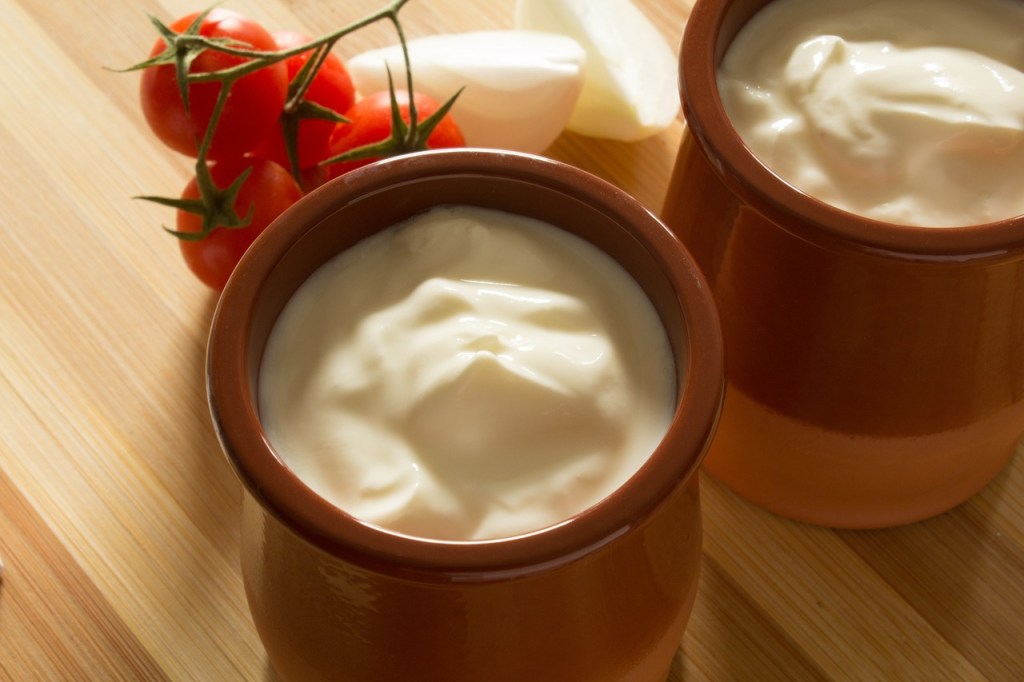
Image by Олег from Pixabay

Some people like to make their own as they control the ingredients that go into it, and they only have to make the amount they want. Here are some ways to do that.

Buttermilk technique

  • Combine 1 cup heavy cream and ¼ cup buttermilk in a sterilized jar and seal. Shake vigorously to combine.
  • The bacteria in the buttermilk will ferment the cream, which leads to souring and thickening.
  • Allow to sit at room temperature for 24 hours.
  • Store in refrigerator for up to 2 weeks.
  • Replace some of the cream with whole milk, half-and-half, or light cream if you’d prefer a lower-fat version. Just keep in mind that your sour cream will not turn out quite as thick if you decrease the fat. To thicken, you can pour through cheesecloth.

Vinegar/lemon juice technique

  • This is similar to the buttermilk technique but uses a different acid – either lemon juice or white vinegar.
  • Combine ¼ cup room temperature milk and either 1 tablespoon of lemon juice or 2 tablespoons of white vinegar. Thoroughly combine.
  • Add 1 cup room temperature of heavy cream. Combine.
  • Let sit in a warm place for at least 12 hours to a maximum of 24 hours.

Powdered sour cream

Many of us use powdered buttermilk. There is also powdered sour cream that you can reconstitute just like powdered milk. The former is easy to find in our markets, whereas the latter will probably have to be purchased online.

Substitutions

If you do not have any on hand for a particular recipe, you can try the following substitutions.

Yogurt

  • America’s Test Kitchen tried substituting Greek yogurt for sour cream in three recipes.
    • In biscuits and a sour cream sauce, the yogurt did fine.
    • In beef stroganoff, the yogurt with its lower fat content broke due to the heat.
  • Use plain yogurt, preferably Greek, in equal parts.
  • If you are not using Greek yogurt, consider draining it through a cheese-cloth-lined sieve over a bowl for at least 30 minutes.
  • Since yogurt is only 10-12% fat, it will not give you the same richness but can certainly be used.
  • For baking, for one cup of sour cream, use one cup of yogurt plus one teaspoon of baking soda.
  • For a dip, combine 1 cup sour cream with ¼ cup yogurt and 1 cup cottage cheese.
  • For a sauce, mix 1 cup of sour cream, 1 cup of yogurt, 1 tablespoon of flour, and 2 teaspoons of water.

Buttermilk

  • Try plain buttermilk. Since this is thinner than sour cream, many like to add softened butter to improve the texture.
  • Also, use less than the amount of sour cream called for, or it might be too liquid.
  • For baking, try ¾ cup buttermilk + ⅓ cup softened, unsalted butter.

Cottage cheese or Cream cheese

  • The texture of both of these items is different than sour cream. So, you should blend them with some liquid to get a consistency similar to sour cream.
  • For dips, combine 1 cup cottage cheese and ¼ cup yogurt/buttermilk in a blender.
  • For cream cheese, blend together 6 ounces of cream cheese and three tablespoons of milk.

Storage

  • To help it last as long as possible, store it in the refrigerator sealed tightly. It should keep for about three weeks.
  • Signs of it going bad are visible mold, the aroma of mold, or other off-smell (even if you do not see mold), or if it is taking on an off-white color.
  • If you see mold, just as with soft cheeses, you should not just scrape off the moldy part as the mold can extend into the product even if it doesn’t appear so.
  • Not a problem if it has separated. This is normal, and you can either drain it off or mix it back in.
  • When spooning it out of the container, always use a clean spoon to prevent introducing pathogens into the sour cream.
  • If you can’t use it up, try freezing it. Because the texture will suffer, reserve your frozen sour cream for use in cooked dishes, not fresh. Allow it to thaw in the refrigerator. If you add it to soup or similar, toss it in frozen.

Sour cream is such a simple ingredient, but it can add so much to your dishes. I am sure you already use it, but if not, pick some up when you are in the store or try making your own!

Cooking Tips · Ingredients

Goat Cheese – Should you take another look at it?

If you have been to a cheese-monger or a good cheese department in a supermarket, you can see just how complicated the world of cheese can be. I have written prior Cooking Tips on cheese in general – Part 1, Part 2 and Part 3. In this Cooking Tip, I want to concentrate on one type of cheese that can be somewhat polarizing – Goat Cheese. The world of goat cheese is not monolithic. Different varieties vary not only in flavor but also in texture.

People who do not like goat cheese say it tastes funky and even like a barnyard. However, this is not always true, depending on the type of goat cheese and its producer. I recall tasting goat cheese in a dish when visiting southern France. It was mild, creamy and delightful. I decided right then and there that I did like goat cheese – and it wasn’t like a barnyard at all!

France used to be the primary producer of goat cheese, and that is where one of its names – chèvre – comes from. It means goat in French. Its introduction into the US is relatively recent.

Laura Chenel of Sonoma, California, started the Laura Chenel Creamery. After working and studying around the world, she returned to California and bought her first goats. As the herd grew, so did the milk production, which she began to turn into cheese. She traveled to France in 1979 to learn more about the process of cheese making. The business grew and accumulated awards for their cheese production. America’s Test Kitchen places it at the top of their favorite goat cheeses.

One of Laura’s first customers was Alice Waters, an iconic name among American chefs. She introduced goat cheese into the dining scene when she topped a green salad with a round of breaded and baked goat cheese at her Berkeley restaurant, Chez Panisse. Since then, domestic production of goat cheese has surged.

Most goat cheese is described as tangy and grassy and, at times, gamy. One of the significant factors in the flavor is the goats’ diet. They have very strong stomachs and tend to eat many plants that have a pungent character. Cheesemakers that want to temper this will feed their goats a restricted diet to achieve their desired flavor profile.

The freshness of the goat milk is also an important determinant of the cheese flavor. The older the milk, the “goatier” the cheese will taste. According to the cheese makers, keeping male and female goats separate during the breeding season is also important. The male goats produce strong-smelling hormones that can affect the cheese’s flavor.

How much salt the cheese maker uses can make a difference in flavor and texture. The salt content of the cheese can vary greatly depending on the cheese maker. Those who keep it to a minimum do so as they feel salt interferes with the clean, fresh taste. Others think that salt can enhance the cheese’s flavor. Salt also has an effect on texture when the goat cheese is baked. Lower-salt goat cheeses became mealy or crumbly when baked, whereas those with a higher salt concentration tend to be smoother and creamier.

Cheese from both goats and sheep have a slightly lower lactose content than cows’ milk but are not lactose-free. The goat milk also has a different protein composition from cow milk, which makes it more digestible.

Goat milk can be made into many styles of cheese, such as brie, blue cheese, camembert, cheddar, feta, and gouda. One major categorization of goat cheese is fresh versus aged.

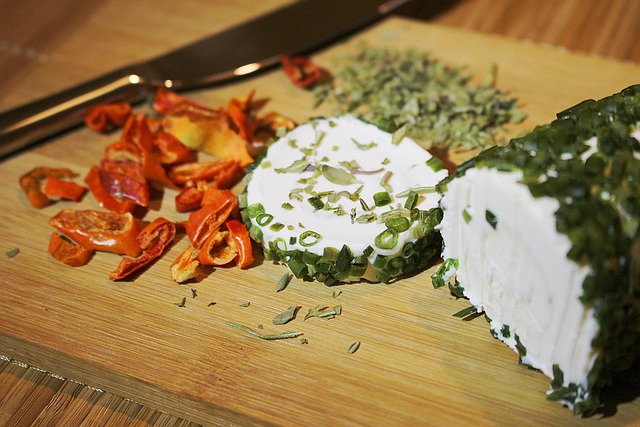
  • Fresh goat cheese is often called chèvre. As noted above, this term means goat in French. However, in common usage, it tends to indicate the traditional French, fresh goat cheese, which is typically un-aged and is soft and fluffy in texture. This is usually what you get when you buy a log of goat cheese, but the sealing process can lead to compression of the cheese. It may or may not be flavored with peppercorns, garlic, fruits or honey. It may also be coated in herbs and spices
  • Aged goat cheese – The texture of aged goat cheese can range from soft to firm and crumbly. As with many other types of aged cheeses, the flavor may be more pronounced. There are two aging periods.
    • Semi-soft – This is aged 8 to 15 days. It is still soft but does have a pronounced goaty flavor.
    • Hard and firm – This type is aged 3-4 weeks. It has a more full-bodied flavor with a drier texture.

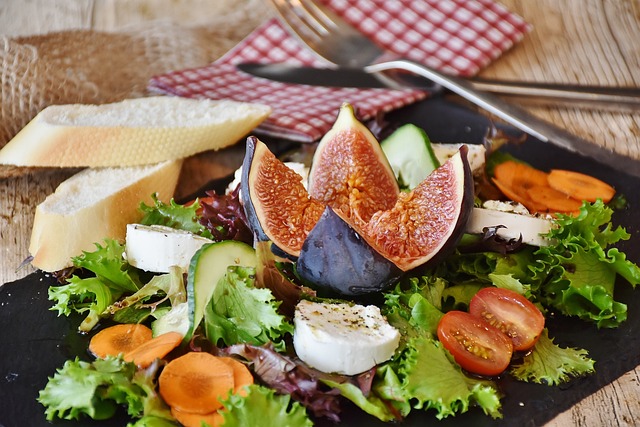
How do you use goat cheese? Here are some ideas.

Image by Csaba Nagy from Pixabay

How about you? Are you a lover or hater of goat cheese? Do you have any favorite ways of enjoying it? If you think you do not like goat cheese, try to seek one that is milder in flavor, such as this one from Vermont Creamery or this one from Murray’s Cheese. Both can be found in my local supermarket and perhaps in yours, too.

Cooking Tips · Ingredients

Tea – A British Tradition

Even if you do not like to drink tea, I would bet that many of you enjoy sitting down to a beautiful and tasty Afternoon Tea or even just a simple Cream Tea. Just what these events are and some of the arguments around them is the subject of this Cooking Tip.

Image by Ji-yeon Yun from Pixabay

The first piece of disagreement about Afternoon Tea is the name. Here in the US, most people use the term High Tea rather than Afternoon Tea but this is a misnomer. The concept of Afternoon Tea started in England in the 1840s when The Duchess of Bedford wanted a small bite between lunch and dinner. It started out as just tea and a small snack, but the popularity grew once she started inviting her friends over and it became a social gathering for the wealthy social class. It developed into a light meal composed of three courses – tea sandwiches and savories, scones with clotted cream and jam, and sweet pastries. Everything was bite-sized and eaten with fingers. Afternoon tea time was around 4:00 pm. It was not meant to replace dinner but instead to tide someone over until dinner, which was usually served at 8:00 pm for the upper class. Afternoon tea is also called Low Tea since it was enjoyed on low tables with comfortable chairs and sofas in the drawing room.

High Tea, on the other hand, was a working class family evening meal or supper. High Tea time was between 5:00 pm & 7:00 pm after the working class came home from work. The menu consisted of much heartier dishes meant to nourish after a long day at work. High Tea was served at a high dining table where supper was eaten and thus, the name.

Image by Stefan Schweihofer from Pixabay

Cream Tea is a simple delight consisting only of scones (with clotted cream and jam) and tea.

Another interesting argument has to do with the scone course and it is one that continues to divide people in Britain. The debate is about how you put the jam and clotted cream onto the scones. Do you put the jam on first or do you put the clotted cream on first? The two counties from which clotted cream originated are Devon and Cornwall and they vehemently disagree on this topic. In Devon, the cream is spread on the scone first followed by the jam. In Cornwall, they say the jam must go on first. Here is a summary of their respective arguments.

Cornwall – jam first

  • It is easier to spread the jam on first and then add cream.
  • The jam does not slide off the cream.
  • You can taste the cream better.
  • You usually put cream on the top of other desserts, e.g., pie, fruit, cake.

Devon – cream first

  • The cream is like butter for the scone.
  • The jam will lie flatter on the cream, making it a bit easier to eat.
  • You are at less of a risk of getting cream on your face.
  • It originates from when jam was expensive so you would just put a small amount on top.

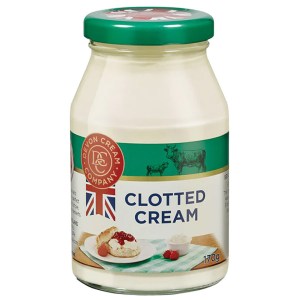
A final topic is just what clotted cream is. Authentic clotted cream is made in either Devon or Cornwall, England. It is made by heating unpasteurized cow’s milk for many hours, which causes the cream to rise to the surface and “clot.” The historians say that clotted cream was originally made by farmers to reduce spoilage. As they did not have refrigeration, heating the milk was a way of separating the cream from the watery whey, which is where the bacteria were found. This also produced a thick and rich cream that became very popular.

Just as champagne cannot be called that unless it is from the Champagne region of France, products can only be labeled as “Cornish clotted cream” if they are made with milk from Cornwall cows and are a minimum of 55% butterfat. The farmers tell us that it is the grass eaten by Cornish cows that gives the clotted cream its yellow color.

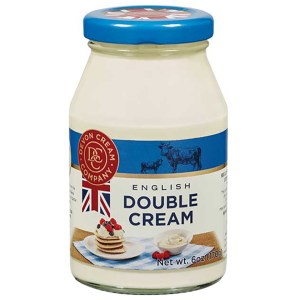
Clotted cream should be distinguished from other dairy products. If the cream is allowed to separate naturally – without the application of heat – you get different products. If you allow the milk to separate just once, it produces “single cream”. If there is a second separation, it produces “double cream.” These products contain less fat and, therefore, are thinner and have a lighter taste.

You may wonder how these dairy items compare to American products. In the US, our heavy cream is 36-40% fat, whipping cream is 30-36%, and light (table) cream is 18-30%. Half-and-half is a mixture of cream and whole milk. It contains 10-12% fat. The British double cream is 48% fat, whipping cream is 35% fat, and single cream is 18%. As we noted above, clotted cream is at least 55% fat but some is up to 65%.

What is your preference? Do you prefer a traditional Afternoon Tea or a simple Cream Tea. I know when my husband and I lived in England and were visiting different villages, we loved to find a tea house and sit down for a relaxing Cream Tea. It was a wonderful delight!

Cooking Tips · Ingredients

Coming everywhere – cage-free egg laws

If you are one of my readers that live in Colorado, you have probably heard that all eggs produced and sold in in this state as of January 2023 must now be Cage Free. What does that mean – not only for the chickens but also for you, the consumer? That is the subject of this Cooking Tip.

Colorado is not the only state to pass such laws. Other states with similar laws are:

  • Arizona
  • California
  • Massachusetts
  • Michigan
  • Nevada
  • Oregon
  • Rhode Island
  • Utah
  • Washington

Although some will hail this trend and those states that have passed these laws, only two of those states are on the list of top 10 egg producing states. Here is that breakdown.

  1. Iowa
  2. Indiana
  3. Ohio
  4. Pennsylvania
  5. Texas
  6. Georgia
  7. Michigan
  8. North Carolina
  9. California
  10. Arkansas

If your state isn’t one of those listed with cage-free laws now, it may soon be as there is a nation-wide effort to get these laws in place. Each state’s law may be different. I will lay out Colorado’s law but if you are in another state, you will need to research that law to understand the definition.

According to Colorado law:

  • The chickens must have enclosure measurements of no less than 1 square foot per hen.
  • By 1 January 2025, there needs to be a “cage-free housing system”, which has requirements for more space.
  • Farm owners must obtain a certificate that affirms that the eggs produced are compliant with regulations, which must be renewed annually. The farmers are responsible for hiring an inspection provider.
  • After certification, egg cartons must contain the statement “CO-COM”. (Note there is no requirement to have “cage free” on the label although producers will most likely do this.)
  • The requirements do not apply to farming operations with less than 3,000 hens.

So, just what is the definition of cage free? The USDA states that “eggs labeled ‘cage-free’ or ‘from free-roaming hens’ are laid by hens that are allowed to roam in a room or open area, which is typically a barn or poultry house.” Note that nothing is said about being outdoors and, indeed, the hens may spend their entire lives indoors. They do, however, have more space to spread their wings, dig around in the dirt, etc.

Going cage free does mean egg prices are going to go up. One expense is the conversion of the facilities to the required cage-free environment. It also requires much more work from the farmers. One Maine farmer stated that he went from a flock of more than 33,000 hens down to 3,000. But, he had to increase his employees from five to eight just to help with the extra work taking care of the chickens. That all means higher egg prices.

Cage-free eggs aren’t just more expensive because farmers must convert their facilities. They also require more work from the farmers. The chickens tend to lay their eggs wherever they want to, not just in their designated nest boxes. That means the farmers must collect the eggs more frequently and the eggs shells get dirtier, resulting in more work to clean them.

Another interesting consequence of going cage free is discussed in an article by Watt Poultry and that is the possible demise of local family farms. The article argues that many of the consumers who desire cage-free eggs are the same people who prefer to frequent local, family-owned businesses. However, the push towards the practice of cage free egg production is expensive and may cause many small farms to close.

If cage-free is not enough for you, the next step would be to buy “free range” eggs. According to the USDA, “free range eggs must be produced by cage-free hens housed in a building, room or area that allows for unlimited access to food, water and continuous access to the outdoors during their laying cycle”. So, if you want to make sure your eggs come from hens that can actually get outdoors, you should choose “free range” rather than just “cage free”.

Pasture-Raised – pasture-raised is not a USDA regulated term. That means it is third-party certifiers that set the standards. Although there will be variation between brands, the general meaning of the term is that the hens are given the opportunity to roam on green, grassy pastures every day. In general, every hen has from 35 to 108 square feet of pasture to herself.

For eggs to be labeled organic, the hens must be raised according to USDA National Organic Program guidelines. The hens must be allowed to range freely and given access to the outdoors. They must be fed an organic diet and, if they do not have access to a pasture area, they must be provided with sprouted grains or fresh plants on a daily basis.

Antibiotic and/or Hormone Free – most eggs in the United States are antibiotic free, since antibiotics decrease egg production, and all eggs are hormone free since it is illegal to give hormones to chickens.

Vitamin Enhanced – these are eggs laid by hens whose diets may include things like alfalfa, rice bran and sea kelp to produce eggs with more Vitamin B, A, D & E in the eggs.

Omega-3 Enriched – eggs laid by hens whose diets include things like flaxseed, algae & fish oils to boost the omega-3 content.

There are other terms that egg producers will put on their cartons but there is no regulatory or policy guidance from the USDA or the FDA. These include:

  • Farm Fresh
  • Natural or Naturally-raised – this term simply means that nothing was added to the egg like flavorings, brines or coloring. All eggs meet this criterion.
  • Animal Friendly
  • Happy Hens

There are non-governmental organizations that have certification programs that go above and beyond what the USDA requires. One is “Certified Humane”. Some companies that prescribe to those standards are Eggland’s Best, Kirkland Signature Cage-Free, Safeway Lucerne Cage-Free, Pete & Gerry’s, Nellie’s, Organic Valley and Trader Joe’s Pasture Raised.

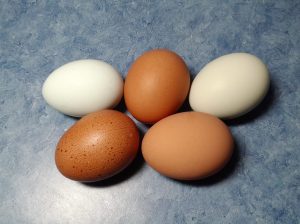
Are any of these eggs healthier than others? Some of the egg producers say yes. The USDA says there are no significant nutritional differences between cage-free/free-range/etc. and conventional eggs. Rather, it is a choice you make based on the welfare of the chickens and your budget. The cage-free eggs I used to buy for $2.50 per dozen are now between $7 and $8 per dozen. In my state, I no longer have the choice to buy conventional eggs. If you still have the choice, what do you choose?

Cooking Tips · Ingredients

Buttermilk – does it have butter in it?

What do you think of when you hear the word “buttermilk”? I know I think of buttermilk pancakes but that is certainly not the only use for buttermilk. What it is and how to use it is the subject of this Cooking Tip.

Before the 1920s, buttermilk was different than it is today. Cooks left their unpasteurized cream to sit for a few days to thicken before churning into butter. During this time, naturally occurring bacteria caused it to ferment by converting milk sugars into lactic acid. This resulted in a liquid with a mildly sour taste and a slightly thickened texture. This is also where the name buttermilk comes from as it results from the process of churning butter.

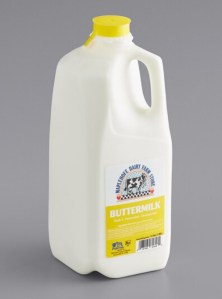
Today, almost all milk/cream is pasteurized at high temperatures, killing the bacteria. Makers of buttermilk reintroduce lactic acid bacteria into this pasteurized milk. This is called “Cultured Buttermilk” and is what you will find in the store.

When you use buttermilk, it is often combined with baking soda. The lactic acid paired with the alkaline baking soda causes a chemical reaction that leads to the rise that you want in pancakes or buttermilk biscuits. It adds a tangy flavor as well as acting as a tenderizer in baked goods. You can also use it in cooking but it can curdle if heated too quickly. To incorporate into hot dishes, warm it separately in a saucepan over medium-low heat first.

Most recipes only call for a small amount of buttermilk and most stores only sell it in 1 quart or ½ gallon sizes. Less commonly, you might be able to find it in a pint size. It does last longer in the refrigerator than other dairy products as the lactic acid inhibits bacterial growth. According to the USDA, buttermilk can be kept in the refrigerator for about two weeks. It can also be frozen for up to three months. To do this, pour into an ice cube tray and once solid, move to a plastic bag. You can defrost it overnight in the refrigerator although it will separate. A quick whisking will bring it back together. You can also microwave it on medium power. Testers have found there is not much difference using frozen as compared to fresh buttermilk.

What if you don’t have any buttermilk on hand and do not want to buy it in the quantities offered? A look in cookbooks and websites will give you a number of alternatives. Here is a list.

  • Milk and vinegar
  • Milk and lemon juice
  • Milk and cream of tartar
  • Sour cream
  • Yogurt
  • Powdered buttermilk

Many of these sources just repeat what they have been told or read without asking if they are good alternatives. Do they really work as well as real buttermilk? I have found a couple sources (Cooks’ Illustrated and TheKitchn.com) that have actually put these alternatives to the test. I will try to summarize the results.

Milk & acid

  • This is done by adding 1 tablespoon of either lemon juice or vinegar to 1 cup whole milk, stirring together and then allowing it to sit for 10 minutes to thicken. A different acid that can also be used is cream of tartar. Add 1¾ teaspoon to 1 cup whole milk.
  • Although mixing vinegar, lemon juice or cream of tartar into whole milk will produce an acidified product, they do not compare to real buttermilk.
    • Lemon juice adds a distinct lemony taste that you may not want.
    • Pancakes do not brown as well and do not get as puffy as with real buttermilk.
    • Cream of tartar can lead to very rubbery pancakes. If you decide to try this, the cream of tartar should be added to the dry ingredients as it will clump when added to the milk.
  • Cooks’ Country found better results with recipes for biscuits and chocolate cakes. The biscuits made with either buttermilk powder (see below) or soured milk were lighter and fluffier as compared with liquid buttermilk. Many also preferred the flavor of those made with soured milk.  The upshot was that all were acceptable.

Sour cream or yogurt

  • Both of these products should be thinned with water. Most recommend using ¾ cup of the dairy product and ¼ cup of water. They should be whisked together but no resting time is necessary.
  • Some testers found that both sour cream and yogurt performed better than the acidulated milk but not as good as real buttermilk.
  • They also concluded that Greek yogurt the best choice. Whisk together ⅓ cup whole milk Greek yogurt with ¾ cup 1% milk. This was an excellent alternative in terms of results.
  • Cooks’ Country tested yogurt and buttermilk in biscuits, pancakes and sheet cake. They tried just yogurt, just buttermilk and also a mixture of half yogurt and half buttermilk. In sheet cakes & biscuits, all worked well. In pancakes, pure yogurt did not work as the batter was too thick making it hard to cook all the way through without getting the exteriors too dark. However, the 50/50 mixture worked well.

Buttermilk powder

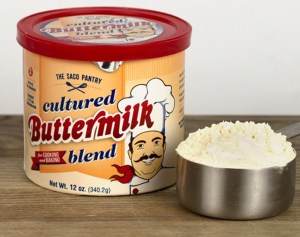
  • This product is made from buttermilk that has been heated and dehydrated to produce a stable powder. The product made by Saco Pantry (not the only brand available) is made from actual cultured, churned sweet cream buttermilk. Because of this, some feel that there is more richness as compared to its liquid counterpart. The latter is made from skim milk that has been inoculated with bacteria.
  • Another great thing about this product is that is has a long shelf life. Once opened, it should be refrigerated. It is usable up to the expiration date, which is about 2 years after you buy it.
  • To use the buttermilk powder, follow the instructions on the canister, which has you mix the powder with the same amount of water as the buttermilk that is called for in the recipe. For baked goods, it is best to add the powder to the dry ingredients and then add the water when the recipe says to add the buttermilk.
  • It is said to add flavor, tenderness and richness as well as improved moisture retention and enhanced browning. King Arthur’s Test Kitchen Charlotte Rutledge uses it in her pie dough as she says it impedes gluten development and makes rolling it out easier and increases the crust’s delicate texture.
  • In testing, King Arthur flour tried it in buttermilk pie, buttermilk cake, biscuits and sugar cookies. They liked how it worked in all the recipes. They did find two differences as compared to using liquid buttermilk. Those baked goods made with the powder are slightly lighter in color and the flavor is more creamy-buttery rather than tangy. They state they you can use milk rather than water, which gives even better texture and flavor.
  • Cooks’ Illustrated also loved it for baking applications. However, they found problems in other recipes such as coleslaw and mashed potatoes. It led to watery, looser results. The recommend decreasing the water by 25% while using the normal amount of powder. When used for coating fried chicken, the coating did not stick. They found no way around this problem.
  • Finally, it was the favorite from the testing done on TheKitchn.com although the only recipe tested was a buttermilk pancake recipe. They found its flavor was the closest to true buttermilk and the pancakes were evenly golden with a light and fluffy interior.

In summary, if you usually have liquid buttermilk on hand, that’s great. If you don’t, though, you may want to grab a can of powdered buttermilk. It can do as well and sometimes even better than the liquid buttermilk in most applications. I know I always have a can in my refrigerator. What about you? What do you use?

Cooking Tips · Ingredients

Canned Milk Products

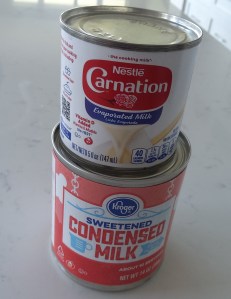
I was making homemade ice cream this week and my recipe called for a can of evaporated milk. That caused me to wonder if the average person knows the difference between that product and the other canned milk product – sweetened condensed milk – and when to use them. Afterall, they are both in little cans that look similar but they are very different products. That is the subject of this Cooking Tip.

Let’s start with the definition of milk. According to the FDA, “Milk is the lacteal secretion, practically free from colostrum, obtained by the complete milking of one or more healthy cows … that shall have been pasteurized or ultra-pasteurized.” All of us know what milk is and where it comes from but have you ever defined it like that? That’s government-speak for you.

The different types of milk and other dairy products vary by their milkfat content. Here are the percentages of each kind from the highest to the lowest fat content. This will help you make decisions about substitutions for the canned milk if necessary.

  • Heavy cream – not less than 36% milkfat
  • Light whipping cream – between 30% and 36% milkfat
  • Light cream – not less than 18% milkfat
  • Half and half – a mixture of milk and cream to create a product that is between 10.5% and 18% milkfat
  • Whole milk – not less than 3.25% milkfat
  • Reduced fat – about 2% milkfat
  • Low fat – about 1% milkfat
  • Skim/fat-free – essentially no fat

Evaporated Milk

To make this product, fresh milk is simmered until the liquid is reduced by about 60%. This results in a product that is concentrated and creamy. The cooking process breaks down the milk proteins (caseins), which means it is less likely to curdle in your recipes.

According to the FDA, it must contain not less than 6.5% milkfat. It is homogenized and contains vitamin D. The addition of vitamin A is optional. It is processed by heat to prevent spoilage.

It will be sweeter than regular milk as the natural sugar in milk, lactose, has been concentrated during the evaporation process.

This type of milk is often used to give a creamy texture to dishes such as sauces, macaroni/cheese, mashed potatoes, puddings, fudge, etc.

It can stand in as a substitute for regular milk in recipes by adding an equal amount of water. However, it will cause a deeper color with a slightly sweet, caramelized flavor. So, it may not be something you want to use for your bechamel sauce.

If you do not have a can in your pantry, you can use a fresh dairy product. Use the milkfat content info above to pick a suitable choice. You may also use a mixture such as for one cup of evaporated milk, mix ¼ cup cream with ¾ cup whole milk.

Another alternative is to make your own. All you have to do is to simmer milk until the volume is reduced by about 60%. It can be stored in the refrigerator in an air-tight container for up to 10 days.

Condensed Milk

This is also known as “sweetened condensed milk” and therein lies the difference between this product and evaporated milk. Sugar to the tune of 40-45% is added to the milk. As it is boiled down, it becomes very thick and caramelized.

Due to the sugar, this product is mostly used in desserts such as puddings and sweet custards. It is also a key ingredient to Thai iced tea. In baked goods, it provides tenderness, moisture and flavor as well as adding color to pastry crusts.

According to the FDA, it must contain not less than 8% milkfat. It is pasteurized and homogenized and contains vitamin D. The addition of vitamin A is optional. The sweetener must be added in sufficient quantity to prevent spoilage.

Because of the sugar, it cannot substitute for evaporated or regular milk. Once again, though, you can make your own. There are different recipes but here are two.

  1. Mix ¾ cup sugar, ½ cup water and 1⅛ cup dry powdered milk and simmer until thickened, stirring frequently.
  2. Heat ⅓ cup + 2 Tbsp evaporated milk or regular milk with 1 cup sugar and 3 Tbsp margarine/butter until sugar dissolves.

Because both of these products are shelf-stable and have different purposes in the kitchen, it is a good idea to have some available rather than substituting. Once opened, just keep the left-overs in an air-tight container in the refrigerator. Do you have some in your pantry right now? I hope so!

Cooking Tips · Ingredients

Mayo — for more than sandwiches!

In last week’s Cooking Tip, we learned just what mayonnaise is, how it is made as well as some taste testing results of commercial products. Mayonnaise can be used for so much more than just spreading on sandwiches and that is the subject of this Cooking Tip.

The first thing is that you can do to enliven your mayonnaise is by adding your own flavors. In my local supermarket, the following varieties can be found. Do you have any fun flavors in your store? Let me know.

  • Chipotle
  • Chipotle Lime
  • Miso
  • Black Truffle
  • Hint of Lime
  • Garlic
  • Sriracha
  • Wasabi
  • Harissa

Mayonnaise also forms the base for many sauces such as aioli, remoulade and others.

Aioli

This is one of the most famous mayo-based sauces. It originated in Provence and was made by pounding garlic with a mortar and pestle and emulsifying with oil. There were no eggs or acid added. Today, though, it is a mayonnaise flavored with garlic. As opposed to mayonnaise, which normally takes a neutral oil, aioli classically uses a fruity extra virgin olive oil.

Aioli is often used as a sauce or dip with seafood in Mediterranean cuisines. It is also used as a burger spread, on pasta, as a topping for crab cakes or a dip for grilled veggies.

Spanish-style aioli is called allioli and is often served with patata bravas (fried potatoes) or seafood.

Just as with mayonnaise, other flavors made be added to create versions such as sriracha, cilantro jalapeno, roasted red pepper, citrus, sundried tomato, avocado, caper peppercorn, honey basil, orange chive, sesame ginger or smoked paprika.

Remoulade

Remoulade is a mayonnaise-based sauce also with French origins. Although it originated in France, regional variations arose as it spread across the world.

There are four basic types of remoulade.

  1. French – this is the classic. The base of mayonnaise is enlivened by mixing in herbs (parsley, chives, chervil, tarragon), capers, diced cornichons, vinegar or lemon juice. It may also contain anchovies and/or horseradish.
  2. Louisiana – this type is spicier because it incorporates Creole and Cajun flavors such as stone-ground or Creole mustard along with paprika, green onions, celery and parsley. Some also add lemon juice, hot sauce/cayenne and hard boiled eggs.
  3. Danish – An interesting variety that contains minced cauliflower, cabbage and cucumber pickles. It often contains turmeric, which is what gives it a yellow hue. Other possible ingredients are sour cream, red onion and carrots.
  4. Comeback sauce – This sauce originates from central Mississippi. It is similar to Louisiana-style remoulade with a base of mayonnaise but typically uses a milder ketchup-like chili sauce rather than hot sauce.

Remoulade is used as a condiment or dipping sauce. It is usually paired with seafood, cold meats and fried foods such as fried pickles, fried green tomatoes, fried fish, crab cakes, a po’boy sandwich or French fries.

Tartar Sauce

Although tartar sauce is often described as a type of remoulade that uses mustard rather than anchovy, it actually has fewer ingredients. The main ingredients are mayonnaise, capers and sweet pickles.

Rouille

This is a French sauce that traditionally does not contain any mayonnaise. I am including it here, though, as modern versions do use mayonnaise. It is ubiquitous in Provence as an accompaniment to the famous fish soup, bouillabaisse. The name means “rust” in French, because of the reddish color of the sauce.

There are two methods to create a rouille.

  1. The traditional method uses olive oil, chili peppers and garlic. Breadcrumbs are added for texture and thickening. A wide range of spices may be added including, but not limited to, saffron, orange peel and basil.

  2. The modern method uses mayonnaise instead of olive oil along with chili peppers or red pimentos and maybe garlic. Because mayonnaise is already thick, breadcrumbs are not always used. As with the traditional rouille, a wide range of spices may be added.  

It is the ideal sauce to accompany a dish of fish, shellfish or fish-based soups.

Salad Dressings

There are also many salad dressings based on mayonnaise. These include:

  • Thousand Island
  • Russian dressing
  • Ranch dressing
  • Lemon poppy seed dressing
  • Coleslaw dressing
  • Blue cheese dressing
  • Buttermilk ranch dressing

How do you use mayonnaise? Do you have a special sauce that you make with mayonnaise? Let me know.

Cooking Tips · Ingredients

Mayonnaise — just what is it?

We all know what mayonnaise is and I would suspect most of us have a jar in our refrigerator. However, do you really know what it is, what it is made of and all the ways you can use it? That is the subject of this and the next Cooking Tip.

Mayonnaise is a thick condiment made from oil, eggs, an acid and perhaps seasonings. It is called an emulsification because oil and the water found in the eggs do not naturally mix together. You must break up the oil into tiny droplets and combine it in a way that they are suspended in the water.

What products can be called mayonnaise is regulated by the FDA. It must contain at least 65% oil by weight, vinegar and egg or egg yolks. Spices/seasonings may be added except for turmeric, saffron or anything that would give a color simulating that imparted by egg yolk.

As noted above, basic mayonnaise has three ingredients: oil, eggs (or just yolks), and an acid (usually vinegar or lemon juice). Seasonings such as salt and pepper are usually added. You can then personalize it with all sorts of flavorings such as chipotle, herbs, citrus and many others.

The basic procedure is as follows:

  1. Put eggs and/or egg yolks along with the acid and seasonings in a bowl or the container of a blender or food processor and combine. Some recipes will also add mustard not only as a flavoring agent but also because it assists in emulsification.
  2. Slowly add oil while blending – by a hand whisk, blender or food processor – until thick and creamy.
  3. Adjust seasonings to taste. Some recipes recommend adding the lemon juice at this point rather than at the beginning.
  4. If the mayonnaise breaks, there are a few recommended methods of bringing it back together.
    1. Add a bit of water and whisk until emulsified.
    2. Strain the mixture and use the liquid as the oil. Then, start over with a fresh egg/yolk. Some chefs do not think straining is necessary.
    3. Combine a teaspoon of mustard with a tablespoon of the broken mayonnaise (or one egg yolk plus a little lemon juice), beat until creamy, and then add the rest of the broken mayonnaise, one teaspoon at a time. If mayonnaise becomes oily on the surface, whisk in a tablespoon of water.
  5. Ratio – You will see variations from different sources but a basic ratio is 1 egg/yolk to 1 cup oil.
  6. Type of oil – It is best to use a neutral, refined oil such as canola, grapeseed, sunflower, safflower, a light olive oil or a blended oil (mix of olive and veg oils). EVOO has too strong of a flavor.

J. Kenji López-Alt of Serious Eats highly recommends using a hand/immersion blender as an “almost” fail-proof method. To use one, add all the ingredients, including the oil, directly into the blending cup. At this point, the oil will float on top but when you insert the head of the blender, the blades will be at the level of the other ingredients. As you start to blend, a vortex is created, which pulls the oil down into the moving blades. So, instead of you trickling in the oil, that vortex does it for you and you easily end up with creamy, perfectly emulsified mayonnaise. Here is a link to watch this method in action.

He does add, though, that the jar must be the right size – only slightly larger than the head of the immersion blender as the egg/acid mixture must be in contact with the blades of the blender before you switch it on. Also, the head of the blender must be placed firmly against the bottom of the jar until it starts to come together and then you will move it slowly up and down to ensure thorough mixing.

There are those that feel whisking by hand gives you a much superior result in terms of taste claiming it is brighter, less bitter with more pronounced lemon notes. It does, though, give a thinner, more sauce-like texture rather than the thicker, more spreadable texture that we associate with mayonnaise.

One concern that many people have about homemade mayonnaise is that the eggs are not cooked and thus bring a risk of salmonella. Although the risk is small (but not zero) for most of us, it is of more concern for certain populations – children, the elderly, the chronically ill, pregnant women and the immune-compromised.

If you are someone who is not in one of these groups but yet are squeamish about the thought of raw eggs, you could try to find pasteurized eggs. Pasteurization is a process that kills potential pathogens. The main company (perhaps the only company) that sells these is Davidson’s. One of the stores I frequent used to carry them but I have not seen them anywhere near me recently. Can you find them? Let me know.

People who have tested these in-shell pasteurized eggs have found them fine for some applications, such as mayonnaise, but were not happy with them in other applications.

One other option is to try to pasteurize them yourselves. The FDA does not recommend this as it is very difficult to just achieve pasteurization without cooking the eggs and with home methods, it is not 100% effective. There are a number of recommended methods such as sous vide and stove top. If you are just using egg yolks, you could try a microwave method recommended by Cooks Illustrated. According to them, “Heating the yolks to 160 degrees (this takes just a minute or two in the microwave) kills common pathogens, and abundant lemon juice keeps the mayo food-safe for up to one month.”

Although most culinary experts will tell you that there is no commercial version of mayonnaise that beats the taste and texture of home-made, they also realize that it is not practical to always have the latter on hand. It does take a bit of skill to make and has a shelf-life of only a few days. To help you pick out the best store-bought version, there have been some taste tests done. I will just mention four from oldest to newest.

Fine Cooking magazine rated mayos in 2006 and crowned Kraft Real Mayonnaise as their favorite. After Kraft, they liked:

Cooks Illustrated did a testing in 2012 and they found that the best tasting brands had the fewest ingredients and the simplest flavors. Their winner was Blue Plate Real Mayonnaise. Their runners-up were

Epicurious tasted 16 brands in 2018. Their winner was Blue Plate Real Mayonnaise with Hellman’s in 2nd place. The remainder of the brands were listed in alphabetical order but not in any sort of ranking.

Serious Eats’ taste test was in 2019 and they also found that Kraft Real Mayonnaise to be excellent. It tied in the tasting with Duke’s Real Mayonnaise. Others ranked in order from best to worst were:

Whether you make your own mayonnaise (I hope you will try it at least once) or buy a good commercial one, there is more to do with it other than spreading it on a sandwich. Stay tuned as we will delve into that subject into the next Cooking Tip!

Cooking Tips · Techniques

Frittatas — No Recipe Needed

A question I get frequently is how to cook without always using a recipe. Although I am testing recipes quite frequently, I do like to be able to throw something on the dinner table without needing to look for and consult a recipe. This spring, I will be teaching a two-part series on doing just this – Cooking without a Recipe. If you would like to book a similar class for yourself, just email me. One of the dishes that you can do this with is a Frittata. How to do this is the subject of this Cooking Tip.

Ingredients

There is only one absolute in making a frittata – eggs. However, most recipes will also add dairy. For the best flavor, the dairy should be full fat.

The most quoted ratio is 6 large eggs to ¼ cup diary and 1-2 cups of add-ins. If you are using cheese, aim for ½ to 1 cup for the same 6-egg frittata. Some sources alter this ratio by recommending only 1½ Tablespoons of dairy for 6 eggs.

Making it your own involves picking the other ingredients you might want to include. It often means whatever you have in your refrigerator or pantry as a frittata is a great way to use up these items. Here are some suggestions but it is not all-inclusive.

  • Meat – bacon, ham, sausage, smoked salmon, chorizo
  • Produce – onions (sautéed or caramelized), shallots, zucchini, yellow squash, spinach, potatoes, sweet potatoes, mushrooms, tomatoes, broccoli, bell pepper, garlic, corn
  • Herbs – parsley, tarragon, chives
  • Seasoning – salt, pepper, basil, parsley, thyme, paprika, ground mustard, hot sauce, pesto
  • Dairy – milk, half/half, cream, sour cream, unflavored yogurt
  • Cheese – cheddar, gruyère, fontina, mozzarella, gouda, goat’s cheese, feta

Cooking

  • Frittatas can be done totally on the stovetop or started on the stovetop and finished in the oven. If using the oven, make sure your skillet is oven-safe. A well-seasoned cast iron is great for frittatas. If you have an oven-safe non-stick pan, that is another good choice. You do not want your frittata sticking to the pan. For a 12-egg frittata, grab a 10-inch pan. For 6 eggs, try an 8-inch pan.
  • You should pre-cook your add-ins before adding your eggs. An exception is if you are using fresh herbs or tender greens. Be sure to season them unless they are already salty as with bacon. Whereas most veggies can be cooked in the pan, potatoes are helped by par-boiling before adding them to the pan.
  • Combine your dairy, eggs and seasonings. Stir in cheese, if using. Pour over the veggies and gently stir a few times.
  • Cook stovetop for a few minutes, just until the sides are barely set, before placing in a preheated (350°F) oven. Another method is to cook on the stovetop until the bottom is almost done and then finish for a few minutes under the broiler.
  • A no-oven method recommends cooking stove-top until the edges are beginning to set. Then, working over a sink, place a flat plate or lid on top of the skillet. Placing one hand on the plate, invert the skillet onto the plate. Slide frittata back into the skillet and continue cooking until the second side firms up.
  • If cooking in the oven, remove when just set. This could be anywhere between 10 and 30 minutes, depending on the size. You do not want to overcook it. Instead, you want the texture to be custardy and just set. The crust should not be browned as that means your interior is most likely over-cooked. If you really want a brown top, sprinkle some cheese on during the last few minutes of cooking.

Frittatas are great for any meal and can be served either warm or at room temperature. Leftovers can be stored in the refrigerator for 3-4 days and reheated for a quick lunch.

Do you have a favorite frittata? Have you ever tried to make one without resorting to a recipe? If you follow the above guidelines, I am sure you will put smiles on the people around the table.