Cooking Tips · Techniques

How to stop grocery stores from taking advantage of you!

Does it feel like you are spending more and more on groceries? Do you shake your head at the prices of some items in the store? Are you cutting back on what you buy or trying to implement more cost-saving strategies? This Cooking Tip is about what you can do and how grocery stores attempt to sabotage you.

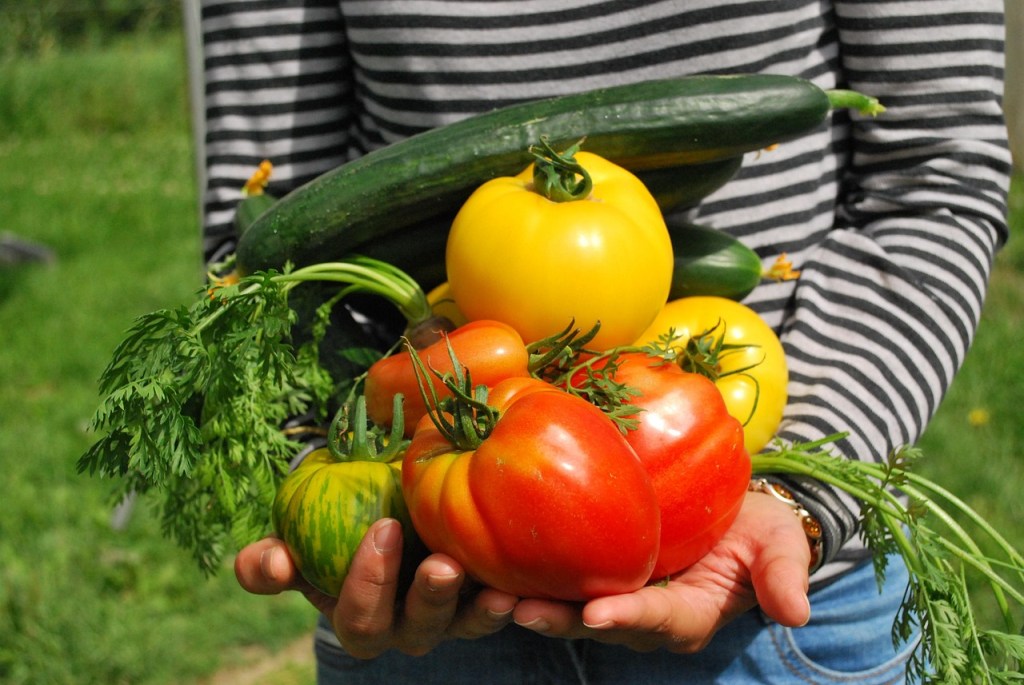
Image by Steve Buissinne from Pixabay

Let’s first look at how grocery stores deliberately try to get you to spend more money. Just this knowledge can help you resist their tactics and, hopefully, save money. When I shop for cooking classes, I tend to be on a budget. I often have to work to find the best deals, and I can attest that the following ploys are real, but you can repel their efforts.

Experts will tell you that grocery stores are designed to boost consumer spending. That should not come as a surprise, as they are a business. Here are some of the things they do.

They promote certain items on end-caps.

These displays are meant to capture your attention. However, they are not always the best deal. Even though those items may be on sale, compare their prices to those of other similar items in the regular aisle to determine which is best for you. I am one of those people who rarely look at the end-caps, but if you are, approach with caution.

Much of what stores do is encourage impulse purchases.

Grocery stores do not want you to stick to your grocery list. One way they do this is to make you walk through aisles of items that are not on your list to get to the essentials you need, such as milk and eggs. This is also why they periodically rearrange items. When you cannot find what you want where it is usually located, you must now walk around the store looking for it. As you do, the stores hope you will find other items to add to your cart, whether you need them or not.

Image by Squirrel_photos from Pixabay

Shelf placement

We naturally look at items at eye level first. In stores, this is where the most expensive item will be. We tend to look left and right, but often fail to look up and down, where the lower-priced items are typically placed. So, train yourself to look all over to find the best deal.

Stores offer samples not just to be nice.

Once you eat a sample of something tasty, you tend to get hungrier, and it can lead to you buying more. Studies have shown that not only are you likely to buy that sampled item, but this tendency to buy more can even extend to non-food items.

The music is intentional.

Studies have found that playing slower music resulted in a significant increase in average sales. The theory is that the slower music will make you feel less rushed and more likely to spend more time and money. I don’t know about you, but I rarely even notice the music unless it is too loud or too obnoxious. However, is it there in a subliminal manner? I am not sure.

The produce misting system can work against you.

The stores will tell you that the water misting system helps to keep the produce fresher. That is debatable, but it can also add water weight to the produce, thus costing you more at checkout. You can’t avoid the mister, but some recommend giving the produce a good shake before putting it in a bag.

Not updating sales signs.

Image by Steve Buissinne from Pixabay

Consumer Reports sent shoppers into 26 Kroger and Kroger-owned stores in 14 states and the District of Columbia in March, April, and May of 2025. The shoppers discovered expired sales labels, resulting in overcharges on more than 150 grocery items. Although Kroger has since pledged to address this issue, you should still be vigilant about checking price signs. I had a similar experience not long ago at a Kroger store. Fresh peaches were advertised as $3.99 per pound on the sign. I bought four of them. When the cashier ran them up, they rang up as $3.99 per peach. This led to an outrageous cost. Despite my asserting that this was incorrect, the cashier said there was nothing he could do. I had him take the item off my order. As there were people in line behind me, I finished checking out and then returned to the produce section to take a photo of the “per pound” price. When I showed it to the cashier, he still refused to take any action. I had to take the items and the photo to the customer service department. They eventually made it right, but not without a fair amount of work on their part.

Image by Manfred Richter from Pixabay

Cart size

Grocery stores have begun using larger carts intentionally. They know that people tend to want to fill up the cart and thus, buy more. So, if possible, use a smaller cart. Studies have found that people tend to buy less when they do so.

One-way doors

You enter a grocery store and then recall that you forgot something, so you need to go back to the car. However, when you try, you often cannot exit the same door that you entered. That is purposeful, and it is not just to prevent theft. By making you walk around and past other displays to exit the door, they hope you will see something that makes it into your cart.

Enticing aromas

Stores often have bakeries up front, and even if they don’t, they might pipe in the smell of freshly baked goods. That will stimulate your appetite, and they hope you will buy more.

Good deals

When you find a great deal advertised by the store, it will often be placed next to other, more expensive products. The store wants you to buy those other, more expensive products.

Having items in more than one place.

Image by ElasticComputeFarm from Pixabay

Let me give you an actual example of this. I was buying a carton of eggs, and I picked out the one I thought was the best deal and put it in my cart. As I was walking away from that section, I accidentally noticed another display of eggs on an end-cap a few aisles away, which were about half the price of the ones I had in my cart. I switched the eggs out, but it made me wonder if the store was purposely trying to hide these better-priced eggs.

Aside from avoiding the above tactics, what else can you do to save money on your groceries?

Loyalty programs

Image by Markus Winkler from Pixabay

The majority of stores offer loyalty programs, and you won’t be able to get that special deal unless you load it to your loyalty card. This can lead to significant savings. The downside is that the store is collecting info on you. Your shopping habits are being tracked and are often sold. You have to determine if it is worth it for you.

Nonfood items

Although it is convenient to buy items like foil, sponges, and dish soap during your regular grocery shopping, these items tend to be less expensive at other stores, such as big box retailers.

Stores charge for work done.

Yes, precut fruit and veg is convenient, but the stores are not doing that for free. You end up paying more for the same item that you could cut up yourself at home. For example, in my store, cantaloupes were on sale for $3.50 each. However, a 2-cup container of pre-cut cantaloupe was $5. Not only is the overall price higher, but I will also get more than 2 cups from my whole cantaloupe, making it an even better deal.

Track down the discount section.

These tend to be hidden in unusual places, but they often have great buys. Search them out.

Resist buying a lot of processed foods.

Not only are these items a potential health hazard (See this Cooking Tip), but they also generally cost more than a homemade version of the same item.

Buying snack packs

These are more expensive than buying larger sizes. However, if you are doing it to limit consumption, that is your choice. I recall someone once saying they would buy a pint-sized version of ice cream rather than a larger size, which was a better deal per ounce, because it helped her limit her consumption of that ice cream. As long as that is a conscious decision on your part, there is nothing wrong with that.

Image by Alexa from Pixabay

Shopping without a list

It is so easy to buy more when we are not following a list. That list helps you to avoid impulse buys. A corollary is to check what you have before leaving home, so you do not buy something you already have. Along with this is the dreaded task of meal planning. For those who dedicate themselves to doing this, it has been shown that they save money on their groceries.

Store brands

Check out the store or private label brands. These are typically made in the same factories as the name brands, but they sell for less.

Buying in larger sizes or in bulk

This can be a double-edged sword. Only buy items in bulk that won’t go bad before you use them. Additionally, not all larger sizes are cheaper when considering the price per ounce. In the past, we were all taught that larger sizes were a better deal. I sincerely believe that stores are now using this to increase their profits, as sometimes the larger sizes are more expensive per ounce than the smaller ones.

I just checked the price per ounce of Cheerios at two local stores. They sell boxes in the following sizes: 9 ounces, 12 ounces, 18 ounces and 20 ounces. At one store, the best price per ounce was the 9-ounce box. At the other store, it was the 18- and 20-ounce boxes, which were both the same price.

Watch for special deals.

These money-saving deals may come in the form of coupons or special discount days, such as those offered to seniors, military personnel, and teachers. Some stores also offer “Cash Back” options for buying certain items or specific quantities. This cash back typically appears as a credit on a future purchase.

Rebate apps

Many people use rebate apps or receipt apps, which allow you to accumulate points that can be redeemed for gift cards. These may or may not work for you.

Warehouse membership stores

Many people swear by these stores. They do not work for me as they often do not have the item or the particular brand I am looking for. As most people know, they are also known for selling larger sizes. As discussed above, just be smart when purchasing these. You also need to factor in the cost of the membership fee.

A review of Costco’s website reveals that the basic membership costs $65 per year. This is over $5 per month. Sam’s Club is less expensive, but also carries a different selection of items and brands. Ensure it aligns with your shopping preferences and needs.

Image by jf-gabnor from Pixabay

Grow your own food

This piece of advice may not be suitable for everyone. If I had to grow my own food, I would be in trouble, as I am not a gardener and have no desire to become one. I am blessed, though, to have a gardener husband, and I admit it is so nice not to have to buy lettuce for months at a time. If you’d like to garden but don’t have space, check if there are any community gardens in your area.

Do some of these money-saving tips cost you time? Yes, they do. For example, finding and clipping coupons (whether paper or electronic), checking sales flyers, taking photos of in-store signage, and dealing with the consequences if the prices are incorrect, as well as looking for the best price-per-ounce, all take time. As with many things in life, it is a matter of balance. What works for me and is worth it for me might not be for you. However, I hope this Tip gives you some things to think about as we try to keep our food bill under control.

Cooking Tips · Ingredients · Techniques

Help Reduce Food Waste by Being a Leftover Star!
Image by Pete Linforth from Pixabay

I used to cook only enough food for the people I was serving. So, I rarely had leftovers. I have since changed and will cook larger quantities so that I purposely have leftovers. Not only do we like leftovers in my house, but they also mean that one night, I do not have to cook from scratch. All I have to do is reheat the leftovers or transform them into a quick meal. Food waste is another consideration. The USDA estimates that in the US, 30-40% of the food supply is wasted. Although food waste is a larger problem than any one of us can solve, we can all do our part to reduce food waste in our kitchens, where it is estimated to cost the average family over $ 2,000 per year. This Cooking Tip will help you do just that.

Let’s first examine some general principles, and then we will look at specific food items.

  • Avoiding food waste starts with shopping. Prepare a shopping list before going to the store, focusing on the foods you will be able to use within a reasonable time frame.
  • Be cautious about buying in bulk. First, larger sizes of food items are not always less expensive per serving than smaller sizes. Be sure to check not only the item price, but also the price per ounce. Second, if you end up having to throw food away because you cannot use it before it goes bad, you are also throwing money away.
  • Some stores sell less attractive fruits and vegetables for a lower price point. Just because they do not look perfect does not mean they are any less tasty and nutritious than items without physical imperfections. This saves you money, but can also prevent those items from being thrown away.
  • Store your food properly at home.
    • Ensure your refrigerator is cooling properly. It should register no higher than 40°F. This will prolong the life of the food stored there.
    • Put food that should be eaten more quickly where you can easily see it.
    • If you have freezer space, utilize it to store foods for longer periods. The temperature inside the freezer should be at 0°F or lower.
  • Understand food dates. Contrary to what many think, food does not have to be thrown out simply because the date on the package has passed. The FDA states that 20% of consumer food waste is due to a misunderstanding of these dates. Refer to this previous Cooking Tip for more information.
  • When dining out, ask the restaurant to pack up any leftovers you do not eat. Very often, the restaurant portions are so large that you can easily get two meals out of one dish. Enjoy it in the restaurant and then reheat the leftovers for another meal at home. Not only does that reduce food waste, but it also cuts the cost of your dining-out bill in half.

Let’s turn to the subject of what to do with leftovers.

If you have leftovers of a meal item, such as lasagna, reheating and re-serving it at a subsequent meal is an obvious way to use them. Most leftovers should be used within three or four days. For more extended storage, utilize your freezer. Although this Cooking Tip has to do with Thanksgiving, the advice applies to all leftovers.

Apart from just reheating and having your leftovers as another meal, this is your chance to be creative and create something new without a recipe. It’s a wonderful feeling to eat a satisfying meal that you’ve thrown together from food in your refrigerator that might otherwise have been thrown out. Treat it as a challenge!

Quiches or frittatas – Many types of leftovers (meat, cheese, veg) can be repurposed into a delicious quiche or frittata. Refer to this Cooking Tip for additional instructions on how to do this.

Stir-Fry – Leftover veggies, rice, and meat can find new life in a stir-fry. Add a flavorful sauce and you have a wonderful meal.

Fried Rice – This dish is best made with day-old rice, making it a great way to use up leftover rice. Add vegetables, a sauce, eggs, and meat, if desired.

Chicken or other meats – Leftover meat can be used in a myriad of ways. Use the meat in soups, salads, sandwiches, pasta dishes, tacos and meat pies.

Bread – Stale bread can be used to make bread crumbs, croutons or even find new life in a bread pudding.

Eggs whites and yolks – If your recipe only calls for one or the other, do not throw the unused part away. The easiest thing to do is to add them to an omelet or scrambled eggs. Egg whites can also be used to make meringues.

Rice – Leftover rice is perfect for fried rice or rice pudding.

Fruit – Fruit past its prime is great for adding to smoothies or for making a fruit sauce or compote.

Pizza – Do you make your own pizza? So many leftovers can be put on pizza – onions, bell peppers, mushrooms, chicken. Also, instead of grabbing a jar of pizza sauce, try using any leftover sauces you already have, such as pesto or harissa.

Sauces – Speaking of sauces, minimizing leftovers is a reason for making your own rather than purchasing jarred sauces. Not only will they be fresher, but you only need to make what you need. Whether homemade or purchased, most leftover sauces can be frozen. Freeze them in ice cube trays and then remove to a storage container. When you need a quick and easy meal, grab a few cubes of your favorite sauce, heat and serve with pasta or rice. If I make a pasta sauce for dinner, the leftovers of that sauce often turn up on a pizza later in the week.

Tacos/Quesadillas – Do you have some leftover meat but not enough for a full meal? Use it for tacos or quesadillas by adding veggies and cheese.

Buttermilk – When you go to the store to get buttermilk for a recipe, it is very difficult to find it in a small container. What do you do with what is left over? Add it to your biscuit recipe or your mashed potatoes. Additionally, if the recipe calls for buttermilk in a baked good, consider trying powdered buttermilk instead. You only have to use what you need, and the remainder can stay in the refrigerator for a long time. See this Cooking Tip for more information on this great ingredient.

Coconut Milk – Did that great Asian recipe only call for a part of a can of coconut milk? Do not throw the rest away. Use it to make coconut rice, add it to mashed sweet potatoes, or use it in smoothies or oatmeal.

Composting – If you have the ability to compost leftover food, it is also a great way to turn some items into food for your garden. Be sure to read up on what can and cannot be composted.

This only scratches the surface of what to do with leftovers. Channel your inner creativity and become a leftover star. What do you do with your leftovers?

Cooking Tips · Equipment · Techniques

The Air Fryer Bandwagon – Should you jump onboard?

Image by Crafter Chef from Pixabay

Air Fryer enthusiasts are very passionate about these appliances, bordering on evangelistic. Those who do not have one can’t imagine trying to find counter space for one more piece of kitchen equipment. Which side of this divide are you on? Is this an appliance you should consider, or should you pass on it? That is the subject of this Cooking Tip.

Despite the name, the first thing to know about an air fryer is that it doesn’t fry food. An air fryer is similar to a convection oven. It has a fan that circulates hot air around the food.

Here is what users like about air-frying.

  • You can obtain a crispy exterior similar to deep-fat frying.
  • The interior of the food stays tender.
  • Food cooks quickly, much more quickly than in a conventional oven.
  • It minimizes how much oil you need to use. Most users recommend still using a small amount of oil. Depending on the food item, the amount of oil might vary from 1-2 teaspoons per serving of food up to a few tablespoons.
  • It can take the place of a toaster oven for small families.
  • It takes either no preheating or just a few minutes, saving time and power.
  • It does not heat the entire kitchen.
  • It is better than the microwave for reheating food to achieve crispy rather than rubbery results.

What’s not to like about them?

  • Although you can get close to deep-fat frying quality, it is not the same.
  • Many have a small capacity, although this does vary among models.
  • They take up counter space.

There are different styles of air fryers.

  • Drawer-style – They contain baskets that pull out from the front. Many users feel this style is the best. One caveat is that models with glass drawers may not be the best choice. They claim to be healthier as there are no plastic or nonstick coatings. Reviewers, though, found that the performance was mixed. They were also harder to use, as they were heavier, harder to lift, and the glass could get very hot.

  • Flip-top models – These have lids that lift up from the top to reveal the baskets inside. These lids are heavy, and there is a danger of them falling on your arm. Since the heating element is in that lid, this can be very dangerous. Many models were so tall that they would not fit underneath a counter when the lid was open.

  • Cube-shaped models – This style features doors that swing open in front and contains multiple racks inside, similar to an oven. Although these can work well, most feel the best results are obtained only when cooking very small amounts of food.

  • Air fryer toaster ovens – These appliances combine the functions and size of a toaster oven with the capability of air frying. These can do an excellent job, depending on the brand, but will be significantly more expensive. More on these below.

Air Fryer vs Air Fryer Toaster Oven

Regular air fryer

  • Better for smaller spaces.
  • They are less expensive than ovens.
  • Takes less time to heat.
  • They accommodate less food, which may or may not be appropriate for the size of your family.
  • Easier to clean than an oven.

Air Fryer Toaster Oven

  • Require more counter space.
  • They are more expensive.
  • They are more challenging to clean.
  • They are more versatile as they can work as both a toaster oven and an air fryer. If you want both functions, this one appliance can replace both of the others.
  • Can cook larger quantities of food than in a regular air fryer.
  • Do require preheating.

What to look for in a traditional air fryer

  • A wide cooking space – Air-fried foods cook best when cooked in a single layer. So, the width of the cooking surface matters more than the height. Some people like deep baskets because they can roast a chicken in them. (See caution on this below.) However, a wide, shallow tray allows you to spread out the food, getting more even cooking.
  • Nonstick interiors make for easier cleanup.
  • Simple controls
    • Digital controls are generally better.
    • Auto-pause timers – these automatically pause the oven timer when you open the door and automatically restart when it is started. Since the food needs to be flipped, turned or shaken, requiring the opening of the door, this feature is very helpful.
    • Automatic shut-off – A control that automatically turns off the oven at the end of the programmed cycle helps prevent overcooking, food burning, and saves energy.
  • Windows that allow you to view the interior are nice to have.

What to look for in air fryer toaster ovens

  • The air frying function should produce food that is nicely browned and evenly cooked, with a crispy exterior.
  • Since this appliance is designed to replace both a toaster oven and an air fryer, it should perform the non-air frying functions well, such as producing great toast and functioning effectively when roasting, baking, and broiling. For the latter, ensure that the top rack is not too low to ensure good broiling.
  • Easy-to-use controls, preferably digital.
  • It should have ample cooking space.
  • Large viewing windows are nice to have.
  • Auto-pause timers and auto shut off are helpful, just as with regular air fryers.
  • Smart technology may be helpful for some, but others found this only moderately convenient and not always reliable.
Courtesy of Breville

Reviews

Researching reviews of regular air fryers led to mixed recommendations. They all did, however agree on the best air fryer toaster oven. That is the Breville Smart Oven Air Fryer.

Here are a number of recommendations from reviews from different sites.

Courtesy of Instant Pot

America’s Test Kitchen

  • Top choice – The Instant Vortex Plus 6-quart Air Fryer
  • Upgrade choice – The Instant Vortex Plus 6-quart Air Fryer with ClearCook and OdorErase

The Spruce Eats ranked products in different categories.

  • Best Overall – Cosori Pro LE Air Fryer
  • Best Runner-up – Ninja 4-quart air fryer
  • Best large capacity – Instant Pot Vortex Plus 10-quart air fryer
  • Best budget – Dash Compact Air Fryer

TheKitchn

  • Their top recommendation was for the Philips Digital Twin TurboStar Airfryer XXL

Wirecutter

  • They rated the Philips 3000 Series L, but noted in their May 2025 review that it had been discontinued and they were busy testing other models.
  • Their budget pick was the Instant Mini Vortex 4-in-1.

Food Network

  • Instant Vortex Plus 6-Quart Air Fryer

Usage advice

  • Preheating – Most models do not require preheating, and for those that do, only a few minutes are needed. Even if preheating is not necessary, completing this step will yield the crispiest results.
  • Avoid overcrowding by arranging food in a single layer; cook in batches if necessary.
  • Food needs to be flipped, turned or shaken to ensure even cooking.
  • To prevent food from sticking to the air fryer basket, try the following advice.
    • A nonstick surface helps with this.
    • Use a small amount of oil. Not only does fat promote browning and crispiness, but it also lessens sticking. Rub or spray the food with oil before cooking.
    • Make a foil sling and cook the food on top of it.
  • Mix dry seasonings with oil before adding them to the food. Otherwise, the mixture is likely to be blown off by the fan.
  • Spray with oil halfway through cooking if the food is looking dry. Will get the best, most even crisp.
  • Ensure the unit has sufficient space to allow airflow around it, with at least 5 inches on each side.
  • Do not cut the veg so small that they fall through the holes in the basket.
  • Clean the unit after every use. Although it may not appear dirty, food residue is often left behind and can promote bacterial growth. Therefore, clean it thoroughly every time you use it. Some parts may be labeled as dishwasher safe, but you can never go wrong with washing by hand with soap and hot water. TheKitchn.com recommends adding two tablespoons of baking soda, two tablespoons of hydrogen peroxide, and two sprays of Dawn Powerwash directly into the fryer basket to create a paste. Use this paste to clean with a soft toothbrush for about two minutes. A nonabrasive sponge is good to remove the paste as the part is rinsed with water.
  • Never submerge the main body in water. Avoid getting the heating element wet.

Foods not to air fry

  • Fresh greens – These can get blown around by the fan, resulting in uneven cooking and possible burning.
  • Wet-battered items – The coating will not adhere to the food long enough for it to cook properly.
  • Heavily oiled food – Although a small amount of oil is recommended, too much oil will drip, smoke and give a charred flavor.
  • Popcorn – Air fryers don’t get hot enough for popcorn.
  • Bacon – You will end up with bacon fat all over the inside of the air fryer.
  • Large, whole chickens – Although some will state that these can be cooked in an air fryer, there is the risk of uneven cooking if using a standard air fryer.
  • Raw grains – Again, these will not cook evenly.
  • Hard-boiled eggs – You will likely end up with a rubbery egg.

I must admit that I have not jumped on the air fryer bandwagon. What about you? Are you an enthusiast?

Cooking Tips · Ingredients · Techniques

Mocktails – Not just a sweet, syrupy substitute beverage

If you come to my house for dinner, you will likely be served water with your meal. I will most likely not offer you a pre-dinner cocktail or an after-dinner drink. If I do, it will be of the non-alcohol variety. Neither my husband nor I drink alcohol, although I do use it in culinary preparations. I do believe that alcohol is a part of many of the world’s ills. I also just do not like the taste of alcohol. For people like me, the world of non-alcoholic drinks, or as some term them – mocktails – can be an interesting compromise. In this Cooking Tip, let’s delve into this world a bit and learn what they are, how to make them, and some of the pitfalls.

Image by Ivana Tomášková from Pixabay

Drinks such as lemonade, iced tea, punch and fruit juices are certainly non-alcoholic, but they are not very creative. Trying to make a regular cocktail by just removing the alcohol usually does not work well. In the same way, trying to recreate an identically-tasting alcoholic cocktail using non-alcoholic ingredients is often unsuccessful. Rather than thinking of mocktails in this way, why not think of them as their own type of drink? Just as gluten-free bread can be delicious, it will never be the same as its gluten-containing counterpart. It is its own type of baked good. Similarly, non-alcoholic cocktails are in their own category and should be created just as carefully as any drink containing alcohol.

There are certain basic elements in making a delicious cocktail. As with all cooking, these elements need to be carefully balanced to ensure one element doesn’t overpower the others. In a regular cocktail, those elements are sweet, sour, bitter and spirits. Even without the alcoholic spirits, you still want a balance of the remaining elements. You can also add the spirits if you like the non-alcoholic versions that are available today. Let’s investigate these elements along with some other advice.

Flavor

You want to enhance the flavor as much as possible. An expert distiller explains that “alcohol is better at extracting flavor than water.” Therefore, to enhance flavor using water-based flavoring ingredients, try to avoid those ingredients that lack flavor, such as water. Instead, consider tea, coffee, coconut water, non-alcoholic spirits, flavored sugar syrups, and citrus. Another idea is to freeze tea into ice cubes for added flavor.

Image by Sidcley from Pixabay

Some like to add ginger beer or kombucha. These may contain small amounts of alcohol, although the amount is so minimal that they can be sold as non-alcoholic. If you wish to avoid even this small amount, be diligent in reading labels and seeking information about the particular product you want to purchase.

Flavor-Enhancing Ingredients

A smoky flavor can be imparted by using Lapsang Souchong tea, a black tea that is dried over pine wood fires. If it fits your flavor profile, smoky paprika may also be used.

Just as salt is necessary for bringing out flavor in food, it can also boost flavors in your mocktails. According to mixologists, salt can “amplify the vibrancy of citrus and fruit flavors, temper bitterness, add depth to the flavor, and heighten the sensation of carbonation.” To do this, add a couple of drops of a 20% saline solution. This can be made by dissolving 20 grams of salt in 80 grams of water.

Besides salt, spices such as cinnamon, cloves, nutmeg, star anise, and vanilla add warmth and depth of flavor. These spices can be infused into syrups, vinegars, or sprinkled directly into the cocktail.

Image by Anelka from Pixabay

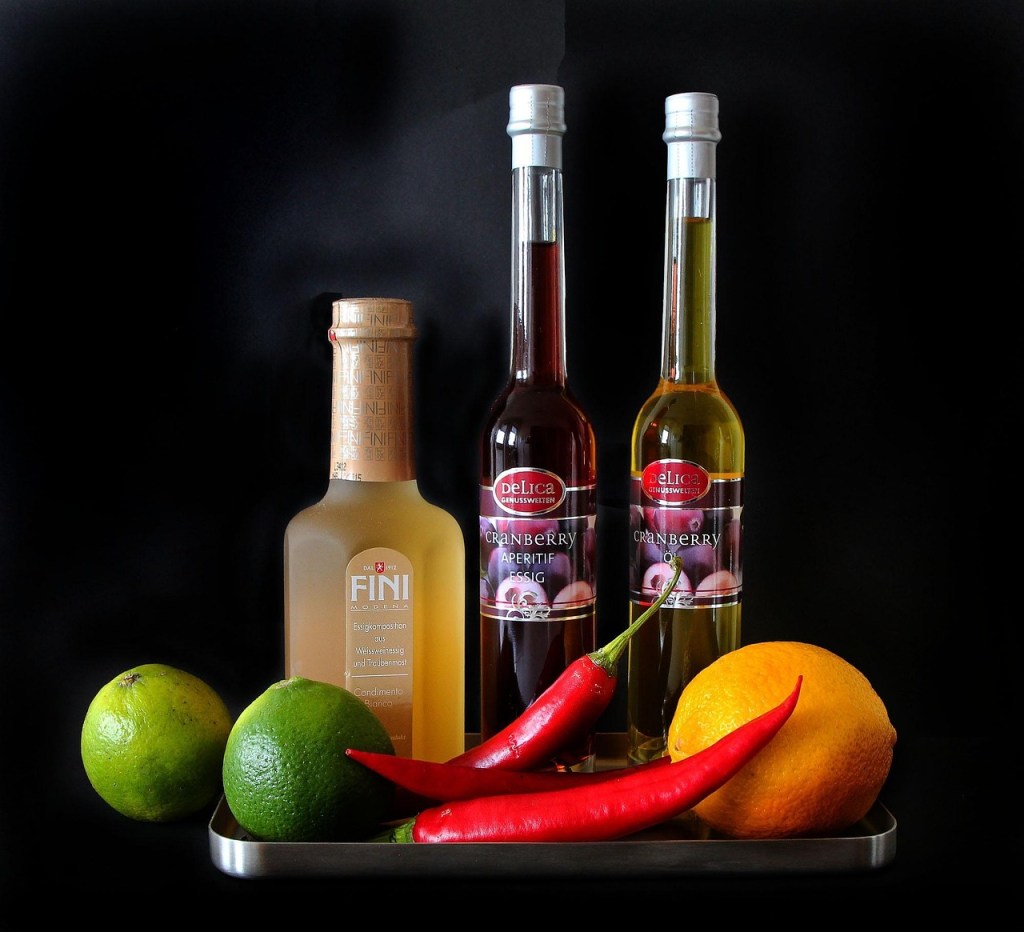
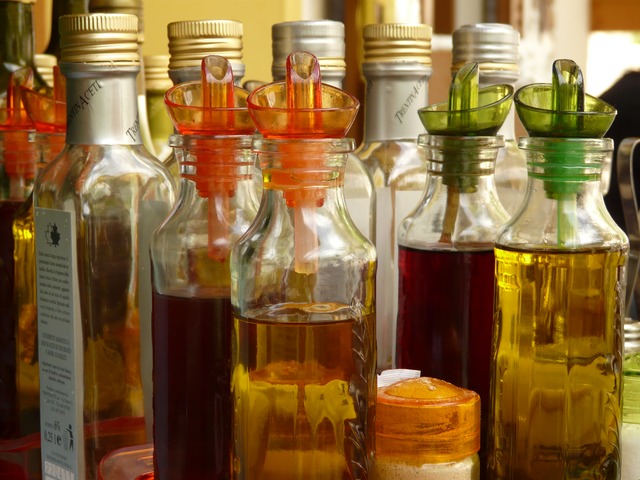
Vinegars can add a bit of pop or zest to a mocktail. Many feel that apple cider vinegar is the most versatile, although others include balsamic and fruit vinegars.

Verjus is also known as “green juice”. It is a tart juice made from unripe, unfermented wine grapes. It is not as acidic as vinegar, while still adding a nice depth of flavor with a hint of sweetness.

Citrus zest and juice will add acidity to your drink.

Shrubs are sometimes called “drinking vinegars.” They are a mixture of fruit, vinegar, and sugar. They are both sweet and acidic and can infuse drinks with a depth and complexity of both sweet and savory notes.

Ginger adds a natural bite and a certain amount of zestiness.

Tea is incredibly diverse and can add intriguing flavors to a variety of mocktails. If you are a tea drinker, you will know that over-steeping a tea can cause bitterness due to the extraction of tannins. This can be a plus in mocktails as the tannins can impart both a nice mouthfeel and complexity.

Image by Couleur from Pixabay

Fresh fruit will make your drink taste fresh. Muddling the fruit not only adds flavor but also creates texture in the drink.

Fresh herbs such as mint, basil, rosemary, thyme, or sage add an aromatic element.

Bitters can enhance the depth of flavor while also offering balance. They do contain alcohol, although the small volume that is used makes the alcohol content in the drink minimal. If that is still a concern, nonalcoholic bitters are available.

Perfume-type items, such as orange blossom water, rose water, or lavender water, add a pleasant aroma.

Sweetness

One of the problems with many mocktails is that they are overly sweet and lack the complexity and depth of flavor of regular cocktails. So, once again, the word is balance. Besides adding its own flavor, sweetness balances acidity and bitterness.

Sweet can be in the form of a plain, simple syrup, a flavored syrup, honey, real grenadine, sugar, maple syrup, sweet fruit juices, and fresh muddled fruit.

Image by Gosia from Pixabay

Grenadine is made from pomegranates, and most mixologists caution against the bottle of red juice you often find in the grocery store. If you look at the list of ingredients found in one of the most popular brands, you will see this.

High fructose corn syrup, water, citric acid, sodium citrate, sodium benzoate, red 40, natural and artificial flavors, blue 1.

Notice what you do not see in that list – pomegranates. Compare that list to one that is marketed as “real” grenadine.

Pomegranate juice, cane sugar, gum arabic, orange flower water, fruit juice, citric acid, benzoic acid.

So, you might want to either make your own or source out a better alternative.

Piquancy

Piquancy is that bite or burn that alcohol delivers. It is described as a strong or sharp flavor that forces you to take small sips. This characteristic can be attained in mocktails by using capsaicin-infused non-alcoholic spirits, non-alcoholic bitters, vinegar or ginger. In moderation, you may also consider chili peppers or horseradish.

Texture

The use of syrups, fruit jams or molasses can improve the mouthfeel of a cocktail. Also, the liveliness that you find in a real cocktail can be achieved from citrus, vinegar or carbonation. The latter can be added with the use of club soda, tonic water, ginger beer, non-alcoholic beer, non-alcoholic sparkling wine, kombucha, or flavored sodas. Milk & whey can also create body, creaminess and a smooth texture.

Garnishes

Garnishes add visual appeal as well as adding a hint of flavor and aroma. Choose something that complements the flavor of the drink. Ideas include a citrus twist, fresh herbs or edible flowers.

Image by Sidcley from Pixabay

Over-Dilution

A common problem that can occur with non-alcoholic cocktails is over-dilution, leading to loss of flavor. Here are some tips to prevent this.

  • Shaker ice – Using larger ice cubes rather than crushed, chips, or shards of ice. The latter will melt and dilute the drink too quickly.
  • Shaking time – Limit shaking and stirring time to minimize melting, only six to eight seconds for shaking and 12-15 seconds for stirring.
  • Containers – Metal containers chill the liquid more quickly than glass, reducing dilution.
  • Adding ice – If you add the liquid to the shaker first, followed by ice, it will slow the melting of the ice.
  • Some experts recommend making a “rich syrup”, which is two parts sugar to 1 part water rather than the standard 1:1 mixture. The rich syrup has a higher sugar concentration, so you can use less and minimize dilution.
  • Serving glasses – Chilling the serving glasses also helps to decrease dilution while keeping the drink cold.
  • Fine straining – Use a fine-mesh strainer to remove herbs, citrus pulp, ice shards, etc.
  • Serving ice – Use large, clear ice cubes made with filtered water. They elevate the presentation, and the larger surface area means slower melting.
  • Cold storage – Keep your non-alcoholic ingredients refrigerated. Less reliance on ice means less dilution.

Are you one of those people like me, who does not drink alcohol and does not serve cocktails of any kind? Or, do you want to offer your guests a drink that is attractive, complex and flavorful but without alcohol? If you are the latter, I hope the above ideas will help you as you experiment in finding the right mocktail for the right occasion.

Cooking Tips · Ingredients · Techniques

Processed Foods – Are they all bad?

I recently read an article about how scientists have discovered markers in blood and urine that reveal whether or not a person is consuming ultra-processed foods. This could be big news as these scientists work to discover how these foods impact our health. Before this discovery, they had to rely on the person’s memory and willingness to report their consumption of ultra-processed foods, which is not always the most accurate. If these findings are true, medical professionals might be able to test for this. Because of this discovery and the impact of our diets on our health, I decided to dedicate this Cooking Tip to the topic of processed and ultra-processed foods. I will refer to the latter as UPFs.

There is no one universally accepted definition of UPFs. The term is said to have originated in the 1980s and then gained more prominence in 2009 after the publication of a paper by Brazilian researchers. They created the NOVA classification system for processed foods. They put food into four categories:

  • Unprocessed or minimally processed foods
  • Processed culinary ingredients
  • Processed foods
  • Ultra-processed foods

Although many countries use the NOVA classification, the FDA does not use it. There are critiques of this system. As researchers at the University of California at Davis state, “It is helpful to keep in mind that the category was not designed to classify individual foods. The goal of the NOVA classification system is to provide a tool [that] researchers can use to understand the health impacts of dietary patterns that include high percentages of ultra processed food.”

For us looking at food in the grocery store, that is not terribly helpful. I like how researchers at the MD Anderson Cancer Center look at this issue. They put food and its processing on a spectrum.

  • Unprocessed or minimally processed foods are at one end of this spectrum. They list examples of whole grain oats and apples.
  • Processed foods are in the middle of the spectrum. These foods are close to whole foods but have some added ingredients. Their examples are canned vegetables, freshly baked bread and pasteurized milk.
  • Ultra-processed foods are at the other end of the spectrum. One of their dietitians, Lindsey Wohlford, refers to these as “food-based products.” She describes them as “made mostly from substances extracted from foods, derived from food components or synthesized in laboratories.” They contain additives such as fat, sugar, starch, proteins and sodium. There are many UPFs, but some of the most common are packaged chips, bread, frozen meals, sugary beverages and candy. This category also includes condiments such as ketchup and salad dressings.

The Harvard School of Public Health has a chart that shows how the same ingredient can be considered unprocessed, minimally processed, processed, and ultra-processed. Here is an example using apples.

Unprocessed foodsMinimally processed foodsProcessed foodsUltra-processed foodsUltra-processed foods of low nutritional value
Whole applePrepackaged apple slices with no additivesUnsweetened applesauce made with apples, water, and ascorbic acid to prevent browningSweetened applesauce that contains the prior ingredients plus high fructose corn syrupApple juice drink with high fructose corn syrup and added coloring

To see more examples, see their full article.

Almost daily, we are warned to limit our consumption of UPFs. Why is that? Although there are no definitive studies linking UPFs to poor health, most medical professionals feel that they can cause weight gain, heart disease and other health issues. According to the FDA, a common characteristic of UPFs is that they contain high levels of saturated fat, sodium, and added sugars.

The American Heart Association cites a cardiologist from Tuft’s University Friedman School of Nutrition Science who explains that the goal of the food manufacturers is to prioritize taste, safety, shelf life and mouthfeel. This often leads to the removal of important trace nutrients. They also add items such as emulsifiers and stabilizers. Although our governmental regulatory bodies consider these additives safe for consumption, others feel we do not have enough information about the long-term effects. Fiber is also often stripped out of UPFs. Because of this, they do not satiate our appetites, leading to eating these foods in excess. An interesting fact is that if a food is labeled “natural” or “organic,” it can still be ultra-processed.

Why are UPFs so prevalent in our stores? They are relatively inexpensive, they are convenient, and they taste good. Some point out that there are some positives of processed food, although not necessarily ultra-processed foods.

  • Some are kitchen time-savers, such as frozen, pre-chopped and canned ingredients.
  • Some are fortified with important nutrients that not all of us get enough of in our regular diet.
  • Safety – The processing steps of pasteurization, cooking and drying can destroy or inhibit bacterial growth.

What are we to do?

  • Cook at home more and dine out or order take-out less. This one “simple” step will go a long way in reducing your intake of UPFs. However, realize that you must cook as much as possible with whole ingredients. Cooking at home but using ultra-processed store-bought ingredients almost defeats the benefits of your home-cooked meal.
  • Choose whole grains over refined grains.
  • Make your own vinaigrette rather than store-bought.
  • Swap out sugary or flavored cereals, oatmeal and yogurt to plain and add your own fruit.
  • Minimize consumption of deli meats, which are high in unhealthy fats and salt.
  • Choosing frozen and canned produce is fine, but be wary of added seasonings and sauces, which are probably high in sodium, fat and sugar.
  • The American Heart Association has a Heart-Check Mark certification program. If you see their red and white icon on the package, it means the food meets specific nutrition requirements for certification in that it contains beneficial nutrients and is limited in sodium and unhealthy fats.
  • Be a label reader. Start paying attention to the ingredient list. The shorter that list, the better. Look at not just the calories in a serving, but also the added sugars, unhealthy fats and sodium content. Some producers of UPFs are trying to make their products a bit less unhealthy by adding fiber and nutrients. Despite this, they are still often full of other unhealthy ingredients.
  • The FDA is proposing new labeling requirements called the “Front of Package Nutrition Label” or “Nutrition Info Box.” According to them, “This proposal plays a key role in the agency’s nutrition priorities, which are part of a government-wide effort in combating the nation’s chronic disease crisis. If finalized, the proposal would give consumers readily visible information about a food’s saturated fat, sodium and added sugars content—three nutrients directly linked with chronic diseases when consumed in excess. … [It will be] in a simple format showing whether the food has “Low,” “Med” or “High” levels of these nutrients. It complements the FDA’s iconic Nutrition Facts label, which gives consumers more detailed information about the nutrients in their food.“ As of May 2025, the comment period for this proposed rule is still ongoing, and we will have to wait to see if and when it might be implemented.
  • For more information on healthy cooking, see these prior Cooking Tips.

If we all ask ourselves, do we eat UPFs, most of us will have to admit that we do. You may not be able to totally eliminate them from our diet, but we can certainly do many things to minimize our intake of them. The jury might still be out on just how bad these items are, but it can certainly not harm you to try to consume less.

Cooking Tips · Ingredients · Techniques

Focaccia – Easy & Delicious

What is your favorite bread to eat? If you are a bread baker, what is your favorite bread to make? In my case, there is one bread that is at the top of the list for both of those questions. That is Focaccia. This Cooking Tip will teach you what it is and tips for making the best focaccia you can.

Image by Lisa Padgett from Pixabay

Focaccia’s origins are Italian, with Liguria being the main area for production. The exact type of focaccia varies from region to region. It is a yeasted flatbread that is about ½ to 1 inch thick, light, fluffy and full of air holes. It is one bread that does not require the typical type of kneading. Instead, it goes through a folding process. It can be sweet or savory, and can be varied by the kind of toppings used.

It is an ancient bread. The Italian name is pains focacius, which means hearth bread. The name is derived from the Latin focus, meaning “center” and “fireplace.” It is explained as being a fireplace in the center of a dwelling. The bread was traditionally baked in the coals of the fireplace. Other countries have similar bread but different names – fougasse of France, fugazza of Argentina, and hogaza of Spain.

Ingredients

Flour

Although you can make focaccia with all-purpose flour, most bakers prefer a flour with more gluten. Some like to use a 00 flour. If you choose this flour, ensure it has a higher gluten content. This dough needs to be very elastic, something provided by the gluten.

Water

This dough has a high hydration level. This means there is a high proportion of water relative to the flour, often 80 – 88%. The high hydration dough keeps the dough soft. This not only aids in creating elasticity, but it also converts to steam in the oven, helping to leaven the dough. The result is a light and airy dough and a finished focaccia with air pockets throughout. It does, though, make a very sticky dough, so it is better made in a stand mixer.

Oil

Olive oil is essential, and you should use an excellent quality one. It makes the dough easier to stretch, and it adds important flavor. It is used at more than one step in creating and baking the focaccia. Some will add the oil to the dough, and others will coat it with it after it is formed. It will also be put in the baking pan, and the dough will be coated again. Finally, the oil will be drizzled on top before baking. If you use toppings (see below), the oil protects the dough from the moisture, resulting in a crisper crust.

Salt

Bread needs to be well-seasoned. Be sure to follow your recipe for the amount and type of salt.

Yeast

This uses a fair amount of yeast to get a light and fluffy texture.

Sweetener

Many recipes will have you add sugar or honey to aid the yeast activity. Some say this is not necessary. Another tip, though, is to use liquid malt instead of sugar or honey. This is said to add a delicious depth that you would not get with other sweeteners. It also gives the focaccia a richness and a perfectly golden-brown crust.

Toppings

A well-made focaccia needs no more than some flaky salt on top. However, if you wish, there are many toppings that can be used.

  • Cheese
  • Fresh Herbs
  • Vegetables
  • Meats
  • Jarred condiments such as olives, artichokes, roasted red peppers, or sun-dried tomatoes.
  • Fresh fruit
  • Seasonings include flaked sea salt, black pepper, and red pepper flakes.
Image by bananalongboards from Pixabay

Technique

This dough is not difficult to make, but plan for an extended time of rising for the best results. After combining all the ingredients in the stand mixer, allow it to rest for 30 minutes. Now, instead of kneading, do a series of folds. Gently flatten the dough onto the counter, fold the top down to the bottom, then the bottom up to the top, the right over to the left and the left over to the right. This folding can also be done directly in the bowl. It is now ready to proof.

The dough needs to proof twice. The first is in the mixing bowl. For the best result, it should rise for several hours. It is even better if it is placed in the refrigerator for between 12 hours and three days. This long, cold, slow fermentation period allows the starches to break down into sugars, aiding both flavor and browning. It also strengthens the gluten, creating a better crumb with more air pockets.

After this first rise, more oil is placed in the baking pan, followed by the dough and coating it in the oil. The dough is again left to rise for about two to four hours. The dough should be stretched to fit the pan. Because of the gluten development, it will probably shrink back. If so, let it rest for a bit and then stretch again. This could take up to 30 minutes to get it perfectly stretched.

After this 2nd rise, dimple the dough all over using your fingertips. At this point, some say the pan should be immediately placed in the oven to prevent any dimples from dissolving.

Nicole Rufus, assistant food editor with TheKitchn.com, tested four highly rated focaccia recipes. Her favorite had an additional and interesting step. After the dimpling, the recipe calls for pouring a brine of salt and water over the dough and proofing for 45 minutes or until the dough is light and bubbly. After baking, the focaccia was golden-brown, soft, chewy, and had a delicious flavor.

It should be baked in a very hot oven – 425-475°F. Some prefer to bake it on a stone. Spraying some water into the oven or adding some water to a pan below the rack with the focaccia creates steam and helps with crust development.

Serving

Focaccia is usually cut into squares or rectangles for serving. It is best eaten the day it is made. For sandwiches, cut it in half horizontally.

Storage

Even though it is best eaten the day it is made, it can be kept sealed in an airtight bag for about 2 days and then reheated for a few minutes in the oven. It can also be frozen. When ready to eat, thaw and reheat.

This is probably one of the easiest breads to make and certainly one of the most delicious. If you follow the above steps and give it the time it deserves, you will be rewarded with a beautiful and tasty focaccia!

Cooking Tips · Ingredients · Techniques

Produce Sizes

Does it seem that when you go to the store to buy produce for a recipe, everything is super-sized? If your recipe calls for one onion, how much onion is that? If your recipe calls for one small onion, what do you do when nothing in the onion bin seems small? In this Cooking Tip, I want to take a closer look at produce sizes and how to navigate your recipes.

If you have read many of my prior Cooking Tips, you will know that I strongly advocate weighing ingredients (preferably in metric) when baking. With non-baking recipes, weighing is not nearly as important. However, what do you do when faced with the above questions? As a prelude to this post, you may also wish to look at these related posts.

I do not have the time to discuss every item of produce, but I will look at three that commonly lead to questions about amounts. That would be onions, garlic, and citrus.

An over-arching principle is that how much of these items you use in your recipe may vary from cook to cook. Some of you may like more onions or garlic than others. As long as you like how your recipe turns out and one flavor is not overpowering the others, you do not have to be precise in how much you use. The other, but probably most important, tip is to taste your dish as you go along. If you are going to use more of one of these items than the recipe calls for, do not add it all at once. Instead, start with less and let your palate guide you on how much to add.

Another caution is that if the recipe calls for one cup of chopped onion, that can vary from cook to cook. If I were to chop an onion to measure a cup but then weigh it on a scale, and another person were to do the same, they would likely weigh different amounts depending on how small the onion is cut and how much it is packed into the cup. Therefore, even if your recipe calls for a volume measurement, it will not be exact.

Even understanding the above cautions, some want a bit more guidance. The rest of this Tip is for those readers. Besides discussing each item of produce, I also list some prior Cooking Tips for more information.

Onions

Sometimes a recipe will just call for “one onion,” and other times, it may specify “one medium (or small or large) onion.” How much should you start with?

If a recipe does not specify what size of onion, assume it is a medium onion. If all you can buy at the store are very large onions (as I usually see), you will need to use less than the entire onion.

SizeAmount before prepAmount after prepVisual Cue
1 small onion2-4 ounces¼-½ cup chopped or slicedBilliard ball
1 medium onion4-7 ounces1 cup chopped or slicedBaseball or tennis ball
1 large onion7-9 ounces1-1½ cups chopped or slicedSoftball or grapefruit

Garlic

A head of garlic is what you buy fresh in the store, and one head contains many cloves that may be of different sizes. Rarely does a recipe call for a head of garlic. One exception is when the recipe calls for roasting a head and then squeezing the contents out for subsequent use.

One medium head of garlic typically weighs two ounces before preparation. It will contain 10-15 individual cloves or enough to produce about six tablespoons of minced garlic.

Most recipes will call for a number of cloves, but do not typically specify the size of the clove. Therefore, just as with onion, if the recipe calls for one clove, assume they mean a medium-sized clove.

SizeYield
1 extra-large clove1 tablespoon minced
1 large clove1-2 teaspoons minced
1 medium clove¾-1 teaspoon minced
1 small clove½ teaspoon minced

Citrus

With citrus fruit, not only will different fruits yield different amounts of juice despite being about the same physical size, but the amount that fruit will yield will vary depending on how well you juice them. An electric juicer will almost always give you more than a manual juicer.

SizeWeightJuice YieldZest Yield
1 medium lemon4 ounces3 tablespoons2-3 teaspoons
1 medium lime2½ -3 ounces1-3 tablespoons½-1 teaspoon

I also want to draw your attention to a small reference book about this subject. I use it frequently. It is Food FAQs by Linda Resnick and Dee Brock. To quote the authors:

I just want to remind you that the above discussion deals with these ingredients being used in savory cooking. If you are a baker, please consider using a kitchen scale. Outside of baking, you have much more leeway to adjust amounts depending on your palate. The amounts I gave you should help you in the grocery store when deciding how much of an item to buy, and will help you with a starting point.

Cooking Tips · Equipment · Techniques

What should be in your food paper drawer?

I have a drawer in my kitchen that contains plastic wrap, wax paper, aluminum foil, plastic storage bags and beeswax food wraps. I also have parchment paper, although that is stored in another drawer. Most of you probably have a similar collection of these items. Do you need them all? Read on in this Cooking Tip to understand the differences and the best uses of each. One related item that I am not going to cover is silicone. I have written about this before, and I refer you to this prior Cooking Tip.

Parchment Paper

  • This is a paper that has been treated with silicone, and it can be bleached or unbleached.
  • Due to the silicone, the paper is nonstick, heat-resistant, and water-resistant.
  • It can be used both in the oven and the microwave.
  • It is a very versatile product. Although most cooks probably use it to line baking pans before adding cookies, batter, or dough, it has many other uses. It can be used for layering between food items and covering your work space when you do messy things (rolling out dough, working with chocolate and candy, etc.). Many chefs roll it into a parchment cornet for piping purposes. It can be bent into a funnel. It may also be used for cooking “en papillote,” a method of cooking food items (often chicken or fish) wrapped tightly in parchment and baked. 
  • Parchment paper can be reused as long as it is not too greasy or dirty.
  • It cannot be recycled, but it can be composted.
  • It comes in different forms. It is often sold in a roll similar to foil or plastic wrap. It can also be found in flat sheets, which are more convenient but also more expensive. You can even find cooking bags made of parchment.
  • You can certainly buy parchment in regular stores. The most common type is a box containing a roll of parchment. The downside of rolls is that it can be hard to get the paper to stay flat on your pan. It is becoming more common to find sheets in stores, although they are often folded. Whereas it is easier to stay flat, the creases can cause ridges or indentations in the baked item. You can buy flat sheets of parchment, which most chefs prefer. The brand often at the top of the rankings is King Arthur Parchment Paper sheets. The downside of this great product is the price, and it must be ordered online.
Photo from Reynolds

Wax paper

  • This is a paper that has been coated with a thin layer of wax. 
  • Wax paper is moisture-resistant and non-stick. It is not, however, heat resistant. When exposed to heat, the wax can melt and the paper can catch on fire.
  • While it has many of the same uses as parchment paper, baking with it is not one of them.
  • Although it is not oven-safe, it can be used in the microwave.
  • Wax paper is less expensive than parchment.
  • It is not recyclable. Nor can it be composted.

Aluminum foil

Photo from Reynolds

  • As the name implies, this is a very thin piece of aluminum.
  • It has many uses in the kitchen, including lining baking dishes, steaming food, keeping food warm, and wrapping food before freezing.
  • It is not nonstick. That is why many recipes will have you spray the foil with food spray before using it. Reynolds does make a non-stick version that does not have to be sprayed.
  • If it is clean, it can be recycled if your provider allows it.
  • America’s Test Kitchen found that all foil brands were equivalent in performance. They did, though, find differences in the boxes. Boxes that were sturdy and had metal serrations were preferred. They also found that boxes with a secure closure helped to prevent cutting oneself on the cutter part.
  • Makers of aluminum foil warn against using foil when cooking with highly acidic foods such as citrus, vinegar, or tomatoes. They warn that the metal might leach into the food.
  • You will often see regular and heavy-duty foil in the store. The latter is slightly thicker and often wider. America’s Test Kitchen put it to the test to see if this more expensive foil was worth the price. They found that it was a bit more resistant to tearing and was better for enclosing items such as wood chips that might poke through, but not significantly so. There was no difference for basic tasks such as lining a baking sheet or making a sling for baked goods. They found that a double layer of regular foil was actually stronger than a single layer of heavy-duty foil.
  • Many people wonder why there is a shiny side and a dull side. This is solely due to the manufacturing process. Either side can be put next to the food as there are no performance differences.

Freezer Paper

Photo from Reynolds
  • This type of kitchen paper is coated with plastic on one side.
  • It is more durable than wax paper and is better for freezing foods. 
  • Freezer paper is more moisture-resistant than wax paper.
  • It is not safe for use in either the microwave or oven.

Plastic wrap

Photo from Amazon
  • Plastic wrap can be used to store food as well as to freeze food. 
  • It is also useful for tasks such as pounding meat, making logs of cookie dough or compound butter, and covering bowls of food.
  • It is not recommended for use in the microwave.
  • Higher-rated plastic wrap is better at clinging to dishes. It is also thicker and wider, and it is easier to tear.
  • The highest-rated plastic wraps are Freeze-Tite Clear High Cling Freezer Wrap and Stretch-Tite Premium Plastic Food Wrap.
  • For many people, plastic wrap is a necessary evil. Many people want to cut down on their use of plastic, and also find tearing off a piece from the roll to be a frustrating exercise. Today, one can find the typical box of plastic wrap with a row of teeth and boxes with a slide cutter. Many find the latter to be much easier to use.
  • America’s Test Kitchen prefers placing the rolls of plastic in a separate dispenser. These boxes are designed to stay on the counter better, which frees up your hand from having to hold the box. They felt these dispensers were much better than the boxes with built-in cutters. There was a difference in quality. Their recommended brand was Stretch-Tite Wrap’n Snap 7500 Dispenser. The downside of this item is that it is harder to store as it is almost 5 inches high.
Photo from Abeego

Reusable food wraps
Reusable food wraps are sheets of cotton or hemp cloth dipped in a layer of beeswax or soy wax. Although many recommend these for environmental reasons, there are pros and cons.

Pros

  • They are reusable and can last up to a year with proper care.
  • After they have run their course, they can be cut up and composted.
  • They are easy to clean with a bit of soap/water. 
  • They can do a good job of keeping food fresh if they completely cover the food in an air-tight manner.
  • They are attractive.

Cons

  • They do lose their clinging ability over time. 
  • The wraps can melt if left in the sun.
  • They cannot be washed in very hot water. Most makers recommend using cool water and dish soap.
  • They can only be used to wrap cold and room-temperature foods. They should not be used for hot items. Nor are they recommended for freezer use.
  • They are not meant for raw meat.
  • They are expensive.
  • They can leave a residue on your hands and dishes as you use the wraps. The residue will wear off, but it takes some work to get it all off. This problem decreases as you use the wraps more.
  • Over time, the coating can wear down, allowing water into the fabric. This could lead to mold development unless you keep the wraps clean and dry.
  • They can stain.
  • They can absorb smells.
  • Some brands are too stiff to wrap tightly. The softer ones work better.

If you are interested in trying food wraps, look for ones that are clingy and easy to mold. In testing, a couple of brands at the top of the list were Abeego Food Wraps and Akeeko Food Wraps.

What is in your food storage drawer? Do you have an assortment as I do? Or, are you more of a minimalist? I would like to tell you that you only need one of the above products. Depending on what you do in your kitchen, only one item will not be practical. I trust this discussion will help you decide what you need and can live without.

Cooking Tips · Ingredients · Techniques

The Truth about Fresh vs Frozen Produce

Image by Walter Bichler from Pixabay

I love frozen produce. I not only use it in my own kitchen, but I also use it frequently in my cooking classes. Some people might be surprised that I do not exclusively use fresh produce. However, frozen produce is an excellent substitute for fresh produce in many applications. This Cooking Tip will explain the benefits of frozen produce and how best to use it.

Pros of Frozen Produce

  • It is often more affordable than fresh produce, especially when the fresh produce is not in season.
  • It is more convenient than fresh produce. You just have to open your freezer to find the item, and it is usually prepped for you by washing, peeling, and chopping. Another convenience factor is that the frozen produce does not need to be thawed before being cooked for most purposes.
  • The produce that is meant to be frozen is picked at peak ripeness. Fresh produce tends to be picked before maximal ripeness to make it easier to store and transport. Riper produce not only tastes better, but it also has a superior nutritional profile (see below).
  • Frozen produce lasts longer than fresh produce. Fresh produce might only last 1-2 weeks, whereas frozen produce can last in the freezer for several months. This reduces food waste.
  • Frozen produce is available year-round. We all know and probably try to eat what is in season. You are doing just that when eating frozen produce. Even though it might not be blueberry season where you live, the frozen blueberries were picked when those blueberries were in season.
Image by congerdesign from Pixabay

Cons of Frozen Produce

  • There might be a change in texture as compared to fresh produce.
  • Many frozen veggies contain additives such as seasonings. At times, when I look at the frozen veg aisle, it is hard to find a package that doesn’t have a sauce or seasonings added to it. This can add fat, sugar and calories. So, be sure to check the ingredient list for these additives.

Nutrient level

  • Some worry that frozen produce loses nutrients during the freezing process. This has not been borne out with actual studies. 
  • A study published in the Journal of Food Composition and Analysis in 2017 was a two-year study that looked at specific nutrients in selected fresh and frozen fruits and vegetables. They also studied “fresh-stored,” which was intended to mimic typical consumer storage patterns of produce following purchase – noted as five days of refrigeration. Their conclusion was:

In the majority of comparisons between nutrients within the categories of fresh, frozen, and “fresh-stored”, the findings showed no significant differences in assessed vitamin contents. In the cases of significant differences, frozen produce outperformed “fresh-stored” more frequently than “fresh-stored” outperformed frozen. When considering the refrigerated storage to which consumers may expose their fresh produce prior to consumption, the findings of this study do not support the common belief of consumers that fresh food has significantly greater nutritional value than its frozen counterpart.

  • The FDA has also added frozen produce to those items that may be labeled as healthy. See this Fact Sheet.
  • Frozen produce is picked and frozen at the height of its ripeness. This means it is also at the height of its nutrient level. Fresh produce is often picked before it is ripe. This means it has fewer nutrients and tends to lose nutrients over its life span from actual picking to using the produce in your kitchen.

How to use frozen produce

  • Sauteing
  • Steaming
  • Microwaving
  • Roasting
  • Use in soups and stews
  • Smoothies
  • Sorbets
  • Sauces
  • Fruit cobblers

Are you a lover of shopping in the frozen produce aisle like I am? If not, check it out the next time you visit your supermarket. A wonder of delicious and nutritious items abound there.

Cooking Tips · Techniques

Homemade Puff Pastry in 2 Hours!

Photo by Felicity Tai from Pexels

Puff pastry is a delicious type of pastry dough that can be used to create all kinds of wonderful creations. It can be used in both sweet and savory applications. It is composed of layers upon layers of butter and dough. As it bakes, it puffs up, resulting in light and flaky bites of yumminess. I have written a prior Cooking Tip on how to make classic puff pastry. It is not difficult, but it does require some planning and time. I encourage you to give it a try if you have never made your own puff pastry. If you are craving this pastry but do not have quite enough time, consider making Quick Puff Pastry. In this Cooking Tip, I will show you what it is and how it is made.

Although classic and quick puff pastry are made with the same ingredients, they differ in how they are combined and rolled out. As you will read in my Puff Pastry Tip, classic puff pastry begins with a mixture of flour, water, and a small amount of butter. This is combined in a mixer bowl. This is called the detrempe. Separately, a large amount of butter is formed into a butter block. The butter blocked is encased inside the rolled-out detrempe. This is then rolled numerous times in specific ways to create the puff pastry. As the butter and dough must stay cold, the rolling process needs to be interrupted by resting times in the refrigerator. This is where most of the time comes in.

Image by david ramon from Pixabay

With quick puff pastry (also known as rough puff pastry), everything is mixed together and then rolled out. Europeans are known to call this American Puff Pastry as the method is similar to that of making pie doughs. It can be completed in about two hours.

Ingredients

  • For optimal results, use a kitchen scale to weigh the ingredients instead of using a cup measure.
  • Flour – Most of us will just use all-purpose flour, but some recipes may use bread flour.
  • Butter – Since this is what gives puff pastry its delectable flavor, use high-quality butter with a high-fat content. Some recommend a minimum of 82% fat. As with almost all baking, choose an unsalted butter.
  • Salt – Salt adds flavor but can also slow down gluten development, which helps with the rolling process.
  • Vinegar – Many recipes add a touch of vinegar, again to retard gluten development. Whether this is true or not is a matter of debate.
  • Water – The water is what brings all the ingredients together into a dough. Some experts will warn against using water with too much chlorine in it. They recommend using either bottled or filtered water or allowing the chlorinated tap water to sit in the refrigerator overnight to allow the chlorine to evaporate. I am not sure this is necessary for puff pastry. First, many sources indicate that most tap water does not have a sufficiently high chlorine concentration to affect your dough. Second, one of the main effects that chlorine has is by inhibiting the yeast. Puff pastry dough does not contain yeast (although other laminated doughs do.)
  • A final comment about the ingredients is that the butter and water should be very cold. When making puff pastry, you want to avoid having your butter start to melt. It should remain very firm, only melting when placed in the oven.

Method

  • Dissolve the salt in the water.
  • Place flour in a bowl and add the cold, cubed butter. Cut the butter in quickly to prevent it from melting. You want to see chunks of butter all covered in flour.
  • Make a well in the bottom of the bowl and pour in the water. Mix just until the mixture forms a dough that stays together. At this point, you still want to see pieces of butter.
  • Transfer to a floured work surface, gently knead into a ball and then press into a five-inch rectangle. You may also do this with a rolling pin. If it feels too soft or starts to warm up, refrigerate for a while. After forming the rectangle, chill it for at least 15 minutes.
  • Begin the rolling and folding process. Each time, the dough will be rolled out into a long rectangle. Follow the dimensions indicated in your recipe.
  • The folding may vary by recipe, but it will typically involve a series of single and/or double turns. Between each rolling and folding, the dough should be wrapped in plastic and refrigerated for 15-30 minutes.
    • Single fold (sometimes called an envelope fold) – Bring one short end up from the bottom to one-third from the top and then bring the top edge over.
    • Double fold – Bring each short end of the dough into the middle, leaving a small space between the ends. Then, fold the dough in half.
  • In the beginning of the rolling and folding process, your dough will look very rough but will smooth out as you complete this process.
  • Refrigerate the finished pastry before using it in any application.
  • Between rolling and folding the dough, use a pastry brush to brush off any residual flour.
  • After folding and when ready to roll again, always ensure the seam is placed vertically and on the same side for each roll. This will help to ensure an even result.
Image by lccjoca from Pixabay

Result
How does the finished quick puff pastry compare to classic puff pastry? It is very close and much better than store-bought. Since there are fewer layers, it will not rise as high but is perfectly acceptable for applications that don’t require much height.

Have you ever made your own puff pastry? It is truly a satisfying endeavor and yields a wonderfully delicious product. If doing it the classic way is too daunting, try this quick puff pastry technique. What will you turn your puff pastry into? Whatever you do with it, it is bound to be yummy!