Cooking Tips · Techniques

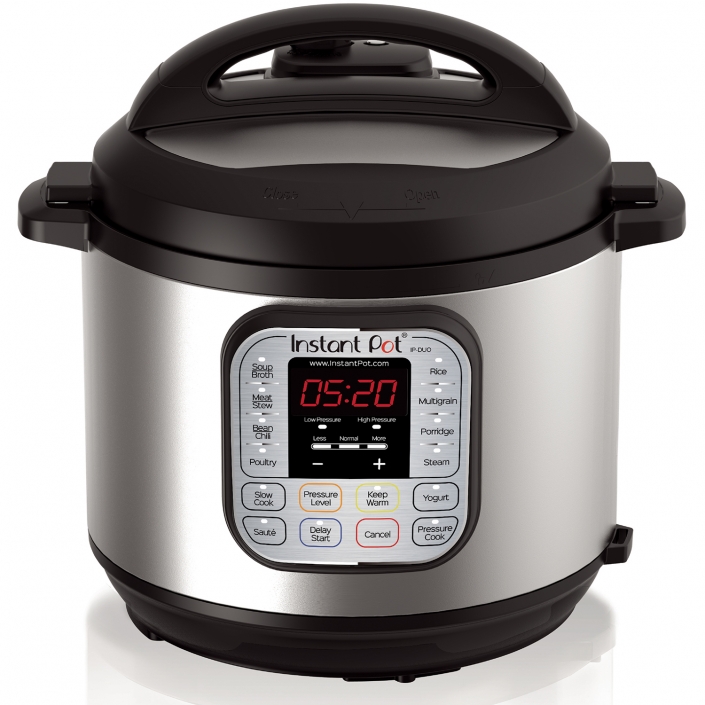
Are you part of the Instant Pot fan club?

One cooking appliance that I have never felt a need to purchase is an Instant Pot. I saw no reason for it and did not want to take up any more precious space in my pantry. One of my husband’s colleagues recently gave us one as she said she did not need it. So, I have begun to delve into the world of the Instant Pot and decided to devote this Cooking Tip to this subject.

At its most basic, the Instant Pot is an electric pressure cooker although it can also be used for other functions such as slow cooking, yogurt making, rice cooker and even sautéing food. The actual programs that are available will depend on the model of the Instant Pot.

Any pressure cooker works by creating high pressure inside the cooker. This allows the boiling point of water to increase above normal. Therefore, you are cooking the food at higher temperatures than you can achieve on the stovetop and thus, the food cooks faster. As the pressure pushes water into the food, it not only helps to speed up the cooking process but also keeps food very moist.

One point about cooking food faster. Yes, that is correct but the cooking time does not usually include the time it takes for the Instant Pot to fully pressurize. The cooking time begins after that happens. You need to add anywhere from 5 to 20 minutes to the overall time to account for this pressurization step. There is also the time to depressurize to consider. If doing a natural (rather than quick) depressurization, add another 10-15 minutes.

If you live at high altitude as I do, you realize that cooking and baking sometimes takes adjustments. For prior Cooking Tips, see these links.

Since pressure cooking increases the temperature that you can achieve within the pressure cooker, you might think that altitude adjustments would not need to be made. However, this is not true. The general recommendation is to increase the cooking time by 5% for every 1000 feet over 2000 feet. For example, I live at 6000 feet, which is 4000 feet above 2000 feet. So, 4 X 5% means I should increase the cooking time by 20%. There are charts that you can find. Here is one from A Mindfull Mom.

So, why use an Instant Pot? It is said to cook foods up to 70% faster than a conventional cooking method. Because of that, I find it most useful for cooking items that do take a significant amount of time such as tough cuts of meat, beans or whole grains. If you are cooking something that would cook in under 20 minutes stovetop, there is really no reason to use the Instant Pot.

There are also things that you should not cook in an Instant Pot. Let me address just a few. Because the Instant Pot cooks by using steam, anything you want crispy such as breaded meats will not get crispy but will rather be soggy. Delicate cuts of meat are better stovetop where you can cook to a recommended internal temperature as well as achieving the surface caramelization. Similarly, burgers are not good in the Instant Pot as they will taste “boiled” and not have that nice crispy exterior.

Dairy and creamy sauces bring their own problems to the Instant Pot. Curdling is a real risk. The pressure valve can easily get clogged from the dairy, leading to problems with sealing and pressurization. So, any dairy product should be either cooked conventionally or added at the end of the cooking time by using the Sauté function or just the residual heat of the Instant Pot,

Another advantage is that it is pretty much “hands off” during the cooking time so you can do other tasks.

Because the Instant Pot is so popular, there are a myriad of online sources that will help you to get the most out of it. There are also cookbooks galore; a search of just my library showed 90 results. You may also try converting your stovetop recipe to one for Instant Pot. Here is another chart that will help you with that.

I have just started experimenting with this appliance and am not totally sure about it as of yet. That may change as I use it more. What about you? Do you have one? What do you love to cook in it? Let me know.

Cooking Tips · Techniques

Confit – A Delicious Cooking Method

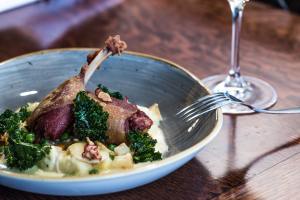
If you have ever been to a French restaurant, you may have seen Duck Confit on the menu. If you ordered and eaten it, you know it is a special dish. My husband cooked the other night and made an absolutely delicious Rabbit Confit. If you think you do not like rabbit, you have probably never had it this way. Just what does “Confit” mean? That is the subject of this Cooking Tip.

According to Harold McGee in On Food and Cooking, the word “confit” comes from the French verb “confire” and the Latin “conficere” meaning “to do, to produce, to make, to prepare.” This book goes on to explain that it was first applied to fruits cooked and preserved in a sugar syrup, honey or alcohol during medieval times. Later it was applied to vegetables pickled in vinegar, olives in oil, meats under fat and various food in salt.

Confit is not really a dish but a method of cooking. It is said to be a specialty of Gascony, France and to have derived from an ancient method of preserving meat where it is salted and cooked in its own fat. The meat was then packed into a crock and covered in its own cooking fat, which acted as a seal and a preservative.

Today, it is generally used to describe anything that has been cooked slowly and gently in fat to a wonderful consistency and flavor.

There are three basic components to this process.

  • A salt cure – salt is rubbed into the meat and then allowed to age for at least an hour or even up to 3 days. This draws out moisture, which then allows that water to be replaced by oil. This results in a very tender and flavorful product.
  • The fat – very common fats include duck, goose or chicken fat. An oil such as olive or vegetable can also be used. The food item is submerged in this fat.
  • A slow cooking process – after submerging the food item in the fat, it is cooked at a low temperature (~200-250°F) for a few hours. Often herbs and spices are added to infuse flavor.

Although you can eat the meat as soon as it is done cooking, there are those that say that it is not true confit unless you then store it submerged in the fat for two weeks. During this storage period, muscle and connective tissue continue to break down and tenderize the meat.

When stored properly, confit can be kept for several months. This means that it is fully covered in the oil without any air and it is kept cool, <40°F. Without this, there is a risk, albeit small, of botulism. This organism can grow in a low-oxygen environment. The meat is often salted again before storage to decrease this risk. Nitrates are also occasionally added.

You might ask how this is different from deep fat frying. The answer is the temperature. Confit is done at a relatively low temperature (~200-250°F) while deep fat frying is done at a much higher temperature (325-450°F). This higher temperature leads to quick moisture loss and a crispy exterior. Deep fat frying is also done in minutes, not hours as in confit.

Have you ever eaten duck (or other meat) confit? What did you think?
Even more, have you made it yourself? It is not hard; it just takes some time and care.
Let me know if you have or plan to make it.

Cooking Tips · Techniques

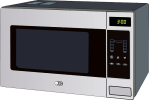
Microwaves — Friend or Foe?

If I did a poll of all of you and asked if you had a microwave, I would suspect over 90% of you would respond in the affirmative. Statista.com reports that almost 13.5 million microwaves were shipped in the US in 2019. If you are a part of the group that does not have one, let me know and why you made that choice. In this Cooking Tip, I want to discuss this very useful but often maligned kitchen appliance.

Since most of us have a microwave, what should we be using them for and what should we keep out of them?

I mainly use my microwave for just a few tasks. I occasionally defrost food in them. I really do not like defrosting meat in them, though, as they often defrost unevenly and you can even get some cooked parts. I realize that it may be your only choice if you need to get that Chicken Marsala on the table quickly and your chicken is still frozen. If you can plan ahead and put your frozen item in the refrigerator the night before, that is the ideal situation. Another item I have mentioned in another Cooking Tip is a defrosting tray. This option is not as fast as a microwave but it is fairly quick and does a great job.

I will also use my microwave to melt butter and occasionally melt chocolate. The only real “cooking” I do is to heat frozen vegetables or to make my morning oatmeal.

Here are some other “non-cooking” ideas that others recommend.

  • Softening hard brown sugar — measure the amount of brown sugar you need into a microwave-safe bowl. You only want to warm the amount you need as the excess will just harden again. Place a dampened paper towel over the sugar and cover with plastic wrap. Warm in the microwave for 30 seconds at a time, checking often to avoid melting the sugar. I have done this and it does work well.
  • Toast nuts or spices – place in shallow bowl or pie plate in a thin, even layer. Start the microwave but stop, stir and check every 30 seconds until there is browning and you can smell the aroma. I must say that for a small amount of nuts/spices that this can be just as easily done stove-top in not much more time.
  • Softening the rawness of garlic – put unpeeled cloves in bowl and microwave for 15 seconds until cloves are warm. Not only does it soften the flavor but it also makes the cloves easy to peel.
  • Liquifying crystallized honey – Uncover honey jar and microwave 30 seconds or so. I prefer putting my jar of honey in a pot of hot water but the microwave method does work.
  • Soften stale bread — wrap bread in a damp paper towel, microwave for about 10 seconds. Check and repeat as needed.

What about the power levels? Microwaves work differently than your regular oven. In the latter, you turn down the temperature and the cooking temperature lowers. In a microwave, when you change the power level, the “magnetron” just cycles on and off. Because of this, Cook’s Illustrated recommends the following.

  • OK to use high power to:
    • Heat water, watery soups or beverages (But, see below for a warning about heating plain water.)
    • Make popcorn (or other foods less than ½ inch thick)
  • Use 50 percent power when:
    • Heating/reheating foods that can’t be stirred, such as lasagna, frozen chicken, potatoes
    • Bringing food to specific temperatures: softening butter, tempering chocolate
  • Lower power level OR stir frequently when:
    • Heating dairy-based foods such as chowder that can curdle
    • Heating splatter-prone foods such as tomato sauce
    • Melting splatter-prone butter

Here is some other general advice on using a microwave.

  • Always cover food. This not only protects the interior of the oven but it traps steam resulting in better cooking.
  • Stir or flip your food. This allows the microwaves to hit new parts of the food and promotes heat transfer.
  • Allow the food to rest when you take it out of the microwave. This allows the temperature of the food to even out.
  • Realize that not every container in your kitchen is microwave safe. If the item does not tell you that, GE Appliances recommends the following test.
    • Fill a microwave-safe cup with water.
    • Place the cup in the oven on or beside the utensil in question.
    • Microwave for only one minute on high.
    • If the water becomes hot and the dish remains cool, the dish is microwave safe. If the dish heats up, it should not be used for microwaving.

What about items you should not put in a microwave? We all know that foil or any type of metal is a no-no and I just mentioned not using dishes that are not meant for the microwaves but there are other items.

  • Nothing – do not run your microwave empty. Since there is nothing to absorb the microwaves, it can catch fire or otherwise damage the appliance.
  • Grapes – they can explode but I’m not sure why you would want to put your grapes in the microwave. For a scientific explanation, see this link. For a quirky video demonstrating this, see this link.
  • Eggs – whole eggs can explode and egg dishes such as scrambled eggs and frittatas will become rubbery.
  • Paper bags – these can release toxins and even catch fire.
  • Chili peppers – the capsaicin in these peppers can vaporize and irritate you when you open the door.
  • Plain water – water can actually become super-heated and bubble up vigorously and burn you. Putting something in the cup such as a wooden skewer helps to prevent this. It is still preferable, though, to heat your water either in an electric kettle or on the stovetop.

There are plenty of books and websites out there that talk about actually cooking meals with your microwave. I do not really see the point as you can put great food on your table using traditional cooking appliances in not that much time. Others feel differently. How about you? What do you use your microwave for? Let me know.

Cooking Tips · Techniques

Pastry Doughs Explained

When you hear the word “Pastry”, what do you think of? Some just think of pies while others think of finicky French desserts. Even others think of something made by Sara Lee or Entenmann’s. In reality, the term “pastry” typically means a type of unleavened dough. However, “pastries” is a general term for sweet baked goods. There are different types of these unleavened doughs and they all have different purposes. That is the subject of this Cooking Tip.

Different sources categorize pastry doughs in a slightly different manner. I hope you will find this categorization helpful and accurate. I will put these doughs into five categories.

The ingredient list for all types of pastry dough is very similar – flour, fat and liquid. The flour can be pastry, all-purpose or even bread flour. The fat is typically butter, lard, or shortening. The liquid is most commonly water but could be other liquids. Some doughs (called enriched doughs) may contain eggs, milk, cream, sour cream, crème fraiche or cream cheese. All doughs will probably contain a small amount of salt and sugar may be added to make a sweet dough. Which actual ingredients are used and the technique of putting them together is what makes the difference between these categories.

Shortcrust pastry

This is what most of us think of when we think of “pie dough” and it is the most common type used in our kitchens. I wrote an earlier Cooking Tip on pie doughs. You can get it here.

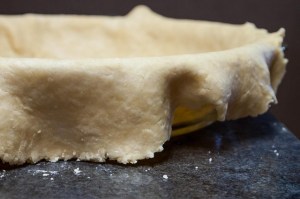
This type of pastry is probably the easiest to make. It may also be the most versatile. The basic ingredients are flour, fat, water and salt although sugar and eggs may be added if you want a sweetened shortcrust dough. The technique involves rubbing the fat into the flour before adding the liquid. Some recommend rubbing the fat until you get small pea-sized particles of fat coated in flour. Another technique, and one I think is superior, is snapping the flour-covered pieces of fat between your fingers to get flattened pieces. The important thing is to work quickly so the butter does not melt and to stop while you still have visible pieces of fat. Only after this step do you add your liquid and gently form it into a cohesive dough. For variations on this technique, see my prior Cooking Tip.

Puff pastry

This type of pastry contains the same basic ingredients but has a greatly different technique. It is what is termed a “laminated dough”. It has alternating layers of dough and butter. It is rolled out, folded, and repeated for a specified number of “turns”. All should be kept chilled throughout the process. When you bake it, the butter melts, producing steam and thus, flaky and puffy layers.

It is used for pie crusts, wrapping meat (such as a Beef Wellington), palmiers, vol-au-vents, cream horns, and mille feuilles.

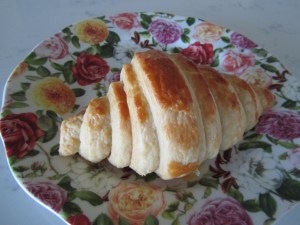
Croissants are made from a type of laminated dough that differs from puff pastry in that it contains yeast, milk and a small amount of sugar. Danish dough is another variation of laminated dough that also uses eggs.

Making your own laminated pastry dough is certainly not as easy as making a shortcrust dough and takes much more time. It is also something that takes experience to perfect. It can be, however, a fun and very satisfying challenge.

Flaky pastry

The definition of flaky pastry is one upon which many disagree. Some use it to mean American-style pie crusts and others use it to refer to something called “Rough Puff Pastry.” This type of pastry is what you think of when you put your fork into your pie and you get wonderful, flaky pieces of the crust breaking off. It is hard to get this effect when you make a shortcrust dough. You can do it, though, with this much easier version of puff pastry.

It has all the basic ingredients (flour, butter, water, salt). It is the technique, though, that really sets it apart both from shortcrust and true puff pastry. It is made with cold, diced butter that you toss in the flour and gently smash flat. This is then rolled and folded like puff pastry. To read more about this technique and a link to Stella Parks’ excellent recipe, see this link. For King Arthur’s take on the flaky pastry, see this link. Their recipe is a bit unique as they add baking powder and sour cream to the basic ingredients.

Once again, all the large pieces of cold butter melt in the oven, creating steam and the wonderful flakes we all like. It makes a great crust for sweet and savory pies, sausage rolls and turnovers.

Choux pastry

This is also called Pâte à Choux and is what is used to make eclairs or profiteroles (cream puffs). The ingredients are flour, water, butter, eggs and salt. This type of pastry dough has a very different technique.

It starts with combining water, butter and salt in a pot and heating until the butter melts. This is followed by beating in the flour, which helps traps steam. The mixture is then beaten (usually with a stand mixer) until it is cool. At that point, eggs are added until the desired consistency is obtained. When the trapped steam is released in the oven, it creates a puffed up pastry.

The dough is typically piped onto a baking sheet. Once baked, this process produces a crisp outer shell and hollow interior that can be filled with a variety of fillings, most commonly pastry cream or just whipped cream. The finished pastries are also often topped with chocolate.

Phyllo pastry

This is a type of unleavened pastry composed of very thin, delicate sheets of dough layered with melted butter or oil between them. For more information on this type of pastry dough, watch for the next Cooking Tip.

All of us should know how to make a good shortcrust pastry, which is fairly simple and very versatile. I encourage you to branch out and try your hand at one of the other pastry doughs. If you are unsure about tackling them, contact me and we can arrange a cooking class just for you.

Cooking Tips · Techniques

Silcone or Parchment?

I was recently teaching a cooking class on making party appetizers. In that class, I used both a silicone baking mat as well as parchment paper. Some questions about those items arose and I thought it would make a good Cooking Tip for all of us.

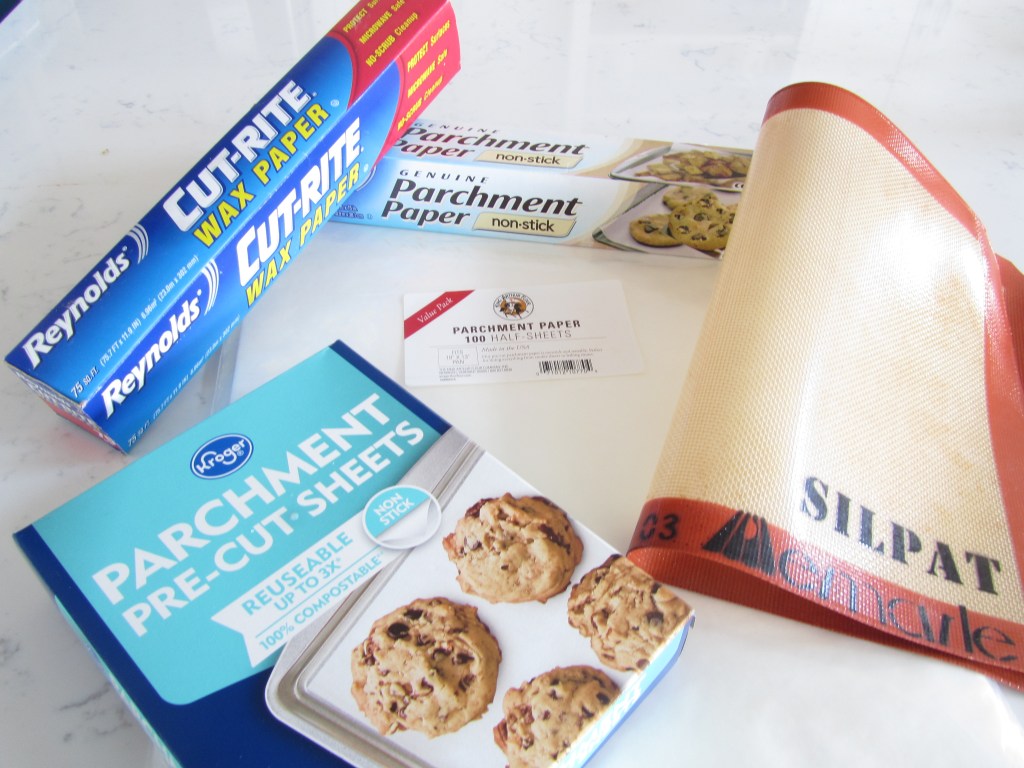
If you are like me, you have parchment paper, wax paper as well as some silicone baking mats. When should you use one over the other?

Wax Paper

Wax paper is made by applying a coating of wax to paper. Historically, beeswax would be used. Today there are two major types of wax used. Most commonly is food-safe paraffin. A few companies market a soybean wax paper. The first company to make paraffin wax rolls was Reynolds. Their Cut-Rite product is still offered in almost every market today. In fact, Reynolds states each year they sell enough of this product to circle the globe more than 15 times.

Wax paper is mostly used due to its non-stick properties. It is great for goodies such as chocolate-dipped items. It is also often used to wrap food for storage, to pack them for gift giving or to place between items in the freezer. It should not be used in baking if it will be directly exposed to the heat of an oven as it can actually ignite. Reynolds does say it may be used as a pan liner if the dough or batter completely covers the wax paper.

Parchment Paper

This is paper that has been coated with silicone rather than wax. This makes parchment not only nonstick but also heat and water resistant. It come in rolls or individual sheets and in different shapes and sizes. Stores generally carry bleached parchment although you can also find unbleached if you look for it.

Although parchment is heat resistant, not all brands are equal in this characteristic. My favorite brand, King Arthur, is rated to tolerate heat up to 450°F although their unbleached variety’s maximum temperature is 425°F. Reynolds recommends a maximum temperature of 425°F. Walmart’s Great Value is only 420°F. Be sure to check for the rating on the one you buy.

You may ask if those temperatures are absolute or if it is safe to use parchment above the recommended maximum. Cooks Illustrated contacted a couple companies to ask this question. The companies responded that using parchment at a higher temperature than recommended does not release any noxious chemicals. Nor will it burn. You will see, though, that the paper will turn very brown and become brittle, even crumbling.

Although I have no experience with this next product, there is something called Super Parchment. Supposedly it is thin like parchment but reusable like a silicone mat. It may also be cut to size. Have you used it? Let me know what you thought.

Silicone Baking Mats

Most of these mats have a sturdy, woven fiberglass core that is surrounded by a silicone covering. Some brands are made without the fiberglass core but this means they are less sturdy. Maximum temperatures may vary anywhere from 400°F to 480°F.

These mats are nonstick and heat resistant. They were invented by Guy Demarle, a French baker, in 1965. That invention is still being sold today and the original is known as Silpat. Today you are able to find numerous different brands and, as with parchment, they come in different sizes and shapes. Since the brand “Silpat” will probably be the most expensive, some reviewers looked at whether or not they were superior to other brands. Although Silpat consistently rated at the top of the list, other highly rates brands were Kitzini, Mrs. Anderson’s, Amazon Basics and Artisan.

Another discussion point is whether there is a difference in using parchment versus a silicone mat. Here are some considerations.

  • Reusability – silicone mats will last you practically forever whereas you can only reuse a parchment sheet a few times.
  • Temperature toleration – most silicone mats are rated to withstand higher temperatures than parchment.
  • Baking time – since silicone mats add a layer of insulation, your baking times may be a minute or so longer.
  • Size – silicone mats come in different sizes but you are not supposed to cut them due to the fiberglass core. You will, therefore, need to purchase different mats for different sized pans. Parchment on the other hand can be cut to any size you wish.
  • Cookies – Cookies baked on silicone mats tend to spread more than those baked on parchment. There is a bit of disagreement on the browning aspect of the cookies. Some feel that the cookies brown more with parchment and others think that is true for the silicone mats. Cookies baked on mats also tend towards greasy. If using a silicone mat, try to remove the baked cookies to a rack as soon as you can. As silicone doesn’t breathe, cookies left on a mat to cool may sweat, affecting the texture.
  • Nonstick characteristics – although both parchment and silicone mats are nonstick, the latter is more effective in this aspect. This makes a silicone mat a superior product for dealing with very sticky items such as sticky candy, brittle, toffee, etc.

Are you like me and have all of these products? Or, do you just have one or two?

What do you prefer to use? Let me know.

Cooking Tips · Techniques

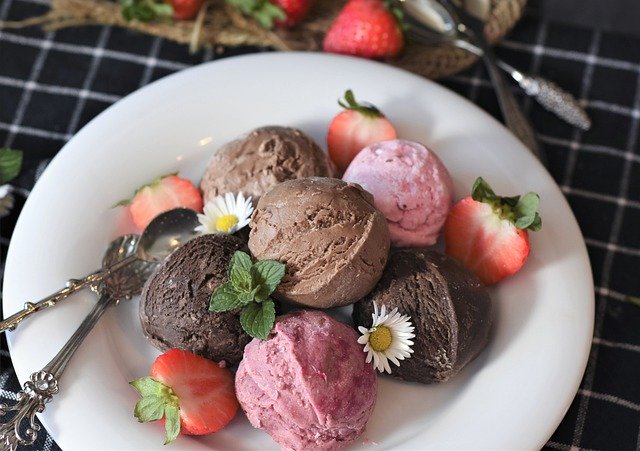
Homemade Ice Cream is so Special!

The weather has really warmed up here – with highs nearing 90°F. That is perfect weather for Ice Cream. Sure, there are a myriad of choices at the stores but why not make your own? Advice to help you make great homemade ice cream is the subject of this Cooking Tip.

The basic ingredients for ice cream are simple.

  • Cream
  • Milk
  • Sugar
  • Eggs (usually)
  • Flavorings (vanilla, chocolate, fruit, etc.)
  • Ice cream pro Andrew Hingston says his secret to great ice cream is skim milk powder. He claims the protein in the milk powder helps stabilize the ice cream emulsion without adding extra fat. It absorbs most of the extra water in the mixture. Your ice cream remains creamy in your freezer rather than icy and lasts for a few weeks rather than a few days.

There are many different styles of ice cream but we will just discuss a few. There are so many other styles such as gelato, semifreddo, sorbet, sherbet, etc. Due to space limitations, I will not include those in this Tip.

The Custard Style

This is also called “European” or “French” style ice cream and is the classic cooked ice cream. It is made just like any custard with dairy and eggs. The dairy is heated, it is tempered into the eggs/sugar and the mixture is cooked until it is thickened. If using a thermometer, heat it until it is between 165° and 180°F. Carefully watching the temperature, keep it in this range for about 10-15 minutes.

The Philadelphia-Style

This is also known as “New York” or “American” style ice cream and is made without eggs. It is made with just cream, sugar, and flavorings. Many recipes just have you mix the ingredients and proceed to churning. Others recommend heating the ingredients. Heating helps the sugar more fully dissolve, it helps with infusing flavor (if desired) as well as causing protein denaturing, leading to a better quality ice cream. This style of ice cream is delicate and smooth and allows the flavor of the cream to shine. It does, though, have less richness due to the absence of the eggs.

The Egg-Free Style

This base was made popular by Jeni Britton Bauer’s Jeni’s Splendid Ice Creams at Home. Like the name implies, this base skips the eggs (similar to Philadelphia-style), but relies on cornstarch as a thickener, along with a small amount of cream cheese for richness and smooth body.

The No-Churn Style

Unlike the other three bases, this one doesn’t require any cooking, nor does it require an ice cream maker. Sweetened condensed milk acts as the base. Then, cream is whipped and folded in to give you that light, airy texture.

There is a version that uses eggs rather than the canned milk that is recommended by Serious Eats. It does require a bit of cooking in that the eggs must be heated to make them safe to eat. It relies on whipping of this base as well as the cream but no churning.

The technique for making great ice cream is almost more important than the ingredients. At its most basic, ice cream is composed of ice crystals, concentrated sweetened cream and air cells that are trapped in the ice cream when it is churned. The ice crystals form when the water in the mixture freezes. The size of the crystals determines the texture of the ice cream. The smaller the crystals, the creamier the ice cream. Much of what you should be doing when making the ice cream is to minimize the development and size of ice crystals.

There are three necessary steps and two optional but recommended steps.

Preparing the base

  • The base is made up of at a minimum milk, cream and sugar. Sometimes there are also egg yolks, condensed milk, milk powders and/or other sweeteners.
  • A higher fat concentration results in more richness to a point. Too much fat will mean it will taste fatty, coat your mouth and not freeze well.
  • Milk is mostly water and thus can make your ice cream icier and harder. Milk is necessary to get the right balance of fat/dairy but don’t use too much.
  • Sugar improves the flavor and softens the ice cream. Too much and it won’t freeze at all and will taste too sweet.
  • Eggs – although it is possible to make ice cream without eggs, the eggs do play an important role. They make the ice cream denser, smoother and more custardy as well as decreasing the iciness. Eggs also improve the stability of the ice cream so it doesn’t melt as quickly. They also prolong the shelf life.

Prechilling

  • Once the base is finished, it should be refrigerated until it drops to 40°F. This means that the churning/freezing will be faster resulting in less ice crystals.

Aging (optional but recommended)

  • This will improve the body, texture and flavor. It helps trap air bubbles and results in a softer ice cream.
  • Allow it to rest in the refrigerator before churning for 4-12 hours with 6 hours being optimal.

Freezing

  • You want to freeze your chilled (and aged) base quickly while it is being churned to reduce the size of ice crystals. There is only so much you can do to control this with home ice cream freezers. That is why keeping everything as cold as possible is so important. As you churn, ice crystals form very quickly on the edge of the churning mixture. The agitation from the machine helps to distribute this. The fat coats the ice crystals. You want to keep churning and moving the mixture around so the air is worked in before putting the mixture in the freezer. As the air is incorporated, the mixture increases in volume – called overflow. This helps you to know when your ice cream is ready – it should have increased significantly in volume and should be the consistency of soft serve ice cream.

Hardening (optional)

  • After the churning is finished, it may be hard to resist not eating it right then but it is best to scoop it into a resealable container and freeze it for a few hours.

Fruit Swirls

Adding a fruit swirl to your ice cream is not as simple as just folding in fresh fruit. Because fruit is so full of water, if you add it plain to your ice cream, it will freeze solid. To prevent this, use either fruit jams or make a fresh fruit puree.

Making a fresh fruit puree by adding sugar and cooking the mixture is easy. The sugar lowers the freezing point and cooking reduces the water content. After prepping the fruit, put the fruit along with sugar and a splash of an acidic ingredient (such as lemon juice) in a pot and place over heat. A good ratio to start with is 8 ozs fruit, 1 oz lemon juice and 6 ozs sugar. Depending on how thick you want it, cook until about 4-5 ounces of water evaporates (a food scale will help you here) or until it reaches 220°-224°F. You may strain the syrup after cooking if desired.

To get a ripple effect, you want to layer. This also works for adding caramel or fudge. Start with a chilled long, wide container such as a loaf pan. Place a layer of ice cream on the bottom. Dollop your desired filling on top of that layer. Add another layer of ice cream and filling. Gently and quickly swirl the topping in and place in freezer as soon as you can.

Chunky add-ins

If you like ice cream that has chunks of nuts, chocolate, etc. in it, you may do this with your homemade ice cream. Go for between 2 & 4 ozs for one recipe. Chop them into the desired size and then put them in a sieve to shake out the dust that results from chopping. That will just taste gritty in your ice cream. Because ice cream is so temperature-sensitive, chill those add-ins in the freezer while the ice cream churns.

Chocolate

For a chocolate ice cream, use a combination of cocoa powder with very good quality chocolate. Cocoa powder helps to absorb the excess water although it doesn’t pack the flavor punch that good chocolate does. So, using both will give you the best result.

What if you want chocolate chips? You may certainly use purchased chocolate chips. However, they contain a stabilizer to help them maintain their shape. This means you will just end up with a waxy, frozen chip that doesn’t melt well in your mouth. You could chop up good quality chocolate and add it but as chocolate cools, it turns brittle and somewhat chalky.

A nice option is to shave small pieces of chocolate with a vegetable peeler. This will give you lighter flakes that will melt in your mouth.

You could also make what the Italians call straciatella, which means “shreds”. To obtain this, add a tiny bit of a neutral-flavored oil to your chocolate while it is melting – no more than one teaspoon for every two ounces of chocolate. In the last minute or two of churning, drizzle in this warm chocolate. This creates little threads and shards of chocolate that are delightful.

Homemade ice cream is such a wonderful treat during the summer. Do you have a favorite style or a favorite flavor? My husband loves Rocky Road and so, that is next on my To Do list!
Cooking Tips · Techniques

Cooking Ratios

I hope you enjoyed my series of Cook Without a Recipe and that you have used some of the information in your own kitchen. In this Cooking Tip, I want to tell you about something else that might help you to be confident in your cooking/baking without pulling out a recipe. That is the concept of Cooking with Ratios.
 
Ratios help you know the proportion of different ingredients you need to achieve a particular result. For example, in culinary school, I was taught that a great pie crust had a 3-2-1 ratio: three parts flour, two parts fat and one part water. Not every pie crust recipe you see will have the same ratio but I suspect they will be close. Plus, if you have a need to make a pie crust, this ratio (along with good technique) will enable you to turn out a great crust without resorting to a recipe.
 
Let’s discuss some other different ratios that you may find helpful. One caveat – most ratios are described in terms of “parts”. These are generally described as a weight. For example, with pie crust, one part is 4 ounces, 2 parts is 8 oz and 3 parts is 12 oz. Note that they are not described in cups. I have said this before but I want to once again encourage you to invest in a good food scale. It is just as quick (if not quicker) than using measuring cups and it is much more accurate.
 
Following are a few other ratios to commit to memory. If you are baking, I wouldn’t stray too far from the recommended ratio. However, with non-baked items, use the ratio as a starting point and then personalize it from there. I will just discuss ratios for some common items. For much more detail and more ratios, see the excellent book Ratio by Michael Ruhlman. The cover of this book has a compilation of the ratios in a circular pattern that you might find helpful. You can even print it from this link. If you would like this info in more of a typical chart form, email me and I will send you two different formats.
 
Different sources list their ratios differently. I will use the format used by Michael Ruhlman. That is that the ratios are listed in the order that the ingredients are combined. So, in the 3:2:1 pie dough, you start with the 3 parts flour, add in the 2 parts fat and then the 1 part water.
 
Vinaigrettes – 1:3 (1 part acid to 3 parts oil)
I discussed vinaigrettes in more detail in Part 3 of my Cook Without a Recipe series. If you are just starting out making your own vinaigrettes, start with this ratio of 3 parts oil to 1 part acid. From there, make it your own by varying the acid you use and adding other ingredients such as shallots, mustard, herbs, and/or spices. After you master that, feel free to alter the oil:acid ratio.
 
Stock – 3:2 (3 parts water to 2 parts bone)
Have you ventured into the world of homemade stock, yet? Although it takes time, it is not difficult at all. Just use the ratio of 3 parts water to 2 parts bone. You will also need to think about aromatics and spices along with the fact that different stocks have a different simmering time but 3:2 water to bone will get you started.
 
Bread – 5:3 (5 parts flour to 3 parts water)
There are an unbelievable number of bread recipes out there along with numerous cookbooks dedicated to making bread. However, you can make great bread by following the ratio of 5 parts flour to 3 parts liquid, with the addition of a pinch of salt and some leavening. This is a perfect example where doing this ratio by weight is so much better than volume.
 
I have a recipe from King Arthur Flour for their Classic White Sandwich Bread. In volume measurements, it calls for 4 cups flour and 1½ cups water. This is far different than the 5:3 recommended ratio. However, if done by weight, the 4 cups of flour weighs about 480 grams and the water weights about 340 grams. If you do the math, this is very close to the 5:3 ratio.
 
Pancakes – 2:2:1:½ (2 parts flour to 2 parts liquid to 1 part egg to ½ part butter)
Start with this ratio and then make it your own by altering the type of flour, liquid and fat as well as additional add-ins.
 
Pound or Sponge Cake – 1:1:1:1
How easy is that ratio? How you handle these ingredients and in what order will make a difference in the outcome. For example, for pound cake, it is 1 part butter to 1 part sugar to 1 part egg to one part flour. For a sponge cake, the order is 1 part egg to 1 part sugar to 1 part flour to 1 part butter.
 
Cookies – 1:2:3 (1 part sugar to 2 parts fat to 3 parts flour)
The ratio of 1 part sugar to 2 parts fat to 3 parts flour will give you a nice sugar cookie. However, many recipes for other types of cookies vary from this significantly.
 
Biscuits – 3:1:2 (3 parts flour to 1 part fat to 2 parts liquid)
This ratio looks similar to the pie dough one but the difference is that the parts of fat & liquid are reversed.
 
Custard – 2:1 (2 parts liquid to 1 part egg)
For many people, making a custard sounds difficult but it couldn’t be simpler, especially when you remember the ratio of 2 parts dairy and 1 part egg. This will make a classic quiche filling but you can make it your own by other ingredients you may choose to add.
 
Muffins – 2:2:1:1 (2 parts flour to 2 parts liquid to 1 part egg to 1 part butter)
You can make any muffin by using the ratio of 2 parts flour to 2 parts liquid to 1 part eggs to 1 part fat. Let your imagination take over after that to create your one-of-a-kind muffin.
 
Pasta – 3:2 (3 parts flour to 2 parts egg)
Making your own pasta dough is as simple as combining 3 parts flour to 2 parts egg. In culinary school, I was taught to use 1 egg to 1 cup flour. You might be saying, “Isn’t that a 1:1 ratio?” No, it isn’t when you once again realize that ratios are based on weight, not volume. That culinary school ratio is actually about 2:1 by weight, closer to the recommended 3:2. Then, I realized that in culinary school, we never used all of that 1 cup of flour. It was just a starting point and we ended up using somewhat less to get the desired dough. That made it much closer to the 3:2 ratio.
 
It is great to know these ratios but, they tell you very little about technique, other than the order to add ingredients. However, once you get the technique down and memorize the ratios, this can not only be freeing but a lot of fun. Let me know if you try it!

Cooking Tips · Techniques

Can you wash away pesticides?

We all know we should be eating more fresh produce because of the nutrient and fiber content. We do, though, want to make sure that the produce is thoroughly cleaned. In a prior Cooking Tip, I discussed how to clean produce to ensure that dirt & pathogens are removed. If you didn’t receive it and wish to read it, email me and I will send it to you. I also wrote a separate Cooking Tip on the pros/cons of buying organic. Here is a link to that Tip. In this Cooking Tip, I wish to discuss removing pesticides from produce.

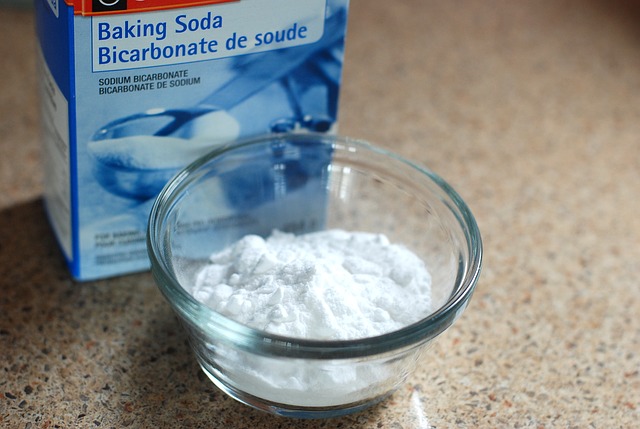
The normal cleaning of our produce when we bring it home from the store is to eliminate dirt and pathogens, not pesticides. Removing the latter requires a different approach. A recent study from researchers at University of Massachusetts recommends soaking produce in a solution of baking soda and water. That study involved apples and, after treating the apples with pesticides, they then tried three methods of cleaning them. One method was soaking the apples in a baking soda solution for two minutes. The second was a two minute soak in a bleach solution that is used in commercial operations. The third was using just plain water.

The two minute soak in a baking soda solution removed more pesticide than the other two methods. However, to completely remove the pesticides took a soak of 12-15 minutes. The researchers also cautioned that they only looked at two different pesticides and results may vary with other pesticides and methods of application.

Cooks Illustrated decided to put this method to the test. They used pesticide-detection cards and tested grapes. They again tested different methods: a 15 minute soak in a baking soda solution, a 30-second swish in the baking soda solution, rinsing under running cold water and soaking in a vinegar solution. They found that the only two methods that worked to reduce pesticides were a quick swirl and a longer soak in the baking soda solution. Their conclusion was to make a solution of 2 teaspoons baking soda per 1 quart of water and swirl your produce in that for 30 seconds followed by a rinse under cold running water. They also caution that this will only work for certain classes of pesticides. They note that spray pesticides or those applied to the roots cannot be removed with this method.

I encourage all of you to eat as much fresh produce as you can. We have a mixed green salad with chopped veggies on it almost every night. We also put fresh greens on sandwiches as well as using fresh produce in many different recipes. Just do what it takes to ensure the produce is clean and safe to eat. Between this Cooking Tip and the prior ones I wrote, you should have all the information you need to do just that!

Cooking Tips · Techniques

Water-Based Ganache

I am taking my own advice and that which I shared with you in a prior Cooking Tip. That advice is to try a new recipe. I have been wanting to experiment with water-based ganache and I decided there is no better time than now. My experience is the subject of this Cooking Tip.

I’m sure you have heard the old adage (and I’m sure I have even repeated it) that you should not get water in chocolate or it will seize. Well, as it turns out, that is only partially true. I began to wonder about this when I first learned that the chocolates from one of my favorite chocolate shops, The Chocolate Therapist in Littleton, Colorado made their signature “meltaways” with a water ganache. So, I decided to do a bit of research.

It is true that if you get water into your chocolate, it will seize and turn grainy. Many “experts” will tell you that if that happens, there is nothing you can do. You must throw it away and start again. As I said, that is only partially true. If you get a small amount of water into your chocolate, it will indeed turn grainy. However, if you add a bit more water and stir, it will turn into a beautiful glossy mixture. Why is that? If you want a scientific discussion of this phenomenon, see this link from Fooducation.

Why use water rather than cream for your ganache? The pure & simple answer – Flavor. Dairy actually mutes the flavor of chocolate. By not using cream, the true flavor of the chocolate shines through. Of course, that means you want to use a high quality chocolate. There are so many artisan chocolate makers around today and their chocolates have complex & varied flavors. With a water ganache, you can actually taste those wonderful flavors.

Another reason is for your lactose-intolerant friends or family members or for those who choose not to eat dairy. As long as you use a good quality dark chocolate without any milk in it, they also can enjoy these treats. A final advantage is that the caloric content is 40-50% less than in a cream-based ganache.

The method for making water-based ganache is similar to that based on cream. Start by chopping your chocolate into very small pieces. You can heat your water (or other liquid), pour it over the chocolate, allow it to melt the chocolate and stir vigorously. Alternatively, you can melt your chocolate, heat your liquid and then mix together.

The ratio of chocolate to water you use depends on the final product you want. Some will tell you to start with a 1:1 ratio and that will work if you want a pourable chocolate. However, if you want something that you can turn into a truffle, you will need a minimum of 2:1 (chocolate to water) or even a bit higher.

You can also add a bit of fun by using not just plain water but flavored waters in all forms. For instance, citrus-infused water, steeped tea, juices or even liqueurs.

My first attempt was with white chocolate and lemon juice. The person who shared that recipe with me said it reminded her of lemon curd and they truly do taste like that.

I next tried dark chocolate with orange. Instead of juice, I used an orange liqueur. However, I felt like I wasn’t getting enough orange flavor. I did not want to add more liqueur as it would thin out the chocolate and make the result taste a bit too alcoholic. So, I used just a bit of orange oil and that did the trick.

My final truffle was chai flavored. I brewed very strong chai tea and used that as my flavoring liquid. The chai flavor was evident but not extremely pronounced. I may try another method that I found. Put your chocolate in a plastic container and add the dry tea to that container. Since I only use loose-leaf tea, I would put it into a disposable spice bag or something similar. Leave it for about a week, stirring it around every so often. The tea flavor is said to infuse into the chocolate. When you are satisfied with the aroma, use hot water to make your ganache and enjoy.

Let me know if you try these. I enjoyed them so much that I am not sure if I will ever go back to the cream-based ganache!

Cooking Tips · Techniques

Cook Without a Recipe — Part Three

This is the final in a series on Cooking Without a Recipe. After stocking your pantry, learning about tasting and how to cook grains (Part One) and learning how to cook proteins and make a sauce (Part Two), we now turn to two final subjects – Vinaigrettes and Pizza.

Vinaigrettes are something that are wonderful to make at home and, after learning some basics, you can have fun and never have to look at a recipe. The most basic formula for making a vinaigrette is one part vinegar or other acid to 3-4 parts oil. This is not an absolute rule, though. Adjust it to your tastes. I know I prefer a little less oil. I often do only a 1:1 ratio or, at times, I eliminate the oil entirely.

This is one of those recipes that have very few ingredients. Therefore, you want the best quality ingredients you can get. Here are the basic ingredients that you will need.

Oil – Most commonly, you will use extra virgin olive oil (EVOO). You may use other oils with a flavor you like or even a combination of oils.

Acid – Use whatever you like and matches your salad. It can be any type of vinegar, even flavored vinegars. Other acids are citrus juices as well as fruit purees/nectars. I often like to combine a fruit flavored vinegar with some of the actual fruit. For example, I use a peach vinegar along with pureed peaches.

Seasonings – This might just be salt and pepper but could also be minced garlic, minced shallots, mustard, spices or herbs. You may want to add a touch of sweetness in the form of honey, maple syrup, sugar, agave, etc.

No matter your choice of ingredients, the technique is the same. Start by putting the acid & seasonings in a bowl and mix well. Now, you want to force the oil (if using) to mix with the water-based liquid. This is called emulsifying. You can do this by vigorously whisking, shaking in a jar or even using a blender. One caution is that some experts think that putting EVOO in a blender leads to bitterness. Others disagree. Once it is emulsified, taste and adjust to your preference. You can taste it on its own or you may wish to dip of piece of lettuce into it and taste that way.

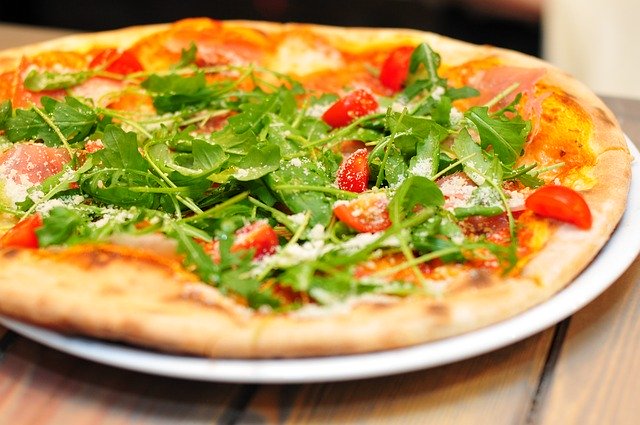
A final topic I would like you to consider is Pizza. Pulling together a homemade pizza night is something that is so helpful to have in your arsenal of quick and easy meals.

Although you do need a recipe for the dough (if you want one, let me know), you can have fun after that. I try to make pizza dough, divide it into pizza balls and freeze them. Whenever I want pizza or a quick meal, all I have to do is to remember to take the pizza balls out of the freezer and allow to thaw. I can then make a pizza from whatever I have on hand.

The first thing to think about is that you do not always need a sauce. Just a brush of a good olive oil can take the place of a sauce. If you do want a sauce, you can always grab some store-bought sauce although I hope you wouldn’t do that. Simply grab a jar of roasted red peppers, blitz them in a blender and spread on your pizza crust. You can also simply blend tomatoes (fresh or canned) but you will get better flavor if you marinate those tomatoes with some olive oil, garlic, herbs and seasonings before using them. Or, how about pesto as your sauce? Again, it would be great if you make your own but you can buy it in the store. Generally, the refrigerated version is better than the canned.

On to toppings. A basic recommendation is about 1 cup of topping per pizza. I love caramelized onions on almost any pizza but those do take some time. When you have the time, make and refrigerate them. They really are wonderful on pizza. Other veggies such as bell pepper, red onion, mushrooms and zucchini will also work. Even potatoes (I like to par-boil them first), asparagus, broccoli and squash. You may or may not want to sauté them a bit first. If you want a protein, add whatever you like – cooked chicken, shrimp tossed in olive oil, cooked sausage or other ground meat, cooked bacon or pepperoni. Most people think a pizza is not a pizza without cheese although you can make great pizzas without any cheese. If you want cheese, branch out and try something new. The classic is mozzarella but there is also provolone, fontina, asiago, feta, goat cheese and so forth. Finally, add herbs and spices as you desire. You can use dried herbs and spices or fresh. If using fresh, put them on at the last moment before serving. I think I am hungry for pizza!

I hope this series on Cooking Without A Recipe has been helpful to you and you have learned some new skills and make some great meals. If so, let me know. I would love to hear what you are making!