Cooking Tips · Ingredients · Techniques

Gingerbread – A Holiday Tradition

Image by artistlike from Pixabay

Is Gingerbread part of your holiday tradition? Do you make cookies or a gingerbread house? How about a gingerbread cake? This Cooking Tip is all about what gingerbread is and how to make the best you can.

In today’s world, Gingerbread can be either a noun or an adjective. As a noun, gingerbread is a moist, spiced cake made with ginger and molasses. As an adjective, we see it used in phrases like ‘gingerbread cookies,’ ‘gingerbread house,’ etc. In reality, gingerbread is a somewhat broad term for many baked goods that use ginger and molasses, though some recipes use honey or treacle instead.

Since gingerbread typically uses certain spices, we also tend to use the word as a flavor, similar to how we talk about Pumpkin Spice. What does it taste like? Ginger is a major flavor in gingerbread along with other warm spices such as cinnamon, cloves, allspice and even pepper. Sweetness usually comes from molasses’ unique flavor.

Picking out an appropriate recipe depends on which type of gingerbread baked good you wish to make. A recipe for gingerbread cake will be somewhat different than that for gingerbread cookies. And a gingerbread house requires a recipe adapted to create a much sturdier product that will stand up to the house form. Some call this Construction Gingerbread.

A gingerbread cake will have a higher liquid-to-water ratio, making for a very moist cake. The cookies will have more flour compared to the liquid, and the construction gingerbread will have even more flour. Take a look at this chart of basic recipes from King Arthur Baking as an example.

 FlourSugarButterMolassesEggsOther
Cake2 cups¼ cup8 Tbsp¾ cup1Buttermilk – 1 cup
Cookies3¾ cups¾ cup12 Tbsp¾ cup1 
House5 cups1 cup6 Tbsp½ cup1Buttermilk – ¾ cup

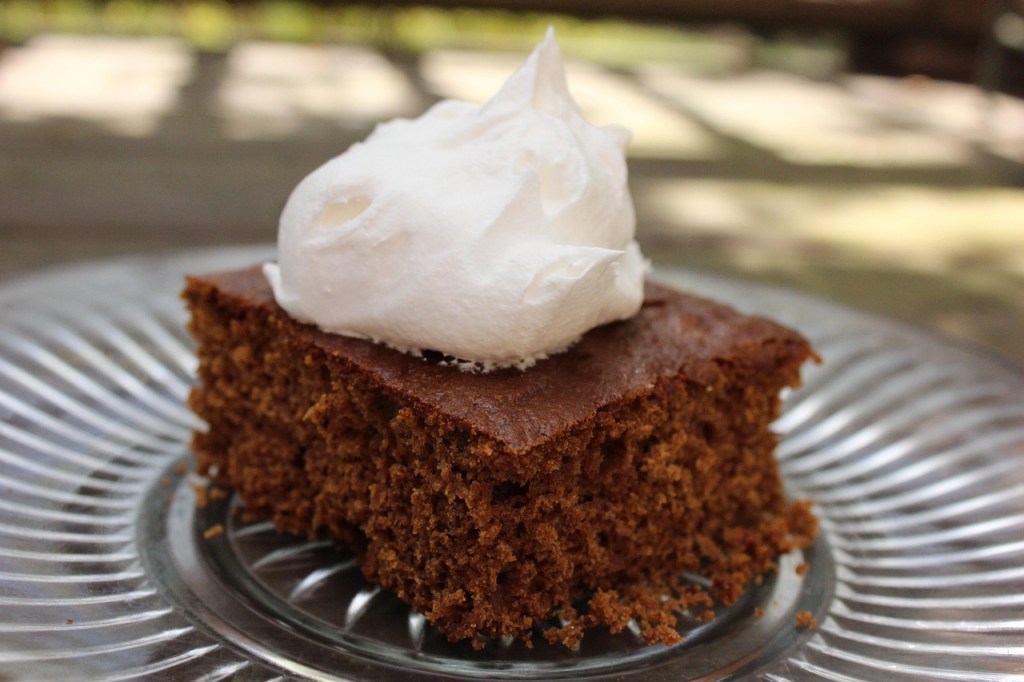
Making a gingerbread cake (more correctly called just gingerbread) is fairly simple. It is a type of quick bread. It can be as simple as mixing the dry ingredients, mixing the wet ingredients, combining them, and baking. It is often enjoyed with whipped cream or ice cream.

Image by Ray_Shrewsberry from Pixabay

Gingerbread cookies and gingerbread houses take a bit more effort. Here are some tips for success.

  • Refrigerate the dough
    • Refrigerate the dough for at least an hour before rolling it out. Many recommend longer, and some advise chilling it overnight. This will make the dough less sticky and easier to roll out.
  • Rolling the dough
    • To get evenly-shaped cookies, take time to roll out the dough carefully. To prevent sticking, dust your rolling surface and pin with flour.
    • Try to roll to a consistent thickness, about ¼ inch thick.
    • If you roll directly onto parchment paper, it will make the task of transferring to a cookie sheet easier.
  • Baking the cookies
    • If you bake at a lower oven temperature of 325°F for a longer baking time, you will get a firmer and evenly colored cookie.
    • Use the recipe’s recommended baking time as a guide, as the actual time may vary depending on the size and thickness of the cookies. You may want to start and bake just one as a test to determine the perfect baking time. A softer, chewier cookie will take less time, whereas a firm, crispy cookie will require longer in the oven. This is particularly true if you are making construction gingerbread. It should dry completely in the oven, yielding a sturdier structure for your house.
  • Tips for decorating
    • Consider drawing out your design on paper and then practicing it by piping onto parchment or broken cookies.

    • Royal icing is the traditional type used for decorating, as it dries hard and has a glossy finish. It is typically made with powdered sugar and egg whites. However, if you are unable to get pasteurized eggs, meringue powder is often recommended.

    • Some make a faux royal icing, using powdered sugar, water, and corn syrup.

    • The consistency should be thicker for outlining the cookies, as it holds its shape better. This thicker icing is also better for making more intricate details.

    • For flooding or filling the cookie, use thinner icing.

    • To adjust the thickness, just add powdered sugar to thicken or water to thin the icing.If you are making a gingerbread house, royal icing is also used as your glue. It is stiff and dries quickly and completely.

    • One may also use a frosting.  Although you could use a glaze made with powdered sugar and water or milk, you will get better results with buttercream. It is creamier and spreads more easily than royal icing. However, it does not harden. Therefore, it is better for simpler decorations.

    • For prettier results, use piping bags and tips. Use a small round tip for outlining and details. Larger tips are better for flooding or filling in the cookie.

    • Embellish to your heart’s content by using sprinkles and candies.Let the icing dry completely, which may take several hours.
Image by Monika from Pixabay

Is make gingerbread cookies or a gingerbread house part of your holiday tradition? With this advice, I hope you will make them the best you have ever done!

Cooking Tips · Ingredients · Techniques

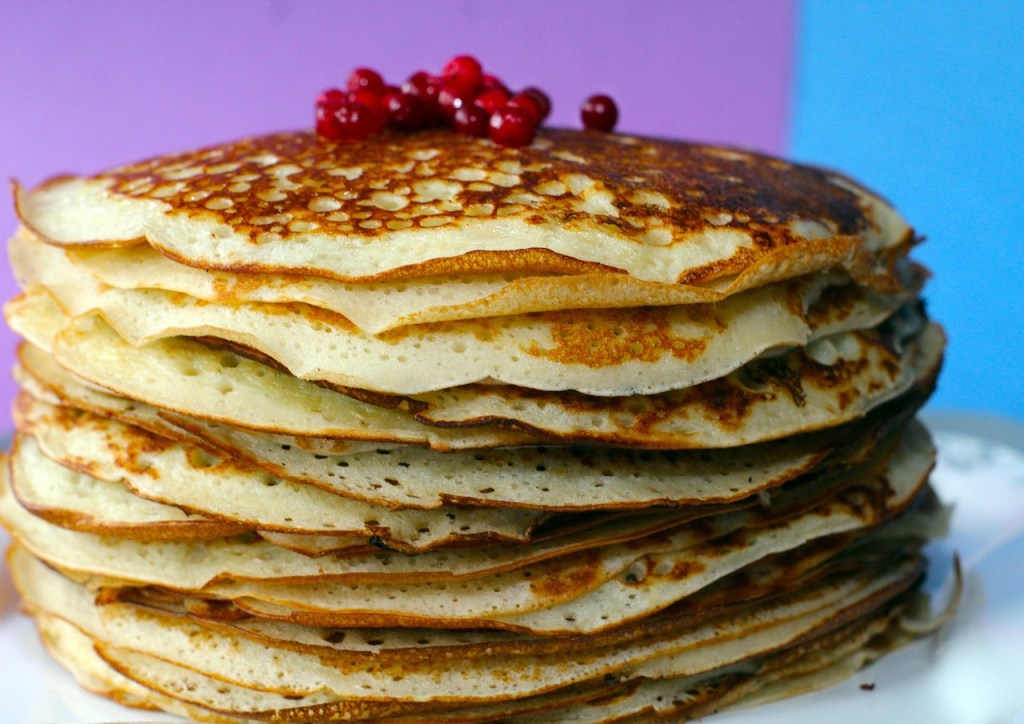
Pancakes – A Fluffy Delight

I recently wrote a Cooking Tip on waffles and how to make the best waffles possible. If you are more of a pancake person, this Cooking Tip is for you. We will look at pancake varieties from around the world and offer tips for making great American-style pancakes.

According to The New Food Lover’s Companion, pancakes are one of the oldest forms of bread. A simple definition is that a pancake is made from a batter, poured into rounds and cooked on a griddle or in a skillet.

We all recognize American-style pancakes as the light, fluffy creations topped with butter, maple syrup, and more. Pancakes are known around the world, but in different forms and with different names. Here are just a few.

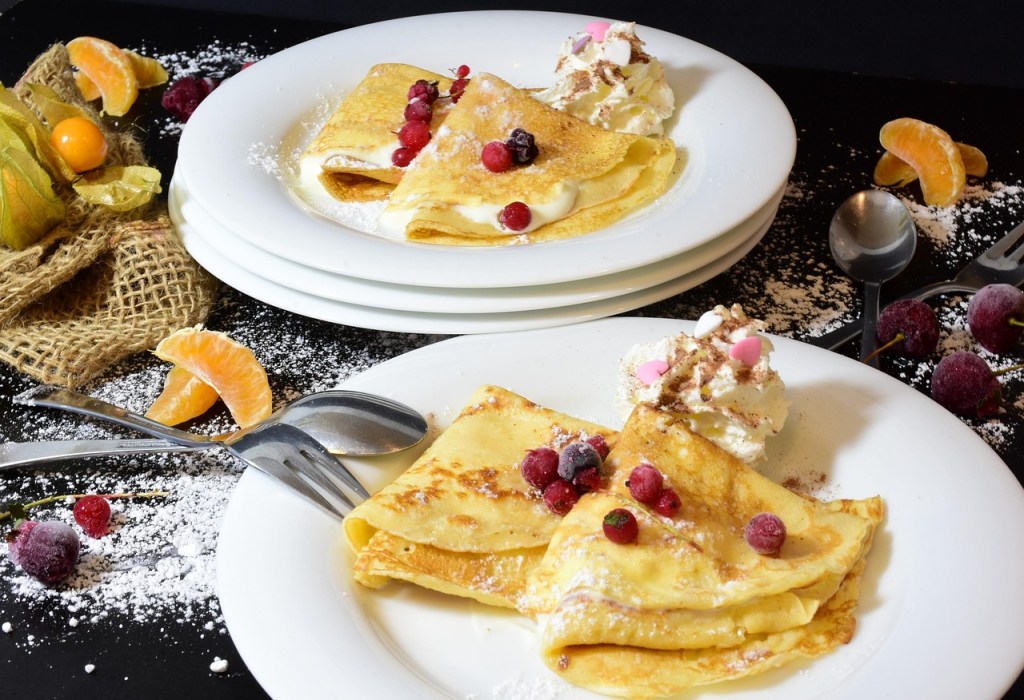
Crepes

French crepes are probably among the most well-known pancakes after American-style pancakes. The batter is much thinner, and they are cooked either on a crepe maker or in a nonstick skillet.

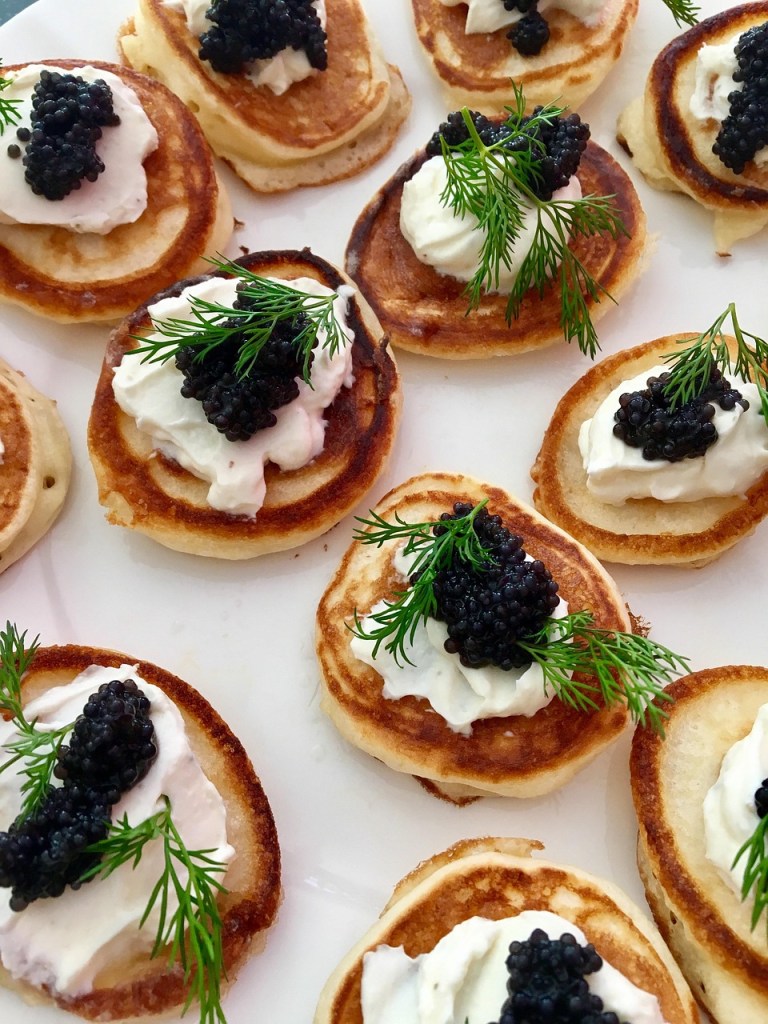
Blinis

Hailing from Russia, these are small, thin pancakes served not only for breakfast but also as an appetizer, often topped with smoked salmon or caviar. They are traditionally made from buckwheat flour, are yeasted, and have whipped egg whites folded into the batter.

Banh Xeo

Vietnamese crepes that are made with rice flour and have turmeric added for color.

Swedish Pancakes

These pancakes are thin and delicate, like a French crepe.

Back to those American-style pancakes we all know, served at IHOP since 1958. Here are some tips to help you become a pancake master.

Flour

  • Using too much or too little flour can negatively affect the batter.
  • Weighing the flour helps ensure the proper ingredient ratio.

Leavening

  • Pancakes generally call for chemical leavening in the form of baking powder, baking soda or both.
  • Most baking powder is “double-acting.” This means it starts to leaven when it comes into contact with moisture, but it also “acts” when heated. This gives you more time before cooking without losing the leavening action. It also produces a lighter and fluffier pancake.
  • Because baking soda starts working immediately when it comes into contact with acid, a recipe that only calls for baking soda can produce a thinner pancake. You also need to start cooking quickly after mixing.
  • Note that, without an acid such as buttermilk, baking soda will not cause leavening.
  • Apart from leavening, baking soda also helps with browning.

Buttermilk

  • Although not necessary, many pancake aficionados recommend using buttermilk in the batter. This acidic ingredient reacts with baking soda, creating bubbles that cause the batter to expand.
  • It also adds a tanginess to the flavor.

Separating eggs

  • Most recipes call for using whole eggs.
  • Some advocate separating the eggs, whipping the whites to peaks and folding them into the batter. The whipped egg whites contain air, which will help produce fluffiness.

Batter Consistency

  • This is like Goldilocks – not too thin, not too thick, but just right.
  •  As you let the batter run from a spoon into the bowl, it should fall in clumps rather than a steady stream.

Mixing

  • A significant problem that people make is overmixing the batter. Mix until the batter is just combined, leaving some lumps. This minimizes the development of gluten.
  • King Arthur Baking recommends whisking the wet ingredients together first until you see bubbles. They state that this helps to emulsify the fat and water before adding the dry ingredients, thus preventing overmixing.

To Rest or Not

  • There are two schools of thought on whether you should rest the batter before cooking.
  • The first recommends resting the batter for 10-15 minutes or even overnight. Proponents of this method say it allows the gluten to relax and the batter to fully hydrate, giving a more tender pancake.
  • The other point of view (shared by Serious Eats and Bon Appétit) is that the pancakes should be made immediately because the leavening agents of baking soda and/or baking powder begin to produce gas as soon as they are mixed in. Resting only allows this gas to escape before putting the batter in the pan, making a less fluffy pancake.
  • King Arthur Baking takes an intermediate approach. They recommend resting for about five minutes, which they say ensures full hydration and that the leavening agents are fully working.

Cooking

  • Preheat the pan slowly over medium-low heat. This results in more evenly distributed heat and uniformly golden pancakes.
  • Wipe away excess oil after adding it to the pan, leaving only a slight coating. If there is excess oil, it may pool under the pancake, causing uneven cooking.

Make a test pancake

  • This ensures your pan or griddle is at the right temperature.
  • America’s Test Kitchen recommends adding just a tablespoon in the middle of the pan. If that mini-pancake is golden brown on the bottom after one minute, the pan is ready. If it is more of a blond color, allow the pan to preheat longer. If it burns, lower the heat.

Portioning the batter

  • You can use a measuring cup, but a cookie scoop is even better for a consistent size.

Flip properly

  • Do not flip until you see small bubbles appearing evenly across the surface, popping and leaving a hole. You may also take a peek at the underside to help monitor the cooking process. You want to see an even golden-brown color.
  • When you flip the pancake, use a thin spatula and flip in a smooth but quick motion with a flip of the wrist. This will minimize splattering and misshapen pancakes.

Keep pancakes warm

  • As you cook, keep the pancakes warm on a rack in a 200-degree oven.

Storage

  • For storage, put between layers of wax or parchment paper.
  • They can stay in the refrigerator for a few days or longer in the freezer.

Troubleshooting

  • Flat pancakes – This results from overmixing or insufficient leavening.
  • Dense pancakes – This can result from too much flour. Weighing dry ingredients rather than using cups ensures more accurate measurements.
  • Soggy middle – If your heat is too high, it will cook the outside too quickly, leaving the center undercooked. Use medium-low heat and cook slowly.

Making pancakes is not difficult, but it does take some practice to achieve that “perfect” pancake. How do you like yours? I think a pat of butter and some good dark maple syrup is all that is needed. Others like chocolate, fruit, jam or other flavorings. No matter what, they are delicious!

Cooking Tips · Ingredients · Techniques

Waffles – Great for Breakfast & Dinner!

Photo courtesy of StockCake

I made Belgian waffles for dinner the other night. They were delicious, and it caused me to wonder how many of you make your own waffles. Don’t tell me if all you do is put frozen waffles in the toaster! In this Cooking Tip, I will discuss the different types of waffles and offer tips for making a great waffle from scratch.

The first thing you need to decide is what kind of waffle you wish to make. There are many kinds of waffles, but the two major categories are Belgian-style and American-style waffles.

Belgian waffles

  • What Americans call Belgian waffles originated in Belgium and were introduced to the US during the 1964 New York World’s Fair. However, you won’t find the term “Belgian waffle” anywhere in Belgium. There are what are called Brussels waffles and Liege waffles.
  • Brussels waffles are larger in size than American-style waffles. They also have deeper pockets for all the toppings.
  • What makes these waffles unique is that yeast is used in the batter. This produces a light and fluffy waffle with a crispy exterior.
  • Many recipes for Belgian waffles also call for separating the eggs, whipping the whites into peaks and then folding them into the batter, giving an incredible lightness and airiness.
  • You will find Belgian waffles in America that forgo the yeast and instead use baking powder. However, it is the yeast that gives this waffle style its characteristic form and slightly tangy taste.
  • They are traditionally cooked in a rectangular or square waffle maker.
  • Liege waffles differ in that the batter is thicker and they have pearled sugar baked into them. This gives a lovely crunch. They are typically cooked in a round shape.

American waffles

  • These waffles are thinner and denser than the Belgian waffles.
  • They are leavened with baking powder rather than yeast.
  • The batter is much closer to a pancake batter, although a pancake batter will not work in a waffle maker.

Tips for Great Waffles

Photo courtesy of Amazon

Waffle Maker – Great waffles not only require a good recipe but also a waffle maker. If you make waffles regularly, you may want to invest in a higher-end model. For most of us, though, a more moderately priced one will do just fine.

  • Instructions – Be sure to read the instructions of your waffle maker so they are cooked as your appliance calls for.
  • Preheating – Be sure to properly preheat the waffle maker. Most waffle makers indicate they are ready after about 4 minutes of preheating. America’s Test Kitchen (and others) recommends preheating for 10-20 minutes to ensure the entire surface is thoroughly preheated.
  • Oil – Unless you know your waffle maker is very non-stick, it is best to brush a small amount of oil on both sides of the waffle maker before adding the batter.
  • Portioning batter – It will take some practice to know how much batter to add to the waffle machine. Once you know, measure each time to ensure consistently sized waffles.
  • Judging doneness – Do not open the waffle maker until the appliance tells you it is ready. It will not cook properly if you do. Many experts say that you should not open your waffle maker until the steam has stopped seeping out its sides.

Ingredients

  • Flour – It is fine to use all-purpose flour. Some prefer cake flour because it gives a lighter texture.
  • Leavening agents – For the best Belgian waffles, use yeast. For American-style waffles, baking powder is used.
  • Eggs – Eggs are crucial for structure and richness. Some recipes use whole eggs, while others use yolks and whipped egg whites. There are many advocates of the “whipped egg whites”. However, some say this is a waste of time. See this article from Epicurious. Even if you opt for just using whole eggs, whisk them until they are nice and fluffy. Adding air to the eggs, whether whole or separated, gives the waffles a light and airy texture. If you desire an eggless waffle, try using buttermilk for acidity and baking soda for leavening. This batter shouldn’t sit for very long, as the leavening reaction may die. Therefore, make small batches and once the batter is ready, start cooking. Do not allow it to sit for too long.
  • Milk – Many use whole milk, but buttermilk will give a tangier flavor.
  • Butter – Butter certainly adds richness and flavor. For crispier waffles, though, try vegetable oil in place of the melted butter. A waffle study published in Food Science & Nutrition showed that waffle batter made with oil browned more than batter made with butter. They attribute this to the fact that, unlike butter, oil doesn’t contain water. The water in butter adds moisture and can hinder the formation of a crispy crust.
  • Cornstarch – King Arthur Baking considers this a secret ingredient to producing a crispier exterior in a non-yeasted waffle. Try starting with ¼ cup of cornstarch and work up to ½ cup to get the desired result.
Photo courtesy of StockCake

Making the Batter

  • Sift the dry ingredients to aerate them and to ensure there are no lumps.
  • Warm your liquid ingredients. This will prevent your melted butter (if using) from coagulating and forming small bits of solid butter when stirred into cold dairy. Also, the liquid ingredients will blend better with the dry ingredients if they are all at a similar temperature.
  • Do not overbeat the waffle batter. You want to minimize the gluten development, which can lead to tough waffles. Just stir until everything is combined, and leaving a few lumps is perfectly acceptable.
  • Allow the batter to rest for at least ten minutes and up to an hour to ensure good hydration and to increase flavor.

Keeping Waffles Warm and Storing Waffles

  • As you are making waffles, you will want to keep the cooked ones warm until you have enough cooked for everyone. Place a wire rack inside a rimmed baking sheet and put it on the middle rack of a 200°F oven. As you cook, simply transfer each finished waffle from the waffle maker to the wire rack. The rack helps to prevent sogginess.
  • To store, place cooled waffles between layers of wax paper and place in an airtight container. They can be refrigerated for a few days.
  • To rewarm waffles, place them on the oven rack in a 200°F oven. Microwaving isn’t ideal, as the waffles can get soggy.
  • To freeze, cool and place wax paper between them. Place them in a freezer bag and freeze for up to 3 months. When ready to eat, allow them to defrost at room temperature for about 10 minutes. Then, heat in a 300°F oven.

Troubleshooting

  • To prevent soggy waffles, ensure the waffle maker is fully preheated and cook thoroughly until done.
  • To prevent tough waffles, do not overmix and allow the batter to rest before cooking.
  • If your waffles are sticking to the waffle maker plates, be sure to grease the plates before each batch. If sticking persists, you may need to thoroughly clean the waffle maker according to the appliance instructions.

I cannot share my recipe for the Belgian waffles I mentioned, as it is a friend’s secret family recipe. If you want to make some delightful Gingerbread waffles (non-yeasted), check out this recipe. Just recall the advice from above and adjust the instructions to ensure success.

I much prefer yeasted waffles. What about you? Do you have a favorite recipe? Before reaching for that carton of frozen waffles, try making them yourself. They are so much better!

Cooking Tips · Ingredients · Techniques

Tiramisu – A Classic Italian Dessert

Image by Andrey Cojocaru from Pixabay

Although Italian in origin, Tiramisu is a dish beloved all over the US. So many people order it when they go to their favorite Italian restaurant. It does not have to be limited to dining out, though. In this Cooking Tip, we will explain what it is and share tips for making the best tiramisu at home.

As is typical, historians disagree on when tiramisu was first created. Some say the 1700s. Some say the 1800s, and others claim it did not exist before the 1900s. Most do agree that it was invented in the Italian city of Treviso. It is an unbaked, elegant, rich and creamy layered dessert.

Typical Ingredients

Mascarpone

  • This is sometimes called Italian cream cheese. However, substituting American cream cheese is not recommended as mascarpone is smoother and milder in flavor.
  • Mascarpone should be cold before adding to the recipe.

Eggs

  • As opposed to the other ingredients, eggs should be at room temperature as they will whip much better than if cold.
  • The original tiramisu recipe probably used eggs that were separated. The yolks were mixed with the sugar, the eggs were whipped to stiff peaks, and then the whites were folded into the egg mixture. The concern with this is that you would be consuming raw eggs.
  • Most modern recipes use either whole eggs or just egg yolks, which are sterilized by slowly cooking over a bain marie as you whip the mascarpone mixture. Follow the recipe directions for the ideal temperature. This is sometimes followed by folding in whipped cream rather than raw egg whites.
  • Pasteurized eggs are difficult to find in supermarkets. They also do not whip up as well as fresh eggs, though this can be helped by adding some cream of tartar.

Whipping cream

  • For the best whipping, the cream should be very cold.
  • To get an optimal result, start whipping at a lower speed, gradually increasing the speed as you go. If you do this for about 10 minutes, the resulting whipped product will be much more stable.

Sugar

  • Regular granulated sugar can impart a grainy texture.
  • Either use superfine sugar or pulse your sugar in a food processor before using it.

Ladyfingers

  • These are called savoiardi in Italian and are dry, oblong-shaped sponge cookies.
  • Be sure to use crunchy ladyfingers, not soft cake-like ones.
  • They will be dipped in a liquid solution. The trick is to get them flavored with the liquid without allowing them to get soggy. To do this, they should be dipped only briefly, no more than about two seconds per side. Alternatively, you can also brush on the liquid rather than dipping.

Coffee/Espresso powder

  • The classic tiramisu is made by dipping the ladyfingers in a strong coffee or espresso mixture.

Alcohol

  • Many recipes include adding alcohol to the coffee. The classic is Marsala, but you can vary it according to your taste. You may also leave it out if you want an alcohol-free dessert.
  • Some recipes will add the alcohol to the cream mixture rather than just into the dipping mixture.

Cocoa powder or grated chocolate

  • This is sifted or scattered over the top, but also may be added to each layer.
  • Since cocoa powder is very bitter, you may want to cut it just a bit by whisking it together with a small amount of powdered sugar.

How to make it

The directions for all recipes are very similar, although you may see some slight variations. Always start by gathering all your ingredients, allowing some to come to room temperature as noted in the ingredient discussion.

Classic recipe

  1. Prepare the mascarpone mixture.
    • Whisk the egg whites until stiff peaks form.
    • Whisk the egg yolks and sugar until thick and pale yellow.
    • Add the mascarpone and whisk until smooth.
    • Fold the egg whites into the mascarpone mixture.
  2. Prepare the coffee/alcohol mixture by mixing in a shallow bowl.
  3. Briefly dip the ladyfingers in the liquid and arrange them at the bottom of the baking dish.
  4. Spread ⅓ of the mascarpone mixture over the ladyfingers.
  5. Sprinkle with ⅓ of the cocoa powder.
  6. Repeat two more times.
  7. Chill thoroughly.
  8. Note that this recipe contains raw eggs unless you use pasteurized eggs.

Modern recipe – Method 1

  1. Whisk together coffee and alcohol and set aside.
  2. Beat egg yolks and sugar until thick, creamy and light yellow. Stir in unwhipped heavy cream.
  3. Cook mixture gently over a bain marie until mixture reaches 160°F. Allow to cool.
  4. Beat mascarpone and alcohol, if using, into egg mixture.
  5. Dip ladyfingers into coffee mixture and place in the bottom of your baking pan.
  6. Spread ½ of the mascarpone mixture over the ladyfingers. Sprinkle with cocoa powder or grated chocolate.
  7. Repeat with the rest of the ingredients.
  8. Chill.

Modern Recipe – Method 2

  1. This is very similar to Method 1.
  2. The difference is that the whipping cream is not added in the beginning. Instead, it is whipped to peaks separately and folded into the mascarpone mixture.

Recap of tips for success

  • Mascarpone and cream, if using, should be cold.
  • Eggs should be at room temperature. If using separated eggs, separate them while cold, then allow them to come to room temperature.
  • For the most traditional flavor, do not substitute cream cheese for the mascarpone, as it will change the texture and flavor.
  • Do not overwhip the mascarpone, as it may split.
  • Do not overmix when folding the whipped cream into the mascarpone mixture to prevent graininess.
  • The finished dessert must set up for at least six hours, even overnight. Proper chilling not only helps the tiramisu set up but also lets the flavors meld.
Image by Stanley QUAH from Pixabay

Make ahead and storage

  • Tiramisu can be made up to two days before serving.
  • It will last in the refrigerator for about a week.
  • You can freeze tiramisu for up to three months. If you choose to do this, do not dust with cocoa powder. Wrap in plastic wrap, placing it directly on the surface. Cover tightly with more plastic wrap, followed by foil.
  • To defrost, allow it to sit at room temperature for 15-20 minutes. After it has defrosted, dust with cocoa powder.

Variations – A fun thing to do with Tiramisu is to vary ingredients.

  • In the summer, I make a Summer Berry Tiramisu. I follow my regular tiramisu recipe, but eliminate the coffee and cocoa. Instead, I use summer berries (fresh or frozen) for layering. I also make a simple syrup with the berry juices and use that for the dipping mixture. If you wish to add an alcohol, choose a berry-flavored one such as cassis.
  • At Christmas, use cranberries and apple cider for layering as well as the dipping liquid.
  • Make a lemon curd for a citrusy tiramisu. Add some to the mascarpone cream and use some in the layering step.
  • Instead of pumpkin pie, make a pumpkin-spice mascarpone cream. Add brown sugar and warm spices to the dipping liquid. Finally, layer crushed gingersnaps between the layers.
  • Instead of making in a baking pan, make individual tiramisus using pretty glasses or goblets.

Making tiramisu is not difficult, but it does take some patience. If you follow the above tips, I am sure you will be rewarded with success – and a delicious dessert.

Cooking Tips · Techniques

Donut or Doughnut? Does it matter?

Image by bookdragon from Pixabay

I am not much of a donut fan. It seems as if most people are. According to NationalToday.com, 91% of Americans either like them or love them. Plus, there is not one but two National Donut Days. Read on in this Cooking Tip to learn more about donuts.

Special Donut Days

  • National Donut Day – This is celebrated on the first Friday in June and again on November 5th. Most consider the June date the original. According to National Day Calendar, it was created in 1938 by the Salvation Army to honor the women who served donuts to soldiers in World War I. More on that below. It was a fundraiser for Chicago’s Salvation Army, aimed at helping those in need during the Great Depression. It is unknown how the November day came into existence. Some speculate it might have been started by a retailer who wanted the date close to Veterans’ Day because of the relationship between donuts and soldiers.
  • Jelly-Filled Donut Day – June 8th
  • National Cream-Filled Donut Day – September 14th
  • Buy a Donut Day – October 30th

Names

You may have noticed that some people use the spelling “donut” while others use “doughnut.” Both are correct, and they are used interchangeably. The shorter “donut” is often the preferred one in the US.

Historians say doughnut is the older term. Many cite the 1809 Washington Irving book, A History of New York, from the beginning of the World to the End of the Dutch Dynasty. He writes “balls of sweetened dough, fried in hog’s fat, and called doughnuts …” Some claim this is where the spelling “doughnut” began, but not all agree. Some say it refers to nuts added to the dough. Others claim it goes back to the technique of tying the dough into a knot, called a “dough knot.”

Definition

The dictionary definition of a donut is that it is a small ring of sweet fried dough. However, today we call other types of pastries donuts, despite them not being in a ring or fried.

History

Fried dough is a part of many different cultures around the world. This history generally traces back to Dutch immigrants in 17th- and 18th-century New York (then called New Netherland). These immigrants made dough balls stuffed with fruit and nuts, but not in today’s ring shape.

Part of the American history of donuts can be traced to wartime, especially World War I. Donuts were served to soldiers on the front lines by women called “Doughnut Lassies.” It is said that the women initially wanted to bake pies and cakes, but had minimal equipment. Doughnuts could be produced with only a kettle of hot oil.

The creation of the 1st automated donut machine is credited to Adolph Levitt, a Russian refugee and owner of a New York City bakery. This machine was called the “food hit of the Century of Progress” at the 1933-34 World’s Fair.

Let’s look at the history of two of the most-loved donut companies – Krispy Kreme and Dunkin’ Donuts.

According to the Krispy Kreme website:

Dunkin’ Donuts says the following.

What about the hole in donuts?

This is another one of those historical items with a number of stories. Choose your favorite.

  • One says that in 1850, an American sailor, Hanson Gregroy, was supposedly unhappy that the center of the donut was not cooked totally through and is said to have punched a hole into it and then taught the technique to his mother. Another version of the story is that his mother made fried dough balls for him to take on his voyages. He is said to have put one on a spoke of the steering wheel to keep his hands free during a storm, making a hole.
  • Others say it was just because the center of the dough ball was harder to cook thoroughly without overcooking the exterior. Removing the center was an attempt to solve this problem.
  • Still others say it happened during the time that bagels were becoming popular, and they were stacked on dowels for storage and customer viewing. Donut makers copied this.

Types of Donuts

Yeast Donut– This type of donut is leavened with yeast, resulting in a fluffier product. Popular varieties of yeasted donuts include the following.

Image by WikimediaImages from Pixabay
  • Glazed donuts – These are covered in a sugary glaze that gives a shiny finish and a sweet flavor.
  • Jelly-filled donuts – These are filled with jelly or jam and often coated in powdered sugar.
  • Boston cream donuts – Just as with this popular cake, these donuts are filled with a vanilla custard and topped with a chocolate glaze.
Image by Zoli from Pixabay

Cake Donuts – Cake donuts use chemical leaveners such as baking powder and baking soda rather than yeast. These are the most popular kind of donut. They can be produced more quickly because chemical leaveners act more rapidly than yeast. Their texture is denser and more cake-like. They are often fried but can also be baked. A couple of the popular varieties are old-fashioned and chocolate.

  • Old-fashioned donuts – These often have a golden brown, crispy exterior and a soft, tender interior. They are often glazed or dusted with powdered sugar.
  • Chocolate cake donuts – This is a style of cake donut that is made from a chocolate batter. They are often topped with chocolate glaze or sprinkles.

Donut holes – These are small fried balls made from the dough removed to make the hole in the donut. However, many bakers just roll small pieces of dough and call them donut holes.

Beignets, known throughout New Orleans, are another French-style donut. They can be made with yeast dough or choux pastry.

Long John donuts are bar-shaped and have no holes. They are called donuts as they use the same dough and have similar toppings.

Filled donuts are, as the name suggests, filled with custard, fruit, jelly or jam.

Crullers are French donuts made from twisted or curled dough, piped into the desired shape and deep-fried. They are meant to be crunchy on the outside but soft and moist on the inside.

Cronuts are shaped like a donut but made with croissant pastry. They are baked rather than fried.Image by WikimediaImages from Pixabay

Churros – Popular in Mexican culture, these are long, deep-fried tubes of choux pastry.

If you are part of the 91% of Americans who like donuts, you can certainly make them at home. I am indeed a proponent of making things yourself whenever you can. However, donuts are somewhat labor-intensive, especially if deep-fried. So, you may be better off just visiting your favorite local donut shop for that occasional sweet treat.

Cooking Tips · Ingredients · Techniques

Almonds – Not just for snacking!

Image by Pictavio from Pixabay

Almonds are certainly a popular snacking nut. In the stores, you can see flavors from just salt to honey to dill pickle to wasabi to habanero. They are also used in both sweet and savory recipes and come whole, sliced, and slivered. I have written a prior Cooking Tip on the differences and when to use which form. In this Cooking Tip, I want to discuss other products made from almonds.

Three culinary products that are made from almonds are Almond Paste, Marzipan, and Frangipane. All are made from a base of almonds and sugar, but depending on the desired product, they may also contain eggs, flour, butter, and flavoring extracts.

Almond Paste

Courtesy of Odense
  • Almond paste consists of pureed almonds, sugar, water, and maybe flavoring. The two main brands we see in our grocery stores are Solo and Odense. Solo states that the percentage of almonds in their almond paste ranges from 50% – 55%. Odense, on the other hand, lists its percentage as 45%.
  • As compared to marzipan, almond paste has a higher ratio of almonds.
  • It is less sweet and has a more pronounced nutty flavor than marzipan.
  • Its texture is coarser than marzipan.
  • Almond paste is used as a baking ingredient in cookies, cakes, tarts, and other desserts.
  • Although you can find it in the baking section of the supermarket, there are many recipes for making it at home, which involve processing almonds, sugar, and flavorings into a smooth paste. Some recipes start with almond flour rather than whole almonds. Some almond paste recipes use egg whites.

Marzipan

Courtesy of Solo
  • Marzipan is made from similar ingredients, but contains a higher proportion of sugar and a lower proportion of almonds than almond paste. As opposed to almond paste, where almonds are the first ingredient on the ingredient list, with marzipan, sugar is the first ingredient. Odense lists 28% almonds. Solo does not list the percentage of almonds. It may also be flavored with rose or orange water.
  • Marzipan is ready to eat out of the box. However, it is usually used to make candy or cake decorations. It can be rolled out to cover cakes or sculpted into marzipan fruits or other shapes, often with food coloring added.
  • It has a sweeter flavor and is smoother and more pliable than almond paste. Some say it has the texture of Play-Doh.
Image by cgdphoto from Pixabay

Frangipane

  • Frangipane is not something you buy in the supermarket, but rather, you make it at home. Ingredients include ground almonds, eggs, butter, flour, and sugar.
  • It is used most commonly as a filling in pies, cookies, and pastries.
  • There is another term – almond cream. Some will use this term interchangeably with frangipane, but French pastry chefs will define frangipane as a mixture of one part pastry cream and two parts almond cream.
  • Frangipane is very soft and has a spreadable consistency.

Substitutions

  • Some people ask whether one can use almond paste and marzipan interchangeably. The best answer is no. However, some sources say you can substitute 1:1, but they do list some caveats. First, the amount of sugar in the recipe would have to be adjusted since marzipan has a higher sugar content than almond paste. Secondly, the consistency is different, which may lead to a problem in the texture of the final product.
  • Almond paste can be used to make marzipan, but the reverse is not true. Solo lists the following recipe to make marzipan from almond paste.
    • In a mixer, combine 1 pound of almond paste with three cups of powdered sugar. Slowly add two beaten egg whites, and once fully incorporated, knead into a smooth consistency.
    • Other sources do not use egg whites, but use other ingredients such as water, corn syrup, and/or flavorings.
  • Since Frangipane is a very different product, it can not be substituted for either of the others.

Storage recommendations

  • If you are using commercially produced almond paste or marzipan, it will have a long shelf life. Once it has been opened, keep it tightly wrapped and stored in an airtight container in the refrigerator or freezer.
  • Both Odense and Solo say their products can be refrigerated for up to two weeks or frozen up to three months.
  • For homemade almond paste made with egg whites, it is best to make it no more than a few hours before you are going to use it. Keep it in the refrigerator until you use it. If your recipe does not use egg whites, it will keep for several weeks in the refrigerator or for up to six months when frozen.
Image by missingpinky from Pixabay

Have you ever baked with any of these products? Using almond paste in your cookies or brownies lends a delightful nutty flavor. A French tart with a frangipane filling will impress any guest. And, who can resist those cute little marzipan fruits? Have fun and enjoy almonds in all of their forms!

Cooking Tips · Ingredients · Techniques

Homemade Stock – Is it really necessary?

We have all heard that you should make your own stock, whether it be beef, chicken, or vegetable. We have all heard that the difference in taste makes it all worth it. However, how many of us have the time to make a proper stock? And, once you make it, do you have freezer space to store it? I do make my own stock when I have the time, but there are many, many times that the only thing I have on hand is store-bought stock. Don’t feel ashamed if you are the same. That’s life, but there are some easy hacks you can do to make that box of stock in your pantry just a bit better. That is the topic of this Cooking Tip. For background, you may want to take a look at this prior Cooking Tips – Stocks & Broths – Is there really a difference?

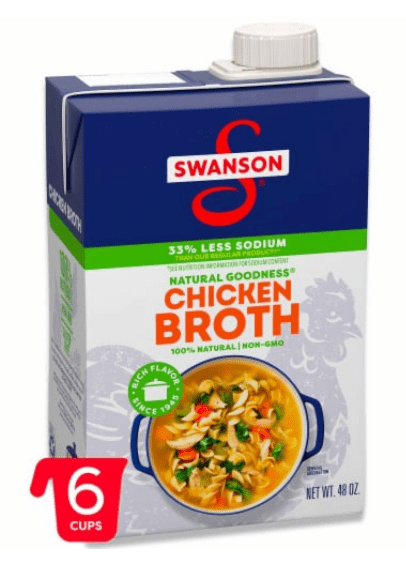
You want to start with the best store-bought stock you can. See the above Tip for some recommendations. Also, start with the one with the lowest sodium level. Not only is this a good piece of advice at any time, but it is especially important when you are trying to add flavor to a store-bought stock, as some of the ingredients you are going to add contain sodium. The last thing you want is to end up with a too-salty stock.

Add a mirepoix

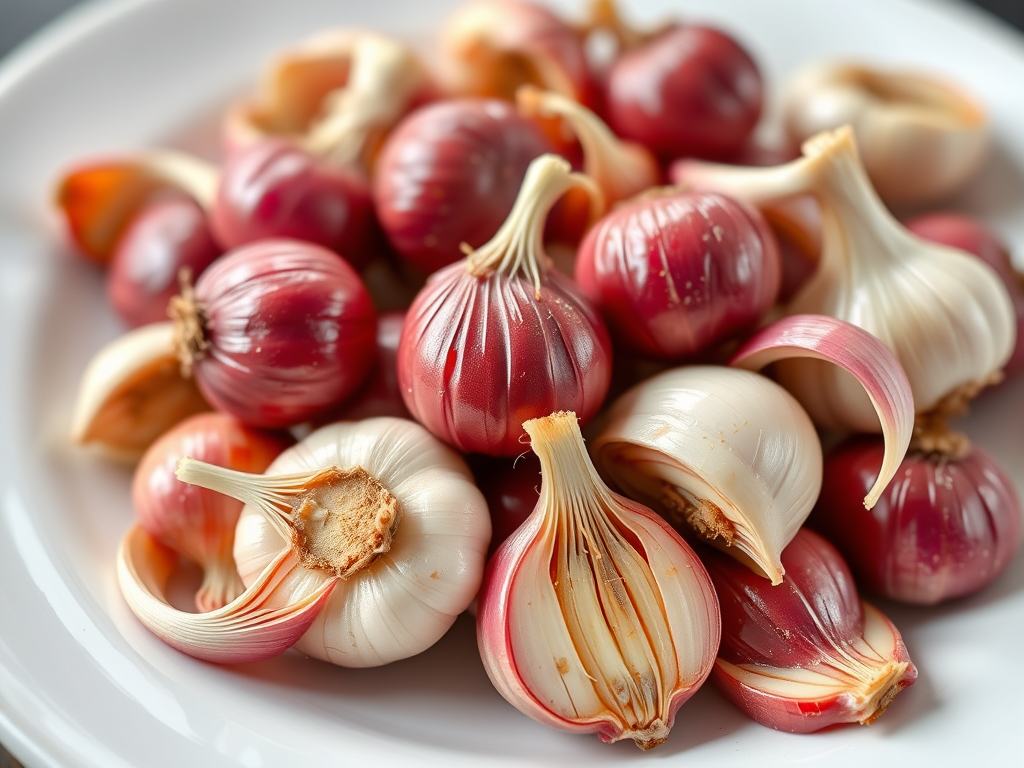
Put your stock in a pan and add diced carrot, celery, onion, and a few peppercorns. If you have the time, sauté your mirepoix until lightly browned before adding the stock. Depending on how you wish to use the stock, you may also consider adding garlic and herbs. Bring to a boil, reduce to a simmer, and cook for about 30 minutes or until you are pleased with the flavor. Strain and use.

Add chicken

For chicken broth, you can add more chicken flavor by actually also adding a chicken breast or any chicken bones you may have in your freezer. Another option is canned chicken. After straining, the chicken can be used for another purpose.

Add gelatin

Mixing a small amount of unflavored gelatin (about 1½ teaspoons per cup of stock) in some of the cold stock and adding it to the simmering pot will increase the body that you get from the bones when making homemade stock. In The Food Lab, J. Kenji Lopez-Alt recommends adding gelatin to his homemade stock to speed up the process and still end up with a flavorful stock with great body.

Add a Parmesan rind

Add three Parmesan rinds for each quart of stock, bring to a simmer, and cook for about 30 minutes. Remove and discard. Other hard cheeses, such as pecorino, will also work.

Add dried mushrooms

Toss umami-rich dried mushrooms into a pot of simmering stock. Recommendations are three to four mushrooms per quart of stock.

Add fermented pastes

Whisk in one tablespoon of miso paste for every quart of stock. Note the sodium content so you do not end up with a too-salty stock.

Add whole spices

Toast in a dry pan two to four whole spices (cardamon pods, allspice berries, cumin seeds, coriander seeds, mustard seeds, fennel seeds, star anise, peppercorns) per quart of stock. Add stock and simmer.

Add tomato paste

Cook one tablespoon per quart of veggie or beef stock in a dry skillet just until fragrant. Add stock and combine.

Add soy sauce

This is a great umami booster that can be added to your stock. Just be cautious of the sodium content. Worcestershire sauce or fish sauce can also be used.

Reduce the stock

One of the simplest tricks is to simmer the stock in a pan to reduce the volume by half to two-thirds. This helps to concentrate the flavors.

Add acidity

Acid will brighten up dishes. Consider apple cider vinegar, citrus juice, or wine.

Add olives

Olives add not only umami, but the brininess can add acidity.

Have you tried any of these hacks to boost the flavor of your store-bought stock? Did they work? Don’t feel guilty about using good quality, low-sodium store-bought stock, especially if you amp up the flavor with the above advice.

Cooking Tips · Ingredients · Techniques

Oats – Not a monolithic ingredient

Image by jorono from Pixabay

Oatmeal is my go-to breakfast. I enjoy a good bowl of thick, hearty oatmeal. Oatmeal is not just a single product, though. This Cooking Tip will explore the different types of oats, their best uses and substitution advice.

The way the oats are processed after picking determines what type results.

Regular oatmeal, aka rolled oats, old-fashioned oats

Photo courtesy of Quaker
  • After the grains are harvested and the husk removed, you are left with oat groats. Further processing to make rolled oats involves removing the outer hull, lightly steaming them, and then putting them through a roller mill (thus the name). The roller mill flattens the pieces into various thicknesses.
  • When rolled oats are cooked, they have a chewy texture.
  • In baking, rolled oats can also give a chewy texture to the baked goods.
  • The whole oats will be visible in the finished product.

Quick cooking oats

Photo courtesy of Bob’s Red Mill
  • These are also rolled oats, but they have been steamed a bit longer and then chopped into smaller pieces. The rollers of the mill will also be adjusted to create a thinner product.
  • The smaller size means they will cook more quickly than regular rolled outs.
  • The flavor will be about the same, although the texture will be much finer.
  • In baking, this means that the oats will not be visible.
  • There is no need to purchase both regular and quick cooking rolled oats. The latter can easily be made by putting the former in a food processor and pulsing into smaller pieces.
Photo courtesy of Bob’s Red Mill

Instant oatmeal

  • Instant oats have been rolled extra thin, resulting in a finer product that may even be powdery.
  • It still has an oatmeal flavor, but very little texture.
  • Because of the processing, it does not lend much texture or structure to a baked item.
  • Many brands are precooked and come in packets meant to add hot water. Many of these also contain significant amounts of added sugar.
Photo courtesy of Quaker

Steel cut, aka Irish oatmeal

  • These start as whole oat groats, which are chopped into large pieces with steel blades, thus the name. They have not been steamed or rolled.
  • Their consistency is much coarser than other types of oatmeal.
  • They require a long cooking time.
  • They should not be substituted for regular oatmeal and are rarely used in baking.
Photo courtesy of Bob’s Red MIll

Scottish oats, aka stone ground

  • As the name implies, Scottish oats have been stone-ground rather than cut with a blade.
  • This creates pieces of varying sizes, and some say a creamier texture.

Baking with oatmeal

Photo courtesy of Pexels
  • Regular and quick cooking are interchangeable in baking with a couple of caveats.
  • Regular oats will show the oat flakes in the final product, whereas quick cooking oats will not be as easily seen.
  • Regular oats will give you a somewhat chewier texture with a more oaty flavor.
  • Instant oats should not be used in baking as they can impart a gummy texture.

Whether you like to sit down with a steamy bowl of oatmeal or bake a hearty oatmeal cookie, with these guidelines, you can be a success.

Cooking Tips · Ingredients · Techniques

Making a Vinaigrette – An important & basic culinary skill

One basic skill all home cooks should possess is how to make your own salad dressings and vinaigrettes. In this Cooking Tip, we will delve into these words, what they mean and how to develop this skill.

Do you use the terms vinaigrette and salad dressings interchangeably? Most of us probably do. As one word expert puts it, “All vinaigrettes are salad dressings, but not all salad dressings are vinaigrettes.” Salad dressing is a general term for sauces that we typically put over salads before eating them. They are usually made from oil, vinegar and flavoring agents such as herbs and spices. They might also include ingredients such as cream, yogurt or mayonnaise. They can be somewhat thin and oil-based or creamy, such as we find in Ranch or Blue Cheese dressings. Vinaigrettes are thinner with the only ingredients being oil, vinegar and seasonings.

Whether you call it a vinaigrette or a salad dressing, it is easy to learn this most important culinary skill. Not only can you use these to dress your salads, but they can also be drizzled over roasted veggies or even used as a marinade.

Ingredients

This is one of those recipes that has very few ingredients. Therefore, you want the best quality ingredients you can get.

The main ingredients are oil, vinegar and seasonings. The mantra that you will hear over and over is that the ratio of oil to vinegar should be 3:1. However, that can vary for many reasons. First is personal taste. I know I prefer a dressing made with a lower oil-to-vinegar ratio. Second, not all acids are the same. Many different vinegars can be used along with citrus or other fruit juices. These all differ in how much acidity they have, and thus, how much bite they impart. Therefore, you might want to vary that oil-to-vinegar ratio to achieve the desired taste and balance. If you have never made your own vinaigrette before, start with the standard ratio, but then branch out to create a flavor you enjoy.

Oil – Most commonly, you will use extra virgin olive oil (EVOO). Good EVOO does have a strong taste. If it isn’t something that appeals to you, try a more neutral-tasting oil such as canola oil, sunflower oil, safflower oil, or a combination. You can also vary things by adding a flavorful oil, such as a nut oil. If you do, only make it a portion of the oil content, or it can be too overpowering. See these cooking tips for discussions on oils.

Acid – Use whatever you like and what works well with your salad. It can be any vinegar, even flavored vinegars. Other acids are citrus juices as well as fruit purees/nectars. I often like to combine a fruit-flavored vinegar with some of the actual fruit. For example, I use a peach vinegar along with pureed peaches. See this Cooking Tip for a discussion of the different types of vinegars.

Emulsifier

As we all know, oil and water do not mix very well. Since acids (vinegar, juices) are basically water, you often need something to encourage them to mix, which is called emulsification. Part of achieving emulsification is the technique of making the vinaigrette, but for a more stable emulsion, we add emulsifying agents. These work by attracting oils on one end and vinegars on the other. This helps to keep the oil and vinegar from separating into different layers for some time. Most will eventually separate, but giving the mixture a good shake or whisk will help re-emulsify them. Some of the most commonly used emulsifying agents are mustard, mustard powder, mayonnaise, and honey. Mustard is the one you will see recommended the most often and should be used in a ratio of one teaspoon of mustard for every tablespoon of vinegar.

Seasonings – This might just be salt and pepper, but could also be minced garlic, minced shallots, spices or herbs. You may also want to add a touch of sweetness in the form of honey, maple syrup, sugar, agave, etc. This helps to offset the acidity of the vinegar.

Technique

No matter your choice of ingredients, the technique is the same. Start by putting the acid in the bowl or jar first. The flavorings that you are going to add will mix much better in the acid than in the oil. Add your emulsifying agent, any desired seasonings and mix well.

Next, you will want to add the oil and emulsify the mixture such that the oil and water form a cohesive mixture. This can be done with vigorous whisking. It can also be done by making the vinaigrette in a glass jar with a tight lid and shaking until it is emulsified. A final method is to use the blender. In testing, it has been shown that the most stable emulsion will be produced by using the blender, and the least stable is with the jar method. One caution is that some experts think that putting EVOO in a blender leads to bitterness.

Recipe instructions will often advise adding the oil slowly, especially at first. The theory is that this allows a stronger bond to form. Once you have formed a good base, the oil can be added more quickly.

Once the vinaigrette is emulsified, taste and adjust to your preference. You can taste it on its own, or you may wish to dip a piece of lettuce into it and taste that way.

After you have mastered making a simple vinaigrette, have fun and experiment. Here are some tips for what produces the characteristic taste of some of the most common vinaigrettes and dressings.

Thousand Island Dressing

  • Ingredients include ketchup, relish, and mayonnaise.
  • It should be creamy, tangy, and slightly sweet,

French Dressing

  • This is classically made with sugar, vinegar, oil, ketchup (or tomato paste), paprika, and other seasonings.
  • It is light orange in color and creamy in texture.

Blue Cheese Dressing

  • The main ingredients are blue cheese, mayonnaise, buttermilk, milk, vinegar, and sour cream.
  • It is creamy and tangy.

Balsamic Vinaigrette

  • One of the simplest vinaigrettes using balsamic vinegar as the acid.
  • It is a thicker vinaigrette with a sweet component.

Ranch Dressing

  • Buttermilk, sour cream, and mayonnaise are the main ingredients. Seasonings include garlic powder, onion powder, and dill.
  • Another creamy dressing with a more savory flavor profile.

Italian Salad Dressing

  • Olive oil, vinegar, garlic, and herbs are combined for this classic dressing.
  • The flavor often has a peppery zing.

Caesar Dressing

  • Ingredients for a classic Caesar salad include Parmesan cheese, croutons, romaine lettuce, and Caesar dressing.
  • The dressing consists of garlic, lemon juice, Worcestershire sauce, Dijon mustard, and olive oil.

What is your favorite vinaigrette or salad dressing? As I noted above, I love a fruity vinaigrette. Whatever you like, making your own at home should be something that is second nature to you.

Cooking Tips · Ingredients · Techniques

The Best Tip for Delicious Food – Taste, Taste, Taste!

Image by Moondance from Pixabay

In my cooking classes, I constantly ask my students to taste the food as they progress through the cooking process, not just at the end. Only through this tasting can you adjust the dish to achieve a delicious result. Many times, my students say, “I don’t know what it is supposed to taste like.” I try to teach them that there is not just one desired flavor for one dish. Instead, it’s about learning how to taste and then adjusting ingredients to achieve a taste that you prefer. There are entire books written on this subject. Let me try to summarize the best advice in this Cooking Tip.

The average cook probably thinks of taste and flavor as interchangeable. They are different, though. We have all learned from school about the different tastes – Sweet, Sour, Bitter, Salty, and Umami. Researchers are exploring other basic tastes, but for now, we will focus on those four.

On the other hand, there are thousands of flavors. Flavor is impacted by smell, taste, somatosensory (temperature, texture, spiciness) and the environment (sight, sound, color). I still recall the best crêpe I ever ate, which was at a street vendor in Paris. Was the crepe tasty? Absolutely. However, part of my enjoyment was certainly the environment of being in Paris and all that entailed. Of these factors, smell is said to make up 80% of the flavor experience.

Salt

Image by Marek from Pixabay

Creating great-tasting food is a balancing act – balancing salt, acid, sweetness, bitterness, fat, and umami. Of these, salt is probably the most important. As Becky Selengut says in How to Taste, “… salt is almost always the problem and almost always the solution.”

Many will argue that we should all reduce the amount of salt we consume. That is true, but most of the excessive salt we consume comes from processed foods and eating out. The amount of salt that we consume from adding it to home-cooked meals is very small. (See this Cooking Tip about the types of salt.) Without salt, your food will taste bland and unexciting. With the proper amount of salt, your dishes will come alive.

Salt is what helps to bring out the flavor of your ingredients. Adding salt should not make that potato soup taste salty, but it should enhance the potato flavor. Salt is also able to tamp down bitterness in food while bringing out sweetness. This is why people salt their grapefruit, and why you should never skip salt in a dessert. Salt is the primary way to balance flavors and create a delicious, harmonious dish.

Acid

Image by Robert Owen-Wahl from Pixabay

Acids, in the form of citrus juice, vinegar, wine, or a combination, can transform a dish from dull and somewhat lifeless to an alive state. Citrus zest is another excellent choice, especially when you don’t want to add liquid or overpower your dish with citrus juice. The more savory your dish is, the more it can benefit from a touch of acid. Not only does the acid enliven a dish, but it can also counteract an excess of salt as well as balance fattiness.

Sweet

Sweetness can be found in many forms, from various types of sugar to honey and maple syrup. Just be aware that some of these sweeteners will do more than just add a sweet note; they will also impart their own flavor. See these Cooking Tips on solid sugars and liquid sugars. There are also tips on specific sweeteners, including Honey, Agave, Palm Sugar, and Maple Syrup.

Sweetness is excellent for balancing an overly acidic dish. Consider how many recipes for tomato sauce (which is acidic) call for just a small amount of sugar. It can also counteract an accidental heavy hand with salt.

Fat

Through some questionable research, fat was labeled as unhealthy back in the 1970s. Since then, we have begun to realize that sugar is a much worse culprit in our diets. Fat not only contributes flavor but also texture, another very important component of a great dish. Some researchers are proposing that fat is another basic taste, along with sweet, salty, bitter, sour, and umami.

Fat can dissolve fat-soluble molecules, acting as a flavor carrier, which allows you to taste them better. It also adds a wonderful mouthfeel. Think of the difference between adding skim milk to a sauce and adding a dash of cream.

Bitter

If you are like me, you have a very strong aversion to bitterness. It does, though, play an important part in this flavor balance we are trying to achieve. Bitter foods are very diverse, including citrus zest, chocolate, coffee, tea, and vegetables in the Brassica family, such as Brussels sprouts, kale, and turnips. There are many more, but these give you an idea of bitter foods.

Bitterness can cut excess fattiness and sweetness in a dish while adding a complexity of its own. Many of us, though, want to temper the bitterness in our dishes. This can be achieved with both salt and sweet, as well as through various cooking methods. For example, roasting or blanching veg can reduce bitterness.

Umami

Umami is described as a savory, meaty flavor often found in items such as mushrooms, cheese, soy sauce, fish sauce, oyster sauce, seaweed and tomato paste.

Adding an umami-rich ingredient can give you that extra flavor boost you are looking for. These ingredients are commonly used to enhance the meaty texture in vegetarian dishes. Just think how often mushrooms are a part of savory vegetarian dishes. These items can also help improve mouthfeel.

Other flavor elements

You might be asking yourself, “What about herbs, spices and chilis?” Yes, those all add flavor, but they should be secondary to that balance I mentioned above – salt, acid, sweet, bitterness, fat, and umami.

How do you put this all into practice? Get into the habit of tasting your food as you cook. This will help you learn how to taste. As you add ingredients and taste again, you will reinforce what those ingredients do for your dish. Some of us have better palates than others, but we can all learn to be better tasters as we practice.

Taste your food and ask yourself, are all of the above elements in balance? If you taste and think it needs something, consider adding salt first, unless you believe the salt level is already good. Add some salt and taste again. What did that do for your dish? If you are still not happy, consider a bit of acid. Taste to see how that changed the dish. Next, go for some sweetness. Be sure to taste after adding any of these ingredients. Not only will you ensure the dish is delicious, but you will also train your palate to pick up the differences as you go along. Above all, keep cooking, keep tasting, keep learning and have fun!