Cooking Tips · Techniques

Cupcake Liners – Does it matter which you choose?

Image by unicorn_owner from Pixabay

I was recently teaching a class on how to cook/bake with alcohol. One of the recipes was for Raspberry Spiked Cupcakes. When I had tested the recipe in my home kitchen, I used regular paper cupcake liners. In the teaching kitchen, there were only foil liners available. The cupcakes were wonderful but did seem to bake a bit differently. Although the reason was probably the oven, I wondered if the type of liners made a difference. I decided to do some research and that is the focus of this Cooking Tip.

The first question to be asked is if you even need cupcake liners. No, you don’t need to use them but there are certainly a lot of advantages to cupcake liners.

  • They add a decorative touch to your cupcakes. One caveat – light colored cupcakes show off the liner best. Dark (such as chocolate) cupcakes tend to bleed through the liner, making it less attractive. You could try using two liners rather than one to end up with a prettier liner.
  • They make for easier cleanup.
  • Cupcakes that have been baked in a liner stay fresher and moister for longer.
  • Liners protect your cupcake batter from being in direct contact with the hot pan, thus there is less risk of burning.
  • They result in more evenly and uniformly shaped cupcakes.

There are different types of cupcake liners with the main three being paper, foil and silicone.

Paper liners

These are the ones that you see most frequently and will cost the least. If you want patterns, you will want to pick paper liners as you can find colors/patterns to fit almost any occasion.

Look for good quality ones as inferior liners are more likely to stick to your cupcake. Also, if you can, choose liners that say they are nonstick. Unfortunately, not all brands will state this.

Foil liners

Foil liners are packed with a paper liner in between to prevent them sticking together. You should remove that paper liner. According to Reynolds, that paper liner is the same as their pastel liners. Therefore, you can set it aside and use it when you want to use paper liners. I did not investigate other companies and so, do not know if the paper liners are the same for other brands.

The foil liners are meant to be baked without a cupcake pan. Rather, just put them on a baking sheet. They might spread a bit, though. So, if you want perfectly shaped and sized cupcakes, you may want to place them in the cupcake pan.

I wondered if the foil affected the baking process but my research showed this was not the case.

Silicone cupcake cups

These are not only reusable but can also stand on their own rather than needing a cupcake pan. Silicone is very nonstick as well as being very heat tolerant. They are also dishwasher safe.

Some feel that cupcakes baked in silicone, though, do not spread or rise as well, resulting in smaller cupcakes.

Some people complain that cupcake liners stick to the cupcakes. Here are some of the probable reasons for this.

  • Insufficient cooling. Allow them to cool in the pan for about 5 minutes but then remove them and finish cooling on a rack.
  • Quality – the cheaper the liners, the more likely they will stick. So, try to buy better quality ones and look for ones that state they are nonstick.
  • The recipe – some cupcakes stick more than others. Those that are higher in sugar, lower in fat and/or very delicate in texture might stick more.
  • Not spraying the liners. Most manufacturers will state that you do not need to spray the liners. However, most cupcake bakers like the added insurance of a spray. Just be sure you only give a quick light spritz as to not make it too greasy.
  • Moisture – one cupcake expert recommends putting a baking pan filled with water on the bottom rack as she says the added moisture helps to prevent the liner sticking to the cupcake.

This same chef has a trick for cupcakes that are being stubborn and not allowing you to get the liners off neatly. She places them upside down on a microwave-safe plate, covers them with a damp paper towel and microwaves them for 15 seconds.

The liners are only one aspect of wonderful cupcakes. See this prior Tip on a discussion of cupcakes versus muffins. And, if you live at altitude, review this Tip on adjustments you may need to make to ensure a successful result.

Happy Baking!

Cooking Tips · Ingredients

Fresh Produce & Food-borne Illnesses

All too often we hear about people getting ill (sometimes seriously) from one food or another. Sometimes it is from surprising sources such as the 2018 recall of Kellogg’s Honey Smack cereal over concern of Salmonella infections. Now, there may be good reasons for not eating this cereal, such as 16 grams of sugar per ¾ cup serving, but I suspect that most of us do not expect to get a food-borne illness from it. How to keep ourselves safe from these illnesses is the subject of this Cooking Tip.

Often, the foods that make people ill are those we should be trying to eat more because of their health benefits such as fresh fruit & veggies. So, what can you do to prevent these illnesses from hitting you or your family?

It is good to be aware of food recalls or concerns. Our news outlets are pretty good about informing us. Another thing you can do is to sign up for food recalls from the USDA. Here is a link to do that. Be aware, though, that you will get notifications almost every day. Not all of them have to do with possible pathogens. Some of them are due to undeclared allergens or other sources of concern. The large majority of the notifications will not affect you at all.

Just as important, though, is to make sure that the fruits/veggies that you buy are clean before consuming them. The USDA recommends washing your produce under cold running tap water to remove any dirt & reduce bacteria. If there is a firm surface, such as on apples or potatoes, the surface can be scrubbed with a brush. Do not use detergent or soap as these are not approved for use on foods. You could ingest residues from soap or detergent absorbed on the produce. Note that the recommendation is just for plain water. You don’t need any special type of produce spray. If you really want to do more than just plain water, make a mixture of 1 part distilled white vinegar to 3 parts water. This is really not necessary, though.

This same advice applies to fruits/veggies that you are going to peel. You do not want to transfer pathogens from the exterior to the interior of the item with your peeler. So, wash before you peel.

There is a bit of debate over washing pre-washed, bagged greens. Although some recommend washing these items, many others say you are more likely to introduce contamination from your kitchen by doing so. Also, any pathogens left on pre-washed greens are probably so tightly adhered that washing them again in your kitchen is not going to do anything. This is the opinion of the USDA.

It is usually best to wait to wash produce right before consuming it. This is especially true of fragile items such as berries. Following this, proper storage is also important.

Finally, should you be buying organic? As we have seen with some recent recalls, organic produce is not immune from contamination. You may have other reasons for wanting to buy/consume organic produce, but it has been shown that modern methods of cleaning conventional produce result in a product just as clean as organic. For more information on organic produce, see this Tip.

The risk of not eating fresh produce and therefore lacking very important and much needed nutrients is higher than the risk of food-borne illness. Using common sense and the above guidelines should help encourage you to eat fresh and not be scared off by stories of contamination.

Cooking Tips · Techniques

Kitchen sponges – a help or a hazard?

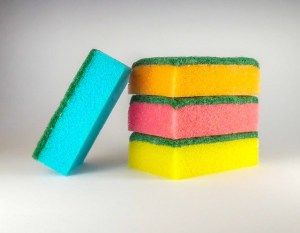
Image by Tomek from Pixabay

Do you use sponges in your kitchen? I certainly do. They are inexpensive and are effective. Most of us probably also know that they can harbor germs. They are perfect incubators for microbes, some of which could make us sick. What we can do about this is the subject of this Cooking Tip.

The National Sanitation Foundation (NSF) has been in existence since 1944, and they say they are “dedicated to improving human and planet health.” As part of this, they develop public health standards and they test, audit and certify products and services. A 2011 NSF study found 77% of sponges and dish cloths in US homes contained coliform bacteria, 86% had yeast and mold, and 18% were contaminated with Staph bacteria.

Experts tell us to microwave the sponge, boil it or send it through a dishwasher cycle. Other recommendations include soaking in a vinegar or bleach solution. A 2017 study in Scientific Reports should cause us all to re-think that.

This study said that “sanitation by boiling or microwave treatment has been shown to significantly reduce the bacterial load of kitchen sponges and can therefore be regarded as a reasonable hygiene measure.” However, the study also demonstrated that regularly sanitized sponges did not contain less bacteria than uncleaned ones. Moreover, the above cleaning methods even increased the presence of two bacteria. Their recommendation is to replace your kitchen sponges on a weekly basis and, although saying more studies need to be done, they say “prolonged application of sanitation measures of kitchen sponges is not advisable.”

Other suggestions for keeping your kitchen clean include using different sponges for dishes and countertops and throwing away any smelly sponges. It is also advised to allow your sponges to dry out between uses as when wet, the sponge is a perfect environment for bacterial growth. Cooks Illustrated did testing on sponges, half of which had the water squeezed out before putting in an open plastic bowl and half that were left full of water. When a lab analyzed the sponges for bacteria, the wrung-out ones had 20 CFU/ml (colony forming units per milliliter) whereas the wet ones measured 500,000 CFU/ml.

Other recommendations are to use cleaning items that dry quickly such as dish cloths or towels. However, those should be thrown into the laundry at the end of every day. It is interesting that the FDA does not allow the use of sponges in restaurants.

Although the USDA has in the past recommended the above cleaning methods, a 2023 statement on their website says “Kitchen sponges are potential sources of bacteria and are difficult to clean. Microwaving or boiling kitchen sponges may reduce some of the bacterial load; however, these methods alone are not adequate to ensure that your sponge will reduce potential cross-contamination of hands, kitchen counters, and food. If you use sponges, buy new ones frequently.”

I must admit that I do not change out my sponges nearly enough. I need to do better. What about you? Isn’t keeping your kitchen clean and you and your family healthy worth it? I think so.

Cooking Tips · Ingredients

GMO Foods – the contrarian opinion

In the last Cooking Tip, I discussed what GMO Foods are as well as the health and safety claims made about them. There are critics, though, and in this Cooking Tip, I will discuss those. I strongly encourage you to read both Tips so you can make your own decision about whether or not to eat these foods.

One of the main organizations concerned with GMO foods in our diets is the Non-GMO Project. They are a 501(c)(3) nonprofit organization that says it is “committed to building and preserving the non-GMO food supply for all.” Their mission is to offer a “rigorous product verification and trustworthy education that empowers people to care for themselves, the planet, and future generations.”

Their concern is that this biotechnology creates combinations of plant, animal, bacteria and virus genes that do not occur in nature or through traditional crossbreeding methods. They feel that we do not have enough “credible, independent and long term studies” to back up the claims of the FDA and others that GMO foods are safe and healthy.

They point to a statement by the Center for Food Safety entitled, Are GMOs safe? No consensus in the science, scientists say in peer-reviewed statement. They also encourage consumers to read the 2014 publication GMO Myths and Truths. There is also an updated and condensed version in book form.

They feel that the governmental Food Disclosure Standard discussed in my last Tip is lacking because of the exemptions to the labeling standard. Other concerns are the negative consequences on farmers and the environment. You can read more about these here.

In answer to the question of whether GMOs are safe, the Non-GMO Project states, “In the absence of credible, independent, long-term feeding studies, the safety of GMOs is unknown.”

The Project has what they term the “High Risk List,” a list of crops and inputs (defined as “any material or substance that is used in the production of a wholesale or retail consumer good that they feel have a high chance of being genetically modified.”) The following list are those considered high risk as well as being able to be tested for the presence of GMOs.

  • Alfalfa
  • Canola
  • Corn (except popcorn)
  • Cotton
  • Papaya
  • Soy
  • Sugar beet
  • Zucchini and yellow summer squash

They have other high-risk crops that they consider “non-testable” as they are not necessarily detectable by current tests.

  • Canola
  • Potato
  • Soy
  • Apple
  • Eggplant
  • Pineapple

Food derived from animals are also considered high-risk due to the prevalence of GMOs in animal feed. These include the following.

  • Meat
  • Dairy
  • Eggs
  • Wool
  • Hides
  • Honey
  • Seafood
  • Livestock and poultry feed
  • Bee forage and feed
  • Fish and other aquatic animal feed
  • Any other materials or substances originating from animals

The Project raises the question of what they say is a double standard when looking at studies that claim no health or safety concerns from eating GMO foods and those that raise questions. The former studies are usually industry-sponsored while the latter are considered independent. Researchers raising questions are considered to be “GMO deniers” and are met with a “kill the messenger” response.

They have their own non-GMO symbol, which is given to products that go through their verification process. They also have a section on their website where you can search for verified products.

Although the Non-GMO Project doesn’t outline any specific health risk concerns, these are the ones to which most critics point.

  • Toxicity – the concern is that genetically engineered foods are unstable, with a theoretical possibility of creating toxins.
  • Allergic reactions – it is felt that this process can transfer allergens from foods that people know they are allergic to other foods that they think are safe. This was actually found when a gene from a Brazil nut was engineered into soybeans, causing an allergic reaction in those with a nut allergy. This product was abandoned and no further reports of allergic reactions have been made. Also noted is the possibility of creating proteins with the possibility of new allergic responses.
  • Antibiotic resistance – critics warn that this bioengineering could create disease-causing bacteria that might be resistant to antibiotics. Some GMOs are engineered for antibiotic resistance and in theory, those genes could be transferred to humans who might develop the same resistance.
  • Immunosuppression – this condition was supposedly found in an animal study looking at the effects on rats of the consumption of genetically engineered potatoes.
  • Cancer – concern is about a genetically engineered growth hormone that is meant to increase milk production in dairy cows. This hormone had been banned by some regulatory bodies in Canada and Europe due to a possible link to some cancers.
  • Loss of nutrition – this is a hypothetical concern about a negative impact on nutrient levels in bioengineered foods.

As I said at the beginning, I encourage you to read both this Tip and the prior Tip that outlines the opinion that GMO foods are safe and healthy. Only by educating yourself will you be able to decide what is best for you and your family. I will admit that if you decide to go GMO-free, it may be more difficult than you think given the increasing use of this technology and its presence in our food supply.

Cooking Tips · Ingredients

GMO Foods – what the proponents have to say.

Do you have an opinion over the debate of GMO foods in our diets? Are those opinions based on research or media reports? In the next two Cooking Tips, I want to explore this subject so we can all make an informed decision. This Tip will explain what GMO means, why the process is done and the viewpoint that GMOs foods are safe and healthy to eat. In the next Tip, I will outline some of concerns about this trend.

GMO stands for “Genetically Modified Organism” and is defined by the FDA as “a plant, animal or microorganism that has had its genetic material (DNA) changed using technology that generally involves the specific modification of DNA, including the transfer of specific DNA from one organism to another.” This is also referred to as “genetic engineering.”

Another term you will see more and more is “bioengineered.” This is because in December, 2018, the “National Bioengineered Food Disclosure Standard” was published. This was pursuant to a 2016 law that “directed [the] USDA to establish this national mandatory standard for disclosing foods that are or may be bioengineered.”

The standard defines bioengineered foods as “those that contain detectable genetic material that has been modified through certain lab techniques and cannot be created through conventional breeding or found in nature.” Although implementation of this standard began in 2020, it wasn’t until January 1, 2022 that it became mandatory to have these items disclosed by food manufacturers, importers, and certain retailers. Exemptions include “food produced by very small food manufacturers, and food served in restaurants, food trucks, trains, airplanes, delicatessens and in similar establishments.” These “will not be required to bear bioengineered food labels, even if the product has bioengineered ingredients.”

The above standard requires this label to be on the bioengineered food.

If, instead the label says “Derived from Bioengineering,” the standard clarifies that these are not bioengineered foods. They state “such labeled foods do not contain detectable modified genetic material.

If a food product carries the “USDA Certified Organic” label, you can be sure there is nothing in in it that has been bioengineered as GMOs are prohibited in organic products.

The reasoning behind creating GMO crops is said to be to higher crop yields, less crop loss, longer storage life, better appearance and/or better nutrition.

GMO foods have been available to consumers since the 1990s. GMO crops grown in the US include the following although there are also non-GMO versions of these crops.

  • Alfalfa
  • Apples – Artic Golden Delicious, Artic Granny Smith and Artic Fuji
  • Canola – canola oil is sold as an oil but also is found in many packaged foods.
  • Corn – most of the corn grown in the US is GMO, about 92%.
  • Cotton – besides being an important component of the textile industry, it is also used to make cottonseed oil, which is used in some packaged foods and for frying in some restaurants. Approximately 96% is GMO.
  • Papaya
  • Pink Pineapple
  • Potatoes – only a few varieties are GMO.
  • Soybeans – most of the soy (~94%) grown in the US is GMO.
  • Summer Squash – one of the first GMO crops on the market but is not widely grown.
  • Sugar Beets – more than half of the granulated sugar on our shelves is made from GMO sugar beets.

The majority of the GMO crops are meant for animal food but they can also end up in foods such as cereals, chips and vegetable oils. Although most fresh fruit and veggies are non-GMO, you may run across some GMO varieties as seen in the above list. The USDA keeps a list of bioengineered foods which can be accessed here.

According to the FDA, GMO foods are just as safe and healthy as non-GMO foods. They also say that they can be even healthier. An example they give is GMO soybeans used to make oil that replaces oils that contain trans-fats.

More than 95% of animals used for meat and dairy in the US eat GMO crops. The FDA states that the nutritional value, safety and quality of these products are equal to those from animals that only eat non-GMO foods. They explain that the engineered DNA that is in the food does not transfer into the DNA of the animal eating it.

They also claim that in some cases, GMO plants contain “plant-incorporated protectants” that make them more disease resistant and thus, reduce the need for many pesticides.

The FDA points to a 2016 Consensus Study Report entitled Genetically Engineered Crops: Experiences and Prospects and published by the National Academies of Science, Engineering and Medicine to back up the following claims.

  • GMOs are safe to eat.
  • GMO foods are no more likely to cause allergic reactions than non-GMO foods.
  • GMO foods are not related to celiac disease.
  • There is no link between GMO foods and cancer.

Despite assurances by the FDA and industry experts, a 2016 publication by Ohio State University found that “There is a significant gap in the opinions of scientists compared to the general public about the safety of consuming GM foods: 37% of consumers feel that GM foods are safe, while 88% of scientists say that GM foods are safe.” Why is this? I think it is partially that consumers do not really understand genetically modified foods. It could also be a general mistrust in new technology as well as not trusting the studies. Stay tuned for the next Tip for more explanation of why this might be and what contrarian opinions say.

Cooking Tips · Techniques

How much water do you need to cook pasta?

Image by Jan Vašek from Pixabay

How do you cook dried pasta? We are all taught that you need to bring a large pot of water to a boil, add salt until it tastes like the sea, add the pasta, stir and cook until it is done. There are some who think this technique is not only a waste of water but a waste of time. That is the subject of this Cooking Tip.

One of the first to discuss the method of cooking water in less water was Harold McGee. In his 2004 book On Food and Cooking, he recommends the standard method. However, in 2009, he began to question this and started experimenting with using less water. He found it acceptable as long as you stirred the pasta as the water was coming up to a boil to prevent sticking. He also had two Italian chefs try it.

  • Lidia Bastianich – She thought the pasta cooked in less water lacked the “gradation of texture” that she liked. She also felt the pasta lacked in the nutty flavor that she expects from a semolina pasta.
  • Marcella Hazen – Her only comment was that it took a significant amount of stirring to prevent sticking and thought it was not worth the effort.

I first read about this alternate method in a book published in 2015 – The Food Lab by J. Kenji López-Alt. He explained that the recommendation for cooking pasta in large amounts of boiling water comes from those that think it prevents sticking and clumping, it prevents the pasta from becoming mushy and it helps the pasta cook evenly. So, in his typical manner, he set out to test this directive.

In his testing, he found the textual difference argument by Lidia was not supported by his results. He did agree that stirring was necessary for the first minute or two. However, he thought this was important no matter which method you used.

Another trial he did was to bring a small pot of water to a boil, added the pasta, brought it back to a simmer, stirred, put a lid on and turned off the heat. He waited the usual 10-12 minutes and found the pasta was perfectly done.

In April of 2023, America’s Test Kitchen put this small amount of water method to the test in their kitchen but also added using cold water from the start.

They put 1 pound of dried pasta in 1 quart of cold water, brought it to a boil and stirred occasionally. They then reduced the heat to maintain a simmer. At this point, stirring was no longer needed as the agitation of the water kept the pasta from sticking. After cooking to the desired doneness, the testers found it cooked up just as well as the same pasta cooked in 4 quarts of boiling water.

They found a time savings of about 45% as the cold method took only 16-17.75 minutes depending on the pasta shape whereas the conventional method took 23.5 – 29 minutes. They also touted the water savings as the conventional method took 75% more water.

If cooking strands of pasta, it would be best to use a 12-inch skillet so all the strands can get covered in the small amount of water. Otherwise, a saucepan is sufficient.

We are also always told to save some of the pasta water to use in finishing our pasta sauce. This is because the starch from the pasta dissolves in the water, which not only thickens the sauce, but also aids in emulsification. This helps to sauce to coat the pasta and gives the sauce that silky texture.

If using the method with a small amount of water, the starch will be concentrated in less water. Therefore, you will use less of it to complete your sauce. If you salt your water before cooking the pasta, use less salt as the pasta water may make your dish too salty. One caveat, this method is not for fresh pasta as it can get too mushy.

Have you ever tried this new method? Do you like it? I have to admit that habit just makes me fill a pan with water and bring it to a boil for cooking my pasta. Next time, I will have to step back and break that habit.

Cooking Tips · Techniques

Make It or Buy It?

I have noticed lists all over the place telling you which items you should make and not buy. Those lists are the opinions of the writers and they vary greatly. I decided to see if there were any similarities in those lists and that is the subject of this Cooking Tip.

For me, there are certain items that I never buy including tomato sauce products (pasta sauce, pizza sauce, etc.), pesto, tortillas, most spice mixes and premade desserts. Some of those made it onto the lists that I had seen but not all.

Here are the items that are most commonly on a “Make It – Don’t Buy It” list. The reasons for these recommendations could be the taste, the nutritional value and/or the cost.

Image by hadevora from Pixabay

Bread – along with the next item, this is the food item that most writers recommend making. Making bread is not difficult and it is certainly cheaper than buying store-bought bread. Most decent store-bought bread is a minimum of $3.50 and can go even higher for artisan loafs. You can certainly make it for a fraction of that. Your homemade bread will also lack the preservatives and other additives that are in store-bought bread. However, you do need time to make homemade bread. I will also include in this category items such as croutons and bread crumbs. They are so easy to make and are a great use for bread that is going stale.

Salad Dressings – Vinaigrettes and other salad dressings are very simple to make and you can make flavors that are difficult to find in the store. Once again, it can also be less expensive depending on the cost of your ingredients. It can be as easy as just drizzling vinegar and oil on your salad or something a bit more involved. This is an item where I admit that I have both in my refrigerator.

Stock – this was second only to bread and salad dressings found on “make, don’t buy” lists. However, making your own stock takes time and ingredients. For example, you need some sort of meat bones for chicken/beef broth, shrimp shells or fish bones for seafood stock. If you have the discipline and space to save those items rather than throw them away, making stock is easy but does take time. You also need to portion it out and freeze it when you are done, which takes freezer space that some just don’t have. I try to make home-made stock when I can but I always have good quality store-bought stock in my pantry as it is a frequently used ingredient for me.

Dips such as hummus, guacamole, salsa and pico de gallo – these are items that you probably don’t have in your kitchen all the time. Rather, you want them for certain occasions or dishes. Because of that, you may or may not have the ingredients on hand when you want them. If you do, you can easily throw them together rather than running out and buying a pre-made version. The cost may be a toss-up.

Pesto – as I mentioned, I never buy this. I tend to make different versions when I have the time and ingredients. I freeze it in ice cube trays and transfer to freezer bags or containers. That way, I always have pesto available and I love having versions made with different herbs and/or cheese.

Nut butters – this is not an item that we consume or use much at all. So, I rarely have them in my pantry in either store-bought or home-made versions. If these are a staple for you, you might want to consider making them especially for those that are very expensive in the stores such as almond butter & cashew butter. You can control what goes into them and also personalize the flavors.

Pancake mixes – making pancakes and waffles is so easy with ingredients that you will almost surely have at home that there is really very little reason to buy pre-made mixes.

Tomato products – I never buy pasta, pizza or other tomato products. It is so simple to throw together a marinara or heartier sauce that will be less expensive and so easy to personalize to your tastes.

Granola – if you have never made your own, give it a try. Just make the amount you want with the ingredients you want. It will save you money and taste great.

Spice mixes – except for very commonly used mixes (Italian seasoning) or those that take a myriad of spices that I don’t have on hand (curry powder, chili blends), I never buy spice mixes. If you have the individual spices on hand, you can use those to make just the amount you want and not have left-over mix that might lose its flavor before you use it again. A perfect example is Pumpkin Pie spice.

There are many other items that are on some lists but the above are the most commonly mentioned. Do you agree with them? What do you never buy? Your list will probably be different than my list or other’s lists. It will depend on your priorities, your time and your desire.

Cooking Tips · Ingredients

Honey & its many flavors

Image by Leopictures from Pixabay

I never knew different honeys could taste so unique until about 10 years ago. Prior to that, I had only tasted a generic supermarket honey. At a roadside stand, I had an opportunity to taste over 20 different honeys and each had a very different flavor. When my husband began beekeeping, it was so interesting to taste the honey from year to year and how they differed. Why was this? Today you will also see unusual honeys such as “hot honey”. What is that? Those are the topics that I will discuss in this Cooking Tip. I have written a prior Tip on how to cook with honey and so will not discuss that in this Tip.

Most store-bought honeys are purposely blended to taste the same so the customer knows what to expect each and every time they buy it. Although sweet, it will not have the flavor nuances of natural honey. The latter can be so complex and varied that honey tasters use a Honey Tasting Wheel to help define the flavors. Here is an example of one.

Image by Jürgen from Pixabay

There are really two ways that honey is flavored – natural and infused. In its natural state, honey’s flavor is totally dependent on the flowers on which the bees feast. Bees will forage up to 2-3 miles from their hive. What is in flower in that area is what will influence the flavor and color of the honey. My husband purposely plants abundant wildflowers that are native to Colorado. In season, you can see and hear the bees as they visit these flowers, eat the nectar and gather the pollen. He, therefore, labels his honey as “wildflower” honey. Even though the bees traveled outside of our property and will have visited other flowers, if it is labeled wildflower, the beekeeper believes that the honey was substantially produced from wildflowers.

Common varietals of natural honey include:

  • Acacia
  • Alfalfa
  • Clover
  • Orange Blossom
  • Wildflower

Other varietals include many more than the following but here are a few,

  • Avocado
  • Blueberry
  • Buckwheat
  • Chestnut
  • Eucalyptus
  • Fireweed
  • Sage
  • Tupelo

Infused honey is a product where additional flavors have been added to the honey by allowing the particular ingredient to sit in the honey, a process called infusion.

Here is a list of just some of the ingredients used for infusing flavor into honey.

  • Chili peppers
  • Citrus
  • Dried fruit
  • Elderflower
  • Herbs
  • Honeysuckle
  • Lavender
  • Rose
  • Spices – ginger, cinnamon, cardamon, cloves, etc.

Some people will heat the honey, which speeds up the infusion process. Heat is helpful when trying to extract flavors from dense items such as bark and roots. However, most experts say the heat can destroy some of the honey’s beneficial components. If not using heat, the process can take longer, up to a week or two or more but you do preserve all the healthy compounds.

Image by Hans from Pixabay

At times, the name of the honey can be confusing. For example, lavender honey might be made naturally because the bees feast on lavender blooms or it might be made by infusing the honey with lavender. If the label says “infused” or “lavender flavored”, you will know it is the latter. If it just says “lavender honey”, you may not know for sure unless you are buying the honey from someone you can ask.

The FDA has published a guidance document that says “If a food consists of honey and a flavor ingredient, such as natural raspberry flavor”, the name should “accurately describe the food with its characterizing flavor, such as “raspberry-flavored honey”. Also, “the labeling must include the common or usual name of each ingredient …. For a food consisting of honey and natural raspberry flavor, the ingredient statement would show “honey” and “natural flavor,” in descending order of predominance.” You would hope that would be true for honeys you see on shelves, but it is not guaranteed. That does not mean that an infused honey is necessarily bad. It is just that you want to know what you are purchasing.

Do you like honey? Have you tried any of the myriad of different varietals? If not, I encourage you to seek out a farmer’s market, a roadside stand, a local beekeeper or a store that specializes in honey.

Cooking Tips · Ingredients

Fennel – an herb or a vegetable?

When you think of Fennel, do you think of the white bulb you can buy in the produce section or do you think of the little seeds that some of us have in our pantries? They are both from the same plant but have different uses. That is the subject of this Cooking Tip.

Native to the Mediterranean region, the fennel plant has a white bulb at the base and feathery fronds at the top. It produces seeds that are dried into a spice. Even the plant’s pollen can be gathered and used as a finishing spice.

Image by Matthias Böckel from Pixabay

Even though all of this is from the same plant, there are different types of fennel. Florence fennel is the one you will see in the store with its large bulb and sold as a vegetable. There is another variety, sweet or common fennel, that is a perennial plant grown for its fronds and seeds. It does not have a bulb. The above-mentioned pollen is normally harvested from the wild variety of this type of fennel. It grows many places but is especially abundant in California.

All parts of the fennel plant are edible. The white bulb of the Florence variety can be eaten raw or cooked. It is often used in ways similar to onions or celery. It can be very fibrous so it is best to slice thinly cross-wise or finely chop. The fronds can be used as a fresh herb and sprinkled on your dish.

The taste is licorice- or anise-like. Because of this, it is often confused with the anise plant. However, these are two different plants. They may look similar but anise does not have a bulb. Another difference is that the only edible part of the anise plant is its seeds, while the entire fennel plant is edible. In flavor, fennel has a less intense licorice flavor.

Grocery stores may mistakenly label fennel bulbs as anise bulbs. I have even seen it labeled as “Anise Fennel”. However, if it is a large white bulb, it is fennel, not anise.

When shopping for fennel, choose bulbs that are firm and white with no bruising or browning. The bulbs should be large in proportion to the stems and fronds that are attached. If put into a paper or plastic bag and stored in the crisper drawer, it should keep for up to two weeks. If you have cut the fennel, wrap it in plastic before putting in the refrigerator to minimize browning.

Image by flomo001 from Pixabay

The seeds of the fennel plant can be bought in most grocery stores. It is a warm spice that can be used in both sweet & savory dishes. It is especially popular in Italian, Indian and Middle Eastern cooking. One place you will commonly find it is in Italian sausage. It is also often used in spice blends and dry rubs. Many infuse it in hot water as a type of tea. It can be used whole or ground. If whole, crack the seeds slightly before using to release the oils. As with the fresh fennel, it has a sweet and subtle licorice-like taste.

Fennel pollen is very expensive, just below saffron and vanilla. As mentioned earlier, it is harvested from wild-growing fennel. Its appearance is of golden-colored granules. Its flavor is said to be complex. One source describes its flavor as “licorice and citrus and a honeyed, marshmallow-like sweetness”. Due to the flavor profile and the cost, it is best to use as a finishing spice as a garnish over veggies, meat, pasta or added to a dip for bread.

Do you use fennel? I use it occasionally. One of my favorite uses is in this Peach & Fennel Slaw from Food & Wine, perfect for the upcoming summer months. I hope you enjoy it.

Cooking Tips · Techniques

French Terms in our Kitchens

Image by Gerd Altmann from Pixabay

In the culinary world, there are many French words that are commonly used. As I discovered recently when talking to a friend, many home cooks are not familiar with these terms. That is the subject of this Cooking Tip. There are too many terms to list them all in this Tip. Rather, I will focus on those that the home cook will most likely run across. Whether you are trying to understand an item on a menu or trying to get an idea about a recipe, an explanation of these terms should prove helpful.

Beurre

This is the French word for Butter and you will see many variations of this mainly dealing with sauces.

  • Beurre Blanc – This translates to “white butter”. It is a light sauce made with a reduction of white wine, vinegar and shallots and finished by whisking in butter to create a smooth and emulsified sauce.
  • Beurre Rouge – As expected, the translation of this is “red butter”. It is made similarly to Beurre Blanc but made with red wine instead of white.
  • Beurre Manie – This roughly translates to “butter by hand”. It is an uncooked roux and is made by kneading softened butter and flour together until combined. It can then be whisked into hot sauces or soups as a thickening agent.
  • Beurre Noisette – browned butter. Butter is cooked gently until the milk solids settle out and turn brown and nutty in flavor. Can be used as a sauce on its own or as an ingredient.

Other sauces

  • Béchamel sauce – This is a classic thickened white sauce made with a roux and milk. It can be used as a pasta sauce on its own or as a component of souffles and traditional lasagna.
  • Mornay sauce – If you take Béchamel sauce and add cheese, you have Mornay sauce. The classic cheese used is Swiss or Gruyère but you can vary it based on your tastes. If you have ever made mac & cheese from scratch, you have made a Mornay sauce whether or not you knew that was the name.
  • Velouté – If you make a white sauce with roux and a light stock instead of milk, you have made Velouté. Think Thanksgiving gravy. Velouté may also be applied to a type of pureed soup.
  • Hollandaise – This is a rich sauce made with egg yolks and butter and classically served as part of Eggs Benedict.
  • Béarnaise – If you add tarragon to your hollandaise sauce, you have béarnaise.
  • Coulis – a fruit or vegetable puree and served as a light sauce or garnish.
  • Sabayon – This sauce is traditionally made with egg yolks, sugar and wine, normally Marsala. In Italian, it is known as zabaglione,

Techniques

  • Papillote – a term used to describe food that is cooked and served inside a packet such as parchment or foil.
  • Bain-marie – a method of cooking over a hot water bath. It provides for gentle and even heat and is used in melting chocolate and in cooking items such as custard and crème brulée.
  • Confit – a cooking technique where food is cooked covered in fat at a low temperature. It is usually defined as a method of cooking duck or pork in its own fat. It is also stored in the same fat.
  • Deglaze (deglacer) – a simple technique that involves adding a liquid to a pan that has been used to roast or sauté meat and scraping up the fond that has stuck to the bottom of the pan. It is the first step to making a delicious pan sauce.

French Dishes – here are just a few classic French dishes that you are likely to see on a restaurant menu.

  • Boeuf Bourguignon – a slow-cooked French stew made with beef, red wine, pearl onions, mushrooms and bacon.
  • Bouillabaisse – a traditional Provençal fish soup originating in the port city of Marseille.
  • Cassoulet – another French stew but classically made with sausage, confit (typically duck), pork and white beans.
  • Coq au Vin – translated as “rooster with wine”, this is a French chicken stew made by braising chicken with wine, bacon, mushrooms and red wine.
  • Croque Monsieur – an elevated ham/cheese sandwich layered with Bechamel sauce. If you put an egg on top, it is called a Croque Madame.
  • Gougeres – French cheese puffs
  • Profiteroles – cream puffs
  • Ratatouille – a traditional vegetable stew made with summer vegetables such as tomatoes, zucchini, peppers and eggplant.
  • Tarte Flambée – also known as Flammekueche or Flammkuchen, it is an Alsatian-style pizza. With a thin crust and spread with cream, onions and smoked pork bits, it is delicious.

Miscellaneous Terms

  • Bouquet Garni – a mixture of fresh herbs (normally thyme, parsley & bay leaf) tied together with string or wrapped inside a leek leaf and used to add flavor to stews and soups. The herbs may also be enclosed inside cheesecloth or a spice bag. In that case, it would be known as sachet d’épices (spice bag or sachet).
  • Aioli – this is usually described as a garlic flavored mayonnaise and served with vegetables and fish.
  • Roux – a mixture of fat and starch (usually butter and flour) cooked to desired color and then used to thicken sauces and, at times, add flavor. This is the basis for many sauces.
  • Mirepoix – used as the base for soups, stews and sauces, it is composed of chopped vegetables. The typical composition is onions, carrots and celery. Variations on this are discussed in this Tip.

I hope this brief foray into how we often see the French language creep into our kitchens will save you time as you look at recipes or restaurant menus.