Rice flour is very well known to those who cook/bake gluten-free. As it does not have to be limited to that use, we all should know about it. That is the subject of this Cooking Tip.
Rice flour is nothing more than finely ground rice. Just as there are many different types of wheat flour, there are a few different rice flours depending on which variety of rice is used. See this Cooking Tip for a discussion of just some of the varieties of rice.
In very broad terms, there are two categories of rice flour – regular rice flour and glutinous rice flour. The category of regular rice flour can be further broken down into white rice flour and brown rice flour. White and brown rice flour can often be used interchangeably, but white rice flour is more common.
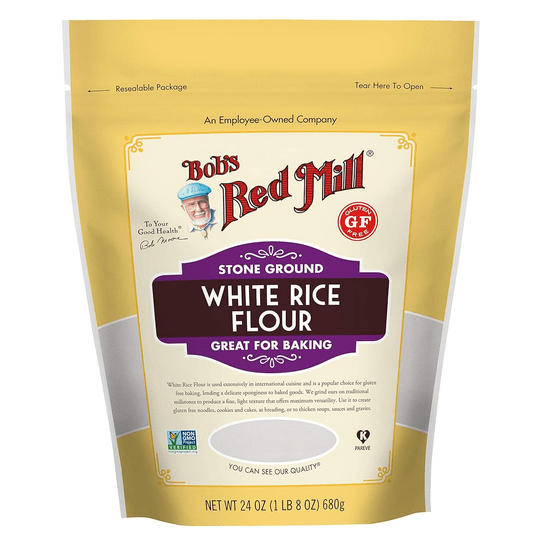
Regular rice flour is made from medium- or long-grain rice.
White rice flour
- It is inexpensive.
- It has a neutral flavor.
- It has a smooth texture.
- It has a long shelf life.
- In baking, it is best used in a combination of 30-60% with other flours.
- It can give baked goods an unattractive white color if used alone.
- It is often used in Asian cooking to make rice cakes, noodles, pancakes, rice crepes, pastries, etc.
Brown rice flour
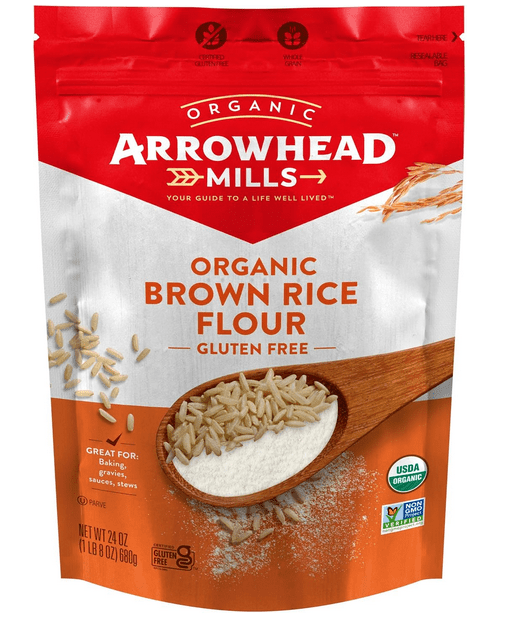
- It has a mild flavor with a bit of nuttiness, just as with brown rice.
- Its tan color gives baked goods a slightly browner look.
- As opposed to white rice flour, it yields crispier cookies.
- It has a shorter shelf life due to the higher fat content. Therefore, it is best stored in the freezer.
- Just as with white rice flour, the best results are obtained when in a flour combination of 30-60%.
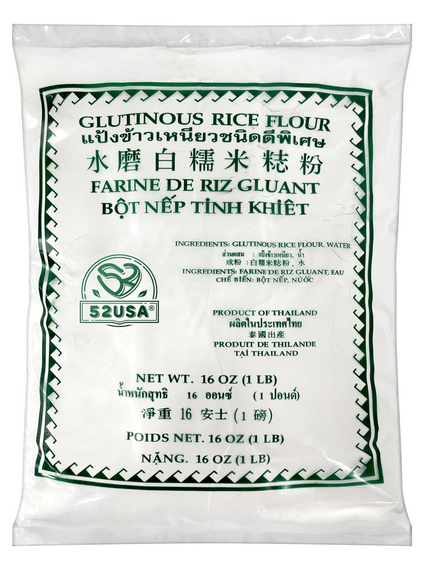
Glutinous rice flour (aka sticky or sweet rice)
- The name “Glutinous” is often misleading as it is naturally gluten-free. The name means “glue-like” and refers to the consistency.
- It is made from short-grain rice that is used to make sticky rice.
- It is cooked, dried, and then milled into flour.
- It retains moisture better than regular white rice flour and, therefore, helps with freshness.
- It combines more readily with fat than other rice flour.
- Because of the type of starch prevalent in glutinous rice, it has a natural elasticity. This makes it ideal for rice noodles, but it is also used in Asian desserts and is an excellent thickener for sauces, soups and stews. It is also used to make boba pearls and mochi.
- It can be used in flour combinations up to 40% for other uses.
Another distinction is between American supermarket rice flour and Asian rice flour. The latter undergoes a different type of processing and will react differently in recipes. If your recipe calls for Asian-style rice flour, it is worth it to seek out the particular one specified, even if it means having to visit a specialty market.
No matter which rice flour you use, be aware that they can easily separate when mixed in water. When using rice flour in batters (such as a crepe batter), stir well to recombine before using.
Storage
- It is best to store rice flour in air-tight containers to prevent spoiling.
- To prolong the life of the rice flour, store in the refrigerator or freezer. As with other whole grains, this is especially true for brown rice flour. It may not be necessary for white rice flour, but is still a good practice if you have the room to do so.
Although rice flour has gained popularity due to its gluten-free status, it is an ingredient that we can all use even if we do not cook/bake gluten free.

 Culinary Journeys, LLC