Cooking Tips · Equipment · Techniques

The Air Fryer Bandwagon – Should you jump onboard?

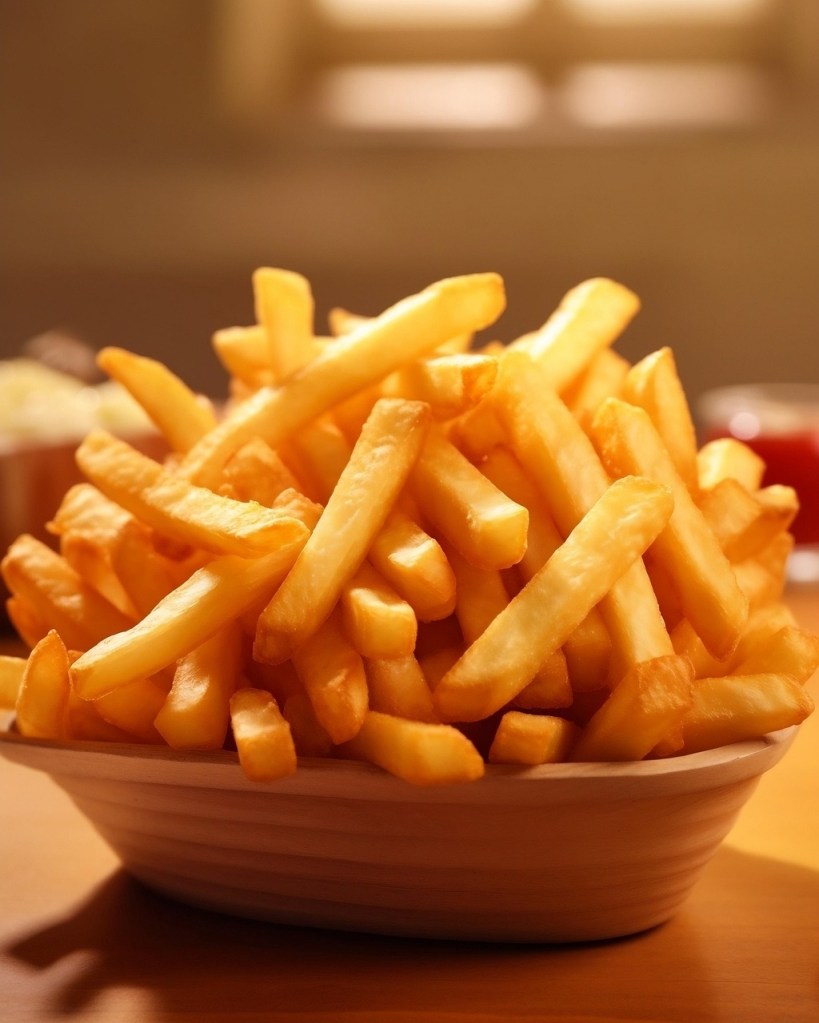
Image by Crafter Chef from Pixabay

Air Fryer enthusiasts are very passionate about these appliances, bordering on evangelistic. Those who do not have one can’t imagine trying to find counter space for one more piece of kitchen equipment. Which side of this divide are you on? Is this an appliance you should consider, or should you pass on it? That is the subject of this Cooking Tip.

Despite the name, the first thing to know about an air fryer is that it doesn’t fry food. An air fryer is similar to a convection oven. It has a fan that circulates hot air around the food.

Here is what users like about air-frying.

  • You can obtain a crispy exterior similar to deep-fat frying.
  • The interior of the food stays tender.
  • Food cooks quickly, much more quickly than in a conventional oven.
  • It minimizes how much oil you need to use. Most users recommend still using a small amount of oil. Depending on the food item, the amount of oil might vary from 1-2 teaspoons per serving of food up to a few tablespoons.
  • It can take the place of a toaster oven for small families.
  • It takes either no preheating or just a few minutes, saving time and power.
  • It does not heat the entire kitchen.
  • It is better than the microwave for reheating food to achieve crispy rather than rubbery results.

What’s not to like about them?

  • Although you can get close to deep-fat frying quality, it is not the same.
  • Many have a small capacity, although this does vary among models.
  • They take up counter space.

There are different styles of air fryers.

  • Drawer-style – They contain baskets that pull out from the front. Many users feel this style is the best. One caveat is that models with glass drawers may not be the best choice. They claim to be healthier as there are no plastic or nonstick coatings. Reviewers, though, found that the performance was mixed. They were also harder to use, as they were heavier, harder to lift, and the glass could get very hot.

  • Flip-top models – These have lids that lift up from the top to reveal the baskets inside. These lids are heavy, and there is a danger of them falling on your arm. Since the heating element is in that lid, this can be very dangerous. Many models were so tall that they would not fit underneath a counter when the lid was open.

  • Cube-shaped models – This style features doors that swing open in front and contains multiple racks inside, similar to an oven. Although these can work well, most feel the best results are obtained only when cooking very small amounts of food.

  • Air fryer toaster ovens – These appliances combine the functions and size of a toaster oven with the capability of air frying. These can do an excellent job, depending on the brand, but will be significantly more expensive. More on these below.

Air Fryer vs Air Fryer Toaster Oven

Regular air fryer

  • Better for smaller spaces.
  • They are less expensive than ovens.
  • Takes less time to heat.
  • They accommodate less food, which may or may not be appropriate for the size of your family.
  • Easier to clean than an oven.

Air Fryer Toaster Oven

  • Require more counter space.
  • They are more expensive.
  • They are more challenging to clean.
  • They are more versatile as they can work as both a toaster oven and an air fryer. If you want both functions, this one appliance can replace both of the others.
  • Can cook larger quantities of food than in a regular air fryer.
  • Do require preheating.

What to look for in a traditional air fryer

  • A wide cooking space – Air-fried foods cook best when cooked in a single layer. So, the width of the cooking surface matters more than the height. Some people like deep baskets because they can roast a chicken in them. (See caution on this below.) However, a wide, shallow tray allows you to spread out the food, getting more even cooking.
  • Nonstick interiors make for easier cleanup.
  • Simple controls
    • Digital controls are generally better.
    • Auto-pause timers – these automatically pause the oven timer when you open the door and automatically restart when it is started. Since the food needs to be flipped, turned or shaken, requiring the opening of the door, this feature is very helpful.
    • Automatic shut-off – A control that automatically turns off the oven at the end of the programmed cycle helps prevent overcooking, food burning, and saves energy.
  • Windows that allow you to view the interior are nice to have.

What to look for in air fryer toaster ovens

  • The air frying function should produce food that is nicely browned and evenly cooked, with a crispy exterior.
  • Since this appliance is designed to replace both a toaster oven and an air fryer, it should perform the non-air frying functions well, such as producing great toast and functioning effectively when roasting, baking, and broiling. For the latter, ensure that the top rack is not too low to ensure good broiling.
  • Easy-to-use controls, preferably digital.
  • It should have ample cooking space.
  • Large viewing windows are nice to have.
  • Auto-pause timers and auto shut off are helpful, just as with regular air fryers.
  • Smart technology may be helpful for some, but others found this only moderately convenient and not always reliable.
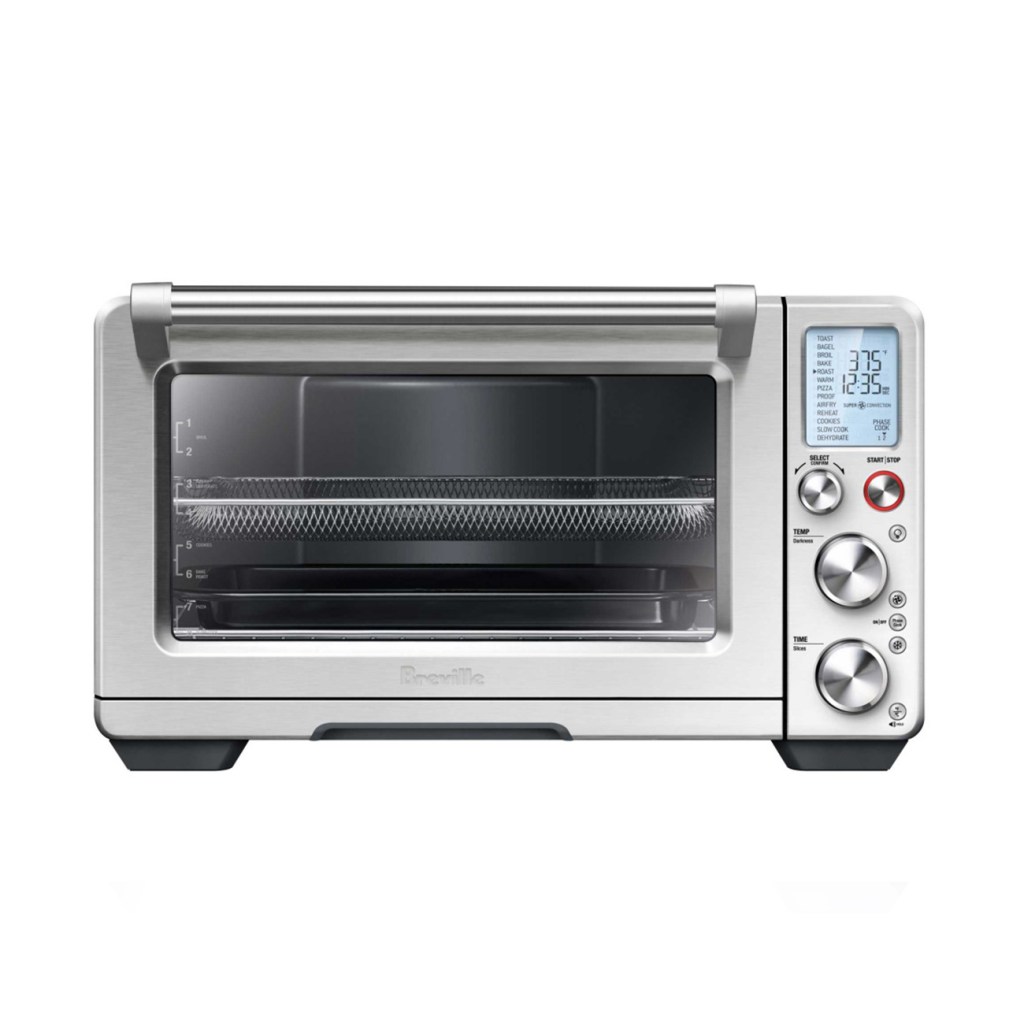
Courtesy of Breville

Reviews

Researching reviews of regular air fryers led to mixed recommendations. They all did, however agree on the best air fryer toaster oven. That is the Breville Smart Oven Air Fryer.

Here are a number of recommendations from reviews from different sites.
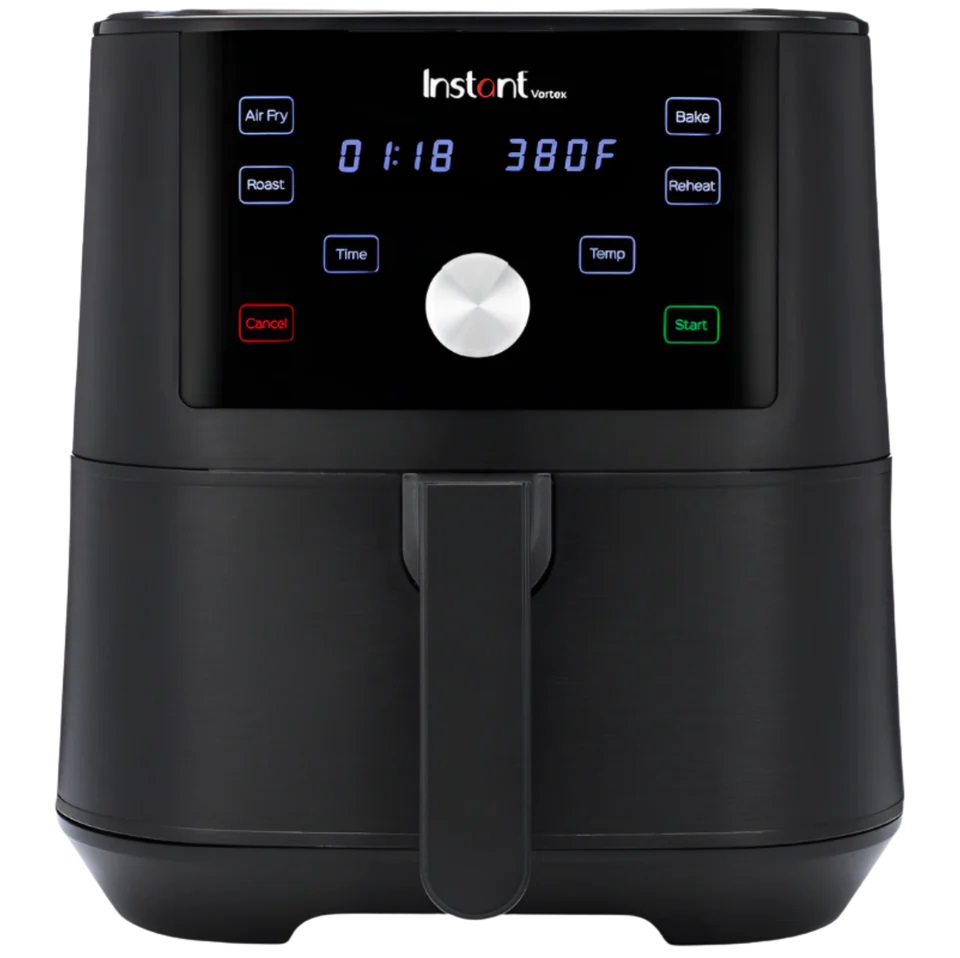
Courtesy of Instant Pot

America’s Test Kitchen

  • Top choice – The Instant Vortex Plus 6-quart Air Fryer
  • Upgrade choice – The Instant Vortex Plus 6-quart Air Fryer with ClearCook and OdorErase

The Spruce Eats ranked products in different categories.

  • Best Overall – Cosori Pro LE Air Fryer
  • Best Runner-up – Ninja 4-quart air fryer
  • Best large capacity – Instant Pot Vortex Plus 10-quart air fryer
  • Best budget – Dash Compact Air Fryer

TheKitchn

  • Their top recommendation was for the Philips Digital Twin TurboStar Airfryer XXL

Wirecutter

  • They rated the Philips 3000 Series L, but noted in their May 2025 review that it had been discontinued and they were busy testing other models.
  • Their budget pick was the Instant Mini Vortex 4-in-1.

Food Network

  • Instant Vortex Plus 6-Quart Air Fryer

Usage advice

  • Preheating – Most models do not require preheating, and for those that do, only a few minutes are needed. Even if preheating is not necessary, completing this step will yield the crispiest results.
  • Avoid overcrowding by arranging food in a single layer; cook in batches if necessary.
  • Food needs to be flipped, turned or shaken to ensure even cooking.
  • To prevent food from sticking to the air fryer basket, try the following advice.
    • A nonstick surface helps with this.
    • Use a small amount of oil. Not only does fat promote browning and crispiness, but it also lessens sticking. Rub or spray the food with oil before cooking.
    • Make a foil sling and cook the food on top of it.
  • Mix dry seasonings with oil before adding them to the food. Otherwise, the mixture is likely to be blown off by the fan.
  • Spray with oil halfway through cooking if the food is looking dry. Will get the best, most even crisp.
  • Ensure the unit has sufficient space to allow airflow around it, with at least 5 inches on each side.
  • Do not cut the veg so small that they fall through the holes in the basket.
  • Clean the unit after every use. Although it may not appear dirty, food residue is often left behind and can promote bacterial growth. Therefore, clean it thoroughly every time you use it. Some parts may be labeled as dishwasher safe, but you can never go wrong with washing by hand with soap and hot water. TheKitchn.com recommends adding two tablespoons of baking soda, two tablespoons of hydrogen peroxide, and two sprays of Dawn Powerwash directly into the fryer basket to create a paste. Use this paste to clean with a soft toothbrush for about two minutes. A nonabrasive sponge is good to remove the paste as the part is rinsed with water.
  • Never submerge the main body in water. Avoid getting the heating element wet.

Foods not to air fry

  • Fresh greens – These can get blown around by the fan, resulting in uneven cooking and possible burning.
  • Wet-battered items – The coating will not adhere to the food long enough for it to cook properly.
  • Heavily oiled food – Although a small amount of oil is recommended, too much oil will drip, smoke and give a charred flavor.
  • Popcorn – Air fryers don’t get hot enough for popcorn.
  • Bacon – You will end up with bacon fat all over the inside of the air fryer.
  • Large, whole chickens – Although some will state that these can be cooked in an air fryer, there is the risk of uneven cooking if using a standard air fryer.
  • Raw grains – Again, these will not cook evenly.
  • Hard-boiled eggs – You will likely end up with a rubbery egg.

I must admit that I have not jumped on the air fryer bandwagon. What about you? Are you an enthusiast?
Cooking Tips · Equipment · Techniques

What should be in your food paper drawer?

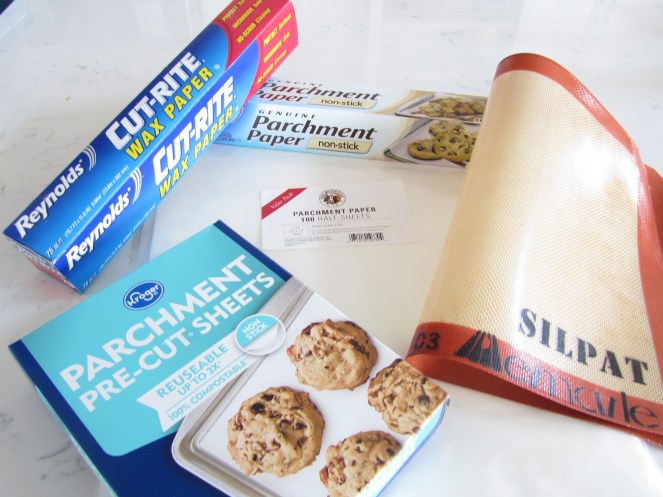
I have a drawer in my kitchen that contains plastic wrap, wax paper, aluminum foil, plastic storage bags and beeswax food wraps. I also have parchment paper, although that is stored in another drawer. Most of you probably have a similar collection of these items. Do you need them all? Read on in this Cooking Tip to understand the differences and the best uses of each. One related item that I am not going to cover is silicone. I have written about this before, and I refer you to this prior Cooking Tip.

Parchment Paper

  • This is a paper that has been treated with silicone, and it can be bleached or unbleached.
  • Due to the silicone, the paper is nonstick, heat-resistant, and water-resistant.
  • It can be used both in the oven and the microwave.
  • It is a very versatile product. Although most cooks probably use it to line baking pans before adding cookies, batter, or dough, it has many other uses. It can be used for layering between food items and covering your work space when you do messy things (rolling out dough, working with chocolate and candy, etc.). Many chefs roll it into a parchment cornet for piping purposes. It can be bent into a funnel. It may also be used for cooking “en papillote,” a method of cooking food items (often chicken or fish) wrapped tightly in parchment and baked. 
  • Parchment paper can be reused as long as it is not too greasy or dirty.
  • It cannot be recycled, but it can be composted.
  • It comes in different forms. It is often sold in a roll similar to foil or plastic wrap. It can also be found in flat sheets, which are more convenient but also more expensive. You can even find cooking bags made of parchment.
  • You can certainly buy parchment in regular stores. The most common type is a box containing a roll of parchment. The downside of rolls is that it can be hard to get the paper to stay flat on your pan. It is becoming more common to find sheets in stores, although they are often folded. Whereas it is easier to stay flat, the creases can cause ridges or indentations in the baked item. You can buy flat sheets of parchment, which most chefs prefer. The brand often at the top of the rankings is King Arthur Parchment Paper sheets. The downside of this great product is the price, and it must be ordered online.
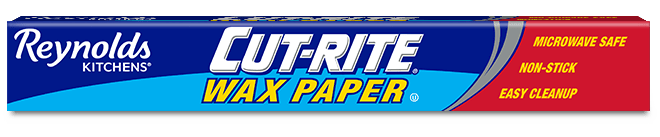
Photo from Reynolds

Wax paper

  • This is a paper that has been coated with a thin layer of wax. 
  • Wax paper is moisture-resistant and non-stick. It is not, however, heat resistant. When exposed to heat, the wax can melt and the paper can catch on fire.
  • While it has many of the same uses as parchment paper, baking with it is not one of them.
  • Although it is not oven-safe, it can be used in the microwave.
  • Wax paper is less expensive than parchment.
  • It is not recyclable. Nor can it be composted.

Aluminum foil

Photo from Reynolds

  • As the name implies, this is a very thin piece of aluminum.
  • It has many uses in the kitchen, including lining baking dishes, steaming food, keeping food warm, and wrapping food before freezing.
  • It is not nonstick. That is why many recipes will have you spray the foil with food spray before using it. Reynolds does make a non-stick version that does not have to be sprayed.
  • If it is clean, it can be recycled if your provider allows it.
  • America’s Test Kitchen found that all foil brands were equivalent in performance. They did, though, find differences in the boxes. Boxes that were sturdy and had metal serrations were preferred. They also found that boxes with a secure closure helped to prevent cutting oneself on the cutter part.
  • Makers of aluminum foil warn against using foil when cooking with highly acidic foods such as citrus, vinegar, or tomatoes. They warn that the metal might leach into the food.
  • You will often see regular and heavy-duty foil in the store. The latter is slightly thicker and often wider. America’s Test Kitchen put it to the test to see if this more expensive foil was worth the price. They found that it was a bit more resistant to tearing and was better for enclosing items such as wood chips that might poke through, but not significantly so. There was no difference for basic tasks such as lining a baking sheet or making a sling for baked goods. They found that a double layer of regular foil was actually stronger than a single layer of heavy-duty foil.
  • Many people wonder why there is a shiny side and a dull side. This is solely due to the manufacturing process. Either side can be put next to the food as there are no performance differences.

Freezer Paper

Photo from Reynolds
  • This type of kitchen paper is coated with plastic on one side.
  • It is more durable than wax paper and is better for freezing foods. 
  • Freezer paper is more moisture-resistant than wax paper.
  • It is not safe for use in either the microwave or oven.

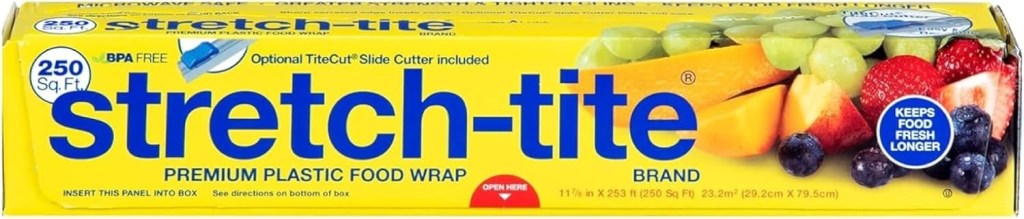
Plastic wrap

Photo from Amazon
  • Plastic wrap can be used to store food as well as to freeze food. 
  • It is also useful for tasks such as pounding meat, making logs of cookie dough or compound butter, and covering bowls of food.
  • It is not recommended for use in the microwave.
  • Higher-rated plastic wrap is better at clinging to dishes. It is also thicker and wider, and it is easier to tear.
  • The highest-rated plastic wraps are Freeze-Tite Clear High Cling Freezer Wrap and Stretch-Tite Premium Plastic Food Wrap.
  • For many people, plastic wrap is a necessary evil. Many people want to cut down on their use of plastic, and also find tearing off a piece from the roll to be a frustrating exercise. Today, one can find the typical box of plastic wrap with a row of teeth and boxes with a slide cutter. Many find the latter to be much easier to use.
  • America’s Test Kitchen prefers placing the rolls of plastic in a separate dispenser. These boxes are designed to stay on the counter better, which frees up your hand from having to hold the box. They felt these dispensers were much better than the boxes with built-in cutters. There was a difference in quality. Their recommended brand was Stretch-Tite Wrap’n Snap 7500 Dispenser. The downside of this item is that it is harder to store as it is almost 5 inches high.
Photo from Abeego

Reusable food wraps
Reusable food wraps are sheets of cotton or hemp cloth dipped in a layer of beeswax or soy wax. Although many recommend these for environmental reasons, there are pros and cons.

Pros

  • They are reusable and can last up to a year with proper care.
  • After they have run their course, they can be cut up and composted.
  • They are easy to clean with a bit of soap/water. 
  • They can do a good job of keeping food fresh if they completely cover the food in an air-tight manner.
  • They are attractive.

Cons

  • They do lose their clinging ability over time. 
  • The wraps can melt if left in the sun.
  • They cannot be washed in very hot water. Most makers recommend using cool water and dish soap.
  • They can only be used to wrap cold and room-temperature foods. They should not be used for hot items. Nor are they recommended for freezer use.
  • They are not meant for raw meat.
  • They are expensive.
  • They can leave a residue on your hands and dishes as you use the wraps. The residue will wear off, but it takes some work to get it all off. This problem decreases as you use the wraps more.
  • Over time, the coating can wear down, allowing water into the fabric. This could lead to mold development unless you keep the wraps clean and dry.
  • They can stain.
  • They can absorb smells.
  • Some brands are too stiff to wrap tightly. The softer ones work better.

If you are interested in trying food wraps, look for ones that are clingy and easy to mold. In testing, a couple of brands at the top of the list were Abeego Food Wraps and Akeeko Food Wraps.

What is in your food storage drawer? Do you have an assortment as I do? Or, are you more of a minimalist? I would like to tell you that you only need one of the above products. Depending on what you do in your kitchen, only one item will not be practical. I trust this discussion will help you decide what you need and can live without.

Cooking Tips · Equipment

Cutting Boards – Does it really matter what you use?

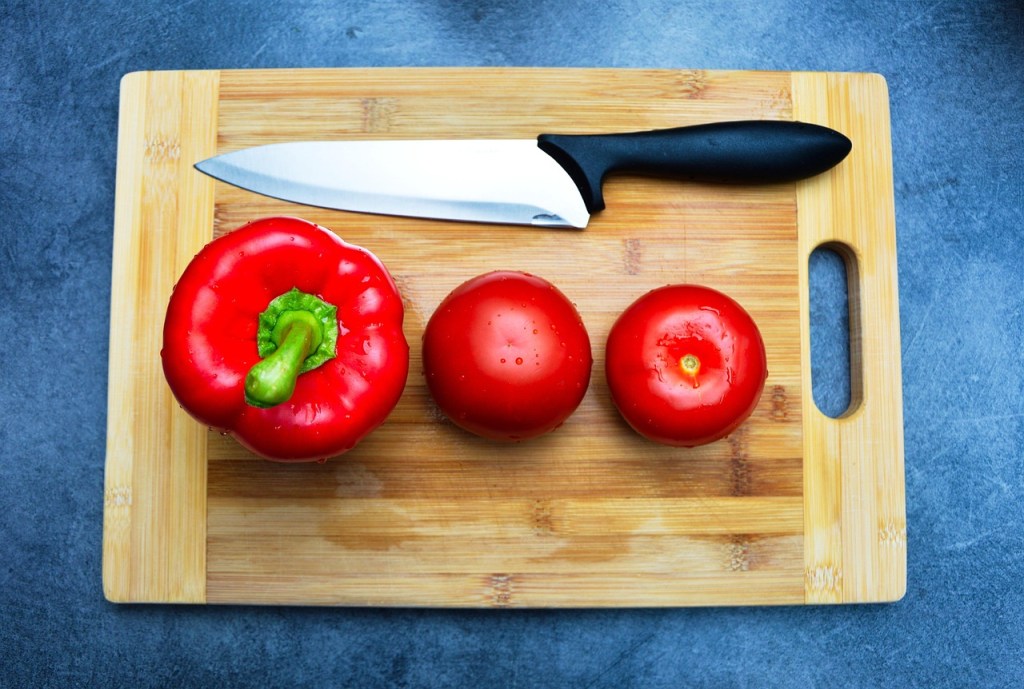
Image by tookapic from Pixabay

Cutting boards are in all of our kitchens. Many of us probably never give them much thought. As I have been in many home kitchens teaching cooking, it is clear that many buy their cutting boards based on appearance and not functionality. That, along with a nudge from one of my readers, has led to this Cooking Tip on cutting boards.

Before turning to actual cutting board brands, let’s look at what you want and do not want in a cutting board and the different types of boards.

Picking out a board
Budget
This is often the primary concern for many of us. Some high-quality wooden boards can cost hundreds of dollars. Plastic ones can be under $20. You need to balance cost with durability and useability.

Size

  • Cutting boards come in various sizes and no one size is better. The correct size for you will depend on the size of your work area, your storage area, and how you use the board.
  • You will need a larger board if you like to cut multiple ingredients and keep them all on the board. If you cut one or two items at a time, a smaller board may be fine.
  • A larger board will be better if you carve large pieces of meat.
  • Another aspect of size is the thickness of the board. A thicker board will better resist warping and splitting and be more stable on the counter. However, it will be heavier to move around. It also adds more height, which could be a problem for shorter people.

Features

  • Many boards have extra features that may be nice, although not absolutely necessary.
  • Non-slip grips – These are great to keep your board from moving around as you cut on it. If your board does not have these grips, you may stabilize your board by putting something non-slip underneath it. I use a grippy type shelf liner that I can wash when necessary. Others will use a wet kitchen towel.
  • Liquid-catching trenches – These are nice if you cut items that cause juice to drain out. Rather than running onto your counter, it will run into these trenches or grooves so that you can dispose of it more cleanly.
  • Reversible – This gives you double surfaces if that is important to you. The boards with the non-slip grips may not be reversible.
  • Handles – These make it easier to take in/out of your storage area or move around the kitchen.
  • Textured surface – Aside from keeping the board from slipping on your countertop, some like to prevent the food they are chopping from moving too much about the board. A textured surface helps with that.

Cleaning
Since cutting boards can be a source of food-borne illness, you want to keep them scrupulously clean. More about cleaning your cutting board can be found below.

Material
The main materials used for cutting boards are wood and plastic. They both have advantages and disadvantages.

Wood

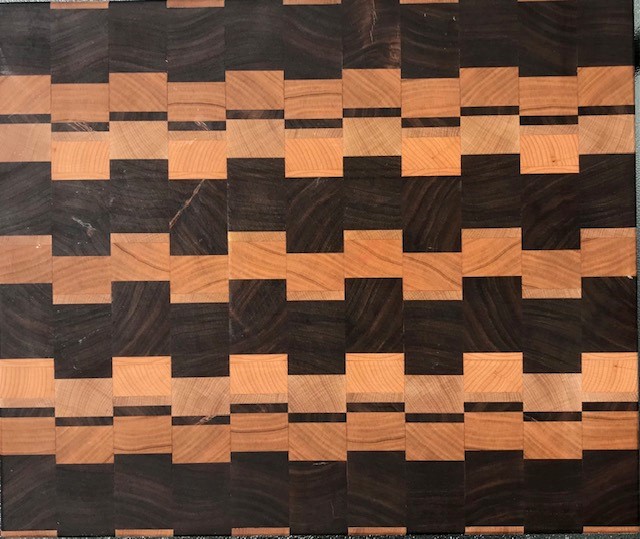
My beautiful multi-wood end-grain board
  • A quality wooden cutting board will be more expensive than a plastic one.
  • They are aesthetically pleasing and can also be used as a charcuterie or serving board.
  • Most believe that wooden boards are easier on knives because they do not dull the blade as quickly as cutting on a harder surface.
  • Not everyone adheres to the belief that wooden boards are easier on your knives. Test cooks from America’s Test Kitchen use their cutting boards multiple hours each day and have found that there is not much of a difference to their knives between wood and plastic boards. They also used robots to simulate long-term use and found both kinds of boards dulled knives at the same rate.

Wooden boards can be either “end-grain” or “edge-grain.”
End-grain
This board style is made of many different blocks of wood glued together so that the grain runs from top to bottom in a vertical direction.


Pros
Most experts feel that end-grain boards are softer and, therefore, easier on your knives. This is because the fibers run vertically, and your blade slices between them. Daniel Gritzer, Editorial Director for Serious Eats, uses this analogy:

This is compared to an edge-grain, which is compared to slicing into a bunch of spaghetti lined up lengthwise.
They are also less prone to marks from your knives.


Cons
More expensive.
More prone to warping and even splitting between the blocks of wood.
They can also dry out faster and require more frequent oiling.

Edge-grain
This is also known as long-grain and is when the grain runs horizontally from one edge to another.


Pros
Less expensive
There are fewer seams in the board and, therefore, fewer weak points that could cause the board to split.


Cons
Harder on knives.
They are more prone to gashes and gouges.
Wooden boards take more maintenance.
Many say that the care of the board is more important than what type of construction is used. See below for care advice.

Wood types – Different types of wood can be used in cutting boards.

  • Maple, walnut and cherry are sturdy but still soft and, thus, gentler on knives.
  • Maple is more affordable than some other woods.
  • Bamboo, teak and acacia have higher amounts of naturally occurring silica, which can dull knives faster.
  • In a test of different types of wooden cutting boards, Serious Eats found that most wooden boards, no matter the wood, did not significantly dull a knife even after 200 strokes.

Plastic

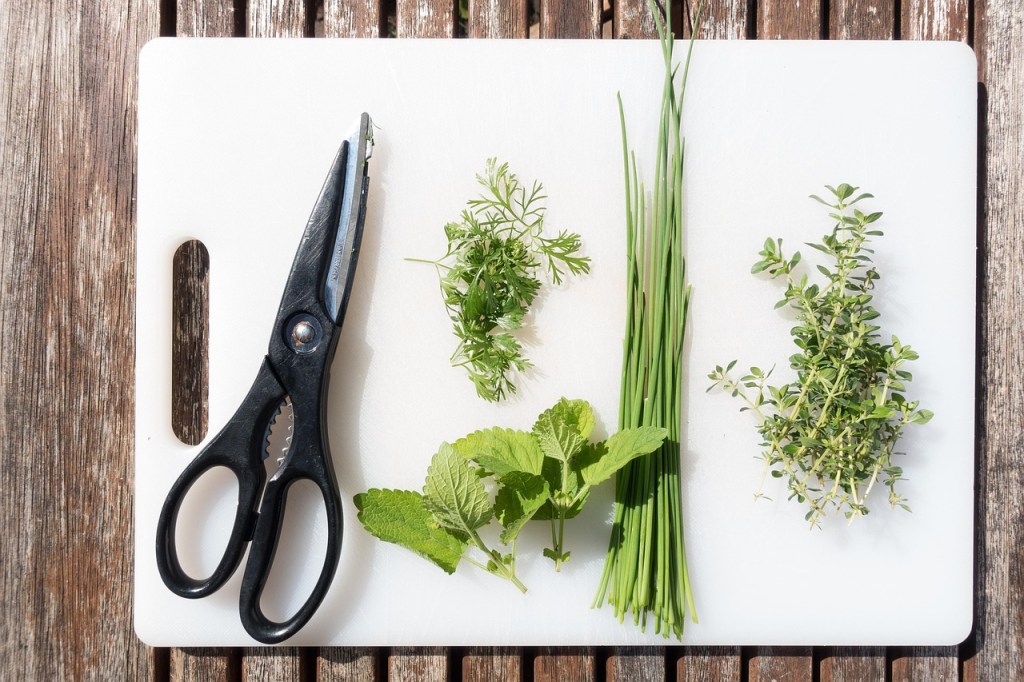
Image by Stefan Schweihofer from Pixabay
  • Plastic is easier to clean in that most are dishwasher-safe.
  • They are less expensive than wood.
  • Plastic tends to be easier to store.
  • Plastic boards are lighter in weight. This may make them easier to handle but also makes them more prone to slippage on your counter.
  • They can get grooves from knife use, which can lead to bacterial growth.
  • They often come in fun colors.

Another type of plastic board is known as a flexible cutting mat. These are lightweight; some can even be rolled to funnel food into a bowl or cookware.

  • They are easy to clean and dishwasher safe.
  • Many mats are double-sided.
  • Since they are so lightweight, they are prone to moving around as you use them. Some will have a textured side to minimize this. Others must be placed on top of a grip mat or wet towel to stabilize them.
    Slick foods (halved onions, raw chicken) can slide on the mats, especially perfectly smooth ones. Those that have patterns and textures in them lessen this.

Glass/ceramic

  • Everyone agrees that you should never use this type of cutting board. Although they can be very pretty, they will destroy your knives.
  • They are also so smooth that your knife can slide around and be more difficult to control, leading to more sloppy cuts as well as being dangerous.
  • They are fragile, and there is a risk of breakage if they are dropped.

Wood composites
These can also damage knives.

Safety
There are two safety aspects: avoiding cross-contamination leading to food-borne illness and safety while using the board.

To minimize cross-contamination, use one board for meats and another for non-meat items. Proper cleaning is also mandatory. See below for cleaning advice.

There is disagreement on whether wooden or plastic is less prone to contamination. Some say that wooden boards offer natural antimicrobial protection. They argue that the bacteria do not like the wooden surface and will die if any remain after cleaning. Others argue that the non-porous surface of plastic boards keeps any juices containing microbes from penetrating the board. Plastic boards, however, can develop grooves and depressions from repetitive knife use, giving an inroad to the microbes. Furthermore, plastic boards can be sanitized in the dishwasher, where the cleaning process will likely kill all the bacteria. Even though there is no definitive answer as to which is the most sanitary type of cutting board, properly cleaning after each use is vital to preventing contamination.

Cook’s Illustrated had a lab analyze several boards, all of which had been colonized with salmonella, followed by either washing in hot, soapy water or spraying with a bleach solution or undiluted vinegar. All methods were equally effective at reducing bacteria. There was no difference between wood, plastic, bamboo or composite boards.

For safety, the heavier boards are more stable. Lighter boards need a non-slip surface. It can be built into the board or you can place a grip mat or wet kitchen towel underneath.

Cleaning Cutting Boards
Wooden

  • Only hand wash with dish soap (preferably unscented), warm water and a soft sponge. Pay attention to any crevices. Some recommend washing both sides (even if you only used one side) to prevent uneven drying, which could lead to warping.
  • Immediately & thoroughly dry with a towel to reduce warping, splitting, and mildew development.
  • Some recommend using kosher salt and half of a lemon to gently scrub the board to remove odors and use baking soda to remove stains. I would recommend checking the directions from the maker of the board for their advice.
  • Wooden boards should be regularly conditioned by applying food-grade mineral oil or a conditioner for wooden boards. This helps to prevent the board from drying out.

Plastic

  • Scrub a plastic board with dish soap and hot water.
  • Many plastic boards are dishwasher safe, although some may specify top-rack only. Also, frequent use of the dishwasher can shorten the board’s lifespan.
  • It is highly recommended that you scrape off any meat remnants before placing in the dishwasher so the hot water doesn’t “cook” them into the board.
  • America’s Test Kitchen recommends spraying the board with a vegetable food spray before cutting foods likely to leave a stain, such as beets. When you finish cutting, remove the food to a bowl and wipe down the board.
  • For stains, use a paste made from one teaspoon of baking soda, one teaspoon of salt and one teaspoon of water.

Brands
I perused multiple of my favorite rating sites to see which boards were more highly recommended. As is typical, different opinions abound. However, certain boards did rise to the top of many lists.

Wooden

  • John Boos – They are an American company located in Illinois. Depending on the size and thickness, the type of wood, the type of construction, and the addition of special features, these can run anywhere from about $50 to over $1000.
  • Jones – This is another American company located in Pennsylvania. Although their website was not functioning well when I was checking prices, it appears that they will be somewhat less than John Boos.
  • Boardsmith – A family-owned business in Texas, their boards range from about $150 to $800.

Plastic
If you want a set of flexible mats, the most highly rated was Dexas Heavy Duty Grippmats.


For more standard plastic cutting boards, there were two brands that were most frequently mentioned.

What do you really need? As noted above, that depends on your budget and your needs. I do agree with the advice given by Serious Eats. They recommend one large wooden cutting board in addition to two different-sized plastic cutting boards, a larger one for those messy jobs that can be put in the dishwasher and a smaller one for quick tasks. I will add that one or two flexible mats are also nice.

I have collected a few cutting boards over the years, but the ones most used are a wooden one, a large plastic one and a flexible mat. My most recent addition is a gorgeous wooden board that was a gift from some very dear friends. The husband made the one you see in the photo above. It is not only beautiful, but is a joy upon which to cut. I hope you find the perfect collection of cutting boards for you and your kitchen!

Cooking Tips · Equipment · Techniques

Cookware Cleaning Tips

Photo by Fatma Çekmez

What sort of pots and pans do you have in your kitchen? Are they new or old? What are they made of? Are they well-used or barely touched? No matter what they are, do you know how to take care of them? That is the subject of this Cooking Tip.

Although the advice I will give you applies to most types of cookware, I will discuss some specialty pans later. I have already written a Tip on Cast Iron Care, so I will not discuss that type of cookware in this Tip.

Just as important as how you should take care of your cookware is what you shouldn’t do. Let’s investigate that first. One caveat is that you should always read your cookware’s warranty to ensure you are not doing anything that might void it.

What not to do

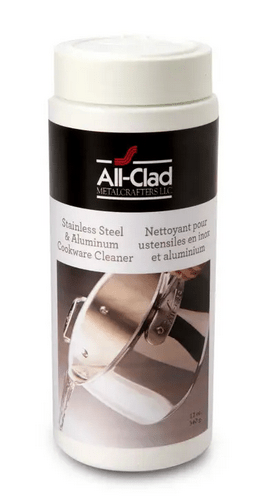
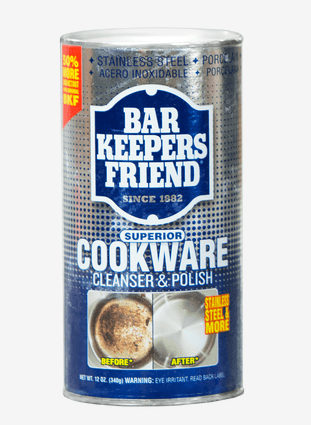
  • Do not use abrasive cleansers. For most general cookware cleaning, dish soap is all that is needed. Beyond that, you can use a nonabrasive cookware cleaning powder. Many cookware brands make their own product. I use and like the one made by All-Clad. Others prefer Bar Keeper’s Friend. They have two different products, their all-purpose cleaner and one advertised specifically for use on cookware. I have tried both, and I think the latter is more effective. Baking soda is another alternative. It is less expensive and readily available in our kitchens. Although it will be effective in many situations, it probably won’t do as great a job as the commercial cleansers.
  • Do not use steel wool or other abrasive sponges. Only use sponges or cleaning implements that are advertised as nonabrasive.
  • Allow your pans to cool before washing them. Never submerge a hot pan into cold water, as the thermal shock is likely to damage it.
  • Even though some manufacturers claim their pans are dishwasher-safe, hand washing is the preferred way to keep them in the best condition.

How to care for your pots/pans

Now that we know what NOT to do, let’s delve into some care tips to keep your cookware in the best condition.

  • Most cookware manufacturers recommend using low to moderate heat to preheat their pans. High heat is only recommended when you want to bring something to a boil.
  • Manufacturers also generally warn against heating an empty pan, especially with nonstick pans. You may have heard that it is better to preheat your pan dry and then add any fat you are using. See this in-depth Tip on the truth about this advice.
  • Once you are done cooking, allow the pan to cool before cleaning. Rinse off any food particles and wash in warm, sudsy water with a sponge or soft cloth. You may even allow it to soak in this sudsy water to help release stuck-on food. Finally, rinse with warm water and dry the pan to prevent spotting.
  • Although you want to allow the pan to cool before washing it, the sooner you clean it, the easier it will be to remove debris. The longer it sits, the harder it will be to clean.
  • As noted above, you may use a nonabrasive cleanser for tough spots. Follow the instructions on the container, but in general, you will sprinkle the cleanser over the wet surface and gently rub it with a soft cloth or sponge. Rinse it thoroughly and dry. If necessary, allow the paste to soak on the pan a bit before scrubbing. However, some commercial cleansers say not to allow the cleanser to remain on the pan for more than a few minutes. Read the directions for the one you are using.

For especially dirty pans, the following methods may help.

  • Boiling water method – This is similar to deglazing your pan, which is often the only thing you need to do to bring up stuck-on food particles. Add water to the pan, bring it to a boil, and scrape up the food with a wooden implement. After the food loosens, pour out the hot water and wipe with a nonabrasive sponge. You may also turn off the heat and allow the pan to soak for 15-20 minutes or even overnight. Some like to add a bit of baking soda or white vinegar to the boiling water.
  • If you find your pots developing white hard water spots, use a 1:1 white vinegar-to-water solution that you bring to a boil. Then, follow with a normal wash, rinse and dry.
  • Blue or rainbow discoloration can be removed by wiping the pan with white vinegar on a sponge or soft cloth.
  • In general, you do not want to use bleach on your cookware. However, some recommend that if you have enameled cookware with stains on the surface, you could try this trick. To remove the stain, make a gentle bleach solution of 1 teaspoon bleach in one pint of water. Pour this into the pan and allow it to stand for a few hours or overnight. Pour out the bleach solution and scrub with a soft sponge. Clean and dry as normal.

I must admit that cleaning is a chore I do not enjoy. Although I am very good at cleaning the inside of my pots, I am not nearly as fastidious on the outside and bottom. It was with interest that I tried another method for those stains. You will need a pot large enough to hold the pan you are trying to clean. Fill with water and bring to a boil. Add ¼ to ½ cup of baking soda and stir until dissolved. Being very careful, place your stained pot into the boiling water. Allow your pan to remain in the gently boiling water for 15-20 minutes. After the residue begins to flake off, carefully remove with oven mitts. You may need to then make a baking soda slurry and use that to scrub more spots off. I personally tried this method and, although not magic, it did work. The biggest problem was finding a pan large enough to place my skillet inside. It requires a bit of scrubbing, but in the end, it was much cleaner than it was before.

Carbon steel

Photo courtesy of Made In Cookware
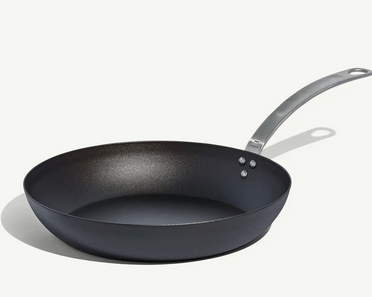
  • These types of pans are particularly loved in professional kitchens because they are lightweight, have superior heat conduction and are naturally nonstick. However, they do need to be seasoned, so your cleaning method should not destroy that seasoning.
  • When cleaning, if all that is in the pan is a bit of oil or maybe a small amount of food particles, wipe it out with a paper towel, and it will be ready for the next time. If there is more in the pan than cannot be wiped away, sprinkle some coarse salt, scrub with a paper towel and wipe clean. Some will add neutral oil to the salt in a 1:1 ratio. Scrub, wipe out and finish with a quick rinse. Place the pan over low heat to ensure it is completely dry. Finish by adding just a tiny amount of oil to the pan and wiping thoroughly.
  • For a more serious clean, cover the bottom of the pan with a small amount of water and bring to a boil. Using a wooden spoon or spatula, scrape up the food, dump it out and then wipe it off. Follow the above instructions for drying the pan and finishing with a coat of oil, especially if there are dry spots on the pan’s surface.
  • If all of the above fails, you can gently scrub the pan with steel wool. However, your pan will need to be re-seasoned after this.
  • Some will say never, ever use dish soap on carbon steel. However, just a small amount used sparingly will be acceptable.

Copper

Image by Stefano Ferrario from Pixabay
  • This type of cookware is beautiful but expensive. You, therefore, want to treat it carefully to maintain its beauty. Cleaning like other cookware with soap, hot water, and a non-abrasive tool will do the job.
  • Because copper is a reactive metal, it is natural for copper pans to darken and even appear greenish. This does not affect its usability, but you will want to polish it regularly if you prefer that “new” appearance. Just as with regular cookware, you can purchase cleansers made specifically for copper. You may use white vinegar (or lemon juice) and salt if you do not have that. Make a paste of equal parts, and using a gentle sponge, rub the pan and buff it until it is shiny. Rinse to remove any remaining paste and dry thoroughly. Some experts recommend using tomato paste or ketchup in place of the vinegar.

Storage

A final piece of advice is to store your pans properly to prevent damage. If you stack your pans, put paper or cloth towels or pan protectors between them. This will prevent chipping or scratching. A hanging rack is great if you have the space to install one. Pegboards are another option.

Pots and pans are a necessity in the kitchen and good ones are not cheap. By taking the time to properly clean your pots and pans, you can extend their lifespan and keep them looking nice.

Cooking Tips · Techniques

My 10 New Year’s Wishes for You!

As we begin a new year, many people like to make resolutions or goals for themselves. I want to turn that a bit and discuss my wishes for you, which I know, if followed, will bring you more success and joy in the kitchen.

Image by Michelle Raponi from Pixabay

Make a commitment to Mise en Place

  • Mise en place is a French term that roughly translates to “everything in its place.” In simpler terms, it just means being organized in your kitchen.
  • This encompasses so much, such as:
    • Reading your recipes thoroughly at least twice before starting to cook. Note the required ingredients, equipment and recommended timing.
    • Gathering all your ingredients & equipment as your first step.
    • Prepping ingredients (cutting up, grating, measuring, etc.) before commencing the cooking or baking.

Learn to cook with your senses, not the recipe

  • Do not be held captive to timing phrases in the recipe.
  • Rather, use your senses to know when to move to the next step. For example, when it says to cook your onion for 2-3 minutes or until soft, the time “2-3 minutes” gives you a cue that this step shouldn’t take very long. However, what is much more important is the “or until soft.” Taste the onions to see if they are soft. It doesn’t matter whether that takes 2 minutes or 5 minutes. The end result is what is most important.
Images by congerdesign & Monfocus from Pixabay

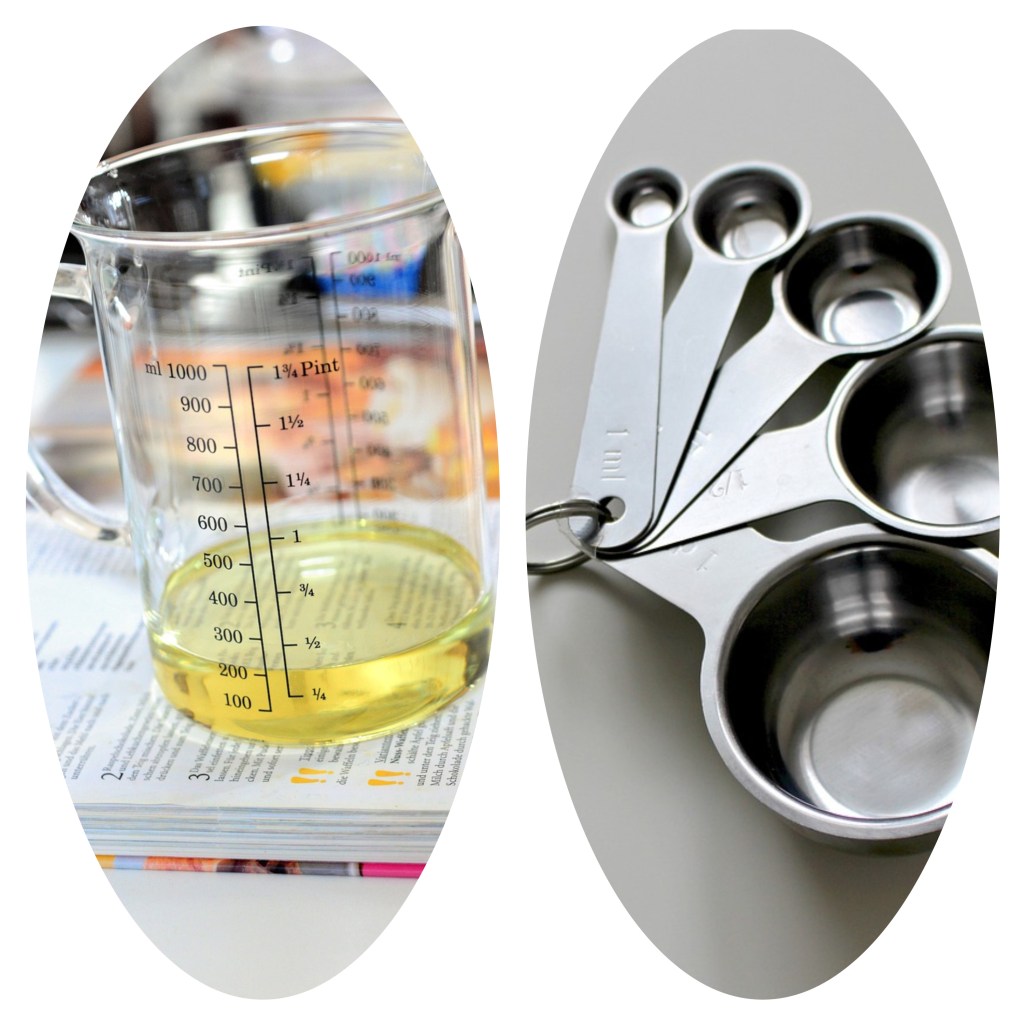
Use the correct measuring vessels

  • Use liquid measuring cups for liquids and dry measuring cups for dry ingredients. You may think that is silly, but actual research demonstrates the inaccuracy of measuring when using the wrong type of cup.
  • Or, even better, weigh your ingredients, as mentioned in the next point.

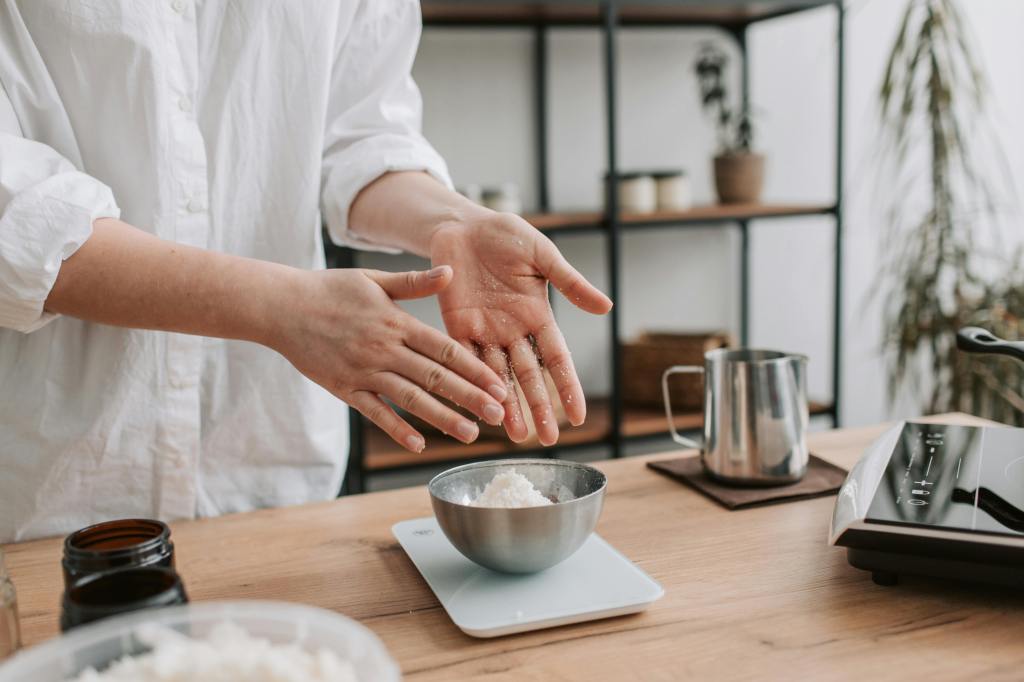
Switch from cup & spoon measurements to weighing ingredients

  • This is undoubtedly more important when baking but can also be used in savory cooking. Weighing is much more accurate, is not prone to technique variations, and will lead to better results.
  • The problem in the US is that most recipes don’t list weight ingredients. Many better-tested recipes do, and some may even have a converter. European recipes & sources are much more likely to list weights.
  • Some trustworthy sources are:
  • Here are a couple of conversion sites.

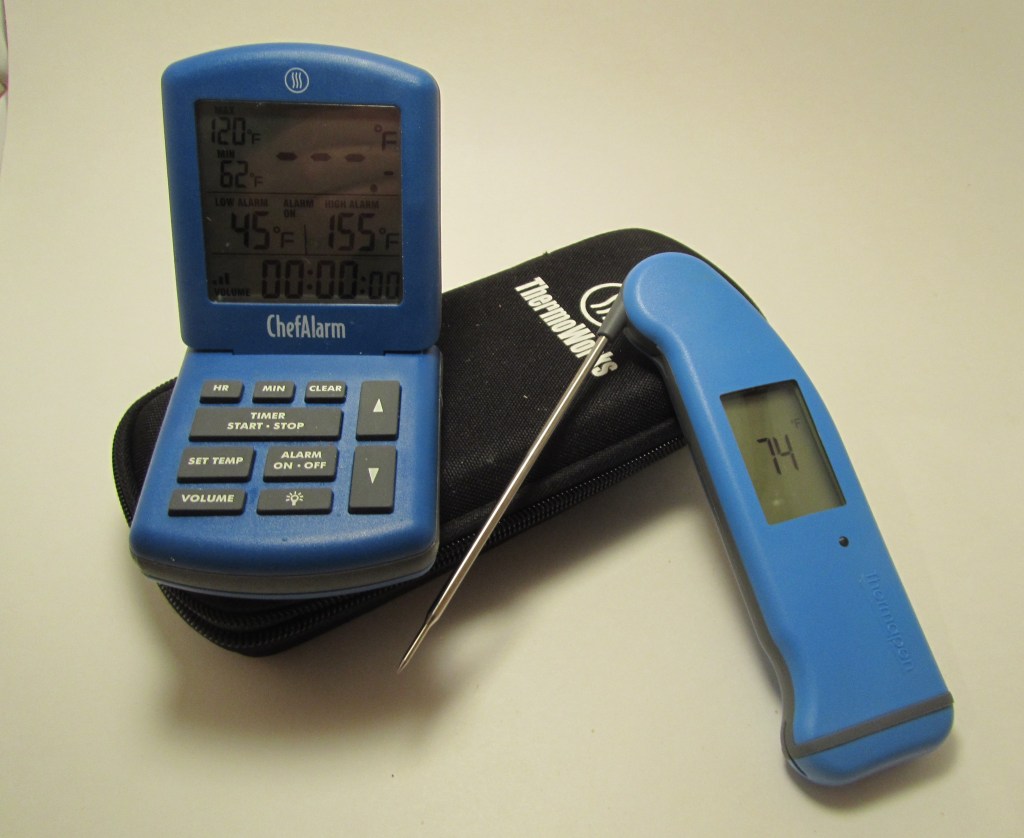
Use an accurate food thermometer

  • Checking the internal temperature to find the doneness point is far superior to judging by appearance or feel. This will ensure moister meats while still being safe to eat. It will also help you determine when your bread or custard is properly done.
  • Besides the thermometer, you need to know what temperatures you need to achieve. Here is one chart from the FDA and another from Thermoworks that will help you. For a great magnetic chart to stick on your refrigerator, see this one from Thermoworks. (This is an affiliate link and I may earn a commission if you decide to purchase.)
  • If you are unsure which thermometer to purchase, check out this Cooking Tip – Instant Read Thermometers.

Taste, taste, taste

  • No one wants food that doesn’t taste good – not your guests, not your family, and not you. To ensure your dishes have a great flavor on the plate, get into the habit of tasting your food as you proceed during the cooking process. At an absolute minimum, taste your dish before you put it on the table. That will give you a chance to adjust seasonings before serving.
  • All dishes should have a balance of salt, acid and sweet.
  • One of the reasons you should taste as you go along is to train yourself in how to taste. Tasting before and after the addition of an ingredient will impress upon you how that ingredient works in the dish.
  • You might wonder how to taste dishes when they contain raw ingredients that are not safe to eat in that state. The answer is to remove and cook a small sample in the microwave or stovetop. That way, you can know if it needs adjustment before the final cooking when it might be too late to adjust.
Photo by Shantanu Pal

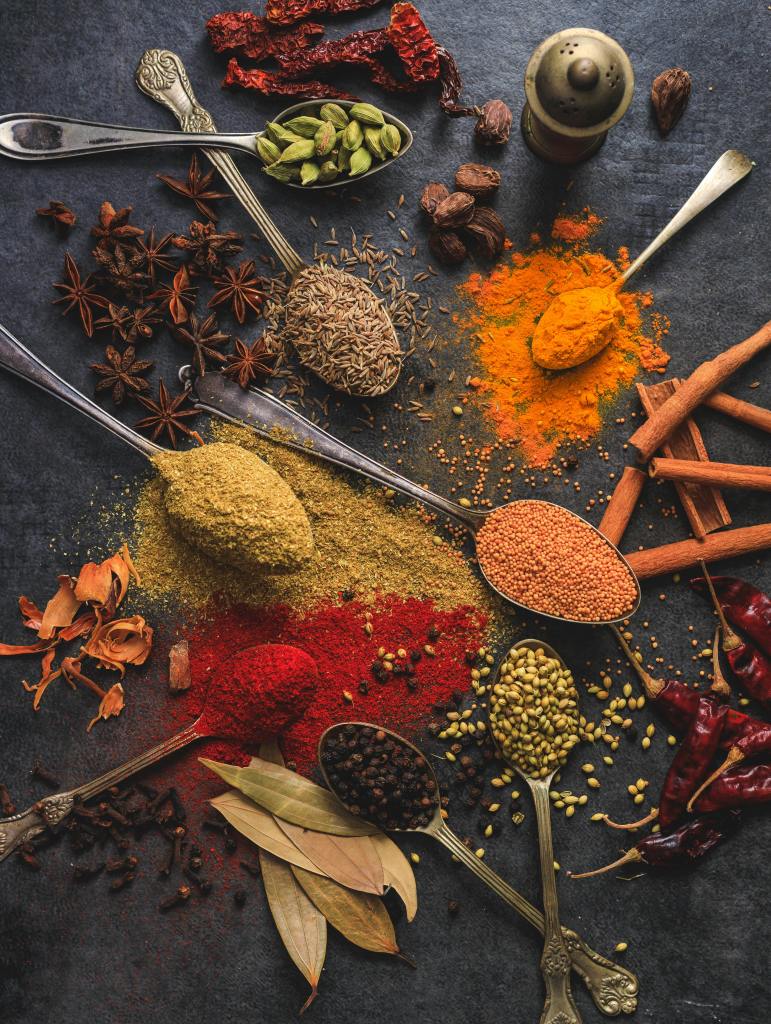
Keep your spices fresh

  • Spices enliven our dishes, whether savory or sweet. To ensure they do the job they are meant to do, be sure they are fresh. Go through your spice cabinet and smell them. They will not lend much flavor to the dish if they do not have a great aroma. If that is the case, toss them and buy new ones.
  • When you buy spices, try to buy them from reputable sources where you know they are not already old and in the smallest amounts possible.
  • For a more detailed discussion, see the Cooking Tip on Spices.

Know when and how to make substitutions

  • I always recommend making a recipe as written the first time. If you immediately make substitutions and the dish does not turn out, you do not know if it was the recipe or the substitution.
  • Not all substitutions work.
  • If your recipe calls for white balsamic vinegar, do not assume you can substitute any white vinegar. Nor will regular balsamic vinegar give you identical results.
  • In baking, not all sweeteners can be swapped for each other in equal amounts.
  • Don’t substitute dried herbs for fresh ones in equal measure. Dried herbs are better for some applications, whereas fresh are better for others. Try to use what the recipe recommends. If you do decide to substitute, be aware that it is not a 1:1 ratio. If using dried in place of fresh, use only about a third of what is specified for fresh.
  • Not all dairy is equal. If a recipe calls for whole milk (or half/half or cream), do not assume you can substitute a lower-fat dairy product. Fat is an important ingredient for the recipe’s success and cannot always be eliminated. The less fat in the dairy, the gentler you need to cook it. You will have less richness. The resulting texture/thickness will not be the same.

Do not trust everything you hear or have been taught

  • There are many “Culinary Myths” out there that have been passed down. When put to the test, they do not always stand up. I have written two prior Cooking Tips about some of these myths.

Do not trust every recipe you find, especially from online sources

  • We have all made recipes and had it not turned out and then we wonder what we did wrong. Perhaps it wasn’t you, but it was the recipe. As you cook more and more, you can spot which recipes might fall into this category.
  • I wrote an entire Cooking Tip on Recipe Cautions.

If you are a long-time reader of these Cooking Tips, I trust you have already fulfilled some of my New Year wishes for you. Pick those you are still not doing and see how they can improve your skills in the kitchen. If you are a new reader or someone who still hasn’t seen the necessity of following this advice, I hope you will pick out a couple and resolve to do better in that aspect of your cooking. You will be rewarded with better results!

Here’s to a wonderful 2025 in the kitchen!

Cooking Tips · Techniques

Choosing the Best Cupcake or Muffin Pan

Image by Hans from Pixabay

What is the least-used baking pan in your kitchen? For some of us, it might be our muffin/cupcake pans. I only use mine a couple of times a year. If you use yours more frequently or are considering buying one, this Cooking Tip about cupcake/muffin pans is for you.

Do you call these pans cupcake pans or muffin pans? Either name is fine. They both mean the same thing. What you bake in them, though, cupcakes or muffins, is slightly different. See this Cooking Tip for an explanation: Is It a Muffin or a Cupcake?

What should you look for in a good muffin pan?

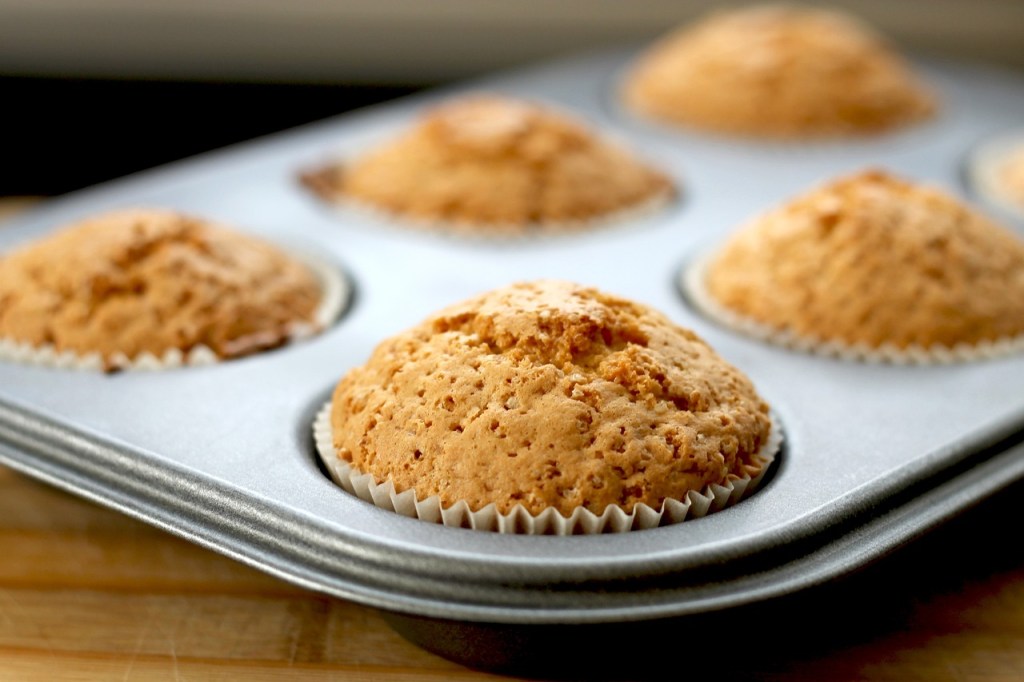
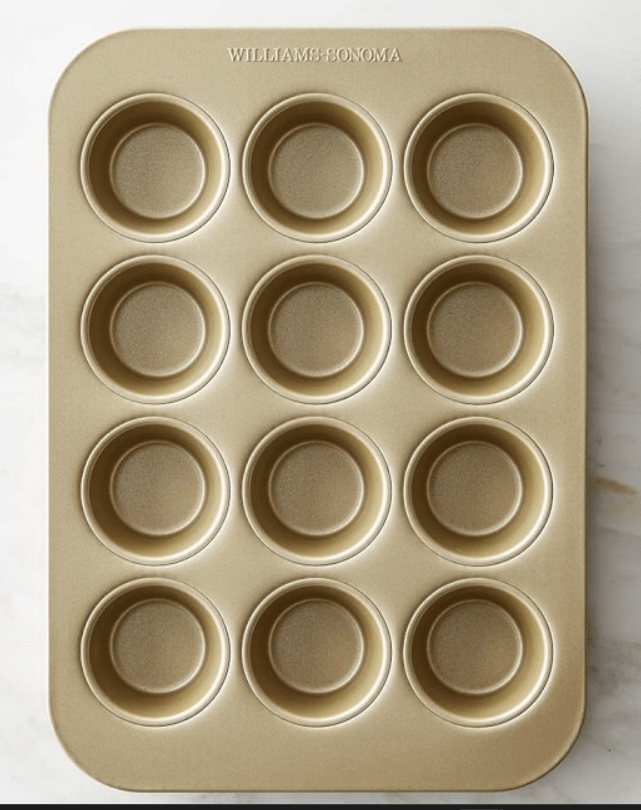
Material—These pans can be made of different materials. The highest-rated ones are made of aluminized steel. They are not only sturdy, but this material heats well and evenly.

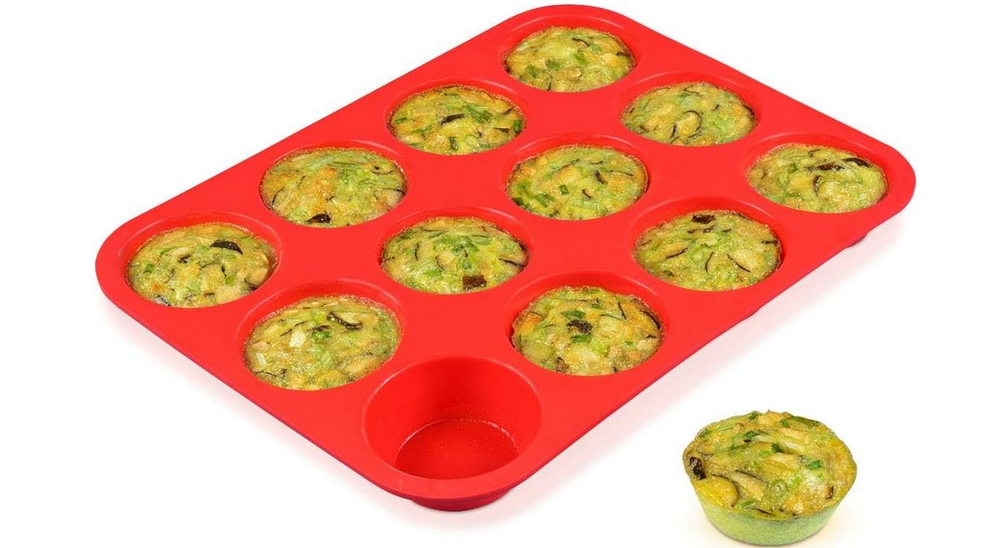
Many home cooks tend to look at silicone pans, but these are not highly rated. First, they are flimsy, and unless placed on a sheet pan, it is tough to maneuver them in/out of the oven or to rotate them in the oven. They also do not conduct heat in the same way as aluminized steel. Serious Eats found that baked goods came out pale and underdone in silicone pans. They also did not like using a baking sheet for a couple of reasons. First, you are using an extra pan that will need to be washed. Also, they found that the muffins browned too much on the bottom where the silicone was setting on the metal.

Rim—Chefs prefer that these pans have a wide rim, at least one inch, that allows you to grab them without putting your oven mitt into the batter.

Color—Very dark pans tend to produce overly dark baked goods and can also lead to misshapen muffins. As these pans conduct heat more quickly, the sides of the baked good set faster than the rest of the item. This can lead to more of a conical or spherical shape rather than a nice muffin shape.

The new trend towards gold or bronze pans, though, earns high marks for even baking. Both light and medium-colored tins produce more appealing and even shapes.

Pan Size

Regular or standard muffin pans have 12 cavities in which you place your batter. The cups will vary in size in different brands but are usually about 2” X 1.25”.

Image by webvilla from Pixabay

There are also 6 cavity ones, but you need to be careful about what you buy. Some will have a similar cup size as a standard 12-cup pan, but they will often have larger cavities than the standard pan. Bakers use these larger ones for cinnamon rolls, popovers or oversized muffins. One nice thing about a smaller-sized pan is that it is easier to put into a toaster oven.

You can also buy mini muffin pans, which usually have 24 cavities. Each cavity is about 1” X 1.25”. You can also purchase mini muffin pans with only 12 cups. I have two of those.

Cavity size—If you have a muffin tin with cavities that are too large, it will lead to squat and unattractive muffins or cupcakes. Cavities that were narrower at the base than the top were more likely to result in the classic muffin shape with a bit of spilling over the top. With mini muffin pans, try to get one with at least an inch between cavities. Less than this and you might end up with fused muffins.

Coating—Many good muffin pans have a nonstick coating. This coating makes it easy to remove the baked item and leads to easier clean-up.

Tips on using a muffin/cupcake pan

Brands—Two brands consistently rose to the top of the ranking: Williams Sonoma Goldtouch nonstick pans and USA nonstick pans. Some also highly rated the OXO version. If price were not an issue, most testers would have preferred Williams Sonoma. However, they are also the most expensive of these pans.

  • Only fill the cavities about ⅔ (no more than ¾) full.
  • Wipe off any spills from the surface before baking. It will be much easier to clean than after it has baked on.
  • If using the mini-muffin size, avoid large add-ins such as fresh fruit. The muffins are not large enough to accommodate this. On the other hand, add-ins that you can chop to a small size, such as chocolate chips, dried fruit, and nuts, are fine. Items that can be swirled in, such as Nutella or jam, are also good options. Since you still want loads of flavor in these small bites, add flavor punches such as citrus zest or amp up the spices.
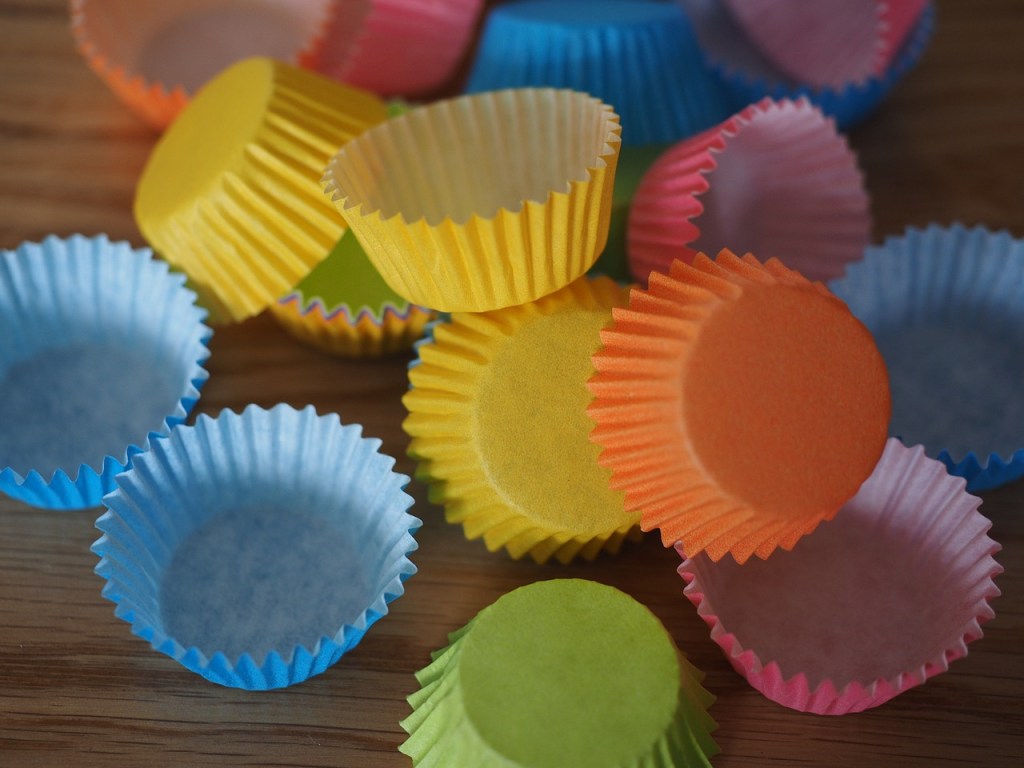
  • Choosing a pan with a nonstick coating makes removing from the pan easier. For extra protection, using baking liners can be helpful. Even with the nonstick coating and even if you use baking liners, most pros still apply a nonstick spray. If you have ever wondered about the different types of baking liners, see this Cooking Tip: Cupcake Pan Liners.
  • Converting recipes
    • Many wonder if they can take a recipe meant for a standard-sized pan and use it in a mini muffin-sized pan. Yes, but you do need to take some precautions. The most obvious is that you will use less batter in the mini-sized pan. Most standard-sized pans hold about ¼ cup of batter, whereas mini pans use only 1 to 1½ tablespoons in each cavity. You will need to do a bit of trial and error to get the best result.
    • On average, you will get between 32 & 48 mini muffins from a recipe that gives you 12 regular size muffins.
    • Bake at the same temperature, but the smaller items will take less time to bake. Be sure to check their progress before the time indicated on the recipe.
  • If you are only baking a partial batch of muffins or cupcakes, some will tell you to fill the empty cups with water to ensure a better result. Cook’s Illustrated tested this practice and found that it did not matter if you left the cups empty.
  • In addition to the typical muffin or cupcake, these pans can also be used for single-serve frittatas or quiches, single-serve meatloaves, and stuffed tomatoes or peppers.
  • Alternatives to a muffin pan – Here are some alternatives if you do not have a muffin pan.
    • Place mason jar rings on a baking sheet and put liners in them. Pour the batter in and bake as usual.
    • Use foil cupcake liners or double or triple up on paper liners. These will now stand on their own on a baking sheet, but the end shape might not be as pretty as if you had used a muffin pan.
    • Parchment – Cut parchment into 5-6 inch squares. Place over the holes in the muffin tin. Press down into the cavity with a small glass. You may also want to use your hands to form the parchment around the glass. If you make them double-layered, they might stand on their own.

If you already own a muffin pan, I hope these tips will help you succeed in making your muffins or cupcakes. If you are in the market for a new one or wish to gift one to someone, remember these recommendations to get the best pan you can.

Happy Baking!

Cooking Tips · Techniques

Slow Cookers – Do You Need One?

Do you own a crock pot? How about a slow cooker? Wait – aren’t they the same thing? That is just one of the facts we will explore in this Cooking Tip on Slow Cookers.

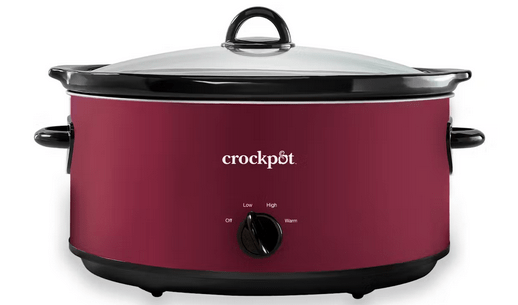
First, what about that name? A slow cooker is a small kitchen appliance. There are many brands, and Crock Pot is just one of them. It is the brand, though, that first popularized this appliance when it brought out its version in the 1970s. Today, there are a myriad of different brands.

I must admit that I rarely use my slow cooker. There are others who probably use theirs every week, but most others undoubtedly fall in the middle in terms of frequency of usage. Let’s look at the types, why people like them, and how to use them to get the best results.

Types of Slow Cookers

Traditional—The cooking vessel is ceramic, and it heats due to a heating element strip made of nickel and chromium that wraps around it.

  • Pros
    • They are thick and have excellent heat retention.
    • They absorb and transmit heat gradually.
  • Cons
    • They are heavy and can crack if dropped.
    • You cannot sauté in the crock. Instead, you must brown the meat in a skillet and transfer it to the cooker.

Other models – The cooking vessel is usually a nonstick-coated metal, usually aluminum. It sits on an electric heating element in the base, acting like a burner.

  • Pros
    • They are lightweight and durable.
    • They allow you to sauté and brown food in the crock rather than in a separate skillet.
    • They cook much faster than ceramic models.
  • Cons
    • Because they cook faster, your food can overcook if you are not paying attention.
    • Most recipes are developed for ceramic cookers; therefore, the time given in the recipe may be too long.

Benefits of a Slow Cooker

Convenience

  • This is the most common reason I hear for using a slow cooker: Just throw the ingredients in, turn it on and forget (or almost forget) it. At the end, voila, you have dinner. While much of this is true, there are certainly some precautions to take to ensure that dinner is something you wish to eat, which I will discuss.
  • Using a slow cooker frees up your oven and stovetop for other dishes, making it nice for the holidays or large gatherings.

Heat

  • Because you are not turning on the oven, you are not heating the house.

Energy efficiency

  • It uses very little energy, less than your cooktop or oven would use

Tenderizing

  • One of the great advantages of a slow cooker is that you can take tough (often cheaper) cuts of meat and turn them into tender mouthfuls.

Flavor

  • The extended cooking time can allow better distribution of flavors.

Travel

  • A slow cooker can be taken from your kitchen to the office or a party.

How best to use your slow cooker

  • Slow cookers are great for tougher cuts of meat, which are often less expensive. In fact, you do not want to use leaner cuts of meat, such as chicken breasts or pork tenderloin. If the meat is lean, it tends to get tough and stringy with the prolonged cooking. Using fattier and tougher cuts, including chuck roasts, short ribs, pork shoulder and lamb shank, is better. Whereas chicken breasts do not turn out ideal in a slow cooker, dark meat chicken is a good choice.
  • Trim the fat from the meat before cooking. As the meat cooks, it will release fat. If you are cooking stovetop, you can drain it off. This is not possible with a slow cooker. This can result in the cooking liquid becoming oily and greasy. For this same reason, most also recommend removing the skin from the chicken before cooking.
  • For the most flavor, sear your meat first in a skillet. Some slow cooker models allow for searing in the cooking vessel, thus eliminating the need for a separate skillet.
  • Cut the food into uniform sizes for even cooking and avoid over-crowding.
  • Layer the food properly. Put firm slow-cooking root veggies at the bottom and then the meat on top. If you want your veggies to have crunch, you may add them later in the cooking process.
  • Do not take the lid off until the dish is done. When you open the lid, heat is lost and takes time to recover. It can add 15-20 minutes to the cooking time. Also, the lid is very important in initially bringing the cooker up to a suitable temperature.
  • Fresh veggies are better to use than canned or frozen as the latter can cook too quickly.
  • To keep the freshness, wait to add delicate herbs until the end. Similarly, add your acid, such as citrus, at the end.
  • Tender foods such as pasta, squash, asparagus or peas should be added in the last hour of cooking.
  • Seafood such as shrimp, scallops, and fish should be added in the last 15-30 minutes of cooking.
  • Add any dairy at the last minute to prevent curdling.
  • Submerge the food in liquid while cooking. For increased flavor, use broth instead of water.
  • Although some do not agree, it is generally recommended that ground beef be cooked and drained of fat before adding to the vessel. With ground beef, it is also possible that it won’t cook evenly and thoroughly, leading to the risk of undercooked beef or being in the danger zone (40°F–140°F) for too long.
  • Because the cooking vessels take some time to heat up, some recommend preheating for about 10 minutes before adding the food.

Safety Advice

  • To remove food from the danger zone more quickly, start the cooker on high for an hour before lowering the heat setting.
  • Thaw foods first. The USDA says that since the cookers start at such a low temperature at the beginning of the cycle, the pathogens are not killed but remain in the meat and can stay in that danger zone for too long.
  • Are slow cookers safe to use overnight or unattended? Hamilton Beach says they are since they work on low wattage, only as much as 1½ 100-watt light bulbs. However, they do list the following cautions.
    • Follow the directions for your specific slow cooker.
    • Supervise children around the appliance.
    • Remind yourself that the outside will get hot. Only touch the handles.
    • Keep away from water.
    • Unplug when finished cooking.
    • Look the appliance over and do not use if you see any damage to the cord or the unit itself.
    • If leaving the house, ensure the appliance is set to low, placed away from the walls, and on a heatproof surface.

Purchasing a Slow Cooker

If you are looking to purchase a slow cooker, here is some advice from America’s Test Kitchen (ATK).

  • Look for one that is easy to use without overcomplicated displays.
  • Get one with a glass lid so you can see the progress without opening the cooker, which allows heat to escape and slows cooking.
  • Oval/rectangular shapes are more versatile. They accommodate large roasts, and the large surface area is better for cooking grains/beans.
  • Better quality cookers have internal temperature sensors and controls. This means they cook more gently and successfully than those without temperature controls. Cookers with sensors keep food at a braising temperature, just below boiling. Cookers without sensors will just keep fully heating to the boiling point, and you are more likely to get an overcooked result. The problem for the consumer is that you most likely won’t see this listed as a feature on the box. ATK used temperature probes to confirm this feature, and their recommendations are below.
  • Large, stay-cool handles are preferred.
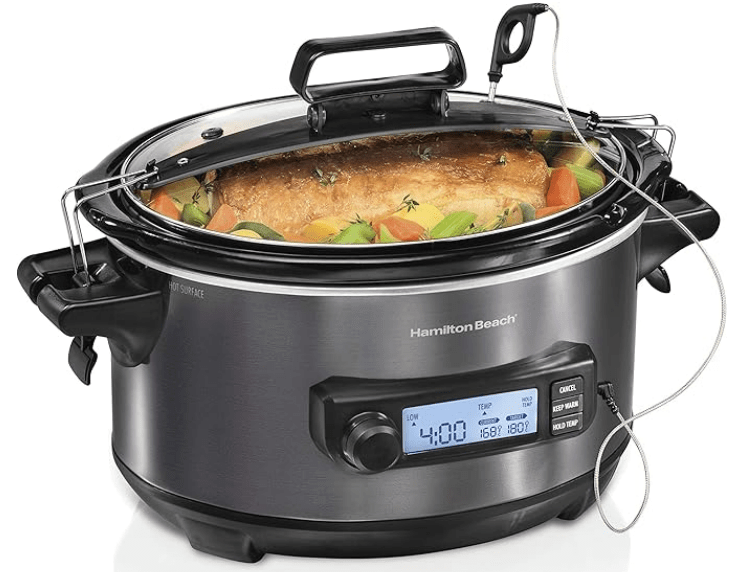
  • An attached temperature probe is nice to have as you do not have to open the lid to check on doneness.
  • Latching lids with silicone gaskets are also great if you transport food in the cooker.
  • A hold-temperature feature will keep food at a desired temperature for up to 24 hours. This allows you to reheat food, use it as a fondue pot or make yogurt.
  • ATK prefers digital over analog controls. Although the latter are simple to use, they do not indicate cooking progress and will not switch to keep warm when cooking is done. They keep cooking until you turn it off.

ATK Ratings

ATK tested and rated the following as the best slow cookers as of August 2024.

  • KitchenAid 6-Quart Slow Cooker (Although ATK just published this review recently, it is no longer on the KitchenAid website.)
  • Hamilton Beach Temp Tracker 6-quart Slow Cooker
  • The best slow cooker with searing capabilities was the Cuisinart 6-quart 3-in-1 Cook Central.

Here are their recommendations for smaller slow cookers.

  • Cuisinart 4-quart Cook Central 3-in-1 Multicooker
  • Hamilton Beach 4 Quart Programmable Slow Cooker

Recipe Conversion

  • As with many things, using recipes developed for the slow cooker will give you the best results. However, if you wish to try converting recipes, here are some tips.
  • You will have the best result with soups, stews, braises and roasts.
  • Reduce the liquid in the non-slow cooker recipe by 20-30%. The liquid won’t evaporate in a slow cooker, as the lid should be tightly sealed. Only use enough liquid to cover the meat and vegetables.
  • Ideally, only fill the cooker half to ⅔ full and never more than ¾ full.
  • Since the liquid doesn’t reduce by evaporation, it won’t thicken to a sauce-like consistency. So, dip your meat in a small amount of flour before cooking. You can also make a cornstarch slurry (water/cornstarch), stir it in, and allow it to simmer until it becomes thick. Alternatively, put the liquid in a saucepan on the stovetop and use the cornstarch slurry to thicken.
  • Slow cookers can amplify cayenne or other spicy ingredients. So, reduce the amount called for.
  • Onions and garlic can intensify in the slow cooker. So, use less than called for, or finish the dish with chopped green onions or chives.
  • Timing
    • The Spruce Eats lists conversion cooking time recommendations in this article.
    • BBC Good Food recommendations
Regular Recipe TimeSlow Cooker Time
15-30 minutes2 hours on High or 4-6 hours on Low
30 minutes – 1 hour2-3 hours on High or 5-7 hours on Low
1-2 hours3-4 hours on High or 6-8 hours on Low
2-4 hours4-6 hours on High or 8-12 hours on Low

Cleaning

  • Most slow cookers are easy to clean, and many have dishwasher-safe cooking vessels. You can help by using a non-stick cooking spray or rubbing oil inside the slow cooker before you begin the recipe.
  • Some like to use slow cooker liners, although they can be pricey. There is also the consideration of cooking your food in plastic.
  • If you do have food stuck on the inside of your slow cookers, here is some advice for clean-up.
    • Fill the cooker to the top with water. Turn it on to low and allow it to set for several hours. This should allow the food to loosen.
    • Some like to add a few tablespoons of baking soda and a few drops of dish soap and proceed as above.
    • If you have white mineral stains on the inside, fill the cooker with water and 1 cup of vinegar. Allow to set overnight and wash and dry as usual.

High Altitude

  • A final piece of advice for those of you who live at higher elevations like me. You already know that water boils at a lower temperature, and food takes longer to cook. You may wonder if that could affect how you use your slow cooker.
  • Colorado State University warns that there is more of a risk that your food will stay in the danger zone for too long. To counter this, they recommend setting your cooker to maintain a temperature of at least 200°F. Start the food on high for the first hour. After that, you can either continue cooking on high or turn to low at that time. You may also expect that the food will take longer to cook. Some experts suggest that you will need to add 30 minutes for each hour of time specified. Legumes can take twice as long.

Are you a slow cooker user? Are you considering buying one? I hope this Tip will help you choose the right one and use it to obtain the best results.

Cooking Tips · Techniques

Spätzle – Is it just another pasta?

Image by Hans from Pixabay

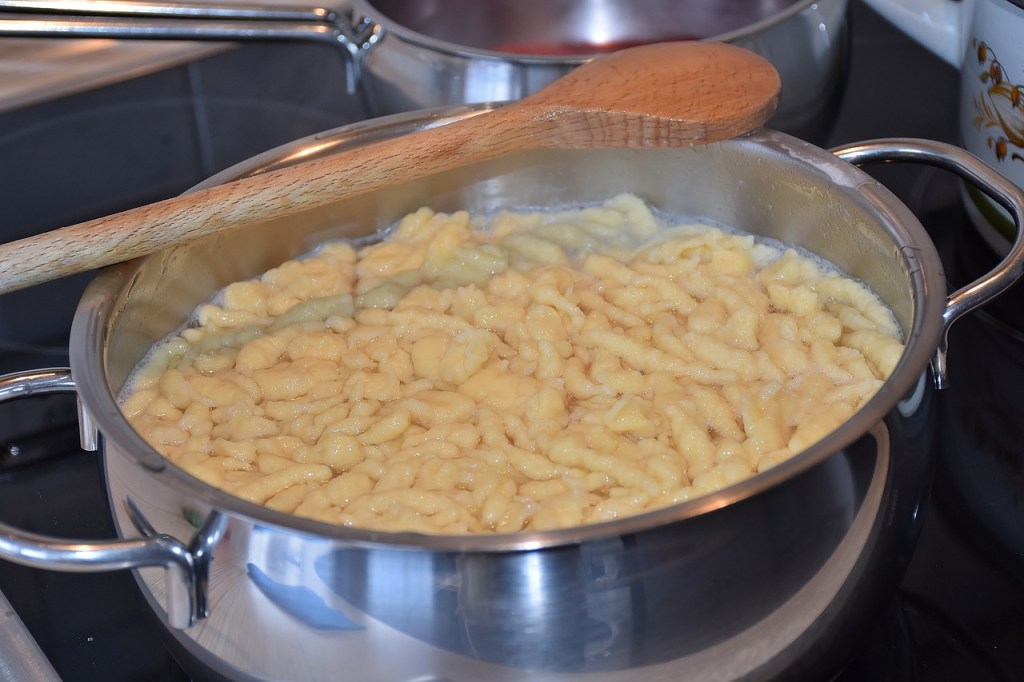
Have you ever had the German dish of Spätzle? Have you ever made it yourself? That is the subject of this Cooking Tip. What is Spätzle, and how do you make it?

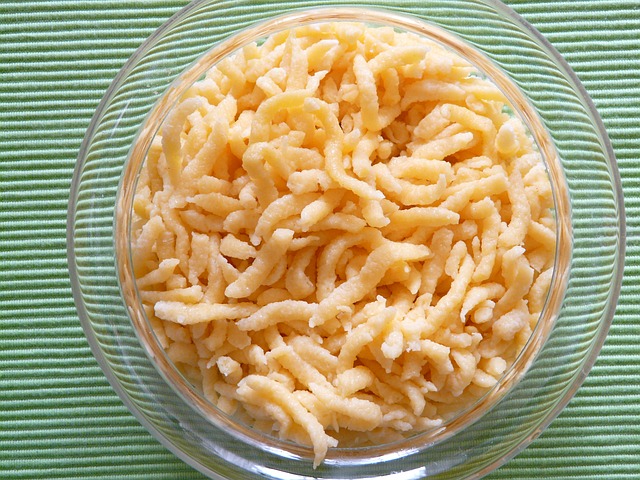
Some like to call spätzle Germany’s answer to pasta. It has similar ingredients – flour, eggs, water, and salt. However, spätzle is moister and softer than pasta dough. It is far too soft to roll out or use a pasta machine. Instead, it must be made using other tools.

Although eaten all over, it is a specialty of the Swabia area of Germany. According to Brittanica, Swabia is a historic region of southwestern Germany, including what is now the southern portion of the state of Baden-Württemberg, the southwestern part of Bavaria, as well as eastern Switzerland and Alsace. This dish is so popular and so much a part of this region that there is a Spätzle museum in southern Germany.

The name means “little sparrow” in German. There is some disagreement over the origin of this name, although most attribute it to the shape when made by hand. Others say it comes from how a German cook holds the dough as they break off pieces to put into water to cook as if they are holding a sparrow. Another theory is that the word originated from the Italian word spezzato, which translates to small or broken pieces. The Swabian people then changed this into spätzle. Other German names you might see are Spätzli, Spatzen, and Knöpfle, although the latter refers more to a dumpling shape than a noodle shape.

The recipe may seem quite easy, but there is some technique involved in achieving a light and tender noodle. As I mentioned above, there are four ingredients: flour, eggs, water (or milk), and salt. Some recipes may add nutmeg or other seasonings. Generally, the flour and salt are combined, the eggs are whisked and added, followed by the water or milk. The dough is mixed to the right consistency before being formed and cooked in boiling water.

Making the dough

As with so many traditional recipes, the above general instructions have many variations and nuances.

  • Flour—Most will use all-purpose flour, but others like to use semolina, 00 flour or a combination.
  • Liquid–Some like water, while others think milk gives a richer result. Whether the liquid should be cold or warm is a matter of debate. You may even see quark or sour cream in some recipes. The liquid should be added gradually so it doesn’t get too thin. If it does, you will need to add more flour. Others will say you must use mineral water for the liquid. They claim that this will result in a softer and fluffier noodle.
  • Eggs—The proportion of eggs to the other ingredients may vary by recipe, but the Swabian rule of thumb is to use a number of eggs equal to the number of servings plus one.
  • Mixing—Traditionalists will mix by hand, but mixing can also be achieved with an electric mixer. The key is to achieve the proper consistency. The recommendation is that it should resemble a thick pancake batter.
  • Consistency–This will differ depending on which method you use to form the noodles and can only be determined by practice. One piece of consistent advice is that the dough needs to start forming air bubbles before it is ready. After 10-15 minutes of beating, use a wooden spoon, scoop some of the dough, and pull to stretch. If you see bubble-like holes, the dough is ready. If not, continue mixing for another minute or two and then repeat the test. This should be followed by a rest of 10-15 minutes to allow the gluten to relax.

Forming the noodles

Each of these methods will give you different shapes/lengths of dough. It is said that to a Swabian, to be called spätzle, the noodle must have a length four times it’s diameter. If it is more of a shorter, rounder button shape, it is called knöpfle.

Here are the different tools you can use. Wetting or oiling any of them will help prevent the dough from sticking.

  • Spätzlebrett (spätzle board)
    • The most traditional way is to spread the dough over a wet spätzle board or wooden cutting board. The dough is then cut into thin strips with a butter knife, offset spatula, or bench scraper and dropped into the hot water.
  • Spätzle Press
    • This is similar to a ricer used for potatoes. It presses the dough through holes, forming it into long strips directly over the water.
    • The dough will need to be a bit thicker if using a press.
  • Spätzle Sieb
    • This looks like a flat colander through which the dough is pressed into the water. You could also use a regular colander with ¼-inch-wide holes. The spätzle dough is pushed through the colander using a wooden spoon or rubber spatula. You can use this same method with any heat-proof tool that has ¼-inch-wide holes, such as a box grater or a slotted spoon.
  • Spätzle Hobel
    • This appears like a cheese grater. It is usually topped with an attachment that slides and thus presses the dough through the holes into the water.
  • Spoon Method
    • If you do not have any of these tools, you may just drop spoonfuls of dough into the boiling water. It is best to use a metal spoon and wet the spoon between scoops to prevent sticking.
    • This will not produce the typical spätzle shape but a shape more like gnocchi or even a little pancake.

Cooking/Storing

Image by Rita-undmit from Pixabay
  • No matter how you form the noodles, they are then dropped into boiling salted water. They are only cooked until they rise to the top, which shouldn’t be more than a couple of minutes. This might need to be done in batches as you do not want to crowd the noodles.
  • Once cooked, they are generally sauteed in melted butter and garnished with fresh herbs, cheese, bacon and/or breadcrumbs.
  • Spätzle can be made in advance, cooled, and stored in a covered container in the refrigerator for 3-4 days. To reheat, sauté in melted butter.
  • Spätzle may also be frozen for up to 3 months. When ready to use, thaw overnight in the refrigerator.

If you have eaten spätzle, has it only been in a restaurant or when you purchased a package in the store? This dish requires very few ingredients and can be made relatively quickly once you master the technique. I hope you give it a try!

Cooking Tips · Techniques

Recipe times – why are they so often unrealistic?

Image by StockSnap from Pixabay

When you make a recipe, do you rely on the times listed in the recipe, whether it be prep time, total cooking time or cook time for just one particular step? In my classes, I often find the students religiously using a timer and expecting it to tell them when a specific step is done. That is one thing that can lead to recipe failure in your kitchen. I have been known to take times out of a recipe to force students to rely on their other senses, such as sight, smell, hearing and taste. In this Cooking Tip, I will discuss the dilemma of timing in recipes.

Before we get into the timing issue, let me remind you that not all recipes you will find, especially online, are well-written and accurate. I have written a prior Cooking Tip on Recipe Cautions that you might want to read.

Most recipes list different times—prep time, times for individual steps, and total cooking time. When I read a recipe, I ignore the prep time, as it can be very misleading. I might glance at the total cooking time, but I pay more attention to the timing of different steps. Although they might not be accurate, they give me a better estimate of how much time I will need to prepare a dish.

Let’s discuss why the timing listed in recipes might not be correct and what you should do to be successful. Many variables affect how long it will take you in your kitchen to prepare a dish from start to finish, and those variables often mean your real cooking time is different from the recipe’s.

Organization – what the French call mise en place – is very important to how long it will take you to complete a dish.

  • If your kitchen is disorganized, you will spend more time looking for an ingredient, the correct pot/pan, or a kitchen tool. None of that will be included in the recipe’s prep time, as the writer assumes you have all you need readily available.
  • How quick and efficient are your knife skills? I do not advocate trying to be a lightning-quick chopper/slicer. However, the more you practice, the quicker you will naturally get. And, the more efficient you become in achieving the proper and similar-sized results, the less additional chopping you will have to do. The recipe writer probably assumes you have good knife skills. If you do not, you will need to add extra time to the recipe.

What is included in the prep time?

  • You might think that the estimated prep time includes gathering all your ingredients and preparing them as instructed to get ready for cooking. It certainly doesn’t include the “gathering” stage.
  • Some recipes may include all the washing of vegetables, chopping, slicing, peeling, and measuring in the prep time, but others do not. When they do not, I am not sure what they think “prep” involves, but you are going to need to significantly lengthen their estimate for prep. Unfortunately, I have never seen a recipe that states what is and what is not included in prep time.
  • If the recipe says to use 4 tablespoons of butter at room temperature, most likely the recipe developer assumes the butter is at room temperature when you start cooking. If it is not, guess what? Your start-to-finish time will be longer as you wait for your butter to come to room temperature. And, yes, those recommendations are generally necessary to the recipe’s success. See this Tip for more explanation.

Equipment

  • A good recipe will include the type and size of pot/pan you will need. However, you will probably not have the exact same pot. Using a smaller or larger pot can affect the cooking time. A smaller pot decreases the surface area, and since the liquid in that pot will be deeper, it can take longer to cook. Cooking risotto in a smaller diameter pot will take much longer than if you cook that same risotto in a larger diameter and shallower pot.
  • How sharp are your knives? Just as with your knife skills, using a dull knife can increase the prep time, and that does not even talk about the danger of dull knives.
  • The oven temperature and its accuracy may greatly affect cooking/baking times. If your times are significantly different from the recipe, you should seriously consider checking the temperature of your oven with an accurate oven thermometer. Even if your oven registers the correct temperature, it may cook/bake differently based on its air circulation and whether you use the convection mode or not.
  • Cooktop temperature – low, medium, medium-high, and high on your cooktop can mean different things to different people, and even setting the dial at a similar setting as that recommended in the recipe can produce a different heat output on a different stovetop.

The Cook’s Skill

  • You get quicker at an activity whenever you are more skilled at it. Recipe developers are very experienced. Therefore, it probably takes them less time to go from start to finish than you will. It has been shown that cookbook and recipe writers frequently underestimate start-to-finish times.
  • This is especially true if you have never made the recipe before. If that is the case, add at least 15 minutes to the recipe’s timing.

Environment

  • The ambient temperature of your kitchen might mean it will take you longer than the recipe states. We all probably know that cooler kitchens lead to longer proofing times. However, cooler kitchens also mean your pantry ingredients, such as flour, will be cooler. Therefore, even if you place your item in a temperature-controlled proofer, cooler flour means a longer proofing time. The recipe writer is most likely making time estimates based on his/her environment, which may not match yours.
  • Altitude – those who live at a higher altitude know that certain dishes will take longer to cook, especially whole grains and beans. Unless the recipe states it was developed at a high altitude, assume it was not. That means more time for you.

Ingredients

  • Besides the ingredients’ temperature, the food’s size will also alter the cooking time. Does diced onion mean the same thing to the recipe writer as it does to you? If the food is larger than the one used in developing the recipe, cooking time can be longer.
  • The thickness of the meat is very important. If your meat cut is thicker than the recipe calls for, it can take much longer to cook.

Follow your senses, not your timer.

  • Because of the above, if a recipe says a specific step will take a certain amount of time, do not rely on that time. As Bon Appetit puts it, “When you’re following a recipe at home, cook to the indicator, not to the time.” For example, the recipe might say, “sauté onions for 3-5 minutes or until they are softened and golden.” The indicator after that “or until” is so much more important than the “3-5 minutes.”
  • Use your senses to tell when you have completed a particular step. Does your pan and the ingredients look as indicated? Is the aroma as stated? If the recipe says something like “softened,” taste it. There is no better way to determine texture than by tasting.

Timers

  • Does that mean you should throw your timers out? No, they have a place, especially when something is in the oven. I always set my timers for less time than the recipe states and then check what I am cooking.
  • For meat, invest in a good food thermometer. That is one piece of equipment that is bound to improve your results in the kitchen. It is not just for meat, though. Bread, casseroles, and candy are just some other items that will benefit from cooking to the proper temperature.
  • If a timer does nothing else, it will help you not forget that you have something on the stove or oven.

As I mentioned in the Tip on Recipe Cautions, a recipe failure might not be your fault. It might be the fault of the recipe writer. Timing is something over which you have control, and I hope this explanation will help you as you evaluate a recipe and its stated timing. It might not be what you expect!

Cooking Tips · Techniques

Kitchen Towels – more to them than you think

Do you give much thought to your kitchen towels? I have a drawer full of all kinds. Some are lovely towels that very good friends gifted to me. Others are ones I have had so long that I have no idea when or where I obtained them. Others are seasonal that I only pull out for Christmas, Thanksgiving or the fall season. I must admit that some of these towels are more absorbent and seem to do a better job. Are there certain things we should look for when buying and using kitchen towels? Are some brands superior to others? Let’s look at that topic in this Cooking Tip.

Image by Tomek from Pixabay

Before looking at what makes a better towel, reviewing my Cooking Tip on Kitchen Sponges would be helpful. Because of the risk of pathogens flourishing in kitchen sponges, we should probably use more kitchen towels instead of sponges as long as we take care of the towels properly.

As with sponges, towels can also be a breeding ground for pathogens. Wet surfaces are more susceptible to bacterial growth, so kitchen towels should always be laid out or hung up to dry between uses.

They should also be swapped out frequently, probably every few days. If they come into contact with raw meat or eggs, swap them out as soon as you wipe up the spills. They should be laundered and allowed to dry completely before being put back into use. For the best sanitation, a hot water wash is recommended. Hot water is also better for stain removal. The downside (besides the energy cost) is that hot water will lead to more shrinkage of the towels. I suspect most of us throw our towels in a dryer after laundering, but one advantage of air drying is that it reduces the piling of the towels.

When you go to the store to buy kitchen towels, are you drawn to the pretty colors and patterns? I know I am. However, there are more important considerations, such as the type of fabric, the type of weave and the size. Let’s look at the pros/cons of different types before looking at favorite brands.

Fabric – Most dish towels are made of cotton, linen, microfiber or a blend.

Image by cnyizhao from Pixabay

Cotton

  • Pros – cotton towels will be soft, more durable than other fabrics, and very versatile.
  • Cons – cotton towels take longer to dry and are prone to piling and leaving lint behind.

Linen

  • Pros – linen towels quickly dry and are much less likely to develop piles or lint. They are also durable.
  • Cons – the major con is that they are pricey compared to cotton towels. They can also feel scratchy for the first few uses

Microfiber

Image by Freepik
  • Pros – microfiber towels are relatively inexpensive, very soft, and ideal for shining delicate glassware.
  • Cons – many people use their kitchen towels as pot holders to remove hot items from the oven. Microfiber can melt when exposed to high heat and should not be used for this purpose.

Weave – Towels can be woven in different patterns. They vary depending on how the strands of material are interlaced to form the fabric. There might be a simple, plain weave, a waffle weave, a basket weave or a terry cloth weave. Although you might not care about identifying the exact weave, the weave will manifest in how the towel looks, feels and performs.

Image by congerdesign from Pixabay
  • Cotton towels with a plain weave will be thinner. They won’t be as absorbent, but they are great for delicate tasks such as drying glasses. They are also excellent for wringing out moisture from your shredded veggies (such as zucchini) or for just placing your washed produce so it can dry.
  • Waffle weave towels will have a square or rectangular pattern. They tend to be thicker and more absorbent.
  • A basketweave is said to strike a balance between strength and absorbency.
  • Terry cloth is the easiest to identify. It is very absorbent but is the most prone to piling and linting.

Size somewhat depends on your storage space and your personal preference. People who do a lot of towel drying of dishes like larger towels as they can dry more dishes with just one towel. America’s Test Kitchen prefers towels that are 30 inches long by 20 inches wide. Another consideration is to remember that most towels will shrink some after being washed. So, the size you end up with will be smaller than what you buy. For people like me, who do minimal towel drying of dishes, smaller sizes are better as they are easier to store and dry.

What should you look for in a kitchen towel?

  • Absorbency
  • Durability
  • Easy to clean
  • It is thick enough to use as a pot holder without being too bulky. This is a minor consideration for me, as I prefer using an oven mitt to a towel for hot items. Others tend to always use a towel, and for them, this is an important consideration.
  • Usage – Many, including myself, like to have different types of towels for different purposes.
    • I always have one very absorbent, usually terry, towel dedicated for hand drying. That is the one I loop through my apron ties every time I cook. It is important, though, to keep that towel dedicated just to hands and not where it will come into contact with food or clean dishes.
    • I then have simpler woven towels that I use to set dishes on as they air dry or to put my washed produce on. Since, as I said, I do minimal towel drying of dishes, these towels also work well enough for that purpose.

There are similarities and differences in results from outlets that have conducted rigorous testing of different towels. As you might expect, everyone has their favorite towel. A few towels, though, tend to rise to the top of the ratings over and over.

Zeppoli Dish Towels

  • These towels are considered the workhorse of many professional kitchens, particularly because they can be used for multiple tasks. They can be used not only for lint-free dish drying but also for hand drying, wiping counters or appliances and as potholders.
  • They are made of 100% cotton and are 14”X25”.
  • They come in a few different colors and are simple yet attractive towels.
  • They are relatively inexpensive as compared to other highly rated towels.
  • The one negative is that they can take a long time to dry.

Williams Sonoma Towels – multiple sources highly rated two different WS towels.

WS Classic Stripe Towels

  • Made of 100% cotton in a basketweave pattern, these towels are available in several different colors and the size is 20”X30”.
  • They are strong and absorbent, although not as much as terry towels.
  • Stains come out easily.
  • They dry more quickly than other towels.
  • They tend to be rough, but they will soften with washing.
  • They are more expensive than the Zeppoli.

WS All-Purpose Pantry Towels

  • Made of 100% cotton with a tighter weave.
  • Available in multiple colors with a size of 20”X30”.
  • They have a waffle texture on one side and terry on the other.
  • Top rated by TheKitchn.com and Wirecutter. The latter states they are the best combination of absorbency, durability, attractiveness and price.
  • They are very durable.
  • Some users preferred the classic striped ones, as the all-purpose ones are rougher and a bit thick for delicate drying tasks.

Utopia Towels Kitchen Bar Mops Towels—If you want an inexpensive towel for cleaning purposes, these bar mop towels may be the thing.

  • They are a terry cloth made of 100% cotton, making them very absorbent.
  • They come in multiple colors and are 16”X19”.
  • They may not be the best for dishes as they tend to leave lint on the surfaces. They are better for wiping up spills and drying hands.
  • Besides the lint, other negatives are that they are not the most durable, take a long time to air dry, and are not very attractive.

Different sources rate other towels as their favorite, but the above were the ones that were rated the highest and most often.

Do you give much thought to your dish towels? If not, maybe another look is in store for you. I hope the above information will be helpful as you replace some of your dish towels.