Cooking Tips · Techniques

Sabayon or Zagablione – A Creamy Delight by any Name

Are you looking for a relatively quick dessert using ingredients that you probably already have? Here’s a great idea—try making a Sabayon. This Cooking Tip explains what it is and how to make it.

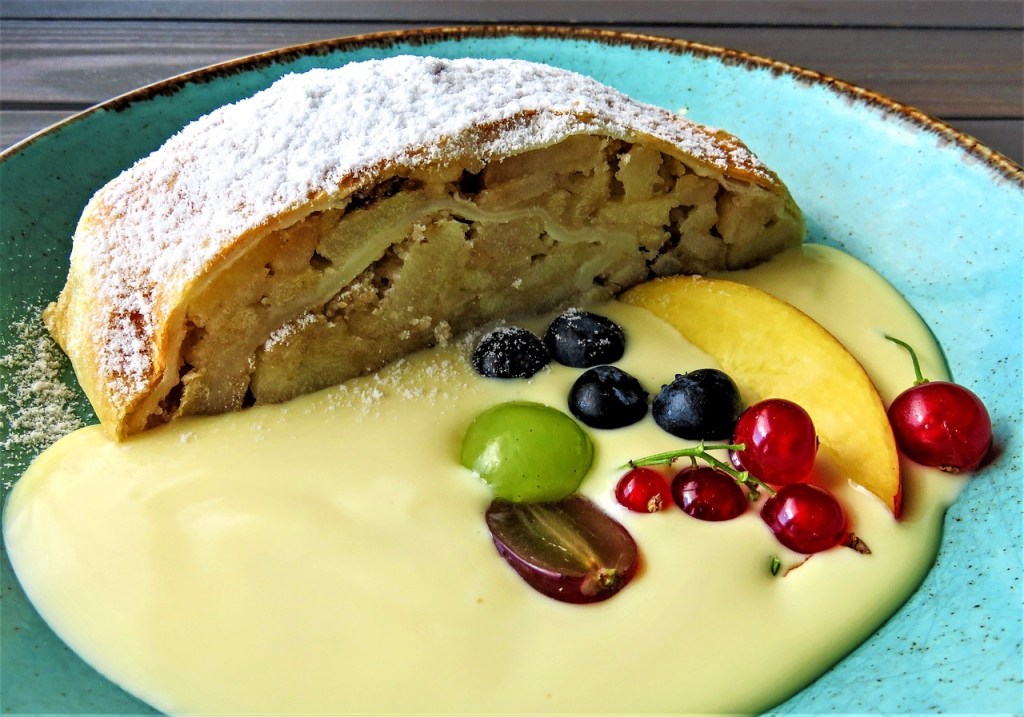
Image by Monika Schröder from Pixabay

Sabayon is a rich and creamy French sauce. In Italy, it is known as Zabaglione, and this version probably predates the French one. Although it is basically the same dessert, the French version is typically made with white wine or champagne, while the Italian version usually uses Marsala wine.

This dish is easily customizable and can be made in sweet and savory versions. In the culinary world, it is considered a technique rather than an actual recipe.

Ingredients

  • Egg yolks thicken the sauce. The fresher the eggs, the better the result.
  • Sugar adds sweetness but also helps trap air when combined with the yolks. According to some, it also slows the formation of protein bonds, which allows the eggs to reach a safe temperature without scrambling.
  • Wine adds flavor. Because wine is a prominent flavor in this dessert, use one you like. For a non-alcoholic version, substitute an equal amount of orange juice (or other citrus juice), sparkling apple cider, or coffee for the wine.
  • Savory versions will eliminate the sugar and add a pinch of salt. You can consider other ingredients such as stock, pureed red pepper, finely chopped herbs, spices, or olive oil. Use your imagination.
  • Ratio – The standard ratio is equal parts, by weight, of these ingredients. The amount of liquid can vary depending on how thick you want the sabayon to be.

Procedure

Image by Estudio Gourmet from Pixabay
  • This dish needs to be made over gentle heat. The best way to do this is to whisk the mixture over a bain marie (water bath). You can either use a double boiler or place a heat-proof bowl over a pot of simmering water. The bottom of the bowl should not touch the water. This should be prepared and ready to go before starting the cooking process.
  • Whisk the egg yolks and sugar in a large bowl. Since the mixture will expand as it is whisked, use a bowl large enough to accommodate this increase in volume. Whisk in the wine. Whisk until the mixture lightens in color, looks foamy and increases a bit in volume.
  • Most chefs recommend whisking in a figure 8 pattern to increase aeration. America’s Test Kitchen tested different whisking methods of stirring, beating and side-to-side motions. Although they did not specifically test these in making a sabayon, they found that the side-to-side motion was the most efficient in almost all applications.
  • Place the bowl over simmering water. Whisk continuously until the mixture becomes thick and frothy and the sugar dissolves completely.
  • Keep whisking until the temperature reaches 150° – 165°F and makes ribbons. To see this, elevate the whisk above the surface of the mixture. As the mixture drops back into the bowl, it will look like a ribbon that stays on top for about 15 seconds. By this time, it should have at least doubled in volume.

Serving
Sabayon is best used immediately after you make it. You can refrigerate it for a couple of days, although it will deflate. Whisk well before serving. Reheating is tricky as it can separate. If you want to reheat, use very gentle heat. A bain marie is recommended.

Sweet sabayon

  • Serve over fresh fruit.
  • Serve over bread pudding.
  • Serve over a slice of cake.
  • Make a trifle by layering the sabayon with pieces of sponge cake, fruit, chocolate, nuts, or crunchy cookies.
  • Put fresh berries in an oven-safe dish and spoon sabayon over the top. Put under the broiler (watch carefully) or use a kitchen torch to brown the top.

Savory sabayon

  • Serve over asparagus or other vegetable.
  • Serve over scallops or other seafood.

Variations

  • Dissolve ¼ teaspoon gelatin into the wine. Finish the recipe as normal and then chill until cold and set.
  • Fold in whipped cream or whipped egg whites (beware that these will be raw) at the end.

Possible pitfalls

  • You allow the egg yolks to get too hot, resulting in scrambled eggs. To prevent this, watch that the water in the bain marie is only simmering and whisk continuously. If you think it is getting too hot, take the bowl off the heat and continue to whisk. Lower the heat before putting the bowl back over the water.
  • The mixture breaks. Add a small amount of ice water and whisk to re-emulsify.
  • Lumps in the mixture can be caused by too much heat and insufficient whisking.

Have you ever made a sabayon or zabaglione? Although it is not difficult and only requires a few commonly available ingredients, you will need a bit of arm power, as the whisking can take more than 10 minutes. Grab a readily available friend or family member and share the whisking. Sharing in the result will be their reward!

Cooking Tips · Ingredients

Deciphering Beef Grades & Beef Cuts

It is no surprise that Americans consume a large amount of beef. For 2024, it is estimated to be about 58 pounds per person. According to the USDA, the most beef consumed was in 1976, almost 92 pounds per person, and the lowest point was in 2009, at about 55 pounds per person. I am not a huge beef lover, so my consumption is very low. Since I buy beef so infrequently, I want to make sure I am buying the best type of beef for my purposes. That means decoding all the terms that are used to describe beef. That is just what I will discuss in this Cooking Tip.

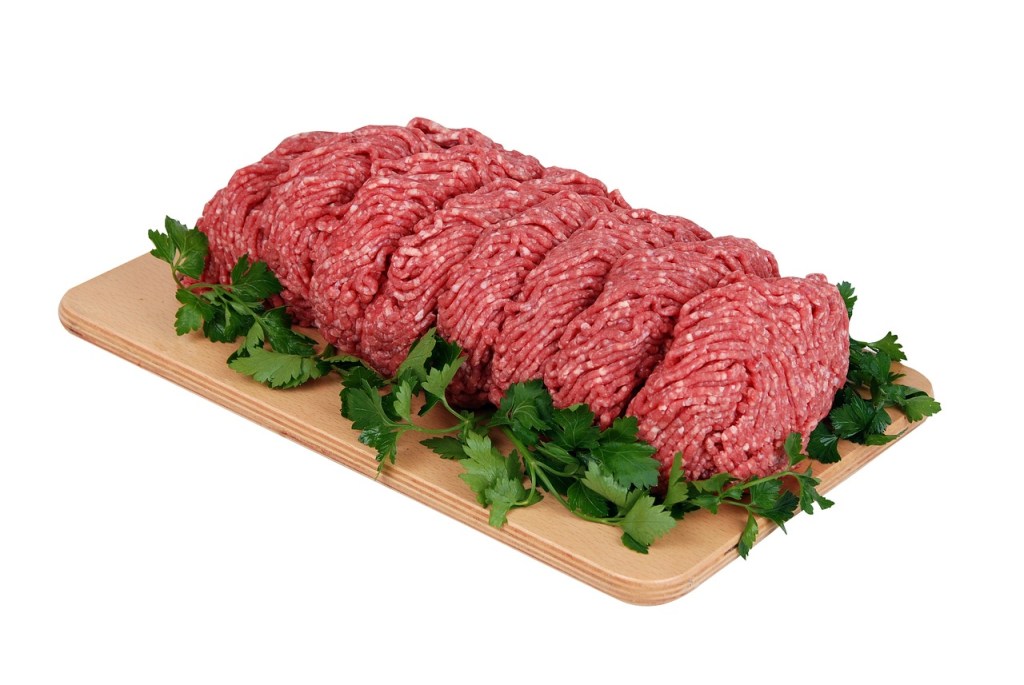
Image by POLAT DÖVER from Pixabay

Ground Beef

According to the National Cattlemen’s Beef Association, ground beef sales were 51% of all retail beef sales as of November 2022. I have written another Cooking Tip on Ground Beef and urge you to read that one for information about the types of ground beef.

When you purchase pre-packaged ground beef from a supermarket, the packaging will probably be one of three kinds.

Traditional Packaging

  • This is the most common type of packaging.
  • The beef is placed on a foam tray and covered with plastic wrap. This packaging allows oxygen in, giving the meat a red color.
  • The oxygen exposure does lead to faster spoilage, meaning you should either use it within just a few days or freeze it in an air-tight package.

Modified-Atmosphere/Controlled Atmosphere Packaging

  • This packaging is usually a plastic container that has had the air vacuumed out and replaced with other gases.
  • The beef still has the desired red color.
  • It also has a slight increase in shelf life.

Vacuum Sealed

  • With the air all removed, the beef looks more purplish-red than bright red.
  • Vacuum sealing produces the most extended shelf life.
  • You can either freeze it in that container or portion it out and freeze it in other air-tight containers.

Chubs

  • These are rolls of ground beef.
  • They have been vacuumed sealed.
  • Just as with the other vacuumed sealed ground beef, it will appear more purplish.
  • It also can be frozen as is or frozen in smaller portions.

Beef Grades

Though inspection for safety is mandatory and carried out by the Food Safety and Inspection Service, meat quality grading is voluntary and paid for by the producer. Because it is voluntary, you will not always see the following grading labels on the package. If you do, though, it will tell you that the USDA has assessed the meat for quality and approved the use of its label.

The degree of marbling, which is the intramuscular fat, determines the grade. It is this fat that provides flavor, tenderness and juiciness. The USDA collaborated with the United States Meat Export Federation and Colorado State University to develop an educational video about the beef grading process. They say the video “provides a comprehensive overview of the beef grading system – from farm to table.”

Prime

  • A beef cut labeled “Prime” will have the most marbling.
  • It will be the most tender.
  • No more than 2% of beef produced in the US will bear the prime label.
  • It is often hard to find in regular supermarkets as it is purchased for sale at high-end restaurants, hotels, boutique butcher shops and upscale grocery stores.

Choice

  • Although less than prime, choice cuts still have a moderate amount of marbling.
  • This cut will still be very tender.
  • It makes up 50% of all graded beef.
  • This is what you will find in mid-level restaurants and not uncommonly in local supermarkets.

Select

  • This cut will have minimal marbling and, therefore, will be tougher.
  • Due to less marbling, it will be slightly leaner.
  • Select cuts compose 65-70% of beef produced in the US.
  • This is a very common cut to find in supermarkets.
  • Because of its lower fat level, it tends to be tough if cooked with high-temperature cooking methods such as grilling or searing. A better use is a gentle cooking method such as braising.

Other lower grades of meat include standard, commercial, utility, cutter, and canner. These are not typically sold to consumers but are used in processed meat products.

If there is no USDA stamp, look for the degree of marbling, as that will generally give you a juicer and more tender cut of meat.

Other Beef Terms

Wagyu

  • This term refers to four main breeds of Japanese beef cattle that produce a large amount of intramuscular fat.
  • This type of beef is graded differently. They use a beef marbling score that ranges from 1 to 12, with 12 having the most marbling.
  • You may also see grades from A to C, with A being the highest.

Grain-Fed or Grain-Finished

  • This term indicates that the cattle are fattened on grain (usually corn) for 3-6 months before slaughter.
  • Very often, grain-fed cattle are treated with antibiotics and possibly growth hormones. However, there are ranchers that raise grain-fed cattle without using either of these.
  • Grain-fed beef is known to be well-marbled.

Grass-Fed or Grass-Finished

  • Here, the cattle are fed grasses and legumes, making the meat lower in saturated fat, cholesterol and calories.
  • The flavor is richer but gamier.
  • This practice of raising cattle is more time-consuming and requires a large amount of land.

Beef Cuts

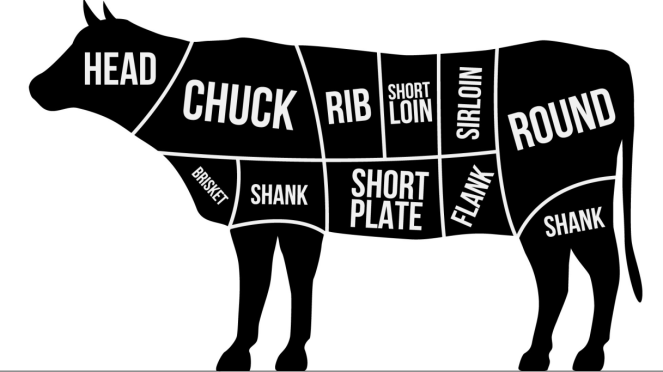
Besides choosing the grade of beef, you need to choose which cut you want. Below is an explanation of the most popular cuts. For more information on other cuts and recommended cooking methods, see this chart from the Beef Association Website.

Sirloin

  • This cut comes from the rear half of the loin.
  • Although it is tender, it is not as tender as some other cuts.
  • Quality and tenderness vary by type of sirloin.
    • Top sirloin is of excellent quality and will be very tender.
    • The bottom sirloin is of slightly lesser quality and is usually tougher.
  • As it is relatively lean, it is very easy to overcook.

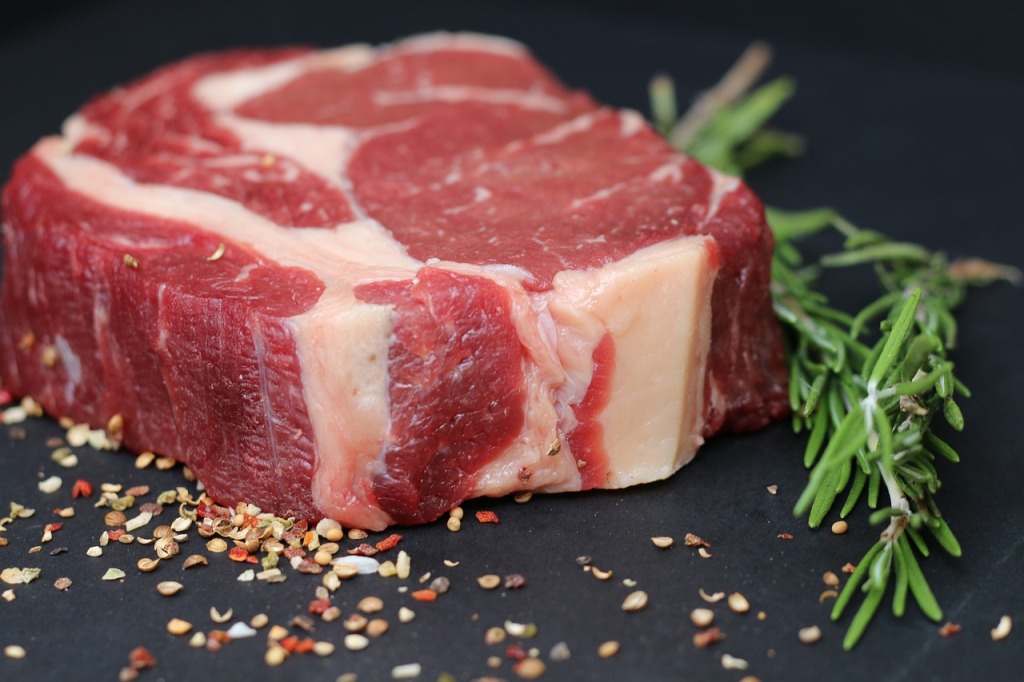
Rib Eye

  • A ribeye is cut from the rib area just behind the shoulder.
  • This is a well-marbled beef cut that can be purchased either bone-in or boneless.
  • A Tomahawk steak is a thick ribeye with a long bone.

Strip (New York Strip)

  • This cut comes from the short loin.
  • It has good tenderness and a beefier flavor than the ribeye or filet.
  • It may be purchased bone-in or boneless.

Filet Mignon

  • This well-known cut is from the beef tenderloin, cut from the back’s center.
  • It is sought after due to its extreme tenderness.
  • It is milder tasting and less rich than the rib eye.
  • It is one of the most expensive cuts.

T-Bone

  • A T-Bone is composed of a strip steak, the accompanying bone and a portion of the tenderloin.
  • It can be challenging to cook as the filet part will cook quicker and can become overcooked before the strip side is done. Experts recommend a 2-stage reverse sear.

Porterhouse

  • This is composed of a strip steak with a whole filet attached.
  • It has the same problems with cooking as the T-Bone. A reverse sear is recommended, although broiling is also an excellent cooking method.

I hope this will help you pick out the best beef for what you want the next time you go to the store. Remember that the grading system is voluntary, so you will likely not see the USDA shields on all the meat. I just took a brief look at the websites of our local supermarkets. When the meat carried the USDA shield, it usually noted Choice meat. Only one or two offerings were of the Prime level. When you find it, the price may make you think twice about purchasing it. No matter what you buy, remember that cooking the meat properly, using an instant-read thermometer and not overcooking it will help you get the best meat on your table.

Cooking Tips · Techniques

Game Meat – Is it for you?

Some of you probably grew up eating at least some game meat, and some of you probably continue to do so. Others of you may have never tried game meat. Should you? What does it taste like? An introduction to game meat is the subject of this Cooking Tip.

Game meat refers to the meat obtained from animals typically hunted in their natural habitats. Today, the term is applied to those same animals raised on farms. In fact, according to the USDA, “Game species raised on farms under appropriate regulations can be sold. Wild game species that can be legally hunted under Federal or State regulatory authority cannot be sold but can be harvested for personal consumption.” What can be sold and where will vary by state. This is to ensure the sustainable use of game meat and that they are handled in such a way as to prevent food safety issues.

Before I discuss different game animals, there are some generalities about game meat.

  • Game meat, whether farm-raised or wild, will taste different than meat from domesticated animals. This is mainly because wild animals have different diets and activity levels. Meat from domesticated animals will have the mildest flavor, whereas the wild game has the most robust flavor, with the farm-raised game having intermediate flavor.
  • Many call the flavor of this meat “gamey.” The flavor profile often is described as strong, musky, and earthy. This flavor is not an indicator of the meat’s freshness or safety. As opposed to some of the cliches, game meat does not taste just like chicken or beef, although they may share some similarities.
  • Proper handling of the meat from harvest to plate and the cooking method will help decrease the gamey flavor.
  • Game meat is typically lower in saturated fat and calories than domesticated meat.
  • Because of the lower fat content and the fact that game animals get more exercise, game meat can be tough if not handled properly. This type of meat generally benefits from cooking slowly or in a pressure-type environment.
  • All game meat is a good source of protein and vitamins.

Here are some suggestions for reducing the gamey flavor.

  • The gamey flavor comes from the fat. Removing the fat can remove some of this flavor but also decreases juiciness and tenderness.
  • Chefs use spices, herbs and marinades to help with these flavor challenges.
  • Soaking the meat in a solution may help. Make sure to cover the game completely in the solution and discard the solution after soaking. Small animals may only need 8-12 hours, while larger ones may benefit from a 24-48-hour soak. Here are some ideas from game experts.
    • Salt solution – use ¼ cup kosher salt per quart of cold water.
    • Vinegar solution – use one cup per quart of cold water.
    • Milk solution – cover with milk and soak.
    • Red wine solution—This is good if you will then cook your meat in a stew. Those who advocate this method recommend boiling the wine, cooling it and then using it for the soak.

Cooking temperatures—Just as with meat from domesticated animals, it is best to use a food thermometer to ensure the meat’s safety.

  • According to the USDA, fresh game should be cooked to an internal temperature of 160°F. They note that the meat may still be pink in the center, but it will be safe to eat if it reaches that 160°F mark.
  • For the most tender meat, they recommend cooking at this 160°F temperature for more extended periods or even cooking to higher temperatures to break down the tough connective tissue.

Types of game meat

Here is an interesting tasting chart from Fossil Farms from New Jersey that breaks down the flavor profiles for 16 different types of game. Below is a discussion of a few of the most common.

Venison

Image by Jessica Rockeman from Pixabay
  • Although we think of venison as deer meat, that term can also be applied to meat from elk, moose, caribou, antelope and pronghorn.
  • It is a type of dark meat.
  • It is rich in flavor.
  • It has less fat marbling than other meat, so it is leaner but still tender.

Wild boar

  • This is the meat from an undomesticated pig.
  • It is leaner than regular pork, making it tougher. Therefore, it is often cooked with pressure or in a slow cooker.
  • The meat is darker with more robust flavors.
  • It is one of the gamier flavors with nutty tones.
Image by Hans Benn from Pixabay

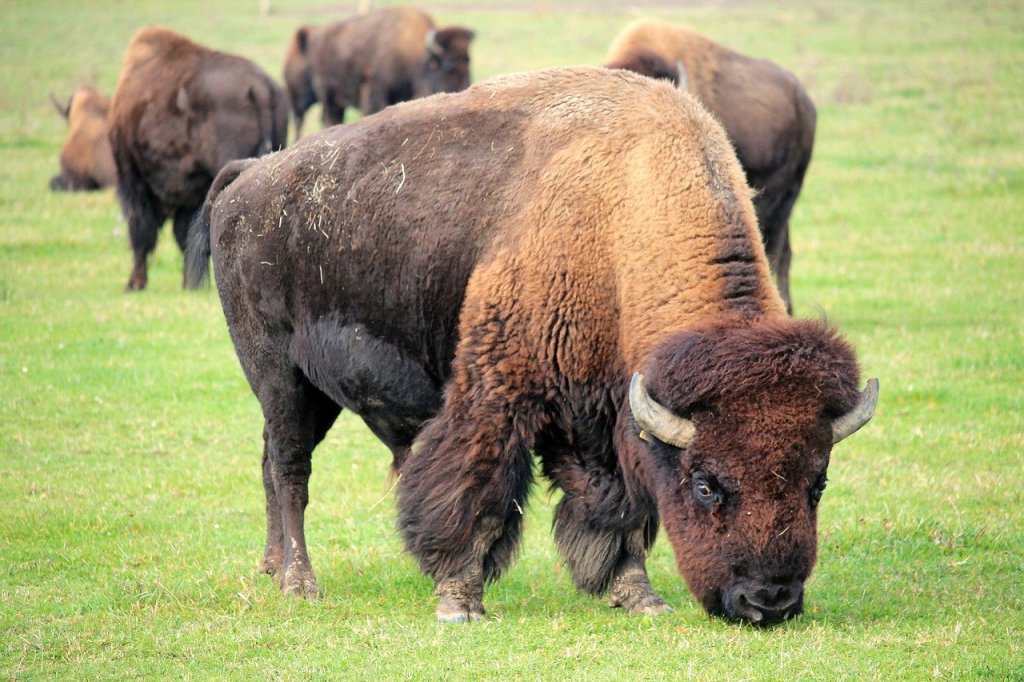
Bison

  • It is also known as an American buffalo.
  • Common cuts include bison steaks, chili/stew meat and ground meat for burgers.
  • It is slightly sweeter than domesticated beef.
Image by Lori from Pixabay

Elk

  • The meat is similar in texture to beef.
  • The flavor is deeper and bolder.

Antelope

  • It is similar in flavor to deer meat.
  • It is leaner than deer meat.

Rabbit

  • This white meat is lean but tender.
  • It has a somewhat delicate flavor but is stronger and earthier than chicken.
  • In cooking, it is often treated similarly to poultry.

Goat

  • Goat has a very distinct taste that many do not like.
  • It is rich with an unpleasant smell and aroma. To reduce this, it must be treated before cooking, which also tenderizes the meat.
Image by rfotostock from Pixabay

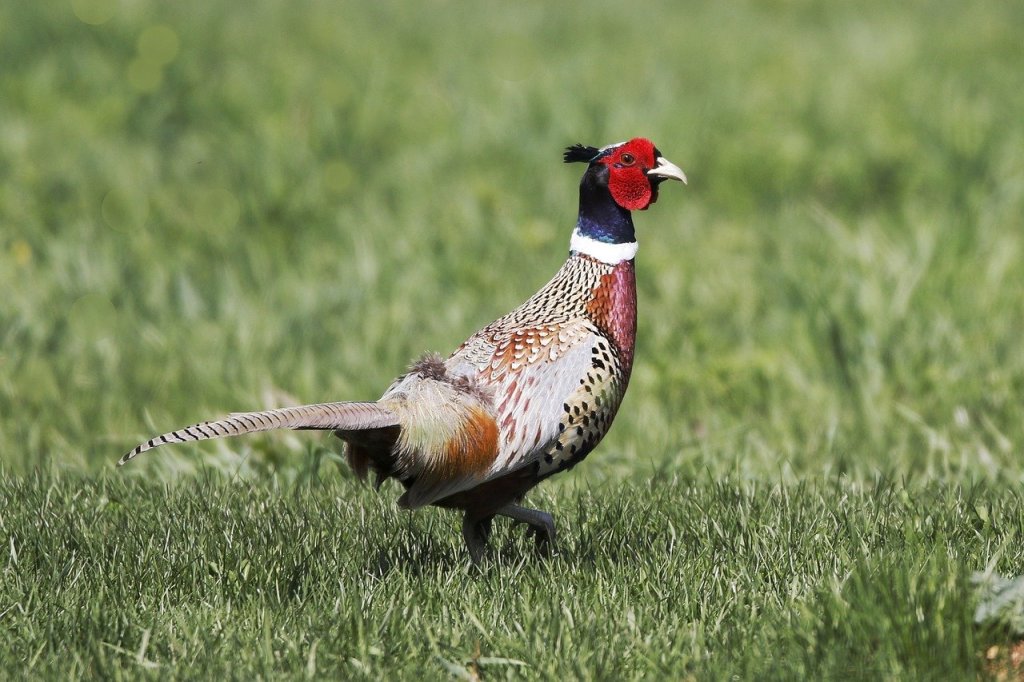
Pheasant

  • It is a white meat that is leaner than chicken or turkey.
  • It has a relatively mild taste.
  • It is often roasted like a chicken/turkey or made into sausage.

Quail

  • A very small and delicate bird that has a sweet but gamey flavor.
  • It is often served roasted whole.

Duck

  • There are both domesticated and wild ducks.
  • It is very rich in flavor.

Are you a game eater? If you do not hunt or have a hunter that gives you the game, it may be hard to find in a typical supermarket. In my area, it is very easy to find different forms of bison. It is not true of other types of game.

Game does show up on restaurant menus, particularly those establishments in the same area as where the game live. Are you a fan? Are you even interested in trying game meat? Have fun and experiment with these other flavors!

Cooking Tips · Techniques

Reverse Searing – Advantages & Drawbacks

If you cook a lot of meat, you know the importance of getting a good sear on it. It results in a tasty and crunchy exterior but also leads to the development of fond, the foundation of a great pan sauce. Searing is a fairly easy procedure, and most of us do it exactly the same way. The subject of this Cooking Tip, though, is about turning the searing process on its head in something called Reverse Searing.

Image by tomwieden from Pixabay

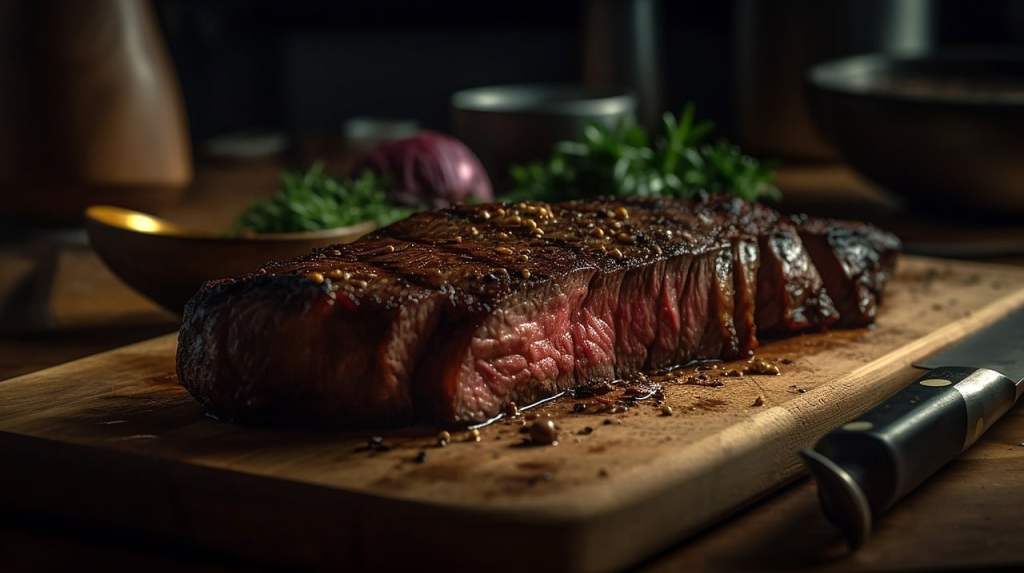
Reverse Searing is a technique developed for cooking steak but can be used for other proteins such as burgers, chicken or entire roasts. Regular searing involves heating oil in your pan until it is very hot, putting your meat in it and allowing it to develop a beautiful brown crust on all sides. Depending on the size and cut of the meat, you might finish cooking it on the stovetop or in the oven.

In reverse searing, the meat is first gently and slowly cooked (usually in an oven) to a desired internal temperature. It is then removed from the oven and quickly seared in a hot pan stovetop before serving.

Advantages

  • The meat cooks more evenly and can prevent the gray band of over-cooked meat that often develops just under the surface.
  • The meat is less likely to overcook. Of course, you do need to monitor the internal temperature to ensure over-cooking does not occur.
  • The meat is said to be more tender and softer.
  • The low heat is not equipment-specific. Although the oven is the typical way of cooking the meat, others use a smoker, indirect grill, or even sous vide.
  • The time in the oven dries out the surface, allowing for a good sear. Many feel, though, that the crust is not as good as in a regular sear.

Drawbacks

  • This method is only meant for thick pieces of meat, at least 1.5 inches thick. It will not work well for thinner cuts.
  • The meat takes much longer to cook.
  • Many do not think it produces as good of a crust as with a regular sear.
  • The cooking process involves more pots/pans.

The procedure

  1. Pat the meat dry.
  2. Season with salt and pepper and place on a rack, uncovered, in the refrigerator for 2-24 hours. (See this Cooking Tip for more information on this method of seasoning.)
  3. Preheat oven to 200° – 275°F.
  4. Place meat on a rack over a rimmed baking sheet and place in the oven until it reaches your desired internal temperature. Some recommend cooking until the meat registers 15 degrees below your desired level of doneness.
  5. Remove the pan from the oven.
  6. Heat oil in a heavy pan on the stovetop until very hot.
  7. Place the meat in the pan, adjust the heat and allow it to sear. Then, flip and sear the other side.
  8. If desired, add aromatics such as shallots, thyme, garlic, and basting with butter for a couple of minutes.
  9. Let meat rest and serve.

Is reverse searing worth changing your routine and planning for extra time? Only you can answer that. You will read that it is the perfect way to cook a steak and the only method to get the best steak ever. However, there are as many who have tried it and then gone back to their normal process of searing as there are proponents of the method. What about you? Have you tried it? Do you recommend it or not?

Cooking Tips · Techniques

Plating like a chef!

When you go out to a restaurant, and they present you with an artfully plated dish, your expectations that it will taste good go up. Those who know me know that making things look pretty is not a skill I possess. If I want a nice garnish or some other touch on the plates I am serving to guests, I call my husband, who is much better with things that require a bit of manual dexterity. This Cooking Tip on how to plate food is for those who want that wow factor when you serve your guests. I don’t think it will help people like me, but you never know!

Dishes

Most chefs will tell you successful plating starts with the plate/dish. There is a reason most restaurants serve food on white dishes. It is a plain background on which you can do your artistry. However, you do not have to feel constrained by this if your dish’s colors/patterns complement and do not distract from the food.

Other considerations besides the color are the size and shape of the dish. There is no one correct size; it should be large enough to hold the food without looking like there is too much empty space but not so small that it covers the entire plate. Successful plating involves a certain amount of negative space.

Some like to match the shape of the dish to the food, such as using a square plate with slices of lasagna. Others like to contrast shapes. Use what is most pleasing to the eye for your food.

Food placement

The classic style puts the main ingredient in the center of the dish, with the side dishes arranged around it. Others like to put that main ingredient just off-center.

Traditional plating involves placing the main part of the meal (typically the protein) at about 6:00, the traditional starch at about 11:00, and the side dish at 2:00. This works best when the sizes of these different items are balanced.

Others like to arrange the food in linear patterns, either vertically or horizontally. The food is placed in parallel or intersecting lines, and garnishes are added to break up the lines. Still another pattern is placing the food on the plate in arcs rather than straight lines.

Odd numbers of items, such as shrimp, scallops, or small bites are considered more attractive than even numbers.

You will undoubtedly have seen the practice of stacking food on the plate to add height. An example would be putting the starch on the bottom, the protein in the middle, and the veggies to top it off. The bottom layer could be your starch in a pureed form, mayo or a sauce. The middle layer could be your protein or a neat dollop of rice or noodles. If the protein is not in the middle layer, it will be in the top layer. Longer items, such as asparagus spears, also look great on top.

Another tip is to slice your chicken, steak or other protein before plating and then arrange it on the plate back into its whole shape but fanned out.

This all takes creativity and practice. Some chefs start by making a drawing of how they want the plate to look. This helps them visualize and then achieve just what they want.

Color

Try to avoid a monotone dish. If you are serving a lighter-colored protein, such as fish, surround it with darker-colored sides and vice versa.

Garnish

Sprinkling on herbs or cheese or even a lemon slice can add a pop of color and increase the visual appeal. When it comes to cheese, rather than grating, why not try making shavings and topping the food with those? Just a drizzle of olive oil or an interesting infused oil can be striking. You could even incorporate edible flowers.

Sauces

Sauces are not always necessary but are an excellent addition. I was taught in culinary school that the proper way to use a sauce is to put it on the plate first with the other items on top. Get creative with how you apply the sauce to the plate. This video has some interesting techniques for the application of sauces. If you are going to use a sauce, do not plate it until just before serving.

Texture

Just as you do not necessarily want all the food to be the same color, you also do not want all the textures to be similar. Adding chopped nuts, sesame seeds, or seaweed flakes adds a certain amount of interest to the mouthfeel.

Wipe the edges

This is just common sense. If some of the items are all over the edges of the plate, it will look messy. Take those few seconds to wipe it clean before putting the plate in front of your guest.

Helpful tools

If you are serious about raising your plating skills, consider investing in some helpful tools. Inexpensive squeeze bottles improve your control over where your sauce goes. Long tweezers allow you to place smaller items exactly where you want them without disturbing the other ingredients. Some chefs like to use food-grade paintbrushes. Ring molds help you achieve that neat, circular placement of the food. Small prep bowls can be used to mold your rice into a neat shape before placing it on the plate. A good set of kitchen tongs will aid you in shaping an attractive nest of pasta on the plate.

Even with my lack of creativity and poor manual dexterity, these tips could help me make my dishes not only taste great but look attractive and appealing. I am sure it would be the same for you. Experiment, have fun and don’t be too hard on yourself!

Cooking Tips · Ingredients

Chorizo – Know which type to use

When I see a menu item or a recipe with Chorizo as one of the ingredients, I am all in. Chorizo is not monolithic, though. There are different types, and what those are is the subject of this Cooking Tip.

Chorizo originated in the Iberian peninsula (Spain and Portugal) and is usually made from pork. Initially, it wasn’t red, but when Europe discovered smoked paprika in the 16th century, it became a staple in chorizo.

There are different ways to categorize chorizo, but the main one is Mexican versus Spanish. Because they are quite different, we cooks need to know why.

Mexican

Image by Quidec Pacheco from Pixabay
  • Mexican chorizo is raw, ground pork (sometimes beef) seasoned with spices such as coriander, paprika, chili powder, chili peppers, dried herbs, and garlic.
  • It is sold in the fresh sausage section of the market, where you can find items such as breakfast sausage or brats.
  • It is often sold in links but can be found in bulk.
  • Since this chorizo is raw, it must be cooked before eating.

There are two categories.

  • Classic chorizo is made of pork or beef and contains, among other spices, chili and vinegar.
  • Chorizo Verde (green chorizo) contains chili (often green), tomato and green herbs such as cilantro and parsley. It may also contain tomatillos.

Spanish

  • Spanish chorizo is usually a cured sausage with a texture similar to salami.
  • It is made with cured or semi-cured chopped and smoked pork and seasoned predominantly with smoked Spanish paprika. Other ingredients include herbs, garlic and white wine.
  • It will be sold in casings that might be short or very long.
  • It will be found in the cured meats department.
  • If cured, it is not necessary to cook before eating. However, if semi-cured or fresh, it must be cooked before eating.
  • If cooking the cured type, it is best to remove the casing as it can become tough.
  • There are various ways to categorize Spanish chorizo.
    • Curing state
      • In the average US market, you will find it in a cured form.
      • In some specialty markets, you may find it semi-cured or raw.
    • Location/Shape
      • In Spain, every region has its own style. These will vary based on the ingredients and shape of the finished sausage.
      • Almost all of them will contain Spanish smoked paprika, which is what results in the red color. Other common ingredients are garlic and white wine, although some locales include black pepper, oregano, thyme, or nutmeg.
      • The shape can vary from rope-like to horseshoe-shaped, and they will also vary in length and diameter.

In the typical US supermarket, you will almost surely be able to find Mexican chorizo. You may or may not find the Spanish type. When you do, your choices will probably be limited to one variety or, at most, two. For the other types, you will need to check a specialty market or search out online sources. There are other chorizos but they, too, are typically described as a Spanish or Mexican type.

Portuguese chouriço

  • This is similar to Spanish but contains less paprika but abundant garlic and red wine.

Chaurice (Louisiana, Creole, Cajun cuisine)

  • Another Spanish-style chorizo but with different spices.
  • Typical spices include chile, cayenne, green onions, garlic, thyme, celery, parsley and bay leaves.

Colombian chorizo

  • This Mexican-style chorizo is less spicy and contains less paprika than many.
  • It also usually contains green onion, cilantro, garlic, and vinegar.

Argentine

  • As Italian flavors inspired this, it often includes herbs such as oregano and thyme.
  • It may also contain garlic, nutmeg and wine.

Filipino Chorizo de Cebu

  • This unique style of chorizo is spherical in shape.
  • It is a vibrant red color, caused by the inclusion of annatto. Another ingredient that results in its characteristic flavor is anise liqueur.

Goan chouriço

  • Another type of Portuguese chouriço that has Indian notes.
  • This sausage is hot and spicy with red chili, ginger, cloves, pepper, cumin, turmeric, cinnamon and vinegar.

How to use Chorizo

Mexican

  • Typical dishes that call for Mexican chorizo are tacos, tortas and scrambled eggs.
  • Cook’s Illustrated recommends using it as a substitute for taco seasoning. They add it to ground beef to give a spicy and complex flavor. Because of the high fat content of Mexican chorizo, they recommend using 90% lean ground beef.
  • A more unusual recommendation by them is making Chorizo Bolognese. They substitute Mexican chorizo for ground beef in a 1:1 ratio. They testify that this gives the flavor of a long-cooked Bolognese but in much less time.

Spanish

  • The cured variety is typically used for snacking or on a tapas plate.
  • One exciting way to prepare it is in the recipe for Chorizo Lollipops.
  • It may also be used in soups and stews.

Suppose you have a recipe that calls for chorizo but does not state what Image by tove erbs from Pixabaykind. Just take a closer look at the recipe. If the flavors are more Mexican, that is probably the type that should be used. Also, look at how it will be used. If the meat is to be cooked, go for Mexican. If you are chopping, slicing or serving raw, go for Spanish.

Are you a fan of chorizo? I prefer the Mexican style, but it can be very spicy at times. Different brands vary in spice level, so you need to find the one that works for you. If you want to throw a fun tapas party, Spanish-cured chorizo will be a wonderful addition.

Cooking Tips · Ingredients

Foie Gras – Delicacy or Cruel?

Image by takedahrs from Pixabay

If you read much about French cooking, you will encounter the classic delicacy of foie gras. Besides being decadent and elegant, it is also controversial and polarizing. This cooking tip will explain what foie gras is and why there is this controversy. The first part of the discussion will define foie gras and its different categories. The controversy about foie gras will follow that.

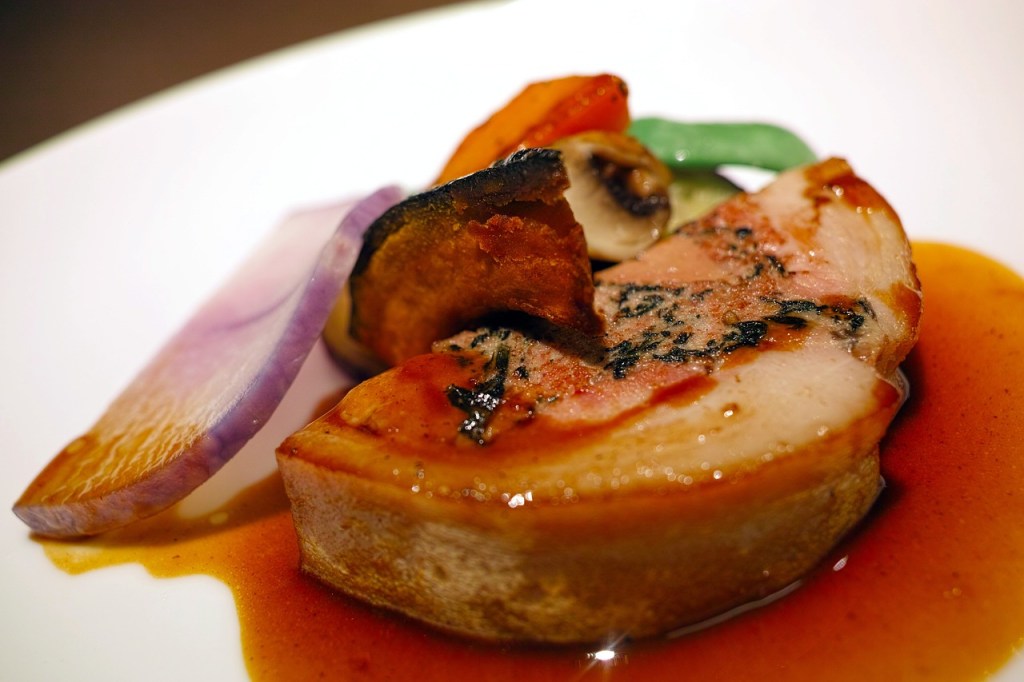
Foie gras is the fattened liver of a duck or goose, but more commonly, a duck. It is produced by gavage, described as the force-feeding of ducks or geese through a tube inserted into their mouths and down the esophagus. This increased food intake leads to an elevated fat content and a distinctive flavor that is described as rich and buttery. The process is said to date from 2500 BC.

Foie gras is typically served as an appetizer or as a bread topping. Fruit flavors work very well with foie gras, particularly plums, grapes, and apples. Therefore, it might be served with bread and a fruit chutney.

There are different ways to categorize foie gras; they can be confusing and somewhat inconsistent from source to source. I will try to simplify it for you.

Foie gras entire (whole foie gras) refers to a whole liver made from one or two lobes. It may be raw or cooked with minimal seasoning, allowing the natural, rich flavors of the liver to dominate.

Foie gras is used for pieces of foie gras, not entire lobes, pressed together and seasoned.

Bloc de foie gras means reconstituted foie gras and refers to a cooked, formed block of which 98% or more is foie gras. One source likened the difference between this and “whole” foie gras to ground beef and a steak. Industrially produced Bloc de Foie Gras is actually a pâté made from minced foie gras and seasoning.

There are a few other products that contain foie gras plus other ingredients.

Pâté de foie gras: this must contain at least 50% foie gras. The liver is mixed with other meats, seasonings, and often some form of alcohol such as spirits or wine. The result is a spreadable, richly flavored paste that can be used on toast, crackers, or other dishes.

Parfait de foie gras: a parfait of foie gras is required to contain a minimum of 75% foie gras.

Mousse de foie gras must contain 50% or more foie gras. It has a creamy and airy texture due to being whipped either with just air or sometimes with dairy. Besides the lighter texture, the intense flavor is diminished somewhat.

Livers are also graded for quality.

Grade A livers are the best quality and are the largest at over a pound. They are firm, smooth, sweet smelling, consistent in color, with no blemishes. This is the type that a chef will prepare simply – seared, sautéed or in a terrine. It is also the most expensive.

Grade B foie gras will be smaller (under a pound) and somewhat softer in texture. They may have some minor surface defects and blood spots with more prominent veins. Although it has excellent flavor, chefs use Grade B in items such as pâté, mousse and terrines, where the blood content will dissolve with cooking.

Grade C is less prevalent than the other two and is generally not available on the retail market. It is often used to flavor and thicken sauces, although it can also be used in mousses and pâtés.

Now, let’s turn to a discussion of the ethics of foie gras production. According to Chowhound, the anti-foie gras movements started appearing in the 21st century, and the first country-wide ban (India) was in 2014. Since then, a few other European countries have followed suit with some level of ban. As you might expect, France is not one of those countries. Outside of Europe, bans are less common but are said to exist in Turkey, Australia, Israel, and Argentina.

Even in countries with bans, most still allow the importation of foie gras. India is one where even that is prohibited.

Different US cities and states have attempted to ban it, but these actions are usually challenged in court and are not always upheld. California has had more success in banning foie gras. In 2004, a ban on both sale and production was imposed. A court case forced the state to allow sales of out-of-state foie gras although the production is still banned. You will not see it in restaurants, as residents are still barred from ordering out-of-state foie gras and reselling it.

Why do some people and organizations seek bans? The following reasons are given.

  • The living environment for the birds is overcrowded and in cages.
  • The birds are force-fed more than they would naturally eat, causing their livers to grow multiple times their normal size.
  • The feeding method causes esophageal inflammation.
  • There is significant stress from the capture and insertion of the feeding tube.

Those who disagree with the bans give the following arguments.

  • Ducks’ throats are designed for swallowing rocks and eating whole fish, including fins, so the tube insertion is not traumatic.
  • The duck’s crop is made for stretching to hold food and stretching to several times its original volume.
  • Ducks lack a gag reflex.
  • Ducks have two pathways – one for breathing and another for eating.
  • There are good farms that use very humane methods. Some say all the US-based foie gras producers fall into this category. It is argued that one should not ban a product based on bad farms. There were three leading US foie gras producers. The ban forced a California one (Sonoma Artisan Foie) out of business. The two remaining ones are both in New York State.
  • Looking at Europe, there is the European Federation of Foie Gras.
    • Their objectives (taken verbatim from their website) are:
      • To promote foie gras, a thousand-year-old cultural and gastronomic tradition, and the profession of foie gras producer.
      • To develop common reflexions and proposals at European level on the various topics of interest to the sector.
      • To make European policy makers aware of the foie gras sector and, in particular, of its production methods.
      • To establish a continuous exchange of experiences and know-how among member countries for a constant improvement of practices.
    • The production method
      • There are two stages to foie gras production. You can read more on this page, but here is a summary.
      • The rearing stage—Birds are said to spend 90% of their lives outdoors during this stage.
      • The fattening stage—This amounts to 10% of the animal’s lifetime. They choose only healthy adult ducks or geese, and they are fed twice every 24 hours for about 12 days for ducks and 16 days for geese. According to Hudson Valley, the feeding time is only for a few seconds each time.
      • They note the “particular anatomical characteristics (possible alignment of the beak and neck thanks to the absence of cartilaginous glottis, the elasticity of the walls of the esophagus) which allow them to swallow large prey such as fish or frogs and predispose them to the fattening phase during the production of foie gras.”


The purpose of this Cooking Tip is not to take a side in this debate. It is to give you the information so you can decide if you wish to try this French delicacy and, if so, to provide you with the knowledge to know what to purchase.

Cooking Tips · Ingredients

Air-Chilled Chicken- Worth It or Just Hype?

I was recently teaching a class on how to make a delicious Valentine’s dinner. During that class, a question was asked about the pros and cons of air-chilled chicken. Since this was a topic of interest, I thought I would dedicate this Cooking Tip to that topic.

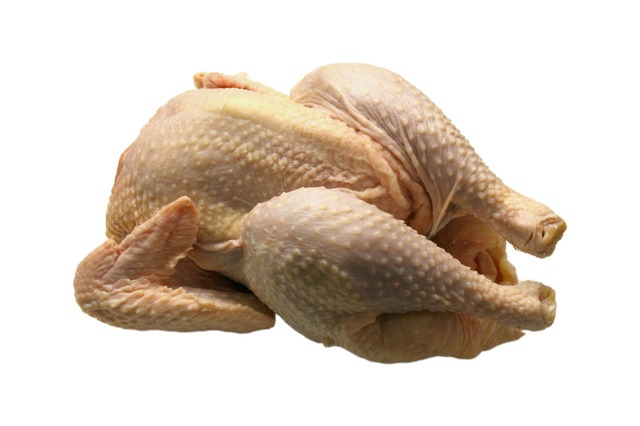
When poultry is processed commercially, part of the process involves chilling the meat. For food safety reasons, the USDA requires that the chicken be cooled to 40°F or lower within four hours of slaughter.

There are two ways to accomplish this – cold water chilling and air chilling. The former is how most chickens are handled in the US, although air chilling has been widely used in Europe since the 1960s. According to D’Artagnan, air chilling has only been used in the US since 1998.

Here are some differences between these two methods and some of the claims made about them.

Water chilling

  • With this method, the chickens are submerged in chlorinated ice-cold water.
  • The temperature is quickly reduced to the proper temperature.
  • Because of being submerged in the water, the chicken absorbs excess water. Studies have shown that the chickens can absorb anywhere between 2 and 12% of the weight in water, which you pay for at the checkout.
  • Many chickens are cooled in the same vat of water. Some feel this increases the risk of cross-contamination of pathogens from one chicken to the others. Consumer Reports periodically analyzes chicken for pathogens. A 2010 report found that 62% of the chickens were contaminated with campylobacter, and 14% contained salmonella. Testing done a few years later (2018) found 9% of the samples testing positive for salmonella. It is important to note that both of these pathogens are killed by proper cooking.

Air Chilling

  • The process involves putting the chicken into temperature-controlled chambers, where they are chilled for about three hours.
  • Because the chicken is not put into water, no excess water is absorbed. Proponents claim the following benefits.
    • More tender chicken
    • Better texture
    • Better tasting chicken
    • The chicken cooks faster as it does not contain excess moisture.
    • As the skin does not get water-logged, you are able to get very crispy skin when the chicken is roasted.
    • This process saves water but incurs higher electrical costs.
    • Reduced chance of cross-contamination of pathogens. Testing has shown that air-chilled chickens are cleaner. However, one study showed that about 40% were still contaminated with salmonella and/or campylobacter.
  • Because this process takes much longer, is more labor intensive and takes special chambers, it is more expensive. Some of this cost is offset by the fact that you are only paying for the weight of the chicken, not excess water.

According to Bell and Evans, a poultry business that started in 1894, most US producers may claim air chilling, but, in reality, they use a hybrid method that combines chlorinated water chill and air chill. They built the first 100% air-chilled facility in 2005, although they are not the only such facility today.

If you wish to try air-chilled chicken, ensure it states so on the package. It is most likely water-chilled if it doesn’t say it is air-chilled.

Unless you order online from some farms that have invested in air-chilling facilities or have a local farm that uses this technique, air-chilled chickens may be hard to find. Sources say that Whole Foods and Costco sell air-chilled chickens. My local supermarket does not carry them, but some Safeway stores do.

I must admit that I have not tried air-chilled chicken. Have you? What do you think of it? Let me know.

Cooking Tips · Techniques

Braising – Learn how to be successful!

As the cooler weather approaches, what and how we cook often also changes. We gravitate towards heartier dishes and are willing to cook dishes that take a bit more time. One of the cooking skills for this type of cooking is Braising. This Cooking Tip will explain what it is and how to put it to use in your kitchen. Although braising is not limited to meat, it is the most common food item to be braised and is the one I will discuss.

According to Harold McGee in On Food and Cooking, the word braise is said to come from 18th-century French. It comes from a word for “coal” and refers to putting coals under and atop the cooking pot.

Braising is the act of slowly cooking a piece of meat in a moist environment. To add a bit more detail, the meat is browned in fat and then cooked in a small amount of liquid in a covered pan over low heat for a long time. This long slow cooking develops flavor and tenderizes the food.

Even though you do not need a recipe to produce a delicious braised meat dish, most of us will probably turn to a recipe. The problem is that most of these recipes include instructions that do not stand up to the science of making a proper braise. I will explain below and will incorporate wisdom from both Harold McGee (On Food and Cooking) and J. Kenji López-Alt (The Food Lab).

First, what cuts of meat are best for braising? The good thing is that the best cuts of meat are also the least expensive. You want to select fatty, tougher cuts of meat. Just a few examples are:

  • Chuck
  • Brisket
  • Pork shoulder
  • Boston butt
  • Lamb shoulder/shanks

I will list the basic steps to braising and will follow with the elaboration of those steps.

  1. Brown the meat.
  2. Add and cook aromatics.
  3. Add liquid and seasonings.
  4. Cook in a covered pot until done and the meat is very tender.
  5. Use the remaining liquid to make a sauce.

Browning the meat

  • Start by removing excess fat, silver-skin, etc. from the meat. Season with salt and pepper.
  • Keep the meat as intact as possible so there are fewer surfaces through which juices can escape. If you must cut the meat to fit into your pot, cut it into as large of pieces as possible.
  • Heat oil in a heavy pot until hot.
  • Add meat and sear each side just until brown. You want to get a nice sear while at the same time minimizing the warming of the interior of the meat.
  • Some chefs like to lightly dredge the food in flour that will later develop body in the sauce. Most, though, will do this later by other methods.
  • Once browned, remove meat from the pan.

Start building flavor by adding aromatics

  • Start with something from the onion family such as leeks, shallots, onions and/or garlic.
  • Many chefs start with a classic mirepoix of carrots, celery and onion.
  • The moisture that will be released from the vegetables will help to deglaze the pan and incorporate the flavorful fond into the liquid.
  • Other possibilities include items such as:
    • Additional vegetables (butternut squash, carrots, parsnips, celery, fennel, mushrooms, turnips, rutabaga)
    • Herbs
    • Fruit
    • Spices
  • Some recipes call for adding tomatoes, which are an acidic ingredient that helps to break down the food.
  • J. Kenji López-Alt likes to add umami with anchovies, Marmite, Worcestershire sauce or soy sauce.

Add liquid

  • Start by deglazing the pan with wine, vinegar, beer, stock or water.
  • Add additional liquid of your choice. Common liquids are:
    • Broth
    • Juice – apple, cranberry, tomato
    • Combination of broth and dry wine or water
  • The liquid should cover the meat by ⅓ to ½. The meat should only be partially covered, not submerged.
  • Bring liquid to a simmer, taste and adjust seasoning.
  • Return meat to pan.

Cook mixture until done

This is the step where recipes can mislead you and give you an inferior result. The variables are the use of a lid, the cooking temperature and the cooking method.

Meats with significant amounts of tough connective tissue must be cooked to a minimum of 160-180°F to allow the collagen to dissolve. However, muscle fibers begin to lose their juices at 140-150°F. So, it can be a challenge to keep these tough meats juicy. The key is to cook slowly at or just above the temperature to dissolve the collagen. This minimizes the drying out of the meat.

Lid – Most recipes will tell you to tightly cover your pot. The truth is that you should leave the lid slightly cracked. This helps with temperature regulation. If the pot is completely sealed, the liquid gets too hot. A tightly sealed pot will allow the liquid to get to a boiling point, which you do not want as it will dry out the meat. By leaving the lid slightly ajar, the temperature of the liquid will stay around 185°F. This lower temperature allows the collagen in the meat to slowly break down while still maintaining moisture within the meat. Hotter liquid also leads to overcooking the outer part of the meat before the entire cut is done.

Cooking temperature

Once again, many recipes will give you bad advice. They will recommend an oven temperature of 300-350°F. This is much too hot to be able to keep the liquid well below the boil and around 180°F. Experts who understand this will recommend setting your oven much lower.

Here is Harold McGee’s method.

  • Start the pot with the meat and liquid in a cold oven. Let the lid sit slightly ajar to allow some evaporation. Set the oven to 200°F. This should allow the contents to rise to about 120°F over two hours.
  • Raise the oven temperature to 250°F so that the contents warm from 120°F to 180°F.
  • After an hour, check the meat every half-hour. Stop cooking when the meat is easily penetrated with a fork.

Here is J. Kenji López-Alt’s method.

  • Preheat oven to 275°F
  • Return meat to the pot and put on a lid slightly cracked.
  • Cook until meat is tender.

Cooking method

  • Many will tell you that you can cook a braise either stovetop or in the oven. This is true but for superior results, opt for the oven.
  • The difference is that:
    • The stovetop maintains a constant heat output.
    • An oven maintains a constant temperature.
  • Cooking stovetop means that although the mixture is barely simmering when you start cooking, it will probably creep up to a boil as the heat applied to the pot from the burner is constant (unless it is monitored and adjusted.)
  • In the oven, the temperature of the food stays the same. Also, the heat surrounds the pot rather than just coming from the bottom.
  • No matter which method you use, you should check periodically to ensure the liquid has not evaporated.

Finishing steps

  • Allow the meat to cool in the liquid. This results in reabsorption of some of the liquid, giving you a juicier result.
  • It also makes the meat easier to slice.
  • After removing the meat, the liquid should be turned into a delicious sauce. There are different ways to do this.
    • Some will recommend reducing the liquid to a sauce consistency by boiling.
    • Others will recommend thickening by using a roux, beurre manié or starch slurry.
    • Another method is pureeing the mirepoix and then returning it to the sauce.
  • Always finish by tasting and adjusting the seasonings.

The classic example of a braise is the all-American Pot Roast. However, this is not your only option. By following the above steps, you do not even need a recipe. If you are using a recipe, please adjust it in the above ways to ensure the best result.

Happy Braising!

Cooking Tips · Ingredients

Organic Meat & Dairy

Last week, we looked at the subject of organic and conventional produce and I gave you some information to help you determine which you think is best for you and your family. In this week’s Cooking Tip, I want to talk about organic meat and dairy.

First, we need to understand what the word “organic” means in relation to meat and dairy. According to the USDA’s website:

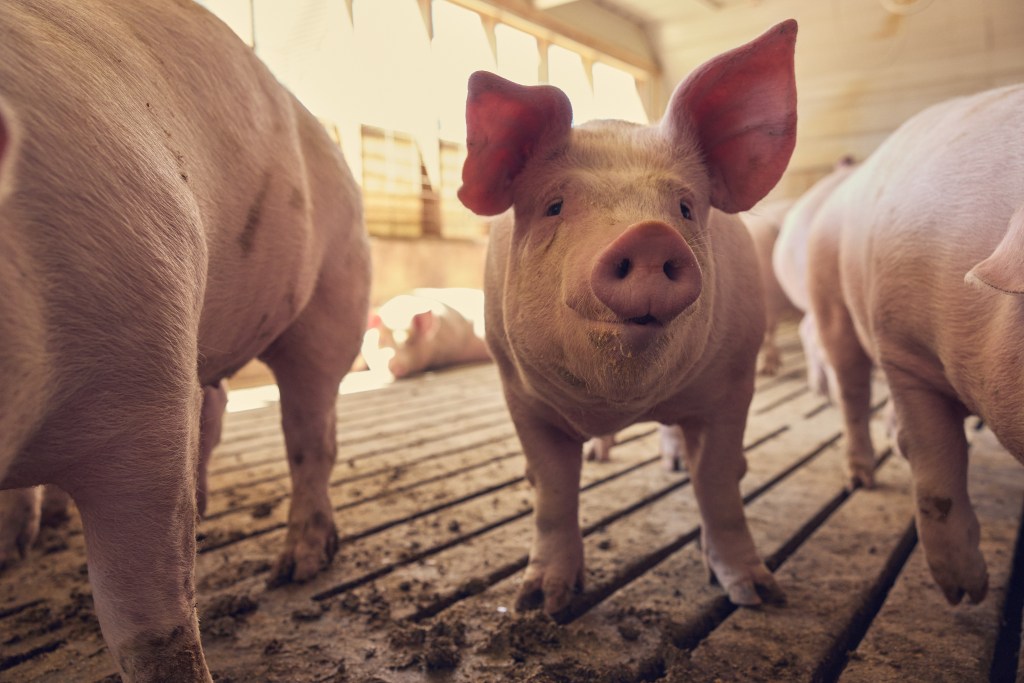
  • The USDA organic label on dairy or meat products means that the animals … were raised in living conditions that accommodated their natural behaviors, without being administered hormones or antibiotics, and while grazing on pasture grown on healthy soil. Thereafter, the meat or dairy product is processed without any artificial colors, preservatives, or flavors before being packaged to avoid contact with any prohibited, nonorganic substances.” As part of this, the use of GMOs is prohibited.
  • The basic rule is to allow natural substances and prohibit synthetic. For livestock, however, vaccines play an important part in animal health, especially since antibiotic therapy is prohibited.
  • Yearly organic inspections are required including, but not limited to, seed sources, soil conditions, crop health, weed and pest management, water systems, inputs, contamination and commingling risks and prevention, and record-keeping.
  • Producers must use 100% organic feed, but they may provide allowed vitamin and mineral supplements.
Image by Penny from Pixabay

Are there any benefits of eating organic meat/dairy? Medical professionals at the Cleveland Clinic believe there are health benefits linked to choosing organic. However, they temper this by stating that “it’s not certain that eating organic foods will make a difference in one’s health.”

Possible benefits:

  • Reduced exposure to pesticides and insecticides.
  • Increased exposure to omega-3 fatty acids as livestock fed through grazing usually have higher levels of omega-3 fatty acids.
  • Lower levels of cadmium in organic grains.
  • Increased levels of vitamins, minerals, antioxidants and other beneficial micronutrients.
  • Less exposure to bacteria in meat.
  • Less exposure to antibiotics and growth hormones.

According to Healthline, there are pros and cons to organic milk.

Image by Penny from Pixabay

Pros

  • Organic cow’s milk is higher in polyunsaturated fatty acids than conventional milk. However, once again, these differences may only be marginal and not offer more nutritional benefits than conventional milk. Also, some experts say this improved fatty acid content is due to farming practices that allow cows to graze and forage and not the organic farming itself.
  • Organic milk has lower levels of drug residues (including antibiotics & growth hormones) than regular milk, although the amounts in regular milk are still considered safe. As for antibiotics, researchers at the University of California, Davis explain that there are never any antibiotics in any type of milk. This is due to policies in place by the Food and Drug Administration (FDA) and American Veterinary Medicine Association that control drug use. For more detail, see this article.
  • Organic milk has a longer shelf life due to the pasteurization processes it undergoes.

Cons

  • Organic milk is lower in iodine and selenium, two nutrients that are important for thyroid health.
  • Organic milk is slightly higher in calories.
  • Organic milk has a higher saturated fat content.
  • Organic milk is more expensive.

Neutral

  • Both have comparable levels of calcium, potassium, and sodium.

Although the discussion of the environmental impacts of organic versus conventional farming is outside the scope of this Tip, if you are interested, here is a very well-researched article on this subject by researchers at the University of California at Davis. Let me just say it is not as clear cut as organic proponents say it is. As with so many topics, the truth is more nuanced.

I hope this article and the one about produce will help you determine if and when you wish to pay the increased cost associated with organic foods. It is a very personal decision but one that should be made with the data required to make an informed decision.