Cooking Tips · Ingredients

PGPR – Should we avoid it?

Someone recently told me about a relative who was trying to avoid something called PGPR. This Cooking Tip is all about what PGPR is, which foods it is in, why, and whether you should also avoid it.

What is it?

PGPR stands for Polyglycerol Polyricinoleate. It is an emulsifier, which is an agent that helps to keep oil and water from separating. Think of what happens when you make a vinaigrette. The oil and water (vinegar) will not mix together without assistance. This is often done with vigorous whisking. Without any addition of an emulsifier, the two ingredients will again quickly separate. In our home kitchens, we frequently add mustard, which helps prevent separation for longer.

Where does it come from?

It is typically made from castor bean oil, although some sources say it may also be made from soybean and sunflower oil.

What does it do?

According to Chemsino, a leading food emulsifier manufacturer, these are some of the effects that PGPR can help food producers attain.

Improves chocolate texture

Image by LensPulse from Pixabay

As noted above, PGPR is an emulsifier, which helps unlike ingredients mix. With chocolate, there are dry components such as sugar and cocoa solids and a fat component of cocoa butter. PGPR helps these items to mix and achieve the texture that we all like in chocolate. It also changes the viscosity/thickness of chocolate. This allows it to flow more easily through chocolate manufacturing machines.

It also allows for easier molding and coating of chocolate products by helping to reduce bubbles and empty holes in the chocolate product.

Prevents fat bloom

Fat bloom on chocolate results from the separation of the cocoa butter from the mixture and subsequent crystallization on the surface. PGPR helps to prevent this.

Extending shelf life in baked goods

Through its ability to stabilize emulsions and prevent oil separation, the shelf life of baked goods can be prolonged. It is also said to form a protective barrier between the water and the oil, thereby inhibiting microbial growth.

Improving spreadability

Fats that are spreadable at room temperature, such as margarine and peanut butter, often contain emulsifiers like PGPR to achieve the proper consistency and maintain the homogenous texture.

Enhancing ice cream texture

PGPR may be added to ice cream to improve the texture. Its emulsifying ability disperses the fat evenly throughout the mixture. It can also help to prevent ice crystals.

Reducing fat content

When food manufacturers reduce or eliminate fat in a product, it is typically replaced by something else. As an example, here is the ingredient list for a store-brand mayonnaise.

Soybean oil, eggs and egg yolks, water, distilled vinegar, sugar, salt, lemon juice concentrate, natural flavors, calcium disodium EDTA

Here is the list for a lower-fat version of the same brand.

Water, soybean oil, vinegar, corn starch-modified, egg yolks, sugar, salt, cultured nonfat milk, lactic acid, mustard flour, lemon juice concentrate, xanthan gum, potassium sorbate (preservative), natural flavors, beta-apo-8′-carotenal, calcium disodium EDTA

The introduction of PGPR gave food manufacturers a way to swap out some fats for reduced-fat ingredients without harming the sensory components they were trying to maintain.

Cost efficiency

Many of the ingredients that PGPR allowed to be swapped also came with a lower cost for food manufacturers.

Is PGPR safe?

The FDA considers it a safe food additive in certain amounts. There have been many studies on the safety of human consumption of PGPR, and none have found ill health effects. That does not mean, though, that certain individuals may not suffer an unwanted reaction from it.

One of the main criticisms is that it “cheapens” chocolate by allowing manufacturers to decrease the fat content. These companies can offer their products at a lower price than those companies that choose to rely on cocoa butter without this additive.

What products contain PGPR?

Chocolate is the main food product where you might run across PGPR. Other possible sources include the following list.

  • Spreadable fats (margarine, peanut butter)
  • Cocoa products
  • Cocoa-based confectionery
  • Emulsified sauces
  • Low-fat dressings, mayonnaise
  • Seafood colors

I have looked in my refrigerator and pantry, and nothing I have contains PGPR. I also searched various brands of the above products and found PGPR only in chocolate. What about you? Have you found it anywhere?

Which chocolate products contain PGPR?

Please note that I did not look at all products from any of these companies. Also, the information is correct as of the writing of this Tip. Since ingredient lists can change, it’s best to check the label before purchasing.

Hershey

This is one of the rare companies that mentions PGPR. Their website states,

A look at their website shows that most of their products contain PGPR.

Mars products

A quick look at their products (3 Musketeers, Twix, Milky Way, M&Ms) showed the absence of PGPR. However, their Dove product line can contain this additive. Their classic milk and dark chocolate do not show PGPR in their ingredient list, although you will find it in some of their flavored chocolates.

Higher-end chocolates

I failed to find PGPR in the ingredient list for Lindt, Ghirardelli, Godiva, or Sees. There are, of course, many other small producers from which you could source PGPR-free chocolates.

Have you ever noticed PGPR in the products you buy? Are you concerned about it? If so, you can certainly avoid it by reading labels, buying less processed foods and cooking more at home!

Cooking Tips · Equipment · Techniques

The Air Fryer Bandwagon – Should you jump onboard?

Image by Crafter Chef from Pixabay

Air Fryer enthusiasts are very passionate about these appliances, bordering on evangelistic. Those who do not have one can’t imagine trying to find counter space for one more piece of kitchen equipment. Which side of this divide are you on? Is this an appliance you should consider, or should you pass on it? That is the subject of this Cooking Tip.

Despite the name, the first thing to know about an air fryer is that it doesn’t fry food. An air fryer is similar to a convection oven. It has a fan that circulates hot air around the food.

Here is what users like about air-frying.

  • You can obtain a crispy exterior similar to deep-fat frying.
  • The interior of the food stays tender.
  • Food cooks quickly, much more quickly than in a conventional oven.
  • It minimizes how much oil you need to use. Most users recommend still using a small amount of oil. Depending on the food item, the amount of oil might vary from 1-2 teaspoons per serving of food up to a few tablespoons.
  • It can take the place of a toaster oven for small families.
  • It takes either no preheating or just a few minutes, saving time and power.
  • It does not heat the entire kitchen.
  • It is better than the microwave for reheating food to achieve crispy rather than rubbery results.

What’s not to like about them?

  • Although you can get close to deep-fat frying quality, it is not the same.
  • Many have a small capacity, although this does vary among models.
  • They take up counter space.

There are different styles of air fryers.

  • Drawer-style – They contain baskets that pull out from the front. Many users feel this style is the best. One caveat is that models with glass drawers may not be the best choice. They claim to be healthier as there are no plastic or nonstick coatings. Reviewers, though, found that the performance was mixed. They were also harder to use, as they were heavier, harder to lift, and the glass could get very hot.

  • Flip-top models – These have lids that lift up from the top to reveal the baskets inside. These lids are heavy, and there is a danger of them falling on your arm. Since the heating element is in that lid, this can be very dangerous. Many models were so tall that they would not fit underneath a counter when the lid was open.

  • Cube-shaped models – This style features doors that swing open in front and contains multiple racks inside, similar to an oven. Although these can work well, most feel the best results are obtained only when cooking very small amounts of food.

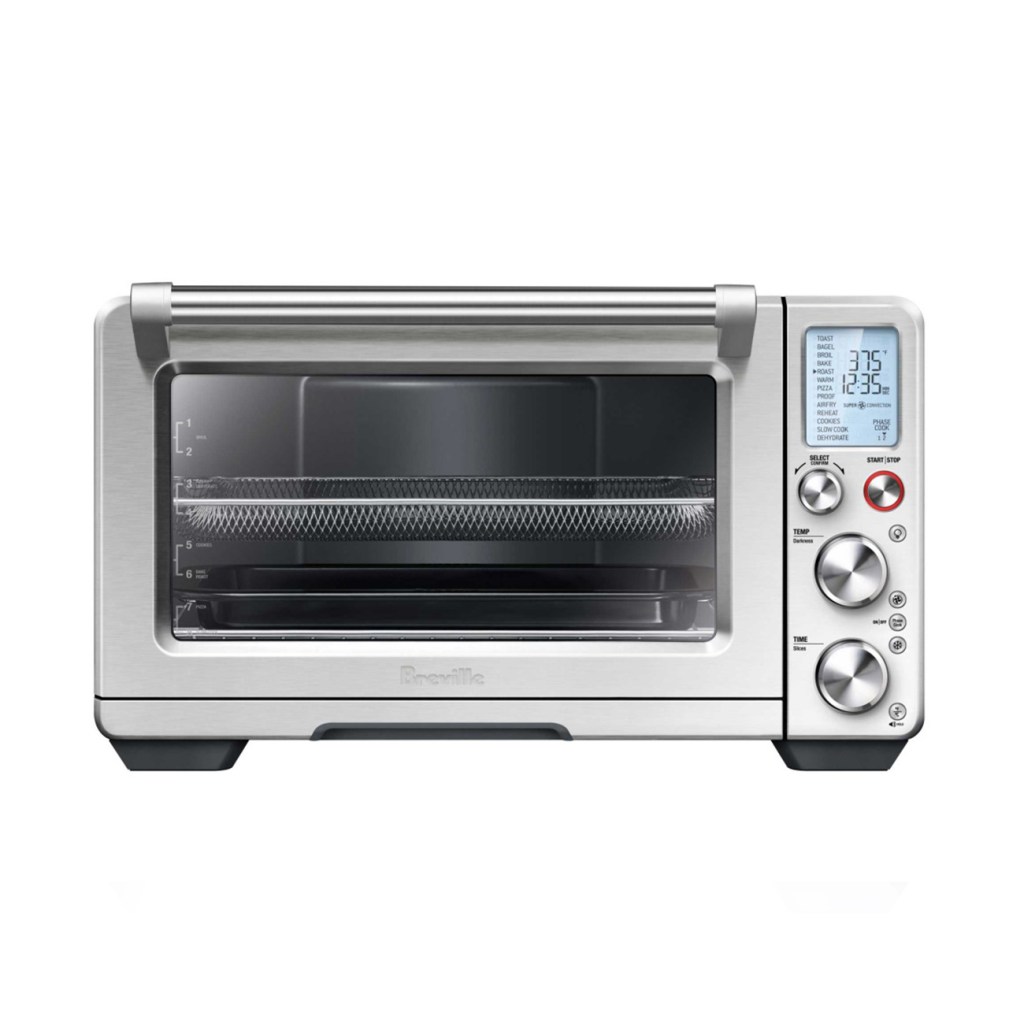
  • Air fryer toaster ovens – These appliances combine the functions and size of a toaster oven with the capability of air frying. These can do an excellent job, depending on the brand, but will be significantly more expensive. More on these below.

Air Fryer vs Air Fryer Toaster Oven

Regular air fryer

  • Better for smaller spaces.
  • They are less expensive than ovens.
  • Takes less time to heat.
  • They accommodate less food, which may or may not be appropriate for the size of your family.
  • Easier to clean than an oven.

Air Fryer Toaster Oven

  • Require more counter space.
  • They are more expensive.
  • They are more challenging to clean.
  • They are more versatile as they can work as both a toaster oven and an air fryer. If you want both functions, this one appliance can replace both of the others.
  • Can cook larger quantities of food than in a regular air fryer.
  • Do require preheating.

What to look for in a traditional air fryer

  • A wide cooking space – Air-fried foods cook best when cooked in a single layer. So, the width of the cooking surface matters more than the height. Some people like deep baskets because they can roast a chicken in them. (See caution on this below.) However, a wide, shallow tray allows you to spread out the food, getting more even cooking.
  • Nonstick interiors make for easier cleanup.
  • Simple controls
    • Digital controls are generally better.
    • Auto-pause timers – these automatically pause the oven timer when you open the door and automatically restart when it is started. Since the food needs to be flipped, turned or shaken, requiring the opening of the door, this feature is very helpful.
    • Automatic shut-off – A control that automatically turns off the oven at the end of the programmed cycle helps prevent overcooking, food burning, and saves energy.
  • Windows that allow you to view the interior are nice to have.

What to look for in air fryer toaster ovens

  • The air frying function should produce food that is nicely browned and evenly cooked, with a crispy exterior.
  • Since this appliance is designed to replace both a toaster oven and an air fryer, it should perform the non-air frying functions well, such as producing great toast and functioning effectively when roasting, baking, and broiling. For the latter, ensure that the top rack is not too low to ensure good broiling.
  • Easy-to-use controls, preferably digital.
  • It should have ample cooking space.
  • Large viewing windows are nice to have.
  • Auto-pause timers and auto shut off are helpful, just as with regular air fryers.
  • Smart technology may be helpful for some, but others found this only moderately convenient and not always reliable.
Courtesy of Breville

Reviews

Researching reviews of regular air fryers led to mixed recommendations. They all did, however agree on the best air fryer toaster oven. That is the Breville Smart Oven Air Fryer.

Here are a number of recommendations from reviews from different sites.

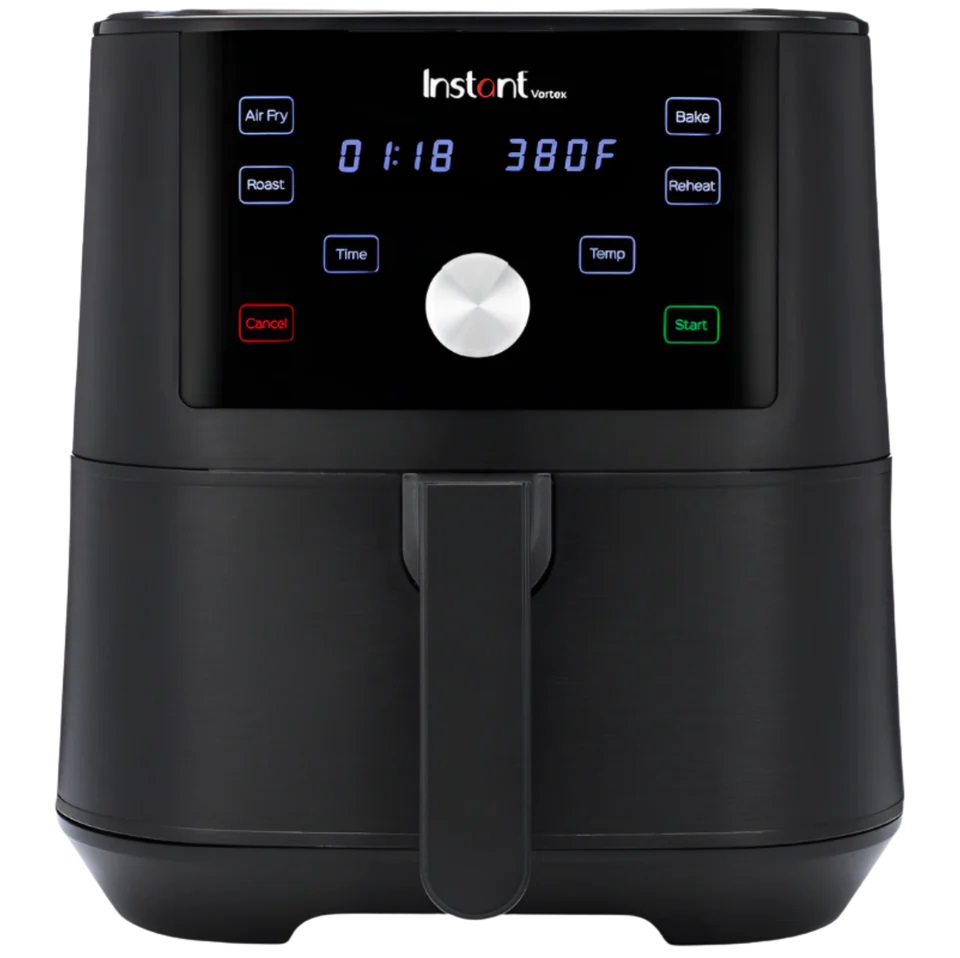
Courtesy of Instant Pot

America’s Test Kitchen

  • Top choice – The Instant Vortex Plus 6-quart Air Fryer
  • Upgrade choice – The Instant Vortex Plus 6-quart Air Fryer with ClearCook and OdorErase

The Spruce Eats ranked products in different categories.

  • Best Overall – Cosori Pro LE Air Fryer
  • Best Runner-up – Ninja 4-quart air fryer
  • Best large capacity – Instant Pot Vortex Plus 10-quart air fryer
  • Best budget – Dash Compact Air Fryer

TheKitchn

  • Their top recommendation was for the Philips Digital Twin TurboStar Airfryer XXL

Wirecutter

  • They rated the Philips 3000 Series L, but noted in their May 2025 review that it had been discontinued and they were busy testing other models.
  • Their budget pick was the Instant Mini Vortex 4-in-1.

Food Network

  • Instant Vortex Plus 6-Quart Air Fryer

Usage advice

  • Preheating – Most models do not require preheating, and for those that do, only a few minutes are needed. Even if preheating is not necessary, completing this step will yield the crispiest results.
  • Avoid overcrowding by arranging food in a single layer; cook in batches if necessary.
  • Food needs to be flipped, turned or shaken to ensure even cooking.
  • To prevent food from sticking to the air fryer basket, try the following advice.
    • A nonstick surface helps with this.
    • Use a small amount of oil. Not only does fat promote browning and crispiness, but it also lessens sticking. Rub or spray the food with oil before cooking.
    • Make a foil sling and cook the food on top of it.
  • Mix dry seasonings with oil before adding them to the food. Otherwise, the mixture is likely to be blown off by the fan.
  • Spray with oil halfway through cooking if the food is looking dry. Will get the best, most even crisp.
  • Ensure the unit has sufficient space to allow airflow around it, with at least 5 inches on each side.
  • Do not cut the veg so small that they fall through the holes in the basket.
  • Clean the unit after every use. Although it may not appear dirty, food residue is often left behind and can promote bacterial growth. Therefore, clean it thoroughly every time you use it. Some parts may be labeled as dishwasher safe, but you can never go wrong with washing by hand with soap and hot water. TheKitchn.com recommends adding two tablespoons of baking soda, two tablespoons of hydrogen peroxide, and two sprays of Dawn Powerwash directly into the fryer basket to create a paste. Use this paste to clean with a soft toothbrush for about two minutes. A nonabrasive sponge is good to remove the paste as the part is rinsed with water.
  • Never submerge the main body in water. Avoid getting the heating element wet.

Foods not to air fry

  • Fresh greens – These can get blown around by the fan, resulting in uneven cooking and possible burning.
  • Wet-battered items – The coating will not adhere to the food long enough for it to cook properly.
  • Heavily oiled food – Although a small amount of oil is recommended, too much oil will drip, smoke and give a charred flavor.
  • Popcorn – Air fryers don’t get hot enough for popcorn.
  • Bacon – You will end up with bacon fat all over the inside of the air fryer.
  • Large, whole chickens – Although some will state that these can be cooked in an air fryer, there is the risk of uneven cooking if using a standard air fryer.
  • Raw grains – Again, these will not cook evenly.
  • Hard-boiled eggs – You will likely end up with a rubbery egg.

I must admit that I have not jumped on the air fryer bandwagon. What about you? Are you an enthusiast?

Cooking Tips · Ingredients

Seed Oils – Toxic or Healthful?

Image by neufal54 from Pixabay

If you have been paying attention to the news lately, you will realize that seed oils have become a subject of conversation. In this Cooking Tip, I will explain what seed oils are and give you the latest research on whether or not you should be consuming them. I wish I could tell you that seed oils are either healthy or unhealthy, but as with many health and nutritional questions, the answer is much more nuanced.

What are seed oils?

These are plant-based oils made from the seeds of various plants. Examples are canola, soybean and corn oil.

What is the criticism against seed oils?

Image by Hans from Pixabay

Some have dubbed seed oils the “Hateful Eight” – corn, canola, cottonseed, soy, sunflower, safflower, rice bran, and grapeseed. Those who oppose the consumption of seed oils point to a couple of concerns.

First, seed oils are high in omega-6 fatty acids, which they believe lead to inflammation, weakening of the immune system, and are a contributing factor in the development of chronic illnesses.

The second is the processing method used to create most seed oils.

Omega-6 fatty acids

These are essential fatty acids for our bodies. We cannot produce these fatty acids ourselves, and therefore, we must obtain them from food. In the literature, there is some caution about omega-6 fatty acids based on the fact that the body can convert the most common omega-6 fatty acid, linolenic acid, into another fatty acid, and arachidonic acid. The latter is a building block for molecules that can promote inflammation, blood clotting and blood vessel constriction. However, the body can also convert arachidonic acid into other molecules that calm inflammation and fight blood clots.

Dr. Dariush Mozaffarian, professor and director of the Food is Medicine Institute at Tufts University, states that controlled trials have found that omega-6 fatty acids do not increase inflammation. He says, “New research shows that omega-6 fatty acids give rise to unique natural molecules, like lipoxins, that have powerful anti-inflammatory effects in the body.”

Another type of essential fatty acid is omega-3 fatty acids. These are felt to be more anti-inflammatory than omega-6s. Where some go wrong is by assuming that since omega-3s are more anti-inflammatory, omega-6s are pro-inflammatory. This is not true. Many state that it is not the omega-6s themselves that are the problem, but rather the over-consumption of them. What most medical professionals will tell you is that we need an optimal balance of these two fatty acids. Unfortunately, that optimal balance has not been definitively determined.

We do know that Western diets are significantly higher in omega-6 fatty acids than in omega-3 fatty acids. It is estimated that people consume 15 times more omega-6 fatty acids than omega-3 fatty acids, which is partly due to the increased consumption of seed oils. One reason given for this is the increased use of seed oils in processed and ultra-processed foods. The increase in consumption of ultra-processed foods is strongly suspected to be related to the rise in obesity, heart disease and other chronic illnesses. However, this cannot all be laid at the feet of seed oils. Ultra-processed foods contain many unhealthy components. See this prior Cooking Tip for a more in-depth discussion of ultra-processed foods.

Processing of seed oils

Image by Couleur from Pixabay

As discussed in this Cooking Tip, oil can be obtained through either the expeller method or chemical processes. Extra-virgin olive oil is obtained by pressing olives to extract the oil. Seed oils are generally extracted with the aid of the chemical hexane. The latter raises health concerns for some people. On the plus side, these more refined oils have a higher smoke point, a longer shelf life, a neutral flavor, and are less expensive. On the other hand, the refining process does remove some important nutrients.

You can find pressed seed oils, although you will have to diligently search for them, and they will be more expensive.

One interesting observation is that many of those who are warning about the ill health effects of seed oils are also trying to sell their alternatives. The industry that promotes products such as omega-3 supplements, antioxidants, detox kits, or seed-oil-free alternatives is valued at over $1 trillion. If you are a skeptic, you may appreciate the old adage, “Follow the money.”

What to do?

What should you do with this information since it is far from conclusive? First, you need to do what is best for you. The Western Diet certainly has room for improvement, as I have discussed in many prior Cooking Tips. Should those improvements include removing seed oils? Most medical professionals would rather have you focus more on reducing or eliminating the consumption of ultra-processed foods and increasing your intake of whole foods. That includes relying less on takeout and dining out and more on cooking at home with whole ingredients.

If you do want to address your intake of omega-6s, the best thing you can do is to read labels and try to stay away from those processed foods that contain them. To help you have a better ratio of omega-6s to omega-3s, here is a list of foods that can help you.

Omega-6 fats

  • Oils – safflower, sunflower, corn, and soybean
  • Seeds/Nuts – sunflower, pumpkin seeds and walnuts

Omega-3 fats

  • Oily fish such as salmon, tuna, herring, mackerel, and sardines
  • Nuts such as almonds, pecans and walnuts
  • Seeds such as flax seeds and chia seeds
  • Oils such as olive oil and flaxseed oil

When possible, choose unrefined (expeller- or cold-pressed) seed oils over refined seed oils. As I mentioned above, they are harder to find and more expensive, but they will be higher in some healthful nutrients. If you choose to use unrefined oils, review this chart on Smoke Points.

As I mentioned at the beginning, I wish I could provide you with definitive answers, but I cannot. Arm yourself with accurate knowledge and make informed decisions about what is best for you and your family. Overall, cook more at home!!

Cooking Tips · Ingredients · Techniques

Processed Foods – Are they all bad?

I recently read an article about how scientists have discovered markers in blood and urine that reveal whether or not a person is consuming ultra-processed foods. This could be big news as these scientists work to discover how these foods impact our health. Before this discovery, they had to rely on the person’s memory and willingness to report their consumption of ultra-processed foods, which is not always the most accurate. If these findings are true, medical professionals might be able to test for this. Because of this discovery and the impact of our diets on our health, I decided to dedicate this Cooking Tip to the topic of processed and ultra-processed foods. I will refer to the latter as UPFs.

There is no one universally accepted definition of UPFs. The term is said to have originated in the 1980s and then gained more prominence in 2009 after the publication of a paper by Brazilian researchers. They created the NOVA classification system for processed foods. They put food into four categories:

  • Unprocessed or minimally processed foods
  • Processed culinary ingredients
  • Processed foods
  • Ultra-processed foods

Although many countries use the NOVA classification, the FDA does not use it. There are critiques of this system. As researchers at the University of California at Davis state, “It is helpful to keep in mind that the category was not designed to classify individual foods. The goal of the NOVA classification system is to provide a tool [that] researchers can use to understand the health impacts of dietary patterns that include high percentages of ultra processed food.”

For us looking at food in the grocery store, that is not terribly helpful. I like how researchers at the MD Anderson Cancer Center look at this issue. They put food and its processing on a spectrum.

  • Unprocessed or minimally processed foods are at one end of this spectrum. They list examples of whole grain oats and apples.
  • Processed foods are in the middle of the spectrum. These foods are close to whole foods but have some added ingredients. Their examples are canned vegetables, freshly baked bread and pasteurized milk.
  • Ultra-processed foods are at the other end of the spectrum. One of their dietitians, Lindsey Wohlford, refers to these as “food-based products.” She describes them as “made mostly from substances extracted from foods, derived from food components or synthesized in laboratories.” They contain additives such as fat, sugar, starch, proteins and sodium. There are many UPFs, but some of the most common are packaged chips, bread, frozen meals, sugary beverages and candy. This category also includes condiments such as ketchup and salad dressings.

The Harvard School of Public Health has a chart that shows how the same ingredient can be considered unprocessed, minimally processed, processed, and ultra-processed. Here is an example using apples.

Unprocessed foodsMinimally processed foodsProcessed foodsUltra-processed foodsUltra-processed foods of low nutritional value
Whole applePrepackaged apple slices with no additivesUnsweetened applesauce made with apples, water, and ascorbic acid to prevent browningSweetened applesauce that contains the prior ingredients plus high fructose corn syrupApple juice drink with high fructose corn syrup and added coloring

To see more examples, see their full article.

Almost daily, we are warned to limit our consumption of UPFs. Why is that? Although there are no definitive studies linking UPFs to poor health, most medical professionals feel that they can cause weight gain, heart disease and other health issues. According to the FDA, a common characteristic of UPFs is that they contain high levels of saturated fat, sodium, and added sugars.

The American Heart Association cites a cardiologist from Tuft’s University Friedman School of Nutrition Science who explains that the goal of the food manufacturers is to prioritize taste, safety, shelf life and mouthfeel. This often leads to the removal of important trace nutrients. They also add items such as emulsifiers and stabilizers. Although our governmental regulatory bodies consider these additives safe for consumption, others feel we do not have enough information about the long-term effects. Fiber is also often stripped out of UPFs. Because of this, they do not satiate our appetites, leading to eating these foods in excess. An interesting fact is that if a food is labeled “natural” or “organic,” it can still be ultra-processed.

Why are UPFs so prevalent in our stores? They are relatively inexpensive, they are convenient, and they taste good. Some point out that there are some positives of processed food, although not necessarily ultra-processed foods.

  • Some are kitchen time-savers, such as frozen, pre-chopped and canned ingredients.
  • Some are fortified with important nutrients that not all of us get enough of in our regular diet.
  • Safety – The processing steps of pasteurization, cooking and drying can destroy or inhibit bacterial growth.

What are we to do?

  • Cook at home more and dine out or order take-out less. This one “simple” step will go a long way in reducing your intake of UPFs. However, realize that you must cook as much as possible with whole ingredients. Cooking at home but using ultra-processed store-bought ingredients almost defeats the benefits of your home-cooked meal.
  • Choose whole grains over refined grains.
  • Make your own vinaigrette rather than store-bought.
  • Swap out sugary or flavored cereals, oatmeal and yogurt to plain and add your own fruit.
  • Minimize consumption of deli meats, which are high in unhealthy fats and salt.
  • Choosing frozen and canned produce is fine, but be wary of added seasonings and sauces, which are probably high in sodium, fat and sugar.
  • The American Heart Association has a Heart-Check Mark certification program. If you see their red and white icon on the package, it means the food meets specific nutrition requirements for certification in that it contains beneficial nutrients and is limited in sodium and unhealthy fats.
  • Be a label reader. Start paying attention to the ingredient list. The shorter that list, the better. Look at not just the calories in a serving, but also the added sugars, unhealthy fats and sodium content. Some producers of UPFs are trying to make their products a bit less unhealthy by adding fiber and nutrients. Despite this, they are still often full of other unhealthy ingredients.
  • The FDA is proposing new labeling requirements called the “Front of Package Nutrition Label” or “Nutrition Info Box.” According to them, “This proposal plays a key role in the agency’s nutrition priorities, which are part of a government-wide effort in combating the nation’s chronic disease crisis. If finalized, the proposal would give consumers readily visible information about a food’s saturated fat, sodium and added sugars content—three nutrients directly linked with chronic diseases when consumed in excess. … [It will be] in a simple format showing whether the food has “Low,” “Med” or “High” levels of these nutrients. It complements the FDA’s iconic Nutrition Facts label, which gives consumers more detailed information about the nutrients in their food.“ As of May 2025, the comment period for this proposed rule is still ongoing, and we will have to wait to see if and when it might be implemented.
  • For more information on healthy cooking, see these prior Cooking Tips.

If we all ask ourselves, do we eat UPFs, most of us will have to admit that we do. You may not be able to totally eliminate them from our diet, but we can certainly do many things to minimize our intake of them. The jury might still be out on just how bad these items are, but it can certainly not harm you to try to consume less.

Cooking Tips · Ingredients

Pseudocereals – More Than Fake Foods

What do you think of when you hear the prefix “pseudo”? Do you think of fake, not real, or pretend? In our world of wanting to eat “real food,” “clean food,” etc., why would we want pseudo-anything in our kitchen? It may surprise you that you probably already have some pseudo-food in your pantry. This Cooking Tip will delve into this world in more depth.

We all know we should eat more whole grains, and I hope we are doing just that. Here is a prior Cooking Tip where I discuss the subject of whole grains in more detail. Some of the food items I mentioned in that Tip are not grains at all. Instead, they are “pseudocereals.”

True cereals are plants that are members of the grass family. Examples are wheat, rice, rye and barley, which are cultivated for their grains. Pseudocereals are non-grass plants. The edible portion are called seeds. Because they are prepared and consumed in the same way as cereals, they are often falsely called grains or cereals. They are also usually grouped into a list of whole grains as they have a similar nutrient profile. Examples of pseudocereals are amaranth, buckwheat, chia, millet and quinoa.

Pseudocereals are becoming more and more popular. They are not necessarily better for you than real grains. However, they have many healthful qualities such as a great balance of amino acids, healthy fatty acids such as omega-3, dietary fiber, vitamins and minerals. They are also a good source of vegetable protein. Finally, but maybe one of the most-touted characteristics is that they are gluten-free.

The three pseudocereals that are the most well-known are amaranth, buckwheat and quinoa. Let’s take a closer look at these three.

Amaranth

Photo courtesy of Amazon
  • This is one of the New World’s oldest crops. Depending on the variety, it is native to Bolivia, Peru, Ecuador, Guatemala or Mexico.
  • It has a distinctive flavor that some find overwhelming on its own. It is described as grassy, malty, nutty and slightly peppery. It does retain a crunchiness even when cooked.
  • It is sold both as tiny seeds and ground into a flour. You may also find it in breakfast foods, bread, multigrain crackers, pancake mixes, and even popped snacks.
  • In your kitchen, you could use it in soups, a porridge, a side dish or as a filling for stuffed peppers or tomatoes.
  • As it cooks, it releases a large amount of starch, which thickens the cooking liquid. So, it may need more water during the cooking process. It should be drained and rinsed before serving.

Quinoa

Photo courtesy of Amazon
  • This very popular pseudocereal is native to the border areas between Peru and Bolivia. It has been a common food in the diet of the Inca dating back to ancient times.
  • It has a mild flavor with a bit of nuttiness.
  • Quinoa has a high content of saponins that can be quite bitter. Many bags of quinoa state that they have been rinsed to remove these compounds. However, it would not hurt to rinse them in your kitchen before cooking.
  • This pseudocereal can be found in different colors – white, black and red. White has the mildest flavor and the fluffiest texture. Red has a nuttier flavor, is chewier and holds its shape better during cooking. Black is more earthy and a touch sweeter. Its texture is a bit fibrous.
  • Great uses are as a side dish, in salads, muesli, bowl recipes, or soups.
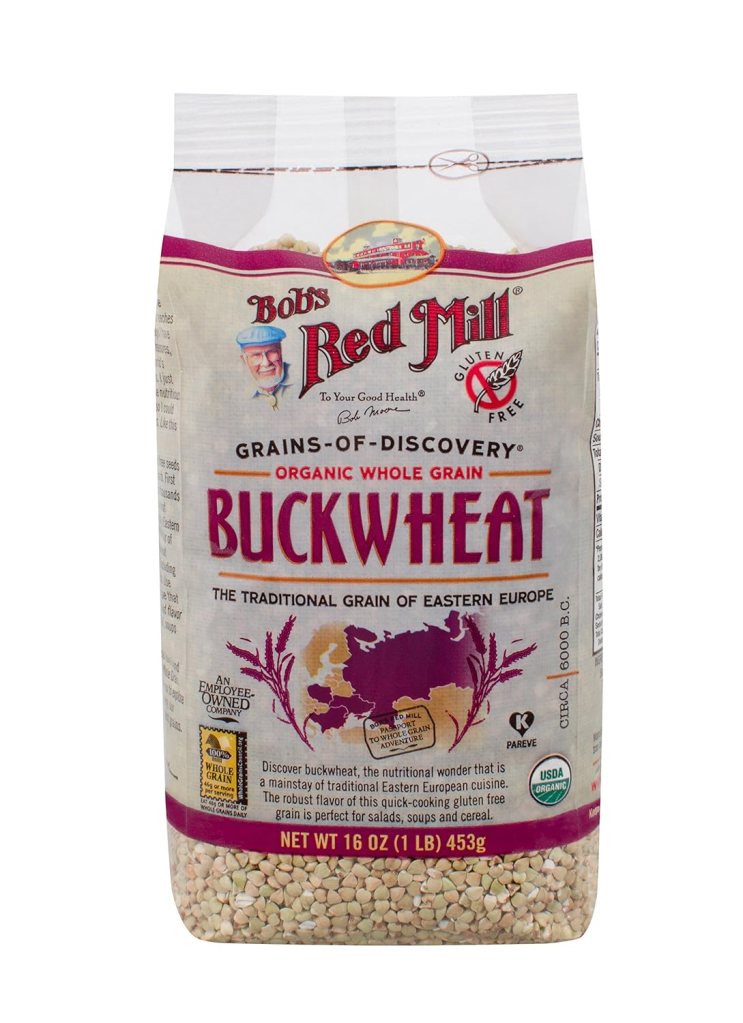
Photo courtesy of Amazon

Buckwheat

  • Buckwheat originated from China.
  • It has a pronounced earthy flavor.
  • Not only can you purchase buckwheat flour, but you will often find it in other food items such as Japanese noodles, pancake mixes and pasta products. You may also see bags of buckwheat groats, which are the hulled seeds of the buckwheat plant.
  • In the kitchen, you can use it in baked goods, porridge, or pasta.

How to cook pseudocereals

As mentioned in the beginning, these pseudocereals are cooked like other cereal grains. Many sources, including the packaging, will give you a grain-to-water ratio. However, I cook all my whole grains/pseudocereals using the pasta method. Bring a pot of water to a boil, add the grain and cook until it is done, tasting as you go along. Then, drain, put it back in the pot, cover with a lid and allow it to steam until you are ready to serve it. This method is especially useful when you live at a higher altitude, as it takes longer to cook and requires more water than lower altitude kitchens.

Most of us do not want “pseudo-foods” in our kitchens. Pseudocereals are an exception as they are a tasty and healthy food that can help you mix things up on your dinner table.

Cooking Tips · Ingredients · Techniques

The Truth about Fresh vs Frozen Produce

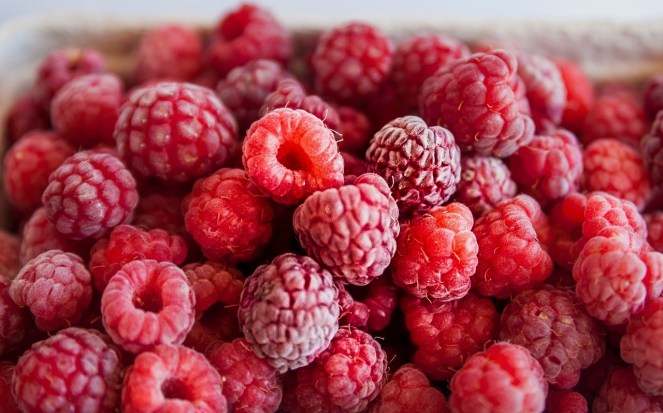
Image by Walter Bichler from Pixabay

I love frozen produce. I not only use it in my own kitchen, but I also use it frequently in my cooking classes. Some people might be surprised that I do not exclusively use fresh produce. However, frozen produce is an excellent substitute for fresh produce in many applications. This Cooking Tip will explain the benefits of frozen produce and how best to use it.

Pros of Frozen Produce

  • It is often more affordable than fresh produce, especially when the fresh produce is not in season.
  • It is more convenient than fresh produce. You just have to open your freezer to find the item, and it is usually prepped for you by washing, peeling, and chopping. Another convenience factor is that the frozen produce does not need to be thawed before being cooked for most purposes.
  • The produce that is meant to be frozen is picked at peak ripeness. Fresh produce tends to be picked before maximal ripeness to make it easier to store and transport. Riper produce not only tastes better, but it also has a superior nutritional profile (see below).
  • Frozen produce lasts longer than fresh produce. Fresh produce might only last 1-2 weeks, whereas frozen produce can last in the freezer for several months. This reduces food waste.
  • Frozen produce is available year-round. We all know and probably try to eat what is in season. You are doing just that when eating frozen produce. Even though it might not be blueberry season where you live, the frozen blueberries were picked when those blueberries were in season.
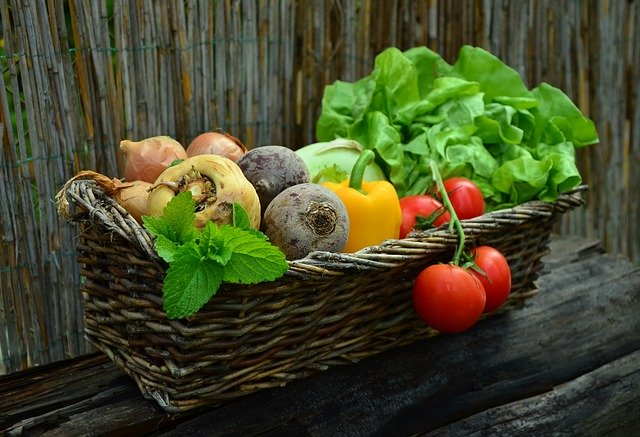
Image by congerdesign from Pixabay

Cons of Frozen Produce

  • There might be a change in texture as compared to fresh produce.
  • Many frozen veggies contain additives such as seasonings. At times, when I look at the frozen veg aisle, it is hard to find a package that doesn’t have a sauce or seasonings added to it. This can add fat, sugar and calories. So, be sure to check the ingredient list for these additives.

Nutrient level

  • Some worry that frozen produce loses nutrients during the freezing process. This has not been borne out with actual studies. 
  • A study published in the Journal of Food Composition and Analysis in 2017 was a two-year study that looked at specific nutrients in selected fresh and frozen fruits and vegetables. They also studied “fresh-stored,” which was intended to mimic typical consumer storage patterns of produce following purchase – noted as five days of refrigeration. Their conclusion was:

In the majority of comparisons between nutrients within the categories of fresh, frozen, and “fresh-stored”, the findings showed no significant differences in assessed vitamin contents. In the cases of significant differences, frozen produce outperformed “fresh-stored” more frequently than “fresh-stored” outperformed frozen. When considering the refrigerated storage to which consumers may expose their fresh produce prior to consumption, the findings of this study do not support the common belief of consumers that fresh food has significantly greater nutritional value than its frozen counterpart.

  • The FDA has also added frozen produce to those items that may be labeled as healthy. See this Fact Sheet.
  • Frozen produce is picked and frozen at the height of its ripeness. This means it is also at the height of its nutrient level. Fresh produce is often picked before it is ripe. This means it has fewer nutrients and tends to lose nutrients over its life span from actual picking to using the produce in your kitchen.

How to use frozen produce

  • Sauteing
  • Steaming
  • Microwaving
  • Roasting
  • Use in soups and stews
  • Smoothies
  • Sorbets
  • Sauces
  • Fruit cobblers

Are you a lover of shopping in the frozen produce aisle like I am? If not, check it out the next time you visit your supermarket. A wonder of delicious and nutritious items abound there.

Cooking Tips · Ingredients · Techniques

Expert Tips for Successful Gluten-Free Baking

Image by harshahars from Pixabay

Many people want to learn how to cook and bake gluten-free. To do this requires an understanding of gluten, what it does in our dishes and how to eliminate it without negative consequences. It is not as easy as just substituting gluten-free flour for regular flour. In this Cooking Tip, I have compiled a list of tips and advice to help you do this.

Baking gluten-free is more challenging than making savory dishes gluten-free. Baking is much more of a science, and the amount and type of ingredients are generally crucial to a successful dish.

Here are a number of tips that gluten-free pros recommend.

Be realistic
Although gluten-free baked goods can be delicious, the taste and texture will not be exactly like those made with gluten. That is to be expected. Also, do not expect each and every item you make to turn out. We all have underwhelming dishes and even some failures. This is even more so when you are just starting out learning to make gluten-free. Have patience, do your research and keep practicing.

Pick your recipes carefully
There are many delicious flour-free recipes that one can make. Just be sure to check that the other ingredients are gluten-free.

If you want to make something that would normally contain wheat flour, start by using recipes developed by a gluten-free expert rather than trying to convert a recipe from regular to gluten-free. This is especially true if the regular recipe has flour as a primary ingredient. After gaining some experience and confidence, you can try your hand at converting recipes.

You will need structure-building ingredients
With wheat flour, the gluten is what builds structure allowing baked goods to rise and stretch. Without gluten, you will need to add what is called a binder to improve the structure of the gluten-free item. The most common binder is xanthan gum. Others include guar gum and psyllium husk.

Realize that not all gluten-free flours are the same
Most experts will tell you that there is not any one gluten-free flour that will work in all your recipes. For the best results, a mixture of flours is typically used, and it will be a different mixture for different baked goods.

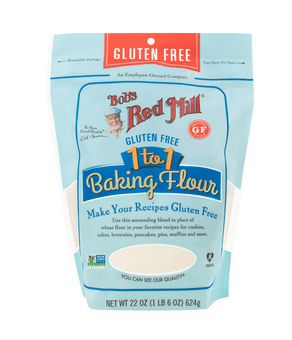
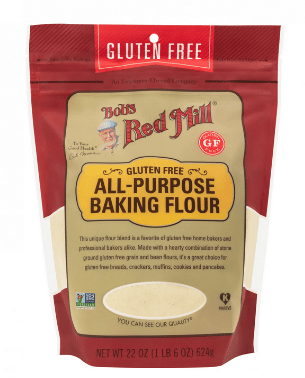
Some products out there purport to be the “all-purpose” flour in the gluten-free world. Every person will have their favorite brand, but even among those, they are not all the same. For example, Bob’s Red Mill 1-to-1 Baking Flour (in the blue bag) comes with xanthan gum already in it. However, it should not be used for yeasted goods. Unfortunately, this is not stated on the bag. You will only find that information if you look at the product on their website. Their Gluten-Free All Purpose Baking Flour (in the red bag) states it can be used for yeasted baked goods. However, you will need to add a binder and the flours included in this mix include bean flours, which will add a distinctive flavor that some may not like. So, do your research and understand you will probably need different products for your gluten-free life.

There are many different types of gluten-free flours and starches. Here are a few.

  • Potato starch
  • Tapioca starch
  • White rice flour
  • Sweet rice flour
  • Brown rice flour
  • Millet flour
  • Buckwheat flour
  • Teff flou
  • Oat flour (make sure it is certified gluten-free)
  • Sorghum flour
  • Corn flour
  • Chickpea flour
  • Almond flour
  • Coconut flour

Gluten-Free flours must be measured carefully
Because these flours are so fine and the grind varies by type of flour, measuring by the cup method can lead to problems. Your gluten-free baking will improve (same as your regular baking) when you switch from measuring cups to weighing ingredients. This is a recommendation that you will read over and over when consulting gluten-free experts.

If you do not have a scale, place the appropriately sized dry measuring cup on a paper towel or piece of wax paper. Spoon the flour into the cup until it is mounded over the rim. You can gently shake it to settle the flour but do not pack it. Scrape away excess flour using a straight edge. Use the paper towel or wax paper to return the excess flour to the container.

Measure liquids carefully
Most gluten-free recipes require more liquid than regular recipes. Follow the recipe and measure correctly. Some gluten-free pros even like to measure the eggs in a cup for more accuracy. Of course, your recipe must include this measurement.

Your structure will improve when you mix the batters longer
The caution against over-mixing that you see with regular batters is due to the concern of building up too much gluten. Without gluten, you will get better results if you purposely mix longer. Your baked goods will rise better and maintain that rise longer.

Rest batters and doughs
Allowing your gluten-free batters and doughs to rest, covered, for about 30 minutes before baking will improve them. Gluten-free flours generally need more liquid than regular flour, leading to thinner batters. Resting the batter allows more time for the flours to absorb the liquid, which not only thickens the batter but also decreases the gritty texture that is sometimes found in gluten-free baked goods.

Be careful with determining doneness & expect longer baking times
It can be tricky to determine when gluten-free baked goods are done. Even though they may be cooked through, they might feel soft or even be a bit wet inside. They need time to rest so the starches firm up and set. So, depending on a timer is probably better than the visual cues we might use when baking non-gluten-free items. One caution, though, is that the recipe timing depends on your oven being accurate. Using an oven thermometer will help with this. Using an instant-read thermometer to determine doneness is also a good recommendation.

A corollary to this is that gluten-free baked goods might benefit from longer baking times. According to Beyond Celiac, “While a regular cake or loaf of bread might take 30 minutes to bake, a gluten-free version will often take 45 minutes to an hour.” Your baking time can also be affected by the pan. It is important to use the type and size of pan specified in the recipe.

Increase leavening
Your leavening agent might be yeast, baking powder and/or baking soda. Increasing the amount you use can help with rising and maintaining structure. Beyond Celiac recommends 2 teaspoons of baking powder per cup of gluten-free flour. If you recall the chemistry of leavening, you will be reminded that baking soda needs an acid to work. The same source states that baking soda and buttermilk, along with 1⅛ teaspoons of cream of tartar for each ½ teaspoon of baking soda, can be used in place of baking powder.

Include extra protein
By eliminating gluten, you are not only eliminating a potential allergen but also the protein it adds to the recipe. Adding other protein, such as eggs, yogurt, or buttermilk, can help. If the eggs are beaten, they will add bubbles to the batter. Both yogurt and buttermilk are acidic, which helps improve the action of baking soda. Dairy products such as milk or sour cream also contain protein and can help with the browning of the dish.

Gluten-free flours do not absorb oil well
If your recipe calls for oil, you might achieve a better result by substituting melted butter. Some will also swap out the oil for milk, sour cream, yogurt or eggs.

Add moisture-containing ingredients
Gluten-free baked goods can often be dry. Moisture-containing ingredients such as dairy, veggies, fruit, or eggs can help, but be sure to follow the recipe for this recommendation. Using brown sugar in place of white sugar can also add moisture.

Add flavoring
Gluten-free flours often have a unique flavor. Therefore, many experts recommend adding a flavoring agent such as vanilla.

There you are – a compilation of the best tips for success in gluten-free baking. Whether you just want to make a particular item for a friend or family member or you want to make a lifestyle change, I trust these tips will help you be successful.

This post contains affiliate links and I may earn a commission if you decide to purchase.

Cooking Tips · Ingredients · Techniques

Strawberries – The Epitome of Summer

My husband has been harvesting strawberries since June. He has four different varieties growing; they mature at different times and have different flavors. If you do not have a garden, what can you do to ensure you are getting the best strawberries you can? That is the subject of this Cooking Tip.

Strawberries are a member of the rose family and are Native to North America. The large majority of US strawberries come from California, with Florida being a distant second.

Varieties

As with so many produce items, there is not just one strawberry, although you may think so if you only buy them in the supermarket. There, you will find what is known as the Garden Strawberry (Fragaria Ananassa). However, there are said to be over 1,000 different varieties grown worldwide.

If you are a gardener, you will have a myriad of choices to plant. They are broadly broken into two categories.

  • June-bearing – these produce the largest berries over a 2-3 week period during June/July.
  • Everbearing strawberries generally produce two harvests a year – one in the spring and one in later summer/fall. Their fruit is usually smaller.
Image by Shirley Hirst from Pixabay

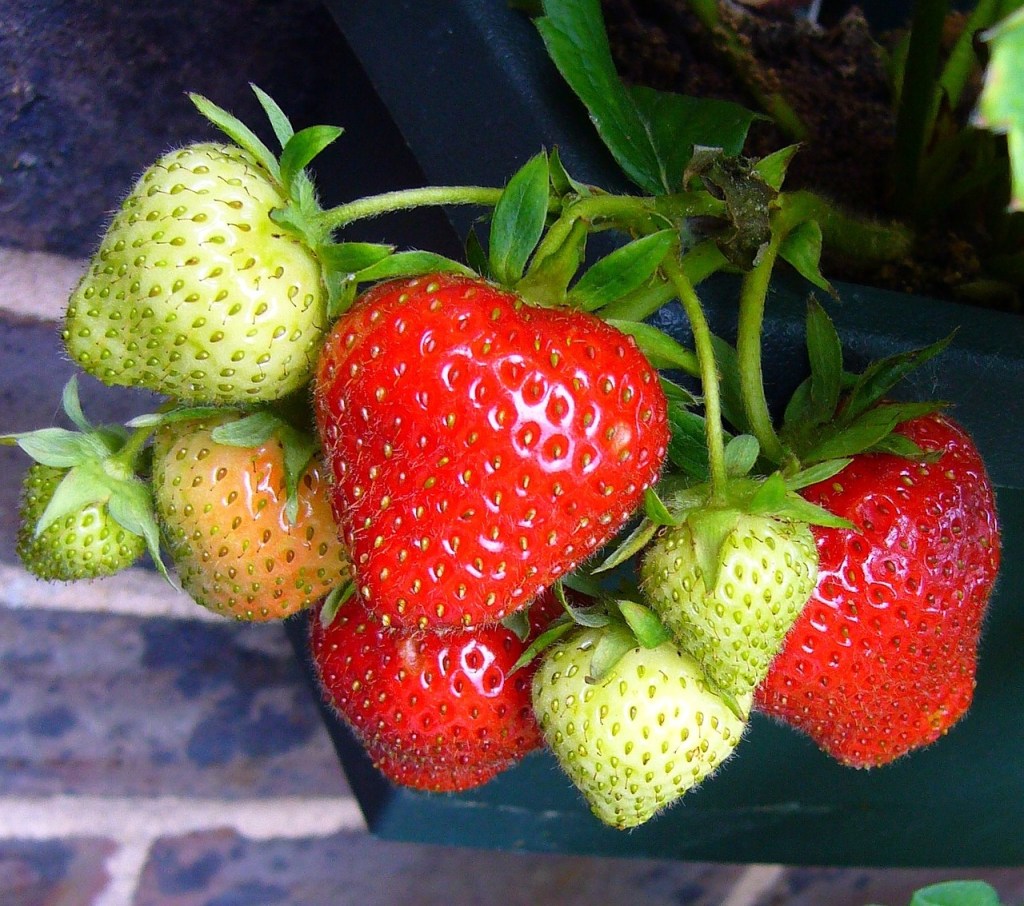
Although the typical strawberry is red, there are green and white berries. The greens are unripe berries, and the whites have been cultivated so as not to develop the typical red color.

Picking Ripe Strawberries

Because strawberries (as with so much fruit) do not continue to ripen after harvesting, you want to pick the ripest you can when you buy them to get the sweetest and most strawberry flavor. The best way to test the flavor of a strawberry is by tasting it, something that you probably cannot do in the supermarket, although you may be able to do so at farmer’s markets.

Apart from tasting, a deep red color is another indicator of flavor. However, strawberries will continue to redden after being picked, even though they do not continue to ripen. Therefore, color alone can be deceiving. One strawberry grower recommends looking to see how red they are all the way to the top, under the leaves. The redder they are in this area, the sweeter & juicier they will most likely be.

Another tip is to smell them. They are much more likely to have good flavor if they have a wonderful strawberry scent.

Another interesting point comes from America’s Test Kitchen. They tell us that the flavor of a strawberry is related to its aroma, and the aroma is related to temperature. A room temperature berry will likely taste sweeter than one just out of the refrigerator. Too much heat, though, is not good, as it can drive off much of the aroma. Therefore, rather than cooking strawberries, they like to macerate them by tossing them in a bit of sugar and letting them sit until they soften and the liquid starts to come out.

Hulling Strawberries

When you are ready to eat or use the strawberries, after washing them, you will want to hull them, which means removing the leaves and the core. There are different methods for this.

  • Paring knife
    • This doesn’t require any equipment other than what you already have. It does, though, take away more of the berry than other methods.
  • Straw
    • Insert a sturdy straw into the strawberry’s point. Push the straw through the berry, and it will remove the leaves with the hull attached. This method does work, although it is easy to go off-center and miss the hull.
  • Hullers
    • Spruce Eats tested several different hullers and found that the Oxo Good Grips Strawberry Huller worked the best. They liked its nonslip grip, easy cleaning, and ability to use different-sized berries. The only negative was that it was hard to store.

Roasting Strawberries

Roasting strawberries is an interesting way to try to enhance their flavor by intensifying the natural sugars present in the berries. To do this, toss the berries in about two teaspoons of sugar per cup of berries. If desired, add a touch of acidity with a bit of lemon zest. Roast in a 425°F oven for 15-20 minutes, stirring halfway through. Although you may or may not want to eat them out of hand, you can use them in baked goods or as a topping.

Dried Strawberries

Image by Engin Akyurt from Pixabay

Making dried strawberries is not difficult. If you have a food dehydrator, follow the instructions for that appliance. You can still dry them in a low oven if you do not have one. After washing and hulling the berries, cut them in half or quarters. Place the berries on a baking sheet, cut side up. Place in a 200°F oven for about 3 hours. Allow the berries to cool and crisp up, and then store them in an airtight container for up to a week.

Storing Strawberries

We all know just how perishable strawberries are. How can we make them last the longest? There are all sorts of recommendations out there. Three that seem to stand out as the best are the following.

  • Do not rinse them until you are ready to eat them. Rather, pick out any berries that are going bad, put the rest back in the container and store them in the refrigerator. Some recommend storing the container upside down to encourage airflow. This way, your berries should keep up to a week.
  • A second method is to wash them in a solution of 1 part white vinegar to 3 parts water, drain them and dry them thoroughly before putting them in the refrigerator. One method of drying is placing them is in a paper-towel-lined salad spinner and gently spinning them until dry.
  • A final method is to soak them for about 5 minutes in a mixture of 1 tablespoon of kosher salt per cup of water. Drain, rinse, dry and place in the refrigerator. The proponents of this method say that the salt is abrasive, and therefore, it cleans better than water alone. This same source does not like using baking soda or vinegar, as these ingredients can be absorbed into the berry and not rinse off completely, possibly compromising flavor and texture. As can be seen by the second method, though, not everyone agrees with this caution.

Freezing Strawberries

For more extended storage, strawberries can be frozen.

Image by congerdesign from Pixabay
  • Remove the tops.
  • Chop them as you prefer – quarter, slice, etc. You can leave very small berries whole.
  • Freeze in a single layer.
  • Transfer to a freezer bag/container.
  • Use within a few months as their quality deteriorates after about six months.
  • Some like tossing the berries in sugar before freezing, as this preserves the color and texture. However, it does limit how you can use them later.
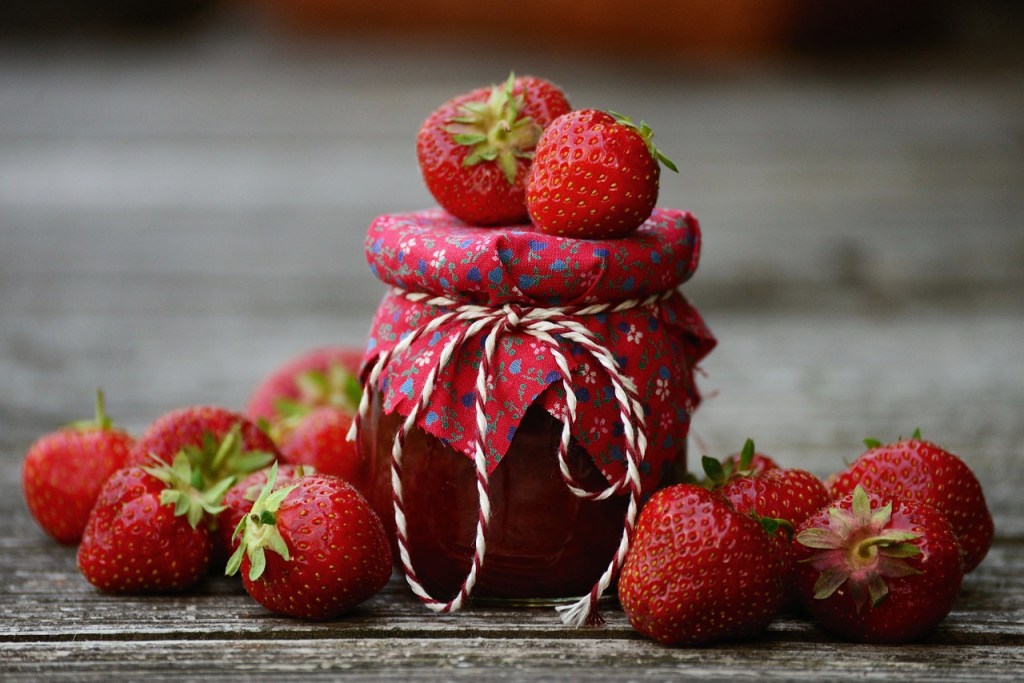
  • Great uses for frozen strawberries are smoothies, jam, ice cream, fruit topping, and strawberry sauce.

Measuring Strawberries

Although you do not always have to be exact in measuring when using strawberries in a recipe, it is nice to know how many cups are in that container you pick up in the store. The Spruce Eats has put together some conversion figures to make your life easier.

1 cup whole strawberries is equivalent to:

  • 8 large strawberries
  • 5 ounces by weight
  • ½ cup strawberry puree

1# strawberries is equivalent to:

  • 2¾ cup sliced strawberries
  • 3¾ cup whole strawberries

1 pint of strawberries is equivalent to:

  • 12 large strawberries
  • 24 medium strawberries
  • 36 small strawberries
  • ¾# by weight
  • 1¼ cups puree
  • 2½ cups whole small strawberries
  • 1½ to 2 cups sliced strawberries

Now that you know how to pick ripe strawberries, clean them, store them and use them, there is one last important tidbit. Do you know what the fear of strawberries is called? It is “Fragariaphobia.” That is bound to be helpful in your kitchen!

Cooking Tips · Ingredients

Crabapples – Ornamental or Edible?

Sitting at my desk this morning, I looked out the window towards our backyard where the chickens roam, the bees buzz, the flowers bloom, and tree fruit is trying desperately to ripen in Colorado’s less-than-ideal growing conditions. As I look, I see a beautiful green tree with deep red crabapples on it. That is the subject of this Cooking Tip. Are those apples just ornamental, or are they edible? (See this Tip for a discussion on apples in general.)

According to the experts, crabapples are not a different type of fruit than other apples. However, one distinction is that they are the only apple native to North America. What determines if it is a crabapple is its size. If it is under 2 inches in diameter, it is called a crabapple. If it is larger, it is an apple.

Breeding is another difference. The apples we eat for lunch have been bred to be larger and better tasting. Crabapples are bred more for ornamentation. Some varieties are purely ornamental, with no or minimal fruit. Even those crabapples with fruit have not been bred to produce particularly great tasting fruit. Although edible, they are much tarter and sourer than other apples.

Some crabapple varieties are sweeter and better for culinary uses. The two that are described as the sweetest are the Dolgo and Centennial. The Chestnut and Whitney are especially good for other culinary purposes.

Dolgo

What I see when looking into our backyard is a Dolgo crabapple. Its size is larger, and its flavor is sweeter than other varieties. Besides eating, it is commonly used to make ciders, sauces and jams.

Centennial

Some like to eat the Centennial crabapple right off the tree, while others feel it is ideal for jam, jelly, or apple butter.

Whitney

The Whitney crabapple is a smaller tree that yields larger and sweeter fruit than many other crabapples. Its great uses include preserving, canning, and pickling.

Chestnut

The flavor of a Chestnut crabapple is described as sweet and nutty. It is well-suited to jams and sauces.

Uses for crabapples

  • Crabapple Jams & Jellies – the sourness of the crabapple will be offset by added sugar.
  • Crabapple Butter – Apple butter made from crabapples will be pink with a more complex and sweet-tart flavor.
  • Crabapple sauce
  • Crabapple fruit leather
  • Caramel crabapples
  • Pickled crabapples
  • Crabapple chutney
  • Crabapple syrup
  • Crabapple juice/cider
  • Crabapple liqueur
  • Crabapple crisp/tart/pie

Disadvantages of crabapples

  • One of the main disadvantages of using crabapples is the increased labor due to their small size. It takes more work to harvest a sufficient amount, and there is increased kitchen labor to get them ready for your desired dish.
  • As noted above, their natural flavor is sour and tart. This can be adjusted by adding sweeteners and spices, although the result won’t be exactly as it would be with regular apples.
  • The flesh will not get as smooth as other apples, even when cooked and pureed.

According to Robinette’s Apple Haus & Winery in Michigan, winter is the best time to pick crabapples. Although they do ripen during the fall, “freezing temperatures make the crabapples soft and sweet.” Alternatively, they recommend picking them and putting them in your freezer for a couple of days before using them.

What about the myth that you might have heard that crabapples are poisonous? The peel and flesh of the crabapple are perfectly safe to consume. Like all apples, the seeds are toxic and should not be consumed.

If you do not have a crabapple tree growing in your backyard, where do you get them? You probably won’t find them in your general supermarket, but some farmer’s markets carry them. They should be able to tell you which variety they are so you can plan accordingly.

They are also a favorite of foragers since they tend to grow in all sorts of areas. As with any foraging, care must be taken. See this Tip for guidance.

Enjoy apple season, whether it is regular apples or crabapples!

Cooking Tips · Ingredients

Figs – A Mediterranean Delight!

Image by Jose Antonio Alba from Pixabay

I was at one of our local supermarkets earlier today. While there, I saw fresh figs on display. I was thrilled, as I love fresh figs, and they are not available very often in our area. They are delicious right out of the box and great for cooking/baking. This Cooking Tip will delve into figs, the varieties, how to choose them, how to store them and what to do with them.

Figs are typically found growing in Mediterranean countries. They like the warmer weather. In the US, the large majority of figs are grown in California.

There are thousands of varieties grown, although only a very few are found in our stores. The names of the figs can be confusing as the same fig grown in different areas might have a different name. In addition, when a fig is introduced to a location, it is not uncommon to coin a new name. For example, when introduced to California, the Smyrna fig’s name was changed to Calimyrna.

There are two harvest seasons for fresh figs. The first is short and occurs in early summer. The main season is from late summer through fall.

Most figs are tear-dropped in shape, although they may vary in size. The color of the skin can range from pale yellow or green to brown to red to purple to almost black. This color distinguishes the type of fig but tells you nothing about its taste. The fig’s interior or flesh will vary from a light amber to a pinkish-red to a darker red, almost berry-like color. Unlike the skin, the flesh color will give you an idea of its flavor.

According to The Fig Boss, the flavor profiles of figs can be broken into three categories – honey, sugar and berry.

  • Sugar – A fig with melon undertones, dried fruit “figgy” flavor, and often unique sugars.
  • Honey – Higher in melon flavor, accompanied by honey-like sugars and nectar.
  • Berry – Figs with pronounced berry or other fruity flavors

Although these are the main three flavor profiles that most experts will use, The Fig Boss likes to further refine the flavors into:

  • Sugar Berry
  • Melon Berry
  • Cherry
  • Complex Berry
  • Sugar Honey
  • Fruity Honey

Of the thousands of varieties, here are the ones you will most commonly find in grocery stores.

Mission (Black Mission)

Image by StockSnap from Pixabay
  • If you are fortunate enough to stumble across fresh figs in your store, the most common variety you will find is the Mission fig. It is also known as the Franciscana fig, named after the Franciscan missionaries who cultivated it in California in the late 18th century
  • It has purple or black skin with a light pink interior.
  • Its flavor is mellow with honey and earthy notes.
  • It will work well in most dishes that call for figs.

Brown Turkey (Turkish Brown Figs)

  • Another fig you might see in your stores is the Brown Turkey Fig.
  • It is larger than other figs with brown or reddish skin.
  • The flesh is light red to brown.
  • It has a mild flavor, much less sweet, less complex and less intense than the mission fig. The flavor notes are said to be of honey and hazelnuts.

Calimyrna

  • As noted above, this type of Smyrna fig was named Calimyrna when introduced to California. In grocery stores, it is often labeled Turkish figs.
  • Their skin is light green to yellow.
  • The flesh is pale pink.
  • It has a delicate flavor with nutty notes.

Kadota

  • This fig goes by many names: Dottato, Florentine, White Texas Everbearing and Peter’s Honey Fig.
  • It has creamy amber or light green skin.
  • The flesh is light pink or amber.
  • It is a seedless variety.
  • Although less sweet than other varieties, it does have notes of honey and fruit.
  • It tolerates being heated, making it a good candidate for jams and preserves.

When picking out figs at the store, they should feel soft but not mushy. You do not want to buy figs that are hard as they will not continue to ripen. It is perfectly fine to have some slight cracking or wrinkling of the skin. If they are past their peak, they might have a sour smell.

The entire fig is edible, although most remove the dense, fibrous stem. Eating out of hand is my favorite way of consuming figs, but they are also wonderful in other applications. Fig jam and preserves are very popular. Serving them as part of a cheese/fruit/nut platter is also classic. They are an excellent addition to salads, especially if the salad includes goat cheese.

Figs are delicious in this Pork with Figs & Balsamic Dressing recipe from BBC Food. They also make a simple but elegant dessert, as shown in this Fig Compote with Honey Crème Fraîche from Williams-Sonoma.

Figs are very perishable. Once you get them home, leave them in their clamshell packaging and store them in the refrigerator. They will last up to about a week. They never last that long in my refrigerator, and not because they go bad. It is because they get eaten very quickly.

I have never frozen fresh figs, but experts say it can be done. If you wish to try, keep them whole. Remove any very soft figs. Wash and dry them thoroughly. Arrange them on a baking sheet in a single layer, not touching each other. Freeze until sold and then transfer to plastic bags. They should keep up to 6 months. To use, thaw them and use them as usual. The texture will be softer, making them better for cooked applications than raw.

Are you lucky enough to have fresh figs on offer in your supermarkets? If so, grab them while you can. They won’t last long either in your store or your kitchen!