Cooking Tips · Ingredients · Techniques

Gingerbread – A Holiday Tradition

Image by artistlike from Pixabay

Is Gingerbread part of your holiday tradition? Do you make cookies or a gingerbread house? How about a gingerbread cake? This Cooking Tip is all about what gingerbread is and how to make the best you can.

In today’s world, Gingerbread can be either a noun or an adjective. As a noun, gingerbread is a moist, spiced cake made with ginger and molasses. As an adjective, we see it used in phrases like ‘gingerbread cookies,’ ‘gingerbread house,’ etc. In reality, gingerbread is a somewhat broad term for many baked goods that use ginger and molasses, though some recipes use honey or treacle instead.

Since gingerbread typically uses certain spices, we also tend to use the word as a flavor, similar to how we talk about Pumpkin Spice. What does it taste like? Ginger is a major flavor in gingerbread along with other warm spices such as cinnamon, cloves, allspice and even pepper. Sweetness usually comes from molasses’ unique flavor.

Picking out an appropriate recipe depends on which type of gingerbread baked good you wish to make. A recipe for gingerbread cake will be somewhat different than that for gingerbread cookies. And a gingerbread house requires a recipe adapted to create a much sturdier product that will stand up to the house form. Some call this Construction Gingerbread.

A gingerbread cake will have a higher liquid-to-water ratio, making for a very moist cake. The cookies will have more flour compared to the liquid, and the construction gingerbread will have even more flour. Take a look at this chart of basic recipes from King Arthur Baking as an example.

 FlourSugarButterMolassesEggsOther
Cake2 cups¼ cup8 Tbsp¾ cup1Buttermilk – 1 cup
Cookies3¾ cups¾ cup12 Tbsp¾ cup1 
House5 cups1 cup6 Tbsp½ cup1Buttermilk – ¾ cup

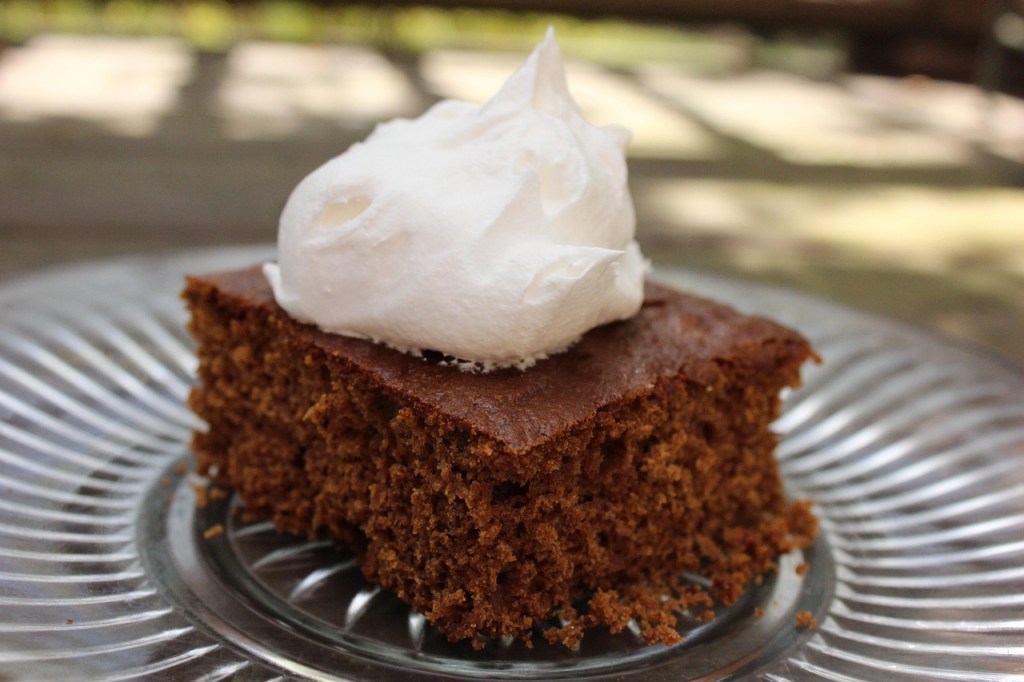
Making a gingerbread cake (more correctly called just gingerbread) is fairly simple. It is a type of quick bread. It can be as simple as mixing the dry ingredients, mixing the wet ingredients, combining them, and baking. It is often enjoyed with whipped cream or ice cream.

Image by Ray_Shrewsberry from Pixabay

Gingerbread cookies and gingerbread houses take a bit more effort. Here are some tips for success.

  • Refrigerate the dough
    • Refrigerate the dough for at least an hour before rolling it out. Many recommend longer, and some advise chilling it overnight. This will make the dough less sticky and easier to roll out.
  • Rolling the dough
    • To get evenly-shaped cookies, take time to roll out the dough carefully. To prevent sticking, dust your rolling surface and pin with flour.
    • Try to roll to a consistent thickness, about ¼ inch thick.
    • If you roll directly onto parchment paper, it will make the task of transferring to a cookie sheet easier.
  • Baking the cookies
    • If you bake at a lower oven temperature of 325°F for a longer baking time, you will get a firmer and evenly colored cookie.
    • Use the recipe’s recommended baking time as a guide, as the actual time may vary depending on the size and thickness of the cookies. You may want to start and bake just one as a test to determine the perfect baking time. A softer, chewier cookie will take less time, whereas a firm, crispy cookie will require longer in the oven. This is particularly true if you are making construction gingerbread. It should dry completely in the oven, yielding a sturdier structure for your house.
  • Tips for decorating
    • Consider drawing out your design on paper and then practicing it by piping onto parchment or broken cookies.

    • Royal icing is the traditional type used for decorating, as it dries hard and has a glossy finish. It is typically made with powdered sugar and egg whites. However, if you are unable to get pasteurized eggs, meringue powder is often recommended.

    • Some make a faux royal icing, using powdered sugar, water, and corn syrup.

    • The consistency should be thicker for outlining the cookies, as it holds its shape better. This thicker icing is also better for making more intricate details.

    • For flooding or filling the cookie, use thinner icing.

    • To adjust the thickness, just add powdered sugar to thicken or water to thin the icing.If you are making a gingerbread house, royal icing is also used as your glue. It is stiff and dries quickly and completely.

    • One may also use a frosting.  Although you could use a glaze made with powdered sugar and water or milk, you will get better results with buttercream. It is creamier and spreads more easily than royal icing. However, it does not harden. Therefore, it is better for simpler decorations.

    • For prettier results, use piping bags and tips. Use a small round tip for outlining and details. Larger tips are better for flooding or filling in the cookie.

    • Embellish to your heart’s content by using sprinkles and candies.Let the icing dry completely, which may take several hours.
Image by Monika from Pixabay

Is make gingerbread cookies or a gingerbread house part of your holiday tradition? With this advice, I hope you will make them the best you have ever done!

Cooking Tips · Ingredients · Techniques

Waffles – Great for Breakfast & Dinner!

Photo courtesy of StockCake

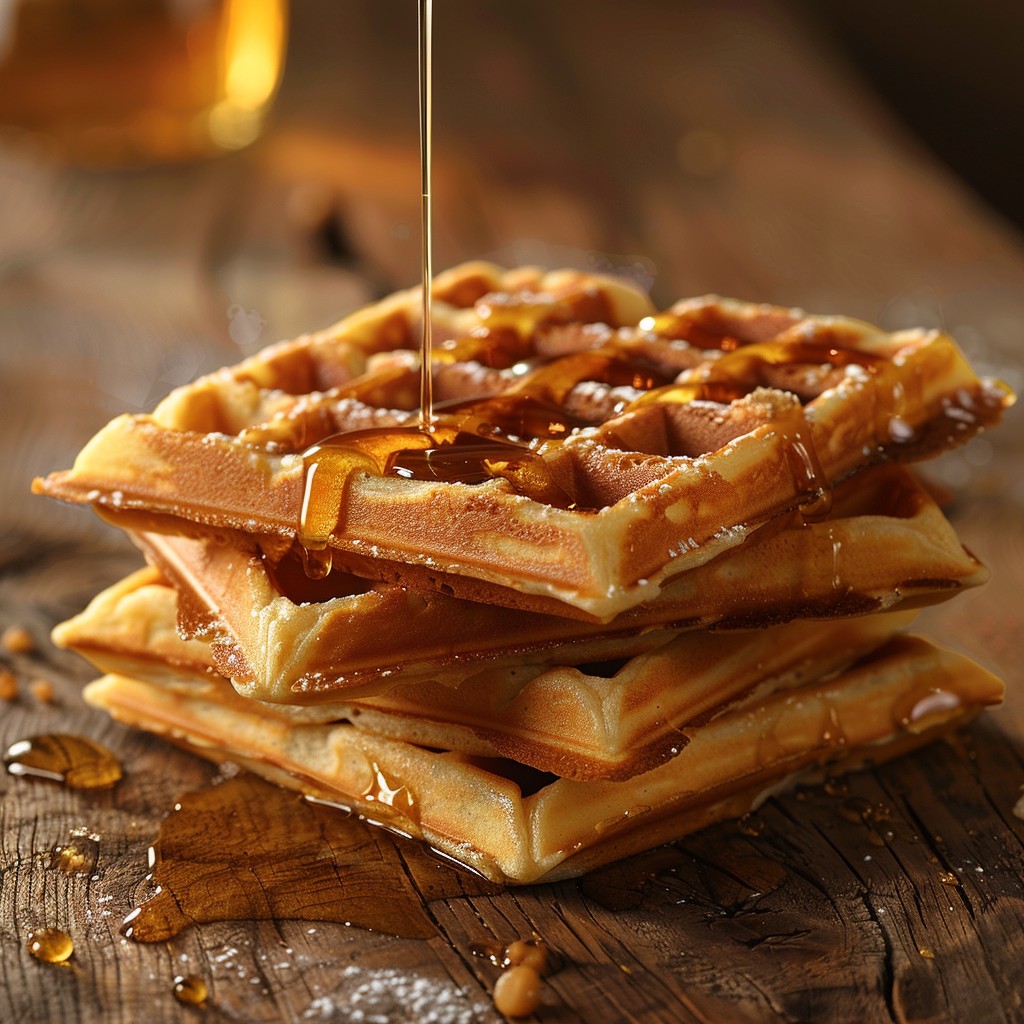
I made Belgian waffles for dinner the other night. They were delicious, and it caused me to wonder how many of you make your own waffles. Don’t tell me if all you do is put frozen waffles in the toaster! In this Cooking Tip, I will discuss the different types of waffles and offer tips for making a great waffle from scratch.

The first thing you need to decide is what kind of waffle you wish to make. There are many kinds of waffles, but the two major categories are Belgian-style and American-style waffles.

Belgian waffles

  • What Americans call Belgian waffles originated in Belgium and were introduced to the US during the 1964 New York World’s Fair. However, you won’t find the term “Belgian waffle” anywhere in Belgium. There are what are called Brussels waffles and Liege waffles.
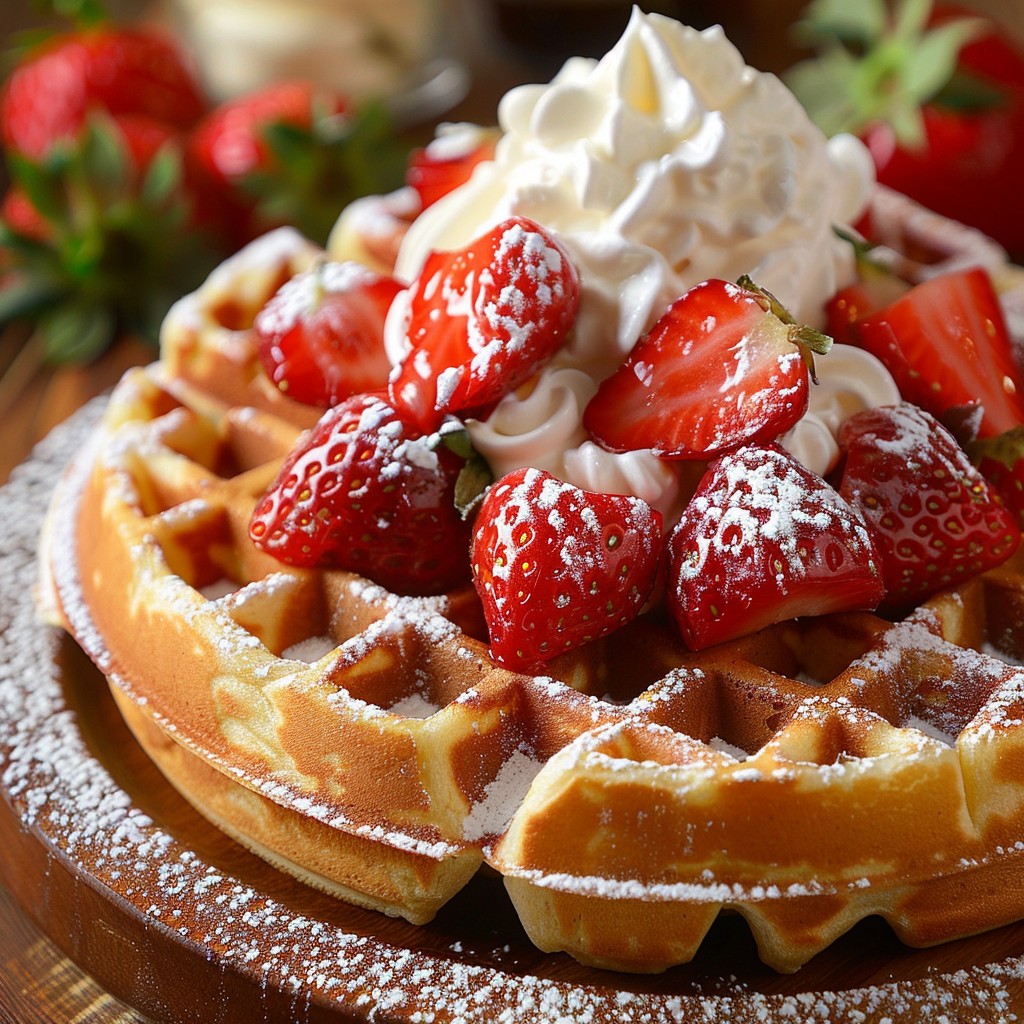
  • Brussels waffles are larger in size than American-style waffles. They also have deeper pockets for all the toppings.
  • What makes these waffles unique is that yeast is used in the batter. This produces a light and fluffy waffle with a crispy exterior.
  • Many recipes for Belgian waffles also call for separating the eggs, whipping the whites into peaks and then folding them into the batter, giving an incredible lightness and airiness.
  • You will find Belgian waffles in America that forgo the yeast and instead use baking powder. However, it is the yeast that gives this waffle style its characteristic form and slightly tangy taste.
  • They are traditionally cooked in a rectangular or square waffle maker.
  • Liege waffles differ in that the batter is thicker and they have pearled sugar baked into them. This gives a lovely crunch. They are typically cooked in a round shape.

American waffles

  • These waffles are thinner and denser than the Belgian waffles.
  • They are leavened with baking powder rather than yeast.
  • The batter is much closer to a pancake batter, although a pancake batter will not work in a waffle maker.

Tips for Great Waffles

Photo courtesy of Amazon

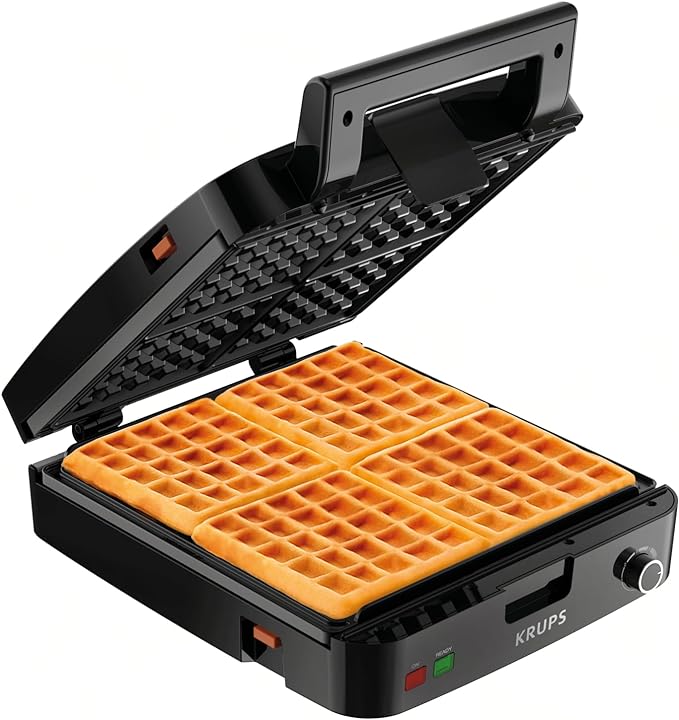
Waffle Maker – Great waffles not only require a good recipe but also a waffle maker. If you make waffles regularly, you may want to invest in a higher-end model. For most of us, though, a more moderately priced one will do just fine.

  • Instructions – Be sure to read the instructions of your waffle maker so they are cooked as your appliance calls for.
  • Preheating – Be sure to properly preheat the waffle maker. Most waffle makers indicate they are ready after about 4 minutes of preheating. America’s Test Kitchen (and others) recommends preheating for 10-20 minutes to ensure the entire surface is thoroughly preheated.
  • Oil – Unless you know your waffle maker is very non-stick, it is best to brush a small amount of oil on both sides of the waffle maker before adding the batter.
  • Portioning batter – It will take some practice to know how much batter to add to the waffle machine. Once you know, measure each time to ensure consistently sized waffles.
  • Judging doneness – Do not open the waffle maker until the appliance tells you it is ready. It will not cook properly if you do. Many experts say that you should not open your waffle maker until the steam has stopped seeping out its sides.

Ingredients

  • Flour – It is fine to use all-purpose flour. Some prefer cake flour because it gives a lighter texture.
  • Leavening agents – For the best Belgian waffles, use yeast. For American-style waffles, baking powder is used.
  • Eggs – Eggs are crucial for structure and richness. Some recipes use whole eggs, while others use yolks and whipped egg whites. There are many advocates of the “whipped egg whites”. However, some say this is a waste of time. See this article from Epicurious. Even if you opt for just using whole eggs, whisk them until they are nice and fluffy. Adding air to the eggs, whether whole or separated, gives the waffles a light and airy texture. If you desire an eggless waffle, try using buttermilk for acidity and baking soda for leavening. This batter shouldn’t sit for very long, as the leavening reaction may die. Therefore, make small batches and once the batter is ready, start cooking. Do not allow it to sit for too long.
  • Milk – Many use whole milk, but buttermilk will give a tangier flavor.
  • Butter – Butter certainly adds richness and flavor. For crispier waffles, though, try vegetable oil in place of the melted butter. A waffle study published in Food Science & Nutrition showed that waffle batter made with oil browned more than batter made with butter. They attribute this to the fact that, unlike butter, oil doesn’t contain water. The water in butter adds moisture and can hinder the formation of a crispy crust.
  • Cornstarch – King Arthur Baking considers this a secret ingredient to producing a crispier exterior in a non-yeasted waffle. Try starting with ¼ cup of cornstarch and work up to ½ cup to get the desired result.
Photo courtesy of StockCake

Making the Batter

  • Sift the dry ingredients to aerate them and to ensure there are no lumps.
  • Warm your liquid ingredients. This will prevent your melted butter (if using) from coagulating and forming small bits of solid butter when stirred into cold dairy. Also, the liquid ingredients will blend better with the dry ingredients if they are all at a similar temperature.
  • Do not overbeat the waffle batter. You want to minimize the gluten development, which can lead to tough waffles. Just stir until everything is combined, and leaving a few lumps is perfectly acceptable.
  • Allow the batter to rest for at least ten minutes and up to an hour to ensure good hydration and to increase flavor.

Keeping Waffles Warm and Storing Waffles

  • As you are making waffles, you will want to keep the cooked ones warm until you have enough cooked for everyone. Place a wire rack inside a rimmed baking sheet and put it on the middle rack of a 200°F oven. As you cook, simply transfer each finished waffle from the waffle maker to the wire rack. The rack helps to prevent sogginess.
  • To store, place cooled waffles between layers of wax paper and place in an airtight container. They can be refrigerated for a few days.
  • To rewarm waffles, place them on the oven rack in a 200°F oven. Microwaving isn’t ideal, as the waffles can get soggy.
  • To freeze, cool and place wax paper between them. Place them in a freezer bag and freeze for up to 3 months. When ready to eat, allow them to defrost at room temperature for about 10 minutes. Then, heat in a 300°F oven.

Troubleshooting

  • To prevent soggy waffles, ensure the waffle maker is fully preheated and cook thoroughly until done.
  • To prevent tough waffles, do not overmix and allow the batter to rest before cooking.
  • If your waffles are sticking to the waffle maker plates, be sure to grease the plates before each batch. If sticking persists, you may need to thoroughly clean the waffle maker according to the appliance instructions.

I cannot share my recipe for the Belgian waffles I mentioned, as it is a friend’s secret family recipe. If you want to make some delightful Gingerbread waffles (non-yeasted), check out this recipe. Just recall the advice from above and adjust the instructions to ensure success.

I much prefer yeasted waffles. What about you? Do you have a favorite recipe? Before reaching for that carton of frozen waffles, try making them yourself. They are so much better!

Cooking Tips · Ingredients · Techniques

Tiramisu – A Classic Italian Dessert

Image by Andrey Cojocaru from Pixabay

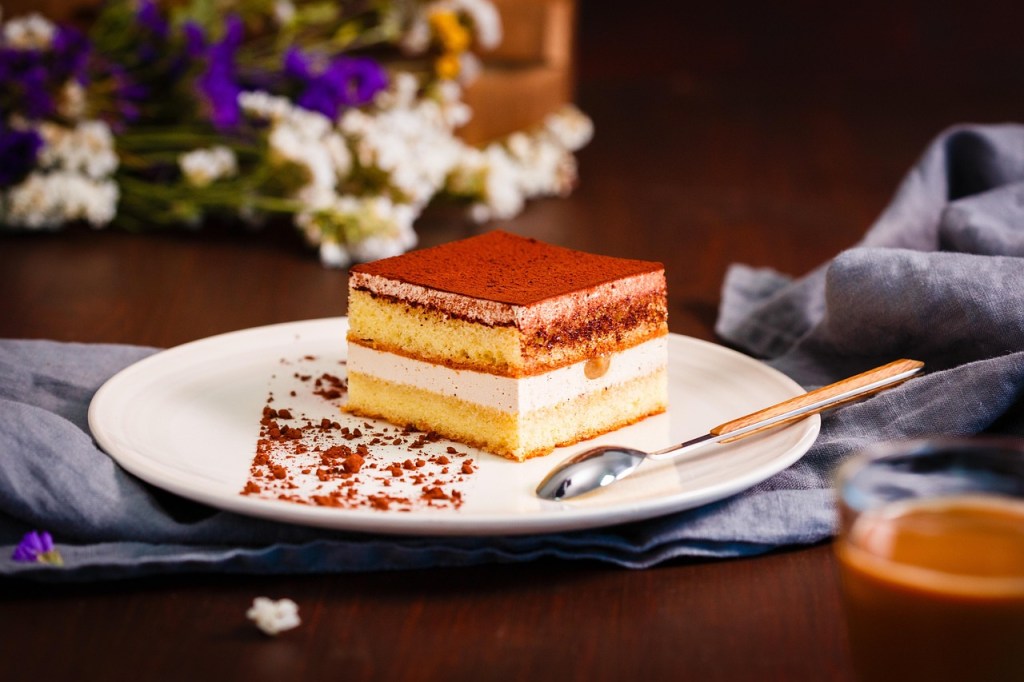
Although Italian in origin, Tiramisu is a dish beloved all over the US. So many people order it when they go to their favorite Italian restaurant. It does not have to be limited to dining out, though. In this Cooking Tip, we will explain what it is and share tips for making the best tiramisu at home.

As is typical, historians disagree on when tiramisu was first created. Some say the 1700s. Some say the 1800s, and others claim it did not exist before the 1900s. Most do agree that it was invented in the Italian city of Treviso. It is an unbaked, elegant, rich and creamy layered dessert.

Typical Ingredients

Mascarpone

  • This is sometimes called Italian cream cheese. However, substituting American cream cheese is not recommended as mascarpone is smoother and milder in flavor.
  • Mascarpone should be cold before adding to the recipe.

Eggs

  • As opposed to the other ingredients, eggs should be at room temperature as they will whip much better than if cold.
  • The original tiramisu recipe probably used eggs that were separated. The yolks were mixed with the sugar, the eggs were whipped to stiff peaks, and then the whites were folded into the egg mixture. The concern with this is that you would be consuming raw eggs.
  • Most modern recipes use either whole eggs or just egg yolks, which are sterilized by slowly cooking over a bain marie as you whip the mascarpone mixture. Follow the recipe directions for the ideal temperature. This is sometimes followed by folding in whipped cream rather than raw egg whites.
  • Pasteurized eggs are difficult to find in supermarkets. They also do not whip up as well as fresh eggs, though this can be helped by adding some cream of tartar.

Whipping cream

  • For the best whipping, the cream should be very cold.
  • To get an optimal result, start whipping at a lower speed, gradually increasing the speed as you go. If you do this for about 10 minutes, the resulting whipped product will be much more stable.

Sugar

  • Regular granulated sugar can impart a grainy texture.
  • Either use superfine sugar or pulse your sugar in a food processor before using it.

Ladyfingers

  • These are called savoiardi in Italian and are dry, oblong-shaped sponge cookies.
  • Be sure to use crunchy ladyfingers, not soft cake-like ones.
  • They will be dipped in a liquid solution. The trick is to get them flavored with the liquid without allowing them to get soggy. To do this, they should be dipped only briefly, no more than about two seconds per side. Alternatively, you can also brush on the liquid rather than dipping.

Coffee/Espresso powder

  • The classic tiramisu is made by dipping the ladyfingers in a strong coffee or espresso mixture.

Alcohol

  • Many recipes include adding alcohol to the coffee. The classic is Marsala, but you can vary it according to your taste. You may also leave it out if you want an alcohol-free dessert.
  • Some recipes will add the alcohol to the cream mixture rather than just into the dipping mixture.

Cocoa powder or grated chocolate

  • This is sifted or scattered over the top, but also may be added to each layer.
  • Since cocoa powder is very bitter, you may want to cut it just a bit by whisking it together with a small amount of powdered sugar.

How to make it

The directions for all recipes are very similar, although you may see some slight variations. Always start by gathering all your ingredients, allowing some to come to room temperature as noted in the ingredient discussion.

Classic recipe

  1. Prepare the mascarpone mixture.
    • Whisk the egg whites until stiff peaks form.
    • Whisk the egg yolks and sugar until thick and pale yellow.
    • Add the mascarpone and whisk until smooth.
    • Fold the egg whites into the mascarpone mixture.
  2. Prepare the coffee/alcohol mixture by mixing in a shallow bowl.
  3. Briefly dip the ladyfingers in the liquid and arrange them at the bottom of the baking dish.
  4. Spread ⅓ of the mascarpone mixture over the ladyfingers.
  5. Sprinkle with ⅓ of the cocoa powder.
  6. Repeat two more times.
  7. Chill thoroughly.
  8. Note that this recipe contains raw eggs unless you use pasteurized eggs.

Modern recipe – Method 1

  1. Whisk together coffee and alcohol and set aside.
  2. Beat egg yolks and sugar until thick, creamy and light yellow. Stir in unwhipped heavy cream.
  3. Cook mixture gently over a bain marie until mixture reaches 160°F. Allow to cool.
  4. Beat mascarpone and alcohol, if using, into egg mixture.
  5. Dip ladyfingers into coffee mixture and place in the bottom of your baking pan.
  6. Spread ½ of the mascarpone mixture over the ladyfingers. Sprinkle with cocoa powder or grated chocolate.
  7. Repeat with the rest of the ingredients.
  8. Chill.

Modern Recipe – Method 2

  1. This is very similar to Method 1.
  2. The difference is that the whipping cream is not added in the beginning. Instead, it is whipped to peaks separately and folded into the mascarpone mixture.

Recap of tips for success

  • Mascarpone and cream, if using, should be cold.
  • Eggs should be at room temperature. If using separated eggs, separate them while cold, then allow them to come to room temperature.
  • For the most traditional flavor, do not substitute cream cheese for the mascarpone, as it will change the texture and flavor.
  • Do not overwhip the mascarpone, as it may split.
  • Do not overmix when folding the whipped cream into the mascarpone mixture to prevent graininess.
  • The finished dessert must set up for at least six hours, even overnight. Proper chilling not only helps the tiramisu set up but also lets the flavors meld.
Image by Stanley QUAH from Pixabay

Make ahead and storage

  • Tiramisu can be made up to two days before serving.
  • It will last in the refrigerator for about a week.
  • You can freeze tiramisu for up to three months. If you choose to do this, do not dust with cocoa powder. Wrap in plastic wrap, placing it directly on the surface. Cover tightly with more plastic wrap, followed by foil.
  • To defrost, allow it to sit at room temperature for 15-20 minutes. After it has defrosted, dust with cocoa powder.

Variations – A fun thing to do with Tiramisu is to vary ingredients.

  • In the summer, I make a Summer Berry Tiramisu. I follow my regular tiramisu recipe, but eliminate the coffee and cocoa. Instead, I use summer berries (fresh or frozen) for layering. I also make a simple syrup with the berry juices and use that for the dipping mixture. If you wish to add an alcohol, choose a berry-flavored one such as cassis.
  • At Christmas, use cranberries and apple cider for layering as well as the dipping liquid.
  • Make a lemon curd for a citrusy tiramisu. Add some to the mascarpone cream and use some in the layering step.
  • Instead of pumpkin pie, make a pumpkin-spice mascarpone cream. Add brown sugar and warm spices to the dipping liquid. Finally, layer crushed gingersnaps between the layers.
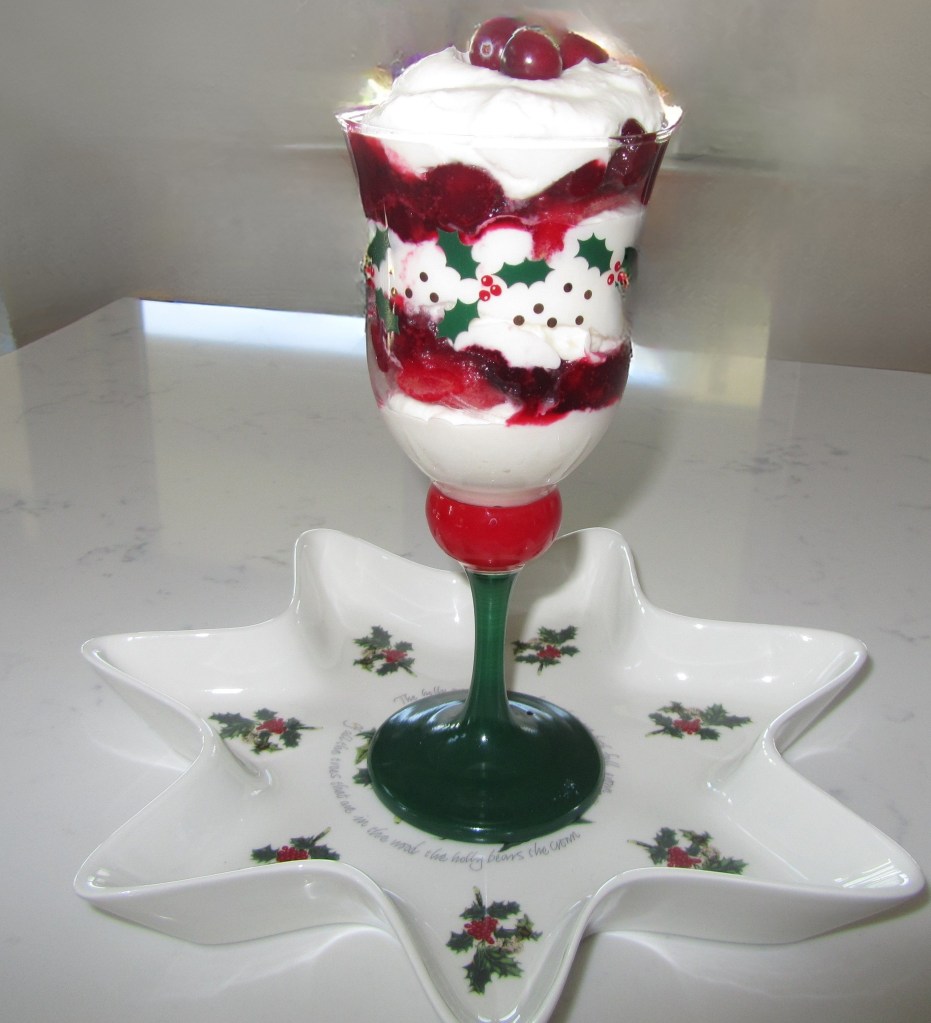
  • Instead of making in a baking pan, make individual tiramisus using pretty glasses or goblets.

Making tiramisu is not difficult, but it does take some patience. If you follow the above tips, I am sure you will be rewarded with success – and a delicious dessert.

Cooking Tips · Ingredients

How do you like your ice cream?

Image by Silvia from Pixabay

Ice cream has to be one of the most popular desserts. It certainly is high on my list. I think there’s nothing better than homemade ice cream. I have written a prior Cooking Tip on how to master that skill. This Cooking Tip will focus on two different types of frozen desserts – Soft-Serve Ice Cream and Frozen Yogurt – and explore how they differ from each other and from ice cream.

Soft Serve Ice Cream

Image by Anthony Cheung from Pixabay

The creation of soft-serve ice cream occurred sometime around the late 1930s. Exactly how, when and by whom is a matter of debate. It has become so popular that it has its own day. Each year, National Soft Serve Ice Cream Day is celebrated on August 19th.

The ingredients that go into soft serve are very similar to those used in regular ice cream: milk, cream and sugar. Commercial ice cream of both types will also contain some added emulsifiers and stabilizers. In the case of soft serve, these additives are what help the ice cream stand up straight on the cone or dish.

Experts explain that the following are essential for the best soft-serve ice cream.

  • The soft, creamy texture requires a delicate balance of fat content, temperature control and air incorporation.
  • The fat is what gives that wonderful mouthfeel. It also helps to create a cohesive mixture. Recommendations are 10-14% fat.
  • Sugar lowers the freezing point and inhibits the formation of large ice crystals, which is so important for soft serve. It should be around 14-18%.
  • Incorporating 30-50% air into the mixture keeps it light and fluffy. This is usually achieved through the use of specialized equipment.
  • Proper temperature control is essential for the consistency, which some describe as between a liquid and a solid.
  • Stabilizers and emulsifiers are added to keep the texture smooth and to help prevent ice crystals.
  • It undergoes rapid freezing, which helps in preventing those large ice crystals from forming.
  • Specialized machines are used that simultaneously freeze and aerate the mixture, maintaining a temperature just above the melting point of ice cream.

Differences between soft serve and scoopable ice cream

  • Soft serve ice cream contains less fat than regular ice cream. The latter is required to contain at least 10% milkfat. Soft serve is usually around 3-6%.
  • The air incorporation is increased for soft serve. Regular ice cream has less than 30% air content. Soft serve will have 30-60%.
  • Soft serve is stored and served at a slightly warmer temperature than hard ice cream. The latter is served at 10°F. Soft serve is served at a temperature of around 20-25°F.
  • Soft serve contains no eggs, whereas regular ice cream often does have eggs.
  • The production process is one of the main differences between regular ice cream and soft serve. Ice cream is churned slowly and then quickly frozen. This creates a harder product. It can be scooped, but often needs to be slightly warmed to do this. The machine that makes soft serve mixes, freezes, and dispenses the product in a continuous process.
  • The soft serve mix is in a liquid state and is only frozen at the point of dispensing, which contributes to its soft, creamy consistency.

Frozen yogurt

Image courtesy of Freepik
  • Frozen yogurt was introduced in the 1970s. At first, it was only sold in scoops. It was not until the 1980s that a soft serve version became available.
  • As with soft serve ice cream, frozen yogurt has its own National Day on February 6th. Not only that, but the entire month of June is designated National Frozen Yogurt Month.
  • The main ingredients are cultured milk and sugar. The cultured milk is created by adding live cultures to pasteurized milk. As with any commercial product, there are also going to be additives in the form of stabilizers, flavorings, and colors.
  • Besides taste, the sugar helps to prevent large ice crystals from forming. This allows it to remain creamy when frozen.
  • The fat content will vary depending on the fat content of the milk used.

Differences between frozen yogurt and soft serve ice cream

  • The taste is much tangier than ice cream, due to the cultured milk. Because of this, the producers use more sugar than you might see in ice cream or refrigerated yogurt in an attempt to temper the tanginess.
  • The product contains less fat than ice cream.
  • It has a smooth, soft texture similar to soft serve ice cream.

What is your favorite? As I said in the beginning, mine is definitely homemade scoopable ice cream. I would not easily turn down a bowl of soft-serve ice cream if served to me. What about you? What do you crave?

Cooking Tips · Techniques

Homemade Puff Pastry in 2 Hours!

Photo by Felicity Tai from Pexels

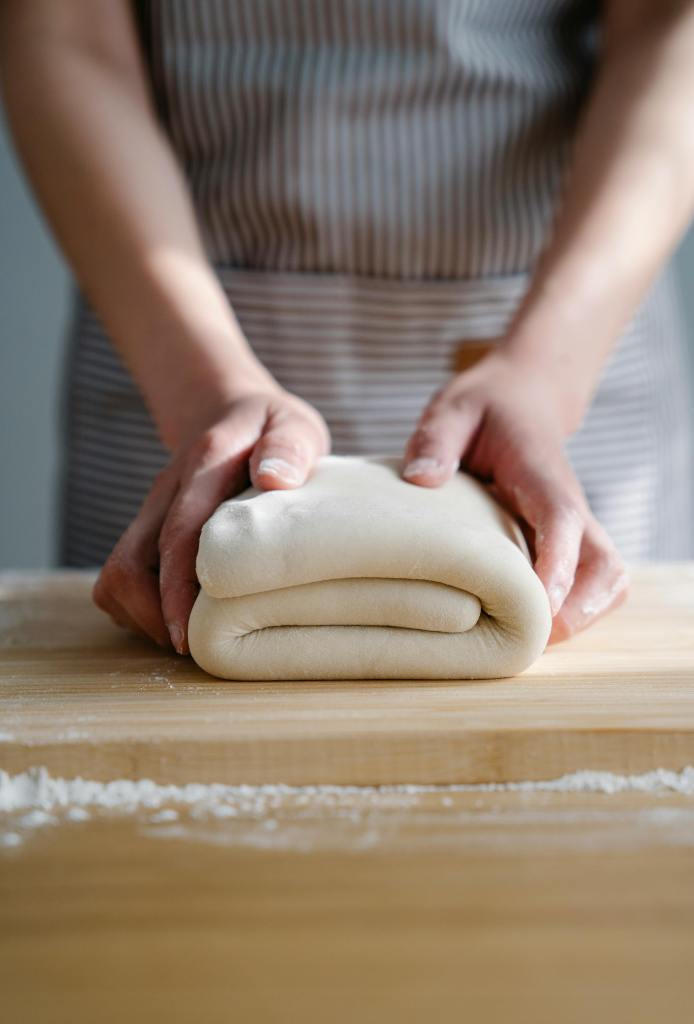
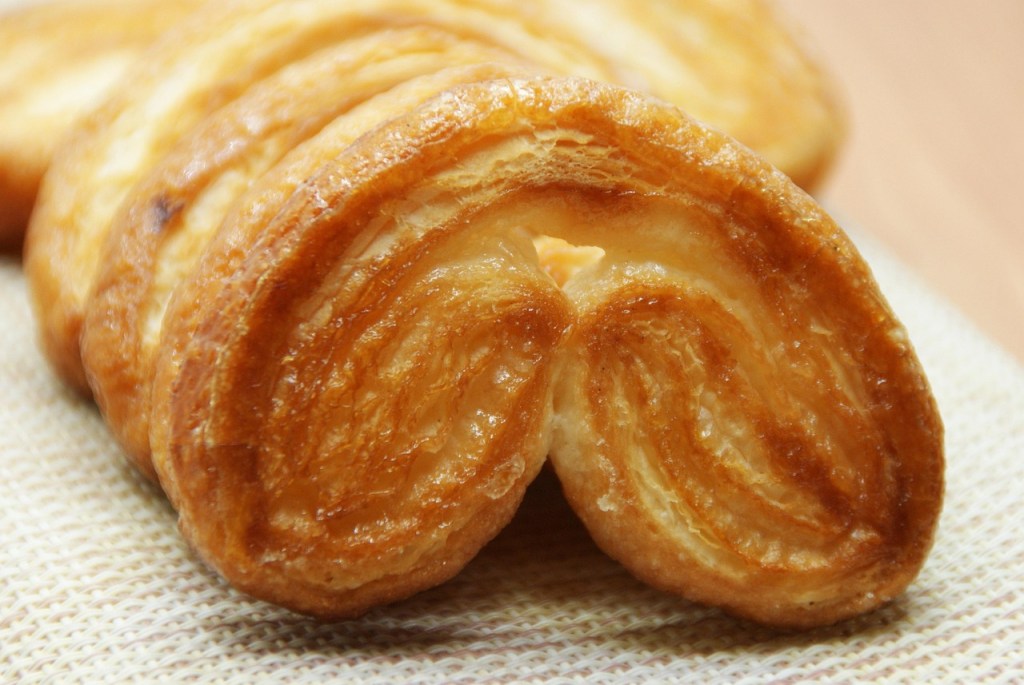
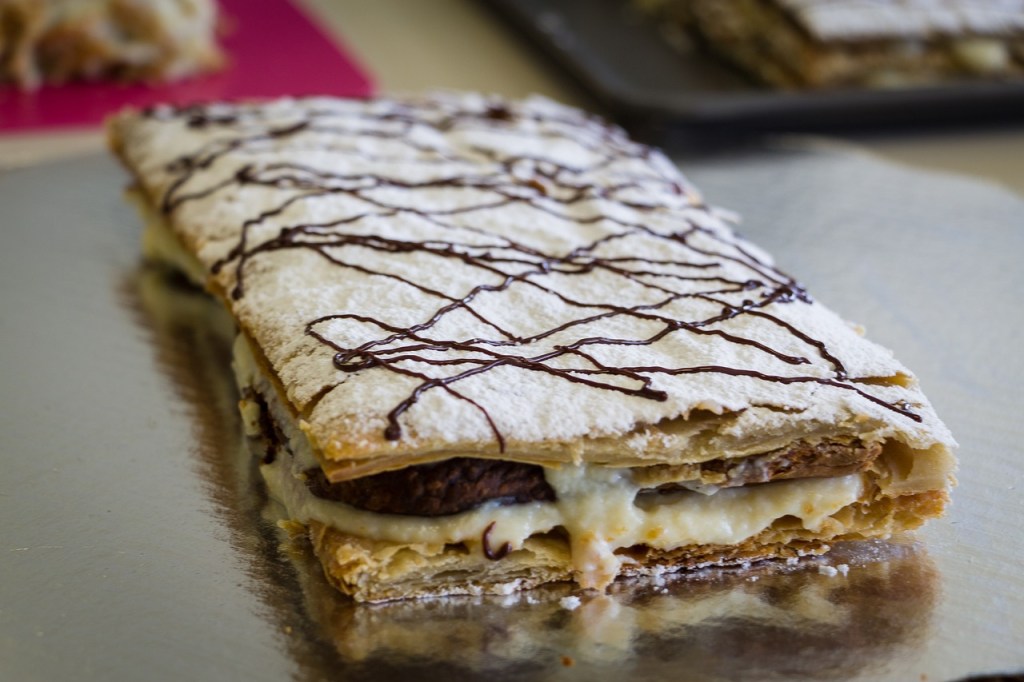
Puff pastry is a delicious type of pastry dough that can be used to create all kinds of wonderful creations. It can be used in both sweet and savory applications. It is composed of layers upon layers of butter and dough. As it bakes, it puffs up, resulting in light and flaky bites of yumminess. I have written a prior Cooking Tip on how to make classic puff pastry. It is not difficult, but it does require some planning and time. I encourage you to give it a try if you have never made your own puff pastry. If you are craving this pastry but do not have quite enough time, consider making Quick Puff Pastry. In this Cooking Tip, I will show you what it is and how it is made.

Although classic and quick puff pastry are made with the same ingredients, they differ in how they are combined and rolled out. As you will read in my Puff Pastry Tip, classic puff pastry begins with a mixture of flour, water, and a small amount of butter. This is combined in a mixer bowl. This is called the detrempe. Separately, a large amount of butter is formed into a butter block. The butter blocked is encased inside the rolled-out detrempe. This is then rolled numerous times in specific ways to create the puff pastry. As the butter and dough must stay cold, the rolling process needs to be interrupted by resting times in the refrigerator. This is where most of the time comes in.

Image by david ramon from Pixabay

With quick puff pastry (also known as rough puff pastry), everything is mixed together and then rolled out. Europeans are known to call this American Puff Pastry as the method is similar to that of making pie doughs. It can be completed in about two hours.

Ingredients

  • For optimal results, use a kitchen scale to weigh the ingredients instead of using a cup measure.
  • Flour – Most of us will just use all-purpose flour, but some recipes may use bread flour.
  • Butter – Since this is what gives puff pastry its delectable flavor, use high-quality butter with a high-fat content. Some recommend a minimum of 82% fat. As with almost all baking, choose an unsalted butter.
  • Salt – Salt adds flavor but can also slow down gluten development, which helps with the rolling process.
  • Vinegar – Many recipes add a touch of vinegar, again to retard gluten development. Whether this is true or not is a matter of debate.
  • Water – The water is what brings all the ingredients together into a dough. Some experts will warn against using water with too much chlorine in it. They recommend using either bottled or filtered water or allowing the chlorinated tap water to sit in the refrigerator overnight to allow the chlorine to evaporate. I am not sure this is necessary for puff pastry. First, many sources indicate that most tap water does not have a sufficiently high chlorine concentration to affect your dough. Second, one of the main effects that chlorine has is by inhibiting the yeast. Puff pastry dough does not contain yeast (although other laminated doughs do.)
  • A final comment about the ingredients is that the butter and water should be very cold. When making puff pastry, you want to avoid having your butter start to melt. It should remain very firm, only melting when placed in the oven.

Method

  • Dissolve the salt in the water.
  • Place flour in a bowl and add the cold, cubed butter. Cut the butter in quickly to prevent it from melting. You want to see chunks of butter all covered in flour.
  • Make a well in the bottom of the bowl and pour in the water. Mix just until the mixture forms a dough that stays together. At this point, you still want to see pieces of butter.
  • Transfer to a floured work surface, gently knead into a ball and then press into a five-inch rectangle. You may also do this with a rolling pin. If it feels too soft or starts to warm up, refrigerate for a while. After forming the rectangle, chill it for at least 15 minutes.
  • Begin the rolling and folding process. Each time, the dough will be rolled out into a long rectangle. Follow the dimensions indicated in your recipe.
  • The folding may vary by recipe, but it will typically involve a series of single and/or double turns. Between each rolling and folding, the dough should be wrapped in plastic and refrigerated for 15-30 minutes.
    • Single fold (sometimes called an envelope fold) – Bring one short end up from the bottom to one-third from the top and then bring the top edge over.
    • Double fold – Bring each short end of the dough into the middle, leaving a small space between the ends. Then, fold the dough in half.
  • In the beginning of the rolling and folding process, your dough will look very rough but will smooth out as you complete this process.
  • Refrigerate the finished pastry before using it in any application.
  • Between rolling and folding the dough, use a pastry brush to brush off any residual flour.
  • After folding and when ready to roll again, always ensure the seam is placed vertically and on the same side for each roll. This will help to ensure an even result.
Image by lccjoca from Pixabay

Result
How does the finished quick puff pastry compare to classic puff pastry? It is very close and much better than store-bought. Since there are fewer layers, it will not rise as high but is perfectly acceptable for applications that don’t require much height.

Have you ever made your own puff pastry? It is truly a satisfying endeavor and yields a wonderfully delicious product. If doing it the classic way is too daunting, try this quick puff pastry technique. What will you turn your puff pastry into? Whatever you do with it, it is bound to be yummy!

Cooking Tips · Techniques

Hot Cross Buns – A Classic Easter Delight

Designed by Freepik

Most of us are beginning to see glimmers of Spring. Part of Spring is Easter, which is a time filled with favorite Easter foods. One of those foods that many people enjoy only during this time is Hot Cross Buns. This Cooking Tip is dedicated to explaining the history of this beloved bread item along with advice on how to make the best batch possible.

Any history source that discusses hot cross buns will mention this childhood nursery rhyme that street sellers sang out in the 19th century.

Once a year, the sellers would start hawking these sweet and spiced soft buns with a cross-scored into the dough. Later, the cross was added using a flour paste or icing.

Photo by StockCake

Although there is much debate about the origins and their historical context, it is generally believed that the cross has always held a religious significance and eventually became associated with Good Friday. English Heritage notes that in a 1733 edition of Poor Robin’s Almanac, a writer said:

Even today, some will associate the hot cross bun with the communion wafer. The spices represent those used in Christ’s burial, and the cross is a reference to the crucifixion.

Enough of history! How do you make a delicious hot cross bun?

Ingredients
The ingredients are very simple. Although you might see some variation among recipes, you will generally have the following ingredients:

  • Flour
  • Butter
  • Milk
  • Eggs
  • Yeast
  • Sugar
  • Spices

Making the dough

  • Hot cross buns are meant to be light and fluffy. Achieving this requires taking care not to either under- or over-knead the dough, as well as not using too much flour.
  • When combining the ingredients, do not add all the flour at once. Hold back a bit of the flour and add it only if needed. Too much flour can make the buns dense and hard.
  • Most people will use a stand mixer to make the dough, but it can also be done by hand.
  • Knead into a soft, smooth, and sticky dough. You can use the dough hook on a stand mixer or knead by hand, although the latter will take much longer. Additionally, it is easy to over-knead when using a stand mixer. If your hot cross buns turn out hard, it may be because you over-kneaded them.
  • You do want a sticky dough as this will result in softer and moister buns. If the dough is difficult to work with due to its stickiness, try putting a bit of oil on your hands rather than using flour.

Adding fruit

  • Some recipes will instruct you to simply add the dried fruit as it is.
  • Others recommend soaking the fruit in warm water, apple juice or your preferred spirit. This softens and plumps up the dried fruit. If you do this, allow the mixture to cool before adding the fruit to the dough.
  • Another point of contention is when to add the fruit. There are three methods.
    • Add fruit along with the rest of the ingredients.
    • Add the fruit only after achieving a soft dough. Since the dough should be sticky, oil your hands and knead the fruit into the dough right in the bowl.
    • Add the fruit after the first rise. If you find it hard to incorporate the fruit at this time, try stretching the risen dough into a rectangle. Sprinkle the fruit pieces over the dough, roll into a log and fold in half. Continue with a few more folds until the fruit looks evenly distributed. Those who recommend this think that the fruit can inhibit gluten development during the kneading process.
  • The classic fruit used is currants or sultanas. Others use raisins, dried cranberries or diced, dried apricots.

Spices

  • Warm spices are typically used. For example, allspice, nutmeg, cloves, mixed spice and/or cinnamon.
    Some chefs feel that cinnamon can inhibit the rising of the dough. So, use the cinnamon lightly.

Rising

  • For the best and fluffiest result, the dough should rise twice. The first rise happens after you have kneaded the dough.
  • The second rise is after you have formed the dough balls and before placing them in the oven.

Portioning & shaping dough balls

  • You will achieve a more aesthetically pleasing result if your dough balls are as uniform in size as possible.
  • Some people prefer to portion them out using a muffin scoop, ensuring a consistent amount of dough in each scoop.
  • For the best result, weigh the dough balls.
  • Take each portion and form it into a ball. Take some time to make nice spheres and tuck the seams underneath.

Forming the cross

  • The simplest method is to just cut a cross into the risen balls before baking. Where you cut the cross, it will appear paler after baking.
  • Flour paste – an older method involves making a flour paste from water and flour. This is then piped onto the buns before they are baked. Some will cut the cross into the dough first as it gives a guide for applying the flour paste. You may need a bit of trial and error to get the right consistency for the flour paste. If it is too thin, it will spread as it bakes and lose its cross-shape. If it is too thick, you cannot pipe it easily.
  • Bo Friberg, author of The Professional Pastry Chef likes to use pastry cream instead of a flour paste. Now, I think that sounds incredibly yummy!
  • Others like to make an icing from powdered sugar, milk and vanilla. This is piped onto the baked and cooled buns. Once again, some will cut the cross into the unbaked buns to provide a guide for the icing.

Baking

  • Be sure not to over-bake the buns, as they will dry out and lose their light and fluffy texture
  • Many like to apply a glaze as soon as the buns come out of the oven to give them a shiny appearance.
  • A common glaze is made by heating apricot jam and a small amount of water and then brushing it on baked buns.

Storage
These are one of those baked items that you want to eat sooner rather than later. You can freeze them for longer storage. To do this, bake the buns and allow them to cool. Place them in an airtight container and store them in the freezer. To serve, allow to come to room temperature and then warm in a low oven.

Are Hot Cross Buns a tradition for you? Do you have any secrets to share? I must say they are not something that I make each Easter, but after writing this Tip, I am eager to grab my yeast and get started!

Cooking Tips · Techniques

Want an impressive dessert? Try an entremet!

Are you ready for a dessert challenge? Do you have some good baking and pastry skills? If so, you may want to delve into the world of entremets. This Cooking Tip is not meant to be an in-depth tutorial on how to make an entremet. Instead, it will give you an overview of what they are, the individual components, and how they are assembled and decorated. This should give you an idea about whether you wish to attempt one of these impressive desserts.

Courtesy of Freepik

Imagine slicing into a stunning cake with a glossy finish only to see multiple layers of different textures, colors and flavors. That is an entremet.

In old French, the word entremet meant “between courses,” and it referred to little bites served between dishes. Later, it came to mean sweet treats served at the end of the meal. Today, it refers to multi-layer desserts containing a myriad of other elements of various flavors and textures. I like the words of one expert who advises that we should think of this dessert as a collection of separate recipes that you make individually rather than as one overall recipe.

At the bottom of this cake is a light but sturdy short layer of sponge cake. Another standard component is a mousse filling. The mousse surrounds all the other internal layers and serves as the body of the cake. Those internal layers are what are called inserts. They might be a gelatin layer, a cream layer, a fruity layer (a coulis or a compote), a praline or something else. These layers add creaminess, nuttiness, fruitiness or richness.

The cake is then enrobed in a glaze or coating that is usually very smooth, glossy and reflective, sometimes called a mirror glaze. It might be the color of chocolate or other colors. The finishing touch and what draws one’s eyes to the entremets are decorations on the top and sides of the cake, such as chocolate shapes, tuiles, flowers, caramelized nuts, meringue shards and more.

Apart from the sponge cake layer, no baking is involved. Rather, all the individual parts are made, and then the entremets are assembled. Each cake element is created in individual rings or molds before being assembled into layers. These individual elements are then placed in another mold to build the cake. The mousse layer is used to surround these “inserts”, thus forming the body of the dessert. Finally, the mirror glaze or coating is applied to the exterior. All of this assembling requires plenty of time in the freezer. Your home freezer is fine, but professionals often use a blast freezer.

To prepare an entremet properly, you will need certain equipment.

  • Silicone molds and cake rings – These are used to define the body and shape of the cake. Whereas cake rings will give you a classic cylindrical shape, silicone molds come in many more shapes.
  • Stand mixer – This is used to make the different individual elements. Although you may use a hand mixer, a stand mixer will make your life easier.
  • Hand/immersion blender – This is used to emulsify mixtures such as ganache, cremeux (crème anglaise emulsified with chocolate) and mirror glazes.
  • Other hand tools – You will want items such as whisks and spatulas (regular and offset), a thermometer, piping bags/tips, and a food scale.
  • Baking sheets – These are used to bake the elements as well as holding them as they are placed in the refrigerator or freezer.
  • Mixing bowls
  • Saucepans
Courtesy of Freepik

You should expect that it will take two to three days to make these desserts. Much of that time is the chilling time. You can make more than one entremet during this time if you have enough refrigerator and freezer space. Because these items take quite a bit of time, many prefer making these in larger batches rather than a one-off.

Storage
If you do decide to scale up your recipe, realize that not only the completed cake but the individual components can be frozen for up to a month as long as they are tightly wrapped.

Does an entremet sound like something you want to try? If so, do your research and plan carefully. If you have never made one before, use a tested recipe. After you get a feel for the ingredients and techniques, then you can consider branching out from the recipe.

Cooking Tips · Ingredients

The Beautiful Colors of Chocolate

What color do you think of when someone says chocolate? For most of us, we think of brown. Some might say white. What about pink or gold? Those are not colors we usually associate with chocolate, but they are real. What they are and how to use them is the subject of this Cooking Tip.

Many terms are used in conjunction with chocolate, such as milk, dark, semi-sweet, bittersweet, and white. For a discussion on those common types of chocolate, see this Cooking Tip.

Barry Callebaut, a well-known and high-quality chocolate company, introduced Ruby Chocolate to the world in 2017 after over a decade of research. Its beautiful pink color is what one notices first. It is a natural color and not achieved with any color additives.

Ruby chocolate is made from the ruby cocoa bean, found in Ecuador, Brazil and the Ivory Coast. Some say that this ruby cocoa bean is unique as it is able to develop a pink hue and fruity flavor. Others say the color results more from the processing method, a closely guarded trade secret. One thing that Callebaut reveals on their website is that the processing involves the addition of citric acid. Citric acid is naturally found in many fruits and vegetables, especially citrus fruits. They state that citric acid helps maintain the color and enhances the fruity flavor.

Its flavor profile is very interesting. I like one taster’s quote that it is “similar in taste to white chocolate and raspberries combined.” It has a fruitiness in that it is citrusy and berry-forward. It has a nice creamy texture with a balance of tart and sweet.

Besides being able to buy pure ruby chocolate to use in your own kitchen, you can also purchase products that incorporate ruby chocolate. Examples are chocolate bars made of ruby chocolate or coated in the same, drinking chocolate, and coatings for ice cream bars.

Because ruby chocolate is acidic, working with it in your own kitchen can be challenging. Callebaut experts caution that high temperatures can turn the pretty ruby color to a grayish pink. Therefore, they advise against baking with it. Also, it can be difficult to use in combination with water-based ingredients. If you are just starting out using ruby chocolate, see Callebaut’s website for more guidance and recipes.

Let’s move the color pallet to Gold. Gold chocolate is another one of Callebaut’s creations.


Gold chocolate is not a different type of chocolate. Rather, it uses caramelized sugar and caramelized milk to create a type of chocolate with notes of caramel, toffee and cream, as well as a gold color. Not only will your creations with this chocolate have that unique flavor of caramelization but the beautiful and elegant gold color.

Have you tried either of these chocolates? Although you may not see them in your local supermarket, they might be worth seeking out if creating over-the-top confections is on your to-do list!

Cooking Tips · Techniques

Biscotti – An Italian Favorite

Biscotti are one of the most popular Italian cookies. They are a twice-baked cookie, leading to its crunchy texture. I am more of a soft cookie person (See this Cooking Tip on how to control the texture of your cookies), and I am not a cookie dunker in any way. So, I must say that Biscotti is not on my list of favorite cookies. They are for many people, and so how to make them the best is the subject of this Cooking Tip.

History tells us that biscotti originated in ancient Rome. They were popular with soldiers or travelers as they had a long shelf life. The popularity of the cookies led to their migrating to other parts of Europe. Due to the long shelf-life, even Christopher Colombus carried biscotti with him on his explorations. Of course, over time, biscotti evolved and now can be found with many different flavors and ingredients.

In modern Italian, biscotti may mean any cookie or biscuit. The original name came from the Latin word biscoctus, meaning twice-baked.

Ingredients

  • The traditional recipe contained no fat other than what is in the eggs. However, most modern-day recipes will include butter or oil. This is especially true of the Americanized biscotti.
  • The ingredients are what you would expect in most cookies – flour, sugar, eggs, butter (for non-traditional biscotti), baking powder, flavorings, and add-ins.
  • Use room temperature ingredients. Biscotti are made using the creaming method, which creates an emulsion of the ingredients that trap air and will subsequently expand when the cookies are baked. If the ingredients are too cold, you will not get this emulsion, and your cookies will be denser.
  • Add-ins
    • Examples are nuts, dried fruits, and chocolate chips.
    • These items may affect the recipe by adding moisture. Because of this, you may need to extend the baking time. According to King Arthur Baking, for every 1½ cups of add-ins, add five minutes to the first bake and 5-10 minutes to the second bake.
    • If using nuts, chop them finely before adding to the dough. Whole nuts make slicing the biscotti very difficult.
    • Coarse sugar, such as sparkling or pearl sugar, can be added before baking for crunch, flavor and appearance. If you wish to do so, brush the logs with beaten egg white and then top with the sugar.
    • Flavorings might include classic almond, anise, citrus, hazelnut, chocolate or spices.
    • A common decoration is melted chocolate, either drizzled on the cookie or the cookie is dipped into the chocolate and possibly sprinkled with nuts.

Equipment

  • You do not need any specialized equipment to make biscotti.
  • The dough can be made by hand, although most bakers prefer a stand mixer.
  • Baking sheets lined with parchment paper for baking.
  • A long serrated knife for slicing. This knife allows you to cut the slices neatly without applying too much pressure.
  • Optional – a water mister

Procedure

  • Mixing
    • The basic mixing procedure is the creaming method. See this Cooking Tip for more information on this method. It involves mixing the wet ingredients until creamy and lightened in color. The dry ingredients are combined in a separate bowl and then mixed into the creamed mixture.
  • Forming the dough into logs
    • The dough will be sticky. Try wetting your hands if you find it difficult to shape into nice logs. Try not to add additional flour.
    • There are different opinions among bakers about chilling the dough. Although this is a common technique when making other kinds of cookies, some will tell you not to chill biscotti dough. However, many bakers recommend a slight chilling to make it easier to handle.
    • Some recipes may direct you to shape the dough into one large log. Other recipes will have you cut that large log into two or three smaller logs, about 2 to 2½ inches wide.
    • The nicer job you do in shaping, the nicer your finished biscotti will look.
  • Place logs on parchment-lined baking sheets.
    • Because these logs can expand up to twice their size while baking, leave plenty of room between them. It is best to only put two logs on a baking sheet. They can expand into each other if you do not leave sufficient room.
    • Applying an egg wash before baking will add shine and help with browning.
  • First bake
    • Put the baking sheet into the oven on the middle rack for the best air circulation.
    • After this first bake, the cookies should be firm but not hard and lightly browned.
    • This first bake cooks the dough, although some moisture remains within the cookie.
  • Slicing
    • Allow the baked logs to cool only slightly; they should still be warm but not so hot as to burn your hands. If you allow them to cool too much, they will harden up and be difficult to slice.
    • Slice on the diagonal for long biscotti or straight across for shorter ones.
    • Before slicing, some like to spray the log lightly with water and wait five minutes. It will make cutting without crumbling easier.
  • Second bake
    • The purpose of the second bake is to dry out the cookies without too much further browning. Therefore, a lower oven temperature is used.
    • Decreasing the moisture results in a crunchier cookie that lasts longer as it is less likely to get moldy.
    • If you haven’t sliced the cookies too thin, stand them on the baking tray rather than laying them flat. This increases circulation with better drying.
    • Turn them over halfway through the second bake if you lay them down.
    • To determine doneness, feel the side of the cookie. If it feels soft, bake for another five minutes. If it is firm but has a slight give, you can take them out and get a softer biscotti. If it is totally firm, it will be a crunchier biscotti.
    • When done, cool the baked cookies on a wire rack. This allows for air circulation that will cause them to further crisp up.
Image by Rosie from Pixabay

Storage

  • Store in an airtight container at room temperature.
  • If they lose crispiness, then can be placed into a 250°F oven for about five minutes.
  • They can also be frozen for up to three months.

Are you a Biscotti fan? Have you ever tried making them yourself? As for me, I am going to stick to soft, chewy cookies!

Cooking Tips · Ingredients · Techniques

Sugar Syrup Stages

Image by Bruno from Pixabay

Although we all should endeavor to cut down on our sugar intake, understanding sugar and how to cook it is essential for those cooks who wish to make candies and other desserts. This Cooking Tip will take you into this world and help you feel more comfortable with cooking sugar and how to use it.

I have written other Cooking Tips on sugar types. See these Tips for a review.

Before I start the discussion of cooking sugar, I need to caution you about two things. First, cooked sugar is very hot and very dangerous. Spilling it onto your skin can result in 3rd-degree burns, something we all want to avoid. Therefore, it is best to remove children and pets from the kitchen while you are cooking sugar. Also, have a bowl of ice water nearby so that if you do spill some on your fingers, you can immediately plunge them into an ice bath.

The second caution concerns those who live at higher altitudes. I will give you temperatures that correspond to different cooked sugar stages, but those are only accurate at lower altitudes. For every 500 feet above sea level, drop the recommended temperature by 1°F. See this Tip on Making Candy at Altitude for a more involved discussion.

Sugar syrup is made by combining sugar and water and then cooking to the desired stage. As the sugar reaches higher and higher temperatures, the water evaporates more, resulting in a higher sugar concentration. This is shown in the discussion below as the percent solids that are in the mixture. The ratio of sugar to water that you start with can vary depending on the recipe and is often specified as a percentage. For example, a 50% sugar syrup translates to a mixture made of 50% water and 50% sugar. It is best to measure these ingredients on a kitchen scale.

The method of cooking sugar is simple. Combine cold water and sugar in a saucepan. Gently stir on medium heat until the sugar dissolves. Bring to a boil. Rinse down any sugar crystals accumulated on the pan’s sides using a dampened pastry brush. Once you reach the preferred level of cooking, skim off any impurities, allow the mixture to cool and store it in a covered container in the refrigerator. The cover is important as the sugar syrup can crystallize without it.

As you start cooking, you want the sugar and water mixture to come about halfway up the sides of the pot. Too small a pot can increase the time it takes to cook and lead to the risk of boiling over. On the other hand, if you use too large a pot, the mixture can cook much too quickly, risking overcooking it.

As you practice, you will be better able to gauge the best cooking temperatures, but medium to high heat is best. If the heat is too low, it can take a long time to cook; if it is too high, the mixture will cook too quickly.

If you have ever delved into the world of making candy, you will have probably heard terms such as hard ball, soft ball, hard crack, etc., which refer to stages of cooked sugar. I will define these terms, but fortunately for us, you do not need to risk burning yourself trying to see if your sugar syrup has reached these stages. Instead, we just need to rely on an accurate candy thermometer. Using a thermometer is much more precise and much safer.

Different sources will list a different number of stages for cooked sugar. In reality, there are 11 different stages. Each corresponds to a different temperature and is best suited for different purposes. Some sources will combine some of these stages and may give varying recommended uses. However, they are usually very close. Let’s dive in.

Nappé Stage

  • 221°F
  • 72% solids
  • The sugar syrup pearls through a slotted spoon or skimmer.
  • Jams, jellies, marmalades, gummies, fruit jellies

Short Thread (Petit Filé)

  • 225°F
  • 76% solids
  • A drop of syrup between your fingers (note the caution above) transforms into a short thread.
  • Jellies, glazes

Long Thread (Grand Filé)

  • 230°F
  • 80% solids
  • A drop of syrup between your fingers transforms into a long thread.
  • Glazes, syrups, sauces

Soft Ball (Petit Boulé)

  • 239°F
  • 85% solids
  • Dropping syrup in cold water transforms into a soft ball that flattens between your fingers.
  • French buttercream, certain jams, fudge, pralines

Firm Ball (Boulé)

  • 248°F
  • 87% solids
  • Dropping syrup in cold water produces a firm ball that doesn’t flatten between your fingers.
  • Italian Meringue, buttercream

Hard Ball (Gros Boulé)

  • 266°F
  • 92% solids
  • Syrup dropped in cold water transforms into a hard ball.
  • Marshmallows, toffee, divinity

Soft Crack (Petit Cassé)

  • 284°F
  • 95% solids
  • Syrup dropped in cold water produces a flexible thread that you can bend slightly before it cracks.
  • Taffy, butterscotch candies

Hard Crack (Grand Cassé)

  • 302°F
  • 99% solids
  • Dropping the syrup into cold water produces a hard, brittle thread that breaks when bent.
  • Nougats, brittles, hard candies

Caramel – there are three stages of caramel, all of which are 100% solids. There are two different types of caramel. Dry caramel is made by melting sugar in a dry pan, whereas wet caramel involves dissolving the sugar in water and cooking.

Clear Caramel

  • 320°F
  • All the water has evaporated, resulting in liquid sugar that is a light golden color.
  • Nougatine, croquembouche assembly

Light Caramel

  • 338°F
  • Sugar syrup reaches a golden brown color. At this point, the sugar starts to break down, the caramel flavor begins to develop, and a light smoke may occur.
  • Floating islands, crème caramel

Burnt Caramel

  • 356°F
  • Sugar reaches a dark brown color, and you will see a dark, acrid smoke.
  • Caramel food coloring, topping for crème brulee

Troubleshooting

  • One of the main problems that cooks encounter is that the mixture crystallizes. Try these tips to prevent this.
  • Limit your stirring. Combine the sugar and water off the heat and stir just until the sugar is moistened. After that, avoid stirring, if possible, as just the agitation can produce crystallization.
  • When stirring, use a clean stainless steel spoon each time. Any sugar left on the spoon can encourage crystallization if you use it again. Avoid wood or plastic utensils as they can have foreign particles or fats on the surface.
  • Brush the sides of the pan with cold water using a pastry brush to remove any sugar crystals. Similar results can be achieved by putting a lid on the boiling mixture, as the steam will wash away the crystals.
  • Use an “interfering agent.” Adding these ingredients can help prevent crystallization. Examples are glucose syrup, corn syrup, cream of tartar or lemon juice.
  • If you are making something to which you are adding cream or nuts, warm them first. If not, the large temperature discrepancy can lead to crystallization.

Candy making is not something everyone wants to learn, but homemade candies can undoubtedly impress your guests or your gift recipients. It is not difficult, but it does take the proper equipment and attention to detail.

Happy Candy Making!