Cooking Tips · Ingredients

Butter — which kind to use

Butter1Butter is a wonderful and tasty ingredient although I know it gets a bad rap for health reasons. We use it in all types of baking as well as savory applications. In this Cooking Tip, I would like to discuss whether the type of butter you choose makes a difference to your end result.

One of the main choices you will have to make when purchasing butter is whether to get salted butter or unsalted (sometimes called sweet) butter. Most chefs and food resources will tell you that you should only use unsalted butter in your cooking and baking. These are the reasons:

  • You want to control how much salt goes into your item. Since all salted butters contain different amounts of salt, it is better to go with unsalted butter and then add your own salt as desired.
  • Salt is used as a preservative and extends shelf life. In theory, then, unsalted butter (which has a shorter shelf life) should be fresher.
  • Unsalted butter has a lower water content, something that you want in baked goods. Excess water can interfere with gluten development – a concern for some baked goods. When Cooks Illustrated did side-by-side comparisons of brownies and biscuits made with the same brand of butter – one salted and unsalted – they found that those made with salted butter were a little mushy.
  • Salt can mask butter’s delicate flavor. This is a detriment where butter is the star ingredient such as in buttercream frostings, butter cookies and certain sauces such as beurre blanc.

There are times that salted butter may be preferred. It is great for spreading on bread, adding to your veggies or just when you are not concerned about the amount of salt in your dish. There are also certain recipes that have been developed using salted butter.

Does the brand of butter matter? Perhaps. Cooks Illustrated did a tasting of seven different supermarket brands of unsalted butters. They tasted the butters plain, in pound cake and in sugar cookies. Although there were definite flavor differences, they would not hesitate to recommend any of them for your use. Their ultimate winner was Challenge unsalted butter. I tend to use Land O Lakes. I especially like their half-sticks as I only need to take out a small amount at a time and leave the rest protected in the freezer.

For salted butters, Cooks Illustrated preferred Lurpak, a butter from Denmark. TheKitchn.com preferred President whereas Epicurious preferred Cabot Natural Creamery butter. I like Kerrygold as well as Kroger’s Private Selection Salted French Butter. So, what do you like? Let me know.

Some butters are termed “cultured”. In the culturing process, the cream is fermented before churning leading to that more complex flavors. This may be great for spreading on your bread but probably not so good for baking.

Another difference you will see is European-style butters (aka premium butters). They are touted for having a higher fat content than regular butters although this difference is small. Many think European-style butters are better for baking but this is a personal preference. Because of their higher fat and lower water content, King Arthur Flour cautions that if “used in a recipe not calling for it specifically, European-style butter can create a greasy, sometimes drier result than grade AA butter.”

People often wonder if they can substitute salted butter for unsalted and vice versa. As always, I strongly recommend going with whatever type is called for in your recipe, especially if it is a baked good. The usual question is if you can use salted butter when unsalted is called for. The answer is a qualified “yes” but be aware that you may want to decrease the other salt in your recipe. Try decreasing the salt by ¼ teaspoon per stick of butter.

If, by chance, your recipe calls for salted butter and all you have is unsalted, you may need to add salt. It can be difficult to know how much to add as brands vary in their salt content. Challenge recommends adding ¼ teaspoon for every stick of Challenge unsalted butter. Other brands do not always tell you what they recommend for their brand but Challenge’s suggestion is a good place to start.

Butter is a perishable food item and, therefore, should be stored properly. Most butter manufacturers recommend storing butter in the refrigerator. The American Butter Institute has a slightly different take. They say you may leave your butter at room temperature but there are cautions. First, since salted butter is less likely to go bad, if you want to leave your butter out, this is the kind to go for. If you have unsalted butter, refrigerate.

The FDA states that “traditional butter and margarine have had a long history of safety without time/temperature control.” (Time/temp control is a recommendation that tells us that foods can be dangerous to eat if not kept at the correct temperature for the correct amount of time.) When they say “traditional” butter, it means butter with at least 80% milk fat. Much more caution must be taken with products with lower fat, higher water and lower salt levels. It also presumes that the product is pasteurized.

Butter will eventually spoil. State Food Safety states “For best quality, keep butter in a covered dish and use it within 10 days. You can also refrigerate or freeze butter to extend its shelf life.” Keep butter in its original wrapping when refrigerated. For longer storage, you can freeze it. An additional wrapping of foil will help to preserve its freshness.

I must admit that I love butter for all sorts of uses. An all-butter pie crust is delicious and flaky. Adding a small pat of butter to your pan sauce gives it a wonderful silky texture and fuller taste. Yes, we may need to watch how much we eat but I could never eliminate it totally. Could you?

Cooking Tips · Techniques

Measuring Tools in the Kitchen

As fall starts to arrive, many people begin to bake more. If you live in Colorado, you already know baking can be a challenge due to our altitude. If you missed my Cooking Tips on baking at altitude, see this link. Because we start at a bit of a disadvantage, you want to make sure you are not sabotaging your efforts with other variables. In this Cooking Tip, I would like to discuss one of those variables – measuring cups.

Measuring CupsWhen I teach my cooking classes, I am always amazed that many people do not realize that there are different types of cups for measuring liquids and dry items. Liquid measuring cups are those that have a spout with measuring lines for different amounts of liquid. When you look at them, you will see the top line is below the very top of the cup. These are usually clear, which allows you to easily see the meniscus of the liquid to ensure an accurate measurement.

Measuring cupDry measuring cups are shaped more like a little tub and there are different sized cups for each measurement. The measurement indicated on the handle usually means when the cup is filled to the very top.

The first piece of advice is to use the correct type of measuring cup for the ingredient. When you use a dry measuring cup to measure a cup of flour, you fill it to the top and level off with a flat edge. Trying to use a liquid measuring cup to do this is very difficult. First, it is hard to gauge when you are at a cup since the line is below the top. Also, it is impossible to level it off as you can with a dry cup.

It may be a bit easier to measure liquid in a dry cup but you would need to fill it to the very top to get an accurate measurement and then it is very hard to move without spilling. Cook’s Illustrated did a test where they asked 18 people (cooks & non-cooks) to measure a cup of flour and a cup of water in both wet/dry cups. There was always some variance due to different techniques that people used. However, the variance was even more pronounced when using the wrong type of cup. Trying to measure the flour in a liquid cup led to differences of up to 26%. Measuring liquids in a dry cup resulted in a variance of up to 23%. These inaccuracies can spell disaster for your baking – especially when you are baking at high altitude.

Of course, the best way to measure anything is by weighing it with a food scale. I know that is a step too far for many people. And, most US recipes do not include weight measurements. Accepting that most of you will use measuring cups, you now know how important it is to use the correct type. However, can you just buy any brand and expect it to be accurate?

Unfortunately, the answer is No. A number of food sites have evaluated different brands. Let me summarize for you what they said. If anyone wants links to their actual testing, let me know.

When looking for good measuring cups, you want a number of things. First and foremost, you want accuracy. Other considerations are ease of use and durability. For dry measuring cups, Cook’s Illustrated rated OXO Good Grips Stainless Steel cups the highest. Among liquid cups, Cook’s Illustrated rated Pyrex as the best glass cup and OXO Good Grips Angled cup as the best plastic liquid measuring cups.

Serious Eats felt that Norpro’s Grip-Ez Stainless Steel Measuring Cups were the best dry measuring cups. One nice thing about this set is that it includes a 1/8-cup measure, something that OXO’s set does not. Serious Eats agreed with OXO as the best plastic liquid cup but preferred Anchor Hocking for the glass measuring cups.

A final site that does a lot of testing, The Wirecutter, had their favorite dry cup set as KitchenMade Stainless Steel Measuring Cups and liquid was Pyrex.

A new entry into liquid measuring cups is Euclid. According to the designer, “Euclid is the only measuring cup with a mathematically optimal, tapered design for consistent accuracy across amounts.” Designed by a mathematician, it is an interesting cup that I may just have to try.

While we are at it, what about measuring spoons? Cooks Illustrated found most of the sets they tested were about equal for accuracy but there were differences in ease of use and durability. Their favorite set was Cuisipro Stainless Steel set. For Serious Eats, they found that differences in accuracy to be more of a concern. Their favorite in a rectangular shape was the OXO Good Grips Spice Jar Measuring Spoons. A close runner-up was the RSVP International Endurance Spice Spoon Set. For rounded spoons, they preferred the Amco Advanced Performance Measuring Spoons set. Wirecutter found that Prepworks by Progressive was their choice although their second choice was Cuisipro, Cook’s Illustrated’s favorite.

No matter where you live, if you are a serious home cook, especially a baker, you do want to pay attention to little things such as measuring cups and spoons, which can work against your success. If you live at altitude, there are enough challenges without having to deal with inaccurate measurements. With the recommendations above, I hope you will be one step closer to all of that success in the kitchen!

Cooking Tips · Techniques

Nonstick Cookware

Do you have nonstick pots/pans in your kitchen? Most of us probably do. If you were to look in a professional kitchen, you would probably find only a few, if any at all. Why is that? What do professional chefs know that maybe we do not? That is the subject of this Cooking Tip – nonstick cookware.

When I first started cooking, I had a friend who sold Pampered Chef. My first cookware set, therefore, was a set of nonstick pots/pans from Pampered Chef. I used them for many, many years but as they aged and went to Cookware Heaven and I grew in my culinary knowledge, I replaced them with other types of pots/pans. The only nonstick pans I have now are a couple of small skillets. The rest of my cookware is a mixture: stainless steel, cast iron and enameled cast iron. Because I use induction for most of my cooking, I must take that into consideration when buying cookware. I love my induction cooktop but it does limit my cookware choices. (If you have never read my Cooking Tip on induction cooking, here is a link to it.)

One of the first things to be aware of is that nonstick finishes have different names. Trade names include Teflon, Radiance, Eclipse, Excalibur, Quantanium and Halo. Just because the pan isn’t called “Teflon” doesn’t mean it isn’t the same thing – it just has a different name.

There are some advantages to nonstick cookware.

  • Certain food items are best in nonstick cookware. Making a great omelet is easiest in a nonstick skillet. Flipping out your homemade crepes is a job tailor-made for nonstick. Many also prefer to cook delicate fish in nonstick.
  • They do not require much oil in which to cook, if that is a concern for you.
  • They make for easy clean-up although you do need to take care as I will discuss below.

There are also disadvantages.

  • They cannot withstand high heat. Do not cook above medium-high as at too high of a heat, the nonstick coating can vaporize, which is harmful to the pan and could possibly be bad for your health. (It is definitely bad for birds. According to the Cookware Manufacturers Association, CMA, fumes from a nonstick skillet that has been heated too hot can be harmful or even fatal to birds as they have a very sensitive respiratory system. It is recommended, then, that any pet birds not be exposed to these fumes.)
  • Although it is possible to brown meat in a nonstick skillet, you will not develop the fond that is so important to flavor and making a pan sauce. (What’s fond? – email me for a Cooking Tip on this subject.) Even though you can sear meat in a nonstick pan, I still do not recommend it as it is very easy to over-heat the pan.
  • They are not as durable and are easy to damage if you are not careful.
  • Some people are worried about the nonstick coating for health reasons. According to FDA’s 2017 Food Code “Perfluorocarbon resin is a tough, nonporous and stable plastic material that gives cookware and bakeware a surface to which foods will not stick and that cleans easily and quickly. FDA has approved the use of this material as safe for food-contact surfaces. The Agency has determined that neither the particles that may chip off nor the fumes given off at high temperatures pose a health hazard.” Others have more concerns both for our personal health and the environment. To minimize these issues, do not over-heat them, clean them gently and do not use utensils that could cause the coating to chip off the pan.
  • Concern has also been raised about perfluorooctanoic acid (known as PFOA, APFO or C-8). This was used in the manufacturing of the nonstick coating. There may be debate on whether this chemical is truly harmful but there was enough concern that as of 2015, producers of nonstick cookware in conjunction with the Environmental Protection Agency agreed to eliminate it from their products. An interesting note is that according to the CMA, “While used during the manufacture of the product and while there is a small amount in the finished non-stick liquid product when it is shipped to the applicator, all of the PFOA is driven off in the curing process following the application of the PTFE spray to the pan’s surface. The finished pan does not contain any measurable PFOA after proper curing. The consumer is never exposed to PFOA while using their nonstick pan.”

I feel there is a definite place in our kitchen for nonstick skillets. I do not think other nonstick pots are probably necessary. No matter which you have, be sure to follow the recommended care instructions. Besides the caution against over-heating the pan, here are few other considerations.

  • Take care not to scratch the surface. Nonstick surfaces have gotten much more durable over the years, but rubber, silicone or wood utensils are better than metal ones to minimize the risk of scratching.
  • Store them carefully. Avoid stacking them if possible or, at least, put something like a paper towel or plate between your items to reduce the possibility of scratching.
  • Clean gently. Don’t use an abrasive sponge, which can create tiny scratches, and avoid harsh cleaners. It is best to handwash rather than putting them in the dishwasher, no matter what your instructions say. Also, let it cool before washing it so thermal shock doesn’t cause it to warp.
  • Season your nonstick pan. Before using it for the first time, wash it and dry thoroughly. Apply a thin layer of oil to the surface, heat it gently for about 2 minutes. Allow it to dry and wipe out any excess oil. You may also want to apply a small amount of oil prior to each use. This not only improves its performance, but also prolongs its life.
  • Do not use a nonstick cooking spray. This leaves a stick residue that is very difficult to remove. Rather, use a fat such as butter or oil.

Because of the concerns of the chemicals used in the manufacturing of nonstick pans, companies have been trying to make a “green” skillet. To date, none of these are as nonstick nor do they retain their nonstick quality as long as regular nonstick skillets.

My husband bought me a small Bialetti ceramic nonstick skillet. Although it was very pretty and worked great at first, I found it deteriorated very quickly to the point it lost all its nonstick qualities. This is the only one I have ever tried. What are your experiences with ceramic? Let me know.

I also purchased a “Black Cube” skillet manufactured by Frieling that is made without PFOA. The food cooks on raised stainless steel pixels. It is also advertised to be safe up to 500°F as well as 100% scratch resistant, even with m

In summary, do not feel guilty about having nonstick cookware. Just be aware of what they are best for, how to minimize the risks and how to prolong the life of the cookware.

Cooking Tips · Ingredients

Should you try Coconut Aminos?

I was teaching a Thai cooking class for a bridal shower recently. (Thank you, Diane for booking it! If anyone is interested in booking a fun and yummy cooking party, email me for more information.) We were discussing some of the typical Thai ingredients such as fish sauce, soy sauce, tamarind, etc. Someone asked what I thought of Coconut Aminos. This is an ingredient that although I knew about, I had never used. I decided it was time to learn a bit more about it and Voilà, this Cooking Tip!

Sushi with soy sauceAminos are liquid amino acids. Recall from your high school chemistry/biology classes that amino acids are the building blocks for protein. In recent years, consuming liquid amino acids has become somewhat of a health trend. There are two types: one is soy-based and one is coconut-based. Both forms contain all or almost all of the essential amino acids. This Tip will concentrate on the coconut version.

Coconut aminos is derived from the nectar (or sap) of the coconut palm blossom. It has added salt and undergoes a natural fermentation.

Proponents of coconut aminos claim the following:

  1. If you have a soy or gluten intolerance, coconut aminos could be for you as it is both soy- and gluten-free. (Be aware that non coconut-based liquid aminos are not soy-free.)
  2. These products are lower in sodium than soy sauce. Regular soy sauce is very high in sodium. There is lower sodium soy sauce but that is still higher in sodium than coconut aminos. Be sure to check the label, though, as the different brands of coconut aminos in my local market varied from 200 to 600 mg of sodium per 1 tablespoon. In comparison, my favorite soy sauce has 920 mg/tablespoon and a lower sodium variety has 575 mg. Soy-based liquid aminos may have as much sodium as regular soy sauce. (I wrote another Cooking Tip on how to tell a good soy sauce from an inferior one. If you wish to read it, let me know and I will send it to you.)
  3. Coconut aminos are free of MSG (monosodium glutamate). Some people may have unpleasant reactions to MSG. (  Here is a link to another Tip I wrote about MSG. Be aware that liquid aminos made from soy may contain MSG. I do not want to get too far in the weeds but some scientists say that coconut aminos does contain glutamate, a byproduct of the natural fermentation process. These scientists say that the glutamate in fermented coconut aminos is better tolerated in sensitive individuals. An exception is Braggs, as it is not fermented. However, Braggs coconut aminos is a bit different than the typical coconut aminos in that not only is it non-fermented, it also has added apple cider vinegar.
  4. If you are concerned about GMO ingredients, coconut aminos are made from coconut tree sap, something which is not genetically modified. In contrast, many soybeans are. As always, check the label to ensure it is non-GMO.
  5. It is approved for the Paleo diet.
  6. May will tout other health benefits but be wary of these claims. There is really no true scientific evidence for anything other than the above.

How should you use it? While coconut aminos will add an umami punch to your dishes/sauces, it is not a perfect substitute for soy sauce. Although it is still savory, it will also add a touch of sweetness. If you do not like coconut, do not worry about coconut aminos. It really has no coconut taste. It will also be thinner in consistency.

Are there any downsides to using Coconut Aminos?

  • Some say it is too sweet and is not as savory as soy sauce.
  • Although it is lower in sodium than soy sauce, it is still not a low-sodium product. As always, read the label and follow your doctor’s advice for your sodium intake.
  • It is also much more expensive than soy sauce. Whereas a good soy sauce may be as little as $.25 per ounce, coconut aminos are usually upwards of twice that.

One last comment – If you are just looking for a gluten-free alternative to soy sauce, consider Tamari. Although it is made without wheat, it is still soy-based and has a high sodium content.

Have you tried Coconut Aminos? If so, let me know what you thought. I am going to try it in the near future. If you are interested in my impressions, just email me.

Cooking Tips · Ingredients

Tomatoes — canned or fresh?

20190815_180834aDespite being summer when fresh tomatoes are at their best, I suspect every one of us has canned tomatoes and tomato products in our pantry right now. If you don’t, email me and let me know why not. For the rest of us, we probably have at least some (if not all) of the following: whole tomatoes, diced tomatoes, fire-roasted tomatoes, tomato puree, tomato paste and tomato sauce. These products are the subject of this Cooking Tip.

 

  1.  You can turn whole tomatoes into almost any other tomato product whereas diced tomatoes cannot be magically transformed into whole tomatoes.
  2.  Whole tomatoes come packed either in juice or puree, giving you more choice. She recommends packed in juice if you want a fresher tomato flavor and packed in puree for a deeper tomato flavor.
  3.  Diced tomatoes have calcium chloride added, which helps the diced tomatoes retain their shape. This may be what you want in a salsa but whole tomatoes will cook down better. Most American whole tomatoes also have calcium chloride added but Cooks Illustrated found that it mostly acts near the surface, leaving the interior very tender. You can find whole tomatoes without calcium chloride but you will need to look at the Italian imports. I looked at the whole tomato products at my normal market. They carried their own store brands, Muir Glen, Hunts and Kuner’s. The only one that did not have calcium chloride was a higher-end store brand. Although my store didn’t carry them, the Cento brand does not have calcium chloride listed as an ingredient. A quick perusal of Amazon showed that if you want to stay away from calcium chloride, imported is going to be your choice.
  4.  No seasoning is added, thus giving you more control over the seasoning in your dish. Tomato sauce and stewed tomatoes are going to have a number of things added to them. If you have looked on your grocer’s tomato shelf, it is getting even harder to find any diced tomatoes without some added seasoning.

 
What about substituting one type of canned tomatoes for another? For example, if your recipe calls for diced, will your can of whole tomatoes work? It depends – if you want the tomatoes to hold their shape, whole tomatoes will not do this well. If you do not care about the shape/texture, feel free to substitute. Another caution about substituting is to remember that some of these canned products contain added seasonings, which you may or may not want in your dish.
 
I’m sure most of you have heard that the best tomatoes are San Marzano, the name coming from the region of Italy where they are grown from specific seeds. Today, you can find tomatoes grown elsewhere from the same seeds. Cooks Illustrated did a taste test and found they did not live up to the hype. If you want to read their entire results, here is a link although you will need a membership to view it. For purposes of this Cooking Tip, I will tell you that they preferred Muir Glen, an American brand that was very acidic with a high sugar content. Their runner-up was Hunt’s. Serious Eats agreed that the San Marzano designation wasn’t necessarily a winner. Their preference was for Whole Foods and Trader Joe’s. Finally, just to show you how much an individual’s taste matters, a taste test from TheKitchn put Cento at the top, Muir Glen at #3 and Trader Joe’s last at #9. Who do you agree with? San Marzano or not? Let me know.
 
Tomato products are one of those pantry staples that are a boon to a cook. With this Cooking Tip, I hope you will take a minute to read labels to ensure you get the right product for your dish. Happy Tomato Cooking!

Cooking Tips · Ingredients · Techniques

Making a Great Burger!

In last week’s Cooking Tip, I discussed how to understand ground beef labeling and what would be best for the dish you will be making. Since burgers are one of the main reasons that people buy ground beef, in this Cooking Tip, I would like to give you some advice on cooking that perfect burger. Some of the links below are affiliate links and I may earn a commission if you decide to purchase.

As we learned in the prior Cooking Tip, you will want to use either ground chuck or a mixture of ground chuck and ground sirloin for your burgers. If you cannot find that in the store, opt for a ground beef with at least 20% fat (labeled as 80/20). The next step is seasoning that meat so it tastes even better. For a classic burger, all you will need is salt and pepper. But, when do you salt the meat? Does it make a difference?

Cooks Illustrated is a proponent of salting the meat before shaping it into patties. They recommend putting the meat in a bowl, gently breaking it up, adding 1 teaspoon table salt for 1½# of meat and then gently mixing it in as you shape them into patties.

A contrary view is voiced by SeriousEats.com. One of their staff did a testing of this. They salted burgers in three ways: seasoned only on the exterior just before cooking, seasoned by tossing the ground meat with salt (like Cooks Illustrated recommends), and seasoning the meat by salting cubes of beef and then grinding it yourself. They used 1 teaspoon kosher salt (equivalent to ½ teaspoon table salt) per 5-oz patty. Other than the salt difference, the burgers were all treated the same.

What they discovered was salting the burgers right before cooking led to the best burger with a loose, tender, open structure. They found this result meant the burger breaks down into small pieces in your mouth while still allowing the burger to hold onto juices. Salting ahead of time caused the burgers to be more sausage-like with a tighter and bouncy texture.

Here are some things that everyone (almost) agrees with:

  • Don’t overwork the meat as you will end up with dense and rubbery burgers.
  • Shape your patty a bit wider than the bun. Then, make a shallow indentation in the center of the patty before cooking. This helps to prevent your burger expanding into a large ball. One caveat, this step is less necessary if you are pan-frying them rather than grilling or broiling.
  • Don’t overcook. This may be a bit controversial for food safety reasons. According to the USDA, ground beef should be cooked to 160°.   If you are sure about the safety of your ground beef, others recommend the following internal temperatures, checked with a food thermometer. (This is my favorite and one of the best on the market.)
    • Rare – 120°
    • Medium-rare – 125-130°
    • Medium – 135-140°
    • Medium-well – 145-160°
    • Well-done – 160 and up°
  • Keep your ground meat cold until right before forming the patties. You do not want the fat to start melting before cooking.

Once they are on the grill or in the pan, another debate occurs. Many say that you should only flip them once and never press down on them as it squeezes out flavorful juices. Or, as my husband likes to quip, “What has that burger ever done to you to treat it like that?”

Once again, SeriousEats.com begs to disagree. Their testing showed that gently flipping the burgers as often as every 15 seconds resulted in a quicker and more even internal cooking. They found this decreased the cooking time about 1/3.

Once your burger is cooked, you can make it your own by your choice of bun, sauce and toppings. What is your favorite burger? Let me know and have a wonderful Labor Day Weekend!

Cooking Tips · Ingredients

Is all ground beef the same?

Are you planning a Labor Day cookout? If you are, I’m sure burgers are on the menu. When you go to the supermarket to get your ground beef, which kind do you buy? Which kind should you buy? In this Cooking Tip, I wish to discuss the different types of ground beef and their best uses.

According to butchers, ground beef is made out of “trimmings”. These are pieces of beef trimmed off a larger cut of beef. The particular type of ground beef will be made from trimmings from that specific primal cut. For example, ground chuck comes from the chuck area (aka shoulder). See this illustration for the primal cuts. It is interesting to note that these trimmings may come from multiple animals.

When you are shopping for ground beef, note the following terms..

Ground beef – this is a general term for ground beef that can be from any cut or combination of cuts. According the USDA, it can have up to a maximum of 30% fat. Because of the high fat content, it can have nice flavor but also tends towards being greasy and mushy. It is usually the most affordable.

Ground chuck – this is cut from the chuck (or shoulder) and ranges from 15-25% fat. It is the best choice for burgers because of its rich flavor, its tenderness and moistness. The most typical fat/meat ratio on the label is 80/20 – meaning 80% meat and 20% fat.

Ground sirloin – this is cut from the short loin, the midsection near the hip. The fat content is only 7-10%. Despite its low fat content, sirloin is a very flavorful cut. It is also very tender but can be a bit dry. It is also more expensive than other cuts. Many, but not all, ground sirloin is labeled 90/10. If it is used for burgers; it is often mixed with ground chuck to give it more flavor and moisture. A mixture is also great for chili and similar uses.

Ground round – this comes from the rear upper leg and rump. With a fat content of 10-15%, it tends to be less juicy, can be gristly and often lacks a robust beef flavor. Ground rounds are often sold as 85/15. Burgers made with ground round tend to be a little dry from the lack of fat content. It is best used in soups, stews or spaghetti. Adding ground round to dishes with other liquids helps to compensate for the lack of moisture in the fat.

Hamburger – this is another generic term and is a mix of whatever is left over from other cuts. It is usually not labeled with the fat content or which cuts were used. The USDA allows beef fat to be added to “hamburger” whereas no fat is added to “ground beef”.

I took a look at the ground beef available in my local supermarket. If I went to the meat counter, they had what was labeled “ground chuck” and “ground sirloin”. However, in the refrigerated meat section with the prepackaged packaged products. Every single package there was labeled “ground beef”. It did have the fat content listed but not the cut. I spoke to the meat department manager and he confirmed that all his products labeled “ground beef” could be a mixture of many different cuts but there was no way for the customer to know which cuts. Is it the same in your market? Let me know.

Besides checking the name of the cut as well as the fat content, you want your ground beef to be as freshly ground as possible. Look for something that was ground the day you are buying it. It should be bright red-pink in color with visible flecks of meat and fat in it. If you have a butcher, you could ask them to grind it or you could also learn to grind your own beef. However, the USDA cautions against this saying “In a USDA-inspected plant, trimmed beef destined for grinding is tested for the presence of E. coli. However, primal cuts, such as steaks and roasts, are usually not tested. When stores or consumers grind these primal cuts, it’s possible that pathogens may be present on the raw beef, and neither you nor meat market employees can see, smell, or taste dangerous bacteria. In addition, USDA-inspected plants have Sanitation Standard Operating Procedures that cover policies such as the cleaning of grinding machines and the handling and chilling of ground beef. Consumers and stores might not follow such stringent sanitary procedures.”   

Whether you are having burgers for your Labor Day meal or not, I hope the information in this Cooking Tip will help you choose the best ground beef for your dish. In a subsequent tip, I will help you turn that ground beef into the best burger possible. Stay tuned!

Cooking Tips · Ingredients · Techniques

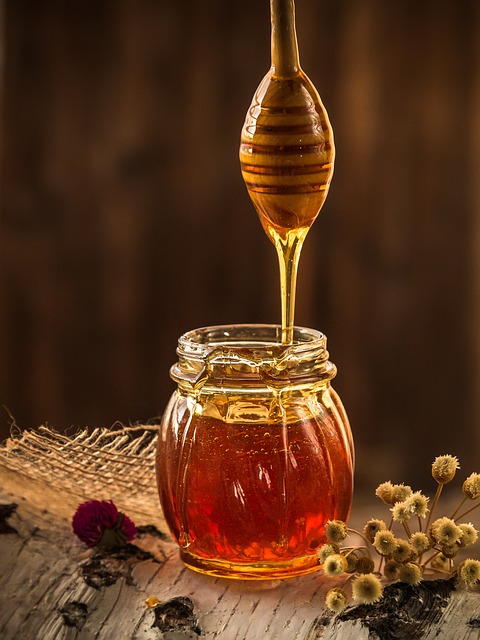
Cooking with Honey

I recently had a booth at our town’s Honey Festival where I showcased five different goodies make with honey as well as Honey Ginger Lemonade. I was humbled by so many of you who stopped by, sampled these goodies and signed up for my emails. In honor of that, I thought I would write this Cooking Tip on how to cook with honey.

Honey is a delightful sweetener and is lovely to have in your arsenal. Because honey attracts and holds water, it can add great moisture to your baked goods. It can also act as a binder and thickener for sauces, dressings, marinades and dips.

There are, however, some cautions about cooking with honey. You cannot make a 1-to-1 swap from your recipe’s current sweetener (such as granulated sugar) to honey.  With so many wonderful recipes that were created with honey as an ingredient, I encourage you just to find this type of recipe. Someone has already done all the experimentation to come up with the right mix and amount of ingredients.

If you would like to convert a recipe from it is current sugar to honey, here are some guidelines.

  • Begin by only substituting half of the amount of sugar in the recipe with honey. You might be able to up this as you continue experimenting but if you do it all at once, your recipe is likely to fail.
  • Because honey is a liquid sweetener, reduce the liquid in your recipe by ¼ cup for each cup of honey used.
  • In cookie recipes where the only liquid is eggs, increase the flour by 2 tablespoons per cup of honey.
  • Honey is an acidic ingredient. Therefore, add about ½ teaspoon baking soda for each cup of honey used.
  • Reduce your oven temperature by 25-75° to prevent over-browning as honey browns faster than sugar.
  • Choose your honey carefully. Very strongly flavored honeys should be used judiciously and are best in items such as spice cakes, spicy marinades and glazes (jerk spice, spare ribs, BBQ sauce). For a lighter dish, choose a lighter honey.

One wonderful characteristic of honey is that it is its own preservative. Therefore, it keeps for years although the flavor is best within a year of harvesting.

Store it at room temperature in your pantry. If you put honey in the refrigerator, it accelerates crystallization. Speaking of that somewhat irritating aspect of honey, what do you do with your honey when it has crystallized? Do not throw it away; it is not an indicator of spoilage, impurity, age or quality. Rather, it is a natural process that occurs when the glucose molecules align into orderly arrangements known as crystals.

You can reverse crystallization by any of the following methods.

  • Place the honey in a jar in warm water. Allow it to sit until the crystals dissolve.
  • Bring a pan of water to a boil, turn off the heat, place the honey container in the water with cap open & leave until both have cooled.
  • Microwave it in 10-second increments until the crystals dissolve.
  • For a more permanent solution, you can add corn syrup (assuming you have no objections to this ingredient). Because crystallization can only occur if all the sugar molecules are of the same structure, by adding something different (such as corn syrup), it will not crystallize. You do not need much – stir in 2 teaspoons of corn syrup per cup of honey.

Honey is such a wonderful ingredient and I would suspect we all have some in the pantry. It is great to spread on your bread or drizzle in your oatmeal. It is also an ingredient that has so much more to offer. Go someplace where you can taste all the different varieties, choose what you enjoy and have fun!

o

Cooking Tips · Ingredients

How can water be confusing?

My wonderful husband recently made some home-made elderflower cordial. It is a concentrate and should be diluted about 4:1 with water. We like using a sparkling water and so, off to the supermarket I went. As I looked at all the varieties of water – both carbonated and noncarbonated, I was somewhat amazed. As we have well water at our home and it is very tasty well water, we do not buy any bottled water. I must admit that it was a bit confusing – leading me to share what I learned with all of you in this Cooking Tip.

On the shelf were various names – club soda, tonic water, carbonated water, sparkling water, sparkling mineral water and seltzer water. All of these are types of carbonated drinks, but they vary in processing methods and added compounds.

Carbonated water—This is a generic term referring to any water that has dissolved carbon dioxide, either naturally or introduced in an artificial manner. It can be used to refer to any of the following waters.

Club Soda – This is water that is termed “artificially effervescent” as it is carbonated by the injection of carbon dioxide gas. It is made from plain water that is sourced from anywhere and then processed into club soda. There are also commonly added minerals such as potassium sulfide, sodium chloride, disodium phosphate and sodium bicarbonate. It is also infused with mineral salts to enhance its taste and bubbles but that does give it a slightly salty taste.   It is also known as “soda water”. Many soda pop flavors are made by combining soda water with flavors.

Tonic Water – What makes this carbonated beverage is the addition of quinine as well as the fact that it is sweetened. The sugar content is similar to other sodas. Quinine is a compound isolated from the bark of cinchona trees and is what gives tonic water a bitter note. In Colonial India, the British inhabitants would generally mix quinine in water as a defense against malaria. Later, it was mixed with gin to make it more palatable. Over time, the quinine amount decreased and now it is used only for flavoring. Today, tonic water is usually used for cocktails made with gin or vodka.

Sparkling mineral water – This is water that comes from a natural well or spring. It is ready for consumption in its natural state direct from its source and draws its flavor from the minerals that are dissolved in it naturally. Some brands do, though, have additional carbonation added. To add a bit of confusion, not all mineral waters are carbonated; some are still.

Seltzer – This is a more naturally effervescent carbonated water because it is similar to most natural waters drawn from artesian wells that pass through mineral layers. There are no added salt or potassium minerals giving it a more natural water taste. Its name derives from Selters, a town in Germany that is popular for its natural springs. It entered the American market as an alternative to buying pricier mineral waters that are often imported. It is available plain or in a variety of flavors. It is also known as “sparkling water”.

Here is a chart that shows you the differences in calories and other nutritional components.

  Club Soda Seltzer Sparkling Mineral Water Tonic Water
Calories 0 0 0 124
Protein 0 0 0 0
Fat 0 0 0 0
Carbs 0 0 0 32.2 g
Sugar 0 0 0 32.2 g
Sodium 3% of the RDI 0% of the RDI 1% of the RDI 2% of the RDI
Calcium 2% of the RDI 0% of the RDI 6% of the RDI 0% of the RDI
Zinc 1% of the RDI 0% of the RDI 0% of the RDI 2% of the RDI
Copper 1% of the RDI 0% of the RDI 0% of the RDI 1% of the RDI
Magnesium 1% of the RDI 0% of the RDI 0% of the RDI 0% of the RDI

For my purposes of diluting the elderflower cordial to make a lovely, refreshing summer beverage, plain sparkling water or seltzer was the right choice. I could have used sparkling mineral water but the minerals that are added could definitely change the flavor. Since I did not want any other added components, I stayed away from either club soda or tonic water. You may have a different purpose in mind or want a different flavor. With this information, you should be able to make an informed choice.

Cooking Tips · Techniques

Cake Pan Math

Have you ever seen a cake recipe that sounded scrumptious and you decided you just had to make it? Then, as you are reading the recipe (hopefully before you started baking), you notice it calls for a size of cake pan that you do not have. You do have other cake pans, though, and you wonder if you can just use those. In this Cooking Tip, I will give you some guidelines for doing just that. If you are math-averse, you may want to stop reading and just run out for the specified pan size — assuming you have storage space for one more pan! However, if you are willing to bear with just a bit of figuring, read on.

At its most basic, you want to know the capacity of your cake pan and then find another pan with the same or similar capacity. For square pans, that is pretty easy. Just multiply length by width. For example, if you have an 8-inch square pan, multiply 8X8 to get 64. For your 9X13 pan, you get 117.

For a round pan, you have to reach back to what you learned in school. Do you recall that equation Pir2? That is “Pi multiplied by the radius squared.” Oh yeah, you remember hearing that somewhere, don’t you? And, Pi is 3.14. Well, in reality it is more than that, but 3.14 will suffice for our purposes.  (If you care to read about it in-depth, here is an article from Wikipedia. Let’s do an example for a 9-inch round pan. The diameter is 9 inches, which makes the radius 4½ inches. So, we get 3.14 x 4.52 = 3.14 x 20.25 = 63.6. Round it up to 64. If you shriek at even this little bit of math, here is an online calculator that will do it for you.

Remember the capacity of the 8-in square pan? It was 64. Bingo – an easy swap for an 8-in square pan would be a 9-in round pan since they both have the same capacity. (Note: this assumes a pan depth of 2 inches.)

Let’s get a bit more complicated. If you have a recipe for a cake made in a 9×13 pan and you want to make two round layers, what do you do?

Step 1: Figure the capacity of the 9×13 inch pan. Easy – 9 X 13 = 117.
Step 2: Figure the capacity of your round pan. If it is 9-inch, we already know it is 64. Doing the same calculation for an 8-in round, you get 50.
Step 3: Divide the capacity of your bar pan (117) by 2 since you want to put the batter in two pans. That gives you 58.5, which lies in between the capacity of the two round sizes.
Step 4: Make your choice. If you divide the batter into the two 8-in pans, the batter may overflow the pans. If you use the 9-in, the layers may be shorter than you want. So, if you have never made the recipe before, the safer bet would be the 9-inch pans. If you have made the recipe before in the recommended pan size (something I would highly recommend the first time you make it), how high did it rise in that pan? If it had a high rise, you would definitely want go with the 9-inch. If, however, it really did not rise that much, you might be fine with the 8-inch.

Another option is to use an oval-shaped casserole dish although the end shape may not be what you are looking for. To do that, we need to do a bit more figuring. Let’s say you have an 8×12 inch oval dish. Measure from the center to the top – 4 inches. Then, from the center to the side – 6 inches. The equation is now 4 in X 6 in X 3.14 (pi) = 75. Compare this to the capacity in the recipe to see if it might be a viable alternative. For example, this would be too large if the recipe calls for an 8-in square pan (capacity of 64) but not too bad if it calls for a 9-in square pan (81). One caveat – most oval casserole dishes are not made of metal as cake pans are. Rather, they are usually stoneware, ceramic or glass. You might need to tweak the oven temperature and/or baking time but that is another discussion.

Do you love the look of a Bundt cake? Do you have a Bundt cake pan that you barely use? Most recipes that are to be baked in a 9×13 pan can be baked in a Bundt pan. (This only works for a standard butter/oil cake, not for sponge or angel food cakes.) For here, we look at volume rather than capacity as how would you ever calculate the capacity of a Bundt pan???

Bundt cake pans are usually 10-cup or 12-cup but this is just the actual volume you would find if you filled it with water and measured how much water you used. Since the cake will rise to fill the Bundt pan, you cannot put that much batter in the pan. What you need to know is how much batter you can actually bake in that pan. Experts tell us that for a 10-cup Bundt, the batter amount would be about 6 cups. A 12-cup Bundt pan can take up to 7¼ cups of batter.

It just so happens that a 9×13 cake is usually equal to about 6 cups of batter – an amount that would be just fine in your Bundt pan. It may not bake in the same amount of time as it would in the 9×13 pan. Just think about how much thicker the batter is in that Bundt pan. Start checking your cake at the recommended bake time but do not be surprised if you need to add up to 30% more time.

There is much more that could be said but I think the above should suffice for most of your cake baking needs.