Cooking Tips · Ingredients

Agave Nectar – Should you be using it?

A few years ago, Agave nectar was all the rage and touted as the sweetener to use. I have written about sweeteners in cooking/baking in prior Cooking Tips. Here is one on Liquid Sugars, of which agave is just one type. Here is another one – Sugars – more than just sweetness. In this current Cooking Tip, I will focus only on agave.

Agave nectar comes from the agave plant, also known as the “century plant”. It is used for its supposed healing properties and is the plant from which tequila is made. Agave nectar is a golden-colored liquid sweetener that comes from this same plant. There are different kinds.

  • Light agave nectar – This has undergone multiple processing steps including heating and filtering. This gives it a more neutral taste but it also leads to a loss of some of its nutrients.
  • Raw agave nectar – This is an unprocessed nectar. It is darker in color with a more distinctive taste. No nutrients are lost since it is not processed.
  • Agave sweet powder – With this product, all the liquid is removed, turning it into a granular form, which is then crushed into a powder.

Agave has been pushed by some by saying it is a more natural and healthier sweetener. It is touted as having a low glycemic index (GI) and thus, less impact on your blood sugar levels. However, the story doesn’t end there. The reason it is said to be low on the GI scale is that it is 85% fructose. Fructose will not raise short term blood sugar levels as rapidly as the glucose found in table sugar (table sugar, aka sucrose, is made up of 50/50 glucose and fructose). However, there are those who say because fructose is only processed by the liver, it can lead to other health concerns such as increased triglyceride levels, increased insulin resistance and others. So, as with so many wondrous “health finds”, there are two sides to the story.

Another benefit is said to be that since it is 1½ times sweeter than other sweeteners, you can use less. Another nice thing is that it doesn’t crystallize like honey.

If you wish to use it in your kitchen, there are some recommendations. It can easily be added to beverages, vinaigrettes, sauces and as a topping for things such as oatmeal. The biggest problem comes with baking.

If you have a recipe that was designed using agave, great. However, if you are trying to swap out other sweeteners in favor of agave, there are factors that you need to consider.

  • As mentioned above, it is sweeter. You will, therefore, need to reduce the amount you use by ½ to ⅓.
  • It is a liquid as opposed to granulated, brown or other sugars. This will need to be compensated for by decreasing other liquids.
  • Just as with honey, it can lead to excessive browning of items in the oven. Reduce the oven temp by 25° to prevent this.
  • Baked goods made with agave can be sticky and so the use of parchment is strongly advised.
  • It must first be combined with the liquids or fats in your recipe to prevent a crusty or oily layer on top.
  • If baking time is more than 40 minutes, reduce the cooking time by 5-10 minutes.
  • Sugar does more than just add sweetness. See my Sugar Cooking Tip for a further discussion on this. Be aware of this before simply swapping it out.

I found three tests of head-on comparisons of the same baked goods made with agave and sugar or honey.

  • Cook’s Country tested cornbread and honey-wheat rolls. They found light agave to work just as well as honey, but it lacked true honey flavor. The amber agave led to darker baked goods with an earthier flavor.
  • Cook’s Illustrated tested it in cookies and cakes as a substitute for sugar and found, even with recommended adjustments, the results were subpar.
  • Deseret substituted agave for sugar in brownies. Although the agave brownies were moist, they were more cake-like and lacked the caramelized sugary crust that the brownies made with sugar had.

I looked at multiple sources to come up with the following recommendations for you if you do want to try agave in place of another sweetener.

  • Honey – replace with equal amounts.
  • Maple Syrup – replace with equal amounts.
  • Brown Rice Syrup – use ½ to ⅓ as much agave and increase other liquids in the recipe by up to ½ cup.
  • Corn Syrup – use ½ as much agave, and increase other liquids in the recipe by up to ⅓ cup.
  • White Sugar – recommendations vary just a bit
    • Some sources recommend that for every 1 cup sugar called for, use ⅔ cup agave, and reduce the liquid in the recipe by ¼ to ⅓ cup.
    • Another source recommends the “75% rule”, which means using only ¾ of the amount of agave by volume as granulated sugar. For every cup of sugar that the recipe calls for, reduce the liquid by 2-4 tablespoons.
  • Brown Sugar – again, there are some differences in recommendations
    • One guide is that for every 1 cup sugar called for, use ⅔ cup agave and reduce the liquid in the recipe by 2 tablespoons.
    • Another says to use ¾ cup of agave nectar for each cup of brown sugar the recipe calls for and reduce the liquid by no more than a tablespoon.

When it comes to reducing the liquids, you have choices. Some liquid ingredients (milk, eggs) are made up of water while others are liquid fats. Although both categories are liquid, water will evaporate as it heats whereas the fats will remain. Therefore, you are probably better off reducing the former rather than the latter.

Remember that it is not an all or none situation. You do not have to replace all the sweetener in a recipe with agave. In fact, it may be better to only swap out a portion.

One source recommends the following

  • Cakes & brownies – replace only ½ of the sugars with agave
  • Cookies –replace ⅓ of the sugars with agave
  • Bars containing fruit – replace ⅔of the sugars with agave or 100% if it is fresh fruit

If you use agave or have been thinking about it, I hope this Tip will give you some information to help you be successful with it!

Cooking Tips · Ingredients

The Many Colors of Bell Peppers

I have written a prior Cooking Tip on chili peppers in which I discussed many different varieties. In this Tip, I wanted to talk about the pepper we use most commonly in our kitchens – the bell pepper.

Bell peppers are great for adding not only flavor but also color and texture to your dishes. The one thing they do not add, though, is heat as they rate zero on the Scoville heat chart. You will see them offered in different colors for varying prices. Just what is the difference?

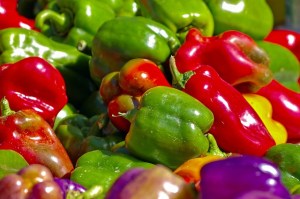
The most common colors you will see are green, red, yellow and orange although rarely you might see brown, white, purple and even striped. The difference in color has to do with the stage of ripeness along with the varietal of the pepper plant.

All bell peppers start out green and change color as they mature. Depending on its varietal, when it is ripe it may become yellow, orange, red or one of the more unusual colors. Some varieties even remain green when ripe.

The taste of a bell pepper also changes as it ripens and changes color. Many people think they do not like bell peppers because they have only tasted the unripe green one. Those are more grassy and even bitter as compared to riper peppers. As they ripen, they become sweeter and lose the bitterness. It is almost like a different fruit. (Yes, even though we think of them as vegetables, they are botanically classified as a fruit.)

When using bell peppers, you can easily substitute one color for another. The only caution I would add is that using an unripe green pepper in place of the riper colored ones will alter the taste. However, swapping out red for yellow and so forth will not change the taste. It will, though, change the appearance.

The nutritional value also changes with the ripening process. Although all bell peppers are a very healthy fruit, as they ripen, they do develop higher amounts of some nutrients such as vitamin A & C, lycopene, and lutein.

When choosing bell peppers, pick ones that have a firm skin without wrinkles. Look at the stem; it should be fresh and green. They should feel heavy for their size. Avoid peppers with any kind of blemishes.

Green peppers will have a longer shelf life because they are less ripe. They will also be less expensive since the colored ones have had longer time on the vine, which necessitates more care. Do not let that discourage you from buying the colored ones, though, especially if you think you do not like bell peppers because you have only tasted green ones. Store them whole and unwashed in your refrigerator produce bin.

I love the ripe ones raw on a salad but they have many other uses such as stuffed peppers, sausage and peppers, made into a romesco sauce and many others. Do you have a favorite use? Let me know.

Cooking Tips · Ingredients · Techniques

Tea – for more than just drinking!

For those of you who know me personally, you know that besides great food, I love a good cup of tea. I do not just love to drink tea, though. I love to teach about tea and do that frequently in our local tea shop/café, English Tealeaves. These two topics of food and tea come together in this Cooking Tip as I discuss Cooking with Tea.

Let me start with a little Tea 101. “Real” tea is made from the leaves of the Camellia Sinensis plant. All tea (white, green, oolong, black, pu-erh) comes from this plant. The differences in tea result from the particular variety of that plant along with how the leaves are processed. This “real” tea is contrasted with what we call Herbal Tea. Herbal “teas” do not contain any tea leaves from the Camellia Sinensis plant. Rather they are made from totally separate plants such as chamomile, peppermint and rooibos. The reason they are called “teas” is that they are brewed in the same manner as real tea. The better terms for these beverages are Herbal Tisanes or Fruit Infusions. Both real tea and tisanes/infusions are wonderful beverages that can be used in many culinary applications.

There are a number of different ways you can use tea in your kitchen. At times, you might use a combination of these methods.

Use the actual tea leaves.

Although we do not normally eat our tea leaves, they are edible. The leaves add both flavor and texture to your dish. Most of the time, you will chop or grind the tea before adding to the other ingredients. In general, 1 Tbsp of loose-leaf tea yields 2 tsp of ground tea, or even less if ground to a fine powder. Some recipes call for first steeping the tea and then chopping the wet leaves.

Examples of applications

  • Peppermint brownies – grind the sugar from the recipe with dried peppermint tea leaves before continuing with the recipe.
  • Chai snickerdoodles – grind masala chai tea and add to your snickerdoodle recipe.
  • Toast appetizers – top bread with a spread made with mayonnaise, cheese and finely ground tea leaves.
  • Homemade pasta – give your homemade pasta a green color and a subtle flavor by mixing matcha into the dough.

Use the infused liquid

Steep the tea in water or another liquid and use that liquid in your recipe. You probably will want to make your tea a bit more concentrated than you would for drinking purposes. If steeping in water, use more tea leaves rather than increasing the steeping time. The latter can easily lead to bitterness due to the release of tannins from the tea leaves.

If you steep in liquids with a higher fat content (whole milk, cream, butter, oil), you can steep the tea for a longer time as the dairy buffers the tannin development. You can steep up to 90 minutes, depending on the taste you wish to achieve.

The concern of tannin development only applies to steeping real tea. Herbal/fruit teas do not get bitter with prolonged steeping. In fact, they require a longer steeping time even for drinking as the flavor infuses a bit more slowly into the water.

A couple of tips are that the lower the moisture content and the higher the viscosity of the liquid, the longer the tea will need to infuse.

Another idea for using tea-infused liquid is to actually cook ingredients in that liquid.

Examples of applications

  • Chicken salad – poach chicken in water to which green tea leaves have been added. The wet leaves are then chopped and stirred into the chicken salad along with the rest of the ingredients.
  • Roasted fruit – toss fresh peaches in brewed green tea and then, roast in the oven. Top the roasted peaches with a vinaigrette also made with tea.
  • Pizza dough – have your friends asking “what is that special flavor” when you use steeped tea to make your pizza dough.
  • Shrimp – marinate shrimp in brewed tea and then make a vinaigrette with more brewed tea.
  • Tea rice – cook rice in brewed tea for a special side dish.
  • Simple syrups – add tea leaves of your choice of flavor to your simple syrup, which can then be used to pour over fresh fruit or added to a cocktail.
  • Tarte Tatin – infuse vanilla black tea into the butter and finish as any Tarte Tatin.
  • Chocolate truffles – infuse your cream/water with your favorite tea to make a tea-flavored ganache. Make into truffles or use in another application.
  • Hot chocolate – infuse tea into the milk and then finish as you would for homemade hot chocolate.
  • Pastry cream – infuse tea leaves into dairy to make a delicious pastry cream, which can then be used to make a fruit tart or a number of other desserts.
  • White chocolate mousse – infuse jasmine tea into cream. Use the hot cream to melt white chocolate and finish into a wonderful light mousse with a delicate jasmine flavor.

Vinegars

You can easily make tea-infused vinegars by bringing the vinegar to a boil, taking it off the heat and then adding the tea leaves to infuse. After cooling to room temperature, strain and use as desired. These infused vinegars are wonderful for making a unique vinaigrette.

Cold steeping

For some liquids that should not be heated such as fruit juices or alcohol, you may steep at room temperature or even in a chilled environment.

Spice Rubs

Add finely ground tea leaves to your favorite spice mixture and add use it as a rub on meat or add to a braising liquid, soup or chutney.

Smoking

Add tea leaves to a stove-top smoker and then smoke the food of your choice. The tea leaves can be the main medium for producing the smoke or used in combination with wood and cooked rice (to buffer the heat). Other flavors components of your choice such as spices may also be added.

There are so many types of teas and tisanes with a myriad of natural and added flavors. Stop thinking of tea just as a beverage but also as an ingredient. You will be amazed at what you can do with it. Do you cook with tea? Have you made something special with tea? Let me know.

Cooking Tips · Ingredients

Mayo — for more than sandwiches!

In last week’s Cooking Tip, we learned just what mayonnaise is, how it is made as well as some taste testing results of commercial products. Mayonnaise can be used for so much more than just spreading on sandwiches and that is the subject of this Cooking Tip.

The first thing is that you can do to enliven your mayonnaise is by adding your own flavors. In my local supermarket, the following varieties can be found. Do you have any fun flavors in your store? Let me know.

  • Chipotle
  • Chipotle Lime
  • Miso
  • Black Truffle
  • Hint of Lime
  • Garlic
  • Sriracha
  • Wasabi
  • Harissa

Mayonnaise also forms the base for many sauces such as aioli, remoulade and others.

Aioli

This is one of the most famous mayo-based sauces. It originated in Provence and was made by pounding garlic with a mortar and pestle and emulsifying with oil. There were no eggs or acid added. Today, though, it is a mayonnaise flavored with garlic. As opposed to mayonnaise, which normally takes a neutral oil, aioli classically uses a fruity extra virgin olive oil.

Aioli is often used as a sauce or dip with seafood in Mediterranean cuisines. It is also used as a burger spread, on pasta, as a topping for crab cakes or a dip for grilled veggies.

Spanish-style aioli is called allioli and is often served with patata bravas (fried potatoes) or seafood.

Just as with mayonnaise, other flavors made be added to create versions such as sriracha, cilantro jalapeno, roasted red pepper, citrus, sundried tomato, avocado, caper peppercorn, honey basil, orange chive, sesame ginger or smoked paprika.

Remoulade

Remoulade is a mayonnaise-based sauce also with French origins. Although it originated in France, regional variations arose as it spread across the world.

There are four basic types of remoulade.

  1. French – this is the classic. The base of mayonnaise is enlivened by mixing in herbs (parsley, chives, chervil, tarragon), capers, diced cornichons, vinegar or lemon juice. It may also contain anchovies and/or horseradish.
  2. Louisiana – this type is spicier because it incorporates Creole and Cajun flavors such as stone-ground or Creole mustard along with paprika, green onions, celery and parsley. Some also add lemon juice, hot sauce/cayenne and hard boiled eggs.
  3. Danish – An interesting variety that contains minced cauliflower, cabbage and cucumber pickles. It often contains turmeric, which is what gives it a yellow hue. Other possible ingredients are sour cream, red onion and carrots.
  4. Comeback sauce – This sauce originates from central Mississippi. It is similar to Louisiana-style remoulade with a base of mayonnaise but typically uses a milder ketchup-like chili sauce rather than hot sauce.

Remoulade is used as a condiment or dipping sauce. It is usually paired with seafood, cold meats and fried foods such as fried pickles, fried green tomatoes, fried fish, crab cakes, a po’boy sandwich or French fries.

Tartar Sauce

Although tartar sauce is often described as a type of remoulade that uses mustard rather than anchovy, it actually has fewer ingredients. The main ingredients are mayonnaise, capers and sweet pickles.

Rouille

This is a French sauce that traditionally does not contain any mayonnaise. I am including it here, though, as modern versions do use mayonnaise. It is ubiquitous in Provence as an accompaniment to the famous fish soup, bouillabaisse. The name means “rust” in French, because of the reddish color of the sauce.

There are two methods to create a rouille.

  1. The traditional method uses olive oil, chili peppers and garlic. Breadcrumbs are added for texture and thickening. A wide range of spices may be added including, but not limited to, saffron, orange peel and basil.

  2. The modern method uses mayonnaise instead of olive oil along with chili peppers or red pimentos and maybe garlic. Because mayonnaise is already thick, breadcrumbs are not always used. As with the traditional rouille, a wide range of spices may be added.  

It is the ideal sauce to accompany a dish of fish, shellfish or fish-based soups.

Salad Dressings

There are also many salad dressings based on mayonnaise. These include:

  • Thousand Island
  • Russian dressing
  • Ranch dressing
  • Lemon poppy seed dressing
  • Coleslaw dressing
  • Blue cheese dressing
  • Buttermilk ranch dressing

How do you use mayonnaise? Do you have a special sauce that you make with mayonnaise? Let me know.

Cooking Tips · Ingredients

Mayonnaise — just what is it?

We all know what mayonnaise is and I would suspect most of us have a jar in our refrigerator. However, do you really know what it is, what it is made of and all the ways you can use it? That is the subject of this and the next Cooking Tip.

Mayonnaise is a thick condiment made from oil, eggs, an acid and perhaps seasonings. It is called an emulsification because oil and the water found in the eggs do not naturally mix together. You must break up the oil into tiny droplets and combine it in a way that they are suspended in the water.

What products can be called mayonnaise is regulated by the FDA. It must contain at least 65% oil by weight, vinegar and egg or egg yolks. Spices/seasonings may be added except for turmeric, saffron or anything that would give a color simulating that imparted by egg yolk.

As noted above, basic mayonnaise has three ingredients: oil, eggs (or just yolks), and an acid (usually vinegar or lemon juice). Seasonings such as salt and pepper are usually added. You can then personalize it with all sorts of flavorings such as chipotle, herbs, citrus and many others.

The basic procedure is as follows:

  1. Put eggs and/or egg yolks along with the acid and seasonings in a bowl or the container of a blender or food processor and combine. Some recipes will also add mustard not only as a flavoring agent but also because it assists in emulsification.
  2. Slowly add oil while blending – by a hand whisk, blender or food processor – until thick and creamy.
  3. Adjust seasonings to taste. Some recipes recommend adding the lemon juice at this point rather than at the beginning.
  4. If the mayonnaise breaks, there are a few recommended methods of bringing it back together.
    1. Add a bit of water and whisk until emulsified.
    2. Strain the mixture and use the liquid as the oil. Then, start over with a fresh egg/yolk. Some chefs do not think straining is necessary.
    3. Combine a teaspoon of mustard with a tablespoon of the broken mayonnaise (or one egg yolk plus a little lemon juice), beat until creamy, and then add the rest of the broken mayonnaise, one teaspoon at a time. If mayonnaise becomes oily on the surface, whisk in a tablespoon of water.
  5. Ratio – You will see variations from different sources but a basic ratio is 1 egg/yolk to 1 cup oil.
  6. Type of oil – It is best to use a neutral, refined oil such as canola, grapeseed, sunflower, safflower, a light olive oil or a blended oil (mix of olive and veg oils). EVOO has too strong of a flavor.

J. Kenji López-Alt of Serious Eats highly recommends using a hand/immersion blender as an “almost” fail-proof method. To use one, add all the ingredients, including the oil, directly into the blending cup. At this point, the oil will float on top but when you insert the head of the blender, the blades will be at the level of the other ingredients. As you start to blend, a vortex is created, which pulls the oil down into the moving blades. So, instead of you trickling in the oil, that vortex does it for you and you easily end up with creamy, perfectly emulsified mayonnaise. Here is a link to watch this method in action.

He does add, though, that the jar must be the right size – only slightly larger than the head of the immersion blender as the egg/acid mixture must be in contact with the blades of the blender before you switch it on. Also, the head of the blender must be placed firmly against the bottom of the jar until it starts to come together and then you will move it slowly up and down to ensure thorough mixing.

There are those that feel whisking by hand gives you a much superior result in terms of taste claiming it is brighter, less bitter with more pronounced lemon notes. It does, though, give a thinner, more sauce-like texture rather than the thicker, more spreadable texture that we associate with mayonnaise.

One concern that many people have about homemade mayonnaise is that the eggs are not cooked and thus bring a risk of salmonella. Although the risk is small (but not zero) for most of us, it is of more concern for certain populations – children, the elderly, the chronically ill, pregnant women and the immune-compromised.

If you are someone who is not in one of these groups but yet are squeamish about the thought of raw eggs, you could try to find pasteurized eggs. Pasteurization is a process that kills potential pathogens. The main company (perhaps the only company) that sells these is Davidson’s. One of the stores I frequent used to carry them but I have not seen them anywhere near me recently. Can you find them? Let me know.

People who have tested these in-shell pasteurized eggs have found them fine for some applications, such as mayonnaise, but were not happy with them in other applications.

One other option is to try to pasteurize them yourselves. The FDA does not recommend this as it is very difficult to just achieve pasteurization without cooking the eggs and with home methods, it is not 100% effective. There are a number of recommended methods such as sous vide and stove top. If you are just using egg yolks, you could try a microwave method recommended by Cooks Illustrated. According to them, “Heating the yolks to 160 degrees (this takes just a minute or two in the microwave) kills common pathogens, and abundant lemon juice keeps the mayo food-safe for up to one month.”

Although most culinary experts will tell you that there is no commercial version of mayonnaise that beats the taste and texture of home-made, they also realize that it is not practical to always have the latter on hand. It does take a bit of skill to make and has a shelf-life of only a few days. To help you pick out the best store-bought version, there have been some taste tests done. I will just mention four from oldest to newest.

Fine Cooking magazine rated mayos in 2006 and crowned Kraft Real Mayonnaise as their favorite. After Kraft, they liked:

Cooks Illustrated did a testing in 2012 and they found that the best tasting brands had the fewest ingredients and the simplest flavors. Their winner was Blue Plate Real Mayonnaise. Their runners-up were

Epicurious tasted 16 brands in 2018. Their winner was Blue Plate Real Mayonnaise with Hellman’s in 2nd place. The remainder of the brands were listed in alphabetical order but not in any sort of ranking.

Serious Eats’ taste test was in 2019 and they also found that Kraft Real Mayonnaise to be excellent. It tied in the tasting with Duke’s Real Mayonnaise. Others ranked in order from best to worst were:

Whether you make your own mayonnaise (I hope you will try it at least once) or buy a good commercial one, there is more to do with it other than spreading it on a sandwich. Stay tuned as we will delve into that subject into the next Cooking Tip!

Cooking Tips · Ingredients

Tender, Flavorful Baby Greens

My husband has been growing greens all winter long in his greenhouse. Now that it is warming up, he has begun moving things to his outdoor garden. Although he grows many wonderful items, I just love the baby greens. I have written a prior Cooking Tip on lettuces as well as on microgreens. In between these two categories is the subject of this Cooking Tip – Baby Greens.

In the growing stages of greens, it all starts with the seed. When this germinates, it is called a sprout. As the sprout puts out its first leaves, it becomes a cress. These first leaves are called “cotyledons” and are not true leaves. One source compares cotyledons to baby teeth and true leaves to adult teeth. After this cress stage, the microgreens develop and are anywhere between 2-4 weeks old. As the plant continues to develop and put out true leaves, the result is baby greens. Although there is not a true distinction between microgreens and baby greens, for our purposes we will think of baby greens as older and more developed than microgreens. And, they are smaller versions of the fully developed plant. Any type of green can be harvested at a “baby” stage. For a list of types of greens, see my prior Tip on lettuces.

Baby greens are very tender and flavorful. For some greens such as lettuce and spinach, there may not be too much difference in texture and flavor between the baby version and the mature plant. In other heartier greens such as kale, the baby version may be much easier for some people to eat since it is going to be lighter in flavor and more tender.

Arugula is interesting in that its baby form is different in shape than its adult form. Younger arugula is more oval in shape rather than the typical branched shape of older arugula. Baby arugula has a less intense flavor than the adult counterpart.

According to farmers, “microgreens” and “baby greens” are not true botanical terms but are applied to these products for marketing purposes. There are other labels you will see at the store that are also solely to get you to grab their particular box of greens. Here are some examples from my supermarket. Your neighborhood store may have different varieties. To know what to buy, just look at the list of greens to see whether it contains anything you do not like.

Power greens – these are generally mixtures of baby leaves of, among others, chard, kale and spinach.

Mixed salad greens – these give you a variety of color and texture and include greens such as romaine, arugula, frisée, radicchio, mizuna and chard.

Baby spring mix – also termed “mesclun”, this is similar to the mixed salad greens and contains a mixture of lettuces, chard, spinach, arugula, frisée, tatsoi, lolla rosa, mustard greens, radicchio and beet tops. Some spring mixes may also contain herbs such as cilantro, parsley and dill.

50/50 salad blend – this is a mixture of half spinach and half baby spring mix.

Protein greens – distinguished by the addition of sweet pea leaves, it also contains other baby greens such as spinach, bok choy, kale and mizuna.

What do you do with baby greens?

  • Make a simple salad with your favorite vinaigrette. I normally use a mixture of what my husband has harvested. It might be mature lettuce and spinach along with baby greens and microgreens or it might be just baby greens. Rarely are you going to make a dish with just microgreens.
  • Some of the sturdier baby greens such as chard and kale might be gently sautéed and served with a warm, light sauce.
  • Layer them with similar flavors such as tossing pea greens in a pea salad made of different types of peas.
  • Use them as a garnish for soups or entrees.

There is a debate on which is healthier – microgreens, baby greens or mature greens. I am not sure I really care as I know that they are all healthy and we should all be eating more greens. Eat the ones you like. Eat a variety. Try them in new preparations. We have so much choice nowadays. Enjoy them and be creative!

Cooking Tips · Ingredients

Lard – does it deserve a place in your kitchen?

If anyone mentions the word “lard”, the reaction is probably going to be “oh, no”, “absolutely not”, or something similar. It is almost surely going to be a negative comment. Is that negativity justified? That is the subject of this Cooking Tip. Please note that I am not going to discuss the nutritional and dietary concerns about lard, saturated fat or hydrogenated fat. Those are important topics that you should investigate before consuming any solid fats.

Lard is pork fat that has been rendered from the meat by cooking slowly until the fat is melted and then separated from the meat. It is then filtered and chilled. The quality is dependent on the area of the animal that the fat comes from and the method of rendering.

The best kind of lard is leaf lard. This comes from the fat around the animal’s kidneys. It is softer, creamier and smoother than other types of lard. It is the best choice for baking. It is also naturally free of pork flavor.

Unrendered lard – pig fat that has been trimmed from the meat, not melted. It will have a stronger pork taste and probably not suitable for baking or anything where you do not want that flavor element.

Rendered lard – has less strong pork flavor. It has been melted, filtered, clarified and refrigerated for storage. It will be an off-white color and will be softer than processed lard at room temperature.

Processed lard – this is the most commonly available lard and is made by melting, filtering and clarifying pork fat by bleaching and hydrogenating. The former gives the product a pure white color and the latter keeps the lard solid at room temperature. It also most likely will have preservatives. It has no lingering pork flavor but does have a mild, nut-like flavor.

Why might you want to consider using lard?

  • Baking – lard has a higher melting point than butter, meaning it stays solid longer in the oven. There is more time for the steam to produce air pockets resulting in flaky pastry. Also, because lard is 100% fat, it contains no water. Water is one of the ingredients that facilitates gluten development. Less gluten means more tender baked goods.
  • Sauteing, grilling, frying – lard has a fairly high smoke point (although not as high as some oils) and thus, is particularly suited to frying. Items fried in lard end up very crisp and have less of a tendency to stick.
  • Roasting – lard gives a crispy outer crust to such items as roast chicken or roasted potatoes.
  • Seasoning cast iron – there are those that say there is nothing better than lard for this task.

Cooks Illustrated tested different brands of lard for taste and how they did in baked goods. They found that some lards created pie doughs that were “light and flaky” while other brands resulted in “sandy and crumbly” doughs. What they found is that the lowest ranking lards had the lowest melting points of those tested. This meant that the lard melted more quickly and thus, less air pockets.

Their testing rated U.S. Dreams as the best artisanal lard. Another recommendation in the non-hydrogenated category was Tenderflake, a Canadian product. A third one was Fatworks Pasture Raised Pork Lard. Although not tested by Cooks Illustrated, Fatworks also carries a leaf lard. One unbleached and non-hydrogenated product that is a bit easier to find in my area is made by Epic.

Because artisanal lard is very difficult to find in most grocery stores, they also looked at supermarket brands and rated Morrell as their favorite. Morrell, though, is not the same product as the pricier, more pure lards. If you really want to cook with lard, I suggest going for the best.

That may mean ordering online or doing a bit of searching in your local stores. There is always the option of rendering your own. Our local butcher shop no longer carries lard due to lack of demand. They recommended that I could just buy the bulk pork fat and render my own. I have not done this so far, but am seriously considering it.

Finally, if you are wondering about substituting lard and other fats, here are the recommendations.

  • 1:1 lard for shortening
  • For every ½ cup of lard, use ½ cup + 2 Tbsp butter
  • 1:1 lard for olive oil
  • For 1 cup lard, 7/8 cup vegetable oil
  • 1:1 lard for coconut oil

I recently made some Chicken Cornish Pasties and the pastry called for part shortening and part butter. I used Epic’s brand of pork fat in place of the shortening and it did produce a very flaky pastry. Do you use lard? If so, which kind? Have you ever rendered your own? Let me know your experience; I would love to hear about it.

Cooking Tips · Ingredients

Vinegars — so many to choose from

Vinegars are certainly a pantry staple that are used in many different applications. Just as with so many things today, we are often faced with a myriad of choices. Looking at the vinegar shelf at your local supermarket, it can be overwhelming. In this Cooking Tip, let’s delve into this world of vinegars and which ones deserve a space in your pantry. I want to start with some general information about vinegar followed by an explanation of the types of vinegar and ending with recommendations for what to keep in your pantry.

Vinegar is made by turning fermented liquid into acetic acid by adding certain bacteria to the liquid. Acetic acid is important for a couple reasons. As it is a very potent antimicrobial agent, it is a very effective preservative. Acetic acid also contributes two flavor elements to food – an acidic/sour taste and a pungent aroma.

How acidic or tart it tastes depends on the strength, which is defined by the percent of acetic acid. The FDA says it must be at least 4% to be called vinegar. In the US, most industrially produced vinegars are adjusted to 5% acetic acid. Some wine vinegars may by 7% or higher. Mild rice vinegars may be only 4%. Balsamic vinegar is usually about 6% but could be up to 8%. In my supermarket, most of the bottles had the strength listed somewhere on the label.

The Vinegar Institute conducted studies about vinegar’s shelf life and confirmed that it is almost indefinite. According to them, “vinegar is self-preserving and does not need refrigeration. White distilled vinegar will remain virtually unchanged over an extended period of time. And, while some changes can be observed in other types of vinegars, such as color changes or the development of a haze or sediment, this is only an aesthetic change. The product can still be used and enjoyed with confidence.” If you do not like the sediment, you may strain it out.

Red wine vinegar

  • Made from red wine
  • Flavor
    • Very tart with significant grape flavor
    • Hot and robust
  • Uses
    • Marinades for red meat
    • Stirred into hearty stews
    • Tangy vinaigrettes

White wine vinegar

  • Made from white wine
  • Flavor
    • Lighter and more delicate in flavor than red wine vinegar
  • Uses
    • Light pan sauces
    • Marinating poultry
    • A lighter vinaigrette

Champagne vinegar

  • Made from the fermented juice of champagne grapes
  • Flavor
    • More delicate than white wine vinegar but most tasters cannot tell the difference
    • Lighter and less acidic than other wine vinegars
    • Light body, crisp
  • Uses
    • Good base for fruit and herb vinegars
    • Light vinaigrettes

Cider vinegar

  • Made from a base of yeast-fermented apple cider
    • Comes filtered or unfiltered. Filtered has had the cloudy sediment of the “mother” (bacteria from an established vinegar) removed. Cooks Illustrated tasters thought the unfiltered was more complex when tasted from the bottle. This preference continued in light pan sauces but the differences were minimal in stronger preparations such as BBQ sauce.
  • Flavor
    • Medium sharp vinegar with a very fruity quality
    • Tastes like hard apple cider
    • Mellow and slightly sweet
  • Uses
    • Use as wine vinegars but especially in salads with apples, pork marinades and braised pork dishes
    • Glazes, slaws, sauces

Fruit vinegar

  • These are made in one of two ways.
    • Many are just ordinary vinegars that are infused with macerated fruit or fruit purees.
    • True fruit vinegars are made by fermenting fruit juice into wine and then letting it mingle with acid.
  • Flavor – dependent on the fruit
  • Uses
    • Fruity vinaigrettes
    • Drizzle over grilled fruit

Malt vinegar

  • A dark colored vinegar made from ale (cereal grains, sprouted barley)
  • Flavor
    • Mellower than many vinegars
    • Nutty and toasty
  • Uses
    • Fish/chips
    • Potato dishes

Rice vinegar

  • Made from fermented rice, aka rice wine
    • Same as rice wine vinegar, but NOT rice wine
    • Comes seasoned (added salt/sugar) and unseasoned
  • Flavor
    • Prominent in Asian cuisines and is slightly different depending on where it is made
    • Mild, barely sweet flavor
  • Uses
    • Since this is the least sharp vinegar, it is very versatile
    • The seasoned variety is used for seasoning sushi rice, but the unseasoned variety is used for most other purposes.
    • Marinades, seasoning cooked veggies, dressing salads

Distilled white vinegar

  • In the US, this is made from grain alcohol (ethyl alcohol) and is among the purest form of acetic acid.
  • Flavor
    • This is the cleanest, sharpest and cheapest vinegar.
    • It is flavorless except for the acidity.
  • Uses
    • Great for cleaning
    • Pickling veggies
    • Not recommended for other culinary uses

Balsamic vinegar

Balsamic vinegar could be an entire Cooking Tip on its own. I am going to greatly simplify it for the purposes of this Vinegar Tip. There are different types of balsamic vinegar ranging from the very expensive, traditionally-made balsamic to what we call “imitation balsamics”.

The traditional is made only from grape musts, which are freshly crushed grapes. It is cooked down to a syrup and aged in wooden barrels for a minimum of 12 years. It is very dark, thick, sweet and meant to be more of a condiment than a cooking ingredient.

Supermarket balsamics are made from grape must and wine vinegar. These are meant for everyday use. Although it may have a nice taste, it will not be as complex as the traditional product. If the first ingredient listed is the vinegar, it will be more on the tart side. If grape must is the first ingredient, it will be mellower and sweeter. If “grape must” is not listed as an ingredient, it will be a much lower-end product.

Cooks Illustrated recommends a “hack” to improve the flavor of a cheaper balsamic. Combine 1/3 cup balsamic, 1 Tbsp sugar and 1 Tbsp port in saucepan and simmer until reduced by half. In a taste test, most could not tell the difference between this and the high-end balsamic vinegar.

White Balsamic

  • This is a milder version of red balsamic. It is created by cooking white Trebbiano grapes, at a higher pressure and lower temperature. This prevents caramelization and allows the vinegar to retain a pale, golden color.
  • While similar to red balsamic, white balsamic is milder and less-sweet. It also does not impart color to the dish.

Sherry vinegar

  • Made from sherry wine although the grapes may differ, giving a different flavor profile. All sherry vinegar is fermented in oak barrels for at least 6 months, Reserva is aged for 2 years and Gran Reserva for a minimum of 10.
  • Flavor
    • Acetic acid concentration can reach 10%.
    • The flavor is warm, toasty, nutty and less sweet than balsamic.
  • Uses – It is great for pan sauces and Spanish dishes.

Herb vinegar

These are actually infusions. Highly aromatic herbs like tarragon, sage, rosemary or basil are added to light-flavored vinegars and set aside to steep for 3-4 weeks before discarding the herbs. They add fresh flavor to salad dressings and marinades.

What you keep in your pantry somewhat depends on your taste and cooking style. However, you will want, at a minimum, the following multi-purpose vinegars.

  • Wine vinegar – red and/or white
  • Cider vinegar
  • Rice wine vinegar

You may want to consider a good balsamic and possibly a sherry vinegar, as there are really no substitutes for these.

The remainder of the vinegars are fine to have in your pantry but are not necessary and either can be replaced by one of the multi-purpose vinegars or have a very limited use.

What vinegars do you have in your pantry? Which ones do you use the most? Some of the specialty vinegars are fun to play with but you certainly do not need them.

Cooking Tips · Techniques

Moist heat cooking — what is it?

In my last Cooking Tip, I mentioned that when we cook, we use either Dry Heat, Moist Heat or a combination of the two. Having discussed the Dry Heat cooking methods, I want to address Moist Heat methods in this Cooking Tip.

Moist Heat methods include poaching, simmering, boiling and steaming.

Poaching

When you are poaching, you are using the lowest cooking temperature of any cooking method, only between 160°F and 180°F. (For a discussion on water temperatures, see this Cooking Tip.) The liquid in which you poach is not bubbling and has very little motion. You should carefully monitor the liquid so it doesn’t start to simmer or boil.

This method is mostly used for tender items such as eggs, fish or poultry. Because the poaching liquid not only cooks the food but adds flavor, choose the liquid with that in mind.

The method is as follows.

  • Bring a flavorful liquid to a full boil in a pan large enough to accommodate your food.
  • Place your food item in the liquid either directly or on a rack. It can be either fully or partially submerged.
  • Adjust heat so it is just below a simmer.
  • You may turn the item if necessary.
  • Remove when the item is fully cooked.

Simmering

The temperature of the cooking liquid is somewhat higher – 185°F to 205°F. The liquid should only have slight movement with only a few bubbles around the edges.

This method is mostly used for pasta, beans, potatoes and rice. Meat is not normally simmered as it can toughen it. Rather, use the poaching method.

To simmer:

  • Bring liquid to a full boil.
  • Add food as in poaching. With a simmer, the food should be fully submerged.
  • Adjust heat to maintain a simmer.
  • If necessary, turn food.
  • Remove when fully done.

Boiling

We all know what a boil looks like with the rapidly bubbling liquid. This type of motion is not recommended for cooking. Even if you start foods in boiling water, the heat should be reduced so that the food is cooked with the liquid no higher than a simmer.

Steaming

In the above moist methods, the food is in direct contact with the hot liquid. With steaming, the heat is applied in an indirect method as the food is held above the liquid.

The liquid may be water or a more flavorful liquid such as stock, court bouillon or wine. Aromatics may also be added to the liquid, especially if you wish to serve the liquid along with the steamed item.

Since this method will not tenderize food, use this method only for foods that are already tender.

Method:

  • Place a small amount of water (or other liquid) in a pan that will accommodate a steaming rack/basket.
  • Heat water to full boil and you can see the steam escaping.
  • Put food in the steamer basket.
  • Reduce heat to a simmer.
  • Place lid on pot to keep the steam inside.
  • Remove when food is cooked.

Cooking “En Papillote” is a version of steaming where the food item is cooked in a parchment paper package where it steams in its own juices.

There are a couple of cooking methods that are a combination of both dry heat and moist heat. These are braising and stewing.

Braising

A braise normally starts with browning a piece of meat with direct dry heat. It is then cooked in a moist heat environment by placing it in a flavorful liquid and finishing in the oven. This method is best for tough cuts of meat.

Stewing

This is very similar to a braise although the meat is normally cut into smaller pieces. Those pieces are often browned in a dry heat method before being submerged in the cooking liquid.

There you have it – both dry heat and moist heat cooking methods. For me, sautéing and simmering are the two I use the most. What about you?

Cooking Tips · Techniques

Sauteing & other dry heat cooking methods

When you cook food, you are either using a dry heat method, a moist heat method or sometimes both. If you understand these methods, it will help you get better results with less frustration. In this Cooking Tip, I want to discuss Dry Heat Cooking Methods.

Let me first define two terms – conduction and convection. The first refers to cooking food by direct heat transfer. Examples are broiling, grilling and sautéing. Convection cooking involves indirect heat transfer such as you find with roasting, baking, frying and smoking.

Sauté

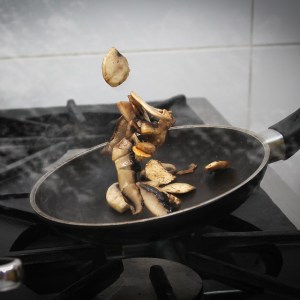
One of the most commonly used dry heat cooking methods is sautéing. In this method, you cook food quickly in a small amount of oil (or other fat) in a skillet or sauté pan over a relatively high heat. Since the word “sauté” comes from the French verb “sauter” meaning “to jump”, this is a type of cooking where you are stirring or tossing the food in the pan and cooking it quickly.

It is an ideal method for foods that only need brief cooking, such as tender vegetables, steaks, and chicken breast. It is also how we brown aromatics (onion, garlic) that are then going to be used to make a soup or stew.

Here are the steps to a proper sauté.

  • Preheat a dry pan until hot. Use a pan with short sides and one that is wider than it is tall and preferably with sloped sides rather than straight.
  • Add just enough oil to coat the bottom and swirl for even distribution. Since you are cooking over a relatively high heat, you want to use a fat with a high smoke point.
  • Continue to heat until the oil is shimmering or looks rippled but not smoking.
  • Put food into pan and cook until done.
    • Make sure food is dry before putting into pan.
    • Cut food into similar sized pieces.
    • If the food is cut into pieces, toss them intermittently so they cook evenly. You want enough contact time to brown the food.
    • If it is one large piece, you won’t stir/toss the food. Rather, turn when it is browned on the first side. Finish cooking on second side. Turn only once, if possible. (Some would call this pan frying – see discussion below.)
  • Do not overcrowd the pan; keep items in a single layer. If the pan is too full, the food will steam rather than sauté.
  • Sautéing is often followed by making a pan sauce in the same pan.

Stir Fry

Although similar to sautéing, it differs in that the food is constantly being moved and tossed in an intensely heated pan. With sautéing, the pan is only over moderate high heat and the food is not constantly in motion. Finally, with sautéing, the cooked food is removed from the pan while you make a pan sauce. With stir-frying, the sauce is usually made in the pan with the food and everything is thoroughly coated in the sauce.

Pan-frying/Shallow frying/Deep fat frying

There is a difference of opinion on how to use the words pan-frying and shallow-frying. Some consider pan-frying to be when you cook a single piece of meat such as a filet in a small amount of oil. (If you are cooking cut up pieces of meat in a small amount of oil, it is a sauté.) These people would define shallow-frying as a cooking method where you use enough oil to reach halfway up the side of the food in the pan.

Others would consider a sauté to be cooking the food in minimal oil no matter whether it is one piece or cut up pieces. They would define pan-frying and shallow frying as the same thing and is when the food is cooked in oil that comes up the side of the food halfway.

No matter which camp you are in with regards to those terms, deep-frying is cooking the food in enough oil to submerge it completely. With both sauteing and pan-frying and/or shallow frying, the food is in contact with the surface of the pan, aiding browning. In deep fat frying, the food does not touch the pan as it is surrounded by oil.

Steps to pan fry/shallow fry (for purposes of the Cooking Tip, we will consider these the same)

  • Dry & season food. Pan-fried food is usually coated before frying (flour, breadcrumbs, cracker meal, cornmeal). Coatings create a crispy crust and insulate the food to prevent over-cooking. Coat in 3 steps: dust in flour, dip into egg wash and dredge in main coating.
  • Heat pan, add oil so it comes half-way up the side of the food and heat oil.
  • For frying, the ideal oil temperature is 350°F. The oil will have a slight shimmer to it at this temperature. You could also dip a corner of the breaded food into the oil. At the correct temperature, the oil will bubble around the food and the coating will start to brown in about 45 seconds.
  • Carefully add the food to the hot oil, laying it in the pan away from you to prevent hot oil splattering on you. Do not crowd food.
  • When the first side is a golden color, turn the food and continue to cook the second side until golden. If the food item is thin, it will cook through on the stovetop. If it is thicker, you may want to place the food item on a baking sheet and finish cooking in the oven.

Deep-frying method

  • Ensure food is cut into uniform size. Dry and season. Coat as desired.
  • Add sufficient oil to a large pot or wok or a countertop deep fat fryer so the food will be submerged in the oil.
  • Heat oil to about 350°F. It is best to use a thermometer as the oil temperature needs to stay fairly steady throughout the frying process.
  • Carefully place food in oil away from you using tongs or put them in the fryer basket if you have a deep fat fryer. Do not drop the food into the oil. Get close to the surface of the oil as you place the food in it.
  • At first, the items will sink to the bottom but will rise to the surface as it cooks. Use tongs or chopsticks to move the food around as it cooks.
  • When food is cooked, remove from hot oil either using a spider or by lifting out the fryer basket.
  • Season food immediately after removing from the oil.

Broiling

Food is heated by conduction from above the food. It is very intense heat and a very quick method of cooking.

Grilling

One source defines grilling as “broiling turned upside down”. It also uses conductive heat but the heat comes from below the food item. It is also a very intense source of heat. Grilling imparts a smoky, slightly charred flavor to the foods

Roasting/Baking

This is a convective type of cooking that results from dry heated air in an enclosed environment (oven). The term “roasting” generally applies to meat/poultry whereas “baking” is used more for fish, fruits, breads, and pastries.

Smoking

A cooking process that uses dry indirect convective heat from smoldering wood chips. It uses a low temperature over a long period of time.

Although it is good to have a working knowledge of all the dry cooking methods, sautéing is probably the method you will use the most. If you learn that skill, you are able to get a great dinner on the table in very little time.