Cooking Tips · Ingredients · Techniques

Sugar Syrup Stages

Image by Bruno from Pixabay

Although we all should endeavor to cut down on our sugar intake, understanding sugar and how to cook it is essential for those cooks who wish to make candies and other desserts. This Cooking Tip will take you into this world and help you feel more comfortable with cooking sugar and how to use it.

I have written other Cooking Tips on sugar types. See these Tips for a review.

Before I start the discussion of cooking sugar, I need to caution you about two things. First, cooked sugar is very hot and very dangerous. Spilling it onto your skin can result in 3rd-degree burns, something we all want to avoid. Therefore, it is best to remove children and pets from the kitchen while you are cooking sugar. Also, have a bowl of ice water nearby so that if you do spill some on your fingers, you can immediately plunge them into an ice bath.

The second caution concerns those who live at higher altitudes. I will give you temperatures that correspond to different cooked sugar stages, but those are only accurate at lower altitudes. For every 500 feet above sea level, drop the recommended temperature by 1°F. See this Tip on Making Candy at Altitude for a more involved discussion.

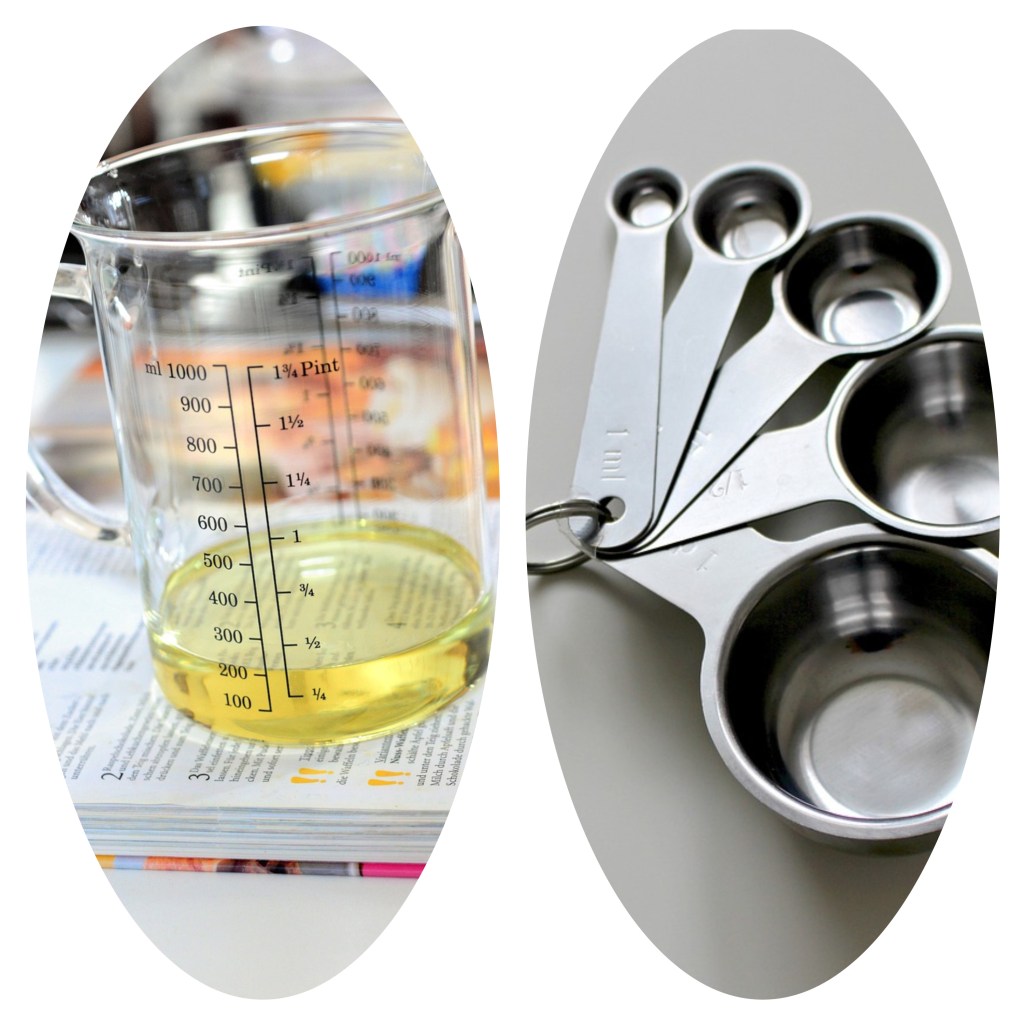
Sugar syrup is made by combining sugar and water and then cooking to the desired stage. As the sugar reaches higher and higher temperatures, the water evaporates more, resulting in a higher sugar concentration. This is shown in the discussion below as the percent solids that are in the mixture. The ratio of sugar to water that you start with can vary depending on the recipe and is often specified as a percentage. For example, a 50% sugar syrup translates to a mixture made of 50% water and 50% sugar. It is best to measure these ingredients on a kitchen scale.

The method of cooking sugar is simple. Combine cold water and sugar in a saucepan. Gently stir on medium heat until the sugar dissolves. Bring to a boil. Rinse down any sugar crystals accumulated on the pan’s sides using a dampened pastry brush. Once you reach the preferred level of cooking, skim off any impurities, allow the mixture to cool and store it in a covered container in the refrigerator. The cover is important as the sugar syrup can crystallize without it.

As you start cooking, you want the sugar and water mixture to come about halfway up the sides of the pot. Too small a pot can increase the time it takes to cook and lead to the risk of boiling over. On the other hand, if you use too large a pot, the mixture can cook much too quickly, risking overcooking it.

As you practice, you will be better able to gauge the best cooking temperatures, but medium to high heat is best. If the heat is too low, it can take a long time to cook; if it is too high, the mixture will cook too quickly.

If you have ever delved into the world of making candy, you will have probably heard terms such as hard ball, soft ball, hard crack, etc., which refer to stages of cooked sugar. I will define these terms, but fortunately for us, you do not need to risk burning yourself trying to see if your sugar syrup has reached these stages. Instead, we just need to rely on an accurate candy thermometer. Using a thermometer is much more precise and much safer.

Different sources will list a different number of stages for cooked sugar. In reality, there are 11 different stages. Each corresponds to a different temperature and is best suited for different purposes. Some sources will combine some of these stages and may give varying recommended uses. However, they are usually very close. Let’s dive in.

Nappé Stage

  • 221°F
  • 72% solids
  • The sugar syrup pearls through a slotted spoon or skimmer.
  • Jams, jellies, marmalades, gummies, fruit jellies

Short Thread (Petit Filé)

  • 225°F
  • 76% solids
  • A drop of syrup between your fingers (note the caution above) transforms into a short thread.
  • Jellies, glazes

Long Thread (Grand Filé)

  • 230°F
  • 80% solids
  • A drop of syrup between your fingers transforms into a long thread.
  • Glazes, syrups, sauces

Soft Ball (Petit Boulé)

  • 239°F
  • 85% solids
  • Dropping syrup in cold water transforms into a soft ball that flattens between your fingers.
  • French buttercream, certain jams, fudge, pralines

Firm Ball (Boulé)

  • 248°F
  • 87% solids
  • Dropping syrup in cold water produces a firm ball that doesn’t flatten between your fingers.
  • Italian Meringue, buttercream

Hard Ball (Gros Boulé)

  • 266°F
  • 92% solids
  • Syrup dropped in cold water transforms into a hard ball.
  • Marshmallows, toffee, divinity

Soft Crack (Petit Cassé)

  • 284°F
  • 95% solids
  • Syrup dropped in cold water produces a flexible thread that you can bend slightly before it cracks.
  • Taffy, butterscotch candies

Hard Crack (Grand Cassé)

  • 302°F
  • 99% solids
  • Dropping the syrup into cold water produces a hard, brittle thread that breaks when bent.
  • Nougats, brittles, hard candies

Caramel – there are three stages of caramel, all of which are 100% solids. There are two different types of caramel. Dry caramel is made by melting sugar in a dry pan, whereas wet caramel involves dissolving the sugar in water and cooking.

Clear Caramel

  • 320°F
  • All the water has evaporated, resulting in liquid sugar that is a light golden color.
  • Nougatine, croquembouche assembly

Light Caramel

  • 338°F
  • Sugar syrup reaches a golden brown color. At this point, the sugar starts to break down, the caramel flavor begins to develop, and a light smoke may occur.
  • Floating islands, crème caramel

Burnt Caramel

  • 356°F
  • Sugar reaches a dark brown color, and you will see a dark, acrid smoke.
  • Caramel food coloring, topping for crème brulee

Troubleshooting

  • One of the main problems that cooks encounter is that the mixture crystallizes. Try these tips to prevent this.
  • Limit your stirring. Combine the sugar and water off the heat and stir just until the sugar is moistened. After that, avoid stirring, if possible, as just the agitation can produce crystallization.
  • When stirring, use a clean stainless steel spoon each time. Any sugar left on the spoon can encourage crystallization if you use it again. Avoid wood or plastic utensils as they can have foreign particles or fats on the surface.
  • Brush the sides of the pan with cold water using a pastry brush to remove any sugar crystals. Similar results can be achieved by putting a lid on the boiling mixture, as the steam will wash away the crystals.
  • Use an “interfering agent.” Adding these ingredients can help prevent crystallization. Examples are glucose syrup, corn syrup, cream of tartar or lemon juice.
  • If you are making something to which you are adding cream or nuts, warm them first. If not, the large temperature discrepancy can lead to crystallization.

Candy making is not something everyone wants to learn, but homemade candies can undoubtedly impress your guests or your gift recipients. It is not difficult, but it does take the proper equipment and attention to detail.

Happy Candy Making!

Cooking Tips · Techniques

Sabayon or Zagablione – A Creamy Delight by any Name

Are you looking for a relatively quick dessert using ingredients that you probably already have? Here’s a great idea—try making a Sabayon. This Cooking Tip explains what it is and how to make it.

Image by Monika Schröder from Pixabay

Sabayon is a rich and creamy French sauce. In Italy, it is known as Zabaglione, and this version probably predates the French one. Although it is basically the same dessert, the French version is typically made with white wine or champagne, while the Italian version usually uses Marsala wine.

This dish is easily customizable and can be made in sweet and savory versions. In the culinary world, it is considered a technique rather than an actual recipe.

Ingredients

  • Egg yolks thicken the sauce. The fresher the eggs, the better the result.
  • Sugar adds sweetness but also helps trap air when combined with the yolks. According to some, it also slows the formation of protein bonds, which allows the eggs to reach a safe temperature without scrambling.
  • Wine adds flavor. Because wine is a prominent flavor in this dessert, use one you like. For a non-alcoholic version, substitute an equal amount of orange juice (or other citrus juice), sparkling apple cider, or coffee for the wine.
  • Savory versions will eliminate the sugar and add a pinch of salt. You can consider other ingredients such as stock, pureed red pepper, finely chopped herbs, spices, or olive oil. Use your imagination.
  • Ratio – The standard ratio is equal parts, by weight, of these ingredients. The amount of liquid can vary depending on how thick you want the sabayon to be.

Procedure

Image by Estudio Gourmet from Pixabay
  • This dish needs to be made over gentle heat. The best way to do this is to whisk the mixture over a bain marie (water bath). You can either use a double boiler or place a heat-proof bowl over a pot of simmering water. The bottom of the bowl should not touch the water. This should be prepared and ready to go before starting the cooking process.
  • Whisk the egg yolks and sugar in a large bowl. Since the mixture will expand as it is whisked, use a bowl large enough to accommodate this increase in volume. Whisk in the wine. Whisk until the mixture lightens in color, looks foamy and increases a bit in volume.
  • Most chefs recommend whisking in a figure 8 pattern to increase aeration. America’s Test Kitchen tested different whisking methods of stirring, beating and side-to-side motions. Although they did not specifically test these in making a sabayon, they found that the side-to-side motion was the most efficient in almost all applications.
  • Place the bowl over simmering water. Whisk continuously until the mixture becomes thick and frothy and the sugar dissolves completely.
  • Keep whisking until the temperature reaches 150° – 165°F and makes ribbons. To see this, elevate the whisk above the surface of the mixture. As the mixture drops back into the bowl, it will look like a ribbon that stays on top for about 15 seconds. By this time, it should have at least doubled in volume.

Serving
Sabayon is best used immediately after you make it. You can refrigerate it for a couple of days, although it will deflate. Whisk well before serving. Reheating is tricky as it can separate. If you want to reheat, use very gentle heat. A bain marie is recommended.

Sweet sabayon

  • Serve over fresh fruit.
  • Serve over bread pudding.
  • Serve over a slice of cake.
  • Make a trifle by layering the sabayon with pieces of sponge cake, fruit, chocolate, nuts, or crunchy cookies.
  • Put fresh berries in an oven-safe dish and spoon sabayon over the top. Put under the broiler (watch carefully) or use a kitchen torch to brown the top.

Savory sabayon

  • Serve over asparagus or other vegetable.
  • Serve over scallops or other seafood.

Variations

  • Dissolve ¼ teaspoon gelatin into the wine. Finish the recipe as normal and then chill until cold and set.
  • Fold in whipped cream or whipped egg whites (beware that these will be raw) at the end.

Possible pitfalls

  • You allow the egg yolks to get too hot, resulting in scrambled eggs. To prevent this, watch that the water in the bain marie is only simmering and whisk continuously. If you think it is getting too hot, take the bowl off the heat and continue to whisk. Lower the heat before putting the bowl back over the water.
  • The mixture breaks. Add a small amount of ice water and whisk to re-emulsify.
  • Lumps in the mixture can be caused by too much heat and insufficient whisking.

Have you ever made a sabayon or zabaglione? Although it is not difficult and only requires a few commonly available ingredients, you will need a bit of arm power, as the whisking can take more than 10 minutes. Grab a readily available friend or family member and share the whisking. Sharing in the result will be their reward!

Cooking Tips · Techniques

Choosing the Best Cupcake or Muffin Pan

Image by Hans from Pixabay

What is the least-used baking pan in your kitchen? For some of us, it might be our muffin/cupcake pans. I only use mine a couple of times a year. If you use yours more frequently or are considering buying one, this Cooking Tip about cupcake/muffin pans is for you.

Do you call these pans cupcake pans or muffin pans? Either name is fine. They both mean the same thing. What you bake in them, though, cupcakes or muffins, is slightly different. See this Cooking Tip for an explanation: Is It a Muffin or a Cupcake?

What should you look for in a good muffin pan?

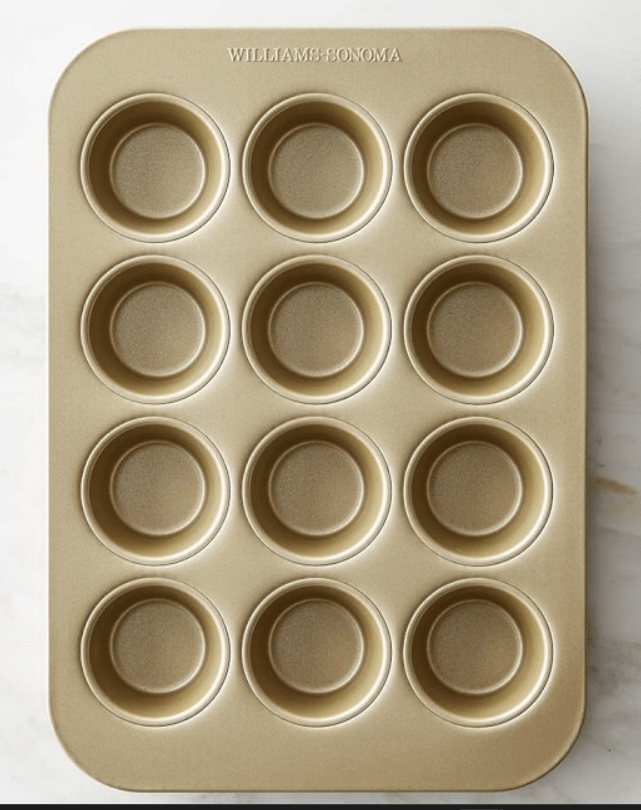
Material—These pans can be made of different materials. The highest-rated ones are made of aluminized steel. They are not only sturdy, but this material heats well and evenly.

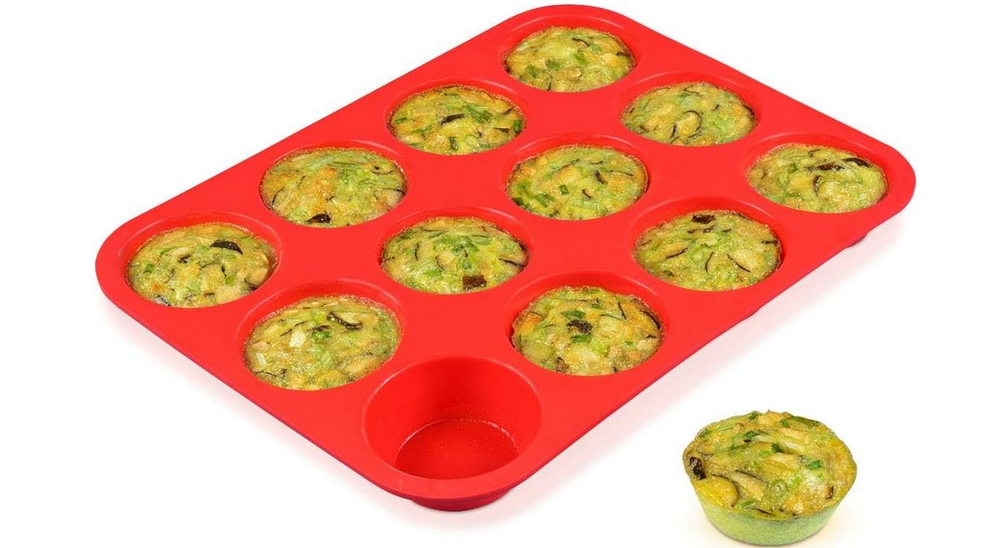
Many home cooks tend to look at silicone pans, but these are not highly rated. First, they are flimsy, and unless placed on a sheet pan, it is tough to maneuver them in/out of the oven or to rotate them in the oven. They also do not conduct heat in the same way as aluminized steel. Serious Eats found that baked goods came out pale and underdone in silicone pans. They also did not like using a baking sheet for a couple of reasons. First, you are using an extra pan that will need to be washed. Also, they found that the muffins browned too much on the bottom where the silicone was setting on the metal.

Rim—Chefs prefer that these pans have a wide rim, at least one inch, that allows you to grab them without putting your oven mitt into the batter.

Color—Very dark pans tend to produce overly dark baked goods and can also lead to misshapen muffins. As these pans conduct heat more quickly, the sides of the baked good set faster than the rest of the item. This can lead to more of a conical or spherical shape rather than a nice muffin shape.

The new trend towards gold or bronze pans, though, earns high marks for even baking. Both light and medium-colored tins produce more appealing and even shapes.

Pan Size

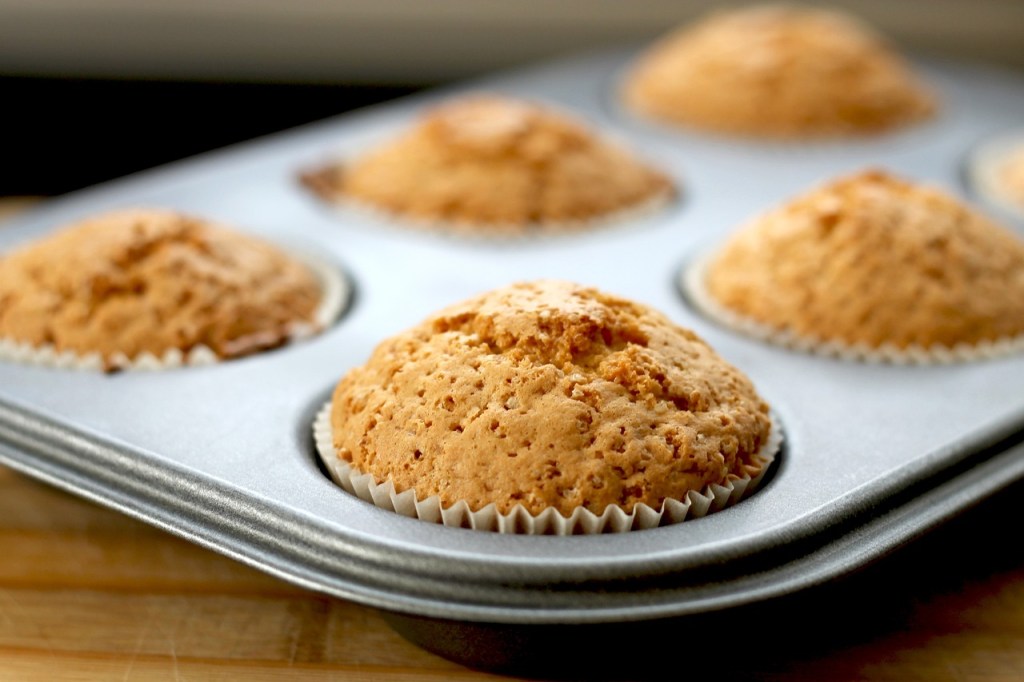
Regular or standard muffin pans have 12 cavities in which you place your batter. The cups will vary in size in different brands but are usually about 2” X 1.25”.

Image by webvilla from Pixabay

There are also 6 cavity ones, but you need to be careful about what you buy. Some will have a similar cup size as a standard 12-cup pan, but they will often have larger cavities than the standard pan. Bakers use these larger ones for cinnamon rolls, popovers or oversized muffins. One nice thing about a smaller-sized pan is that it is easier to put into a toaster oven.

You can also buy mini muffin pans, which usually have 24 cavities. Each cavity is about 1” X 1.25”. You can also purchase mini muffin pans with only 12 cups. I have two of those.

Cavity size—If you have a muffin tin with cavities that are too large, it will lead to squat and unattractive muffins or cupcakes. Cavities that were narrower at the base than the top were more likely to result in the classic muffin shape with a bit of spilling over the top. With mini muffin pans, try to get one with at least an inch between cavities. Less than this and you might end up with fused muffins.

Coating—Many good muffin pans have a nonstick coating. This coating makes it easy to remove the baked item and leads to easier clean-up.

Tips on using a muffin/cupcake pan

Brands—Two brands consistently rose to the top of the ranking: Williams Sonoma Goldtouch nonstick pans and USA nonstick pans. Some also highly rated the OXO version. If price were not an issue, most testers would have preferred Williams Sonoma. However, they are also the most expensive of these pans.

  • Only fill the cavities about ⅔ (no more than ¾) full.
  • Wipe off any spills from the surface before baking. It will be much easier to clean than after it has baked on.
  • If using the mini-muffin size, avoid large add-ins such as fresh fruit. The muffins are not large enough to accommodate this. On the other hand, add-ins that you can chop to a small size, such as chocolate chips, dried fruit, and nuts, are fine. Items that can be swirled in, such as Nutella or jam, are also good options. Since you still want loads of flavor in these small bites, add flavor punches such as citrus zest or amp up the spices.
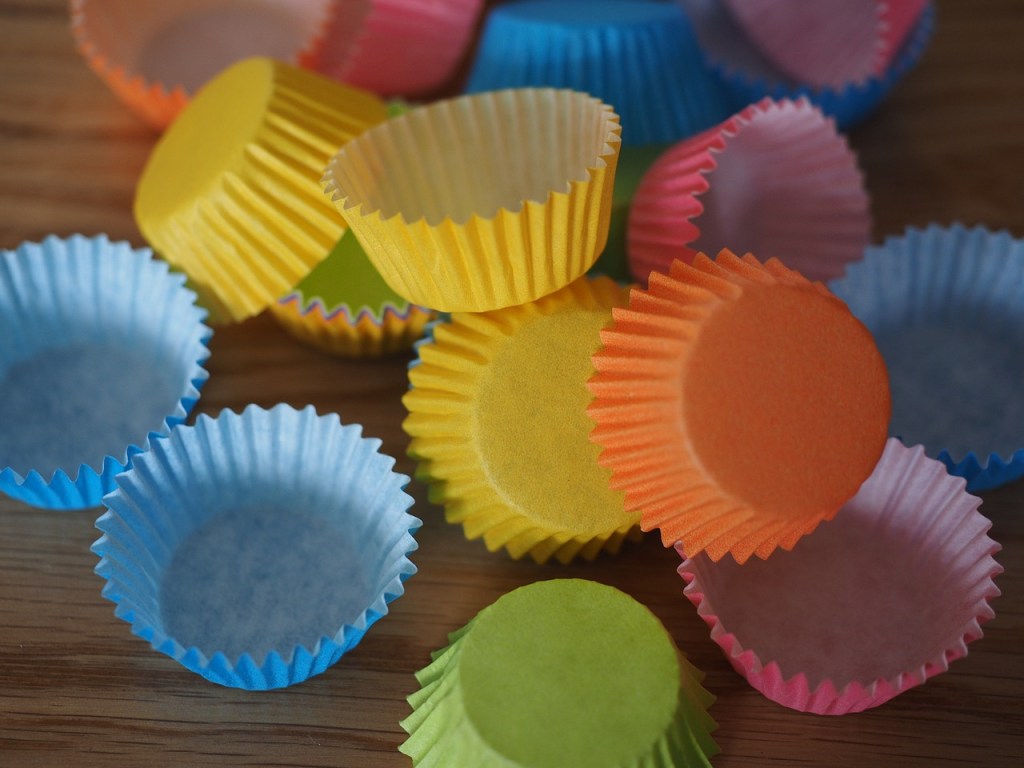
  • Choosing a pan with a nonstick coating makes removing from the pan easier. For extra protection, using baking liners can be helpful. Even with the nonstick coating and even if you use baking liners, most pros still apply a nonstick spray. If you have ever wondered about the different types of baking liners, see this Cooking Tip: Cupcake Pan Liners.
  • Converting recipes
    • Many wonder if they can take a recipe meant for a standard-sized pan and use it in a mini muffin-sized pan. Yes, but you do need to take some precautions. The most obvious is that you will use less batter in the mini-sized pan. Most standard-sized pans hold about ¼ cup of batter, whereas mini pans use only 1 to 1½ tablespoons in each cavity. You will need to do a bit of trial and error to get the best result.
    • On average, you will get between 32 & 48 mini muffins from a recipe that gives you 12 regular size muffins.
    • Bake at the same temperature, but the smaller items will take less time to bake. Be sure to check their progress before the time indicated on the recipe.
  • If you are only baking a partial batch of muffins or cupcakes, some will tell you to fill the empty cups with water to ensure a better result. Cook’s Illustrated tested this practice and found that it did not matter if you left the cups empty.
  • In addition to the typical muffin or cupcake, these pans can also be used for single-serve frittatas or quiches, single-serve meatloaves, and stuffed tomatoes or peppers.
  • Alternatives to a muffin pan – Here are some alternatives if you do not have a muffin pan.
    • Place mason jar rings on a baking sheet and put liners in them. Pour the batter in and bake as usual.
    • Use foil cupcake liners or double or triple up on paper liners. These will now stand on their own on a baking sheet, but the end shape might not be as pretty as if you had used a muffin pan.
    • Parchment – Cut parchment into 5-6 inch squares. Place over the holes in the muffin tin. Press down into the cavity with a small glass. You may also want to use your hands to form the parchment around the glass. If you make them double-layered, they might stand on their own.

If you already own a muffin pan, I hope these tips will help you succeed in making your muffins or cupcakes. If you are in the market for a new one or wish to gift one to someone, remember these recommendations to get the best pan you can.

Happy Baking!

Cooking Tips · Ingredients · Techniques

Your Thanksgiving Meal – All You Need to Know in One Place!

Image by J Lloa from Pixabay

We are going to take a short break from our series on Asian ingredients as this time of the year, many of us turn our thoughts to our Thanksgiving meal. Some people take it in stride, while others develop a certain amount of stress trying to figure out how to get everything done on time and have it taste delicious. I have written much on this subject in prior Cooking Tips. In this Tip, I am collating all this information so it is right at your fingertips. This post contains affiliate links and I may earn a commission if you decide to purchase.

Turkey
Let’s start with the turkey. My favorite method (along with many chefs) is to do a dry brine followed by spatchcocking before putting it in the oven.

Do you always do a wet brine? Read this Tip on brining as well as the alternative of a dry brine, which is not only easier but leads to superior results. Here is also an excellent article from ThermoWorks about what brining does and why they prefer dry brining.

Rather than roasting your turkey whole, consider spatchcocking it. This means taking out the breast bone and pressing it flat before putting it in the oven. Advantages include being able to cook both the white meat and dark meat to the recommended temperatures without overcooking the white meat. Another benefit is that your turkey will cook in much less time. Here is a Tip on how to do so. It includes a link to a video by Serious Eats. Here is another ThermoWorks link, which includes an excellent video on their method.

The last thing you want to do is to have overcooked or, even worse, undercooked turkey. The above ThermoWorks discussion on spatchcocking also includes recommendations on doneness temperatures.

Potatoes
Delicious mashed potatoes are another standard on the traditional Thanksgiving table. Although they are not difficult to make, some points in this Tip can help you make them the best ever. You can also make them ahead, thus freeing your time to do other things. I wrote an article on Success & Make-Ahead Tips that will give you some options.

Pies
There will be at least one variety of pie on our holiday tables if not more than one. Here are some links to help you create the most delicious pies.

  • Pie plates – Does it matter what kind of pie plate you use? See this Tip for the answer.
  • Pie crust – I encourage you not to take the shortcut of a store-bought pie pastry but make your own. See these Tips for all you need to know.
  • Filling – Although there are other fillings, pumpkin certainly ranks up there as one of the most popular. Did you know that the pumpkin in the Libby can is a specific type of squash? See this Tip for a discussion. Instead of grabbing for that canned pumpkin, try something different this year and make your pumpkin pie with roasted butternut squash. My husband likes to tell people he does not like winter squash, but the best pumpkin pie he has eaten is one I made with butternut squash. Here is a link to that recipe.

Spices
Certain spices make you think of the holidays. See this Tip for helpful information.

Make Ahead
The more you can do ahead of the day, the less stressful it becomes. I have given you some links above, and here is an article I wrote on that subject – Success & Make Ahead Tips. Using your freezer is a great way to get ahead of the big day. See this Tip for things you need to think about.

Leftovers
Are you in the “love them” or “hate them” category regarding leftovers? Whichever you are, you are sure to have leftovers after a large holiday meal. See this Tip for essential safety measures.

Planning
Although I put this last, planning for the big day is one of the most important things you can do to ensure a great meal and day. See this article on Thanksgiving Prep that I wrote to help you.

I sincerely hope these Tips and suggestions will help make this Thanksgiving the best ever. If there is something else that you have questions about, just let me know. If you know someone who is stressed over preparing their Thanksgiving meal, please send this Tip to them.

Happy Thanksgiving!

Cooking Tips · Techniques

Slow Cookers – Do You Need One?

Do you own a crock pot? How about a slow cooker? Wait – aren’t they the same thing? That is just one of the facts we will explore in this Cooking Tip on Slow Cookers.

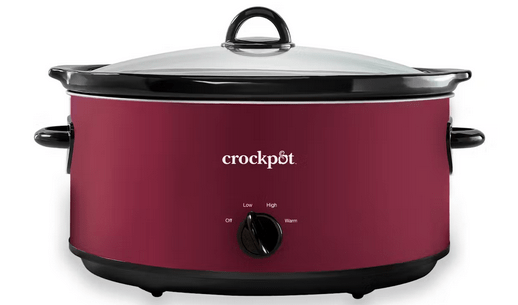
First, what about that name? A slow cooker is a small kitchen appliance. There are many brands, and Crock Pot is just one of them. It is the brand, though, that first popularized this appliance when it brought out its version in the 1970s. Today, there are a myriad of different brands.

I must admit that I rarely use my slow cooker. There are others who probably use theirs every week, but most others undoubtedly fall in the middle in terms of frequency of usage. Let’s look at the types, why people like them, and how to use them to get the best results.

Types of Slow Cookers

Traditional—The cooking vessel is ceramic, and it heats due to a heating element strip made of nickel and chromium that wraps around it.

  • Pros
    • They are thick and have excellent heat retention.
    • They absorb and transmit heat gradually.
  • Cons
    • They are heavy and can crack if dropped.
    • You cannot sauté in the crock. Instead, you must brown the meat in a skillet and transfer it to the cooker.

Other models – The cooking vessel is usually a nonstick-coated metal, usually aluminum. It sits on an electric heating element in the base, acting like a burner.

  • Pros
    • They are lightweight and durable.
    • They allow you to sauté and brown food in the crock rather than in a separate skillet.
    • They cook much faster than ceramic models.
  • Cons
    • Because they cook faster, your food can overcook if you are not paying attention.
    • Most recipes are developed for ceramic cookers; therefore, the time given in the recipe may be too long.

Benefits of a Slow Cooker

Convenience

  • This is the most common reason I hear for using a slow cooker: Just throw the ingredients in, turn it on and forget (or almost forget) it. At the end, voila, you have dinner. While much of this is true, there are certainly some precautions to take to ensure that dinner is something you wish to eat, which I will discuss.
  • Using a slow cooker frees up your oven and stovetop for other dishes, making it nice for the holidays or large gatherings.

Heat

  • Because you are not turning on the oven, you are not heating the house.

Energy efficiency

  • It uses very little energy, less than your cooktop or oven would use

Tenderizing

  • One of the great advantages of a slow cooker is that you can take tough (often cheaper) cuts of meat and turn them into tender mouthfuls.

Flavor

  • The extended cooking time can allow better distribution of flavors.

Travel

  • A slow cooker can be taken from your kitchen to the office or a party.

How best to use your slow cooker

  • Slow cookers are great for tougher cuts of meat, which are often less expensive. In fact, you do not want to use leaner cuts of meat, such as chicken breasts or pork tenderloin. If the meat is lean, it tends to get tough and stringy with the prolonged cooking. Using fattier and tougher cuts, including chuck roasts, short ribs, pork shoulder and lamb shank, is better. Whereas chicken breasts do not turn out ideal in a slow cooker, dark meat chicken is a good choice.
  • Trim the fat from the meat before cooking. As the meat cooks, it will release fat. If you are cooking stovetop, you can drain it off. This is not possible with a slow cooker. This can result in the cooking liquid becoming oily and greasy. For this same reason, most also recommend removing the skin from the chicken before cooking.
  • For the most flavor, sear your meat first in a skillet. Some slow cooker models allow for searing in the cooking vessel, thus eliminating the need for a separate skillet.
  • Cut the food into uniform sizes for even cooking and avoid over-crowding.
  • Layer the food properly. Put firm slow-cooking root veggies at the bottom and then the meat on top. If you want your veggies to have crunch, you may add them later in the cooking process.
  • Do not take the lid off until the dish is done. When you open the lid, heat is lost and takes time to recover. It can add 15-20 minutes to the cooking time. Also, the lid is very important in initially bringing the cooker up to a suitable temperature.
  • Fresh veggies are better to use than canned or frozen as the latter can cook too quickly.
  • To keep the freshness, wait to add delicate herbs until the end. Similarly, add your acid, such as citrus, at the end.
  • Tender foods such as pasta, squash, asparagus or peas should be added in the last hour of cooking.
  • Seafood such as shrimp, scallops, and fish should be added in the last 15-30 minutes of cooking.
  • Add any dairy at the last minute to prevent curdling.
  • Submerge the food in liquid while cooking. For increased flavor, use broth instead of water.
  • Although some do not agree, it is generally recommended that ground beef be cooked and drained of fat before adding to the vessel. With ground beef, it is also possible that it won’t cook evenly and thoroughly, leading to the risk of undercooked beef or being in the danger zone (40°F–140°F) for too long.
  • Because the cooking vessels take some time to heat up, some recommend preheating for about 10 minutes before adding the food.

Safety Advice

  • To remove food from the danger zone more quickly, start the cooker on high for an hour before lowering the heat setting.
  • Thaw foods first. The USDA says that since the cookers start at such a low temperature at the beginning of the cycle, the pathogens are not killed but remain in the meat and can stay in that danger zone for too long.
  • Are slow cookers safe to use overnight or unattended? Hamilton Beach says they are since they work on low wattage, only as much as 1½ 100-watt light bulbs. However, they do list the following cautions.
    • Follow the directions for your specific slow cooker.
    • Supervise children around the appliance.
    • Remind yourself that the outside will get hot. Only touch the handles.
    • Keep away from water.
    • Unplug when finished cooking.
    • Look the appliance over and do not use if you see any damage to the cord or the unit itself.
    • If leaving the house, ensure the appliance is set to low, placed away from the walls, and on a heatproof surface.

Purchasing a Slow Cooker

If you are looking to purchase a slow cooker, here is some advice from America’s Test Kitchen (ATK).

  • Look for one that is easy to use without overcomplicated displays.
  • Get one with a glass lid so you can see the progress without opening the cooker, which allows heat to escape and slows cooking.
  • Oval/rectangular shapes are more versatile. They accommodate large roasts, and the large surface area is better for cooking grains/beans.
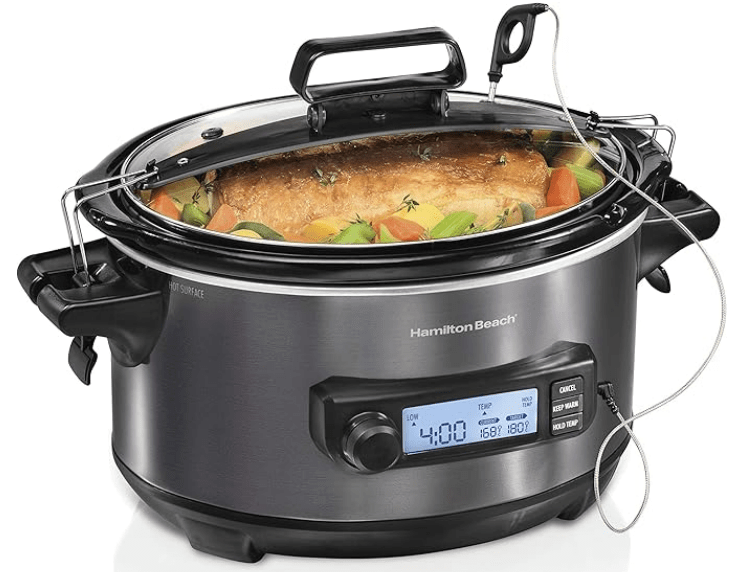
  • Better quality cookers have internal temperature sensors and controls. This means they cook more gently and successfully than those without temperature controls. Cookers with sensors keep food at a braising temperature, just below boiling. Cookers without sensors will just keep fully heating to the boiling point, and you are more likely to get an overcooked result. The problem for the consumer is that you most likely won’t see this listed as a feature on the box. ATK used temperature probes to confirm this feature, and their recommendations are below.
  • Large, stay-cool handles are preferred.
  • An attached temperature probe is nice to have as you do not have to open the lid to check on doneness.
  • Latching lids with silicone gaskets are also great if you transport food in the cooker.
  • A hold-temperature feature will keep food at a desired temperature for up to 24 hours. This allows you to reheat food, use it as a fondue pot or make yogurt.
  • ATK prefers digital over analog controls. Although the latter are simple to use, they do not indicate cooking progress and will not switch to keep warm when cooking is done. They keep cooking until you turn it off.

ATK Ratings

ATK tested and rated the following as the best slow cookers as of August 2024.

  • KitchenAid 6-Quart Slow Cooker (Although ATK just published this review recently, it is no longer on the KitchenAid website.)
  • Hamilton Beach Temp Tracker 6-quart Slow Cooker
  • The best slow cooker with searing capabilities was the Cuisinart 6-quart 3-in-1 Cook Central.

Here are their recommendations for smaller slow cookers.

  • Cuisinart 4-quart Cook Central 3-in-1 Multicooker
  • Hamilton Beach 4 Quart Programmable Slow Cooker

Recipe Conversion

  • As with many things, using recipes developed for the slow cooker will give you the best results. However, if you wish to try converting recipes, here are some tips.
  • You will have the best result with soups, stews, braises and roasts.
  • Reduce the liquid in the non-slow cooker recipe by 20-30%. The liquid won’t evaporate in a slow cooker, as the lid should be tightly sealed. Only use enough liquid to cover the meat and vegetables.
  • Ideally, only fill the cooker half to ⅔ full and never more than ¾ full.
  • Since the liquid doesn’t reduce by evaporation, it won’t thicken to a sauce-like consistency. So, dip your meat in a small amount of flour before cooking. You can also make a cornstarch slurry (water/cornstarch), stir it in, and allow it to simmer until it becomes thick. Alternatively, put the liquid in a saucepan on the stovetop and use the cornstarch slurry to thicken.
  • Slow cookers can amplify cayenne or other spicy ingredients. So, reduce the amount called for.
  • Onions and garlic can intensify in the slow cooker. So, use less than called for, or finish the dish with chopped green onions or chives.
  • Timing
    • The Spruce Eats lists conversion cooking time recommendations in this article.
    • BBC Good Food recommendations
Regular Recipe TimeSlow Cooker Time
15-30 minutes2 hours on High or 4-6 hours on Low
30 minutes – 1 hour2-3 hours on High or 5-7 hours on Low
1-2 hours3-4 hours on High or 6-8 hours on Low
2-4 hours4-6 hours on High or 8-12 hours on Low

Cleaning

  • Most slow cookers are easy to clean, and many have dishwasher-safe cooking vessels. You can help by using a non-stick cooking spray or rubbing oil inside the slow cooker before you begin the recipe.
  • Some like to use slow cooker liners, although they can be pricey. There is also the consideration of cooking your food in plastic.
  • If you do have food stuck on the inside of your slow cookers, here is some advice for clean-up.
    • Fill the cooker to the top with water. Turn it on to low and allow it to set for several hours. This should allow the food to loosen.
    • Some like to add a few tablespoons of baking soda and a few drops of dish soap and proceed as above.
    • If you have white mineral stains on the inside, fill the cooker with water and 1 cup of vinegar. Allow to set overnight and wash and dry as usual.

High Altitude

  • A final piece of advice for those of you who live at higher elevations like me. You already know that water boils at a lower temperature, and food takes longer to cook. You may wonder if that could affect how you use your slow cooker.
  • Colorado State University warns that there is more of a risk that your food will stay in the danger zone for too long. To counter this, they recommend setting your cooker to maintain a temperature of at least 200°F. Start the food on high for the first hour. After that, you can either continue cooking on high or turn to low at that time. You may also expect that the food will take longer to cook. Some experts suggest that you will need to add 30 minutes for each hour of time specified. Legumes can take twice as long.

Are you a slow cooker user? Are you considering buying one? I hope this Tip will help you choose the right one and use it to obtain the best results.

Cooking Tips · Techniques

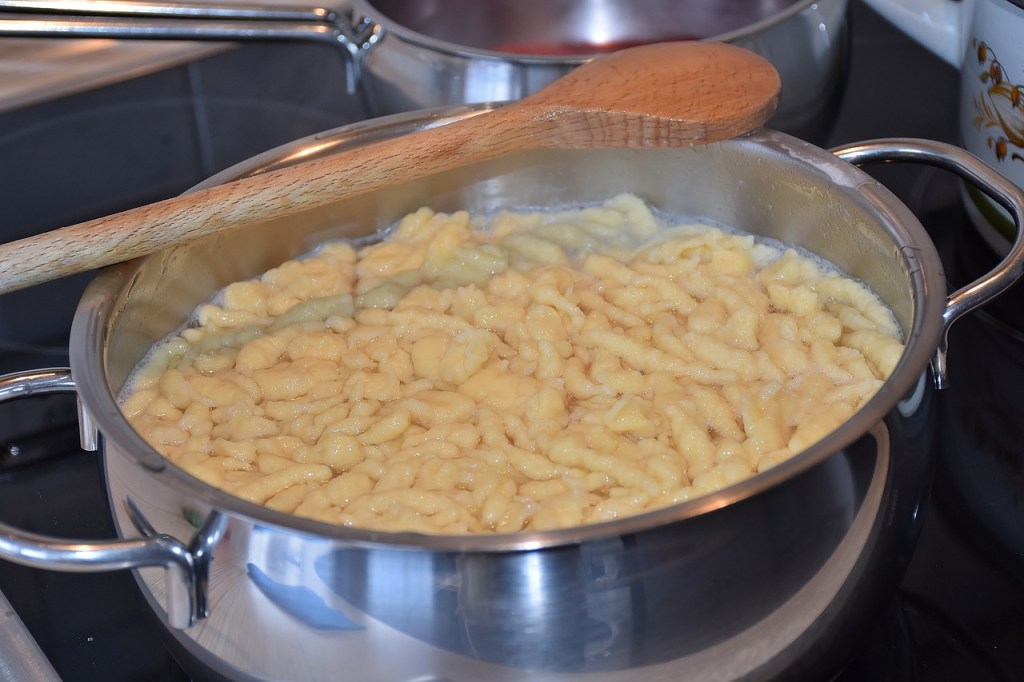
Spätzle – Is it just another pasta?

Image by Hans from Pixabay

Have you ever had the German dish of Spätzle? Have you ever made it yourself? That is the subject of this Cooking Tip. What is Spätzle, and how do you make it?

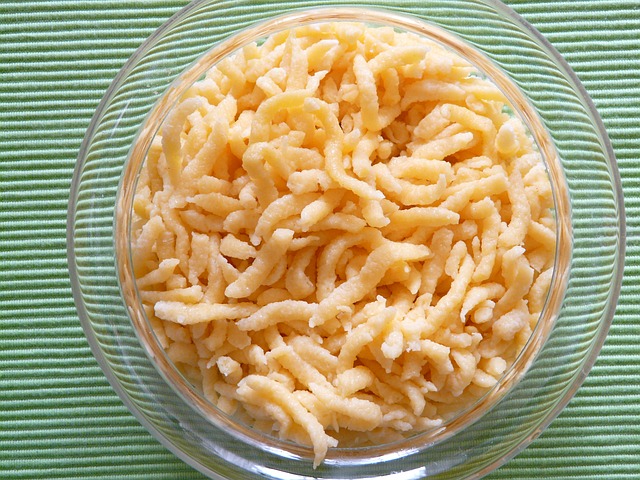
Some like to call spätzle Germany’s answer to pasta. It has similar ingredients – flour, eggs, water, and salt. However, spätzle is moister and softer than pasta dough. It is far too soft to roll out or use a pasta machine. Instead, it must be made using other tools.

Although eaten all over, it is a specialty of the Swabia area of Germany. According to Brittanica, Swabia is a historic region of southwestern Germany, including what is now the southern portion of the state of Baden-Württemberg, the southwestern part of Bavaria, as well as eastern Switzerland and Alsace. This dish is so popular and so much a part of this region that there is a Spätzle museum in southern Germany.

The name means “little sparrow” in German. There is some disagreement over the origin of this name, although most attribute it to the shape when made by hand. Others say it comes from how a German cook holds the dough as they break off pieces to put into water to cook as if they are holding a sparrow. Another theory is that the word originated from the Italian word spezzato, which translates to small or broken pieces. The Swabian people then changed this into spätzle. Other German names you might see are Spätzli, Spatzen, and Knöpfle, although the latter refers more to a dumpling shape than a noodle shape.

The recipe may seem quite easy, but there is some technique involved in achieving a light and tender noodle. As I mentioned above, there are four ingredients: flour, eggs, water (or milk), and salt. Some recipes may add nutmeg or other seasonings. Generally, the flour and salt are combined, the eggs are whisked and added, followed by the water or milk. The dough is mixed to the right consistency before being formed and cooked in boiling water.

Making the dough

As with so many traditional recipes, the above general instructions have many variations and nuances.

  • Flour—Most will use all-purpose flour, but others like to use semolina, 00 flour or a combination.
  • Liquid–Some like water, while others think milk gives a richer result. Whether the liquid should be cold or warm is a matter of debate. You may even see quark or sour cream in some recipes. The liquid should be added gradually so it doesn’t get too thin. If it does, you will need to add more flour. Others will say you must use mineral water for the liquid. They claim that this will result in a softer and fluffier noodle.
  • Eggs—The proportion of eggs to the other ingredients may vary by recipe, but the Swabian rule of thumb is to use a number of eggs equal to the number of servings plus one.
  • Mixing—Traditionalists will mix by hand, but mixing can also be achieved with an electric mixer. The key is to achieve the proper consistency. The recommendation is that it should resemble a thick pancake batter.
  • Consistency–This will differ depending on which method you use to form the noodles and can only be determined by practice. One piece of consistent advice is that the dough needs to start forming air bubbles before it is ready. After 10-15 minutes of beating, use a wooden spoon, scoop some of the dough, and pull to stretch. If you see bubble-like holes, the dough is ready. If not, continue mixing for another minute or two and then repeat the test. This should be followed by a rest of 10-15 minutes to allow the gluten to relax.

Forming the noodles

Each of these methods will give you different shapes/lengths of dough. It is said that to a Swabian, to be called spätzle, the noodle must have a length four times it’s diameter. If it is more of a shorter, rounder button shape, it is called knöpfle.

Here are the different tools you can use. Wetting or oiling any of them will help prevent the dough from sticking.

  • Spätzlebrett (spätzle board)
    • The most traditional way is to spread the dough over a wet spätzle board or wooden cutting board. The dough is then cut into thin strips with a butter knife, offset spatula, or bench scraper and dropped into the hot water.
  • Spätzle Press
    • This is similar to a ricer used for potatoes. It presses the dough through holes, forming it into long strips directly over the water.
    • The dough will need to be a bit thicker if using a press.
  • Spätzle Sieb
    • This looks like a flat colander through which the dough is pressed into the water. You could also use a regular colander with ¼-inch-wide holes. The spätzle dough is pushed through the colander using a wooden spoon or rubber spatula. You can use this same method with any heat-proof tool that has ¼-inch-wide holes, such as a box grater or a slotted spoon.
  • Spätzle Hobel
    • This appears like a cheese grater. It is usually topped with an attachment that slides and thus presses the dough through the holes into the water.
  • Spoon Method
    • If you do not have any of these tools, you may just drop spoonfuls of dough into the boiling water. It is best to use a metal spoon and wet the spoon between scoops to prevent sticking.
    • This will not produce the typical spätzle shape but a shape more like gnocchi or even a little pancake.

Cooking/Storing

Image by Rita-undmit from Pixabay
  • No matter how you form the noodles, they are then dropped into boiling salted water. They are only cooked until they rise to the top, which shouldn’t be more than a couple of minutes. This might need to be done in batches as you do not want to crowd the noodles.
  • Once cooked, they are generally sauteed in melted butter and garnished with fresh herbs, cheese, bacon and/or breadcrumbs.
  • Spätzle can be made in advance, cooled, and stored in a covered container in the refrigerator for 3-4 days. To reheat, sauté in melted butter.
  • Spätzle may also be frozen for up to 3 months. When ready to use, thaw overnight in the refrigerator.

If you have eaten spätzle, has it only been in a restaurant or when you purchased a package in the store? This dish requires very few ingredients and can be made relatively quickly once you master the technique. I hope you give it a try!

Cooking Tips · Ingredients · Techniques

Does your homemade bread really need salt?

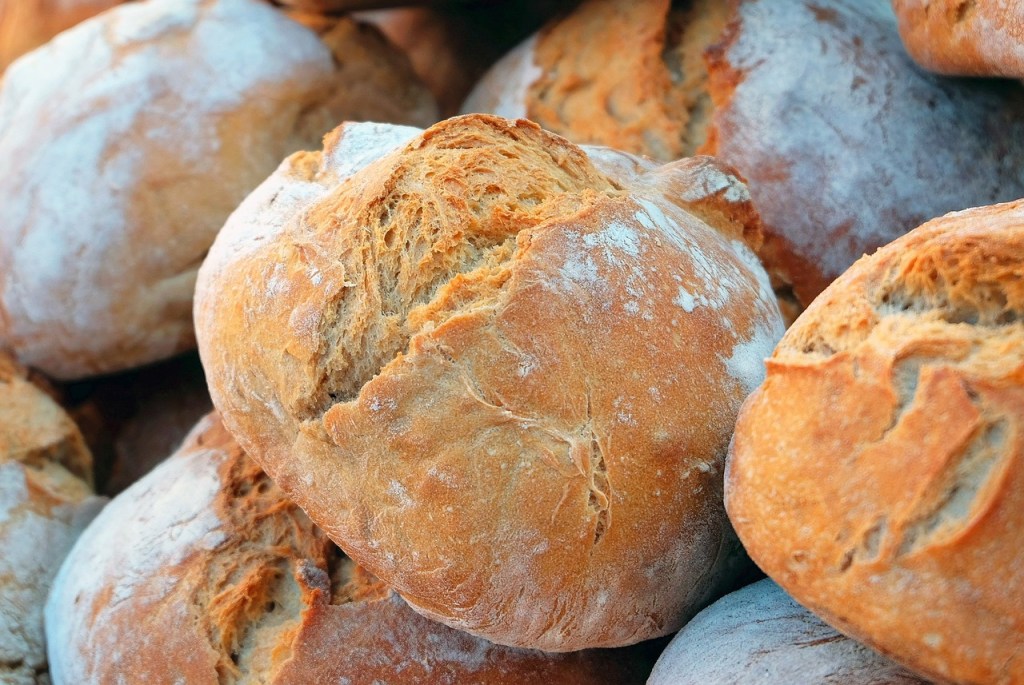
I love to make bread, although I do not do it nearly enough. It takes some time but has a short list of ingredients: flour, yeast, salt and water. Some people wonder just how important that salt is to the final bread product. That is the subject of this Cooking Tip.

Why is salt in bread recipes?

Taste

Image by Couleur from Pixabay

Just as with almost everything we cook or bake, salt helps with flavor. It should not make your dishes taste salty. Instead, it balances other flavors, enhances some flavors, and creates a much yummier result. You can prove this to yourself by a taste test. When you are cooking something, do not put any salt in it to start with. Taste it, add the salt and taste again. You will be amazed at the difference.

It is the same with bread. Bread made without salt will just taste bland and one-note rather than more nuanced and rounded. Salt enhances the natural sweetness in the flour while tamping down any bitterness.

As you will read below, salt also slows down the yeast activity. As I have mentioned in other Cooking Tips, slower fermentation results in a more flavorful dough.

Interaction with Yeast

Image by Karyna Panchenko from Pixabay

Yeast causes fermentation and the ultimate rising of your bread dough. Salt plays an inhibitory role with yeast. It slows down this fermentation by drawing water away from the yeast. Less water means less yeast action.

This slower rising time allows the gluten to develop and strengthen. A stronger dough can trap more gas bubbles and make the distribution more even. This all means that you end up with a better loaf of bread with a nicely risen shape.

Image by Couleur from Pixabay

Crust

Salt gives you a darker, more attractive crust. Because the salt slows down yeast activity, it consumes less sugars. These free sugars contribute to caramelization, which is what gives you a browner crust.

Freshness

An additional advantage is that bread made with salt keeps fresher for longer.

How much salt is needed?

Expert bread bakers always weigh their ingredients and use the Baker’s Percentage. The standard measurement is about 2% salt. The percentage is based on the amount of flour. So, if you are using 1000 grams of flour, you would use 2% or 20 grams of salt.

Image by Couleur from Pixabay

Too little salt prevents the important work of the salt in bread. Too much can be detrimental, as fermentation is halted. Therefore, most bakers stay around that 2% measurement, although some will go as low as 1%, but no lower.

ChainBaker.com has an interesting article in which they bake three loaves of bread. One had no salt, one had the recommended 2% salt, and one had too much salt at 10%. The dough without salt meant the yeast worked rapidly, causing quicker fermentation but weaker gluten. The finished bread loaf rose quickly but spread sideways due to the weaker structure.

The dough with 10% salt did not ferment at all, as that much salt stopped the yeast from doing its job. The result was that the dough was difficult to work and the baked loaf was very dense and unrisen. See pictorial evidence of this here.

Here is another great article by King Arthur Baking showing how differing amounts of salt can dramatically affect bread dough.

When to add the salt to the dough

Everyone has their preferred time for adding the salt. Some will add it at the beginning, while others like to delay it. Proponents of this latter method feel it allows the gluten to develop better before adding the salt and thus makes the initial mixing easier. This is known as the “autolyze” method. Recipes using this method will call for the flour and water to soak for a while. After the prescribed amount of time, the yeast and salt are added, and mixing and kneading commence.

This allows better hydration of the flour and resultant strengthening of the proteins. This is said to make the dough more extensible (the ability for the dough to stretch out without tearing) but less elastic (the tendency for the dough to resist stretching), allowing the shape of the formed dough to be better maintained. An example is a long baguette.

How to add the salt

The most common and easiest method is to mix the salt with the other dry ingredients at the beginning. Some experts feel this method results in a more elastic dough.

Another method is to dissolve the salt in water before adding it to the dough. Experiments show that this could strengthen the gluten better.

A final method is to add it to your yeast mixture if you are blooming it. Although blooming is not necessary with modern-day instant yeast (and probably active dry yeast), some still like to do it. If you do this, you can add the salt to the water as long as there is enough water to totally dissolve the salt, the yeast, and the sugar. Busby’s Bakery states that salt needs three times its weight in water to dissolve at room temperature. Another thing to note is that the salt may slow down the yeast, lengthening the time for it to bloom.

If you bake yeasted products, you will surely have heard that you must keep the salt away from the yeast as it will kill it. Testing has shown that this is not necessarily true. The two ingredients must be in contact for hours before the salt can damage the yeast. So, go ahead and add both the yeast and salt to your flour without fear.

Salt is an essential ingredient in the kitchen in many ways. Here is another Cooking Tip about all the different types of salt—Salts Galore. Don’t fear salt. If you have a medical condition requiring limiting salt, follow your doctor’s advice. Otherwise, embrace all that salt can do for your food, not just in bread but in all your dishes.

Cooking Tips · Techniques

Game Meat – Is it for you?

Some of you probably grew up eating at least some game meat, and some of you probably continue to do so. Others of you may have never tried game meat. Should you? What does it taste like? An introduction to game meat is the subject of this Cooking Tip.

Game meat refers to the meat obtained from animals typically hunted in their natural habitats. Today, the term is applied to those same animals raised on farms. In fact, according to the USDA, “Game species raised on farms under appropriate regulations can be sold. Wild game species that can be legally hunted under Federal or State regulatory authority cannot be sold but can be harvested for personal consumption.” What can be sold and where will vary by state. This is to ensure the sustainable use of game meat and that they are handled in such a way as to prevent food safety issues.

Before I discuss different game animals, there are some generalities about game meat.

  • Game meat, whether farm-raised or wild, will taste different than meat from domesticated animals. This is mainly because wild animals have different diets and activity levels. Meat from domesticated animals will have the mildest flavor, whereas the wild game has the most robust flavor, with the farm-raised game having intermediate flavor.
  • Many call the flavor of this meat “gamey.” The flavor profile often is described as strong, musky, and earthy. This flavor is not an indicator of the meat’s freshness or safety. As opposed to some of the cliches, game meat does not taste just like chicken or beef, although they may share some similarities.
  • Proper handling of the meat from harvest to plate and the cooking method will help decrease the gamey flavor.
  • Game meat is typically lower in saturated fat and calories than domesticated meat.
  • Because of the lower fat content and the fact that game animals get more exercise, game meat can be tough if not handled properly. This type of meat generally benefits from cooking slowly or in a pressure-type environment.
  • All game meat is a good source of protein and vitamins.

Here are some suggestions for reducing the gamey flavor.

  • The gamey flavor comes from the fat. Removing the fat can remove some of this flavor but also decreases juiciness and tenderness.
  • Chefs use spices, herbs and marinades to help with these flavor challenges.
  • Soaking the meat in a solution may help. Make sure to cover the game completely in the solution and discard the solution after soaking. Small animals may only need 8-12 hours, while larger ones may benefit from a 24-48-hour soak. Here are some ideas from game experts.
    • Salt solution – use ¼ cup kosher salt per quart of cold water.
    • Vinegar solution – use one cup per quart of cold water.
    • Milk solution – cover with milk and soak.
    • Red wine solution—This is good if you will then cook your meat in a stew. Those who advocate this method recommend boiling the wine, cooling it and then using it for the soak.

Cooking temperatures—Just as with meat from domesticated animals, it is best to use a food thermometer to ensure the meat’s safety.

  • According to the USDA, fresh game should be cooked to an internal temperature of 160°F. They note that the meat may still be pink in the center, but it will be safe to eat if it reaches that 160°F mark.
  • For the most tender meat, they recommend cooking at this 160°F temperature for more extended periods or even cooking to higher temperatures to break down the tough connective tissue.

Types of game meat

Here is an interesting tasting chart from Fossil Farms from New Jersey that breaks down the flavor profiles for 16 different types of game. Below is a discussion of a few of the most common.

Venison

Image by Jessica Rockeman from Pixabay
  • Although we think of venison as deer meat, that term can also be applied to meat from elk, moose, caribou, antelope and pronghorn.
  • It is a type of dark meat.
  • It is rich in flavor.
  • It has less fat marbling than other meat, so it is leaner but still tender.

Wild boar

  • This is the meat from an undomesticated pig.
  • It is leaner than regular pork, making it tougher. Therefore, it is often cooked with pressure or in a slow cooker.
  • The meat is darker with more robust flavors.
  • It is one of the gamier flavors with nutty tones.
Image by Hans Benn from Pixabay

Bison

  • It is also known as an American buffalo.
  • Common cuts include bison steaks, chili/stew meat and ground meat for burgers.
  • It is slightly sweeter than domesticated beef.
Image by Lori from Pixabay

Elk

  • The meat is similar in texture to beef.
  • The flavor is deeper and bolder.

Antelope

  • It is similar in flavor to deer meat.
  • It is leaner than deer meat.

Rabbit

  • This white meat is lean but tender.
  • It has a somewhat delicate flavor but is stronger and earthier than chicken.
  • In cooking, it is often treated similarly to poultry.

Goat

  • Goat has a very distinct taste that many do not like.
  • It is rich with an unpleasant smell and aroma. To reduce this, it must be treated before cooking, which also tenderizes the meat.
Image by rfotostock from Pixabay

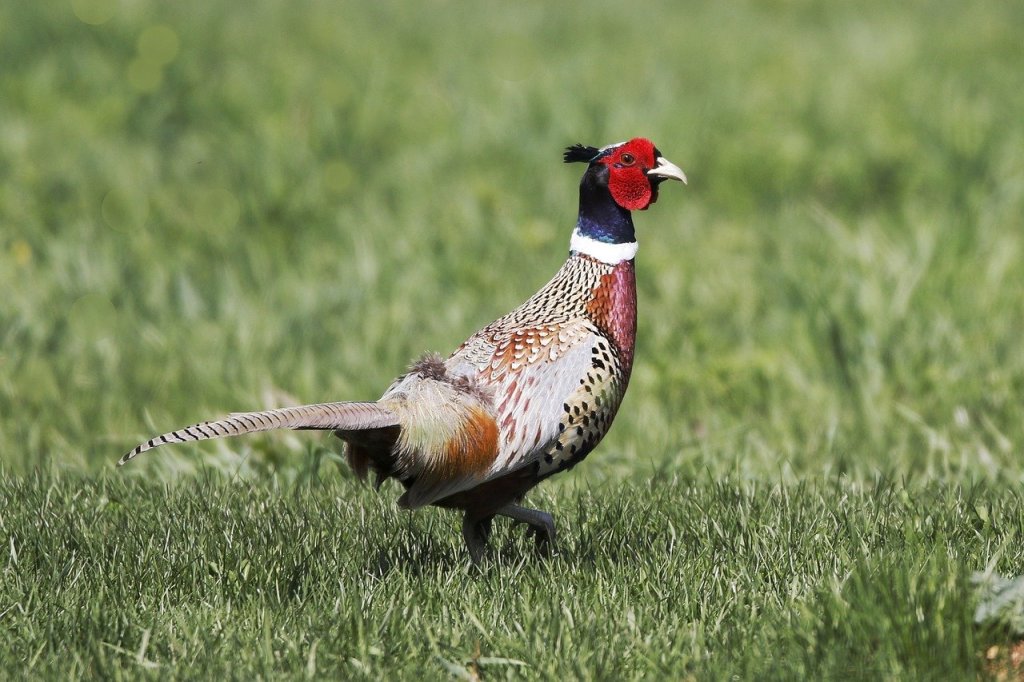
Pheasant

  • It is a white meat that is leaner than chicken or turkey.
  • It has a relatively mild taste.
  • It is often roasted like a chicken/turkey or made into sausage.

Quail

  • A very small and delicate bird that has a sweet but gamey flavor.
  • It is often served roasted whole.

Duck

  • There are both domesticated and wild ducks.
  • It is very rich in flavor.

Are you a game eater? If you do not hunt or have a hunter that gives you the game, it may be hard to find in a typical supermarket. In my area, it is very easy to find different forms of bison. It is not true of other types of game.

Game does show up on restaurant menus, particularly those establishments in the same area as where the game live. Are you a fan? Are you even interested in trying game meat? Have fun and experiment with these other flavors!

Cooking Tips · Ingredients · Techniques

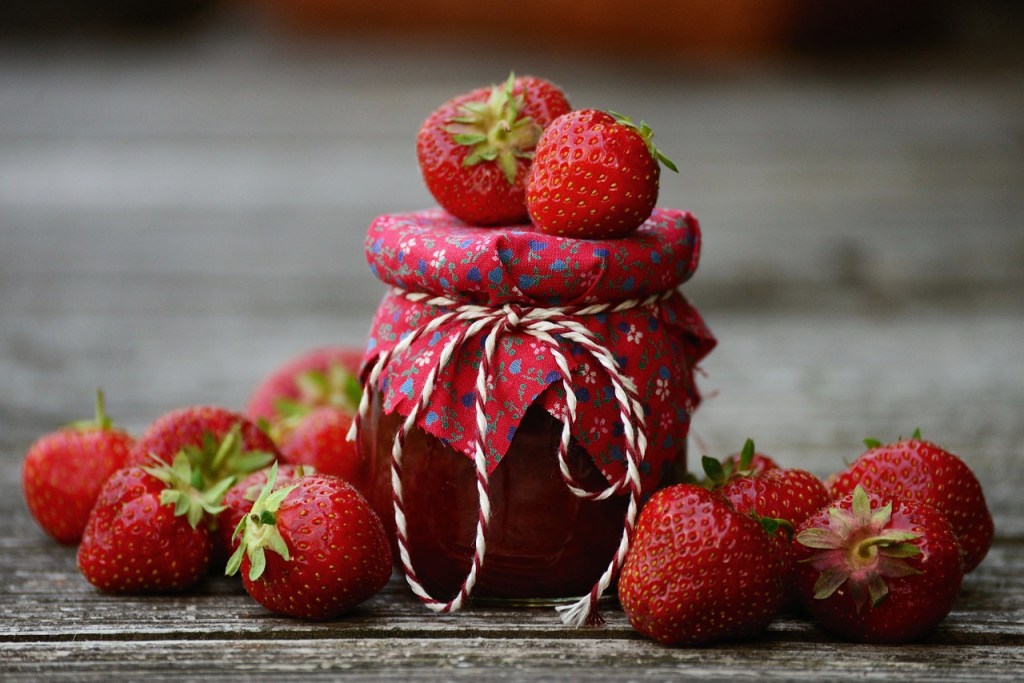
Strawberries – The Epitome of Summer

My husband has been harvesting strawberries since June. He has four different varieties growing; they mature at different times and have different flavors. If you do not have a garden, what can you do to ensure you are getting the best strawberries you can? That is the subject of this Cooking Tip.

Strawberries are a member of the rose family and are Native to North America. The large majority of US strawberries come from California, with Florida being a distant second.

Varieties

As with so many produce items, there is not just one strawberry, although you may think so if you only buy them in the supermarket. There, you will find what is known as the Garden Strawberry (Fragaria Ananassa). However, there are said to be over 1,000 different varieties grown worldwide.

If you are a gardener, you will have a myriad of choices to plant. They are broadly broken into two categories.

  • June-bearing – these produce the largest berries over a 2-3 week period during June/July.
  • Everbearing strawberries generally produce two harvests a year – one in the spring and one in later summer/fall. Their fruit is usually smaller.
Image by Shirley Hirst from Pixabay

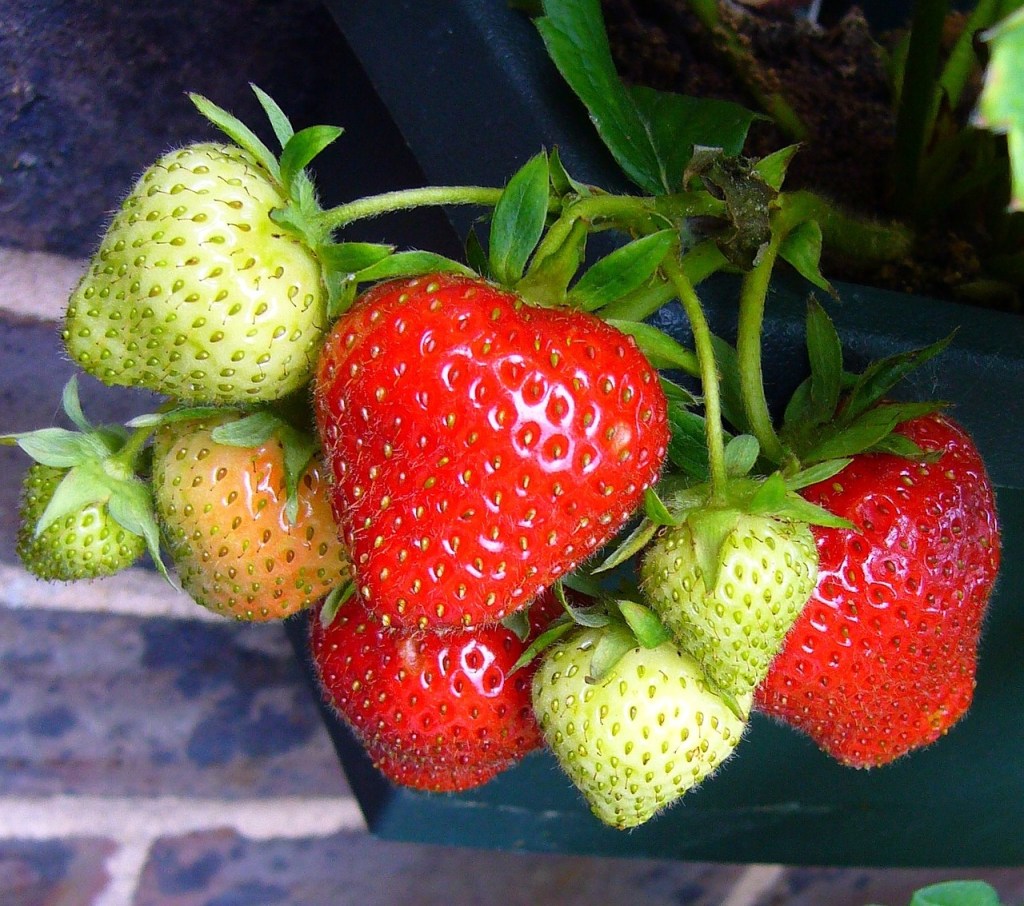
Although the typical strawberry is red, there are green and white berries. The greens are unripe berries, and the whites have been cultivated so as not to develop the typical red color.

Picking Ripe Strawberries

Because strawberries (as with so much fruit) do not continue to ripen after harvesting, you want to pick the ripest you can when you buy them to get the sweetest and most strawberry flavor. The best way to test the flavor of a strawberry is by tasting it, something that you probably cannot do in the supermarket, although you may be able to do so at farmer’s markets.

Apart from tasting, a deep red color is another indicator of flavor. However, strawberries will continue to redden after being picked, even though they do not continue to ripen. Therefore, color alone can be deceiving. One strawberry grower recommends looking to see how red they are all the way to the top, under the leaves. The redder they are in this area, the sweeter & juicier they will most likely be.

Another tip is to smell them. They are much more likely to have good flavor if they have a wonderful strawberry scent.

Another interesting point comes from America’s Test Kitchen. They tell us that the flavor of a strawberry is related to its aroma, and the aroma is related to temperature. A room temperature berry will likely taste sweeter than one just out of the refrigerator. Too much heat, though, is not good, as it can drive off much of the aroma. Therefore, rather than cooking strawberries, they like to macerate them by tossing them in a bit of sugar and letting them sit until they soften and the liquid starts to come out.

Hulling Strawberries

When you are ready to eat or use the strawberries, after washing them, you will want to hull them, which means removing the leaves and the core. There are different methods for this.

  • Paring knife
    • This doesn’t require any equipment other than what you already have. It does, though, take away more of the berry than other methods.
  • Straw
    • Insert a sturdy straw into the strawberry’s point. Push the straw through the berry, and it will remove the leaves with the hull attached. This method does work, although it is easy to go off-center and miss the hull.
  • Hullers
    • Spruce Eats tested several different hullers and found that the Oxo Good Grips Strawberry Huller worked the best. They liked its nonslip grip, easy cleaning, and ability to use different-sized berries. The only negative was that it was hard to store.

Roasting Strawberries

Roasting strawberries is an interesting way to try to enhance their flavor by intensifying the natural sugars present in the berries. To do this, toss the berries in about two teaspoons of sugar per cup of berries. If desired, add a touch of acidity with a bit of lemon zest. Roast in a 425°F oven for 15-20 minutes, stirring halfway through. Although you may or may not want to eat them out of hand, you can use them in baked goods or as a topping.

Dried Strawberries

Image by Engin Akyurt from Pixabay

Making dried strawberries is not difficult. If you have a food dehydrator, follow the instructions for that appliance. You can still dry them in a low oven if you do not have one. After washing and hulling the berries, cut them in half or quarters. Place the berries on a baking sheet, cut side up. Place in a 200°F oven for about 3 hours. Allow the berries to cool and crisp up, and then store them in an airtight container for up to a week.

Storing Strawberries

We all know just how perishable strawberries are. How can we make them last the longest? There are all sorts of recommendations out there. Three that seem to stand out as the best are the following.

  • Do not rinse them until you are ready to eat them. Rather, pick out any berries that are going bad, put the rest back in the container and store them in the refrigerator. Some recommend storing the container upside down to encourage airflow. This way, your berries should keep up to a week.
  • A second method is to wash them in a solution of 1 part white vinegar to 3 parts water, drain them and dry them thoroughly before putting them in the refrigerator. One method of drying is placing them is in a paper-towel-lined salad spinner and gently spinning them until dry.
  • A final method is to soak them for about 5 minutes in a mixture of 1 tablespoon of kosher salt per cup of water. Drain, rinse, dry and place in the refrigerator. The proponents of this method say that the salt is abrasive, and therefore, it cleans better than water alone. This same source does not like using baking soda or vinegar, as these ingredients can be absorbed into the berry and not rinse off completely, possibly compromising flavor and texture. As can be seen by the second method, though, not everyone agrees with this caution.

Freezing Strawberries

For more extended storage, strawberries can be frozen.

Image by congerdesign from Pixabay
  • Remove the tops.
  • Chop them as you prefer – quarter, slice, etc. You can leave very small berries whole.
  • Freeze in a single layer.
  • Transfer to a freezer bag/container.
  • Use within a few months as their quality deteriorates after about six months.
  • Some like tossing the berries in sugar before freezing, as this preserves the color and texture. However, it does limit how you can use them later.
  • Great uses for frozen strawberries are smoothies, jam, ice cream, fruit topping, and strawberry sauce.

Measuring Strawberries

Although you do not always have to be exact in measuring when using strawberries in a recipe, it is nice to know how many cups are in that container you pick up in the store. The Spruce Eats has put together some conversion figures to make your life easier.

1 cup whole strawberries is equivalent to:

  • 8 large strawberries
  • 5 ounces by weight
  • ½ cup strawberry puree

1# strawberries is equivalent to:

  • 2¾ cup sliced strawberries
  • 3¾ cup whole strawberries

1 pint of strawberries is equivalent to:

  • 12 large strawberries
  • 24 medium strawberries
  • 36 small strawberries
  • ¾# by weight
  • 1¼ cups puree
  • 2½ cups whole small strawberries
  • 1½ to 2 cups sliced strawberries

Now that you know how to pick ripe strawberries, clean them, store them and use them, there is one last important tidbit. Do you know what the fear of strawberries is called? It is “Fragariaphobia.” That is bound to be helpful in your kitchen!

Cooking Tips · Techniques

American Cuisine – is it real?

Image by Tumisu from Pixabay

When I say Indian cuisine, Mexican cuisine or even French cuisine, do certain dishes come to mind? How about if I say American cuisine? What dishes come to mind? Is there even such a thing as American cuisine? That is the subject of this Cooking Tip.

Many will say there is no such thing as American cuisine. Others will say nothing is more American than the “Golden Arches.” If there is such a thing as American cuisine, it has been influenced by the fact that we began as a country of immigrants, each of whom brought their own food to these shores. Recipes had to be adapted, though, as not all ingredients available in their home countries were available here. How many times have you heard that a restaurant serves “authentic Italian food” or that it serves “Americanized Italian food?” What is the latter? Is it Italian, or is it American? Very little of what we call American doesn’t have roots in other cuisines. Perhaps the most American food is corn, a staple of Native American cuisine for millennia.

What Americans eat has also changed through time. Think of what might have been on our dining tables in the 1950s and what is on our table today. Back then, there was Spam, tuna casserole, meatloaf and Jello. Today, dinner is more likely to consist of processed foods, food kits or restaurant delivery meals.

Our country is also vast, with differing geography, climate and people. This has led to a distinct regionality of the cuisine. Whereas the definition of American cuisine can be nebulous, we might more easily describe Southern cuisine, New Orleans cuisine or New England cuisine.

If we were to describe a typical American cookout, it would most likely include hot dogs, hamburgers, potato salad and coleslaw. If you head to the Northeast, you will surely find many seafood dishes, such as clam chowder and lobster rolls. Quintessential Southern dishes include fried chicken, biscuits/gravy, fried green tomatoes, and grits, which are all very different but all very American.

Image by Michelle Raponi from Pixabay

I often think of American food as what you will find in diners in small towns across the US. I recall looking for a place to eat while driving through a small town in the Midwest. The local café boasted dishes such as chicken fried steak, cheeseburgers, and roast beef with mashed potatoes. There might have been spaghetti and meatballs, but it was an Americanized version. The other type of eating establishment we found is any number of fast food places.

Although that sounds very American to me, I might be a bit unfair. What are your thoughts? Is there an American cuisine? If so, what is it? What would you suggest if someone was visiting from another country and said they wanted to try American food? Let me know!