Cooking Tips · Techniques

When should you buy organic?

Do you buy organic foods? If so, why do you buy them? Is it because you perceive they are healthier? Do you think they are safer? Do they taste better? Are they better for you? Organic foods are a huge industry in today’s world. They are usually more expensive than the non-organic version. Is it worth it? There are very strong feelings on both sides of the “organic vs conventional” debate. However, the only one who can answer “is it worth it” for you and your family is you. One caveat is that more research probably needs to be done and the results of any future research could alter the current thought on organic foods.

When speaking of produce, there are two lists with which you might want to be familiar. These lists – The Dirty Dozen and The Clean 15 – are put together by the Environmental Working Group (an organization of scientists, researchers and policymakers) to help consumers know when they should buy organic and when it is unnecessary. These lists were compiled using data from the United States Department of Agriculture on the amount of pesticide residue found on non-organic fruits and vegetables after they had been washed using high-power pressure water systems. (Note, these lists just address the presence/absence of pesticides/chemicals. They do not address taste, nutritional value or other concerns.)

The fruits and vegetables on “The Dirty Dozen” list, when conventionally grown, tested positive for at least 47 different chemicals, with some testing positive for as many as 67. All the produce on “The Clean 15” bore little to no traces of pesticides, and are considered safe to consume in non-organic form.

The top four items that this Working Group recommends buying organic are strawberries, spinach, nectarines & apples. On the cleanest list are avocados, sweet corn, pineapples & asparagus. To see the complete lists, here is a link to 2018 Shopper’s Guide to Pesticides in Produce.

It is interesting to note that organic farming does not mean that there are no pesticides used, only that the pesticides themselves are certified organic. This usually means that they are “natural” rather than “synthetic” but there are some synthetic chemicals that are allowed in organic farming. And, many scientists have concluded that organic pesticides pose the same health risks as non-organic ones.

As of now, no one can say for sure whether organic food is more nutritious than conventional food. Although some studies have shown higher levels of Vitamin C, some minerals & antioxidants, experts say the differences are too small to have an impact on overall nutrition.

When you are considering poultry, meat and dairy products, the main advantage to organic is that the animals are raised without antibiotics. There is some concern that antibiotic use might be leading to an increase in antibiotic-resistant bacteria. Reports also say organic milk contains about 60% more omega-3 fatty acids than non-organic.

What is the cost? A 2015 Consumer Reports study showed, that on average, organic foods are 47% more costly than non-organic. As this is an average, you will see a significant range of cost differences depending on the food and the store. Interestingly, a study in the Proceedings of the National Academy of Sciences found it only costs farmers 5-7% more to use organic methods.

Some industry professionals recommend concentrating more on “Buying Local” with the hopes that those fruit & vegetables are fresher and seasonal. Locally-grown produce does not mean it is necessarily organic although it may be depending on the farm. If you have the space & ability, there is no more local than growing your own produce. In that case, you will have no questions as to how or where it was grown.

As I said in the beginning, only you can decide if you want to go organic and to what extent. Just know there are arguments on both sides but the science, to this point, does not seem to support a strong preference for organic.

Most importantly, eat a diet high in fresh fruits and vegetables. The nutrients that are found in those items are so necessary in your diet and resulting health.


Cooking Tips · Techniques

Egg White Foam

Have you heard of the term “Egg White Foam”? It is a culinary term that describes what happens when you beat egg whites – they increase in volume and turn into a foam. It is what you do when you want to make an angel food cake, a meringue or a soufflé. This tip will go over how to achieve the best foam, what could go wrong and the adjustments that those of us who live at altitude need to make.

If you read about how to whip egg whites, you will probably run across many Dos & Don’ts. As with so much cooking advice, these rules keep getting passed on without anyone stopping to test whether they are really true. In this Cooking Tip, I have sought out real research to help you have success.

  • The temperature of the egg whites can make a difference.
    Warmer egg whites may whip up faster but you can still easily whip cold egg whites. It may take slightly longer but it is not a game-changer.

  • The age of the egg whites can make a difference.
    There seems to be a debate among experts but the general consensus is that older egg whites whip up faster but the resulting foam will be less stable than if you had used fresher egg whites. So, decide based on which is more important to you –volume or stability. Or, just use what is in your refrigerator knowing that the age can make a difference.

  • Your bowl can make a difference.
    The basis for this rule is that plastic bowls may harbor grease on their surfaces which is hard to eliminate with washing. This grease may inhibit the forming of a great foam. If given the choice, it is best to use a glass or stainless-steel bowl. However, if plastic is all you have, just make sure it is clean. You will probably be OK.

  • Don’t add salt to your foam.
    Adding salt used to be recommended to help stabilize the foam. It has been shown that salt, in fact, can act as a destabilizer. If your recipe calls for salt, add it to the dry ingredients, not your egg whites.

  • Cream of tartar is a good idea.
    Cream of tartar helps to prevent overbeating of your egg whites, which can lead to a recipe failure.

  • Be careful of when you add sugar to your foam.
    If you add all the sugar at the beginning, it inhibits the foam’s capacity for holding air. If you add it slowly only after you have soft peaks & a significant increase in volume, you allow the foam to incorporate the necessary air. Also, adding it slowly helps to prevent the sugar crystals from popping your wonderful air bubbles.

  • Don’t overbeat your egg whites.
    This is one rule that is actually very important. Overbeating your whites is another thing that will lead to that dreaded recipe failure. Most recipes will specify what you should do – beat your whites to soft peaks or stiff peaks.

Soft peaks do not stand up on their own and will start to become glossy. Stiff peaks will be sharp and not droopy. Overbeaten whites will look dry or even lumpy. You may also see a watery mess at the bottom of the bowl. If this happens, there is no solution. You must dump them out and start over.

Once you reach soft peaks, it does not take much time to get to stiff peaks. It is so easy to overbeat. So, it is better to under-beat. This is especially true at altitude. Let me give you an example. Some recipes for soufflés call for you to beat to stiff peaks. However, if you do this, your soufflé will probably not rise. When you put it in the oven, all those beautiful air bubbles will pop and deflate before the surrounding cake has time to set.

If you beat only to soft peaks, you will get much better results. When you tilt the bowl containing the egg whites, they should still move just a tiny bit. These air bubbles can retain their volume while the surrounding cake sets – giving you a beautiful risen soufflé.

  • Beware of getting fat/yolk into your egg whites.
    As with so many things, this is partially true. Fat does inhibit creating a nice foam. It will take longer to beat up to peaks, the volume will be less and the resulting foam will be less stable.

The other side of this is that it depends on how much fat gets into your whites. Will a speck of yolk destroy your foam? No. Will a larger amount of yolk cause you problems? Yes, depending on how much yolk and how many whites you are beating. Here is a link to a great site with photos that actually tested this theory.

  • Don’t beat too quickly.
    For the best and most stable foam, start out beating slowly. Use a low or med-low speed. The whites will lighten in color, develop large air bubbles & look foamy. As you continue to beat at this speed, the foam will start to increase in volume, become whiter and the size of the air bubbles will decrease. As the bubbles become even smaller, you can increase to medium high to achieve your desired peak.

The holidays are a great excuse to make that wonderful, special dessert such as a meringue or a souffle. With these tips, I trust you will have success. Let me know and send me a picture of your results!

Cooking Tips · Ingredients · Techniques

Thanksgiving Left-overs — make sure they don’t make you sick!

Are you a lover or hater of leftovers? I’m definitely a lover – not only is the flavor of some dishes enhanced by a rest overnight in the refrigerator but it is great to have an easy & quick meal sitting there after a day of work. It makes life so much easier. One time that you will surely have left-overs is after a Thanksgiving meal. You can do so much with those left-overs but you need to store them in the best and safest way. That is what I will be talking about in this tip.

Hot foods (including leftover turkey) should be packaged and refrigerated within 2 hours after serving. (For turkey, after you cut the meat off the bones, save the bones to make a great turkey broth.) The concern for bacterial growth is when food is left in the “danger zone” between the temperatures of 40° and 140° for more than 2 hours (reduce this to 1 hour if the ambient temperature is above 90°). That is why it is important to keep your food hot (at least 140°) or refrigerate it so the temperature drops to less than 40° within 2 hours. For cold foods, keep it under 40° at all times.

For large pieces of meat, it is best to cut it into smaller pieces to quicken cooling. For a dish such as soup, you will want to portion it into shallow containers to allow faster cooling. You can place these items directly into the refrigerator or if you want more rapid cooling, use an ice water bath.

All leftovers should be wrapped well in air-tight packaging. This helps keep bacteria out while retaining moisture and preventing your left-overs from picking up other odors from your refrigerator.

Most left-overs can be stored safely in the refrigerator for 3-4 days. Here is a chart from the USDA about recommended refrigerator times. For longer storage, freeze the packaged left-overs. Generally, these items can be frozen for 2-4 months. Although you can safely freeze them for a longer time, the food does tend to lose moisture and flavor. Here is another USDA link that talks more about freezing with more specific recommendations for time.

When thawing them, you still need to be aware of the danger zone. That is why it is not recommended to thaw items by sitting at room temperature. Rather, thaw them overnight in the refrigerator. For faster but still safe thawing, use either a cold-water bath (make sure the leftovers are in a leak-proof package) or the microwave. Not all foods need to be thawed before re-heating. You can go directly from frozen to hot either on the stovetop or in the microwave.

One important caveat – when re-heating leftovers, you want to take them up to 165° as measured with a food thermometer. Not only will this temperature assure safety as far as bacteria is concerned but it will also be safe to re-freeze the item, if necessary.

How do you like to use your Thanksgiving left-overs?
Email me with your favorite ideas and I will share them with others!

Cooking Tips · Techniques

Dishwasher Dos and Don’ts

I presume that most of you reading this Cooking Tip have a dishwasher in your house. During the five years that we lived in England, I did not. I must say that I very much missed having that appliance. Even now, as I write this, my dishwasher is running contentedly in the background. Even though I use that dishwasher almost every day, I still do a fair amount of washing dishes by hand. That is because there are things that really shouldn’t go in the dishwasher. This Cooking Tip is about just that – what not to put in your dishwasher.

  • Knives & other utensils with sharp edges
    First, there is always the safety issue. What if you forget the knife while unloading or someone else unloads it not realizing the knife is in there? That is an accident just waiting to happen. Beyond that, though, it is terrible for your sharp utensils. Not only does it dull the sharp edges, it can also damage handles.

  • Pots/Pans
    I know what you are thinking – this is what I want my dishwasher to do for me. Clean those dirty pots/pans. Personally, I don’t put any of my pots/pans in the dishwasher. They cost too much and I don’t want to risk damaging them. Experts say that pots/pans that are fully stainless steel are probably OK to go in there. However, they strongly recommend against putting others in the dishwasher. That list includes cast iron, nonstick pans, enameled cast iron, copper pots & aluminum cookware.

  • Fine china, crystal or other fragile dishware
    Although it is possible to successfully run these through the dishwasher, do you want to take the risk of breakage?

  • Wooden items such as cutting boards, salad bowls & spoons
    It is obvious that wood is very porous and can be damaged by moisture & heat. I must admit, though, I do occasionally throw my wooden spoons in. After all, they are pretty inexpensive to replace.

  • Some plastics
    Although there is still debate among experts, some worry that repeated exposure of plastic items to the dishwasher (and microwave) can degrade the plastic and could possibly be a health hazard. Only you can decide if that is an issue for you. Beyond that, though, the high heat of the dishwasher can warp some plastic items.

  • Items with hollow handles or thermal insulation
    This includes whisks, old-fashioned ice cream scoops, thermos bottles, pans with hollow handles, etc. I must admit that this was a new risk to me. What happens is that water can seep into the hollow space and then, when it is later heated when you are using it on your stove, the water turns to steam and if enough steam builds up, it can blow out of the hollow space. One person reported this happening with a stainless-steel pan that they had repeatedly put in the dishwasher. Upon using it on the stove, it exploded and shot across the room. This sounds a bit extreme but, even if it doesn’t explode, the water could still lead to rusting, the development of mold and/or the destruction of the insulation.

  • Bottles with labels/adhesive on them
    These labels will come off during the cycle and can clog or damage your dishwasher.

  • Graters/zesters
    The dishwasher never gets those holes clean and can damage the sharp grating edges.

So, yes, use your dishwasher. It is certainly well-used in my kitchen. However, it will never, unfortunately, totally replace having to hand wash some items.

Sigh!!

Cooking Tips · Techniques

Boiling, simmering, poaching — what is the difference?

When you read a recipe, you will often see instructions to bring something to a boil, cook at a simmer, poach in a liquid or so forth. Have you ever thought what those terms mean or if they really make a difference? When my husband (who is a good cook) insists that any bubbles means it is boiling, I tell him that the amount and vigorousness of the bubbling makes a difference. Even though he is often right (don’t tell him I said that), this is one time he is not totally correct.

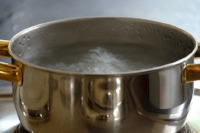
As you heat water in a pan on the stove, you will first see bubbles at the bottom of the pan. These bubbles rise slightly in the pan but then collapse. As the water gets hot not only on the bottom but throughout, these bubbles rise all the way to the surface before it collapses. This is the point at which your water is considered boiling. If you live at or near sea-level, this will be at 212°F. As I mentioned in a prior tip, that number drops by 2° for every 1000 feet above sea level. For example, at 5000 ft water will boil at approximately 202°F. Once it reaches true boiling, the temperature of the water will not increase despite what you do with the heat level of your burner. So, to decrease the chances of boiling over the pot, decrease your heat source to keep the liquid at a gentle boil. As long as it remains at a boil, the temperature of the water will be the same.

What foods do you cook in boiling water? Pasta, some grains and even vegetables. Cooking vegetables quickly in boiling water helps to retain their flavor and color. This is called blanching and is often followed by a dunk in ice water to prevent over-cooking. Boiling is great for reducing the volume of a liquid such as when you want to concentrate it. Boiling should not be used for more delicate foods which might be harmed by the agitation of the boiling water.

The term “simmering” is sometimes called a “gentle boil” although some experts will argue with that term and say it is not a boil at all. It may be defined as “just below a boil”. You may see bubbles on the sides and bottom of the pan but they should disappear if the liquid is stirred with only an occasional bubble breaking the surface. The water temperature is usually around 180°–200°. It is used to cook foods more slowly and gently. It is also what you aim for when making soup or stock. Simmering over a period of time creates a depth of flavor in those dishes that you will not get in quicker cooking.

Poaching is a technique of cooking a food item in a liquid. The liquid should be just barely simmering and the temperature should be around 160°-180° depending on what food you are poaching. If you are poaching fish or chicken, you want to aim nearer 160° as the meat will get tough and dry at higher temperatures. If you are poaching an egg, you will need water about 180°.

Depending on the dish you are cooking, a visual inspection of your water may be all you need. However, it is definitely worth investigating in a good instant-read thermometer. There are many good ones out there but I love the Thermapen from Thermoworks.

Who would have thought there was so much to learn about boiling water? The next time someone tells you they can’t even boil water, think of all you can teach them!

Cooking Tips · Techniques

Candy Making at Altitude

The temperatures outside are definitely telling us that Fall is here. And, with possible snow showers on the horizon, some of you may be beginning to think about the holidays. If you love to cook, that often means making holiday food gifts. What do you like to make for holiday gifts – cookies, candied nuts, chocolate truffles, caramels or something else? For those of us that live at a higher altitude, some of the items can prove challenging. In this tip, I will explain how altitude can affect your candy making and how to make adjustments.

Making candies such as caramels or hard candies is much more scientific than savory cooking. You must pay attention to proportions of ingredients, the techniques involved and, especially, temperature. The latter is where we get into trouble at altitude.

At sea level, water boils at 212°F. For every 1000 feet above sea level, that number drops by 2°F. For example, I live at 6000 feet. My water boils right around 200°. These 12 degrees can make the difference between a soft chewy caramel and a dangerous weapon.

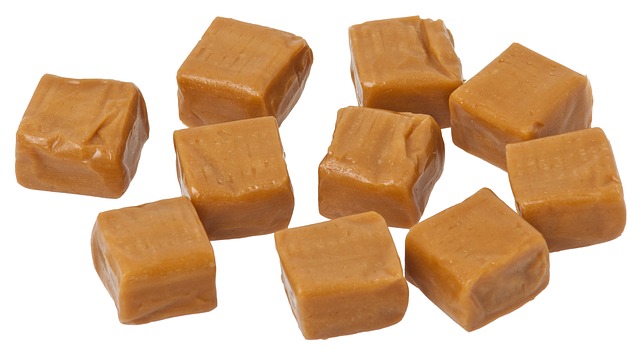
When making candy, the recipe almost always directs you to cook the mixture to a specific temperature. For example, one of my favorite recipes for Apple Cider Caramels calls for cooking the ingredients until they register 248°F on a thermometer. That may work in San Diego, California but if you do that here, you end up with little rocks – not what your Christmas gifts are meant to be.

To have success, you need to lower your desired temperature 2°F for every 1000 feet above sea level. In my kitchen, that means I cook it only to 236°F. Then, I end up with those yummy, soft and chewy delights that will make your recipients smile!

There are many other ways in which altitude wreaks havoc with your cooking & baking. We will cover some of those in future tips. In the meantime, you can always email me with your questions.

Happy Baking & Happy Candy Making!

Cooking Tips · Techniques

Your best roast turkey ever!

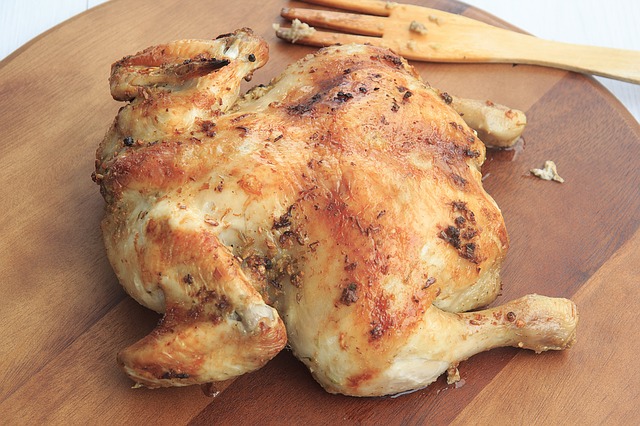
Thanksgiving is just around the corner. Do you always want a roast turkey on your table? Does the time involved in roasting a turkey frustrate you? I want to introduce you to a different way to roast your turkey (or a chicken) that will not only take less time but will also produce less dry and more tender results. That method is Spatchcocking or Butterflying your bird.

Part of the problem of roasting a turkey is that the white meat is often overcooked and dry by the time the dark meat is done. There have been many suggestions made to resolve this problem; some work better than others and some are much more work than others. One method that is relatively easy and works wonderfully is butterflying (or spatchcocking) your turkey so it lies flatter in the oven.

This involves cutting out the back bone with good poultry shears, turning the bird over, flattening the breasts and roasting on a rack set over a rimmed baking sheet. If it is difficult to visualize this, take a look at this video.

Thanksgiving is such a wonderful time of the year but getting Thanksgiving dinner on the table can also be one of the most stressful times. There are strategies for combating this stress and they involve advanced planning, having a schedule that takes you from planning the menu to your shopping trips to the actual cooking to the finished dinner. Along with this, having an easier and better way to cook your turkey will lead to smiles all around the table.

Happy Thanksgiving to you and your families!

Cooking Tips · Techniques

Sauces demystified

I recently taught a class entitled “Mastering Sauces”. Since sauces are such an important part of cooking, I thought I would share just a bit about sauces from that class. There are many different methods of making a sauce. Let’s just cover a few.

Reduction sauces may be the easiest and are the basis of what is called a “Pan Sauce”. I have written a prior Cooking Tip on this. If you didn’t receive it and wish to, please email me.

Another type of sauce is “Starch Bound”. These are sauces that are thickened with the use of a starch such as flour, cornstarch, arrowroot, etc. The basis of these sauces is usually a roux. Roux is just a mixture of flour and fat, 50/50 by weight. For example, you melt 2 ozs of butter and then whisk in 2 ozs of flour. When you mix this roux into a liquid, it will do its magic and thicken the sauce.

Examples of these kinds of sauces are Béchamel and Velouté and their many derivatives. Béchamel is a white sauce where you thicken milk with a white roux. This is the lovely sauce that is often used in lasagna or mixed with cheese to make a macaroni and cheese. Velouté is made from white stock thickened with a white roux. This is what we normally call gravy.

What type of starch you should use depends on what results you want. A grain-based starch (flour, cornstarch, rice) gives you great thickening but does look slightly opaque when it is cool. It can actually set up into a gel that can be sliced or molded. It can be re-heated without thinning out but should not be frozen as it can get watery when thawed.

A root or tuber starch (arrowroot, potato starch, tapioca starch) is great when you want the product to be clear and glossy when set. Although it thickens well, it does thin some when it cools. It will thin if reheated but does freeze and thaw well.

Here is a little chart so you know how much starch to use.

STARCH Amount for 1 cup medium sauce

GRAIN STARCHES (opaque gel)
Cornstarch 1 Tbsp + 1 tsp
Flour 2 Tbsp
Rice starch 1 Tbsp + 1/2 tsp

ROOT & TUBER STARCHES (clear gel)
Arrowroot 1 Tbsp + 1 tsp
Potato starch 2 1/4 tsp
Tapioca starch 1 Tbsp + 1 tsp
Quick tapioca pudding 1 Tbsp + 1/4 tsp

There is so much more to making great sauces but this little teaser should, at least, help you to make that great Thanksgiving gravy!

Cooking Tips · Techniques

Take your bread for a whirl in your food processor

When a recipe calls for bread crumbs, do you grab for a canister from your pantry? While that may be OK in a pinch, homemade bread crumbs are so very easy and a much better choice. This is especially true if, like me, you have a partial loaf of bread on your counter that is starting to dry out.

All you have to do is to tear your bread into chunks, toss into your food processor & whirl it into crumbs. Some like to cut off the crust but others like the color & texture from including the crusts. Package the crumbs into zip-lock bags and store in your freezer. That way, you will always have bread crumbs for when you need them.

It is nice to toast part of the crumbs to make dry bread crumbs while processing the rest as fresh crumbs. To make toasted bread crumbs, preheat oven to 250ºF. Cut your bread into large chunks. Put on a baking sheet in a single layer and bake for about 10 minutes or until the bread is completely dried out. In a very humid environment, some suggest turning off the oven after baking for 10-15 minutes and letting the baking sheet sit in the oven overnight. Be sure to label your bags as to whether the crumbs are toasted or not.

What if your recipe calls for one slice of bread, processed into crumbs and all you have available are your great, homemade frozen crumbs? It is hard to come up with an equivalency because of the variables of type of bread, size of the slice, how finely processed, etc. However, one source I trust has produced this chart.

1 slice bread, 1.5 oz Frozen Crumbs Frozen, toasted crumbs

Finely processed 2/3 cup 1/3 cup

Coarsely processed 1 cup 2/3 cup

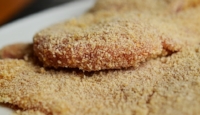
What about those Panko breadcrumbs? Panko is lighter, crispier, and airier than regular breadcrumbs. Because of this, it is especially nice for breading fried foods although that is not the only use. Since these are made from a type of Japanese white bread that is cooked in a special way, most experts say it is next to impossible to re-create in your home kitchen. You will find recipes, though, that attempt to do just this. Let me know if you try them and what you think!

Cooking Tips · Techniques

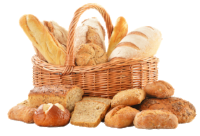
Improve your bread baking

Are you an avid bread baker? Are you always looking for ways to improve your bread baking? Are you willing to do some simple math? If so, this Cooking Tip is for you. For the rest of you, hang in there and next week’s Tip may be just what you are looking for.

If you bake much bread, you know that temperature matters. Recipes will often give you a general guideline for the temperature of the water. The recipe may list an actual number or may just say something like “lukewarm”. Expert bread makers know that there is an ideal temperature for the bread dough and how to get to that temperature.

The temperature of your ingredients (flour, water) as well as your room temperature will affect the final dough temperature. Another factor is what is known as the “friction factor”. That is how much the temperature of your dough increases during mixing and kneading. This can actually be measured but for the purposes of this tip, we will approximate it. (If you want the technique for measuring it, email me.)

For most wheat-based yeast dough, you want to aim for a final dough temperature of 75-78°. Multiply this temperature by 3. From that number, subtract your room temperature, your flour temperature & the friction factor. If you use a stand mixer to mix/knead your dough, estimate the friction factor of 22-24°. If mixing by hand, use 6-8°. When you subtract those three figures, you end up with your desired water temperature.

Let’s look at an example. Say you want a final dough temperate of 78°. For this example, we will presume your room temperature is 71°, your flour temperature is 72° and your friction factor is 22.

Here’s your formula:

78 X 3 = 234
234 – 71 – 72 – 22 = 69°.
This is what you want your water temperature to be.

A couple of caveats. First, there is a different formula if you are using a preferment, such as sourdough. If you are interested in that, email me. Also, it is best for this to use instant yeast, which will still activate in cool water. However, stir your yeast into the flour and do not add it directly to water under 70°. That is another great thing about instant yeast – there is no need to proof it. Just mix it in with your flour and you are good to go.

What difference in your final bread does this make? Well, with a consistent dough temperature, you will get consistent bread results despite varying room temperatures from day to day or season to season. Also, your bread will end up with the best rise, a great crumb structure and wonderful taste.

Try it and see what you think. Just be sure to share some of that yummy homemade bread with me!