Cooking Tips · Techniques

Great Meals in a Hurry!

Fall seems to be such a busy time of the year for many, especially for parents as the children are back in school with all that entails including a myriad of activities. It may seem very difficult to get a home-cooked, healthy meal on the table. In this Cooking Tip, I would like to give you some ideas that might help.

Although a lot of us do not like to hear this, the number one piece of advice is Meal Planning. It sounds like a chore and will take some time and thought but will help you in the long run. Meal planning is simply deciding what you are going to make for the upcoming week. Once you know what you want to make, you can ensure you have all the ingredients on hand. So, when Tuesday comes, you do not have to wonder what you are going to make; you already know and you already have everything you need in your pantry/refrigerator.

If you need help planning your meals for a week, there are plenty of websites that offer weekly meal planning suggestions. Even my local supermarket sends out such an email each week. You may want to consult more than one as you probably won’t like all the suggestions from just one site.

Here are just a few to get you started but there are plenty more out there.

  • Prep from Eating Well
  • Whole Foods Market offers what they call the Easy Weekly Meal Plan
  • Tastes Better From Scratch has premade plans and also offers an option for you to customize the plans from their repertoire of recipes.
  • King Soopers offers Weekly Meal Recipes

As part of your meal planning, have your recipes (if using) ready to go. Have a folder for printed copies. Bookmark recipes that you find online so you can find them again easily.

You can’t make great meals if you do not have a stocked pantry/freezer/refrigerator. Once again, there are plenty of Pantry Essential lists available with suggestions for what to have on hand at all times. Here is one I wrote.

Planning ahead also allows you to take freezer items out to thaw either the night before or the day of your meal.

When you have the time, cook ahead. Make larger batches and freeze in dinner-sized portions for future use. When you are really short of time, grab for one of your own make-ahead meals rather than a store-bought one.

When it comes time to actually cook, speed up the process with some simple techniques.

  • Cut for speed – rather than cooking whole chicken breasts, cut them into strips or cubes. They will cook much faster. Rather than roasting an entire pork tenderloin, cut it into small medallions and cook quickly on the top of the stove.
  • Multi-task – while your potatoes/grains are cooking, get organized to cook your meat. Don’t waste “down” time. While a dish is simmering, wash a few dishes, wipe down your counters, etc. Clean up will be easier and quicker if you do it along the way rather than waiting until the end of the meal.
  • Embrace pan sauces – making a pan sauce is quick and easy and can transform your meat into something special and something different each time you make it. See this prior Cooking Tip on how to make a pan sauce.
  • Utilize eggs – eggs are not just for breakfast. Eggs are nutritious and cook so very quickly. Whether they are used in omelets, frittatas or just fried, they can make a very easy and delicious dinner. Make them your own by adding cheese, veggies, bacon/sausage, etc.
  • Consider dinner salads – boil some eggs before you leave for the day and put them in the refrigerator. For dinner, put them on top of a large plate of greens, veggies, cheese or whatever toppings you want.
  • Make grains ahead of time – although many starch/grains don’t take that long to cook, some of the whole grain ones might take a bit longer than you wish. If you are making something that takes under a half-hour, just put it on to cook as soon as you get home. For the longer cooking ones, make large batches when you have the time. They will keep in the refrigerator for a few days and for longer storage, you can freeze them.
  • Consider Bowl Meals – See this Cooking Tip for how to quickly put together Bowl Meals, a tasty, healthy and colorful meal choice. Some do call for a bit of veggie chopping. If you do that ahead of time and store in the refrigerator, putting the bowls together is a cinch, especially if you have those grains stored in your refrigerator.
  • Make it Pizza Night – if you make a simple pizza dough and freeze the dough balls, you can have a fun dinner on the table quickly. Take the dough balls out of the freezer in the morning. Top as desired, bake and see the smiles at the dinner table. I always have a bag of pizza balls in my freezer for those busy nights when I need a simple dinner.

What about you? What are your favorite strategies for speeding up meal prep? Do you have a favorite meal planning site?

Let me know!

Cooking Tips · Ingredients · Techniques

Foraging for Food

During our time in living in Albuquerque my husband and I visited Silver City, New Mexico. While there, we dined at a restaurant called The Curious Kumquat. It was known as a “foraging forward” restaurant. It was an excellent place to dine that featured many dishes composed of ingredients that were obtained by foraging. The chef, Rob Connoley, has also written a cookbook, Acorns and Cattails, in which the recipes feature “ingredients that any home cook can forage, grow, or hunt.” Have you ever foraged for your food? That is the subject of this Cooking Tip.

Have you ever taken a hike and eaten some of the wild-grown berries? My husband has been known to screech to a stop when he sees blooming elderflower along a country road. He picks it and then makes delicious elderflower cordial. That is foraging. Of course, it is much more than that and one needs to be very careful about what one eats in the wild. There are edible and poisonous plants that look very similar. And, we all have been taught about being careful of mushrooms growing in the wild.

Here are some rules that I have gathered from foraging experts. These presume that you are foraging only where it is legal to do so.

  • Seek the help of an experienced forager. Look for foraging clubs or seminars that might be in your area.
  • Familiarize yourself with what grows in your area – herbs, trees, weed, etc. Learn to positively identify them.
  • Learn to identify poisonous plants.
  • Use good foraging guides and cross reference between them. As I mentioned, there are look-alike plants that you do not want to confuse.
  • Do not eat anything that you cannot positively identify as safe.
  • One expert’s mantra is “Assume Nothing, Test Everything”. He warns that you should not eat any wild plant unless you are 150% (yes, that is correct) certain of its identification. Even then, he recommends testing it to ensure you do not have an allergy or sensitivity to it.
  • Begin with easily identified foods such as dandelions, nettles, strawberries and blackberries.
  • Only pick as much as you need and never take all the plants of any one kind in an area.
  • Do not pick in areas that are subject to pollution such as roadsides or near commercial farms.
  • Harvest at peak time for the particular plant. This is when the flavor and aroma will be best. Good guides will be your helper in this regard.
  • Harvest early in the morning. (This is also good advice for cutting the herbs growing in your own garden.) This is when the essential oils are highest.
  • Make sure you properly cook what you forage and use only those parts of the plants that are edible. For example, whereas ripe, cooked elderberries are edible, the bark, stems are roots are considered poisonous.
  • Consider cultivating wild edible plants in your own garden

This map will tell you what might be available where you live. Just as with all produce, there are seasons for wild edible plants. Here is one website that lists what is available at certain months although not all of these items will be available everywhere.

Do you forage? Let me know.

Cooking Tips · Techniques

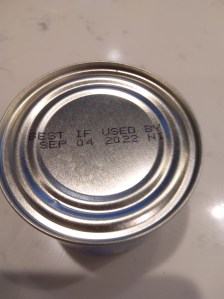
What do those food dates mean?

If you were to look through my pantry or refrigerator, you would certainly find some items that were beyond their “Best By” dates. Would I find the same if I snooped through your pantry? What do these dates mean and are they really that important? That is the subject of this Cooking Tip.

You may not realize this but according to the Food Safety and Inspection Service of the United States Department of Agriculture (USDA), they do not require any food dating apart from infant formula.

So, why do we have these dates? Manufacturers provide dates to help consumers and retailers determine the quality of the food, not the safety.

They go further and state that “Most shelf-stable foods are safe indefinitely. In fact, canned goods will last for years, as long as the can itself is in good condition (no rust, dents, or swelling). Packaged foods (cereal, pasta, cookies) will be safe past the ‘best by’ date, although they may eventually become stale or develop an off flavor. You’ll know when you open the package if the food has lost quality. Many dates on foods refer to quality, not safety”.

They continue by explaining that “foods that have been in the freezer for months may be dry, or may not taste as good, but they will be safe to eat. So, if you find a package of ground beef that has been in the freezer more than a few months, don’t throw it out. Use it to make chili or tacos. The seasonings and additional ingredients can make up for loss of flavor.”

There are different terms you will see on food items that need some clarification.

Sell By – This date is more for retailers than consumers, telling them how long to leave something on the shelf. After this date, many stores put these items in the Bargain section. You should regularly look through this section in your store as you can get some perfectly safe food items for great prices.

Best If Used By/Before – This date tells you that the food may be of higher quality or have better flavor if you use it before that date.

Use By – Manufacturers use this date to tell the consumer when to expect the product to be at its best quality and you might expect some deterioration in quality after this date.

Freeze By – A date that tells you when to freeze a food item to retain its quality.

Now, these recommendations presume that you are handling and storing the food items properly. If you do notice any signs of spoilage such as off-odors, flavors or texture, it should be thrown away.

Another interesting tidbit from the USDA is that what causes food spoilage are molds, yeasts and bacteria. Viruses do not cause foods to spoil as they cannot grow in food. As for bacteria, there are what are called pathogenic bacteria, which are the type that cause illness. There are also spoilage bacteria. The latter causes food to spoil but do not cause illness.

There are all sorts of charts in books and online with recommended storage times for different food items. An easier way is to the FoodKeeper website and app from the USDA. Just input the item and it tell you how long you should keep it. For instance, if you input Apple Cider Vinegar, it tells you

For freshness and quality, this item should be consumed within:
Indefinitely
if in the pantry from the date of purchase

The USDA also tells us that it is fine to donate items past their printed dates. As they say, “The quality of perishable products may deteriorate after the date passes but the products should still be wholesome if not exhibiting signs of spoilage. Food banks, other charitable organizations, and consumers should evaluate the quality of the product prior to its distribution and consumption to determine whether there are noticeable changes in wholesomeness.” For more info on this topic, see this link on their website.

I hope this information makes you feel better about not throwing away every food item that hits its “best by” date. There is way too much food waste going on in our country and this Tip may help you decrease that just a bit.

Cooking Tips · Techniques

Jam – Freezer or Preserved?

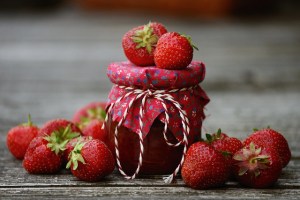
My husband has been harvesting beautiful and delicious fresh strawberries from his garden lately. Although they are great to just eat out of hand or make into some yummy dessert such as strawberry shortcake, we have more than enough to also make strawberry jam. I thought I would use this Cooking Tip to talk about the differences as well as the pros/cons between preserved and freezer jam.

Preserved jam is the type you see on store shelves. You cook your fruit mixture making it to your taste and preferred thickness level. It is then spooned into sterilized canning jars, sealed with lids and placed in a pot of boiling water for a specified amount of time. At the end of that time, the sealed jars are carefully removed from the water and set on a rack to cool. As they do, they seal, signified by a little popping sound.

Freezer jam on the other hand is either not cooked at all or only briefly. Generally, the fruit is mashed, sugar is added and left to macerate for a while before adding pectin. The jam mixture is once again placed into sterilized jars and sealed. However, rather than preserving it by placing it in the boiling water, it is cooled and stored in the freezer.

Preserved jam

Pros

  • It is shelf stable and does not need any refrigeration until it is opened.
  • It is thicker and more jam-like as it sets up better than freezer jam.
  • It has a smoother consistency than freezer jam.

Cons

  • It is more labor-intensive to make.
  • Because of the cooking process, the resulting jam is darker in color and has somewhat of a “cooked fruit” taste.
  • It requires more sugar than freezer jam.
  • You need to very careful to ensure the jars/lids seal properly.

Freezer jam

Pros

  • It is easier to make than preserved jam.
  • It requires little or no cooking, depending on the recipe.
  • Because it is not (or only slightly) cooked, it retains the bright color of the fruit.
  • Because the sugar used is more for sweetness rather than preserving, you generally use less sugar.
  • The jam may be put in any container that is meant for the freezer.
  • Perhaps the biggest pro is that it has more of a natural fruit taste. Because it is not cooked, it just tastes “fruitier”.

Cons

  • It can take up significant freezer space.
  • It results in a thinner jam.
  • If you are using a no cook recipe, the sugar and pectin might not fully dissolve causing a slightly gritty consistency.
  • It is not as good for gift giving as it must remain frozen, or at least refrigerated.

No matter which type of jam you wish to make, this is not a product where you can just “wing it”. For proper consistency, taste and safety, you really need to follow a tested recipe. The recipes contain four critical ingredients – fruit, pectin, acid and sugar.

Fruit is obviously needed for color and flavor.

Pectin is necessary for gel formation. Some fruits may be naturally higher in pectin and thus, not require additional pectin. Other fruits, or if you are making freezer jam, will need to have pectin added to the mixture. There is a type of pectin called “low or no sugar” pectin. It is used when jam makers want to put less sugar into the jam. Rather than using sugar to gel, it uses calcium. It will give you a thinner, less sweet but fruitier result.

Acid assists with gel formation as well as flavor. The right amount is necessary to set the pectin. Again, follow the recommendation from the recipe.

Sugar is vital for gel formation and flavor. It also acts as a preservative as it inhibits the growth of bacteria.

I remember the first time I tasted freezer jam and could not believe how much brighter and more fruit-like it tasted. Although, as noted above, there are advantages and disadvantages to both types of jam. Which do you like?

Cooking Tips · Techniques

Knives — which ones do you really need?

If you peruse many culinary websites, you are bound to see an article about what items you really need in your kitchen. Such a list is going to vary depending on how you like to cook/bake, the size of your kitchen and who compiled the list. However, one item that will be on everyone’s list is a few essential knives. What knives are usually included on this “must have” list is the subject of this Cooking Tip.

Almost all experts will agree that there are only a very few knives that all cooks should have. The first, and most important, is the Chef’s knife followed by a paring knife. Many will tell you that those are really the only two essential knives. The third most recommended knife is a serrated one. There are a few others, though, that are very useful to have if you have the space and want to spend the money.

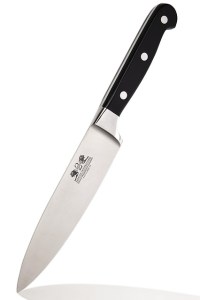
Chef’s knife (aka Cook’s knife)

These are multi-purpose kitchen knives that are usually 8-10 inches long although you can find shorter ones. They are easily recognizable by the prominent point and a cutting edge that is a sloping curve. This curve is what allows the user to perform a rocking motion cutting technique, which means you “rock” the knife from tip to heel as you cut. Most people will probably find an 8-inch the most preferable size. Mine is a 9-inch and I love that size.

You can do almost any cutting task with a chef’s knife from cutting through a chicken, slicing/dicing veggies, cutting/slicing meat to chopping herbs. If you are going to splurge anywhere in your kitchen, splurge on an excellent chef’s knife. Splurging does not mean spending hundreds of dollars as very good chef’s knives can be found for much less.

Paring knife

A paring knife looks almost like a very small chef’s knife. Blade length can range from two to four inches long and it allows you to cut with more precision. This kind of knife is great for smaller tasks such as coring tomatoes, hulling strawberries, segmenting citrus, and for cutting smaller items such as shallots. If you just want to cut a lemon in half, reaching for a paring knife rather than a large chef’s knife is perfect. They can also be used for non-cutting tasks such as testing to see if a roasted beet is tender or if a cake is done. Although you want a sharp paring knife, you can certainly opt for spending less money here.

Serrated knife

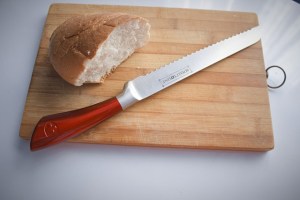
A serrated knife has a serrated cutting edge that looks like a saw. The blade can be 5 to 10 inches long. The ones with longer blades are often called bread knives as they are the best way to slice through bread. They are not limited to slicing bread, though. They are also useful for slicing tomatoes, pineapples, watermelon, chopping chocolate or making cake layers. Because of their design, they are meant to slice food items, not chop them.

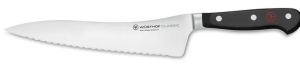
I have both a typical bread knife and a serrated deli knife. Because its blade is offset from the handle, it gives more room between your hand and whatever you are slicing,

Boning or fillet knife

When you need a knife that will bend to go around things such as meat joints, you want a boning knife. The blade is thinner and somewhat flexible so it can maneuver around bones and joints. Fillet knives always have a flexible blade, whereas boning knives can be either stiff or flexible. These knives are not designed to cut through bones, but rather around the bones and so are helpful in breaking down a whole chicken or removing bones from pieces of meat. They are also useful for skinning seafood as well as removing silverskin from meat.

There are many other kinds of knives including utility, carving, cleavers, oyster, cheese and santoku knives. Another piece of cutting equipment that is very helpful is a good pair of kitchen shears.

This Tip should help you equip your kitchen with the knives you will need. Other considerations are how to keep them sharp and how to store them. And, of course, knowing how to best use the knives is an important skill for safety and efficiency during your food prep. Consider booking a class on Knife Skills with me. I would love to show you just how to use those wonderful knives.

Cooking Tips · Ingredients · Techniques

Tea – for more than just drinking!

For those of you who know me personally, you know that besides great food, I love a good cup of tea. I do not just love to drink tea, though. I love to teach about tea and do that frequently in our local tea shop/café, English Tealeaves. These two topics of food and tea come together in this Cooking Tip as I discuss Cooking with Tea.

Let me start with a little Tea 101. “Real” tea is made from the leaves of the Camellia Sinensis plant. All tea (white, green, oolong, black, pu-erh) comes from this plant. The differences in tea result from the particular variety of that plant along with how the leaves are processed. This “real” tea is contrasted with what we call Herbal Tea. Herbal “teas” do not contain any tea leaves from the Camellia Sinensis plant. Rather they are made from totally separate plants such as chamomile, peppermint and rooibos. The reason they are called “teas” is that they are brewed in the same manner as real tea. The better terms for these beverages are Herbal Tisanes or Fruit Infusions. Both real tea and tisanes/infusions are wonderful beverages that can be used in many culinary applications.

There are a number of different ways you can use tea in your kitchen. At times, you might use a combination of these methods.

Use the actual tea leaves.

Although we do not normally eat our tea leaves, they are edible. The leaves add both flavor and texture to your dish. Most of the time, you will chop or grind the tea before adding to the other ingredients. In general, 1 Tbsp of loose-leaf tea yields 2 tsp of ground tea, or even less if ground to a fine powder. Some recipes call for first steeping the tea and then chopping the wet leaves.

Examples of applications

  • Peppermint brownies – grind the sugar from the recipe with dried peppermint tea leaves before continuing with the recipe.
  • Chai snickerdoodles – grind masala chai tea and add to your snickerdoodle recipe.
  • Toast appetizers – top bread with a spread made with mayonnaise, cheese and finely ground tea leaves.
  • Homemade pasta – give your homemade pasta a green color and a subtle flavor by mixing matcha into the dough.

Use the infused liquid

Steep the tea in water or another liquid and use that liquid in your recipe. You probably will want to make your tea a bit more concentrated than you would for drinking purposes. If steeping in water, use more tea leaves rather than increasing the steeping time. The latter can easily lead to bitterness due to the release of tannins from the tea leaves.

If you steep in liquids with a higher fat content (whole milk, cream, butter, oil), you can steep the tea for a longer time as the dairy buffers the tannin development. You can steep up to 90 minutes, depending on the taste you wish to achieve.

The concern of tannin development only applies to steeping real tea. Herbal/fruit teas do not get bitter with prolonged steeping. In fact, they require a longer steeping time even for drinking as the flavor infuses a bit more slowly into the water.

A couple of tips are that the lower the moisture content and the higher the viscosity of the liquid, the longer the tea will need to infuse.

Another idea for using tea-infused liquid is to actually cook ingredients in that liquid.

Examples of applications

  • Chicken salad – poach chicken in water to which green tea leaves have been added. The wet leaves are then chopped and stirred into the chicken salad along with the rest of the ingredients.
  • Roasted fruit – toss fresh peaches in brewed green tea and then, roast in the oven. Top the roasted peaches with a vinaigrette also made with tea.
  • Pizza dough – have your friends asking “what is that special flavor” when you use steeped tea to make your pizza dough.
  • Shrimp – marinate shrimp in brewed tea and then make a vinaigrette with more brewed tea.
  • Tea rice – cook rice in brewed tea for a special side dish.
  • Simple syrups – add tea leaves of your choice of flavor to your simple syrup, which can then be used to pour over fresh fruit or added to a cocktail.
  • Tarte Tatin – infuse vanilla black tea into the butter and finish as any Tarte Tatin.
  • Chocolate truffles – infuse your cream/water with your favorite tea to make a tea-flavored ganache. Make into truffles or use in another application.
  • Hot chocolate – infuse tea into the milk and then finish as you would for homemade hot chocolate.
  • Pastry cream – infuse tea leaves into dairy to make a delicious pastry cream, which can then be used to make a fruit tart or a number of other desserts.
  • White chocolate mousse – infuse jasmine tea into cream. Use the hot cream to melt white chocolate and finish into a wonderful light mousse with a delicate jasmine flavor.

Vinegars

You can easily make tea-infused vinegars by bringing the vinegar to a boil, taking it off the heat and then adding the tea leaves to infuse. After cooling to room temperature, strain and use as desired. These infused vinegars are wonderful for making a unique vinaigrette.

Cold steeping

For some liquids that should not be heated such as fruit juices or alcohol, you may steep at room temperature or even in a chilled environment.

Spice Rubs

Add finely ground tea leaves to your favorite spice mixture and add use it as a rub on meat or add to a braising liquid, soup or chutney.

Smoking

Add tea leaves to a stove-top smoker and then smoke the food of your choice. The tea leaves can be the main medium for producing the smoke or used in combination with wood and cooked rice (to buffer the heat). Other flavors components of your choice such as spices may also be added.

There are so many types of teas and tisanes with a myriad of natural and added flavors. Stop thinking of tea just as a beverage but also as an ingredient. You will be amazed at what you can do with it. Do you cook with tea? Have you made something special with tea? Let me know.

Cooking Tips · Techniques

Moist heat cooking — what is it?

In my last Cooking Tip, I mentioned that when we cook, we use either Dry Heat, Moist Heat or a combination of the two. Having discussed the Dry Heat cooking methods, I want to address Moist Heat methods in this Cooking Tip.

Moist Heat methods include poaching, simmering, boiling and steaming.

Poaching

When you are poaching, you are using the lowest cooking temperature of any cooking method, only between 160°F and 180°F. (For a discussion on water temperatures, see this Cooking Tip.) The liquid in which you poach is not bubbling and has very little motion. You should carefully monitor the liquid so it doesn’t start to simmer or boil.

This method is mostly used for tender items such as eggs, fish or poultry. Because the poaching liquid not only cooks the food but adds flavor, choose the liquid with that in mind.

The method is as follows.

  • Bring a flavorful liquid to a full boil in a pan large enough to accommodate your food.
  • Place your food item in the liquid either directly or on a rack. It can be either fully or partially submerged.
  • Adjust heat so it is just below a simmer.
  • You may turn the item if necessary.
  • Remove when the item is fully cooked.

Simmering

The temperature of the cooking liquid is somewhat higher – 185°F to 205°F. The liquid should only have slight movement with only a few bubbles around the edges.

This method is mostly used for pasta, beans, potatoes and rice. Meat is not normally simmered as it can toughen it. Rather, use the poaching method.

To simmer:

  • Bring liquid to a full boil.
  • Add food as in poaching. With a simmer, the food should be fully submerged.
  • Adjust heat to maintain a simmer.
  • If necessary, turn food.
  • Remove when fully done.

Boiling

We all know what a boil looks like with the rapidly bubbling liquid. This type of motion is not recommended for cooking. Even if you start foods in boiling water, the heat should be reduced so that the food is cooked with the liquid no higher than a simmer.

Steaming

In the above moist methods, the food is in direct contact with the hot liquid. With steaming, the heat is applied in an indirect method as the food is held above the liquid.

The liquid may be water or a more flavorful liquid such as stock, court bouillon or wine. Aromatics may also be added to the liquid, especially if you wish to serve the liquid along with the steamed item.

Since this method will not tenderize food, use this method only for foods that are already tender.

Method:

  • Place a small amount of water (or other liquid) in a pan that will accommodate a steaming rack/basket.
  • Heat water to full boil and you can see the steam escaping.
  • Put food in the steamer basket.
  • Reduce heat to a simmer.
  • Place lid on pot to keep the steam inside.
  • Remove when food is cooked.

Cooking “En Papillote” is a version of steaming where the food item is cooked in a parchment paper package where it steams in its own juices.

There are a couple of cooking methods that are a combination of both dry heat and moist heat. These are braising and stewing.

Braising

A braise normally starts with browning a piece of meat with direct dry heat. It is then cooked in a moist heat environment by placing it in a flavorful liquid and finishing in the oven. This method is best for tough cuts of meat.

Stewing

This is very similar to a braise although the meat is normally cut into smaller pieces. Those pieces are often browned in a dry heat method before being submerged in the cooking liquid.

There you have it – both dry heat and moist heat cooking methods. For me, sautéing and simmering are the two I use the most. What about you?

Cooking Tips · Techniques

Sauteing & other dry heat cooking methods

When you cook food, you are either using a dry heat method, a moist heat method or sometimes both. If you understand these methods, it will help you get better results with less frustration. In this Cooking Tip, I want to discuss Dry Heat Cooking Methods.

Let me first define two terms – conduction and convection. The first refers to cooking food by direct heat transfer. Examples are broiling, grilling and sautéing. Convection cooking involves indirect heat transfer such as you find with roasting, baking, frying and smoking.

Sauté

One of the most commonly used dry heat cooking methods is sautéing. In this method, you cook food quickly in a small amount of oil (or other fat) in a skillet or sauté pan over a relatively high heat. Since the word “sauté” comes from the French verb “sauter” meaning “to jump”, this is a type of cooking where you are stirring or tossing the food in the pan and cooking it quickly.

It is an ideal method for foods that only need brief cooking, such as tender vegetables, steaks, and chicken breast. It is also how we brown aromatics (onion, garlic) that are then going to be used to make a soup or stew.

Here are the steps to a proper sauté.

  • Preheat a dry pan until hot. Use a pan with short sides and one that is wider than it is tall and preferably with sloped sides rather than straight.
  • Add just enough oil to coat the bottom and swirl for even distribution. Since you are cooking over a relatively high heat, you want to use a fat with a high smoke point.
  • Continue to heat until the oil is shimmering or looks rippled but not smoking.
  • Put food into pan and cook until done.
    • Make sure food is dry before putting into pan.
    • Cut food into similar sized pieces.
    • If the food is cut into pieces, toss them intermittently so they cook evenly. You want enough contact time to brown the food.
    • If it is one large piece, you won’t stir/toss the food. Rather, turn when it is browned on the first side. Finish cooking on second side. Turn only once, if possible. (Some would call this pan frying – see discussion below.)
  • Do not overcrowd the pan; keep items in a single layer. If the pan is too full, the food will steam rather than sauté.
  • Sautéing is often followed by making a pan sauce in the same pan.

Stir Fry

Although similar to sautéing, it differs in that the food is constantly being moved and tossed in an intensely heated pan. With sautéing, the pan is only over moderate high heat and the food is not constantly in motion. Finally, with sautéing, the cooked food is removed from the pan while you make a pan sauce. With stir-frying, the sauce is usually made in the pan with the food and everything is thoroughly coated in the sauce.

Pan-frying/Shallow frying/Deep fat frying

There is a difference of opinion on how to use the words pan-frying and shallow-frying. Some consider pan-frying to be when you cook a single piece of meat such as a filet in a small amount of oil. (If you are cooking cut up pieces of meat in a small amount of oil, it is a sauté.) These people would define shallow-frying as a cooking method where you use enough oil to reach halfway up the side of the food in the pan.

Others would consider a sauté to be cooking the food in minimal oil no matter whether it is one piece or cut up pieces. They would define pan-frying and shallow frying as the same thing and is when the food is cooked in oil that comes up the side of the food halfway.

No matter which camp you are in with regards to those terms, deep-frying is cooking the food in enough oil to submerge it completely. With both sauteing and pan-frying and/or shallow frying, the food is in contact with the surface of the pan, aiding browning. In deep fat frying, the food does not touch the pan as it is surrounded by oil.

Steps to pan fry/shallow fry (for purposes of the Cooking Tip, we will consider these the same)

  • Dry & season food. Pan-fried food is usually coated before frying (flour, breadcrumbs, cracker meal, cornmeal). Coatings create a crispy crust and insulate the food to prevent over-cooking. Coat in 3 steps: dust in flour, dip into egg wash and dredge in main coating.
  • Heat pan, add oil so it comes half-way up the side of the food and heat oil.
  • For frying, the ideal oil temperature is 350°F. The oil will have a slight shimmer to it at this temperature. You could also dip a corner of the breaded food into the oil. At the correct temperature, the oil will bubble around the food and the coating will start to brown in about 45 seconds.
  • Carefully add the food to the hot oil, laying it in the pan away from you to prevent hot oil splattering on you. Do not crowd food.
  • When the first side is a golden color, turn the food and continue to cook the second side until golden. If the food item is thin, it will cook through on the stovetop. If it is thicker, you may want to place the food item on a baking sheet and finish cooking in the oven.

Deep-frying method

  • Ensure food is cut into uniform size. Dry and season. Coat as desired.
  • Add sufficient oil to a large pot or wok or a countertop deep fat fryer so the food will be submerged in the oil.
  • Heat oil to about 350°F. It is best to use a thermometer as the oil temperature needs to stay fairly steady throughout the frying process.
  • Carefully place food in oil away from you using tongs or put them in the fryer basket if you have a deep fat fryer. Do not drop the food into the oil. Get close to the surface of the oil as you place the food in it.
  • At first, the items will sink to the bottom but will rise to the surface as it cooks. Use tongs or chopsticks to move the food around as it cooks.
  • When food is cooked, remove from hot oil either using a spider or by lifting out the fryer basket.
  • Season food immediately after removing from the oil.

Broiling

Food is heated by conduction from above the food. It is very intense heat and a very quick method of cooking.

Grilling

One source defines grilling as “broiling turned upside down”. It also uses conductive heat but the heat comes from below the food item. It is also a very intense source of heat. Grilling imparts a smoky, slightly charred flavor to the foods

Roasting/Baking

This is a convective type of cooking that results from dry heated air in an enclosed environment (oven). The term “roasting” generally applies to meat/poultry whereas “baking” is used more for fish, fruits, breads, and pastries.

Smoking

A cooking process that uses dry indirect convective heat from smoldering wood chips. It uses a low temperature over a long period of time.

Although it is good to have a working knowledge of all the dry cooking methods, sautéing is probably the method you will use the most. If you learn that skill, you are able to get a great dinner on the table in very little time.

Cooking Tips · Techniques

Veggie Color & pH

Besides the wonderful nutrition they give us, vegetables also add great color and texture to our meals. If you are planning on cooking these veggies, you need to be aware that how you cook them will determine how they will look and taste on the plate. That is the subject of this Cooking Tip.

Green veggies

What gives veggies a green color is chlorophyll. This chemical, though, is destroyed by acids, such as lemon juice and vinegar. To maintain the color, cook them quickly in minimal water. Leave off the lid so any acidic elements can escape.

Chlorophyll also has a tendency to turn dull and brown during extended cooking and storage.

Have you ever noticed that canned green beans tend to be a dull olive-brown color, whereas frozen green beans are intensely green? When green beans are canned, the acids that are naturally in the beans are released into the cooking water. Due to the canning process the acids stay in the can, which means they are cooked and stored under slightly acidic conditions. Thus, the darker color.

Frozen green beans, on the other hand, are blanched in water with a neutral pH, which is less detrimental to the color. They are then frozen to preserve their color and freshness.

Cooking in an alkaline environment causes different chemical changes that result in a greener color. As opposed to regular chlorophyll, the compound that results from these changes is water soluble. Therefore, you may see the cooking water turn very green as well. The downside of cooking in an alkaline environment is that the veggies can turn mushy.

White veggies

Potatoes, onions, cauliflower, and the white parts of celery, cucumbers, and zucchini get their white color from flavones. They may turn a brownish-yellow when cooked with alkaline ingredients. An acidic ingredient, such as cream of tartar, lemon juice or vinegar, may be added to help neutralize the alkaline environment in which these vegetables are cooked and prevent discoloration. Overcooking can give these veggies a very unappetizing gray color.

Yellow and orange veggies

Carotenoids are the yellow and orange pigments found in carrots, corn, sweet potatoes, tomatoes, and winter squash. These pigments are very stable to acids and generally retain their color unless they are overcooked. In that case, the color may fade.

Red/purple produce

Anthocyanins impart the red & purple color found in red cabbage, beets, cherries, red and purple grapes. Under neutral conditions, anthocyanins are usually purple. Under acidic conditions, they can become a brighter red. When they’re exposed to alkaline conditions, they will appear more blue or green.

This reaction is reversible in that if your food has changed color due to the addition of too much of an acidic or alkaline ingredient, you may add more acid/alkali to balance the pH, which will reverse the color change. To see a visual of these changes, see this article by Decoding Delicious.

Another point about anthocyanins is that they tend to lose color rapidly during cooking. So, just like green vegetables with chlorophyll, fruits and vegetables with anthocyanins should be quickly cooked with little exposure to water or other fluids.

What does this all mean in practical terms as you are in your kitchen? First, if any these color changes occur, look at the ingredients to see if you can pinpoint the culprit. If you are unsure whether a food is acidic or alkaline, see this chart, which is free of health claims and cautions.

It can also help you improve the color of your veggies. For example, just a small amount of acid will give red beets and red cabbage a bright red color. Have you ever noticed how often cabbage is cooked with tart apples? The acid from the apples will brighten the color.

You do need to be careful about adding acid as it can toughen vegetables and prolong the cooking time. Therefore, if your recipe calls for an acid (lemon juice, tomatoes, vinegar), add just a bit at the beginning of cooking and put in the rest toward the end, after the vegetables have become tender.

If you have ever had your red cabbage lose its red color and turn green, there may be a chemical reaction going on producing both a blue and yellow pigment. When combined, blue and yellow make green. You can prevent this by adding a small amount of acid such as lemon juice or vinegar. If you are making a dish with baked cherries or walnuts, adding just a bit of buttermilk or yogurt may help prevent the discoloration.

There is much more to properly cooking veggies but we will have to leave that to another Tip!

Cooking Tips · Techniques

Marinating your food – surprising revelations!

Do you use marinades in your cooking? If so, stay tuned for this Cooking Tip for some advice. When discussing this topic, the first question you may encounter is whether it is “marinade” or “marinate”? It may help to remember that marinade is a noun whereas marinate is a verb. So, the liquid mixture you make to put your food into is the marinade. You make the marinade, add your food to it and allow it to marinate for the specified time. Got that?

Now that we have our grammar lesson out of the way, let’s get to what this all means in the kitchen. A marinade is usually a flavorful liquid in which foods are soaked in order absorb flavor and maybe tenderize them. Most (but not all) marinades will contain oil, an acid and aromatics (herbs, spices, veggies).

Oil

The oil helps to emulsify the marinade, making it thicker and easier to stick to the food item. Also, many of the aromatics are fat-soluble meaning that you will get a more even flavor distribution when you use oil. The oil also helps to cook the meat more evenly.

Acid

The acid can be citrus juice, vinegar, wine, fruit juice, buttermilk, yogurt, etc. This acidic component is what some say helps to tenderize tough cuts of meat. However, if you are not careful, it can do the exact opposite. The acid causes the proteins in the meat to denature into a loose mesh. At first, water is trapped within this mesh but if the marinating time goes on too long, the proteins tighten and squeeze the water out. This results in a tough piece of meat or seafood.

To avoid this, be sure that the more delicate the piece of protein you are using, the less acid you should be using. There are different recommendations for the acid to oil ratio. One source advises to use equal parts acid and oil, unless you have a specific reason for using more acid. Another chef recommends 3 parts oil to 1 part acid. If you are making your own marinade, I would start with the lower ratio.

This is especially true for marinating seafood as the acid in the marinade will start to cook the seafood – think ceviche. If left in too long, the tender seafood can become tough as if it were overcooked. Fine Cooking recommends only 1 part mild acid to 4 parts oil for marinating shrimp.

Another risk to an acidic marinade is a mushy texture, especially if left in the marinade too long. Nik Sharma in a post on Serious Eats agrees with this but notes that yogurt-based marinades are different due to the type of acid in yogurt. Longer marinating times are much better tolerated if the meats are placed in a yogurt-marinade rather than a more standard marinade. For a very in-depth discussion of the science behind this, see his article. Another good dairy choice is buttermilk. With one of these options, you can achieve a real tenderizing effect.

Because of these concerns with acid, Cooks Illustrated recommends against using acid. Acidic marinades do, though, add great flavor, though, and so are worth trying.

Aromatics

Most good marinades will also contain salt. As J. Kenji Lopez-Alt in The Food Lab states, the protein myosin that is found in the muscle of the meat will dissolve in a salty liquid. This results in a looser texture that allows it to retain more moisture. Cooks Illustrated recommends 1½ tsp per 3 Tbsp of liquid, making the mixture not only a marinade but also a brine.

The Food Lab also recommends adding a protease (an enzyme that breaks down proteins) such as soy sauce. Other ingredients similar to soy are fish sauce and Worcestershire sauce.

Additional aromatics include items such as garlic, shallots, dried spices, herbs or chilies. Finally, sweeteners such as sugar or honey add complexity and help brown food, another flavor booster.

Other types of marinades

  • Dry marinades or rubs – these are mixtures of herbs and spices, often moistened with some oil before rubbing onto the meat.
  • Fruit-based marinade – these are considered enzymatic rather than acidic. The enzymes (proteases) within the fruit are often touted to help tenderize meat. However, these types of marinades easily make the surface of the food mushy.

You may be surprised to know that your marinades do not penetrate very far into the meat According to J. Kenji Lopez-Alt, even after setting overnight in the refrigerator, the marinade does not penetrate more than a millimeter or two. He also states that the penetration rate actually slows the longer you allow it marinate. This all means that the marinade’s effect is mostly on the surface of the food item. For us home cooks, that means we can get by with shorter marinating times.

Veggies are one type of food for which marinating is a great choice. Since they are not composed of protein, many of the above cautions do not apply. Veggies are made of fiber, which helps them soak up the marinade, resulting in great flavor. Tofu acts similar to veggies.

How to marinade

You want to maximize contact between the food item and the marinade. An easy method is to put it all in a zip-lock plastic bag and squeeze the air out. You may also do it in any non-reactive bowl or container. Make sure the food is thoroughly coated in the marinade and turn it at least once to make sure all sides spend time in the marinade. Aim for about ½ cup liquid marinade for every 1# meat.

Be sure to refrigerate your food while it is marinating for food safety reasons.

Some marinades are cooked beforehand and others are not. Never use the liquid in which you have marinated meat as an uncooked sauce as it could be contaminated by the meat. If you want a sauce using the same marinade, there are two things that you can do. First, just hold some of the marinade aside for the sauce and put your meat into the remaining marinade. Or, you may cook the marinade for at least 5 minutes after removing the meat to kill any potential pathogens.

The biggest disagreement you will find is over how long to marinate. Due to the fact that the marinade doesn’t penetrate into your meat very far along with the possible detrimental effects from a long marinating time, many experts are now recommending a shorter time in the marinade. My Recipes test kitchen chef Mark Driskill feels that anything over 3-4 hours is unnecessary and maybe detrimental to your finished dish. Cooks Illustrated agrees saying it is “pointless to marinate for hours and hours”.

They, and others, recommend limiting the use of marinades to thin cuts of meat or meat that has been cut up for your dish. They say that larger cuts of meat would probably do better with a spice rub.

All that being said, we can make some general recommendations. No matter the recommendation, if your food starts to turn cloudy, you are starting to cook it. Take it out of the marinade immediately.

  • Shellfish (such as shrimp or scallops) – no longer than15 minutes
  • Other seafood – up to 30 minutes
  • Boneless chicken breast – about 2 hours
  • Pork loin – up to 4 hours
  • Lamb – 4-8 hours
  • Beef – Some will say up to 24 hours but you probably want to limit it no more than 8 hours.
  • Pork – about 6 hours
  • Kabob cuts (1½ – 2-inch cubes) – 2 hours
  • Firm tofu – 30 minutes
  • Hard veggies – 30 minutes to an hour
  • Tender veggies – 15-30 minutes

All of the above should make your decision to marinate easier when you look at some of these recommendations and when you realize that you do not need nearly as much time as you might have thought.