Cooking Tips · Ingredients · Techniques

Sugar Syrup Stages

Image by Bruno from Pixabay

Although we all should endeavor to cut down on our sugar intake, understanding sugar and how to cook it is essential for those cooks who wish to make candies and other desserts. This Cooking Tip will take you into this world and help you feel more comfortable with cooking sugar and how to use it.

I have written other Cooking Tips on sugar types. See these Tips for a review.

Before I start the discussion of cooking sugar, I need to caution you about two things. First, cooked sugar is very hot and very dangerous. Spilling it onto your skin can result in 3rd-degree burns, something we all want to avoid. Therefore, it is best to remove children and pets from the kitchen while you are cooking sugar. Also, have a bowl of ice water nearby so that if you do spill some on your fingers, you can immediately plunge them into an ice bath.

The second caution concerns those who live at higher altitudes. I will give you temperatures that correspond to different cooked sugar stages, but those are only accurate at lower altitudes. For every 500 feet above sea level, drop the recommended temperature by 1°F. See this Tip on Making Candy at Altitude for a more involved discussion.

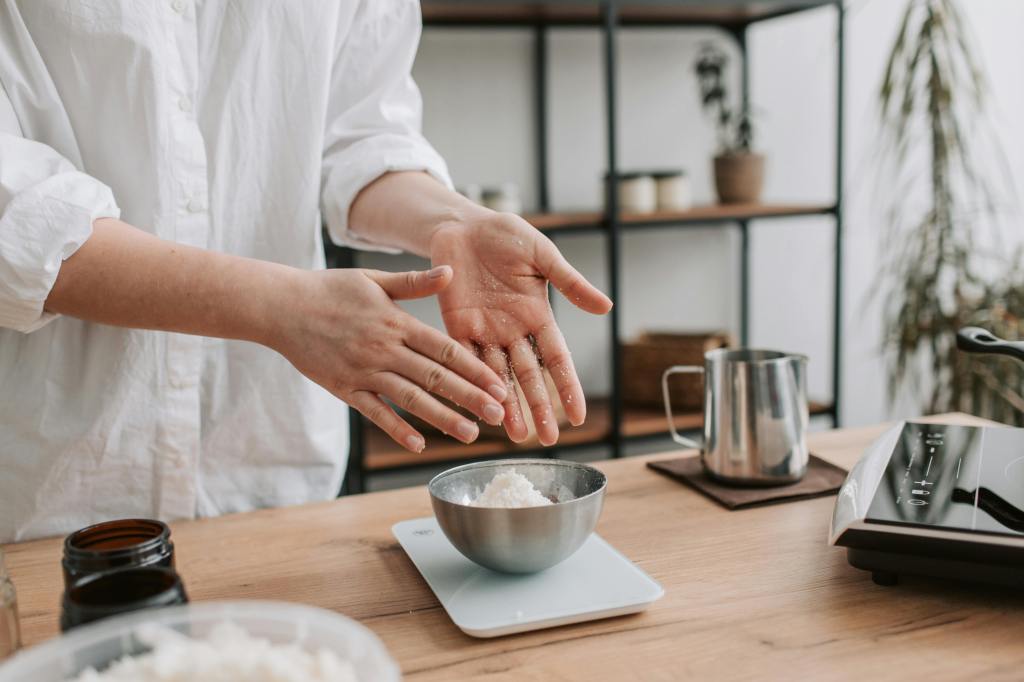
Sugar syrup is made by combining sugar and water and then cooking to the desired stage. As the sugar reaches higher and higher temperatures, the water evaporates more, resulting in a higher sugar concentration. This is shown in the discussion below as the percent solids that are in the mixture. The ratio of sugar to water that you start with can vary depending on the recipe and is often specified as a percentage. For example, a 50% sugar syrup translates to a mixture made of 50% water and 50% sugar. It is best to measure these ingredients on a kitchen scale.

The method of cooking sugar is simple. Combine cold water and sugar in a saucepan. Gently stir on medium heat until the sugar dissolves. Bring to a boil. Rinse down any sugar crystals accumulated on the pan’s sides using a dampened pastry brush. Once you reach the preferred level of cooking, skim off any impurities, allow the mixture to cool and store it in a covered container in the refrigerator. The cover is important as the sugar syrup can crystallize without it.

As you start cooking, you want the sugar and water mixture to come about halfway up the sides of the pot. Too small a pot can increase the time it takes to cook and lead to the risk of boiling over. On the other hand, if you use too large a pot, the mixture can cook much too quickly, risking overcooking it.

As you practice, you will be better able to gauge the best cooking temperatures, but medium to high heat is best. If the heat is too low, it can take a long time to cook; if it is too high, the mixture will cook too quickly.

If you have ever delved into the world of making candy, you will have probably heard terms such as hard ball, soft ball, hard crack, etc., which refer to stages of cooked sugar. I will define these terms, but fortunately for us, you do not need to risk burning yourself trying to see if your sugar syrup has reached these stages. Instead, we just need to rely on an accurate candy thermometer. Using a thermometer is much more precise and much safer.

Different sources will list a different number of stages for cooked sugar. In reality, there are 11 different stages. Each corresponds to a different temperature and is best suited for different purposes. Some sources will combine some of these stages and may give varying recommended uses. However, they are usually very close. Let’s dive in.

Nappé Stage

  • 221°F
  • 72% solids
  • The sugar syrup pearls through a slotted spoon or skimmer.
  • Jams, jellies, marmalades, gummies, fruit jellies

Short Thread (Petit Filé)

  • 225°F
  • 76% solids
  • A drop of syrup between your fingers (note the caution above) transforms into a short thread.
  • Jellies, glazes

Long Thread (Grand Filé)

  • 230°F
  • 80% solids
  • A drop of syrup between your fingers transforms into a long thread.
  • Glazes, syrups, sauces

Soft Ball (Petit Boulé)

  • 239°F
  • 85% solids
  • Dropping syrup in cold water transforms into a soft ball that flattens between your fingers.
  • French buttercream, certain jams, fudge, pralines

Firm Ball (Boulé)

  • 248°F
  • 87% solids
  • Dropping syrup in cold water produces a firm ball that doesn’t flatten between your fingers.
  • Italian Meringue, buttercream

Hard Ball (Gros Boulé)

  • 266°F
  • 92% solids
  • Syrup dropped in cold water transforms into a hard ball.
  • Marshmallows, toffee, divinity

Soft Crack (Petit Cassé)

  • 284°F
  • 95% solids
  • Syrup dropped in cold water produces a flexible thread that you can bend slightly before it cracks.
  • Taffy, butterscotch candies

Hard Crack (Grand Cassé)

  • 302°F
  • 99% solids
  • Dropping the syrup into cold water produces a hard, brittle thread that breaks when bent.
  • Nougats, brittles, hard candies

Caramel – there are three stages of caramel, all of which are 100% solids. There are two different types of caramel. Dry caramel is made by melting sugar in a dry pan, whereas wet caramel involves dissolving the sugar in water and cooking.

Clear Caramel

  • 320°F
  • All the water has evaporated, resulting in liquid sugar that is a light golden color.
  • Nougatine, croquembouche assembly

Light Caramel

  • 338°F
  • Sugar syrup reaches a golden brown color. At this point, the sugar starts to break down, the caramel flavor begins to develop, and a light smoke may occur.
  • Floating islands, crème caramel

Burnt Caramel

  • 356°F
  • Sugar reaches a dark brown color, and you will see a dark, acrid smoke.
  • Caramel food coloring, topping for crème brulee

Troubleshooting

  • One of the main problems that cooks encounter is that the mixture crystallizes. Try these tips to prevent this.
  • Limit your stirring. Combine the sugar and water off the heat and stir just until the sugar is moistened. After that, avoid stirring, if possible, as just the agitation can produce crystallization.
  • When stirring, use a clean stainless steel spoon each time. Any sugar left on the spoon can encourage crystallization if you use it again. Avoid wood or plastic utensils as they can have foreign particles or fats on the surface.
  • Brush the sides of the pan with cold water using a pastry brush to remove any sugar crystals. Similar results can be achieved by putting a lid on the boiling mixture, as the steam will wash away the crystals.
  • Use an “interfering agent.” Adding these ingredients can help prevent crystallization. Examples are glucose syrup, corn syrup, cream of tartar or lemon juice.
  • If you are making something to which you are adding cream or nuts, warm them first. If not, the large temperature discrepancy can lead to crystallization.

Candy making is not something everyone wants to learn, but homemade candies can undoubtedly impress your guests or your gift recipients. It is not difficult, but it does take the proper equipment and attention to detail.

Happy Candy Making!
Cooking Tips · Techniques

Sabayon or Zagablione – A Creamy Delight by any Name

Are you looking for a relatively quick dessert using ingredients that you probably already have? Here’s a great idea—try making a Sabayon. This Cooking Tip explains what it is and how to make it.

Image by Monika Schröder from Pixabay

Sabayon is a rich and creamy French sauce. In Italy, it is known as Zabaglione, and this version probably predates the French one. Although it is basically the same dessert, the French version is typically made with white wine or champagne, while the Italian version usually uses Marsala wine.

This dish is easily customizable and can be made in sweet and savory versions. In the culinary world, it is considered a technique rather than an actual recipe.

Ingredients

  • Egg yolks thicken the sauce. The fresher the eggs, the better the result.
  • Sugar adds sweetness but also helps trap air when combined with the yolks. According to some, it also slows the formation of protein bonds, which allows the eggs to reach a safe temperature without scrambling.
  • Wine adds flavor. Because wine is a prominent flavor in this dessert, use one you like. For a non-alcoholic version, substitute an equal amount of orange juice (or other citrus juice), sparkling apple cider, or coffee for the wine.
  • Savory versions will eliminate the sugar and add a pinch of salt. You can consider other ingredients such as stock, pureed red pepper, finely chopped herbs, spices, or olive oil. Use your imagination.
  • Ratio – The standard ratio is equal parts, by weight, of these ingredients. The amount of liquid can vary depending on how thick you want the sabayon to be.

Procedure

Image by Estudio Gourmet from Pixabay
  • This dish needs to be made over gentle heat. The best way to do this is to whisk the mixture over a bain marie (water bath). You can either use a double boiler or place a heat-proof bowl over a pot of simmering water. The bottom of the bowl should not touch the water. This should be prepared and ready to go before starting the cooking process.
  • Whisk the egg yolks and sugar in a large bowl. Since the mixture will expand as it is whisked, use a bowl large enough to accommodate this increase in volume. Whisk in the wine. Whisk until the mixture lightens in color, looks foamy and increases a bit in volume.
  • Most chefs recommend whisking in a figure 8 pattern to increase aeration. America’s Test Kitchen tested different whisking methods of stirring, beating and side-to-side motions. Although they did not specifically test these in making a sabayon, they found that the side-to-side motion was the most efficient in almost all applications.
  • Place the bowl over simmering water. Whisk continuously until the mixture becomes thick and frothy and the sugar dissolves completely.
  • Keep whisking until the temperature reaches 150° – 165°F and makes ribbons. To see this, elevate the whisk above the surface of the mixture. As the mixture drops back into the bowl, it will look like a ribbon that stays on top for about 15 seconds. By this time, it should have at least doubled in volume.

Serving
Sabayon is best used immediately after you make it. You can refrigerate it for a couple of days, although it will deflate. Whisk well before serving. Reheating is tricky as it can separate. If you want to reheat, use very gentle heat. A bain marie is recommended.

Sweet sabayon

  • Serve over fresh fruit.
  • Serve over bread pudding.
  • Serve over a slice of cake.
  • Make a trifle by layering the sabayon with pieces of sponge cake, fruit, chocolate, nuts, or crunchy cookies.
  • Put fresh berries in an oven-safe dish and spoon sabayon over the top. Put under the broiler (watch carefully) or use a kitchen torch to brown the top.

Savory sabayon

  • Serve over asparagus or other vegetable.
  • Serve over scallops or other seafood.

Variations

  • Dissolve ¼ teaspoon gelatin into the wine. Finish the recipe as normal and then chill until cold and set.
  • Fold in whipped cream or whipped egg whites (beware that these will be raw) at the end.

Possible pitfalls

  • You allow the egg yolks to get too hot, resulting in scrambled eggs. To prevent this, watch that the water in the bain marie is only simmering and whisk continuously. If you think it is getting too hot, take the bowl off the heat and continue to whisk. Lower the heat before putting the bowl back over the water.
  • The mixture breaks. Add a small amount of ice water and whisk to re-emulsify.
  • Lumps in the mixture can be caused by too much heat and insufficient whisking.

Have you ever made a sabayon or zabaglione? Although it is not difficult and only requires a few commonly available ingredients, you will need a bit of arm power, as the whisking can take more than 10 minutes. Grab a readily available friend or family member and share the whisking. Sharing in the result will be their reward!

Cooking Tips · Techniques

Choosing the Best Cupcake or Muffin Pan

Image by Hans from Pixabay

What is the least-used baking pan in your kitchen? For some of us, it might be our muffin/cupcake pans. I only use mine a couple of times a year. If you use yours more frequently or are considering buying one, this Cooking Tip about cupcake/muffin pans is for you.

Do you call these pans cupcake pans or muffin pans? Either name is fine. They both mean the same thing. What you bake in them, though, cupcakes or muffins, is slightly different. See this Cooking Tip for an explanation: Is It a Muffin or a Cupcake?

What should you look for in a good muffin pan?

Material—These pans can be made of different materials. The highest-rated ones are made of aluminized steel. They are not only sturdy, but this material heats well and evenly.

Many home cooks tend to look at silicone pans, but these are not highly rated. First, they are flimsy, and unless placed on a sheet pan, it is tough to maneuver them in/out of the oven or to rotate them in the oven. They also do not conduct heat in the same way as aluminized steel. Serious Eats found that baked goods came out pale and underdone in silicone pans. They also did not like using a baking sheet for a couple of reasons. First, you are using an extra pan that will need to be washed. Also, they found that the muffins browned too much on the bottom where the silicone was setting on the metal.

Rim—Chefs prefer that these pans have a wide rim, at least one inch, that allows you to grab them without putting your oven mitt into the batter.

Color—Very dark pans tend to produce overly dark baked goods and can also lead to misshapen muffins. As these pans conduct heat more quickly, the sides of the baked good set faster than the rest of the item. This can lead to more of a conical or spherical shape rather than a nice muffin shape.

The new trend towards gold or bronze pans, though, earns high marks for even baking. Both light and medium-colored tins produce more appealing and even shapes.

Pan Size

Regular or standard muffin pans have 12 cavities in which you place your batter. The cups will vary in size in different brands but are usually about 2” X 1.25”.

Image by webvilla from Pixabay

There are also 6 cavity ones, but you need to be careful about what you buy. Some will have a similar cup size as a standard 12-cup pan, but they will often have larger cavities than the standard pan. Bakers use these larger ones for cinnamon rolls, popovers or oversized muffins. One nice thing about a smaller-sized pan is that it is easier to put into a toaster oven.

You can also buy mini muffin pans, which usually have 24 cavities. Each cavity is about 1” X 1.25”. You can also purchase mini muffin pans with only 12 cups. I have two of those.

Cavity size—If you have a muffin tin with cavities that are too large, it will lead to squat and unattractive muffins or cupcakes. Cavities that were narrower at the base than the top were more likely to result in the classic muffin shape with a bit of spilling over the top. With mini muffin pans, try to get one with at least an inch between cavities. Less than this and you might end up with fused muffins.

Coating—Many good muffin pans have a nonstick coating. This coating makes it easy to remove the baked item and leads to easier clean-up.

Tips on using a muffin/cupcake pan

Brands—Two brands consistently rose to the top of the ranking: Williams Sonoma Goldtouch nonstick pans and USA nonstick pans. Some also highly rated the OXO version. If price were not an issue, most testers would have preferred Williams Sonoma. However, they are also the most expensive of these pans.

  • Only fill the cavities about ⅔ (no more than ¾) full.
  • Wipe off any spills from the surface before baking. It will be much easier to clean than after it has baked on.
  • If using the mini-muffin size, avoid large add-ins such as fresh fruit. The muffins are not large enough to accommodate this. On the other hand, add-ins that you can chop to a small size, such as chocolate chips, dried fruit, and nuts, are fine. Items that can be swirled in, such as Nutella or jam, are also good options. Since you still want loads of flavor in these small bites, add flavor punches such as citrus zest or amp up the spices.
  • Choosing a pan with a nonstick coating makes removing from the pan easier. For extra protection, using baking liners can be helpful. Even with the nonstick coating and even if you use baking liners, most pros still apply a nonstick spray. If you have ever wondered about the different types of baking liners, see this Cooking Tip: Cupcake Pan Liners.
  • Converting recipes
    • Many wonder if they can take a recipe meant for a standard-sized pan and use it in a mini muffin-sized pan. Yes, but you do need to take some precautions. The most obvious is that you will use less batter in the mini-sized pan. Most standard-sized pans hold about ¼ cup of batter, whereas mini pans use only 1 to 1½ tablespoons in each cavity. You will need to do a bit of trial and error to get the best result.
    • On average, you will get between 32 & 48 mini muffins from a recipe that gives you 12 regular size muffins.
    • Bake at the same temperature, but the smaller items will take less time to bake. Be sure to check their progress before the time indicated on the recipe.
  • If you are only baking a partial batch of muffins or cupcakes, some will tell you to fill the empty cups with water to ensure a better result. Cook’s Illustrated tested this practice and found that it did not matter if you left the cups empty.
  • In addition to the typical muffin or cupcake, these pans can also be used for single-serve frittatas or quiches, single-serve meatloaves, and stuffed tomatoes or peppers.
  • Alternatives to a muffin pan – Here are some alternatives if you do not have a muffin pan.
    • Place mason jar rings on a baking sheet and put liners in them. Pour the batter in and bake as usual.
    • Use foil cupcake liners or double or triple up on paper liners. These will now stand on their own on a baking sheet, but the end shape might not be as pretty as if you had used a muffin pan.
    • Parchment – Cut parchment into 5-6 inch squares. Place over the holes in the muffin tin. Press down into the cavity with a small glass. You may also want to use your hands to form the parchment around the glass. If you make them double-layered, they might stand on their own.

If you already own a muffin pan, I hope these tips will help you succeed in making your muffins or cupcakes. If you are in the market for a new one or wish to gift one to someone, remember these recommendations to get the best pan you can.

Happy Baking!

Asian · Cooking Tips · Ingredients

Tamarind – An Amazing Sweet & Sour Flavor

One less well-known ingredient in Asian dishes is Tamarind. If you want to make authentic-tasting Asian cuisine, you will want to use it. This Cooking Tip, part of our ongoing series on Asian ingredients, explains what tamarind is and how you use it.

Origin

Image by Bishnu Sarangi from Pixabay

Tamarind trees are native to Africa and Asia but also grow in tropical climates worldwide. In the Western hemisphere, Mexico is the largest producer. The trees produce fruit pods that have a brown exterior and are somewhat bean or peanut-shaped. The edible part is inside these pods and is dark brown.

Flavor

The pods have a more greenish hue when unripe, and the flesh is very sour. If ripe, the fruit’s flavor is a mixture of sweet and sour with complex notes of caramel and molasses. It is acidic but less so than citrus fruits such as lemons and limes.

Forms

There are many forms in which to find tamarind, although some will be easier to find than others.

Image by Prasert Taosiri from Pixabay

Pods – These are the whole form of the fruit, as described above. However, most tamarind pods sold in the US are considered “sweet tamarind.” Their flavor is more sweet than sour and is meant for a snack rather than in cooking. The sour varieties are typically processed into tamarind pulp, and is the type used in cooking. If buying the whole pods, be sure to look for a label indicating which it is. The flesh must be removed from the pods and processed into a usable pulp.

Pulp –This is the edible paste from within the pod. Even though it is not that easy to find the pods, finding blocks of tamarind pulp is not difficult if you frequent an Asian market. It will be a very dark and sticky rectangular block wrapped in plastic.

To use this form, you must make it into a useable paste. Break off some of the pulp and place it in a bowl. Cover with hot water and let sit for about 15-30 minutes. When the water is cool enough to touch, start massaging the pulp into the water. With this, you are breaking the edible part away from inedible fibers and membranes. Even though the blocks are usually seedless, occasionally a seed may be present and you can remove it. Once it is as dissolved as much as possible, it should be put through a fine-mesh strainer. You will be left with a tamarind liquid or paste.

How thin it is will be dependent on how much water you use. Cooks Illustrated recommends using 4 ounces of pulp to one cup of water. You do not want to use so much water that the result is very liquid with a diluted flavor. It is better to make it thicker and add water at the end if you wish.

Many Asian chefs feel that this gives you a more flavorful and tarter product than using one of the other forms.

Paste/Concentrate – These terms are used interchangeably and sometimes together on the label. Neither is accurate.

This is a form of tamarind that you will find in a plastic or glass bottle. It is the commercially produced version of the paste you can make yourself with fresh tamarind. This form is much easier to use as all you need to do is to spoon it out. Some do feel that the flavor is not as good as if you make it yourself.

Be aware that you might see tamarind paste from Thailand, Indonesia, and India. The latter is an actual concentrate as it has been cooked down to a very thick consistency. The flavor is very intense and is not interchangeable with the other version. I can attest to that from my own experience. I made Thai Sate with Peanut Sauce for a friend’s adult daughter when she was visiting. At that stage in my cooking life, I did not truly appreciate this difference and used an Indian version. The peanut sauce was nothing like it should have been. I would not have said it was inedible, but it was not extremely pleasant. So, take the time to look at the label and ensure you have the variety you wish for the dish you make.

Powder—This is dehydrated, ground tamarind. It is generally used in candies, beverages, and snacks. It is also used as a souring agent in certain types of Indian cuisine.

Tamarind sauce—This is another product that needs to be avoided. It is tamarind paste that has been thinned and combined with other ingredients such as brown sugar, chili pepper, ginger, and/or soy sauce.

Tamarind juice/beverage—Tamarind is an ingredient often used in cocktails and other beverages. You can make your own tamarind juice by stirring the paste into hot water. After it cools, strain out any remaining pulp and add cool water and sugar to taste. Bitters are often added to cocktails.

Uses

The main recipes that call for tamarind are Asian recipes, especially Thai and Indian. It may be just added in a small amount to add complexity to a dish. At other times, it is an essential part of the flavor profile. An example is Pad Thai.
The unripe version is often pickled and mixed with tomatoes, chilis or carrots.
Curries
Chutneys
Beverages & syrups used to flavor sodas, cocktails and iced tea.
Sauces
It is an ingredient in Worcestershire sauce. Look at your bottle’s ingredients; you will surely see tamarind there.
Marinades – tamarind contains tartaric acid, which is a tenderizer.

Substitute

Many people ask if there is an acceptable substitution that can be made. If the tamarind is an integral part of the dish, such as in Pad Thai, nothing else will taste the same. If it is not a primary flavoring agent, you could try using something that has both a sweet and sour element. Some combine brown sugar with lemon/lime juice or white wine vinegar.

Storage

Unopened packages of tamarind pulp or jars of tamarind paste are shelf-stable. Both should be refrigerated after opening to prevent the development of mold, and they should last a few months. If you use it infrequently, consider freezing it in small amounts, which can then be thawed as needed.

Homemade tamarind paste, however, is much more likely to go bad and should always be refrigerated. To prolong the shelf life, it can be cooked before storing. Smaller jars are better for homemade tamarind, as you can introduce pathogens every time you spoon some out. That is also a reason always to use a clean spoon.

With this discussion of tamarind, I end my Asian ingredient series. If there is an ingredient that I did not cover, let me know. Otherwise, I hope this series will enliven and improve the Asian cuisine you make in your own kitchen.

Cooking Tips · Ingredients · Techniques

Your Thanksgiving Meal – All You Need to Know in One Place!

Image by J Lloa from Pixabay

We are going to take a short break from our series on Asian ingredients as this time of the year, many of us turn our thoughts to our Thanksgiving meal. Some people take it in stride, while others develop a certain amount of stress trying to figure out how to get everything done on time and have it taste delicious. I have written much on this subject in prior Cooking Tips. In this Tip, I am collating all this information so it is right at your fingertips. This post contains affiliate links and I may earn a commission if you decide to purchase.

Turkey
Let’s start with the turkey. My favorite method (along with many chefs) is to do a dry brine followed by spatchcocking before putting it in the oven.

Do you always do a wet brine? Read this Tip on brining as well as the alternative of a dry brine, which is not only easier but leads to superior results. Here is also an excellent article from ThermoWorks about what brining does and why they prefer dry brining.

Rather than roasting your turkey whole, consider spatchcocking it. This means taking out the breast bone and pressing it flat before putting it in the oven. Advantages include being able to cook both the white meat and dark meat to the recommended temperatures without overcooking the white meat. Another benefit is that your turkey will cook in much less time. Here is a Tip on how to do so. It includes a link to a video by Serious Eats. Here is another ThermoWorks link, which includes an excellent video on their method.

The last thing you want to do is to have overcooked or, even worse, undercooked turkey. The above ThermoWorks discussion on spatchcocking also includes recommendations on doneness temperatures.

Potatoes
Delicious mashed potatoes are another standard on the traditional Thanksgiving table. Although they are not difficult to make, some points in this Tip can help you make them the best ever. You can also make them ahead, thus freeing your time to do other things. I wrote an article on Success & Make-Ahead Tips that will give you some options.

Pies
There will be at least one variety of pie on our holiday tables if not more than one. Here are some links to help you create the most delicious pies.

  • Pie plates – Does it matter what kind of pie plate you use? See this Tip for the answer.
  • Pie crust – I encourage you not to take the shortcut of a store-bought pie pastry but make your own. See these Tips for all you need to know.
  • Filling – Although there are other fillings, pumpkin certainly ranks up there as one of the most popular. Did you know that the pumpkin in the Libby can is a specific type of squash? See this Tip for a discussion. Instead of grabbing for that canned pumpkin, try something different this year and make your pumpkin pie with roasted butternut squash. My husband likes to tell people he does not like winter squash, but the best pumpkin pie he has eaten is one I made with butternut squash. Here is a link to that recipe.

Spices
Certain spices make you think of the holidays. See this Tip for helpful information.

Make Ahead
The more you can do ahead of the day, the less stressful it becomes. I have given you some links above, and here is an article I wrote on that subject – Success & Make Ahead Tips. Using your freezer is a great way to get ahead of the big day. See this Tip for things you need to think about.

Leftovers
Are you in the “love them” or “hate them” category regarding leftovers? Whichever you are, you are sure to have leftovers after a large holiday meal. See this Tip for essential safety measures.

Planning
Although I put this last, planning for the big day is one of the most important things you can do to ensure a great meal and day. See this article on Thanksgiving Prep that I wrote to help you.

I sincerely hope these Tips and suggestions will help make this Thanksgiving the best ever. If there is something else that you have questions about, just let me know. If you know someone who is stressed over preparing their Thanksgiving meal, please send this Tip to them.

Happy Thanksgiving!

Asian · Cooking Tips · Ingredients

Asian Sweetness – Palm Sugar

Palm sugar is a type of sugar often used in Asian cooking. This Cooking Tip, part of an ongoing series about Asian ingredients, explains what this sugar is and how it is used.

When you go to a general supermarket to purchase palm sugar, you will most likely not find true palm sugar. Instead, you will find coconut sugar. And it will almost always be in granulated form. For actual palm sugar, you will need to either frequent an Asian market or shop online. Let’s explore the differences.

Processing

Both types are considered unrefined sugars. That means they undergo minimal processing without the use of chemicals. Both are made from the sap of a palm tree. With coconut sugar, the sap is taken from the coconut tree, also known as a coconut palm tree. Palm sugar can be made from various palm trees, not just the coconut palm. Some companies have incorrectly labeled coconut sugar as coconut palm sugar, which causes confusion.

After the sap is collected, it is put into large pans and heated to evaporate the water. When a syrup-like consistency is attained, it is poured into molds, and as it cools, it starts to solidify.

Some producers will add granulated sugar to palm sugar as a filler. According to Hot Thai Kitchen, making palm sugar is labor intensive, and fewer people are choosing to learn it. This means the demand far outstrips the supply. Granulated sugar is mixed in to meet the demand. One factory in Thailand said the amount added could be anywhere between 25% and 75%, depending on the brand. Their website says that even if a package says 100% palm sugar, it is probably not true.

Appearance and texture

Depending on how far the reduction is allowed to go, the final moisture content will be different. Products with a higher moisture content will be softer, whereas others will be much harder. One is not necessarily of higher quality; it is just a different form.

Coconut sugar is more likely to come in a granulated or powdered form. Palm sugar is available in granulated, block or a paste form.

Coconut sugar tends to be darker in color, ranging from light to dark brown, while palm sugar can vary from light golden to dark brown.

Flavor

Another difference is in the flavor. Coconut sugar delivers a rich caramel or butterscotch flavor, while palm sugar has a more complex flavor with a touch of smokiness.

Cost

Palm sugar will usually be more expensive than coconut sugar.

How to use

Since the flavors of coconut sugar and palm sugar are slightly different, try to use the one that your recipe specifies. This series of Cooking Tips is about Asian ingredients, and in that type of cooking (especially Thai), palm sugar is called for. It adds a specific flavor profile that is necessary for authentic flavor.

You may also use it in non-Asian dishes to add a caramel sweetness to the dish.

If you have a softer type of palm sugar in a tub, you can just spoon it out. However, if you do not use it up fairly quickly, it will harden, making it difficult to get out of the tub. To use it in that state, warm it gently in the microwave and spoon out what you need. Use it promptly, though, as when it cools, it will harden again.

If you have the harder variety, found in blocks or puck shapes, slice off thin pieces with your chef’s knife. Some recommend using a grater, and others like to crush it in a mortar and pestle.

The granulated form can be measured just like white sugar. However, granulated coconut sugar will have a different flavor profile than you would want in Thai dishes.

How to choose quality palm sugar.

  • What you need to do is to taste the different brands side-by-side. I doubt that most (if not all) markets would allow this. If you could taste it, you would find that the more palm nectar it contains, the more flavorful and aromatic it will be. It won’t just taste sweet but more like butterscotch or caramel candy.
  • Look for palm sugar with a smooth texture. You do not want it to appear crystalized, and you do not want the color to be very pale. However, experts warn that darker is not always better, as the color may be due to the addition of brown sugar.
  • All other factors considered, choose the more expensive one.

Storage

With proper storage, these sugars can last indefinitely. Then, it needs to be kept in an airtight container in a cool, dark place to keep out insects, moisture and intense aromas.

If you do not use it up promptly, it will harden. If it does harden so much that you cannot slice it, try putting it in a plastic bag and breaking it up with a rolling pin. You could also try blitzing it in a coffee grinder or food processor. A final method is to sprinkle a bit of water on top and warm it in the microwave.

Substitutions

If you are making an Asian dish, seek out palm sugar. If you cannot find palm sugar, you can use coconut sugar, although the taste may not be the same. If you do not have either, the best substitute is probably light brown sugar. Dark brown sugar has a different flavor profile due to its molasses content.

Palm sugar is another Asian ingredient that you should include in your pantry if you want to make authentic-tasting Asian food. Have you tried it? If not, maybe a trip to the Asian store is in your future!

Asian · Cooking Tips · Ingredients

Coconut Milk – A Creamy Delight

Image by pixagrum from Pixabay

In our continuing series on ingredients used in Asian cuisine, we now turn to Coconut Milk. This ingredient is probably more commonly found in our pantries, but just what is it, how should we use it, and are some better than others? We will delve into those topics in this Cooking Tip.

How it is made

If you were to open a fresh coconut, you would see the tough outer husk, layers of white coconut flesh (sometimes called coconut meat) and a clearer liquid in the middle. Coconut milk is made by shredding and pureeing the fresh coconut meat and pressing it to extract the liquid, sometimes adding water to aid the process.

According to Thai chefs, there is “First Press” (hua gati) and “Second Press” (hang gati) coconut milk. The first is just what it sounds like, the product that results from pressing fresh coconut flesh with little or no water. This results in a rich, flavorful liquid and is the type that is sold in stores. To make the second press, producers take the already-pressed coconut meat, add more hot water and press again. It has a more diluted flavor and is not sold commercially.

Coconut milk is composed of coconut oil (fat), coconut protein and water. The oil solidifies into coconut cream at room temperature. When you open a can of coconut milk, you see two layers. There will be thicker white cream at the top and liquid water at the bottom. Different brands will have varying amounts as well as varying thickness of the cream layer.

Types of coconut products

In our stores, we might see various coconut products such as coconut water, cream of coconut, coconut cream and coconut milk.

  • Coconut milk—This product is produced as described above, and is a mixture of oil, protein and water.
  • Coconut water–This is meant to be used as a beverage, not in cooking.
  • Coconut cream—A can of this contains just the thick cream part with much less water.
  • Cream of coconut—This is also made from pureed coconut meat but blended with sugar. It is meant for drinks.
  • Lite coconut milk—As implied by the name, lite coconut milk contains less fat than regular coconut milk. It is more watery as most of the cream is eliminated. Companies often add stabilizers and other ingredients to compensate for the lack of fat, which can contribute to unpleasant flavors. Also, since the coconut flavor comes from the fat, when you eliminate that, you eliminate flavor.

What to look for

  • Packaging–What we will mostly see in our stores are cans of coconut milk, which are perfectly acceptable. Hot Thai Kitchen prefers using coconut milk packaged in UHT cartons. They explain that the cartons have been heat treated for a shorter time than cans, leading to better flavor. Although they say that one may not notice a difference in most savory dishes, the better flavor shines through in desserts. They go on to state that in Thailand, the cartons are what are mostly sold. Cans are preferred for export as they are more durable for shipping. I will warn you that the coconut milk sold in the dairy aisle is not the same thing. Those items have a much longer ingredient list and much less fat than those sold in the cans or the UHT cartons. They are meant to be used as a dairy milk substitute, not as a coconut milk substitute.
  • Ingredients–Look for a short ingredient list, preferably only coconut and water. Some labels might list coconut extract instead of coconut milk. According to America’s Test Kitchen research, these indicate the same thing. Some companies will add a preservative and may add guar gum, which serves as a thickener and prevents separating. If you read Thai recipes that start with coconut milk, they will often direct you to cook it until the oil begins to separate out. As I can attest by personal experience, this is much harder to do with a product that contains guar gum. This is understandable as preventing separation is the function of that ingredient.
  • No added sugar–It is best to buy unsweetened so you can control the amount of sugar in your dish.
  • Fat content—Look at the label to see the fat content. Generally, the higher the fat content, the better since the fat is where the flavor resides. Those products will have a much thicker cream layer as compared to the water. I looked at a number of different brands of coconut milk, and they ranged from a low of 9 grams for Goya up to 17 grams for Aroy-D.

Brands

As with so many Asian ingredients, your choice of brands will be more limited in a general supermarket than in an Asian market. However, you can find acceptable products in both. I looked at taste tests from America’s Test Kitchen, Bon Appetit, Eater, and Epicurious. Here are some brands that rise to the top.

  • Aroy-D
  • Roland
  • Chaokoh
  • Thai Kitchen
  • Whole Foods 365
  • Trader Joe’s
  • A Taste of Thai was not recommended.

Although impractical, you can make your own by opening a coconut, scraping out the meat, and processing it in a blender with some of the coconut water and regular water. It then needs to be strained through cheesecloth. This is much more work than purchasing a can, but some swear by it for the fresh flavor. Others will start with a package of unsweetened shredded coconut. Combine it with hot water, blend and strain.

Uses

Coconut milk can be used in both sweet and savory applications. Here are some ideas.

  • Sauces
  • Stews
  • Soups
  • Curries
  • Rice
  • Puddings
  • Baked goods
  • Non-dairy whipped cream. This can be done by chilling the coconut milk, scooping out the fat and whipping. It won’t taste like regular whipped cream because of the strong coconut flavor, but it will have a similar texture and creaminess.

Storage

After opening, store any unused coconut milk in the refrigerator for up to a week. It is possible to freeze coconut milk, but it will alter the texture and be grainy when it is thawed. This should not be a problem when making something like a curry but would not be acceptable in a dessert where you want a creamy texture. Do not store it in the can; it can pick up a metallic flavor.

I always have coconut milk on hand, partly because we love Thai food, especially curries. However, its use is not limited to those dishes. Give it a try and see what you think!

Cooking Tips · Ingredients

Fish Sauce – Umami Galore

Fish sauce is an Asian ingredient that is not common in the average person’s pantry. However, if you want to make authentic-tasting Asian cuisine, you should grab a bottle. While taking a cooking class in Thailand, the chef told us that fish sauce is the “salt” of Asian cuisine. However, it doesn’t just impart saltiness; it also adds umami and acidity. What fish sauce is, how to purchase it, and how to use it are the subjects of this cooking tip.

What it is

Fish sauce is the liquid that results from the fermentation of a mixture of fish (usually anchovies), salt and water. This mixture is placed in tanks or vats and allowed to ferment anywhere from a few months to a couple of years. As the fish breaks down, it releases a flavorful liquid that we call Fish Sauce.

The liquid that is extracted first is called “first press” and is considered the most flavorful and valuable. It is sometimes referred to as extra virgin fish sauce. After this first extraction, more salt and water are added to produce more fish sauce, although it will be lighter, have less flavor, and be less nuanced. Sometimes, these later extractions are mixed with earlier extractions to achieve the desired concentration for the final product. Extremely low-quality fish sauce is said to have such a small amount of first press that the producers add artificial color and flavor to compensate. The first press fish sauce will be more expensive and can be harder to find in a regular supermarket. It can, though, easily be found in Asian food markets.

Some brands will have an “N” number on the label. This number indicates the nitrogen concentration and is an indicator of the protein content. Experts will tell you that a sauce with 30°N and above is considered high-quality and has a more complex taste. Vietnamese fish sauces are more likely to display the N content than Thai fish sauces.

Styles of fish sauce

Many Asian countries have their own version of fish sauce. The two we are most likely to see are Thai and Vietnamese fish sauce. Others that you might see in an Asian market are Korean and Filipino.

  • Thai-style fish sauce is known as nam pla. It is a bit on the stronger side in regard to flavor. Thai producers also tend to add sugar to the fish sauce. This is not necessarily bad, as it is added to balance the other flavors in the fish sauce. Great food is generally a balance of salt, acid and sweet. So, with a non-Thai fish sauce, you may end up adding a bit of sweetness to balance the flavors in your final dish.
  • Vietnamese-style fish sauce is called nuoc cham. It undergoes a lengthier fermentation process, which makes it lighter in color and flavor.
  • Premium vs. non-premium fish sauce: This is based on whether or not the fish sauce is a first press, as described above.

How to choose a fish sauce

Many chefs recommend keeping two products on hand: one higher-end first press, which is better used in raw applications such as salads and dips and one less pricey, lower-grade sauce for cooked dishes.

When you are looking at a shelf of bottles, here are some tips to look for.

  • Simple ingredient list – A good fish sauce will only have anchovies, water, salt, and maybe sugar.
  • Higher protein content – Look for one that has at least 2 grams per tablespoon.
  • Price – As with so many things in life, if an item is so cheap as to be unbelievable, there is probably a reason, and it generally means it is not as good quality. Although you do not have to buy the higher-end, more expensive fish sauces, you also don’t want to buy the absolute cheapest.
  • The phrase “nuoc mam nhi” – According to Andrea Nguyen, an authority on Vietnamese cooking, in an Epicurious article, this term refers to that first-press liquid. She states that some producers speed up the fermenting process so they can add more salt and water and get more output. They will get higher volumes but of a lower grade. Another term you might see is nuoc mam cot.
  • The term “ca com” – This refers to a specific type of anchovy found in Phu Quoc waters. This is an island off the coast of Vietnam, and the fish are said to be the most desirable, and the producers insist on maintaining traditional production methods. Authentic Phu Quoc fish sauce is made from ca com anchovies and is a Protected Designation of Origin product, like Parmigiano-Reggiano and Champagne. Because copycats are rampant, also look for a statement on the label stating that it was made and bottled in Phu Quoc, Vietnam.

Brands

It is hard to recommend particular brands as testing results vary. However, here are some commonalities between taste tests. Let’s look at both those products more available in general supermarkets and those that will be found in Asian markets. What you are looking for (besides the above advice) is a balanced fish sauce that is not just salty but has a nice umami taste and a complex flavor.

Supermarket brands that you will find are Thai Kitchen, A Taste of Thai, and Dynasty.

Most testers were not enamored with Thai Kitchen but found both of the others to be a good product.

Other brands

  • Golden Boy – Although some tasters found this one acceptable, others did not like it.
  • Squid – There is a general Squid fish sauce and a premium Royal Squid fish sauce.
  • Megachef – There are two varieties. One had a brown label and is sold widely in Thailand. The other has a blue label and is for export only
  • Tiparos
  • Red Boat 40°N – This is considered a premium brand, but they also have a higher-end product called Red Boat Phamily Reserve Maple Bourbon fish sauce. It is a 50°N fish sauce and is aged in maple bourbon barrels. The 40°N version is becoming more mainstream and I have found it at Sprout’s Market and Walmart.
  • Three Crabs
  • Abalone

Storage

A bottle of fish sauce will last several years, although it may darken and deepen in flavor over time. It can be kept in the pantry, but if your kitchen is very hot or if you do not use it very often, you may want to put it in the refrigerator.

How to use

Fish sauce is a mainstay ingredient in Thai and Vietnamese cooking, but it does not have to be limited to those kinds of dishes. Use it whenever you want an umami boost or to add depth and complexity to your dishes.

Try it in soups, stews, chili, and meaty sauces such as Bolognese. You can also whisk a small bit into a vinaigrette or drizzle it over roasted vegetables or fried rice.

Do you use fish sauce? Do you have a favorite brand? If you haven’t used it before, you may want to consider adding a small bottle to your pantry!

Cooking Tips · Ingredients

Oyster Sauce – An Asian Umami Ingredient

This is the second installment in a little series about ingredients used in Asian cuisine. Last week, we discussed the very popular Hoisin Sauce. In this Cooking Tip, I want to look at Oyster Sauce.

Origin

As the name suggests, it all starts with oysters. The story told by the company Lee Kum Kee is that this sauce dates back to 1888. According to them, “A restauranteur named Mr. Lee Kum Sheung from Southern China was boiling a pot of oyster soup and forgot about it until the soup was simmered down to a thick gravy. He tasted it and discovered an irresistible, delicious new flavor. Since then, he started selling this as Oyster Sauce.” Mr Lee then became the founder of Lee Kum Kee, a brand that is very well known for its Asian ingredients.

Ingredients

Today, producers use oyster extract to make oyster sauce. Oyster extract (or oyster extractives) is the liquid leftover after shucked oysters are boiled. Other ingredients, such as salt, sugar, and soy sauce, are often added. Most recipes also add a starch as a thickener.

It is also known as oyster-flavored sauce. According to America’s Test Kitchen, do not confuse oyster-flavored sauce with cooked oyster sauce. The latter uses oyster-flavored sauce but adds other ingredients such as broth, soy sauce, sake, and sugar.

Flavor

Its flavor is described as savory with a touch of caramel sweetness. It is an ingredient that will add plenty of umami. Most find that it does not taste of oysters but the more premium brands can have a fishy note. Besides flavor, it also adds a dark caramel color.

Best Brands

Many sources (America’s Test Kitchen, Sporked, Bon Appetit) recommend the Lee Kum Kee brand. This company produces two different products.

Lee Kum Kee Panda Brand Oyster Sauce – This is the one you will most commonly find in regular supermarkets. It has a red label with a panda on it. It is milder in flavor than the premium offering. From its ingredient label, you will see it has 11% oyster extract.

Lee Kim Kee Premium Oyster Sauce – This is a more premium offering with a stronger flavor. Its label lists 40% oyster extract and shows two people in a boat. To purchase this oyster sauce, you will probably need to visit a specialty food store or look online.

Food & Wine, Milk Street, and several chefs prefer a different offering.

Megachef Premium Oyster Sauce—This oyster sauce is from Thailand and is considered to have a deeper and more complex flavor. You may find it in a specialty food store, or you can get it online.

Uses

Reach for oyster sauce when you want to add umami to your dishes. However, start with a lesser amount and titrate to your tastes.

Common uses:
Stir-fries
Kung Pao Shrimp
Marinades
Soups
Asian noodle and rice dishes
Can add a splash to a dish of cooked meat or vegetables.

Storage

As with many condiments, unopened oyster sauce can be stored in the pantry for one year, but once opened, it should be refrigerated, where it will last six to twelve months.

If you are serious about cooking Asian cuisine, oyster sauce is just one of the ingredients you will want to search out and learn to use.

Cooking Tips

Hoisin Sauce – A Sweet & Savory Flavor Punch

Do you like to cook any Asian cuisine, whether it be Chinese, Japanese, Thai, Vietnamese or others? If so, you probably have several Asian ingredients in your pantry and refrigerator. Even if you don’t cook this type of cuisine at home, you probably have at least a couple of Asian condiments. In some upcoming Cooking Tips, I would like to highlight some of these ingredients, what they are and how to use them. This Tip will focus on Hoisin Sauce.

I have already written a few Cooking Tips on other Asian ingredients & techniques. Here are links to those Tips.

Origin

Hoisin sauce hails from the Chinese pantry, specifically the Cantonese region. According to America’s Test Kitchen, the origin of hoisin sauce goes back to an ingredient termed “triumphant sauce.” It was used by Chinese people from the Guangdong (Canton) province. They used it in the preparation of fish. The Chinese word for triumphant (hoi syun) sounds similar to the word for seafood (hoi sin). Eventually, the name hoisin became the name for this ingredient.

Other sources say the name may be derived from a time when a seafood ingredient was included in hoisin sauce. Today, in the US, it is sometimes called Chinese barbecue sauce.

Finally, the company Lee Kum Kee says this about the name “The word ‘hoisin’ is Cantonese and translates to ‘seafood sauce’, although it contains no seafood. It was created by a chef as a dip to accompany seafood at a local food stall. It was so unique and tasty, that people refer to the sauce as “seafood sauce” and the name stuck with the sauce.”

It is thought that Chinese immigrants from Guangdong brought this ingredient to the US. It has become very popular with Americans. It is one of the easiest Chinese ingredients to find in our supermarket and is often called Chinese barbecue sauce.

Ingredients

The ingredients in hoisin sauce will vary from brand to brand. However, the key ingredient is fermented soybean paste (miso). Other components may include sugar, vinegar and seasonings such as salt, five-spice powder, garlic, chili peppers and sesame. Most contain cornstarch or potato starch, which is what gives hoisin its thick consistency.

Flavor profile

The flavor is both sweet and savory, and it is described as having a “deep umami richness.” One source claims it is like “a non-smoky BBQ sauce with extra-warm spices, sugar, and salt.”

Brands

America’s Test Kitchen did taste tests and recommends the following three supermarket brands.

  • Kikkoman Hoisin Sauce
  • Koon Chun Hoisin Sauce
  • Lee Kum Kee Hoisin Sauce

Sporked.com likes the following.

  • Kikkoman Hoisin Sauce
  • Lee Kum Kee Hoisin Sauce
  • Kroger Hoisin Sauce
  • Sun Luck Hoisin Sauce

Bon Appetit prefers the Lee Kum Kee brand, with Kikkoman as a close second.

How to use it: Hoisin sauce is an ingredient in recipes, but it is also used as a finishing sauce and condiment. Its flavor is strong, so if you are experimenting with it, start with small amounts and then adjust to your taste. You may want to consider diluting it with water, sesame oil, or some peanut butter.

Here are some dishes where you might find hoisin sauce adds a perfect touch.

  • Soups
  • In dipping sauces
  • Noodle dishes
  • As a glaze or marinade
  • Stir Fry dishes
  • Fried rice

Make your own

Many people swear by making their own rather than buying a commercial product. Most of the recipes I saw, though, use peanut butter rather than soybean paste. It may be a nice condiment, but I am unsure how similar it would be.

Storage

If unopened, a jar of hoisin sauce can last for years when stored in a cool, dark place. Once opened, the recommendation is to seal the container tightly and store it in the refrigerator. There, it can last up to 18 months.

Do you have a jar of hoisin sauce in your pantry or refrigerator? I know I do. I may not use it very often, but it can be just what you need for that umami punch with a touch of sweetness.