Cooking Tips · Techniques

The final step to a great pie — blind baking

In the last few Cooking Tips, we have been discussing how to put that perfect pie on your holiday table. We looked at ingredients and techniques for making a great pie crust. You are now ready to put it in the oven but there is another subject to discuss – blind baking your pie crust. That is the subject of this Cooking Tip.

Blind baking a pie crust is simply pre-baking your crust (either partially or totally) before adding your filling. So, when do you blind bake your crust? The simple answer you might say is – when the recipe tells you to do so. Yes, that is true, but there are general guidelines to let you know whether you should do this.

Pies that have fillings that are not baked require a fully baked pie crust. An example is a yummy French Silk Pie. Since the pie is not going into the oven after adding the filling, the pie crust needs to be fully baked.

Other times you want to blind bake is with custard pies or pies with delicate fillings. With custard pies (such as pumpkin), the moisture in the filling might make the crust soggy before the crust is fully baked. Partially baking the crust before adding the filling helps to prevent this. There are also some delicate fillings that are only briefly cooked on the stovetop. If you do not blind bake the crust but rather put the filling in an unbaked crust, the filling would be over-cooked before the crust is fully baked. An example is Chocolate Cream pie.

One time you do not want to blind bake is if you are making a double-crust pie. If you blind bake the bottom crust, your top crust won’t adhere to the bottom crust. If your filling is such that you would prefer a blind-baked crust to prevent sogginess, you can place decorative pieces of crust over the top to give you a type of open double crust such as in this Gooseberry Pie recipe.

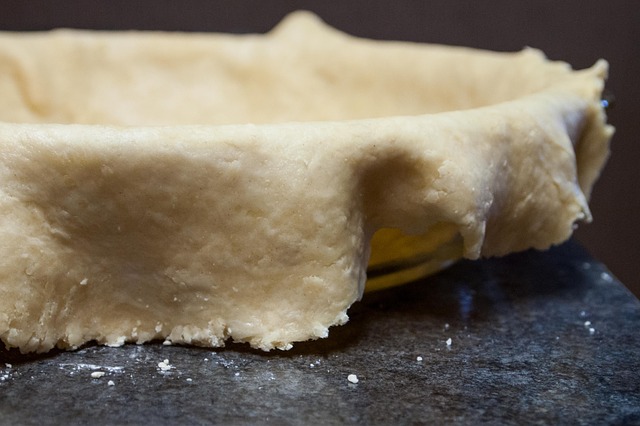
Blind baking is not as simple as putting your unfilled pie crust in the oven. If you do that without adding some weight, your pie crust will puff up – not ideal if you want to put a delicious filing into it. It also makes it much more likely that the sides of your crust will droop before it sets.

Now we know why we need to blind bake a crust, how do we do it? There are three recommended ways depending on what you are looking for in your finished pie.

If you want a pie with a pretty crimped edge or you have a tall crust, line the unbaked crust with foil or parchment making sure it fully covers the crust and the edges of the pie crust. Foil is often preferred over parchment as you can get it into the corners better as well as folding over the crust to prevent overbrowning. Fill the crust at least 2/3 full with something to weight the crust down as it bakes. I love ceramic pie weights. They conduct heat well and fill up the entire crust. Just make sure you have enough to fully cover the crust. I tend to use two boxes of these for one pie crust.

You have probably heard that you can use dry beans or rice. Those are poor heat conductors resulting in a longer baking time to get to the proper stage.  Another option is granulated sugar, an excellent heat conductor.

Stacey Ballis with MyRecipes.com did an experiment testing different types of weights. Her favorite method was granulated sugar, which conducts heat as well as the ceramic weights but gets into the corners of the pie crust better. She uses the sugar a couple of times and then uses it in her baking. Since it has slightly caramelized by being in the oven, she recommends using it for meringues. SeriousEats.com agrees with this choice. If you don’t want to use sugar, the ceramic weights are a close second.

As I discussed in last week’s Tip, you should have chilled your pie crust. If you haven’t done that by this step, you may chill it with the weights in place. After chilling, place it in a 375° oven for 20 minutes. Remove from oven and carefully remove the very hot pie weights. Prick the bottom with a fork and return crust to the oven. If you will be baking the pie filling, bake the crust for another 5-8 minutes. If you are not baking the filling, bake the crust for another 12-20 minutes until fully baked. This method should work for most pie crusts but some recipes may have slightly different baking temperatures and times.

A second method is called the “Low & Slow” method. With this method, the pie crust is baked at 350° with pie weights in place for an hour. Baking at a more moderate heat is said to reduce shrinkage & puffing.

A third method is to sandwich the crust between two pans and bake upside down. This method is good for pies with a flat edge that do not need the extra height or when you are not looking for a decorative edge. To use this method, place the crust in the pan and flatten its edge. Spray the outside of another pie pan and nestle into the crust. You may also line the crust with parchment before putting pans together. At this point, chill for 30 minutes to solidify fats and prevent shrinkage.

Now, place the pans upside down on a baking sheet so that the empty pan is on the bottom. Bake for 20 minutes in 375° oven. As the proponents of this method say, “Gravity ensures that as your crust slips “down” the side of the pan, it’s actually moving up!” When baked, remove from the oven and use a spatula to carefully turn over and prick with fork. Return the crust to the oven right side up without second pan and bake for 15-20 minutes until golden brown. You may now fill the crust. When would you want to do this method? It is ideal for pies where the edge of the pie is not as important as its top, such as Lemon Meringue.

What about your pie plate? SeriousEats.com looked at the types of pie plates and recommends either tempered glass or aluminum. They found that ceramic pie plates conduct heat too slowly resulting in more melting of the butter giving you a more mealy and less flaky crust.

Now you have all the information you need to make that beautiful and delicious pie. Get into your kitchen, give the many recommendations a try and let me know what works best for you. And, send me a photo of that wonderful pie!

Cooking Tips · Techniques

Techniques for a Great Pie Crust

After talking about choosing apples for baking and then discussing the ingredients you need to make a pie crust, I now want to turn to bringing that crust into reality. That is the subject of this week’s Cooking Tip – how to make a great pie crust. As you read this Tip, you will notice that I often give you different recommendations. Everyone has their preferred method and I want to give you alternatives so you can find what works best for you.

The first point I want to make is COLD is your friend when making pie crusts. The fat that you cut into the flour needs to stay solid as long as possible so that once it is in the oven, it will melt at the appropriate time creating steam and thus, the flaky layers we all crave in pie crusts.

Start your pie crust by putting your flour and salt in a bowl and whisk together. I highly recommend weighing your ingredients but if not, measure carefully. At this point, if your kitchen is warm, you may want to refrigerate the bowl/ingredients/equipment. Your aim (no matter the ambient temperature) is a final dough temperature of 65° to 70°. Yes, you can take the temperature of your dough. Just one more reason to have a good digital thermometer in your kitchen armamentarium.

SeriousEats.com points out that if your room temperature is above 73°, everything that touches the dough will warm it. You may have noticed that your dough seems to need less water on a hot day. That is because the butter is softer making it act more like a liquid. Although you may be tempted to use less water, this may lead to a weaker dough giving you headaches when you try to roll it out.

A solution is to chill everything with an aim to keeping your dough temperature below 70°. Take everything (your bowl with the dry ingredients, your rolling pin and your pie pan) and put them all in the refrigerator. Your fat and your water should already be in there keeping COLD until you need them. If your countertop is warm, fill some plastic bags with ice water and place on the countertop to cool it.

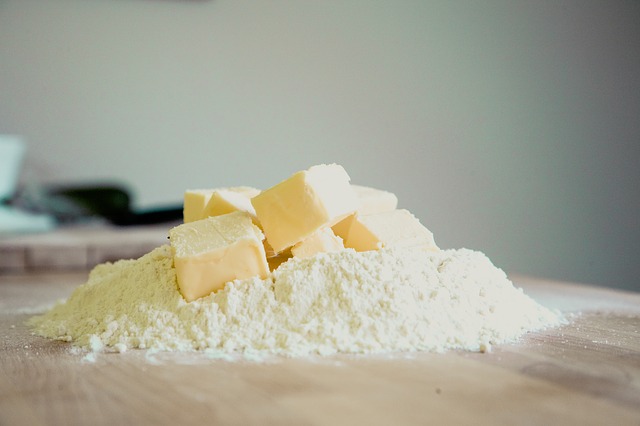
Next, add your COLD fat – butter, shortening or a combination. If you are using a combination, cut up the shortening and add first. Mix it in until the mixture is like sand. Then, add your butter, which should be cut into small cubes, and toss gently in the flour. Working quickly, cut the butter into the flour. I think no tool works as well as your hands to do this step although you can use a pastry cutter. Using a snapping motion between your fingers and thumbs, you will flatten out the butter cubes. Continue this until all the butter is flattened. If your hands are warm, you may want to cool them under the cold tap first. Do not overmix – you want to be left with an uneven mixture with butter pieces that vary in size. Remember, this is what is going to give your crust its flaky layers. So, you do not want your butter to melt or totally disintegrate as you are doing this.

This is the point where you add the ICE water. One train of thought is to never add all the water at once. Add it incrementally so the dough does not get too wet. Start with drizzling in a few tablespoons and gently tossing the mixture. A bowl scraper works great for this. Continue until the dough holds together if you squeeze it in your palm. The reasoning for this is that excess water can lead to more gluten development. However, a too-dry dough can be very difficult to roll out.

Another point of view is that gluten is not necessarily the enemy of soft, flaky crusts. Adding the water listed in the recipe all at once and mixing until it comes together will give you a dough that is easier to roll out without tearing.

After adding the water and mixing, empty the bowl onto a very lightly floured surface or onto a piece of parchment paper. There are two ways you can proceed from here. The easiest is to just gently gather the dough into a ball. If it is still too dry, add more ice water but a small amount at a time. A spritz from a spray bottle may be all you need. If you have added too much water, sprinkle a bit more flour and gently mix it in.

A second way of finishing your pie dough is only slightly more work but gives you even more flaky layers. For this method, you may want to put your dough onto a piece of parchment. Press your dough into a rectangle and then, using the paper to assist you, fold it into thirds – just as you would a business letter – and then fold in half so it is square-shaped. If necessary, using a water bottle, spritz any dry areas with the ice water and then fold. You can also do this folding without parchment by putting your dough onto a floured counter and use a bench scraper to help with the folding.

At this point, shape your dough into the shape of the pan into which you will put it. This will make it easier to roll out to the correct shape. If you have made enough dough for a double crust, cut the dough in half before shaping. Some recommend rolling the shaped dough’s sides along a floured surface to smooth the edges.

The next step varies by which expert you prefer to follow. One recommendation is to wrap your dough into plastic and put in the refrigerator for a minimum of 30 minutes. This hardens the fat, which has warmed and softened during the mixing process. It also allows the gluten to relax. You may wish to freeze the dough at this point for use at a future time. If so, wrap in plastic and then in foil before putting in the freezer.

When you are ready to actually assemble your pie, remove the chilled crust from the refrigerator. If it has chilled longer than 30 minutes, you may need to let it warm up just a bit on the counter, leaving it wrapped. It needs to be soft enough to roll but should still be cold to the touch. As you roll it out, you should see large pieces of flattened butter.

Since rolling the dough “wakes” up the gluten and softens the butter, a different recommendation is to roll out your dough and put it in the pan right after you make it. Then, chill it thoroughly in the pie pan – about two hours.

Transferring it to the pan can be done by folding the rolled-out dough into quarters, placing it in the pan and unfolding it. Another method is to gently roll the dough around your rolling pin and then unrolling it over your pan.

You are now ready to finish your pie, right? No, remember the word I mentioned in the beginning – COLD. You want to chill your pie crust before filling it. Once again, this chilling helps to solidify that wonderful fat as well as minimizing shrinkage during baking.

Some just recommend refrigerating the dough after being put in the pie plate. As you have mixed and rolled out the dough, the gluten strands that have developed are stretched and want to snap back. You have probably seen that as you roll your dough; it doesn’t always stay but tends to shrink. Resting the dough allows the tension in the strands to ease so they remain stretched and don’t shrink back when heated. However, as the pie is baked, the dough is not well set by the time the butter vaporizes. So, the air pockets created by the steam when the butter melts disappear. The soft, not-yet-set dough sinks into those spaces resulting in less flakiness.

Others recommend freezing the dough before baking. As you bake frozen dough, it heats up and sets relatively quickly in comparison to the time it takes the butter to melt. By the time the water in the butter starts to turn to steam, the dough is well into its setting stage. The air spaces occupied by the frozen butter, now that it has largely turned to steam, hold their shape because the dough has started to set. Thus, flakier layers. The downside is that as the water freezes, it holds the stretched gluten in place rather than allowing it to relax. So, when you bake it, the gluten strands snap back and the crust shrinks.

Many recommend a compromise by first refrigerating the dough for approximately 40 minutes to relax the gluten to minimize shrinkage followed by putting it in the freezer for 20 minutes to improve flakiness. Yes, this does require a bit more timing but could lead to a superior result.

Now you are ready to choose your favorite filling. However, before putting your filling in the pan, stop and ask yourself if you need to par-bake your crust. Stay tuned for next week’s Tip as we delve into what par-baking is, when you need to do it and how to par-bake. See you then!
Cooking Tips · Ingredients · Techniques

A Great Foundation for your Pie

In last week’s Cooking Tip about apples, I mentioned the foundation for any good pie is a great pie crust. Do you make your own or do you use Pillsbury? Making a pie crust is so incredibly easy. In fact, I made four different pie crusts today in only about an hour. They are now chilling in the refrigerator waiting to be topped and turned into beautiful pies. Although pre-bought crusts may be fine in a pinch, I encourage you to start making your own. They freeze beautifully and you will always be ready for pie. There are really two parts to making a great pie crust – your ingredients and your technique. In this week’s Cooking Tip, we will discuss the ingredients. The technique will come next week.

The ingredients that go into most pie crusts are minimal – flour, fat and water. Some will also have a bit of sugar, eggs, dairy (such as sour cream or cream cheese) or even nut flours. Let’s address these one by one.

Flour – most of us are going to use all-purpose flour for our pie crusts. I recommend mastering the technique with this flour before branching out as other flours will act differently.

Fat – the main fats used in pie crusts are butter and/or shortening. Lard used to be a stand-by but, today it is hard to get good quality lard. This is a subject for another Cooking Tip. For now, let’s stick with butter and shortening.

The main advantage of butter is flavor. It will give you a flaky crust since as the water in butter converts to steam, it puffs up the crust. The downside is that because butter has a low melting point, it is hard to maintain a nice crimp to your pie crust.

Shortening has a higher melting point allowing it to stay in solid form longer. Therefore, the crimp has a chance to set before it melts. There are those that think that this higher melting point also leads to a flakier crust than butter. It does lack, though, the wonderful flavor of butter.

This contrast is what leads to the recommendation of using both butter and shortening. They claim that using a ratio of 3:2 butter to shortening gives you the best of both worlds.

Personally, I think there is nothing better than an all-butter crust. Yes, the crimp does slump but you can try to somewhat prevent this by proper chilling of the dough, discussed in next week’s Tip. What about you? What is your favorite?

Water – all pie doughs need some sort of liquid to pull everything together. It is usually, although not always, in the form of water. Occasionally the liquid will be provided by another ingredient such as eggs, sour cream or other dairy. One point that is very important is that in order to keep our fat in the dough solid as long as possible, the water should be very cold.

There is a debate about how much water to add to the dry ingredients. Because water leads to the development of gluten, some say to add your water gradually just until you have a cohesive dough. They caution that too much water will result in a tougher crust due to the increased gluten. Others say that gluten is not necessarily a bad thing as it helps your dough to be stronger and less prone to tearing as you roll it out. I will discuss this more in next week’s Tip on the proper techniques of making pie dough.

This balance of too much/not enough water is what leads some experts to recommend adding vodka or any 80-proof spirit for part of the water. There is no discernable alcohol taste but they claim it is easier to roll out. The reasoning is that although gluten forms with the water, it does not with alcohol. They recommend mixing ¼ cup of water with the same amount of vodka and using this mixture in your pie dough. A tender but very easy to roll out dough is the result. I must say that I have not noticed this is much of an advantage when I have tried it.  Have you tried it?

What about the old recommendation of adding vinegar or lemon juice to your pie dough? The sources that recommend this say it reduces gluten development. However, when put to scientific tests, it has been found that slightly acidic doughs actually have more gluten. To get the desired tenderizing effect, you would have to use about ¼ cup, which would give your dough a very sour taste.  So, this is one “old wives’ tale” that we can put to rest.

For basic pie dough, called Pâte Brisée (translated broken paste or dough), the only ingredients are flour, fat and water. An easy to remember ratio is 3:2:1 – 3 parts flour, 2 parts fat and 1 part water where 1 part is 4 ounces. Another recommendation is 2 parts flour to 2 parts fat with 1 part water. As I mentioned above, I use all butter as my fat but you could also do a mixture of butter and shortening. This type of pie crust can be used for any application.

There may be times when you want a sweeter dough, called Pâte Sucré (sugar paste/dough). Although recipes vary, the one I like to use contains flour, fat, sugar and eggs. The latter is what provides the liquid. Any sweet pie or tart filling works great with this dough. A delicious example is a Lemon Tart.

A third version is Pâte Sablé (sand paste). In this type of dough, you use a nut flour in addition to your AP flour. Other ingredients are sugar, butter and eggs. This is the only pie dough of these three where the ingredients are better at room temperature as they will be creamed together in a mixer. This dough can be made into cookies or used in other sweet pastry applications.

Now that you have the necessary ingredients, stay tuned for next week’s Tip on technique. Although ingredients are important, it is really the technique that will make or break your pie crust. It sure is getting delicious around here, isn’t it?  See you next week!

Cooking Tips · Ingredients

It’s Apple Pie Time!

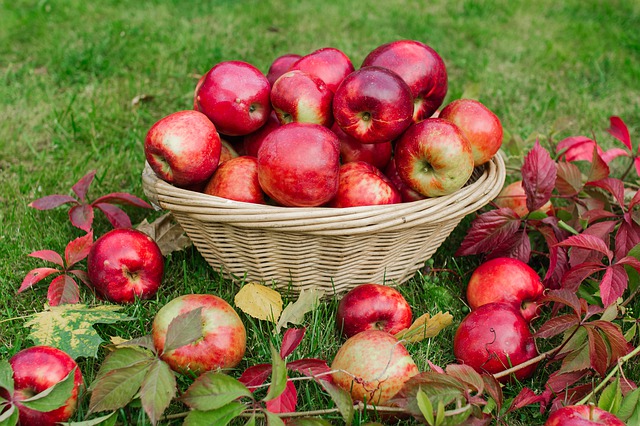
We are right in the middle of apple harvest time according to the Colorado Produce Calendar. I must say that a good apple pie is hard to beat this time of the year. With so many different varieties of apples out there, though, which one do you pick? One of my local supermarkets lists eight different varieties for sale while another one has over twenty! How’s a cook to choose? That is the subject of this week’s Cooking Tip.

Before I get to apples, I want to mention that the foundation of a great pie is a delicious, flaky and tender crust. I am teaching a class on how to make different pie crusts in a few days. If you aren’t able to make it to that class, I can come to your house and teach a “Pie Making” class at your convenience. See my website for more information.

Apples3

When picking an apple to put in your cart, it should be firm with tight, unbroken skins. As many varieties have naturally dull surfaces, do not be afraid of those that do not have the very shiny finish that you often see in the supermarkets. Choose apples without bruises that feel firm and heavy. The fragrance of an apple is a good indicator of freshness and quality.

That is the easy part – more difficult is what variety of apple you should use. I wish I could tell you that there were only certain apples that were suited for certain purposes. That is not true although different “experts” will give you their recommendations. What I have done for you is to consult nine different sources and made a chart of which apples each of these separate sources recommend. If you want the entire chart, email me. What I will do here is to give you a list of the apples that seemed to be favorites with at least four of these sites.

Before I do that, I want to mention one recommendation that you read over and over. That is to use a combination of different apples in your pie. Some apples are considered “Sweet & Firm” while others are considered “Tart & Soft”. Therefore, they will react differently in the pie dish. Many chefs feel you can get the best of both worlds by combining apples from these two different categories. Choose one to provide more texture and another to amp up the flavor. Not all agree, though. Serious Eats states when you do this, you “end up with a pie that’s got nice firm chunks of apple interspersed with brown apple mush.” The choice is up to you. Think of all the great experimenting you can do!

The firm/sweet apples are those that tend to hold their shape better. The soft/tart varieties will cook down to a mushier filling. Here is list of some of those.

FIRM/SWEET

SOFT/TART

Ambrosia Belle de Boskoop
Cortland Bramley
Elstar Cox’s Orange Pippin
Gala Granny Smith
Golden Delicious Gravenstein
Golden Russet Jonathan
Jonagold Macintosh
Liberty Newton Pippin
Pink Lady Northern Spy
Prima
Spartan

Now, here are the apples that seem to please a majority of the sites I consulted if you are making apple pie. Fortunately, most of these are easily found in your supermarket or farmer’s market.

  • Braeburn
  • Golden Delicious
  • Granny Smith
  • Honeycrisp
  • Jonagold

Now that you have picked your apples and brought them home, how can you prolong their freshness? Apple experts recommend:

  • Refrigerate them – apples ripen 6-10 times faster on the counter than in the fridge. Some recommend putting them in a plastic bag before refrigerating. The best temperature is between 30-32°F. The rate at which apples lose flavor and juiciness is proportional to the temperature at which they are stored.
  • Separate apples – wrap each apple in sheets of paper, which prevents one apple going bad and then ripening the rest of them.
  • Picking apples – some are better for longer storage than others. Best keepers are McIntosh, Fuji, Rome and Granny Smith. Apples harvested later in the season are better keepers.
  • Avoid apples with bruises, cuts or soft spots.

We also all know that apples turn brown when cut. This is due to a chemical reaction that occurs when an enzyme is released when the apple is cut and then reacts with oxygen. We probably all have our favorite solution for this. They work either by blocking the oxygen, reversing this chemical reaction, changing the pH of the environment or stopping the reaction by altering the temperature. Here are a few of the suggested actions:

  • Acidulated water – Toss the apples in a bit of water to which an acid has been added, typically lemon juice or cider vinegar.
  • Honey water – Add 2 tablespoons honey to 1 cup water and pour over apple slices. This can keep your apples white for more than 24 hours. Even a 30-second submersion can prevent browning for up to 8 hours.
  • Saltwater solution – Add ½ teaspoon kosher salt to 1 cup water. Add apples and soak for 10 minutes. Drain and store until ready for use. Rinse salt off with tap water just before serving.
  • Plain water – Submerge apples in plain water using a paper towel on top to keep them under the water and away from the oxygen in the air. Or, put the apples and water in a zipper-lock bag with the air pressed out. Do not soak for more than about 15 minutes to avoid altering the texture.
  • Plastic wrap – Wrap cut apples in plastic wrap to keep the oxygen away.
  • Carbonated drinks – Submerge apples in a carbonated beverage such as lemon-lime soda, ginger ale or seltzer for 3-5 minutes. Drain and rinse before use.

There is one final thought I want to leave you with. Have any of you thought, like I do, that fruit just doesn’t taste as good as it used to? I think this all the time. How many times have you bitten into an apple just to find its flavor is bland?  According to Eat The Seasons, “The apples sold in supermarkets are varieties developed for good disease resistance or storage properties, often at the expense of flavor. As author Elspeth Huxley wrote: ‘You cannot sell a blemished apple in the supermarket, but you can sell a tasteless one provided it is shiny, smooth, even, uniform and bright.’ For more interesting and flavorsome varieties, look out for growers’ stalls in farmers’ markets or visit a pick your own orchard.”

When visiting a fruit stand in California, we were told the same thing about strawberries. He told us that what people want to buy are the large, red strawberries. Although they may look pretty, they are often so tasteless whereas the small, less-desired berries are more likely chock-full of flavor. If we would all be more discerning consumers, maybe this would eventually change. In the meantime, I feel fortunate that my husband loves to grow his own fruit and vegetables!

Cooking Tips · Ingredients

The age-old question — what is the difference between sweet potatoes and yams?

Sweet potato D's Harvest
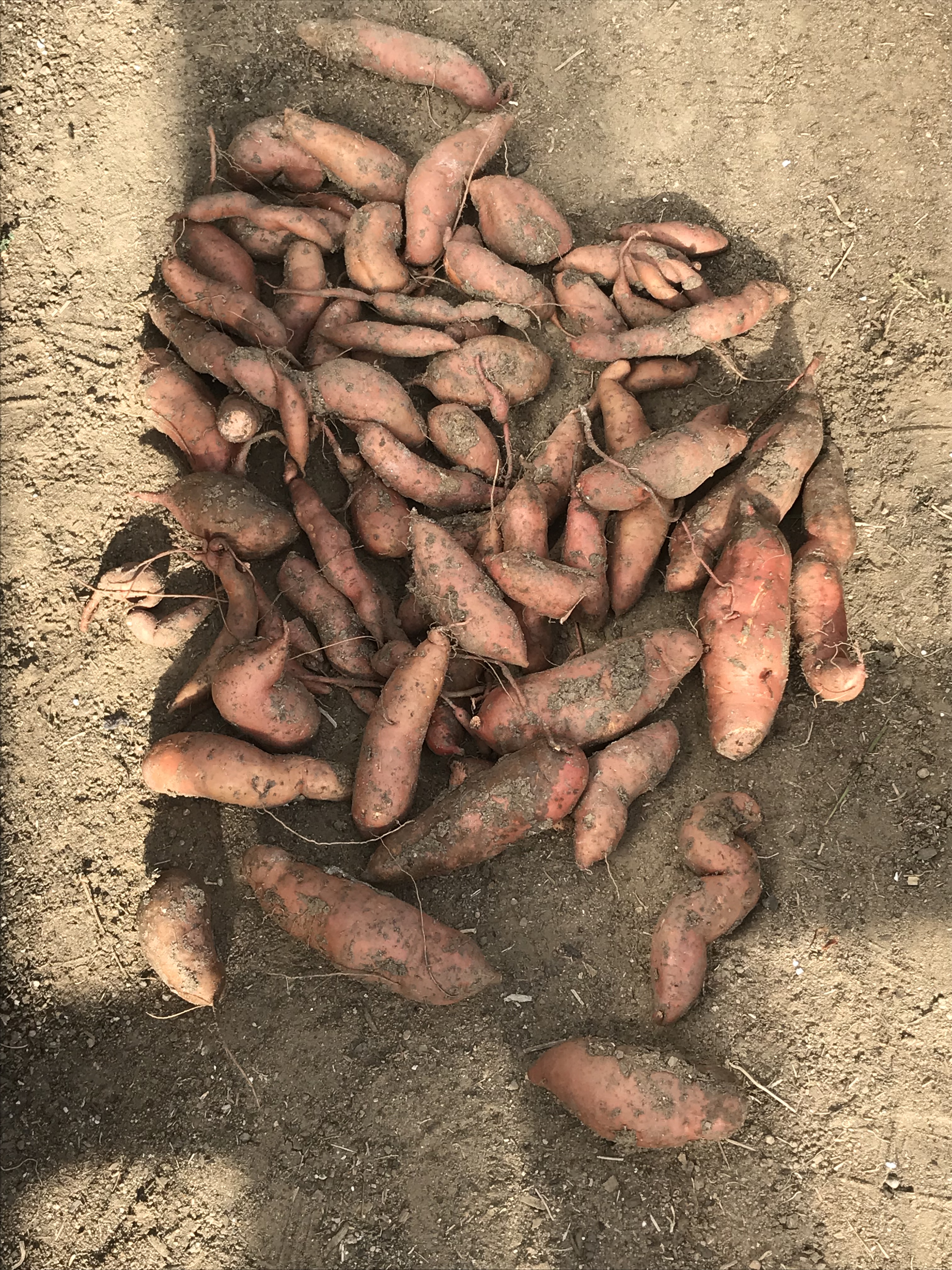
My husband’s 2018 harvest of Beauregard sweet potatoes

We had some dear friends visiting with us recently and they had a suggestion for a Cooking Tip. I figured if they had an interest in this topic that some of you would also. So, for this week’s Cooking Tip is the age-old question – what is the difference between sweet potatoes and yams?

Before I discuss that question, I have an interesting tidbit I ran across during my research. Is it more proper to write “Sweet Potato” (two words) or “Sweetpotato” (one word)? I have always thought it should be two words. However, the International Potato Center writes it as one word to differentiate it from true potatoes. The North Carolina Sweetpotato Commission agrees and would like us all to adopt the one word spelling. (My spell checker does not agree, though!) I will use both spellings in the rest of this tip.

Despite the name, sweet potatoes are not related to the potato. Whereas potatoes are tubers, sweet potatoes are actually a root of a vine in the morning glory family. They are said to originate from either Central or South America. They are grown abundantly in the US, particularly in southern states. Since 1971, North Carolina has been the #1 sweet potato producing state in the United States.

There are many different varieties of sweet potatoes. Here is a link to chart listing almost 125 varieties. I suspect you will only find two or three different varieties in your supermarket. There are different ways to classify them but I find the following the most helpful. It classifies sweet potatoes grown in the US into two major types although there are different varieties among each type.

  1. Firm sweet potatoes – These have golden skin and pale flesh that remains firm when cooked. They were actually the first to be produced in the US and in our stores, they are commonly called sweet potatoes.
  2. Soft sweet potatoes – These have coppery skin and orange flesh that becomes creamy and fluffy when cooked. When this variety became available, stores needed to differentiate them from the firm variety. At that time, African slaves thought they were similar to yams that they had known in their home country and began calling them by that word. This was then picked up and even today they are commonly called yams. Some of my research indicated that the USDA requires stores to add “sweet potato” to the label if they use the word “yam.”

Although they are available year-round, their peak growing season is from fall through early winter. When picking one out, choose one with a smooth skin, firm ends and no soft spots. Avoid storing sweet potatoes in the refrigerator, which will produce a hard center and unpleasant taste. Rather, store them in a cool, dry, well ventilated container. For best results, store them in a basement or root cellar away from strong heat sources.

Yams are a totally different and unrelated tuber. They are related to the lily family. To understand the differences, refer to this chart I adapted from the North Carolina Sweetpotato Commission.


Sweetpotato

Yam

Taste Sweetpotatoes are almost always sweeter than yams. Starchier and more potato-like, usually not very sweet.
Appearance In the U.S. the majority of Sweetpotatoes sold are one of four appearances:

  • Rose color skin with orange flesh
  • Pale copper/tan skin with white flesh
  • Red skin, dry white flesh
  • Purple skin and flesh

All are more slender in appearance than a potato and have tapered ends; however each of these does have a different flavor profile.

Varies considerably. Some yams are the size and shape of small potatoes; others can grow up to 1.5m (5ft) in length and weigh over 100lbs (70kg).Skins may be dark brown or light pink; insides white, yellow, purple, or pink.

What most of us probably think of as a typical sweet potato whether it is made into delightful fries or on your Thanksgiving table in a casserole is what the stores call yams – although as I mentioned, they should be called yams/sweet potatoes. What the store calls just sweet potato is probably not going to be what you want for a traditional sweet potato dish. Are you confused, yet? Don’t be – choose more by color of the skin and even the flesh if you can rather than the name.

Since 2006, a purple sweet potato has become available. The three main types in the US are:

  • Stokes Purple® sweet potatoes – These originated in the US and have purple-tinted skin with a very purple flesh that intensifies when cooked. They are a bit drier and denser than orange sweet potatoes. They are very high in anthocyanins, the antioxidant that gives it the purple color.
  • Okinawan sweet potatoes – These are said to originate from South America but then migrated to the Philippines, China and Japan. Their name comes from the fact when they made it to Japan, they were first grown on Okinawa, a Japanese island. They can also be found in Hawaii and are at times called Hawaiian sweet potatoes. They have beige skin and a lighter lavender flesh, which turns blueish purple when cooked. They are said to have a delicate, slightly sweet taste with a creamy and starch texture.
  • Ube – This is not really a sweet potato but a purple yam. It is a staple in the Philippines and is often used in Asian desserts. It has brown, bark-like skin with flesh that ranges from white with purple specks to lilac. Although it is said to have a sweet and nutty flavor, my husband and I never did develop a taste for it during our time in the Philippines.

Friedas.com has a fun video demonstrating the differences between these three.

I love sweet potatoes any way you cook them. Or, should I say I love yam/sweet potatoes since I strongly prefer the orange-fleshed variety. I have never tried purple sweet potatoes although as I mentioned, I have partaken of Ube – not something I wish to repeat. How about you? Have you tried them? Let me know.

The image shown at the top of this post is my husband’s harvest of Beauregard sweet potatoes from 2018. All I have to say is — DELICIOUS!

Cooking Tips · Ingredients

Butter — which kind to use

Butter1Butter is a wonderful and tasty ingredient although I know it gets a bad rap for health reasons. We use it in all types of baking as well as savory applications. In this Cooking Tip, I would like to discuss whether the type of butter you choose makes a difference to your end result.

One of the main choices you will have to make when purchasing butter is whether to get salted butter or unsalted (sometimes called sweet) butter. Most chefs and food resources will tell you that you should only use unsalted butter in your cooking and baking. These are the reasons:

  • You want to control how much salt goes into your item. Since all salted butters contain different amounts of salt, it is better to go with unsalted butter and then add your own salt as desired.
  • Salt is used as a preservative and extends shelf life. In theory, then, unsalted butter (which has a shorter shelf life) should be fresher.
  • Unsalted butter has a lower water content, something that you want in baked goods. Excess water can interfere with gluten development – a concern for some baked goods. When Cooks Illustrated did side-by-side comparisons of brownies and biscuits made with the same brand of butter – one salted and unsalted – they found that those made with salted butter were a little mushy.
  • Salt can mask butter’s delicate flavor. This is a detriment where butter is the star ingredient such as in buttercream frostings, butter cookies and certain sauces such as beurre blanc.

There are times that salted butter may be preferred. It is great for spreading on bread, adding to your veggies or just when you are not concerned about the amount of salt in your dish. There are also certain recipes that have been developed using salted butter.

Does the brand of butter matter? Perhaps. Cooks Illustrated did a tasting of seven different supermarket brands of unsalted butters. They tasted the butters plain, in pound cake and in sugar cookies. Although there were definite flavor differences, they would not hesitate to recommend any of them for your use. Their ultimate winner was Challenge unsalted butter. I tend to use Land O Lakes. I especially like their half-sticks as I only need to take out a small amount at a time and leave the rest protected in the freezer.

For salted butters, Cooks Illustrated preferred Lurpak, a butter from Denmark. TheKitchn.com preferred President whereas Epicurious preferred Cabot Natural Creamery butter. I like Kerrygold as well as Kroger’s Private Selection Salted French Butter. So, what do you like? Let me know.

Some butters are termed “cultured”. In the culturing process, the cream is fermented before churning leading to that more complex flavors. This may be great for spreading on your bread but probably not so good for baking.

Another difference you will see is European-style butters (aka premium butters). They are touted for having a higher fat content than regular butters although this difference is small. Many think European-style butters are better for baking but this is a personal preference. Because of their higher fat and lower water content, King Arthur Flour cautions that if “used in a recipe not calling for it specifically, European-style butter can create a greasy, sometimes drier result than grade AA butter.”

People often wonder if they can substitute salted butter for unsalted and vice versa. As always, I strongly recommend going with whatever type is called for in your recipe, especially if it is a baked good. The usual question is if you can use salted butter when unsalted is called for. The answer is a qualified “yes” but be aware that you may want to decrease the other salt in your recipe. Try decreasing the salt by ¼ teaspoon per stick of butter.

If, by chance, your recipe calls for salted butter and all you have is unsalted, you may need to add salt. It can be difficult to know how much to add as brands vary in their salt content. Challenge recommends adding ¼ teaspoon for every stick of Challenge unsalted butter. Other brands do not always tell you what they recommend for their brand but Challenge’s suggestion is a good place to start.

Butter is a perishable food item and, therefore, should be stored properly. Most butter manufacturers recommend storing butter in the refrigerator. The American Butter Institute has a slightly different take. They say you may leave your butter at room temperature but there are cautions. First, since salted butter is less likely to go bad, if you want to leave your butter out, this is the kind to go for. If you have unsalted butter, refrigerate.

The FDA states that “traditional butter and margarine have had a long history of safety without time/temperature control.” (Time/temp control is a recommendation that tells us that foods can be dangerous to eat if not kept at the correct temperature for the correct amount of time.) When they say “traditional” butter, it means butter with at least 80% milk fat. Much more caution must be taken with products with lower fat, higher water and lower salt levels. It also presumes that the product is pasteurized.

Butter will eventually spoil. State Food Safety states “For best quality, keep butter in a covered dish and use it within 10 days. You can also refrigerate or freeze butter to extend its shelf life.” Keep butter in its original wrapping when refrigerated. For longer storage, you can freeze it. An additional wrapping of foil will help to preserve its freshness.

I must admit that I love butter for all sorts of uses. An all-butter pie crust is delicious and flaky. Adding a small pat of butter to your pan sauce gives it a wonderful silky texture and fuller taste. Yes, we may need to watch how much we eat but I could never eliminate it totally. Could you?

Cooking Tips · Techniques

Measuring Tools in the Kitchen

As fall starts to arrive, many people begin to bake more. If you live in Colorado, you already know baking can be a challenge due to our altitude. If you missed my Cooking Tips on baking at altitude, see this link. Because we start at a bit of a disadvantage, you want to make sure you are not sabotaging your efforts with other variables. In this Cooking Tip, I would like to discuss one of those variables – measuring cups.

Measuring CupsWhen I teach my cooking classes, I am always amazed that many people do not realize that there are different types of cups for measuring liquids and dry items. Liquid measuring cups are those that have a spout with measuring lines for different amounts of liquid. When you look at them, you will see the top line is below the very top of the cup. These are usually clear, which allows you to easily see the meniscus of the liquid to ensure an accurate measurement.

Measuring cupDry measuring cups are shaped more like a little tub and there are different sized cups for each measurement. The measurement indicated on the handle usually means when the cup is filled to the very top.

The first piece of advice is to use the correct type of measuring cup for the ingredient. When you use a dry measuring cup to measure a cup of flour, you fill it to the top and level off with a flat edge. Trying to use a liquid measuring cup to do this is very difficult. First, it is hard to gauge when you are at a cup since the line is below the top. Also, it is impossible to level it off as you can with a dry cup.

It may be a bit easier to measure liquid in a dry cup but you would need to fill it to the very top to get an accurate measurement and then it is very hard to move without spilling. Cook’s Illustrated did a test where they asked 18 people (cooks & non-cooks) to measure a cup of flour and a cup of water in both wet/dry cups. There was always some variance due to different techniques that people used. However, the variance was even more pronounced when using the wrong type of cup. Trying to measure the flour in a liquid cup led to differences of up to 26%. Measuring liquids in a dry cup resulted in a variance of up to 23%. These inaccuracies can spell disaster for your baking – especially when you are baking at high altitude.

Of course, the best way to measure anything is by weighing it with a food scale. I know that is a step too far for many people. And, most US recipes do not include weight measurements. Accepting that most of you will use measuring cups, you now know how important it is to use the correct type. However, can you just buy any brand and expect it to be accurate?

Unfortunately, the answer is No. A number of food sites have evaluated different brands. Let me summarize for you what they said. If anyone wants links to their actual testing, let me know.

When looking for good measuring cups, you want a number of things. First and foremost, you want accuracy. Other considerations are ease of use and durability. For dry measuring cups, Cook’s Illustrated rated OXO Good Grips Stainless Steel cups the highest. Among liquid cups, Cook’s Illustrated rated Pyrex as the best glass cup and OXO Good Grips Angled cup as the best plastic liquid measuring cups.

Serious Eats felt that Norpro’s Grip-Ez Stainless Steel Measuring Cups were the best dry measuring cups. One nice thing about this set is that it includes a 1/8-cup measure, something that OXO’s set does not. Serious Eats agreed with OXO as the best plastic liquid cup but preferred Anchor Hocking for the glass measuring cups.

A final site that does a lot of testing, The Wirecutter, had their favorite dry cup set as KitchenMade Stainless Steel Measuring Cups and liquid was Pyrex.

A new entry into liquid measuring cups is Euclid. According to the designer, “Euclid is the only measuring cup with a mathematically optimal, tapered design for consistent accuracy across amounts.” Designed by a mathematician, it is an interesting cup that I may just have to try.

While we are at it, what about measuring spoons? Cooks Illustrated found most of the sets they tested were about equal for accuracy but there were differences in ease of use and durability. Their favorite set was Cuisipro Stainless Steel set. For Serious Eats, they found that differences in accuracy to be more of a concern. Their favorite in a rectangular shape was the OXO Good Grips Spice Jar Measuring Spoons. A close runner-up was the RSVP International Endurance Spice Spoon Set. For rounded spoons, they preferred the Amco Advanced Performance Measuring Spoons set. Wirecutter found that Prepworks by Progressive was their choice although their second choice was Cuisipro, Cook’s Illustrated’s favorite.

No matter where you live, if you are a serious home cook, especially a baker, you do want to pay attention to little things such as measuring cups and spoons, which can work against your success. If you live at altitude, there are enough challenges without having to deal with inaccurate measurements. With the recommendations above, I hope you will be one step closer to all of that success in the kitchen!

Cooking Tips · Techniques

Nonstick Cookware

Do you have nonstick pots/pans in your kitchen? Most of us probably do. If you were to look in a professional kitchen, you would probably find only a few, if any at all. Why is that? What do professional chefs know that maybe we do not? That is the subject of this Cooking Tip – nonstick cookware.

When I first started cooking, I had a friend who sold Pampered Chef. My first cookware set, therefore, was a set of nonstick pots/pans from Pampered Chef. I used them for many, many years but as they aged and went to Cookware Heaven and I grew in my culinary knowledge, I replaced them with other types of pots/pans. The only nonstick pans I have now are a couple of small skillets. The rest of my cookware is a mixture: stainless steel, cast iron and enameled cast iron. Because I use induction for most of my cooking, I must take that into consideration when buying cookware. I love my induction cooktop but it does limit my cookware choices. (If you have never read my Cooking Tip on induction cooking, here is a link to it.)

One of the first things to be aware of is that nonstick finishes have different names. Trade names include Teflon, Radiance, Eclipse, Excalibur, Quantanium and Halo. Just because the pan isn’t called “Teflon” doesn’t mean it isn’t the same thing – it just has a different name.

There are some advantages to nonstick cookware.

  • Certain food items are best in nonstick cookware. Making a great omelet is easiest in a nonstick skillet. Flipping out your homemade crepes is a job tailor-made for nonstick. Many also prefer to cook delicate fish in nonstick.
  • They do not require much oil in which to cook, if that is a concern for you.
  • They make for easy clean-up although you do need to take care as I will discuss below.

There are also disadvantages.

  • They cannot withstand high heat. Do not cook above medium-high as at too high of a heat, the nonstick coating can vaporize, which is harmful to the pan and could possibly be bad for your health. (It is definitely bad for birds. According to the Cookware Manufacturers Association, CMA, fumes from a nonstick skillet that has been heated too hot can be harmful or even fatal to birds as they have a very sensitive respiratory system. It is recommended, then, that any pet birds not be exposed to these fumes.)
  • Although it is possible to brown meat in a nonstick skillet, you will not develop the fond that is so important to flavor and making a pan sauce. (What’s fond? – email me for a Cooking Tip on this subject.) Even though you can sear meat in a nonstick pan, I still do not recommend it as it is very easy to over-heat the pan.
  • They are not as durable and are easy to damage if you are not careful.
  • Some people are worried about the nonstick coating for health reasons. According to FDA’s 2017 Food Code “Perfluorocarbon resin is a tough, nonporous and stable plastic material that gives cookware and bakeware a surface to which foods will not stick and that cleans easily and quickly. FDA has approved the use of this material as safe for food-contact surfaces. The Agency has determined that neither the particles that may chip off nor the fumes given off at high temperatures pose a health hazard.” Others have more concerns both for our personal health and the environment. To minimize these issues, do not over-heat them, clean them gently and do not use utensils that could cause the coating to chip off the pan.
  • Concern has also been raised about perfluorooctanoic acid (known as PFOA, APFO or C-8). This was used in the manufacturing of the nonstick coating. There may be debate on whether this chemical is truly harmful but there was enough concern that as of 2015, producers of nonstick cookware in conjunction with the Environmental Protection Agency agreed to eliminate it from their products. An interesting note is that according to the CMA, “While used during the manufacture of the product and while there is a small amount in the finished non-stick liquid product when it is shipped to the applicator, all of the PFOA is driven off in the curing process following the application of the PTFE spray to the pan’s surface. The finished pan does not contain any measurable PFOA after proper curing. The consumer is never exposed to PFOA while using their nonstick pan.”

I feel there is a definite place in our kitchen for nonstick skillets. I do not think other nonstick pots are probably necessary. No matter which you have, be sure to follow the recommended care instructions. Besides the caution against over-heating the pan, here are few other considerations.

  • Take care not to scratch the surface. Nonstick surfaces have gotten much more durable over the years, but rubber, silicone or wood utensils are better than metal ones to minimize the risk of scratching.
  • Store them carefully. Avoid stacking them if possible or, at least, put something like a paper towel or plate between your items to reduce the possibility of scratching.
  • Clean gently. Don’t use an abrasive sponge, which can create tiny scratches, and avoid harsh cleaners. It is best to handwash rather than putting them in the dishwasher, no matter what your instructions say. Also, let it cool before washing it so thermal shock doesn’t cause it to warp.
  • Season your nonstick pan. Before using it for the first time, wash it and dry thoroughly. Apply a thin layer of oil to the surface, heat it gently for about 2 minutes. Allow it to dry and wipe out any excess oil. You may also want to apply a small amount of oil prior to each use. This not only improves its performance, but also prolongs its life.
  • Do not use a nonstick cooking spray. This leaves a stick residue that is very difficult to remove. Rather, use a fat such as butter or oil.

Because of the concerns of the chemicals used in the manufacturing of nonstick pans, companies have been trying to make a “green” skillet. To date, none of these are as nonstick nor do they retain their nonstick quality as long as regular nonstick skillets.

My husband bought me a small Bialetti ceramic nonstick skillet. Although it was very pretty and worked great at first, I found it deteriorated very quickly to the point it lost all its nonstick qualities. This is the only one I have ever tried. What are your experiences with ceramic? Let me know.

I also purchased a “Black Cube” skillet manufactured by Frieling that is made without PFOA. The food cooks on raised stainless steel pixels. It is also advertised to be safe up to 500°F as well as 100% scratch resistant, even with m

In summary, do not feel guilty about having nonstick cookware. Just be aware of what they are best for, how to minimize the risks and how to prolong the life of the cookware.

Cooking Tips · Ingredients

Should you try Coconut Aminos?

I was teaching a Thai cooking class for a bridal shower recently. (Thank you, Diane for booking it! If anyone is interested in booking a fun and yummy cooking party, email me for more information.) We were discussing some of the typical Thai ingredients such as fish sauce, soy sauce, tamarind, etc. Someone asked what I thought of Coconut Aminos. This is an ingredient that although I knew about, I had never used. I decided it was time to learn a bit more about it and Voilà, this Cooking Tip!

Sushi with soy sauceAminos are liquid amino acids. Recall from your high school chemistry/biology classes that amino acids are the building blocks for protein. In recent years, consuming liquid amino acids has become somewhat of a health trend. There are two types: one is soy-based and one is coconut-based. Both forms contain all or almost all of the essential amino acids. This Tip will concentrate on the coconut version.

Coconut aminos is derived from the nectar (or sap) of the coconut palm blossom. It has added salt and undergoes a natural fermentation.

Proponents of coconut aminos claim the following:

  1. If you have a soy or gluten intolerance, coconut aminos could be for you as it is both soy- and gluten-free. (Be aware that non coconut-based liquid aminos are not soy-free.)
  2. These products are lower in sodium than soy sauce. Regular soy sauce is very high in sodium. There is lower sodium soy sauce but that is still higher in sodium than coconut aminos. Be sure to check the label, though, as the different brands of coconut aminos in my local market varied from 200 to 600 mg of sodium per 1 tablespoon. In comparison, my favorite soy sauce has 920 mg/tablespoon and a lower sodium variety has 575 mg. Soy-based liquid aminos may have as much sodium as regular soy sauce. (I wrote another Cooking Tip on how to tell a good soy sauce from an inferior one. If you wish to read it, let me know and I will send it to you.)
  3. Coconut aminos are free of MSG (monosodium glutamate). Some people may have unpleasant reactions to MSG. (  Here is a link to another Tip I wrote about MSG. Be aware that liquid aminos made from soy may contain MSG. I do not want to get too far in the weeds but some scientists say that coconut aminos does contain glutamate, a byproduct of the natural fermentation process. These scientists say that the glutamate in fermented coconut aminos is better tolerated in sensitive individuals. An exception is Braggs, as it is not fermented. However, Braggs coconut aminos is a bit different than the typical coconut aminos in that not only is it non-fermented, it also has added apple cider vinegar.
  4. If you are concerned about GMO ingredients, coconut aminos are made from coconut tree sap, something which is not genetically modified. In contrast, many soybeans are. As always, check the label to ensure it is non-GMO.
  5. It is approved for the Paleo diet.
  6. May will tout other health benefits but be wary of these claims. There is really no true scientific evidence for anything other than the above.

How should you use it? While coconut aminos will add an umami punch to your dishes/sauces, it is not a perfect substitute for soy sauce. Although it is still savory, it will also add a touch of sweetness. If you do not like coconut, do not worry about coconut aminos. It really has no coconut taste. It will also be thinner in consistency.

Are there any downsides to using Coconut Aminos?

  • Some say it is too sweet and is not as savory as soy sauce.
  • Although it is lower in sodium than soy sauce, it is still not a low-sodium product. As always, read the label and follow your doctor’s advice for your sodium intake.
  • It is also much more expensive than soy sauce. Whereas a good soy sauce may be as little as $.25 per ounce, coconut aminos are usually upwards of twice that.

One last comment – If you are just looking for a gluten-free alternative to soy sauce, consider Tamari. Although it is made without wheat, it is still soy-based and has a high sodium content.

Have you tried Coconut Aminos? If so, let me know what you thought. I am going to try it in the near future. If you are interested in my impressions, just email me.

Cooking Tips · Ingredients

Tomatoes — canned or fresh?

20190815_180834aDespite being summer when fresh tomatoes are at their best, I suspect every one of us has canned tomatoes and tomato products in our pantry right now. If you don’t, email me and let me know why not. For the rest of us, we probably have at least some (if not all) of the following: whole tomatoes, diced tomatoes, fire-roasted tomatoes, tomato puree, tomato paste and tomato sauce. These products are the subject of this Cooking Tip.
 

  1.  You can turn whole tomatoes into almost any other tomato product whereas diced tomatoes cannot be magically transformed into whole tomatoes.
  2.  Whole tomatoes come packed either in juice or puree, giving you more choice. She recommends packed in juice if you want a fresher tomato flavor and packed in puree for a deeper tomato flavor.
  3.  Diced tomatoes have calcium chloride added, which helps the diced tomatoes retain their shape. This may be what you want in a salsa but whole tomatoes will cook down better. Most American whole tomatoes also have calcium chloride added but Cooks Illustrated found that it mostly acts near the surface, leaving the interior very tender. You can find whole tomatoes without calcium chloride but you will need to look at the Italian imports. I looked at the whole tomato products at my normal market. They carried their own store brands, Muir Glen, Hunts and Kuner’s. The only one that did not have calcium chloride was a higher-end store brand. Although my store didn’t carry them, the Cento brand does not have calcium chloride listed as an ingredient. A quick perusal of Amazon showed that if you want to stay away from calcium chloride, imported is going to be your choice.
  4.  No seasoning is added, thus giving you more control over the seasoning in your dish. Tomato sauce and stewed tomatoes are going to have a number of things added to them. If you have looked on your grocer’s tomato shelf, it is getting even harder to find any diced tomatoes without some added seasoning.

 
What about substituting one type of canned tomatoes for another? For example, if your recipe calls for diced, will your can of whole tomatoes work? It depends – if you want the tomatoes to hold their shape, whole tomatoes will not do this well. If you do not care about the shape/texture, feel free to substitute. Another caution about substituting is to remember that some of these canned products contain added seasonings, which you may or may not want in your dish.
 
I’m sure most of you have heard that the best tomatoes are San Marzano, the name coming from the region of Italy where they are grown from specific seeds. Today, you can find tomatoes grown elsewhere from the same seeds. Cooks Illustrated did a taste test and found they did not live up to the hype. If you want to read their entire results, here is a link although you will need a membership to view it. For purposes of this Cooking Tip, I will tell you that they preferred Muir Glen, an American brand that was very acidic with a high sugar content. Their runner-up was Hunt’s. Serious Eats agreed that the San Marzano designation wasn’t necessarily a winner. Their preference was for Whole Foods and Trader Joe’s. Finally, just to show you how much an individual’s taste matters, a taste test from TheKitchn put Cento at the top, Muir Glen at #3 and Trader Joe’s last at #9. Who do you agree with? San Marzano or not? Let me know.
 
Tomato products are one of those pantry staples that are a boon to a cook. With this Cooking Tip, I hope you will take a minute to read labels to ensure you get the right product for your dish. Happy Tomato Cooking!