Cooking Tips · Ingredients · Techniques

Flour — so much to know!

When you go to the baking isle in the grocery store, you are often met with a myriad of flour choices. Not only are there a number of different brands but there are also different types of flours. In this Cooking Tip, I will attempt to help you navigate these choices. For this Tip, I am only going to discuss white wheat flour, not whole grain varieties or gluten-free alternatives.
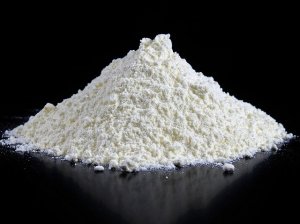
In the US, we name our flours based on the recommended usage such as bread flour, cake flour, pastry flour and all-purpose flour. The differences between these flours is the protein (predominantly gluten) content due to what wheat variety is used in the milling of the flour. Even among these usage categories, protein content can vary from brand to brand or even within different shipments of the same brand. One company that pledges to always have the same protein content no matter where or when you buy their flour is King Arthur Baking Company. King Arthur will also list the protein percentage on the package whereas most other brands will not do so. You can get an idea by looking at the amount of protein on the nutrition label but that is not as straightforward as you would think. The government requires the company to round the amount of protein and list that amount rather than the exact amount. So, any protein content between 3.5 and 4.4 grams would be listed as 4 grams of protein. However, a flour with 3.5 grams would have a protein percentage of 11.6% and 4.4 grams would be 14.6%. Although the government may think that is the same, in terms of baking, those two flours would act differently.

Cake & pastry flours have the lowest protein content (7-9%) and are milled to a fine consistency. They are what gives the tenderness to baked products. (See this Tip that explains why these flours may not be the best choice for bakers in high altitude.)

All-purpose (AP) flour has a protein content in the middle: 10-12%. If you only want one flour in your cupboard, this is the one to choose. Because it has a moderate protein content, you can use it for almost any purpose. You won’t necessarily get the same result as you would if using one of the other flours, but it will most likely be acceptable.

The type of flour with one of the highest protein contents (12-16%) is Bread flour. This is why when bread dough is kneaded, the gluten is developed leading to the structure and chewiness of artisan breads.

Other countries name their flours differently. I will only discuss Italy and France, two countries very well-known for excellent baking. Most European countries name their flours according to the amount of refinement. To explain this, let me review that there are 3 components to a kernel of wheat.

  • Bran – the fiber-rich outer layer.
  • Germ – the core of the seed that is high in fat.
  • Endosperm – the interior layer that is composed of carbohydrates and protein and is the largest percentage of the kernel.

Flour refinement consists of removing the bran and germ and leaving just the endosperm. There is a relationship between refinement and strength. The less refined the flour, the stronger it will be. However, the amount of protein (strength) also relates to the type of wheat used in making the flour and the season it is grown. A full discussion of this is beyond the scope of this Cooking Tip.

In Italy, the flours are named according to the level of refinement.

  • Type 00 – sometimes known as “double zero” flour, this type must contain at least 99.45% endosperm. It is recommended for pastry and pasta making.
  • Type 0 – protein content is between 10-12%, making it more versatile.
  • Type 1 – very similar to Type 0 but it does have a coarser grind. Both types 0 and 1 are used for everyday pastries, bread and pizza.
  • Type 2 – with a protein content of 10-13%, this is what we would call white whole wheat and would be used in more rustic products.

The French have their own labeling system. It is a numbering system where the larger number represents a higher amount of whole grain.

  • Type 45 – the “whitest” of flours, it is best for cakes, croissants, brioche and scones. It is similar to Italian 00 flour and US cake/pastry flour. Protein content is about 8.5-9.5%
  • Type 55 – great for bread, croissants and baguettes. It is the most versatile of French flours with a protein content of 10-12% and compared to Italian type 0 and US all-purpose flour.
  • Type 65 – similar to T55 but with a rougher feel, making it great for artisan breads. It is similar to Italian type 1 and bread flour with a protein content of 12-13.5%
  • Type 80 – in between white and whole grain, similar to Italian type 1 and US high-gluten flour.
  • Type 110 – great for bread baking and close to Italian type 2, white whole wheat flour.
  • Type 150 – whole grain flour, similar to Italian type 2 and whole grain flour. Protein content of 12-13.5%.

True artisan bread makers also pay attention to something called the W-value of different flours. It is related to the strength of the flours. A discussion is beyond the purpose of this Tip but here is a video that talks about it if you are interested.

Who knew there was so much to know about flour? Believe me, I only scratched the surface of the topic of flour. I only hope that not only will it help those of you who are novice bakers but also will stir interest if you are interested in trying French or Italian flours.


Cooking Tips

Culinary Misnomers

I was speaking to a friend the other day and she mentioned she was going to make a German Chocolate Cake for her husband’s birthday. As we were discussing this and looking at recipes, we discovered that the name was a bit of a misnomer. In this Cooking Tip, I will explain that and other confusing names in the culinary world.

German Chocolate Cake

The correct name is “German’s Chocolate Cake”. It has nothing to do with Germany. The story starts with an English-American baker, Samuel German, who worked for the Baker’s Chocolate Company. In their employ in the 1800s, he created a new type of baking chocolate that contained more sugar than the average semi-sweet baking chocolate. It was named Baker’s German’s Sweet Chocolate after its creator. Then, in the 1950s, the Dallas Morning News published a chocolate cake recipe from Mrs. George Clay (Calay), a Texas homemaker. Because she used this German’s Sweet Chocolate, she titled her recipe “German’s Chocolate Cake”. The recipe was picked up by the Baker’s company and widely distributed. Publishers subsequently changed the name from “German’s” to “German”.

French Fries

These tasty snacks did not originate in France. Most food historians feel that these were first made in Belgium. The story is that the residents of some poorer French-speaking regions of Belgium commonly fried up tiny fish from a river. When the river froze over during the winter, they cut up potatoes in the same size/shape of the fish and fried them. It is speculated that they are called “French” after the process of julienning the potatoes, a method of cutting up food that originated in France.

Grape-Nuts

This well-known cereal from Post does not contain grapes or nuts but is made from wheat and barley. There are different explanations for the name. One claims that the name comes from the nutty taste of the cereal and the belief that glucose (grape sugar) is formed during the baking process. A different explanation is merely that the cereal resembles grape seeds.

Long Island Iced Tea

This cocktail is made from vodka, gin, rum, triple sec and/or tequila along with mixers. The original recipe contained no tea at all although today some bartenders do use iced tea. One story is that the drink was created by a bartender on Long Island and it was named for this location. An alternative explanation places the origins in a Tennessee community called Long Island during prohibition. The name “Long Island Iced Tea” appeared very innocent during this time.

Refried beans

Although this name implies that the beans have been fried more than once, they are typically only fried once. Some will argue that the name is appropriate as they are cooked in water first and then fried. However, that is not the way most of us would understand the term “refried”. A better explanation has to do with the translation from Spanish to English. The Spanish name is Frijoles Refritos. The prefix of “re” is often added to words for emphasis. Therefore, refritos means “very fried” or “well fried”. However, when translated to English, the “re” takes on a different meaning, which in this case, leads to a culinary misnomer.

Plum Pudding

This is a classic British Christmas dessert. From the name, you would expect plums to be in the ingredient list. You would be incorrect as there are no plums in it. There are, however, prunes, the dried form of plums along with other dried fruit.

Pork Butt

The names of meat cuts can be confusing and this one is no exception. It does not come from the hindquarters of the pig as you might expect. Rather, it comes from the shoulder area. So, why is it called “butt”? The explanation is that in colonial New England, butchers packed these cuts into large barrels, called butts, for storage and transportation. The name of the cut then took on this misnomer of a name.

Rocky Mountain Oysters

This one is probably fairly well-known. These deep fried bites are not oysters at all. Rather, they are made from the testicles of bulls, pigs or sheep.

Sweetbreads

If you are expecting a bread that tastes sweet, you would be wrong. These are made from the pancreas and thymus gland from young calves, pigs or lambs. The name might have partially come from the fact that organ meats are typically rich and somewhat sweet in flavor. Along with the fact that the Old English word for meat was brǣd, you get “sweetbread”.

These are just a few of what I am calling Culinary Misnomers. There are many more names that might be confusing due to the country’s language. For example, while Americans have a specific idea of what a “biscuit” is, the British use the same term to mean cookies. When we think of pudding, we think of a soft and creamy dessert. In Britain, it can mean any sweet dessert. Then, there are names that seem to give you no idea of what the food is. In this category are “Bubble & Squeak”, “Ants on a Log” and “Eton Mess”. Do you have a favorite Culinary Misnomer or just strange food name?

Cooking Tips · Ingredients

Gooseberries — an uncommon fruit

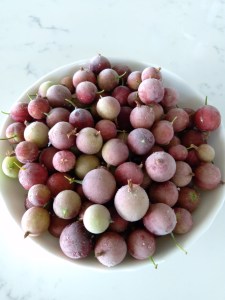
My husband just started harvesting Gooseberries – the photo is a sampling of his harvest. Gooseberries are one of those fruits that we do not see much in the US. The typical supermarket is probably not going to carry them except as a canned item and then, they might only be available around the holidays. You might find them in a good farmer’s market although I suspect that will also be hit or miss.

Although gooseberries are fairly popular in Britain, most Americans have probably never tried them. One of the reasons is undoubtedly because until the 1960s, there had been a federal ban on growing them as well as their relative, currants.

In the early 1800s, they were extremely popular in Europe and this popularity also brought them to the US. In the early 1900s, growing of gooseberries and currants was banned due to a fungal disease known as “white pine blister rust”. Although the disease does minimal damage to the fruits, it is fatal to the white pine trees. As more disease-resistant gooseberry/currant plants were propagated, the federal ban was shifted to the individual states in the mid-1960s. Most states once again allowed the production although there are still some states where it is banned, mostly those in the east where white pines are an important part of the economy. The only state-by-state listing I could find was from 2015. It is recommended to be sure to check with your local extension office for the latest guidance.

There are two main types of gooseberry plants and both are of the genus Ribes.

  • American gooseberry (Ribes hirtellum) – This variety produces smaller fruits that are more resistant to mildew. The plants are usually healthier and more productive. It is native to northeastern and north-central US and the adjacent Canadian regions.
  • European gooseberry (Ribes uva-crispa) – This variety yields larger fruit that is also said to be more flavorful. It is native to the Caucasus Mountains and North Africa.
  • Other plants that use the name gooseberry but are distinctively different include Cape gooseberry, Chinese gooseberry (kiwi) and Indian gooseberry.

The time for finding fresh gooseberries in your market (or harvesting them yourself), is from early June to early August. Early in the season, the fruit will be green with a veined skin. They will be firm and very tart. These are not normally eaten raw but rather cooked so they can be sweetened and then used in sweet or savory dishes. Those that ripen a bit later produce softer and sweeter fruit that can be yellow or red and are good eaten raw.

If you have the good fortune of finding fresh gooseberries, they do require just a bit of prep work. After rinsing them, they should be topped and tailed with a scissors. They are one of the most shelf-stable berries and will keep in your refrigerator in a covered container for at least a week and possibly up to three weeks. For longer storage, they freeze extremely well.

What can you do with them? As I mentioned, they can be used in both sweet and savory applications. As everyone’s palate is different and the actual gooseberries may vary in tartness, getting them to the proper sweetness is something you need to do bit by bit. One recommendation is to start with two parts gooseberries to one part sugar and then adjust to your taste.

Here are a few ideas.

  • Jam
  • Jelly
  • Compote
  • Chutney
  • Pie
  • Ice cream and sorbet
  • Beverages such as lemonade, cordials or cocktails.
  • Trifle
  • British Fool
  • They pair extremely well with seasonal fruit such as elderflowers and strawberries.

My husband’s preferred way is to make them into a gooseberry pie. This recipe from a working farm in New York called Beekman 1802 uses fresh ginger and orange in the flavoring and is delicious.

Have you tried gooseberries? Where do you get them? Do you grow them? What is your favorite way to use them? If you have never tried them, I encourage you to seek them out although I must admit it may be difficult unless you have a wonderful farmer husband as I do!

Cooking Tips · Ingredients

Spice Blends – Buy or Make?

Spices are such a necessary component in our cooking and baking. Continuing to expand your knowledge of spices is one way to improve your culinary creations. I have written a prior Tip on spices in general and I have written some other Tips on particular spices. In this Tip, I would like to discuss some of the more common Spice Blends.

If you ask ten different chefs for a list of their favorite spice blends, you would get ten different lists although I dare say there would be some commonalities. I am going to try to focus on those commonalities to help you understand the world of spice blends.

Spice blends are just what the name says – mixtures of different spices. I usually encourage all of you to make your own spice blends rather than buying numerous blends made by some company. You can make only the amount you want and you can personalize it to your own preferences. This is especially true for spice blends that contain individual spices that you already have in your pantry. That being said, there is a place for purchasing premade blends.

If it is a blend that you are going to use a lot, go ahead and purchase it. Also, if it is a blend that contains individual spices that you do not normally have on hand, it might be good to just purchase that blend. Just try to purchase the freshest and smallest amount you can. Something else to be aware of is even though a spice blend from Company A has the same name as one from Company B, that does not mean they will taste the same. They might have different amounts of the spices and might even have different spices in them. So, read the labels carefully and when you find one you like, stick with that particular brand.

Now, on to some popular blends that you might want to consider.

Barbecue seasoning

This blend usually adds heat and smokiness to your dish and is normally used to season meats before grilling or roasting. Common spices include salt, garlic, red pepper, onion, sugar and smoke flavoring. This is certainly one that you could make just when you need it, but if you have a favorite premade blend, go ahead and purchase it.

Berbere

Hailing from Ethiopia, this blend is a sweet & hot blend that is used in beef stews, lentils, chicken recipes and veggie dishes. Blends can vary but you will commonly find cinnamon, paprika, fenugreek, cardamom, coriander, cumin, cloves, nutmeg, garlic powder, onion powder pepper (red & black), ginger and salt.

Cajun seasoning

Blends carrying this name vary widely but are typically hot. This blend is used in Cajun cooking, especially in stews and seafood, rice and veggie dishes. It can be added to coatings or just directly onto your ingredients. Common spices include onion powder, garlic powder, paprika, thyme, oregano, chili, salt and pepper (white, black & red).

Chili Powder (not chile powder – see this Tip for why)

This is a blend of spices commonly found in Latin American cooking. It is another blend where the actual spices can vary greatly but you will often find different types of ground chilis (ancho, cayenne, chipotle), paprika, cumin, Mexican oregano and salt. Occasionally you will also find garlic powder and onion powder.

Curry Powder

Curry powder is actually a British invention that was meant to help them create an Indian dish. You will not find a bottle of “curry powder” in an Indian kitchen. Each cook will make his/her own and it can vary greatly from cook to cook and from region to region. What we find on our shelves typically includes turmeric, coriander, cumin, fenugreek and red/black pepper. Some varieties might also include mustard, ginger, anise, cinnamon and/or cardamom.

Dukkah

This is an Egyptian blend that contains not only spices but also nuts. Typical ingredients include anise, coriander, sesame seeds, hazelnuts/almonds. It adds a nice crunch to a coating or to a grain dish.

Five-Spice Powder

This blend has a warm spicy-sweet flavor. It usually includes five spices but not always the same five. It is one of the blends that I think you would be better off making yourself when you need it as you will probably already have most of the individual spices – cinnamon, star anise, fennel and cloves. The final traditional spice that you may not have is Sichuan peppercorns. These are not true peppercorns but rather are the dried berries of the Chinese prickly ash bush, a member of the citrus family. They are not hot but are said to impart a tingling sensation. Some mixtures may also contain ginger, galangal, white pepper and/or nutmeg. To make your own without the Sichuan peppercorns, just use a generic peppercorn. Even some premade blends will do this.

Garam Masala

Synonymous with India, the name of this spice mix could be translated to “hot spice mixture”. The actual mixture of spices will vary just as with curry powder. It is used to add heat and a wonderful aroma to your Indian dishes. Common spices in this mix are cumin, coriander, cardamom, cinnamon, cloves, bay leaf, mace, nutmeg, star anise, fennel and black pepper.

Italian Seasoning

This is more of an herb blend than a spice blend. It is made from dried herbs, commonly basil, Greek oregano, thyme, rosemary and maybe marjoram and/or garlic. It is used to season meat, sauces and other Italian dishes.

Jamaican Jerk seasoning

Another blend with some kick to it, this seasoning can be used on fish or meat and also in marinades and dressings. The actual spices can vary but commonly include salt, sugar, allspice, thyme, cloves, ginger, cinnamon, onion and chile pepper. Some may add black pepper, nutmeg and/or brown sugar.

Lemon Pepper seasoning

A simple blend of black pepper and lemon zest, it can add a citrusy note to your meat or veggies.

Old Bay Seasoning

This is a trademarked American seasoning mix originating from Baltimore, Maryland. It is used in seafood dishes such as chowders, bisques and pastas but can also be used in veggie dishes. According to the container, it includes “celery seed, salt, spices (including red and black pepper) and paprika”. A more detailed list shows those spices might be allspice, bay leaf, cloves, cinnamon, nutmeg, cardamom, mace, ginger, and mustard.

Poultry Seasoning

This is a combination of herbs and spices like nutmeg, sage, thyme, marjoram, rosemary, and black pepper. It can be used to season not only poultry but also seafood and veggies.

Pumpkin Pie mix

This is also in my “make your own” list because the components are so common – cinnamon, ginger, allspice, nutmeg and cloves.

Quatre Epices

The translation to English is “four spices”. This is a French blend of black and/or white pepper, cloves, nutmeg and ginger. It is perfect for soups, stews, veggies, sausage and pate.

Ras el Hanout

This is a North African blend that is used to season lamb, chicken, lentils and veggie dishes. It often contains cinnamon, cumin, turmeric and pepper (black & red). A 12-spice blend is common but others can contain more than 30 spices. Besides the above, other commonly included spices are allspice, paprika, coriander, cloves, cardamom, mace, nutmeg, ginger and/or anise.

Seafood Seasoning

This is a general purpose seafood seasoning mix that is typically made of celery salt, mustard, red pepper, black pepper, bay, cloves, allspice, ginger, mace, cardamom, cinnamon and paprika. It may also include parsley, sage, rosemary and/or marjoram.

Za’atar

A common Middle Eastern blend that is often used on grilled veggies or added to yogurt or hummus. It commonly contains thyme, sesame seeds, salt and sumac. Sumac is classic for this blend and gives it a slightly sour and citrusy component. Some blends also include oregano, cumin, black pepper, marjoram and/or savory.

As you can imagine, the above is just a short list of some of the most popular spice mixes. The one I always keep in my spice drawer is Italian seasoning. Even though I could easily make this mixture, it is something that I use often and I like the taste of the one I buy. I also usually have a chili powder (along with some chile powders such as ancho & chipotle) and a couple different curry powders. I do have a mixture of premade blends but they are there only because they were free gifts. The other blends I have are all homemade such as five spice powder, jerk seasoning and garam masala.

What about you? Do you have many blends? Do you purchase them or make them yourself? Whichever, have fun enlivening your dishes with all of these wonderful and delicious spices!

Cooking Tips · Ingredients · Techniques

Is it Caramel, Toffee or Butterscotch?

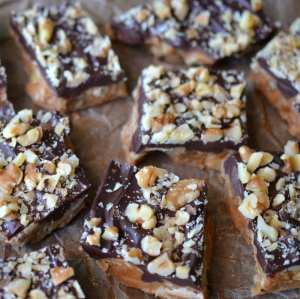
Toffee has been on my mind recently for a couple of reasons. First, I am getting ready for our local Honey Festival. One of the goodies I make for this festival is Orange Blossom Honey & Walnut Toffee. The other reason is that I am also prepping for a class I will be teaching on British Fare. One of the British desserts I might be making is Banoffee Pie. It gets its name be combining the two major ingredients – bananas and toffee. I have written a prior Cooking Tip on Caramel before but decided to write a Tip on how those two differ from each other and from butterscotch. I will give you the classic differences but please realize that many recipes may depart from these classical definitions and use the names interchangeably.

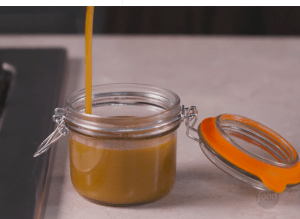
Caramel is basically cooked sugar. There are two main methods of making caramel – a wet method and a dry method. The difference is whether or not water is used. See the above referenced Tip for more detailed information. Whether you use the dry or wet method, when you are done, you have caramel. However, to turn that into a beautiful caramel sauce, you will want to add cream to the finished caramel.

Toffee is actually a candy made from caramel and butter that is cooked to the hard-crack stage. To make it, you add white sugar, water and butter to a pan and cook until the butter melts and the sugar begins to turn brown. It is done when it reaches the appropriate temperature.

Butterscotch is made with butter and brown sugar that is heated to the soft crack stage. Since brown sugar contains molasses, this gives butterscotch a darker color and a deeper favor. It is also moister and more acidic, the latter which helps to fight crystallization.

Differences

Ingredients

  • Caramel is made from white sugar either by itself or with water and then cream.
  • Toffee is made from white sugar and butter.
  • Butterscotch is made from brown sugar and butter

Flavor

  • Caramel usually contains cream rather than butter. Cream contains lactose. As lactose cooks, it undergoes a process known as the Maillard reaction. This gives it a brown color but also a deep, nutty flavor.
  • Toffee will have a darker flavor since it is cooked much longer.
  • Butterscotch will have the flavor that is imparted from the molasses in the brown sugar.

Temperature

  • Caramel is cooked to whatever darkness you like.
  • Toffee is cooked to the hard-crack stage.
  • Butterscotch is cooked to the soft crack stage.

Have you every tried making these delightful confections? Caramel is probably the trickiest due the crystallization risk as explained in my prior Tip. The other concern with all of these is for those of us who live at altitude. You will notice that when I mentioned cooking them, I talked of hard and soft crack stage. Although these correlate with certain temperatures, those are meant for people who live closer to sea level. See my Tip on Candy Making for altitude adjustments.

Cooking Tips · Ingredients

Sumac – a Taste of the Middle East

I have written prior Cooking Tips on herbs and spices in general and also some specific spices and/or herbs. In this Tip, I want to discuss a less common spice – Sumac.

Sumac comes from the berries of a plant that is native to the Mediterranean, the Middle East and parts of Asia. It is a relative to the cashew family. Because of that, avoidance is advised for those with nut allergies. Although most varieties of the sumac plant are not poisonous, there is a poisonous sumac – Toxicodendron vernix. It has whitish berries rather than red.

The sumac plant bears white flowers that develop into rust-colored berries and grow in dense clusters. The berries are harvested before they ripen and dried in the sun. They can be left whole or ground into a powder. The latter is how you will find it in most of our markets. This is at least in part due to the fact that grinding the berries is very difficult in a home environment and so, is usually done where they are picked.

The flavor of sumac is primarily tart and citrusy with some floral notes and an astringent finish. It is said that the Romans used sumac as we would use lemon juice or vinegar.

Besides adding that tartness to the flavor of a dish, it also imparts a dark red color. Lior Lev Sercarz, author of The Spice Companion, notes that the color of sumac can vary depending on the season. He says that has caused some marketers to add beet powder. They also salt to prevent clumping. Check the label of what you purchase to see if anything has been added. If it does contain salt, reduce the amount of salt in your recipe to compensate for this.

The use of sumac is prominent in Middle Eastern cooking but it can be used any time you wish to add a tart element to your dish. Because of its red color, it is also often used as a pretty garnish.

Common uses include:

  • Rubbing on kebabs and grilled meats
  • Stirred into rice dishes
  • A garnish for hummus or tahini
  • It is a major ingredient in the Middle Eastern spice blend known as za’atar.
  • Marinades and dressings

Serious Eats polled a number of chefs and asked how they liked to use sumac. Their answers were varied.

  • An all-around Mediterranean dish topper such as sprinkling on feta cheese, baba ganoush, hummus, roasted fish/chicken
  • Popcorn duster along with salt
  • Add to oil used for dipping bread
  • Season fried foods such as corn fritters, fried brussels sprouts, fried garbanzo beans
  • Meat loaf
  • Meat marinades
  • Sumac donuts
  • Chocolate sumac ganache

Although it is not that difficult to find, some people want to know what to substitute if they do not have sumac. If you are making a dish for the first time and it calls for sumac, I strongly advise you not to substitute. If you do, you will not know how the dish is really supposed to taste.

That being said, here are some possible substitutes. The first four are more strongly sour and so, should be used sparingly as a substitute.

  • Lemon zest
  • Lemon pepper seasoning
  • Lemon juice
  • Vinegar
  • If looking for the red color for garnish, consider paprika.

I do have sumac in my spice cabinet but, I must admit, I do not often use it. I need to think of it more often to add that citrusy, tart flavor as well as the red color. How about you? Does it deserve a place in your kitchen?

Cooking Tips · Ingredients

Sausages – so many varieties!

In last week’s Cooking Tip, I discussed why and how you would go about making your own sausages. I realize that probably very few of you will pursue this and would prefer to buy them. Because of that, I want to explain the different types of sausages so you will be informed when you go to the store.

There are different ways that people categorize sausages. Let’s start with the most basic categorization.

  1. Fresh sausages – these are raw sausages and must be cooked before eating. After purchase, they can be refrigerated for a few days or frozen for a few months. Breakfast sausage, Italian sausage and Mexican chorizo are three common varieties of fresh sausage.

  2. Cooked sausages – these have been fully cooked by some method. Even though they can be eaten without any heating, it is often recommended that they be cooked or thoroughly heated before consuming. They also should be refrigerated or frozen. The label should tell you whether they have been cooked or not.

  3. Cured sausages – also known as preserved sausages, they have been treated with salt and other chemicals to not only extend storage life but also to add flavor. They need no further cooking and also do not require refrigeration until they are sliced. Examples are pepperoni and Spanish chorizo.

Another categorization would be by type of meat such as pork, beef, poultry, game, seafood or vegetarian.

Sausages can also be categorized by country of origin. Wikipedia lists about 60 countries and each of them have one or more sausages listed for that country. Let me mention just a few of the most common.

United States

  • Breakfast sausages – usually made from pork and typical seasonings include sage, maple syrup and bacon.
  • Hot dogs – also known as a frankfurter after its German origins, this has been the quintessential baseball park sausage in the US since the 1900s.
  • Andouille – originally from France, it is now mostly associated with Cajun cuisine. It is usually pork-based and flavored with Cajun flavors of garlic, pepper, onions and wine.

German

  • Bratwurst – there are said to be over 40 varieties of bratwurst. They are most likely to be mild and often incorporate baking spices in the sausage.
  • Knockwurst – a garlic-flavored sausage made from beef and/or pork.
  • Liverwurst – made from liver and other organs, usually pork but can be beef.

Mediterranean

  • Italian – sweet & hot. The latter contains hot pepper flakes whereas the former contains sweet basil. The word “sweet” does not mean it will taste like a dessert, only that it is not hot. The other seasonings will vary by recipe but often contain fennel.
  • Spanish Chorizo – this is a cured pork sausage that includes paprika for red coloring.

Latin

  • Mexican Chorizo – this is a raw pork sausage and seasoned with typical Mexican spices. It can vary in its level of spiciness. Some stores may carry beef or poultry versions.

Eastern European

  • Polish Kielbasa – in Polish, “kielbasa” means sausage. In our stores, this will be a longer pork sausage, typically shaped like a “U”.

British

  • Bangers – one of the things that make these different than American sausages is the presence of a filler. In Britain, it is a wheat-based filler known as rusk.
  • Cumberland – a traditional British sausage that is typically long in shape and spiced with pepper.
  • Black pudding – known as blood sausage in other countries, it contains cooked, congealed blood that is mixed with fat and grains. It is known as Boudin in France.

Asian

  • Lap Cheong – this is the Cantonese word for sausage and is a smoked, sweet and salty pork sausage seasoned with soy sauce and rice wine.

This is just a brief listing of some common sausages that we all probably recognize. However, there are so many different varieties and flavors out there. In my freezer right now, I have British bangers, Bratwurst, Italian (sweet and hot), smoked jalapeno cheddar, chicken with pineapple and bacon and wild boar & pork with apricot and cranberry. That final one is my favorite. What’s yours?

Cooking Tips · Techniques

Ever thought of making your own sausage?

Even though I try to limit my intake, I absolutely love sausage. My husband says it must be my German heritage coming through. I am not sure about that but there are not many sausages that I don’t enjoy eating. Because of that, I always think I should be spending more time making sausages at home. Making your own sausage can be fun but there is quite a bit to think about. That is the subject of this Cooking Tip. This will be more of an overview of sausage making. If you intend to become serious about making sausage, I would recommend investing in some books by experts.

You may first ask Why would I want to make my own sausages? Other than the satisfaction of trying and successfully learning a new skill, you know what exactly is in those sausages you are eating. Also, you can control the fat content to what you like. Finally, you can be creative and come up with your own flavors that you cannot buy in the store. Read on for what equipment and ingredients you will need as well as an outline of the actual process.

Equipment

  • Meat grinder
    • This is not absolutely necessary but you will obtain a much better texture by using one. You can get a stand-alone meat grinder or an attachment for your stand mixer.
    • You can use a food processor but be careful that it doesn’t heat up the meat too much. Also, because of the final texture of the product, this method is better suited for patties rather than the links that are produced by stuffing the meat into casings.
  • Bowls
    • You will want one to hold the meat and a larger one that will be filled with ice that you can place the smaller one into. It is important to keep everything very cold.
  • Sausage stuffer
    • Unless you want to just make a patty shape, you will need a sausage stuffer. Once again, there are stand-alone stuffers but there is also an attachment for your stand mixer.
  • Pricking tool
    • Used to remove air bubbles. You may also use a small sterilized skewer or needle.
  • Food scale, preferably one that weighs in grams.
  • Food thermometer – to ensure the sausage is cooked to a safe temperature.

Ingredients

  • Meat
    • Although pork is the most common, sausages can also be made with chicken, beef, lamb, goat, game meat and seafood. You can also make vegetarian sausages.
    • You want an ideal balance of lean meat, fat and liquid. Too little fat and you get a dry sausage. Too much fat and it will be greasy. This can vary based on personal preference but a good place to start is 75% lean and 25% fat. The final sausage should also contain about 10% water.
    • If using pork many experts use pork butt but others use pork shoulder.
  • Added fat
    • You do not always need to add fat but, at times, your recipe will specify this to ensure the correct ratio.
    • What is often recommended is “back-fat”, a solid fat that comes from along the back of the animal. However, belly fat will also work.
  • Fillers
    • Some recipes will specify some sort of filler that acts as a binder.
    • It might be bread, rice or something known as “rusk” — a non-yeasted hard bread.
  • Salt
    • This is not a time you want to “wing it” with the salt as it is essential for a number of reasons. First is its role in bringing out flavor. It also helps to discourage microbial growth. Finally, it aids in the final texture and ability to bind.
    • Experts vary a bit on how much salt to use. They recommend anywhere between 1½% to 3% with most advising 2%.
    • Another piece of salting advice is to salt the meat up to 8 hours before grinding. In testing, this resulted in juicier meat.
  • Other seasonings
    • Although salt is essential, the other spices are up to you.
  • Curing agents
    • If you wish to make dried or semi-dried sausages, you should read up on curing agents like Prague Powder or Morton’s Tender Quick mix. These contain potassium nitrate.
  • Sausage casings
    • These are not required if you wish to make patty-shaped sausages but you will need them for the rope-like shape.

Directions

  • First, I highly recommend you wear gloves, especially for the mixing and stuffing part.
  • This is also a time to be very organized and have all your equipment and ingredients gathered together and ready to go.
  • One of the most important pieces of advice is the importance of always keeping everything cold.
  • Cut the meat into cubes. To make this easier, you may want to put the meat into the freezer for a short time before cutting it and again afterwards to ensure it is easy to grind. Chilling also helps to counter the heat that will be created by the grinding process. After cubing, spread out on a baking sheet and freeze for 30-60 minutes, until the surface of the meat feels crunchy but it is not frozen solid.
  • Place in grinder and grind with the recommended grind plate. Catch the meat in a bowl placed over another bowl that has been filled with ice.
  • Season the meat and knead together for about 5 minutes. There are those who prefer to season the cubed meat before grinding. If you do this, put the seasoned meat into the refrigerator for 2-4 hours before grinding for the best flavor.
  • The mixture warms as you knead it, which helps with emulsification. When properly mixed, it will look homogenous, will feel like a paste and will start to stick to the bowl. Some recommend putting a small amount in the palm of your hand, turning your hand over. If the meat sticks to your hand, it has been properly mixed. This is the point when you would fold in any ingredients such as bacon, nuts or dried fruit.
  • To test whether the seasoning is to your liking, fry a small amount and taste, adjusting the seasonings as you desire. This process of frying a small amount can also help you evaluate its texture. If it is crumbly and releasing fat as it cooks, it needs more mixing. When done, cover with plastic wrap and refrigerate again.
  • Stuff the casings, if using. Follow the instructions on your machine for this step. Realize that it will take some practice before you get good at it. Once you are skilled at this, you probably will be able to twist the sausages into links as they are coming off the stuffer. However, there is nothing wrong with just stuffing a longer link and tying off the end. Then, twist the length you want in one direction and the next one in the opposite direction until all the links are formed.
  • After stuffing the sausage into the casings, look for any air bubbles and prick them with a small sterilized skewer, needle or pricking tool.
  • Finally, either cook them to enjoy for your dinner or freeze them for future use.

As I mentioned in the beginning, this is just a short primer to help you decide if you want to venture into the world of making your own sausage. If you do, I would seek out some books on sausage making for more detailed instructions. I like the book Sausage Making by Ryan Farr for the great description and photographs of the actual process. I am not a fan of many of the recipes but there are many other sources for those.

There are so many different types of sausage to try to make, or buy if you prefer. Stay tuned for the next Cooking Tip for a primer on all the sausages there are out there to enjoy.

Cooking Tips · Ingredients

Lavender in the Kitchen!

My husband has planted lavender in various places around our house and I love it. I had the wonderful blessing of visiting the Provence region of southern France during lavender season. It was an all-sensory experience as I stood in a lavender farm. I saw the beautiful flowers; I smelled the incredible aroma and I heard the bees buzzing all around. I even ate a meal where every course included lavender in it. Lavender is not only a beautiful plant but can also be a culinary herb. Since it is not the most usual of ingredients, I decided that this would be an interesting Cooking Tip.

Lavender is a member of the mint family. According to the U.S. Lavender Growers Association, there are over 45 different species and more than 450 varieties. All of them are beautiful but not all of them have a place in your kitchen. The name lavender comes from the Latin verb lavare “to wash” and throughout history and today, it has been commonly used in soaps. Since you do not want that “soapy” flavor in your dishes, it is important to know which lavender to use.

In the kitchen, you want to make sure you are using “culinary” lavender. The use of the word culinary refers both to the cultivar of the lavender as well as the processing. Any plant of the genus Lavandula is known as lavender but not all varieties are used in the culinary world. The most typical is Lavandula angustifolia, (English lavender) which has less oil than the more aromatic type used in perfumes or soaps. It has a sweeter and more palatable flavor for culinary uses. Those plants known as Lavendula x-intermedia are edible but since its flavor is more pungent and resinous, it can make your dish bitter.

In terms of processing, lavender is harvested, the buds are separated from the stems and then cleaned by sifting through screens to remove leaves and any remaining bits of stem. Culinary lavender is sifted multiple times to ensure all you are left with is the buds. Also, much of the commercially available lavender is grown for potpourri and the flowers are sprayed with chemicals that taste bitter and could be toxic.

The entire plant is technically edible including the flowers, stems and leaves but normally only the buds are used in cooking. The other parts are more pungent and bitter and the leaves are tough.

Unless you are growing your own lavender, you will need to purchase it. It can be purchased fresh, dried, as an extract or even a paste. If trying to substitute dried for fresh, you need to decrease the amount just as with other herbs. Only use ⅓ to ½ as much dried as fresh.

Here is some general advice on using lavender in the kitchen.

  • Choose the right lavender as discussed above.
  • If you are just beginning to cook with lavender, you might want to start with tested recipes. That way, you can get used to how to use it before experimenting on your own.
  • Using lavender in your dishes is not as easy as just opening the bottle and tossing some in. Because lavender is very floral, you need to use it carefully so it doesn’t overpower your dish. If a dish with lavender tastes like soap, you either used the wrong cultivar or you used too much. This is definitely one of those ingredients where the adage “less is more” is so true.
  • Pair with the right flavors.
    • Lavender does very well with tart and fruity ingredients like citrus juice and zest.
    • It also pairs nicely with creamy ingredients such as ice cream and custards.
    • In savory dishes, the strong flavor of lavender is great with other strong flavors such as lamb and venison.

There are various ways in which you can add lavender to your sweet and savory dishes.

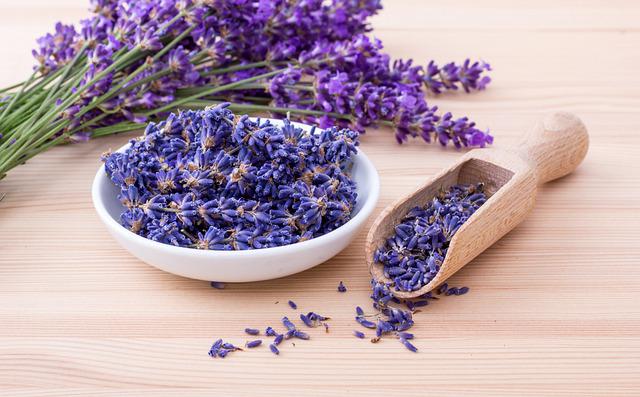
  • Whole flowers – biting into the flowers is not a pleasant experience. There are only a couple of ways in which the whole flower buds are used.
    • First is as a garnish.
    • Second is when the buds are put in a container of sugar and set aside in an air-tight container. Over the course of a week, the natural oils permeate the sugar crystals to make Lavender Sugar.
  • Ground – otherwise, the buds should be ground up before using. You may want to grind the buds with part of the sugar you will be using in your dish or baked item.
  • Infusions
    • The flowers can be put into hot water to make an infusion. After straining the flowers out, the liquid can be used.
    • Infusing the buds into a simple syrup is something that is often done to use in beverages.
    • You can also infuse the buds into hot dairy such as milk or cream. One of my favorite things to make that uses this method is Chocolate Lavender Truffles.
  • Herb/Spice blends – the most typical blend is Herbes de Provence. This is most literally defined as “herbs like they use in the region of Provence in France.” Therefore, there are many different recipes for this blend. In France, there might not be any lavender at all but in the US, lavender is typically used along with other herbs such as marjoram, rosemary, thyme and oregano. This blend is often used to season meats.
  • Lavender butter – add 7 Tbsp finely chopped buds to ½# softened butter.
  • Lavender honey – add 4 tsp chopped blossoms to 1 cup warm honey. Add 1 Tbsp lemon/lime juice. Steep for an hour, reheat and strain.

Lastly, I want to comment on lavender essential oil. This is a product that is made for aromatherapy and/or in body creams and soaps. Most sources warn that it can be unsafe for ingestion. My recommendation is to stay with the flowers, the extract and/or the paste for culinary purposes.

If you are making a recipe that calls for lavender and you do not have any, what could you substitute? As I have said numerous times in these Cooking Tips, do not substitute if you have never made the recipe before. If you are intent on substituting, here are some possibilities.

  • Rosemary – as lavender is a member of the mint family, it is closely related to rosemary. Both are fragrant and have assertive flavors. Only use half as much rosemary as lavender and it is best used in savory dishes.
  • Herbes de Provence – if you get a blend that contains lavender, you could use this herb blend. If so, use the same amount.
  • Ras el hanout – this is another herb and spice blend that can include lavender flowers.
  • – this is a liqueur made with a curaçao base (a liqueur flavored with the dried peel of the bitter orange laraha, a citrus fruit grown on the Dutch island of Curaçao), vanilla, and flower petals. The flowers are primarily roses and violets but some versions use lavender. This ingredient would be best if you are making a dessert.
  • Lemon thyme – this is also part of the mint family and its lemony component might take the place of lavender’s floral notes.
  • Mint – this can be used in both sweet/savory applications. One caveat is that whereas lavender can withstand long cooking times, mint cannot. If using mint, add close to end of cooking process.

Lavender season is a beautiful and aromatic season. It can also be a season of lavender use in the kitchen. I mentioned my favorite is my Chocolate Lavender Truffles. What is yours?

Cooking Tips · Techniques

Throw a Tapas Party

This is the third in a series of Cooking Tips on Spanish cooking. First, I talked about the Spanish ingredients you will want for authentic dishes. Then, we delved into the world of one of the most popular Spanish dishes – Paella. If you asked people what food other than paella they associated with Spain, the answer would probably be Tapas. So, in this Cooking Tip, I would like to talk about what Tapas are and how to throw your own Tapas party.

Tapas are not really a type of food but a style of eating. They are small plates that are typically consumed at bars before lunch and dinner. The origins are not entirely clear but many say it began as a slice of ham or chorizo placed over the mouth of a wineglass and served complimentary. The verb tapar means “to cover” and some say this was originally done to keep flies out of the drink. For an in-depth discussion of the possible origins of tapas, see this article from Spain Food Sherpas.

In Spain, a person does not visit a tapas bar for the purpose of eating but rather to socialize along with a bite to tide them over during the long hours between lunch and dinner. What can constitute a tapa varies greatly. It might only be a dish of olives. Some places serve different sizes with the tapa being enough for one person. If called a media ración, it should be enough for 2 people to share and a ración would be even larger.

Here in the US, Tapas restaurants have become very popular and I have eaten in some excellent ones. However, they might be more accurately termed “Small Plate” restaurants. Even though they serve tapas-sized dishes, they might not be traditional Spanish dishes. In my opinion, that is a not necessarily a bad thing. Just do your research if you are looking for something traditional.

Traditional Spanish tapas are fairly simple. It might be a dish of olives or a meat/cheese plate or it could be more. They might be hot or cold. Here are a few of common tapas.

  • Marinated olives
  • Marcona almonds
  • Cheese and meat board – Serrano ham, Spanish chorizo, Manchego cheese, Cabrales cheese, quince paste, olives, fruit, baguette.
  • Tortilla Española – also known as a Spanish omelet. Typically made with potatoes, onion, and eggs. Some recipes include ham or chorizo. It can be served hot or cold.
  • Patatas Bravas – crispy fried potatoes covered with a spicy tomato or a creamy garlic sauce
  • Gambas al ajillo – shrimp sauteed in olive oil and abundant garlic.
  • Gambas Paco Alcalde – shrimp in a spicy tomato sauce
  • Croquetas (croquettes) – A lightly breaded and filled bite. The filling might be mashed potatoes and ham, wild mushrooms, seafood or cheese.
  • Chorizo al Vino – Spanish chorizo cooked in Spanish red wine and served with crusty bread.
  • Pincho morunos – skewers of pork marinated in spices and then grilled.
  • Ensaladilla rusa – a type of Russian (yes, Russian) potato salad made with mayonnaise, eggs, potatoes and carrots. Sometimes tuna and peas are added.
  • Albóndigas – meatballs, typically served with different sauces.
  • Empanadas – A crispy dough surrounding a variety of fillings.
  • Piquillo Peppers filled with Shrimp or Tuna
  • Dates stuffed with chorizo and wrapped in bacon
  • Chorizo lollipops – these may not be the most traditional tapa but they are simple and delightful. Make a sugar syrup, place sliced chorizo on a skewer and carefully dip in the syrup, allowing the excess to drip off.

My husband and I often find that the best dishes when we eat in a restaurant are the appetizers, not the main course. Ordering a number of appetizers is very common and popular. This is essentially what a tapas restaurant does. If you do not have that kind of restaurant or you would like to turn your home into that restaurant, consider throwing a tapas party. Even better, book me to come to your house and do a Tapas Cooking Party!

Here are some tips for hosting your own tapas party.

  • For an intimate gathering, you may want to serve the tapas at a leisurely pace starting with lighter ones and progressing to more filling ones.
  • For larger parties, bring out most of tapas at the beginning so guests can help themselves. If the tapas need last minute prep and are meant to be eaten as soon as they are served, space them out over the night and pass them around as they come out.
  • You may or may not want plates. Tapas that require forks/plates are better for smaller gatherings. For large groups, you will want to mostly serve finger foods.
  • Present a variety of tastes and textures.
  • Choose at least one from each of the following categories:
    • Cold/marinated
    • A tapas in a sauce
    • A tapas with bread/pastry
    • A tapas that is fried, baked or grilled at the last minute
  • Balance the tapas as far as vegetables, seafood and meat

Now you have sufficient information to have not only a great Tapas party but with the prior two Cooking Tips, you can also serve paella as well as experimenting with other Spanish food. Have fun!