Some of my most popular cooking classes feature ethnic cuisines, such as Thai, Mediterranean, and Italian. I start these classes by explaining that if you have good cooking skills, you can cook almost any type of cuisine. What makes cooking one cuisine different from another is usually not any particular type of cooking skill, but rather the ingredients. In this Cooking Tip, I want to expand on that concept so you realize you can cook anything you want!
Say you wish to put a delicious Thai meal on your table. Before you consider anything that might be Thai-specific, you should concentrate on improving your cooking skills that transcend all cuisines. Here are some of the skills you need, along with further reading if you wish to dive deeper.
How to pick out and read a recipe
In my Cooking Tip entitled Recipe Cautions, I discuss problems you will find in some recipes that can sabotage your hard work in the kitchen. In today’s world, anyone can stick a recipe online. That doesn’t mean it will be a good one. Better recipes follow these guidelines.
- Measurements – Recipes that use weights rather than volume measurements are a good start, although they don’t guarantee a great recipe. Look skeptically at a recipe that specifies “1 onion.” What size onion do they want? There is a large difference between a small and a large onion. A better recipe will either specify the size of the onion, or even better, say something like “½ cup chopped onion.” Besides the size, the variety of onion should be specified.
- Timing – Recipes that only specify cooking times rather than the desired result may have problems. As I explain in this Cooking Times Tip, many variables can affect the timing of a cooking step. A better recipe will specify the desired result. Instead of saying “sauté onions for 2 minutes,” it is much better to say “sauté onions until soft and just starting to brown.” That might take you two minutes or four minutes, and that does not matter. What matters is that you take the ingredient to the proper stage of cooking to maximize your chances of a successful dish.
- Ingredient substitutions – Many recipes will specify an ingredient, but also list what you can substitute if you do not have that ingredient. That is not necessarily bad, but a better recipe will tell you how those substitutions might affect your results. For example, if a recipe calls for “Muscovado sugar,” it wants the particular flavor profile that ingredient provides. By saying “substitute brown sugar,” it implies that there will be no difference in the result. That is not necessarily true. Muscovado sugar imparts a different flavor than plain brown sugar.
- Doneness – Recipes that say to cook something “until done” are questionable. What is “done?” If the recipe writer does not take the time to specify what to look for when determining doneness, it makes me wonder about the rest of the recipe.
- Reviews – I am not saying to ignore reviews, but do not only look at the stars rating. I have seen so many reviews that give a recipe 4-stars, but when you read their comments, they say something like, “This recipe sounds great; can’t wait to try it.” It is dishonest to rate a recipe without having tried and tasted it. I have also seen reviewers give a poor rating, but when you get to the comments, you see that they made multiple changes in ingredients and/or directions. Making those changes means you are not making the same recipe, and, again, it is unfair to rate the recipe in that manner.
Knife Skills
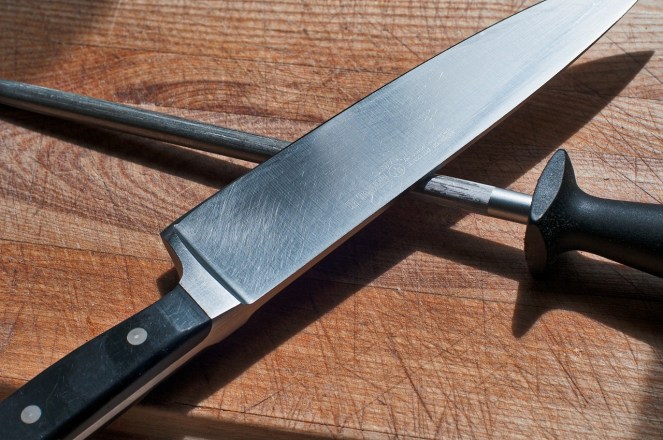
- Many cooks think that knife skills are not that important. Knowing which knives to grab and how to use them is more important than some think. See this Cooking Tip for which knives you should have in your kitchen.
- When a recipe specifies that an ingredient should be minced or coarsely chopped, the recipe writer assumes that you know what these modifiers mean and how to cut that item to achieve the result it specifies. When a recipe calls for you to “slice” an ingredient, you may very likely get a different end result if you “chop” that ingredient.
- Probably just as important as knowing the size that is called for is the skill to get your ingredient chopped (or sliced) so that all the pieces are similar in size. Uneven sizes can definitely affect the final dish.
- Having good knife skills also reduces the chance of injury from those knives.
- Keeping your knives sharp not only makes the chopping job easier, but it also makes performing that task easier. See this Cooking Tip for more information.
Mise en place
- This French term is roughly translated as “everything in its place.” Essentially, it means being organized, a skill that comes to some of us more easily than others. For the latter, it is a skill that you can teach yourself.
- This skill encompasses so much, from ensuring you have the ingredients and equipment that you need before you start cooking. Prepping those ingredients before beginning to cook or bake is also very important.
- Reading your recipe through at least twice before starting to cook will improve your chances of success. Look for those items mentioned in the above-mentioned Cooking Tip on Recipe Cautions.
Taste and flavor like a pro
- We all want to make and eat delicious food. A major part of achieving that is tasting your dish as you go through the different steps. Doing this not only helps produce that scrumptious food, but also helps train your palate to taste. See this Cooking Tip for how to teach yourself to taste.
- Great tasting food involves a balance of salt, acid, and sweet. These same aspects are essential no matter which cuisine you are making. Different cuisines may use different ingredients to achieve these tastes, but the basics of tasting are the same.
Understand the skill of substituting
- Realize that substituting ingredients must be undertaken with care. Many substitutions may result in a failure of a recipe. Others may lead to inferior results, whereas others may not be a problem.
- Here are some examples:
- Herbs – fresh and dried herbs can not be swapped out in a 1:1 ratio. Instead, use ½ to ⅓ as much dried as you would fresh.
- Dairy – substituting dairy products often means a different fat level. Different fat levels will result in different flavors and textures. Also, the lower the fat content, the less tolerant it is of higher heat.
- Vinegars – Vinegars are an important source of acidity in a dish. However, there will also be a difference in flavor from a regular balsamic to a white balsamic to a red wine vinegar. The vinegar specified in the recipe is meant to produce a specific taste, and swapping it out can significantly change a dish’s flavor.
Ingredients
- There are certainly other kitchen skills that will help you be a successful cook, but if you master the above skills, you will be well on your way to being a great cook, no matter what cuisine you want to make. As I mentioned above, there are very few kitchen skills that are unique to just one cuisine.
- Some equipment may be more commonly used in specific cuisines. For example, woks are most widely used in Asian cooking, tagine pots are characteristic of Moroccan dishes, and pasta machines will help you make fresh Italian pasta. However, the larger difference between cuisines will be the ingredients.
- To make an authentic bowl of Thai curry, you will want to use Thai curry paste, not a powdered curry, which is more likely to have Indian flavors. Another ingredient you will see in Thai and Vietnamese recipes is fish sauce. Yes, this is different than soy sauce or Worcestershire sauce. Your Thai meal will not be the same without it.
- Many cuisines have ingredients that are unique to that cuisine. Be aware of that if you wish to produce authentic-tasting dishes.
Next time you wish to venture out of your comfort zone and try a cuisine you have never made before, realize that you have most of what you need to be successful if you have great basic cooking skills. Learn a bit about the unique ingredients you will use, and you will be there – the envy of your friends and family!

 Culinary Journeys, LLC