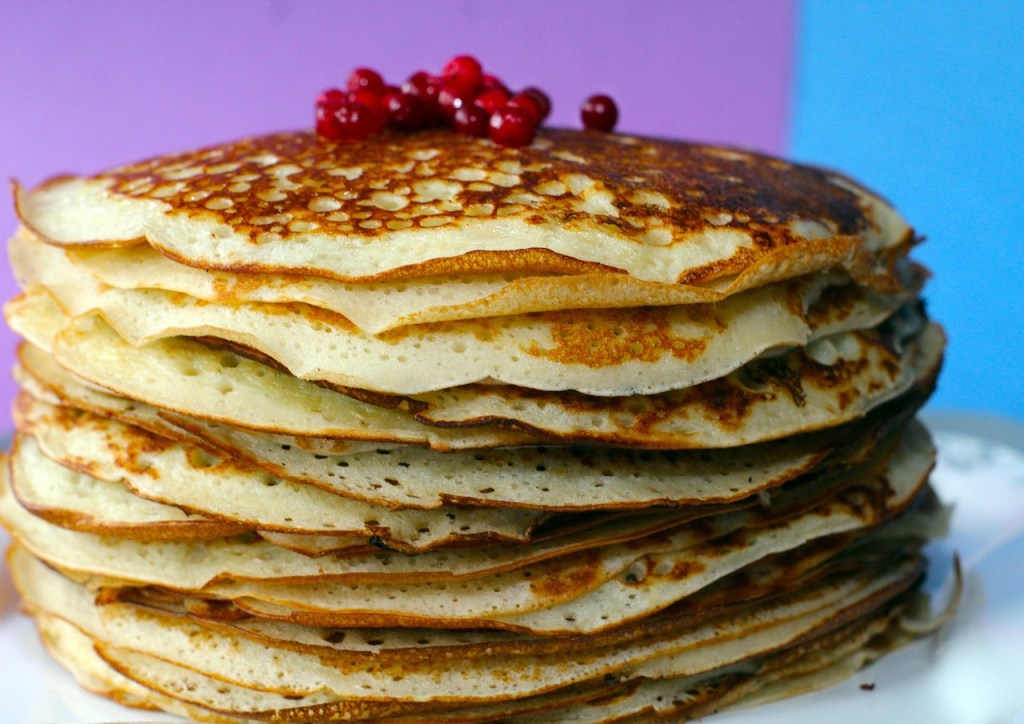
I recently wrote a Cooking Tip on waffles and how to make the best waffles possible. If you are more of a pancake person, this Cooking Tip is for you. We will look at pancake varieties from around the world and offer tips for making great American-style pancakes.
According to The New Food Lover’s Companion, pancakes are one of the oldest forms of bread. A simple definition is that a pancake is made from a batter, poured into rounds and cooked on a griddle or in a skillet.
We all recognize American-style pancakes as the light, fluffy creations topped with butter, maple syrup, and more. Pancakes are known around the world, but in different forms and with different names. Here are just a few.
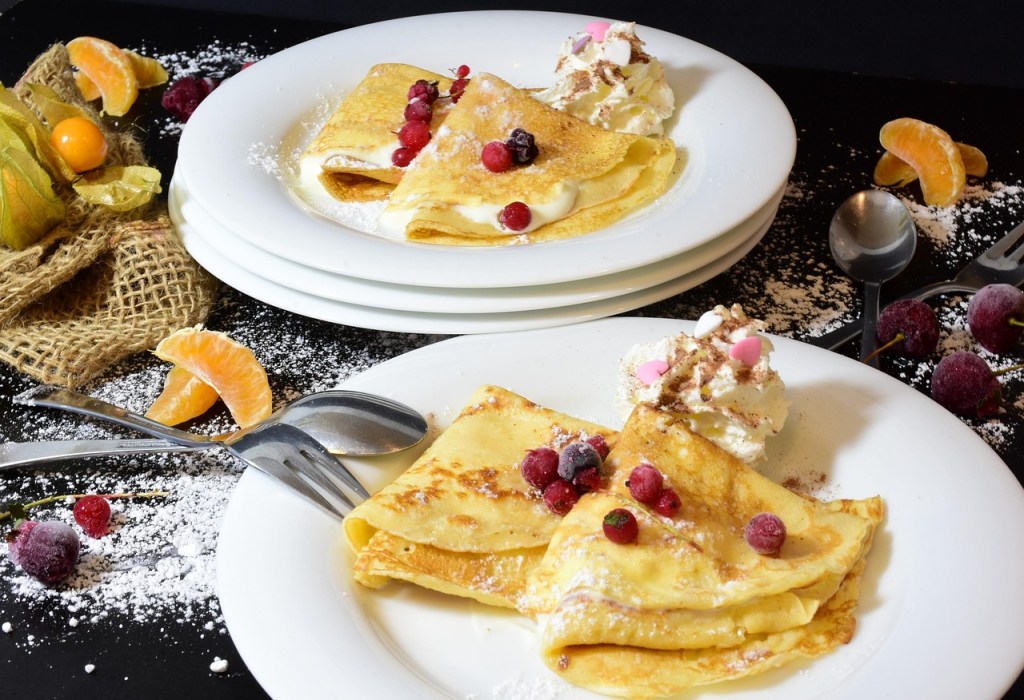
Crepes
French crepes are probably among the most well-known pancakes after American-style pancakes. The batter is much thinner, and they are cooked either on a crepe maker or in a nonstick skillet.
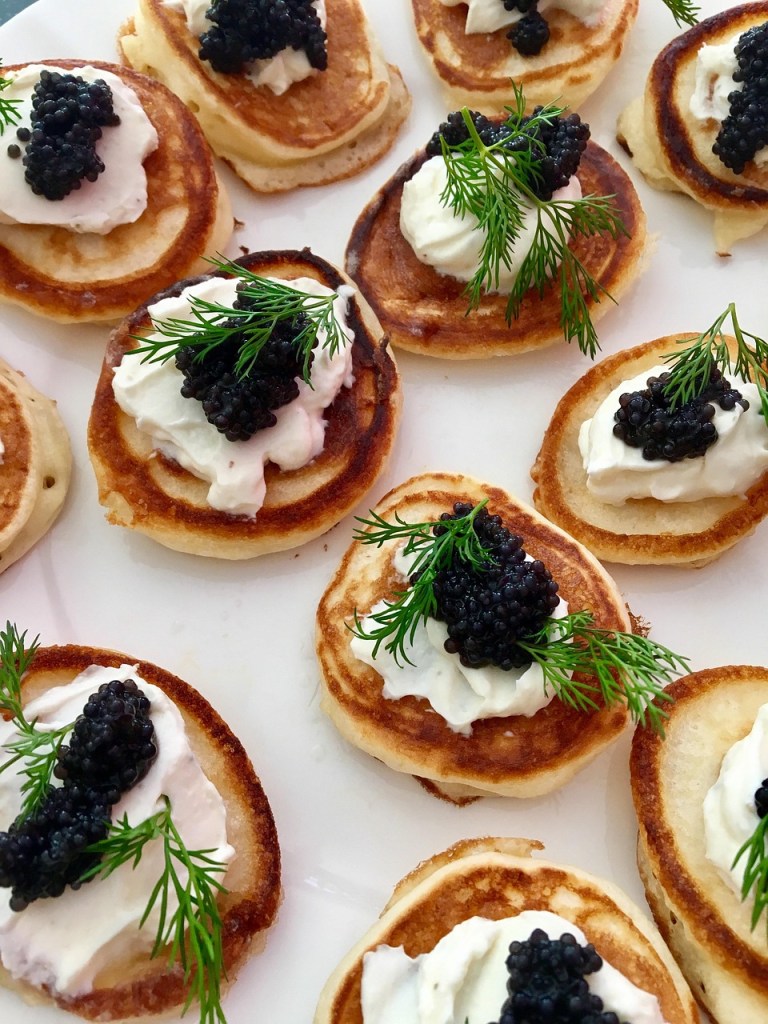
Blinis
Hailing from Russia, these are small, thin pancakes served not only for breakfast but also as an appetizer, often topped with smoked salmon or caviar. They are traditionally made from buckwheat flour, are yeasted, and have whipped egg whites folded into the batter.
Banh Xeo
Vietnamese crepes that are made with rice flour and have turmeric added for color.
Swedish Pancakes
These pancakes are thin and delicate, like a French crepe.
Back to those American-style pancakes we all know, served at IHOP since 1958. Here are some tips to help you become a pancake master.
Flour
- Using too much or too little flour can negatively affect the batter.
- Weighing the flour helps ensure the proper ingredient ratio.
Leavening
- Pancakes generally call for chemical leavening in the form of baking powder, baking soda or both.
- Most baking powder is “double-acting.” This means it starts to leaven when it comes into contact with moisture, but it also “acts” when heated. This gives you more time before cooking without losing the leavening action. It also produces a lighter and fluffier pancake.
- Because baking soda starts working immediately when it comes into contact with acid, a recipe that only calls for baking soda can produce a thinner pancake. You also need to start cooking quickly after mixing.
- Note that, without an acid such as buttermilk, baking soda will not cause leavening.
- Apart from leavening, baking soda also helps with browning.
Buttermilk
- Although not necessary, many pancake aficionados recommend using buttermilk in the batter. This acidic ingredient reacts with baking soda, creating bubbles that cause the batter to expand.
- It also adds a tanginess to the flavor.
Separating eggs
- Most recipes call for using whole eggs.
- Some advocate separating the eggs, whipping the whites to peaks and folding them into the batter. The whipped egg whites contain air, which will help produce fluffiness.
Batter Consistency
- This is like Goldilocks – not too thin, not too thick, but just right.
- As you let the batter run from a spoon into the bowl, it should fall in clumps rather than a steady stream.
Mixing
- A significant problem that people make is overmixing the batter. Mix until the batter is just combined, leaving some lumps. This minimizes the development of gluten.
- King Arthur Baking recommends whisking the wet ingredients together first until you see bubbles. They state that this helps to emulsify the fat and water before adding the dry ingredients, thus preventing overmixing.
To Rest or Not
- There are two schools of thought on whether you should rest the batter before cooking.
- The first recommends resting the batter for 10-15 minutes or even overnight. Proponents of this method say it allows the gluten to relax and the batter to fully hydrate, giving a more tender pancake.
- The other point of view (shared by Serious Eats and Bon Appétit) is that the pancakes should be made immediately because the leavening agents of baking soda and/or baking powder begin to produce gas as soon as they are mixed in. Resting only allows this gas to escape before putting the batter in the pan, making a less fluffy pancake.
- King Arthur Baking takes an intermediate approach. They recommend resting for about five minutes, which they say ensures full hydration and that the leavening agents are fully working.
Cooking
- Preheat the pan slowly over medium-low heat. This results in more evenly distributed heat and uniformly golden pancakes.
- Wipe away excess oil after adding it to the pan, leaving only a slight coating. If there is excess oil, it may pool under the pancake, causing uneven cooking.
Make a test pancake
- This ensures your pan or griddle is at the right temperature.
- America’s Test Kitchen recommends adding just a tablespoon in the middle of the pan. If that mini-pancake is golden brown on the bottom after one minute, the pan is ready. If it is more of a blond color, allow the pan to preheat longer. If it burns, lower the heat.
Portioning the batter
- You can use a measuring cup, but a cookie scoop is even better for a consistent size.
Flip properly
- Do not flip until you see small bubbles appearing evenly across the surface, popping and leaving a hole. You may also take a peek at the underside to help monitor the cooking process. You want to see an even golden-brown color.
- When you flip the pancake, use a thin spatula and flip in a smooth but quick motion with a flip of the wrist. This will minimize splattering and misshapen pancakes.
Keep pancakes warm
- As you cook, keep the pancakes warm on a rack in a 200-degree oven.
Storage
- For storage, put between layers of wax or parchment paper.
- They can stay in the refrigerator for a few days or longer in the freezer.
Troubleshooting
- Flat pancakes – This results from overmixing or insufficient leavening.
- Dense pancakes – This can result from too much flour. Weighing dry ingredients rather than using cups ensures more accurate measurements.
- Soggy middle – If your heat is too high, it will cook the outside too quickly, leaving the center undercooked. Use medium-low heat and cook slowly.
Making pancakes is not difficult, but it does take some practice to achieve that “perfect” pancake. How do you like yours? I think a pat of butter and some good dark maple syrup is all that is needed. Others like chocolate, fruit, jam or other flavorings. No matter what, they are delicious!

 Culinary Journeys, LLC