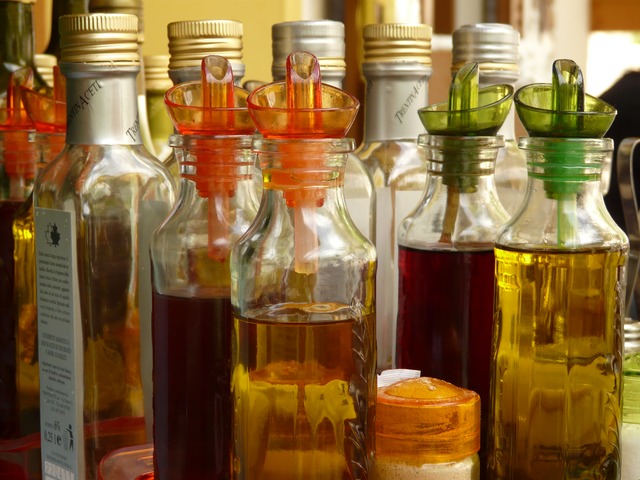
Vinegars are a standard ingredient in all of our pantries. I have written a prior Cooking Tip on the different types of vinegars. In this Tip, I would like to concentrate on one we all use quite frequently – Balsamic Vinegar.
The first thing to recognize is that not all balsamic vinegars are the same. They range from the very expensive, traditionally-made balsamic to what are sometimes called “imitation balsamics”. Let’s explore further.

Traditional balsamic vinegar is made only in the provinces of Modena and Reggio Emilia, Italy. It is made only from grape must, which is freshly crushed grapes (including the skin, seeds, and stems) from particular grape varietals. This mixture is cooked down to a syrup and aged in wooden barrels for a minimum of 12 years.
The mixture goes through a series of aging barrels, called a batteria. Each barrel is smaller than the previous one and is typically made of a different wood, contributing unique flavor notes to the finished product. As the aging proceeds, liquid evaporates, leaving a thick and concentrated result. Once a year, the smallest barrel is drained and bottled. Each barrel is then filled from the next size up, with the final barrel being topped off with fresh grape must.
Traditional balsamic is aged for a minimum of 12 years, but can go on for 25 years. Due to the process of going through the different barrels, it isn’t easy to give an exact age to the vinegar. Instead, judges will assess these products, assign grades, with various grades being topped with a different color of cap. An exact age is not listed on the label. In Reggio Emilia, those given a red cap (affinato – fine) are said to correspond to a 12-year aging process. A silver cap (vecchio– old) is 15-20 years, and a gold (extra vecchio – extra old) is 20-25 years. In Modena, there is just a white cap for affinato and a gold cap for extra vecchio.
Similar to Parmesan-Reggiano or Champagne, a system of regulation and classification has been imposed by the Italian government and the European Union for traditional balsamic vinegars.
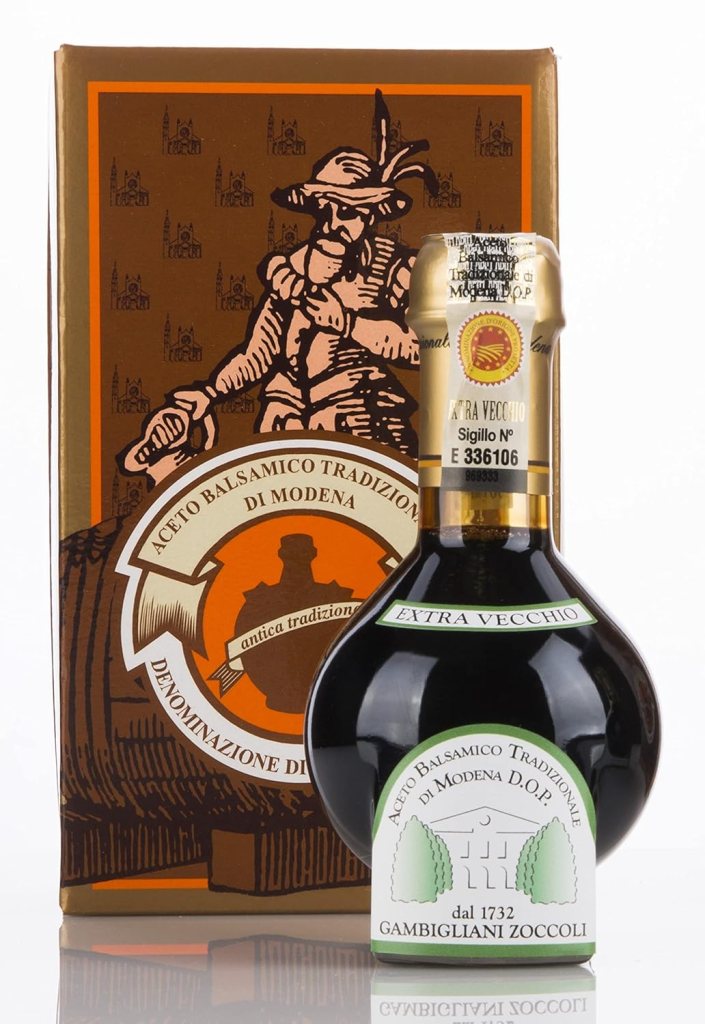
To achieve this DOP certification, there are several requirements, including the location where the grapes are grown, the types of grapes used, the production process, and the shape of the bottle used. A consortium must approve and certify that all the standards have been met before allowing the DOP seal to be placed on the bottle.
The strictest category is known as DOP – Protected Designation of Origin. This can be either Aceto Balsamico Tradizionale di Modena or Aceto Balsamico Tradizionale di Reggio Emilia.
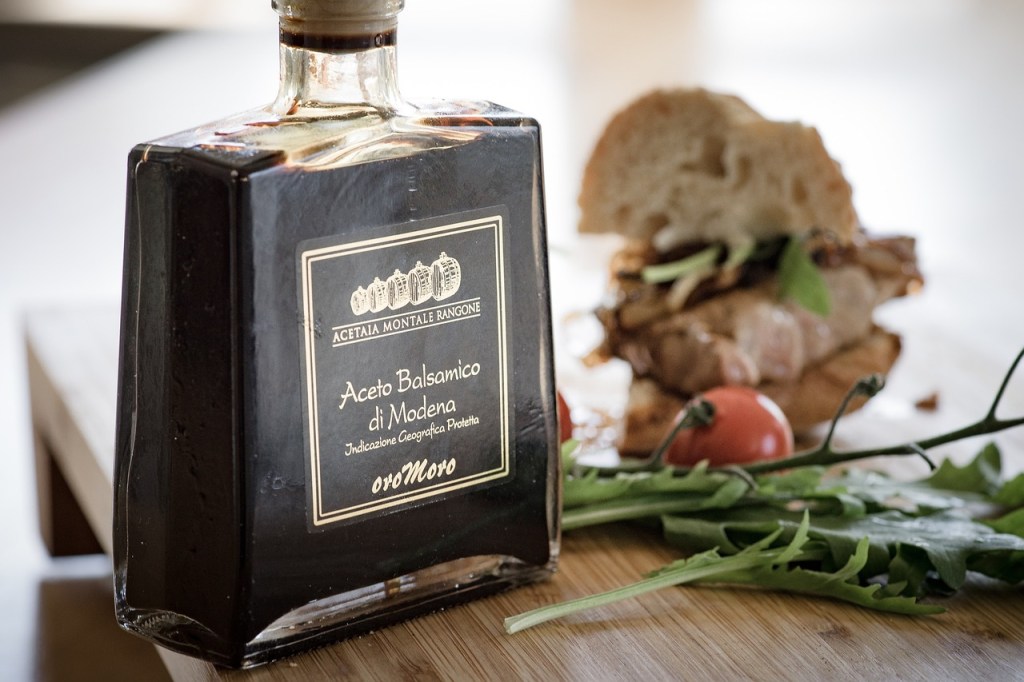
A second seal that you might see is the IGP seal, which stands for Protected Geographical Indication. These vinegars are known as Aceto Balsamico di Modena or Aceto Balsamico di Reggio Emilia. It is said that the IGP process began because the supply of balsamic vinegar could not keep up with worldwide demand. This allowed the producers to make vinegar on a larger scale and in a shorter time.
There are standards to achieve this certification, but they are much more relaxed. The production process is not so strictly controlled as with DOP vinegars. This means that vinegars with the IGP seal can vary significantly in terms of flavor, quality and price.
This vinegar will not be 100% grape must but will be mixed with wine vinegar. The type of vinegar and the amount are not controlled. A better IGP will list grape must as the first ingredient, followed by wine vinegar, but many balsamics we see in our stores will have those ingredients in the reverse order. This seal also allows for the addition of up to 2% caramel. Look at the label to see if this has been added. This produces a sweeter flavor and a darker color, particularly when the first ingredient listed is wine vinegar. However, you may prefer one without this additive.

With an IGP vinegar, the grapes may be grown anywhere, but should be of a type similar to the grapes used in the traditional vinegar. The production, however, needs to take place in either Modena or Reggio Emilia. The aging process is only required to be 60 days. Some may age 3 years or more, and if so, you may see “aged” or “invecchiato” on the label.
Traditional DOP balsamics are subjected to a taste test before certification is granted. Nearly 20% of submissions fail this test. In contrast, almost every sample submitted for IGP certification passes. So, there is a wide variety in thickness and flavor from brand to brand.
There is also the Condimento category. This is a large category. It could be a vinegar that was traditionally produced but did not meet the standards for the DOP seal. Maybe the producers wanted to add some wine vinegar, or the product was produced outside of Modena or Reggio Emilia. Or, the producers may not have wanted to incur the monetary costs associated with getting a DOP seal. This means that there may be some excellent balsamics without this seal. However, the term “condimento” is not a protected designation and, therefore, can be placed on inferior products. Even though vinegars in this category may not have a DOP stamp, they may have an IGP stamp instead. Read your labels, though, for the ingredients.
Most supermarket products are not DOP or IGP. This doesn’t necessarily mean they are bad products. Look at the ingredients and aim for those with grape must as the first ingredient and no additives. Stay away from terms such as “reduction,” “cream,” or “glaze.” They are made to mimic a traditional balsamic but are often full of additives.
Balsamic vinegars made outside of Italy will not have these certifications. One can find balsamics made in the US or any wine-producing area. I have seen some of these products labeled as “traditional,” but they are not the same as the DOP balsamics. The term is used as a marketing ploy. Again, this does not automatically mean they are inferior products. Judge them with the same standards as above.
Apart from the ingredients and production methods, how do these balsamics differ?
Traditional balsamics (DOP) will be glossy, very dark and thick. They have a syrup-like consistency that feels velvety on your tongue. The flavor is rich, sweet, slightly tart and complex without being overly acidic. Some describe it as having notes of fig, molasses, cherry, chocolate, or prune and even a touch of smokiness. These products are very expensive.
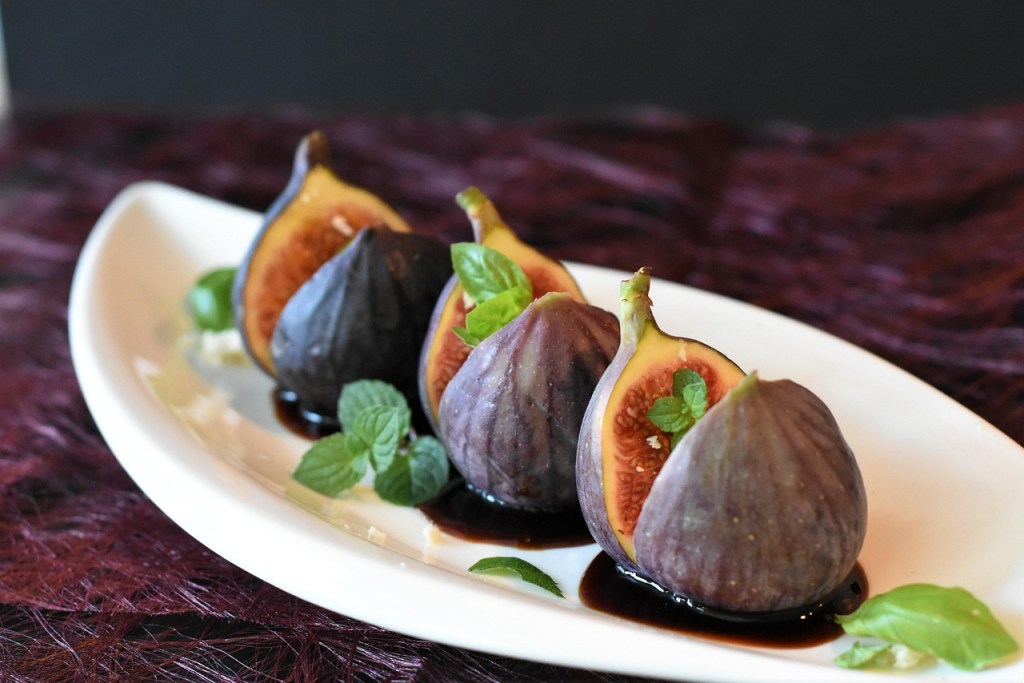
They are not meant for cooking. Instead, they are more of a condiment. Heating it can destroy its complexity. Rather than using it in a cooked application, try putting a few drops on fresh berries, cheese, or ice cream. It can also be used at the end of the cooking process. Drizzle it over a bowl of risotto or a grilled meat dish. In Italy, it is also used as a palate cleanser, an aperitif or digestif, especially on special occasions.
Condimento balsamics will also be thick and dark in color. The flavor will lack the complexity of a DOP balsamic, but should still have notes of acidity, sweetness, and fruit. They are significantly less expensive and can still be used in the same way as traditional balsamic. They can also be used in vinaigrettes.
IGP balsamics can vary greatly in flavor, texture and quality.
Because these products are a mixture of both grape must and vinegar, the flavor has more acidity and it won’t be very complex.
This type of balsamic is the best for vinaigrettes, but it can also be used in soups, stews, and marinades. Ones that are lighter in color tend to be tart, whereas darker ones are sweeter. It can also be reduced by simmering along with sugar, which produces a type of syrup.
Supermarket balsamics
These are made from grape must and wine vinegar. They are meant for everyday use. Although it may have a pleasant taste, it will not be as complex as the traditional product. If the first ingredient listed is the vinegar, it will be more on the tart side. If grape must is the first ingredient, it will be mellower and sweeter. If “grape must” is not listed as an ingredient, it will be a much lower-end product.
Cook’s Illustrated recommends a “hack” to improve the flavor of a less expensive balsamic. Combine ⅓ cup of balsamic vinegar, one tablespoon of sugar, and one tablespoon of port in a saucepan and simmer until reduced by half. In a taste test, they reported that most of their tasters could not distinguish between this and a high-end balsamic vinegar.
When you go to the store to select a high-quality balsamic vinegar, as noted above, knowing what to look for on the label is your best guide. Tasting them is the next best thing. If you are lucky enough to have a store where you can do this, it can greatly help you choose the best balsamic for you.
You can also look at organizations that have done taste tests and made recommendations. The problem with these is that different organizations test different vinegars and may have different rating guidelines.
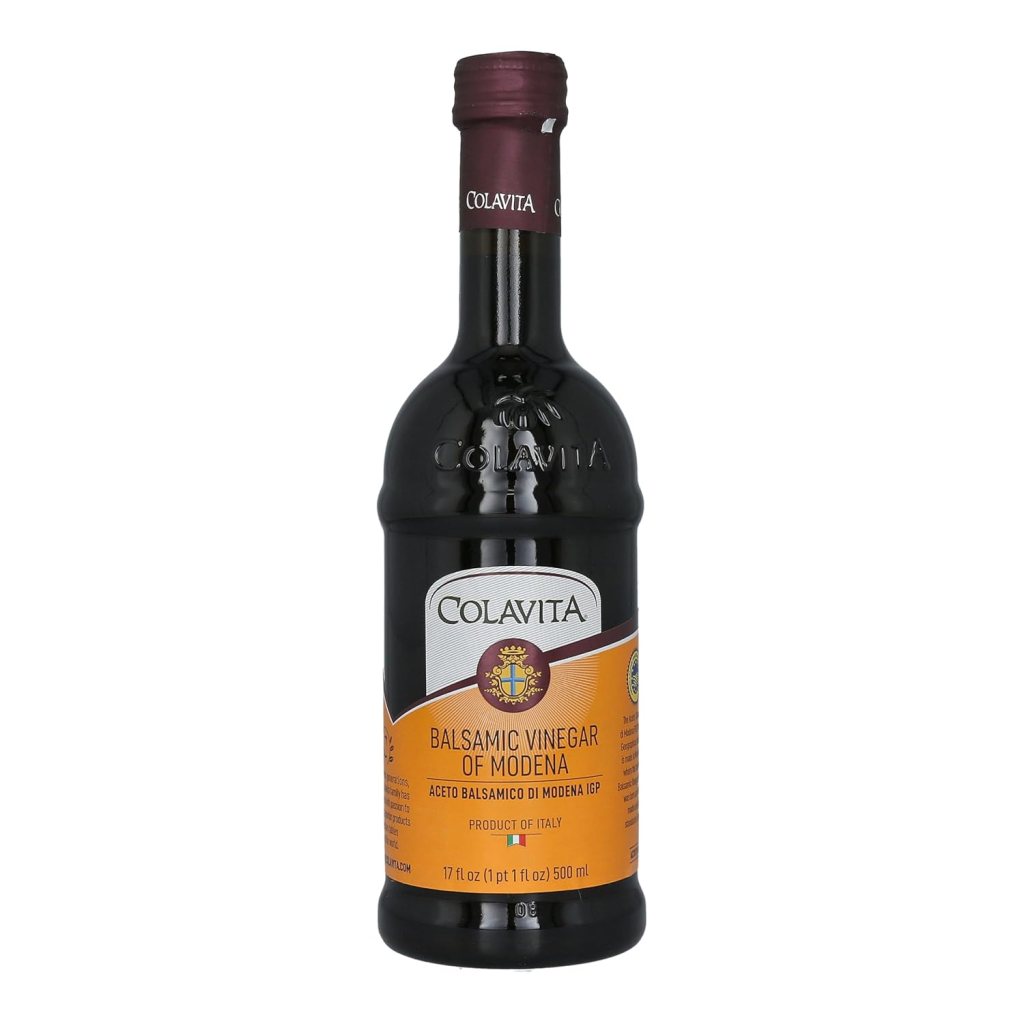
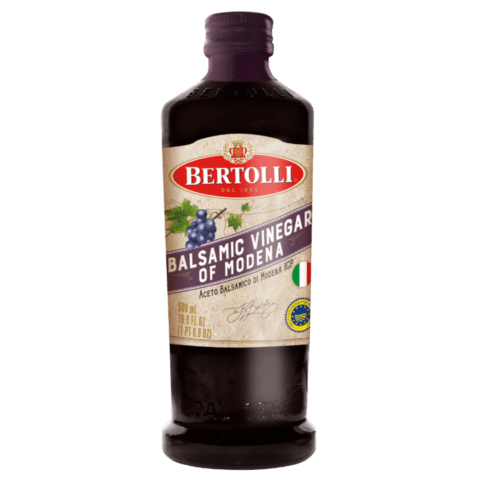
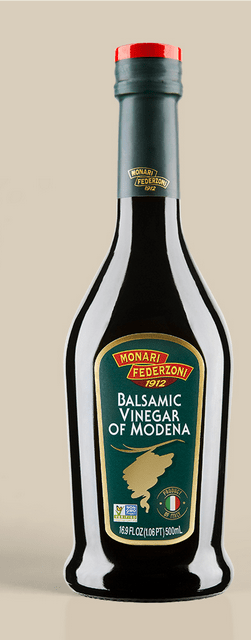
Despite this, some commonalities can sometimes be found. Three balsamic vinegars that are often at the top of the list of recommended supermarket balsamics.
- Bertolli Balsamic Vinegar of Modena
- Monari Federzoni Balsamic Vinegar of Modena
- Colavita Balsamic Vinegar of Modena
Since the high-end balsamics and supermarket ones have different purposes, you may want to have more than one in your pantry. With the information in this Cooking Tip, I hope you can pick out ones you love.

 Culinary Journeys, LLC