What do you think of when you hear the prefix “pseudo”? Do you think of fake, not real, or pretend? In our world of wanting to eat “real food,” “clean food,” etc., why would we want pseudo-anything in our kitchen? It may surprise you that you probably already have some pseudo-food in your pantry. This Cooking Tip will delve into this world in more depth.
We all know we should eat more whole grains, and I hope we are doing just that. Here is a prior Cooking Tip where I discuss the subject of whole grains in more detail. Some of the food items I mentioned in that Tip are not grains at all. Instead, they are “pseudocereals.”
True cereals are plants that are members of the grass family. Examples are wheat, rice, rye and barley, which are cultivated for their grains. Pseudocereals are non-grass plants. The edible portion are called seeds. Because they are prepared and consumed in the same way as cereals, they are often falsely called grains or cereals. They are also usually grouped into a list of whole grains as they have a similar nutrient profile. Examples of pseudocereals are amaranth, buckwheat, chia, millet and quinoa.
Pseudocereals are becoming more and more popular. They are not necessarily better for you than real grains. However, they have many healthful qualities such as a great balance of amino acids, healthy fatty acids such as omega-3, dietary fiber, vitamins and minerals. They are also a good source of vegetable protein. Finally, but maybe one of the most-touted characteristics is that they are gluten-free.
The three pseudocereals that are the most well-known are amaranth, buckwheat and quinoa. Let’s take a closer look at these three.
Amaranth

- This is one of the New World’s oldest crops. Depending on the variety, it is native to Bolivia, Peru, Ecuador, Guatemala or Mexico.
- It has a distinctive flavor that some find overwhelming on its own. It is described as grassy, malty, nutty and slightly peppery. It does retain a crunchiness even when cooked.
- It is sold both as tiny seeds and ground into a flour. You may also find it in breakfast foods, bread, multigrain crackers, pancake mixes, and even popped snacks.
- In your kitchen, you could use it in soups, a porridge, a side dish or as a filling for stuffed peppers or tomatoes.
- As it cooks, it releases a large amount of starch, which thickens the cooking liquid. So, it may need more water during the cooking process. It should be drained and rinsed before serving.
Quinoa

- This very popular pseudocereal is native to the border areas between Peru and Bolivia. It has been a common food in the diet of the Inca dating back to ancient times.
- It has a mild flavor with a bit of nuttiness.
- Quinoa has a high content of saponins that can be quite bitter. Many bags of quinoa state that they have been rinsed to remove these compounds. However, it would not hurt to rinse them in your kitchen before cooking.
- This pseudocereal can be found in different colors – white, black and red. White has the mildest flavor and the fluffiest texture. Red has a nuttier flavor, is chewier and holds its shape better during cooking. Black is more earthy and a touch sweeter. Its texture is a bit fibrous.
- Great uses are as a side dish, in salads, muesli, bowl recipes, or soups.
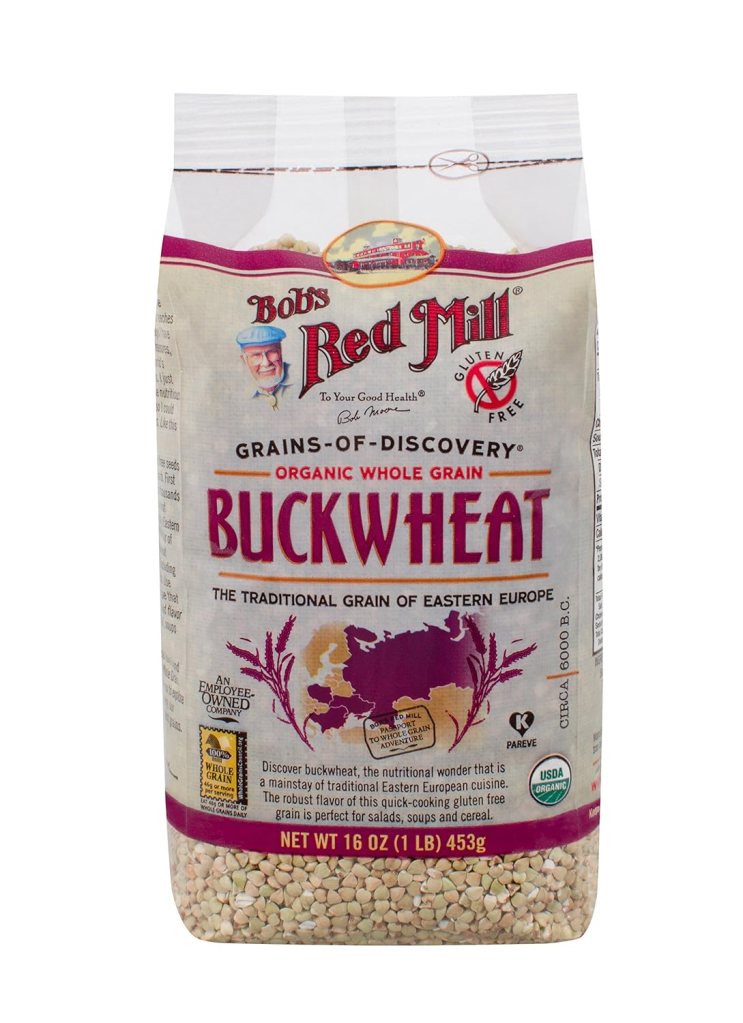
Buckwheat
- Buckwheat originated from China.
- It has a pronounced earthy flavor.
- Not only can you purchase buckwheat flour, but you will often find it in other food items such as Japanese noodles, pancake mixes and pasta products. You may also see bags of buckwheat groats, which are the hulled seeds of the buckwheat plant.
- In the kitchen, you can use it in baked goods, porridge, or pasta.
How to cook pseudocereals
As mentioned in the beginning, these pseudocereals are cooked like other cereal grains. Many sources, including the packaging, will give you a grain-to-water ratio. However, I cook all my whole grains/pseudocereals using the pasta method. Bring a pot of water to a boil, add the grain and cook until it is done, tasting as you go along. Then, drain, put it back in the pot, cover with a lid and allow it to steam until you are ready to serve it. This method is especially useful when you live at a higher altitude, as it takes longer to cook and requires more water than lower altitude kitchens.
Most of us do not want “pseudo-foods” in our kitchens. Pseudocereals are an exception as they are a tasty and healthy food that can help you mix things up on your dinner table.

 Culinary Journeys, LLC