What is your favorite bread to eat? If you are a bread baker, what is your favorite bread to make? In my case, there is one bread that is at the top of the list for both of those questions. That is Focaccia. This Cooking Tip will teach you what it is and tips for making the best focaccia you can.

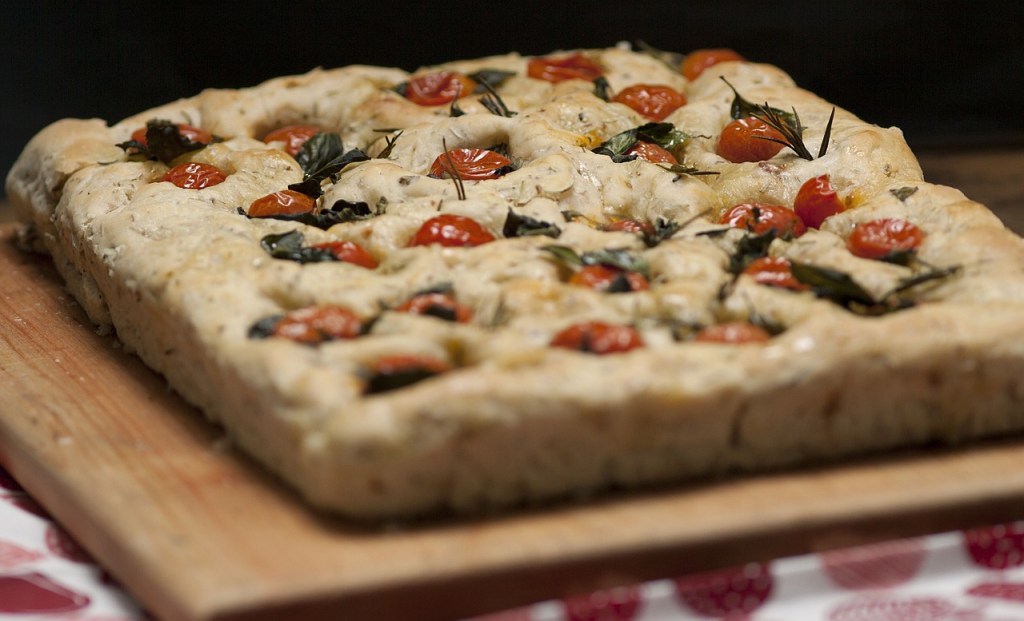
Focaccia’s origins are Italian, with Liguria being the main area for production. The exact type of focaccia varies from region to region. It is a yeasted flatbread that is about ½ to 1 inch thick, light, fluffy and full of air holes. It is one bread that does not require the typical type of kneading. Instead, it goes through a folding process. It can be sweet or savory, and can be varied by the kind of toppings used.
It is an ancient bread. The Italian name is pains focacius, which means hearth bread. The name is derived from the Latin focus, meaning “center” and “fireplace.” It is explained as being a fireplace in the center of a dwelling. The bread was traditionally baked in the coals of the fireplace. Other countries have similar bread but different names – fougasse of France, fugazza of Argentina, and hogaza of Spain.
Ingredients
Although you can make focaccia with all-purpose flour, most bakers prefer a flour with more gluten. Some like to use a 00 flour. If you choose this flour, ensure it has a higher gluten content. This dough needs to be very elastic, something provided by the gluten.
Water
This dough has a high hydration level. This means there is a high proportion of water relative to the flour, often 80 – 88%. The high hydration dough keeps the dough soft. This not only aids in creating elasticity, but it also converts to steam in the oven, helping to leaven the dough. The result is a light and airy dough and a finished focaccia with air pockets throughout. It does, though, make a very sticky dough, so it is better made in a stand mixer.
Oil
Olive oil is essential, and you should use an excellent quality one. It makes the dough easier to stretch, and it adds important flavor. It is used at more than one step in creating and baking the focaccia. Some will add the oil to the dough, and others will coat it with it after it is formed. It will also be put in the baking pan, and the dough will be coated again. Finally, the oil will be drizzled on top before baking. If you use toppings (see below), the oil protects the dough from the moisture, resulting in a crisper crust.
Bread needs to be well-seasoned. Be sure to follow your recipe for the amount and type of salt.
Yeast
This uses a fair amount of yeast to get a light and fluffy texture.
Sweetener
Many recipes will have you add sugar or honey to aid the yeast activity. Some say this is not necessary. Another tip, though, is to use liquid malt instead of sugar or honey. This is said to add a delicious depth that you would not get with other sweeteners. It also gives the focaccia a richness and a perfectly golden-brown crust.
Toppings
A well-made focaccia needs no more than some flaky salt on top. However, if you wish, there are many toppings that can be used.
- Cheese
- Fresh Herbs
- Vegetables
- Meats
- Jarred condiments such as olives, artichokes, roasted red peppers, or sun-dried tomatoes.
- Fresh fruit
- Seasonings include flaked sea salt, black pepper, and red pepper flakes.
Technique
This dough is not difficult to make, but plan for an extended time of rising for the best results. After combining all the ingredients in the stand mixer, allow it to rest for 30 minutes. Now, instead of kneading, do a series of folds. Gently flatten the dough onto the counter, fold the top down to the bottom, then the bottom up to the top, the right over to the left and the left over to the right. This folding can also be done directly in the bowl. It is now ready to proof.
The dough needs to proof twice. The first is in the mixing bowl. For the best result, it should rise for several hours. It is even better if it is placed in the refrigerator for between 12 hours and three days. This long, cold, slow fermentation period allows the starches to break down into sugars, aiding both flavor and browning. It also strengthens the gluten, creating a better crumb with more air pockets.
After this first rise, more oil is placed in the baking pan, followed by the dough and coating it in the oil. The dough is again left to rise for about two to four hours. The dough should be stretched to fit the pan. Because of the gluten development, it will probably shrink back. If so, let it rest for a bit and then stretch again. This could take up to 30 minutes to get it perfectly stretched.
After this 2nd rise, dimple the dough all over using your fingertips. At this point, some say the pan should be immediately placed in the oven to prevent any dimples from dissolving.
Nicole Rufus, assistant food editor with TheKitchn.com, tested four highly rated focaccia recipes. Her favorite had an additional and interesting step. After the dimpling, the recipe calls for pouring a brine of salt and water over the dough and proofing for 45 minutes or until the dough is light and bubbly. After baking, the focaccia was golden-brown, soft, chewy, and had a delicious flavor.
It should be baked in a very hot oven – 425-475°F. Some prefer to bake it on a stone. Spraying some water into the oven or adding some water to a pan below the rack with the focaccia creates steam and helps with crust development.
Serving
Focaccia is usually cut into squares or rectangles for serving. It is best eaten the day it is made. For sandwiches, cut it in half horizontally.
Storage
Even though it is best eaten the day it is made, it can be kept sealed in an airtight bag for about 2 days and then reheated for a few minutes in the oven. It can also be frozen. When ready to eat, thaw and reheat.

 Culinary Journeys, LLC