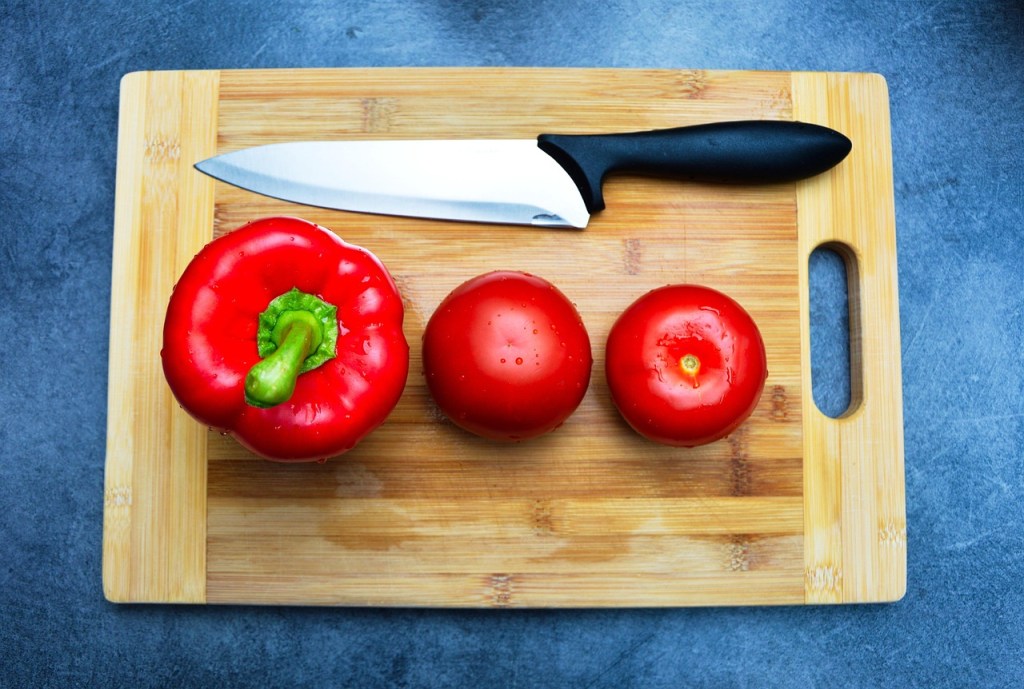
Cutting boards are in all of our kitchens. Many of us probably never give them much thought. As I have been in many home kitchens teaching cooking, it is clear that many buy their cutting boards based on appearance and not functionality. That, along with a nudge from one of my readers, has led to this Cooking Tip on cutting boards.
Before turning to actual cutting board brands, let’s look at what you want and do not want in a cutting board and the different types of boards.
Picking out a board
Budget
This is often the primary concern for many of us. Some high-quality wooden boards can cost hundreds of dollars. Plastic ones can be under $20. You need to balance cost with durability and useability.
Size
- Cutting boards come in various sizes and no one size is better. The correct size for you will depend on the size of your work area, your storage area, and how you use the board.
- You will need a larger board if you like to cut multiple ingredients and keep them all on the board. If you cut one or two items at a time, a smaller board may be fine.
- A larger board will be better if you carve large pieces of meat.
- Another aspect of size is the thickness of the board. A thicker board will better resist warping and splitting and be more stable on the counter. However, it will be heavier to move around. It also adds more height, which could be a problem for shorter people.
Features
- Many boards have extra features that may be nice, although not absolutely necessary.
- Non-slip grips – These are great to keep your board from moving around as you cut on it. If your board does not have these grips, you may stabilize your board by putting something non-slip underneath it. I use a grippy type shelf liner that I can wash when necessary. Others will use a wet kitchen towel.
- Liquid-catching trenches – These are nice if you cut items that cause juice to drain out. Rather than running onto your counter, it will run into these trenches or grooves so that you can dispose of it more cleanly.
- Reversible – This gives you double surfaces if that is important to you. The boards with the non-slip grips may not be reversible.
- Handles – These make it easier to take in/out of your storage area or move around the kitchen.
- Textured surface – Aside from keeping the board from slipping on your countertop, some like to prevent the food they are chopping from moving too much about the board. A textured surface helps with that.
Cleaning
Since cutting boards can be a source of food-borne illness, you want to keep them scrupulously clean. More about cleaning your cutting board can be found below.
Material
The main materials used for cutting boards are wood and plastic. They both have advantages and disadvantages.
Wood
- A quality wooden cutting board will be more expensive than a plastic one.
- They are aesthetically pleasing and can also be used as a charcuterie or serving board.
- Most believe that wooden boards are easier on knives because they do not dull the blade as quickly as cutting on a harder surface.
- Not everyone adheres to the belief that wooden boards are easier on your knives. Test cooks from America’s Test Kitchen use their cutting boards multiple hours each day and have found that there is not much of a difference to their knives between wood and plastic boards. They also used robots to simulate long-term use and found both kinds of boards dulled knives at the same rate.
Wooden boards can be either “end-grain” or “edge-grain.”
End-grain
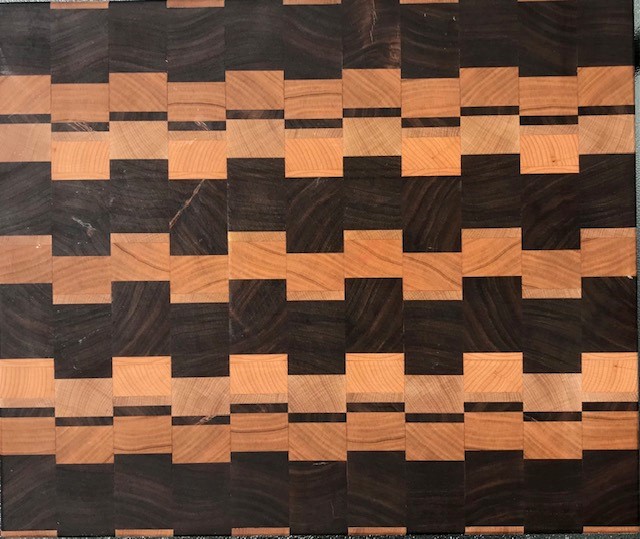
This board style is made of many different blocks of wood glued together so that the grain runs from top to bottom in a vertical direction.
Pros
Most experts feel that end-grain boards are softer and, therefore, easier on your knives. This is because the fibers run vertically, and your blade slices between them. Daniel Gritzer, Editorial Director for Serious Eats, uses this analogy:
“You can’t see this because the fibers are practically microscopic, but if you could zoom in, it’d look like a knife sliding between brush bristles, which close back up as soon as the knife is lifted away. This does less damage to the blade over time.”
This is compared to an edge-grain, which is compared to slicing into a bunch of spaghetti lined up lengthwise.
They are also less prone to marks from your knives.
Cons
More expensive.
More prone to warping and even splitting between the blocks of wood.
They can also dry out faster and require more frequent oiling.
Edge-grain
This is also known as long-grain and is when the grain runs horizontally from one edge to another.
Pros
Less expensive
There are fewer seams in the board and, therefore, fewer weak points that could cause the board to split.
Cons
Harder on knives.
They are more prone to gashes and gouges.
Wooden boards take more maintenance.
Many say that the care of the board is more important than what type of construction is used. See below for care advice.
Wood types – Different types of wood can be used in cutting boards.
- Maple, walnut and cherry are sturdy but still soft and, thus, gentler on knives.
- Maple is more affordable than some other woods.
- Bamboo, teak and acacia have higher amounts of naturally occurring silica, which can dull knives faster.
- In a test of different types of wooden cutting boards, Serious Eats found that most wooden boards, no matter the wood, did not significantly dull a knife even after 200 strokes.
Plastic
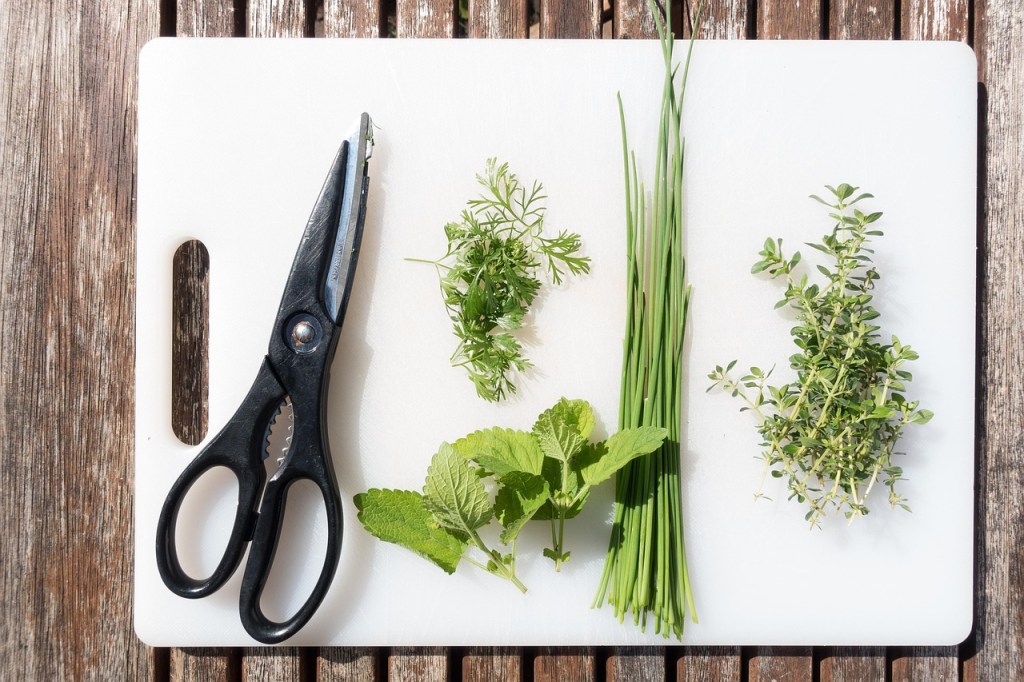
- Plastic is easier to clean in that most are dishwasher-safe.
- They are less expensive than wood.
- Plastic tends to be easier to store.
- Plastic boards are lighter in weight. This may make them easier to handle but also makes them more prone to slippage on your counter.
- They can get grooves from knife use, which can lead to bacterial growth.
- They often come in fun colors.
Another type of plastic board is known as a flexible cutting mat. These are lightweight; some can even be rolled to funnel food into a bowl or cookware.
- They are easy to clean and dishwasher safe.
- Many mats are double-sided.
- Since they are so lightweight, they are prone to moving around as you use them. Some will have a textured side to minimize this. Others must be placed on top of a grip mat or wet towel to stabilize them.
Slick foods (halved onions, raw chicken) can slide on the mats, especially perfectly smooth ones. Those that have patterns and textures in them lessen this.
Glass/ceramic
- Everyone agrees that you should never use this type of cutting board. Although they can be very pretty, they will destroy your knives.
- They are also so smooth that your knife can slide around and be more difficult to control, leading to more sloppy cuts as well as being dangerous.
- They are fragile, and there is a risk of breakage if they are dropped.
Wood composites
These can also damage knives.
Safety
There are two safety aspects: avoiding cross-contamination leading to food-borne illness and safety while using the board.
To minimize cross-contamination, use one board for meats and another for non-meat items. Proper cleaning is also mandatory. See below for cleaning advice.
There is disagreement on whether wooden or plastic is less prone to contamination. Some say that wooden boards offer natural antimicrobial protection. They argue that the bacteria do not like the wooden surface and will die if any remain after cleaning. Others argue that the non-porous surface of plastic boards keeps any juices containing microbes from penetrating the board. Plastic boards, however, can develop grooves and depressions from repetitive knife use, giving an inroad to the microbes. Furthermore, plastic boards can be sanitized in the dishwasher, where the cleaning process will likely kill all the bacteria. Even though there is no definitive answer as to which is the most sanitary type of cutting board, properly cleaning after each use is vital to preventing contamination.
Cook’s Illustrated had a lab analyze several boards, all of which had been colonized with salmonella, followed by either washing in hot, soapy water or spraying with a bleach solution or undiluted vinegar. All methods were equally effective at reducing bacteria. There was no difference between wood, plastic, bamboo or composite boards.
For safety, the heavier boards are more stable. Lighter boards need a non-slip surface. It can be built into the board or you can place a grip mat or wet kitchen towel underneath.
Cleaning Cutting Boards
Wooden
- Only hand wash with dish soap (preferably unscented), warm water and a soft sponge. Pay attention to any crevices. Some recommend washing both sides (even if you only used one side) to prevent uneven drying, which could lead to warping.
- Immediately & thoroughly dry with a towel to reduce warping, splitting, and mildew development.
- Some recommend using kosher salt and half of a lemon to gently scrub the board to remove odors and use baking soda to remove stains. I would recommend checking the directions from the maker of the board for their advice.
- Wooden boards should be regularly conditioned by applying food-grade mineral oil or a conditioner for wooden boards. This helps to prevent the board from drying out.
Plastic
- Scrub a plastic board with dish soap and hot water.
- Many plastic boards are dishwasher safe, although some may specify top-rack only. Also, frequent use of the dishwasher can shorten the board’s lifespan.
- It is highly recommended that you scrape off any meat remnants before placing in the dishwasher so the hot water doesn’t “cook” them into the board.
- America’s Test Kitchen recommends spraying the board with a vegetable food spray before cutting foods likely to leave a stain, such as beets. When you finish cutting, remove the food to a bowl and wipe down the board.
- For stains, use a paste made from one teaspoon of baking soda, one teaspoon of salt and one teaspoon of water.
Brands
I perused multiple of my favorite rating sites to see which boards were more highly recommended. As is typical, different opinions abound. However, certain boards did rise to the top of many lists.
Wooden
- John Boos – They are an American company located in Illinois. Depending on the size and thickness, the type of wood, the type of construction, and the addition of special features, these can run anywhere from about $50 to over $1000.
- Jones – This is another American company located in Pennsylvania. Although their website was not functioning well when I was checking prices, it appears that they will be somewhat less than John Boos.
- Boardsmith – A family-owned business in Texas, their boards range from about $150 to $800.
Plastic
If you want a set of flexible mats, the most highly rated was Dexas Heavy Duty Grippmats.
For more standard plastic cutting boards, there were two brands that were most frequently mentioned.
- San Jamar Saf-T-Grip Boards – These can range anywhere between $10 and $60.
- OXO Good Grips – These can be purchased for $15 – $30.
What do you really need? As noted above, that depends on your budget and your needs. I do agree with the advice given by Serious Eats. They recommend one large wooden cutting board in addition to two different-sized plastic cutting boards, a larger one for those messy jobs that can be put in the dishwasher and a smaller one for quick tasks. I will add that one or two flexible mats are also nice.
I have collected a few cutting boards over the years, but the ones most used are a wooden one, a large plastic one and a flexible mat. My most recent addition is a gorgeous wooden board that was a gift from some very dear friends. The husband made the one you see in the photo above. It is not only beautiful, but is a joy upon which to cut. I hope you find the perfect collection of cutting boards for you and your kitchen!

 Culinary Journeys, LLC