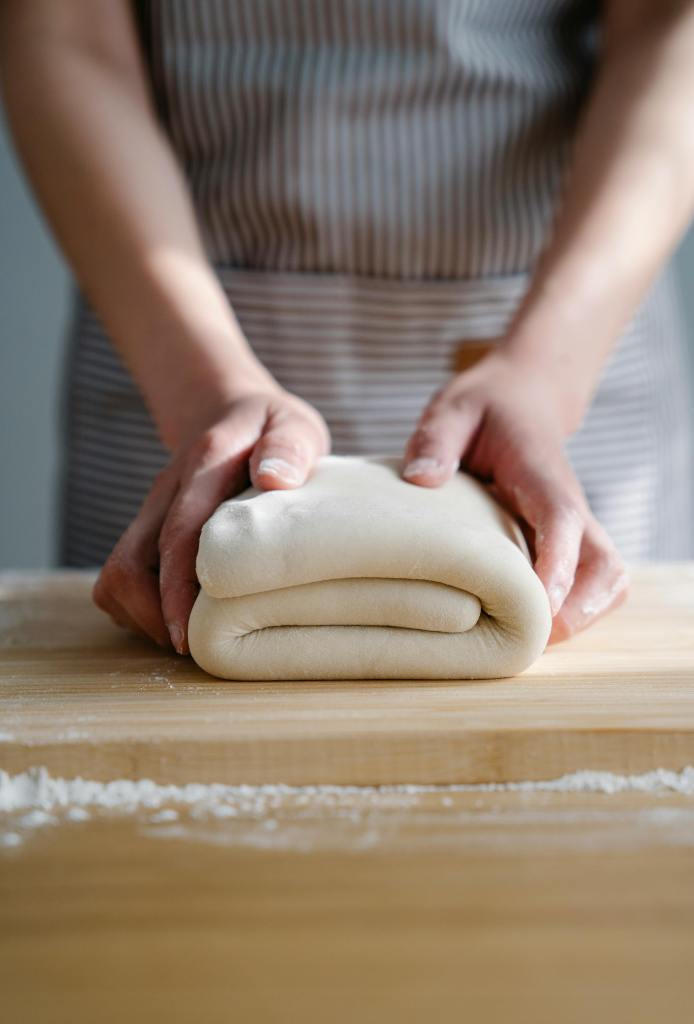
Puff pastry is a delicious type of pastry dough that can be used to create all kinds of wonderful creations. It can be used in both sweet and savory applications. It is composed of layers upon layers of butter and dough. As it bakes, it puffs up, resulting in light and flaky bites of yumminess. I have written a prior Cooking Tip on how to make classic puff pastry. It is not difficult, but it does require some planning and time. I encourage you to give it a try if you have never made your own puff pastry. If you are craving this pastry but do not have quite enough time, consider making Quick Puff Pastry. In this Cooking Tip, I will show you what it is and how it is made.
Although classic and quick puff pastry are made with the same ingredients, they differ in how they are combined and rolled out. As you will read in my Puff Pastry Tip, classic puff pastry begins with a mixture of flour, water, and a small amount of butter. This is combined in a mixer bowl. This is called the detrempe. Separately, a large amount of butter is formed into a butter block. The butter blocked is encased inside the rolled-out detrempe. This is then rolled numerous times in specific ways to create the puff pastry. As the butter and dough must stay cold, the rolling process needs to be interrupted by resting times in the refrigerator. This is where most of the time comes in.
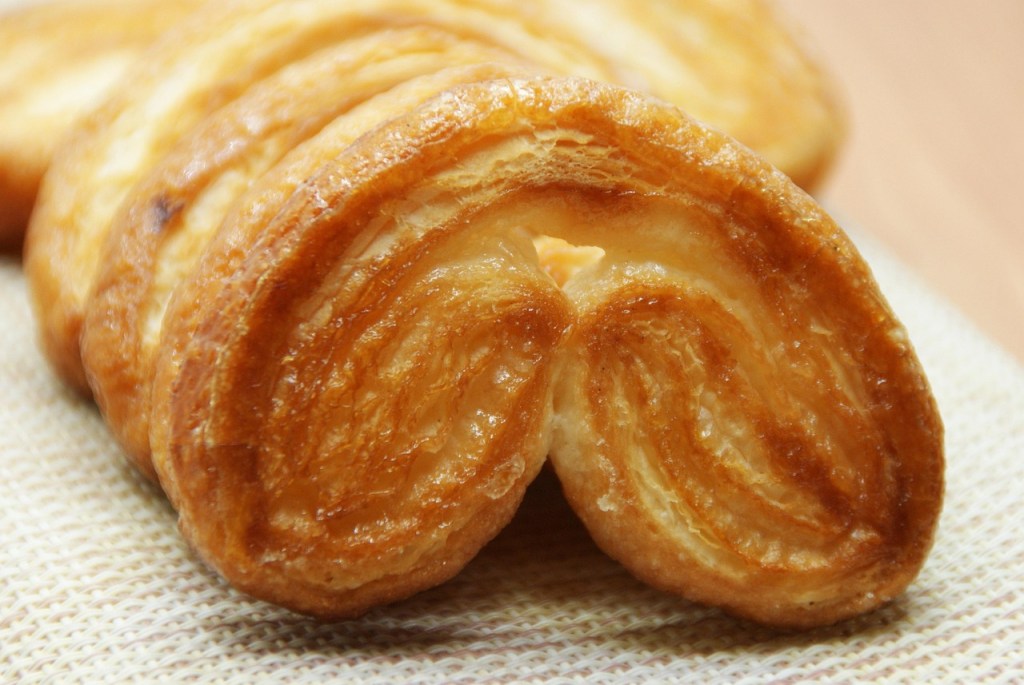
With quick puff pastry (also known as rough puff pastry), everything is mixed together and then rolled out. Europeans are known to call this American Puff Pastry as the method is similar to that of making pie doughs. It can be completed in about two hours.
Ingredients
- For optimal results, use a kitchen scale to weigh the ingredients instead of using a cup measure.
- Flour – Most of us will just use all-purpose flour, but some recipes may use bread flour.
- Butter – Since this is what gives puff pastry its delectable flavor, use high-quality butter with a high-fat content. Some recommend a minimum of 82% fat. As with almost all baking, choose an unsalted butter.
- Salt – Salt adds flavor but can also slow down gluten development, which helps with the rolling process.
- Vinegar – Many recipes add a touch of vinegar, again to retard gluten development. Whether this is true or not is a matter of debate.
- Water – The water is what brings all the ingredients together into a dough. Some experts will warn against using water with too much chlorine in it. They recommend using either bottled or filtered water or allowing the chlorinated tap water to sit in the refrigerator overnight to allow the chlorine to evaporate. I am not sure this is necessary for puff pastry. First, many sources indicate that most tap water does not have a sufficiently high chlorine concentration to affect your dough. Second, one of the main effects that chlorine has is by inhibiting the yeast. Puff pastry dough does not contain yeast (although other laminated doughs do.)
- A final comment about the ingredients is that the butter and water should be very cold. When making puff pastry, you want to avoid having your butter start to melt. It should remain very firm, only melting when placed in the oven.
Method
- Dissolve the salt in the water.
- Place flour in a bowl and add the cold, cubed butter. Cut the butter in quickly to prevent it from melting. You want to see chunks of butter all covered in flour.
- Make a well in the bottom of the bowl and pour in the water. Mix just until the mixture forms a dough that stays together. At this point, you still want to see pieces of butter.
- Transfer to a floured work surface, gently knead into a ball and then press into a five-inch rectangle. You may also do this with a rolling pin. If it feels too soft or starts to warm up, refrigerate for a while. After forming the rectangle, chill it for at least 15 minutes.
- Begin the rolling and folding process. Each time, the dough will be rolled out into a long rectangle. Follow the dimensions indicated in your recipe.
- The folding may vary by recipe, but it will typically involve a series of single and/or double turns. Between each rolling and folding, the dough should be wrapped in plastic and refrigerated for 15-30 minutes.
- Single fold (sometimes called an envelope fold) – Bring one short end up from the bottom to one-third from the top and then bring the top edge over.
- Double fold – Bring each short end of the dough into the middle, leaving a small space between the ends. Then, fold the dough in half.
- In the beginning of the rolling and folding process, your dough will look very rough but will smooth out as you complete this process.
- Refrigerate the finished pastry before using it in any application.
- Between rolling and folding the dough, use a pastry brush to brush off any residual flour.
- After folding and when ready to roll again, always ensure the seam is placed vertically and on the same side for each roll. This will help to ensure an even result.
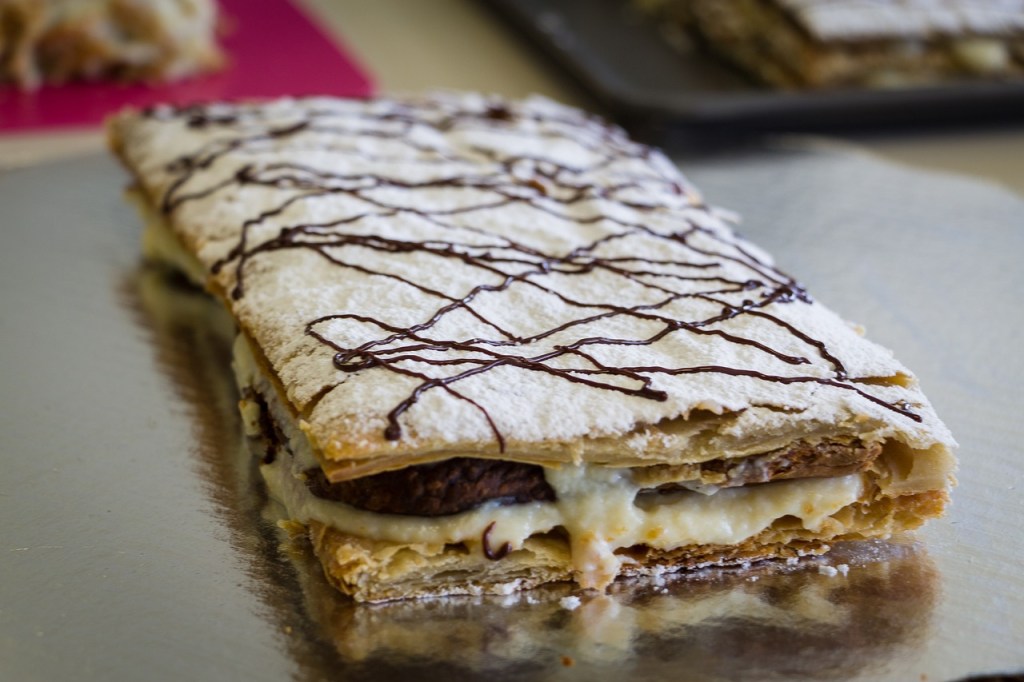
Result
How does the finished quick puff pastry compare to classic puff pastry? It is very close and much better than store-bought. Since there are fewer layers, it will not rise as high but is perfectly acceptable for applications that don’t require much height.
Have you ever made your own puff pastry? It is truly a satisfying endeavor and yields a wonderfully delicious product. If doing it the classic way is too daunting, try this quick puff pastry technique. What will you turn your puff pastry into? Whatever you do with it, it is bound to be yummy!

 Culinary Journeys, LLC