
Many people want to learn how to cook and bake gluten-free. To do this requires an understanding of gluten, what it does in our dishes and how to eliminate it without negative consequences. It is not as easy as just substituting gluten-free flour for regular flour. In this Cooking Tip, I have compiled a list of tips and advice to help you do this.
Baking gluten-free is more challenging than making savory dishes gluten-free. Baking is much more of a science, and the amount and type of ingredients are generally crucial to a successful dish.
Here are a number of tips that gluten-free pros recommend.
Be realistic
Although gluten-free baked goods can be delicious, the taste and texture will not be exactly like those made with gluten. That is to be expected. Also, do not expect each and every item you make to turn out. We all have underwhelming dishes and even some failures. This is even more so when you are just starting out learning to make gluten-free. Have patience, do your research and keep practicing.
Pick your recipes carefully
There are many delicious flour-free recipes that one can make. Just be sure to check that the other ingredients are gluten-free.
If you want to make something that would normally contain wheat flour, start by using recipes developed by a gluten-free expert rather than trying to convert a recipe from regular to gluten-free. This is especially true if the regular recipe has flour as a primary ingredient. After gaining some experience and confidence, you can try your hand at converting recipes.
You will need structure-building ingredients
With wheat flour, the gluten is what builds structure allowing baked goods to rise and stretch. Without gluten, you will need to add what is called a binder to improve the structure of the gluten-free item. The most common binder is xanthan gum. Others include guar gum and psyllium husk.
Realize that not all gluten-free flours are the same
Most experts will tell you that there is not any one gluten-free flour that will work in all your recipes. For the best results, a mixture of flours is typically used, and it will be a different mixture for different baked goods.
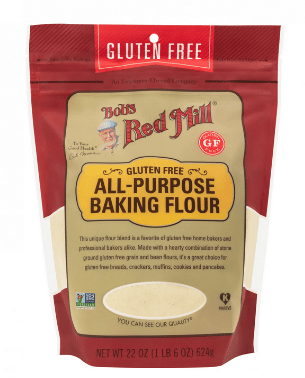
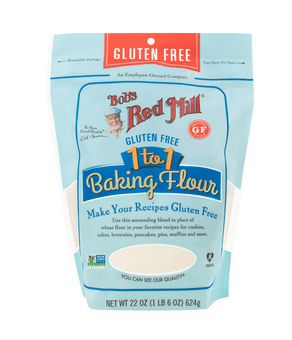
Some products out there purport to be the “all-purpose” flour in the gluten-free world. Every person will have their favorite brand, but even among those, they are not all the same. For example, Bob’s Red Mill 1-to-1 Baking Flour (in the blue bag) comes with xanthan gum already in it. However, it should not be used for yeasted goods. Unfortunately, this is not stated on the bag. You will only find that information if you look at the product on their website. Their Gluten-Free All Purpose Baking Flour (in the red bag) states it can be used for yeasted baked goods. However, you will need to add a binder and the flours included in this mix include bean flours, which will add a distinctive flavor that some may not like. So, do your research and understand you will probably need different products for your gluten-free life.
There are many different types of gluten-free flours and starches. Here are a few.
- Potato starch
- Tapioca starch
- White rice flour
- Sweet rice flour
- Brown rice flour
- Millet flour
- Buckwheat flour
- Teff flou
- Oat flour (make sure it is certified gluten-free)
- Sorghum flour
- Corn flour
- Chickpea flour
- Almond flour
- Coconut flour
Gluten-Free flours must be measured carefully
Because these flours are so fine and the grind varies by type of flour, measuring by the cup method can lead to problems. Your gluten-free baking will improve (same as your regular baking) when you switch from measuring cups to weighing ingredients. This is a recommendation that you will read over and over when consulting gluten-free experts.
If you do not have a scale, place the appropriately sized dry measuring cup on a paper towel or piece of wax paper. Spoon the flour into the cup until it is mounded over the rim. You can gently shake it to settle the flour but do not pack it. Scrape away excess flour using a straight edge. Use the paper towel or wax paper to return the excess flour to the container.
Measure liquids carefully
Most gluten-free recipes require more liquid than regular recipes. Follow the recipe and measure correctly. Some gluten-free pros even like to measure the eggs in a cup for more accuracy. Of course, your recipe must include this measurement.
Your structure will improve when you mix the batters longer
The caution against over-mixing that you see with regular batters is due to the concern of building up too much gluten. Without gluten, you will get better results if you purposely mix longer. Your baked goods will rise better and maintain that rise longer.
Rest batters and doughs
Allowing your gluten-free batters and doughs to rest, covered, for about 30 minutes before baking will improve them. Gluten-free flours generally need more liquid than regular flour, leading to thinner batters. Resting the batter allows more time for the flours to absorb the liquid, which not only thickens the batter but also decreases the gritty texture that is sometimes found in gluten-free baked goods.
Be careful with determining doneness & expect longer baking times
It can be tricky to determine when gluten-free baked goods are done. Even though they may be cooked through, they might feel soft or even be a bit wet inside. They need time to rest so the starches firm up and set. So, depending on a timer is probably better than the visual cues we might use when baking non-gluten-free items. One caution, though, is that the recipe timing depends on your oven being accurate. Using an oven thermometer will help with this. Using an instant-read thermometer to determine doneness is also a good recommendation.
A corollary to this is that gluten-free baked goods might benefit from longer baking times. According to Beyond Celiac, “While a regular cake or loaf of bread might take 30 minutes to bake, a gluten-free version will often take 45 minutes to an hour.” Your baking time can also be affected by the pan. It is important to use the type and size of pan specified in the recipe.
Increase leavening
Your leavening agent might be yeast, baking powder and/or baking soda. Increasing the amount you use can help with rising and maintaining structure. Beyond Celiac recommends 2 teaspoons of baking powder per cup of gluten-free flour. If you recall the chemistry of leavening, you will be reminded that baking soda needs an acid to work. The same source states that baking soda and buttermilk, along with 1⅛ teaspoons of cream of tartar for each ½ teaspoon of baking soda, can be used in place of baking powder.
Include extra protein
By eliminating gluten, you are not only eliminating a potential allergen but also the protein it adds to the recipe. Adding other protein, such as eggs, yogurt, or buttermilk, can help. If the eggs are beaten, they will add bubbles to the batter. Both yogurt and buttermilk are acidic, which helps improve the action of baking soda. Dairy products such as milk or sour cream also contain protein and can help with the browning of the dish.
Gluten-free flours do not absorb oil well
If your recipe calls for oil, you might achieve a better result by substituting melted butter. Some will also swap out the oil for milk, sour cream, yogurt or eggs.
Add moisture-containing ingredients
Gluten-free baked goods can often be dry. Moisture-containing ingredients such as dairy, veggies, fruit, or eggs can help, but be sure to follow the recipe for this recommendation. Using brown sugar in place of white sugar can also add moisture.
Add flavoring
Gluten-free flours often have a unique flavor. Therefore, many experts recommend adding a flavoring agent such as vanilla.
There you are – a compilation of the best tips for success in gluten-free baking. Whether you just want to make a particular item for a friend or family member or you want to make a lifestyle change, I trust these tips will help you be successful.
This post contains affiliate links and I may earn a commission if you decide to purchase.

 Culinary Journeys, LLC