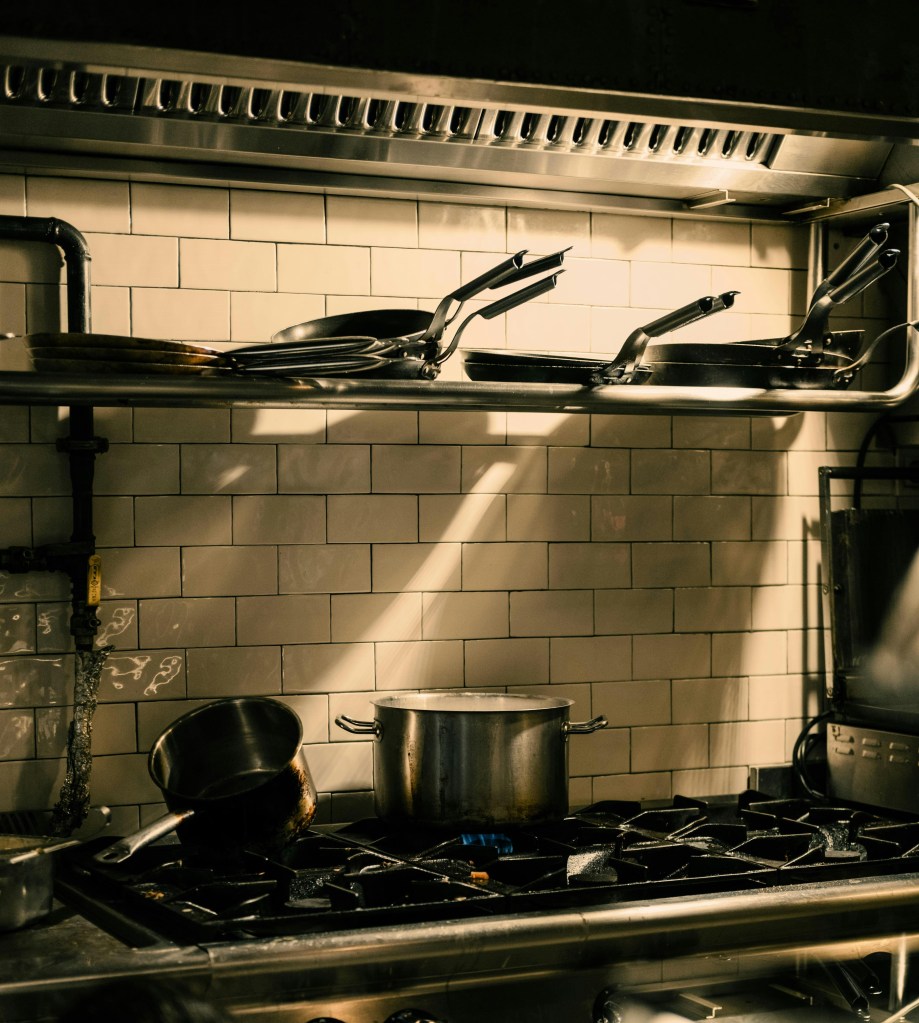
What sort of pots and pans do you have in your kitchen? Are they new or old? What are they made of? Are they well-used or barely touched? No matter what they are, do you know how to take care of them? That is the subject of this Cooking Tip.
Although the advice I will give you applies to most types of cookware, I will discuss some specialty pans later. I have already written a Tip on Cast Iron Care, so I will not discuss that type of cookware in this Tip.
Just as important as how you should take care of your cookware is what you shouldn’t do. Let’s investigate that first. One caveat is that you should always read your cookware’s warranty to ensure you are not doing anything that might void it.
What not to do
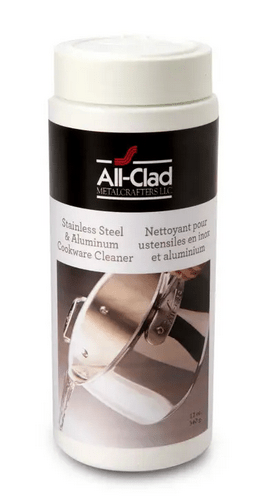
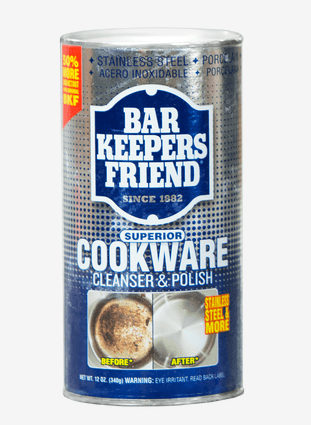
- Do not use abrasive cleansers. For most general cookware cleaning, dish soap is all that is needed. Beyond that, you can use a nonabrasive cookware cleaning powder. Many cookware brands make their own product. I use and like the one made by All-Clad. Others prefer Bar Keeper’s Friend. They have two different products, their all-purpose cleaner and one advertised specifically for use on cookware. I have tried both, and I think the latter is more effective. Baking soda is another alternative. It is less expensive and readily available in our kitchens. Although it will be effective in many situations, it probably won’t do as great a job as the commercial cleansers.
- Do not use steel wool or other abrasive sponges. Only use sponges or cleaning implements that are advertised as nonabrasive.
- Allow your pans to cool before washing them. Never submerge a hot pan into cold water, as the thermal shock is likely to damage it.
- Even though some manufacturers claim their pans are dishwasher-safe, hand washing is the preferred way to keep them in the best condition.
How to care for your pots/pans
Now that we know what NOT to do, let’s delve into some care tips to keep your cookware in the best condition.
- Most cookware manufacturers recommend using low to moderate heat to preheat their pans. High heat is only recommended when you want to bring something to a boil.
- Manufacturers also generally warn against heating an empty pan, especially with nonstick pans. You may have heard that it is better to preheat your pan dry and then add any fat you are using. See this in-depth Tip on the truth about this advice.
- Once you are done cooking, allow the pan to cool before cleaning. Rinse off any food particles and wash in warm, sudsy water with a sponge or soft cloth. You may even allow it to soak in this sudsy water to help release stuck-on food. Finally, rinse with warm water and dry the pan to prevent spotting.
- Although you want to allow the pan to cool before washing it, the sooner you clean it, the easier it will be to remove debris. The longer it sits, the harder it will be to clean.
- As noted above, you may use a nonabrasive cleanser for tough spots. Follow the instructions on the container, but in general, you will sprinkle the cleanser over the wet surface and gently rub it with a soft cloth or sponge. Rinse it thoroughly and dry. If necessary, allow the paste to soak on the pan a bit before scrubbing. However, some commercial cleansers say not to allow the cleanser to remain on the pan for more than a few minutes. Read the directions for the one you are using.
For especially dirty pans, the following methods may help.
- Boiling water method – This is similar to deglazing your pan, which is often the only thing you need to do to bring up stuck-on food particles. Add water to the pan, bring it to a boil, and scrape up the food with a wooden implement. After the food loosens, pour out the hot water and wipe with a nonabrasive sponge. You may also turn off the heat and allow the pan to soak for 15-20 minutes or even overnight. Some like to add a bit of baking soda or white vinegar to the boiling water.
- If you find your pots developing white hard water spots, use a 1:1 white vinegar-to-water solution that you bring to a boil. Then, follow with a normal wash, rinse and dry.
- Blue or rainbow discoloration can be removed by wiping the pan with white vinegar on a sponge or soft cloth.
- In general, you do not want to use bleach on your cookware. However, some recommend that if you have enameled cookware with stains on the surface, you could try this trick. To remove the stain, make a gentle bleach solution of 1 teaspoon bleach in one pint of water. Pour this into the pan and allow it to stand for a few hours or overnight. Pour out the bleach solution and scrub with a soft sponge. Clean and dry as normal.
I must admit that cleaning is a chore I do not enjoy. Although I am very good at cleaning the inside of my pots, I am not nearly as fastidious on the outside and bottom. It was with interest that I tried another method for those stains. You will need a pot large enough to hold the pan you are trying to clean. Fill with water and bring to a boil. Add ¼ to ½ cup of baking soda and stir until dissolved. Being very careful, place your stained pot into the boiling water. Allow your pan to remain in the gently boiling water for 15-20 minutes. After the residue begins to flake off, carefully remove with oven mitts. You may need to then make a baking soda slurry and use that to scrub more spots off. I personally tried this method and, although not magic, it did work. The biggest problem was finding a pan large enough to place my skillet inside. It requires a bit of scrubbing, but in the end, it was much cleaner than it was before.
Carbon steel
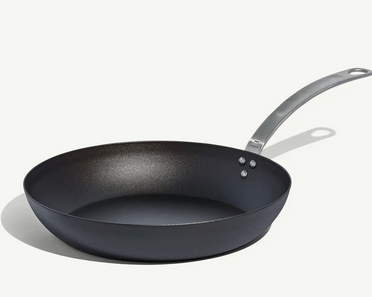
- These types of pans are particularly loved in professional kitchens because they are lightweight, have superior heat conduction and are naturally nonstick. However, they do need to be seasoned, so your cleaning method should not destroy that seasoning.
- When cleaning, if all that is in the pan is a bit of oil or maybe a small amount of food particles, wipe it out with a paper towel, and it will be ready for the next time. If there is more in the pan than cannot be wiped away, sprinkle some coarse salt, scrub with a paper towel and wipe clean. Some will add neutral oil to the salt in a 1:1 ratio. Scrub, wipe out and finish with a quick rinse. Place the pan over low heat to ensure it is completely dry. Finish by adding just a tiny amount of oil to the pan and wiping thoroughly.
- For a more serious clean, cover the bottom of the pan with a small amount of water and bring to a boil. Using a wooden spoon or spatula, scrape up the food, dump it out and then wipe it off. Follow the above instructions for drying the pan and finishing with a coat of oil, especially if there are dry spots on the pan’s surface.
- If all of the above fails, you can gently scrub the pan with steel wool. However, your pan will need to be re-seasoned after this.
- Some will say never, ever use dish soap on carbon steel. However, just a small amount used sparingly will be acceptable.
Copper
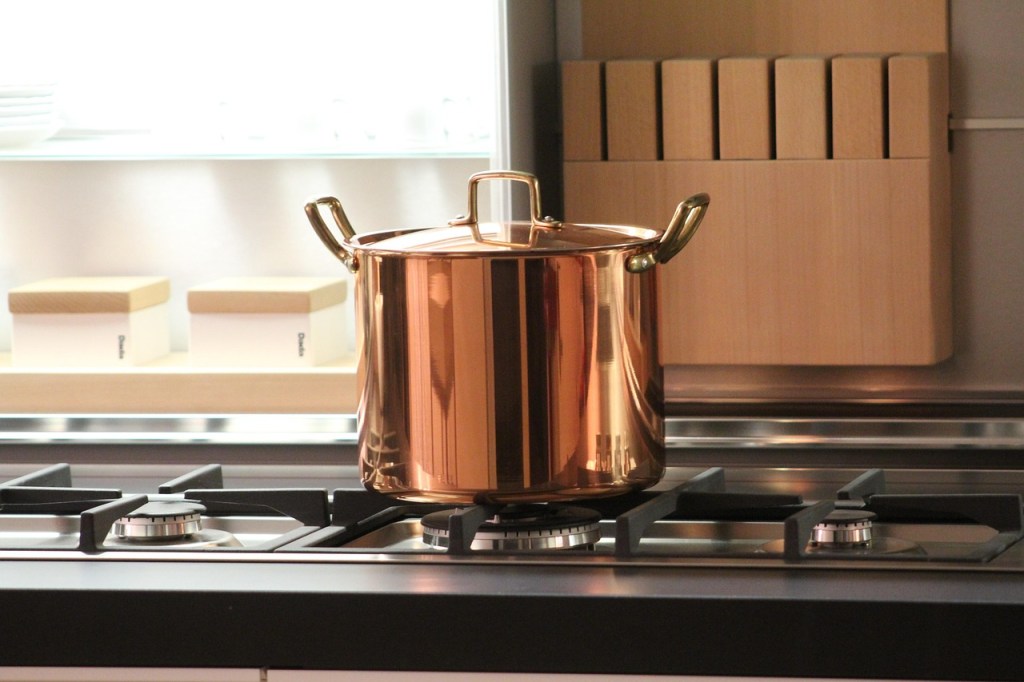
- This type of cookware is beautiful but expensive. You, therefore, want to treat it carefully to maintain its beauty. Cleaning like other cookware with soap, hot water, and a non-abrasive tool will do the job.
- Because copper is a reactive metal, it is natural for copper pans to darken and even appear greenish. This does not affect its usability, but you will want to polish it regularly if you prefer that “new” appearance. Just as with regular cookware, you can purchase cleansers made specifically for copper. You may use white vinegar (or lemon juice) and salt if you do not have that. Make a paste of equal parts, and using a gentle sponge, rub the pan and buff it until it is shiny. Rinse to remove any remaining paste and dry thoroughly. Some experts recommend using tomato paste or ketchup in place of the vinegar.
Storage
A final piece of advice is to store your pans properly to prevent damage. If you stack your pans, put paper or cloth towels or pan protectors between them. This will prevent chipping or scratching. A hanging rack is great if you have the space to install one. Pegboards are another option.
Pots and pans are a necessity in the kitchen and good ones are not cheap. By taking the time to properly clean your pots and pans, you can extend their lifespan and keep them looking nice.

 Culinary Journeys, LLC