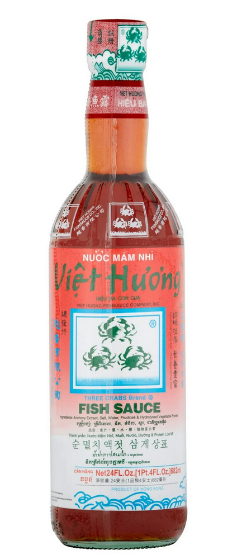
Fish sauce is an Asian ingredient that is not common in the average person’s pantry. However, if you want to make authentic-tasting Asian cuisine, you should grab a bottle. While taking a cooking class in Thailand, the chef told us that fish sauce is the “salt” of Asian cuisine. However, it doesn’t just impart saltiness; it also adds umami and acidity. What fish sauce is, how to purchase it, and how to use it are the subjects of this cooking tip.
What it is
Fish sauce is the liquid that results from the fermentation of a mixture of fish (usually anchovies), salt and water. This mixture is placed in tanks or vats and allowed to ferment anywhere from a few months to a couple of years. As the fish breaks down, it releases a flavorful liquid that we call Fish Sauce.

The liquid that is extracted first is called “first press” and is considered the most flavorful and valuable. It is sometimes referred to as extra virgin fish sauce. After this first extraction, more salt and water are added to produce more fish sauce, although it will be lighter, have less flavor, and be less nuanced. Sometimes, these later extractions are mixed with earlier extractions to achieve the desired concentration for the final product. Extremely low-quality fish sauce is said to have such a small amount of first press that the producers add artificial color and flavor to compensate. The first press fish sauce will be more expensive and can be harder to find in a regular supermarket. It can, though, easily be found in Asian food markets.
Some brands will have an “N” number on the label. This number indicates the nitrogen concentration and is an indicator of the protein content. Experts will tell you that a sauce with 30°N and above is considered high-quality and has a more complex taste. Vietnamese fish sauces are more likely to display the N content than Thai fish sauces.
Styles of fish sauce
Many Asian countries have their own version of fish sauce. The two we are most likely to see are Thai and Vietnamese fish sauce. Others that you might see in an Asian market are Korean and Filipino.
- Thai-style fish sauce is known as nam pla. It is a bit on the stronger side in regard to flavor. Thai producers also tend to add sugar to the fish sauce. This is not necessarily bad, as it is added to balance the other flavors in the fish sauce. Great food is generally a balance of salt, acid and sweet. So, with a non-Thai fish sauce, you may end up adding a bit of sweetness to balance the flavors in your final dish.
- Vietnamese-style fish sauce is called nuoc cham. It undergoes a lengthier fermentation process, which makes it lighter in color and flavor.
- Premium vs. non-premium fish sauce: This is based on whether or not the fish sauce is a first press, as described above.
How to choose a fish sauce
Many chefs recommend keeping two products on hand: one higher-end first press, which is better used in raw applications such as salads and dips and one less pricey, lower-grade sauce for cooked dishes.
When you are looking at a shelf of bottles, here are some tips to look for.
- Simple ingredient list – A good fish sauce will only have anchovies, water, salt, and maybe sugar.
- Higher protein content – Look for one that has at least 2 grams per tablespoon.
- Price – As with so many things in life, if an item is so cheap as to be unbelievable, there is probably a reason, and it generally means it is not as good quality. Although you do not have to buy the higher-end, more expensive fish sauces, you also don’t want to buy the absolute cheapest.
- The phrase “nuoc mam nhi” – According to Andrea Nguyen, an authority on Vietnamese cooking, in an Epicurious article, this term refers to that first-press liquid. She states that some producers speed up the fermenting process so they can add more salt and water and get more output. They will get higher volumes but of a lower grade. Another term you might see is nuoc mam cot.
- The term “ca com” – This refers to a specific type of anchovy found in Phu Quoc waters. This is an island off the coast of Vietnam, and the fish are said to be the most desirable, and the producers insist on maintaining traditional production methods. Authentic Phu Quoc fish sauce is made from ca com anchovies and is a Protected Designation of Origin product, like Parmigiano-Reggiano and Champagne. Because copycats are rampant, also look for a statement on the label stating that it was made and bottled in Phu Quoc, Vietnam.
Brands
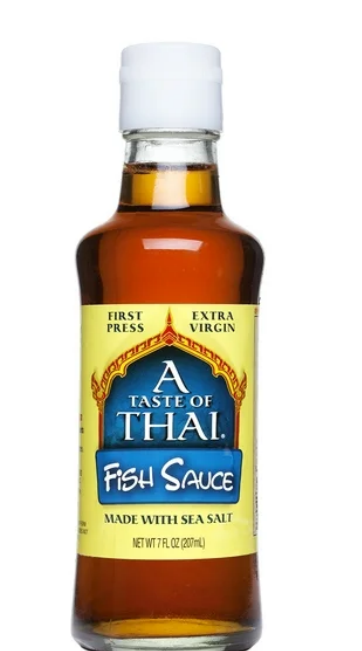
It is hard to recommend particular brands as testing results vary. However, here are some commonalities between taste tests. Let’s look at both those products more available in general supermarkets and those that will be found in Asian markets. What you are looking for (besides the above advice) is a balanced fish sauce that is not just salty but has a nice umami taste and a complex flavor.
Supermarket brands that you will find are Thai Kitchen, A Taste of Thai, and Dynasty.
Most testers were not enamored with Thai Kitchen but found both of the others to be a good product.
Other brands

- Golden Boy – Although some tasters found this one acceptable, others did not like it.
- Squid – There is a general Squid fish sauce and a premium Royal Squid fish sauce.
- Megachef – There are two varieties. One had a brown label and is sold widely in Thailand. The other has a blue label and is for export only
- Tiparos
- Red Boat 40°N – This is considered a premium brand, but they also have a higher-end product called Red Boat Phamily Reserve Maple Bourbon fish sauce. It is a 50°N fish sauce and is aged in maple bourbon barrels. The 40°N version is becoming more mainstream and I have found it at Sprout’s Market and Walmart.
- Three Crabs
- Abalone
Storage
A bottle of fish sauce will last several years, although it may darken and deepen in flavor over time. It can be kept in the pantry, but if your kitchen is very hot or if you do not use it very often, you may want to put it in the refrigerator.
How to use
Fish sauce is a mainstay ingredient in Thai and Vietnamese cooking, but it does not have to be limited to those kinds of dishes. Use it whenever you want an umami boost or to add depth and complexity to your dishes.
Try it in soups, stews, chili, and meaty sauces such as Bolognese. You can also whisk a small bit into a vinaigrette or drizzle it over roasted vegetables or fried rice.
Do you use fish sauce? Do you have a favorite brand? If you haven’t used it before, you may want to consider adding a small bottle to your pantry!

 Culinary Journeys, LLC