
Do you like to cook any Asian cuisine, whether it be Chinese, Japanese, Thai, Vietnamese or others? If so, you probably have several Asian ingredients in your pantry and refrigerator. Even if you don’t cook this type of cuisine at home, you probably have at least a couple of Asian condiments. In some upcoming Cooking Tips, I would like to highlight some of these ingredients, what they are and how to use them. This Tip will focus on Hoisin Sauce.
I have already written a few Cooking Tips on other Asian ingredients & techniques. Here are links to those Tips.
Origin
Hoisin sauce hails from the Chinese pantry, specifically the Cantonese region. According to America’s Test Kitchen, the origin of hoisin sauce goes back to an ingredient termed “triumphant sauce.” It was used by Chinese people from the Guangdong (Canton) province. They used it in the preparation of fish. The Chinese word for triumphant (hoi syun) sounds similar to the word for seafood (hoi sin). Eventually, the name hoisin became the name for this ingredient.

Other sources say the name may be derived from a time when a seafood ingredient was included in hoisin sauce. Today, in the US, it is sometimes called Chinese barbecue sauce.
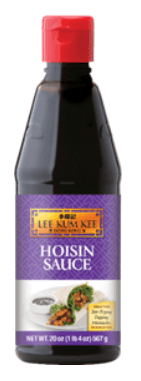
Finally, the company Lee Kum Kee says this about the name “The word ‘hoisin’ is Cantonese and translates to ‘seafood sauce’, although it contains no seafood. It was created by a chef as a dip to accompany seafood at a local food stall. It was so unique and tasty, that people refer to the sauce as “seafood sauce” and the name stuck with the sauce.”
It is thought that Chinese immigrants from Guangdong brought this ingredient to the US. It has become very popular with Americans. It is one of the easiest Chinese ingredients to find in our supermarket and is often called Chinese barbecue sauce.
Ingredients
The ingredients in hoisin sauce will vary from brand to brand. However, the key ingredient is fermented soybean paste (miso). Other components may include sugar, vinegar and seasonings such as salt, five-spice powder, garlic, chili peppers and sesame. Most contain cornstarch or potato starch, which is what gives hoisin its thick consistency.
Flavor profile
The flavor is both sweet and savory, and it is described as having a “deep umami richness.” One source claims it is like “a non-smoky BBQ sauce with extra-warm spices, sugar, and salt.”
Brands
America’s Test Kitchen did taste tests and recommends the following three supermarket brands.
- Kikkoman Hoisin Sauce
- Koon Chun Hoisin Sauce
- Lee Kum Kee Hoisin Sauce

Sporked.com likes the following.
- Kikkoman Hoisin Sauce
- Lee Kum Kee Hoisin Sauce
- Kroger Hoisin Sauce
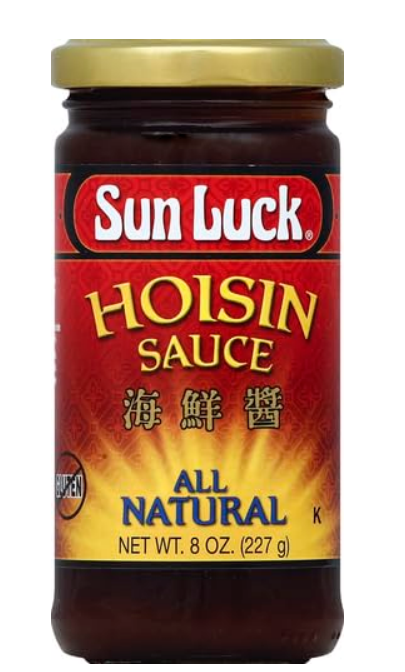
- Sun Luck Hoisin Sauce
Bon Appetit prefers the Lee Kum Kee brand, with Kikkoman as a close second.
How to use it: Hoisin sauce is an ingredient in recipes, but it is also used as a finishing sauce and condiment. Its flavor is strong, so if you are experimenting with it, start with small amounts and then adjust to your taste. You may want to consider diluting it with water, sesame oil, or some peanut butter.
Here are some dishes where you might find hoisin sauce adds a perfect touch.
- Soups
- In dipping sauces
- Noodle dishes
- As a glaze or marinade
- Stir Fry dishes
- Fried rice
Make your own
Many people swear by making their own rather than buying a commercial product. Most of the recipes I saw, though, use peanut butter rather than soybean paste. It may be a nice condiment, but I am unsure how similar it would be.
Storage
If unopened, a jar of hoisin sauce can last for years when stored in a cool, dark place. Once opened, the recommendation is to seal the container tightly and store it in the refrigerator. There, it can last up to 18 months.
Do you have a jar of hoisin sauce in your pantry or refrigerator? I know I do. I may not use it very often, but it can be just what you need for that umami punch with a touch of sweetness.

 Culinary Journeys, LLC