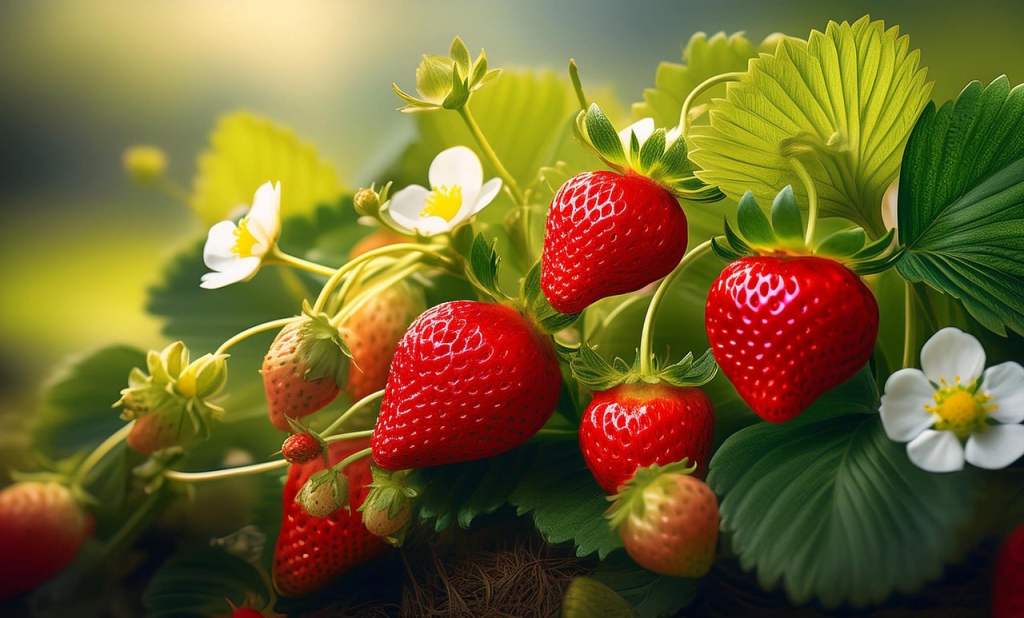
My husband has been harvesting strawberries since June. He has four different varieties growing; they mature at different times and have different flavors. If you do not have a garden, what can you do to ensure you are getting the best strawberries you can? That is the subject of this Cooking Tip.
Strawberries are a member of the rose family and are Native to North America. The large majority of US strawberries come from California, with Florida being a distant second.
Varieties
As with so many produce items, there is not just one strawberry, although you may think so if you only buy them in the supermarket. There, you will find what is known as the Garden Strawberry (Fragaria Ananassa). However, there are said to be over 1,000 different varieties grown worldwide.
If you are a gardener, you will have a myriad of choices to plant. They are broadly broken into two categories.
- June-bearing – these produce the largest berries over a 2-3 week period during June/July.
- Everbearing strawberries generally produce two harvests a year – one in the spring and one in later summer/fall. Their fruit is usually smaller.
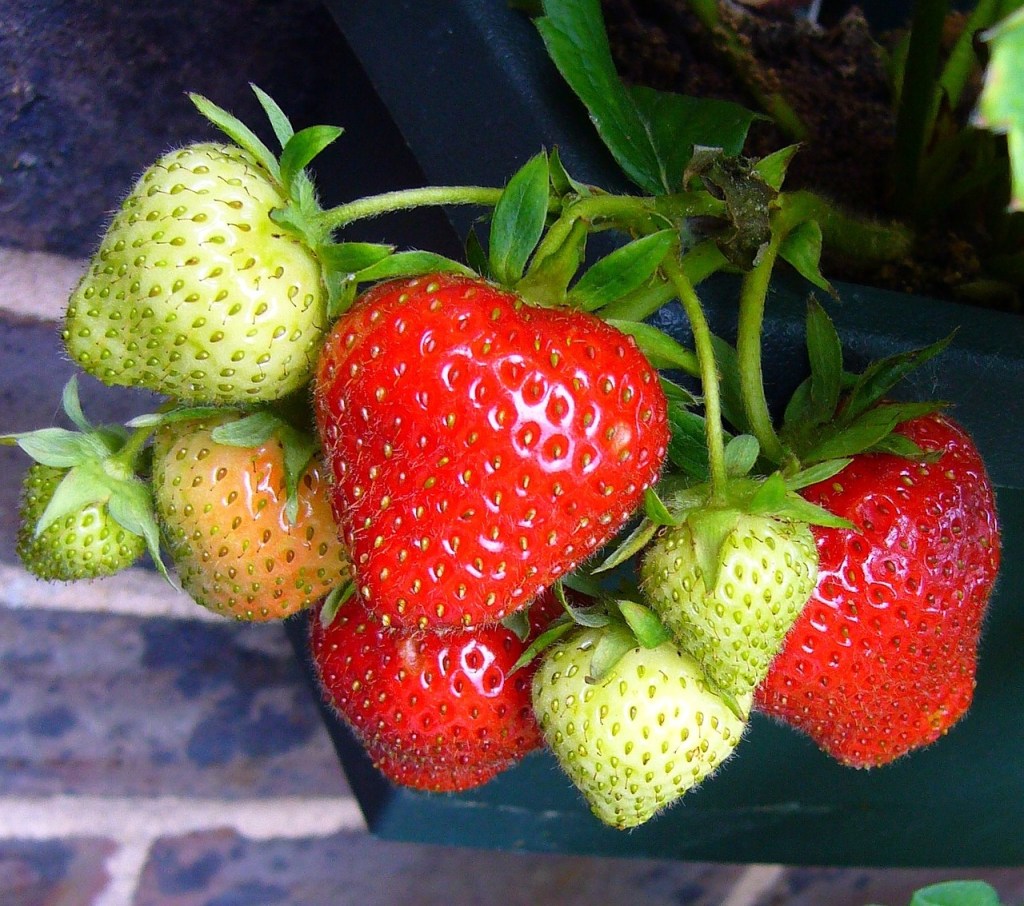
Although the typical strawberry is red, there are green and white berries. The greens are unripe berries, and the whites have been cultivated so as not to develop the typical red color.
Picking Ripe Strawberries
Because strawberries (as with so much fruit) do not continue to ripen after harvesting, you want to pick the ripest you can when you buy them to get the sweetest and most strawberry flavor. The best way to test the flavor of a strawberry is by tasting it, something that you probably cannot do in the supermarket, although you may be able to do so at farmer’s markets.
Apart from tasting, a deep red color is another indicator of flavor. However, strawberries will continue to redden after being picked, even though they do not continue to ripen. Therefore, color alone can be deceiving. One strawberry grower recommends looking to see how red they are all the way to the top, under the leaves. The redder they are in this area, the sweeter & juicier they will most likely be.
Another tip is to smell them. They are much more likely to have good flavor if they have a wonderful strawberry scent.
Another interesting point comes from America’s Test Kitchen. They tell us that the flavor of a strawberry is related to its aroma, and the aroma is related to temperature. A room temperature berry will likely taste sweeter than one just out of the refrigerator. Too much heat, though, is not good, as it can drive off much of the aroma. Therefore, rather than cooking strawberries, they like to macerate them by tossing them in a bit of sugar and letting them sit until they soften and the liquid starts to come out.
Hulling Strawberries
When you are ready to eat or use the strawberries, after washing them, you will want to hull them, which means removing the leaves and the core. There are different methods for this.
- Paring knife
- This doesn’t require any equipment other than what you already have. It does, though, take away more of the berry than other methods.
- Straw
- Insert a sturdy straw into the strawberry’s point. Push the straw through the berry, and it will remove the leaves with the hull attached. This method does work, although it is easy to go off-center and miss the hull.
- Hullers
- Spruce Eats tested several different hullers and found that the Oxo Good Grips Strawberry Huller worked the best. They liked its nonslip grip, easy cleaning, and ability to use different-sized berries. The only negative was that it was hard to store.
Roasting Strawberries
Roasting strawberries is an interesting way to try to enhance their flavor by intensifying the natural sugars present in the berries. To do this, toss the berries in about two teaspoons of sugar per cup of berries. If desired, add a touch of acidity with a bit of lemon zest. Roast in a 425°F oven for 15-20 minutes, stirring halfway through. Although you may or may not want to eat them out of hand, you can use them in baked goods or as a topping.
Dried Strawberries

Making dried strawberries is not difficult. If you have a food dehydrator, follow the instructions for that appliance. You can still dry them in a low oven if you do not have one. After washing and hulling the berries, cut them in half or quarters. Place the berries on a baking sheet, cut side up. Place in a 200°F oven for about 3 hours. Allow the berries to cool and crisp up, and then store them in an airtight container for up to a week.
Storing Strawberries
We all know just how perishable strawberries are. How can we make them last the longest? There are all sorts of recommendations out there. Three that seem to stand out as the best are the following.
- Do not rinse them until you are ready to eat them. Rather, pick out any berries that are going bad, put the rest back in the container and store them in the refrigerator. Some recommend storing the container upside down to encourage airflow. This way, your berries should keep up to a week.
- A second method is to wash them in a solution of 1 part white vinegar to 3 parts water, drain them and dry them thoroughly before putting them in the refrigerator. One method of drying is placing them is in a paper-towel-lined salad spinner and gently spinning them until dry.
- A final method is to soak them for about 5 minutes in a mixture of 1 tablespoon of kosher salt per cup of water. Drain, rinse, dry and place in the refrigerator. The proponents of this method say that the salt is abrasive, and therefore, it cleans better than water alone. This same source does not like using baking soda or vinegar, as these ingredients can be absorbed into the berry and not rinse off completely, possibly compromising flavor and texture. As can be seen by the second method, though, not everyone agrees with this caution.
Freezing Strawberries
For more extended storage, strawberries can be frozen.
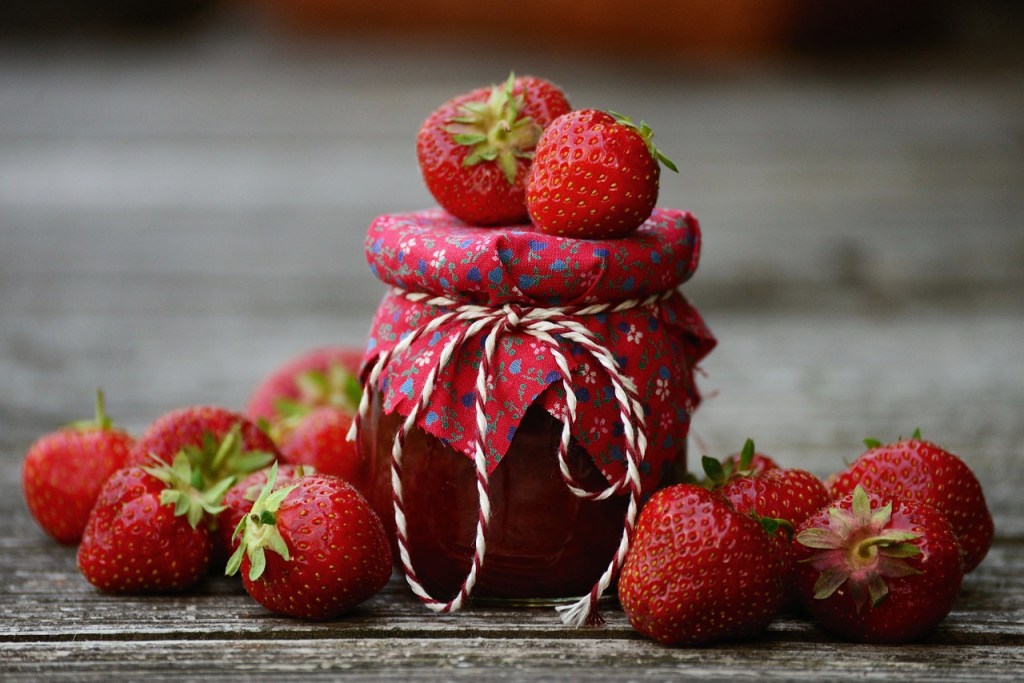
- Remove the tops.
- Chop them as you prefer – quarter, slice, etc. You can leave very small berries whole.
- Freeze in a single layer.
- Transfer to a freezer bag/container.
- Use within a few months as their quality deteriorates after about six months.
- Some like tossing the berries in sugar before freezing, as this preserves the color and texture. However, it does limit how you can use them later.
- Great uses for frozen strawberries are smoothies, jam, ice cream, fruit topping, and strawberry sauce.
Measuring Strawberries
Although you do not always have to be exact in measuring when using strawberries in a recipe, it is nice to know how many cups are in that container you pick up in the store. The Spruce Eats has put together some conversion figures to make your life easier.
1 cup whole strawberries is equivalent to:
- 8 large strawberries
- 5 ounces by weight
- ½ cup strawberry puree
1# strawberries is equivalent to:
- 2¾ cup sliced strawberries
- 3¾ cup whole strawberries
1 pint of strawberries is equivalent to:
- 12 large strawberries
- 24 medium strawberries
- 36 small strawberries
- ¾# by weight
- 1¼ cups puree
- 2½ cups whole small strawberries
- 1½ to 2 cups sliced strawberries
Now that you know how to pick ripe strawberries, clean them, store them and use them, there is one last important tidbit. Do you know what the fear of strawberries is called? It is “Fragariaphobia.” That is bound to be helpful in your kitchen!

 Culinary Journeys, LLC