
I was at one of our local supermarkets earlier today. While there, I saw fresh figs on display. I was thrilled, as I love fresh figs, and they are not available very often in our area. They are delicious right out of the box and great for cooking/baking. This Cooking Tip will delve into figs, the varieties, how to choose them, how to store them and what to do with them.
Figs are typically found growing in Mediterranean countries. They like the warmer weather. In the US, the large majority of figs are grown in California.
There are thousands of varieties grown, although only a very few are found in our stores. The names of the figs can be confusing as the same fig grown in different areas might have a different name. In addition, when a fig is introduced to a location, it is not uncommon to coin a new name. For example, when introduced to California, the Smyrna fig’s name was changed to Calimyrna.
There are two harvest seasons for fresh figs. The first is short and occurs in early summer. The main season is from late summer through fall.
Most figs are tear-dropped in shape, although they may vary in size. The color of the skin can range from pale yellow or green to brown to red to purple to almost black. This color distinguishes the type of fig but tells you nothing about its taste. The fig’s interior or flesh will vary from a light amber to a pinkish-red to a darker red, almost berry-like color. Unlike the skin, the flesh color will give you an idea of its flavor.
According to The Fig Boss, the flavor profiles of figs can be broken into three categories – honey, sugar and berry.
- Sugar – A fig with melon undertones, dried fruit “figgy” flavor, and often unique sugars.
- Honey – Higher in melon flavor, accompanied by honey-like sugars and nectar.
- Berry – Figs with pronounced berry or other fruity flavors
Although these are the main three flavor profiles that most experts will use, The Fig Boss likes to further refine the flavors into:
- Sugar Berry
- Melon Berry
- Cherry
- Complex Berry
- Sugar Honey
- Fruity Honey
Of the thousands of varieties, here are the ones you will most commonly find in grocery stores.
Mission (Black Mission)
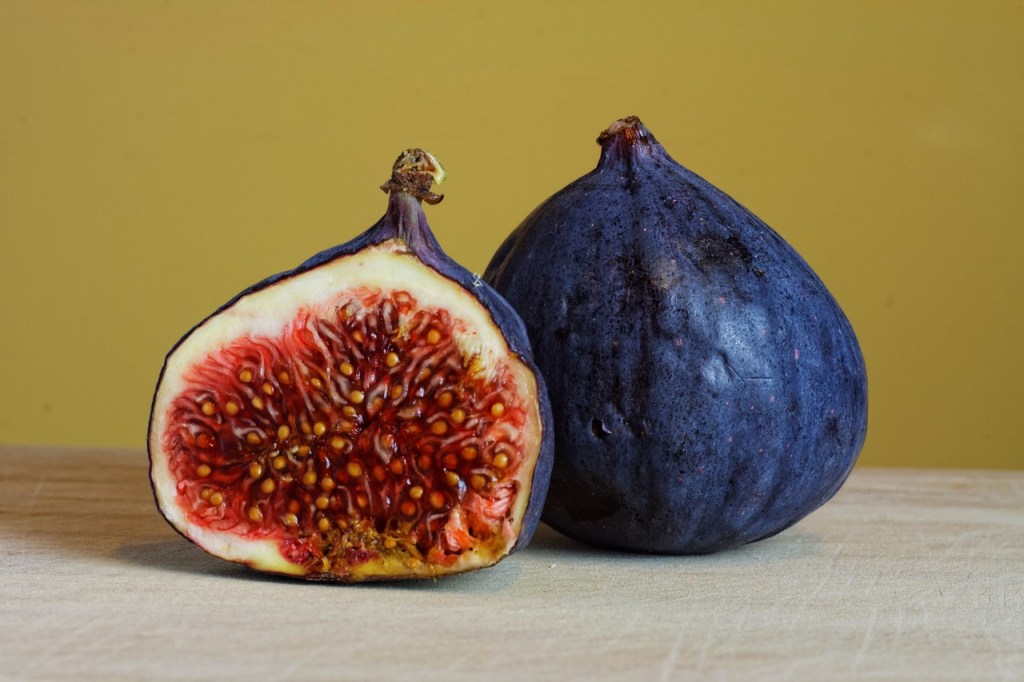
- If you are fortunate enough to stumble across fresh figs in your store, the most common variety you will find is the Mission fig. It is also known as the Franciscana fig, named after the Franciscan missionaries who cultivated it in California in the late 18th century
- It has purple or black skin with a light pink interior.
- Its flavor is mellow with honey and earthy notes.
- It will work well in most dishes that call for figs.
Brown Turkey (Turkish Brown Figs)
- Another fig you might see in your stores is the Brown Turkey Fig.
- It is larger than other figs with brown or reddish skin.
- The flesh is light red to brown.
- It has a mild flavor, much less sweet, less complex and less intense than the mission fig. The flavor notes are said to be of honey and hazelnuts.
Calimyrna
- As noted above, this type of Smyrna fig was named Calimyrna when introduced to California. In grocery stores, it is often labeled Turkish figs.
- Their skin is light green to yellow.
- The flesh is pale pink.
- It has a delicate flavor with nutty notes.
Kadota
- This fig goes by many names: Dottato, Florentine, White Texas Everbearing and Peter’s Honey Fig.
- It has creamy amber or light green skin.
- The flesh is light pink or amber.
- It is a seedless variety.
- Although less sweet than other varieties, it does have notes of honey and fruit.
- It tolerates being heated, making it a good candidate for jams and preserves.
When picking out figs at the store, they should feel soft but not mushy. You do not want to buy figs that are hard as they will not continue to ripen. It is perfectly fine to have some slight cracking or wrinkling of the skin. If they are past their peak, they might have a sour smell.
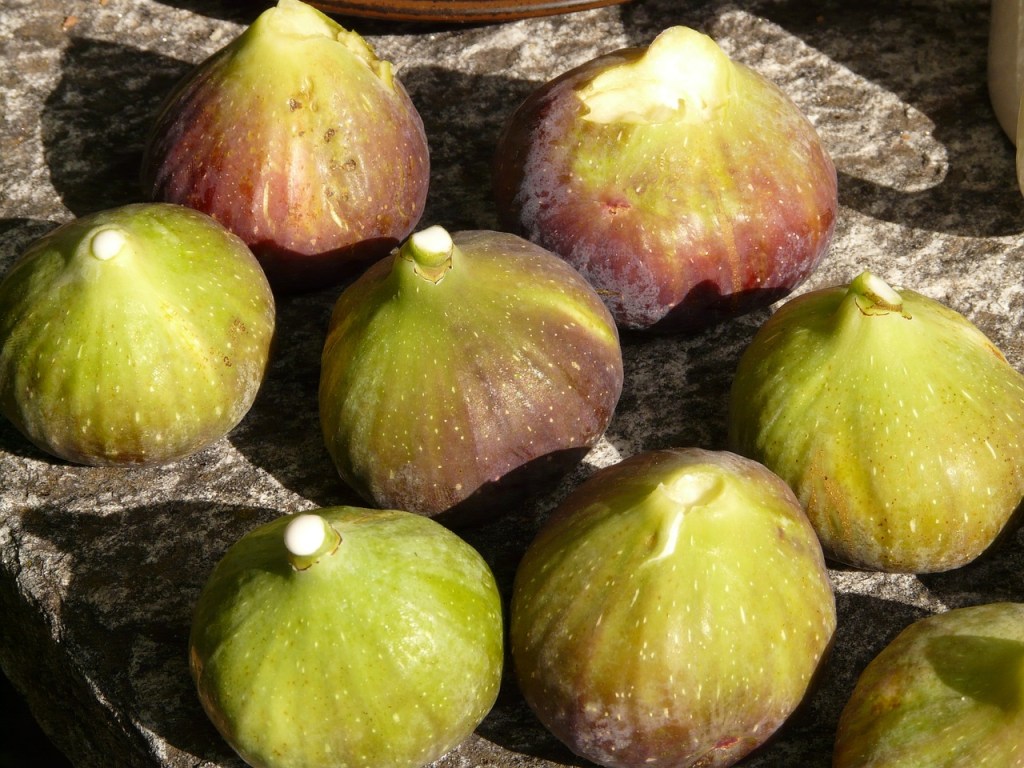
The entire fig is edible, although most remove the dense, fibrous stem. Eating out of hand is my favorite way of consuming figs, but they are also wonderful in other applications. Fig jam and preserves are very popular. Serving them as part of a cheese/fruit/nut platter is also classic. They are an excellent addition to salads, especially if the salad includes goat cheese.
Figs are delicious in this Pork with Figs & Balsamic Dressing recipe from BBC Food. They also make a simple but elegant dessert, as shown in this Fig Compote with Honey Crème Fraîche from Williams-Sonoma.
Figs are very perishable. Once you get them home, leave them in their clamshell packaging and store them in the refrigerator. They will last up to about a week. They never last that long in my refrigerator, and not because they go bad. It is because they get eaten very quickly.
I have never frozen fresh figs, but experts say it can be done. If you wish to try, keep them whole. Remove any very soft figs. Wash and dry them thoroughly. Arrange them on a baking sheet in a single layer, not touching each other. Freeze until sold and then transfer to plastic bags. They should keep up to 6 months. To use, thaw them and use them as usual. The texture will be softer, making them better for cooked applications than raw.
Are you lucky enough to have fresh figs on offer in your supermarkets? If so, grab them while you can. They won’t last long either in your store or your kitchen!

 Culinary Journeys, LLC