Do you give much thought to your kitchen towels? I have a drawer full of all kinds. Some are lovely towels that very good friends gifted to me. Others are ones I have had so long that I have no idea when or where I obtained them. Others are seasonal that I only pull out for Christmas, Thanksgiving or the fall season. I must admit that some of these towels are more absorbent and seem to do a better job. Are there certain things we should look for when buying and using kitchen towels? Are some brands superior to others? Let’s look at that topic in this Cooking Tip.
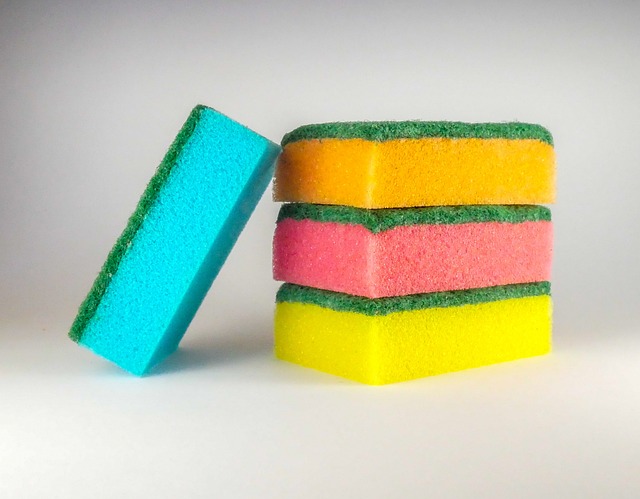
Before looking at what makes a better towel, reviewing my Cooking Tip on Kitchen Sponges would be helpful. Because of the risk of pathogens flourishing in kitchen sponges, we should probably use more kitchen towels instead of sponges as long as we take care of the towels properly.
As with sponges, towels can also be a breeding ground for pathogens. Wet surfaces are more susceptible to bacterial growth, so kitchen towels should always be laid out or hung up to dry between uses.
They should also be swapped out frequently, probably every few days. If they come into contact with raw meat or eggs, swap them out as soon as you wipe up the spills. They should be laundered and allowed to dry completely before being put back into use. For the best sanitation, a hot water wash is recommended. Hot water is also better for stain removal. The downside (besides the energy cost) is that hot water will lead to more shrinkage of the towels. I suspect most of us throw our towels in a dryer after laundering, but one advantage of air drying is that it reduces the piling of the towels.
When you go to the store to buy kitchen towels, are you drawn to the pretty colors and patterns? I know I am. However, there are more important considerations, such as the type of fabric, the type of weave and the size. Let’s look at the pros/cons of different types before looking at favorite brands.
Fabric – Most dish towels are made of cotton, linen, microfiber or a blend.
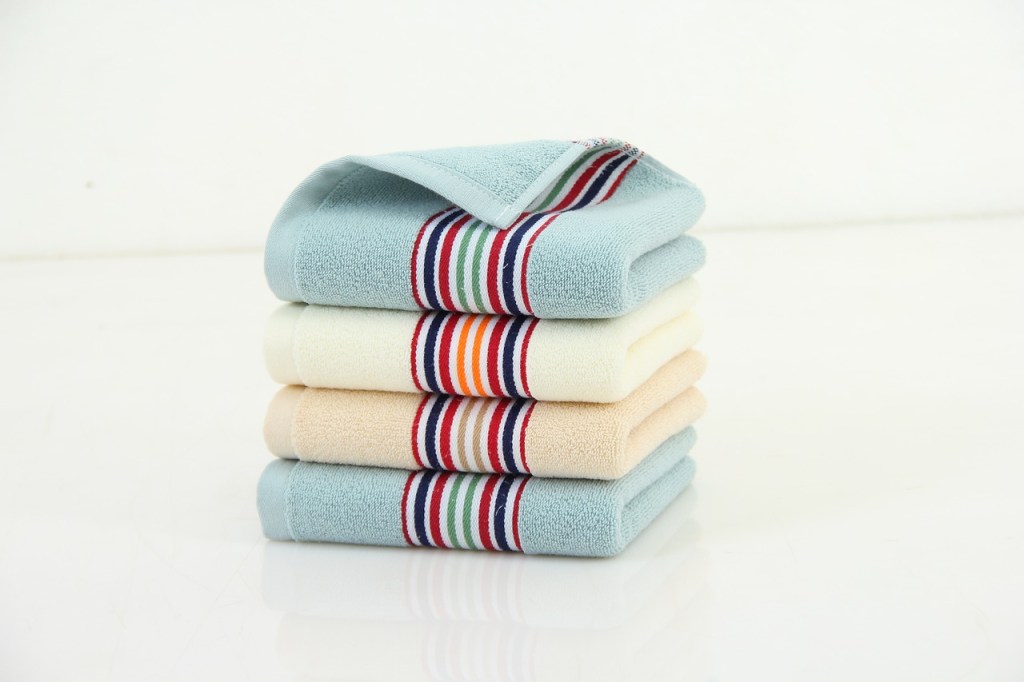
Cotton
- Pros – cotton towels will be soft, more durable than other fabrics, and very versatile.
- Cons – cotton towels take longer to dry and are prone to piling and leaving lint behind.
Linen
- Pros – linen towels quickly dry and are much less likely to develop piles or lint. They are also durable.
- Cons – the major con is that they are pricey compared to cotton towels. They can also feel scratchy for the first few uses
Microfiber
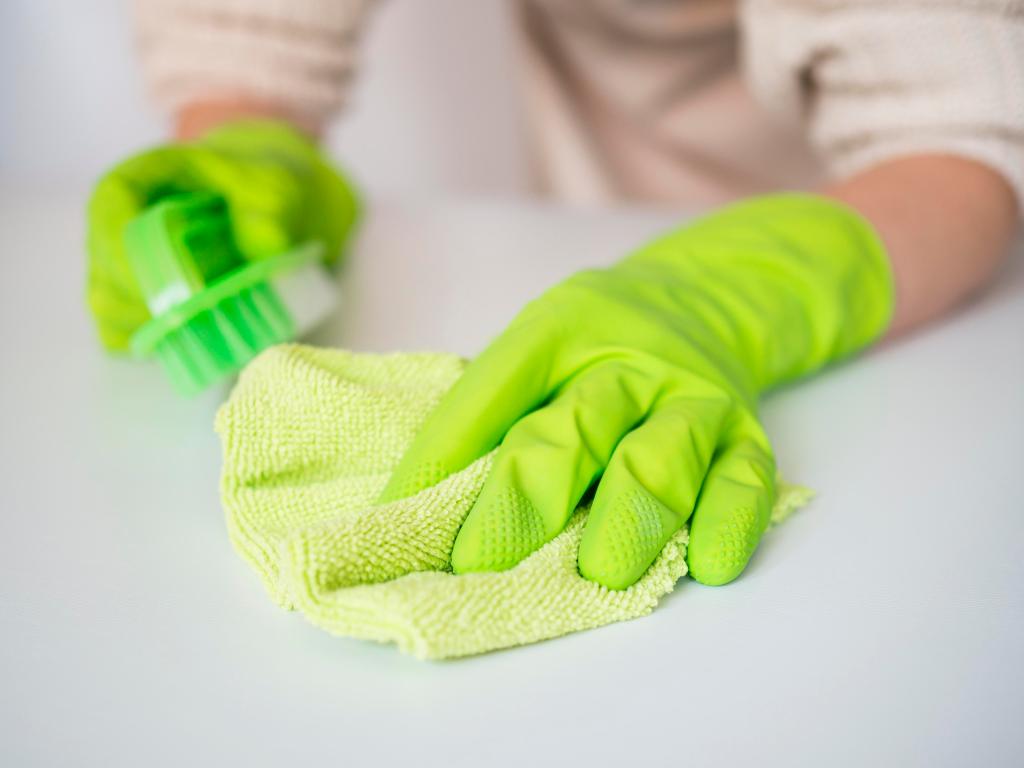
- Pros – microfiber towels are relatively inexpensive, very soft, and ideal for shining delicate glassware.
- Cons – many people use their kitchen towels as pot holders to remove hot items from the oven. Microfiber can melt when exposed to high heat and should not be used for this purpose.
Weave – Towels can be woven in different patterns. They vary depending on how the strands of material are interlaced to form the fabric. There might be a simple, plain weave, a waffle weave, a basket weave or a terry cloth weave. Although you might not care about identifying the exact weave, the weave will manifest in how the towel looks, feels and performs.
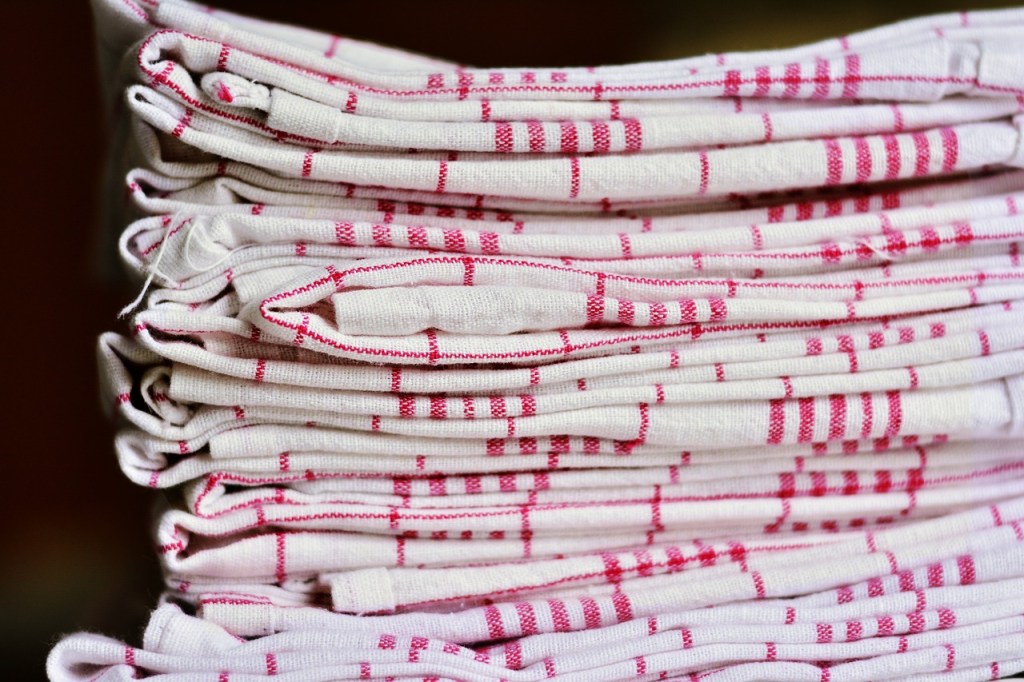
- Cotton towels with a plain weave will be thinner. They won’t be as absorbent, but they are great for delicate tasks such as drying glasses. They are also excellent for wringing out moisture from your shredded veggies (such as zucchini) or for just placing your washed produce so it can dry.
- Waffle weave towels will have a square or rectangular pattern. They tend to be thicker and more absorbent.
- A basketweave is said to strike a balance between strength and absorbency.
- Terry cloth is the easiest to identify. It is very absorbent but is the most prone to piling and linting.
Size somewhat depends on your storage space and your personal preference. People who do a lot of towel drying of dishes like larger towels as they can dry more dishes with just one towel. America’s Test Kitchen prefers towels that are 30 inches long by 20 inches wide. Another consideration is to remember that most towels will shrink some after being washed. So, the size you end up with will be smaller than what you buy. For people like me, who do minimal towel drying of dishes, smaller sizes are better as they are easier to store and dry.
What should you look for in a kitchen towel?
- Absorbency
- Durability
- Easy to clean
- It is thick enough to use as a pot holder without being too bulky. This is a minor consideration for me, as I prefer using an oven mitt to a towel for hot items. Others tend to always use a towel, and for them, this is an important consideration.
- Usage – Many, including myself, like to have different types of towels for different purposes.
- I always have one very absorbent, usually terry, towel dedicated for hand drying. That is the one I loop through my apron ties every time I cook. It is important, though, to keep that towel dedicated just to hands and not where it will come into contact with food or clean dishes.
- I then have simpler woven towels that I use to set dishes on as they air dry or to put my washed produce on. Since, as I said, I do minimal towel drying of dishes, these towels also work well enough for that purpose.
There are similarities and differences in results from outlets that have conducted rigorous testing of different towels. As you might expect, everyone has their favorite towel. A few towels, though, tend to rise to the top of the ratings over and over.
- These towels are considered the workhorse of many professional kitchens, particularly because they can be used for multiple tasks. They can be used not only for lint-free dish drying but also for hand drying, wiping counters or appliances and as potholders.
- They are made of 100% cotton and are 14”X25”.
- They come in a few different colors and are simple yet attractive towels.
- They are relatively inexpensive as compared to other highly rated towels.
- The one negative is that they can take a long time to dry.
Williams Sonoma Towels – multiple sources highly rated two different WS towels.
- Made of 100% cotton in a basketweave pattern, these towels are available in several different colors and the size is 20”X30”.
- They are strong and absorbent, although not as much as terry towels.
- Stains come out easily.
- They dry more quickly than other towels.
- They tend to be rough, but they will soften with washing.
- They are more expensive than the Zeppoli.
- Made of 100% cotton with a tighter weave.
- Available in multiple colors with a size of 20”X30”.
- They have a waffle texture on one side and terry on the other.
- Top rated by TheKitchn.com and Wirecutter. The latter states they are the best combination of absorbency, durability, attractiveness and price.
- They are very durable.
- Some users preferred the classic striped ones, as the all-purpose ones are rougher and a bit thick for delicate drying tasks.
Utopia Towels Kitchen Bar Mops Towels—If you want an inexpensive towel for cleaning purposes, these bar mop towels may be the thing.
- They are a terry cloth made of 100% cotton, making them very absorbent.
- They come in multiple colors and are 16”X19”.
- They may not be the best for dishes as they tend to leave lint on the surfaces. They are better for wiping up spills and drying hands.
- Besides the lint, other negatives are that they are not the most durable, take a long time to air dry, and are not very attractive.
Different sources rate other towels as their favorite, but the above were the ones that were rated the highest and most often.
Do you give much thought to your dish towels? If not, maybe another look is in store for you. I hope the above information will be helpful as you replace some of your dish towels.

 Culinary Journeys, LLC