What is your favorite fresh berry? Strawberry? Blueberry? Blackberry? How about Serviceberry? The latter is a fruit that many of us have probably never heard of. I would not have if not for my husband’s foraging on his work campus. Read on in this Cooking Tip to learn what it is and how to use it in your kitchen.
If you haven’t heard the term serviceberry, perhaps you have heard some of its other names, such as Juneberry, Sarvisberry, Saskatoon berries, Shadberry, and Pigeonberry. Its scientific name is Amelanchier. Genetically speaking, serviceberries are not true berries but rather pome fruits similar to apples and pears. I will refer to them as berries.
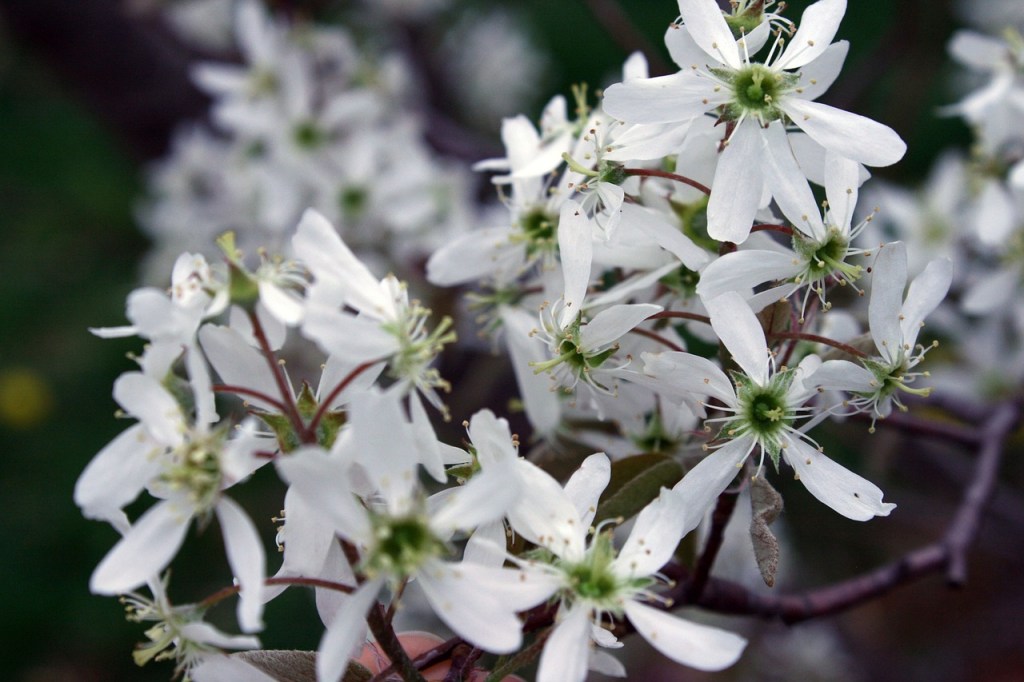
These berries grow on a shrub or tree, reaching up to 10 feet tall. These trees are native to North America and grow as far north as Alaska and as far south as Mexico. They produce pretty white or pink flowers in late April to May. The berries ripen from June to August and change from red to dark purple (the darker the color, the sweeter the flavor), and they are slightly larger than a blueberry. Later in the fall, the leaves turn a gorgeous profusion of reds, oranges and yellows.
Because this fruit is not found in supermarkets or farmer’s markets, if you want to try it, you will probably need to forage. Please see this prior Tip on Foraging before you venture out to do this. Make sure you know what you are foraging, as there are some poisonous plants out there that sport similar-appearing berries.
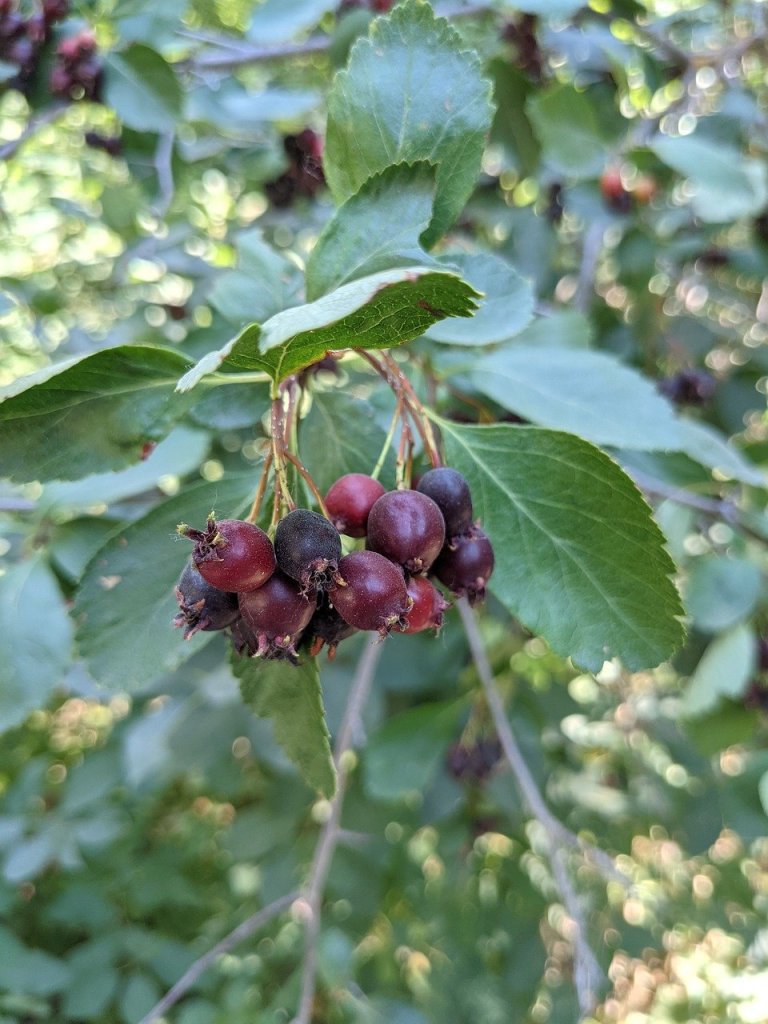
One expert describes the flavor as a “fusion of strawberry, blueberry and a hint of almond.” Sounds delicious, doesn’t it? Another claims it is “halfway between a blueberry and a grape … with a slightly nutty, almond-like aftertaste.” A third compares it to a cross between a blueberry and a nectarine.
The berries can be eaten raw but you can also use them in your kitchen in a cooked or dried form. You can substitute 1:1 for blueberries in your recipes, although some adjustments may need to be made as blueberries have a slightly higher water content.
Other ideas are:
- Muffins
- Pies
- Cobblers
- Pancakes
- Puddings
- Soups
- Sausage fillings
- Syrups
- Sauces
- Ice Cream
- Smoothies
- Salad topping
- Jams
Native Americans have been known to use them medicinally for earaches, gastrointestinal distress, fevers and coughs. The stems, branches, and wood have also been used to make baskets, ropes and furniture.
Like other berries, the serviceberry contains antioxidants and other nutrients.
Serviceberries can be refrigerated in a ziplock bag in your produce drawer for a week or two. At room temperature, they can last up to five days. They are very thin-skinned and, therefore, fairly perishable.
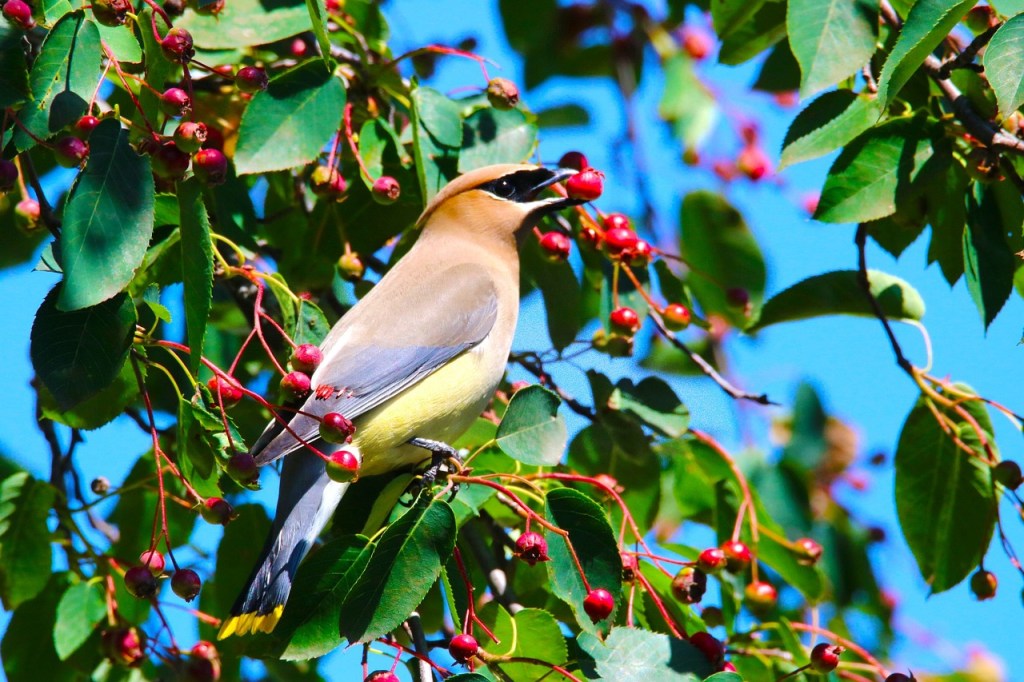
As my husband wanders around his work campus picking berries from the trees, others may look on and shake their heads. However, he is happy about that as it leaves more for him. Have you ever tried serviceberries? Look around your area to see if they are growing there, and see what you think!

 Culinary Journeys, LLC