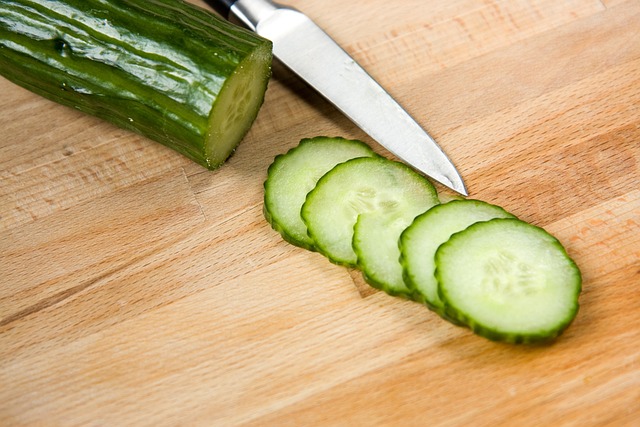
Cucumbers are a vegetable (more about that in a minute) that most of us probably don’t think about too much. We may eat them on a salad, but that is about it. There is more to understanding about cucumbers and how to use them. That is the subject of this Cooking Tip.
Because they contain seeds in their interior, cucumbers are botanically a fruit. We all, though, tend to consider them and use them as we would a vegetable.
Although there are about 100 varieties, our average supermarket will probably only carry two or three. Mine only has two varieties for most of the year. The size of these different types of cucumbers will vary from about 1 inch long to up to 20 inches in length. That is not the only difference in the various types.
Some people will put them in two general categories.
- Slicing varieties
- These are meant to be eaten raw, although they can be used in other culinary preparations.
- Pickling varieties
- These are small cucumbers that are cultivated specifically for pickling.
Within these two categories, we can find many different types. Here are the most common you will find in your stores or farmer’s markets
Garden Cucumbers
- These are also sometimes called slicing cucumbers or American slicing cucumbers. These are the ones that are most commonly found in our stores.
- The skin is smooth, but it can be tough.
- They generally measure 6-10 inches in length.
- The flavor is bright and refreshing, but it sometimes has a slight bitterness.
- The most common uses are salads, sandwiches, and chilled soups such as gazpacho.
English Cucumbers
- Other names for these cucumbers are seedless, hothouse, European, and burpless.
- They are easy to recognize as they are longer (can reach 20 inches long) and slimmer than the usual cucumber.
- They are usually wrapped in plastic to reduce bruising as the skin is thin and delicate.
- Because the skin is thin, peeling before eating is unnecessary.
- This variety contains very few seeds, which contributes to a milder flavor with a subtle sweetness and a less watery texture.
- The best uses are in salads or sandwiches.
Persian Cucumbers
- This variety is much smaller than other cucumbers, only about four to six inches.
- Just as with English cucumbers, Persian cucumbers are known as burpless because they are easily digestible.
- The skin is this but has a bumpy appearance.
- The texture is crisp.
- Their flavor is milder and sweeter than other varieties.
- They contain minimal seeds.
- Best uses are snacking, slicing, and pickling. This variety is a top choice for Mediterranean and Middle Eastern cuisine.
Kirby Cucumbers
- This variety is known as the pickling cucumber.
- They are small, usually under six inches in length.
- The skin has a bumpy appearance, and the internal texture is firm and crunchy.
- Their flavor is slightly sour, making them great for pickling, although some like to use them in salads and sandwiches due to their crisp texture.
Lemon Cucumbers
- This is an unusual appearing cucumber due to its round shape and yellow color.
- The flavor is slightly sweet with citrus notes.
- They are best used raw in salads.
White Cucumbers
- Another uncommon variety, it is sought out for aesthetic reasons due to its white skin.
- It is best enjoyed raw but can also be used to make a white gazpacho.
Japanese cucumbers
- Another name is a Kyuri cucumber.
- They are long and slender with thin, dark green skins.
- The texture is crisp, and the flavor is refreshing.
- They are the variety often used in sushi or other Japanese dishes.
Nutrition
As with most fruits and vegetables, cucumbers are nutritious. By weight, cucumbers are up to 90% water, which makes them great for hydration. They also contain beneficial vitamins, especially vitamins A and C. The skin contains fiber and minerals, and they possess anti-inflammatory properties.
Culinary uses
- Cucumbers are naturally waxy on the outside. This is generally removed during processing after harvesting. So, it is common for producers to add a waxy coating that mimics the natural one. If this wax coating is applied, the retailer should inform the consumer on the label or signage. Even though it is considered safe to consume, you can remove it with vigorous scrubbing and rinsing or by peeling. The peel does, though, add to the nutritional value of the cucumber.
- Raw in salads or on sandwiches.
- Infused water – slice and use in beverages just as you would use lemon slices.
- Add to smoothies along with other fruits and veggies.
- Tzatziki – a classic Green dip made with yogurt, cucumbers, and seasonings.
- Hors d’oeuvres – slice about ½ to 1 inch thick. Scoop out seeds and fill with cheese, a dip or a relish.
- Chilled soups
- Pickles
- Sorbets
- Can be sauteed or braised as a side dish.
- Make into pickles
- Sorbets

Choosing cucumbers
Pick firm ones without soft spots or wrinkles, and a vibrant color.
Storage
- Although they do not need immediate refrigeration, refrigeration is recommended if they are kept for more than a few days.
- Some experts like to store them in the warmer part of their refrigerator, such as on a door or the upper shelves. They wrap them in a paper towel and put both in a sealable plastic bag.
- If uncut and unwashed, they can be kept in the refrigerator for about ten days.
- If sliced, they should be tightly wrapped and kept in the refrigerator for about five days.
Not everyone is a cucumber fan. If you are one of those, perhaps you haven’t tried the correct variety. Try to find some of these other types and see if they change your mind. Or, try growing your own. My husband grows a variety called Sweet Success and it is outstanding!

 Culinary Journeys, LLC