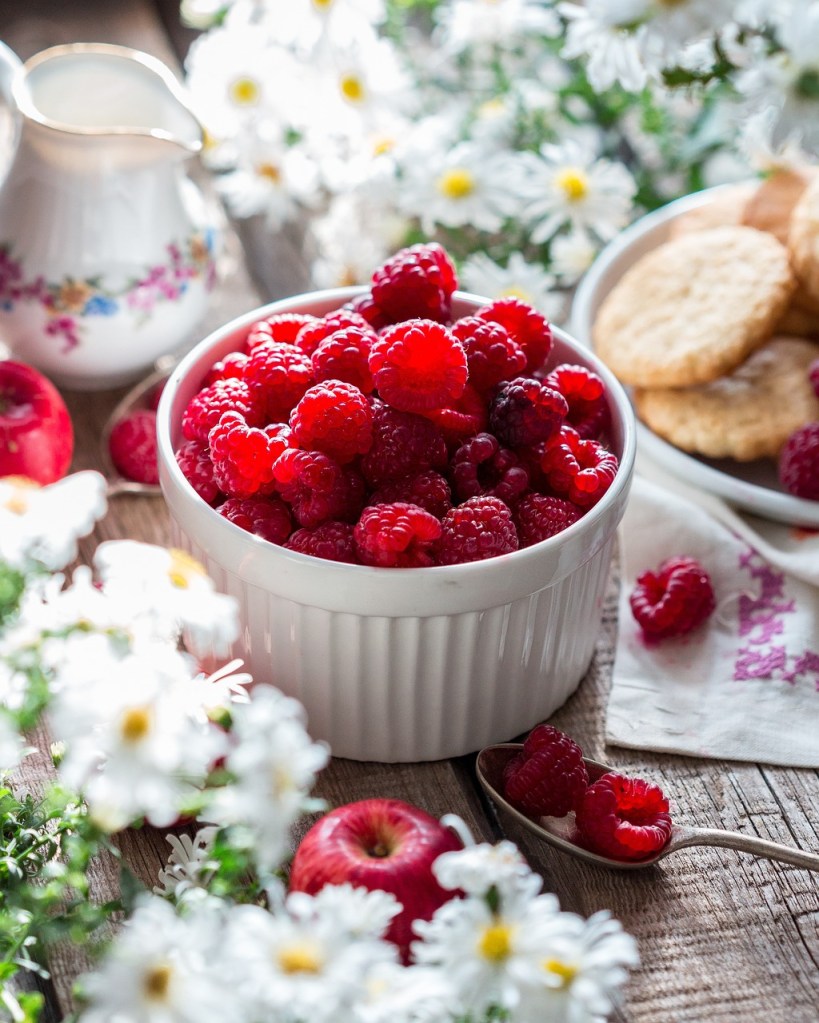
Are you a raspberry fan? Do you like to eat raspberries out of hand or just use them in a recipe? If you buy raspberries in a mainstream store, your only choice will probably be red raspberries. A look at my area’s three main grocery stores showed only that one variety. Did you know that there are other varieties out there for your enjoyment? That is the subject of this Cooking Tip.
There are said to be more than 200 species of raspberries. About 90% of those sold in the US come from Washington, California and Oregon. Besides the red raspberry, there are yellow and black ones. Even within these categories, there are many subcategories of each variety. Unless you grow your own, you will probably only find these non-red raspberries in specialty or farmer’s markets. Let’s look at the differences and whether you might want to search them out.
All raspberries contain wonderful vitamins, minerals and antioxidants. They are also low in calories and high in fiber. This makes them something to add to your diet whenever you can in whichever variety you can find.
Red Raspberries
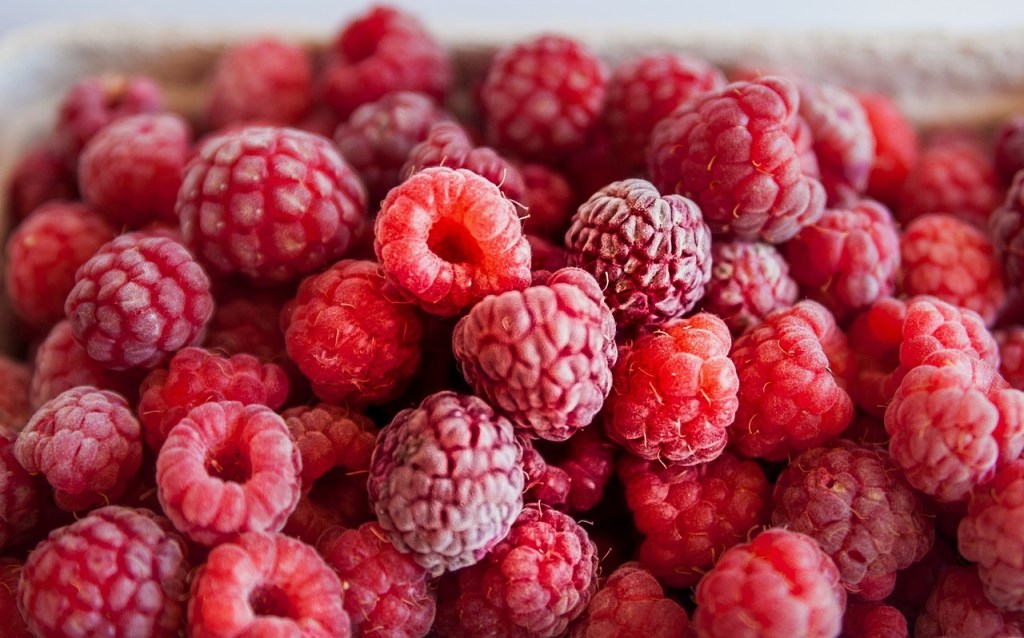
- This is the most common raspberry and the one most available in the average supermarket.
- They ripen in late summer.
- The color is red, and the deeper the red, the riper it will be.
- A ripe raspberry will be sweet, but it does have a tart undertone.
- They have fewer seeds than black raspberries.
- They are juicer with a slightly firmer texture.
Black or Purple
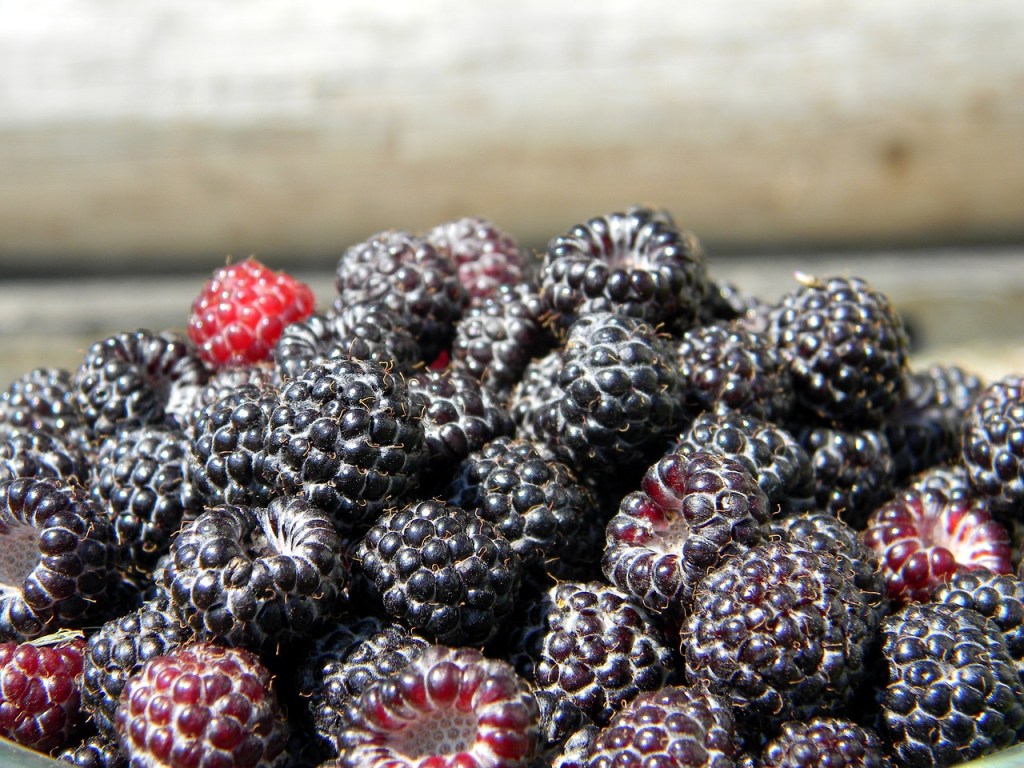
- Another name for this raspberry is blackcap or black cap.
- This variety is native to North America and can be found growing wild.
- They have a short season of just 2-3 weeks in the summer, and the plants have a lower yield than other berries.
- They have a more robust and complex flavor than the other varieties. Some describe it as slightly sweet and tart with woodsy notes.
- They tend to be larger, have more seeds and are not as juicy as the red variety.
- The appearance of a black raspberry is very similar to that of a blackberry. However, the black raspberry will have a hollow core when you look at the stem end, as the core stays on the vine when it is picked. With blackberries, the core stays within the berry when picked. Also, blackberries ripen later in the year than black raspberries.
Yellow
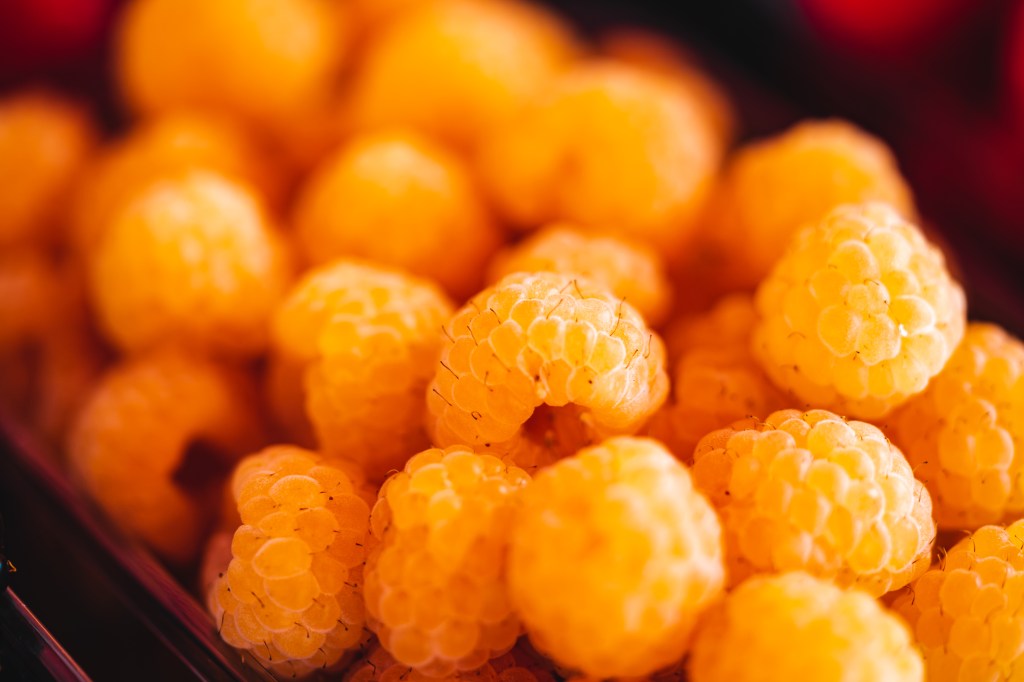
- These pretty berries are also known as golden or gold raspberries.
- The color can vary from pale yellow to gold to yellow-orange to yellow-pink.
- Because these berries are less acidic, the flavor is sweeter, milder and less tangy. You might also notice floral and honey notes.
- Although all raspberries are perishable, the yellow variety is even softer than the other varieties.
- These berries ripen from late spring to early summer, although some varieties can have a second season in the fall.
Blue
You may ask why I haven’t mentioned the Blue Raspberry. After all, you see blue raspberry items all over the place. I haven’t mentioned it because it is not a real raspberry variety. Rather, it is an artificial flavor. The story probably goes back to the 1950s when red food colorings were coming under scrutiny. However, it was mainly popularized in the 1970s by the company ICEE. Wanting something that looked and tasted different from their signature cherry, they started using FD&C (The Food, Drug, and Cosmetic Act) Blue No. 1.
If you are buying raspberries in the store, it can be difficult to tell if they are ripe and they do not ripen after harvesting. Try to pick ones that are bright and deeply colored without soft spots. Once you get them home, look them over for any soft, mushy, or rotten berries. Remove and discard them to prevent the others from also going bad. Store them in your refrigerator in a single layer in a shallow container lined with a paper towel to absorb moisture. Since raspberries are very perishable and delicate, you should use them within a day or two or freeze them for later use. To discourage spoilage, do not wash them until just before eating.
Uses for raspberries
- Eating out of hand
- Salmon with a raspberry glaze
- Raspberry fool or trifle
- Jams
- Pies
- Filling for cakes or tortes
- Sauces—One of the easiest is to make a raspberry coulis and pour it over ice cream. It is often made by cooking the berries with sugar, water and a touch of lemon juice. Once cooked down and the taste is to your satisfaction, it can be stored as is. Or, it can be pureed and strained for a more sophisticated sauce. It can also be made without cooking by just pureeing the berries with sugar and lemon juice. This will give you a fresher taste.
In our markets, we can purchase red raspberries year-round. As with any fruit, it will be much tastier if you buy it in season. Head to your nearest farmer’s market to try some that were picked only the day before and, hopefully, be able to purchase some of the non-red variety. Fortunately, my husband is growing a red, a yellow and two black. I can’t wait to try them!

 Culinary Journeys, LLC